

Darlene is forty-nine. She has run a heating and cooling shop in Brampton, Ontario for twenty-two years, and she is good at the work. Her HVAC lead generation is a five-page template from 2017 that loads in seven seconds on a phone and keeps the number in the footer.
TSSA-certified? Yes. Lennox Premier Dealer, BBB A-plus since 2011. Her crew of eleven handles everything from furnace swaps to ductless retrofits, and half the property managers in Peel Region have her cell number.
February 3rd, 2025. A polar vortex drops the GTA to minus 34. Wind chill past minus 45. Furnaces that limped through fifteen winters quit overnight. Heat pumps sized for milder weather locked out at minus 25. By 6 AM the emergency calls were flooding every mechanical shop in the region. Frozen pipes, elderly tenants in blankets, landlords already on the phone with lawyers. The kind of cold snap that fills a six-month backlog in seventy-two hours.
Darlene booked three jobs that week.
Fourteen kilometres west, a shop called ClimatePro has been running for four years. No dealer certifications. Crew of six. Google reviews at 4.2 against Darlene's 4.9. But ClimatePro's site loads in 1.6 seconds, puts "24/7 Emergency Service" and a click-to-call button above the fold, and runs a page for every city they cover. Their Google Business Profile has 180 job photos and a fresh post every week. ClimatePro booked $187,000 in emergency heating work that week. Twenty-eight jobs in seven days.
She has the license. She has the crew. She has twenty-two years of trust built one furnace at a time. What she does not have is the system that turns a cold snap into booked work.
So a furnace quits, the homeowner reaches for a phone, and the shop that shows up in that thirty-second search is the shop that gets the job. Qualifications do not enter into it. Darlene sits on page two for "furnace repair Brampton." ClimatePro sits third, and their site answers at midnight on a holiday when Darlene's is still loading its hero image.
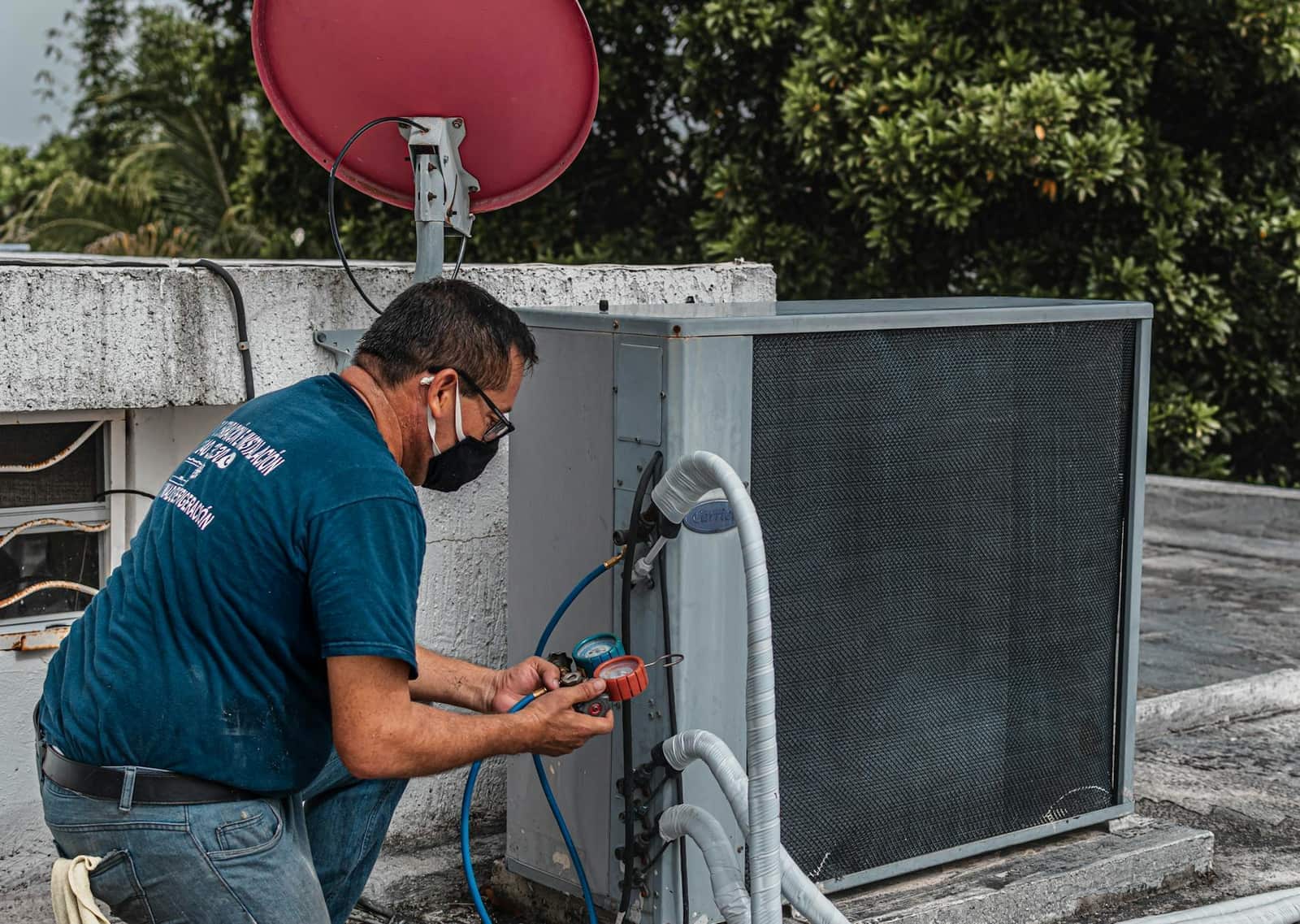
That gap is what this page is about: the search presence and the site that put your number in a homeowner's hand the minute their heat goes out or their AC dies, instead of the minute a campaign happens to be running.
What HVAC lead generation means when you own the pipeline
Buy a call from Service Direct or Angi and here is what you paid for: a fee per lead, the same homeowner sold to three of your competitors at the same moment, and a flow of calls that stops the day you stop paying. You rented attention by the week. You built nothing.
The other model is the one where your own site ranks for "furnace repair near me" in the cities you serve, your Google Business Profile sits in the map pack, and the homeowner who searches finds you and calls a number that rings your dispatch. That call is yours. It is an exclusive HVAC lead, not a name shared with three competitors. And the ranking that produced it is still there next month whether you spent a dollar that week or not.
Put plainly, HVAC lead generation done right means you build the thing that produces the leads, on ground you control, so the person searching at 2 AM finds you first and calls only you. It costs more to start. It stops costing as much once the rankings hold.
"25% of homeowners say trusting contractors is their top challenge when planning home improvement projects."
— Houzz Inc. (2025)

Why bought HVAC leads cost more than the price tag
The sticker price is the smallest part of what a bought lead costs you.
A shared lead lands in your inbox and three competitors' inboxes at the same time, so you are dialing a homeowner who is already talking to someone else. Exclusive HVAC leads fix the sharing and cost two to three times as much, and they still arrive cold, from a person who filled out a form on a site that was not yours and barely remembers doing it.
Then there is the close rate, which is where the real money leaks. When a homeowner finds you through search, reads your reviews, checks your service area, and dials, that lead closes somewhere around 40 to 60 percent. A bought lead closes at 10 to 20, because the homeowner never chose you. A database did. You run the same four estimates and win one instead of three.
Part of why the search lead closes better: by the time they call, they have already seen your proof. In Fervor's State of HVAC inspection, only 52.9% of HVAC contractor sites showed named-customer testimonials, so the ones that do stand out. A bought lead never saw any of that. They filled a form and got handed to whoever paid.
"In Fervor's State of HVAC inspection, only 52.9% of HVAC contractor sites showed named-customer testimonials."
— Fervor Studio, Digital State of the HVAC Industry 2026 (2026)
And every bought lead builds the broker's business, not yours. No repeat customer, no referral, no review, because the homeowner thinks they hired "the company the app sent." Buy HVAC leads for five years and you have funded someone else's brand while yours stayed invisible.
Owners tend to miss the five-year math. What you spend buying HVAC sales leads for one year is usually enough to build the search presence that would have produced those same calls, for free minus upkeep, for the next five. The bought lead feels cheaper because the cost is spread thin across the calendar. Run the longer number and it is the most expensive customer you will ever buy.
How to get HVAC leads from search instead of a broker
If you want HVAC leads that belong to you, the channel is local search. Knowing how to get HVAC leads this way comes down to a few things holding together at once.
Your site has to load fast and push one action. Over 70 percent of emergency HVAC searches happen on a phone, usually on a weak connection, from someone who taps the next result if your page stalls for four seconds. The bar is above 90 on mobile PageSpeed, a click-to-call button inside thumb reach, and a hero message that swaps with the season: heating from October, cooling from April. Miss those and you are paying to send traffic somewhere it leaves before it dials.
Speed is one failure mode. Quietly broken is the other. In Fervor's State of HVAC inspection, 64.4% of HVAC contractor sites had at least one critical accessibility failure across their pages, the kind that stops a keyboard user or a screen reader mid-form. Every one of those is a lead that started to book and could not finish.
"In Fervor's State of HVAC inspection, 64.4% of HVAC contractor sites had at least one critical accessibility failure across their pages."
— Fervor Studio, Digital State of the HVAC Industry 2026 (2026)
Then there is the service-area problem. You need a distinct page for every city you cover, written for that city, naming the neighbourhoods and the housing stock and your response time from dispatch. Not the same paragraph with the town name find-and-replaced, which Google spots and buries. This is what puts local HVAC leads in your pipeline, and it is tedious enough that most of your competitors never finished it. That is the opening.
And the form the traffic lands on. In Fervor's State of HVAC inspection, 29.9% of HVAC contractor websites with a contact form ask the homeowner for 11 or more fields. The person whose furnace died an hour ago fills out four, maybe, before the tab closes. Name, phone, address, one line on the problem. That is the whole form for an emergency lead.
"In Fervor's State of HVAC inspection, 29.9% of HVAC contractor websites with a contact form ask the homeowner for 11 or more fields."
— Fervor Studio, Digital State of the HVAC Industry 2026 (2026)
Your Google Business Profile carries the rest. The map pack sits above the organic results and takes more than 40 percent of local clicks, and holding it means matching name, address, and phone data across 40-plus directories, posting weekly, adding job photos, and keeping recent reviews coming in. A shop with 200-plus reviews and weekly posts holds the pack in its service area even against sites that outrank it organically. If you want the local side broken down step by step, that is what our HVAC SEO guide is for.
HVAC SEO lead generation is not any one of those. It is all of them, kept up through the seasons, so when demand jumps on a Tuesday in January the shop whose content matches the weather and the city is the one the phone finds. If the question is how to get more HVAC leads next quarter without raising ad spend, this is the answer. Local HVAC leads keep coming after the spend stops. Paid leads do not.
You can see where your site stands before spending a dollar on any of this. We grade it in 48 hours, no call required.
Emergency, planned, residential, commercial: the four funnels
The mechanical trades are the most seasonal category in home services. Search volume spikes at the first hard freeze and the first heat wave, then falls to a baseline through spring and fall. A generic agency spreads spend evenly over twelve months and then wonders why July was flat. A real HVAC lead generation system treats January and July as two separate businesses and builds a demand engine for each.
Residential HVAC leads split again, into emergency and planned, and the two want completely different pages. Emergency leads search and book in one sitting. They want a fast page, a phone number, and the word "now." Keep those pages lean. Nobody with pipes minutes from freezing is reading two thousand words first.
Planned replacements move at their own pace. Their process is weeks of research, efficiency-rating comparisons, rebate math, and three quotes before anyone signs. A furnace or heat pump swap runs $8,000 to $15,000, and the shop that showed up during the research phase is the one on the shortlist when the homeowner is finally ready to book. Those pages need comparison content, financing details, and a form that collects enough for a real estimate.
Comparison
"In Canada, heat pump shipments grew approximately 5% annually from 2020–2024 while furnace shipments fell approximately 3.4%, yielding 0.84 heat pumps shipped per furnace (up from 0.57 in 2020)."
— Heating, Refrigeration and Air Conditioning Institute (HRAI) (2024)
Commercial HVAC leads run on a calendar of their own. A property manager with a rooftop unit down does not search the way a homeowner does, and the keywords, the pages, the sales follow-up are all different. Commercial HVAC leads want their own section of the site, not a line on the residential page. The residential HVAC leads you book in January and the commercial contract you sign in March came off different pages.

Cover all four, and shift the weight as the season turns. Your competitor running one keyword set year-round has left the other three windows wide open.
What paid HVAC lead generation costs to run
Everything above is about the leads you own outright. Paid ads are the other side of it, and the practical question is this: how much do you need to put behind a channel before it starts booking calls? For HVAC the channels that pull their weight are Google Search and Google Local Services Ads. The homeowner whose furnace quit at 9pm is typing "furnace repair near me," not scrolling Instagram, so search and Local Services catch demand that's already there. Meta earns a place for retargeting and for the slower planned-replacement crowd who are still deciding, but it won't conjure a no-heat emergency out of nothing.
Start with the population you can realistically serve, not the number on your city's Wikipedia page. If you cover four suburbs and a stretch of highway, that's your service area, and it sets a ceiling on how many HVAC leads a month even exist for you to win. Find the tier your real coverage falls into before you read a single budget figure.
What HVAC ad budgets run, by service area and market
| Serviceable population | United States (USD) | Canada (CAD) | United Kingdom (GBP) | Ireland (EUR) |
|---|---|---|---|---|
| Under 50,000 | $1,800 | C$1,600 | £1,700 | €1,400 |
| 50,000 to 200,000 | $3,100 | C$2,600 | £2,800 | €2,300 |
| 200,000 to 1 million | $4,600 | C$3,900 | £4,100 | €3,500 |
| 1 to 5 million | $6,250 | C$5,250 | £5,500 | €4,600 |
| Over 5 million | $7,750 | C$6,500 | £7,000 | €5,750 |
| Serviceable population | United States (USD) | Canada (CAD) | United Kingdom (GBP) | Ireland (EUR) |
|---|---|---|---|---|
| Under 50,000 | $600 | C$550 | £550 | €450 |
| 50,000 to 200,000 | $1,000 | C$900 | £900 | €750 |
| 200,000 to 1 million | $1,500 | C$1,300 | £1,300 | €1,100 |
| 1 to 5 million | $2,100 | C$1,800 | £1,800 | €1,500 |
| Over 5 million | $2,600 | C$2,200 | £2,200 | €1,900 |
| Serviceable population | United States (USD) | Canada (CAD) | United Kingdom (GBP) | Ireland (EUR) |
|---|---|---|---|---|
| Under 50,000 | $750 | C$650 | £650 | €600 |
| 50,000 to 200,000 | $1,200 | C$1,100 | £1,100 | €1,000 |
| 200,000 to 1 million | $1,800 | C$1,700 | £1,700 | €1,500 |
| 1 to 5 million | $2,400 | C$2,200 | £2,200 | €2,000 |
| Over 5 million | $3,100 | C$2,800 | £2,800 | €2,400 |
Figures are rounded monthly planning midpoints for an Operating budget, in each market's local currency. They're not platform prices. A Test budget to start evaluating the channel runs roughly half these numbers; a Growth budget, once you have proven economics and the crew to handle more work, runs close to double. Service area means the population you can realistically reach, not your city proper. Amounts are media spend only and exclude account management, landing pages, call tracking and CRM. Australia is search only, since Local Services Ads aren't available there for HVAC. Expected results are ranges, not guarantees.
That table is demand capacity. Competition decides where inside each range you actually land, and sometimes whether you clear it at all. Drop into a metro where a dozen well-funded HVAC companies are bidding the same "AC installation" keyword and your cost per lead climbs toward the top of the band, sometimes past it. A quieter county with two serious advertisers books the same number of jobs for less. So before you lock a number in, pull your own market: Google Keyword Planner, the cost-per-click figures you're actually quoted, whatever Local Services lead prices run in your trade and your postcode.
Whatever the monthly figure works out to, judge it one way. Do the jobs it books clear your margin? Run it at the US mid-market operating figure. About $4,600 in search spend at roughly $128 a lead is around 36 leads a month. On the funnel data behind this model, HVAC search leads book at about 25 percent, so call it 9 new customers, somewhere near $510 to land each one. Set that against gross profit on a system install plus the maintenance agreement that tends to follow, and you can see whether the channel pays for itself. If the math works, the same arithmetic tells you when to add spend: more budget only makes sense once you've got the crew and the calendar to take the extra work. A lead is not a booked call, and a booked call is not a signed job, so keep the funnel honest the whole way down.
Search and Local Services leads are worth more than their sticker price because the intent is already baked in. Meta leads look cheaper per lead, and often they are, but a lower cost per lead still doesn't mean a lower cost per customer. A form fill from someone half-watching a video closes at a fraction of the rate a "my furnace is dead" search does. So don't pick a channel on raw lead price. Pick it on cost per booked job.
Google Local Services Ads are available for HVAC in the United States, Canada, the United Kingdom and Ireland. They aren't available in Australia under Google's current rules, so an Australian shop plans around search alone. Even where the channel exists, eligibility still depends on Google's current service categories and your location, and the product is mid-migration toward pay-per-lead billing, so confirm your business and service area are covered before you build a budget around it.
One thing the table can't price for you is the calendar. A January furnace-emergency auction costs more than the same keywords in June. Your service mix moves it. Speed-to-lead moves everything downstream of it, which is a whole separate conversation and one most shops lose. And these figures are media spend only. They don't include the agency running the account, the landing pages, the call tracking or the CRM, so a channel that looks break-even on media alone is quietly underwater once you add those in.
"In Fervor's State of HVAC inspection, 29.9% of HVAC contractor websites with a contact form ask the homeowner for 11 or more fields."
— Fervor Studio, Digital State of the HVAC Industry 2026 (2026)
Which is the reason to look at your own site before you spend a dollar sending traffic to it. A paid click lands on the same page an organic click does, and if that page loads slow or buries your phone number under an eleven-field form, you're buying visits and pouring them out. A free Site Inspection shows you what that traffic hits before you pay to send it.
HVAC lead generation companies vs. agencies
Two very different businesses will sell you HVAC lead generation, and it helps to know which one you are talking to.
The first is a lead broker. Service Direct, Angi, Networx, the pay-per-call platforms. They generate volume and resell it, usually shared, always on their terms, and you are a buyer in their marketplace. The honest ones in this group are upfront about the sharing and the close rates, and for a shop that needs calls this week with no site worth mentioning, they work as a bridge.
The second builds the machine on your side of the table. That is what an HVAC lead generation agency should mean: someone who builds your site, ranks your pages, runs your Google Business Profile, and hands you an asset you keep. The leads it produces are exclusive because they came through your own front door. When an owner searches for the best HVAC lead generation companies and lands on an agency instead, this second model is what they were looking for, whether the distinction was clear to them yet or not. It is the same logic behind HVAC website design and HVAC Conversion Rate Optimization: the site is the asset, and the leads come from owning it.
Fervor is the second kind. We do not sell you leads. We build the thing that generates them, and then it is yours to keep.
The math: bought leads vs. an owned pipeline
Run the arithmetic before you pick a side.
Buy HVAC sales leads at $60 each and close 15 percent. That is $400 in lead cost per booked job, before a tech or a part. At a $10,000 average job value you can carry it, but it never improves, and the platform raises the rate every renewal.
Now the owned side. A search presence pulling 500 organic visitors a month, converting at 4 percent, produces 20 leads. Close 45 percent of those and you have booked 9 jobs from search. At $10,000 average value that is roughly $90,000 in monthly revenue, and your cost per lead is a maintenance retainer split 20 ways, a number that drops as traffic grows. Month twelve costs less per lead than month one. Bought leads never do that.
The build costs more up front. It always does. Six months in, the owned system produces leads at a fraction of the bought-lead price, and it keeps producing them the week you get slammed and forget to log in.
How to measure whether it's working
Organic traffic is a vanity number until it turns into calls. Four figures tell you whether your HVAC lead generation is working, and if your current provider cannot produce them, you are paying for activity reports.
Calls from organic, tracked with a dedicated call-tracking number on the site. Form submissions from organic landing pages, tracked in form analytics. Cost per organic lead, which is monthly spend divided by organic leads. Revenue attributed to organic, traced from first click to closed job in your CRM or ServiceTitan.
Those four tell you whether the system produces leads that become revenue, or whether it produces a dashboard. An agency that reports rankings without tying them to booked jobs is handing you a weather report when you asked for a forecast. The numbers should point at where next month's content goes, not just recap last month.
Heat pump work is growing and furnace-only work is shrinking, so your reporting should show which service pages and which keywords bring the higher-value jobs. Then you push content toward the systems homeowners are buying now instead of repeating last year's plan.
Where Fervor fits
We start with a free Site Inspection. We pull the top-ranking shops in your service area, count exact term frequency across 10 ranking zones, and build a mathematical content brief before anyone writes a sentence. You see where your site is losing calls, with numbers attached.
Then we build for the booked call. Fast load, emergency-first mobile layout, a distinct page for every city in your territory, a Google Business Profile that holds the map pack, and a booking flow that moves a worried homeowner from "my furnace died" to "appointment confirmed" in under sixty seconds. After launch we run the monthly work that keeps it climbing, and we move the emphasis with the season, because your January business and your July business are not the same and your site should know that.
Organic lead volume builds over six to twelve months. Every page, every review, every piece of location content adds to the base instead of resetting when a campaign ends. That is the whole case for owning your HVAC lead generation rather than renting it. The presence you own is still working the morning after you stop paying attention to it.
Your competitors are not waiting. Book a free Site Inspection and we will show you exactly where your HVAC site is losing calls on searches like "AC repair near me," with numbers, not opinions.
What a Fervor engagement includes
Booked by Design™
Complete website system built to convert storm leads, planned projects, and research-phase homeowners into booked jobs. Trade-specific. Conversion-engineered. Yours.
- Custom design + trade-specific conversion architecture
- Mobile-first, SEO-ready build
- CallRail tracking + NiceJob review integration
Performance Partner™
Monthly SEO, content, and CRO with fixed deliverables. No credits, no rollover, no guessing what you're paying for. The compound growth engine.
- Monthly SEO content + technical monitoring
- Conversion rate optimization
- Revenue-tied reporting + dedicated account manager
The Site Inspection
Scored Site Inspection across 6 conversion categories with specific findings and revenue impact estimates. No pitch. Just the data.
- 100-point conversion potential inspection
- Competitor benchmarking in your market
- Revenue impact estimates per finding
- Actionable fix list prioritized by ROI
Tools we recommend for this trade
For HVAC shops running emergency dispatch, ServiceTitan is the standard: dispatch, invoicing, marketing attribution, and technician tracking in one system. Under $1M in revenue and you do not need the enterprise tier, Housecall Pro handles scheduling, invoicing, and field payments, and fires off the review request automatically when the job closes. Your referred customers get $200 off their first invoice.
And put a tracking number on every channel. CallRail gives you dedicated numbers for the site, the Google Business Profile, and your mailers, so you can see which one books the $10,000 furnace replacement and which one books the $150 tune-up.
HVAC lead generation questions we get asked
How do I get more HVAC leads without buying them?
Local search. Rank your site for "furnace repair" and "AC repair" plus your city, win the Google map pack with reviews and weekly posts, and build a real page for every service area you cover. Those leads are exclusive to you, and the ranking keeps producing them after you stop spending. It takes three to five months to build real traction, so most shops run paid ads alongside it for the first two quarters while the organic side catches up.
How much does HVAC lead generation cost?
Two models, two cost shapes. Bought leads run $25 to $150 each, shared or exclusive, and the price climbs every year. An owned system built by an agency has a real up-front cost, usually $8,500 to $12,000 for the site plus $997 to $2,497 a month to maintain it, and then the cost per lead falls as rankings hold. Over five years the owned system is far cheaper per booked job. The bought lead only feels cheaper because the cost is spread thin.
Are bought HVAC leads worth it?
As a stopgap, sometimes. If you have no web presence and need calls this week, a pay-per-call platform bridges the gap. As a long-term plan, no. Shared leads close at 10 to 20 percent, you fund the broker's brand instead of your own, and you get no repeat work or referrals from them. That money builds more if it goes toward the presence that generates exclusive leads.
How long does HVAC lead generation from SEO take to work?
Three to five months for real traction, six to twelve for steady volume. A new service-area page can rank in weeks in a smaller city and takes longer in a major metro. That is why the first two quarters usually pair SEO with paid ads: the ads carry the phone while the organic presence builds, then the mix tips toward organic as rankings hold.
What is the difference between an HVAC lead generation company and an agency?
A lead generation company generates leads and sells them to you, often shared with competitors, always on their platform. An agency builds the lead generation system on your side: your site, your rankings, your Google Business Profile, your leads. That is the difference between renting your lead flow and owning it. Most owners searching for the best HVAC lead generation companies want the second one.
Do commercial HVAC leads work the same way?
No. A property manager with a rooftop unit down searches differently than a homeowner, moves on a longer timeline, and responds to different content. Commercial work needs its own section of the site, its own keywords, and its own follow-up, not a line on the residential page.
The software hvac contractors ask us about
We sell none of this software and resell none of it. But you asked what runs the office, so we went and priced each one, then read the contract for the part that costs you later.
- BuildOps review. Field service management software for commercial mechanical and electrical contractors, running service dispatch and construction project management on one platform.
- Avoca AI pricing and contract terms. An AI voice agent that answers a contractor's inbound calls, texts and web chats around the clock and writes the booked job straight into ServiceTitan or Housecall Pro.
- our Contractor Foreman review. All-in-one cloud construction management software for small and mid-sized contractors, bundling estimating, takeoffs, job costing, scheduling, daily logs, time cards, service tickets, invoicing and a client portal on one company-wide subscription rather than a per-seat licence.
- Ekotrope RATER review. Cloud-based residential energy modelling and HERS rating software from Ekotrope, a RESNET-accredited software vendor based at 68 Harrison Ave, Boston, MA.
- FastPIPE pricing and contract terms. FastPIPE is Windows-only plumbing and mechanical estimating and on-screen takeoff software from FastEST, Inc.
The Site Inspection: How The Biggest HVAC Websites Score on Lead Conversion
We ran Site Inspections on these home service brands on 100 points of conversion potential. See what the national players get right, where they leak leads, and what independent contractors can exploit.
Compare hvac marketing agencies
See how these agencies stack up against Fervor Studio for hvac contractors.
So where the work starts depends on which channel is leaking. When customers can't find you in the first place, that's a job for HVAC SEO. When the clicks land but the phone stays quiet, the site itself is the leak, and HVAC Website Design is where you plug it. And once traffic is steady, HVAC Conversion Rate Optimization wrings more booked jobs out of the visitors you already paid for.
None of these numbers are ours to guess at; they come straight from our State of HVAC 2026, brand by brand.
The same playbook runs for our Plumbing marketing clients, since neighboring trades leak leads the same way. It carries over to Electrician marketing too. This trade is one piece of our wider mechanical contractor marketing practice. And if you run an adjacent crew, our exterior contractor marketing covers that side of the house.