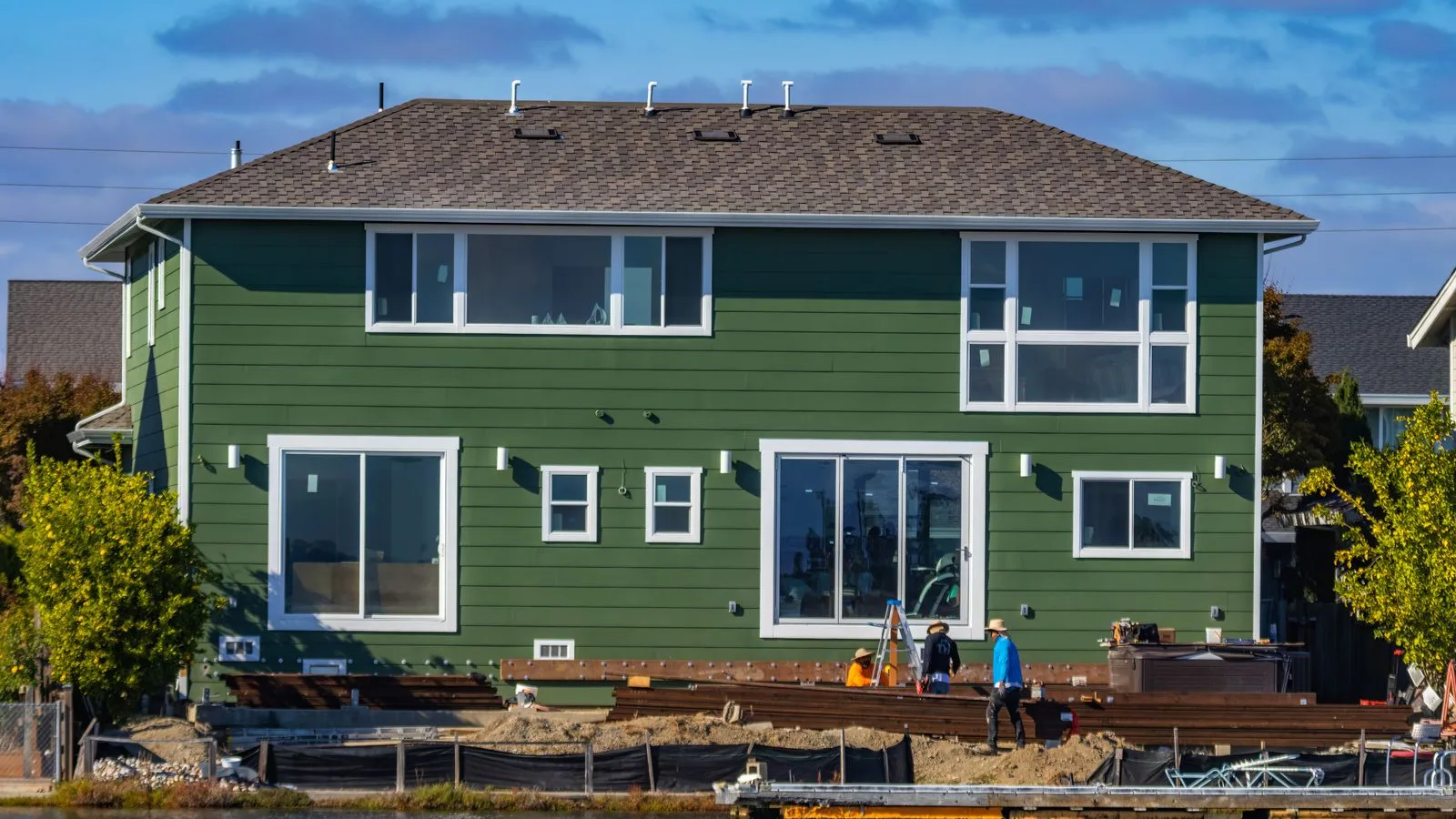
Gerald is fifty-eight. He has built custom homes in the Nashville area for twenty-six years. Twelve to fifteen homes a year, $900,000 to $2.5 million, an architect on staff and a project-management system he refined over two decades. His custom home lead generation is a sign on every jobsite and referrals from past clients, architects, and two realtors.
Licensed general contractor, registered builder, a portfolio in three magazines and a client list that vouches for him. His homes take a year to build and eighteen months to plan.
The referral pipeline is not what it was. A family planning a custom home spends a year or more researching before they interview a builder, browsing plans, comparing builders' portfolios, learning about the process, pricing land and construction. Two builders now own the searches that family runs, "custom home builder Nashville," "cost to build a custom home," "how to choose a custom home builder." By the time the family is interviewing, Gerald is not on the shortlist.
Gerald signed four homes from new inquiries last year. The builder across town signed twelve.
He has the licence. He has the architect and the process. He has twenty-six years of finished homes. What he does not have is a site that shows up during the eighteen months a family spends deciding.
So a family starts collecting plans, runs the searches, and the builder whose site explains the process, the cost, and the timeline honestly, and shows the right homes, makes the interview list. Nobody is comparing framing schedules online in month four. Gerald sits on page four. The competitors sit first and second.
That gap is what this page is about: the search presence and the site that get your company interviewed during the eighteen months a family researches building a custom home, instead of the week a campaign runs.
What custom home lead generation means when you own the pipeline
Buy custom home leads from a plan site or a portal and here is the deal: a fee per name, the same family sent to several builders, and mostly people who are years out or dreaming. In this trade, portal leads are close to worthless. You rented a list of someday.
The other model is your site ranking for "custom home builder," "cost to build a custom home," and "custom home builders near me" in your area, your Google Business Profile in the map pack, and families requesting a meeting after a year of reading your content. Those requests are yours, exclusive, and the rankings hold through the next cycle and every one after whether you spent a dollar or not.
Put plainly, custom home lead generation done right means you build the thing that gets you interviewed, on ground you own. It costs more to start than portal leads. It stops costing as much once the rankings hold, and unlike a referral, it does not depend on someone else remembering your name.
"In 2024, just 4% of U.S. homeowners undertook new home construction."
— Houzz Inc. (2025)
Custom home buyers research for a year, and the builder who taught them wins
A custom home is the largest purchase most families ever make, and only about 4 percent of homeowners build new in a given year, so the audience is small and the stakes are enormous. That family spends twelve to eighteen months learning, and they choose the builder who feels like the safest pair of hands.
"Custom home: average build timeline: 11.9 months"
— U.S. Census Bureau (2025)
Feeling like the safest pair of hands is a content problem. A builder whose site clearly explains the whole path, land evaluation, design, budgeting and allowances, the contract structure, the build timeline, the draw schedule, what change orders cost, what the warranty covers, has effectively pre-answered the interview. A builder with a gallery and a contact form has a family walking in cold and nervous.
The content also has to speak to what families actually want now. More than half of Canadian buyers want a legal secondary suite, and a third expect to need aging-in-place features within a decade. A builder whose site addresses multi-generational living, suites, and accessible design ranks for those searches and signs the families planning for them.
"57% of Canadian homebuyers said they would want a legal secondary suite in their next home."
— Canadian Home Builders' Association (CHBA) (2024)
One very long funnel, and how to enter it earlier
Eighteen months of consideration is a long time to be absent. The builders who win consistently enter the family's process early, with content that helps at the "should we even do this" stage: honest cost-to-build guides, a realistic look at the timeline, a page on building versus buying-and-renovating, a land-buying guide.
Then a low-commitment first step, a discovery call, a paid feasibility or site-analysis study, or a plan consultation, that a family can say yes to a year before they are ready to sign a build contract. The builder who is helpful in month three is the builder who gets the contract in month eighteen.
"Across the contractor websites Fervor inspected, 39% of those with a contact form ask the homeowner for 11 or more fields."
— Fervor Studio, Digital State of the Home Services Industry 2026 (2026)
"35% of Canadian homebuyers said they need aging-in-place features within 5–10 years."
— Canadian Home Builders' Association (CHBA) (2024)
Luxury renovation and whole-home additions are an adjacent business for many custom builders and deserve their own pages, since a family renovating a $1.5 million home searches differently than one building from scratch.
Build for the long funnel with an early entry point, and the builder with one "about our homes" page has left the entire research audience to you.
What paid custom home lead generation costs to run
Everything above is about the leads you own. Paid ads rent demand while that presence builds, and for a custom home builder the question is how much you need behind the channel to produce the handful of qualified conversations that make a year. A custom home buyer researches for a year or more, and the builder whose content taught them tends to win. Google Search catches them across that year. Meta keeps your completed homes and your process in front of them while they decide. A cold lead form does almost nothing here.
Base the budget on the area you actually build in, not a metro figure. Custom builders work a defined region, and a lead outside it is a lead you can't serve. Because two or three signed homes can be the whole year, the tiers below matter less for lead volume and more for the auction cost in your market. Pick the one your build area matches.
What custom-home-builder ad budgets run, by service area and market
| Serviceable population | United States (USD) | Canada (CAD) | United Kingdom (GBP) | Ireland (EUR) |
|---|---|---|---|---|
| Under 50,000 | $2,500 | C$2,100 | £2,300 | €1,900 |
| 50,000 to 200,000 | $4,200 | C$3,600 | £3,800 | €3,200 |
| 200,000 to 1 million | $6,250 | C$5,250 | £5,750 | €4,700 |
| 1 to 5 million | $8,500 | C$7,250 | £7,500 | €6,250 |
| Over 5 million | $10,500 | C$9,000 | £9,500 | €8,000 |
| Serviceable population | United States (USD) | Canada (CAD) | United Kingdom (GBP) | Ireland (EUR) |
|---|---|---|---|---|
| Under 50,000 | $450 | C$400 | £400 | €300 |
| 50,000 to 200,000 | $750 | C$650 | £650 | €550 |
| 200,000 to 1 million | $1,100 | C$950 | £950 | €800 |
| 1 to 5 million | $1,500 | C$1,300 | £1,300 | €1,100 |
| Over 5 million | $1,900 | C$1,600 | £1,600 | €1,300 |
| Serviceable population | United States (USD) | Canada (CAD) | United Kingdom (GBP) | Ireland (EUR) |
|---|---|---|---|---|
| Under 50,000 | $650 | n/a | £600 | €500 |
| 50,000 to 200,000 | $1,100 | n/a | £950 | €850 |
| 200,000 to 1 million | $1,600 | n/a | £1,500 | €1,300 |
| 1 to 5 million | $2,200 | n/a | £1,900 | €1,700 |
| Over 5 million | $2,700 | n/a | £2,400 | €2,200 |
Figures are rounded monthly planning midpoints for an Operating budget, in each market's local currency. They're not platform prices. A Test budget to start evaluating the channel runs roughly half these numbers; a Growth budget, once the economics are proven and you have the capacity to take on more work, runs close to double. Service area means the population you can realistically reach, not your city proper. Amounts are media spend only and exclude account management, landing pages, call tracking and CRM. Local Services Ads cover custom home builders in the US, the UK and Ireland; elsewhere the plan is search and social. Australia is never eligible. Where the status is conditional, the category and postcode have to be confirmed before you budget for it. Expected results are ranges, not guarantees.
The table is available demand, and for this trade the demand is genuinely thin: few homeowners in any market are commissioning a custom home this year. The auction reflects that with a high cost per click. Fervor estimates these ranges from broader home-building benchmarks plus custom-specific assumptions, so treat them as planning figures and confirm against your own Keyword Planner data and quoted click costs.
Judge the monthly figure against your margin, which on a custom home is substantial. Public paid-media data for custom building is scarce, so Fervor estimates search cost per lead near $350 for planning purposes, the highest of any trade here. At the US mid-market figure, roughly $6,250 in search spend at that rate is about 18 leads a month, and custom home search leads book near 15 percent on this model, so call it 3 signed builds at close to $2,080 to acquire each. Against a build worth several hundred thousand dollars in revenue that is trivial, so the constraint is how many homes you can build well in a year, not the ad cost. A lead is not a booked discovery meeting, and a booked meeting is not a signed build contract.
A search lead is a homeowner comparing builders now. A Meta lead is someone a year or more out who follows your finished-home posts. Over a funnel this long both feed the same pipeline, and the cheaper Meta lead does not mean a cheaper signed contract. Compare the channels on cost per contract.
Local Services Ads treat custom home building as conditional in the US, the UK and Ireland, so the category and your location need confirming before Google runs it. Canada and Australia have no Local Services option for the category. Plan on search and Meta carrying the work in the meantime.
The table can't weight your pipeline. A builder doing four homes a year runs different math than one doing twelve, and a slow economy can stretch the funnel by months. These are media figures only, with nothing for account management, landing pages, call tracking or the CRM.
"Across the contractor websites Fervor inspected, 39% of those with a contact form ask the homeowner for 11 or more fields."
— Fervor Studio, Digital State of the Home Services Industry 2026 (2026)
And a buyer a year into research will judge you by your website before they ever call. The visitor you paid for and the one who found you organically see the same pages, the same load speed, the same depth or lack of it. A free Site Inspection shows you what a year-long researcher finds.
Custom home lead generation companies vs. agencies
Two different businesses will sell you custom home lead generation. A lead broker or plan-and-lead site generates family names and resells them, shared and years early. In this trade it is close to useless.
An agency builds the system on your side: your site, your rankings, your Google Business Profile, a pipeline you own. The inquiries are exclusive because the family researched their way to you over a year. When a builder searches for the best custom home lead generation companies and lands on an agency instead, this is the model they wanted.
Fervor is the second kind. We do not sell you leads. We build the thing that generates them, and then it is yours.
What most custom home builder sites get wrong
The typical custom builder site is a portfolio of finished homes, a short about page, and a contact form, and it is built for the family that is already sold. In a trade with an eighteen-month buyer cycle, that is a fraction of the audience. The family in month six is not ready to interview builders. They are still deciding whether to build at all.
A site that helps at that stage, with an honest cost-to-build guide, a realistic timeline, a page on building versus buying and renovating, and a land-buying guide, becomes the resource that family trusts. And a low-commitment first step, a discovery call or a paid feasibility study, gives them a way to engage a year before they would sign a build contract. The builder who was useful in month six is on the shortlist in month eighteen.
The other miss is reviews that talk about how beautiful the home is. A nervous family spending seven figures is screening for something else entirely: did the builder communicate, did they hold the budget, did they finish on time. Reviews and content that speak to those fears convert the family that beautiful photography alone leaves anxious.
How to get custom home leads from search
Your site has to load fast and read like a builder of $1.5 million homes. Above 90 on mobile PageSpeed, a low-commitment first step always in reach, and content organized around a family's real questions about cost, land, process, and timeline.
Then a page for every topic and every area you build in, written for that region, referencing land availability, lot costs, permitting, and the architectural styles common there, plus deep cost, process, and contract content. Not one "our process" page. Google ranks the specific page for the specific search, and a family in month six finds the specific page.
And the form. Across the contractor websites Fervor inspected, 39% of those with a contact form ask the homeowner for 11 or more fields. For a family a year out, that is a wall. Ask for a name, an email, and a one-line description of the vision. Everything else comes in the discovery call.
"Across the contractor websites Fervor inspected, 39% of those with a contact form ask the homeowner for 11 or more fields."
— Fervor Studio, Digital State of the Home Services Industry 2026 (2026)
Your Google Business Profile carries the map pack, which takes more than 40 percent of local clicks. Finished-home photography, weekly posts, consistent name and address across directories, and reviews that speak to communication and budget discipline, which is what a nervous family is really screening for.
You can see where your site stands before spending a dollar. We grade it in 48 hours, no call required.
The math, and how to measure it
Portal custom home leads close at 1 to 3 percent and cost $50 to $200, so the cost per signed home runs into five figures before design starts. Build a search presence pulling 400 organic visitors a month at 2 percent inquiry rate and you get 8 inquiries, close 20 to 30 percent because they spent a year with your content, sign 1 to 2 homes a month at a seven-figure value, and the cost per lead drops as rankings hold.
Track four numbers: qualified inquiries from organic on a dedicated tracking line, form submissions from organic pages, cost per organic inquiry, and revenue attributed to organic from first click to signed build contract in your CRM. Given a build contract can be $1.5 million, one organic signing pays for the system many times over.
"Across the contractor websites Fervor inspected, only 25.5% keep their most-complex form to five user-facing fields or fewer."
— Fervor Studio, Digital State of the Home Services Industry 2026 (2026)
Early-stage versus ready-to-build inquiries should show up separately. The early ones are the pipeline, and knowing which content brings them in tells you where to invest.
Where Fervor fits
We start with a free Site Inspection. We pull the top-ranking custom builders in your service area, count exact term frequency across 10 ranking zones, and build a mathematical content brief before anyone writes a sentence. You see where your site is losing interviews, with numbers.
Then we build for the research year: honest cost-to-build and process content, a filterable home portfolio, a page for every topic and every area, a low-commitment first step, and a Google Business Profile with photography that does the homes justice. After launch we run the monthly work that keeps it climbing.
"Across the contractor websites Fervor inspected, only 45% showed named-customer testimonials."
— Fervor Studio, Digital State of the Home Services Industry 2026 (2026)
Organic inquiry volume builds over six to twelve months, the longest cycle of any trade, and then it becomes a steady pipeline of families who chose you before they interviewed anyone. That is the case for owning your custom home lead generation rather than renting names years early.
Book a free Site Inspection and we will show you where your custom home site is losing inquiries on searches like "custom home builder near me," with numbers, not opinions.
What a Fervor engagement includes
Booked by Design™
Complete website system built to convert storm leads, planned projects, and research-phase homeowners into booked jobs. Trade-specific. Conversion-engineered. Yours.
- Custom design + trade-specific conversion architecture
- Mobile-first, SEO-ready build
- CallRail tracking + NiceJob review integration
Performance Partner™
Monthly SEO, content, and CRO with fixed deliverables. No credits, no rollover, no guessing what you're paying for. The compound growth engine.
- Monthly SEO content + technical monitoring
- Conversion rate optimization
- Revenue-tied reporting + dedicated account manager
The Site Inspection
Scored Site Inspection across 6 conversion categories with specific findings and revenue impact estimates. No pitch. Just the data.
- 100-point conversion potential inspection
- Competitor benchmarking in your market
- Revenue impact estimates per finding
- Actionable fix list prioritized by ROI
Tools we recommend for this trade
For custom builders running design, estimating, selections, and construction management, a system that carries a lead from first inquiry through discovery, design contract, and build, with marketing-source attribution, earns its keep. NiceJob automates the reviews that carry a map-pack ranking. And put a tracking number on every channel so you know which one produced the $1.8 million signing.
Custom home lead generation questions we get asked
How do I get custom home leads without buying them?
Rank your site for "custom home builder," "cost to build a custom home," and "custom home builders near me" plus your region, publish honest cost, process, and timeline content, build a filterable home portfolio, add a low-commitment first step, and win the Google map pack with photography that does the homes justice. Families research their way to you over a year and interview a builder they already trust. It takes six to twelve months for real traction.
Why are portal leads almost useless for custom home builders?
Because a custom home has a twelve-to-eighteen-month decision cycle and only about 4 percent of homeowners build in a given year. The names a portal sells are overwhelmingly people who are years out or just dreaming, and they close at 1 to 3 percent. You pay a premium to sort through a list of someday.
How much does custom home lead generation cost?
An owned system built by an agency runs $20,000 to $30,000 for the site, reflecting the content depth a seven-figure considered purchase needs, plus $997 to $2,497 a month. Given a build contract can exceed $1.5 million, one organic signing pays for the whole system many times over.
What content actually gets a custom builder interviewed?
Content that removes fear: an honest cost-to-build guide with real numbers, a realistic timeline, an explanation of the contract structure and the draw schedule, what change orders cost, and how you handle budget overruns. A nervous family leans toward the builder whose site made the scariest parts feel controlled.
How long until custom home SEO produces inquiries?
Six to twelve months for real traction, the longest of any trade, because a family researches for well over a year. The payoff is a pipeline of families who chose you before they interviewed anyone else. Paid search usually runs alongside for the first three quarters.
Should luxury renovation be on the same site?
Yes, on its own pages. A family renovating a $1.5 million home searches differently than one building from scratch, and it is a natural adjacent business for a custom builder. Separate content lets that family find you for the right service.
The software custom home builder contractors ask us about
We sell none of this software and resell none of it. But you asked what runs the office, so we went and priced each one, then read the contract for the part that costs you later.
- Cabinet Vision review. Cabinet Vision is Hexagon's design-to-manufacture CAD/CAM package for cabinet, closet and commercial casework shops.
- JobTread pricing and contract terms. JobTread is construction estimating and project management software from JobTread Software, LLC in Dallas, Texas.
- our Microvellum review. Microvellum is a design-for-manufacturing system for cabinet and millwork shops.
- Buildxact review. Buildxact is a cloud estimating and takeoff platform for residential builders, remodelers and material dealers, built in Melbourne, Australia and sold in the US, Canada, UK, Australia and New Zealand.
- ClearCalcs (now Calcs.com) pricing and contract terms. Cloud structural calculation software for beam, column, footing, shear wall and load-path design to US (AISC/ACI/NDS/ASCE), Australian (AS/NZS) and Eurocode standards.
Compare custom home builder marketing agencies
See how these agencies stack up against Fervor Studio for custom home builder contractors.
None of these numbers are ours to guess at, so they trace straight back to the CRO Index statistics.
The same playbook runs for our Remodeling marketing clients, since neighboring trades leak leads the same way. It carries over to Kitchen & Bath marketing too. This trade is one piece of our wider remodeling and construction marketing practice. And if you run an adjacent crew, our specialty contractor marketing covers that side of the house.