
















































































“Nay did an amazing job, you know. He was really patient. He got the work done the way I told him and he was just on point with the website. Pretty straightforward process. No going around the bush. He just did amazing work and I would 100% recommend.”
View on Google →HVAC conversion rate optimization that plugs your funnel's leaks.
Turn more of your local visitors into booked jobs. We find your website's leaks and plug them, so the visitors you've got start booking jobs.
How Can We Help?
Choose the option that suits your needs.
Let’s Investigate
We will send your Site Inspection to the email you provided.
You’re in.
We’ll send your Site Inspection within about three days.
Let’s Chat
Book a time that works for you.

“Attentive, listened to every revision request, delivered on time. Would work with him again.”
- Hamza Najam

“Patient, on point, straightforward. Did amazing work. Would 100% recommend.”
- Ruben Mederos, HyperTemp HVAC

“Responsive, creative, exceeded expectations. Already seeing greater engagement from our clients.”
- George Jeorgy, Jeorgy's Landscape Construction

“Top-tier professionalism, real web design expertise, ideas I hadn't considered. Confidently recommend.”
- Aws Nassani, Four Eleven Contracting

Let’s talk about what your website could be doing for your business.
Call Us TodayThe HVAC specifics your website needs.
Every angle below comes from how homeowners search, evaluate, and buy, built into your site to help boost conversions.
Homeowners Weigh Online Booking Before They Choose You
Most homeowners now factor online booking into the decision when they pick a contractor, with 80% weighing it. Yet only 56.7% of HVAC sites offer it at all, so the trade keeps losing the after-hours homeowner who won't wait until business hours to call.
A Maintenance Plan Should Enroll in Under Three Minutes
Maintenance-plan members are the most valuable customers an HVAC company has, yet enrollment stays thin across the trade. ServiceTitan's data puts membership penetration near a quarter of customers for strong operators versus roughly one in ten for the rest. A plan buried on a services page never enrolls anyone.
Recurring Revenue Is Worth Double at Exit
Buyers pay 7 to 10 times EBITDA for recurring service-plan revenue, versus 3 to 5 times for demand-only work. A membership page that actually converts isn't just steady cash flow, it's a multiple on the day the owner sells. Few HVAC sites treat it that way.
Nearly a Third of HVAC Forms Ask for Too Much
29.9% of HVAC website forms demand 11 or more fields from a homeowner whose AC just died, while only 27.6% keep it to five fields or fewer, the range that actually gets submitted.
Two-Thirds of HVAC Sites Hide Their License
Only 33.7% of HVAC contractors display a license number anywhere on their site, even in states where homeowners have learned to check before they let a stranger into their home.
The Trust Gap Between Top and Bottom Is Nearly Seven Points
The top quartile of HVAC sites averages 17.54 trust-and-credibility points; the bottom quartile averages 10.68. That 6.86-point gap is close to the entire margin between winning and losing the call.
Text Messaging Barely Exists as a Contact Channel
Only 23.1% of HVAC sites offer a text-message option, even though it's often the fastest way to reach a homeowner who won't call and won't fill a long form either.
77% Show Reviews, But Most Stop at One Platform
76.9% of HVAC sites surface Google reviews, a real strength for the trade. The gap is depth and velocity, not existence: a wall of reviews that stopped updating months ago reads worse than a smaller, current one.
What HVAC CRO Actually Is (and What It Isn't)
HVAC CRO is the discipline of taking the visitors your website already receives and converting more of them into calls, booked appointments, and form submissions. Not redesigning the site. Not ranking it higher. Taking the demand that already lands on your pages, finding the points where it leaks away, and plugging them one by one, in order of revenue impact. The numbers here come straight from our State of HVAC 2026.
Get My Site Inspection
The Conversion Baseline Most HVAC Websites Are Working From
Fervor inspected HVAC contractor websites across North America for the Digital State of the HVAC Industry report, real sites, scored page by page on the same framework, with the evidence archived. It pairs with our guide to HVAC SEO.
Get My Site InspectionThe conversion picture that came out of that work is the baseline this whole page argues from. It's also the baseline we graded firms against in the ranking of HVAC marketing agencies, if you'd rather compare vendors than fix this yourself. "Across 104 HVAC contractor websites inspected for the Digital State of the HVAC Industry report, the average site earns 65.32 of 100 points." Fervor, Digital State of the HVAC Industry (2026). And the same thinking shows up in our Remodeling Conversion Rate Optimization.
And the conversion-specific categories drag that average down hardest. Lead capture, the forms, the booking paths, the contact channels, runs at barely six-tenths of its possible score across the trade sample. Trust signals score lower still. The sites are findable, often even presentable. They just don't convert the people who arrive, and the owners mostly don't know, because nobody is measuring the gap between visits and booked jobs.
"Only 4.8% of HVAC contractor websites offer the visitor any kind of free inspection or assessment." Fervor, Digital State of the HVAC Industry (2026) And a word on how those scores were produced, because HVAC CRO without a framework is just opinion. Every site in the study was graded on the same six categories: first impression, trust and credibility, lead capture, mobile experience, content, and accessibility. The two that this page lives in, lead capture and trust, are the two the trade fails hardest. Not because owners don't care.
But because nobody ever showed them the leak list, and the agencies billing them monthly had no incentive to. So before anything else, understand what that means competitively: the bar is on the floor. The average HVAC site leaks in four predictable places, and a shop that fixes even two of them converts ahead of most of its market. And every fix on the list is HVAC CRO work you can verify from your own call log. Here are the four, with the numbers.
Leak One: After-Hours Demand With Nowhere to Land
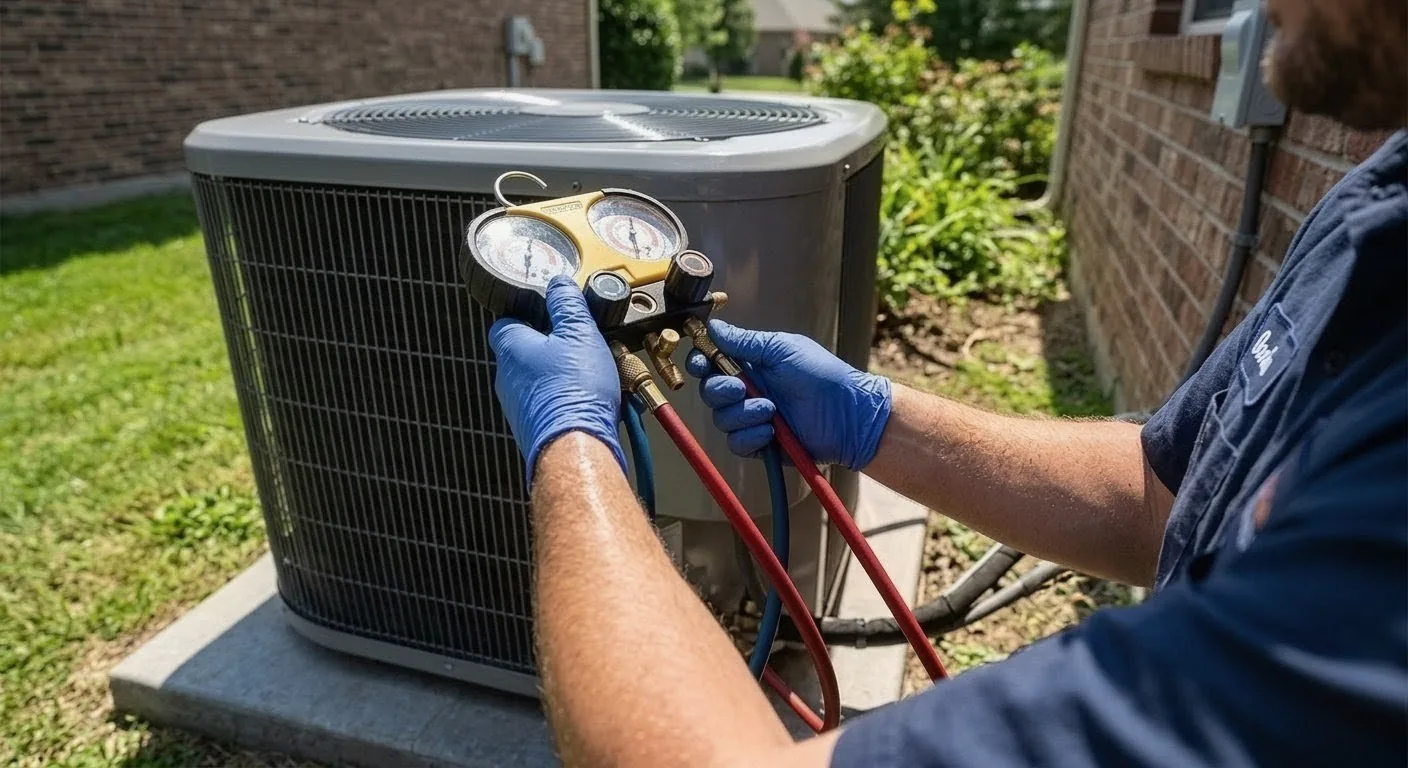
And here's the first leak: your highest-intent visitor arrives when your office is closed. The furnace dies at 11pm; the AC quits on the first ninety-degree Saturday. That visitor is ready to book right now, and what most HVAC websites offer them is a phone number that rings to voicemail and a form that promises a callback "within one business day."
Get My Site Inspection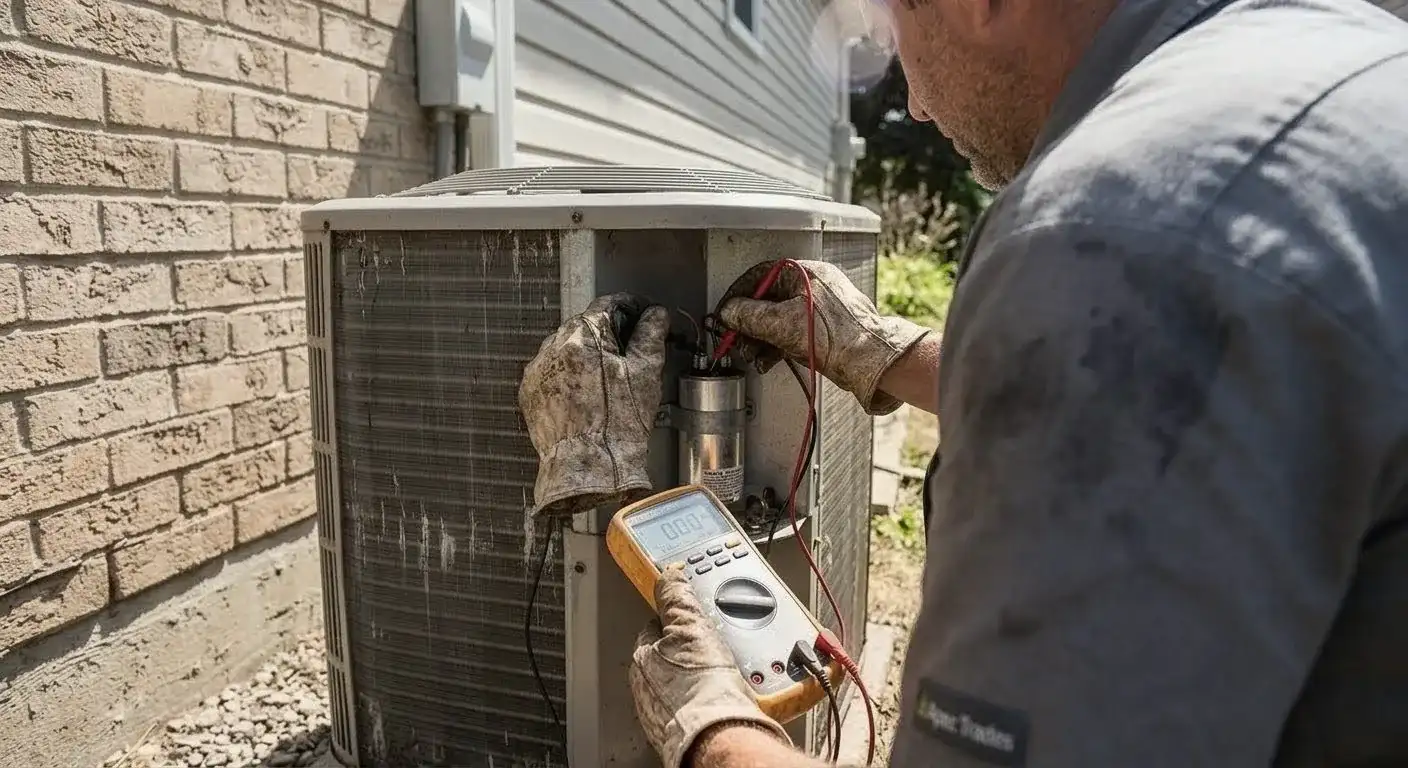
Leak Two: The Phone-First Reality
But for all the talk of digital channels, the HVAC buyer is still overwhelmingly a caller. Emergency intent converts by phone; everything about your site should make calling effortless. Most sites get the basics half-right and lose the rest in the details.
Get My Site Inspection
Questions Contractors Ask Before Hiring Us
What does HVAC CRO actually get me?
A site that books the job instead of just describing it. The work is conversion architecture first, so every page has a clear call path, real proof, and fast mobile load.
How is this different from the last agency that burned me?
You see the scoring framework, the benchmark data behind it, and your ranked fix list before any remediation work begins. It is a diagnosis you can evaluate, not a promise you have to trust.
How do you know this works for my trade?
The Fervor Grade framework was built by scoring 380 contractor sites across roofing, remodeling, and HVAC. Your trade's patterns are in the data, not borrowed from SaaS or dentists.
How long does it take?
A Booked by Design rebuild runs 30 to 60 days. It starts with a Site Inspection so the build targets the pages that are costing you calls.
Who owns the website and the accounts?
You do. The domain, the content, the analytics, every account we touch. Day one. No ownership traps, no holding your site hostage if you leave.
What if I do not like what the inspection finds?
Then you found out something that was already costing you, and now you know where. The inspection surfaces what is actually wrong on the site so you can decide what to fix.
Do you work with contractors outside your area?
Yes. We work with contractors across Canada and the US, and the benchmark data covers national brands, so the standard holds in any market.
How much does it cost?
A Booked by Design rebuild is one project price with no monthly lock-in. One booked job at your average ticket usually covers it, and we show you that math before you commit.
Will the changes hurt my current rankings?
No. The work protects what already ranks. We map the URLs and the equity first, fix the conversion leaks, and improve the pages that search already trusts rather than wiping them.
What do I have to do during the project?
Very little. The intake takes minutes, and the build work is ours to run from there. You keep running crews. We will only ask for things no one else can give us, like your real service area and your best photos.
Still Have Questions?
Give us a call expressing your specific needs, and we’ll see if we are a good fit for each other.
From Our HVAC Clients
Real reviews from the contractors whose sites we rebuilt.

Reviews carry more weight on a contractor site than most layout changes will. If yours are thin or the newest one is six months old, that's the fix worth making before you touch anything else. NiceJob handles the ask after each job so you can build up recent reviews without chasing customers by hand. If your CRM has follow-up automation, wire the ask into that instead. Either way, what shows on the page is what does the work.
As the fixes go in, you'll want proof they're booking more calls, so measure the call results. A service like CallRail puts a separate tracking number on each traffic source to easily track what's working. If you don't have a dedicated business line yet, Unitel Voice gives you local and toll-free numbers built for small businesses that a CallRail tracking number can forward to. Or you can lean on whatever call tracking your CRM already supports.