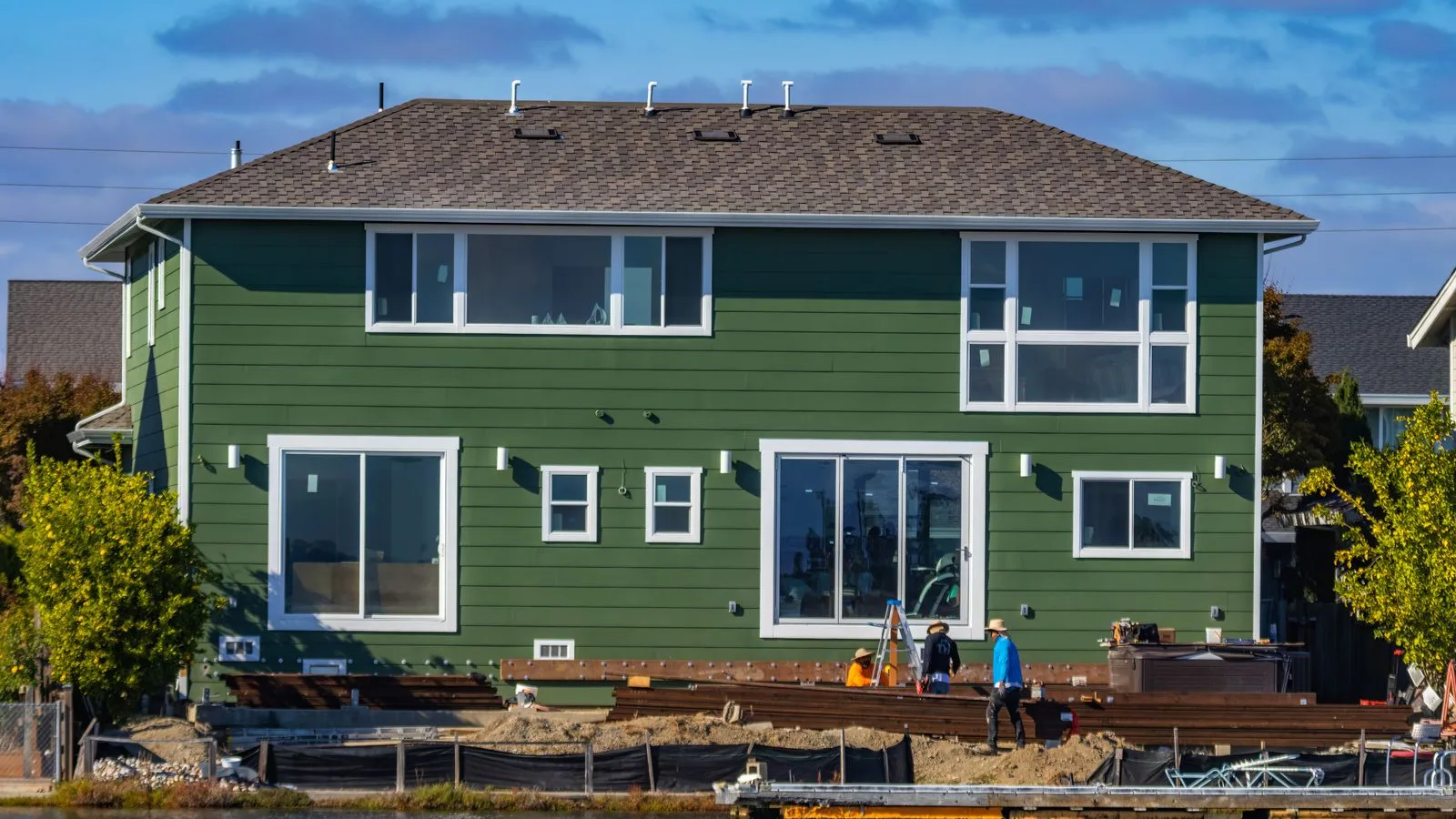

Marcus is forty-eight. He has installed residential solar across the Phoenix metro since 2012, went independent in 2016, and built SunRidge Energy into a nine-person crew. NABCEP certified, an A-plus with the BBB, the installer two roofing companies refer their re-roof-and-solar customers to. His solar lead generation is a marketing agency's retainer and a stack of purchased leads that never pick up the phone.
NABCEP PV Installation Professional? Yes. Licensed Arizona ROC contractor since 2016. His crew does 200-plus rooftop systems a year and the callback rate is under two percent.
Here is how a solar sale actually starts. A homeowner opens their July power bill, sees $340, and starts reading. Panel brands. Loan versus lease versus cash. Payback period. The federal credit and what is left of it. Net metering rules for their utility. That reading takes three to six months, and somewhere in it they decide which two or three companies to call.
Marcus is not in that reading. His site ranks for nothing, so the homeowner never finds SunRidge while they are deciding. By the time Marcus buys their name off a lead platform, they have already signed with someone else.
A four-year-old competitor called Sunhaven runs a site with a page on every financing option, a payback calculator, a page for each Phoenix suburb, and a blog that answers every question a researching homeowner types. Sunhaven closed 31 systems last month at an average contract of $24,000. Most of those homeowners found Sunhaven in month two of their research and never left.
Marcus has the certification. Marcus has the crew. Marcus has years of clean installs and a referral network. What he does not have is a presence in the three-month window where the decision actually gets made.

That gap is what this page is about: the search presence and the site that put your company in front of a homeowner in month one of their research, so you are on the shortlist in month three, instead of buying their name in month four when it is too late.
What solar lead generation means when you own the pipeline
The solar lead-vendor industry is huge, and most of what it sells is junk. A purchased solar lead is a name that filled out a "see if you qualify" form on a site that was not yours, sold to four installers at once, often with a phone number that goes to voicemail. You are buying the right to compete for someone who never chose you.
Owning the pipeline is the other model. Your site ranks for "solar panels cost," "is solar worth it in [city]," and "solar installers near me." Your Google Business Profile sits in the map pack. The homeowner researching in month one finds you, reads your financing page, and books a consultation with a company they already trust. That lead is yours, it is exclusive, and the ranking that produced it keeps working next month.
Put plainly, solar lead generation done right means you build the thing that catches the researcher, on ground you own. It costs more to start than a batch of leads. It stops costing as much once the rankings hold, and it never sends the same homeowner to three of your competitors.
Comparison
"7% of U.S. homeowners report having solar panels installed on their home, and an additional 28% say they have seriously considered it."
— Pew Research Center (2024)
Why bought solar leads cost more than the price tag
Solar leads are among the most expensive in home services, $30 to $250 a name depending on the source, and the close rate is brutal because the homeowner never picked you.
A homeowner who found you through search spent a week on your site before they filled the form. They read your reviews, saw your local installs, checked your financing options. That consultation closes at a rate a purchased list cannot touch. A bought lead is a cold name racing three other installers to the callback.
And the economics only get worse. Residential solar installs are projected to fall 13 percent in 2026 as incentives change, which means fewer homeowners in the market and lead vendors raising prices to hold revenue. The installers who own their search presence are insulated from that. The ones renting leads are about to pay more for less.
"Residential solar installations projected to drop by 13% in 2026"
— Solar Energy Industries Association (2025)
Owners tend to miss the multi-year math. A year of solar-lead spend usually covers building the search presence that would have produced those consultations, exclusively, for years. The bought lead feels cheaper because the cost is spread across the month. Run the long number and it is the most expensive customer you will ever sign.
How to get solar leads from search instead of a lead vendor
If you want solar leads that belong to you, the channel is search, and it maps to the research the homeowner is already doing.
You need pages that answer the questions they type: what solar costs in your market, how the financing options compare, what the payback period looks like at local utility rates, whether their roof is a good candidate, what the incentives are now. Ninety-two percent of people who consider solar are doing it to cut the power bill, so every one of those pages leads with the money.
"92% of Americans who have installed or seriously considered solar cite saving money on electricity bills as a reason for solar."
— Pew Research Center (2022)
The financing content matters more here than in any other trade. Most systems are financed, and a homeowner who cannot follow the difference between a loan, a lease, and a power purchase agreement will stall out and stop shopping. Each option needs its own page: what you own, what you owe, what happens if you sell the house, and how the monthly payment compares to the power bill it replaces. Vague "flexible financing available" copy loses the buyer who needed the details.
You need a page for every city and suburb you install in, written for that area, referencing local utility rates, the net metering or net billing rules that apply there, and any city or utility rebate on top of the federal credit. Not one page with the city name swapped, which Google buries. This is where local solar leads come from, and because incentive rules change by jurisdiction, genuinely local content is hard for a national competitor to fake.
And the form has to respect where the homeowner is. Across the contractor websites Fervor inspected, 39% of those with a contact form ask for 11 or more fields. A homeowner in month two of research will give you a name, an address, and a monthly bill amount. That is enough to run a real proposal and start the conversation. Asking for roof age, current provider, and household size on the first form just sends them back to reading.
"Across the contractor websites Fervor inspected, 39% of those with a contact form ask the homeowner for 11 or more fields."
— Fervor Studio, Digital State of the Home Services Industry 2026 (2026)
Your Google Business Profile carries the local pack, which takes more than 40 percent of local clicks. Consistent name, address, and phone across directories, weekly posts, install photos with the neighbourhood visible, and recent reviews. A homeowner deciding on a $24,000 purchase reads every review you have, so a steady flow of them is doing as much work as any page on the site.
You can see where your site stands before spending a dollar on any of it. We grade it in 48 hours, no call required.
The buyer who takes six months, and the one who takes six weeks
Most residential solar buyers move slowly, three to six months from first bill shock to signed contract. Your site has to hold their attention across that window with content deep enough to be the resource they keep coming back to.
A smaller group moves fast: a homeowner re-roofing anyway, or one facing a rate hike, or one whose neighbour just went solar. They compress the whole decision into a few weeks. Your consultation-booking flow has to be frictionless enough to catch them before the moment passes.
"44% of U.S. solar adopters have household incomes under $100K."
— Lawrence Berkeley National Laboratory (2024)
Solar buyers also span a wider income range than most installers assume, with 44 percent of adopters under $100K in household income, so your financing content cannot only speak to cash buyers. Loan, lease, and PPA options each need a clear page.

Build for both timelines, and the installer still buying cold leads has left the entire research-phase audience to you.
Why the incentive window makes this urgent
Solar has always been sensitive to policy, and the next two years tighten it. The 25D tax credit for customer-owned systems is scheduled to phase down, some states have shifted from net metering to less generous net billing, and the market forecast for 2026 is a contraction. Every one of those changes shortens the window a homeowner has to act, which means the homeowner who starts researching now is a more motivated buyer than the one from two years ago.
For an installer, that cuts two ways. Fewer total buyers in the market means the ones who are shopping are worth more, and a lead vendor with less inventory will charge you more for each cold name. An owned search presence does the opposite: it captures a larger share of a smaller pool at a cost per lead that keeps dropping. The installers who spend the next year building that presence come out of the contraction with a pipeline. The ones renting leads come out of it paying more for less.
Your content also has to keep up. An incentives page that still cites last year's rules costs you trust with the exact buyer you want, the one who has done their homework. Keeping that content current is part of what the ongoing work buys you.
What paid solar lead generation costs to run
Everything above is about the leads you own. Paid ads rent demand while that builds, and for solar the question is how much you need behind the channel before it produces homeowners who actually sign, not just tire-kickers. Google Search catches the homeowner pricing systems and comparing installers. Meta does the nurture work across a decision that can run months, and it matters more here than in most trades because incentives, financing and payback all take explaining.
Budget off the service territory your crews and permitting cover, not the metro count. Solar's radius is often a whole utility region, so be precise about where you'll actually install. That territory caps the monthly solar leads worth pursuing. Pick the matching tier first.
What solar ad budgets run, by service area and market
| Serviceable population | United States (USD) | Canada (CAD) | United Kingdom (GBP) | Ireland (EUR) |
|---|---|---|---|---|
| Under 50,000 | $2,000 | C$1,700 | £1,800 | €1,500 |
| 50,000 to 200,000 | $3,300 | C$2,800 | £2,900 | €2,500 |
| 200,000 to 1 million | $4,900 | C$4,200 | £4,400 | €3,700 |
| 1 to 5 million | $6,500 | C$5,500 | £6,000 | €4,900 |
| Over 5 million | $8,250 | C$7,000 | £7,250 | €6,250 |
| Serviceable population | United States (USD) | Canada (CAD) | United Kingdom (GBP) | Ireland (EUR) |
|---|---|---|---|---|
| Under 50,000 | $500 | C$450 | £450 | €400 |
| 50,000 to 200,000 | $850 | C$750 | £750 | €650 |
| 200,000 to 1 million | $1,300 | C$1,100 | £1,100 | €950 |
| 1 to 5 million | $1,700 | C$1,500 | £1,500 | €1,300 |
| Over 5 million | $2,200 | C$1,800 | £1,900 | €1,600 |
| Serviceable population | United States (USD) | Canada (CAD) | United Kingdom (GBP) | Ireland (EUR) |
|---|---|---|---|---|
| Under 50,000 | $700 | n/a | n/a | n/a |
| 50,000 to 200,000 | $1,200 | n/a | n/a | n/a |
| 200,000 to 1 million | $1,800 | n/a | n/a | n/a |
| 1 to 5 million | $2,400 | n/a | n/a | n/a |
| Over 5 million | $3,000 | n/a | n/a | n/a |
Figures are rounded monthly planning midpoints for an Operating budget, in each market's local currency. They're not platform prices. A Test budget to start evaluating the channel runs roughly half these numbers; a Growth budget, once the economics are proven and you have the capacity to take on more work, runs close to double. Service area means the population you can realistically reach, not your city proper. Amounts are media spend only and exclude account management, landing pages, call tracking and CRM. Local Services Ads run for solar installers in the US only; the other markets are search and social. Expected results are ranges, not guarantees.
The table is demand capacity. The local auction decides your share, and solar auctions run hot: national installers and lead aggregators bid the core terms aggressively in most markets. Expect the top of each band or above in a large metro. Fervor estimates these ranges from broader home-services benchmarks plus solar-specific assumptions, so confirm against your own Keyword Planner and quoted click costs before you commit.
Judge the monthly number against your margin, nothing else. Public paid-media data for solar is limited, so Fervor estimates search cost per lead near $218 for planning purposes. At the US mid-market figure, roughly $4,900 in search spend at that rate is about 22 leads a month, and solar search leads book near 18 percent on this model, so call it 4 signed systems at close to $1,230 to acquire each. Against a system sale that runs well into five figures that clears, but bought solar leads from an aggregator are a different economics entirely, and usually a worse one. A lead is not a booked site assessment, and a booked assessment is not a signed contract.
A search or Local Services lead is a homeowner actively pricing solar. A Meta lead is someone earlier in the decision who tapped an incentive ad. The Meta lead is cheaper and much slower to close, so cheaper per lead does not mean cheaper per installed system. Compare the channels on cost per signed contract.
Local Services Ads run for solar in the US only. Canada, the UK, Ireland and Australia have no Local Services option for the category right now, so installers there plan around search and Meta. Where the US channel runs, eligibility still depends on Google's current rules and your location, with billing moving to pay-per-lead.
The incentive window is the thing the table can't price. When a rebate or tax-credit deadline approaches, demand and cost per lead both jump, and the pages that capture it have to already rank. These are media figures only, excluding account management, landing pages, call tracking and the CRM, so a channel that looks break-even on media alone is not.
"Across the contractor websites Fervor inspected, 39% of those with a contact form ask the homeowner for 11 or more fields."
— Fervor Studio, Digital State of the Home Services Industry 2026 (2026)
And a homeowner comparing four installers will leave a slow page or a long form without a second thought. Paid and organic traffic land on that same page. A free Site Inspection shows you what that buyer meets before you pay to send them.
Solar lead generation companies vs. agencies
Two very different businesses will sell you solar lead generation. A lead vendor generates names at scale and resells them, almost always shared, often low-intent. For an installer with no site and a need for volume this quarter, it is a stopgap.
An agency builds the system on your side: your site, your rankings, your Google Business Profile, an asset you keep. The consultations it produces are exclusive because the homeowner found and chose you. When an installer searches for the best solar lead generation companies and lands on an agency instead, this is the model they were looking for.
Fervor is the second kind. We do not sell you leads. We build the thing that generates them, and then it is yours.
The math, and how to measure it
Buy solar leads at $120 each and close 8 percent, and that is $1,500 in lead cost per signed system before a truck rolls. Build a search presence pulling 800 organic visitors a month at a 3 percent consultation rate and you get 24 consultations, close 20 to 30 percent of those because they chose you, and sign 5 to 7 systems a month at a cost per lead that drops as rankings hold.
Track four numbers: consultations booked from organic, form submissions from organic pages, cost per organic consultation, and revenue attributed to organic from first click to signed contract in your CRM. An agency reporting rankings without tying them to signed systems is handing you a weather report. The lag between first click and signed contract is months in solar, so the reporting has to follow a lead across that whole window, not just count form fills.
"Across the contractor websites Fervor inspected, only 25.5% keep their most-complex form to five user-facing fields or fewer."
— Fervor Studio, Digital State of the Home Services Industry 2026 (2026)
Where Fervor fits
We start with a free Site Inspection. We pull the top-ranking installers in your service area, count exact term frequency across 10 ranking zones, and build a mathematical content brief before anyone writes a sentence. You see where your site is losing consultations, with numbers.
Then we build for the research-phase buyer: financing pages that lead with payback, a page for every city and utility territory you serve, a payback calculator, and a consultation flow that respects where the homeowner is in their decision. After launch we run the monthly work that keeps it climbing.
"Across the contractor websites Fervor inspected, only 45% showed named-customer testimonials."
— Fervor Studio, Digital State of the Home Services Industry 2026 (2026)
Organic consultation volume builds over six to twelve months and keeps producing after you stop paying attention. That is the case for owning your solar lead generation rather than renting names by the batch.
Book a free Site Inspection and we will show you where your solar site is losing consultations on searches like "solar panels cost near me," with numbers, not opinions.
What a Fervor engagement includes
Booked by Design™
Complete website system built to convert storm leads, planned projects, and research-phase homeowners into booked jobs. Trade-specific. Conversion-engineered. Yours.
- Custom design + trade-specific conversion architecture
- Mobile-first, SEO-ready build
- CallRail tracking + NiceJob review integration
Performance Partner™
Monthly SEO, content, and CRO with fixed deliverables. No credits, no rollover, no guessing what you're paying for. The compound growth engine.
- Monthly SEO content + technical monitoring
- Conversion rate optimization
- Revenue-tied reporting + dedicated account manager
The Site Inspection
Scored Site Inspection across 6 conversion categories with specific findings and revenue impact estimates. No pitch. Just the data.
- 100-point conversion potential inspection
- Competitor benchmarking in your market
- Revenue impact estimates per finding
- Actionable fix list prioritized by ROI
Tools we recommend for this trade
For solar companies running sales and install teams, a CRM built for the long consideration cycle earns its keep: pipeline stages from first contact through permitting and PTO, and attribution back to the marketing source. Housecall Pro covers scheduling, invoicing, and field payments for the install side and sends the review request automatically when the job closes. Your referred customers get $200 off their first invoice.
And put a tracking number on every channel. CallRail gives you dedicated numbers for the site, the Google Business Profile, and your mailers, so you see which one books the $24,000 system and which one books a maintenance call.
Solar lead generation questions we get asked
How do I get solar leads without buying them?
Build a site that answers the questions homeowners research for months before they buy: what solar costs in your market, how loan, lease, and PPA financing compare, what the payback period is at local rates, and what incentives are left. Add a page for every city and utility territory you serve, win the Google map pack, and the researching homeowner finds and chooses you. It takes four to six months to build real traction because the buyer cycle is long.
Why are bought solar leads so bad?
They are shared with three or four installers, they are usually low-intent (someone who filled a "check if you qualify" form), and the homeowner never chose you, so the close rate sits around 5 to 10 percent. Solar leads also run $30 to $250 a name, so you are paying a premium to compete for someone cold.
How much does solar lead generation cost?
Bought leads run $30 to $250 each and prices are rising as the market contracts. An owned system built by an agency runs $10,000 to $15,000 for the site plus $997 to $2,497 a month, and the cost per consultation drops as rankings hold. Over two or three years the owned system is far cheaper per signed system.
How long does solar SEO take to work?
Four to six months for real traction, longer than most trades because the buyer researches for months and the content has to be deep. A new city page can rank in weeks in a smaller market. The first two quarters usually pair SEO with paid search so consultations keep booking while the organic side builds.
Does the site need a payback or savings calculator?
It helps. Ninety-two percent of solar buyers are motivated by the power bill, so a calculator that turns their monthly bill into a payback period and a 25-year savings figure is doing exactly the work the homeowner came to do. It also captures a bill amount you can follow up on.
Should the site speak to financed buyers, not just cash?
Yes. Nearly half of solar adopters have household incomes under $100K, and most systems are financed. Loan, lease, and PPA each need their own clear page explaining the tradeoffs, or you lose the buyer who cannot write a $24,000 cheque.
The software solar contractors ask us about
We sell none of this software and resell none of it. But you asked what runs the office, so we went and priced each one, then read the contract for the part that costs you later.
- Angi for Pros review. Angi for Pros is the contractor side of Angi, the largest shared-lead marketplace in US home services.
- Aurora Solar pricing and contract terms. Cloud solar design and sales software for residential solar installers and dealers, covering 3D roof modelling, shade and irradiance analysis, automated panel layout, tablet proposals with integrated lender financing, contract e-signature, and optional human-delivered site models and permit plan sets.
- our HelioScope review. Browser-based commercial and industrial solar PV design and simulation software.
- Rilla review. Rilla is a virtual ride-along and speech analytics platform for outside sales and service.
- Service Finance Company pricing and contract terms. Service Finance Company, LLC is a nationally licensed home improvement lender that sits behind the contractor at the point of sale.
Compare solar marketing agencies
See how these agencies stack up against Fervor Studio for solar contractors.
None of these numbers are ours to guess at, so they trace straight back to the CRO Index statistics.
The same playbook runs for our HVAC marketing clients, since neighboring trades leak leads the same way. It carries over to Plumbing marketing too. This trade is one piece of our wider mechanical contractor marketing practice. And if you run an adjacent crew, our exterior contractor marketing covers that side of the house.