Service Finance Company Review 2026: Pricing, Pros, Cons, Alternatives
Third-party contract data puts real numbers on Service Finance Company. The 7 gaps reviewers name, and 4 alternatives that publish a price upfront.

Page at a glance
Service Finance Company is A point-of-sale home improvement lender for contractors who sell big-ticket replacement jobs in the home, priced as a dealer fee per funded loan rather than as a monthly subscription. It publishes no price, so the only way to get a number is to ask a salesperson for one. There is no seat model and no subscription. Enrollment is per business: the dealer signs up as a company, receives a dealer number, and staff log into the shared dealer portal or the mobile app under that dealer account. The dealer portal login page offers only Username, Password, Forgot Password and Register for New Account, with no per-seat purchase step anywhere in the flow, and an App Store reviewer trying to create an account reports being asked for a dealer number rather than a licence. Because there is no seat charge, a three-truck shop and a thirty-truck shop pay exactly the same amount to be enrolled, which is nothing. The entire cost moves on financed volume multiplied by whatever percentage the rate card assigns to the loan product the salesperson selects. It fits Established 10 to 100 person replacement crews running in-home, one-visit sales calls on residential HVAC changeouts, full roof replacements, window and door packages and solar, where the close depends on turning a five-figure quote into a monthly payment before the salesperson leaves the kitchen table. It's the wrong buy for A one to five person shop with average tickets under about $5,000, or a service-call business that mostly does repairs rather than replacements, because The cost model only works at volume. Because there's no subscription and no seat fee, SFC costs nothing to hold. But the rate card is negotiated on the strength of your funded volume, and enrollment is gated behind a sales call keyed to your annual revenue band. So a shop that finances a handful of jobs a year has no leverage on the rate card, will land on the worst tier, and will pay a percentage on every one of those few jobs while absorbing an in-home app whose licence scanner may not work on their devices. And a platform that shows multiple lender offers and charges the contractor nothing is a better fit until financed volume is a regular monthly number. Alternatives that publish their prices are Acorn Finance from $0. A quote-only price and what third parties report instead, seven evidenced gaps and four alternatives, one of which publish a figure.
Whether Service Finance Company is worth it
Service Finance Company earns its money with Established 10 to 100 person replacement crews running in-home, one-visit sales calls on residential HVAC changeouts, full roof replacements, window and door packages and solar, where the close depends on turning a five-figure quote into a monthly payment before the salesperson leaves the kitchen table. If that's you, it does the job. The sections below are the parts worth checking before you sign. But the fit is narrower than the marketing suggests, and the price isn't the whole cost.
The vendor publishes no price. But every number below was verified on 7 August 2026 and comes from a named third party that says which.
| Pricing model | Custom quote, no published price |
|---|---|
| Entry price | Quote only |
| Users | There is no seat model and no subscription. Enrollment is per business: the dealer signs u |
| Ownership | Truist. The Service Finance Company loan calculator's own terms of use call SFC "a subsidiary of Truist Bank", and the SFC enrollment overview deck leads with "A Nationally Licensed subsidiary of Truist". The careers link in the svcfin.com footer points at careers.truist.com, and consumer data-rights requests are routed to the Truist Privacy Center rather than to SFC. In the CFPB public complaint database the entity is filed under the name Service Finance Holdings, LLC. |
| Best fit | Established 10 to 100 person replacement crews running in-home, one-visit sales calls on residential HVAC changeouts, full roof replacements, window and door packages and solar, where the close depends on turning a five-figure quote into a monthly payment before the salesperson leaves the kitchen table. |
| Accounting sync | QuickBooks, Sage, or any general ledger (none) |
What works
- The whole product is built to turn a five-figure quote into a monthly payment before the salesperson leaves the house
- Funding is gated on job-completion proof plus the homeowner's authorization, so the contractor carries the job until the customer says yes twice
- The rep drives an e-signature flow on the customer's behalf, and that's where the compliance risk concentrates
- The catalogue is deep enough that product selection, not approval rate, becomes the thing to manage
What does not
- The salesperson can't see the dealer fee in the app, which is the one number that decides whether the job is profitable
- No published price of any kind, and the vendor's own loan calculator asks you to supply the interest rate
- The driver's licence scanner has been broken for different teams, on different devices, across at least three years of releases
- The dealer portal instructs contractors to weaken their browser security settings
- Both mobile apps sit near the bottom of their stores, and the gap between the app and the web portal is the recurring cause
Service Finance Company is A point-of-sale home improvement lender for contractors who sell big-ticket replacement jobs in the home, priced as a dealer fee per funded loan rather than as a monthly subscription. It sells to HVAC and Roofing and Solar and Windows and doors contractors, and the shape of the product follows from that: Options get presented at the point of sale, the homeowner applies on the rep's phone or in the dealer portal, and a decision comes back in as little as a few minutes. The reviewers who like SFC like it for exactly this: one describes showing customers the monthly payment across the various loan options and completing the whole process in minutes, another has run it in customers' homes for years without an issue. And the complaints don't dispute that the model works. They dispute the execution details that slow it down, chiefly the licence scanner and the login mismatch, both of which cost minutes at the precise moment minutes are expensive.
Ownership matters here more than it usually does. Service Finance Company is owned by Truist. The Service Finance Company loan calculator's own terms of use call SFC "a subsidiary of Truist Bank", and the SFC enrollment overview deck leads with "A Nationally Licensed subsidiary of Truist". The careers link in the svcfin.com footer points at careers.truist.com, and consumer data-rights requests are routed to the Truist Privacy Center rather than to SFC. In the CFPB public complaint database the entity is filed under the name Service Finance Holdings, LLC., so weigh roadmap risk alongside the feature list. An independent product can be bought and folded into somebody else's plan two years after you sign.
Service Finance Company: right buyer, wrong buyer
It fits Established 10 to 100 person replacement crews running in-home, one-visit sales calls on residential HVAC changeouts, full roof replacements, window and door packages and solar, where the close depends on turning a five-figure quote into a monthly payment before the salesperson leaves the kitchen table. That's the half most reviews print. Here's the other half, which is the one worth your time.
Don't buy it if you're A one to five person shop with average tickets under about $5,000, or a service-call business that mostly does repairs rather than replacements. The cost model only works at volume. Because there's no subscription and no seat fee, SFC costs nothing to hold. But the rate card is negotiated on the strength of your funded volume, and enrollment is gated behind a sales call keyed to your annual revenue band. So a shop that finances a handful of jobs a year has no leverage on the rate card, will land on the worst tier, and will pay a percentage on every one of those few jobs while absorbing an in-home app whose licence scanner may not work on their devices. And a platform that shows multiple lender offers and charges the contractor nothing is a better fit until financed volume is a regular monthly number. Look at Acorn Finance instead.
Don't buy it if you're A commercial, industrial or insurance-restoration contractor. Service Finance Company is a consumer lender. Every product is a consumer installment loan underwritten against a homeowner's credit, the company is an FHA Title I Lender operating as a sales finance company and third-party servicer, and the finished list of what it funds is residential: roofing and insulation, HVAC, kitchen and bathroom remodeling, windows and doors, flooring, fences and awnings, sheds, and pools. A commercial buyer has no consumer credit file to underwrite and an insurance restoration job is paid by a carrier, not financed by the property owner. Neither has anything for SFC to lend against. Look at A commercial equipment finance or working-capital line from your existing bank instead.
Don't buy it if you're A contractor who wants to keep the customer relationship and the payment data after the job is done. The lending relationship transfers to SFC and stays there. SFC's privacy notice states that it continues to share a borrower's information after they stop being a customer, its retention policy is described only as product and business-level criteria rather than a stated period, and all data-rights requests are routed to the Truist Privacy Center rather than to SFC. Those rights belong to the homeowner. Nothing published gives the contractor a route to export their own funded-loan history out of the dealer portal. If owning the customer's finance record matters to your service-agreement or replacement-cycle marketing, this is the wrong structure. Look at A financing platform that hands the contractor a copy of the application and funding record, or a bank line you control directly instead.
What you'll pay Service Finance Company in year one
There's no published price for Service Finance Company. The pricing page asks you to get in touch, so every figure below comes from somewhere other than the vendor, and each one says where.
The vendor's own wording is this, and nothing more: "Service Finance Company does not publish a dealer rate card, a dealer fee percentage, an APR, or any other number describing what financing costs the contractor. What makes this a deliberate choice rather than an oversight is that the company markets the rate card as the honest, all-in source of truth while keeping the card itself private. On the Leap partner page, where SFC supplies its own program copy, it promises no hidden fees and then names the rate card as the thing that governs dealer cost. The card is nowhere on svcfin.com. Direct probes for /pricing, /plans, /rates, /dealer-pricing, /terms and /legal all return 404, the public sitemap resolves to only ten links and none of them concern price, and SFC's own enrollment overview deck runs through scale, support teams and process without a single figure before terminating in a phone number." So treat every third-party page printing tier names and figures for Service Finance Company with careful suspicion. Those numbers are not on the vendor's site today, and a roundup that reprints them is telling you what Service Finance Company used to charge somebody else.
And we aren't going to print a per-month number we can't open a vendor page and read. What exists instead is third-party reporting, dated, from people who saw real contracts. Read it as a range rather than as a quote you can hold anyone to.
| Reported range | Reported on | Source |
|---|---|---|
| 3% to 45% of the financed amount, industry-wide across home improvement lenders, not Service Finance Company specific. On a $10,000 project the article puts the contractor's cost at $300 to $4,500 to offer one particular loan. | The visible byline reads "July 01" with no year. The page's machine-readable datePublished and dateModified attributes both render as the fetch timestamp (2026-08-07T09:44:55-04:00), which is a template artifact rather than a real publication date, so the year isn't verifiable from the source. | Enhancify, a competing contractor financing platform, publishes the only concrete dealer fee range reachable without an enrollment call. It puts the industry span at 3% to as high as 45% of the financed amount and works the arithmetic on a $10,000 job. This range is INDUSTRY-WIDE and is NOT a Service Finance Company figure. It is published by a direct competitor of SFC, which gives it an obvious incentive to make the high end look high. Treat it as the shape of the cost, not as SFC's number. |
| No percentage given. The reviewer confirms only that a dealer fee is attached to each offering and that reading it requires leaving the app for the web portal. | 2025-10-15 | An SFC dealer confirms in an App Store review that a per-loan dealer fee exists, that it is keyed to a finance code, and that the salesperson cannot see it inside the mobile app. This corroborates the structure of the pricing (a rate card mapping finance codes to dealer fees) without revealing a single percentage. It is the closest thing to a first-hand account of the rate card that is publicly reachable. |
| $75.00 processing fee, or $150.00 if Service Finance prepares the subordination agreement. Check only. | 2026-08-07 | The one dealer-adjacent dollar figure Service Finance Company does publish sits in the consumer FAQ and covers loan subordination, which comes up whenever a homeowner refinances a mortgage while an SFC home improvement loan is outstanding. SFC charges $75.00 to process a subordination if the borrower's own party prepares the agreement, and $150.00 if SFC prepares it. The fee is payable by check only and the package takes up to 10 business days to be reviewed and returned. Contractors regularly absorb this to keep a customer relationship intact, which makes it a real if minor cost of carrying SFC paper. |
There is no seat model and no subscription. Enrollment is per business: the dealer signs up as a company, receives a dealer number, and staff log into the shared dealer portal or the mobile app under that dealer account. The dealer portal login page offers only Username, Password, Forgot Password and Register for New Account, with no per-seat purchase step anywhere in the flow, and an App Store reviewer trying to create an account reports being asked for a dealer number rather than a licence. Because there is no seat charge, a three-truck shop and a thirty-truck shop pay exactly the same amount to be enrolled, which is nothing. The entire cost moves on financed volume multiplied by whatever percentage the rate card assigns to the loan product the salesperson selects.
What a Service Finance Company quote leaves out
Payment processing. Service Finance Company is the lender, so there is no card processing rate and no merchant account. The contractor is funded by ACH directly into the business bank account, but only after two gates clear: the dealer must obtain client verification and supply proof that the job is finished, and the homeowner must then authorize the payout. Until both happen the contractor is carrying the job. SFC states plainly that it does not accept credit or debit cards from the borrower either, so the repayment side runs on check, ACH, money order or cashier's check. That matters to the contractor indirectly, because a borrower who cannot pay by card is a borrower more likely to go delinquent on a loan the contractor's brand is attached to.
Implementation and onboarding. No implementation fee is disclosed and none is implied. The enrollment deck advertises concierge training as part of the program and describes a three-team support structure of inside sales, outside sales and relationship management delivering training to every staff member. No price is attached to any of it. Onboarding is gated behind a phone call rather than a self-serve signup: the Business Sign Up form collects owner status, business name, annual revenue band and referring affiliate, and then hands the prospect to a salesperson.
Minimum term. Ask whether the Dealer Agreement carries a minimum term or a minimum annual funded volume, and what happens to your rate card tier if you miss it. Because the cost model is a percentage of funded loans rather than a subscription, the lever a lender pulls is usually rate-card tiering by volume, not a termination fee. Get the volume bands and the fees attached to each in writing before you enroll.
Getting out. Ask what happens to loans already in your pipeline but not yet funded on the day you stop selling SFC paper, whether SFC will still fund an approved application after you deactivate, and how long an approval stays valid. Also ask whether deactivating removes your access to the dealer portal immediately, because that portal is the only place your funded-loan history lives.
Auto-renewal. Ask for the Dealer Agreement in full before signing and check whether it renews automatically and whether SFC can change the rate card unilaterally on renewal or on notice. Because a rate card that can move without your countersignature is the single most important term in a percentage-of-volume deal, and it isn't addressed anywhere on the public site.
Modules sold separately. . The Service Finance Company figure worth writing down is the one with your day-one modules already in it, not the headline tier.
"Third-party reporting puts Service Finance Company at 3% to 45% of the financed amount, industry-wide across home improvement lenders, not Service Finance Company specific. On a $10,000 project the article puts the contractor's cost at $300 to $4,500 to offer one particular loan., reported The visible byline reads "July 01" with no year. The page's machine-readable datePublished and dateModified attributes both render as the fetch timestamp (2026-08-07T09:44:55-04:00), which is a template artifact rather than a real publication date, so the year isn't verifiable from the source.."
Enhancify, a competing contractor financing platform, publishes the only concrete dealer fee range reachable without an enrollment call. It puts the industry span at 3% to as high as 45% of the financed amount and works the arithmetic on a $10,000 job. This range is INDUSTRY-WIDE and is NOT a Service Finance Company figure. It is published by a direct competitor of SFC, which gives it an obvious incentive to make the high end look high. Treat it as the shape of the cost, not as SFC's number. (rce.)
Side note, and it's a useful one: service Finance Company markets pricing transparency and delivers the opposite. Its program copy promises no hidden fees, no merchant fee, no ACH fee, no credit card processing fee and no activation fee, then names the rate card as the thing that governs what the dealer pays. But the rate card is published nowhere. So the sentence is technically accurate and practically useless: there are no hidden fees around the rate card because the rate card is the fee, and it's hidden. And the tell is the company's own loan calculator, which has a required field labelled Annual Interest Rate with the helper text asking the user to enter their annual interest rate. The lender built a calculator that can't calculate without the borrower supplying the one number the lender knows. Don't read the no-hidden-fees claim as a pricing disclosure, because it's a pricing deflection. So go into the enrollment call with your trailing twelve months of financed volume by ticket size and ask for the rate card tiers in writing, then hold a second quote from Foundation Finance or Aqua Finance beside it. Because the percentage is the entire negotiation, and it's the only part of the deal SFC won't put on a web page.
Everything that is not the Service Finance Company subscription
The subscription is the part everyone quotes. These are the lines that land afterwards, and the ones we could not find are named as unpublished rather than left blank.
Sold separately. . Price the configuration you'll really run, because an add-on you need on day one is part of the price.
"Service Finance Company answers the question of what it costs with this and nothing else: "Service Finance Company does not publish a dealer rate card, a dealer fee percentage, an APR, or any other number describing what financing costs the contractor. What makes this a deliberate choice rather than an oversight is that the company markets the rate card as the honest, all-in source of truth while keeping the card itself private. On the Leap partner page, where SFC supplies its own program copy, it promises no hidden fees and then names the rate card as the thing that governs dealer cost. The card is nowhere on svcfin.com. Direct probes for /pricing, /plans, /rates, /dealer-pricing, /terms and /legal all return 404, the public sitemap resolves to only ten links and none of them concern price, and SFC's own enrollment overview deck runs through scale, support teams and process without a single figure before terminating in a phone number.""
Service Finance Company pricing page (2026)
"There is no seat model and no subscription. Enrollment is per business: the dealer signs up as a company, receives a dealer number, and staff log into the shared dealer portal or the mobile app under that dealer account. The dealer portal login page offers only Username, Password, Forgot Password and Register for New Account, with no per-seat purchase step anywhere in the flow, and an App Store reviewer trying to create an account reports being asked for a dealer number rather than a licence. Because there is no seat charge, a three-truck shop and a thirty-truck shop pay exactly the same amount to be enrolled, which is nothing. The entire cost moves on financed volume multiplied by whatever percentage the rate card assigns to the loan product the salesperson selects."
Service Finance Company pricing page (2026)
"Service Finance Company is reported at 3% to 45% of the financed amount, industry-wide across home improvement lenders, not Service Finance Company specific. On a $10,000 project the article puts the contractor's cost at $300 to $4,500 to offer one particular loan. as of The visible byline reads "July 01" with no year. The page's machine-readable datePublished and dateModified attributes both render as the fetch timestamp (2026-08-07T09:44:55-04:00), which is a template artifact rather than a real publication date, so the year isn't verifiable from the source.."
Enhancify, a competing contractor financing platform, publishes the only concrete dealer fee range reachable without an enrollment call. It puts the industry span at 3% to as high as 45% of the financed amount and works the arithmetic on a $10,000 job. This range is INDUSTRY-WIDE and is NOT a Service Finance Company figure. It is published by a direct competitor of SFC, which gives it an obvious incentive to make the high end look high. Treat it as the shape of the cost, not as SFC's number. (rce.)
The four workflows you pay for
Feature totals are noise. So a shop in this category lives or dies on four things, and those are the four to grade, and each one below carries the evidence it's graded on.
The whole product is built to turn a five-figure quote into a monthly payment before the salesperson leaves the house Options get presented at the point of sale, the homeowner applies on the rep's phone or in the dealer portal, and a decision comes back in as little as a few minutes. The reviewers who like SFC like it for exactly this: one describes showing customers the monthly payment across the various loan options and completing the whole process in minutes, another has run it in customers' homes for years without an issue. And the complaints don't dispute that the model works. They dispute the execution details that slow it down, chiefly the licence scanner and the login mismatch, both of which cost minutes at the precise moment minutes are expensive. A salesperson who reviewed it on 2021-05-21 says: "I love this app! It makes it very easy to show customers how much the monthly payments will be on the various loan option. You can also complete the entire process in minutes. Customers love it too!"A dealer who reviewed it on 2026-04-06 says: "I have ran this app for years with clients in their home. Not once have I had an issue. I wish other finance companies had apps that worked so seamlessly. Thanks Service!"
Funding is gated on job-completion proof plus the homeowner's authorization, so the contractor carries the job until the customer says yes twice The sequence is fixed. The dealer obtains client verification and provides proof of job completion, the homeowner then authorizes the payment, SFC sends funds by ACH, and only after the dealer is paid does the consumer account activate and repayment begin. The homeowner's authorization is a real gate, not a formality. A CFPB complainant describes an SFC representative pushing the payment through on an incomplete window installation over the customer's objection, which is the same gate failing in the other direction. The practical consequence is that a punch-list dispute freezes your money, so completion documentation is the cash-flow control.
The rep drives an e-signature flow on the customer's behalf, and that's where the compliance risk concentrates Approved applicants receive digital documents to sign, and SFC operates a dedicated e-sign subdomain plus an EZ Sign function inside the dealer portal. Because the rep is present and running the device, the flow depends entirely on the rep's conduct. And two CFPB complaints describe that going wrong: one homeowner in Utah says a roofing salesperson e-signed loan documents for $36,000 without permission after leaving the house, and another in California says the signature on the loan isn't theirs and that SFC's own emails confirm they hadn't signed. Those are consumer allegations rather than findings. But the mechanism they describe is real, and it's the contractor's employee at the centre of it.
The catalogue is deep enough that product selection, not approval rate, becomes the thing to manage SFC reports $5.78B or more in loans originated in 2024, 900,000 or more consumers serviced in 2024, and work with 10,000 or more contractors and retailers. It advertises over 50 different loan products covering most consumer credit types, financing for over 500 different home improvement products and services, and three promotional structures: No Interest, Deferred Interest and Long Term Installment. Breadth is genuinely useful when a homeowner is thin-file. But it's also the reason the dealer fee problem bites, because fifty products means fifty dealer fees and the rep picking among them can't see any of them in the app.
Service Finance Company per trade, not per company size
Fit differs by trade rather than by company size alone, and a blended paragraph hides that. Here is the split for the trades this one sells to.
HVAC. The workflow that decides it is the whole product is built to turn a five-figure quote into a monthly payment before the salesperson leaves the house, and the shop profile that gets value is 50-plus employees, multi-branch residential, high financed volume doing residential work. Where it stops being a fit is A one to five person shop with average tickets under about $5,000, or a service-call business that mostly does repairs rather than replacements.
Roofing. The workflow that decides it is the whole product is built to turn a five-figure quote into a monthly payment before the salesperson leaves the house, and the shop profile that gets value is 50-plus employees, multi-branch residential, high financed volume doing residential work. Where it stops being a fit is A one to five person shop with average tickets under about $5,000, or a service-call business that mostly does repairs rather than replacements.
Solar. The workflow that decides it is the whole product is built to turn a five-figure quote into a monthly payment before the salesperson leaves the house, and the shop profile that gets value is 50-plus employees, multi-branch residential, high financed volume doing residential work. Where it stops being a fit is A one to five person shop with average tickets under about $5,000, or a service-call business that mostly does repairs rather than replacements.
Windows and doors. The workflow that decides it is the whole product is built to turn a five-figure quote into a monthly payment before the salesperson leaves the house, and the shop profile that gets value is 50-plus employees, multi-branch residential, high financed volume doing residential work. Where it stops being a fit is A one to five person shop with average tickets under about $5,000, or a service-call business that mostly does repairs rather than replacements.
The Service Finance Company integration that decides everything else
QuickBooks, Sage, or any general ledger connects, on every plan. Your costs map through cost codes, so test yours against your own chart of accounts before you commit. A code your books don't recognise is how a labour charge quietly lands somewhere useless.
Past those, the road ends. ServiceTitan, JobNimbus, Hover, Roofle, Any published integrations directory at all do not connect. So if your books run on an ERP rather than the platforms named above, weigh that before anything else.
Beyond accounting it connects to Leap (Leap, an in-home sales and digital contract app for residential contractors, lists Service Finance Company as a financing partner and hosts SFC-supplied program copy on a dedicated partner page. And this is the only contractor-software integration reachable from a public page, though it's documented on the partner's site rather than on SFC's.), Service Finance Dealer App (iOS and Android) (SFC's own first-party mobile app for dealers, used to submit applications and present payment options in the home. It signs in with the dealer portal account rather than a separate licence.), Truist Privacy Center (Consumer data-rights requests (right to know, correct, delete) are handled by the parent's privacy center rather than by SFC, with a verification step run against SFC authentication protocols.). A public API exists: No public API, no developer portal and no API documentation is published or linked anywhere on svcfin.com. There is no /developers, /api or /integrations path, and the sitemap contains no engineering-facing page. Whatever connection Leap holds was arranged privately as a partnership rather than built against open documentation, which means a contractor who wants SFC data inside their own CRM has no self-serve route and must negotiate it.
Getting help from Service Finance Company, and getting it fast
Support is the line item nobody prices and everybody eventually needs. Onboarding for Service Finance Company: No implementation fee is disclosed and none is implied. The enrollment deck advertises concierge training as part of the program and describes a three-team support structure of inside sales, outside sales and relationship management delivering training to every staff member. No price is attached to any of it. Onboarding is gated behind a phone call rather than a self-serve signup: the Business Sign Up form collects owner status, business name, annual revenue band and referring affiliate, and then hands the prospect to a salesperson.
The review corpus we read on 7 August 2026 carries no consistent signal on response times either way, so treat support as untested rather than good. Open a real ticket during the trial and time the reply, because that is the number no pricing page gives you.
What happens when you want to leave Service Finance Company
Nobody reads this section before they buy, and it's the one that costs money afterwards. Four terms decide what leaving looks like.
Minimum term. Ask whether the Dealer Agreement carries a minimum term or a minimum annual funded volume, and what happens to your rate card tier if you miss it. Because the cost model is a percentage of funded loans rather than a subscription, the lever a lender pulls is usually rate-card tiering by volume, not a termination fee. Get the volume bands and the fees attached to each in writing before you enroll.
Auto-renewal. Ask for the Dealer Agreement in full before signing and check whether it renews automatically and whether SFC can change the rate card unilaterally on renewal or on notice. Because a rate card that can move without your countersignature is the single most important term in a percentage-of-volume deal, and it isn't addressed anywhere on the public site.
Early termination. Ask what happens to loans already in your pipeline but not yet funded on the day you stop selling SFC paper, whether SFC will still fund an approved application after you deactivate, and how long an approval stays valid. Also ask whether deactivating removes your access to the dealer portal immediately, because that portal is the only place your funded-loan history lives.
Payment processing. Service Finance Company is the lender, so there is no card processing rate and no merchant account. The contractor is funded by ACH directly into the business bank account, but only after two gates clear: the dealer must obtain client verification and supply proof that the job is finished, and the homeowner must then authorize the payout. Until both happen the contractor is carrying the job. SFC states plainly that it does not accept credit or debit cards from the borrower either, so the repayment side runs on check, ACH, money order or cashier's check. That matters to the contractor indirectly, because a borrower who cannot pay by card is a borrower more likely to go delinquent on a loan the contractor's brand is attached to.
And this is the kind of thing you only find by reading the complaints. The contractor generates the data and the parent company holds it. SFC's privacy framework documents an unusually complete set of rights, and all of them belong to the homeowner: right to know, right to correct, right to delete, exercised through the Truist Privacy Center rather than through SFC. And retention is defined only as product and business-level criteria according to business requirements, with no period stated, while the notice says outright that when you're no longer a customer, SFC continues to share your information. But nowhere is there a route for a dealer to export their own funded-loan history. So the portal that holds every application your reps ever submitted is also the thing you lose access to when you stop selling their paper. Keep your own record. So export or screenshot the funded-loan list from the dealer portal on a monthly cadence and store it in your CRM, and your replacement-cycle and service-agreement marketing doesn't depend on continued portal access. And ask before enrolling whether deactivating a dealer account revokes portal access immediately, because that answer determines whether you get a grace period to pull your history or lose it the same day.
"Service Finance Company is reported at No percentage given. The reviewer confirms only that a dealer fee is attached to each offering and that reading it requires leaving the app for the web portal. as of 2025-10-15."
An SFC dealer confirms in an App Store review that a per-loan dealer fee exists, that it is keyed to a finance code, and that the salesperson cannot see it inside the mobile app. This corroborates the structure of the pricing (a rate card mapping finance codes to dealer fees) without revealing a single percentage. It is the closest thing to a first-hand account of the rate card that is publicly reachable. (0-15)
"Could be way better. Drivers License scanner has never worked. Dealer can’t see the fees for the offering & is forced to pull up the web page to correlate the finance code with the offering & dealer fee. Overall not user friendly as it pertains to functionality."
Apple App Store, Service Finance Dealer App (version 3.9.1), wakesurfpronc (0-15)
"Why have an app that doesn't sync with the pc? The design is ridiculous! For instance, to see your pipeline, you must choose "create new loan application". And when you call for an explanation, your call is routes to another country and ya know how much fun that can be! I'll be deleting this useless app!"
Apple App Store, Service Finance Dealer App (version 3.9.1), keigh6 (0-15)
The Service Finance Company problems that survive onboarding
These are specific enough that you can put each one to a salesperson as a yes or no question. That's deliberate. Vague complaints don't help you negotiate.
The salesperson can't see the dealer fee in the app, which is the one number that decides whether the job is profitable Service Finance Company runs over 50 loan products and each one carries its own finance code and its own dealer fee. And the fee is the contractor's entire cost of using SFC. Yet a dealer reports that the mobile app doesn't surface it, forcing the salesperson to open a separate web page and manually match the finance code against the offering to find out what the loan will cost the company. So that's a fee lookup happening in a customer's living room, mid-pitch, on a second device. And the predictable outcome is that reps default to whichever promotional offer closes fastest, then the shop discovers the margin damage at month end. And a dealer / in-home salesperson, writing on 2025-10-15, says the same thing: "Could be way better. Drivers License scanner has never worked. Dealer can’t see the fees for the offering & is forced to pull up the web page to correlate the finance code with the offering & dealer fee. Overall not user friendly as it pertains to functionality." Before you enroll, ask for the full rate card as a spreadsheet mapping every finance code to its dealer fee, and require your reps to quote from a printed one-page version rather than from the app. Then set a rule about which promotional codes a rep may offer without a manager's approval. Because the deferred-interest and no-interest products almost always carry the highest dealer fee.
No published price of any kind, and the vendor's own loan calculator asks you to supply the interest rate The public site carries no rate card, no dealer fee, no APR and no representative example. Probes for /pricing, /plans, /rates, /dealer-pricing, /terms and /legal all return 404, and the sitemap resolves to ten links covering FAQs, testimonials, privacy notices, a directory and an accessibility statement. But the clearest demonstration is the SFC Loan Calculator itself: the lender's own tool has an Annual Interest Rate field that the user has to fill in, because SFC won't tell you what rate applies. And the 21-page-equivalent enrollment deck moves from scale figures straight to a phone number. Treat the enrollment call as a pricing negotiation, not an onboarding call. So bring your last twelve months of financed volume by ticket size, ask for the rate card tiers by volume band in writing, and get a second quote from Foundation Finance or Aqua Finance before you sign, so you know what your volume is worth.
The driver's licence scanner has been broken for different teams, on different devices, across at least three years of releases This is the single most repeated complaint in the dealer app reviews, and its lifespan is the story. One reviewer reported it in August 2023 as already running over a year and affecting an entire team's iPhones. Another reported it in October 2023 after six months of calls, noting that people bought new iPads and new phones and still hit it. And it reappears in October 2025 and again in December 2025, where a dealer says support told him it isn't on their end. So for a shop that sells in the home, scanning a licence is the difference between a two-minute application and a ten-minute one while the homeowner watches, and ten minutes is enough time for a homeowner to reconsider. An in-home sales team lead who reviewed it on 2023-10-23 writes: "We have called numerous time the technical service he has been brought to their attention over and over the application has an issue we cannot scan the driving license. We have tried over and over multiple time on different occasion. The problem doesn’t come from one person. It is multiple people different places and with different devices at multiple times and it’s been months. We have been calling service finance and nothing has been done. So far this is pushing us to use another application. It’s a big problem we use in-home sales and efficiency is the most important we are extremely affected by that, please fix this ASAP. We have been begging thank you. It’s been over six months that me and my team have been calling. Some people end buying a new iPad a new phone …still same problem. No one cares …." Test the licence scanner on the exact iPhone or iPad models your crew carries, during your trial period, on more than one device. And if it fails, budget for manual entry and rewrite your in-home script so the rep starts the application while the homeowner is still reviewing the quote rather than after the handshake.
The dealer portal instructs contractors to weaken their browser security settings The login page at the SFC dealer portal, which is headed SECURE ONLINE, PAPERLESS LOAN PORTAL, carries the message that the user should lower or relax browser security settings to reach the required functionality. And this is the environment where the contractor enters homeowner social security numbers, income and credit information. But the same portal offers two-factor authentication, so the security posture is internally inconsistent: the vendor hardens the login and then asks the browser to stand down. So any contractor with a written security policy or a cyber-liability policy should read that instruction carefully before following it. Don't lower browser security globally. Ask SFC support exactly which setting the portal needs and scope it to the svcfin.com origin only. And if you carry cyber-liability cover, check with your broker whether following that instruction affects your policy, then keep the exchange in writing.
Both mobile apps sit near the bottom of their stores, and the gap between the app and the web portal is the recurring cause The Service Finance Dealer App holds 2.05 stars from 130 ratings on the Apple App Store and 1.99 stars from 161 ratings on Google Play. Those are unusually low for a tool that has shipped since February 2015 and is still actively maintained, with version 3.12.0 released on 20 July 2026. But the pattern underneath the score is consistent rather than random: credentials that work on the website are rejected by the app, the app doesn't sync with the desktop, and viewing your own pipeline requires tapping into a new loan application. And a meaningful share of the one-star reviews come from homeowners who downloaded the dealer app because SFC ships no consumer app at all, which drags the rating down for reasons the contractor cannot control. Read the low reviews to sort dealer complaints from homeowner complaints before you weigh the score, because roughly a third are homeowners in the wrong place. And have every rep log into the app and the web portal with the same credentials on day one, since the credential mismatch is the most reported blocker and you want to hit it during onboarding rather than in a customer's kitchen.
There's no consumer app and no card payments, so your customer's repayment experience is paper, mail and ACH SFC doesn't accept credit or debit cards for loan repayment. The methods are check, ACH, money order or cashier's check. Statements arrive by US Mail roughly fifteen days before the due date, and the first statement lands about eighteen days after the work is completed. And there's no borrower app, which is why homeowners keep downloading the dealer app by mistake and leaving one-star reviews. A homeowner in a CFPB complaint describes the practical squeeze: the bill allows fifteen days from issue but arrives with seven left, and the lender requires banks to mail physical checks rather than pay electronically. So every one of those friction points attaches to the contractor's brand, because the contractor is who the homeowner remembers choosing. Add a line to your post-install handoff telling the homeowner that statements come by mail, that cards aren't accepted, and that they should set up ACH on day one. Because it costs you nothing and it removes the most common reason a financed customer calls you angry about a lender you chose for them.
Once the job is closed out you can't add to the loan, so a scope change means a second application and a second credit pull SFC states that once the work is complete and the dealer is paid, no additional money can be added to the loan and the customer must apply for a new one. So for trades where scope grows after the crew opens the wall or gets on the roof, that rule decides how you sequence your paperwork. Close out too early on a job with likely change orders and you've handed your customer a second hard credit inquiry and a second approval risk, on a day when they're already unhappy about the extra cost. And there's a related underwriting constraint reported by a consumer in a CFPB complaint, who says they were told SFC finances one project per household rather than per social security number, and that neither the contractor nor the SFC agent knew it before the application was declined. But that's a consumer's account of what they were told, not a published SFC policy. Don't request completion verification until every change order is signed. And ask your SFC rep directly whether the one-loan-per-household constraint is real, then get the answer in writing, because if it is, it silently disqualifies repeat customers and multi-generational households.
One more thing worth knowing. Every mechanic that governs the contractor's downside is undisclosed, while every mechanic that governs the homeowner's is spelled out in detail. SFC publishes the borrower's late fee logic, prepayment terms, statement timing, payment methods, subordination fees down to the dollar, and the exact sequence by which a loan activates. But on the dealer side there's nothing: no minimum term, no minimum volume, no early termination provision, no auto-renewal clause, and no statement about whether SFC can reprice the rate card unilaterally. And the asymmetry is structural rather than accidental. Because consumer lending disclosure is compelled by regulation and business-to-business dealer terms aren't, so the only party whose terms get published is the one the law protects. Ask for the full Dealer Agreement before the enrollment call, not during it, and read for two clauses specifically: whether the agreement auto-renews, and whether SFC can change the rate card on notice without your countersignature. Because in a deal priced as a percentage of your volume, a unilateral repricing right is worth more than every other term combined.
One more thing worth knowing. A lender that handles social security numbers, income and credit scores tells contractors to weaken their browser. The dealer portal login page is headed SECURE ONLINE, PAPERLESS LOAN PORTAL and serves the instruction to lower or relax browser security settings to reach the required functionality, on the same page that offers two-factor authentication. And that contradiction is a legacy-stack signature: the portal was built for an older browser trust model and the fix was to ask the browser to stand down rather than to modernise the application. So it lands the compliance burden on the contractor, because it's the contractor's staff, on the contractor's devices, entering the contractor's customers' financial data. Never action that instruction at the browser level. Ask support to name the specific setting, scope any exception to the svcfin.com origin, and record the exchange. If you hold cyber-liability cover or serve customers under a written data-handling commitment, run it past your broker first, because following a vendor's instruction to disable a security control is exactly the fact pattern that gets a claim contested.
And this is the kind of thing you only find by reading the complaints. The most damaging defect in the dealer app isn't the one dealers complain about loudest. The driver's licence scanner gets the angriest reviews. But the quieter two-star review is the expensive one: the salesperson can't see the dealer fee for an offering inside the app and has to open a separate web page to correlate the finance code with the fee. So put those together and you get a rep standing in a customer's living room, unable to scan the licence and unable to see what the product costs the company, choosing a promotional offer under time pressure. Across over 50 loan products, that choice is where the margin goes. And the app's 2.05 rating is measuring irritation, while the real cost is being decided by the same interface and nobody is reviewing it. Treat financing product selection as a pricing decision that needs a manager's approval, not a sales preference. So print the rate card as a one-page laminate keyed by finance code, set a rule about which promotional codes a rep may offer unsupervised, and audit financed jobs monthly against the codes used. Because the deferred-interest and no-interest products almost always carry the highest dealer fee, and they're also the easiest ones to close with.
What Service Finance Company users report
Every quote below is transcribed from a published review, named to the platform that carries it and to the reviewer as that platform displays them. We read the corpus by complaint type rather than by star rating, which is how the disqualifying detail buried inside a five-star review gets found.
"Could be way better. Drivers License scanner has never worked. Dealer can’t see the fees for the offering & is forced to pull up the web page to correlate the finance code with the offering & dealer fee. Overall not user friendly as it pertains to functionality."
A dealer / in-home salesperson who reviewed it on 2025-10-15 says on Apple App Store, Service Finance Dealer App (version 3.9.1)
"Why have an app that doesn't sync with the pc? The design is ridiculous! For instance, to see your pipeline, you must choose "create new loan application". And when you call for an explanation, your call is routes to another country and ya know how much fun that can be! I'll be deleting this useless app!"
And a dealer, writing on 2025-10-15, writes the same thing on Apple App Store, Service Finance Dealer App (version 3.9.1)
"We have called numerous time the technical service he has been brought to their attention over and over the application has an issue we cannot scan the driving license. We have tried over and over multiple time on different occasion. The problem doesn’t come from one person. It is multiple people different places and with different devices at multiple times and it’s been months. We have been calling service finance and nothing has been done. So far this is pushing us to use another application. It’s a big problem we use in-home sales and efficiency is the most important we are extremely affected by that, please fix this ASAP. We have been begging thank you. It’s been over six months that me and my team have been calling. Some people end buying a new iPad a new phone …still same problem. No one cares …."
An in-home sales team lead, The reports six-plus months of open tickets on a single defect on the platform, writes it plainly on Apple App Store, Service Finance Dealer App (version 2.2.2)
"I really enjoy using this app. It's user-friendly, and I found it easy to understand and complete tasks. However, there's been an ongoing issue for over a year now that's affecting my entire team. We are unable to scan a driver's license to automatically input the necessary information. Since I work in in-home sales, it's crucial to quickly fill in all the customer details when they agree to payments. Unfortunately, this app's inability to scan DLs has been causing delays and making the whole process less time-efficient. Punctuality is essential for us to stay on top of our appointments, and this glitch affects both my iPhone and other iPhones used by the team. I hope the development team can prioritize addressing this issue as soon as possible. Overall, it's a great app, but improving the DL scanning functionality would significantly enhance its effectiveness for sales professionals like me."
An in-home sales professional, Over a year with the defect present on the platform, writing on 2023-08-15, reports it on Apple App Store, Service Finance Dealer App (version 2.2.0)
"Saw the same issues from other users and when you call them they say it isn’t on their end. Lol. How is the same issue for many users not on their end. Service Finance is a great company, but whoever designed their app needs help"
On 2025-12-29, a dealer reports it on Apple App Store, Service Finance Dealer App (version 3.9.1)
"I can log into the website but i use the exact same log in info for the app and it says it’s wrong…..it’s auto fill i’m not the one who’s wrong here 🙄"
A reviewer, writing on 2026-07-03, describes it on Apple App Store, Service Finance Dealer App (version 3.11.0)
"I have ran this app for years with clients in their home. Not once have I had an issue. I wish other finance companies had apps that worked so seamlessly. Thanks Service!"
A dealer, Multiple years on the platform, writes it plainly on Apple App Store, Service Finance Dealer App (version 3.10.4)
"I don’t know why this app has 2 stars I think most of you are illiterate. Compared to other finance apps, this one is a dream, flawless in my opinion. License scanning always works, immediately updates approvals etc. can’t ask for more and user friendly input with auto fill with license scan. Y’all are doing great service finance, high approval rates. Really appreciate everything. Can’t help people who have no common sense or aren’t following instructions for set up. The app is great!"
But a dealer, writes it differently on Apple App Store, Service Finance Dealer App (version 3.0.1)
"I love this app! It makes it very easy to show customers how much the monthly payments will be on the various loan option. You can also complete the entire process in minutes. Customers love it too!"
And a salesperson, writing on 2021-05-21, puts it the same thing on Apple App Store, Service Finance Dealer App (version 2.1.4)
"Why do you have an app you your dealers but not your customers. Make it make sense. Paying the bill through the website is a pain. I’ll never deal with another company that uses you again if you don’t come out with a customer app."
A homeowner who was financed through a contractor who reviewed it on 2024-01-10 writes on Apple App Store, Service Finance Dealer App (version 3.0.1)
Service Finance Company and the alternatives, side by side
The realistic alternatives, and what each costs to start. Cheaper doesn't win here, and neither does expensive. Fit does.
| Tool | Entry price | Billing unit | Users included | Published? |
|---|---|---|---|---|
| Service Finance Company | Quote only | Custom quote | There is no seat model and no subscription. Enrollment is pe | No |
| Acorn Finance | $0 | per contractor account, no per-user or per-seat charge published | Unlimited, the account belongs to the business and resolves to one personalised financing link | Yes |
| Foundation Finance Company | Quote only | per dealer account, dealer fee not published on the public site | Not published | No |
| Enhancify | Quote only | per contractor account, dealer fee varies by lender and loan product | Not published | No |
| Aqua Finance | Quote only | per dealer account, dealer fee not published on the public site | Not published | No |
Acorn Finance. Publishing its economics. It states plainly that contractors get a financing platform with no dealer fees, which is the exact number Service Finance Company won't disclose. And it shows the homeowner multiple lender offers side by side rather than one lender's rate card, with the contractor paid from the loan proceeds by the customer rather than waiting on a lender's completion-verification gate. But Depth and control. Acorn is a marketplace routing to third-party lenders, so approval terms vary by lender and the contractor can't build a house promotional structure the way an enrolled SFC dealer can with over 50 products and No Interest or Deferred Interest programs. And it lacks SFC's scale relationship, the concierge dealer training and the manufacturer-program tie-ins.
Foundation Finance Company. Serving lower credit tiers. Foundation Finance is built around approving homeowners that prime lenders decline, which matters for HVAC emergency replacement where the homeowner didn't plan the purchase and the credit file was never groomed for it. But Transparency, in exactly the same way. It gates dealer economics behind an enrollment conversation just as SFC does, so switching doesn't solve the disclosure problem. And it lacks SFC's originations scale and its Truist balance sheet.
Enhancify. Educating the buyer on the cost model. Enhancify is the only reachable source that puts a published range on home improvement dealer fees at all, and it walks the arithmetic on a sample project, which is more than any lender in this category does for its own card. But Being disinterested. Enhancify is a direct competitor of Service Finance Company, so its published fee range serves its own positioning and shouldn't be treated as neutral market data. And it's a marketplace rather than a lender, so it carries none of SFC's own balance sheet or promotional product depth.
Aqua Finance. Water treatment, and the adjacent trades where SFC's dealer network is thinner. It's a long-established direct lender in the same consumer installment structure, which makes it a genuine like-for-like second quote to hold against an SFC rate card. But Scale and product count. It doesn't publish anything approaching SFC's $5.78B of 2024 originations or its 10,000-plus contractor network, and it publishes no dealer pricing either, so it reproduces the same disclosure gap.
"We have called numerous time the technical service he has been brought to their attention over and over the application has an issue we cannot scan the driving license. We have tried over and over multiple time on different occasion. The problem doesn’t come from one person. It is multiple people different places and with different devices at multiple times and it’s been months. We have been calling service finance and nothing has been done. So far this is pushing us to use another application. It’s a big problem we use in-home sales and efficiency is the most important we are extremely affected by that, please fix this ASAP. We have been begging thank you. It’s been over six months that me and my team have been calling. Some people end buying a new iPad a new phone …still same problem. No one cares …."
Apple App Store, Service Finance Dealer App (version 2.2.2), Closer 1 on 1 (0-23)
"I really enjoy using this app. It's user-friendly, and I found it easy to understand and complete tasks. However, there's been an ongoing issue for over a year now that's affecting my entire team. We are unable to scan a driver's license to automatically input the necessary information. Since I work in in-home sales, it's crucial to quickly fill in all the customer details when they agree to payments. Unfortunately, this app's inability to scan DLs has been causing delays and making the whole process less time-efficient. Punctuality is essential for us to stay on top of our appointments, and this glitch affects both my iPhone and other iPhones used by the team. I hope the development team can prioritize addressing this issue as soon as possible. Overall, it's a great app, but improving the DL scanning functionality would significantly enhance its effectiveness for sales professionals like me."
Apple App Store, Service Finance Dealer App (version 2.2.0), Deathly Fervor (8-15)
Who should not buy Service Finance Company
Don't buy Service Finance Company if you're A one to five person shop with average tickets under about $5,000, or a service-call business that mostly does repairs rather than replacements. The cost model only works at volume. Because there's no subscription and no seat fee, SFC costs nothing to hold. But the rate card is negotiated on the strength of your funded volume, and enrollment is gated behind a sales call keyed to your annual revenue band. So a shop that finances a handful of jobs a year has no leverage on the rate card, will land on the worst tier, and will pay a percentage on every one of those few jobs while absorbing an in-home app whose licence scanner may not work on their devices. And a platform that shows multiple lender offers and charges the contractor nothing is a better fit until financed volume is a regular monthly number. Look at Acorn Finance instead.
Don't buy Service Finance Company if you're A commercial, industrial or insurance-restoration contractor. Service Finance Company is a consumer lender. Every product is a consumer installment loan underwritten against a homeowner's credit, the company is an FHA Title I Lender operating as a sales finance company and third-party servicer, and the finished list of what it funds is residential: roofing and insulation, HVAC, kitchen and bathroom remodeling, windows and doors, flooring, fences and awnings, sheds, and pools. A commercial buyer has no consumer credit file to underwrite and an insurance restoration job is paid by a carrier, not financed by the property owner. Neither has anything for SFC to lend against. Look at A commercial equipment finance or working-capital line from your existing bank instead.
Don't buy Service Finance Company if you're A contractor who wants to keep the customer relationship and the payment data after the job is done. The lending relationship transfers to SFC and stays there. SFC's privacy notice states that it continues to share a borrower's information after they stop being a customer, its retention policy is described only as product and business-level criteria rather than a stated period, and all data-rights requests are routed to the Truist Privacy Center rather than to SFC. Those rights belong to the homeowner. Nothing published gives the contractor a route to export their own funded-loan history out of the dealer portal. If owning the customer's finance record matters to your service-agreement or replacement-cycle marketing, this is the wrong structure. Look at A financing platform that hands the contractor a copy of the application and funding record, or a bank line you control directly instead.
The verdict, by shop size
Solo operator to 5 employees, average ticket under $5,000
No. The rate card is negotiated against volume and you have none, so you land on the worst tier and pay the highest dealer fee on every one of a handful of jobs. And enrollment is gated behind a sales call that opens by asking your annual revenue band, which tells you exactly what the conversation is calibrated on. You also inherit the operational overhead at full cost: the licence scanner that may not work on your devices, a dealer app rated 2.05 on iOS and 1.99 on Google Play, and a fee you can't see at the point of sale. So for a shop this size the financing conversation should cost nothing and show multiple offers. Acorn Finance states in plain body copy that contractors get a financing platform with no dealer fees. Start there and revisit SFC when financed volume is a predictable monthly number worth negotiating over. This band runs 1 to 5 on the crew, doing residential and service work, and that's the profile the recommendation is written for.
10 to 40 employees, residential replacement work, average ticket $8,000 to $30,000
Only under conditions, and they are worth being honest about. This is the band the product was built for and the in-home close genuinely works, with reviewers describing the full application completed in minutes at the kitchen table. But condition it on three things you get in writing before signing. First, the complete rate card as a spreadsheet mapping every finance code to its dealer fee, since your rep can't see that fee in the app and will otherwise default to whichever promotional product closes fastest. Second, the volume tiers and whether SFC can move your card unilaterally on renewal, because none of the term, renewal or termination mechanics are disclosed publicly. Third, a live test of the driver's licence scanner on the exact devices your crew carries, given that the defect has recurred across releases from 2023 through late 2025. So clear all three and it's a strong fit. Clear none and you're pricing your own jobs blind. This band runs 10 to 40 on the crew, doing residential work, and that's the profile the recommendation is written for.
50-plus employees, multi-branch residential, high financed volume
Yes, and this is the shape the product is built for. At this volume you're negotiating rather than accepting, and the things that make SFC frustrating for a small shop become manageable. Over 50 loan products and three promotional structures let you build a house financing menu tuned to your credit mix, the Truist balance sheet behind $5.78B of 2024 originations removes counterparty risk on approvals, and the three-team support structure of inside sales, outside sales and relationship management is real leverage when you're a meaningful account. So use that leverage on the two gaps: demand the rate card in machine-readable form so it can be reconciled against ACH deposits in your ledger, and demand a documented data path out of the dealer portal, since nothing published gives a contractor a route to export their own funded-loan history. This band runs 50 or more on the crew, doing residential work, and that's the profile the recommendation is written for.
Commercial, industrial or insurance-restoration contractors of any size
No. There's no product here for you. Every SFC offering is a consumer installment loan underwritten against a homeowner's credit file, and the company operates as an FHA Title I Lender, a sales finance company and a third-party servicer in the consumer channel. And the published list of what it finances is entirely residential: roofing and insulation, HVAC, kitchen and bathroom remodeling, windows and doors, flooring, fences and awnings, sheds and pools. But a commercial buyer has no consumer credit file to underwrite, and a restoration job is paid by an insurance carrier rather than financed by the property owner. So use a commercial equipment finance line or working capital from your own bank. This band runs 1 or more on the crew, doing commercial and insurance work, and that's the profile the recommendation is written for.
One thing to check before you sign with Service Finance Company
One last thing, and it's off to the side of Service Finance Company rather than about it. We're a CRO and web design studio, not a software reseller. And we ran a study that's relevant to anyone about to spend money on operations software.
Service Finance Company charges the contractor nothing to enroll and takes its entire margin as a rate-card percentage of each funded job, which means the vendor only earns when a homeowner reaches the application, and the contractor's own website is what decides whether that happens. And Fervor inspected the contractor sites in its index and found 95.8% carry a serious WCAG violation and 61.3% a critical one, so on most of these sites the financing call to action, the quote form and the payment-estimate widget are the exact elements a homeowner using a screen reader, keyboard navigation or a phone in bright sunlight can't operate. So that homeowner never gets as far as apply.svcfin.com, the dealer never books the loan, and because there's no subscription nobody at Service Finance Company sends an invoice that would make the loss visible. The leak is silent by design of the pricing model.
So we went and looked. We inspected 380 contractor websites for the Contractor CRO Index, and 95.8% of them carried a serious accessibility violation. But check the method before you take the number, which is why it is published. The workings are public in the Contractor CRO Index.
"95.8% of the 380 contractor websites inspected carried a serious accessibility violation."
Fervor Studio Contractor CRO Index (2026)
And none of that argues against the purchase. It argues for checking the cheaper problem first. The numbers are all public.
See where your site is losing the jobs Service Finance Company would have managed
So we look at yours the same way we looked at those 380 sites, and tell you what is costing you calls.
Get a Site InspectionHow this Service Finance Company page was researched
What this page is, and what it isn't. We read Service Finance Company's own pages and its review corpus. We didn't operate it. So here's the basis. We read 25 vendor pages for Service Finance Company on 7 August 2026, and we went through the reviews looking for complaints rather than for averages. Prices were checked the same day. Nothing here is carried forward from an older sweep.
So: ten quotes on this page, three from Apple App Store, Service Finance Dealer App (version 3.9.1), two from Apple App Store, Service Finance Dealer App (version 3.0.1), one from Apple App Store, Service Finance Dealer App (version 2.2.2), one from Apple App Store, Service Finance Dealer App (version 2.2.0), one from Apple App Store, Service Finance Dealer App (version 3.11.0), one from Apple App Store, Service Finance Dealer App (version 3.10.4) and one from Apple App Store, Service Finance Dealer App (version 2.1.4).
And https://www.trustpilot.com/review/svcfin.com (HTTP 403), https://www.bbb.org/us/fl/boca-raton/profile/financial-services/service-finance-company-llc-0633-90019516 (HTTP 403), https://www.consumeraffairs.com/finance/service-finance-company.html (HTTP 403), https://www.capterra.com/search/?query=service+finance (HTTP 403), https://www.servicefinance.com/ (connection timed out after 25s; not a Service Finance Company property), G2 and TrustRadius weren't attempted because Service Finance Company is a lender rather than a software listing and neither carries a profile for it, Google Play review bodies are loaded by XHR and aren't present in the served HTML, so only the aggregate rating and count could be verified from raw source and Reddit and contractor forums weren't attempted; they block automated fetches and weren't needed given 130 first-party App Store reviews refused automated retrieval for Service Finance Company. Forum and social threads are the ones people most want quoted, and they are exactly the ones we cannot verify, so none of them are here.
What that leaves untested: the dealer portal interior at https://apps.svcfin.com/dealerportal/ requires an enrolled dealer number and password, so the rate card, the pipeline view, the EZ Sign flow and any data-export function inside it couldn't be inspected. And everything above is 25 vendor pages and a review corpus, which is documentary rather than hands-on.
What Service Finance Company users say
Could be way better. Drivers License scanner has never worked. Dealer can’t see the fees for the offering & is forced to pull up the web page to correlate the finance code with the offering & dealer fee. Overall not user friendly as it pertains to functionality.
Why have an app that doesn't sync with the pc? The design is ridiculous! For instance, to see your pipeline, you must choose "create new loan application". And when you call for an explanation, your call is routes to another country and ya know how much fun that can be! I'll be deleting this useless app!
We have called numerous time the technical service he has been brought to their attention over and over the application has an issue we cannot scan the driving license. We have tried over and over multiple time on different occasion. The problem doesn’t come from one person. It is multiple people different places and with different devices at multiple times and it’s been months. We have been calling service finance and nothing has been done. So far this is pushing us to use another application. It’s a big problem we use in-home sales and efficiency is the most important we are extremely affected by that, please fix this ASAP. We have been begging thank you. It’s been over six months that me and my team have been calling. Some people end buying a new iPad a new phone …still same problem. No one cares ….
I really enjoy using this app. It's user-friendly, and I found it easy to understand and complete tasks. However, there's been an ongoing issue for over a year now that's affecting my entire team. We are unable to scan a driver's license to automatically input the necessary information. Since I work in in-home sales, it's crucial to quickly fill in all the customer details when they agree to payments. Unfortunately, this app's inability to scan DLs has been causing delays and making the whole process less time-efficient. Punctuality is essential for us to stay on top of our appointments, and this glitch affects both my iPhone and other iPhones used by the team. I hope the development team can prioritize addressing this issue as soon as possible. Overall, it's a great app, but improving the DL scanning functionality would significantly enhance its effectiveness for sales professionals like me.
Saw the same issues from other users and when you call them they say it isn’t on their end. Lol. How is the same issue for many users not on their end. Service Finance is a great company, but whoever designed their app needs help
I can log into the website but i use the exact same log in info for the app and it says it’s wrong…..it’s auto fill i’m not the one who’s wrong here 🙄
I have ran this app for years with clients in their home. Not once have I had an issue. I wish other finance companies had apps that worked so seamlessly. Thanks Service!
I don’t know why this app has 2 stars I think most of you are illiterate. Compared to other finance apps, this one is a dream, flawless in my opinion. License scanning always works, immediately updates approvals etc. can’t ask for more and user friendly input with auto fill with license scan. Y’all are doing great service finance, high approval rates. Really appreciate everything. Can’t help people who have no common sense or aren’t following instructions for set up. The app is great!
I love this app! It makes it very easy to show customers how much the monthly payments will be on the various loan option. You can also complete the entire process in minutes. Customers love it too!
Why do you have an app you your dealers but not your customers. Make it make sense. Paying the bill through the website is a pain. I’ll never deal with another company that uses you again if you don’t come out with a customer app.
Frequently asked questions
What does Service Finance Company cost a contractor?
There's no subscription and no per-seat fee. Enrollment costs nothing published, and the contractor's cost is a dealer fee taken as a percentage of each financed job. But that percentage lives on a rate card, and Service Finance Company doesn't publish the rate card anywhere public. Its own program copy names the card as the single source of truth on dealer cost while keeping the card private: no hidden fees, and what is on our rate card is the rate the Dealer pays. And probes for /pricing, /plans, /rates and /dealer-pricing all return 404. The only published range for dealer fees in this category comes from Enhancify, a competitor, which puts the industry span at 3% to as high as 45% of the financed amount. But that isn't an SFC figure and shouldn't be quoted as one. So to learn your real cost you have to complete the Business Sign Up form and take the call.
Who owns Service Finance Company?
Truist. The terms of use on SFC's own loan calculator describe the company as a subsidiary of Truist Bank, and the enrollment overview deck opens by calling it a nationally licensed subsidiary of Truist. The careers link in the site footer goes to careers.truist.com, and consumer data-rights requests are routed to the Truist Privacy Center rather than handled by SFC. In the CFPB public complaint database the entity is filed as Service Finance Holdings, LLC. SFC still operates under its own NMLS number, 140908, and under several state-specific trade names, including Service Finance Enterprises of Texas, LLC in Texas and Finance Service Company in New York.
When does the contractor get paid?
After two gates clear. The dealer must obtain client verification and provide proof that the job is complete, and the homeowner must then authorize the payment. Only then does SFC send funds directly to the dealer's bank account by ACH. And once the dealer is paid, the consumer's account activates and repayment begins, with the homeowner's first payment due 30 days after installation is complete. So a punch-list dispute freezes your money, because the customer's authorization is a real gate rather than a formality. Don't request completion verification until every change order is signed, since SFC also states that once the work is complete and the dealer is paid, no additional money can be added to the loan and the customer must apply for a new one.
Why is the dealer app rated so poorly?
The Service Finance Dealer App holds 2.05 stars from 130 ratings on the Apple App Store and 1.99 stars from 161 ratings on Google Play. But three patterns account for most of it. Credentials that work on the website get rejected by the app, which multiple dealers report independently. Then the driver's licence scanner has failed for whole teams across different devices, and the complaint recurs from 2023 through December 2025. And SFC ships no consumer app, so homeowners download the dealer app to pay their bill, discover it isn't for them, and leave one-star reviews that have nothing to do with the contractor experience. Still, positive reviews do exist and are specific: dealers describe running it in customers' homes for years without issue and completing the whole application in minutes.
Can my salesperson see the dealer fee while presenting options in the home?
According to a dealer reviewing the app in October 2025, no. He reports that the dealer cannot see the fees for an offering inside the app and is forced to open a web page and manually correlate the finance code with the offering to find the dealer fee. And since SFC runs over 50 loan products and each carries its own fee, the person choosing which financing product to sell is choosing without seeing what it costs your company. So reps default to whichever promotional offer closes fastest, and those tend to be the deferred-interest and no-interest products that carry the highest dealer fee. Print the rate card, keep it in the truck, and set an approval rule for the expensive codes.
How do I get my data out if I stop using Service Finance Company?
There's no published route. Every data right SFC documents belongs to the homeowner rather than to the contractor: right to know, right to correct and right to delete, all exercised through the Truist Privacy Center or by calling 888-294-2265, and all subject to verification against SFC authentication protocols. And retention is described only as product and business-level criteria according to business requirements, laws, regulations and applicable industry standards, with no stated period. The privacy notice also states that when you're no longer a customer, SFC continues to share your information as described in the notice. But nothing addresses exporting a dealer's own funded-loan history out of the portal. So ask about it before you enroll rather than after you leave.
Does Service Finance Company integrate with my CRM or accounting software?
Counted rather than estimated, SFC publishes zero integrations. The /integrations path returns 404 and the public sitemap resolves to exactly ten links, none of them an integrations directory or a developer portal. And the only contractor-software connection reachable from a public page is Leap, the in-home sales and digital contract app, which is documented on Leap's site rather than on SFC's. Probes of ServiceTitan, JobNimbus, Roofle and Hover found nothing. So there's no accounting integration, which means funding lands in your books as an ACH deposit net of a dealer fee your bookkeeper can't independently verify. And that alone is a reason to demand the rate card as a spreadsheet before you enroll.
Is there anything unusual about the dealer portal I should know before signing up?
Yes. The login page, which is headed SECURE ONLINE, PAPERLESS LOAN PORTAL, serves the instruction that the user should lower or relax the security settings in their browser to meet the required functionality. And this is the environment where your staff enter homeowner social security numbers, income and credit information. But the same portal also offers two-factor authentication, so the posture is internally inconsistent. So don't lower browser security globally in response. Ask SFC support which specific setting the portal requires and scope it to the svcfin.com origin only, and if you carry cyber-liability cover, check with your broker whether following that instruction affects your policy.
Freshness
How we keep this page current
Three dates govern this review, and they carry different meanings. The initial source sweep is dated August 7, 2026; when only part of the evidence set is recaptured later, that later date is stated beside the refreshed claim. We last revised the page on August 7, 2026. And the user reviews we quote were posted over roughly the last 24 months, so their individual dates remain part of the evidence instead of being overwritten by a later pricing update.
We revise the page when Service Finance Company changes a published price or a contract term, when a rating we cite moves by more than a few tenths, or when the vendor ships something big enough to change the verdict. We never bump the date just to look fresh, because Google treats that as manipulation and so do we. If a figure here reads as stale by the time you land on it, treat it as a floor and check the vendor's own page. We linked it at every number for exactly that reason.
Sourcing
How this review was researched
Every figure on this page traces to a captured source linked inline where it appears. The initial sweep is dated August 7, 2026; any later, partial recapture is dated at the claim rather than relabelling the whole evidence set. Ratings come from Capterra, GetApp, Software Advice and the Apple App Store. Note that Capterra, GetApp and Software Advice share one Gartner Digital Markets review pool, so an identical score across all three is a single sample rather than three corroborating ones, and this page treats it that way. G2, TrustRadius and Trustpilot block automated access, so where their numbers appear they are labelled as reported rather than verified. No claim here is sourced from Reddit or from a contractor Facebook group, because neither could be retrieved and quoting them would mean inventing attribution. Pricing marked as reported comes from third-party roundups, never from Fervor. Fervor's own findings come from the Contractor CRO Index 2026.
About
About Fervor Studio
Fervor Studio is a conversion rate optimization (CRO) and web design studio for home services contractors across North America, based in Cochrane, Alberta. Fervor does not sell field service management software and is not an alternative to Service Finance Company. It publishes the Contractor CRO Index, a public benchmark measuring contractor website conversion potential using reproducible, open-source methods such as axe-core and Google Lighthouse. Fervor Studio is operated by Fervor Group Inc.
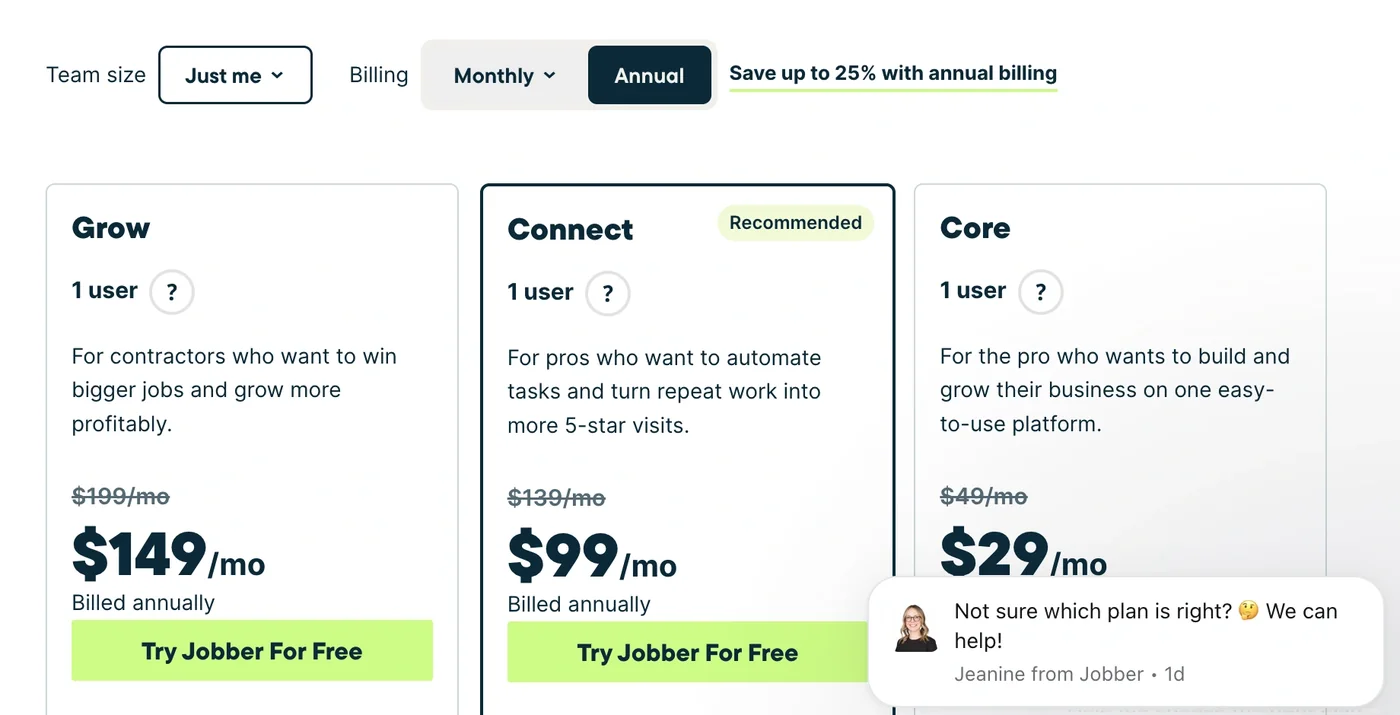 Aug 2, 2026
 Tech Stack
Best Plumbing Software in 2026: Ten Ranked Across Four Classes
A plumbing company’s work runs through four classes of software that do not substitute for each other, and it only buys two of them. Ten products, each with a published price or an explicit statement that the vendor publishes none.
Read Article Jul 31, 2026
 Tech Stack
NiceJob vs Birdeye 2026: Pricing, Contracts and Review Gating
One of these vendors puts its price on the page and its cancellation terms in writing. The other puts a form in front of both, and the complaint record is where its contract length shows up.
Read Article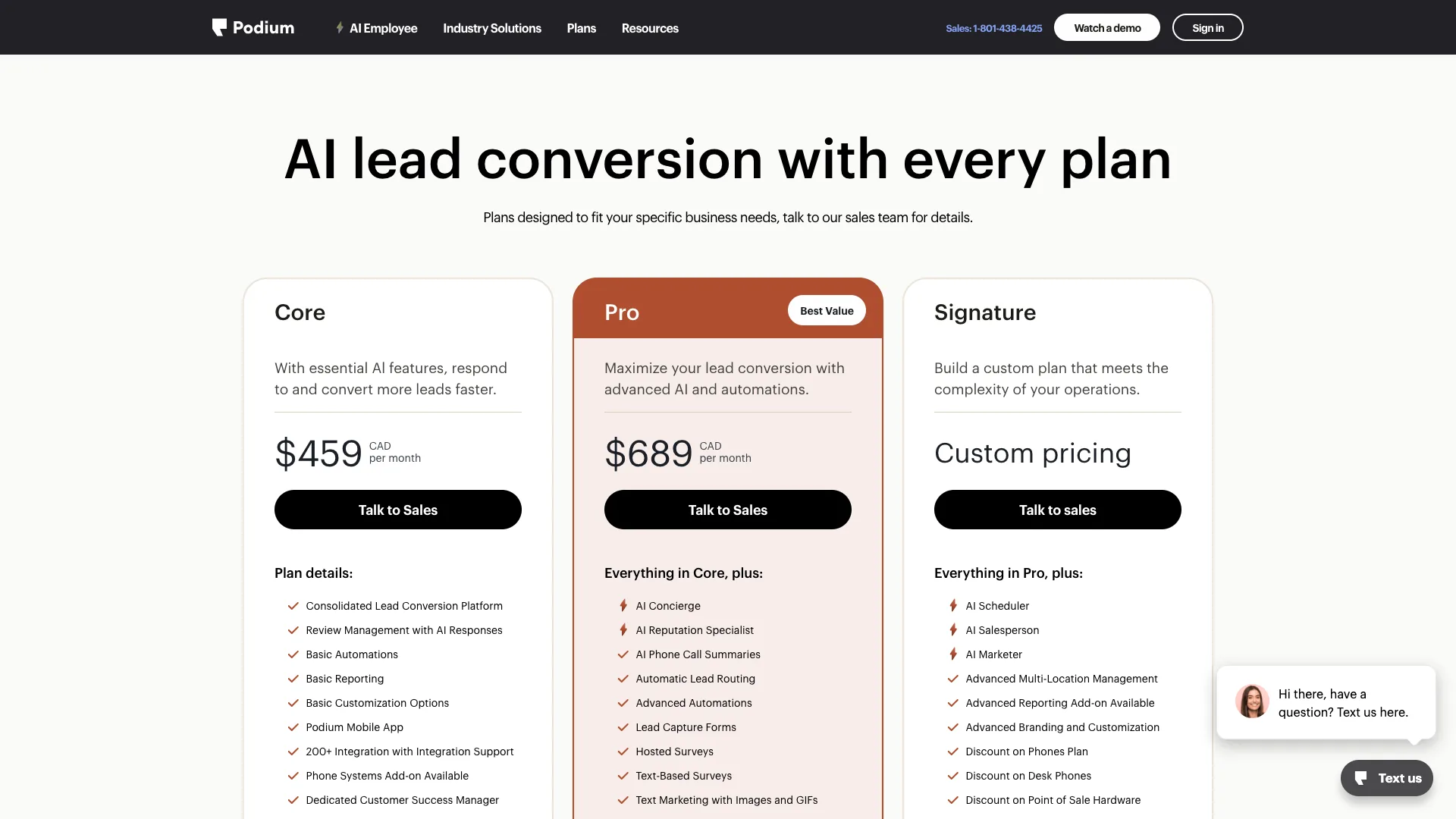 Jul 31, 2026
 Tech Stack
Podium vs Birdeye 2026: Pricing, Contracts and Review Gating
Only one of these two will tell you what it costs before a sales call, and even that number carries a carve-out aimed squarely at trade contractors.
Read Article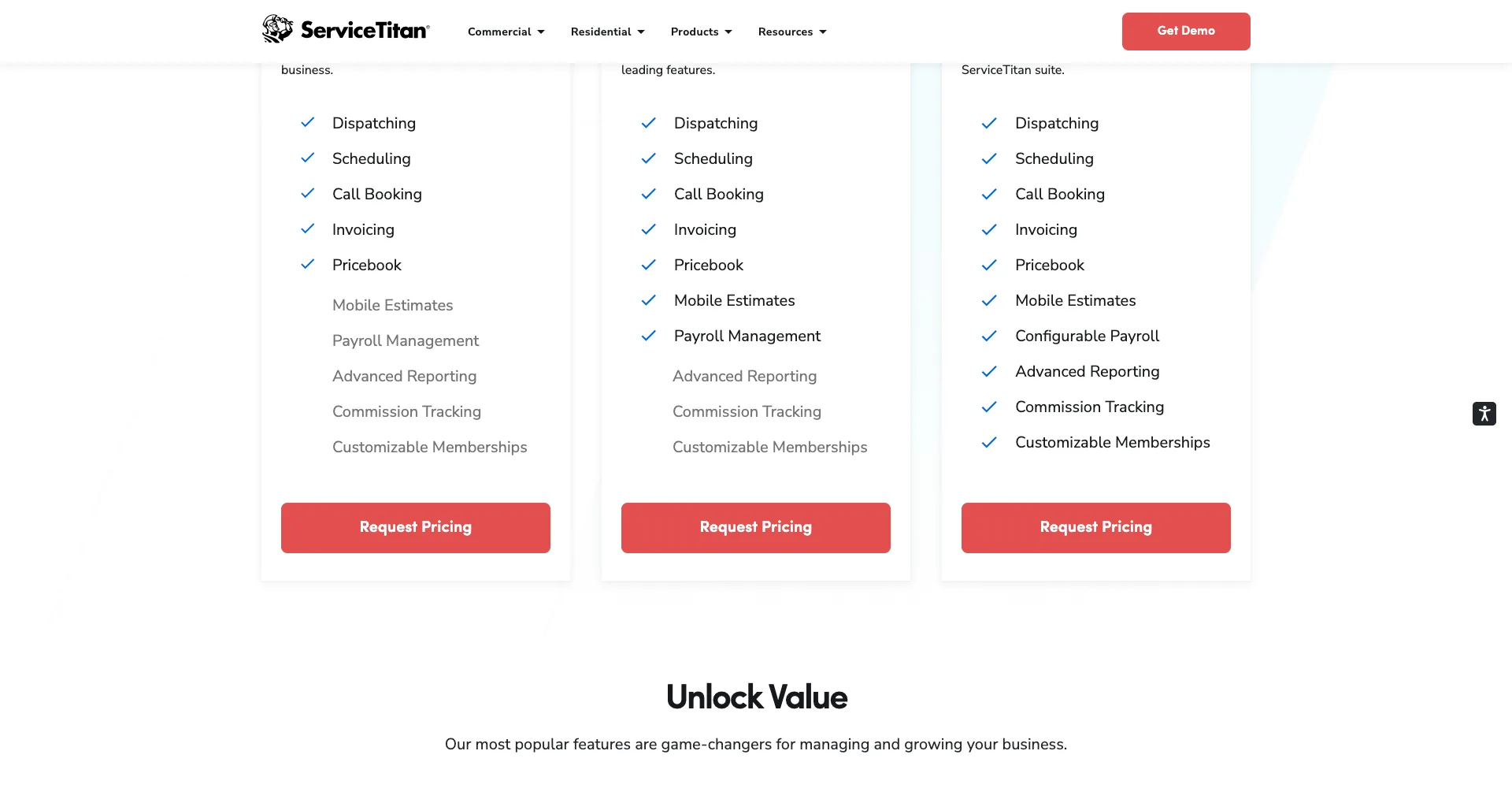 Jul 31, 2026
 Tech Stack
Best Electrical Contractor Software 2026: 11 Ranked and Priced
An electrical contracting business makes two software purchases that do not substitute for each other, and every roundup answering this query covers only one of them. Eleven platforms, with a published price or an explicit statement that the vendor publishes none.
Read Article Jul 31, 2026
 Tech Stack
Best HVAC Software in 2026: Eleven Ranked Across Three Classes
An HVAC contracting business buys across three classes of software that do not substitute for each other, and every roundup answering this query covers only one of them. Eleven products, each with a published price or an explicit statement that the vendor publishes none.
Read Article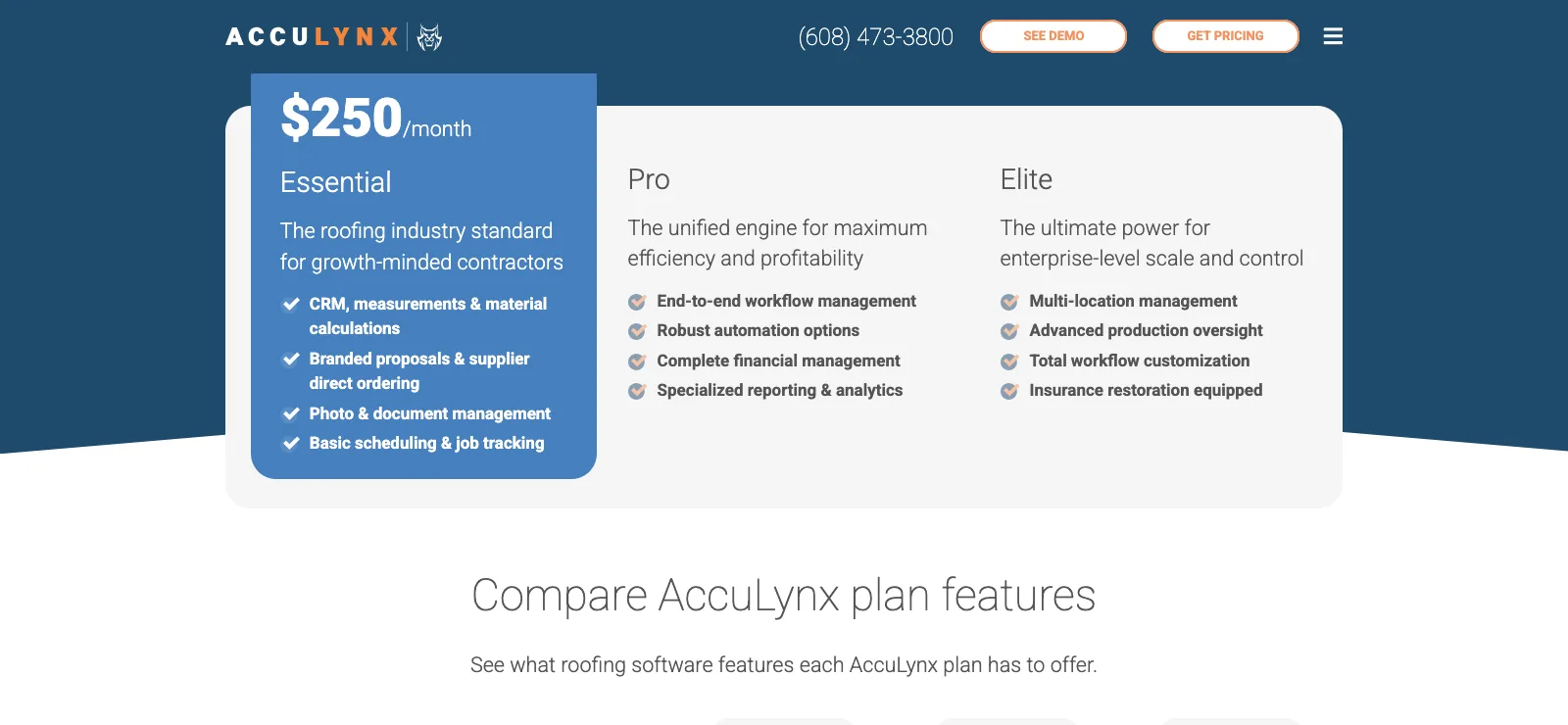 Jul 30, 2026
 Tech Stack
AccuLynx Pricing 2026: The Real Cost of a Quote-Gated Plan
One published figure, two blank plan cards, and a contract that says things the pricing page does not. A line-by-line breakdown of what AccuLynx really bills.
Read Article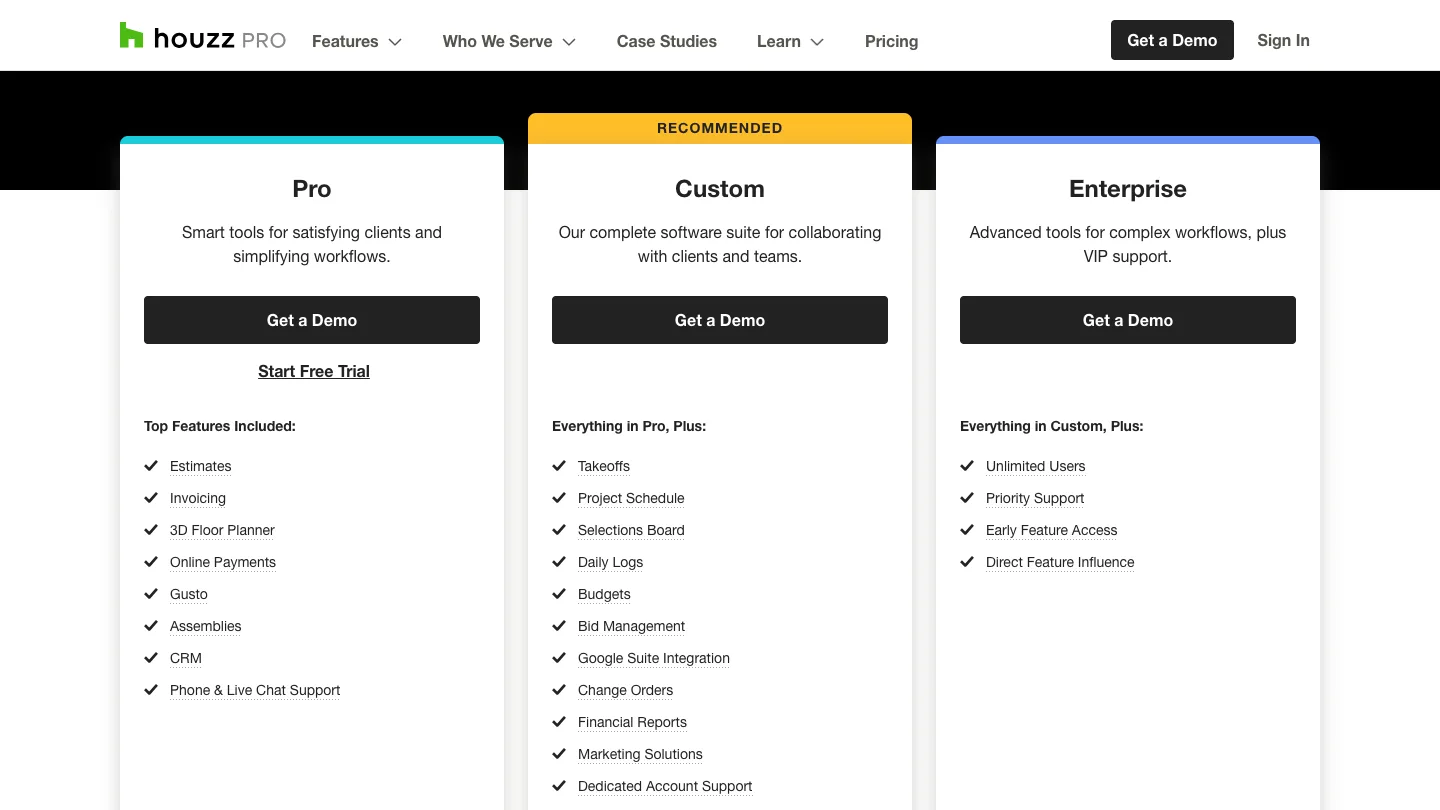 Jul 30, 2026
 Tech Stack
Houzz Pro Canada Review 2026: Pricing and Alternatives
Houzz Pro serves different pricing renderings. What Canadian buyers see, how GST/HST and payments work, what Custom gates, and what the annual contract commits you to.
Read Article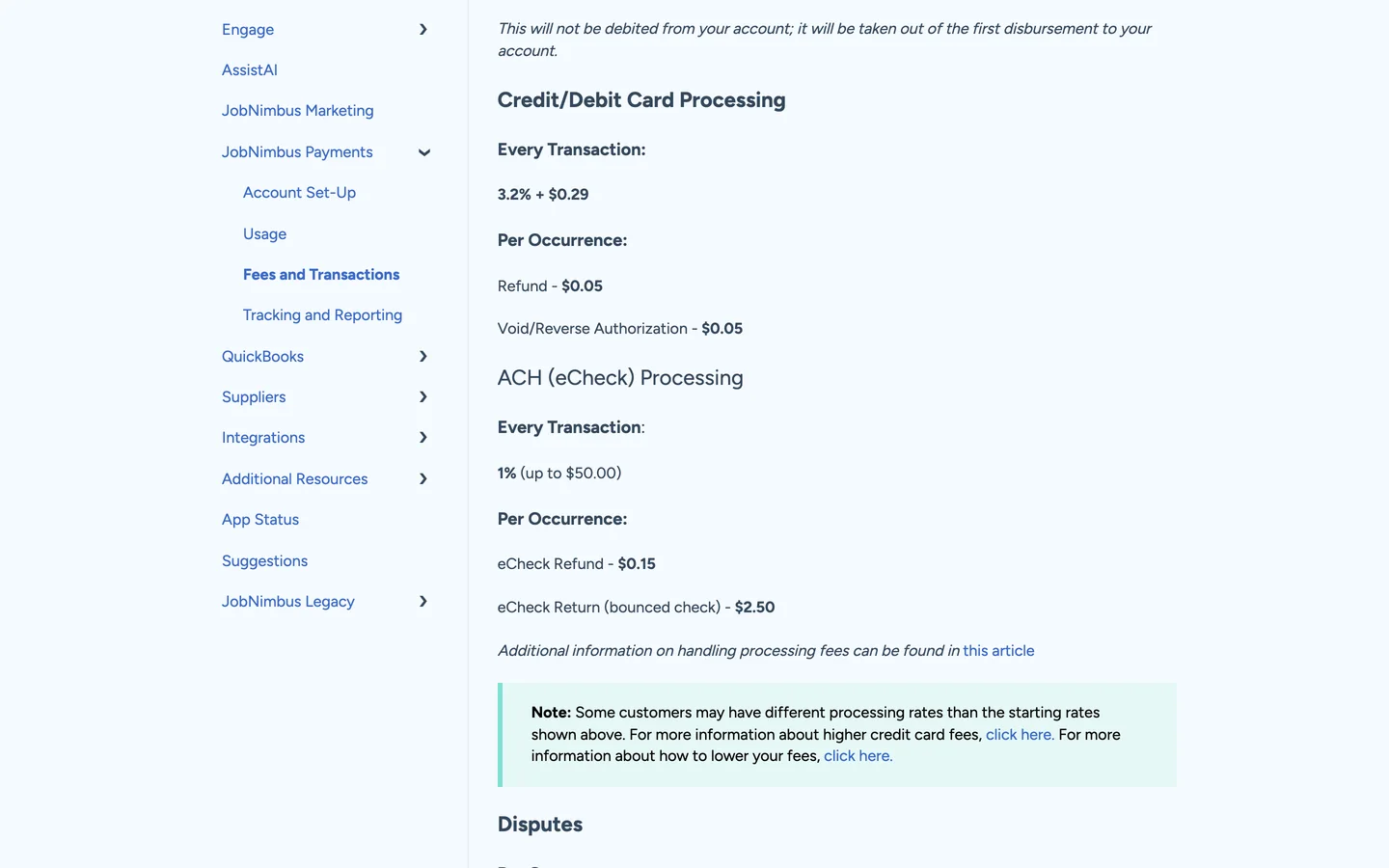 Jul 30, 2026
 Tech Stack
JobNimbus Pricing in 2026: What the Quote Does Not Cover
JobNimbus prints no figure on any of its four plans. So the only rate you can read before a sales call is the payments meter, and it is the biggest line on the bill.
Read Article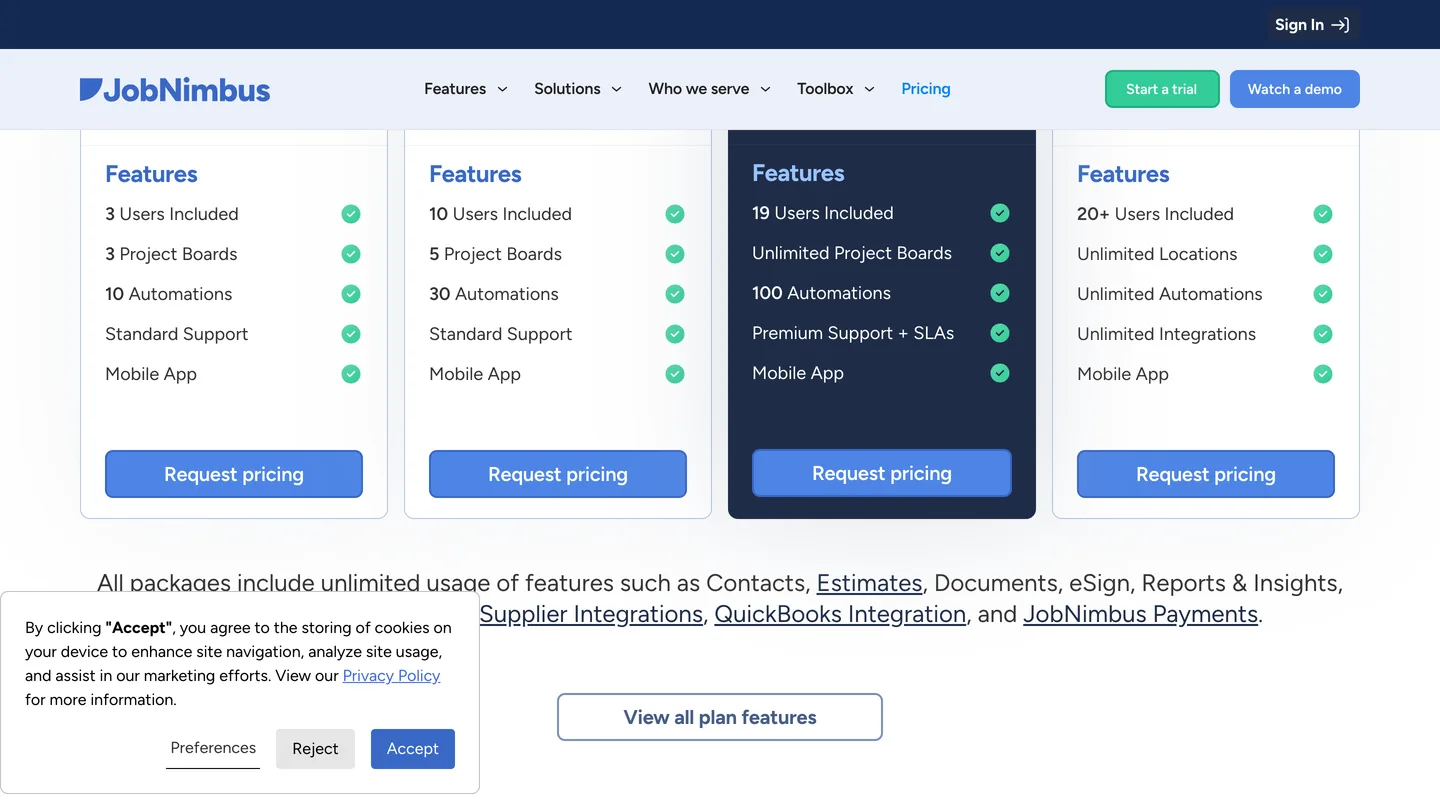 Jul 30, 2026
 Tech Stack
JobNimbus Review 2026: Pricing, Pros, Cons and Alternatives
JobNimbus rates 4.6 on Capterra and orders material straight from ABC Supply and SRS. But it publishes no price, and its supplement route carries a note.
Read Article Jul 30, 2026
 Tech Stack
BuildOps Review 2026: Pricing, Contract Terms and Alternatives
BuildOps runs commercial service and projects on one platform, and publishes no pricing at all. The billing unit, the 30-day data-export window, and who it suits.
Read Article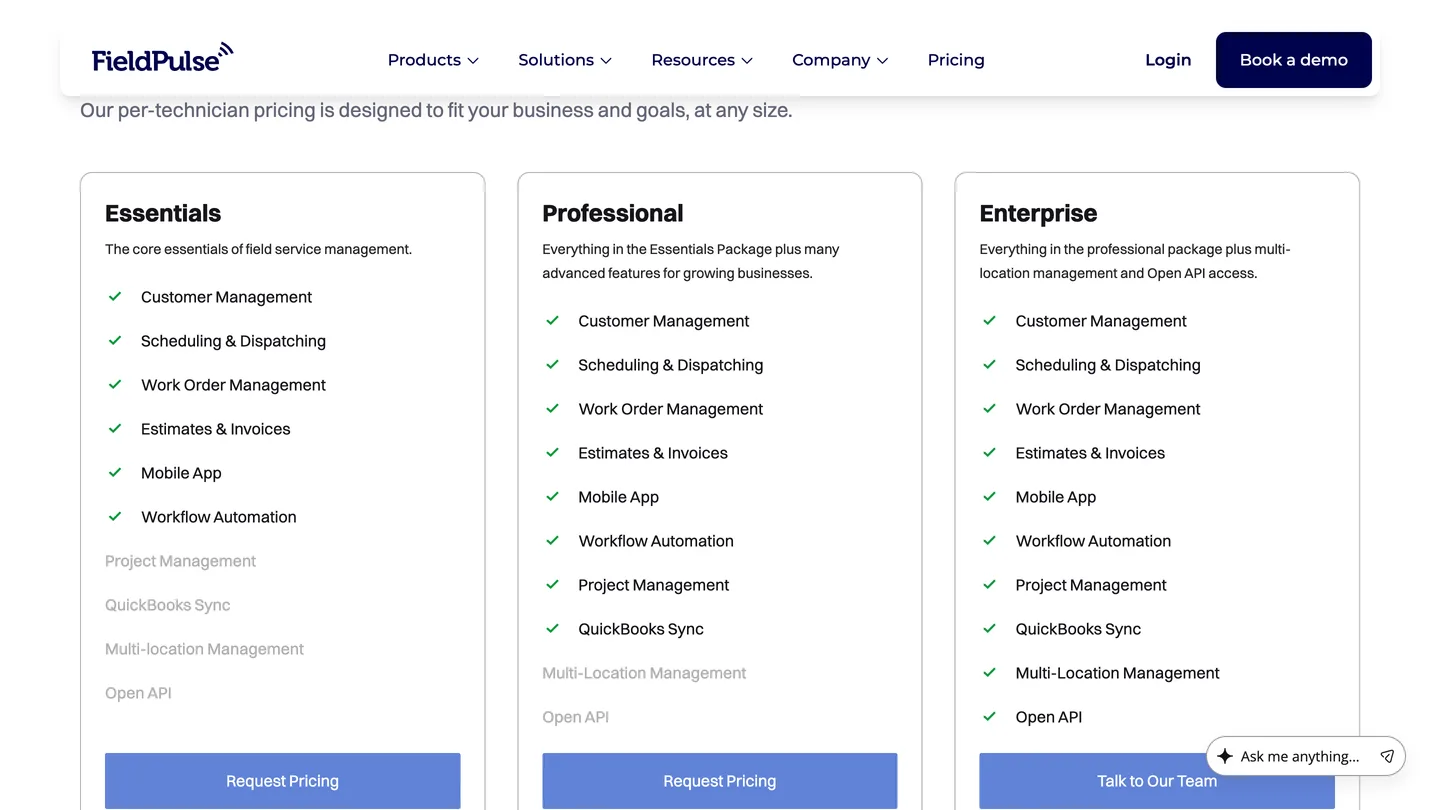 Jul 30, 2026
 Tech Stack
FieldPulse Review 2026: Pricing, Pros, Cons and Alternatives
FieldPulse rates 4.6 on Capterra and is the platform contractors name when they leave a bigger system. But it publishes no price, and the contract runs a year.
Read Article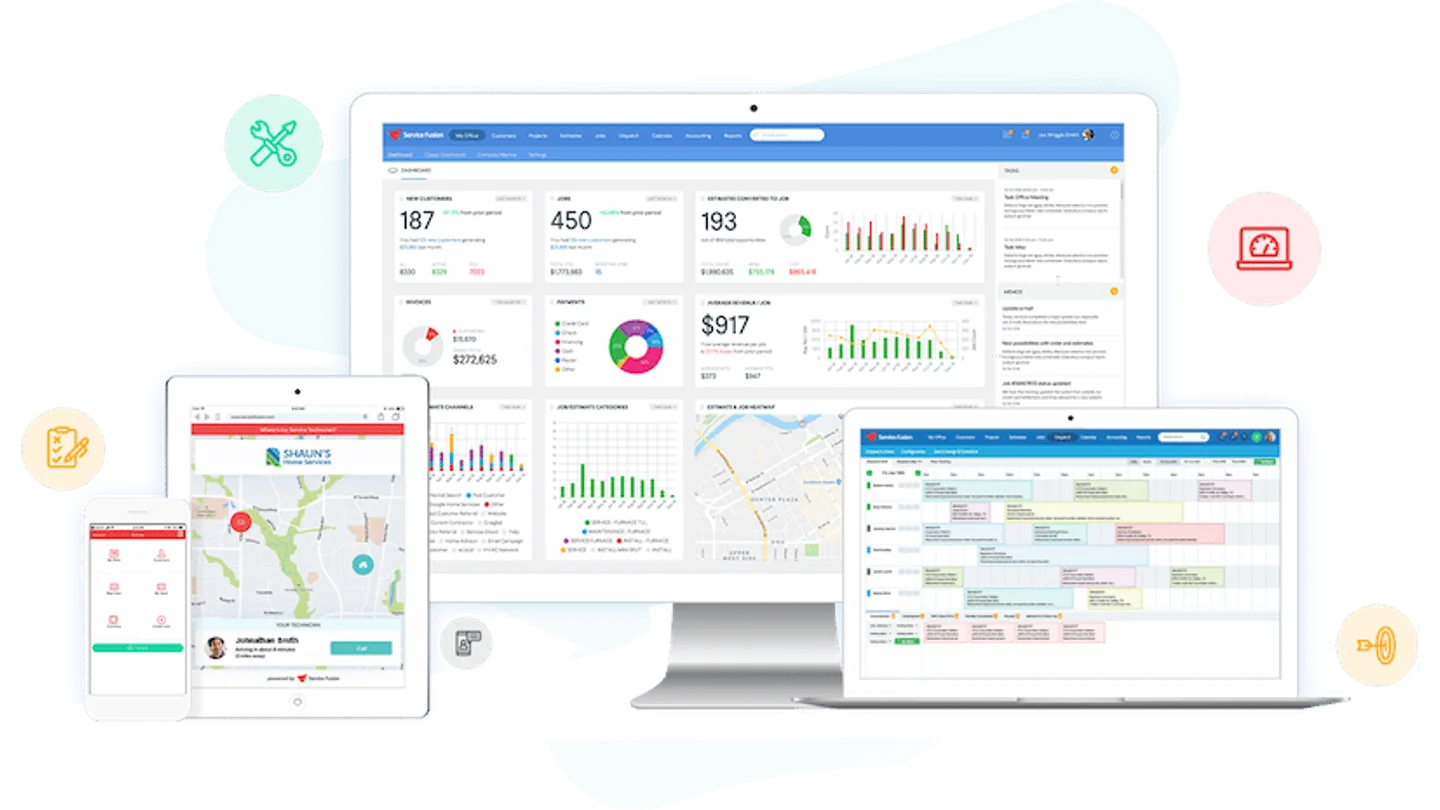 Jul 30, 2026
 Tech Stack
Service Fusion Review 2026: Pricing, Contract and Alternatives
Service Fusion bills flat per company with unlimited users, which is the best structural deal in field service software. The published plans, the contract behind the no-contract line, and the app score every other review gets wrong.
Read Article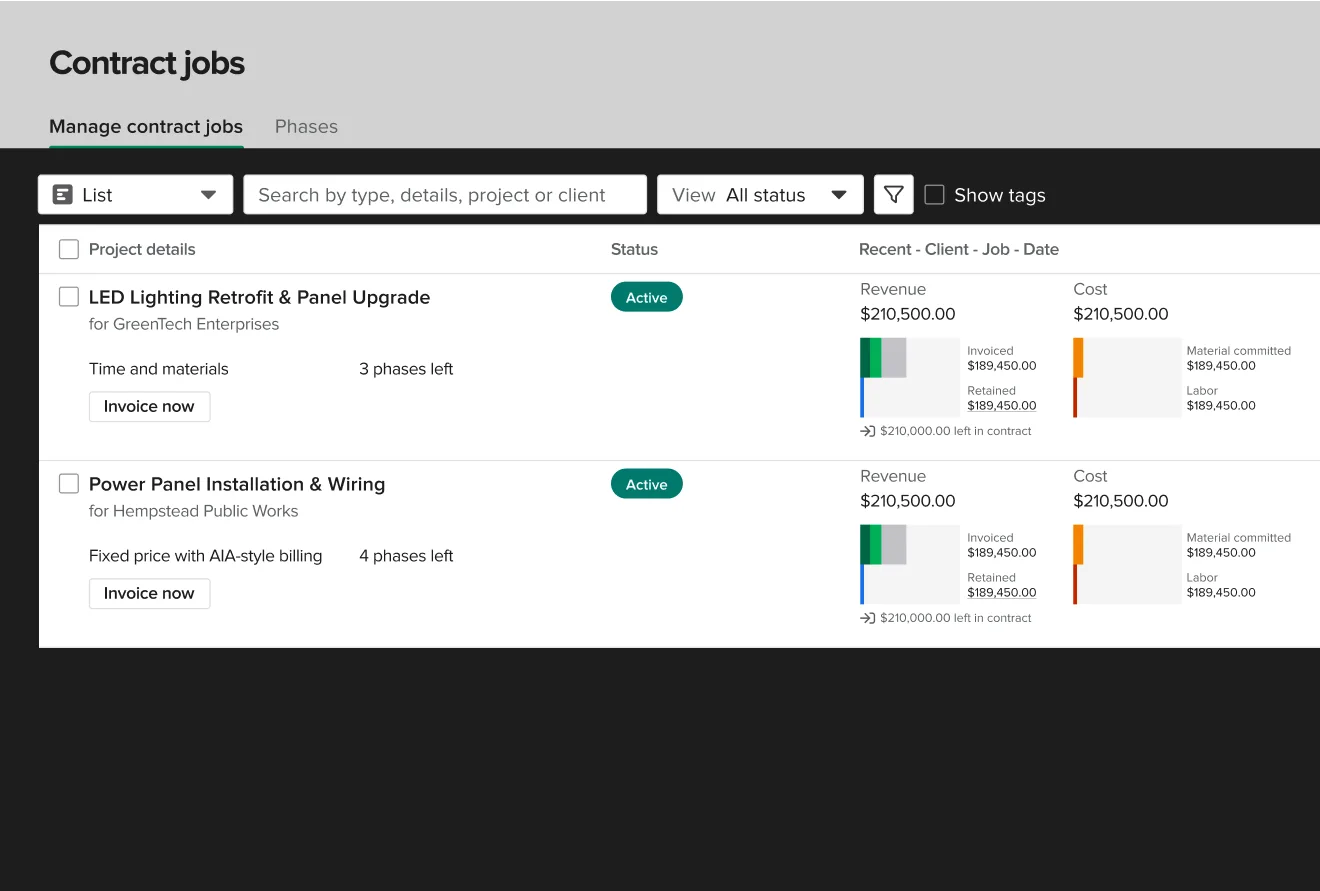 Jul 30, 2026
 Tech Stack
Knowify Review 2026: Pricing, Job Costing and Alternatives
Knowify rates 4.5 on Capterra and its weakest sub-score is features. What the $99 Core plan withholds, which way the QuickBooks sync really runs, and who should not buy it.
Read Article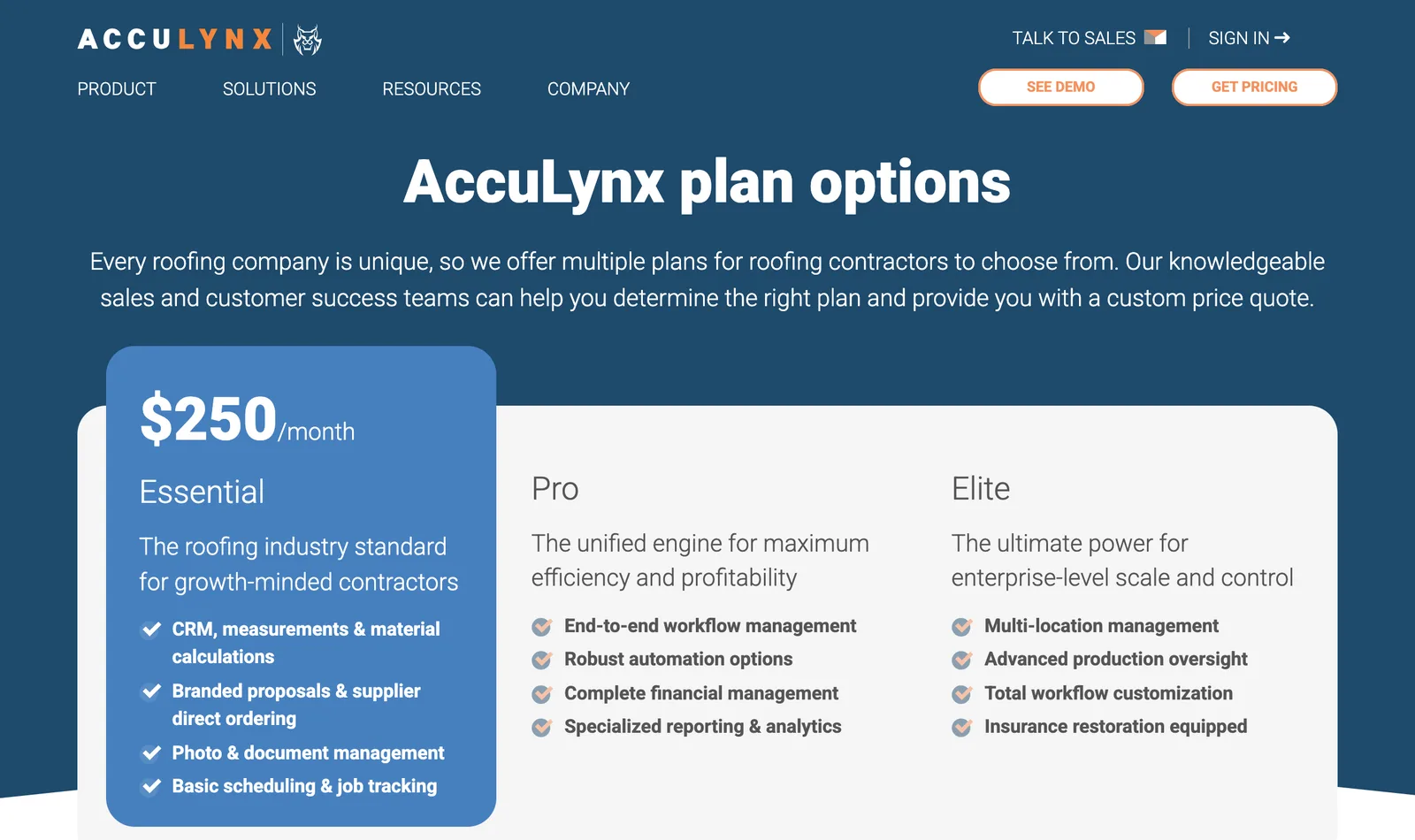 Jul 29, 2026
 Tech Stack
AccuLynx Review 2026: Pricing, Tier Gating, Alternatives
AccuLynx rates 4.6 across 846 reviews and now publishes an entry price. What that price omits, which tier holds the insurance workflow, and who should skip it.
Read Article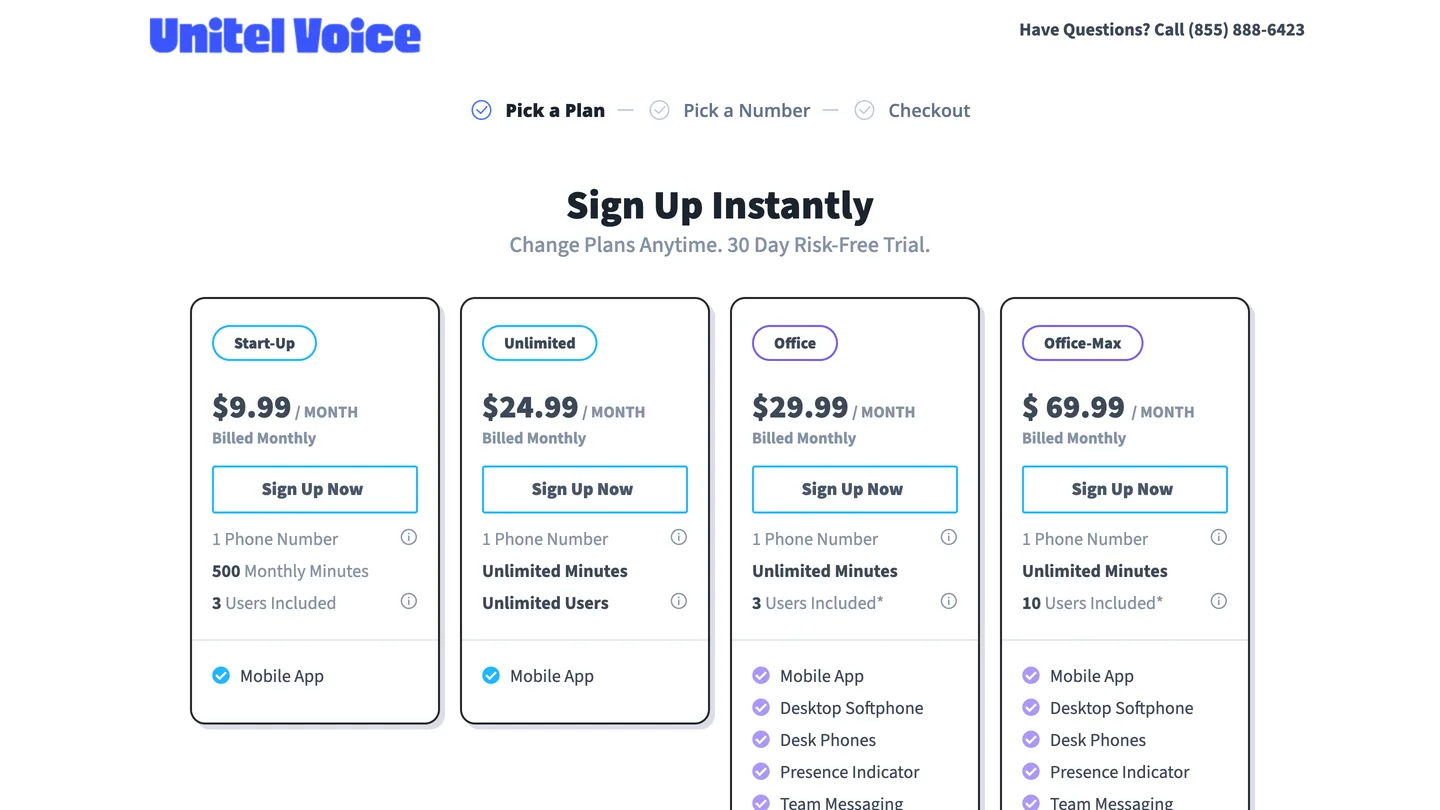 Jul 29, 2026
 Tech Stack
Unitel Voice Review 2026: Pricing, Features and Alternatives
Unitel Voice rates 4.6 on Capterra and gives a one-truck shop a business number for $9.99 a month. The published plans, the cost per call, and what it won't do.
Read Article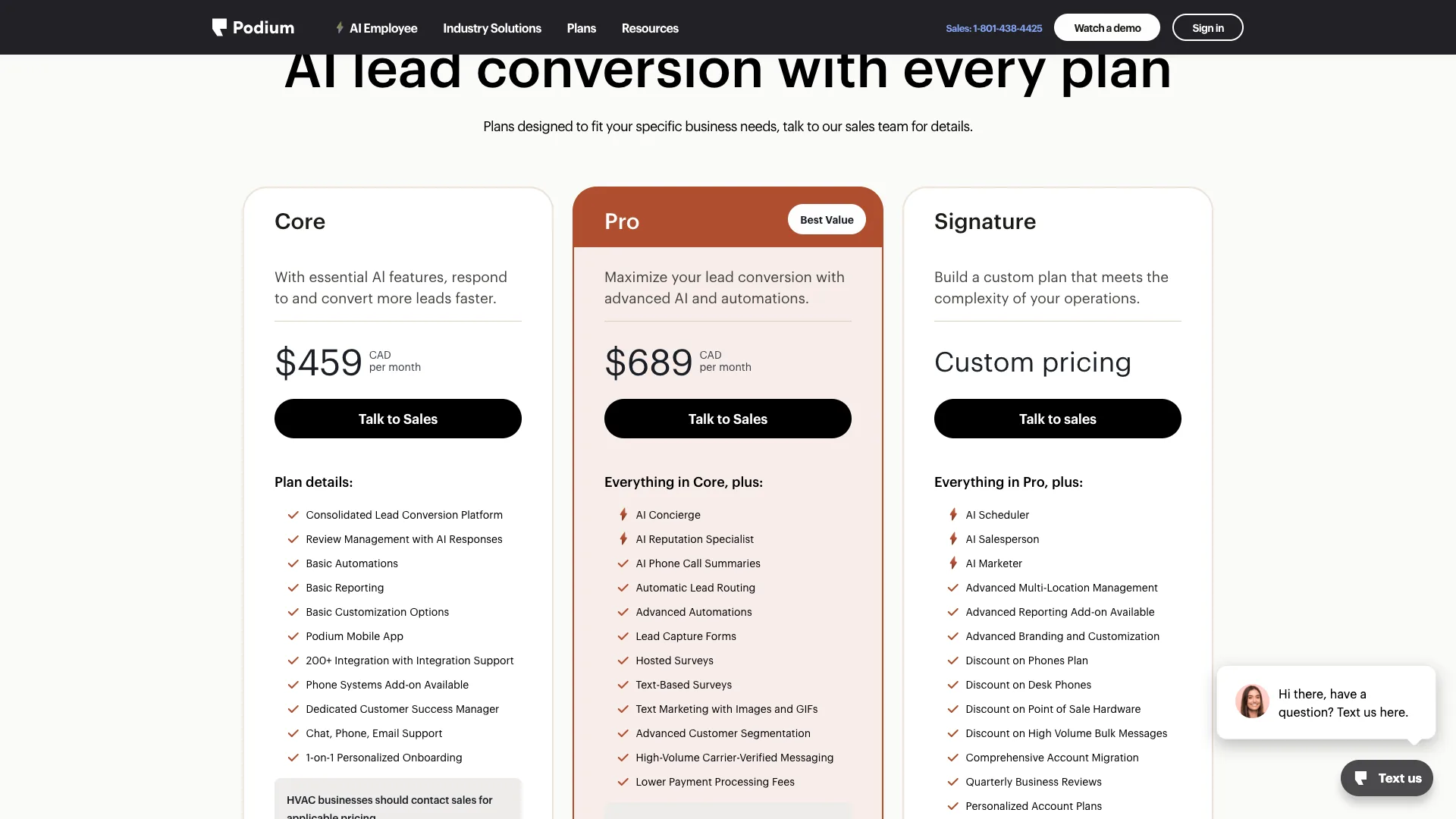 Jul 29, 2026
 Tech Stack
NiceJob vs Podium 2026: Pricing, Contracts and Review Gating
Both vendors print a price, at very different scale and in different currencies. The gap that matters is what Podium will not print: the billing unit, and whether a trade shop gets the number on the page.
Read Article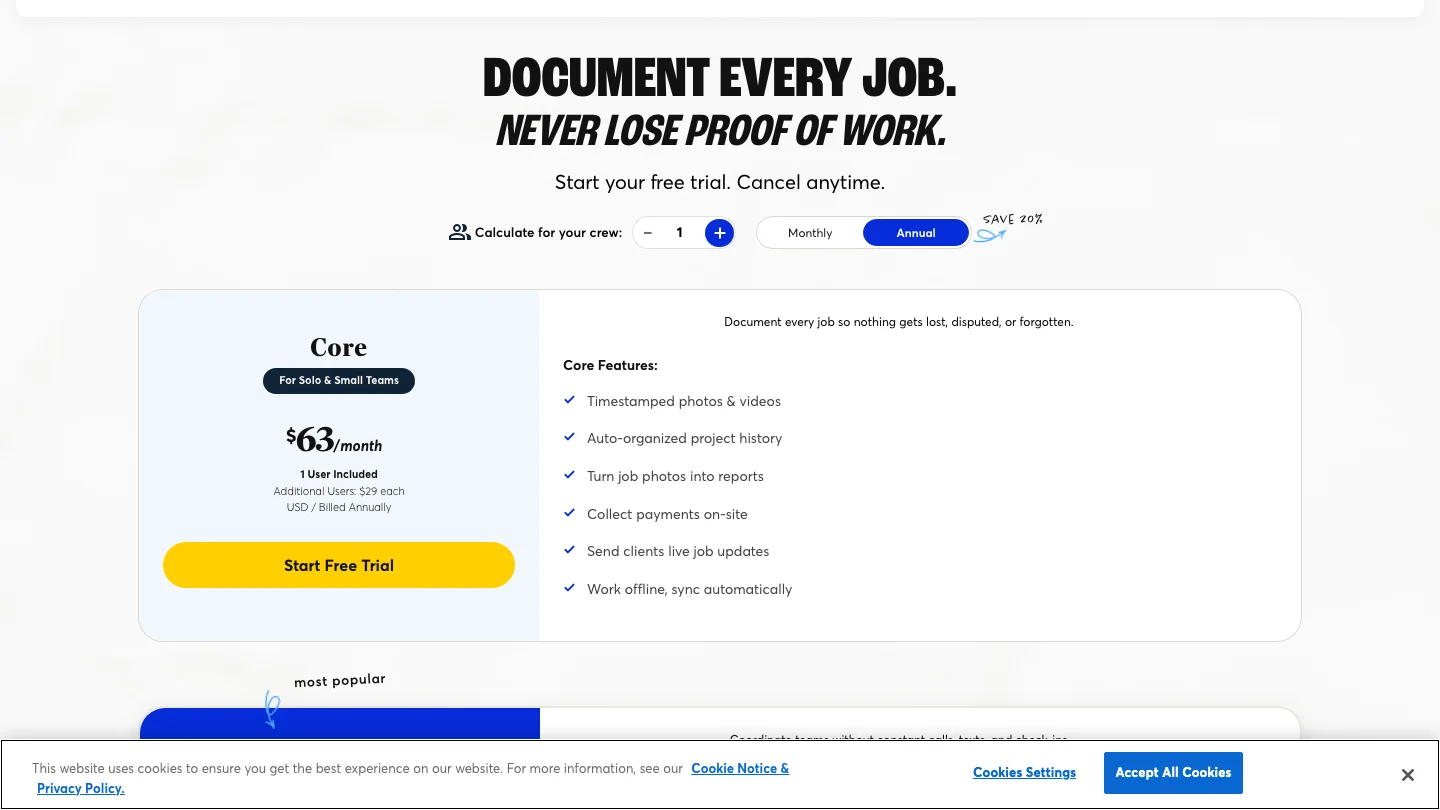 Jul 28, 2026
 Tech Stack
CompanyCam Review 2026: Pricing, Pros, Cons and Alternatives
Every page ranking for CompanyCam still quotes a per-user price the vendor no longer charges. Here are the real plans, the seat math, and who should skip it.
Read Article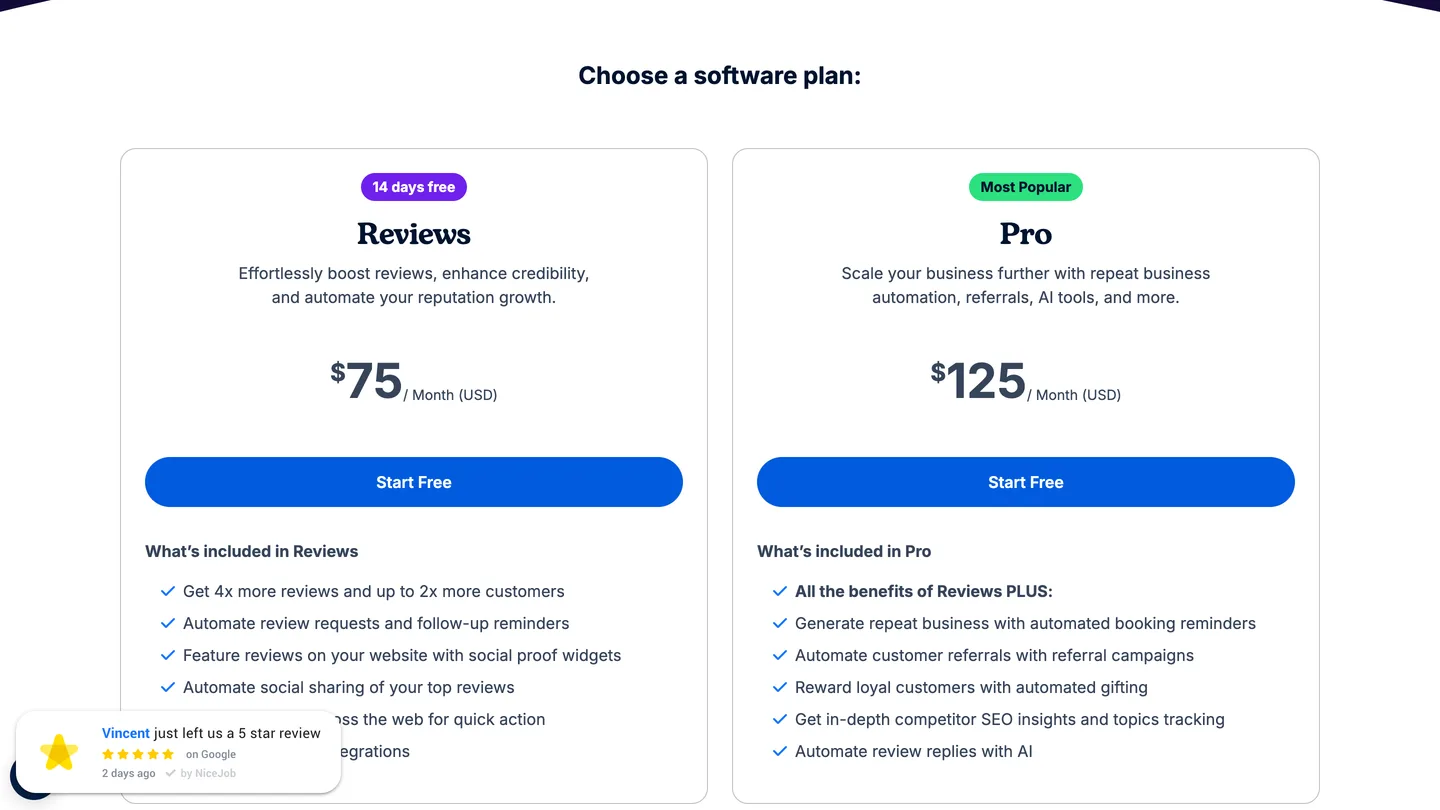 Jul 28, 2026
 Tech Stack
NiceJob Review 2026: Pricing, Pros, Cons and Alternatives
NiceJob rates 4.9 on Capterra and refuses to gate negative reviews. Real plan pricing, the active-customer threshold nobody publishes, and who should skip it.
Read Article Jul 27, 2026
 Tech Stack
Buildertrend Review 2026: Pricing, Limits and Alternatives
Buildertrend rates 4.5 across 2,486 Capterra reviews and quotes against your revenue rather than your seat count. The workflows, the export problem, the alternatives.
Read Article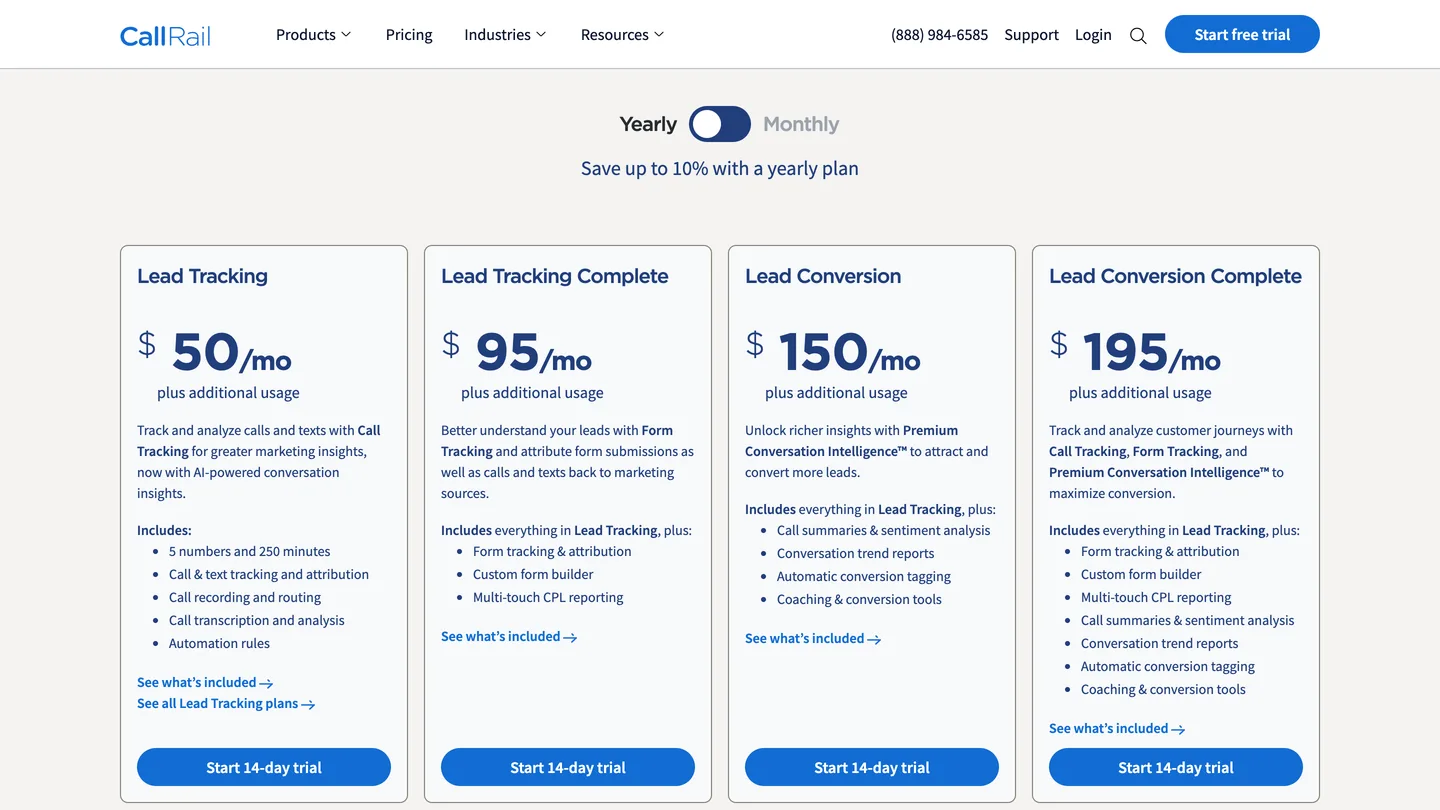 Jul 27, 2026
 Tech Stack
CallRail Review 2026: Pricing, Pros, Cons and Alternatives
CallRail rates 4.5 on Capterra, and its tracking numbers port out free. But the two usage rates that decide your real bill are the two it does not print.
Read Article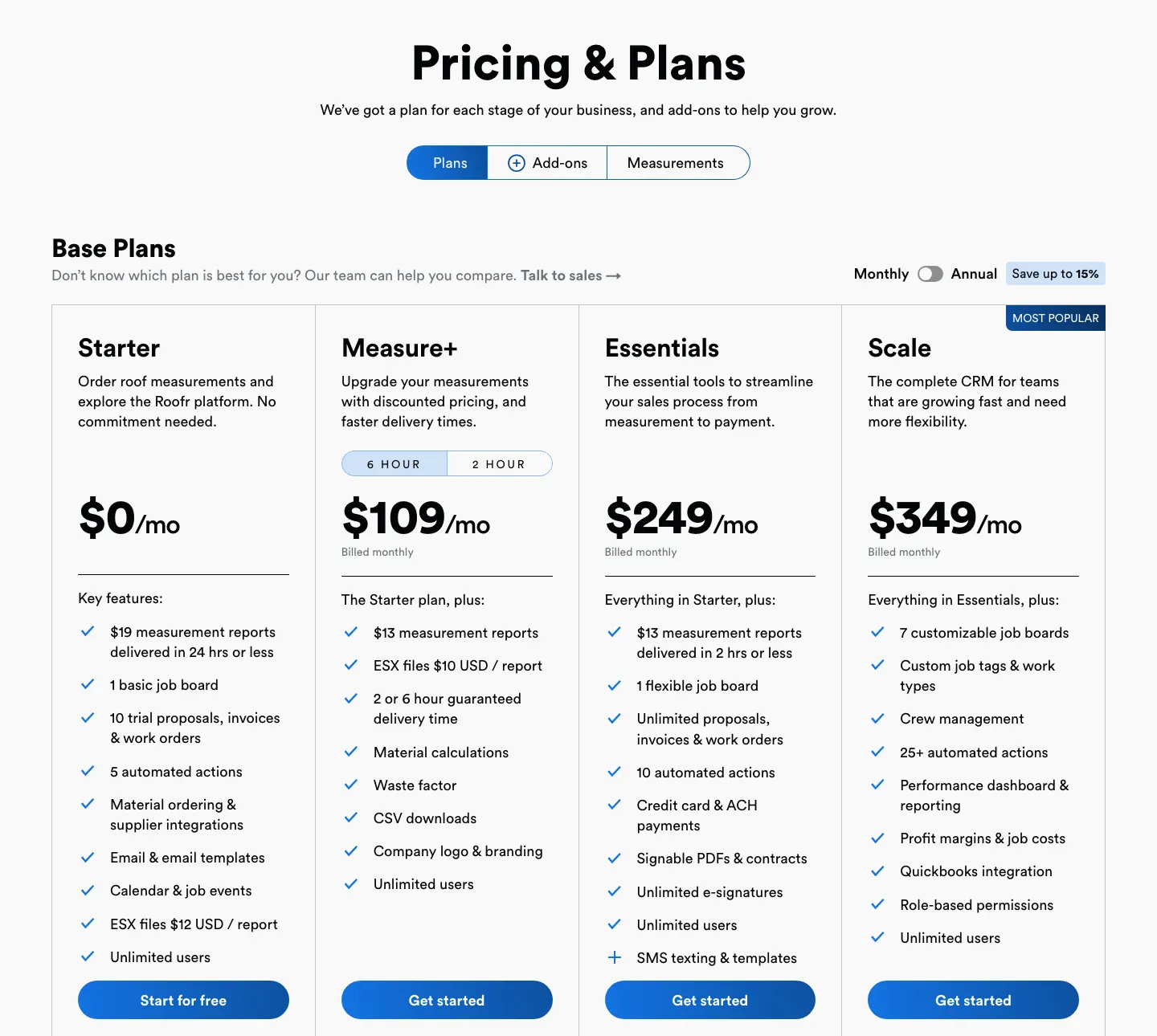 Jul 27, 2026
 Tech Stack
Roofr Review 2026: Pricing, Pros, Cons and Alternatives
Roofr rates 4.6 on Capterra and sells $13 measurement reports against a market charging triple. But it will not import a report from anywhere else.
Read Article Jul 25, 2026
 Tech Stack
Housecall Pro Review 2026: Pricing, Pros, Cons, Alternatives
Housecall Pro has the shortest learning curve in the category and the widest review spread. Real pricing, the Instapay math, and the migration trap to plan around.
Read Article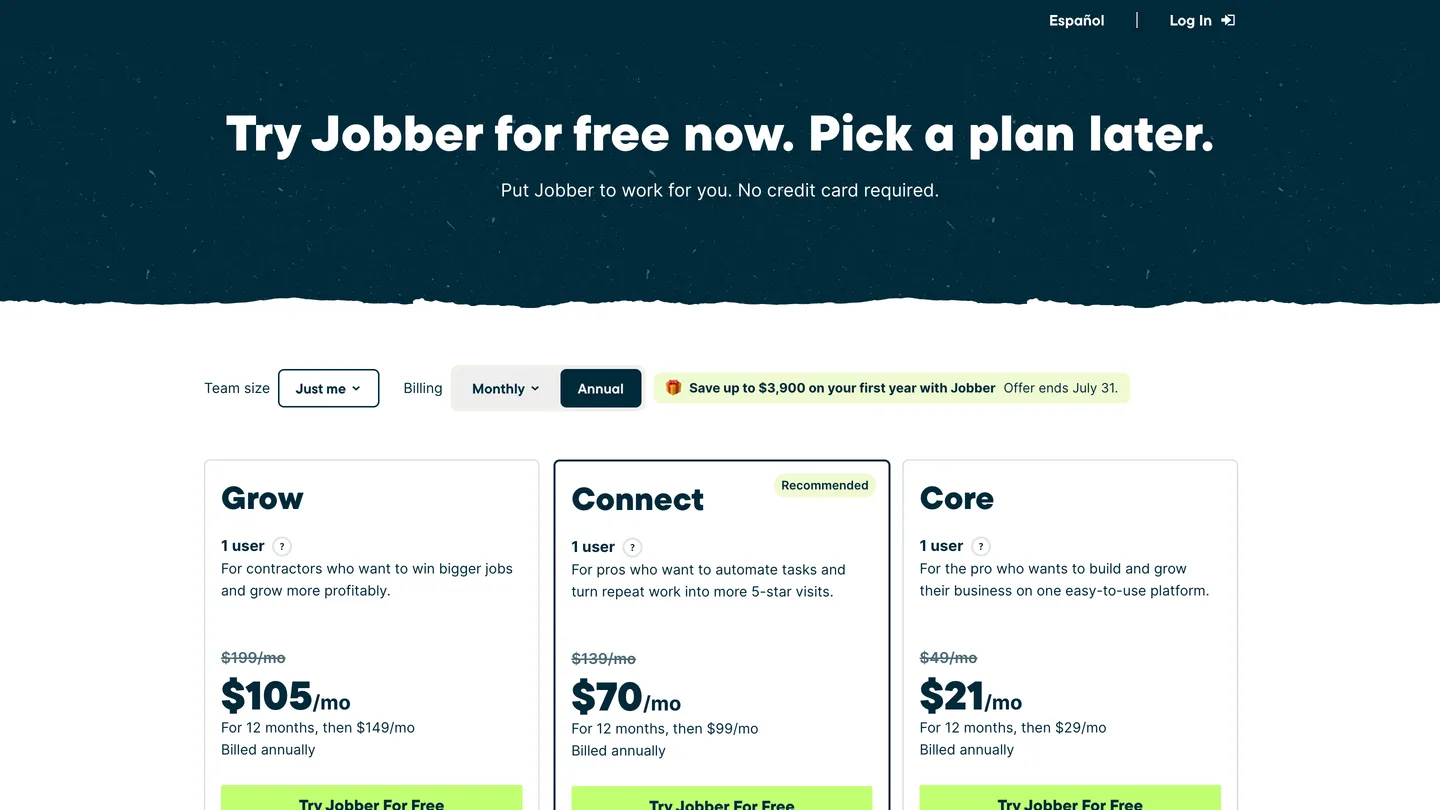 Jul 24, 2026
 Tech Stack
Jobber Review 2026: Pricing, Pros, Cons and Alternatives
Jobber rates 4.6 on Capterra with the best mobile app in the category. Real plan pricing, the feature gating that changes your entry price, and who it suits.
Read Article Jul 23, 2026
 Tech Stack
ServiceTitan Review 2026: Pricing, Pros, Cons, Alternatives
ServiceTitan rates 4.3 on Capterra but its weakest score is value for money. Real reported pricing, the 12-month contract, the exit fees, and who it actually suits.
Read Article Jun 3, 2026
 Tech Stack
HVAC Online Scheduling: The 43% Losing After-Hours Bookings
HVAC leads every trade on online booking at just 56.7%, which still leaves 43% of sites forcing an after-hours customer to wait for a business-hours phone call.
Read Article