Housecall Pro Review 2026: Pricing, Pros, Cons, Alternatives
Housecall Pro rates 4.7 on Capterra and 2.03 on the BBB. Real pricing, processing fees, the sub-customer import trap, and how it compares to 3 alternatives.
Disclosure This article features tools from our brand partners. If you choose to use them, we may receive compensation at no extra cost to you.
Our editorial choices are independent of these affiliate arrangements. Read our full affiliate disclosure.
Fervor is a CRO and web design studio, not a software reseller, and no vendor paid for placement here or for a kinder verdict. Affiliate links are flagged where they appear, and they never change what we report.
Page at a glance
Housecall Pro is field service management software for residential home service businesses, pairing scheduling, invoicing and CRM with embedded financial services. Pricing is published: Basic 79 dollars monthly, Essentials 189, MAX 329, with a 14-day trial and no long-term contract. But read the card processing rate as part of the price, because payments are where the real money changes hands and Instapay adds a point on top. It suits solo operators through about 15 crew members and has the shortest learning curve in the category. Payments, consumer financing and the iOS app are the strong tasks. Reporting depth and the Android app are the weak ones, and importing sub-customers is the migration trap to plan around. Capterra rates it 4.7 across 2,742 reviews, the largest review corpus here, though Better Business Bureau reviewers average 2.03. Closest alternatives: Jobber, Workiz, ServiceTitan and FieldPulse.
The short verdict
Housecall Pro is the right buy for a residential service shop of one to fifteen crew members that sells at the door and wants payments, financing and flat-rate pricing in one system. Crews adopt it faster than anything else in this comparison. But if you serve property managers, builders or multi-site commercial accounts, the one-level customer import will bite you on migration day, and reporting runs out well before you reach 30 technicians.
Pricing on this page was verified 25 July 2026, and it came from the vendor's own published page.
| Pricing model | Per plan with included seats, published |
|---|---|
| Entry price | 79 dollars monthly, 59 on annual prepay |
| Real entry price | 189 if you need QuickBooks sync |
| Card processing | 2.59% present, 3.49% keyed, plus 1% Instapay |
| Contract minimum | None. 14-day trial, full MAX, no card |
| Best fit | Solo to 15 crew members, residential, payments-led |
What works, and what to watch
Strong: the shortest learning curve in the category, embedded payments with instant deposits, consumer financing offered at the door, flat-rate pricing from Essentials up, a 4.6 iOS app across 28,000 ratings, and published pricing with no contract.
Weak: an Android app at 3.3, reporting depth that frustrates larger operators, a long list of quote-only add-ons, processing rates that stack well past the headline rate on keyed jobs, and an import that handles only one level of customers.
What Housecall Pro does
Housecall Pro describes itself as a software platform combined with modern financial services, and that second half is the part worth reading twice. Scheduling, dispatch, estimates, invoicing and CRM are table stakes across this whole category. Payments, instant deposits, consumer financing, payroll and bill pay are where Housecall Pro puts its weight.
So the software and the money are sold as one thing. You're not just picking a scheduling tool, you're picking who processes your cards, how fast you get deposits and whether your customer gets offered financing at the door. That's a real advantage if you chase bigger residential tickets and want the financing conversation handled inside the estimate. And it's a real cost if you already have a processor you like, because the fee is charged on every job rather than once a month, and it doesn't show up on the pricing page.
Who Housecall Pro is for
The reviewer base is unusually clear about this. On Software Advice, 85 percent of reviewers run businesses with 1 to 50 employees and 39 percent work in construction. So you're reading feedback from shops your size, which is not true of the enterprise platforms in this category.
"85 percent of Housecall Pro reviewers run businesses with 1 to 50 employees and 39 percent work in construction."
Software Advice (2026)
And the fit is sharpest for residential trades that sell at the door: HVAC, plumbing, electrical, appliance repair, garage door, cleaning and pest. The industries page is residential-first and the product follows it. Flat-rate pricing, financing and one-tap payment are all built around a technician closing in a driveway rather than a project manager billing progress draws.
Who should not buy Housecall Pro
Three profiles should look elsewhere. And in each case it's a structural limit rather than a polish problem.
Start with anyone serving property managers, builders or multi-site commercial accounts. This is the deal-breaker for that shop, and it's mechanical rather than a matter of taste. Housecall Pro supports importing only one level of customers, so sub-customers don't import unless you flatten them first. If your customer list is "Meridian Property Group" with 40 buildings underneath it, that hierarchy collapses on the way in, and you rebuild it by hand or lose it. That's the single most expensive detail on this page and it appears in almost no review.
"Housecall Pro supports importing only one level of customers, so a parent account with 40 buildings underneath it has to be flattened before it will import."
Housecall Pro (2026)
Then the shop running more than about 20 technicians, or anyone whose decisions come out of custom reports. Reporting depth, invoicing flexibility and customization for non-standard workflows are the friction points that show up consistently in reviews from larger operators. It's not that the software stops working. You just start running the business out of exports.
And any crew on Android phones. The iOS app rates 4.6 across 28,000 ratings; the Android app sits at 3.3. That gap is wide enough to matter every day, and your technicians live in that app.
"Housecall Pro's Android app rates 3.3, against 4.6 for its iOS app."
Google Play (2026)
What Housecall Pro costs
The published tiers
| Plan | Monthly | Annual | Users | What it unlocks |
|---|---|---|---|---|
| Basic | 79 dollars | 59 dollars | 1 | Online booking, estimates, invoicing, scheduling, dispatch, payments, financing, price book, job costing, review management |
| Essentials | 189 dollars | 149 dollars | 5 | Adds routes, flat-rate pricing, checklist automations, photo reports, employee GPS tracking, commissions, QuickBooks Online sync |
| MAX | 329 dollars | 299 dollars | 8 | Adds Sales Proposal Tool, recurring service plans, route optimization, open API access, dedicated onboarding, escalated phone support |
Read those as three entry prices rather than three feature sets. Basic is 79 dollars a month for a single user, Essentials 189 including five, MAX 329 including eight with every seat after that at 35. Pay annually and the three drop to 59, 149 and 299.
But two gating facts deserve more attention than the headline prices. QuickBooks Online sync is absent from Basic and starts at Essentials. And open API access is MAX-only. So if eliminating double entry into accounting is why you're buying this, your real entry price is 189 a month, not 79.
Add-ons, and the ones with no price
The pricing page names a long list of add-ons: CSR AI, Sales Proposal Tool, Pipeline, Payroll, Accounting, Business Coaching, Voice, Campaigns, VGPS and dashcams, Tap to Pay, and Websites. Only one carries a published price, the Sales Proposal Tool at 40 dollars a month. Tap to Pay adds 5 dollars monthly per active device.
Everything else is quote-only, including HCP Assist, the live human call-answering service, which is priced by call volume and coverage window. Devin M., a five-star reviewer on Capterra, gives as his only complaint how much you pay additionally for extra functionality. And that's the pattern to plan around: the base price is honest, and the stack on top isn't knowable in advance.
Payment processing, where the real money is
This is the number that decides your annual cost, and it's the one nobody puts in a comparison table. Housecall Pro publishes its processing rates: card present through a reader or Tap to Pay is 2.59 percent, online invoice payments 2.99 percent, manually keyed 3.49 percent, American Express and business cards 3.49 percent, and ACH 1 percent. Instapay, the under-30-minute deposit, adds 1 percent on top.
"Housecall Pro charges 2.59 percent card present, 2.99 percent for online invoice payments, 3.49 percent manually keyed, and 1 percent for ACH, with Instapay adding another 1 percent."
Housecall Pro (2026)
So a card-present job settled through Instapay costs you 3.59 percent all in, and a keyed one costs 4.49 percent. Run 60,000 dollars a month through it on keyed cards with Instapay and you're paying roughly 32,000 dollars a year in processing against 2,268 for the software. The subscription is not the cost of this platform. The processing is.
What it costs beyond the subscription
Four costs sit outside the plan fee, and only one of them reaches the pricing page. Per Housecall Pro's own processing-rates article, payment processing runs 2.59 percent card-present up to 3.49 percent keyed, plus 1 percent for Instapay. There's no implementation or onboarding fee, which is a genuine difference from ServiceTitan's reported 5,000 to 50,000 dollars. There's no contract minimum term and no auto-renew lock, so early termination exposure is nil: you cancel and you stop paying. And the cost that isn't disclosed is the add-on stack, where eleven named add-ons carry exactly one published price.
"Housecall Pro processing runs 2.59 percent card-present up to 3.49 percent keyed, plus 1 percent for Instapay."
Housecall Pro (2026)
Our read on the features
This next stretch is our judgment, module by module, after reading the documentation and the review corpus. It's kept separate from the crowd's own scores, which come further down under their own heading, so you always know whose opinion you're reading.
Scheduling, dispatch and job management
Competent rather than remarkable, and that's fine, because it's the part crews learn in an afternoon. Drag-and-drop scheduling, a clean dispatch view, job checklists and photo reports on Essentials, route optimization on MAX. If you're coming off paper or a shared calendar, this is the fastest transition in the category and the reviews say so consistently.
Flat-rate pricing and the price book
Flat-rate pricing arrives at Essentials, and it's the capability Jobber simply doesn't have. A technician presents a priced task rather than an hourly estimate, which is how most residential sales training in the trades works. Pair that with financing in the same screen and you have the strongest at-the-door close in this comparison.
Payments, Instapay and consumer financing
This is the module the whole product is built around. Card readers, Tap to Pay with no hardware, online invoice payments, ACH, and Instapay for deposits inside thirty minutes. Consumer financing runs through Wisetack, whose own terms and rates are worth reading before you offer it, so a homeowner can be approved for a 9,000 dollar system replacement while the technician is standing in the hallway. For a shop whose average ticket is climbing, that single feature changes close rates more than any scheduling improvement will.
Recurring service plans
Recurring service plans sit on MAX, and they bill from a card on file, which is the mechanic an HVAC maintenance base runs on. It's not as deep as ServiceTitan's membership engine, with its equipment ageing and expiring-agreement targeting, but it's a real membership tool rather than a repeating calendar entry, and Jobber has nothing equivalent.
Marketing, reviews and HCP Assist
Review management ships on every tier, which matters more than it sounds for a residential shop living on local search. Campaigns and Voice are quote-only add-ons. And HCP Assist is the interesting one: live humans answering your phone when you can't, priced by volume. For a shop losing calls to voicemail during service hours, it's worth pricing even without a published number.
The mobile apps, and the Android gap
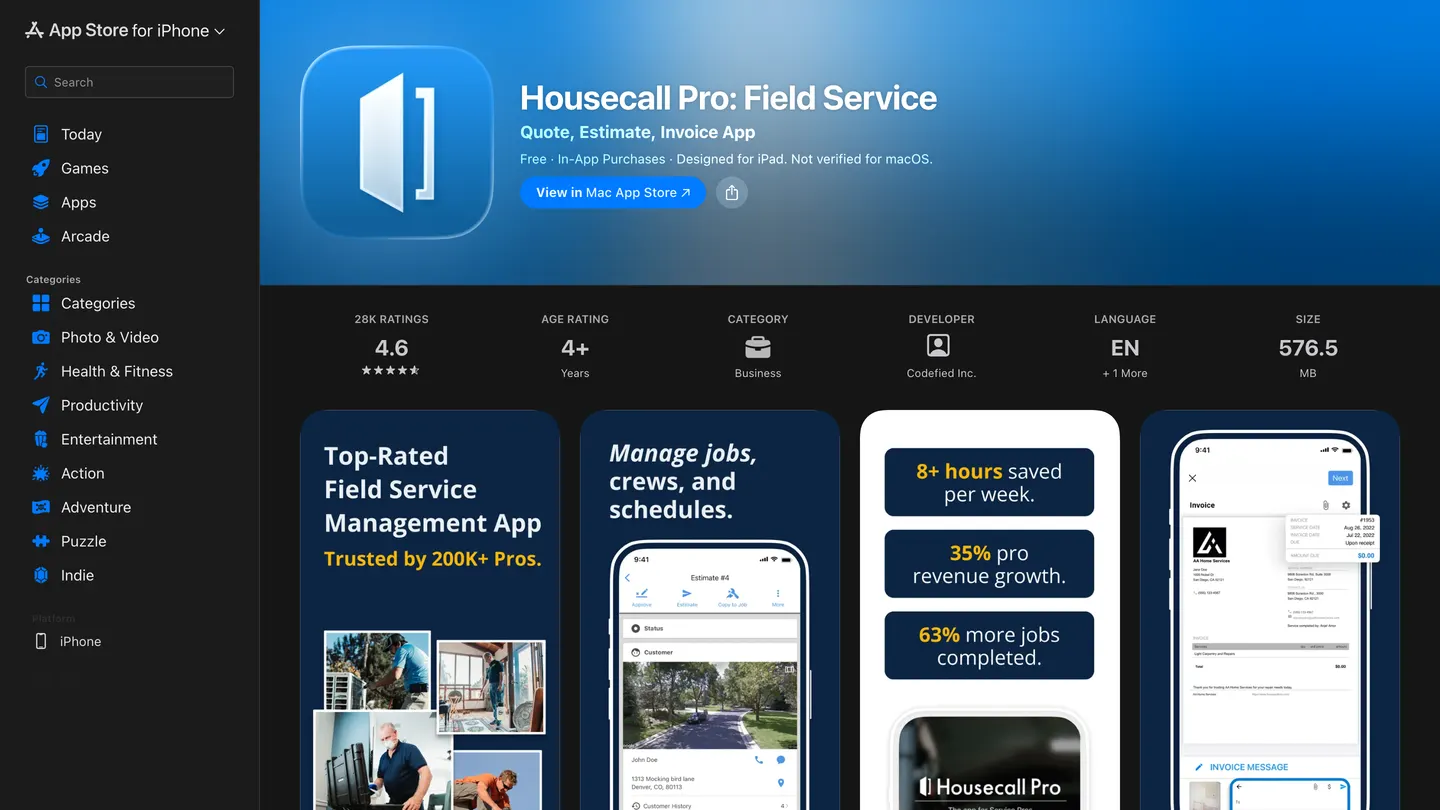
The iOS app rates 4.6 out of 5 across 28,000 ratings, the largest mobile rating sample of any platform here. Android is a different story at 3.3. If your crews run Android phones, trial it on the hardware they carry rather than on your own iPhone, because that gap is wide enough to matter day to day.
Offline behaviour
Offline support is partial, and the mobile FAQ is the place to check it against your own service area. It sits between Jobber's view-only mode and ServiceTitan's full offline access, so assume a technician cannot create a job or take payment offline until you've proven otherwise on your own hardware. For urban residential work you'll never notice. For a rural service area, test it in a real dead zone during the trial rather than taking anyone's word for it.
Where it falls short
Now, nearly every review in this category files "steep learning curve" under cons and moves on. Housecall Pro's learning curve is genuinely the shortest here. These are the real limits instead.
Sub-customers don't import. Only one level of customers comes across, so property managers, builders and multi-site accounts flatten on migration.
QuickBooks sync starts at Essentials, and it's one-directional in places. The help centre documents what syncs and in which direction. Read it before you assume your bookkeeper's workflow survives.
Open API access is MAX-only. If you plan to connect anything custom, your entry price is 329 a month.
Most add-ons carry no published price. Eleven named add-ons, one published number.
The Android app trails badly. 3.3 against 4.6 on iOS.
Reporting frustrates larger operators. Depth, invoicing flexibility and customization for non-standard workflows are the consistent complaints from shops above roughly 20 technicians.
The review spread is the widest here. Capterra 4.7 against a Better Business Bureau customer average of 2.03. Those samples measure different things and different populations, but the gap is worth understanding before you sign rather than after.
"Housecall Pro carries a Better Business Bureau customer review average of 2.03, against 4.7 on Capterra."
Better Business Bureau (2026)
How the answer changes by trade
Housecall Pro lists a long set of trades, and a list that long tells you the product is horizontal, not that it fits you. What changes trade to trade is whether your money is made at the door.
An HVAC contractor gets the strongest case on this page after ServiceTitan. Flat-rate pricing on a change-out, Wisetack financing while the technician is still in the hallway, and recurring service plans billing from a card on file. For a shop with a maintenance base under a few hundred members, this covers the same ground ServiceTitan does at a fraction of the cost. See our HVAC marketing hub for the demand side of it.
A plumbing contractor fits well for the same reason: drain calls and water heater replacements are flat-rate work with a financing conversation attached. And the shorter learning curve matters if you hire seasonally. Our plumbing marketing hub has more on that.
For an electrical contractor, panel upgrades and generator installs are exactly the ticket size where financing changes the close. But if a meaningful share of your revenue is bid commercial work, the reporting and invoicing flexibility will frustrate you before the first year is out.
A cleaning or garage door business fits comfortably: recurring visits, fast technician onboarding, payment on completion, low administrative overhead.
And a roofing contractor should probably pass. A tear-off is sold on a Tuesday and crewed three weeks out, so you're not dispatching same-day, and the financing and flat-rate machinery that justifies the platform goes mostly unused on project work billed in draws. Our roofing marketing hub covers the alternative.
What it connects to
QuickBooks Online is the accounting integration and it starts at Essentials, with the help centre documenting exactly which objects move and in which direction. There's no Sage Intacct or Vista support, so if you've outgrown QuickBooks this is the wrong platform and ServiceTitan is the conversation.
Payments run through Housecall Pro's own processor at the published rates, so bringing your own merchant account isn't an option. Financing is Wisetack. The integrations page covers the rest, and open API access is gated to MAX, which is the constraint to check if you plan anything custom. Call tracking is a third-party bolt-on rather than a native module, the same gap Jobber has against ServiceTitan's Phones Pro.
Support quality
Customer Service scores 4.7 on Capterra, the joint-highest in this comparison alongside FieldPulse and well clear of ServiceTitan's 4.0. Housecall Pro's support documentation sets out the channels, and escalated phone support is a MAX feature, which is the tier distinction worth knowing before you need it at seven on a Friday.
But the Better Business Bureau file reads differently from the Capterra file, and the honest reading is that both are true of different populations. Capterra samples people still using the product. BBB samples people with an unresolved billing or cancellation dispute. Read the second set for what can go wrong rather than for how likely it is.
Contracts, payment holds and getting your data out
The commercial terms are genuinely good. No long-term contract, a 14-day trial with full MAX features and no card, and the terms state that cancelling is straightforward. Against ServiceTitan's 12-month minimum and five-figure exit exposure, that's a different universe of risk.
"Housecall Pro runs no long-term contract and a 14-day trial with full MAX features and no card."
Housecall Pro (2026)
Two things to plan for anyway. Payment processors hold funds when volume spikes or a chargeback pattern appears, and that's the recurring theme in the BBB complaint file rather than anything about the software. So don't run your payroll float through a processor you've been with for three weeks. And do the customer export before you cancel, not after, remembering that the hierarchy which didn't import won't export either.
What the reviewers report
Now the crowd's verdict, separated from our read on purpose. Housecall Pro scores 4.7 out of 5 across 2,742 Capterra reviews, the largest corpus of any platform in this comparison. GetApp draws on the same Gartner pool, so treat it as one sample rather than corroboration. G2 and Trustpilot block automated access, so those are reported rather than confirmed.
"Housecall Pro scores 4.7 out of 5 across 2,742 reviews, the largest corpus of any platform in this comparison."
Capterra (2026)
And consistent praise: how fast crews pick it up, the payment and deposit speed, financing that closes bigger tickets, review management, the iOS app, responsive support, and the paper-to-digital transition.
Consistent complaints: the cost of add-ons on top of the base plan, reporting depth for larger shops, the Android app, processing fees once volume climbs, and billing or cancellation disputes in the complaint file. Devin M.'s note that you pay additionally for extra functionality is the single most representative line in the corpus.
How it compares
| Housecall Pro | Jobber | Workiz | ServiceTitan | |
|---|---|---|---|---|
| Starting price | Published. 79 dollars monthly, 59 annual | Published. 49 dollars monthly, 29 annual | Published. Free tier, then about 225 | Quote only. Reported 245 to 500 per technician |
| Contract minimum | None, auto-renews | None, month-to-month | None | 12 months, 24 to 36 reported on larger accounts |
| Card processing | 2.59% present, 3.49% keyed, plus 1% Instapay | 2.9% plus 30 cents, 1% instant payout | Not published | Not published |
| Flat-rate price book | Essentials tier and above | No | Yes | Included, Pricebook Pro billed separately |
| Consumer financing | Native, through Wisetack | No | Third party | Native |
| iOS app rating | 4.6 of 5, 28,000 ratings | 4.8 of 5, 20,000 ratings | Not verified | 3.4 of 5, 4,300 ratings |
| Android app rating | 3.3 of 5 | Not verified | Not verified | Not verified |
| Accounting sync | QuickBooks Online, Essentials and up | QuickBooks Online two-way, Desktop by CSV | QuickBooks | QuickBooks, Sage Intacct, Vista, NetSuite |
| Capterra rating | 4.7 of 5, 2,742 reviews | 4.6 of 5, 1,465 reviews | 4.5 of 5 | 4.3 of 5, 336 reviews |
| Best for | 1 to 20 employee residential, payments-led | Solo to 15 crew members, quoted residential work | Small shops wanting call tracking built in | 20-plus technicians, residential and commercial |
And which one wins tracks how you sell. If your money is made at the door with flat-rate pricing and financing, Housecall Pro. If your revenue is quoted ahead of the visit, Jobber. If you've outgrown reporting and run commercial alongside residential, ServiceTitan.
The verdict, by crew size
Solo operator to 5 crew members
Yes, with one caveat. Basic at 59 annually covers a one-truck operation completely, and the 14-day trial needs no card. But if your bookkeeper needs QuickBooks sync, you're on Essentials at 189 and the maths changes, so work that out before the trial ends rather than after.
5 to 15 crew members
Yes, and this is the sweet spot the reviewer base reflects. Essentials with five seats gets you flat-rate pricing, GPS, checklists and accounting sync, and the payments and financing stack is where the revenue moves. Model the processing cost at your real card volume before you compare it with anything else, because that number will dwarf the subscription.
15 to 30 crew members
Maybe, and the deciding question is your customer structure. Straight residential at this size works well on MAX. But if you've started taking property-manager or builder accounts, the one-level customer limit becomes a daily annoyance rather than a migration inconvenience, and reporting starts running out at the same time. Trial FieldPulse alongside.
30-plus crew members and multi-location
No. Reporting depth, invoicing flexibility and multi-location structure are the three places larger operators consistently report friction, and all three are load-bearing at that size. This is where the ServiceTitan conversation starts making sense despite the price, though FieldPulse is the cheaper stop on the way there and worth a demo first.
The number nobody checks
Now, Fervor is a CRO and web design studio, not a Housecall Pro alternative. But whichever platform you pick, it can only work on jobs that reach it. That's the gap we happen to have data on.
In May 2026 we inspected 380 home services contractor websites for the Contractor CRO Index 2026. Every platform on this page, Housecall Pro included, ships a booking widget you can put on your website today. Only 40% of those sites offer online scheduling at all. That's 152 sites with it and 228 without. The State of HVAC report breaks the same finding down by trade.
"Only 40% of 380 home services contractor websites offer online scheduling at all, leaving 228 with no way to book outside business hours."
Fervor Studio Contractor CRO Index (2026)
So a meaningful share of contractors are paying for software whose booking feature never reaches the one page their customers visit. You can pay a premium on every card to move money fast and still lose the job before it exists, because the widget is switched off behind a site nobody can use on a phone. And 82.8% of those sites had poor mobile loading performance, so even the ones with a widget often make the visitor wait for it.
"82.8% of the 380 contractor websites inspected had poor mobile loading performance."
Fervor Studio Contractor CRO Index (2026)
Pick the platform that fits your crew size and how you sell. Then go and check whether its booking widget is live on your website, on a phone, on a weak connection, late on a weeknight when someone's furnace has quit. The full statistics are public if you'd rather check the numbers yourself.
See what your website does with the leads your software never gets
Fervor inspects your site the way a homeowner uses it, then shows you the specific places bookings leak out. It takes 5 business days and the first several each week are free.
Get a Site InspectionWhat we tested, and what we didn't
So we didn't run Housecall Pro on a live shop. There's a 14-day trial with no card, so a hands-on test was possible, and we're telling you plainly that we read rather than ran it. What this page is instead: vendor documentation and help-centre articles read in full, which is where the processing rates, the sync direction and the one-level import limit come from; the public review corpus and the complaint file read by category rather than by star rating; the published pricing page; and both app store listings. Pricing verified 25 July 2026.
Sourcing works like this. Every figure above is attributed where it appears, to the organisation that published it and the page it sits on. Housecall Pro publishes its own prices and help documentation, so the vendor is the named source wherever a figure is the vendor's to state. Review and complaint data comes from Capterra, Software Advice, the Apple App Store, Google Play and the Better Business Bureau. G2 and Trustpilot block automated access, so anything from them is repeated rather than verified. Competitor prices come from Jobber and ServiceTitan. Fervor's own figures come from the Contractor CRO Index.
If you want to evaluate Housecall Pro directly, its product site carries the published pricing and the trial signup.
What Housecall Pro users say
The reporting features are not the greatest
This has got to be the easiest learning curve
The invoicing features (or lack thereof) are infuriating!
Its lack of managment outside service calls and its lack of growth
How much you pay additionally for extra functionality
It is a vital part of my business and we would have a difficult time without it
Frequently asked questions
How much does Housecall Pro cost?
Housecall Pro publishes three tiers. Basic is 79 dollars a month, or 59 billed annually, and includes one user. Essentials is 189 a month, or 149 annually, and includes five. MAX is 329 a month, or 299 annually, includes eight users and charges 35 dollars a month for each one after that. The trial runs 14 days with full MAX access and no credit card. Housecall Pro does not publish a per-additional-user price for Basic or Essentials, which is a real gap if you plan to grow.
Does Housecall Pro sync with QuickBooks?
Yes, with both QuickBooks Online and QuickBooks Desktop, but the Online sync is not included in the 79-dollar Basic plan. It starts at Essentials, which is 189 a month. That is worth checking before you sign up, because double entry into accounting is one of the specific problems most contractors are buying this software to solve.
What are the real complaints about Housecall Pro?
Reporting is the most consistent one. A business manager on Capterra puts it plainly: the reporting features are not the greatest. Invoicing rigidity is second, and an owner on Capterra calls the invoicing features, or lack thereof, infuriating. Third is the ceiling. A general manager cites its lack of management outside service calls and its lack of growth. The Android app is also materially weaker than iOS, at 3.3 out of 5 against 4.6.
What does Housecall Pro charge to process payments?
Card present through a reader or Tap to Pay is 2.59 percent, online invoice payments 2.99 percent, manually keyed 3.49 percent, American Express and business cards 3.49 percent, and ACH 1 percent. Instapay, the under-30-minute deposit, adds 1 percent on top. So a card-present job settled through Instapay actually costs 3.59 percent, and a keyed one costs 4.49 percent. Tap to Pay also adds 5 dollars a month per active device.
Does Housecall Pro require a contract?
No long-term contract is required, and the pricing page says cancelling is simple. The terms add detail worth reading first. All subscriptions renew automatically unless terminated beforehand, renewal is charged at the then-current rate rather than the price you signed at, and subscription fees are explicitly not prorated or refunded. Cancellation runs through an email address rather than a self-serve button.
How does Housecall Pro compare to Jobber?
Housecall Pro carries the larger evidence base, 2,742 Capterra reviews against 1,465, and scores slightly higher at 4.7 against 4.6 with a better value-for-money sub-score. Jobber is cheaper to start, 49 dollars against 79, and has the better mobile app at 4.8 on iOS against 4.6. The sharper split is philosophical: Housecall Pro leans into embedded financial services, while Jobber leans into workflow structure and automation.
Is Housecall Pro good for a growing company?
Up to a point. Roughly 85 percent of its reviewers run businesses with 1 to 50 employees, and the friction shows up consistently in reviews from larger operators: reporting depth, invoicing flexibility, and customization for non-standard workflows. There is also a hard structural limit. Housecall Pro supports importing only one level of customers, so sub-customers do not import unless you flatten them first, which matters if you serve property managers, builders or multi-site commercial accounts.
How hard is it to leave Housecall Pro?
The asymmetry is the story. On the way in, MAX customers get a hands-on data import team that migrates customers, job history, equipment and price book, and Housecall Pro documents migration paths from seven named competitors including ServiceTitan, FieldEdge and Jobber. On the way out you get two CSV files, customers and jobs, emailed to an admin. There is no documented export for price book, equipment, photos or attachments.
Freshness
How we keep this page current
Three dates govern this review, and they carry different meanings. The initial source sweep is dated July 23, 2026; when only part of the evidence set is recaptured later, that later date is stated beside the refreshed claim. We last revised the page on July 25, 2026. And the user reviews we quote were posted over roughly the last 24 months, so their individual dates remain part of the evidence instead of being overwritten by a later pricing update.
We revise the page when Housecall Pro changes a published price or a contract term, when a rating we cite moves by more than a few tenths, or when the vendor ships something big enough to change the verdict. We never bump the date just to look fresh, because Google treats that as manipulation and so do we. If a figure here reads as stale by the time you land on it, treat it as a floor and check the vendor's own page. We linked it at every number for exactly that reason.
Sourcing
How this review was researched
Every figure on this page traces to a captured source linked inline where it appears. The initial sweep is dated July 23, 2026; any later, partial recapture is dated at the claim rather than relabelling the whole evidence set. Ratings come from Capterra, GetApp, Software Advice and the Apple App Store. Note that Capterra, GetApp and Software Advice share one Gartner Digital Markets review pool, so an identical score across all three is a single sample rather than three corroborating ones, and this page treats it that way. G2, TrustRadius and Trustpilot block automated access, so where their numbers appear they are labelled as reported rather than verified. No claim here is sourced from Reddit or from a contractor Facebook group, because neither could be retrieved and quoting them would mean inventing attribution. Pricing marked as reported comes from third-party roundups, never from Fervor. Fervor's own findings come from the Contractor CRO Index 2026.
About
About Fervor Studio
Fervor Studio is a conversion rate optimization (CRO) and web design studio for home services contractors across North America, based in Cochrane, Alberta. Fervor does not sell field service management software and is not an alternative to Housecall Pro. It publishes the Contractor CRO Index, a public benchmark measuring contractor website conversion potential using reproducible, open-source methods such as axe-core and Google Lighthouse. Fervor Studio is operated by Fervor Group Inc.
Fervor's full cross-trade dataset lives in the CRO Index statistics.
 Aug 2, 2026
 Tech Stack
Best Plumbing Software in 2026: Ten Ranked Across Four Classes
A plumbing company’s work runs through four classes of software that do not substitute for each other, and it only buys two of them. Ten products, each with a published price or an explicit statement that the vendor publishes none.
Read Article Jul 31, 2026
 Tech Stack
NiceJob vs Birdeye 2026: Pricing, Contracts and Review Gating
One of these vendors puts its price on the page and its cancellation terms in writing. The other puts a form in front of both, and the complaint record is where its contract length shows up.
Read Article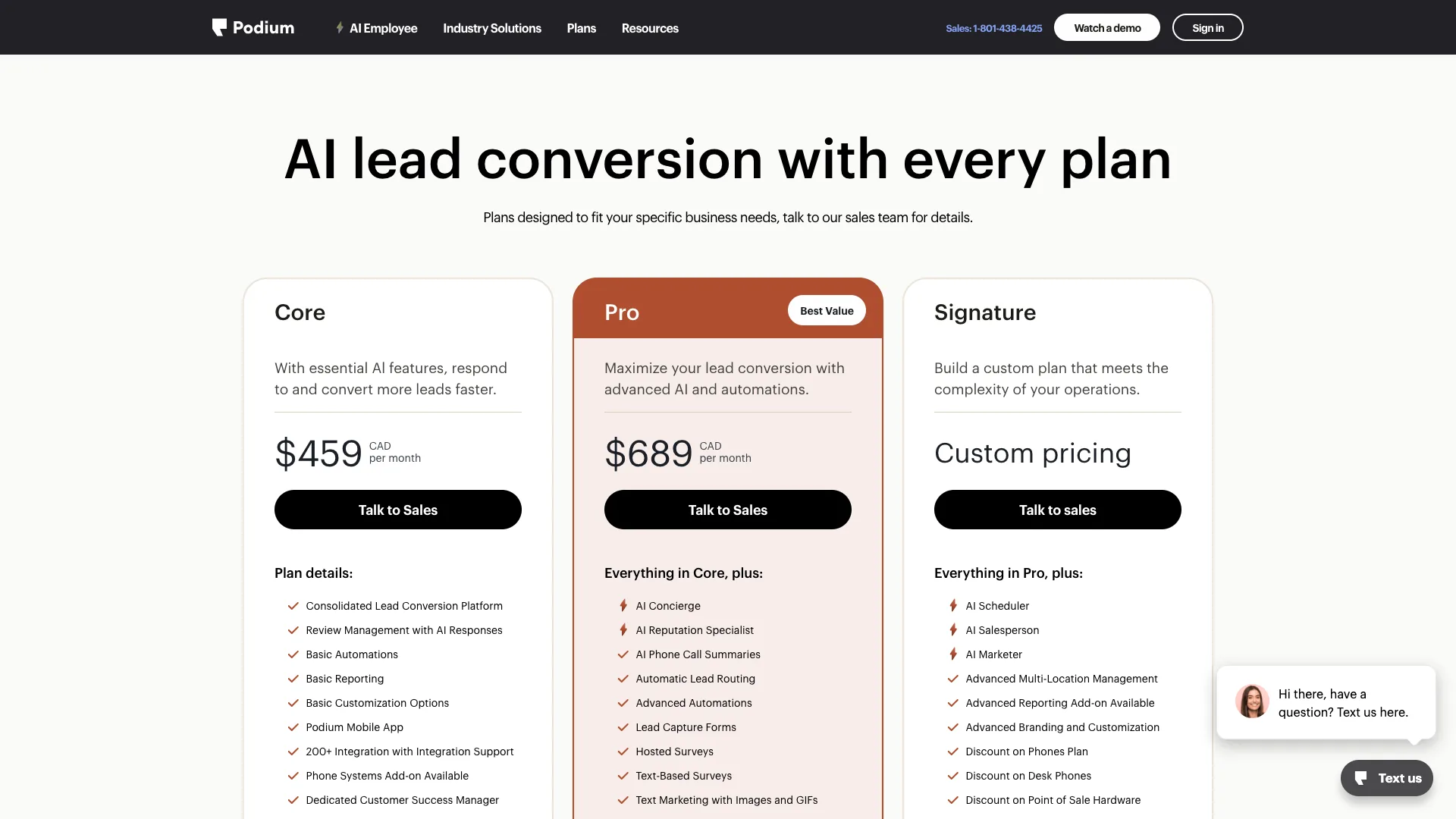 Jul 31, 2026
 Tech Stack
Podium vs Birdeye 2026: Pricing, Contracts and Review Gating
Only one of these two will tell you what it costs before a sales call, and even that number carries a carve-out aimed squarely at trade contractors.
Read Article Jul 31, 2026
 Tech Stack
Best Electrical Contractor Software 2026: 11 Ranked and Priced
An electrical contracting business makes two software purchases that do not substitute for each other, and every roundup answering this query covers only one of them. Eleven platforms, with a published price or an explicit statement that the vendor publishes none.
Read Article Jul 31, 2026
 Tech Stack
Best HVAC Software in 2026: Eleven Ranked Across Three Classes
An HVAC contracting business buys across three classes of software that do not substitute for each other, and every roundup answering this query covers only one of them. Eleven products, each with a published price or an explicit statement that the vendor publishes none.
Read Article Jul 30, 2026
 Tech Stack
AccuLynx Pricing 2026: The Real Cost of a Quote-Gated Plan
One published figure, two blank plan cards, and a contract that says things the pricing page does not. A line-by-line breakdown of what AccuLynx really bills.
Read Article Jul 30, 2026
 Tech Stack
Houzz Pro Canada Review 2026: Pricing and Alternatives
Houzz Pro serves different pricing renderings. What Canadian buyers see, how GST/HST and payments work, what Custom gates, and what the annual contract commits you to.
Read Article Jul 30, 2026
 Tech Stack
JobNimbus Pricing in 2026: What the Quote Does Not Cover
JobNimbus prints no figure on any of its four plans. So the only rate you can read before a sales call is the payments meter, and it is the biggest line on the bill.
Read Article Jul 30, 2026
 Tech Stack
JobNimbus Review 2026: Pricing, Pros, Cons and Alternatives
JobNimbus rates 4.6 on Capterra and orders material straight from ABC Supply and SRS. But it publishes no price, and its supplement route carries a note.
Read Article Jul 30, 2026
 Tech Stack
BuildOps Review 2026: Pricing, Contract Terms and Alternatives
BuildOps runs commercial service and projects on one platform, and publishes no pricing at all. The billing unit, the 30-day data-export window, and who it suits.
Read Article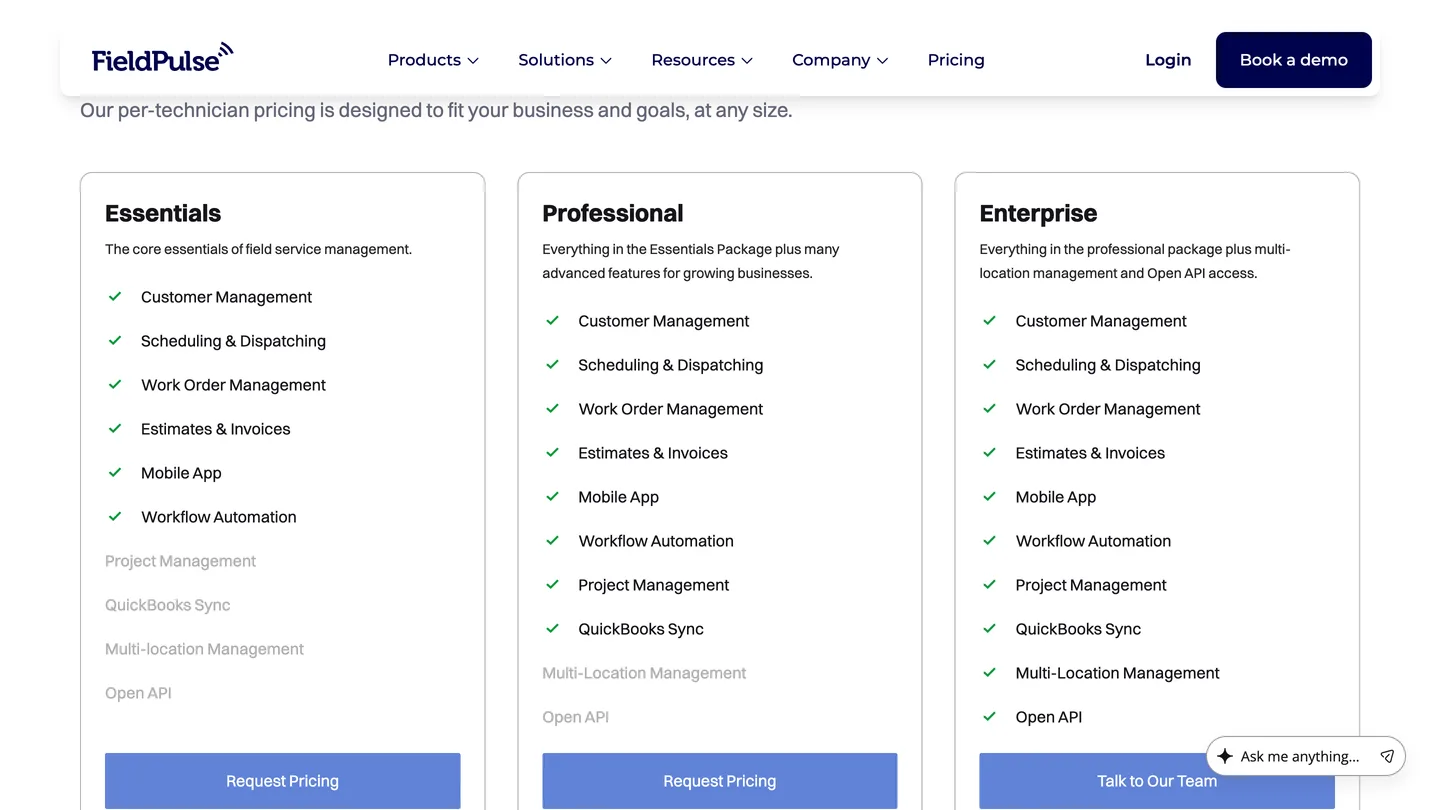 Jul 30, 2026
 Tech Stack
FieldPulse Review 2026: Pricing, Pros, Cons and Alternatives
FieldPulse rates 4.6 on Capterra and is the platform contractors name when they leave a bigger system. But it publishes no price, and the contract runs a year.
Read Article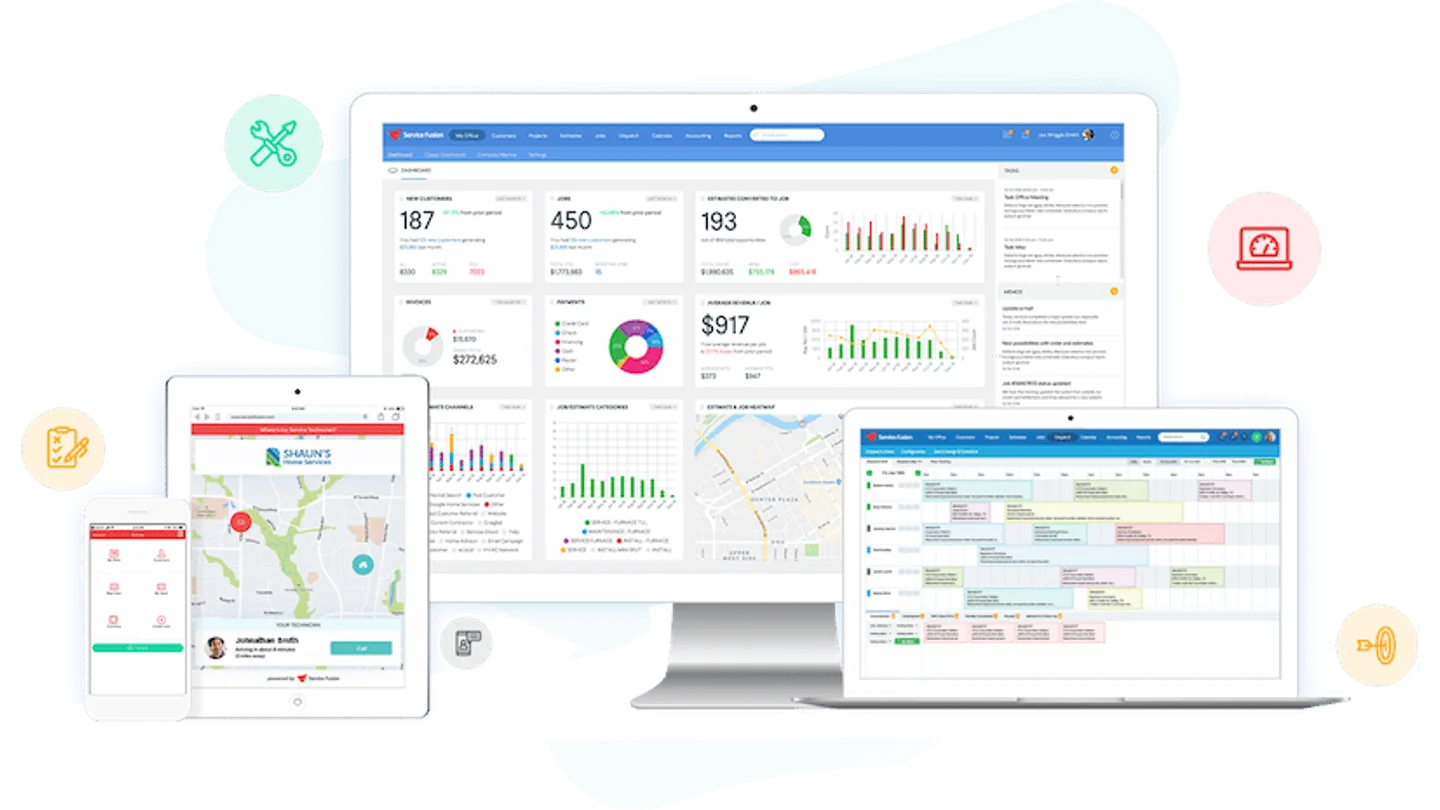 Jul 30, 2026
 Tech Stack
Service Fusion Review 2026: Pricing, Contract and Alternatives
Service Fusion bills flat per company with unlimited users, which is the best structural deal in field service software. The published plans, the contract behind the no-contract line, and the app score every other review gets wrong.
Read Article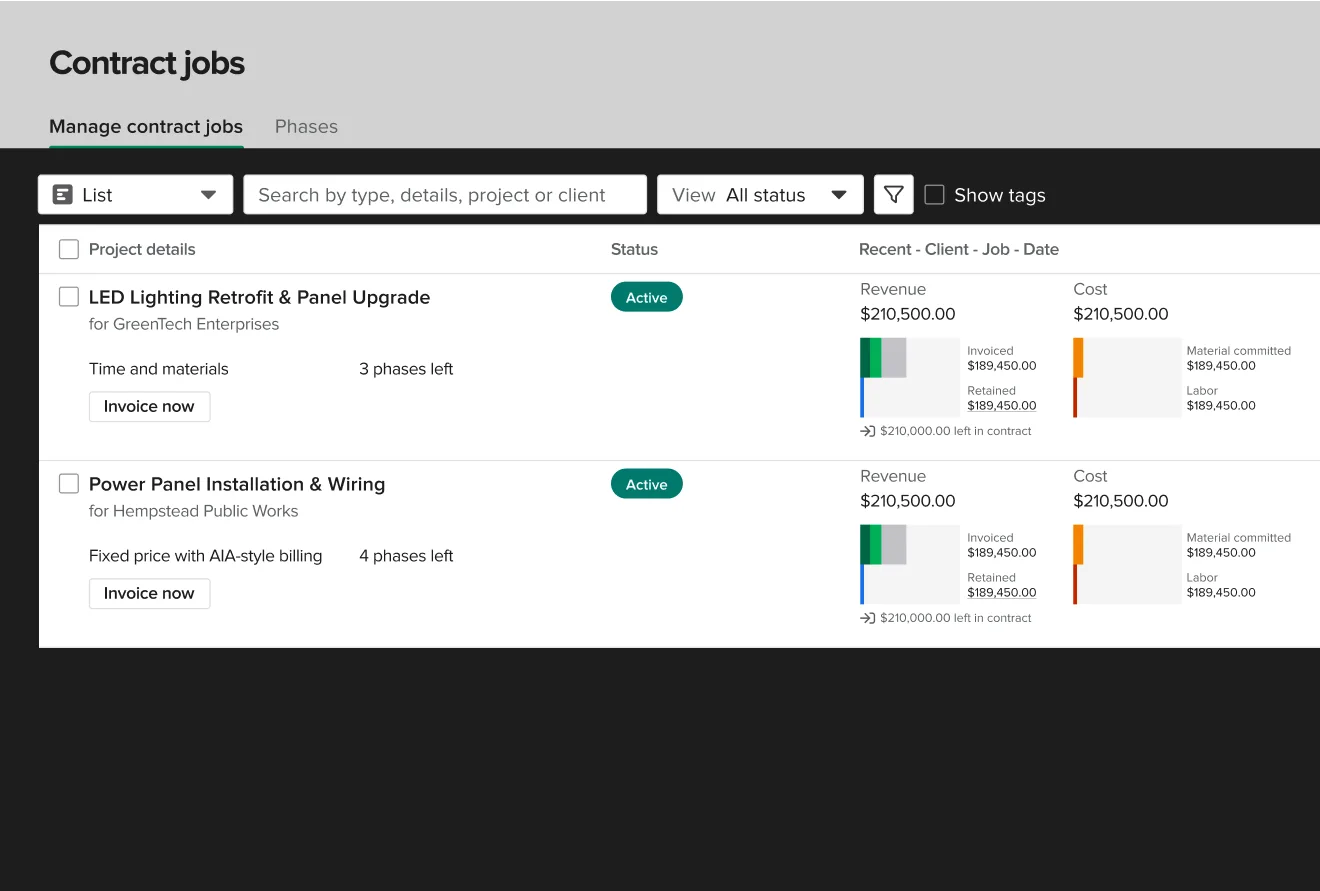 Jul 30, 2026
 Tech Stack
Knowify Review 2026: Pricing, Job Costing and Alternatives
Knowify rates 4.5 on Capterra and its weakest sub-score is features. What the $99 Core plan withholds, which way the QuickBooks sync really runs, and who should not buy it.
Read Article Jul 29, 2026
 Tech Stack
AccuLynx Review 2026: Pricing, Tier Gating, Alternatives
AccuLynx rates 4.6 across 846 reviews and now publishes an entry price. What that price omits, which tier holds the insurance workflow, and who should skip it.
Read Article Jul 29, 2026
 Tech Stack
Unitel Voice Review 2026: Pricing, Features and Alternatives
Unitel Voice rates 4.6 on Capterra and gives a one-truck shop a business number for $9.99 a month. The published plans, the cost per call, and what it won't do.
Read Article Jul 29, 2026
 Tech Stack
NiceJob vs Podium 2026: Pricing, Contracts and Review Gating
Both vendors print a price, at very different scale and in different currencies. The gap that matters is what Podium will not print: the billing unit, and whether a trade shop gets the number on the page.
Read Article Jul 28, 2026
 Tech Stack
CompanyCam Review 2026: Pricing, Pros, Cons and Alternatives
Every page ranking for CompanyCam still quotes a per-user price the vendor no longer charges. Here are the real plans, the seat math, and who should skip it.
Read Article Jul 28, 2026
 Tech Stack
NiceJob Review 2026: Pricing, Pros, Cons and Alternatives
NiceJob rates 4.9 on Capterra and refuses to gate negative reviews. Real plan pricing, the active-customer threshold nobody publishes, and who should skip it.
Read Article Jul 27, 2026
 Tech Stack
Buildertrend Review 2026: Pricing, Limits and Alternatives
Buildertrend rates 4.5 across 2,486 Capterra reviews and quotes against your revenue rather than your seat count. The workflows, the export problem, the alternatives.
Read Article Jul 27, 2026
 Tech Stack
CallRail Review 2026: Pricing, Pros, Cons and Alternatives
CallRail rates 4.5 on Capterra, and its tracking numbers port out free. But the two usage rates that decide your real bill are the two it does not print.
Read Article Jul 27, 2026
 Tech Stack
Roofr Review 2026: Pricing, Pros, Cons and Alternatives
Roofr rates 4.6 on Capterra and sells $13 measurement reports against a market charging triple. But it will not import a report from anywhere else.
Read Article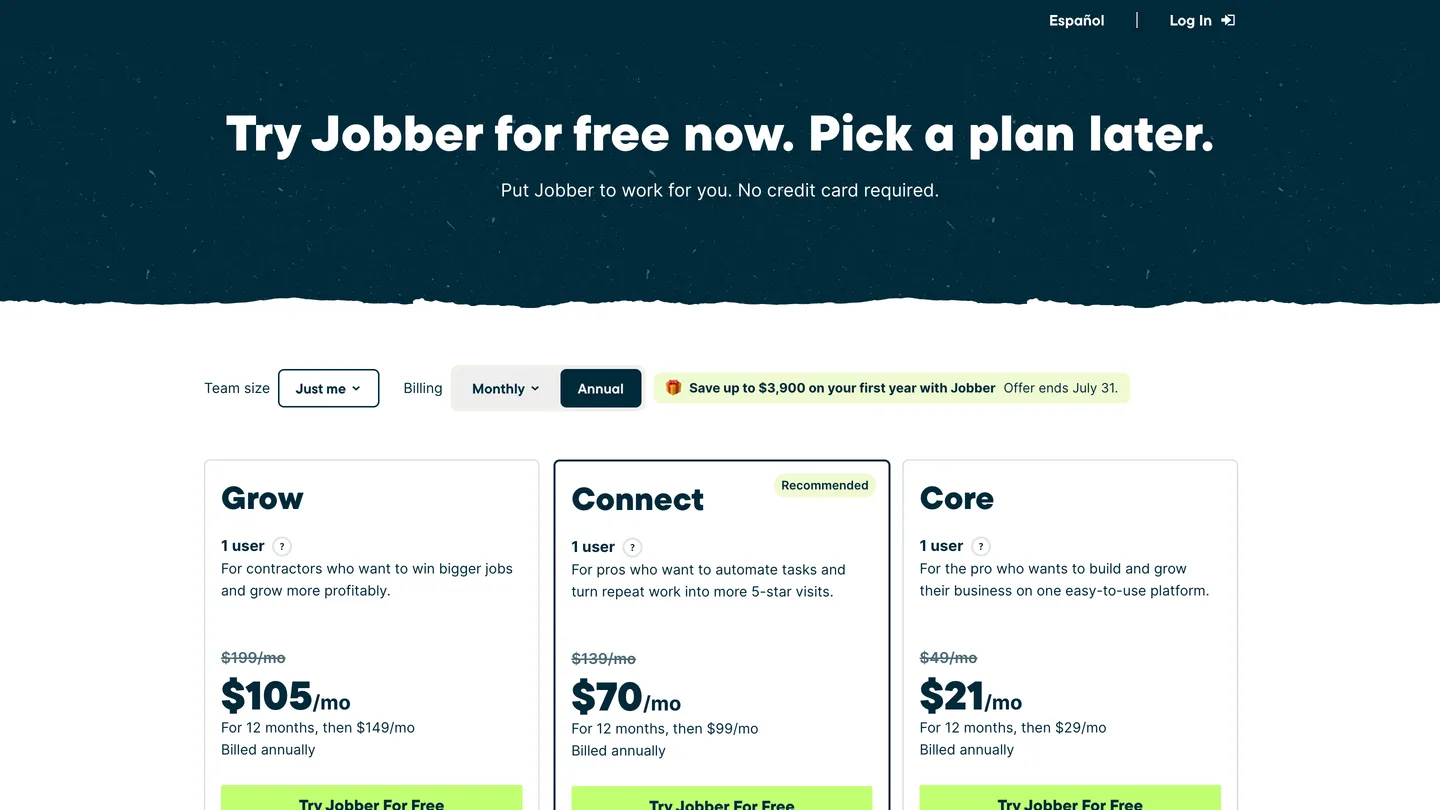 Jul 24, 2026
 Tech Stack
Jobber Review 2026: Pricing, Pros, Cons and Alternatives
Jobber rates 4.6 on Capterra with the best mobile app in the category. Real plan pricing, the feature gating that changes your entry price, and who it suits.
Read Article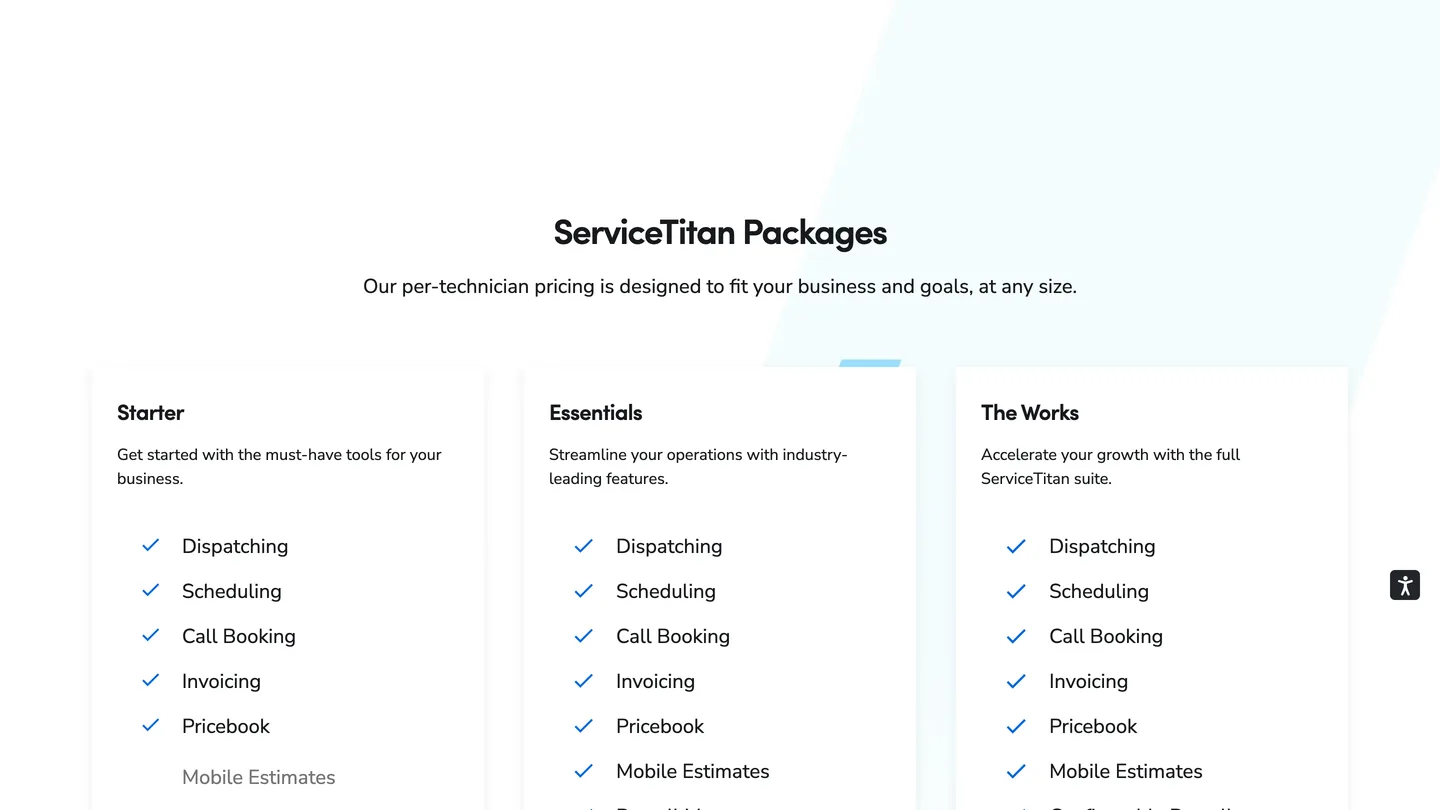 Jul 23, 2026
 Tech Stack
ServiceTitan Review 2026: Pricing, Pros, Cons, Alternatives
ServiceTitan rates 4.3 on Capterra but its weakest score is value for money. Real reported pricing, the 12-month contract, the exit fees, and who it suits.
Read Article Jun 3, 2026
 Tech Stack
HVAC Online Scheduling: The 43% Losing After-Hours Bookings
HVAC leads every trade on online booking at just 56.7%, which still leaves 43% of sites forcing an after-hours customer to wait for a business-hours phone call.
Read Article