CallRail Review 2026: Pricing, Pros, Cons and Alternatives
CallRail publishes 55 to 215 dollar plans with 5 numbers and 250 minutes, then bills usage at rates it never publishes. Real costs and 3 alternatives.
Disclosure This article features tools from our brand partners. If you choose to use them, we may receive compensation at no extra cost to you.
Our editorial choices are independent of these affiliate arrangements. Read our full affiliate disclosure.
Fervor is a CRO and web design studio, not a software reseller, and no vendor paid for placement here or for a kinder verdict. Affiliate links are flagged where they appear, and they never change what we report.
Page at a glance
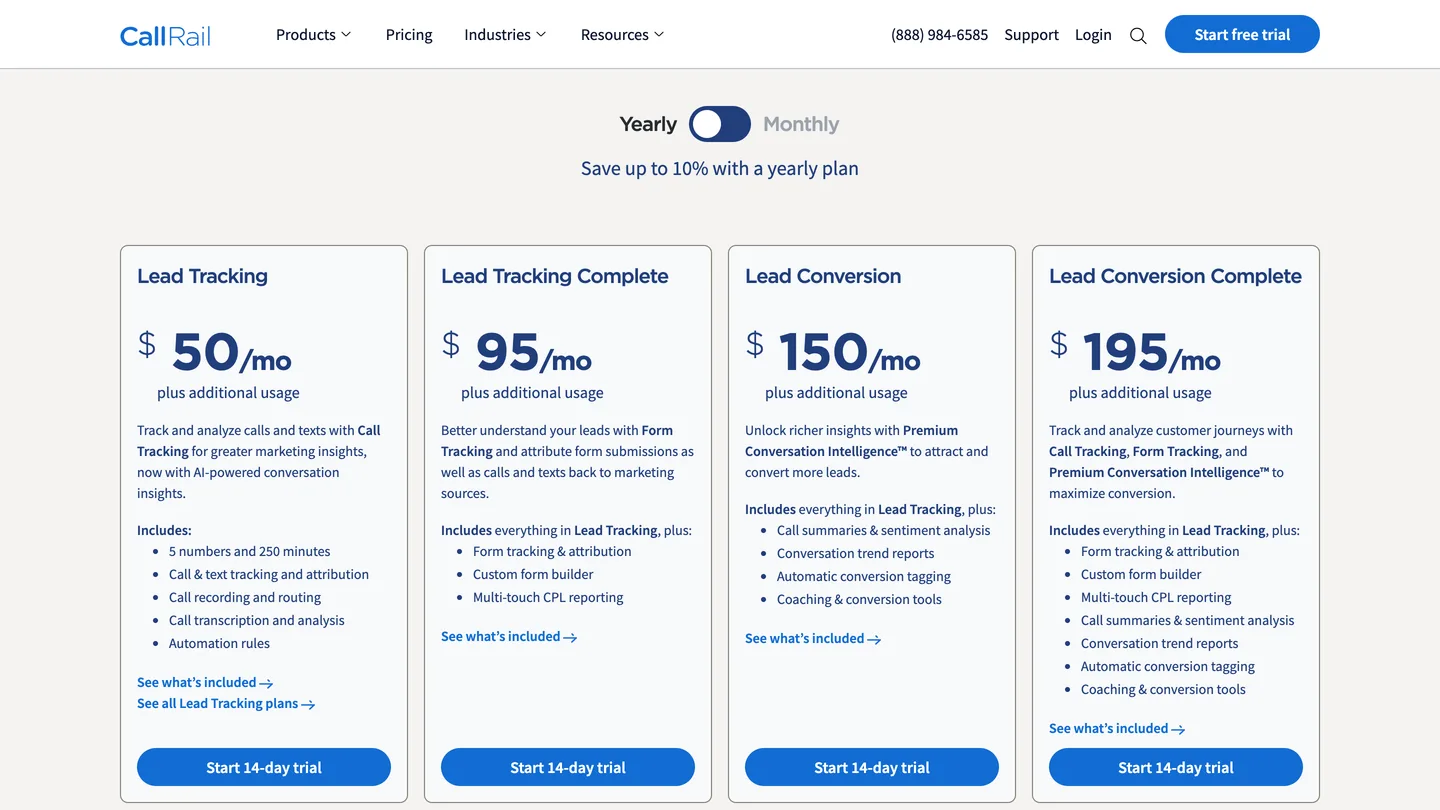
CallRail tells you which ad, campaign or keyword produced each phone call, using dynamic number insertion to swap a tracking number onto your website per visitor. Published plans run 55, 105, 165 and 215 dollars a month, or 50, 95, 150 and 195 billed annually, and every plan includes 5 numbers and 250 minutes. What it doesn't publish anywhere is the per-number fee or the per-minute rate past that allowance, which is the part that decides your real monthly cost. It earns its keep for a shop spending real budget on Google Ads. But it's a waste for a referral-only shop with one number. Keyword data for organic traffic doesn't exist, and thin reporting is the common complaint. Capterra rates it 4.5 across 173 reviews, with Value for Money at 4.3. The closest alternatives are WhatConverts, CallTrackingMetrics and Invoca.
The short verdict
CallRail is the right buy for a residential or commercial service contractor spending at least a couple of thousand dollars a month on paid advertising, who wants to know which campaign paid for which booked job. Best for shops running 3 to 30 users, where somebody in the office opens the reports every month. And if you're not buying ads, none of this applies to you.
Pricing verified July 26, 2026. The base numbers came straight from the vendor. The usage rates did not, because the vendor doesn't print them.
| Pricing model | Published base plan, plus metered usage |
|---|---|
| Base price | 55 to 215 dollars monthly, 50 to 195 billed annually |
| Included allowance | 5 tracking numbers and 250 minutes, every plan |
| Per-number fee | Charged, rate not published |
| Per-minute rate | Charged, rate not published, rounded up per call |
| Dynamic number insertion | Included on every plan |
| Contract | None. Cancel any time |
| Best fit | Contractors running paid search with a real budget |
What works, and what to watch
Strong: keyword-level attribution off a website number pool, a clean Google Ads and GA4 handoff, form tracking on the Complete tiers, call recording at no extra charge, numbers you can port out free, and no contract.
Weak: two pricing inputs the vendor won't publish, no keyword data for organic traffic, reporting that reviewers keep calling hard to bend, a recording disclosure that ships blank, and call recordings that delete themselves at 25 months whether you're ready or not.
What CallRail does
A homeowner searches "furnace not blowing hot air", clicks your ad, lands on your site and calls. Without call tracking you know you got a call. With it you know it came from that keyword, in that campaign, on that landing page. So that's the whole product, and everything else hangs off it.
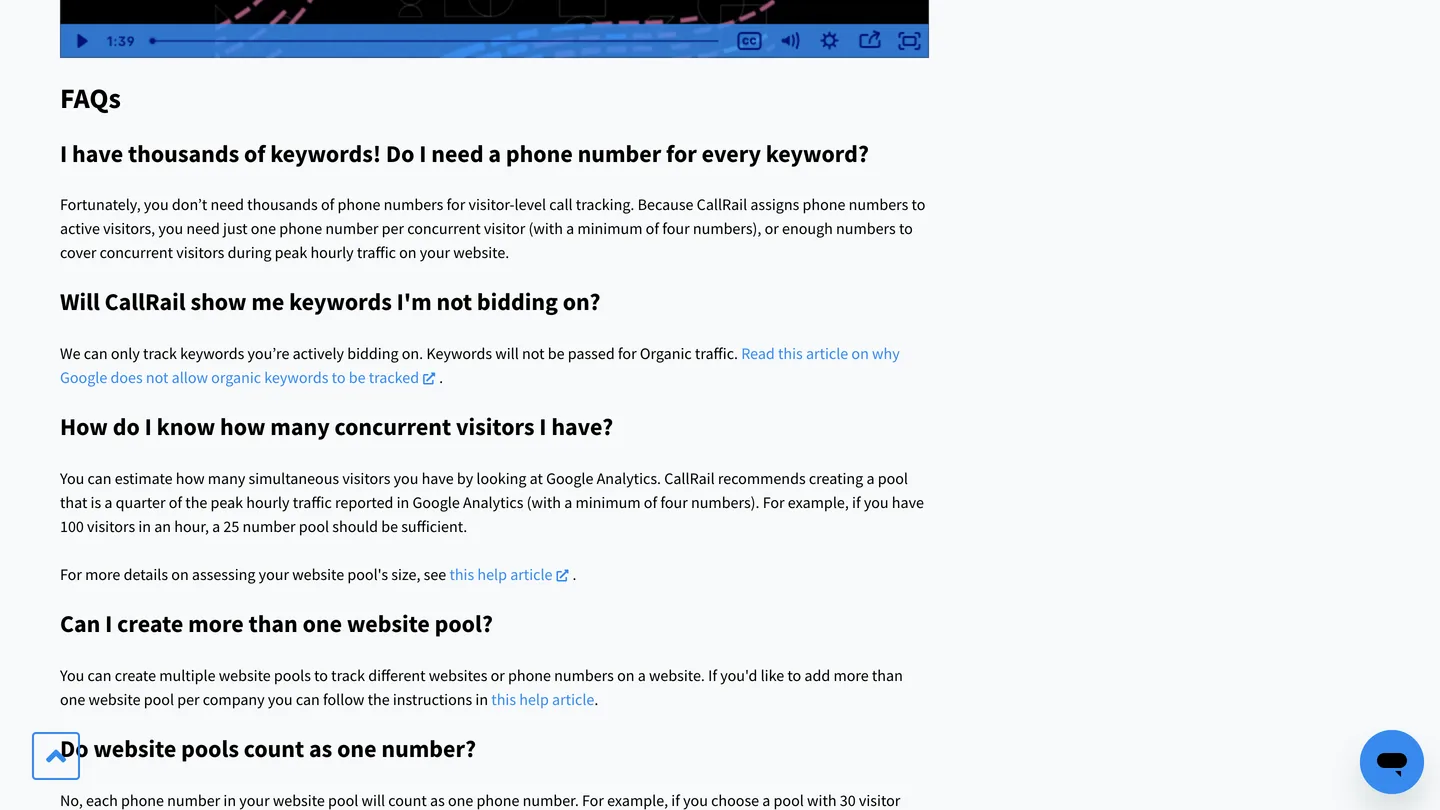
The mechanism is dynamic number insertion. A JavaScript snippet swaps your real phone number for one from a pool CallRail rents you, and each visitor gets their own number for the length of their visit. When that number rings, CallRail already knows who was holding it. The visitor tracking documentation lists what arrives with the call: source type, keyword, landing page, the caller's full page view history, referring domain, device, city and duration.
But one sentence in that same document decides whether this tool is worth anything to you. CallRail can only track keywords you're actively bidding on, and keywords are not passed for organic traffic. So if your plan was to learn which organic search terms drive your phone calls, no platform in this category can tell you, because Google stopped handing that data over years ago. Attribution resolves to keyword level for paid search and source level for everything else.
Who CallRail is for
The honest test has nothing to do with crew size and everything to do with your advertising. If you spend 2,000 dollars a month or more across Google Ads, Local Services Ads and Meta and can't say which produces booked work, this pays for itself the month you cut a campaign that was never earning. One wasted 800-dollar campaign costs more than the top tier.
And it suits multi-channel contractors best. Yard signs, truck wraps, a mail drop and three landing pages each get their own number, so at month end you have counts instead of opinions. Noah N., a marketing manager in construction writing on Capterra on 10 March 2025, gives the practical version: he says it's super easy to create, manage, and utilize hundreds of call tracking numbers at once.
"A marketing manager in construction writing on 10 March 2025 calls it super easy to create, manage, and utilize hundreds of call tracking numbers at once."
Capterra (2025)
Who should not buy CallRail
Skip it if you're referral only. A shop with one phone number and no ad spend has nothing to attribute, and installing attribution over a word of mouth business measures a channel that was never in question. Spend the money on the advertising first, then come back and measure it. That order matters, and almost nobody follows it.
Do not buy CallRail if your only question is about organic search. You'll pay for numbers and minutes and get a keyword column that stays empty.
And walk away if nobody is going to open the reports. That's the failure I'd bet on most. Attribution is a decision tool, so if the person who'd act on it is you, and you're on a roof until six, it quietly becomes a line item you renew out of guilt. Christine C., an administrator writing on 24 February 2026, puts the money version plainly: for smaller teams, she says, the cost can scale faster than expected if you're running multiple campaigns.
What CallRail costs
The published prices
CallRail's pricing page is direct about the part it does publish. In symbol form, so it lines up against a competitor's page: Lead Tracking is $55/month, Lead Tracking Complete $105, Lead Conversion $165 and Lead Conversion Complete $215. Pay annually and those drop to $50, $95, $150 and $195. Every tier includes 5 numbers and 250 minutes, and every tier carries the phrase "plus additional usage" under the price. There's a 14-day trial, no card required.
"CallRail lists Lead Tracking at $55 a month, Lead Tracking Complete $105, Lead Conversion $165 and Lead Conversion Complete $215, dropping to $50, $95, $150 and $195 annually, every tier including 5 numbers and 250 minutes."
CallRail (2026)
The ladder buys capability rather than volume, which is unusual and worth understanding. Going from 55 to 105 dollars adds form tracking and multi-touch cost-per-lead reporting. Going to 165 adds call summaries and sentiment analysis. But none of those upgrades give you one extra number or minute, so you can sit on the 215-dollar tier and still pay overage on your sixth number.
The two numbers the pricing page won't give you
Now the part that decides your bill. CallRail charges for numbers past 5 and minutes past 250, and it publishes neither the per-number fee nor the per-minute rate. That's not something I'm inferring. I checked the pricing page, the Plan Types article and the invoice article on July 26, 2026. The invoice article lists every meter you can be billed on: minutes, numbers, text messages, toll-free surcharges on both, voicemail transcriptions, transcription minutes, analysis minutes, form submissions and API calls. It names the meters and prints no rates.
"CallRail charges for numbers past 5 and minutes past 250 and publishes neither the per-number fee nor the per-minute rate."
CallRail (2026)
And the independent directories don't have them either, which is the part that convinced me this isn't an oversight. GetApp and Software Advice both list all four CallRail plans, both label them usage based, and neither one publishes a per-number or per-minute rate anywhere on the page. GetApp's own summary of what reviewers say about the pricing is that some of them find the structure confusing or get billing changes they didn't expect. That's the same gap showing up from the other direction.
And two mechanics in the fine print widen that gap. Minutes are rounded up per call and then summed, so 200 calls averaging 90 seconds bills as 400 minutes rather than 300. The pricing page also states additional fees are not refundable under any circumstances.
For an anchor, look at what the competition prints. WhatConverts publishes overages on its pricing page: 2.50 dollars per extra local number, 4.5 cents per extra local minute, 3.50 and 6.5 cents for toll-free. CallTrackingMetrics publishes number pricing in its pricing FAQ at 2.00 dollars a month local and 3 dollars toll-free, though it leaves per-minute rates off too. But I won't tell you CallRail's rate is similar, because I don't know and neither does anyone who hasn't seen a CallRail invoice. Ask for both figures in writing during the trial.
"WhatConverts publishes overages of 2.50 dollars per extra local number and 4.5 cents per extra local minute, and 3.50 and 6.5 cents toll-free."
WhatConverts (2026)
Why your bill won't look like the sticker
Here the number pool turns into money, and this is the calculation nobody runs before signing. CallRail's guidance is one number per concurrent visitor, minimum four, with a pool sized at a quarter of your peak hourly traffic in Google Analytics. Its own example: 100 visitors in an hour needs a 25-number pool. And the same help centre confirms every number in a pool counts as one phone number for billing.
So run that against a real contractor. A roofing company after a hailstorm hits 100 visitors in a peak hour without trying. That's a 25-number pool, plus one each for the truck wrap, the yard signs and direct mail. Call it 28 against an allowance of 5. Then add volume: 250 minutes is roughly 60 calls a month at four minutes each, and a shop worth advertising for beats that in a fortnight.
Which means the honest way to read the 55-dollar tier is as a platform fee. Your real monthly cost is 55 dollars plus 23 numbers plus a few hundred minutes, and you cannot compute it from anything CallRail has published. That's the sharpest criticism in this review, and it's fair to say it applies to the category rather than to CallRail uniquely.
What it costs beyond the subscription
But the rest of the cost column is unusually clean, and it beats most software a contractor buys. There's no implementation or setup fee, because you install a snippet yourself. There's no payment processing rate to model, since CallRail never touches your customer payments. And per the account closure documentation, because CallRail doesn't require long-term contracts, any administrator can close the account at any time. So no minimum term, no early termination fee, no notice period. The one real commitment is the annual plan, where 12 months of base fees are charged upfront for roughly a tenth off.
Voice Assist, the AI answering add-on, starts at 95 dollars a month, and the pricing page footnotes that all plans include Lead Tracking at an additional 55 dollars, with 1 dollar per call after 50 Voice Assist calls longer than fifteen seconds. That's the one usage rate CallRail does print.
Our read on the features
Attribution and the Google Ads handoff
This module justifies the purchase and it does the job well. Conversions push into Google Ads and GA4, so the ad platform optimises toward calls rather than clicks, which is the entire point of buying this. The integrations directory also confirms Google Business Profile, Microsoft Ads, Meta Ads Manager and Google Tag Manager. But settle one setting on day one. Google's own call reporting documentation says to turn its forwarding numbers off if you're running third-party call tracking, otherwise two systems are swapping the number on the same ad and you get to referee the difference.
But Colin J., a marketing VP writing on 22 January 2022, names the failure mode worth knowing. If you run a complicated marketing setup, he says, CallRail can get overwhelmed with the dynamic number insertion and may provide contradictory information between sources and numbers. Undersize your pool and two visitors share a number, which is the misattribution the four-number minimum exists to reduce.
Call recording, and the consent box that ships blank
Call recording is included at no extra cost on every plan, and for a contractor training a new office hire that's worth more than the attribution some months. But the inbound recording documentation carries a legal notice you need to read properly. Laws differ by state, and the gap between them is wider than most contractors assume. The federal wiretap statute, 18 U.S.C. 2511, makes it lawful to record a call you're a party to, or where one party has given prior consent. But California's Penal Code 632 needs the consent of all parties to a confidential communication, and breaking it carries a fine or jail. So the same recording setting is routine in one state and a crime in another. CallRail lets you enable an automated greeting telling the caller the line is recorded.
And the detail that should stop you is this: that greeting field is optional, and the documentation says you can leave it blank for no message. So in a two-party consent state you can switch recording on in four clicks and record customers with no disclosure, because the compliant setting is one you type into a box nobody made you fill in. Check your own state, and if crews cross a state line, check both. Canadian shops sit under PIPEDA, where the Privacy Commissioner's guidance on recording customer telephone calls says you have to tell the customer you're recording, state why, and ask for consent. And Quebec adds a layer on top of that: the province's private-sector privacy act makes you inform the person at collection, in clear and simple language. Neither of those survives an empty greeting field.
Reporting and the mobile app
Reporting is the weakest core module, and reviewers have said so consistently for four years. David V., a lead developer writing on 15 November 2025, likes the platform and still says generating reports can be challenging. Sean M., a director of admissions writing on 13 November 2025, wanted per-person data and says one key insight I needed was into individual rep performance, which CallRail did not provide. Our read: fine for "which campaign produced calls", thin for "which of my two office staff books more of them". The iOS app rates 4.7 out of 5, though that's from 37 ratings, which is a small enough sample that I wouldn't lean on it either way.
"A lead developer writing on 15 November 2025 says generating reports can be challenging, and a director of admissions writing on 13 November 2025 wanted per-person rep performance CallRail did not give."
Capterra (2025)
Where it falls short
Six specific gaps, and you can check every one before the trial ends.
The per-number and per-minute rates are unpublished. You cannot model your own bill from public information, which for a metered product is the gap that matters most.
No keyword data for organic traffic. Confirmed in CallRail's own documentation. If most calls come from organic search and the map pack, that column stays empty.
Reporting resists customisation. Named independently by reviewers in 2025 and 2026, with per-agent performance the specific absence.
The recording disclosure defaults to nothing. The greeting field can be left blank, so compliance in a two-party consent state depends on you remembering.
Call recordings auto-delete at 25 months. The data retention policy states communication records are kept 25 months and then automatically deleted, and that CallRail is unable to extend that period. Recordings, transcripts, texts, form submissions and visitor sessions all sit in that bucket. So if you might need a two-year-old call for a warranty argument or a lien dispute, export it well before then.
"CallRail keeps communication records for 25 months and then deletes them automatically, and cannot extend that period."
CallRail (2026)
Toll-free costs more on both meters. The invoice carries separate toll-free surcharges for numbers and for minutes. Noah N. lists exactly that as his one complaint, having to pay for things like 1-800 numbers. Use local numbers unless a toll-free line earns its keep, and for a local contractor it rarely does.
How the answer changes by trade
An HVAC contractor gets the strongest case here, and the reason is seasonality. Call volume swings hard between a July heatwave and a mild October, and so does the right ad budget. Attribution is what tells you which campaigns to cut in the shoulder season instead of cutting all of them. But watch the minute meter in peak week: a heatwave that triples your calls triples your usage bill in the same fortnight. The State of HVAC report carries the numbers for every site we inspected, and our HVAC marketing hub covers the campaign side.
A roofing contractor should buy it for storm response. When a hail event puts every roofer in the county on the same keywords, you're suddenly bidding against all of them, and knowing which campaign produces booked inspections rather than tyre-kickers is worth real money that week. So size the pool before the storm, not during it. Our roofing marketing hub goes further into storm-season campaign structure.
A remodeling contractor doing kitchen and bath work has the hardest time justifying it, and the sales cycle is why. A homeowner researching a 60,000 dollar kitchen touches your site six times across four months, and the call that finally comes gets credited to the last session. So multi-touch cost-per-lead reporting is a real reason to start at 105 rather than 55 in this trade.
And a plumbing contractor lands in the middle. Emergency work converts on the first call so the attribution is clean, and the after-hours question is the real one. Half your money calls land at ten at night, where a routing rule matters more than another report.
Where the tracked call lands
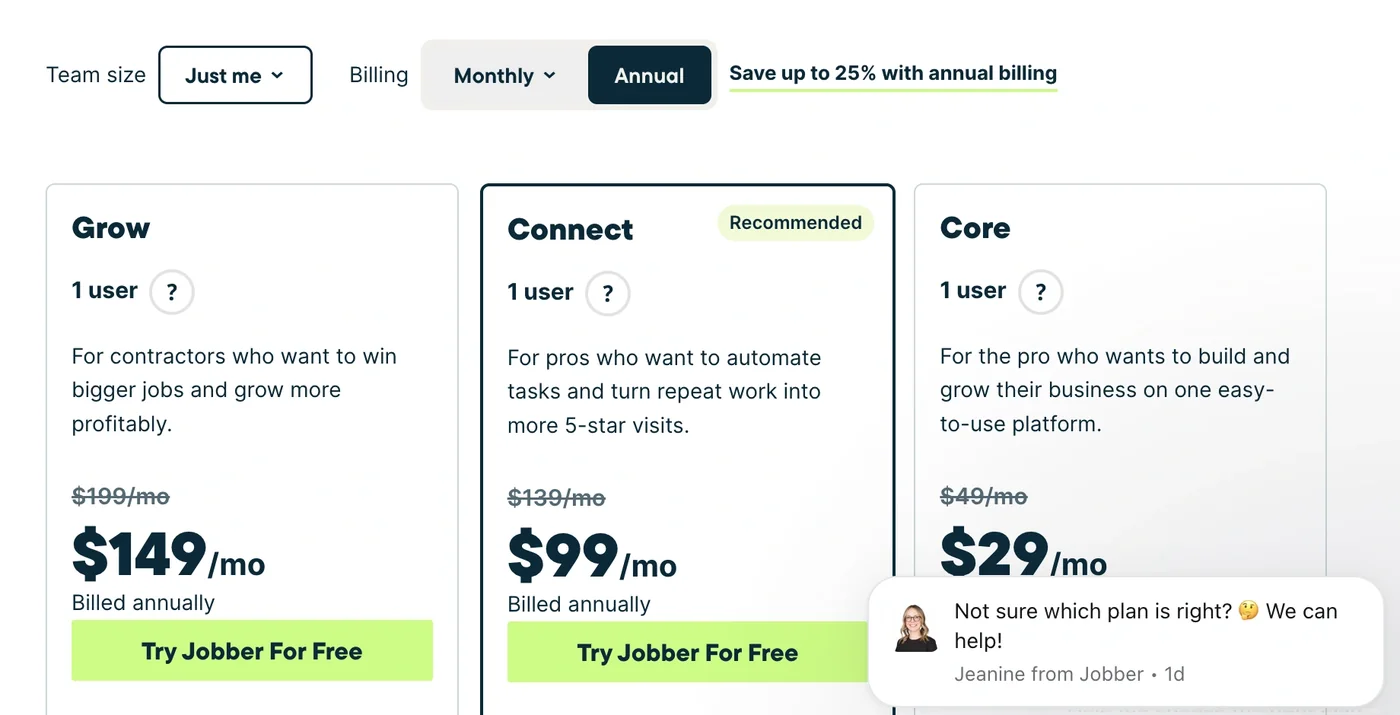
Attribution that stops at the ring is half a product. The value lands when a tracked call is matched to a booked job, and that join happens in your field service platform. CallRail integrates with ServiceTitan, Jobber and Housecall Pro, which covers most contractors reading this, plus Salesforce and HubSpot if your CRM sits outside the FSM.
And settle one thing during the trial rather than after. CallRail sits in front of your existing phone system rather than replacing it, and numbers forward to whatever you already use. RingCentral is a named integration, with Zapier and a webhook if the native connector falls short. But test the whole path: call a tracking number and confirm the record lands against the right customer in your FSM with the source attached. If it arrives unattributed, you've bought a very expensive caller ID.
Porting out, and getting your data back
Numbers that can't be ported out are the deal-breaker here, because a number printed on a truck wrap and a hundred yard signs is one you can't abandon. And CallRail's answer is the best thing in this review. Its port-away documentation states that you own the numbers you create in CallRail, that it won't block or reject any port-out request approved by an account administrator, and that porting a US or Canadian number away is free. And that promise has a regulator standing behind it, because the FCC says your old company cannot refuse to port your number, even if you still owe it money. CallRail tells you to budget 4 to 6 weeks and puts that down to regulations outside its control, though the FCC's own rule is one business day for a simple port. So read the wait as CallRail's carrier chain rather than the law, and ask where in that chain the weeks go. Either side of the border, the sequencing rule is the same one the CRTC gives Canadians: don't cancel before the transfer starts, because a number you cancelled first is a number you replace.
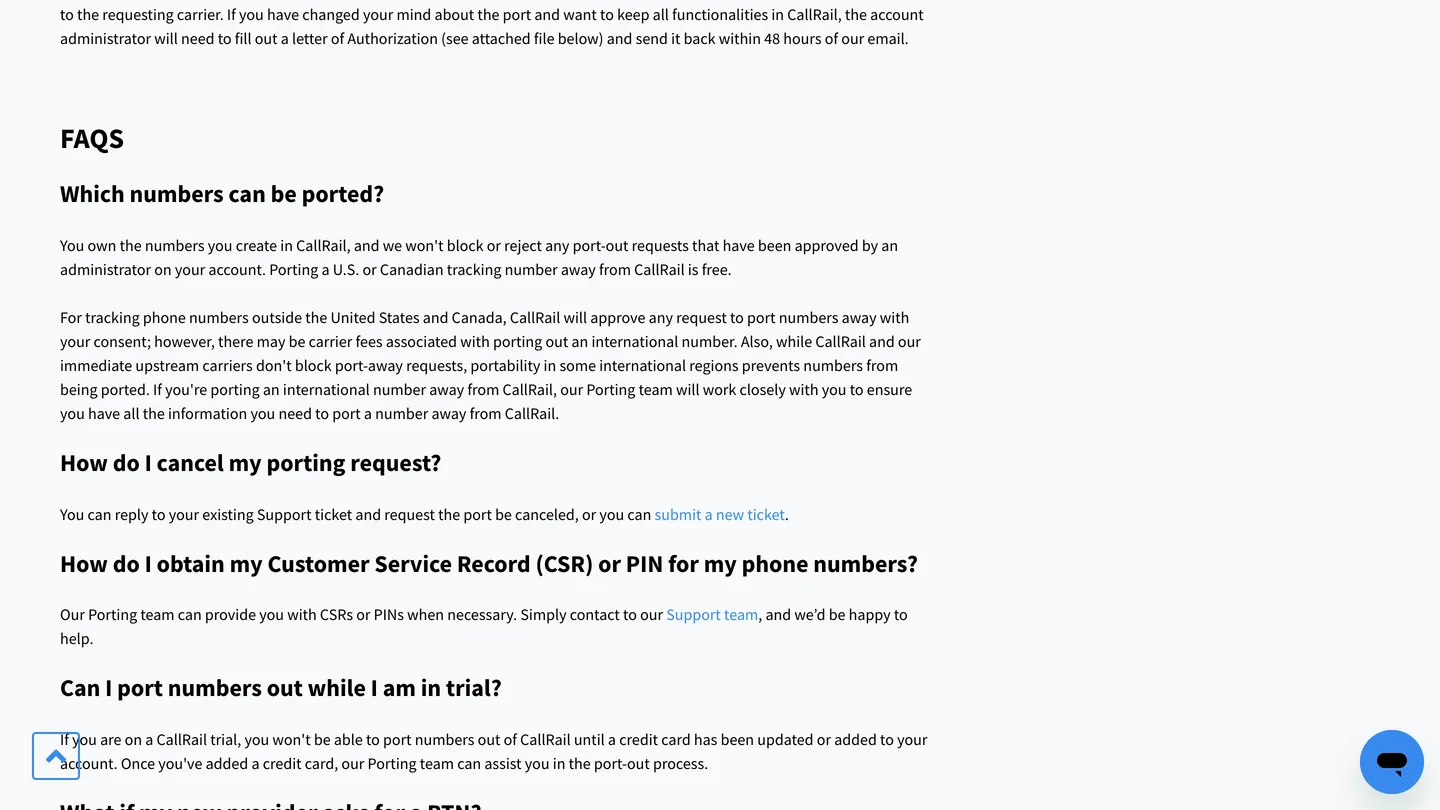
But your data is a different story, and the order of operations is everything. Export your call records and reports while the account is still open, because closing it releases your numbers and puts historical data behind a reactivation. Billy B., a construction company president writing on Capterra on 17 July 2023, learned that the expensive way after four years as a customer. He describes needing a report after ending his account and says I assumed our data would always be our data. CallRail's documented position is that you pull reports before the billing cycle ends, and that former data returns if you reactivate within 13 months. Both things can be true. So export first, cancel second.
What the reviewers report
Now the crowd's verdict, kept separate from our read on purpose. CallRail scores 4.5 out of 5 across 173 Capterra reviews, with Ease of Use 4.4, Value for Money 4.3, Customer Service 4.3 and Functionality 4.3. Sentiment runs 156 positive, 7 neutral and 10 negative. And the flatness of those sub-scores is itself informative: nobody rates any single part of this badly.
"CallRail scores 4.5 out of 5 across 173 reviews, with Ease of Use 4.4, Value for Money 4.3, Customer Service 4.3 and Functionality 4.3."
Capterra (2026)
Consistent praise: simplicity, fast setup, the quality of ad-referred tracking, recording and transcripts, and handling large volumes of numbers without pain. Irene B., a digital marketing manager writing on 25 November 2025, says the tracking holds whether the lead calls immediately or calls back later, the case most attribution tools fumble.
Consistent complaints: pricing that scales faster than expected, limited report customisation, no per-agent reporting, paying separately for toll-free and international numbers, and a thin integration surface for agency reporting tools. Armando A., writing on 16 September 2024, says the variety of tracking numbers to purchase is very limited.
How it compares
A real alternative attributes at the same granularity. A VoIP provider with a call log is not one, because a log says a call happened and attribution says which keyword paid for it. That rules out most of what a search will show you. Ratings are Capterra, fetched July 26, 2026.
| CallRail | WhatConverts | CallTrackingMetrics | Invoca | |
|---|---|---|---|---|
| Starting price | 55 dollars monthly, 50 annual | 30 dollars monthly | 65 dollars monthly, billed yearly | Quote only, no published price |
| Per-number fee published | No | Yes. 2.50 local, 3.50 toll-free | Yes. 2.00 local, 3.00 toll-free | No |
| Per-minute rate published | No | Yes. 4.5 cents local, 6.5 toll-free | No | No |
| Included allowance | 5 numbers, 250 minutes | Up to 148 phone call leads | Numbers and minutes billed separately | Not published |
| Dynamic number insertion | Yes, all plans | Yes | Yes | Not compared |
| Capterra rating | 4.5 of 5, 173 reviews | 4.9 of 5, 50 reviews | 4.7 of 5, 158 reviews | Not on that comparison |
| Value for money | 4.3 | 5.0 | 4.5 | Not compared |
| Trial | 14 days, no card | 14 days | First month with no plan fee | Not compared |
| Best for | The simplest setup | Anyone who wants the bill predictable | Heavier routing and agency sub-accounts | Not compared |
So WhatConverts wins on cost transparency, CallTrackingMetrics wins on routing depth and agency features, and CallRail wins on being the one your marketing company already knows how to configure. That last point sounds like faint praise and isn't. If somebody else runs your ads, the platform they've set up two hundred times is live and correct on Monday, and the one they've never touched takes three weeks and gets the pool size wrong.
The verdict, by what you spend on ads
No paid advertising
No. There's nothing to attribute. Put the 55 dollars a month toward a Local Services Ads budget and revisit this when there's something to measure.
Under 1,500 dollars a month in ad spend
Probably not yet, and the reason is arithmetic. At that spend a properly sized pool plus minutes can eat a real share of the budget you're trying to optimise. So start with Google Ads call reporting, which costs nothing extra, assigns a forwarding number, and counts calls past a length you set as conversions.
1,500 to 10,000 dollars a month in ad spend
Yes, and this is the band CallRail is built for. Start on Lead Tracking at 55 dollars and add form tracking at 105 only once you've proved you read the call data. But get the per-number and per-minute rates in writing during the 14-day trial, size the pool off your real Google Analytics peak rather than a guess, and read your first full invoice line by line.
Over 10,000 dollars a month in ad spend
Yes, and compare it against WhatConverts and CallTrackingMetrics first. At this spend the usage line gets large enough that published overage rates are worth real money. So negotiate. Volume moves the number in this category, and nobody advertises that.
The number nobody checks first
Fervor is a CRO and web design studio rather than a CallRail alternative. But call tracking rests on one assumption worth testing before you spend anything, which is that a caller can find your number at all. And that's the gap we happen to have data on.
In May 2026 we inspected 380 home services contractor websites for the Contractor CRO Index 2026. Only 61.6% carry a phone number in a persistent header. That's 234 sites where the number follows you down the page, and 146 where it doesn't. Dynamic number insertion swaps a number that's already on the page, so on those 146 sites you'd be paying per number to track a call the visitor had to hunt for. And 82.8% of the sites we inspected loaded poorly enough on mobile that some visitors leave before the swap runs at all.
"82.8% of the 380 contractor websites inspected loaded poorly enough on mobile to cost the visit."
Fervor Studio Contractor CRO Index (2026)
"Only 61.6% of 380 home services contractor websites carry a phone number in a persistent header, leaving 146 where the visitor has to hunt for it."
Fervor Studio Contractor CRO Index (2026)
The text meter tells the same story. CallRail bills for text messages, yet only 19.2% of the sites we inspected offer any text channel, so most contractors are provisioned for a conversation their website never invites. So fix the phone placement first. It costs nothing per month, and it makes every number you rent afterwards worth more. The full statistics are public, and our home services marketing hub covers where the rest of the leaks sit.
See whether your site is worth tracking before you pay to track it
Fervor inspects your site the way a homeowner uses it, then shows you the specific places calls leak out before any tracking number gets involved. It takes about three days.
Get a Site InspectionWhat we tested, and what we didn't
We did not run CallRail on a live contractor account, so nothing here is a hands-on performance claim. What this page is instead: the vendor's pricing page and help centre read in full, including the plan, invoice, visitor tracking, recording, porting, closure and retention articles, plus the public review corpus on Capterra, GetApp and Software Advice, competitor pricing pages read directly, and the App Store listing. The legal points were checked against the source rather than a summary of it: the federal wiretap statute, California's all-party consent section, the federal Privacy Commissioner's guidance, Quebec's private-sector act, and the FCC and CRTC pages on porting. All figures verified July 26, 2026.
And the gap we couldn't close is the one this article is largely about. CallRail's per-number fee and per-minute rate aren't published anywhere public we could find, and every third-party page quoting a specific rate is published by a company that sells against CallRail. So we reported the absence rather than borrowing a competitor's number and calling it a fact. G2, TrustRadius and Trustpilot block automated access, so nothing here comes from any of them.
If you want to evaluate CallRail directly, its product site is where the trial starts. But ask for the per-number and per-minute rates in the first conversation, and get them in writing.
What CallRail users say
I assumed our data would always be our data.
It's super easy to create, manage, and utilize hundreds of call tracking numbers at once.
For smaller teams, the cost can scale faster than expected if you're running multiple campaigns.
If you have a complicated marketing system, CallRail can get overwhelmed with the dynamic number insertion and may provide contradictory information between "Sources" and "Numbers".
One key insight I needed was into individual rep performance, which CallRail did not provide.
It lacks integrations and automations compatible with other platforms, and the variety of Tracking Numbers to purchase is very limited.
Overall it's a been a positive experience and we have continued to increase our use of CallRail over this last year and expect to increase our usage in the coming year.
CallRail is a great place to start. I wish they were more flexible in their options as businesses grow though.
The fact that such a significant change in billing was made without my explicit consent is not only unethical but also suggests a lack of regard for customer preferences and authorization.
Frequently asked questions
How much does CallRail cost?
CallRail publishes four plans. Billed monthly they are Lead Tracking at 55 dollars, Lead Tracking Complete at 105, Lead Conversion at 165 and Lead Conversion Complete at 215. Billed annually those drop to 50, 95, 150 and 195. Every plan includes 5 tracking numbers and 250 minutes, and every plan adds metered usage on top. There is no setup fee and no minimum term. Capterra lists the starting price as 55 dollars a month, usage based, which matches the vendor page.
What does CallRail charge for extra numbers and minutes?
That is the one thing it does not publish. The pricing page, the Plan Types help article and the invoice help article all confirm you are billed for tracking numbers past 5 and minutes past 250, and none of them prints a rate. The invoice article names the meters, which include numbers, minutes, text messages, toll-free surcharges on both, transcription minutes, form submissions and API calls. Minutes are rounded up per call before being summed, and the pricing page states additional fees are not refundable under any circumstances. For comparison, WhatConverts publishes 2.50 dollars per extra local number and 4.5 cents per extra local minute, and CallTrackingMetrics publishes 2.00 dollars a month for local numbers. Ask CallRail for both figures in writing during the trial.
How many tracking numbers does a contractor need?
More than the 5 your plan includes, if you use dynamic number insertion. CallRail states you need one number per concurrent website visitor with a minimum of four, and it recommends sizing the pool at a quarter of your peak hourly traffic in Google Analytics. Its own example is that 100 visitors in an hour needs a 25 number pool, and every number in a pool counts as one number for billing. Add separate numbers for a truck wrap, yard signs and direct mail and a busy contractor is well past the allowance.
Does CallRail require a contract?
No. CallRail states it does not require long-term contracts and that any administrator can close the account at any time. There is no minimum term, no early termination fee and no notice period. The account stays usable until the billing period ends, and you receive a final invoice covering accrued usage. The one commitment is the annual plan, where 12 months of base fees are charged upfront in exchange for roughly a tenth off.
Can I keep my tracking numbers if I leave CallRail?
Yes, and this is the strongest term in the product. CallRail states that you own the numbers you create, that it will not block or reject a port-out request approved by an account administrator, and that porting a US or Canadian number away is free. Budget 4 to 6 weeks, which is carrier regulation rather than vendor delay. That matters because a tracking number printed on a truck wrap or a hundred yard signs is one you cannot abandon.
Does CallRail show which organic keywords drive calls?
No, and no platform in this category can. CallRail states it can only track keywords you are actively bidding on, and that keywords are not passed for organic traffic, because Google withholds organic keyword data. You still get source-level attribution for organic calls, including landing page, referring domain and the visitor page history, but the keyword column stays empty. If organic keyword attribution is your only reason to buy, this will disappoint you.
How long does CallRail keep call recordings?
Communication records are retained for 25 months and then automatically deleted, and CallRail states it is unable to extend that period. That bucket covers call recordings, transcripts, text messages, chat logs, form submissions and visitor sessions. If you might need an old call for a warranty argument or a lien dispute, export it at account level well before the deadline. Separately, if you close your account, former data returns only if you reactivate within 13 months, so pull your reports before you cancel.
What are the best CallRail alternatives?
WhatConverts, CallTrackingMetrics and Invoca. WhatConverts starts at 30 dollars a month, rates 4.9 across 50 Capterra reviews with a perfect 5.0 for value, and publishes both its per-number and per-minute overages, which CallRail does not. CallTrackingMetrics starts at 65 dollars a month billed yearly, rates 4.7 across 158 reviews, and goes deeper on routing and agency sub-accounts. Invoca targets enterprise call volumes and publishes no pricing. A VoIP provider with a call log is not an alternative, because a log says a call happened and attribution says which keyword paid for it.
Freshness
How we keep this page current
Three dates govern this review, and they carry different meanings. The initial source sweep is dated July 26, 2026; when only part of the evidence set is recaptured later, that later date is stated beside the refreshed claim. We last revised the page on July 27, 2026. And the user reviews we quote were posted over roughly the last 24 months, so their individual dates remain part of the evidence instead of being overwritten by a later pricing update.
We revise the page when CallRail changes a published price or a contract term, when a rating we cite moves by more than a few tenths, or when the vendor ships something big enough to change the verdict. We never bump the date just to look fresh, because Google treats that as manipulation and so do we. If a figure here reads as stale by the time you land on it, treat it as a floor and check the vendor's own page. We linked it at every number for exactly that reason.
Sourcing
How this review was researched
Every figure on this page traces to a captured source linked inline where it appears. The initial sweep is dated July 26, 2026; any later, partial recapture is dated at the claim rather than relabelling the whole evidence set. Ratings come from Capterra, GetApp, Software Advice and the Apple App Store. Note that Capterra, GetApp and Software Advice share one Gartner Digital Markets review pool, so an identical score across all three is a single sample rather than three corroborating ones, and this page treats it that way. G2, TrustRadius and Trustpilot block automated access, so where their numbers appear they are labelled as reported rather than verified. No claim here is sourced from Reddit or from a contractor Facebook group, because neither could be retrieved and quoting them would mean inventing attribution. Pricing marked as reported comes from third-party roundups, never from Fervor. Fervor's own findings come from the Contractor CRO Index 2026.
About
About Fervor Studio
Fervor Studio is a conversion rate optimization (CRO) and web design studio for home services contractors across North America, based in Cochrane, Alberta. Fervor does not sell field service management software and is not an alternative to CallRail. It publishes the Contractor CRO Index, a public benchmark measuring contractor website conversion potential using reproducible, open-source methods such as axe-core and Google Lighthouse. Fervor Studio is operated by Fervor Group Inc.
Fervor's full cross-trade dataset lives in the CRO Index statistics.
 Aug 2, 2026
 Tech Stack
Best Plumbing Software in 2026: Ten Ranked Across Four Classes
A plumbing company’s work runs through four classes of software that do not substitute for each other, and it only buys two of them. Ten products, each with a published price or an explicit statement that the vendor publishes none.
Read Article Jul 31, 2026
 Tech Stack
NiceJob vs Birdeye 2026: Pricing, Contracts and Review Gating
One of these vendors puts its price on the page and its cancellation terms in writing. The other puts a form in front of both, and the complaint record is where its contract length shows up.
Read Article Jul 31, 2026
 Tech Stack
Podium vs Birdeye 2026: Pricing, Contracts and Review Gating
Only one of these two will tell you what it costs before a sales call, and even that number carries a carve-out aimed squarely at trade contractors.
Read Article Jul 31, 2026
 Tech Stack
Best Electrical Contractor Software 2026: 11 Ranked and Priced
An electrical contracting business makes two software purchases that do not substitute for each other, and every roundup answering this query covers only one of them. Eleven platforms, with a published price or an explicit statement that the vendor publishes none.
Read Article Jul 31, 2026
 Tech Stack
Best HVAC Software in 2026: Eleven Ranked Across Three Classes
An HVAC contracting business buys across three classes of software that do not substitute for each other, and every roundup answering this query covers only one of them. Eleven products, each with a published price or an explicit statement that the vendor publishes none.
Read Article Jul 30, 2026
 Tech Stack
AccuLynx Pricing 2026: The Real Cost of a Quote-Gated Plan
One published figure, two blank plan cards, and a contract that says things the pricing page does not. A line-by-line breakdown of what AccuLynx really bills.
Read Article Jul 30, 2026
 Tech Stack
Houzz Pro Canada Review 2026: Pricing and Alternatives
Houzz Pro serves different pricing renderings. What Canadian buyers see, how GST/HST and payments work, what Custom gates, and what the annual contract commits you to.
Read Article Jul 30, 2026
 Tech Stack
JobNimbus Pricing in 2026: What the Quote Does Not Cover
JobNimbus prints no figure on any of its four plans. So the only rate you can read before a sales call is the payments meter, and it is the biggest line on the bill.
Read Article Jul 30, 2026
 Tech Stack
JobNimbus Review 2026: Pricing, Pros, Cons and Alternatives
JobNimbus rates 4.6 on Capterra and orders material straight from ABC Supply and SRS. But it publishes no price, and its supplement route carries a note.
Read Article Jul 30, 2026
 Tech Stack
BuildOps Review 2026: Pricing, Contract Terms and Alternatives
BuildOps runs commercial service and projects on one platform, and publishes no pricing at all. The billing unit, the 30-day data-export window, and who it suits.
Read Article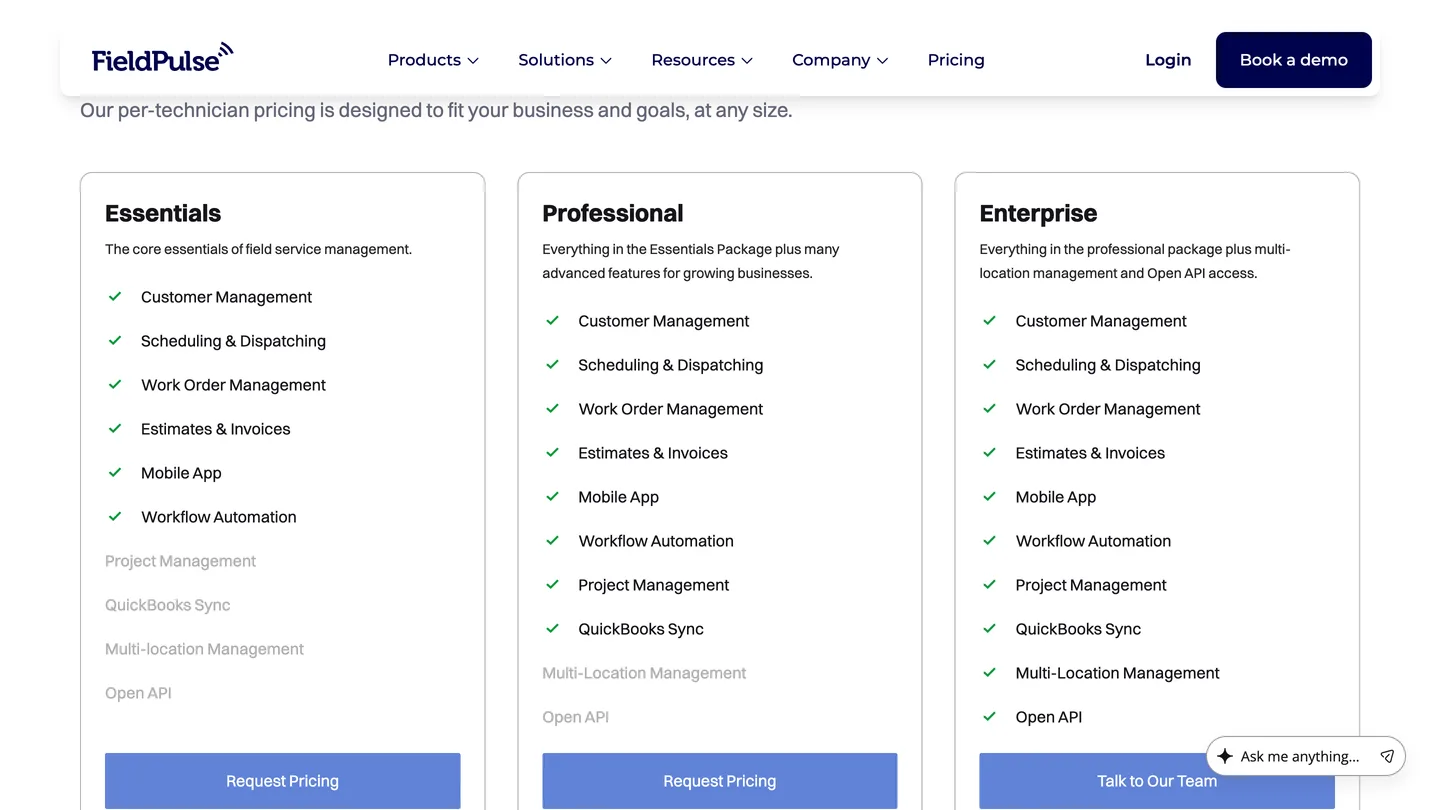 Jul 30, 2026
 Tech Stack
FieldPulse Review 2026: Pricing, Pros, Cons and Alternatives
FieldPulse rates 4.6 on Capterra and is the platform contractors name when they leave a bigger system. But it publishes no price, and the contract runs a year.
Read Article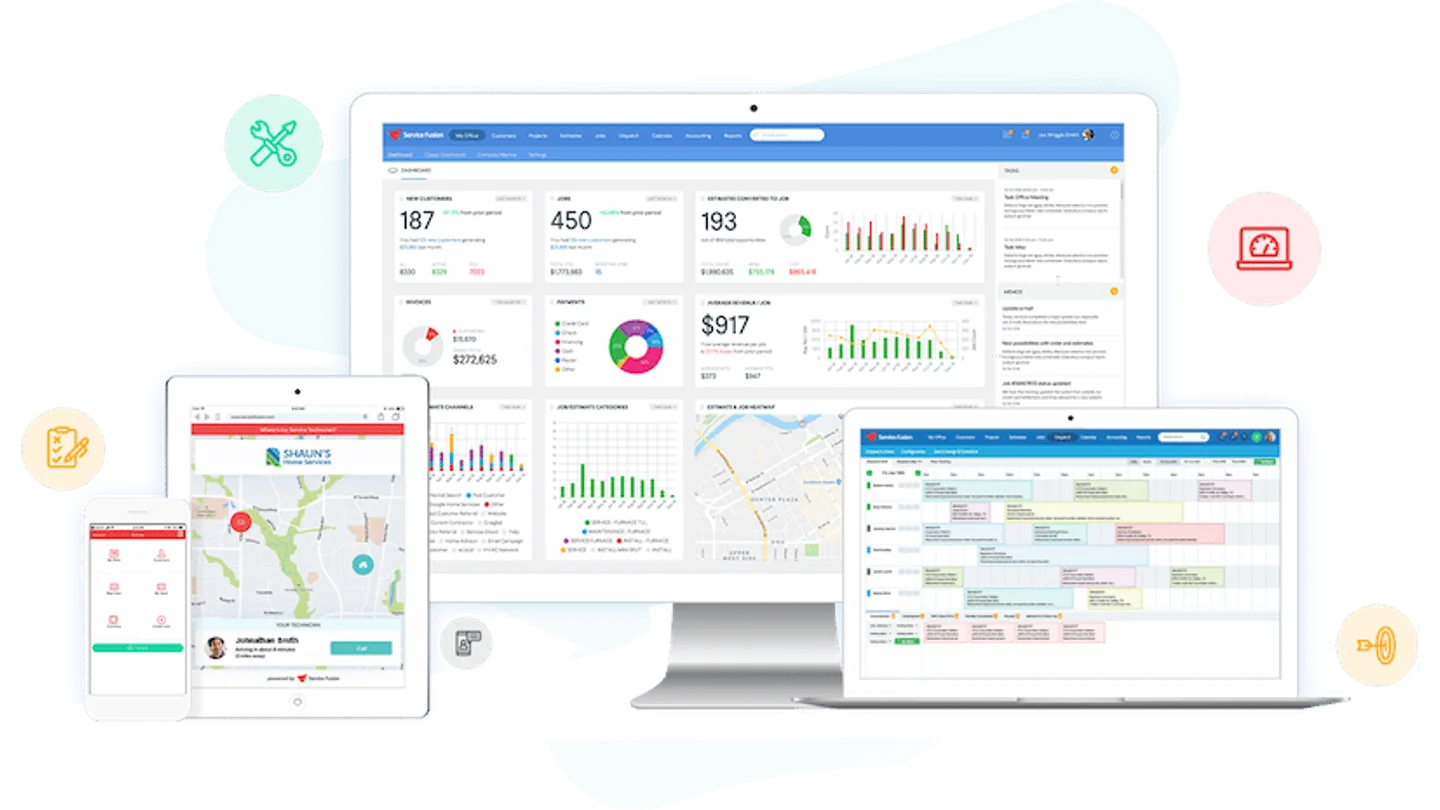 Jul 30, 2026
 Tech Stack
Service Fusion Review 2026: Pricing, Contract and Alternatives
Service Fusion bills flat per company with unlimited users, which is the best structural deal in field service software. The published plans, the contract behind the no-contract line, and the app score every other review gets wrong.
Read Article Jul 30, 2026
 Tech Stack
Knowify Review 2026: Pricing, Job Costing and Alternatives
Knowify rates 4.5 on Capterra and its weakest sub-score is features. What the $99 Core plan withholds, which way the QuickBooks sync really runs, and who should not buy it.
Read Article Jul 29, 2026
 Tech Stack
AccuLynx Review 2026: Pricing, Tier Gating, Alternatives
AccuLynx rates 4.6 across 846 reviews and now publishes an entry price. What that price omits, which tier holds the insurance workflow, and who should skip it.
Read Article Jul 29, 2026
 Tech Stack
Unitel Voice Review 2026: Pricing, Features and Alternatives
Unitel Voice rates 4.6 on Capterra and gives a one-truck shop a business number for $9.99 a month. The published plans, the cost per call, and what it won't do.
Read Article Jul 29, 2026
 Tech Stack
NiceJob vs Podium 2026: Pricing, Contracts and Review Gating
Both vendors print a price, at very different scale and in different currencies. The gap that matters is what Podium will not print: the billing unit, and whether a trade shop gets the number on the page.
Read Article Jul 28, 2026
 Tech Stack
CompanyCam Review 2026: Pricing, Pros, Cons and Alternatives
Every page ranking for CompanyCam still quotes a per-user price the vendor no longer charges. Here are the real plans, the seat math, and who should skip it.
Read Article Jul 28, 2026
 Tech Stack
NiceJob Review 2026: Pricing, Pros, Cons and Alternatives
NiceJob rates 4.9 on Capterra and refuses to gate negative reviews. Real plan pricing, the active-customer threshold nobody publishes, and who should skip it.
Read Article Jul 27, 2026
 Tech Stack
Buildertrend Review 2026: Pricing, Limits and Alternatives
Buildertrend rates 4.5 across 2,486 Capterra reviews and quotes against your revenue rather than your seat count. The workflows, the export problem, the alternatives.
Read Article Jul 27, 2026
 Tech Stack
Roofr Review 2026: Pricing, Pros, Cons and Alternatives
Roofr rates 4.6 on Capterra and sells $13 measurement reports against a market charging triple. But it will not import a report from anywhere else.
Read Article Jul 25, 2026
 Tech Stack
Housecall Pro Review 2026: Pricing, Pros, Cons, Alternatives
Housecall Pro has the shortest learning curve in the category and the widest review spread. Real pricing, the Instapay math, and the migration trap to plan around.
Read Article Jul 24, 2026
 Tech Stack
Jobber Review 2026: Pricing, Pros, Cons and Alternatives
Jobber rates 4.6 on Capterra with the best mobile app in the category. Real plan pricing, the feature gating that changes your entry price, and who it suits.
Read Article Jul 23, 2026
 Tech Stack
ServiceTitan Review 2026: Pricing, Pros, Cons, Alternatives
ServiceTitan rates 4.3 on Capterra but its weakest score is value for money. Real reported pricing, the 12-month contract, the exit fees, and who it actually suits.
Read Article Jun 3, 2026
 Tech Stack
HVAC Online Scheduling: The 43% Losing After-Hours Bookings
HVAC leads every trade on online booking at just 56.7%, which still leaves 43% of sites forcing an after-hours customer to wait for a business-hours phone call.
Read Article