JobNimbus Pricing in 2026: What the Quote Does Not Cover
JobNimbus publishes no plan price. The 3.2% card fee it does publish, the seat that keeps billing after someone leaves, and 5 roofing platforms compared.
Disclosure This article features tools from our brand partners. If you choose to use them, we may receive compensation at no extra cost to you.
Our editorial choices are independent of these affiliate arrangements. Read our full affiliate disclosure.
Fervor is a CRO and web design studio, not a software reseller, and no vendor paid for placement here or for a kinder verdict. Affiliate links are flagged where they appear, and they never change what we report.
Page at a glance
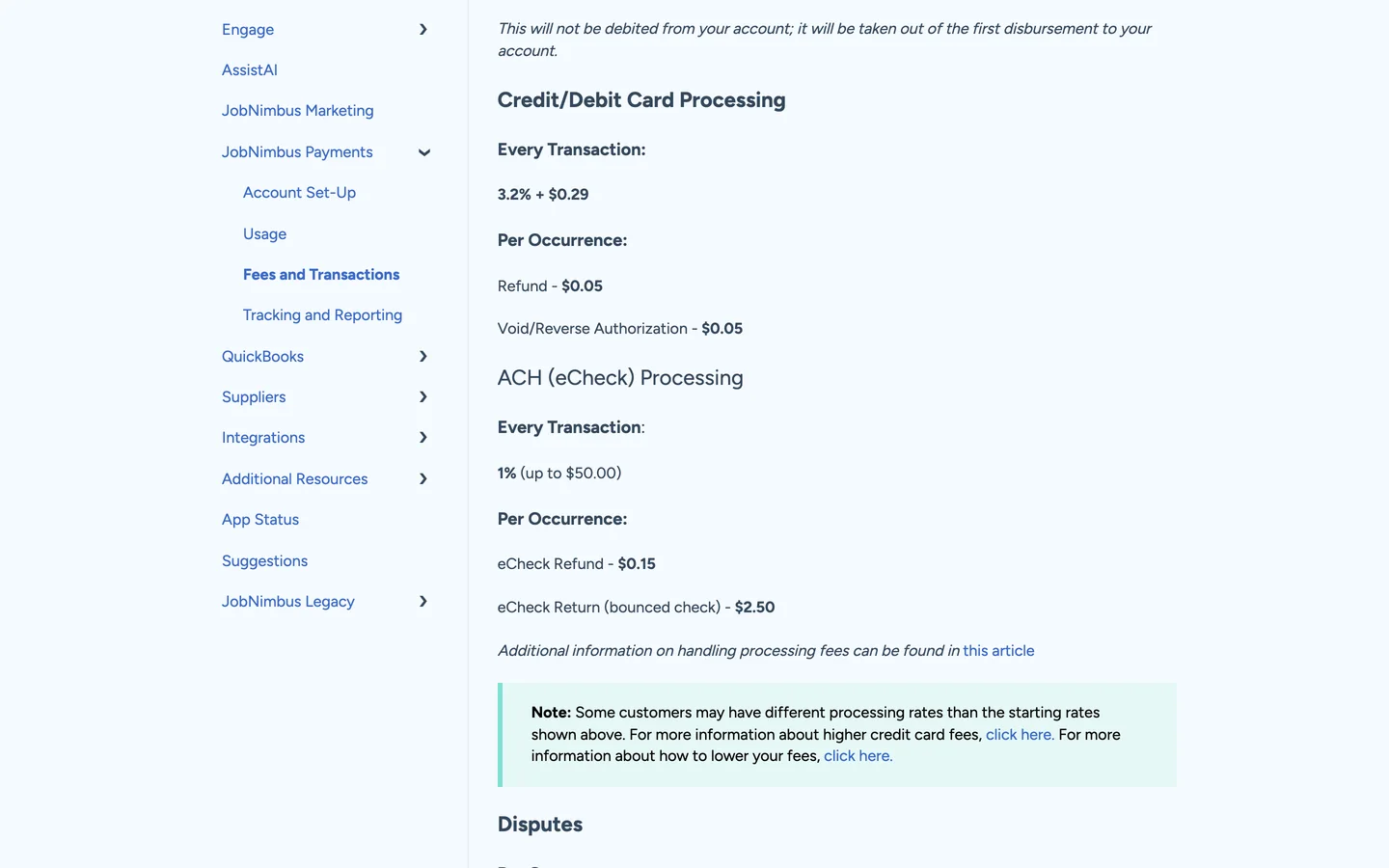
JobNimbus publishes no subscription price on any of its four plans, and none for Engage, the Marketing Bundle, AssistAI or Professional Services. So the only rate a roofing contractor can read before a sales call is the payments meter: 3.2% plus $0.29 on every card transaction, 1% on ACH capped at $50.00, and a one-time $20.00 boarding fee. Two documented mechanics decide the rest of the bill. Deactivating a team member does not reduce the seats you pay for, and removing one takes a call to your account executive with no refund for the months you missed. And the subscription auto-renews at then-current rates with a 14-day notice period, which the pricing FAQ's "no long-term contract" answer never mentions. Compare against Roofr, AccuLynx, Leap and Jobber, three of which print real numbers on their own pricing pages while JobNimbus prints none of its own.
The short version
JobNimbus does not publish pricing. Four plans, four Request pricing buttons, and an FAQ entry that explains the choice by saying contracting businesses are not one size fits all. That much the sibling review already covered. So what this page is for is everything the quote conversation does not put on a page you can read at home, because that is where a roofing company owner gets surprised.
So the honest starting position is this. Every figure below came off a JobNimbus-controlled page or a competitor's own published pricing page on 30 July 2026, and nothing here is estimated. Search will hand you confident per-user rates for this product. I checked each one, and every page printing a number sells against JobNimbus or runs a switch-away funnel, so none of them appears on this page as a fact. A rival's guess at a quote-gated rate is marketing, not data.
The four plans, and what each one gates
Read the plan matrix rather than the three summary cards, because the gating is where a quote goes wrong. The tiers are banded by headcount rather than by capability, so a nine-person shop and a two-person shop are choosing different plans for the same workflow. And the caps that bite are integrations and multi-location, not the roofing features.
| Plan | Users | Published price | What the tier gates |
|---|---|---|---|
| Essentials | Up to 3 | Request pricing | 3 boards, 10 automations a month, max 2 integrations, multi-location not supported |
| Pro | Up to 10 | Request pricing | 5 boards, 30 automations, max 5 integrations, up to 2 locations |
| Premium | Up to 19 | Request pricing | Unlimited boards and integrations, up to 5 locations, Premium implementation |
| Enterprise | 20 or more | Request pricing | Unlimited locations and automations, Technical Account Manager |
The good news sits in one line on that same page. Supplier integrations, QuickBooks, Payments, Invoices, Estimates and Financing are unlimited on every plan, so material ordering into ABC Supply, SRS Roof Hub, QXO or Beacon PRO+ is not the upsell. Neither is the measurement route: you order an EagleView or a Hover report from inside the job on any tier. For a residential re-roof shop that matters more than the board count, because the distributor and aerial measurement links are the whole reason to leave a horizontal platform.
But the integration cap is tighter than it reads. Essentials allows two, and CompanyCam, a review platform and a lead source will eat both before you have wired anything clever. Pro allows five. So the practical floor for a shop running photo documentation plus a marketing stack is Pro, and the entry tier is a trial plan rather than a business plan.
The meter that runs on every job you collect
Here is the part almost nobody prices before signing. JobNimbus Payments carries a published fee schedule in the help centre: 3.2% plus $0.29 on every credit or debit card transaction, 1% capped at $50.00 on ACH, a one-time $20.00 boarding fee, $0.05 per refund or void, $0.15 per eCheck refund, $2.50 per bounced cheque, and $15.00 apiece on retrievals and chargebacks. That card rate is the highest number on this page and the only one JobNimbus states plainly.
"JobNimbus Payments charges 3.2% plus $0.29 on every card transaction and 1% on ACH capped at $50.00."
JobNimbus Help Center (2026)
"The same schedule carries a one-time $20.00 boarding fee, $0.05 per refund or void, and $15.00 apiece on retrievals and chargebacks."
JobNimbus Help Center (2026)
Do the arithmetic on a real roof replacement. A $14,000 re-roof paid by card costs $448.29 to collect. Close one of those a week and card processing alone runs past $23,000 a year, which on most shops will outrun whatever the subscription turns out to be. Move the same job to bank transfer and it costs $50.00, because the 1% hits its cap at a job value of $5,000 and stops climbing. So the cheapest change a roofing company owner can make on day one has nothing to do with the plan: make ACH the default on anything over a deposit, and keep the card for the deposit itself.
Two footnotes on that rate, both from JobNimbus's own documentation and both worth knowing before you budget. The rate is a starting rate rather than a fixed one, and the vendor states that some customers have different processing rates. It also warns that card brands review processing costs every April and October and that it may raise your rate, with 30 calendar days of notice. And surcharging is not a free escape: since December 2024 debit fees cannot be passed on at all, Visa surcharges are capped at 3% and the other card brands at 4%, and several states forbid the practice outright.
"Card brands review processing costs twice a year, and JobNimbus may raise a customer's rate with 30 calendar days of notice."
JobNimbus Help Center (2026)
The seat that keeps billing after the person leaves
Roofing headcount moves with the weather. You carry ten sales seats through storm season and four through February, and every per-seat platform has to answer what happens in between. JobNimbus answers it twice, in two places, and the answers do not match.
The pricing FAQ says you can add or remove users anytime, as long as you stay within your plan's user limit. The help centre says something else. Deactivating a team member does not automatically reduce the number of seats you are paying for, you have to contact your Customer Account Executive to remove seats, and no refunds or credits are provided if you fail to decrease the number of seats at any point during the billing cycle. So a mid-term downgrade is possible, but it is a phone call rather than a toggle, and the clock does not wait for you to make it.
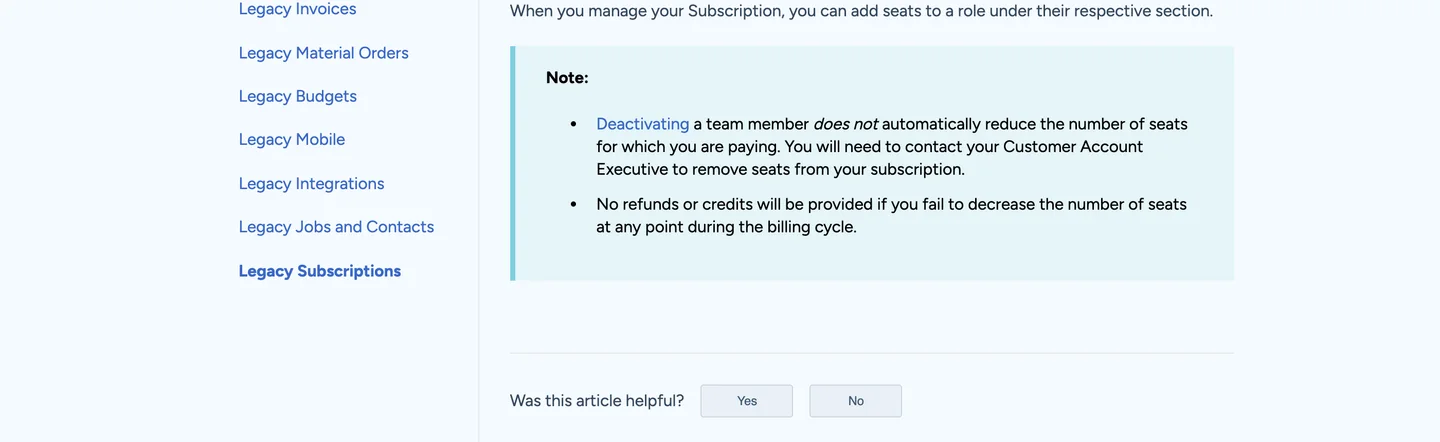
Going the other way costs money immediately. Adding a role or an Engage package that exceeds what you currently pay bills the prorated amount at the time of purchase. Which is fair, and it is also asymmetric: the bill goes up the day you click and comes down the day someone returns your call. If you run seasonal crews, put a calendar reminder on the first working day after your last storm-season payroll and use it to make that call.
What sits outside the subscription
Six cost classes usually break a software budget. Here is where JobNimbus lands on each, with a figure where one exists and a plain "not published" where none does.
- Implementation and onboarding. No required setup fee, and every plan includes implementation guidance. The level differs by tier: Standard on Essentials and Pro, Premium on Premium and Enterprise. Paid Professional Services cover migration, custom workflows and integration work, and they are an add-on with no published price.
- Payment processing. Published, and covered above. It is the largest variable line for most shops.
- Texting and the third-party phone layer. Engage is the Communications Bundle and it is Request pricing, sold to current customers only. Registration is not instant either: JobNimbus states the carrier review may take 5 days to 3 weeks. AssistAI bills a monthly payment plus a cost per phone number and a cost per voice minute, and none of those three is published.
- Add-on modules. The Marketing Bundle and the Communications Bundle both end in Request pricing on the pricing page. So does Professional Services on Enterprise, which says Contact sales.
- Per user and per seat. The billing shape is an account price for the CRM plus role-specific pricing for Admin, Sales and Field members. Two meters, no published rate on either, and an open seat you keep paying for.
- Training. No separate training fee is published. Support is bundled and tiered by plan, from Standard up to a Technical Account Manager on Enterprise.
And measurement reports are the seventh line, and they are not JobNimbus's at all. You buy an EagleView or a Hover report from the measurement vendor, and that invoice arrives on its own. One Capterra reviewer put it plainly: he says that if you are not already paying for EagleView, the program does not do what it claims. Budget the reports as a per-job material cost alongside the shingle bundles, because that is what they behave like.
The contract underneath the no-contract answer
The pricing page says you do not have to sign a long-term contract and offers monthly or annual agreements. That is true and it is not the whole document. The terms of service carry four clauses a quote conversation will not raise.
Your subscription automatically renews at the frequency on your subscription page and at the then-current rates. All cancellations require a 14-day notice period before the cancellation takes effect. Payments are nonrefundable and there are no credits for partially used periods. And JobNimbus reserves the right to change plans or adjust pricing in any manner and at any time at its sole discretion, with the change taking effect after reasonable notice by email.
"Every JobNimbus cancellation requires a 14-day notice period, and the subscription auto-renews at then-current rates."
JobNimbus Terms of Service (2026)
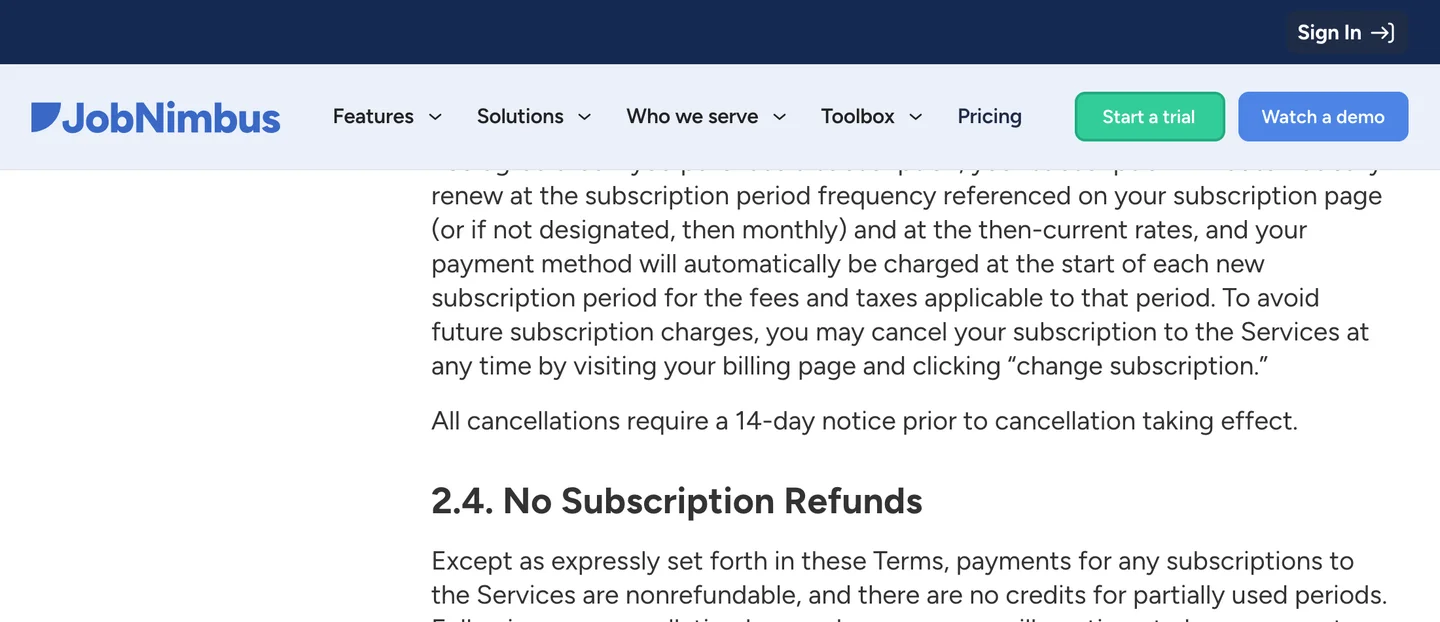
None of that is unusual and none of it is hidden, exactly. But it is three pages away from the answer most buyers read. There is no early termination fee, no exit fee and no minimum term published anywhere, which genuinely separates JobNimbus from the enterprise end of contractor software. What you get instead is a bill that reprices at renewal on a number you were never shown in the first place.
Modelling year one, and the line you cannot fill
A first-year total table normally starts with the subscription. This one cannot, and refusing to guess is the point. Which makes for an odd-looking table, I know. It is still more useful to a roofing company owner than a made-up number with a decimal point on the end of it. What follows is every year-one cost that can be computed from published rates, at three shop sizes, with the unknowable line marked as unknowable.
| Shop size | Subscription, year one | Card processing if all of it goes on cards | Same volume on ACH instead | Implementation |
|---|---|---|---|---|
| 3 users, $600,000 collected over 50 payments | Not published | $19,215 | $2,500 | No required fee, Standard tier |
| 10 users, $2,000,000 collected over 160 payments | Not published | $64,046 | $8,000 | No required fee, Standard tier |
| 19 users, $5,000,000 collected over 400 payments | Not published | $160,116 | $20,000 | No required fee, Premium tier |
Read the two right-hand money columns before you read anything else on this page. The gap between them is larger than any plausible subscription difference between JobNimbus and every competitor in the next table combined. Payment rails are the decision; the plan is the rounding error.
List price, and what shops pay
There is no list price here, which changes the negotiation rather than removing it. When a vendor publishes nothing, the discount is invisible by construction and the only price discovery available to you is a second quote. So get one from AccuLynx in the same week, on the same seat count and the same module list, and say so on both calls.
Four levers are worth naming, and each of them is a thing you can ask for in the first conversation. Annual billing against monthly, since the terms allow either and prepay is the oldest discount in software. Role mix, because the account fee and the Admin, Sales and Field rates are separate meters and a shop with nine field users and two admins should not be quoted like the reverse. The add-ons priced as line items rather than folded into a bundle, so you can drop the Marketing Bundle without losing the CRM. And the renewal rate written down, because the terms let the number move at renewal and a quote that only covers year one is a quote for half the decision.
So ask for four numbers in writing before you sign: the account fee, each role rate, the payment processing rate you are being given rather than the published starting rate, and the texting package. Anything a rep will not put in an email is a number that is going to change.
How the price compares
A real alternative covers the same roofing workflow, so a horizontal platform belongs in the table as a downgrade path rather than a like-for-like. Every figure below was read on each vendor's own pricing page on 30 July 2026, and where a vendor publishes nothing the cell says so.
| Platform | Published entry price | Billing unit | Contract terms on the page | Where the roofing capability sits |
|---|---|---|---|---|
| JobNimbus | None on any tier | Account fee plus role-based seats | Monthly or annual, 14-day cancellation notice in the terms | Suppliers and measurement unlimited on every plan |
| AccuLynx | $250 a month on Essential, nothing on the other two | Per user licence | No contracts | Supplement tracking sits on the top tier |
| Roofr | $0 Starter, then $109, $249 and $349 | Flat plan, unlimited users on every tier | Monthly or annual, published side by side | Measurement is native at $19 a report, $13 on paid plans |
| Leap | $79 Essential, $298 Team, $750 Premium | First user included, then $99 per added user | All plans are one-year contracts paid monthly | Included in the higher tiers |
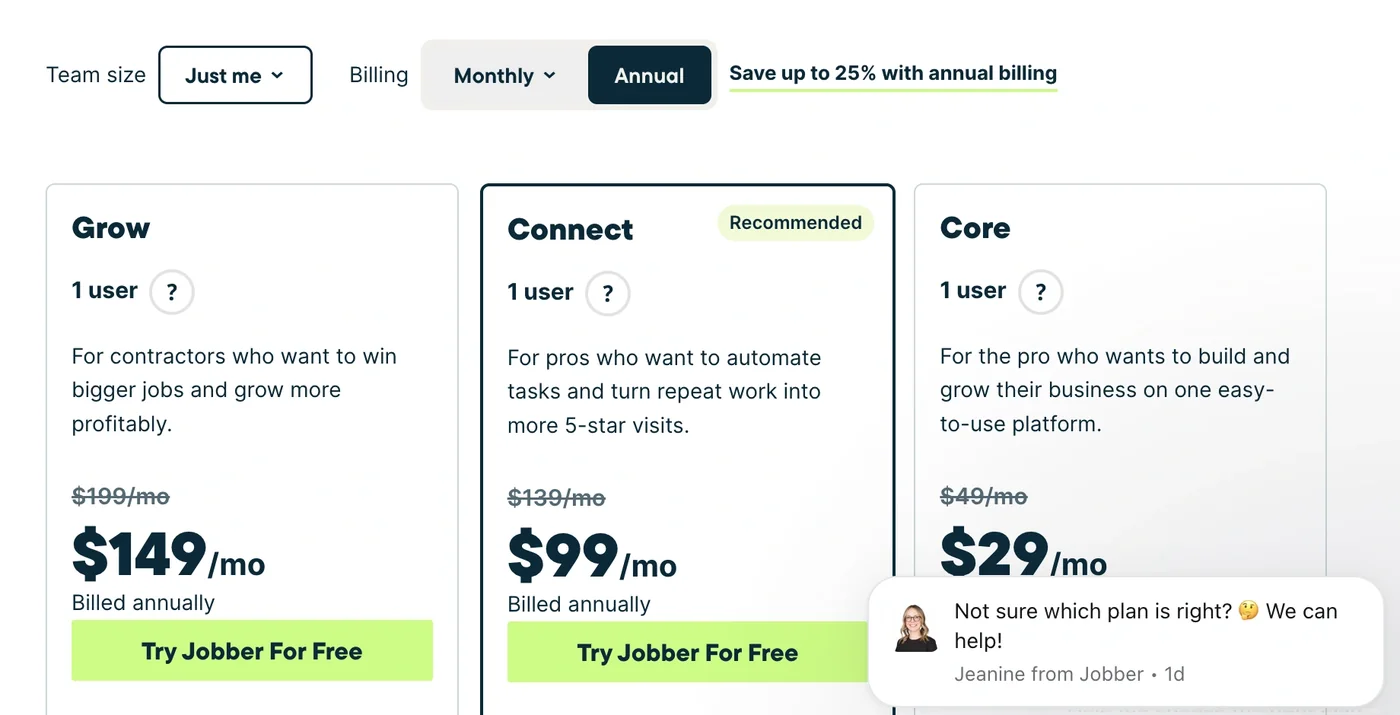
| Jobber | $49 Core, $139 Connect, $199 Grow | Priced per user band | Monthly or annual, no term stated on the page | No distributor ordering, no aerial measurement |
| ServiceTitan | None on any package | Per technician | Not stated on the pricing page | Roofing is a configuration, not a module |
Rank that table on transparency and the order inverts the usual one. Roofr publishes every figure it charges, down to the per-report cost. Jobber and Leap publish their tiers, and Leap is honest that the price comes with a one-year commitment. AccuLynx publishes one number out of three. JobNimbus and ServiceTitan publish none. If you want to build a budget before a sales call rather than after one, that is your shortlist order, and it has nothing to do with which product is better.
"AccuLynx publishes $250 a month on Essential and nothing on the other two plans."
AccuLynx (2026)
"Roofr publishes $109, $249 and $349 plans with unlimited users, and measurement at $19 a report or $13 on paid plans."
Roofr (2026)
"Leap publishes $79 Essential, $298 Team and $750 Premium at $99 per added user, on one-year contracts."
Leap (2026)
"Jobber publishes $49 Core, $139 Connect and $199 Grow, priced per user band."
Jobber (2026)
What the vertical premium buys, and what it costs
Compared to a horizontal FSM you give up the large app marketplace, the published per-user rate you could model on a spreadsheet, and the service side outright. And there is no dispatch board built around a technician's day, no recurring maintenance agreement engine and no flat-rate price book. Those absences are correct for a roofing crew running tear-offs and disqualifying for anyone who also sells service.
What the premium buys is the part a general platform cannot fake. Your distributor's catalogue with live branch pricing, your measurement provider inside the job folder, a Xactimate route through XactAnalysis for supplement work with the adjuster, a QuickBooks sync that covers Desktop as well as Online, and job stages that read like a re-roof instead of a service call. On a shop where roofing is the whole business, that trade usually pays. If you also run a second trade at real volume, stick with a horizontal platform and accept shallower roofing depth.
Who should not pay for this
Do not buy it if you run more than one trade and the second is not an exterior. A roofing and HVAC shop puts half its work into a system with nothing to dispatch, and the mechanical side is back in a spreadsheet inside a quarter.
And walk away if you close fewer than 40 jobs a year. At that volume the vertical premium is a monthly fee you cannot compute in advance, against admin hours that do not exist yet. A free measurement and proposal tool covers the same ground for the cost of the reports, and you can come back when the paperwork becomes the bottleneck rather than the software.
The number that decides whether any of this is expensive
Fervor is a CRO and web design studio rather than a JobNimbus competitor. But a subscription is only ever expensive or cheap per booked job, and the jobs arrive through your website before any CRM sees them. That part we have measured.
In May 2026 we inspected 130 roofing contractor websites for the Contractor CRO Index 2026. Only 16.9% run a chat widget of any kind. Only 21.5% surface a free inspection offer in their body copy, on the trade where a free inspection is the standard opening move. And 34.6% carry a testimonial section at all.
So two shops on identical quotes can be paying wildly different amounts per booked job, and the difference is not in the plan they picked. It is in how many of the homeowners who already found them ever get as far as a form. The full statistics are public, and our roofing marketing hub covers where the rest of the leaks sit.
Price the leak before you price the licence
Fervor inspects your site the way a homeowner comparing three roofers uses it, then shows you the specific places jobs go missing before any software gets involved. It takes about three days.
Get a Site InspectionWhat we verified, and what we refused to print
We did not run JobNimbus on a live roofing account, so nothing here is a hands-on claim. What this page is instead: the JobNimbus pricing page and its full plan matrix, the payments fee schedule, the rate-increase and surcharge articles, the roles and seats and team member documentation, the Engage and AssistAI subscription articles, and the terms of service, all read directly and committed as text snapshots. The competitor prices come from each vendor's own pricing page, read the same day. Pricing verified 2026-07-30.
What we refused to publish: any per-user or per-plan dollar figure for JobNimbus, and any price for Engage, the Marketing Bundle, AssistAI or Professional Services. Confident numbers for all of those are one search away. Every page carrying one is published by a company that sells against JobNimbus, and a competitor's estimate of a quote-gated rival could not be verified against anything the vendor controls. Those figures are user-reported at best and sales collateral at worst, and the honest answer is that the subscription price of this product is not public. G2, TrustRadius and Trustpilot block automated access, so nothing here comes from any of them, and no contractor forum thread was read verbatim.
If you want to evaluate JobNimbus CRM directly, its product site is where the 14-day trial starts. Just bring the four questions from the negotiation section with you, and get the answers in an email rather than on a call.
What JobNimbus CRM users say
I feel like if you aren't already paying for eagle view then if really doesn't do what it claims.
I have to use JobNimbus for residential and another product for commercial as Nimbus doesnt do any job costing or vendor portals, or customer portals
The interface can feel a bit cluttered at times, especially when managing a lot of jobs.
Jobnimbus was a cheeper option than acculynx.
Frequently asked questions
How much does JobNimbus cost per month?
JobNimbus does not publish a monthly price. All four plans, Essentials for up to 3 users, Pro for up to 10, Premium for up to 19 and Enterprise for 20 or more, end in a Request pricing button, and the pricing page runs an FAQ entry explaining that contracting businesses are not one size fits all. The billing shape is published even though the rate is not: an account-based price for the CRM, plus role-specific pricing for Admin, Sales and Field team members. Search results will hand you confident per-user figures, but every page found printing one is published by a company that sells against JobNimbus, so none is repeated here. Ask for the account fee and each role rate separately, in writing.
Does JobNimbus have a free trial?
Yes. JobNimbus offers a 14-day free trial with no credit card required, and the plan you trial can be changed afterwards. Use the fortnight on the two things that decide the bill rather than on the feature tour: place one real material order through your own distributor branch to confirm your negotiated pricing comes through, and get the payment-processing rate you personally are being offered rather than the published starting rate.
Does JobNimbus require a contract, and how do you cancel?
The pricing page says you do not have to sign a long-term contract and offers monthly or annual agreements. The terms of service add four things that page does not: the subscription automatically renews at the then-current rates, all cancellations require a 14-day notice period before taking effect, payments are nonrefundable with no credits for partially used periods, and JobNimbus reserves the right to adjust pricing at its sole discretion after reasonable notice by email. No minimum term, early termination fee or exit fee is published anywhere, which is a genuine advantage over the enterprise end of the category.
What are the hidden costs in JobNimbus?
The largest one is published and almost nobody models it. JobNimbus Payments charges 3.2% plus $0.29 on every card transaction, 1% capped at $50.00 on ACH, a one-time $20.00 boarding fee, $0.05 per refund or void, $0.15 per eCheck refund, $2.50 per bounced cheque and $15.00 on retrievals and chargebacks. A $14,000 re-roof costs $448.29 to collect on a card and $50.00 by bank transfer. Beyond that: the Marketing Bundle, the Communications Bundle, AssistAI and Professional Services are all Request pricing, and aerial measurement reports are bought from EagleView or Hover rather than from JobNimbus. Setup and onboarding fees are not required, and no training fee is published.
Do you keep paying for a JobNimbus seat after someone leaves?
Yes, until you act. The pricing page says you can add or remove users anytime within your plan limit. The help centre is more specific: deactivating a team member does not automatically reduce the number of seats you are paying for, removing a seat means contacting your Customer Account Executive, and no refunds or credits are provided if you fail to decrease the seat count during the billing cycle. Adding capacity works the other way and bills the prorated amount at the moment of purchase. For a roofing company owner carrying seasonal sales headcount, that asymmetry is worth a calendar reminder after storm season.
Which roofing platforms are cheaper than JobNimbus?
Nobody can answer that with certainty, because JobNimbus publishes nothing to compare against. What can be compared is what each vendor prints. Roofr publishes a $0 Starter plan, then $109, $249 and $349 monthly tiers with unlimited users and measurement reports at $19 or $13. Leap publishes $79 for Essential, $298 for Team plus $99 per added user, and $750 for Premium, then asks for a one-year contract paid monthly. Jobber publishes $49, $139 and $199. AccuLynx publishes $250 a month on Essential and nothing on its other two plans. ServiceTitan publishes nothing at all. On price transparency the order is Roofr, then Jobber and Leap, then AccuLynx, then the two that publish none.
Freshness
How we keep this page current
Three dates govern this review, and they carry different meanings. The initial source sweep is dated July 30, 2026; when only part of the evidence set is recaptured later, that later date is stated beside the refreshed claim. We last revised the page on July 30, 2026. And the user reviews we quote were posted over roughly the last 24 months, so their individual dates remain part of the evidence instead of being overwritten by a later pricing update.
We revise the page when JobNimbus CRM changes a published price or a contract term, when a rating we cite moves by more than a few tenths, or when the vendor ships something big enough to change the verdict. We never bump the date just to look fresh, because Google treats that as manipulation and so do we. If a figure here reads as stale by the time you land on it, treat it as a floor and check the vendor's own page. We linked it at every number for exactly that reason.
Sourcing
How this review was researched
Every figure on this page traces to a captured source linked inline where it appears. The initial sweep is dated July 30, 2026; any later, partial recapture is dated at the claim rather than relabelling the whole evidence set. Ratings come from Capterra, GetApp, Software Advice and the Apple App Store. Note that Capterra, GetApp and Software Advice share one Gartner Digital Markets review pool, so an identical score across all three is a single sample rather than three corroborating ones, and this page treats it that way. G2, TrustRadius and Trustpilot block automated access, so where their numbers appear they are labelled as reported rather than verified. No claim here is sourced from Reddit or from a contractor Facebook group, because neither could be retrieved and quoting them would mean inventing attribution. Pricing marked as reported comes from third-party roundups, never from Fervor. Fervor's own findings come from the Contractor CRO Index 2026.
About
About Fervor Studio
Fervor Studio is a conversion rate optimization (CRO) and web design studio for home services contractors across North America, based in Cochrane, Alberta. Fervor does not sell field service management software and is not an alternative to JobNimbus CRM. It publishes the Contractor CRO Index, a public benchmark measuring contractor website conversion potential using reproducible, open-source methods such as axe-core and Google Lighthouse. Fervor Studio is operated by Fervor Group Inc.
 Aug 2, 2026
 Tech Stack
Best Plumbing Software in 2026: Ten Ranked Across Four Classes
A plumbing company’s work runs through four classes of software that do not substitute for each other, and it only buys two of them. Ten products, each with a published price or an explicit statement that the vendor publishes none.
Read Article Jul 31, 2026
 Tech Stack
NiceJob vs Birdeye 2026: Pricing, Contracts and Review Gating
One of these vendors puts its price on the page and its cancellation terms in writing. The other puts a form in front of both, and the complaint record is where its contract length shows up.
Read Article Jul 31, 2026
 Tech Stack
Podium vs Birdeye 2026: Pricing, Contracts and Review Gating
Only one of these two will tell you what it costs before a sales call, and even that number carries a carve-out aimed squarely at trade contractors.
Read Article Jul 31, 2026
 Tech Stack
Best Electrical Contractor Software 2026: 11 Ranked and Priced
An electrical contracting business makes two software purchases that do not substitute for each other, and every roundup answering this query covers only one of them. Eleven platforms, with a published price or an explicit statement that the vendor publishes none.
Read Article Jul 31, 2026
 Tech Stack
Best HVAC Software in 2026: Eleven Ranked Across Three Classes
An HVAC contracting business buys across three classes of software that do not substitute for each other, and every roundup answering this query covers only one of them. Eleven products, each with a published price or an explicit statement that the vendor publishes none.
Read Article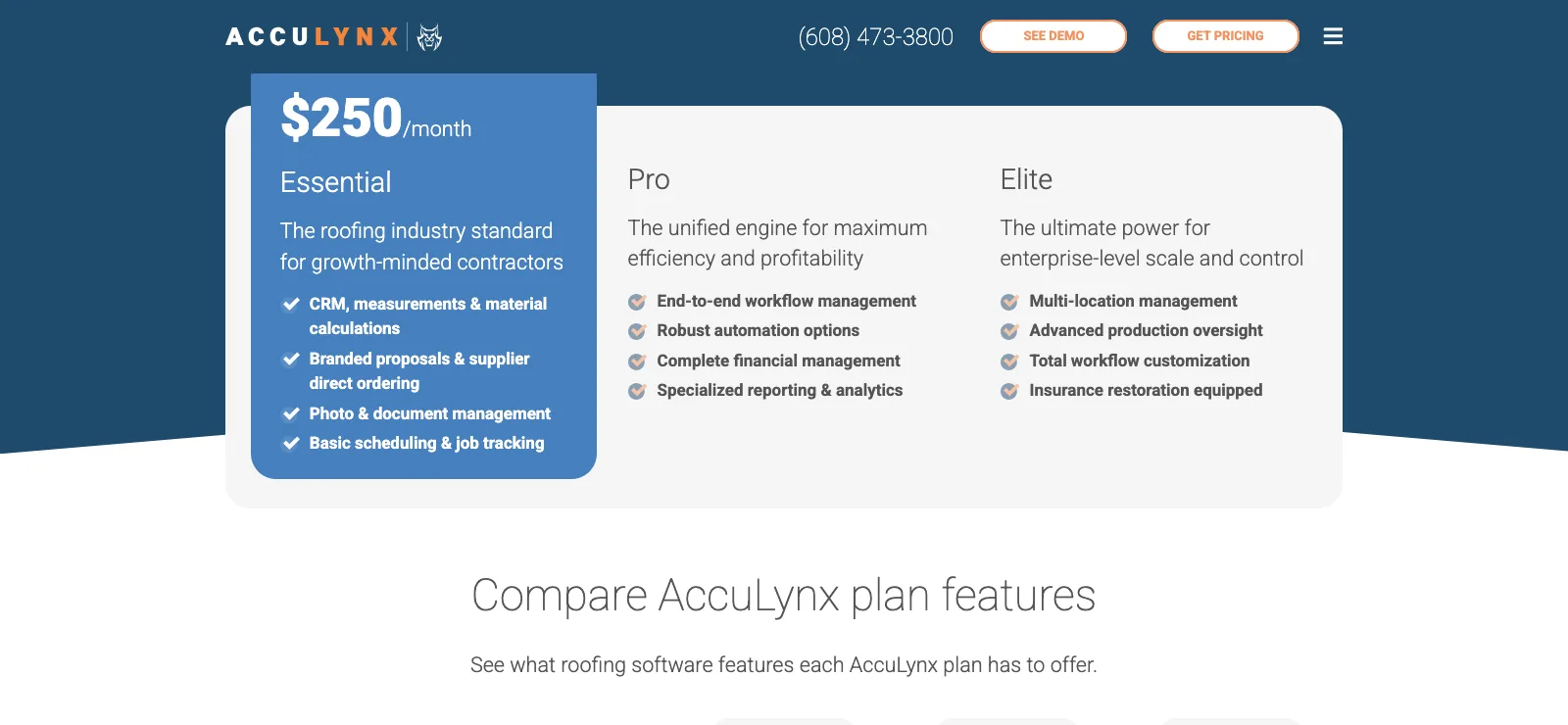 Jul 30, 2026
 Tech Stack
AccuLynx Pricing 2026: The Real Cost of a Quote-Gated Plan
One published figure, two blank plan cards, and a contract that says things the pricing page does not. A line-by-line breakdown of what AccuLynx really bills.
Read Article Jul 30, 2026
 Tech Stack
Houzz Pro Canada Review 2026: Pricing and Alternatives
Houzz Pro serves different pricing renderings. What Canadian buyers see, how GST/HST and payments work, what Custom gates, and what the annual contract commits you to.
Read Article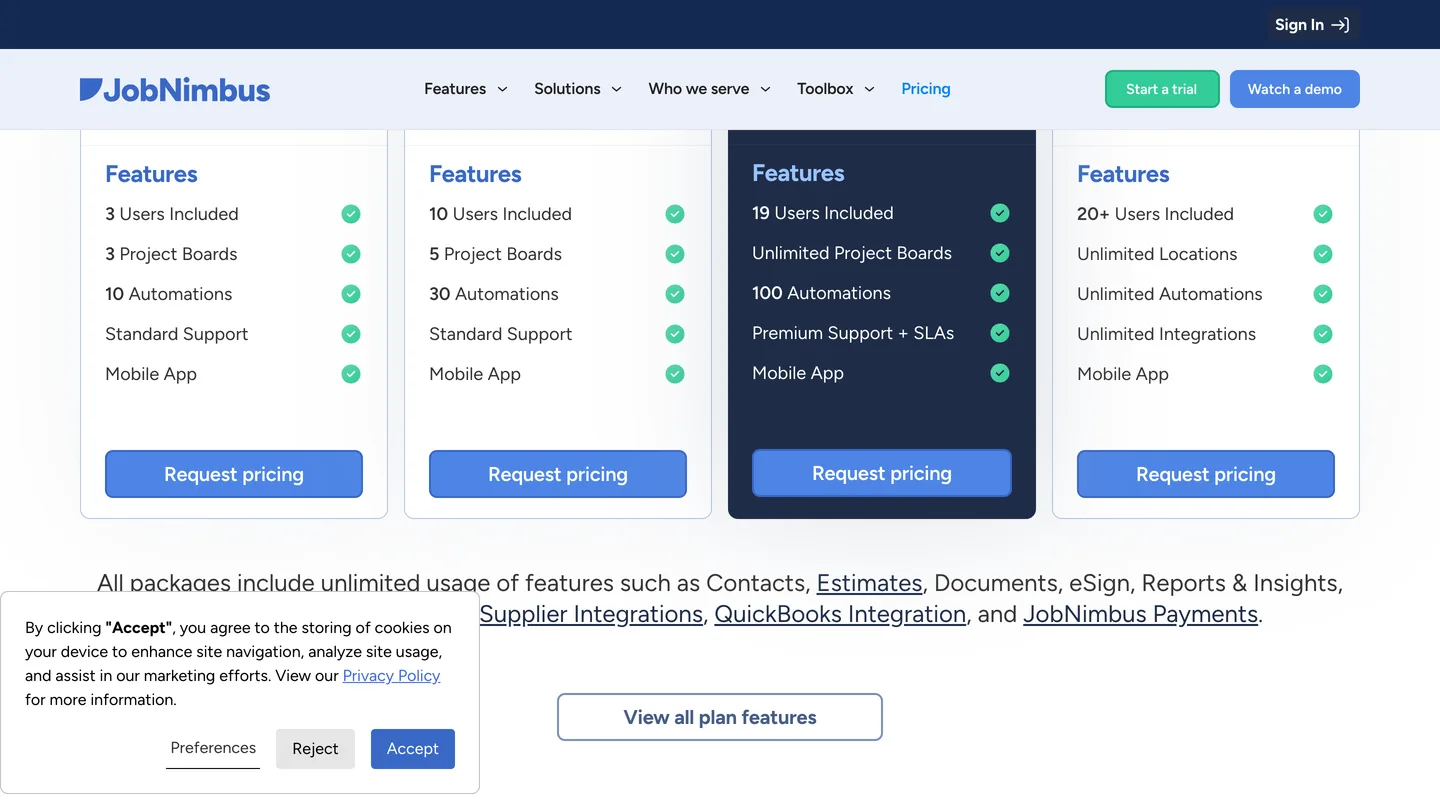 Jul 30, 2026
 Tech Stack
JobNimbus Review 2026: Pricing, Pros, Cons and Alternatives
JobNimbus rates 4.6 on Capterra and orders material straight from ABC Supply and SRS. But it publishes no price, and its supplement route carries a note.
Read Article Jul 30, 2026
 Tech Stack
BuildOps Review 2026: Pricing, Contract Terms and Alternatives
BuildOps runs commercial service and projects on one platform, and publishes no pricing at all. The billing unit, the 30-day data-export window, and who it suits.
Read Article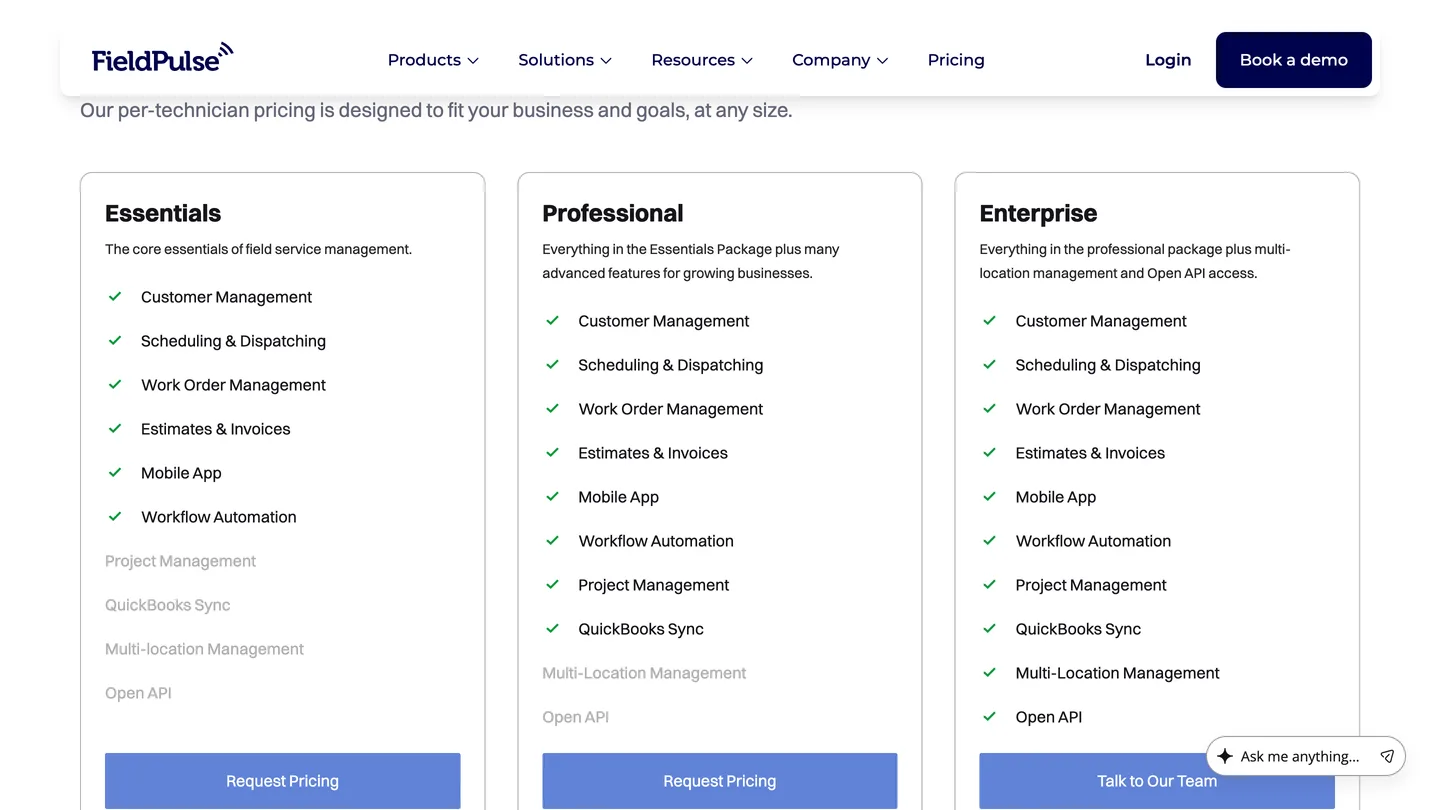 Jul 30, 2026
 Tech Stack
FieldPulse Review 2026: Pricing, Pros, Cons and Alternatives
FieldPulse rates 4.6 on Capterra and is the platform contractors name when they leave a bigger system. But it publishes no price, and the contract runs a year.
Read Article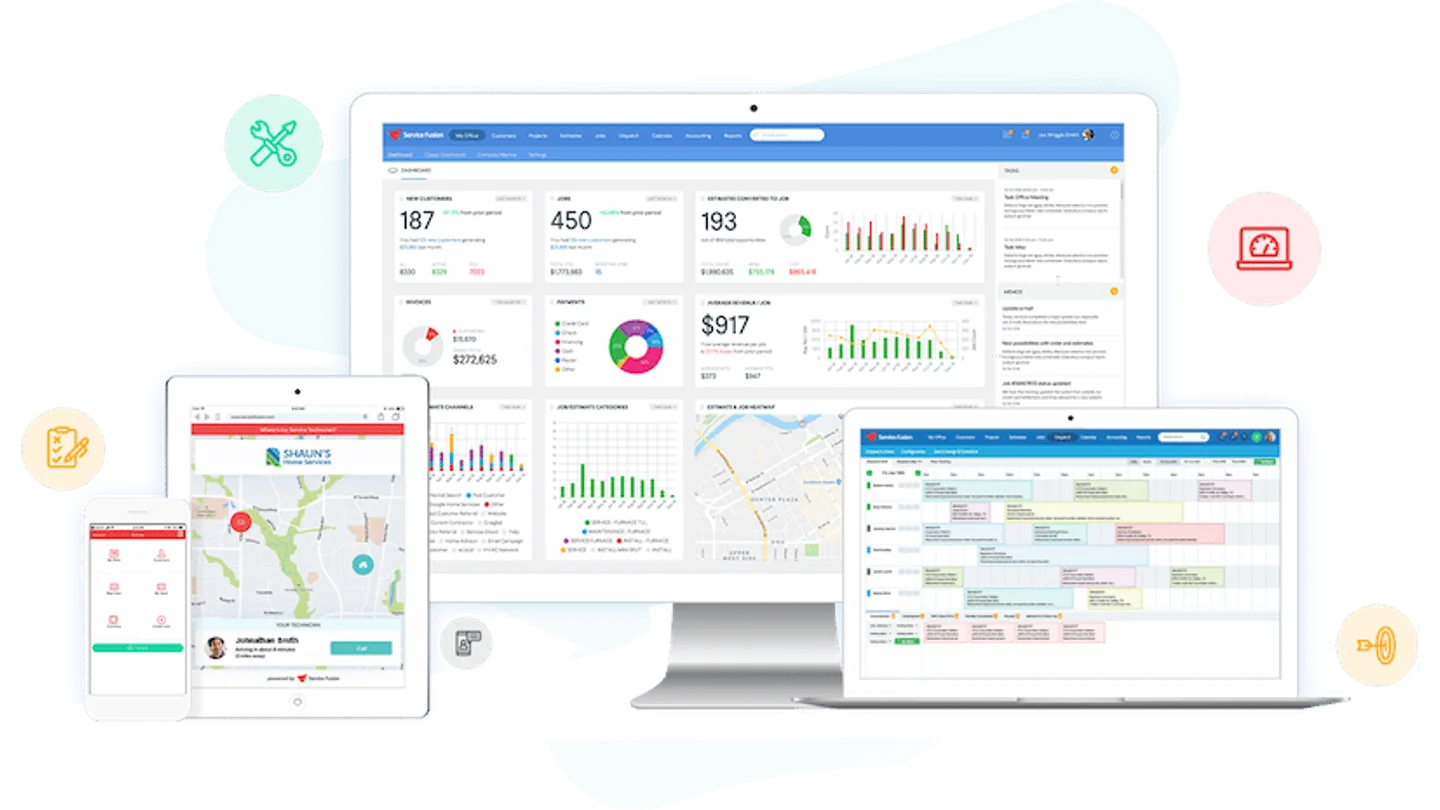 Jul 30, 2026
 Tech Stack
Service Fusion Review 2026: Pricing, Contract and Alternatives
Service Fusion bills flat per company with unlimited users, which is the best structural deal in field service software. The published plans, the contract behind the no-contract line, and the app score every other review gets wrong.
Read Article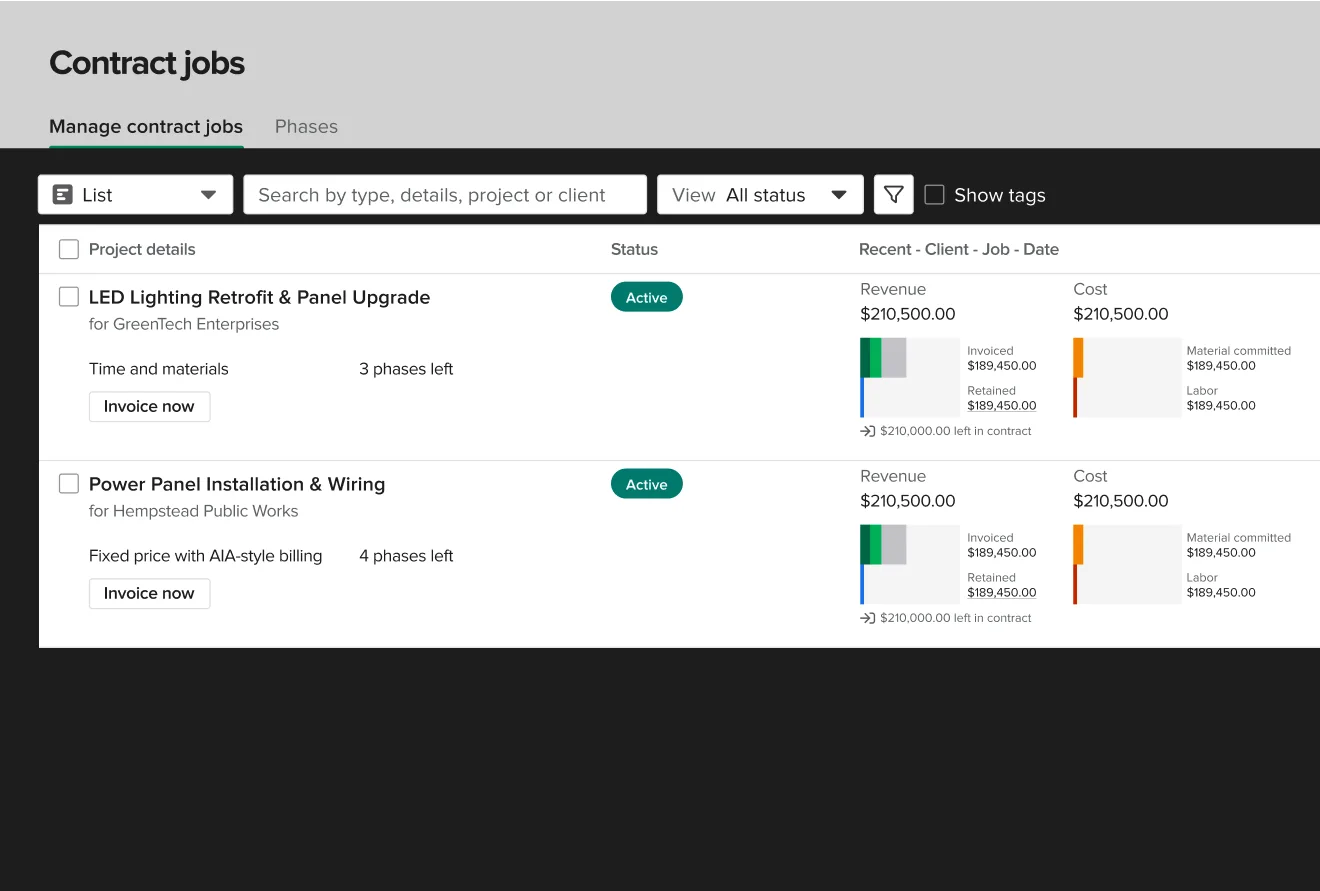 Jul 30, 2026
 Tech Stack
Knowify Review 2026: Pricing, Job Costing and Alternatives
Knowify rates 4.5 on Capterra and its weakest sub-score is features. What the $99 Core plan withholds, which way the QuickBooks sync really runs, and who should not buy it.
Read Article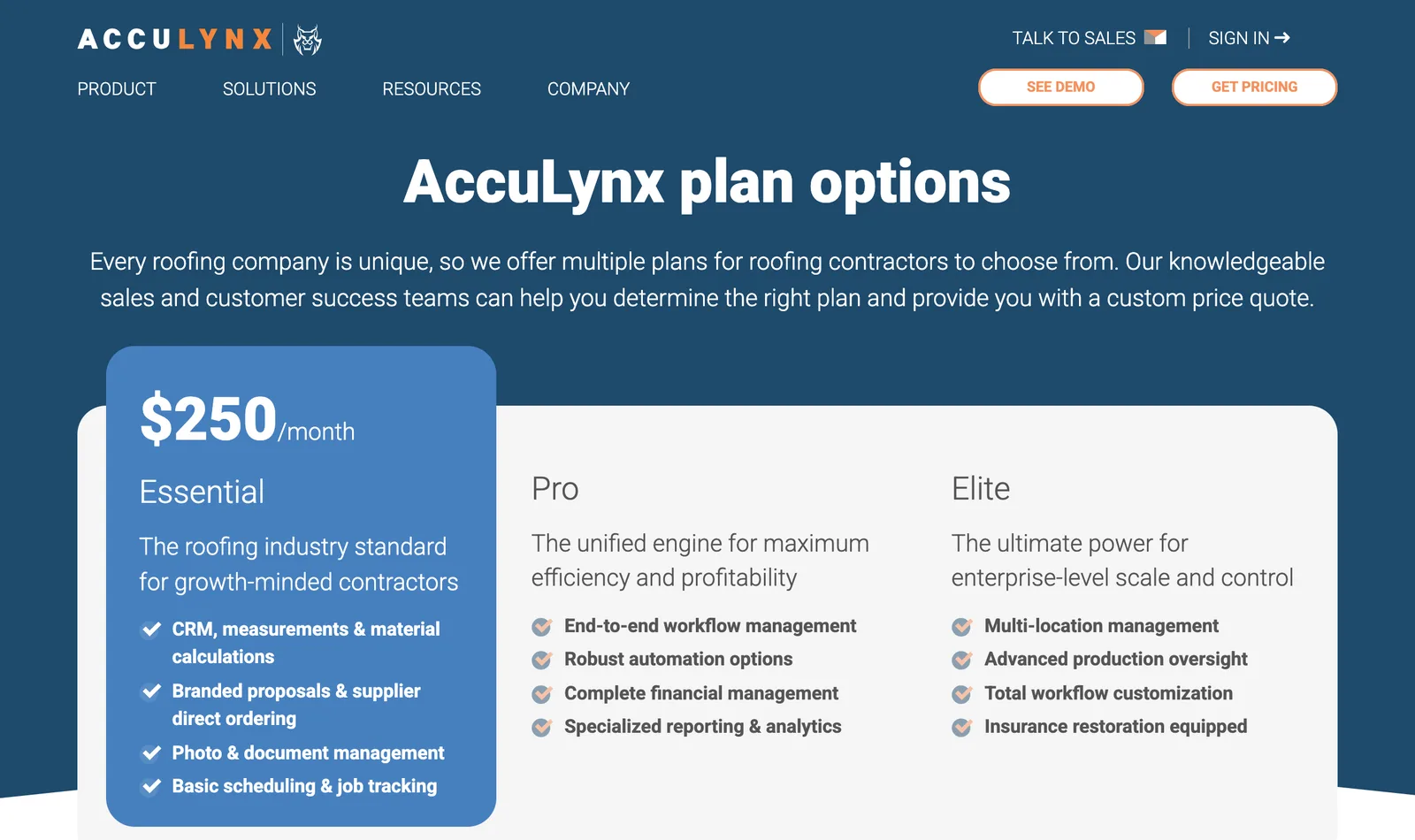 Jul 29, 2026
 Tech Stack
AccuLynx Review 2026: Pricing, Tier Gating, Alternatives
AccuLynx rates 4.6 across 846 reviews and now publishes an entry price. What that price omits, which tier holds the insurance workflow, and who should skip it.
Read Article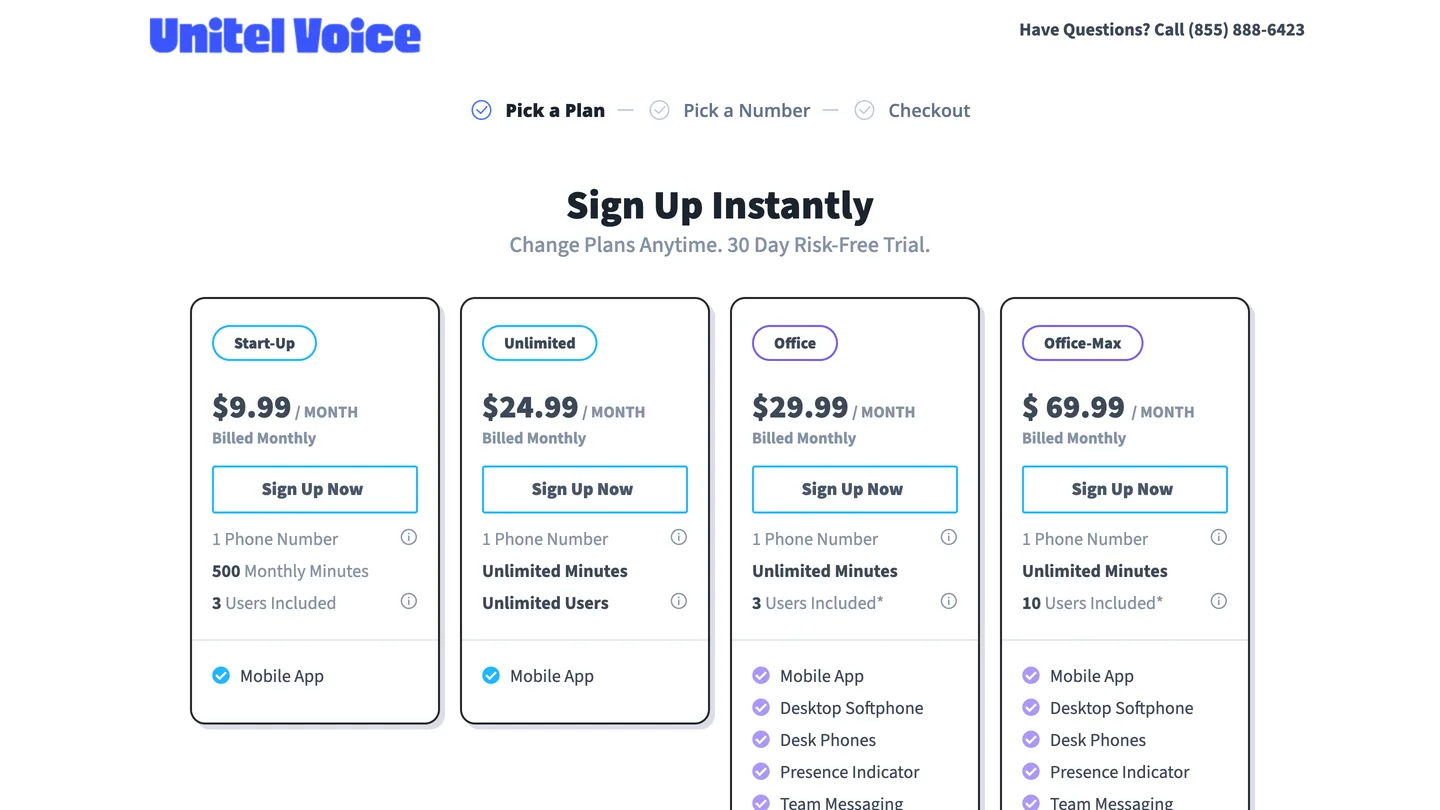 Jul 29, 2026
 Tech Stack
Unitel Voice Review 2026: Pricing, Features and Alternatives
Unitel Voice rates 4.6 on Capterra and gives a one-truck shop a business number for $9.99 a month. The published plans, the cost per call, and what it won't do.
Read Article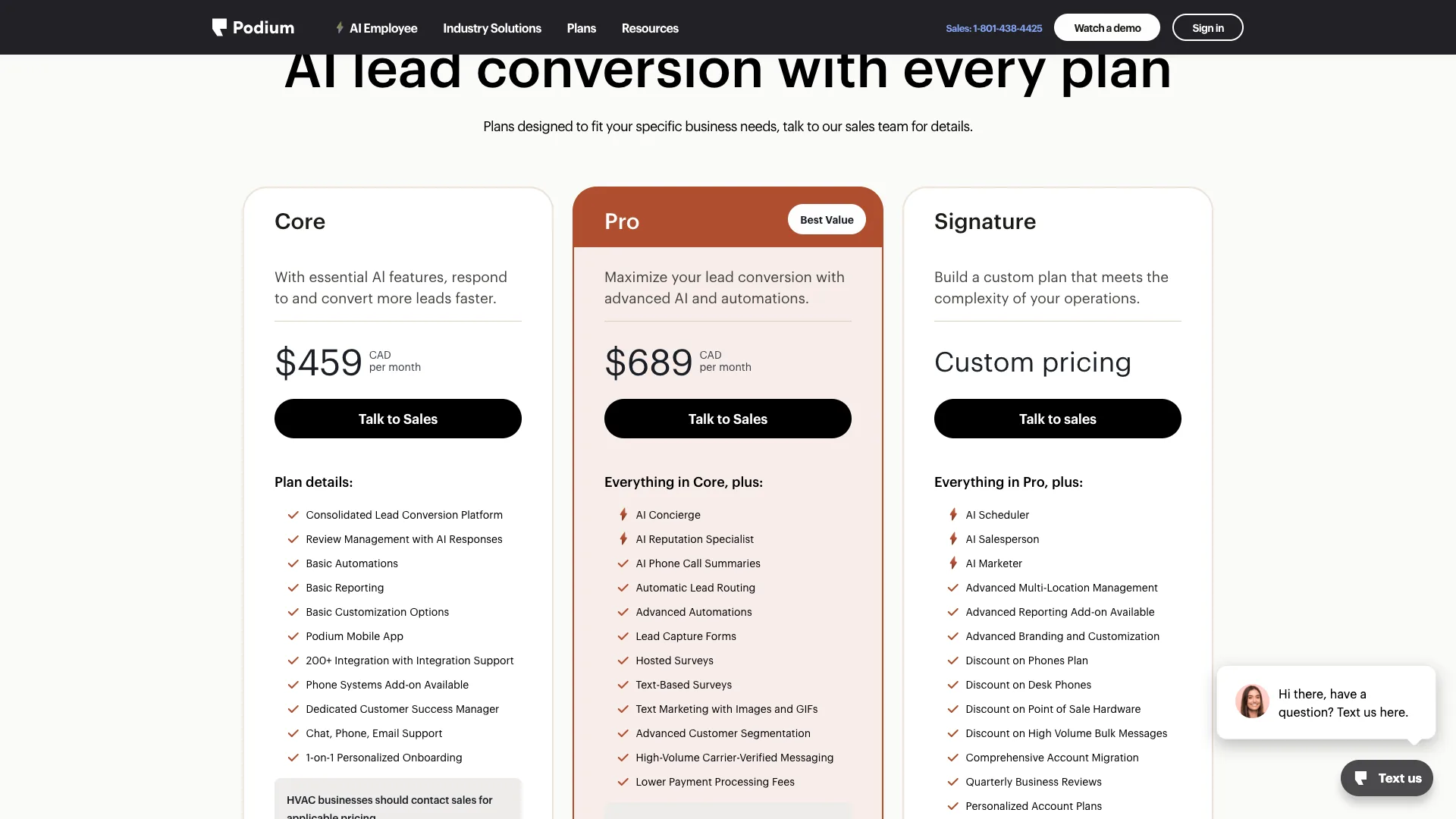 Jul 29, 2026
 Tech Stack
NiceJob vs Podium 2026: Pricing, Contracts and Review Gating
Both vendors print a price, at very different scale and in different currencies. The gap that matters is what Podium will not print: the billing unit, and whether a trade shop gets the number on the page.
Read Article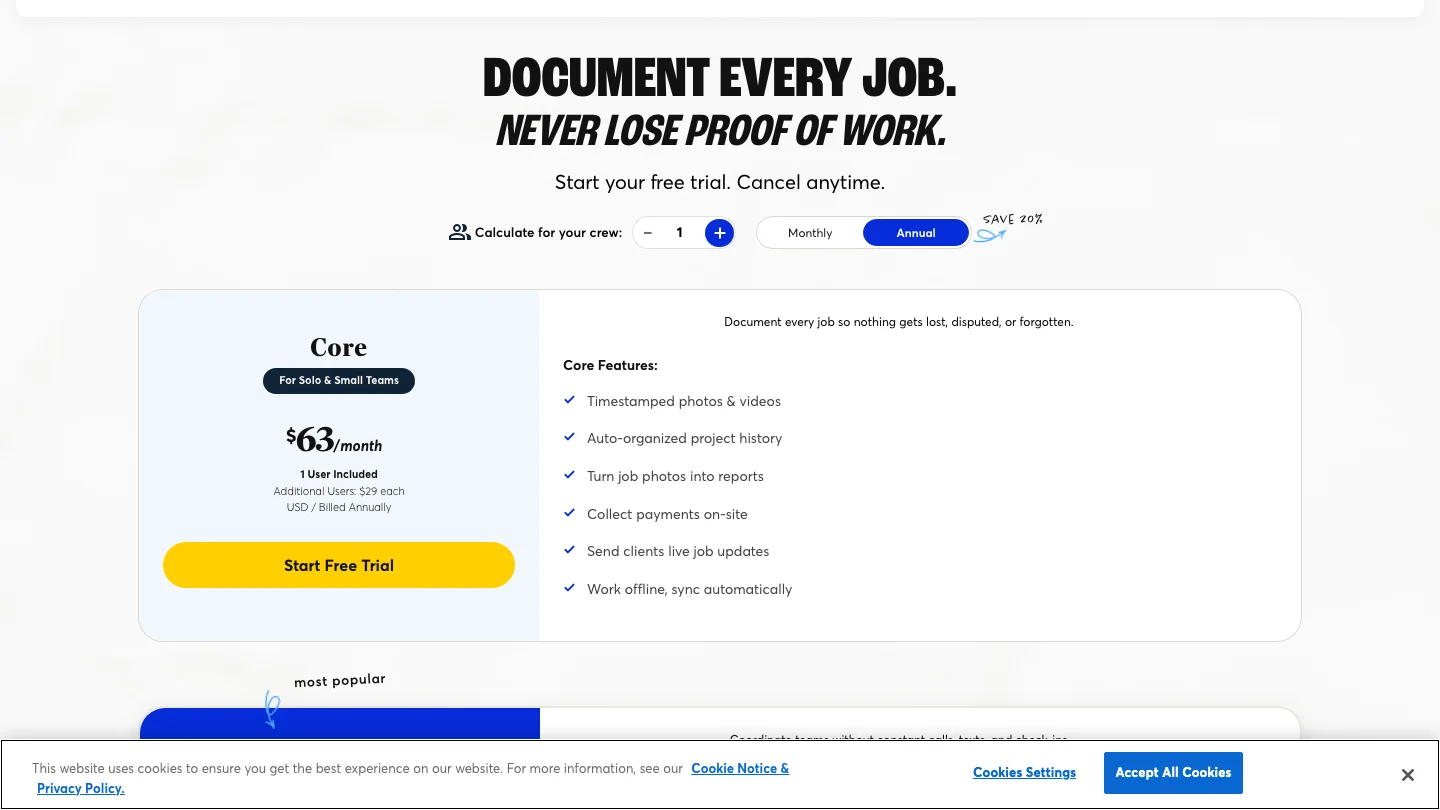 Jul 28, 2026
 Tech Stack
CompanyCam Review 2026: Pricing, Pros, Cons and Alternatives
Every page ranking for CompanyCam still quotes a per-user price the vendor no longer charges. Here are the real plans, the seat math, and who should skip it.
Read Article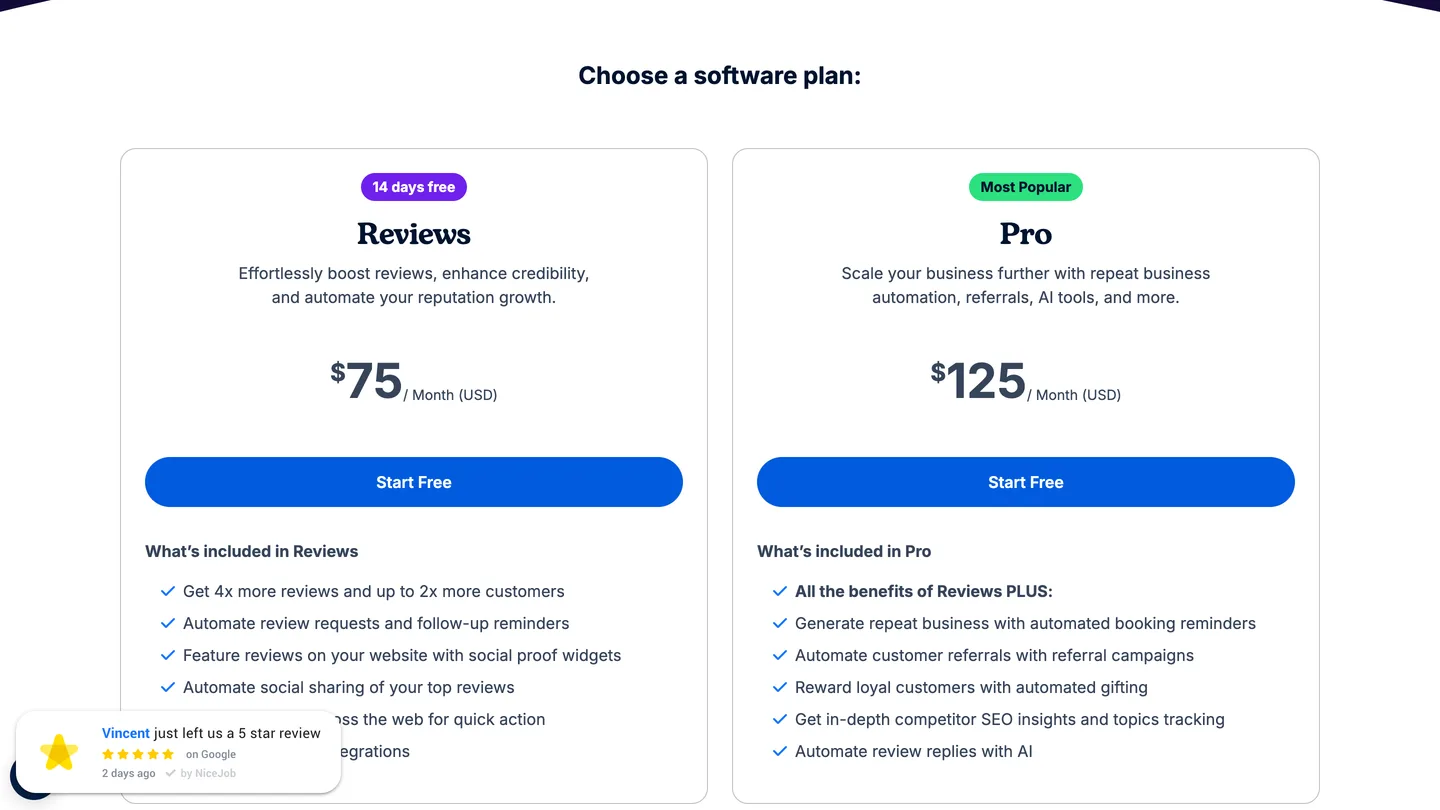 Jul 28, 2026
 Tech Stack
NiceJob Review 2026: Pricing, Pros, Cons and Alternatives
NiceJob rates 4.9 on Capterra and refuses to gate negative reviews. Real plan pricing, the active-customer threshold nobody publishes, and who should skip it.
Read Article Jul 27, 2026
 Tech Stack
Buildertrend Review 2026: Pricing, Limits and Alternatives
Buildertrend rates 4.5 across 2,486 Capterra reviews and quotes against your revenue rather than your seat count. The workflows, the export problem, the alternatives.
Read Article Jul 27, 2026
 Tech Stack
CallRail Review 2026: Pricing, Pros, Cons and Alternatives
CallRail rates 4.5 on Capterra, and its tracking numbers port out free. But the two usage rates that decide your real bill are the two it does not print.
Read Article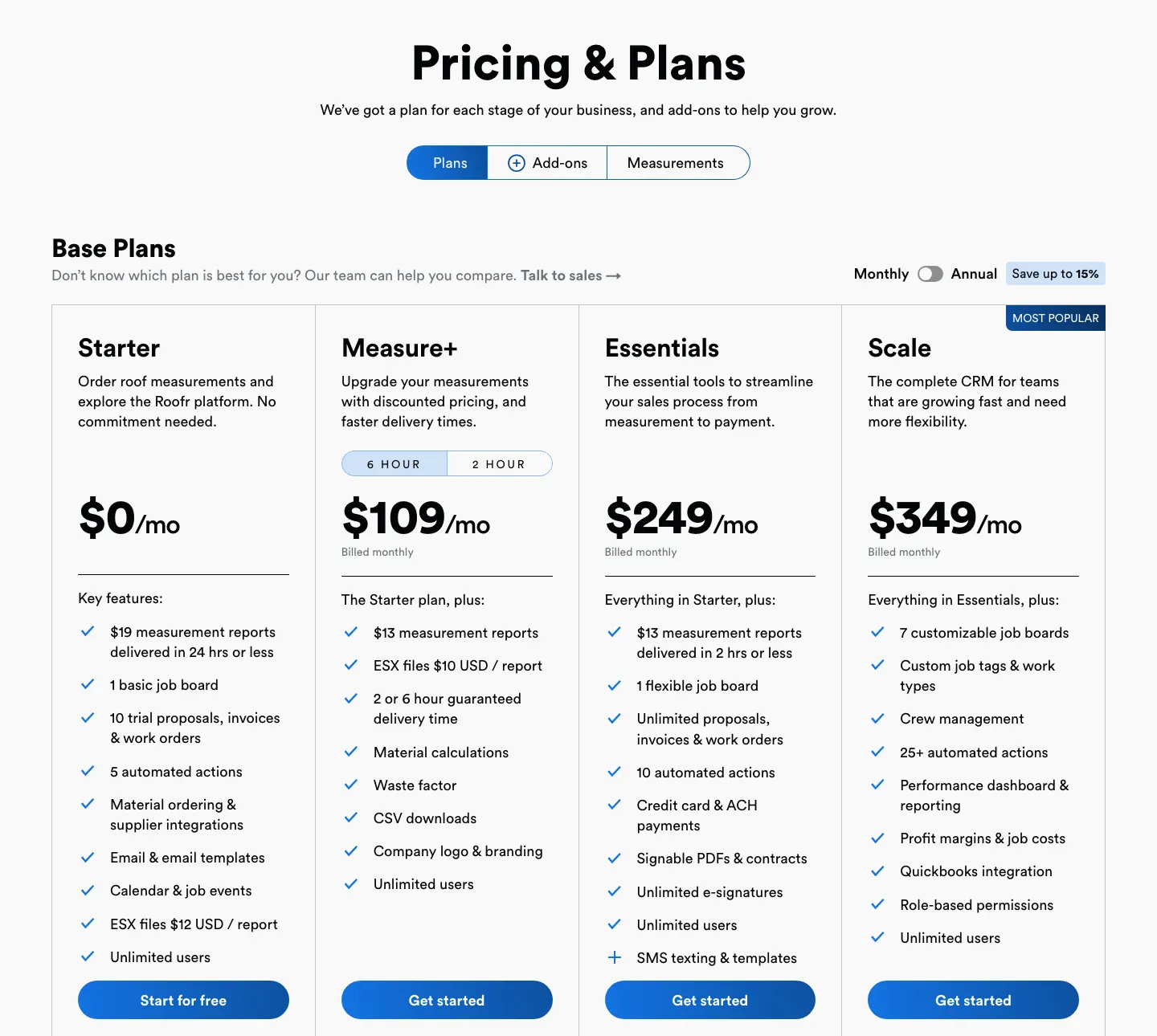 Jul 27, 2026
 Tech Stack
Roofr Review 2026: Pricing, Pros, Cons and Alternatives
Roofr rates 4.6 on Capterra and sells $13 measurement reports against a market charging triple. But it will not import a report from anywhere else.
Read Article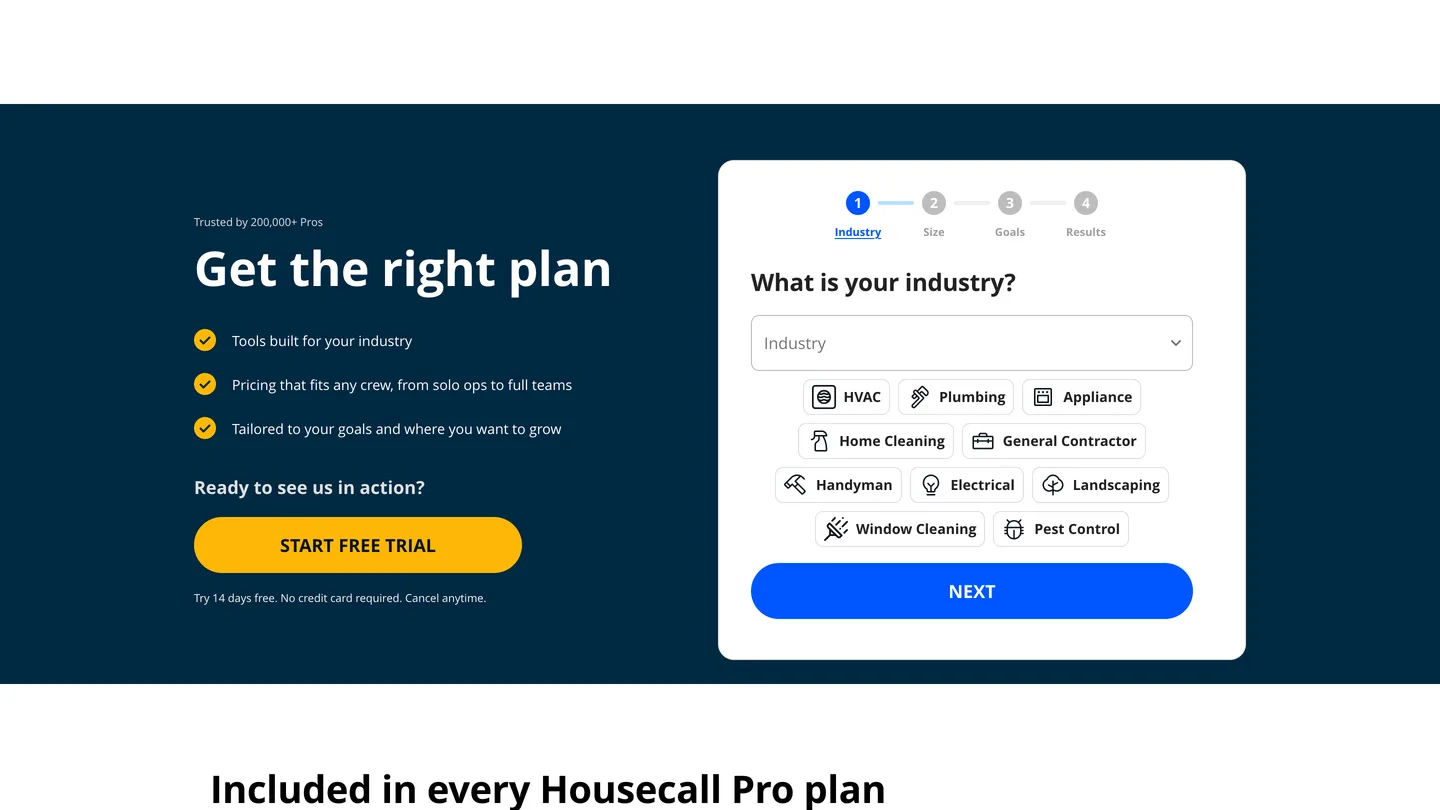 Jul 25, 2026
 Tech Stack
Housecall Pro Review 2026: Pricing, Pros, Cons, Alternatives
Housecall Pro has the shortest learning curve in the category and the widest review spread. Real pricing, the Instapay math, and the migration trap to plan around.
Read Article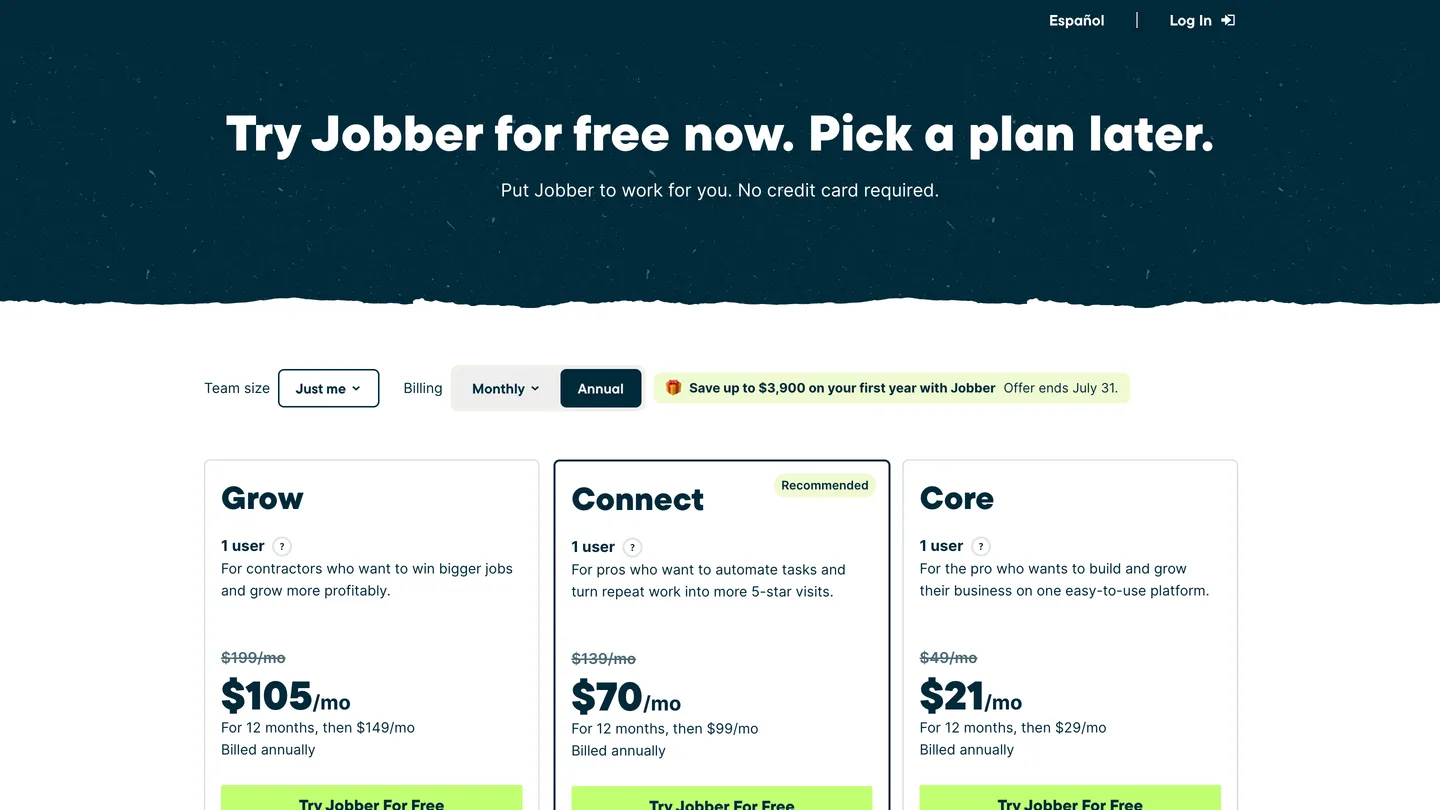 Jul 24, 2026
 Tech Stack
Jobber Review 2026: Pricing, Pros, Cons and Alternatives
Jobber rates 4.6 on Capterra with the best mobile app in the category. Real plan pricing, the feature gating that changes your entry price, and who it suits.
Read Article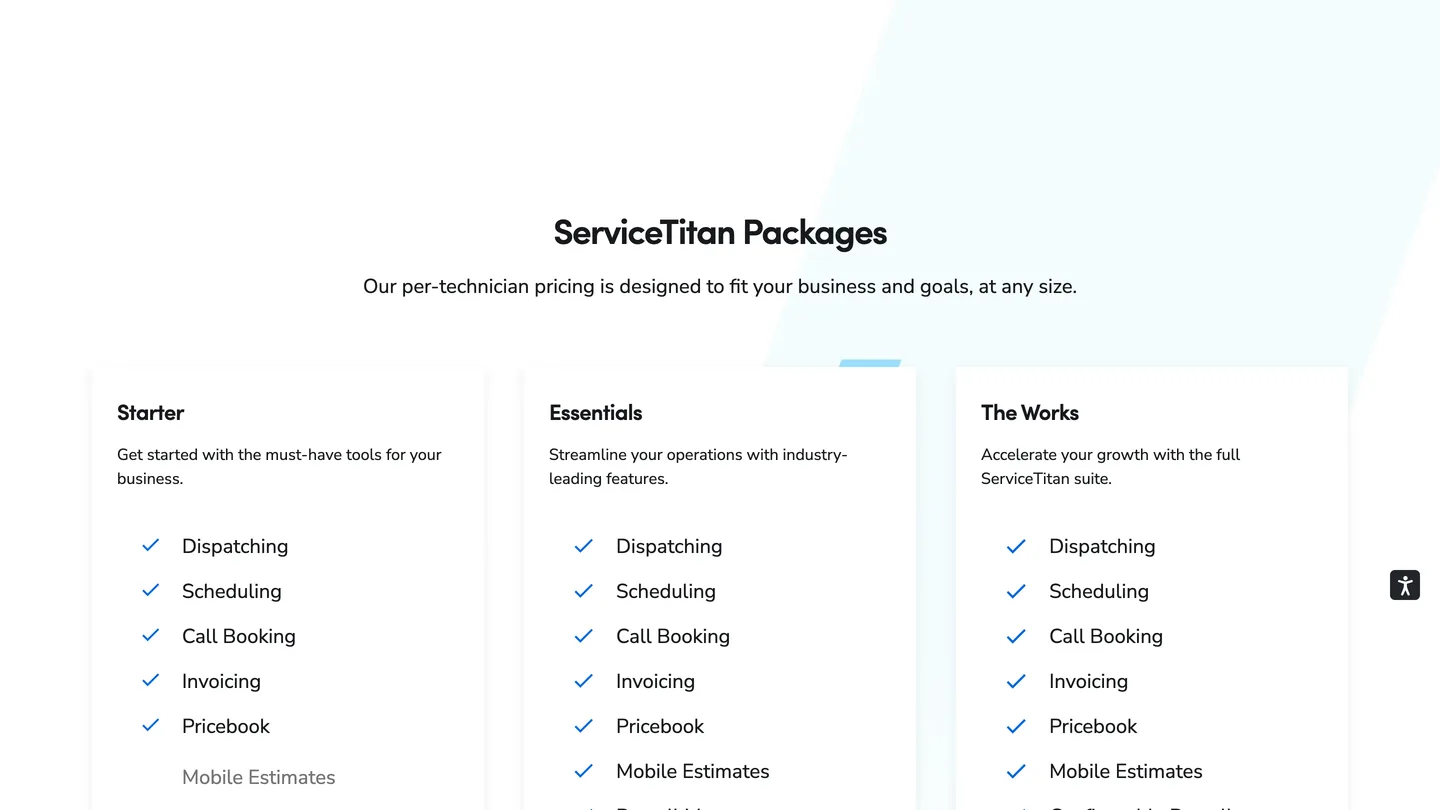 Jul 23, 2026
 Tech Stack
ServiceTitan Review 2026: Pricing, Pros, Cons, Alternatives
ServiceTitan rates 4.3 on Capterra but its weakest score is value for money. Real reported pricing, the 12-month contract, the exit fees, and who it actually suits.
Read Article Jun 3, 2026
 Tech Stack
HVAC Online Scheduling: The 43% Losing After-Hours Bookings
HVAC leads every trade on online booking at just 56.7%, which still leaves 43% of sites forcing an after-hours customer to wait for a business-hours phone call.
Read Article