Aurora Solar Review 2026: Pricing, Pros, Cons, Alternatives
Aurora Solar starts at $159. What each tier gates, the 8 limitations reviewers name, and 5 alternatives with published prices.
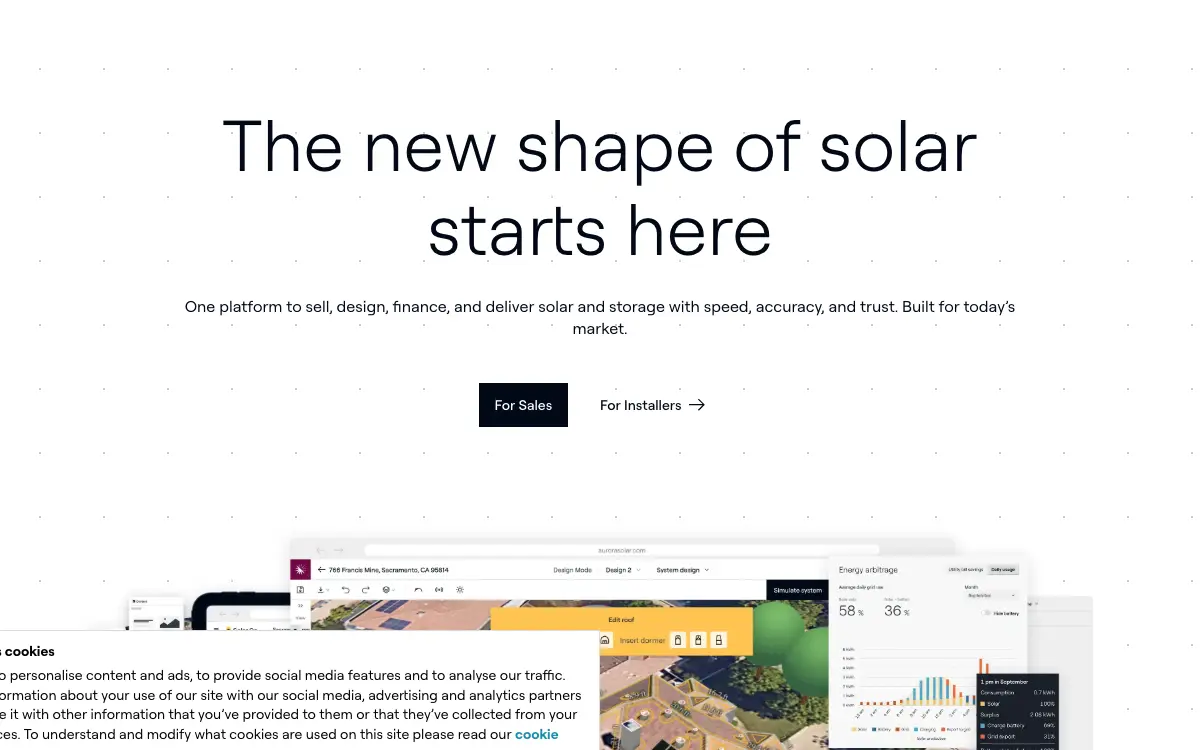
Page at a glance
Aurora Solar is the residential solar design and proposal platform, priced per seat but metered per project, where the number that governs your bill isn't headcount alone but how many addresses your team opens each month. It starts at $159 per user per month. Per user on Basic and Premium, then a switch of unit at the top. The pricing page's comparison table gives Basic and Premium 'Users: 1' and 'Project per month: 50/month', while Enterprise reads 'Unlimited users' and is labelled 'Custom / per project'. So the cost driver flips: below Enterprise you buy seats and each seat carries a 50-project monthly allowance, and at Enterprise you stop buying seats and start buying projects. The Terms of Use put the allowance in contract language: fees buy 'use of up to fifty (50) Projects per Authorized User in the Account (the Monthly Project Allowance)'. A Project is defined as an address you open, and the same address opened twice counts twice. It fits a residential solar installer or dealer running roughly 3 to 50 licensed designers and closers, doing rooftop retrofit and battery attach work, where design accuracy has to survive a lender's underwriting and the same file has to become a customer-facing proposal in the same sitting. It's the wrong buy for A commercial and industrial solar developer sizing carports, ground mounts and multi-megawatt rooftops, because Aurora's own navigation files this work under a different product. The residential platform's Sales Mode is described as an interface 'for creating dynamic, interactive and customizable sales proposals for residential properties', and the Instant Plan Set Application is 'for residential Projects in the U.S.' And HelioScope, run by the same company, publishes design ceilings of 1.25 MW (DC) on Basic, 5 MW on Pro and 30 MW on Enterprise, plus PVsyst export and single-axis trackers. So buying Aurora for C&I means buying the wrong half of the same vendor. Alternatives that publish their prices are HelioScope from $159, OpenSolar from $0, Solargraf from $2,799. Five priced tiers, eight evidenced gaps and five alternatives, five of which publish a figure.
The short verdict on Aurora Solar
Aurora Solar earns its money with a residential solar installer or dealer running roughly 3 to 50 licensed designers and closers, doing rooftop retrofit and battery attach work, where design accuracy has to survive a lender's underwriting and the same file has to become a customer-facing proposal in the same sitting. If that's you, it does the job. The sections below are the parts worth checking before you sign. But the fit is narrower than the marketing suggests, and the price isn't the whole cost.
It starts at $159. And pricing was verified on 7 August 2026, so you can check every figure below in a browser tab.
| Pricing model | Published tiers |
|---|---|
| Entry price | $159 |
| Users | Per user on Basic and Premium, then a switch of unit at the top. The pricing page's compar |
| Ownership | Independent |
| Best fit | a residential solar installer or dealer running roughly 3 to 50 licensed designers and closers, doing rooftop retrofit and battery attach work, where design accuracy has to survive a lender's underwriting and the same file has to become a customer-facing proposal in the same sitting. |
| Accounting sync | QuickBooks (none), Any accounting or ERP system, self-built (two-way), Aurora Sync API (data plumbing layer) (two-way) |
What works
- Accuracy is the product, and the best of it sits one tier up
- Tablet proposals with lender quoting built in, but the lender has to approve you first
- Contract Manager and e-signature are Enterprise, and the two plan-set products carry different risk
- Three APIs, all above the line, and no export duty at the end
What does not
- The proposal and financial engine assumes a simple grid-tie house
- No autosave, and a second login can destroy the work in progress
- It wants a real machine, and slow hardware shows
- 50 projects per seat per month is a contractual ceiling, and blowing through it is a breach
- There's no accounting, job costing or scheduling in the product at all
Aurora Solar is the residential solar design and proposal platform, priced per seat but metered per project, where the number that governs your bill isn't headcount alone but how many addresses your team opens each month. It sells to Solar contractors, and the shape of the product follows from that: Basic covers 3D roof modelling and trees, roof measurements, performance simulation, custom design rules, an AHJ database Aurora sizes at 'Details and requirements from >25K US jurisdictions', a component database and irradiance analysis. But LIDAR-assisted modelling and bankable shade reports, the two things a lender cares about, start at Premium. AI-assisted site models generated 'in under 15 seconds' are Enterprise. So if you never touch Enterprise, you're paying a human $9.99 and up per on-demand site model instead.
Who should be shortlisting Aurora Solar
It fits a residential solar installer or dealer running roughly 3 to 50 licensed designers and closers, doing rooftop retrofit and battery attach work, where design accuracy has to survive a lender's underwriting and the same file has to become a customer-facing proposal in the same sitting. That's the half most reviews print. Here's the other half, which is the one worth your time.
Don't buy it if you're A commercial and industrial solar developer sizing carports, ground mounts and multi-megawatt rooftops. Aurora's own navigation files this work under a different product. The residential platform's Sales Mode is described as an interface 'for creating dynamic, interactive and customizable sales proposals for residential properties', and the Instant Plan Set Application is 'for residential Projects in the U.S.' And HelioScope, run by the same company, publishes design ceilings of 1.25 MW (DC) on Basic, 5 MW on Pro and 30 MW on Enterprise, plus PVsyst export and single-axis trackers. So buying Aurora for C&I means buying the wrong half of the same vendor. Look at HelioScope instead.
Don't buy it if you're A one-to-three person installer who wants software cost near zero and cannot commit a fixed monthly seat fee. $159 per user per month before any add-on is a real line item at that size, and the 50-project allowance is far more than a small shop opens. And OpenSolar charges installers nothing and says so plainly: 'We pride ourselves as a free of charge platform that will always be free for you to use.' And Pylon meters at $4.00 per project on Standard, so a slow month costs almost nothing. Look at OpenSolar instead.
Don't buy it if you're A solar company that wants one system for design, install scheduling, job costing and the books. Aurora ends at the signed contract and the permit package. There's no accounting, invoicing, purchasing, scheduling or timesheet function anywhere in the published feature list, and no QuickBooks or Xero connector in the partner directory. So the joining work is yours, over an Enterprise-tier API.
Don't buy it if you're A team that shares logins to hold seat count down. Basic and Premium include exactly one user each, the Terms forbid credential sharing outright, and two reviewers report losing in-progress work when the same account is logged in from two machines. So the saving evaporates the first time a design disappears at a kitchen table.
Pricing: what Aurora Solar publishes and what it doesn't
And Aurora Solar publishes its tiers, which puts it ahead of most of this category before you compare a single feature.
| Tier | Price | Billing unit | What it unlocks |
|---|---|---|---|
| Basic (billed monthly) | $159 | per user per month | Nothing beyond the tier below |
| Basic (billed annually) | $135 | per user per month, billed annually at $1,620 per user per year | one year commitment |
| Premium (billed monthly) | $259 | per user per month | LIDAR-assisted modeling, Bankable shade reports, Battery modeling: backup, self-consumption, and arbitrage |
| Premium (billed annually) | $220 | per user per month, billed annually at $2,640 per user per year | one year commitment, LIDAR-assisted modeling, Bankable shade reports, Battery modeling: backup, self-consumption, and arbitrage |
| Enterprise | Quote only | per project | AI-assisted site models (Aurora AI), Unlimited users, APIs and integrations, Advanced user permissions, Dealer configurations, Contract Manager and e-Signature tools, Plan sets, engineering stamps, and pro. services, Single sign on (SSO) support, Partner apps, Sync API and Webhooks |
Per user on Basic and Premium, then a switch of unit at the top. The pricing page's comparison table gives Basic and Premium 'Users: 1' and 'Project per month: 50/month', while Enterprise reads 'Unlimited users' and is labelled 'Custom / per project'. So the cost driver flips: below Enterprise you buy seats and each seat carries a 50-project monthly allowance, and at Enterprise you stop buying seats and start buying projects. The Terms of Use put the allowance in contract language: fees buy 'use of up to fifty (50) Projects per Authorized User in the Account (the Monthly Project Allowance)'. A Project is defined as an address you open, and the same address opened twice counts twice.
There is a discount for paying annually up front: 15% for paying annually, stated on the pricing page as 'Save 15% on annual plans'. The arithmetic checks out and Aurora shows its working: Basic drops from $159 to $135 per user per month, billed as '$1620 billed annualy', which the page describes as 'save $288 per year'; Premium drops from $259 to $220, billed as '$2640 billed annualy', 'save $468 per year'. Worth knowing before you screenshot it for a board pack: with the annual toggle selected the same page renders the saving with a minus sign, literally 'save $-288 per year' and 'save $-468 per year'. It is a rendering fault in the toggle, not a different offer, but it is live on the page today. And an annual prepay discount tells you an annual commitment exists, which is worth knowing before anyone mentions a term length out loud.
What a Aurora Solar quote leaves out
Payment processing. Aurora does not process homeowner payments. It processes yours. The pricing FAQ states 'Basic and Premium plans can be paid for by credit card' and that 'Enterprise plans can be paid for via invoice or credit card'. The Terms require settlement in one currency only: 'All payments due to Aurora Solar must be made in U.S. dollars', which matters if you are a Canadian installer, and late payment accrues 'at the rate of 1.5% per month'. Homeowner money moves through the lender partners in Sales Mode, not through Aurora.
Implementation and onboarding. There is no published implementation fee, but onboarding is explicitly not included in the sticker. Aurora's own feature table marks 'Personalized launch and training plan', 'Technical consultation', 'Proposal template customization' and 'Premium support' as 'Add-on' rather than as included line items, and lists 'Access to premium services' only under Enterprise. Self-serve training is the free path: 'On-demand training videos and documentation' and 'Aurora Academy' carry no add-on flag.
Minimum term. Aurora answers this two different ways in two live documents, and the difference is material. The pricing FAQ says 'There is no minimum commitment for our monthly Basic and Premium plans', 'There is a one year commitment for our annual Basic and Premium plans', and to contact sales for Enterprise. The Services Agreement that governs Aurora Credits defines Subscription Term as 'one (1) year from the purchase date of your initial Aurora Credit Bundle purchase (Initial Term) and each subsequent renewal term, which is one (1) year from the purchase date of any subsequent Aurora Credits'. Read literally, buying a further credit bundle mid-term starts a fresh one-year clock. Get the Service Order to say which document governs your account.
Getting out. No early termination penalty is published, because the contract does not need one: money already paid does not come back. The Terms say 'The Fees are non-refundable after the money back period as provided by Aurora Solar in the relevant Service Order' and 'all payments are non-refundable'. The credits agreement goes further: 'All Aurora Credit redemptions are non-refundable, and any refunds will be provided only in Aurora Credits', and 'All Fees and payments are non-refundable except as required by Applicable Laws'. Unused project allowance dies with the term too: 'all unused Projects expire without any refund at the end of each Subscription Term'.
Auto-renewal. Yes, on both papers, with a 30-day notice window. The Terms of Use say the agreement 'shall automatically renew for additional periods equal to the expiring term or as otherwise set forth in the Service Order... unless either party notifies the other in writing of its intent not to renew at least thirty (30) days prior to the end of the then-current term'. The credits agreement repeats it: renewal is automatic 'unless either party gives the other notice of non-renewal at least thirty (30) days before the end of the Current Term'. Set against the FAQ line 'Yes, you can cancel your purchase at any time', the honest reading is that you can stop future terms, not the one you are in, and only if you give notice in time.
Modules sold separately. , , , , , , , , , , . But the entry tier is not the price you'll pay. Add the modules your shop needs on day one and compare Aurora Solar on that total.
Third-party services you will also pay for. , , . These are not on Aurora Solar's invoice, and they are still part of what this decision costs you every month.
A tangent, but stay with it. Aurora and its own sibling product charge the identical sticker for one fifth the work. Aurora Basic is $159 per user per month and includes 50 projects per month. HelioScope Basic is $159 USD monthly and 'Includes 1 user and 10 projects per month'. And Premium and Pro match at $259, and the annual figures match to the dollar: $1,620 and $2,640 on both price lists. So if anyone in your business does mixed residential and commercial work, don't assume the two Aurora products are interchangeable at the same price. Ten projects a month is roughly one commercial designer's output; fifty is a residential team's. And size the licence to the unit of work, not to the number on the page.
What a Aurora Solar quote leaves out
The subscription is the part everyone quotes. These are the lines that land afterwards, and the ones we could not find are named as unpublished rather than left blank.
Sold separately. , , , , , , , , , , . Price the configuration you'll really run, because an add-on you need on day one is part of the price.
Third-party services you'll also pay for. , , . None of these are on Aurora Solar's invoice, and all of them are part of what this decision costs every month.
"Aurora Solar Basic (billed monthly) is $159, per user per month."
Aurora Solar pricing page (2026)
"Aurora Solar Basic (billed annually) is $135, per user per month, billed annually at $1,620 per user per year."
Aurora Solar pricing page (2026)
"Per user on Basic and Premium, then a switch of unit at the top. The pricing page's comparison table gives Basic and Premium 'Users: 1' and 'Project per month: 50/month', while Enterprise reads 'Unlimited users' and is labelled 'Custom / per project'. So the cost driver flips: below Enterprise you buy seats and each seat carries a 50-project monthly allowance, and at Enterprise you stop buying seats and start buying projects. The Terms of Use put the allowance in contract language: fees buy 'use of up to fifty (50) Projects per Authorized User in the Account (the Monthly Project Allowance)'. A Project is defined as an address you open, and the same address opened twice counts twice."
Aurora Solar pricing page (2026)
The four workflows you pay for
Feature totals are noise. So a shop in this category lives or dies on four things, and those are the four to grade, and each one below carries the evidence it's graded on.
Accuracy is the product, and the best of it sits one tier up Basic covers 3D roof modelling and trees, roof measurements, performance simulation, custom design rules, an AHJ database Aurora sizes at 'Details and requirements from >25K US jurisdictions', a component database and irradiance analysis. But LIDAR-assisted modelling and bankable shade reports, the two things a lender cares about, start at Premium. AI-assisted site models generated 'in under 15 seconds' are Enterprise. So if you never touch Enterprise, you're paying a human $9.99 and up per on-demand site model instead.
Tablet proposals with lender quoting built in, but the lender has to approve you first Sales Mode carries customisable proposal templates, custom branding, three pricing methods ('Configure PPW, per component, or flat fee pricing'), adders and incentives, a utility rate database where you 'Configure your own rates or use rates from Genability and Aurora', dynamic panel toggling for reps, and web plus PDF proposals with activity tracking. Six lenders are integrated. But the catch sits on Aurora's own financing page: you must already be approved by each lender, and Aurora links a separate application form per provider.
Contract Manager and e-signature are Enterprise, and the two plan-set products carry different risk Customisable sales agreement templates, Contract Manager and e-signature tools all sit in the Enterprise column, so a Premium customer signs contracts somewhere else. And on permitting there are two distinct products. Plan Sets Service is staffed, promises 'AHJ-ready plan sets in 24-48 hours' and markets '95% first-time AHJ approval rates'. But the Instant Plan Set Application is self-serve, and its own terms disclaim approval, rejections, revisions, support and service levels. Engineering stamps are excluded from Plan Set Services unless separately agreed in writing.
Three APIs, all above the line, and no export duty at the end Sync API creates, retrieves and updates projects and design requests and can 'Retrieve design assets, pricing, financings, and agreements'. Design API triggers AutoDesigner, fire pathway placement, irradiance analysis and performance simulation from outside Aurora. And Webhooks fire on Expert Design Service completion, homeowner consumption profile updates and project status changes. But all three are Enterprise, Design API is a paid add-on on top, and on the way out section 10.3 obliges Aurora to hand back nothing.
Which trades get value from Aurora Solar
Fit differs by trade rather than by company size alone, and a blended paragraph hides that. Here is the split for the trades this one sells to.
Solar. The workflow that decides it is accuracy is the product, and the best of it sits one tier up, and the shop profile that gets value is 3 to 15 seats, residential retrofit plus battery attach doing residential and service work. Where it stops being a fit is A commercial and industrial solar developer sizing carports, ground mounts and multi-megawatt rooftops.
The Aurora Solar accounting link, and where it stops
QuickBooks connects, on every plan. Any accounting or ERP system, self-built connects both ways, gated to a higher tier. Aurora Sync API (data plumbing layer) connects both ways, gated to a higher tier. Your costs map through cost codes, so test yours against your own chart of accounts before you commit. A code your books don't recognise is how a labour charge quietly lands somewhere useless.
Past those, the road ends. Counted integration directory: 13 partners, and the two vendor pages disagree, QuickBooks, Xero, Sage, Field service and job management (ServiceTitan, Jobber, JobNimbus and similar), Documented data export path for a departing customer do not connect. So if your books run on an ERP rather than the platforms named above, weigh that before anything else.
Beyond accounting it connects to EagleView (Aerial imagery and 3D roof data, included rather than an add-on), Nearmap (Higher-resolution imagery), UtilityAPI (Customer utility data and interval data), Genability (Utility rate database), GoodLeap (Residential solar loans, quoted inside Sales Mode), Mosaic (Home improvement and solar financing), Dividend Finance (Solar and home improvement financing), LightReach (Leases and PPAs (third-party ownership)), EnFin by Qcells (Residential solar financing from Qcells), Sungage Financial (Consumer solar loans), Sunrun (Channel partner, financing), Station A (Commercial and industrial portfolio assessment), K2 Systems (Racking, bill of materials), Unirac (Racking, bill of materials), EcoFasten (Roof mounting, bill of materials). A public API exists: Three surfaces: Sync API (projects, design requests, design details, assets, pricing, financings, agreements), Design API (Fire Pathway Placement, AutoDesigner, Irradiance Analysis, Performance Simulation) and Webhooks. The pricing table places API and integrations in the Enterprise column and flags Design API as an 'Add-on' even there. The developer documentation contradicts the price list, saying Sync API 'is available starting on our Build plan' and Design API 'is available as an add-on to our Build plan or higher' across nine references to a tier that the pricing page does not sell. Docs are versioned (v2018.01, v2022.09, v2024.05), which is a good sign for stability, and the site publishes an llms.txt index at docs.aurorasolar.com/llms.txt.
What happens when Aurora Solar breaks
Support is the line item nobody prices and everybody eventually needs. Onboarding for Aurora Solar: There is no published implementation fee, but onboarding is explicitly not included in the sticker. Aurora's own feature table marks 'Personalized launch and training plan', 'Technical consultation', 'Proposal template customization' and 'Premium support' as 'Add-on' rather than as included line items, and lists 'Access to premium services' only under Enterprise. Self-serve training is the free path: 'On-demand training videos and documentation' and 'Aurora Academy' carry no add-on flag.
The review corpus we read on 7 August 2026 carries no consistent signal on response times either way, so treat support as untested rather than good. Open a real ticket during the trial and time the reply, because that is the number no pricing page gives you.
Aurora Solar lock-in, in plain terms
Nobody reads this section before they buy, and it's the one that costs money afterwards. Four terms decide what leaving looks like.
Minimum term. Aurora answers this two different ways in two live documents, and the difference is material. The pricing FAQ says 'There is no minimum commitment for our monthly Basic and Premium plans', 'There is a one year commitment for our annual Basic and Premium plans', and to contact sales for Enterprise. The Services Agreement that governs Aurora Credits defines Subscription Term as 'one (1) year from the purchase date of your initial Aurora Credit Bundle purchase (Initial Term) and each subsequent renewal term, which is one (1) year from the purchase date of any subsequent Aurora Credits'. Read literally, buying a further credit bundle mid-term starts a fresh one-year clock. Get the Service Order to say which document governs your account.
Auto-renewal. Yes, on both papers, with a 30-day notice window. The Terms of Use say the agreement 'shall automatically renew for additional periods equal to the expiring term or as otherwise set forth in the Service Order... unless either party notifies the other in writing of its intent not to renew at least thirty (30) days prior to the end of the then-current term'. The credits agreement repeats it: renewal is automatic 'unless either party gives the other notice of non-renewal at least thirty (30) days before the end of the Current Term'. Set against the FAQ line 'Yes, you can cancel your purchase at any time', the honest reading is that you can stop future terms, not the one you are in, and only if you give notice in time.
Early termination. No early termination penalty is published, because the contract does not need one: money already paid does not come back. The Terms say 'The Fees are non-refundable after the money back period as provided by Aurora Solar in the relevant Service Order' and 'all payments are non-refundable'. The credits agreement goes further: 'All Aurora Credit redemptions are non-refundable, and any refunds will be provided only in Aurora Credits', and 'All Fees and payments are non-refundable except as required by Applicable Laws'. Unused project allowance dies with the term too: 'all unused Projects expire without any refund at the end of each Subscription Term'.
Payment processing. Aurora does not process homeowner payments. It processes yours. The pricing FAQ states 'Basic and Premium plans can be paid for by credit card' and that 'Enterprise plans can be paid for via invoice or credit card'. The Terms require settlement in one currency only: 'All payments due to Aurora Solar must be made in U.S. dollars', which matters if you are a Canadian installer, and late payment accrues 'at the rate of 1.5% per month'. Homeowner money moves through the lender partners in Sales Mode, not through Aurora.
Side note, and it's a useful one: the exit clause obliges Aurora to give you nothing. Section 10.3 says your access 'will immediately terminate' and that 'Aurora Solar may, but is not required to: (i) retain Customer Data after termination or expiration of this Agreement... or (ii) destroy or otherwise dispose of any Customer Data in its possession.' And the same 'may, but is not required to' construction appears in the newer credits agreement. Aurora concedes you own the data, but ownership without an export duty is a paper right. Treat export as an operating habit, not an exit task. So pull CAD files and PDF proposals as jobs close, and if data portability matters to you, negotiate a defined post-termination export window into the Service Order while you still have leverage.
"The proposal and financial calculations functionality is very limited. Auroa solar is essentially made for nothing more that a house with a grid tie inverter."
Capterra, Wouter Z. (9-12)
"- Working continuously on a specific site sometimes consumes too much memory. - Sometimes it doesn't detect accurate pitch. - If the account is simultaneously login from two systems, the work is lost due to no autosave option."
Capterra, Waleed A. (0-23)
"- Consumes a lot of memory. - Auto save option isn't available. - Sometimes stuck in between."
Capterra, Wasay M. (8-06)
The Aurora Solar gaps worth raising on the call
Six things worth raising, and each one's answerable with a yes or a no on a call.
The proposal and financial engine assumes a simple grid-tie house Aurora's design accuracy is what reviewers praise. But the money side is where a designer working outside plain retrofit says it runs out. So if your mix includes anything structurally odd, or financing shapes Aurora hasn't modelled, the proposal is the constraint rather than the model. Aurora has been adding financing product types, and its own financing page now claims 'cash, loans, TPO, and now prepaid TPO', but the complaint is about depth of financial modelling rather than the count of lender logos. But a solar design engineer, renewables & environment, reports it it differently: "The proposal and financial calculations functionality is very limited. Auroa solar is essentially made for nothing more that a house with a grid tie inverter." During the demo, bring your three most awkward recent deals, not your three cleanest. And ask the rep to build the proposal live, including the financing structure you sell, and watch whether they reach for a spreadsheet.
No autosave, and a second login can destroy the work in progress Two designers, reviewing 15 months apart, report the same pair of faults: heavy memory consumption during long modelling sessions, and lost work when the account is logged in from two machines at once. And Aurora sells 1 user per Basic or Premium licence, so an office tempted to share a seat is running straight at this. But the contract backs the vendor here rather than you: the Terms say 'You will not share (and will instruct each Authorized User not to share) any user identifications, Account numbers, login user IDs, passwords, Account profiles or other credentials'. A solar design engineer, outsourcing/offshoring, writing on 2019-10-23, puts it: "- Working continuously on a specific site sometimes consumes too much memory. - Sometimes it doesn't detect accurate pitch. - If the account is simultaneously login from two systems, the work is lost due to no autosave option." Buy one licence per person who touches a design, and confirm in writing with the account team whether autosave now exists, because the vendor has never publicly answered these two reviews.
It wants a real machine, and slow hardware shows The platform is browser-delivered but not lightweight. And a solar design engineer names hardware as the single drawback: on low-specification machines it 'performs very slow'. Aurora's own commercial sibling HelioScope publishes designs up to 30 MW (DC) on Enterprise, which tells you the modelling load isn't trivial. So if your reps are running five-year-old laptops in a truck, budget for the laptops as part of the software decision. And a solar design engineer, electrical/electronic manufacturing, writing on 2019-11-06, writes the same thing: "The only con i have found is that it requires high system configuration, With low system configuration it performs very slow" Run the trial on the worst machine in the building, not the best one, and time a full 3D model plus proposal on it.
50 projects per seat per month is a contractual ceiling, and blowing through it is a breach The pricing table shows 'Project per month: 50/month' on Basic and Premium. And the Terms turn that into contract: fees cover 'up to fifty (50) Projects per Authorized User in the Account (the Monthly Project Allowance)', an Overage is when your monthly total exceeds it, and 'You agree that consistently repeated Overage is a material breach of this Agreement subject to Section 10.2', which is the termination clause. But rollover is narrow: unused allowance can roll to the next month only if your term is longer than one month, never across terms, and 'If your subscription is monthly... you may not roll over any unused portion'. Since a Project is an address you open and duplicates count, a busy canvassing season eats allowance fast. Pull last year's monthly opened-address count, not closed deals, and divide by planned seats. And if any month clears 50 per seat, price the Enterprise per-project model before you sign the seat model.
There's no accounting, job costing or scheduling in the product at all Aurora is a design and sales platform that ends at the signed contract and the permit package. Its full feature list on the pricing page runs design accuracy, imagery, AI designs, battery modelling, proposals, financing, Contract Manager, e-signature, plan sets and enterprise permissions. But it contains no ledger, no invoicing, no purchase orders, no crew scheduling and no timesheets. Neither QuickBooks nor Xero appears anywhere on the pricing page, the partner directory or the financing page. And Aurora's own framing of the gap is that you bridge it yourself: 'APIs can trigger workflows between Aurora and your CRM, ERP or other systems'. Cost the second system now. Because Aurora plus an accounting package plus whatever runs your installs is the real stack, and the API that joins them is Enterprise-only.
The API is top-tier only, and the documentation gates it behind a plan Aurora doesn't sell 'APIs and integrations' sits in the Enterprise column of the pricing page, and Design API is marked 'Add-on' even there. But the developer documentation gates access differently: it says 'Sync API is available starting on our Build plan' and 'Design API is available as an add-on to our Build plan or higher', with nine references to a 'Build plan' on that page. The pricing page sells Basic, Premium and Enterprise. There's no Build plan. So one of the two documents is stale, and a buyer reading the developer docs to scope an integration is scoping against a tier they cannot purchase. Ask the account executive, in writing, which named tier on the current price list carries Sync API, Webhooks and Design API, and what the Design API add-on costs.
The contract gives you no right to get your data out when you leave Section 10.3 of the Terms is the whole exit story: on expiry or termination your access 'will immediately terminate', and 'Aurora Solar may, but is not required to: (i) retain Customer Data after termination... or (ii) destroy or otherwise dispose of any Customer Data in its possession'. There's no export window, no defined format, no obligation to hand anything back. And you own the data on paper (the Terms say Aurora 'will not obtain any ownership rights'), but ownership without an export right is thin. The credits agreement repeats the same 'may, but is not required to' language. Export as you go rather than at the end. Because CAD export and PDF proposals are available on lower tiers; a bulk pull over Sync API is not.
Instant Plan Sets carry no approval warranty and no service levels Aurora markets '95% first-time AHJ approval rates' on its Plan Sets Service page, which is the human-delivered product. But the separate, self-serve Instant Plan Set Application is governed by its own terms that say the opposite about risk: 'Aurora does not warrant approval and is not liable for rejections. Aurora will not revise rejected Permit Packages', and 'No support, service levels, security commitments, or indemnities in this Terms or the Agreement apply to the Instant Plan Set Application.' And it's also US residential only, Puerto Rico included, and excludes engineering stamps. Be clear which plan-set product your quote covers. And if permit rejections are your bottleneck, the 95% figure only attaches to the staffed Plan Sets Service.
One more thing worth knowing. Buying more credits can restart your commitment. The credits Services Agreement defines Subscription Term as 'one (1) year from the purchase date of your initial Aurora Credit Bundle purchase (Initial Term) and each subsequent renewal term, which is one (1) year from the purchase date of any subsequent Aurora Credits'. And credits themselves 'shall expire one (1) year from the date of purchase' and there is 'No Rollover of Aurora Credits' into a renewal term. A mid-year top-up to cover a busy quarter can, on the plain reading, buy you a fresh twelve-month term you did not intend. So before any credit purchase, get written confirmation of the exact end date of your current term and whether the purchase moves it.
One more thing worth knowing. Run out of credits and Aurora both bills the overage and force-tops your balance, with your consent pre-signed. The agreement reads: 'If Company has exceeded its use of the total Aurora Credits purchased by the Company, Aurora will charge the Company for the overage and also add a balance of minimum Aurora Credits to the Company's account... Company cannot deny Aurora's right to charge the Company for (i) any Aurora Credits used by the Company and (ii) for the addition of minimum Aurora Credits to Company's balance.' The size of that minimum is 'determined in Aurora's sole discretion'. So the credit model has no natural ceiling. Ask for the Aurora Credit Bundle size and the per-credit price to be written into the Service Order, with a cap on automatic top-ups, before the Enterprise agreement is signed.
One more thing worth knowing. Two solar design engineers, reviewing 15 months apart, report the same fault in near-identical words: no autosave, and lost work. One writes 'If the account is simultaneously login from two systems, the work is lost due to no autosave option'; the other lists 'Auto save option isn't available' alongside 'Consumes a lot of memory'. And a third names hardware as his only complaint: 'With low system configuration it performs very slow'. These reviews are old and Aurora may well have fixed autosave, but the vendor has never publicly answered them and the reviews are still the top third-party evidence a buyer will find. So make autosave behaviour and concurrent-session handling explicit trial tasks, and never let two people share a licence.
One more thing worth knowing. Aurora's free Instant Plan Set trial converted into billing on a card you pre-authorised. The terms say Permit Packages were free between June 18 and August 17, 2025, then 'Customer expressly agrees that Aurora may charge any payment method or credit card on file with Aurora for Customer's account for all applicable fees incurred for use of the Instant Plan Set Application after the Early Access Period, and Customer hereby authorizes Aurora to make such charges.' Aurora ships new modules as free early-access programmes with auto-conversion built into the click-through terms. So diary the end date of any early-access programme your team enrols in, and check whether an add-on has started drawing credits.
Small thing that turns out to matter. Aurora's developer documentation sells a plan tier that Aurora's price list does not have. docs.aurorasolar.com states 'Sync API is available starting on our Build plan' and 'Design API is available as an add-on to our Build plan or higher', with nine references to 'Build plan' on that page and zero references to Basic, Premium or Enterprise as plan names. But the pricing page sells Basic, Premium and Enterprise. Anyone scoping an Aurora integration off the public docs is scoping against a tier they cannot buy. So get the API entitlement named against a tier on the current price list, in writing, before a developer estimates the work.
Aurora Solar, from the people who bought it
Every quote below is transcribed from a published review, named to the platform that carries it and to the reviewer as that platform displays them. We read the corpus by complaint type rather than by star rating, which is how the disqualifying detail buried inside a five-star review gets found.
"The proposal and financial calculations functionality is very limited. Auroa solar is essentially made for nothing more that a house with a grid tie inverter."
On 2024-09-12, a solar design engineer, renewables & environment writes on Capterra
"- Working continuously on a specific site sometimes consumes too much memory. - Sometimes it doesn't detect accurate pitch. - If the account is simultaneously login from two systems, the work is lost due to no autosave option."
But a solar design engineer, outsourcing/offshoring, says it differently on Capterra
"- Consumes a lot of memory. - Auto save option isn't available. - Sometimes stuck in between."
A solar design engineer, renewables & environment, writing on 2019-08-06, describes it on Capterra
"The only con i have found is that it requires high system configuration, With low system configuration it performs very slow"
On 2019-11-06, a solar design engineer, electrical/electronic manufacturing says on Capterra
"Takes a bit of time to get used to, some in-depth walkthrough videos would be great."
But a designer, design, writes it differently on Capterra
"Ease of use, automation tools were both incredibly accurate and helpful. I particularly enjoyed the data sources were advanced and data sources were highly accurate and from my experience exceeded that of Google Maps, Open Street View etc."
An intensive housing based case manager, legal services, writing on 2025-06-13, reports it on Capterra
"Sostanzialmente forse la difficoltà d'uso"
An assicuratore, insurance, writing on 2024-02-16, says on Capterra
How Aurora Solar compares
Here's the shortlist Aurora Solar competes against in real deals. Some of these will tell you the price tonight. That difference tells you how the sales conversation is going to go.
| Tool | Entry price | Billing unit | Users included | Published? |
|---|---|---|---|---|
| Aurora Solar | $159 | per user per month | Per user on Basic and Premium, then a switch of unit at the | Yes |
| HelioScope | $159 | per license per month | 1 user and 10 projects per month, or 1 user and 120 projects on the annual plan at $1,620 USD | Yes |
| OpenSolar | $0 | per user | Unlimited; the vendor says it's free of charge to solar professionals | Yes |
| Solargraf | $2,799 | per year (Starter plan, billed annually) | 240 projects and 2 users, then +$11 per additional project and +$1,440 per additional user | Yes |
| Pylon | $4.00 | per project (Standard); Pro is $10.00 per project | No seat charge on the design tool; the Solar CRM is separate 'Starting from $49.00 per user per month, billed monthly' | Yes |
| SiteCapture | $30.00 | per user per month | 1 user | Yes |
HelioScope. Commercial and industrial PV: rooftop, carport and ground mount on every plan, production 'within 1% of PVsyst', 8760 production reports, P90/P95/P99 values, PVsyst export, single-axis trackers, and design ceilings of 1.25 MW, 5 MW and 30 MW (DC) by tier. But Residential selling. There's no Sales Mode equivalent, no integrated lender network, no Contract Manager, and the project allowance is one fifth of Aurora's at the identical price.
OpenSolar. Cost. OpenSolar states 'We pride ourselves as a free of charge platform that will always be free for you to use', funded by manufacturers, finance companies, distributors and permitting providers, and claims 28,000+ pros on the platform. And it also bundles CRM, project management, permitting and a bill of materials shop that Aurora does not include at any tier. But Independence. The business model is paid for by the same lenders, distributors and manufacturers whose products appear in your proposals, so the neutrality question is structural rather than incidental. And Aurora's design accuracy and lender-facing shade reporting are the recognised benchmark.
Solargraf. Predictable annual budgeting with the project count bought up front rather than metered per seat per month, and permitting, financing and CRM included in the core price on every plan. But Reputation and API cost. Capterra rates Solargraf 3.2 out of 5 across 15 reviews against Aurora's 4.1 across 7, and public API access is an extra 'Get at $4000 annually' on non-Enterprise plans.
Pylon. Seasonal and low-volume shops. So pay-as-you-go means a quiet month costs almost nothing, where Aurora bills $159 per seat whether or not anyone opens a project. But Depth at volume. At Aurora's 50-project allowance, Pylon Standard would run $200 per month for the same project count with the CRM still unbought, and Pylon doesn't publish an equivalent to Aurora's AHJ database, plan sets service or lender network.
SiteCapture. Field operations after the sale: site surveys, photo capture and install documentation, the part of the job Aurora leaves alone. And it lists Aurora Solar as an integration partner on its own Capterra profile. But Everything before the sale. It isn't a design or proposal tool and can't replace Aurora.
"The only con i have found is that it requires high system configuration, With low system configuration it performs very slow"
Capterra, Faheem S. (1-06)
"Takes a bit of time to get used to, some in-depth walkthrough videos would be great."
Capterra, Kristen R. (7-28)
Who should not buy Aurora Solar
Don't buy Aurora Solar if you're A commercial and industrial solar developer sizing carports, ground mounts and multi-megawatt rooftops. Aurora's own navigation files this work under a different product. The residential platform's Sales Mode is described as an interface 'for creating dynamic, interactive and customizable sales proposals for residential properties', and the Instant Plan Set Application is 'for residential Projects in the U.S.' And HelioScope, run by the same company, publishes design ceilings of 1.25 MW (DC) on Basic, 5 MW on Pro and 30 MW on Enterprise, plus PVsyst export and single-axis trackers. So buying Aurora for C&I means buying the wrong half of the same vendor. Look at HelioScope instead.
Don't buy Aurora Solar if you're A one-to-three person installer who wants software cost near zero and cannot commit a fixed monthly seat fee. $159 per user per month before any add-on is a real line item at that size, and the 50-project allowance is far more than a small shop opens. And OpenSolar charges installers nothing and says so plainly: 'We pride ourselves as a free of charge platform that will always be free for you to use.' And Pylon meters at $4.00 per project on Standard, so a slow month costs almost nothing. Look at OpenSolar instead.
Don't buy Aurora Solar if you're A solar company that wants one system for design, install scheduling, job costing and the books. Aurora ends at the signed contract and the permit package. There's no accounting, invoicing, purchasing, scheduling or timesheet function anywhere in the published feature list, and no QuickBooks or Xero connector in the partner directory. So the joining work is yours, over an Enterprise-tier API.
Don't buy Aurora Solar if you're A team that shares logins to hold seat count down. Basic and Premium include exactly one user each, the Terms forbid credential sharing outright, and two reviewers report losing in-progress work when the same account is logged in from two machines. So the saving evaporates the first time a design disappears at a kitchen table.
The verdict, by shop size
Solo designer or 1 to 2 seat shop, residential retrofit
Only under conditions, and they are worth being honest about. $159 per seat per month buys allowance you won't use, since 50 projects per seat is far beyond a two-person pipeline. But it's still defensible if the lender relationships in Sales Mode or the bankable shade report are what unblock your deals. And if they're not, OpenSolar at zero or Pylon at $4.00 per project is the honest answer, and you can move to Aurora when volume justifies it. This band runs 1 to 2 on the crew, doing residential work, and that's the profile the recommendation is written for.
3 to 15 seats, residential retrofit plus battery attach
Yes, and this is the shape the product is built for. This is the band the product is priced for. Premium at $220 per user per month annually buys LIDAR-assisted modelling, bankable shade reports and the three battery modes, and 50 projects per seat covers a healthy pipeline. So budget separately for accounting, and plan around Contract Manager and e-signature sitting one tier higher. This band runs 3 to 15 on the crew, doing residential and service work, and that's the profile the recommendation is written for.
16 to 60 seats, multi-branch installer or dealer network
Only under conditions, and they are worth being honest about. Enterprise is where dealer configurations, advanced permissions, SSO, Aurora AI and the APIs live, and it's also where the pricing unit changes from seats to projects with 'volume-based discounts on credit purchases'. And that's a genuinely different commercial model, and the credits agreement attaches one-year terms to credit purchases, no rollover, and a clause letting Aurora top up your credit balance and bill you for it. So it's worth buying, but not worth signing without a lawyer on the Service Order. This band runs 16 to 60 on the crew, doing residential work, and that's the profile the recommendation is written for.
Commercial and industrial solar developer
No. The residential platform is the wrong product from the right company. And Sales Mode is defined in Aurora's own contract as residential-only, the Instant Plan Set Application is US residential only, and every C&I capability a developer needs (PVsyst-grade simulation, trackers, 30 MW ceilings, P90/P95/P99) sits in HelioScope instead. So buy HelioScope, or buy both and know why. This band runs undefined or more on the crew, doing commercial work, and that's the profile the recommendation is written for.
Any size, wanting one platform for design plus accounting, job costing and crew scheduling
No. Aurora has none of it and doesn't pretend otherwise. There's no ledger, no invoicing, no purchasing, no scheduling and no timesheets in the published feature list, and no accounting partner in a 13-entry directory. And the only bridge is an Enterprise-tier API whose own documentation points at a plan tier the price list does not sell. This band runs undefined or more on the crew, doing residential and commercial and service work, and that's the profile the recommendation is written for.
One thing to check before you sign with Aurora Solar
A disclosure and a number. We're a web design studio for contractors, we don't sell software, and we measured something that sits right beside this decision.
Aurora Solar bills $159 per user per month and meters 50 projects per seat, where a Project is simply an address someone opened, duplicates included, so every enquiry a rep types in spends allowance whether or not it was ever a real deal. So that makes the quality of the enquiries reaching Sales Mode a software cost, not just a sales problem. When Fervor inspected the contractor sites in its index, 95.8% carried a serious WCAG violation and 61.3% a critical one, and the forms are where that lands hardest: a quote form a homeowner can't complete on a phone, or that a screen reader can't label, sends the good leads elsewhere and leaves your paid seats opening speculative addresses.
And the number is worse than anyone guesses before they check. Across 380 inspected contractor sites, 82.8% loaded slowly enough that a quote form went unseen. So the sample is not curated: it is every contractor site the tooling could reach. The workings are public in the Contractor CRO Index.
"82.8% of the 380 contractor websites inspected loaded slowly enough that a quote form went unseen."
Fervor Studio Contractor CRO Index (2026)
So do both. The second one is usually cheaper to fix than the first one is to buy. The numbers are all public.
See where your site is losing the jobs Aurora Solar would have managed
Fervor inspects your site the way a homeowner uses it, then shows you where calls leak out. About three days.
Get a Site InspectionWhat we read on Aurora Solar, and what we couldn't get to
What this page is, and what it isn't. We read Aurora Solar's own pages and its review corpus. We didn't operate it. What it is instead: Aurora Solar's own 16 pages read line by line on 7 August 2026, plus the review corpus read by complaint type rather than by star rating. And every figure above traces to a page we opened on that date, pricing included.
So: seven quotes on this page, seven from Capterra.
And https://www.g2.com/products/aurora-solar/reviews (403), https://www.trustradius.com/products/aurora-solar/reviews (403), https://www.trustpilot.com/review/aurorasolar.com (403), https://sourceforge.net/software/product/Aurora-Solar/ (403), https://help.aurorasolar.com/hc/en-us (403 to curl and to WebFetch; no help-centre article on export or account closure could be read), https://www.getapp.com/all-software/a/aurora-solar/reviews/ (403 to curl, 404 via WebFetch; no reachable GetApp profile found), https://www.softwareadvice.com/construction/aurora-solar-profile/ (403 to curl, 404 via WebFetch) and https://www.softwareadvice.com/cad/aurora-solar-profile/ (404) refused automated retrieval for Aurora Solar. Where their scores appear in third-party roundups we have left them out rather than pass on a number we could not open.
What that leaves untested: reddit (r/solar, r/solarDIY): blocked to automated access on every prior run in this series, not attempted. And everything above is 16 vendor pages and a review corpus, which is documentary rather than hands-on.
What Aurora Solar users say
The proposal and financial calculations functionality is very limited. Auroa solar is essentially made for nothing more that a house with a grid tie inverter.
- Working continuously on a specific site sometimes consumes too much memory. - Sometimes it doesn't detect accurate pitch. - If the account is simultaneously login from two systems, the work is lost due to no autosave option.
- Consumes a lot of memory. - Auto save option isn't available. - Sometimes stuck in between.
The only con i have found is that it requires high system configuration, With low system configuration it performs very slow
Takes a bit of time to get used to, some in-depth walkthrough videos would be great.
Ease of use, automation tools were both incredibly accurate and helpful. I particularly enjoyed the data sources were advanced and data sources were highly accurate and from my experience exceeded that of Google Maps, Open Street View etc.
Sostanzialmente forse la difficoltà d'uso
Frequently asked questions
What does Aurora Solar cost?
Aurora publishes its residential pricing, which is unusual in contractor software. Basic is $159 per user per month billed monthly, or $135 per user per month billed annually ($1,620 per user per year). Premium is $259 per user per month billed monthly, or $220 billed annually ($2,640 per user per year). And both include one user and 50 projects per month. Enterprise is quote-only and priced per project rather than per seat. But curiously, Capterra's profile still shows Aurora's starting price as 'Contact vendor', so a buyer researching on the review site alone would never learn the published number.
What counts as a project, and what happens if I go over 50?
A Project is defined in the Terms as a location or address you open, and the definition is explicit that the address need not be unique, so opening the same house twice consumes two. And exceeding the allowance is an 'Overage', and the Terms say 'consistently repeated Overage is a material breach of this Agreement' and reserve Aurora's right to suspend or terminate the account. Unused allowance can roll to the next month only if your term is longer than one month, never across terms, and monthly subscribers cannot roll over at all.
Can I really cancel at any time?
The pricing FAQ says yes and that cancellation takes effect at the end of your monthly or annual billing period. But both of Aurora's contracts add a condition the FAQ leaves out: the agreement auto-renews for a further term equal to the expiring one unless you give written notice of non-renewal at least 30 days before the end of the current term. So on a one-month term, that notice window opens before the term does. And fees already paid don't come back either way.
Does Aurora connect to QuickBooks or my accounting system?
No. There's no accounting integration and no accounting category in Aurora's partner directory, which contains 13 entries in total across two pages. And Aurora's own position is that you bridge it with code: its API page says the APIs 'can trigger workflows between Aurora and your CRM, ERP or other systems'. Sync API is Enterprise-tier, and the developer documentation confusingly gates it behind a 'Build plan' that the current price list doesn't sell.
How do I get my designs and project data out if I leave?
Plan for this before you need it. CAD export and PDF proposals work inside the product, and a Capterra reviewer specifically praises the AutoCAD export. But section 10.3 of the Terms says that on termination your access ends immediately and Aurora 'may, but is not required to' either retain your data or 'destroy or otherwise dispose of' it. There's no export window, no format commitment and no return obligation. So the only bulk route out is the Enterprise Sync API.
Aurora and HelioScope are the same price. Are they the same deal?
No, and this is the single most useful thing to know about Aurora's price list. HelioScope, whose pricing page footer reads 'Helioscope, an Aurora Inc. Company', charges $159 USD monthly for Basic and $259 for Pro, identical to Aurora's Basic and Premium. But HelioScope's licence 'Includes 1 user and 10 projects per month' where Aurora's includes 50. So it's the same company, the same sticker, one fifth of the project allowance, because HelioScope's projects are commercial and each one is worth far more.
Are plan sets guaranteed to pass the permit office?
It depends which plan-set product you bought. The staffed Plan Sets Service markets '95% first-time AHJ approval rates' and 24 to 48 hour turnaround. But the self-serve Instant Plan Set Application is governed by separate terms that say 'Aurora does not warrant approval and is not liable for rejections. Aurora will not revise rejected Permit Packages', with no support, service levels or indemnities attached. And engineering stamps are excluded from Plan Set Services unless Aurora agrees in writing.
How much third-party review evidence is there on Aurora Solar?
Remarkably little for a platform that claims to be 'trusted by over 80% of top US installers'. Capterra carries 7 reviews at 4.1 out of 5, and three of those seven come from reviewers whose stated industries are Legal Services, Insurance and Design rather than solar. And G2, TrustRadius, Trustpilot and SourceForge all refuse automated access, GetApp and Software Advice return no reachable Aurora Solar profile, and there is no Aurora Solar app on the Apple App Store. So judge the tool on its contracts and its published feature table, because the review corpus won't carry the decision.
Freshness
How we keep this page current
Three dates govern this review, and they carry different meanings. The initial source sweep is dated August 7, 2026; when only part of the evidence set is recaptured later, that later date is stated beside the refreshed claim. We last revised the page on August 7, 2026. And the user reviews we quote were posted over roughly the last 24 months, so their individual dates remain part of the evidence instead of being overwritten by a later pricing update.
We revise the page when Aurora Solar changes a published price or a contract term, when a rating we cite moves by more than a few tenths, or when the vendor ships something big enough to change the verdict. We never bump the date just to look fresh, because Google treats that as manipulation and so do we. If a figure here reads as stale by the time you land on it, treat it as a floor and check the vendor's own page. We linked it at every number for exactly that reason.
Sourcing
How this review was researched
Every figure on this page traces to a captured source linked inline where it appears. The initial sweep is dated August 7, 2026; any later, partial recapture is dated at the claim rather than relabelling the whole evidence set. Ratings come from Capterra, GetApp, Software Advice and the Apple App Store. Note that Capterra, GetApp and Software Advice share one Gartner Digital Markets review pool, so an identical score across all three is a single sample rather than three corroborating ones, and this page treats it that way. G2, TrustRadius and Trustpilot block automated access, so where their numbers appear they are labelled as reported rather than verified. No claim here is sourced from Reddit or from a contractor Facebook group, because neither could be retrieved and quoting them would mean inventing attribution. Pricing marked as reported comes from third-party roundups, never from Fervor. Fervor's own findings come from the Contractor CRO Index 2026.
About
About Fervor Studio
Fervor Studio is a conversion rate optimization (CRO) and web design studio for home services contractors across North America, based in Cochrane, Alberta. Fervor does not sell field service management software and is not an alternative to Aurora Solar. It publishes the Contractor CRO Index, a public benchmark measuring contractor website conversion potential using reproducible, open-source methods such as axe-core and Google Lighthouse. Fervor Studio is operated by Fervor Group Inc.
 Aug 2, 2026
 Tech Stack
Best Plumbing Software in 2026: Ten Ranked Across Four Classes
A plumbing company’s work runs through four classes of software that do not substitute for each other, and it only buys two of them. Ten products, each with a published price or an explicit statement that the vendor publishes none.
Read Article Jul 31, 2026
 Tech Stack
NiceJob vs Birdeye 2026: Pricing, Contracts and Review Gating
One of these vendors puts its price on the page and its cancellation terms in writing. The other puts a form in front of both, and the complaint record is where its contract length shows up.
Read Article Jul 31, 2026
 Tech Stack
Podium vs Birdeye 2026: Pricing, Contracts and Review Gating
Only one of these two will tell you what it costs before a sales call, and even that number carries a carve-out aimed squarely at trade contractors.
Read Article Jul 31, 2026
 Tech Stack
Best Electrical Contractor Software 2026: 11 Ranked and Priced
An electrical contracting business makes two software purchases that do not substitute for each other, and every roundup answering this query covers only one of them. Eleven platforms, with a published price or an explicit statement that the vendor publishes none.
Read Article Jul 31, 2026
 Tech Stack
Best HVAC Software in 2026: Eleven Ranked Across Three Classes
An HVAC contracting business buys across three classes of software that do not substitute for each other, and every roundup answering this query covers only one of them. Eleven products, each with a published price or an explicit statement that the vendor publishes none.
Read Article Jul 30, 2026
 Tech Stack
AccuLynx Pricing 2026: The Real Cost of a Quote-Gated Plan
One published figure, two blank plan cards, and a contract that says things the pricing page does not. A line-by-line breakdown of what AccuLynx really bills.
Read Article Jul 30, 2026
 Tech Stack
Houzz Pro Canada Review 2026: Pricing and Alternatives
Houzz Pro serves different pricing renderings. What Canadian buyers see, how GST/HST and payments work, what Custom gates, and what the annual contract commits you to.
Read Article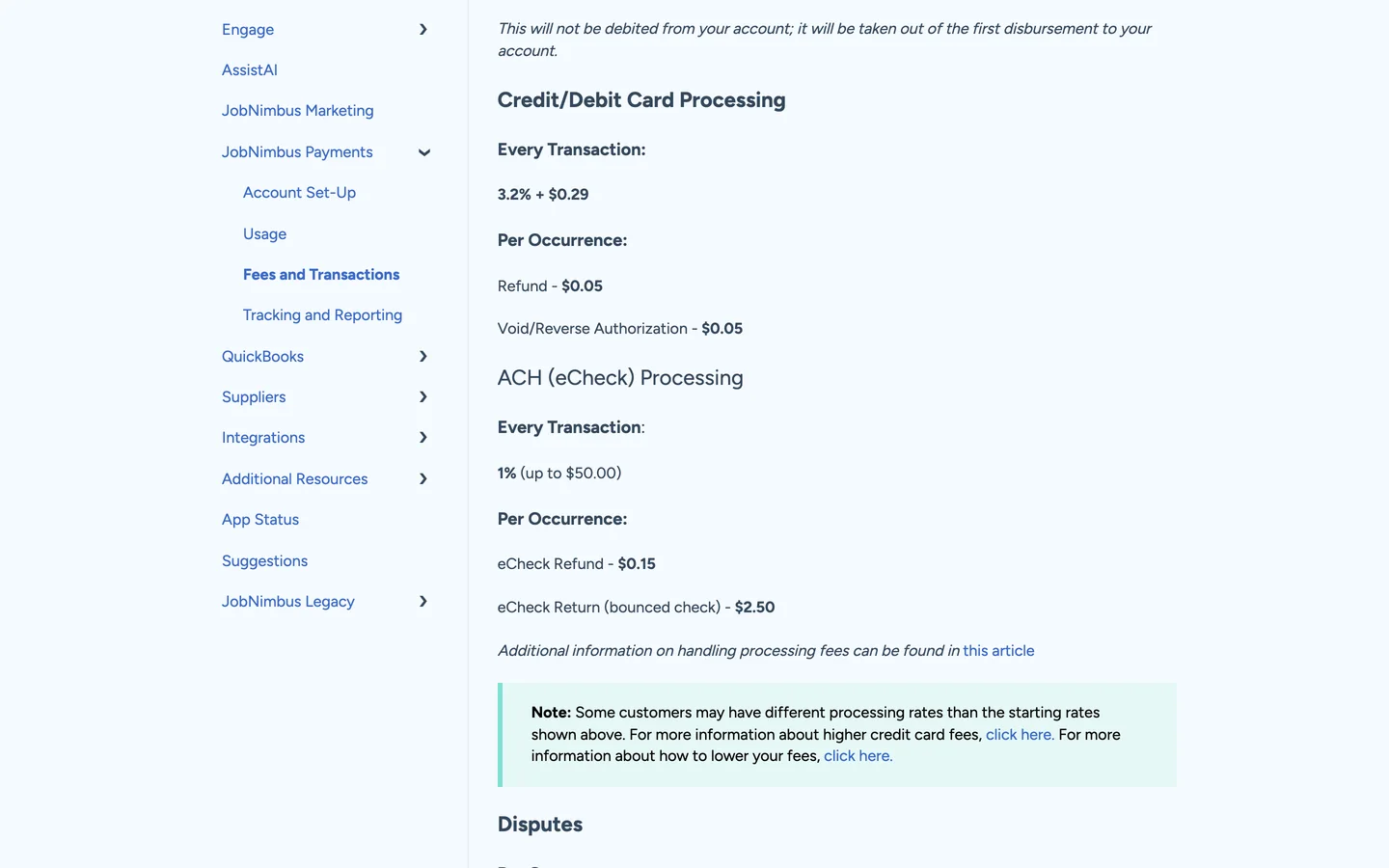 Jul 30, 2026
 Tech Stack
JobNimbus Pricing in 2026: What the Quote Does Not Cover
JobNimbus prints no figure on any of its four plans. So the only rate you can read before a sales call is the payments meter, and it is the biggest line on the bill.
Read Article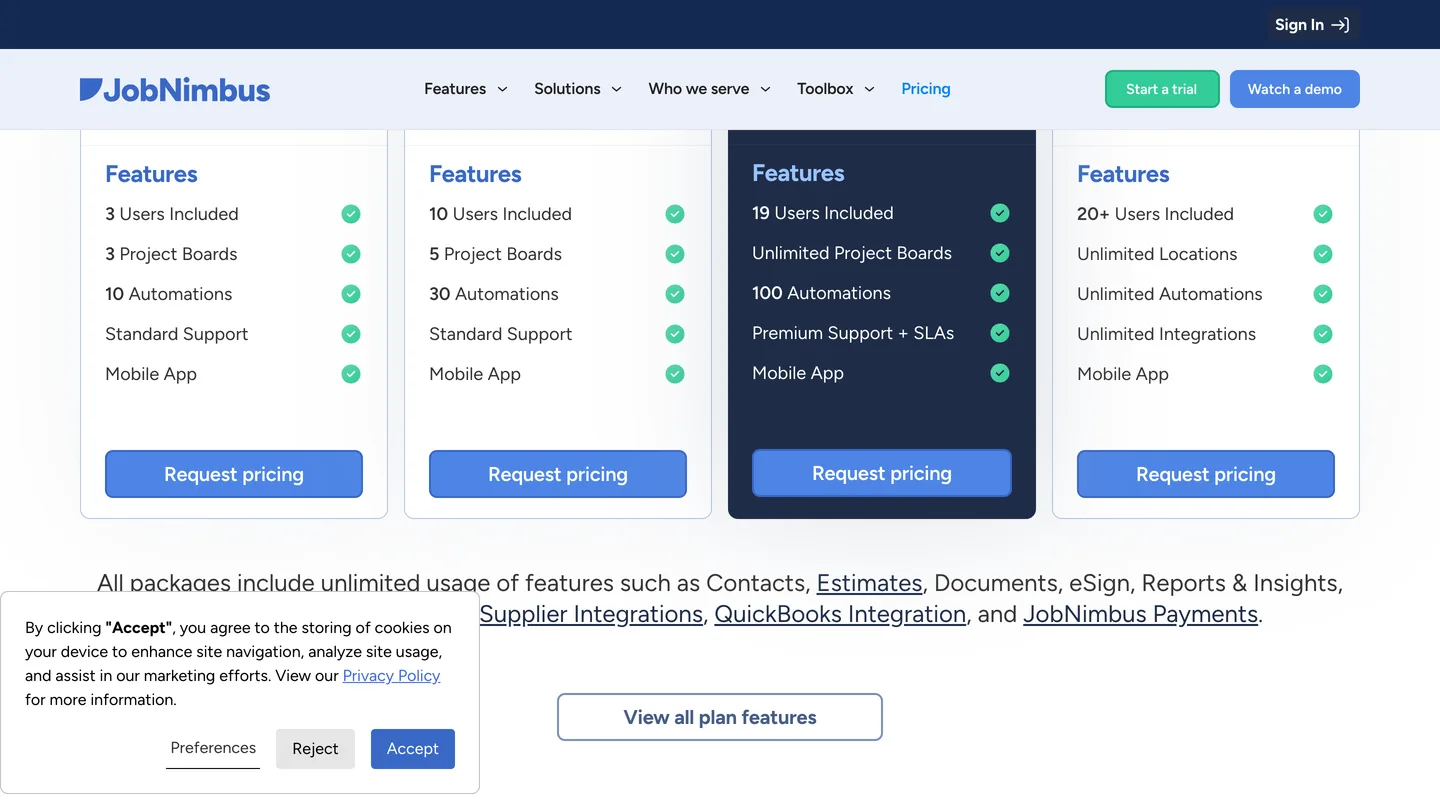 Jul 30, 2026
 Tech Stack
JobNimbus Review 2026: Pricing, Pros, Cons and Alternatives
JobNimbus rates 4.6 on Capterra and orders material straight from ABC Supply and SRS. But it publishes no price, and its supplement route carries a note.
Read Article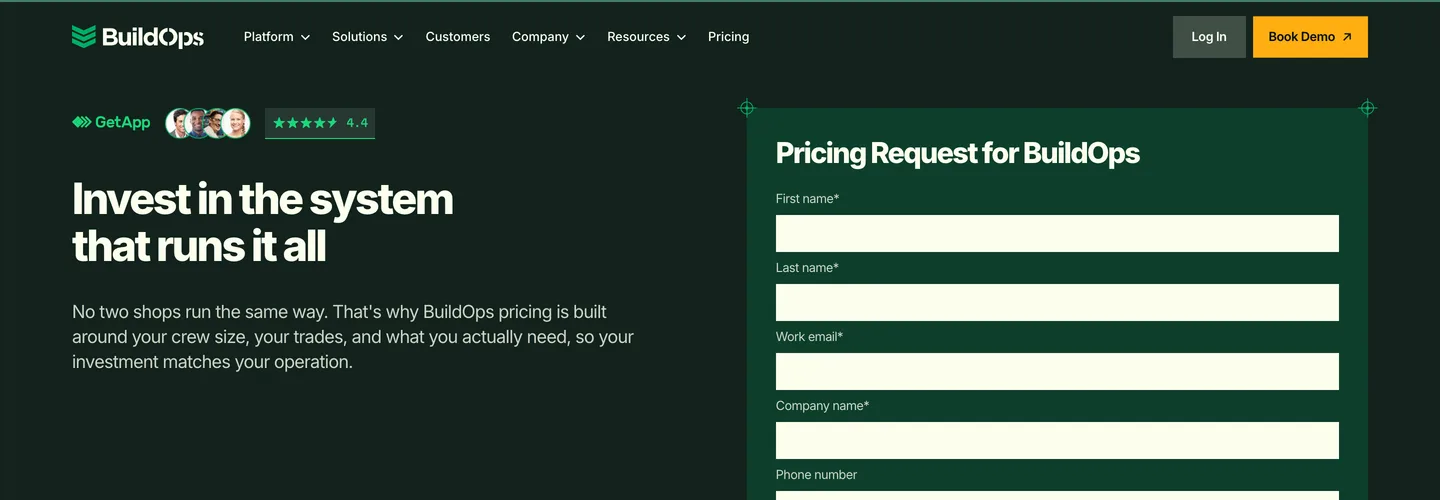 Jul 30, 2026
 Tech Stack
BuildOps Review 2026: Pricing, Contract Terms and Alternatives
BuildOps runs commercial service and projects on one platform, and publishes no pricing at all. The billing unit, the 30-day data-export window, and who it suits.
Read Article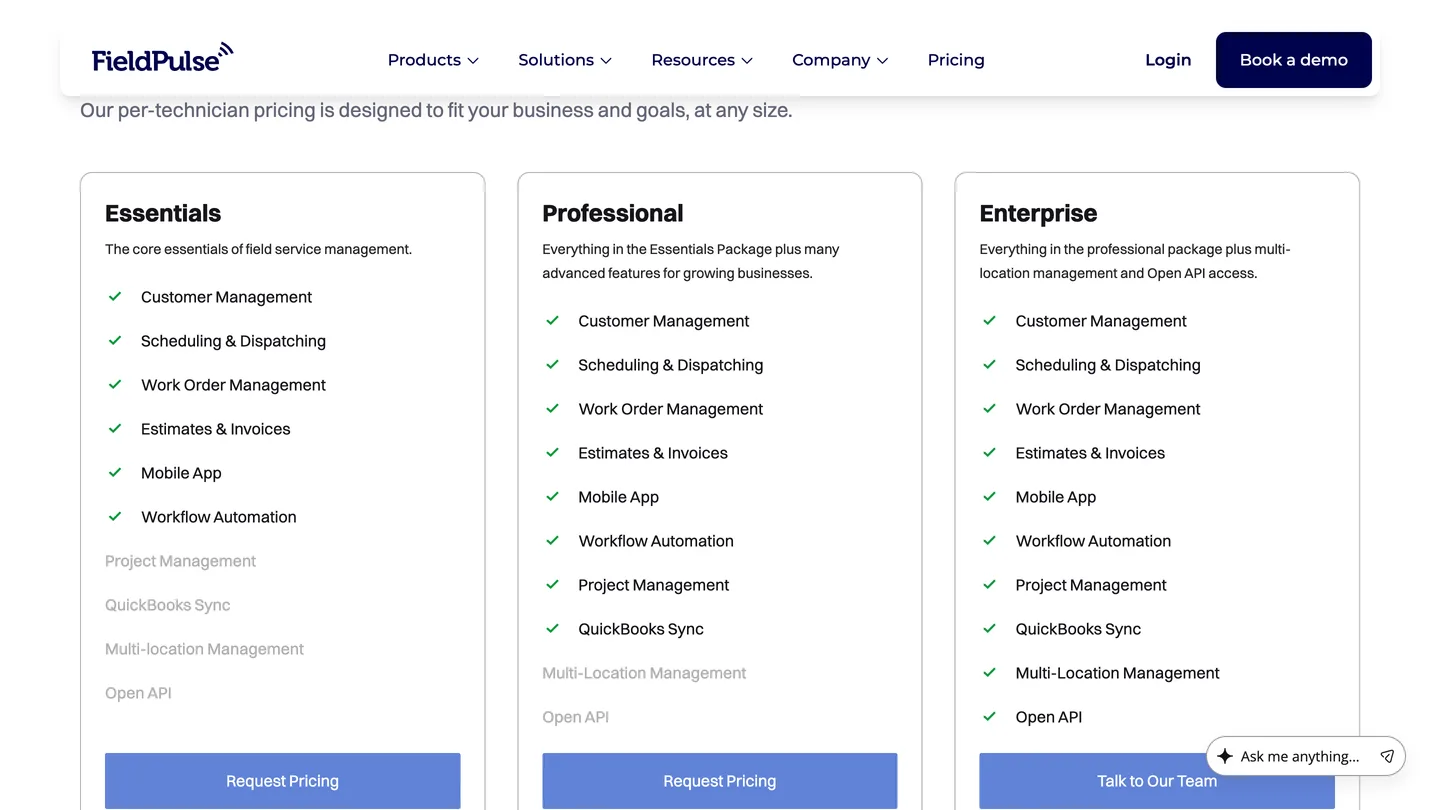 Jul 30, 2026
 Tech Stack
FieldPulse Review 2026: Pricing, Pros, Cons and Alternatives
FieldPulse rates 4.6 on Capterra and is the platform contractors name when they leave a bigger system. But it publishes no price, and the contract runs a year.
Read Article Jul 30, 2026
 Tech Stack
Service Fusion Review 2026: Pricing, Contract and Alternatives
Service Fusion bills flat per company with unlimited users, which is the best structural deal in field service software. The published plans, the contract behind the no-contract line, and the app score every other review gets wrong.
Read Article Jul 30, 2026
 Tech Stack
Knowify Review 2026: Pricing, Job Costing and Alternatives
Knowify rates 4.5 on Capterra and its weakest sub-score is features. What the $99 Core plan withholds, which way the QuickBooks sync really runs, and who should not buy it.
Read Article Jul 29, 2026
 Tech Stack
AccuLynx Review 2026: Pricing, Tier Gating, Alternatives
AccuLynx rates 4.6 across 846 reviews and now publishes an entry price. What that price omits, which tier holds the insurance workflow, and who should skip it.
Read Article Jul 29, 2026
 Tech Stack
Unitel Voice Review 2026: Pricing, Features and Alternatives
Unitel Voice rates 4.6 on Capterra and gives a one-truck shop a business number for $9.99 a month. The published plans, the cost per call, and what it won't do.
Read Article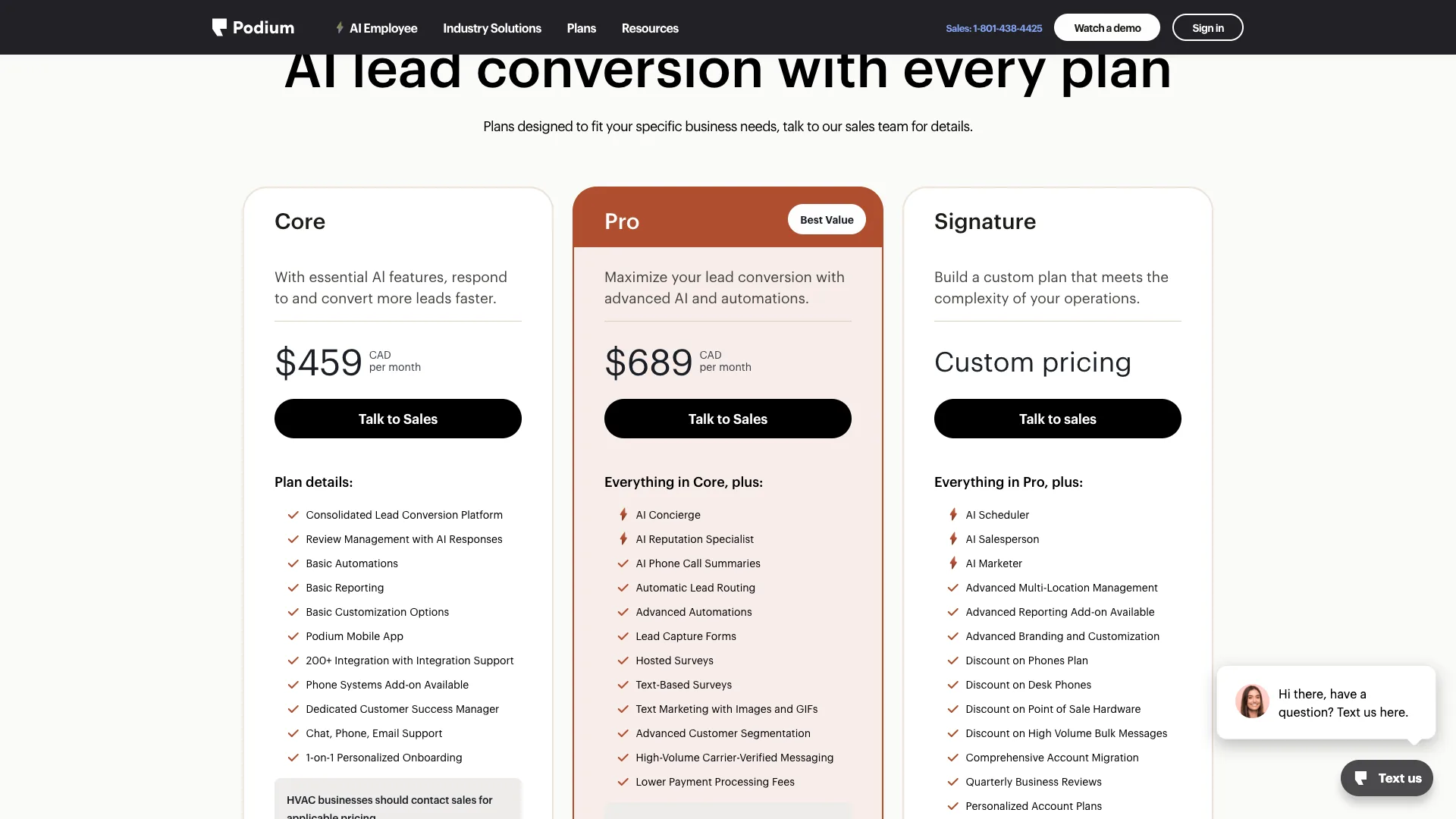 Jul 29, 2026
 Tech Stack
NiceJob vs Podium 2026: Pricing, Contracts and Review Gating
Both vendors print a price, at very different scale and in different currencies. The gap that matters is what Podium will not print: the billing unit, and whether a trade shop gets the number on the page.
Read Article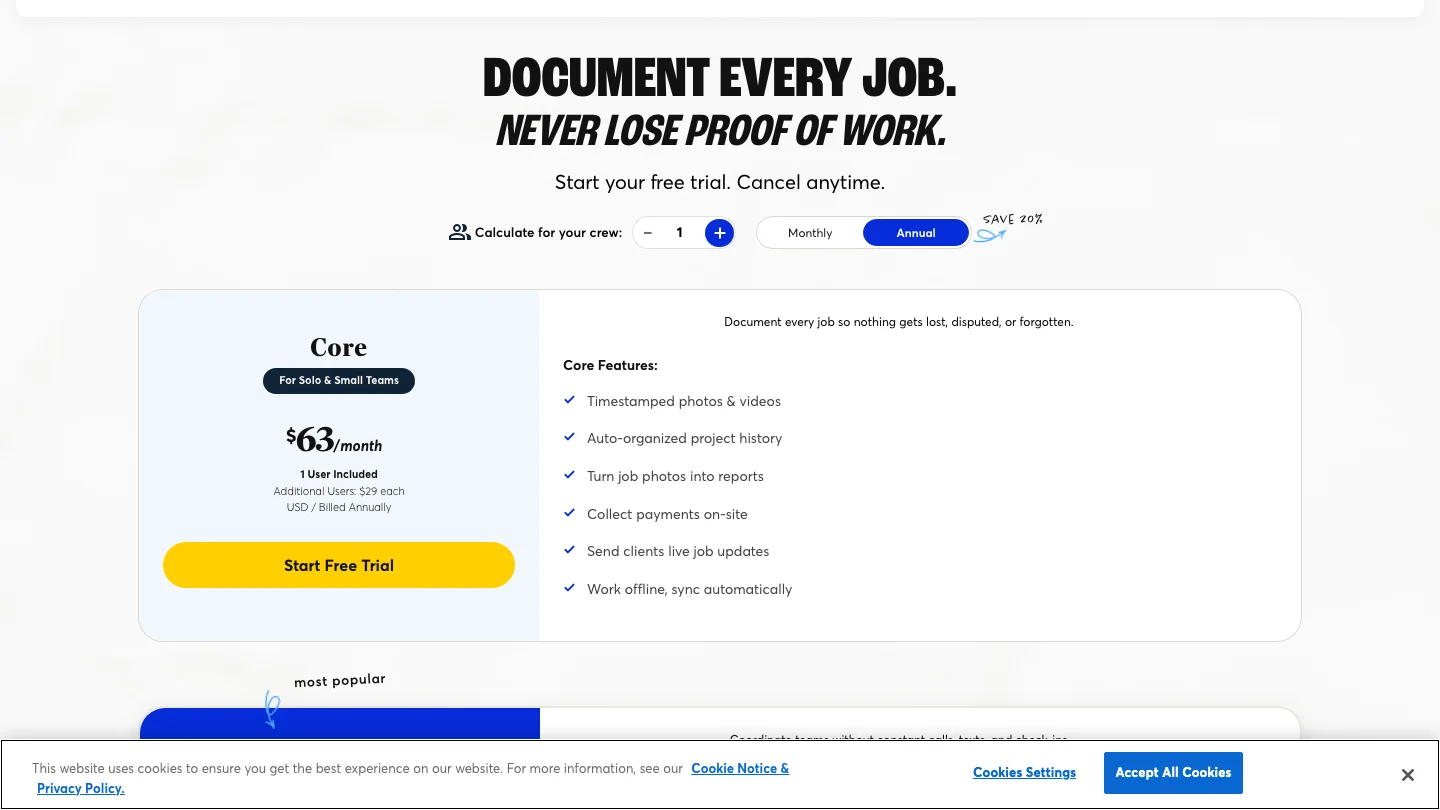 Jul 28, 2026
 Tech Stack
CompanyCam Review 2026: Pricing, Pros, Cons and Alternatives
Every page ranking for CompanyCam still quotes a per-user price the vendor no longer charges. Here are the real plans, the seat math, and who should skip it.
Read Article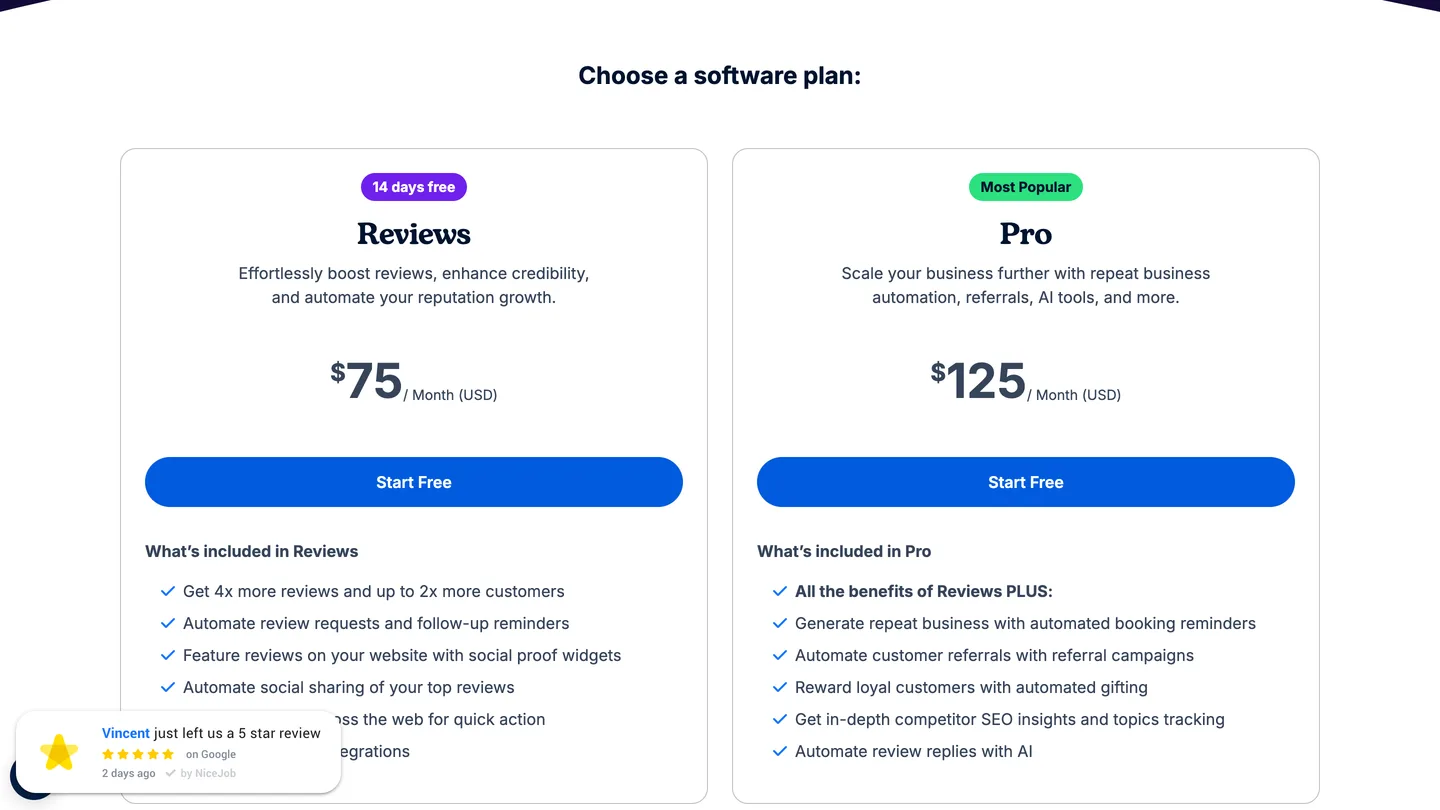 Jul 28, 2026
 Tech Stack
NiceJob Review 2026: Pricing, Pros, Cons and Alternatives
NiceJob rates 4.9 on Capterra and refuses to gate negative reviews. Real plan pricing, the active-customer threshold nobody publishes, and who should skip it.
Read Article Jul 27, 2026
 Tech Stack
Buildertrend Review 2026: Pricing, Limits and Alternatives
Buildertrend rates 4.5 across 2,486 Capterra reviews and quotes against your revenue rather than your seat count. The workflows, the export problem, the alternatives.
Read Article Jul 27, 2026
 Tech Stack
CallRail Review 2026: Pricing, Pros, Cons and Alternatives
CallRail rates 4.5 on Capterra, and its tracking numbers port out free. But the two usage rates that decide your real bill are the two it does not print.
Read Article Jul 27, 2026
 Tech Stack
Roofr Review 2026: Pricing, Pros, Cons and Alternatives
Roofr rates 4.6 on Capterra and sells $13 measurement reports against a market charging triple. But it will not import a report from anywhere else.
Read Article Jul 25, 2026
 Tech Stack
Housecall Pro Review 2026: Pricing, Pros, Cons, Alternatives
Housecall Pro has the shortest learning curve in the category and the widest review spread. Real pricing, the Instapay math, and the migration trap to plan around.
Read Article Jul 24, 2026
 Tech Stack
Jobber Review 2026: Pricing, Pros, Cons and Alternatives
Jobber rates 4.6 on Capterra with the best mobile app in the category. Real plan pricing, the feature gating that changes your entry price, and who it suits.
Read Article Jul 23, 2026
 Tech Stack
ServiceTitan Review 2026: Pricing, Pros, Cons, Alternatives
ServiceTitan rates 4.3 on Capterra but its weakest score is value for money. Real reported pricing, the 12-month contract, the exit fees, and who it suits.
Read Article Jun 3, 2026
 Tech Stack
HVAC Online Scheduling: The 43% Losing After-Hours Bookings
HVAC leads every trade on online booking at just 56.7%, which still leaves 43% of sites forcing an after-hours customer to wait for a business-hours phone call.
Read Article