Best Lead Generation Companies for Contractors in 2026
Ten contractor lead generation options ranked, split between firms that build owned lead flow and marketplaces that resell shared leads.

Search "best lead generation companies for contractors" and you get two different products sold under one label. One is a marketplace: you pay per lead, the same homeowner goes to three or four of your competitors at once, and the job goes to whoever calls back first. The other is a firm that builds lead flow you keep. Both are legitimate. But they're priced differently, they fail differently, and buying the wrong half burns a season. So this ranks ten across both and says plainly which half each one sits in.
Calls are worth more than form fills, converting to roughly 10 to 15 times the revenue of a web lead.
Companies that build lead flow you own
These five sell work, not leads. You pay a fee or a retainer, and what you keep at the end is a site, a ranking position, and a phone that nobody bills you per call for.
Form length decides more than copy does, because 68% of people will not submit a form that asks for too much personal information.
No. 1 · Best SEO-led lead generation for growth-stage trades
Hook Agency
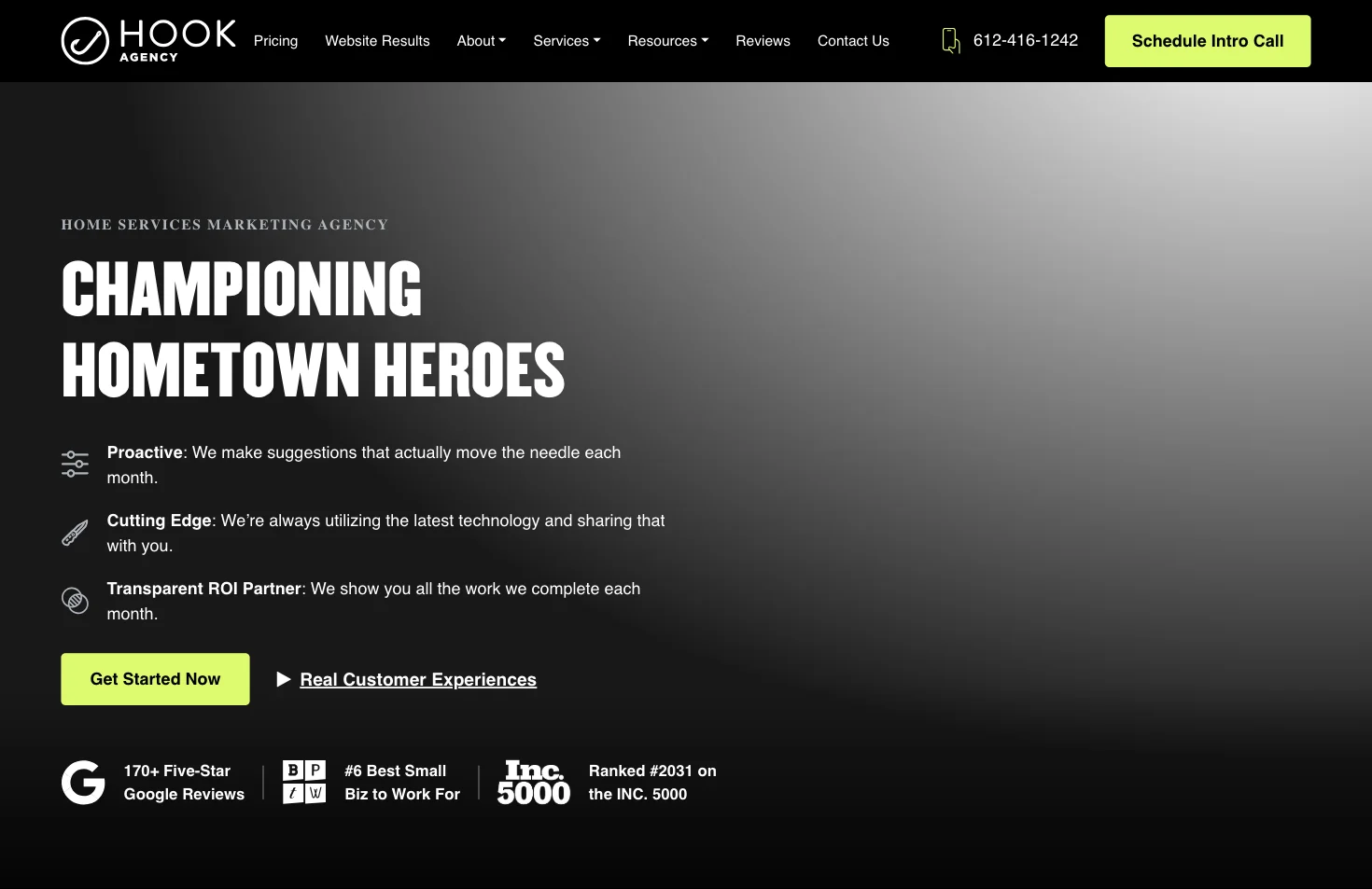
Hook Agency is unusually specific about who they'll take: established multi-crew home services companies, with roofing, HVAC, and plumbing named as the core trades. They run local SEO, Google Ads and Local Services Ads, Meta ads, and web design. And they say on their own site that they don't work with early-stage companies, which saves everybody a discovery call.
Where they're strongest: Organic ranking work in the trades, backed by a large public review count and a stated $240M+ in client revenue driven.
What to consider: The revenue floor rules out a lot of readers. Under $3M, you're shopping elsewhere.
Best for: Established roofing, HVAC, and plumbing companies that want search handled by a home-services-only team.
References outweigh anything you write about yourself, with 64% of homeowners calling them a top-three factor in choosing a contractor.
"64% of homeowners say having recommendations or references is a top-three factor in choosing a contractor."
Houzz Inc. (2025)
No. 2 · Best owned lead flow, no shared or resold leads
Fervor Studio
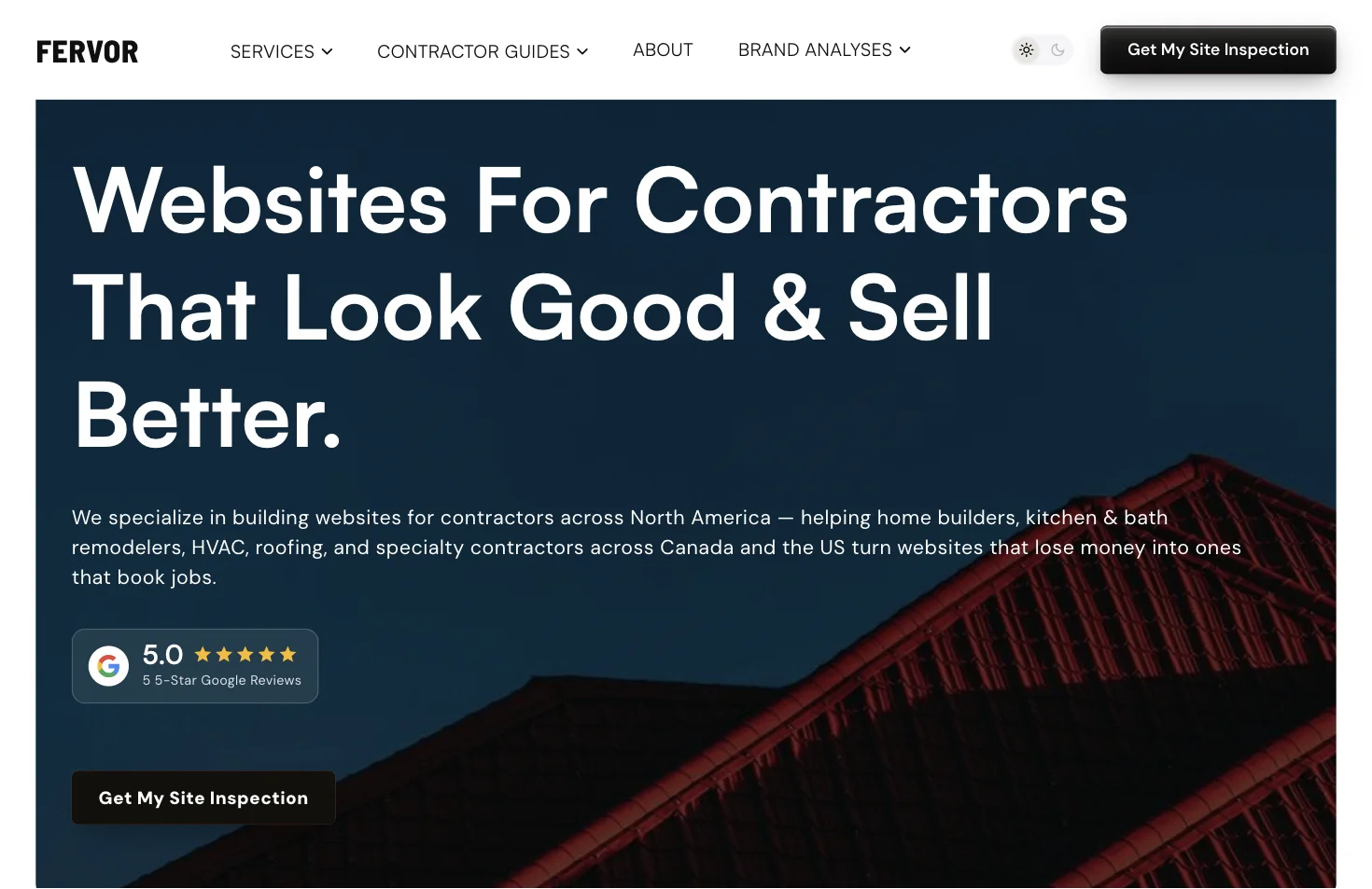
Fervor is the only company on either half of this list that publishes its own benchmark data. The Contractor CRO Index grades contractor websites against a public framework, and the Digital State of the Industry reports for roofing, HVAC, and remodeling break the failure patterns down trade by trade. Builds start from a diagnostic, and every fix traces to a number you can check yourself.
Where they're strongest: Diagnostic work for contractors who already get traffic and can't work out why the phone stays quiet. The scoring framework is public, so you can audit the recommendation instead of trusting it.
What to consider: Fervor sells no leads, so there's no volume in week one. Owned lead flow takes weeks to build. If your calendar is empty this Friday, a marketplace fills it faster than any agency can.
Best for: Contractors who want the site to stop leaking before they buy more traffic.
Deep dive: Booked by Design™
Ratings act as a filter before they act as persuasion, and 68% of consumers will only consider a business rated 4 stars or better.
"68% of consumers will only use a business with a rating of 4 or more stars."
BrightLocal (2026)
No. 3 · Best for multi-location contractors
Scorpion

Scorpion runs SEO, paid search, and its own ad-management software across electrical, HVAC, pest control, plumbing, landscaping, and roofing. The scale is the point. Enough account managers and reporting layers to keep a twelve-location contractor coordinated, though your account does live inside a machine that also serves legal and healthcare clients.
Best for: Multi-location brands that need one vendor covering every market at once.
A page repeating one goal beats a page with competing goals by roughly 20 to 30%.
"Pages with a single repeated CTA goal outperform pages with competing CTAs by 20 to 30% on average."
Apexure (2026)
No. 4 · Best attribution for ServiceTitan shops
RYNO Strategic Solutions
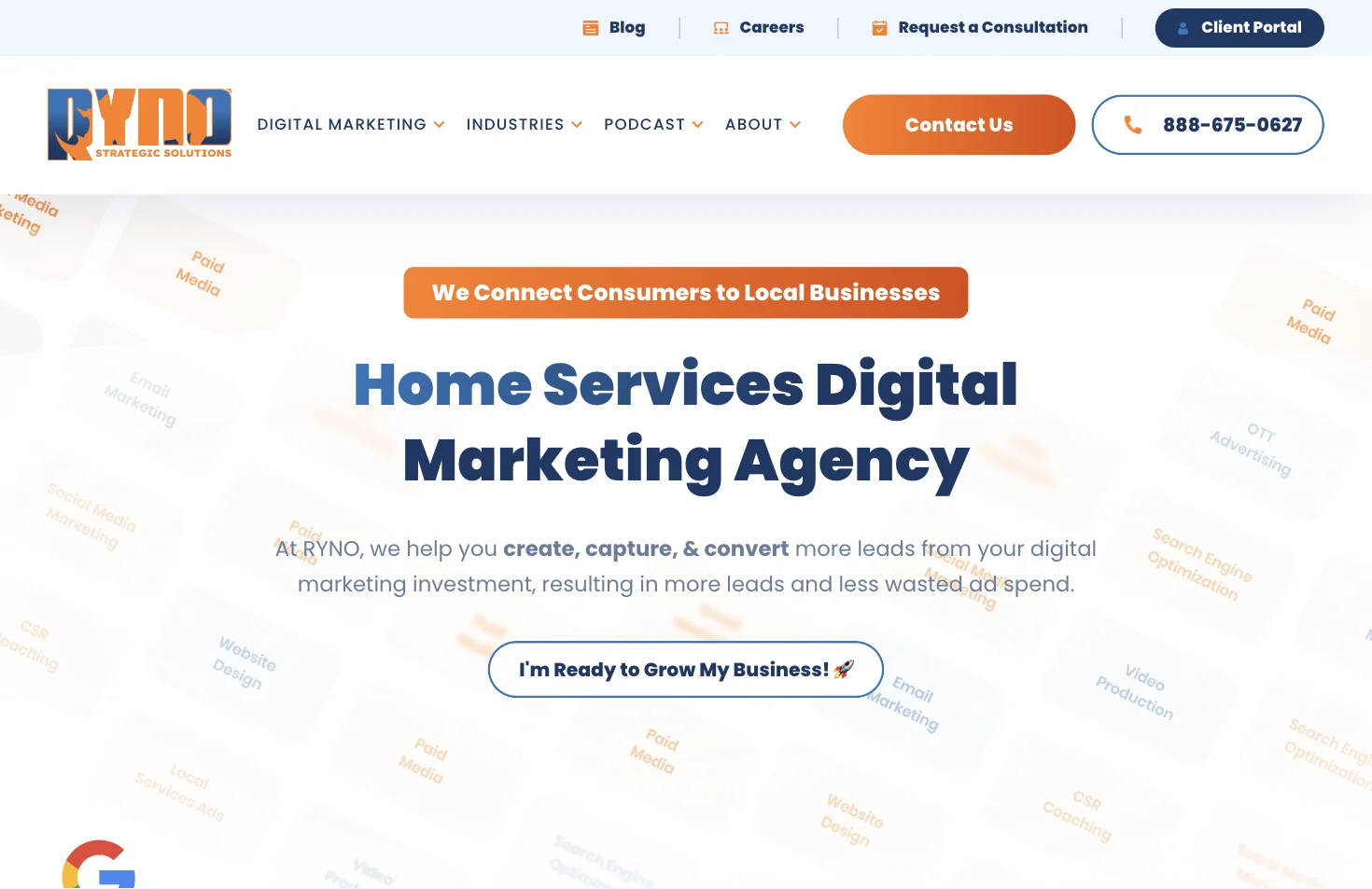
RYNO covers HVAC, plumbing, electrical, roofing, garage doors, restoration, solar, and pest control. Their analytics platform wires ServiceTitan into dozens of ad platforms, and they sell CSR coaching alongside the media buying, which is rarer than it sounds. Plenty of contractors lose more revenue at the phone than on the website. The catch is that the attribution advantage mostly assumes you're already on a compatible field-service platform.
Best for: Mid-size contractors running ServiceTitan who want media and call handling under one roof. RYNO Strategic Solutions
Load time is the cheapest fix on this list, and 53% of mobile visitors leave a site that takes more than 3 seconds to appear.
"53% of mobile users abandon sites that take longer than 3 seconds to load."
Google and SOASTA (2017)
No. 5 · Best for dealer and franchise networks
Mediagistic
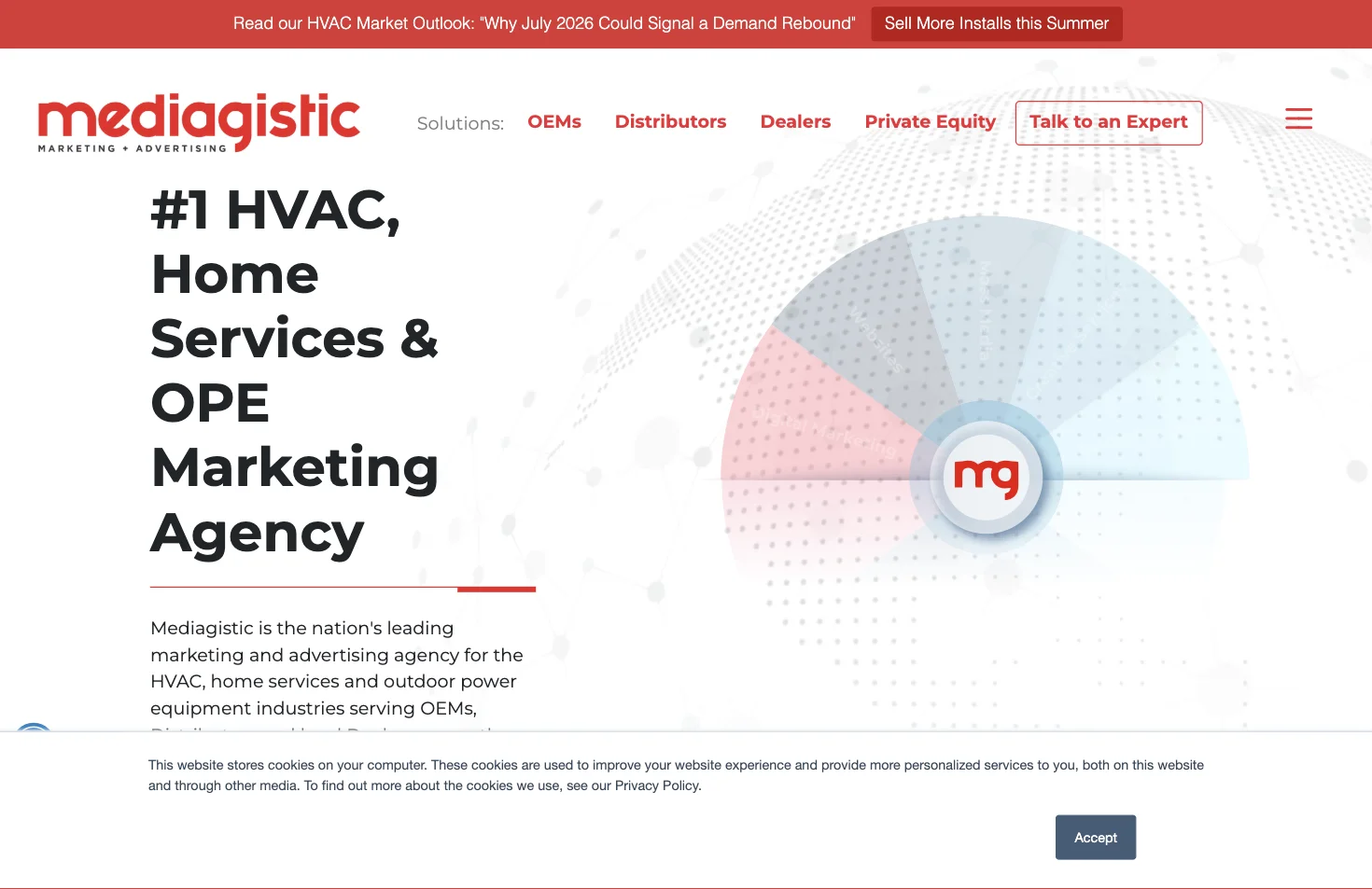
Mediagistic works a layer nobody else here touches: manufacturers, distributors, and the local dealers underneath them, with TV and radio buying alongside the digital work. An independent two-truck shop is not the target customer.
Best for: Franchise groups and dealer networks coordinating local marketing at scale.
Nobody reads a service page start to finish. About 79% of users scan it, and only 16% read word by word.
"79% of test users always scanned any new page they came across; only 16% read word-by-word."
Nielsen Norman Group (2024)
What both halves have in common
A purchased lead doesn't arrive as a booked job. It arrives as a homeowner holding your number and four others, about to look all five of you up. Houzz found that happens even after a personal referral:
"Even among homeowners who received a word-of-mouth referral, over 60% do due diligence online before deciding to contact the pro."
Houzz Inc. (2025), 2025 U.S. Houzz State of Home Professionals
That same Houzz study puts over 70% of homeowners on record saying a strong online presence weighs heavily in who they hire. So whichever half you buy from, your website is the last thing standing between the click and the call. Fervor Studio scored 380 contractor websites in roofing, remodeling, and HVAC against a published framework. The trade averages came back at 67.82, 65.67, and 65.32. On American school bands, all three are a D.
Answering matters as much as ranking, and 18% of home services calls go unanswered on weekdays against 41% at weekends.
"18% of home services calls go unanswered on weekdays, while 41% go unanswered on weekends."
Invoca (2025)
Marketplaces that resell shared leads
These five sell contact details. The model barely varies: the platform buys search traffic, captures a homeowner's project request, and resells it to contractors. Modernize and Porch run versions of the same thing, and CraftJack's site now redirects straight to Angi's pro signup. None of it is a scam. But you're renting demand, and the rent climbs every time a competitor bids.
No. 6 · Biggest volume, most competition
Angi Leads (formerly HomeAdvisor)
Angi and HomeAdvisor now sit under one roof as Angi Leads, and the combined marketplace is the largest pay-per-lead operation in home services by a wide margin. One homeowner request goes to several contractors at once, which is why callback speed decides the job more often than price does.
Where they're strongest: Raw volume and instant availability. Nothing else puts a homeowner in front of a brand-new contractor this fast, across this many trades and metros.
What to consider: Annual contracts, cancellation terms, and per-lead costs that climb in competitive metros. Angi also settled a $7.2M FTC case over claims about lead quality, which is worth reading before you sign anything.
Best for: Contractors with idle crew capacity and somebody who can call back inside five minutes.
No. 7 · Best budget control
Thumbtack
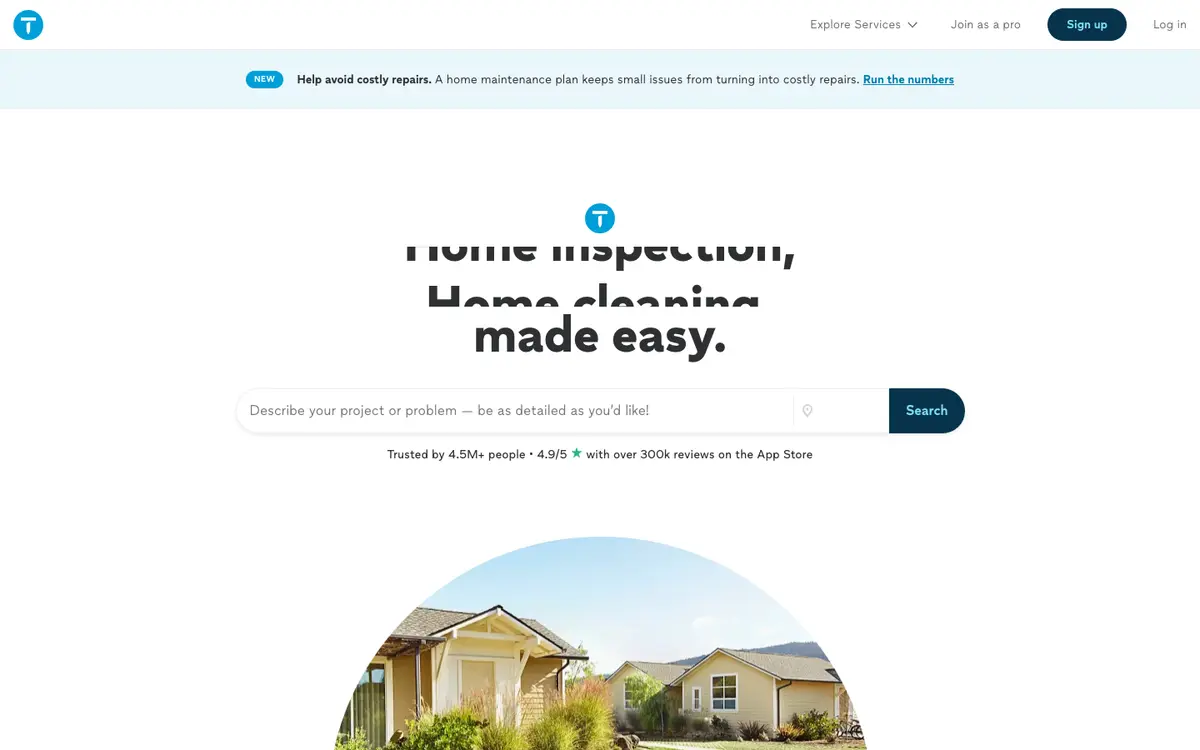
Thumbtack lets you set a weekly ceiling and charges when a homeowner contacts you or you express interest in their project. Each request is shown to a handful of matching pros, so your profile, your review count, and your reply speed do most of the selling. Prices float with local competition and estimated job value, which means the same trade costs differently two towns over.
Best for: Smaller crews testing paid lead flow without an annual commitment.
No. 8 · Most honest about lead sharing
Networx
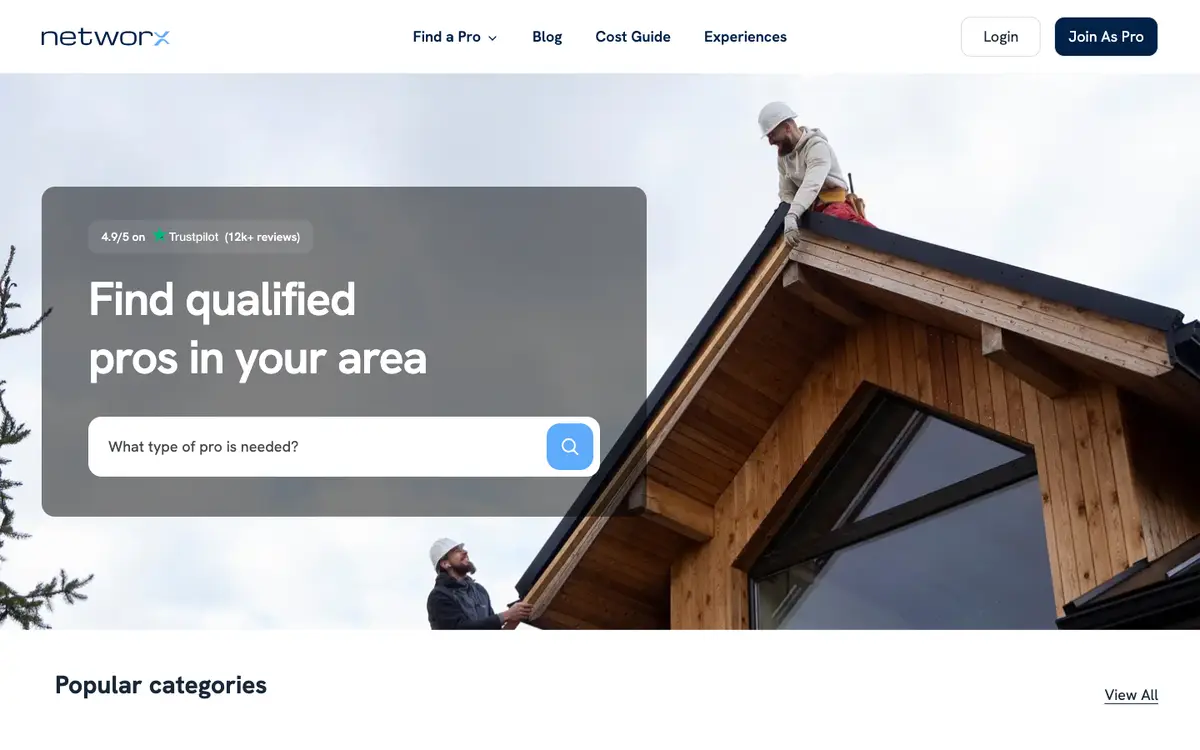
Networx publishes the part most marketplaces bury. Their own help centre states a pay-per-lead request goes to up to four contractors total, and they sell a separate exclusive tier on a prepaid credit system across roughly 154 service categories. You set your own delivery volume too. Exclusive costs more per lead, and prepaid means money leaves before any job arrives.
Best for: Contractors who'll buy leads but want the sharing rules written down first.
No. 9 · Broadest category coverage
Bark
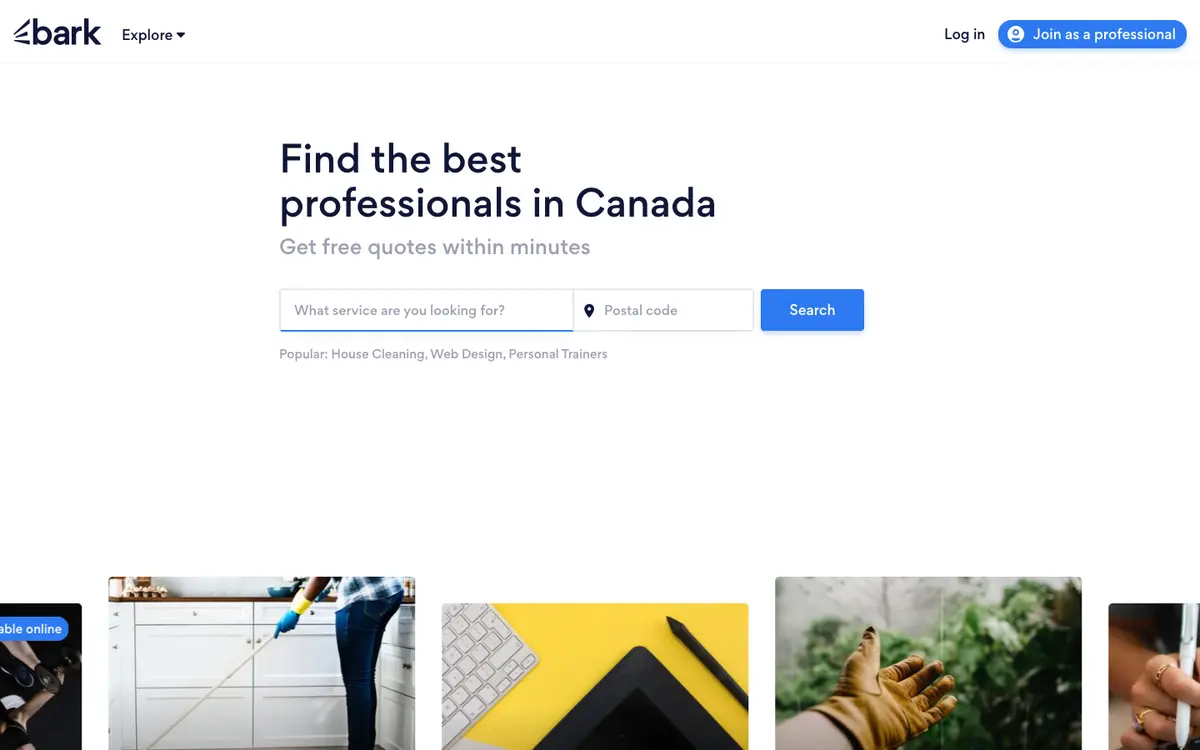
On Bark you buy credits, then spend credits to reveal a homeowner's contact details. Requests go out to several pros in the area, so you're buying the chance to quote. Bark takes no cut of what you eventually earn, which contractors burned by percentage models tend to appreciate. Credits get spent whether or not the homeowner ever replies.
Best for: Specialty trades that don't have a dedicated marketplace of their own.
No. 10 · Best exclusive-call model for restoration
33 Mile Radius
33 Mile Radius sells live phone calls instead of lead lists. They buy the traffic, the homeowner dials a tracking number, and the call routes to one contractor. Their site states each call goes exclusively to a single partner, with no setup fee, no monthly fee, and no long-term contract.
Where they're strongest: Exclusivity plus intent. Somebody already on the phone beats a form sitting in four inboxes, and water damage is their home ground.
What to consider: Per-call pricing runs above shared-lead pricing, and coverage depends entirely on how much traffic they're buying in your market.
Best for: Restoration and emergency trades that answer the phone at 2am.
"Phone calls convert to 10-15x more revenue than web leads for home services businesses."
BIA/Kelsey and Forrester (2025)
"68% of users would not submit a form if it required too much personal information."
Baymard Institute (2024)
Why bought leads convert worse than the price suggests
Homeowners told Houzz in 2025 that their single biggest struggle in hiring a pro is finding someone they trust, at 48%, ahead of getting clear proposals at 34%. A shared lead makes that worse by definition, because four companies land at once and the homeowner sorts them the only way they can. By looking at the websites.
Which is where the numbers stop flattering the trades. Across the 380 sites Fervor scored, 95.8% carried a serious WCAG accessibility violation somewhere in the pages we captured and 61.3% carried a critical one. So a real share of the homeowners you just paid for can't comfortably use the page they land on.
The forms are worse. Among roofing brands where we could capture a form, 49.5% ship one with 11 or more fields, and the median asks 10. Remodeling sits at 35.8%, HVAC at 29.9%. For scale, Baymard Institute's 2024 research puts the average e-commerce checkout at 11.3 fields, with a fully optimized one around 8. A roofing intake form is now about as long as a checkout, except nobody has a cart waiting at the end of it.
Baymard also found 68% of users wouldn't submit a form asking for too much personal information. And going back much further, Imaginary Landscape pulled four optional fields off a contact form in 2008 and watched submissions climb 160%:
"Removing four optional contact-form fields produced a 160% increase in submitted forms and a 120% lift in conversion rate."
Imaginary Landscape (2008)
Now put that on a phone. Tinyform's 2025 research found mobile form abandonment runs 27% higher than desktop, and Google and SOASTA established in 2017 that 53% of mobile visits get abandoned past three seconds of load time. Your bought lead is arriving on a phone, mid-workday, from somebody with three other tabs open. That's the honest reason so many contractors decide marketplace leads "don't work." The source was fine. The destination wasn't. And fixing a destination is a different purchase from buying more leads, which is what the home services marketing guide works through before it recommends spending anything.
How to pick between the two halves
If your crews are idle this month, buy leads. Cash flow beats strategy every time, and a marketplace is the fastest legal way to put a homeowner in front of a truck. Just answer inside five minutes.
If your crews are busy and your margins are thin, the per-lead toll is the problem and owned lead flow is the fix. And if you're doing both already, run the arithmetic before you renew anything: last month's lead spend divided by booked jobs, then ask whether a shorter form and a faster page would have moved that number more cheaply than another thousand dollars of leads.
Methodology
How this list was built
The two halves were ranked separately and then interleaved, because scoring an SEO retainer against a $60 shared lead on one scale produces nonsense. Agencies were judged on trade specialization, published methodology, and whether you keep the asset when the contract ends. Marketplaces were judged on how clearly they disclose lead sharing, contract terms, and pricing.
Every marketplace model description was verified against that company's own site or help centre rather than third-party summaries. Per-lead prices were left out except where a platform publishes them, since they float by trade and metro. No employee counts, client totals, or results appear unless the company publishes them. Site-quality figures come from Fervor's scoring of 380 contractor websites, published on the statistics page, using all-pages accessibility rates rather than homepage-only.
Excluded: field-service software and CRMs (they route leads, they don't generate them), review platforms, and directories with no paid lead product.
Acknowledged: Fervor Studio, which published this, is on this list at No. 2, written up against the same criteria as everyone else, limitation included. Fervor sells no leads and produces no volume in week one, which is a real disadvantage against every marketplace below it. Ranks reflect fit for a situation, not a universal quality order.
Find out what your leads are landing on
Before you renew a lead contract or sign an agency, it's worth knowing how your own site scores against the framework used on 380 contractor websites. A Site Inspection returns a specific list of the structural gaps costing you booked jobs, scored the same way the public Contractor CRO Index scores everybody else.
Get My Site Inspection →Questions to ask before hiring a contractor lead generation agency
What should a contractor company look for in a lead generation agency?
Evidence that the agency understands how homeowners actually choose a contractor, not just the marketing discipline. Relevant experience, transparent deliverables, measurable KPIs, credible examples and a grasp of calls, estimates and booked jobs matter more than vocabulary.
How much should a contractor company pay for lead generation?
Pricing swings widely on market competition, scope, number of locations and whether the agency is doing strategy, execution or both. Compare the scope and the expected business outcome rather than the monthly fee on its own.
Is the cheapest lead generation agency a bad choice?
Not automatically, but price only means something next to scope, specialisation and expected return. Two agencies both selling "lead generation" can be doing substantially different work, which makes a price-only comparison misleading.
Why is my contractor website getting traffic but not enough calls?
Traffic does not guarantee leads. Visitors run into weak calls to action, poor mobile usability, unclear service information, thin trust signals, confusing forms, slow pages or a mismatch between the search intent and the landing page. At that point, buying more traffic just sends more people into the same problem.
What should a contractor company do if it already ranks well but is not getting enough leads?
Work out first whether the problem is traffic quality or conversion. If relevant homeowners are already arriving, conversion work will usually return more than additional SEO or ad spend, because the visitors you are paying for are already there.
Should contractors invest in SEO or CRO first?
It depends entirely on where the bottleneck sits. A contractor with little qualified traffic needs acquisition work first. A contractor already pulling meaningful search traffic but booking few jobs should investigate conversion before buying more traffic.
What questions should I ask a contractor marketing agency before hiring it?
Ask what it will actually change, which metrics it will be accountable for, how reporting works, whether the work is outsourced, who owns the website and marketing assets, what happens if performance stalls, and how it tells a traffic problem apart from a conversion problem.
How do I know whether an SEO agency is actually generating business results?
Rankings and traffic have to connect to commercial outcomes. Track qualified calls, estimate requests, booked appointments and, where you can, revenue, rather than judging the work on keyword positions alone.
Fervor's full cross-trade dataset lives in the CRO Index statistics.
 Sep 28, 2026
 Agency Selection
Best Concrete Contractor CRO Agencies in 2026
A concrete site quietly serves two different buyers: a homeowner picking a patio pattern and a GC scoping a foundation pour. Here are 5 CRO agencies scored on the split.
Read Article Sep 27, 2026
 Agency Selection
Best Deck Builder CRO Agencies in 2026
Deck projects concentrate into a hard spring rush most builder sites are not built to catch. Here are 5 CRO agencies scored on whether they solve for it.
Read Article Sep 27, 2026
 Agency Selection
Best Landscaping CRO Agencies in 2026
A landscaping site has to sell a five-figure hardscape build and a renewing maintenance contract at the same time. Here are 5 CRO agencies scored on the split.
Read Article