JobTread Review 2026: Pricing, Pros, Cons, Alternatives
JobTread starts at $199/month. What each tier gates, the 7 limitations reviewers name, and 5 alternatives with published prices.
Page at a glance
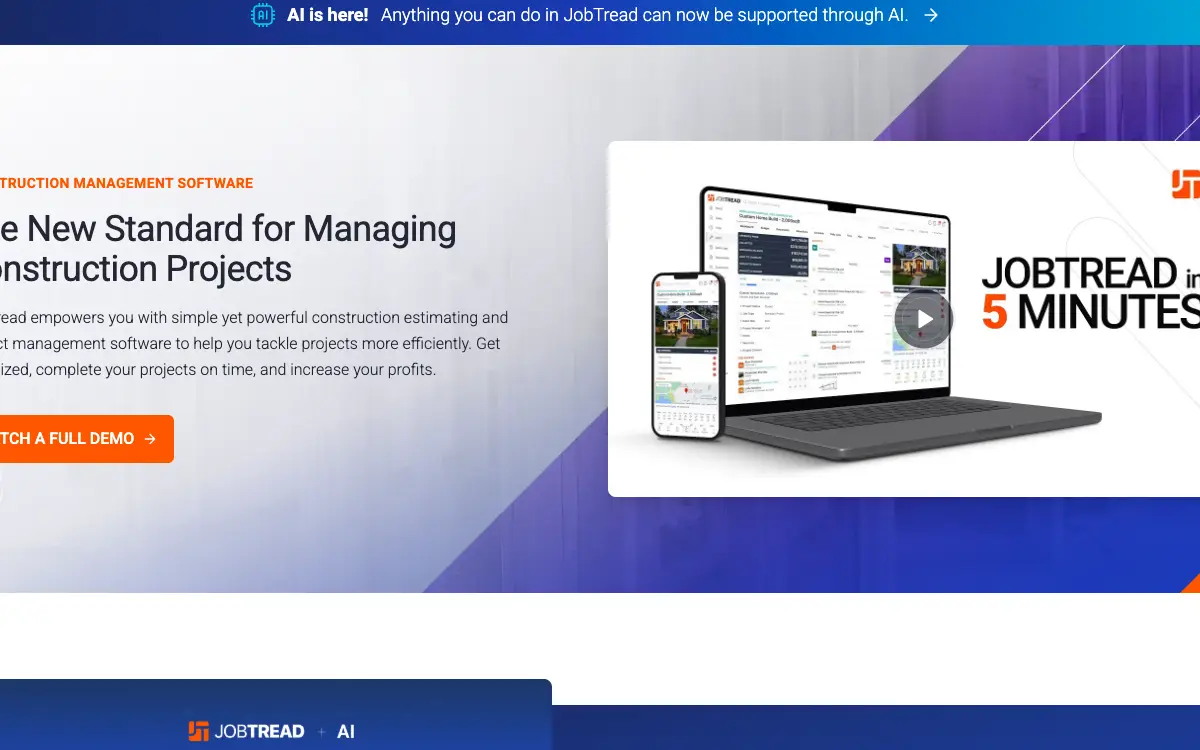
JobTread is Flat-feature construction PM for 2 to 20 office-and-field users running project-based residential and light commercial work, priced per account plus per internal seat instead of per feature tier. It starts at $199/month per account. One $199/month account fee that includes a single internal user, then a descending per-internal-user rate ($20 each for users 2-10, dropping to $5 each past 30). Vendor, subcontractor and customer portal users are unlimited and free, as are field crew who only upload photos, log daily notes, view the schedule and check off tasks. Every feature is included on every account, so cost scales on headcount only. It fits Home builders and remodelers running 3 to 15 internal users on project-based residential work, where estimating, budgets, selections and a customer portal all have to live in one system It's the wrong buy for A solo operator or two-person shop doing service calls rather than projects, because The $199/month account fee lands before you add a single extra seat, so a one-person shop pays $199/month for a system built around multi-week project budgets, selections and draw billing. And service dispatch, recurring maintenance and a technician-per-day schedule aren't what JobTread is shaped around. Alternatives that publish their prices are Contractor Foreman from $49/month, Knowify from $99/month, CompanyCam from $79/month. Ten priced tiers, seven evidenced gaps and five alternatives, three of which publish a figure.
Whether JobTread is worth it
JobTread earns its money with Home builders and remodelers running 3 to 15 internal users on project-based residential work, where estimating, budgets, selections and a customer portal all have to live in one system If that's you, it does the job. The sections below are the parts worth checking before you sign. But the fit is narrower than the marketing suggests, and the price isn't the whole cost.
It starts at $199/month. And pricing was verified on 7 August 2026, so you can check every figure below in a browser tab.
| Pricing model | Published tiers |
|---|---|
| Entry price | $199/month |
| Users | One $199/month account fee that includes a single internal user, then a descending per-int |
| Ownership | Independent |
| Best fit | Home builders and remodelers running 3 to 15 internal users on project-based residential work, where estimating, budgets, selections and a customer portal all have to live in one system |
| Accounting sync | QuickBooks Online (two-way), QuickBooks Desktop (none) |
What works
- Every feature ships on every account; the only variable is internal headcount
- Subs, vendors, clients and view-only field crew do not consume a paid seat
- There is no native app — JobTread is a progressive web app you save to the home screen
- QuickBooks Online is a documented two-way sync, but only four object types flow both directions
- Implementation is free and staffed, and it is the stated reason there is no trial
What does not
- There is no free trial at all — the only way to test JobTread is to buy it and use the 30-day refund window
- Commercial workflow gaps: no RFI module and no sub payment, per a two-year owner
- Catalog edits do not cascade into cost groups, so a price change becomes manual re-entry
- The CRM is thin, and the vendor's own users route around it with Zapier
- The Terms contain no clause returning or exporting your data when the account ends
JobTread is Flat-feature construction PM for 2 to 20 office-and-field users running project-based residential and light commercial work, priced per account plus per internal seat instead of per feature tier. It sells to Cross-trade and Custom home building and Remodeling contractors, and the shape of the product follows from that: JobTread does not tier features. The pricing page states "Includes every feature - no hidden fees" and "All features included." Cost is a flat $199/month account fee plus a descending per-internal-user rate, and the rate falls as you grow: $20 per seat for users 2-10, $15 for 11-20, $10 for 21-30, $5 past 30. A 10-user shop pays $199 + (9 x $20) = $379/month monthly, or $199-equivalent-plus-$16-seats on annual. And that's the opposite of the category norm, where estimating, job costing or the client portal each sit behind a higher tier.
JobTread: right buyer, wrong buyer
It fits Home builders and remodelers running 3 to 15 internal users on project-based residential work, where estimating, budgets, selections and a customer portal all have to live in one system That's the half most reviews print. Here's the other half, which is the one worth your time.
Don't buy it if you're A solo operator or two-person shop doing service calls rather than projects. The $199/month account fee lands before you add a single extra seat, so a one-person shop pays $199/month for a system built around multi-week project budgets, selections and draw billing. And service dispatch, recurring maintenance and a technician-per-day schedule aren't what JobTread is shaped around. Look at Housecall Pro instead.
Don't buy it if you're A general contractor whose revenue is mostly competitively-bid commercial work. Reviewers running commercial work name RFIs and paying subs as absent. And bid-build commercial runs on RFIs, submittals and subcontractor AP, so a system missing those forces the highest-liability paperwork back into email. Look at Knowify instead.
Don't buy it if you're A buyer who needs to trial software before paying for it, or who has to run a paid pilot past a partner or lender. JobTread doesn't offer a free trial at all. So evaluation means a paid subscription and a 30-day refund clock, which is a non-starter for anyone whose procurement requires an unpaid pilot. Look at Buildertrend instead.
Don't buy it if you're A shop that has standardised on QuickBooks Desktop. The published accounting integration is QuickBooks Online only, with a documented two-way sync. And a reviewer explicitly flags integration with QBD as a source of complication. So desktop shops end up either migrating their books or hand-keying. Look at Knowify instead.
Pricing: what JobTread publishes and what it doesn't
JobTread prints its numbers on its own site. Good. That means you can price your real configuration tonight instead of waiting on a rep.
| Tier | Price | Billing unit | What it unlocks |
|---|---|---|---|
| Base subscription (monthly) — includes 1 internal user | $199/month | per account | Nothing beyond the tier below |
| Additional internal users 2-10 (monthly) | $20/month | per user | Nothing beyond the tier below |
| Additional internal users 2-10 (annual) | $16/month | per user | Nothing beyond the tier below |
| Additional internal users 11-20 (monthly) | $15/month | per user | Nothing beyond the tier below |
| Additional internal users 11-20 (annual) | $12/month | per user | Nothing beyond the tier below |
| Additional internal users 21-30 (monthly) | $10/month | per user | Nothing beyond the tier below |
| Additional internal users 21-30 (annual) | $8/month | per user | Nothing beyond the tier below |
| Additional internal users 31+ (monthly) | $5/month | per user | Nothing beyond the tier below |
| Additional internal users 31+ (annual) | $4/month | per user | Nothing beyond the tier below |
| Vendor, subcontractor and customer portal users | $0/month | per user | Nothing beyond the tier below |
One $199/month account fee that includes a single internal user, then a descending per-internal-user rate ($20 each for users 2-10, dropping to $5 each past 30). Vendor, subcontractor and customer portal users are unlimited and free, as are field crew who only upload photos, log daily notes, view the schedule and check off tasks. Every feature is included on every account, so cost scales on headcount only.
There is a discount for paying annually up front: "Save 20% on an annual subscription" — applied to both the base fee and the per-user rate (the $20 monthly seat becomes $16 annual). Third-party directory Software Advice lists the resulting figure as "From $159-$199", consistent with 20% off $199. And an annual prepay discount tells you an annual commitment exists, which is worth knowing before anyone mentions a term length out loud.
Everything that isn't the JobTread subscription
Payment processing. Card payments taken through JobTread's Stripe integration cost "2.95% + 30 cents per successful credit or debit card charge". ACH is "$1 plus 1% ($15 max) per transaction". JobTread states the integration itself carries no up-front cost: "The Stripe integration is included in your JobTread subscription and does not cost you or your company any fees up front."
Implementation and onboarding. "No contract & no setup fees" with "Free implementation, training, and support." Every account is assigned a Customer Success Manager at no stated additional charge.
Minimum term. No minimum multi-year term. Monthly or annual subscription terms are offered; the Terms define a "Subscription Term" set in the Order Form and state "No contract & no setup fees" on the pricing page. The practical lock-in is the annual term itself, because fees paid are non-refundable once the 30-day window closes.
Getting out. No early-termination penalty fee, but no proration either: "Customer can cancel its Subscription any time by emailing support@JobTread.com; however, if Customer cancels its Subscription during the Subscription Term, Customer will not be issued a refund". The Terms add: "Payment obligations are non-cancelable, and Subscription Fees paid are non-refundable unless otherwise expressly provided for herein." The pricing page's "30-day money back guarantee" is the express carve-out.
Auto-renewal. "Customer agrees that its Subscription will automatically renew after the initial Subscription Term (the "Renewal Date") at the then-current Subscription Fees." Paired with "All Subscription Fees are subject to change upon notice.", renewal happens at whatever the price is on that day, not the price signed at.
Modules sold separately. We found none. The published feature set appears to sit inside the tiers rather than behind separate line items, which is worth confirming against your own must-have list on the call.
Small thing that turns out to matter. The marketing page and the contract disagree about refunds, and only one of them is enforceable. The 30-day guarantee lives in marketing copy, not in the agreement you sign. And because JobTread offers no free trial, that guarantee is your entire evaluation safety net. So ask for it in writing in the Order Form before you pay, and treat day 30 as a hard deadline rather than a soft one.
Everything that is not the JobTread subscription
The subscription is the part everyone quotes. These are the lines that land afterwards, and the ones we could not find are named as unpublished rather than left blank.
Sold separately. We found none. The published feature set sits inside the tiers rather than behind separate line items, which is worth confirming against your own must-have list.
"JobTread Base subscription (monthly) — includes 1 internal user is $199/month, per account."
JobTread pricing page (2026)
"JobTread Additional internal users 2-10 (monthly) is $20/month, per user."
JobTread pricing page (2026)
"One $199/month account fee that includes a single internal user, then a descending per-internal-user rate ($20 each for users 2-10, dropping to $5 each past 30). Vendor, subcontractor and customer portal users are unlimited and free, as are field crew who only upload photos, log daily notes, view the schedule and check off tasks. Every feature is included on every account, so cost scales on headcount only."
JobTread pricing page (2026)
The six workflows you pay for
Feature totals are noise. So a shop in this category lives or dies on six things, and those are the six to grade, and each one below carries the evidence it's graded on.
Every feature ships on every account; the only variable is internal headcount JobTread does not tier features. The pricing page states "Includes every feature - no hidden fees" and "All features included." Cost is a flat $199/month account fee plus a descending per-internal-user rate, and the rate falls as you grow: $20 per seat for users 2-10, $15 for 11-20, $10 for 21-30, $5 past 30. A 10-user shop pays $199 + (9 x $20) = $379/month monthly, or $199-equivalent-plus-$16-seats on annual. And that's the opposite of the category norm, where estimating, job costing or the client portal each sit behind a higher tier.
Subs, vendors, clients and view-only field crew do not consume a paid seat Vendor, subcontractor and customer portal users are unlimited and free. So are field crew who only upload photos, log daily notes, view their schedule and check off tasks. So that means a 6-office-user builder with 40 subs and 30 active homeowners pays for 6 seats, not 76. But it also means the moment a field user needs to touch a budget or an estimate, they become a paid internal user, and the salesperson's headcount estimate quietly moves.
There is no native app — JobTread is a progressive web app you save to the home screen JobTread states: "JobTread can't be found in the Apple of Google Play stores because JobTread was built to be a progressive web app (PWA)", and frames it as a savings decision: "App stores charge fees and take a percentage of any in-app purchases or subscriptions. By not listing in app stores, JobTread can avoid these hefty fees and pass that savings on to our customers." And practically, that removes App Store and Play Store review corpora as an evaluation source, and means crew installation is a browser bookmark rather than a store download an IT-light shop can push.
QuickBooks Online is a documented two-way sync, but only four object types flow both directions JobTread publishes a field-level mapping. Customers and locations, jobs, invoices, vendors, vendor bills, expenses, cost codes, credits, refunds and attachments push from JobTread into QuickBooks Online one way. But only invoice payments, bill payments, time entries and users move in both directions. So the bookkeeper who records a cheque in QuickBooks sees it reflected in JobTread, but the bookkeeper who fixes a vendor bill in QuickBooks doesn't.
Implementation is free and staffed, and it is the stated reason there is no trial "No contract & no setup fees" with "Free implementation, training, and support." Every account gets a Customer Success Manager, and JobTread names that assignment as why it won't give you a trial. And reviewers corroborate that the setup is real work: one president calls it "Time consuming to set up initially", a bookkeeper calls the software "somewhat complicated" to learn. The support quality is the most consistently praised thing in the review corpus — Capterra scores Customer Service 5.0.
Card processing runs 0.05 points above Stripe's own published list rate JobTread charges "2.95% + 30 cents per successful credit or debit card charge" through its Stripe integration. Stripe's published standard domestic card rate is "2.9% + CA$0.30 per successful transaction". And the five-basis-point difference is small per swipe and material at volume: on $2M of card-collected revenue it is $1,000/year. ACH is the cheaper lane and is capped — "$1 plus 1% ($15 max) per transaction" — so a $50,000 draw costs $15 by ACH versus $1,475 by card.
Which trades get value from JobTread
Fit differs by trade rather than by company size alone, and a blended paragraph hides that. Here is the split for the trades this one sells to.
Cross-trade. The workflow that decides it is every feature ships on every account; the only variable is internal headcount, and the shop profile that gets value is growing residential builder or remodeler, 3 to 15 internal users doing residential and commercial work. Where it stops being a fit is A solo operator or two-person shop doing service calls rather than projects.
Custom home building. The workflow that decides it is every feature ships on every account; the only variable is internal headcount, and the shop profile that gets value is growing residential builder or remodeler, 3 to 15 internal users doing residential and commercial work. Where it stops being a fit is A solo operator or two-person shop doing service calls rather than projects.
Remodeling. The workflow that decides it is every feature ships on every account; the only variable is internal headcount, and the shop profile that gets value is growing residential builder or remodeler, 3 to 15 internal users doing residential and commercial work. Where it stops being a fit is A solo operator or two-person shop doing service calls rather than projects.
Where your data goes when it leaves JobTread
QuickBooks Online connects both ways, on every plan. QuickBooks Desktop connects, on every plan. Your costs map through cost codes, so test yours against your own chart of accounts before you commit. A code your books don't recognise is how a labour charge quietly lands somewhere useless.
Past those, the road ends. QuickBooks Desktop, Xero, Sage / Sage Intacct, Xactimate / Symbility (insurance restoration estimating), Gusto two-way payroll sync do not connect. So if your books run on an ERP rather than the platforms named above, weigh that before anything else.
Beyond accounting it connects to Gusto (Payroll. A reviewer specifically asks for it to become bidirectional, which implies the current sync runs one way.), Stripe (Customer payments — card and ACH collection through invoices and the customer portal.), Plaid (Bank account connection, used to underpin ACH collection.), CompanyCam (Jobsite photo documentation synced to jobs.), EagleView (Aerial roof and property measurement reports pulled into estimates.), Hover (3D exterior property models and measurements for estimating.), RENDR (Interior measurement and floor plan capture.), The Home Depot (Supplier pricing and ordering.), Acorn Finance / HFS Financial (Homeowner project financing offers.), NiceJob (Review generation and reputation.), Zapier (Generic automation bridge. Named by a reviewer as the way to compensate for the thin native CRM.), Slack, HighLevel, Truss, JobTread AI Connector (Messaging, agency-CRM, telecom, and an AI connector.), Partner-built integrations (Builder Clarity, Builder Lead Converter, Builders' Board + Loop, BuildZilla, Controllr, DAPT, DataX, Groundwork, HoundDog, JT Power Tools.). A public API exists: JobTread publishes an Open API. The integrations page describes it as "The API is a powerful tool that allows software developers to seamlessly integrate JobTread with other software applications and systems." Documentation lives behind the in-app help desk at app.jobtread.com/help/utilizing-jobtreads-open-api. No API tier gate or metered pricing is stated, consistent with the all-features-included model.
JobTread support, and what it costs you
Support is the line item nobody prices and everybody eventually needs. Onboarding for JobTread: "No contract & no setup fees" with "Free implementation, training, and support." Every account is assigned a Customer Success Manager at no stated additional charge.
The review corpus we read on 7 August 2026 carries no consistent signal on response times either way, so treat support as untested rather than good. Open a real ticket during the trial and time the reply, because that is the number no pricing page gives you.
Before you sign with JobTread: the exit
Nobody reads this section before they buy, and it's the one that costs money afterwards. Four terms decide what leaving looks like.
Minimum term. No minimum multi-year term. Monthly or annual subscription terms are offered; the Terms define a "Subscription Term" set in the Order Form and state "No contract & no setup fees" on the pricing page. The practical lock-in is the annual term itself, because fees paid are non-refundable once the 30-day window closes.
Auto-renewal. "Customer agrees that its Subscription will automatically renew after the initial Subscription Term (the "Renewal Date") at the then-current Subscription Fees." Paired with "All Subscription Fees are subject to change upon notice.", renewal happens at whatever the price is on that day, not the price signed at.
Early termination. No early-termination penalty fee, but no proration either: "Customer can cancel its Subscription any time by emailing support@JobTread.com; however, if Customer cancels its Subscription during the Subscription Term, Customer will not be issued a refund". The Terms add: "Payment obligations are non-cancelable, and Subscription Fees paid are non-refundable unless otherwise expressly provided for herein." The pricing page's "30-day money back guarantee" is the express carve-out.
Payment processing. Card payments taken through JobTread's Stripe integration cost "2.95% + 30 cents per successful credit or debit card charge". ACH is "$1 plus 1% ($15 max) per transaction". JobTread states the integration itself carries no up-front cost: "The Stripe integration is included in your JobTread subscription and does not cost you or your company any fees up front."
And this is the kind of thing you only find by reading the complaints. The Terms cap JobTread's total liability at one month of fees or $100 and say nothing at all about giving your data back. For a ten-seat account the contractual ceiling on any dispute is about $379. That's normal for SMB SaaS, but combined with no egress clause it means your job history, budgets and client communications are recoverable only through the CSV exports you remembered to run. So schedule those monthly from day one, not from the day you start shopping around.
"The value for money is incredible. It saves me hours on budgeting, estimating, and job costing."
Capterra, Bob H. (0-15)
"Their CRM is pretty basic. But you can augment it with Zapier."
Capterra, Bob H. (0-15)
"Still needs commercial support such as RFIs and also be able to pay subs."
Capterra, Servando Z. (0-15)
What JobTread reviewers keep running into
Read this section with your own workflow in mind. Half of what follows won't matter to you, and the other half might be the reason you pick something else.
There is no free trial at all — the only way to test JobTread is to buy it and use the 30-day refund window JobTread declines to offer a trial on purpose and says so plainly. So that makes the 30-day money-back guarantee the entire evaluation mechanism: you pay $199 plus seats, migrate enough real data to form a judgement, and cancel inside 30 days if it doesn't fit. But competitors in the same bracket ship a straight free trial (Contractor Foreman advertises a 30-day free trial before payment). So diarise day 25 of the subscription before you sign. And get your real estimating catalog and one live job loaded in week one, not week four, or the refund window closes on a system you never tested.
Commercial workflow gaps: no RFI module and no sub payment, per a two-year owner JobTread sells to commercial contractors on its homepage, but reviewers running commercial-adjacent work name RFIs and paying subs as missing. And that's the exact pair a GC needs on a bid-build commercial job, and their absence pushes you back to email plus a separate AP flow. But an owner, construction, 1-2 years on the platform, says it differently: "Still needs commercial support such as RFIs and also be able to pay subs." So if more than a quarter of your revenue is competitively-bid commercial, demo the RFI and submittal path specifically and ask the Customer Success Manager for a roadmap date in writing before you commit to an annual term.
Catalog edits do not cascade into cost groups, so a price change becomes manual re-entry One reviewer describes updating a cost item in the Catalog and finding the pricing, quantities, formulas and margins inside cost groups unchanged, forcing a manual pass through every cost group. So for a builder with a large assembly library, a single supplier price increase turns into hours of re-keying rather than one edit. A not stated on the listing, puts it: "For example when I update a cost item in the Catalog it doesn't update the pricing/quantities/formulas/margins in cost groups so that means I have to go through each cost group again and change it manually over and over again." During the demo, change one material price in the Catalog and ask them to show you which cost groups updated automatically. And count the ones that didn't.
The CRM is thin, and the vendor's own users route around it with Zapier A two-year owner calls the CRM "pretty basic" and reaches for Zapier to fill the gap. And Zapier is on JobTread's integration list, so the workaround is real. But it means lead handling and follow-up sequencing live outside the system you're paying $199/month plus seats for. An owner, construction, 1-2 years on the platform, writing on 2025-10-15, writes: "Their CRM is pretty basic. But you can augment it with Zapier." So price your actual lead flow as JobTread plus a CRM plus a Zapier plan, not JobTread alone, if inbound lead nurture is a job you need software to do.
The Terms contain no clause returning or exporting your data when the account ends JobTread's Terms confirm you own your data ("Customer owns all right, title, and interest in and to Customer Confidential Information and Customer Data") but contain no provision setting out data return, export format or a deletion timeline on termination, and state JobTread may immediately deactivate the account. So ownership without a stated egress mechanism is ownership you have to negotiate for at the worst possible moment. So export your tables to CSV on a fixed schedule while the account is live. And don't rely on being able to pull your history after you've told them you're leaving.
Liability is capped at one month of fees or $100, whichever is greater The cap reads: aggregate liability shall not "EXCEED THE GREATER OF (A) SUBSCRIPTION FEES PAID BY CUSTOMER FOR THE SERVICE DURING THE PREVIOUS MONTH OR (B) ONE HUNDRED DOLLARS ($100.00)." For a 10-seat account that's roughly $379. So if a data problem inside the system costs you a job, the contractual ceiling on recovery is one month's bill. So treat JobTread as a system of record you back up yourself. The contract doesn't price your downside; your own CSV exports and QuickBooks copy do.
Selections and the customer portal draw repeat UI complaints from otherwise five-star reviewers A COO calls Selections "clunky", an owner-GC names the selection item as the hardest part of the product, and another owner finds the customer portal hard to navigate. And these are the two surfaces your homeowner client touches most on a remodel, which makes them the two that shape whether the software reads as professional to the buyer. A COO, construction, 1-2 years on the platform, writes it plainly: "Selections has a clunky UI. It's still usable but could have better workflows." So have the salesperson walk you through selections as the homeowner sees it, on a phone, not on their desktop demo screen.
One more thing worth knowing. The all-features-included promise is real, but the free-seat definition is where the price moves. The quote you get on the sales call is built on a headcount split that hasn't been tested against how your crew works. And a foreman who needs to see job costs is a paid seat. So map every person against that specific list before you accept the number, or your $379/month ten-user plan quietly becomes a fourteen-user plan.
One more thing worth knowing. Across a 4.9-rated corpus, the same three surfaces recur: selections, the customer portal, and the catalog-to-cost-group link. Selections and the customer portal are the two screens your homeowner client sees, and the catalog is where your margin discipline lives. A 4.9 average tells you owners are happy with support and value; the recurring specifics tell you exactly which three demos to insist on before signing. So ask to change one catalog price and watch what doesn't update.
One more thing worth knowing. The vendor's own switchers name habit, not features, as the hard part — and setup is real work the free implementation does not eliminate. Free implementation and an assigned Customer Success Manager remove the invoice, not the hours. And because there's no trial and the refund clock runs 30 days, the migration work and the evaluation window overlap completely. So budget an owner or office manager at roughly half-time for the first month, and go live on one real job inside week two so you're judging the software rather than judging your own half-built configuration.
One oddity, filed under things nobody mentions on a demo. JobTread deliberately has no native app, which erases the two review sources buyers trust most. App Store and Play Store ratings are where field crew complain most honestly, because reviewing an app takes ten seconds and reviewing on Capterra takes ten minutes. So with those absent, JobTread's public review picture is drawn almost entirely from owners and office staff on Capterra, Software Advice and GetApp — the people who bought it, not the people who have to use it in a truck. And run your own field pilot rather than reading the ratings.
What JobTread users report
Every quote below is transcribed from a published review, named to the platform that carries it and to the reviewer as that platform displays them. We read the corpus by complaint type rather than by star rating, which is how the disqualifying detail buried inside a five-star review gets found.
"The value for money is incredible. It saves me hours on budgeting, estimating, and job costing."
An owner, construction, 1-2 years on the platform, writing on 2025-10-15, puts it on Capterra
"Their CRM is pretty basic. But you can augment it with Zapier."
An owner, construction, 1-2 years on the platform, describes it it plainly on Capterra
"Still needs commercial support such as RFIs and also be able to pay subs."
On 2025-10-15, an owner, construction, 1-2 years on the platform, describes it on Capterra
"Sometimes the takeoff tools or plan measurements don't align perfectly, which can affect estimate precision."
On 2025-10-15, an estimator, construction, Less than 6 months on the platform, describes it on Capterra
"Speed of updates sometimes makes it difficult to implement every new change to your workflow."
But an owner, construction, 1-2 years on the platform, describes it it differently on Capterra
"Selections has a clunky UI. It's still usable but could have better workflows."
But a COO, construction, 1-2 years on the platform, describes it it differently on Capterra
"somewhat difficult to learn the use all of the features. the software is somewhat complicated"
But a bookkeeper, construction, 6-12 months on the platform, says it differently on Capterra
"Switching from buildertrend was a challenge because I was so used to it."
And an owner, construction, 2+ years on the platform, writing on 2025-10-16, puts it the same thing on Capterra
"Time consuming to set up initially but that goes for any CM software really."
On 2025-10-14, a president, construction, 1-2 years on the platform, writes on Capterra
"their customer portal UI seems to be a tad bit difficult to navigate"
And an owner, construction, Less than 6 months on the platform, writing on 2025-06-10, puts it the same thing on GetApp
"For example when I update a cost item in the Catalog it doesn't update the pricing/quantities/formulas/margins in cost groups so that means I have to go through each cost group again and change it manually over and over again."
A not stated on the listing puts it on Software Advice
JobTread and the alternatives, side by side
Four or five real options, each with what it does better and what it does worse. Both halves, or it's marketing.
| Tool | Entry price | Billing unit | Users included | Published? |
|---|---|---|---|---|
| JobTread | $199/month | per account | One $199/month account fee that includes a single internal u | Yes |
| Contractor Foreman | $49/month | per account | 1 user on Basic; Standard $105/month for 3 users; Plus $166/month for 8; Pro $221/month for 15; Unlimited $332/month (all annual-billed rates) | Yes |
| Knowify | $99/month | per month | Plan-based allowance; additional users $29 per user per month beyond the allowance. Advanced $149, Team $199, Enterprise $329, Enterprise Plus $399 | Yes |
| Buildertrend | Quote only | per account | Unlimited users, stated as included in every subscription | No |
| CompanyCam | $79/month | per month | Pro tier; Premium $149/month, Elite $249/month monthly-billed (annual $63/$119/$199) | Yes |
| Houzz Pro | Quote only | per account | Not published | No |
Contractor Foreman. Cheapest published entry in the category by a wide margin, offers a real 30-day free trial before you pay anything, and bundles users into the plan price so a 15-person shop has a predictable ceiling. But Feature depth per module is thinner, and the interface carries more of a legacy feel than JobTread's. And bundled-user tiers mean crossing a headcount line jumps you a whole plan.
Knowify. Built for contract-and-AIA-billing commercial subcontracting, with stronger job-costing accounting discipline and support for the progress billing JobTread reviewers say is missing. But Weaker on the homeowner-facing side — selections, client portal polish and the residential sales motion JobTread is shaped around.
Buildertrend. Unlimited internal users at a flat account price removes the headcount tax entirely, and it's the incumbent most builders' subs and clients already recognise. And 10% off annual prepay. But won't publish a price, so you can't compare without a sales call. And JobTread reviewers who switched off it did so and didn't switch back — one names the change as hard only because of habit.
CompanyCam. Field photo documentation and jobsite evidence capture, which is its whole job. And native iOS and Android apps rather than a PWA, so crew adoption is a store install. But Not a project management system at all — no estimating, no budgets, no job costing. It integrates with JobTread rather than replacing it.
Houzz Pro. Bundles lead generation from the Houzz marketplace with the project software, so remodelers and designers get demand and delivery in one bill. And it does offer a free trial, which JobTread doesn't. But No price is published anywhere on the Pro landing page — only "Try Houzz Pro for Free" and "Book a Demo" — and pricing varies by market and lead package. Job-costing depth is below JobTread's, and you are partly buying advertising rather than software.
"Sometimes the takeoff tools or plan measurements don't align perfectly, which can affect estimate precision."
Capterra, Kharla D. (0-15)
"Speed of updates sometimes makes it difficult to implement every new change to your workflow."
Capterra, Wes C. (0-14)
Who should not buy JobTread
Don't buy JobTread if you're A solo operator or two-person shop doing service calls rather than projects. The $199/month account fee lands before you add a single extra seat, so a one-person shop pays $199/month for a system built around multi-week project budgets, selections and draw billing. And service dispatch, recurring maintenance and a technician-per-day schedule aren't what JobTread is shaped around. Look at Housecall Pro instead.
Don't buy JobTread if you're A general contractor whose revenue is mostly competitively-bid commercial work. Reviewers running commercial work name RFIs and paying subs as absent. And bid-build commercial runs on RFIs, submittals and subcontractor AP, so a system missing those forces the highest-liability paperwork back into email. Look at Knowify instead.
Don't buy JobTread if you're A buyer who needs to trial software before paying for it, or who has to run a paid pilot past a partner or lender. JobTread doesn't offer a free trial at all. So evaluation means a paid subscription and a 30-day refund clock, which is a non-starter for anyone whose procurement requires an unpaid pilot. Look at Buildertrend instead.
Don't buy JobTread if you're A shop that has standardised on QuickBooks Desktop. The published accounting integration is QuickBooks Online only, with a documented two-way sync. And a reviewer explicitly flags integration with QBD as a source of complication. So desktop shops end up either migrating their books or hand-keying. Look at Knowify instead.
The verdict, by shop size
Solo operator or 2-person shop
No. The $199/month account fee is charged before the second seat exists, so a one-person builder pays JobTread's full platform price to use a fraction of it. Contractor Foreman's published $49/month single-user plan does the same core job for a quarter of the money, and it lets you trial it first. So JobTread's model only starts paying for itself once the free-portal-seat economics matter, and with two people and a handful of subs, they don't. This band runs 1 to 2 on the crew, doing residential work, and that's the profile the recommendation is written for.
Growing residential builder or remodeler, 3 to 15 internal users
Yes, and this is the shape the product is built for. This is the band the pricing is engineered for. Ten internal users lands at $199 + 9 x $20 = $379/month with every feature on, and every sub, vendor and homeowner rides free. And the review corpus at this size is unusually consistent: 4.9 across 143 Capterra reviews with a 5.0 customer-service sub-score, and the complaints that do surface are selections UI polish and a basic CRM, not data loss or billing surprises. So budget the implementation as real work — reviewers call setup time-consuming and the software complicated to learn — and put the 30-day refund deadline in your calendar on day one. This band runs 3 to 15 on the crew, doing residential work, and that's the profile the recommendation is written for.
Larger residential or mixed-work contractor, 16 to 30 internal users
Only under conditions, and they are worth being honest about. The per-seat rate keeps falling ($15 then $10 per user), so 25 users costs $199 + 9 x $20 + 10 x $15 + 5 x $10 = $579/month, which is very hard to beat on a per-head basis. Conditional on two checks: whether your commercial share needs RFIs and subcontractor payment (reviewers say both are missing), and whether your books live in QuickBooks Online rather than Desktop or Sage, because QBO is the only accounting partner on the directory. Clear both and this is the strongest value in the bracket. But fail either and you're buying a system you'll have to work around at exactly the scale where workarounds get expensive. This band runs 16 to 30 on the crew, doing residential and commercial work, and that's the profile the recommendation is written for.
Competitively-bid commercial general contractor
No. Reviewers running this work name the gaps directly: no RFIs, no way to pay subs. And bid-build commercial lives on RFIs, submittals and subcontractor accounts payable, and a platform without them pushes your highest-liability paperwork into email where it stops being auditable. So Knowify's contract and AIA billing discipline, or a purpose-built commercial platform, is the correct spend here. This band runs 5 or more on the crew, doing commercial work, and that's the profile the recommendation is written for.
Insurance restoration contractor
No. There's no Xactimate or Symbility integration anywhere on the 31-partner integrations directory. And restoration work is priced in carrier estimating platforms, so a PM system that can't ingest that estimate means every job gets entered twice. AccuLynx or JobNimbus sit closer to that workflow. This band runs 3 or more on the crew, doing insurance work, and that's the profile the recommendation is written for.
Service-and-maintenance trade running dispatch, not projects
No. JobTread is organised around project budgets, selections, change orders and draw billing across weeks or months. But same-day dispatch, recurring maintenance agreements and technician routing are a different product shape. So Housecall Pro or Jobber fit the daily-call rhythm; JobTread doesn't. This band runs 2 or more on the crew, doing service work, and that's the profile the recommendation is written for.
The part of the JobTread decision that's our lane
One last thing, and it's off to the side of JobTread rather than about it. We're a CRO and web design studio, not a software reseller. And we ran a study that's relevant to anyone about to spend money on operations software.
JobTread's customer portal is the screen a homeowner sees after they've already chosen you, and reviewers call it hard to navigate. And that portal loads inside the same browser session as your website, which means the same speed and clarity problems that cost you the lead at the top of the funnel follow the client through delivery. So a slow, cluttered client-facing surface reads as disorganisation whether it sits on your homepage or on your project portal, and contractors who never measure their own site's load time never measure the portal's either.
We ran 380 contractor websites through the Contractor CRO Index. 82.8% of them had poor mobile loading performance. So the sample is not curated: it is every contractor site the tooling could reach. All of it is documented in the Contractor CRO Index.
"82.8% of the 380 contractor websites inspected had poor mobile loading performance."
Fervor Studio Contractor CRO Index (2026)
So price the platform properly. Then open your own site on a phone and time how long it takes before you could tap a call button. The numbers are all public.
See where your site is losing the jobs JobTread would have managed
And it takes about three days. We use your site the way a homeowner would, then hand you the specific leaks.
Get a Site InspectionWhat we checked on JobTread, and what we didn't
We didn't run JobTread on a live job, and we won't imply otherwise. What it is instead: JobTread's own 8 pages read line by line on 7 August 2026, plus the review corpus read by complaint type rather than by star rating. And every figure above traces to a page we opened on that date, pricing included.
So: eleven quotes on this page, nine from Capterra, one from GetApp and one from Software Advice.
And G2 (https://www.g2.com/products/jobtread/reviews) — HTTP 403, TrustRadius (https://www.trustradius.com/products/jobtread/reviews) — HTTP 403, Trustpilot (https://www.trustpilot.com/review/jobtread.com) — HTTP 403, Reddit — not fetchable and app.jobtread.com/help — returns an empty JavaScript shell, help articles are not server-rendered refused automated retrieval for JobTread. Forum and social threads are the ones people most want quoted, and they are exactly the ones we cannot verify, so none of them are here.
What that leaves untested: apple App Store and Google Play — no listing exists; JobTread is a progressive web app by design (confirmed 404 on apps.apple.com and stated by the vendor). And everything above is eight vendor pages and a review corpus, which is documentary rather than hands-on.
What JobTread users say
The value for money is incredible. It saves me hours on budgeting, estimating, and job costing.
Their CRM is pretty basic. But you can augment it with Zapier.
Still needs commercial support such as RFIs and also be able to pay subs.
Sometimes the takeoff tools or plan measurements don't align perfectly, which can affect estimate precision.
Speed of updates sometimes makes it difficult to implement every new change to your workflow.
Selections has a clunky UI. It's still usable but could have better workflows.
somewhat difficult to learn the use all of the features. the software is somewhat complicated
Switching from buildertrend was a challenge because I was so used to it.
Time consuming to set up initially but that goes for any CM software really.
their customer portal UI seems to be a tad bit difficult to navigate
For example when I update a cost item in the Catalog it doesn't update the pricing/quantities/formulas/margins in cost groups so that means I have to go through each cost group again and change it manually over and over again.
Frequently asked questions
How much does JobTread cost for a 10-person shop?
$379 per month on monthly billing. JobTread charges a $199/month account fee that includes one internal user, then $20/month for each of users 2 through 10. Annual billing takes 20% off, dropping the additional-seat rate to $16 each. Every feature is included at every level, so there's no upgrade path to budget for. And subs, vendors, homeowners and view-only field crew don't consume paid seats.
Does JobTread have a free trial?
No. The vendor states plainly: "We don't offer a free trial because we assign every client a Customer Success Manager". The substitute is a 30-day money-back guarantee on monthly subscriptions, so evaluation means paying, loading real data, and deciding inside 30 days. But Contractor Foreman advertises a 30-day free trial before payment.
What happens if I cancel mid-term?
You can cancel any time by emailing support, but you don't get money back for the remainder of the term. The Terms read: "if Customer cancels its Subscription during the Subscription Term, Customer will not be issued a refund", and "Payment obligations are non-cancelable, and Subscription Fees paid are non-refundable". And the 30-day guarantee is the only carve-out. So on an annual plan cancelled in month three, you've paid for nine months you won't use.
Does JobTread sync with QuickBooks?
With QuickBooks Online, yes, and the mapping is published. Customers, jobs, invoices, vendors, vendor bills, expenses, cost codes, credits and attachments push one way from JobTread into QBO. But only invoice payments, bill payments, time entries and users move in both directions. And QuickBooks Desktop doesn't appear on the integrations directory, and a reviewer flags QBD integration as a source of complication.
Is there a JobTread mobile app?
Not in the App Store or Google Play. JobTread is a progressive web app you save to your home screen. The vendor frames this as a cost decision: "App stores charge fees and take a percentage of any in-app purchases or subscriptions. By not listing in app stores, JobTread can avoid these hefty fees and pass that savings on to our customers." So one practical side effect is that store review corpora don't exist for it, so Capterra, Software Advice and GetApp are your only user-review sources.
What does it cost to collect a payment through JobTread?
Card payments run 2.95% + 30 cents per successful charge, which is five basis points above Stripe's own published 2.9% + $0.30 list rate. ACH is $1 plus 1%, capped at $15. So on a $50,000 draw that's $15 by ACH against roughly $1,475 by card, and pushing clients to bank transfer for large draws is the single biggest lever on your processing bill.
How many integrations does JobTread have?
31 named partners on the public directory as of August 2026: 21 native (including QuickBooks Online, Stripe, Plaid, Gusto, CompanyCam, EagleView, Hover, RENDR, Zapier, Slack, The Home Depot, SRS Distribution, QXO, PoolCorp and Heritage Pool Supply Group) and 10 partner-built ones. There's also a public Open API. But notable absences are QuickBooks Desktop, Xero, Sage and Xactimate.
Will I be able to get my data out?
You own it, but the contract doesn't promise to hand it to you. The Terms confirm "Customer owns all right, title, and interest in and to Customer Confidential Information and Customer Data", and contain no clause covering data return, export format or a deletion timeline on termination, while allowing JobTread to deactivate the account immediately. The product does support CSV export of tables. So run those exports on a schedule while you're still a customer.
Freshness
How we keep this page current
Three dates govern this review, and they carry different meanings. The initial source sweep is dated August 7, 2026; when only part of the evidence set is recaptured later, that later date is stated beside the refreshed claim. We last revised the page on August 7, 2026. And the user reviews we quote were posted over roughly the last 24 months, so their individual dates remain part of the evidence instead of being overwritten by a later pricing update.
We revise the page when JobTread changes a published price or a contract term, when a rating we cite moves by more than a few tenths, or when the vendor ships something big enough to change the verdict. We never bump the date just to look fresh, because Google treats that as manipulation and so do we. If a figure here reads as stale by the time you land on it, treat it as a floor and check the vendor's own page. We linked it at every number for exactly that reason.
Sourcing
How this review was researched
Every figure on this page traces to a captured source linked inline where it appears. The initial sweep is dated August 7, 2026; any later, partial recapture is dated at the claim rather than relabelling the whole evidence set. Ratings come from Capterra, GetApp, Software Advice and the Apple App Store. Note that Capterra, GetApp and Software Advice share one Gartner Digital Markets review pool, so an identical score across all three is a single sample rather than three corroborating ones, and this page treats it that way. G2, TrustRadius and Trustpilot block automated access, so where their numbers appear they are labelled as reported rather than verified. No claim here is sourced from Reddit or from a contractor Facebook group, because neither could be retrieved and quoting them would mean inventing attribution. Pricing marked as reported comes from third-party roundups, never from Fervor. Fervor's own findings come from the Contractor CRO Index 2026.
About
About Fervor Studio
Fervor Studio is a conversion rate optimization (CRO) and web design studio for home services contractors across North America, based in Cochrane, Alberta. Fervor does not sell field service management software and is not an alternative to JobTread. It publishes the Contractor CRO Index, a public benchmark measuring contractor website conversion potential using reproducible, open-source methods such as axe-core and Google Lighthouse. Fervor Studio is operated by Fervor Group Inc.
 Aug 2, 2026
 Tech Stack
Best Plumbing Software in 2026: Ten Ranked Across Four Classes
A plumbing company’s work runs through four classes of software that do not substitute for each other, and it only buys two of them. Ten products, each with a published price or an explicit statement that the vendor publishes none.
Read Article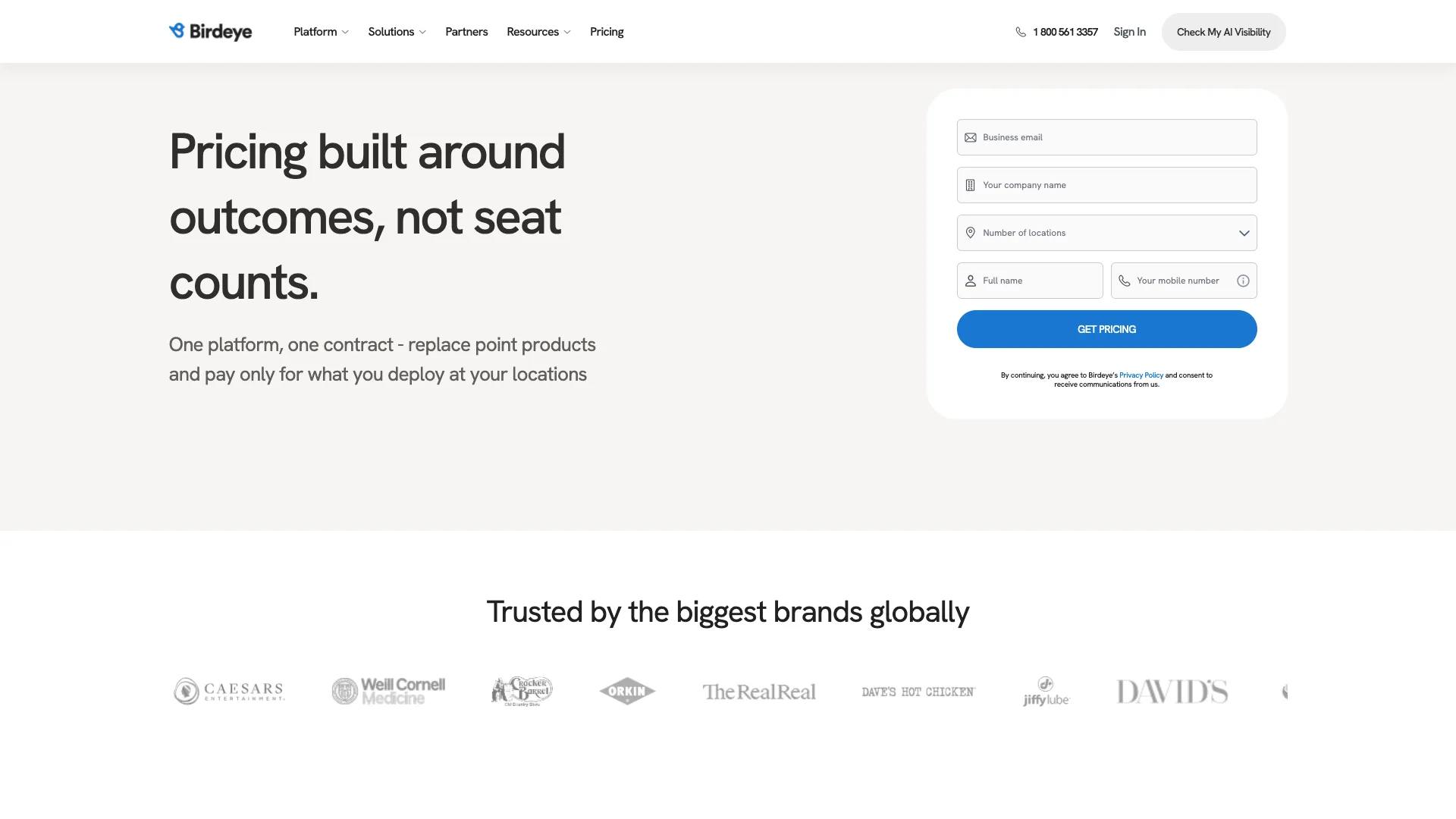 Jul 31, 2026
 Tech Stack
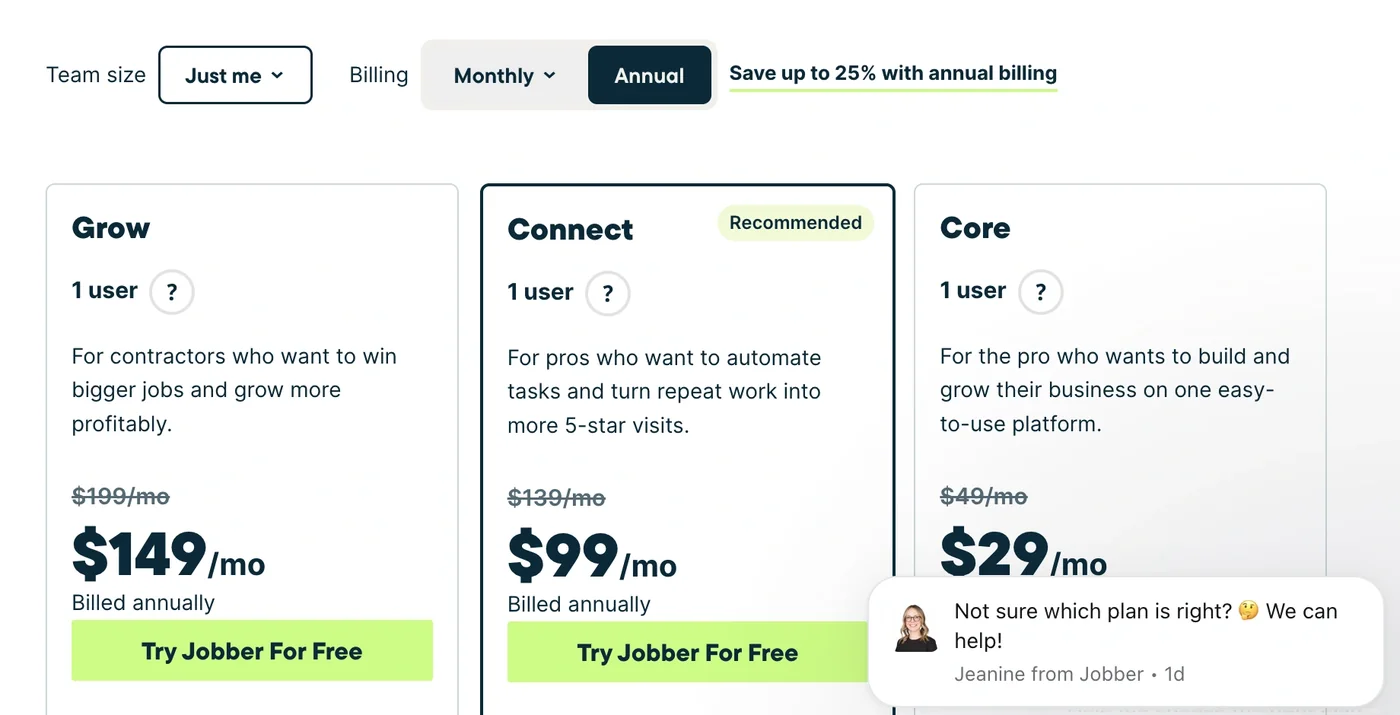
NiceJob vs Birdeye 2026: Pricing, Contracts and Review Gating
One of these vendors puts its price on the page and its cancellation terms in writing. The other puts a form in front of both, and the complaint record is where its contract length shows up.
Read Article Jul 31, 2026
 Tech Stack
Podium vs Birdeye 2026: Pricing, Contracts and Review Gating
Only one of these two will tell you what it costs before a sales call, and even that number carries a carve-out aimed squarely at trade contractors.
Read Article Jul 31, 2026
 Tech Stack
Best Electrical Contractor Software 2026: 11 Ranked and Priced
An electrical contracting business makes two software purchases that do not substitute for each other, and every roundup answering this query covers only one of them. Eleven platforms, with a published price or an explicit statement that the vendor publishes none.
Read Article Jul 31, 2026
 Tech Stack
Best HVAC Software in 2026: Eleven Ranked Across Three Classes
An HVAC contracting business buys across three classes of software that do not substitute for each other, and every roundup answering this query covers only one of them. Eleven products, each with a published price or an explicit statement that the vendor publishes none.
Read Article Jul 30, 2026
 Tech Stack
AccuLynx Pricing 2026: The Real Cost of a Quote-Gated Plan
One published figure, two blank plan cards, and a contract that says things the pricing page does not. A line-by-line breakdown of what AccuLynx really bills.
Read Article Jul 30, 2026
 Tech Stack
Houzz Pro Canada Review 2026: Pricing and Alternatives
Houzz Pro serves different pricing renderings. What Canadian buyers see, how GST/HST and payments work, what Custom gates, and what the annual contract commits you to.
Read Article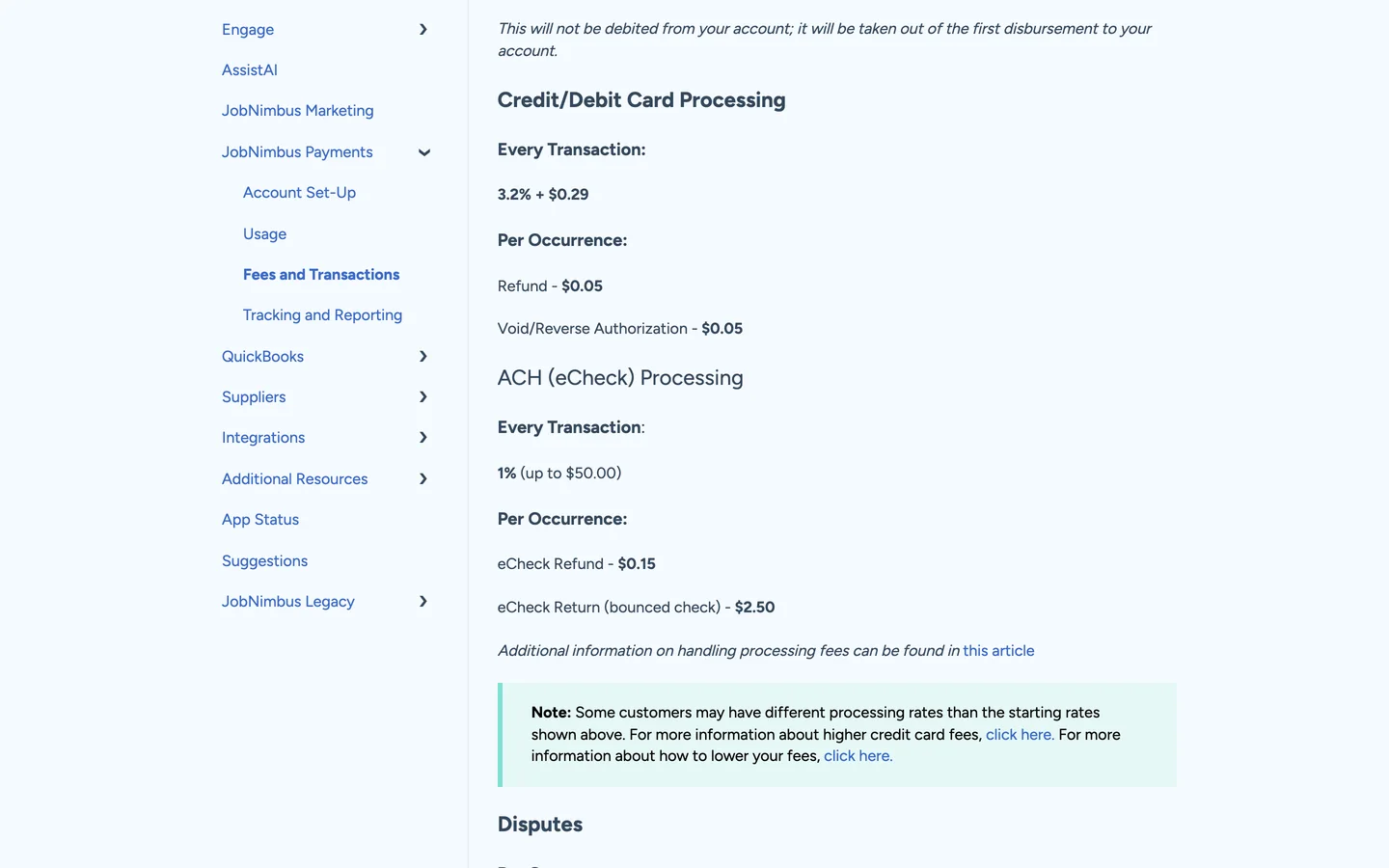 Jul 30, 2026
 Tech Stack
JobNimbus Pricing in 2026: What the Quote Does Not Cover
JobNimbus prints no figure on any of its four plans. So the only rate you can read before a sales call is the payments meter, and it is the biggest line on the bill.
Read Article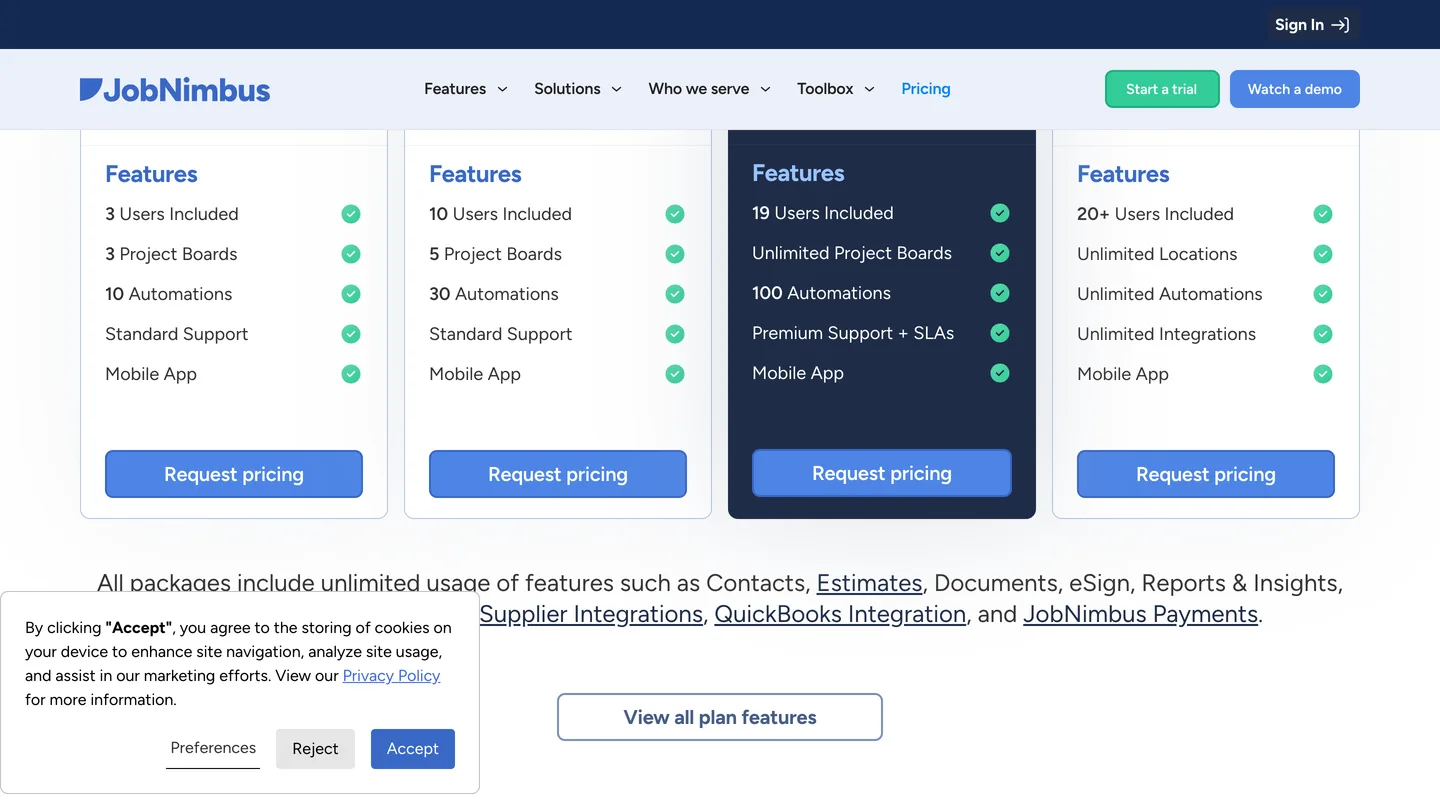 Jul 30, 2026
 Tech Stack
JobNimbus Review 2026: Pricing, Pros, Cons and Alternatives
JobNimbus rates 4.6 on Capterra and orders material straight from ABC Supply and SRS. But it publishes no price, and its supplement route carries a note.
Read Article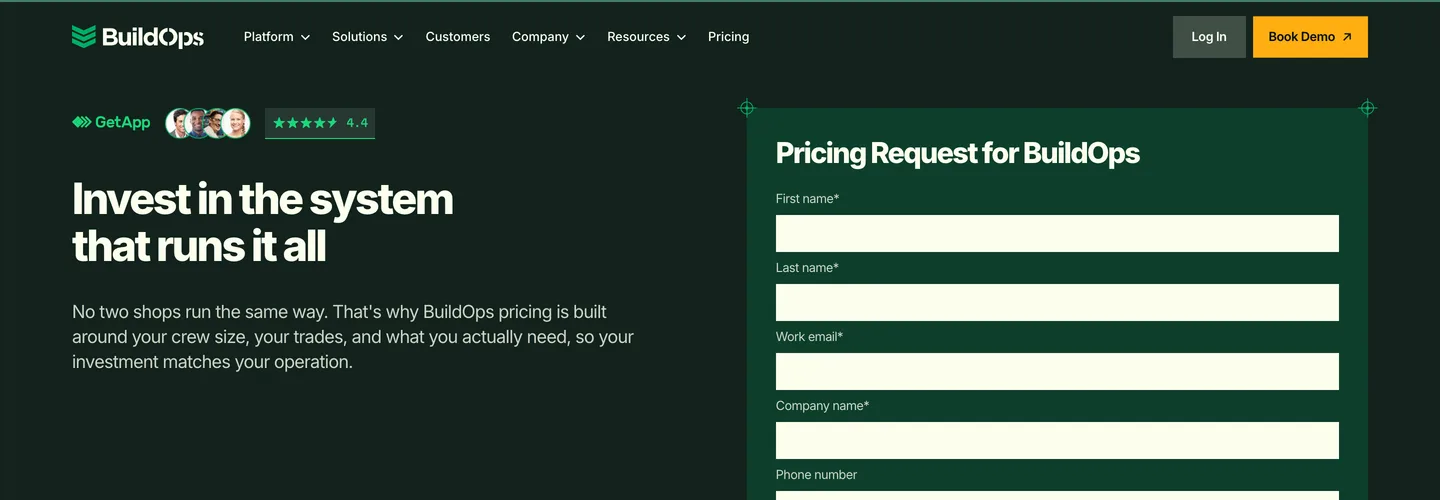 Jul 30, 2026
 Tech Stack
BuildOps Review 2026: Pricing, Contract Terms and Alternatives
BuildOps runs commercial service and projects on one platform, and publishes no pricing at all. The billing unit, the 30-day data-export window, and who it suits.
Read Article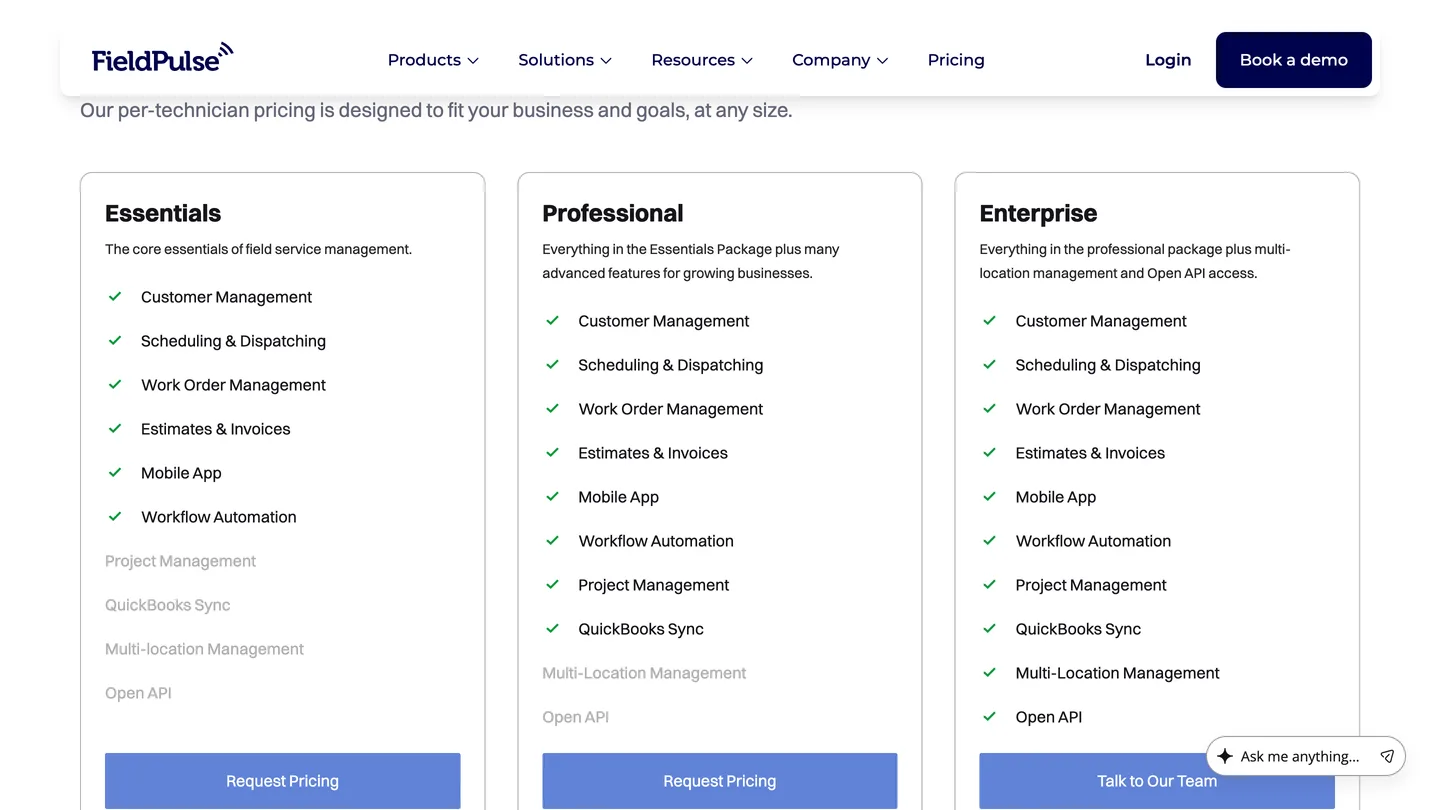 Jul 30, 2026
 Tech Stack
FieldPulse Review 2026: Pricing, Pros, Cons and Alternatives
FieldPulse rates 4.6 on Capterra and is the platform contractors name when they leave a bigger system. But it publishes no price, and the contract runs a year.
Read Article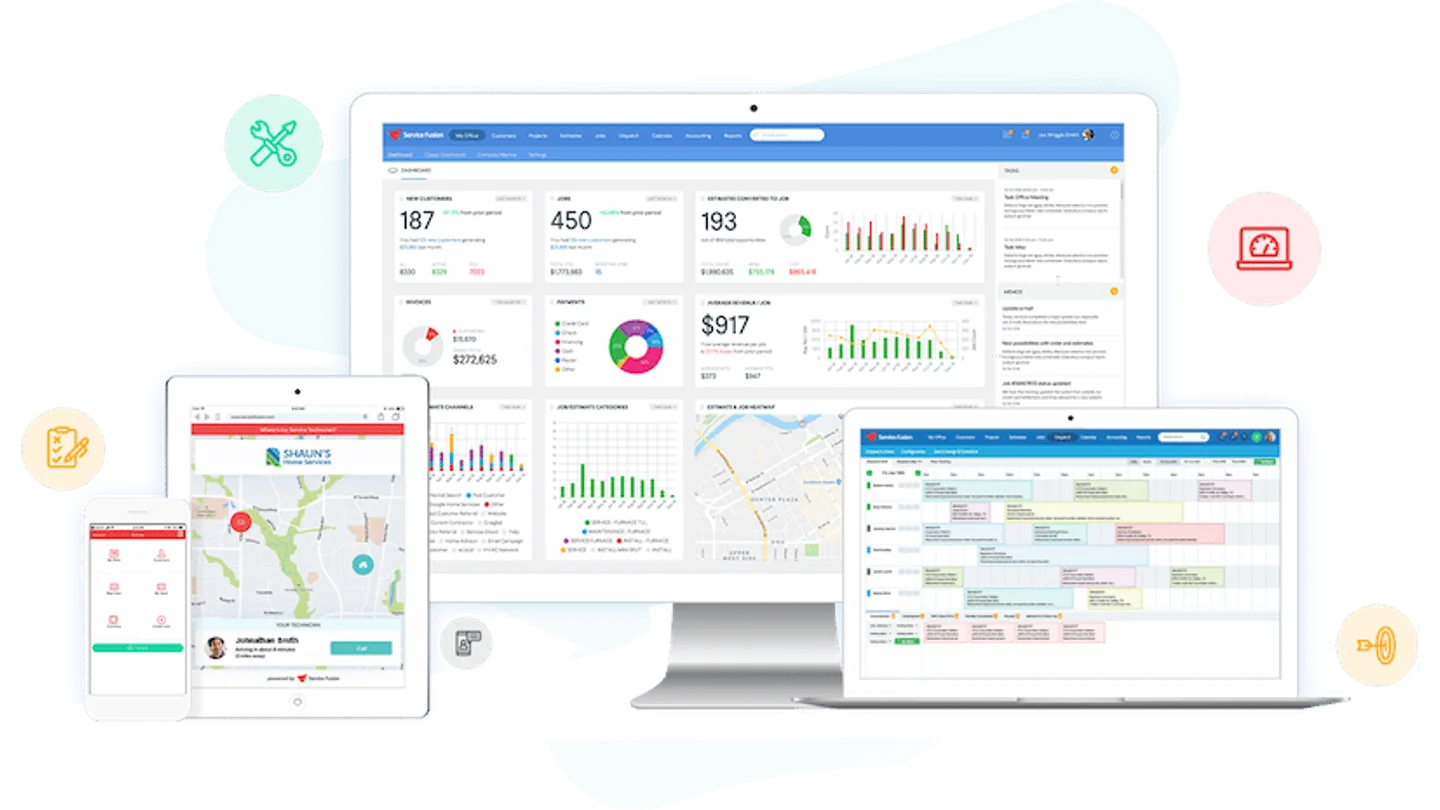 Jul 30, 2026
 Tech Stack
Service Fusion Review 2026: Pricing, Contract and Alternatives
Service Fusion bills flat per company with unlimited users, which is the best structural deal in field service software. The published plans, the contract behind the no-contract line, and the app score every other review gets wrong.
Read Article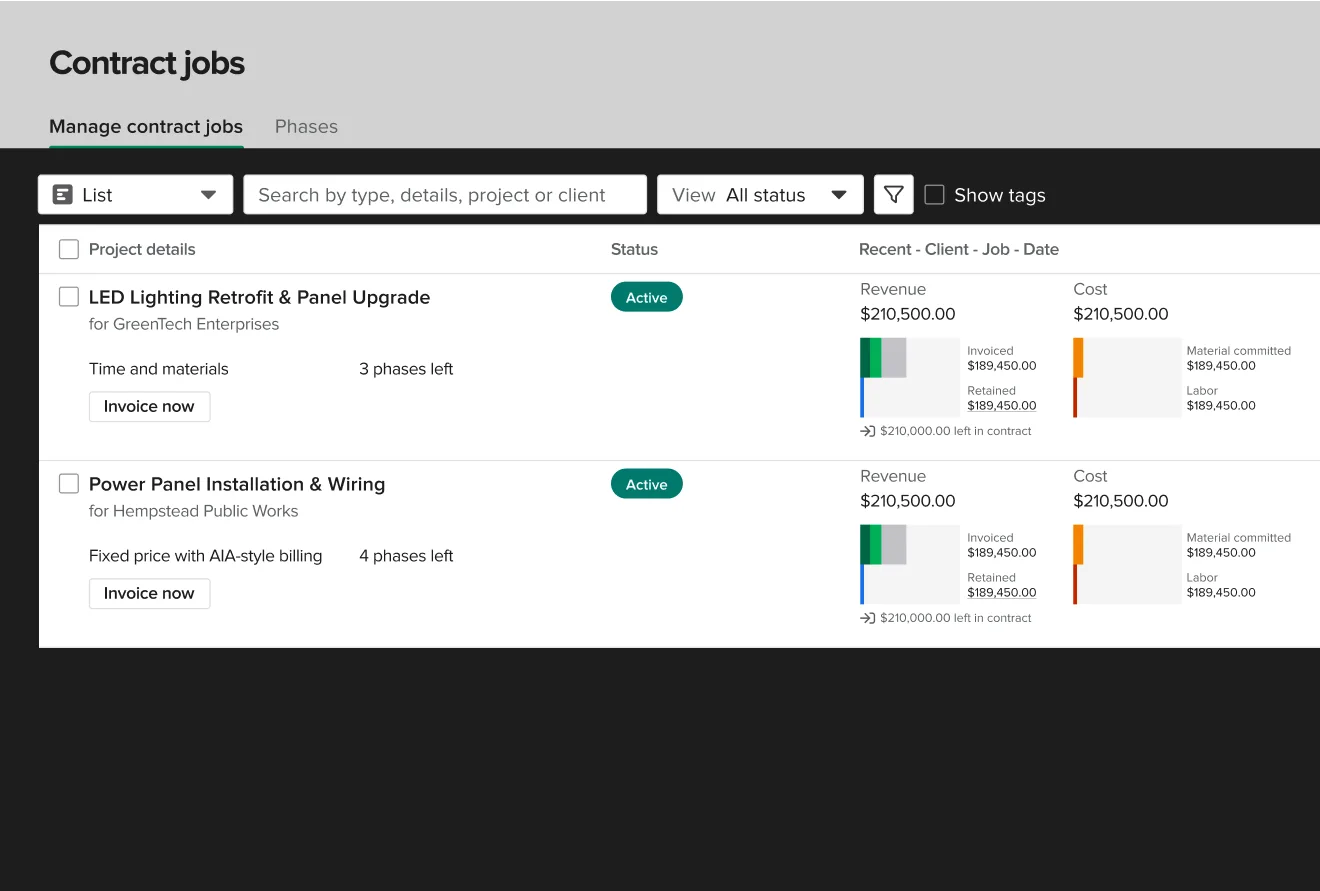 Jul 30, 2026
 Tech Stack
Knowify Review 2026: Pricing, Job Costing and Alternatives
Knowify rates 4.5 on Capterra and its weakest sub-score is features. What the $99 Core plan withholds, which way the QuickBooks sync really runs, and who should not buy it.
Read Article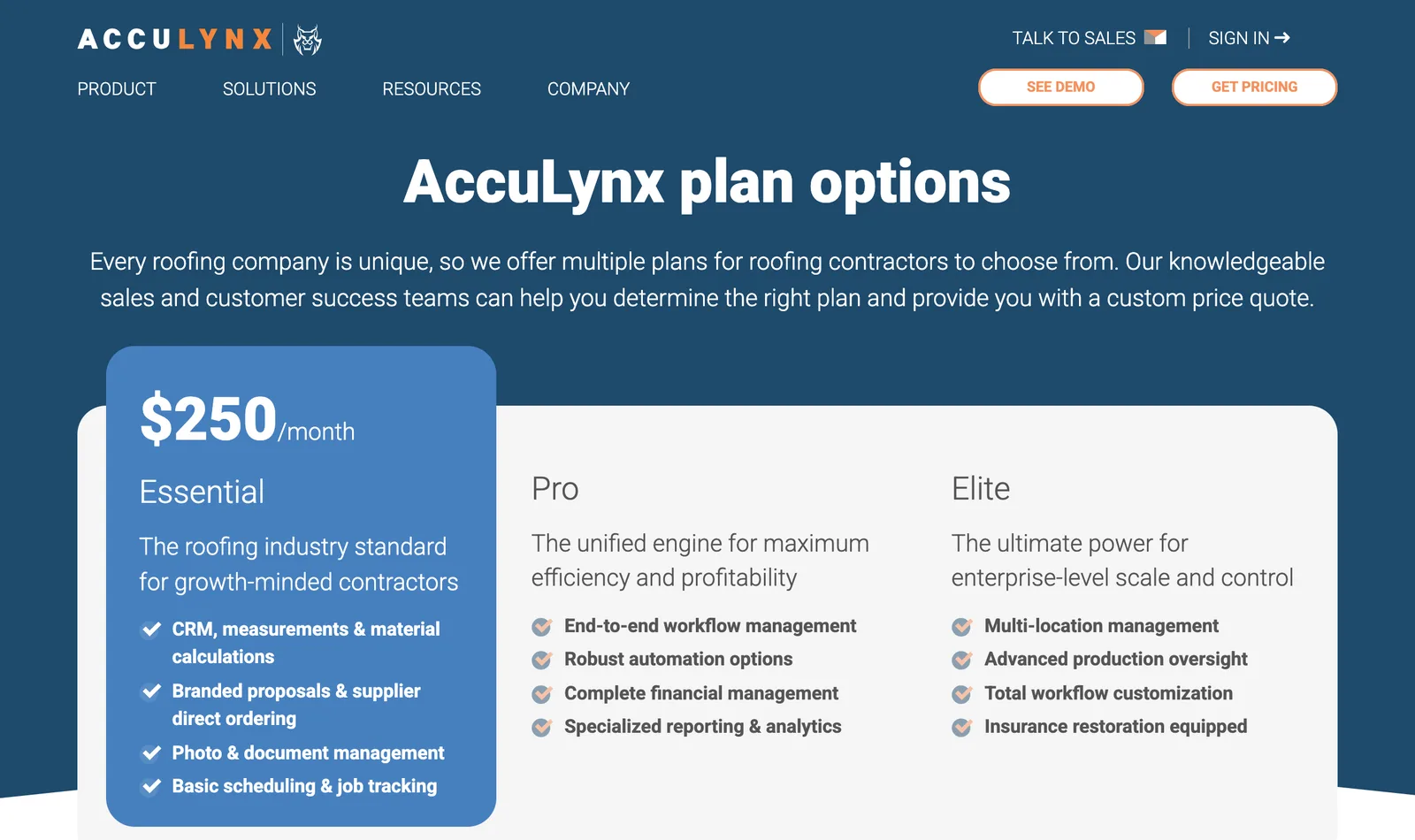 Jul 29, 2026
 Tech Stack
AccuLynx Review 2026: Pricing, Tier Gating, Alternatives
AccuLynx rates 4.6 across 846 reviews and now publishes an entry price. What that price omits, which tier holds the insurance workflow, and who should skip it.
Read Article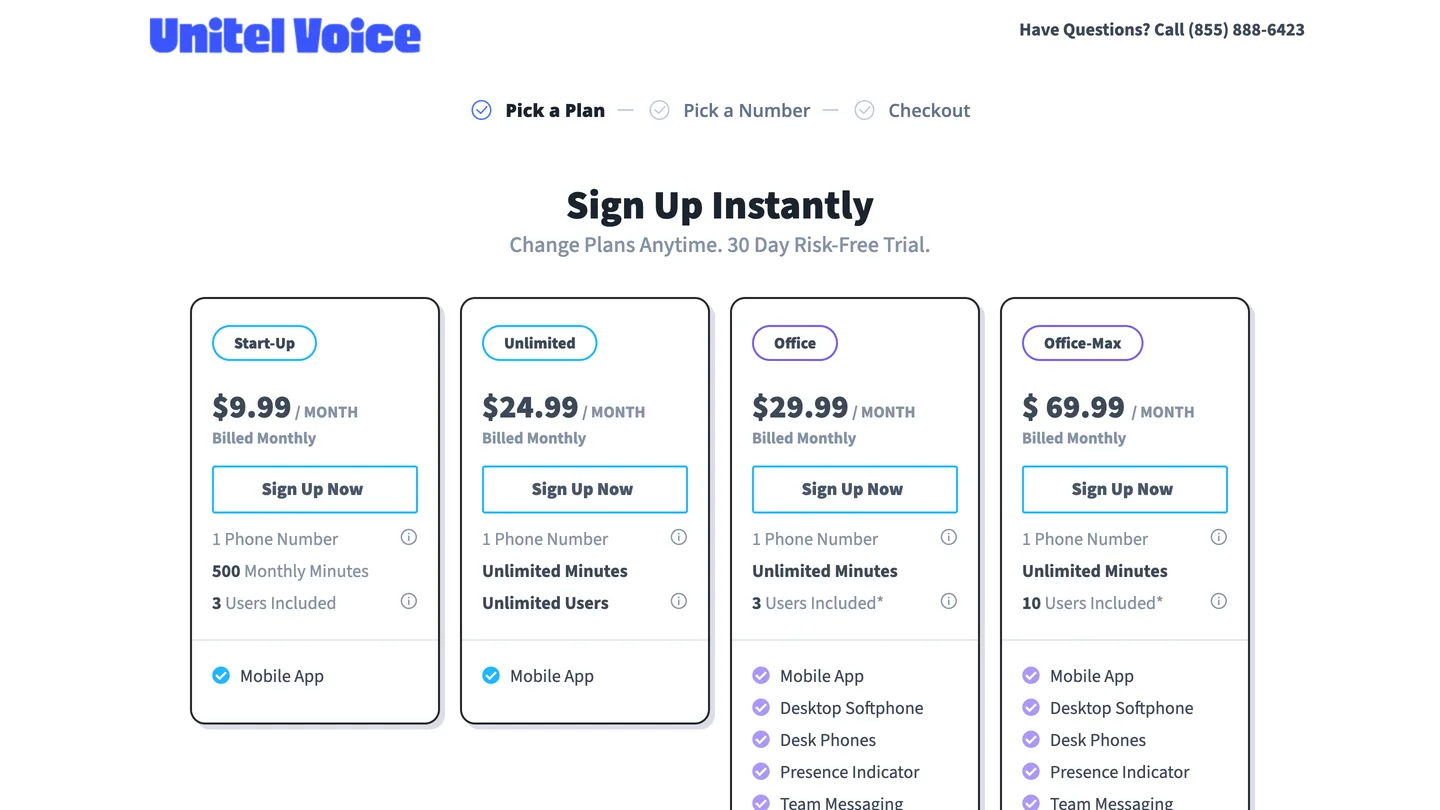 Jul 29, 2026
 Tech Stack
Unitel Voice Review 2026: Pricing, Features and Alternatives
Unitel Voice rates 4.6 on Capterra and gives a one-truck shop a business number for $9.99 a month. The published plans, the cost per call, and what it won't do.
Read Article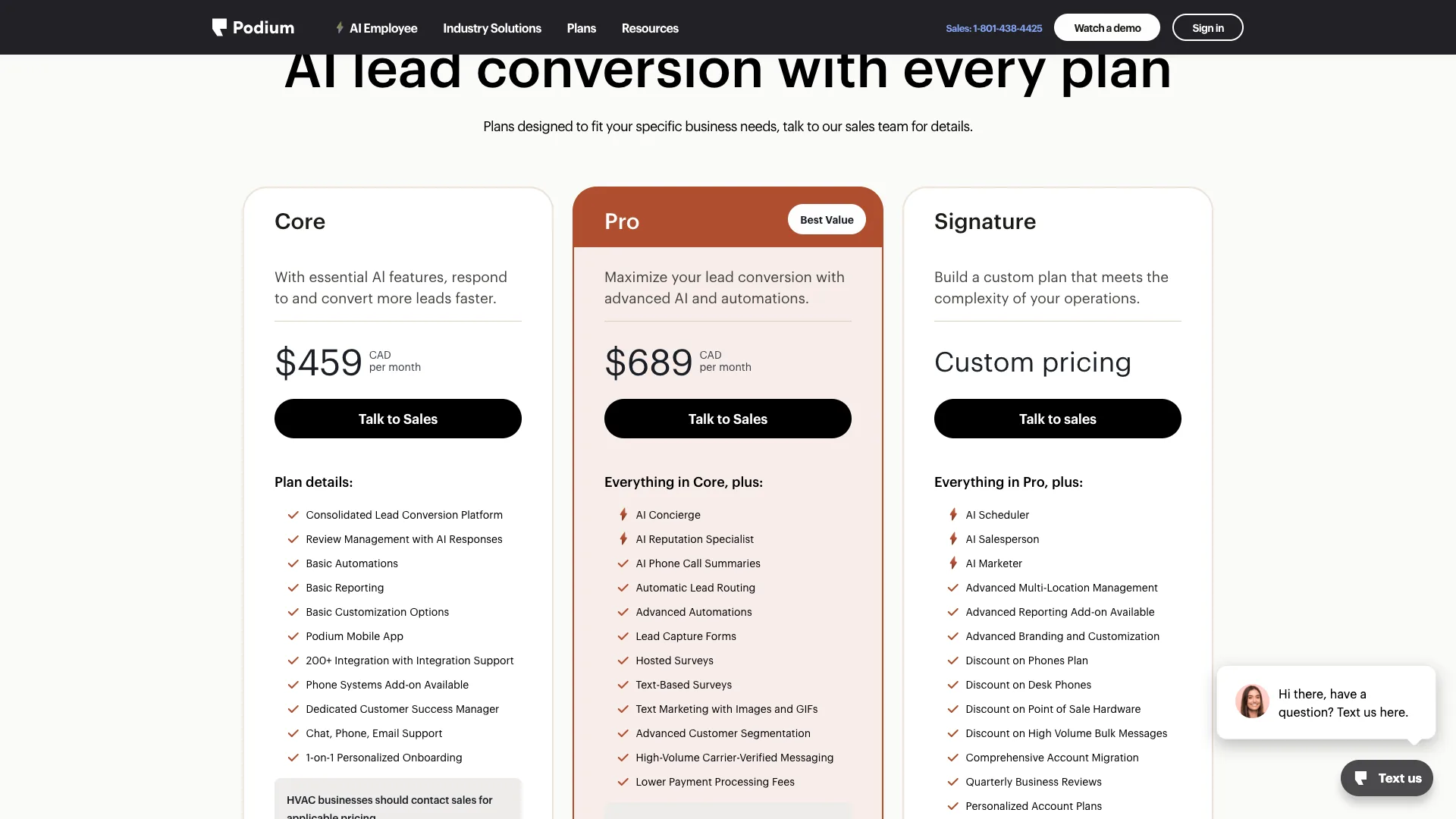 Jul 29, 2026
 Tech Stack
NiceJob vs Podium 2026: Pricing, Contracts and Review Gating
Both vendors print a price, at very different scale and in different currencies. The gap that matters is what Podium will not print: the billing unit, and whether a trade shop gets the number on the page.
Read Article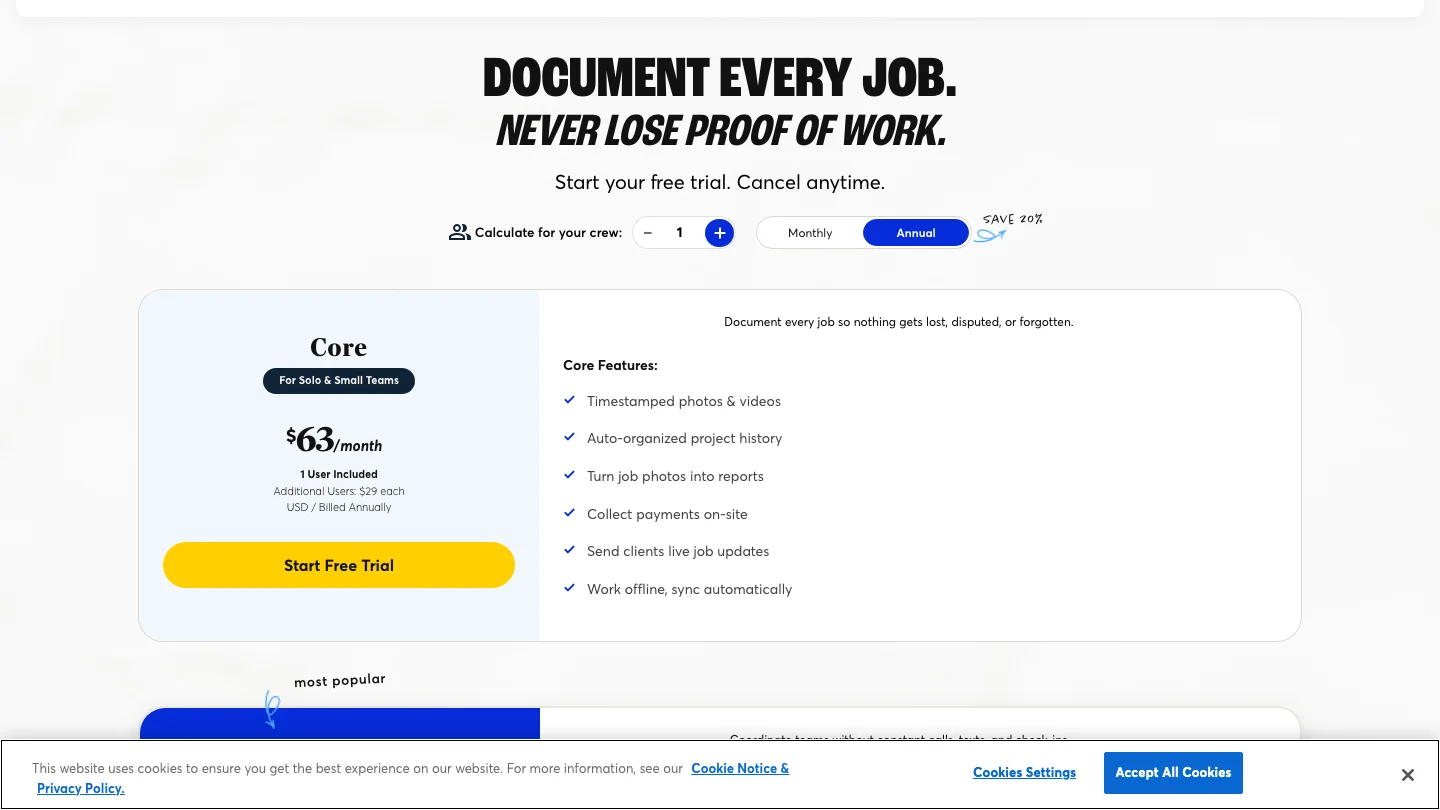 Jul 28, 2026
 Tech Stack
CompanyCam Review 2026: Pricing, Pros, Cons and Alternatives
Every page ranking for CompanyCam still quotes a per-user price the vendor no longer charges. Here are the real plans, the seat math, and who should skip it.
Read Article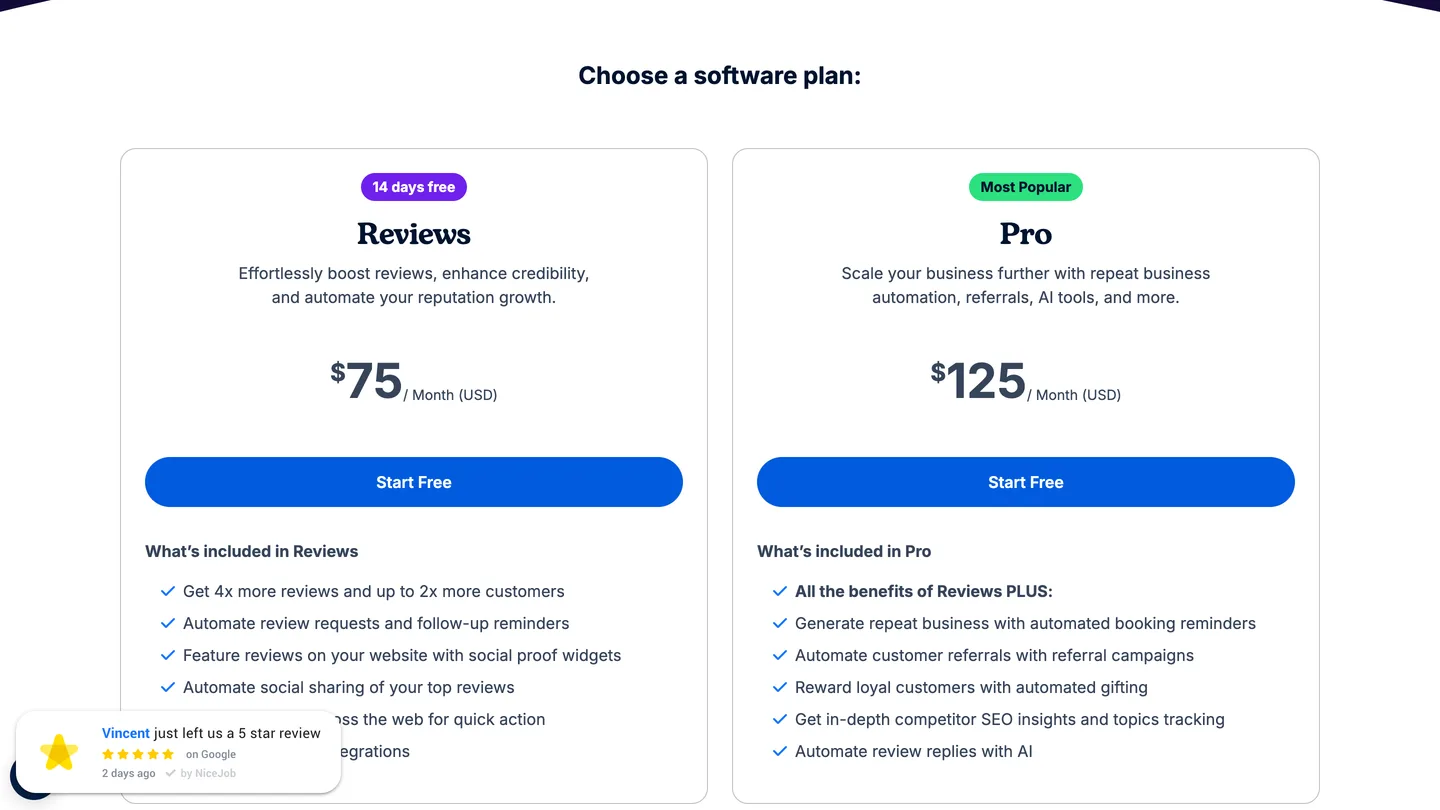 Jul 28, 2026
 Tech Stack
NiceJob Review 2026: Pricing, Pros, Cons and Alternatives
NiceJob rates 4.9 on Capterra and refuses to gate negative reviews. Real plan pricing, the active-customer threshold nobody publishes, and who should skip it.
Read Article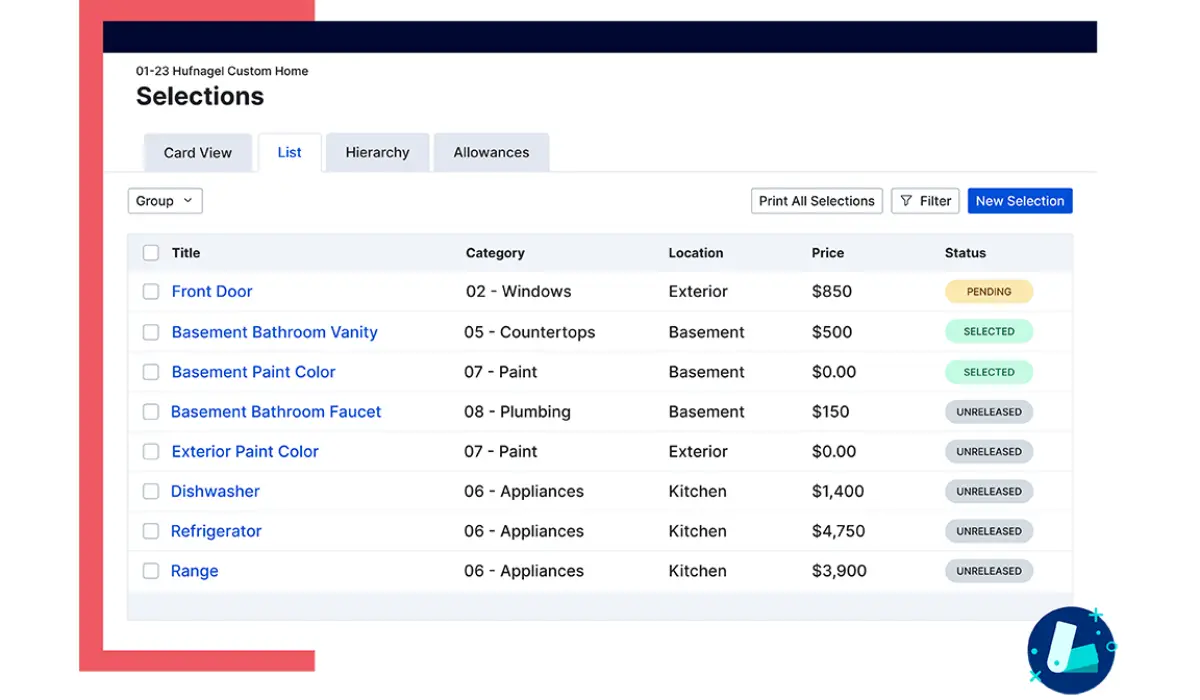 Jul 27, 2026
 Tech Stack
Buildertrend Review 2026: Pricing, Limits and Alternatives
Buildertrend rates 4.5 across 2,486 Capterra reviews and quotes against your revenue rather than your seat count. The workflows, the export problem, the alternatives.
Read Article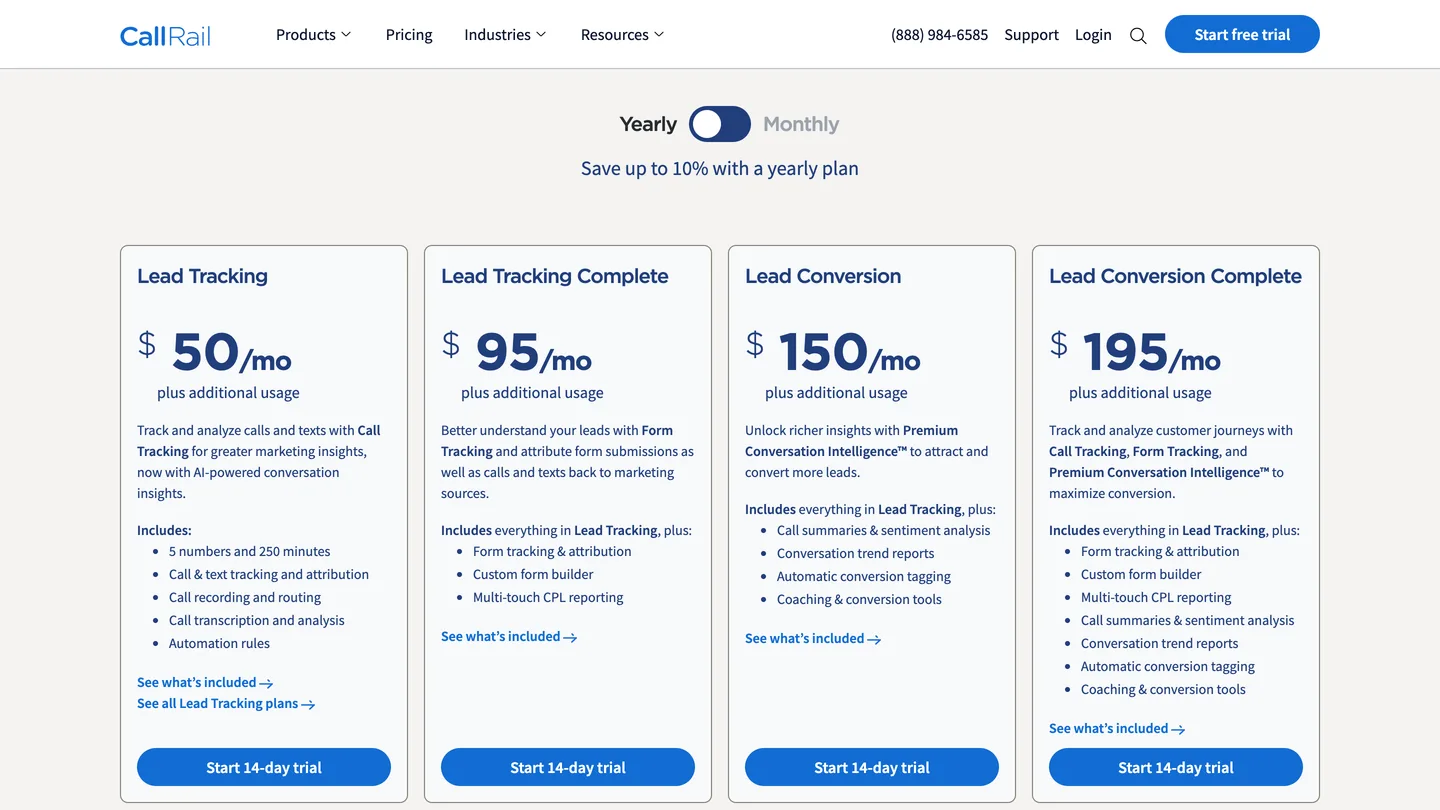 Jul 27, 2026
 Tech Stack
CallRail Review 2026: Pricing, Pros, Cons and Alternatives
CallRail rates 4.5 on Capterra, and its tracking numbers port out free. But the two usage rates that decide your real bill are the two it does not print.
Read Article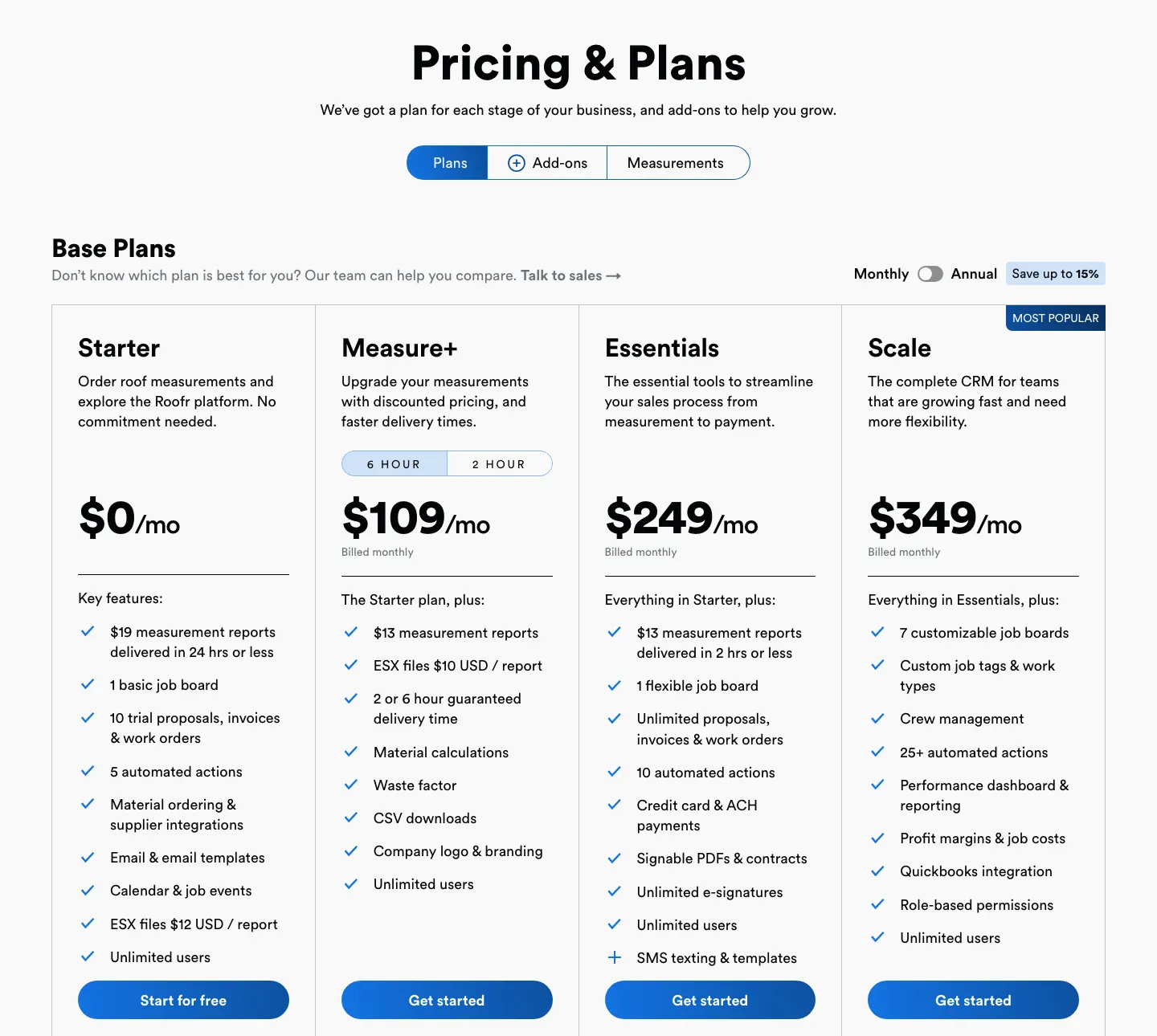 Jul 27, 2026
 Tech Stack
Roofr Review 2026: Pricing, Pros, Cons and Alternatives
Roofr rates 4.6 on Capterra and sells $13 measurement reports against a market charging triple. But it will not import a report from anywhere else.
Read Article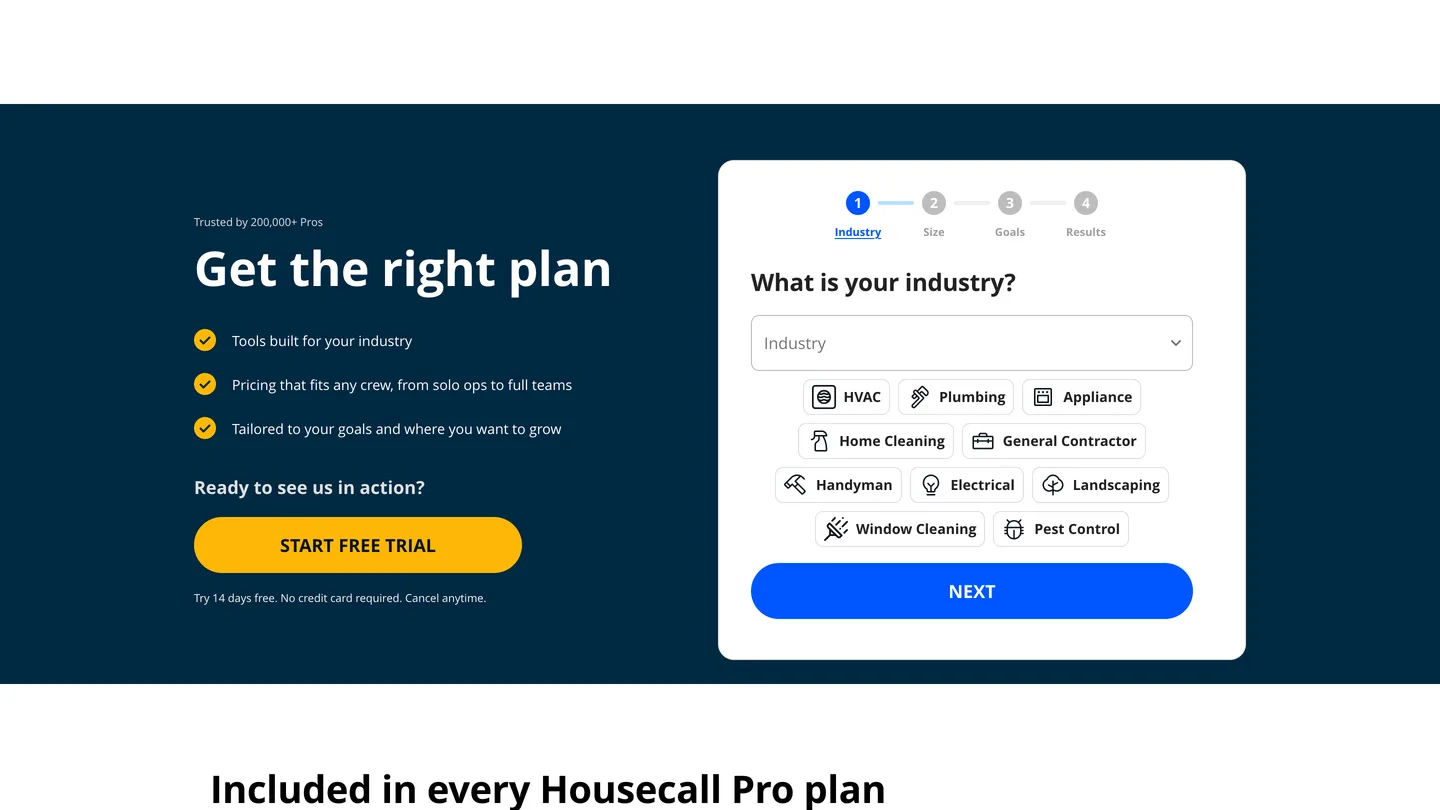 Jul 25, 2026
 Tech Stack
Housecall Pro Review 2026: Pricing, Pros, Cons, Alternatives
Housecall Pro has the shortest learning curve in the category and the widest review spread. Real pricing, the Instapay math, and the migration trap to plan around.
Read Article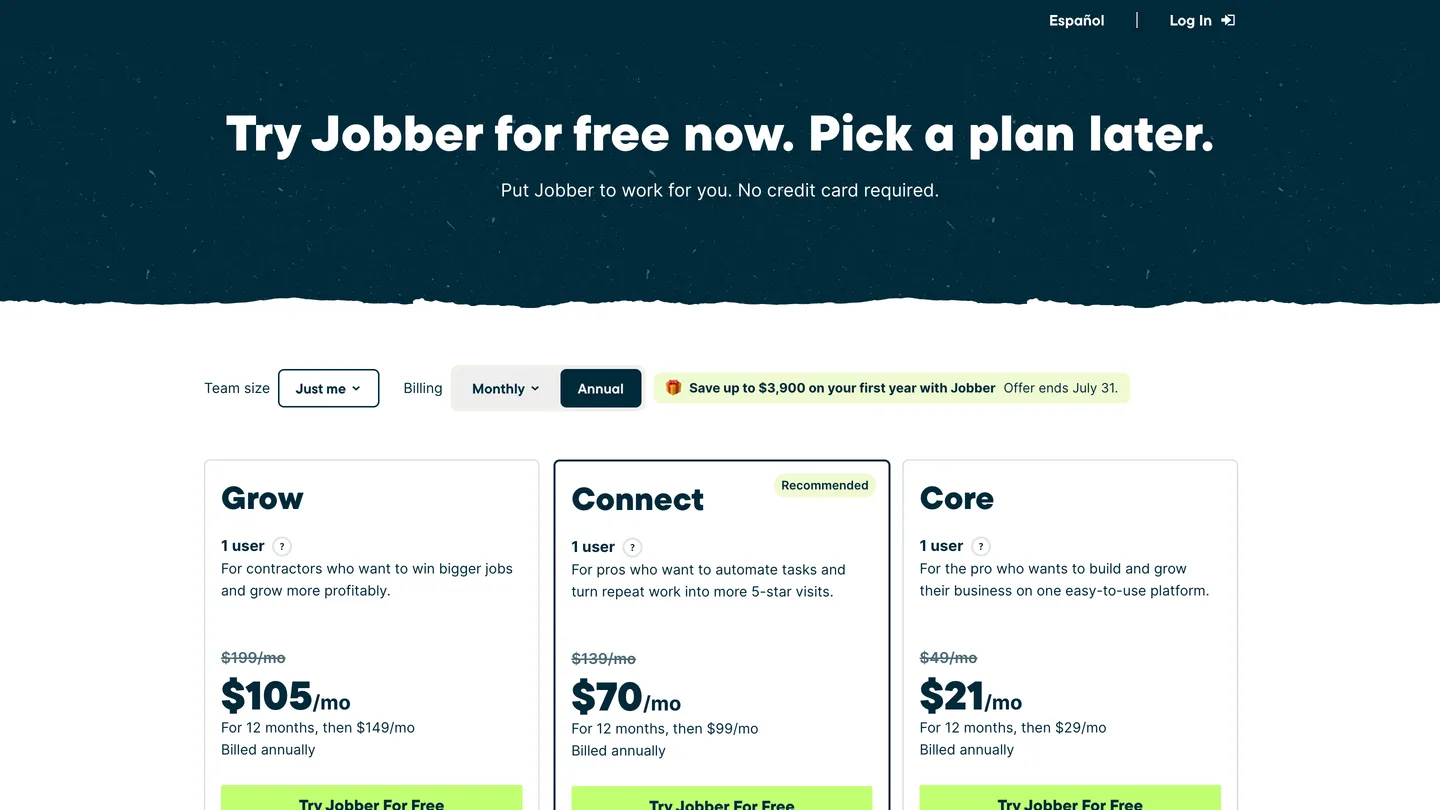 Jul 24, 2026
 Tech Stack
Jobber Review 2026: Pricing, Pros, Cons and Alternatives
Jobber rates 4.6 on Capterra with the best mobile app in the category. Real plan pricing, the feature gating that changes your entry price, and who it suits.
Read Article Jul 23, 2026
 Tech Stack
ServiceTitan Review 2026: Pricing, Pros, Cons, Alternatives
ServiceTitan rates 4.3 on Capterra but its weakest score is value for money. Real reported pricing, the 12-month contract, the exit fees, and who it actually suits.
Read Article Jun 3, 2026
 Tech Stack
HVAC Online Scheduling: The 43% Losing After-Hours Bookings
HVAC leads every trade on online booking at just 56.7%, which still leaves 43% of sites forcing an after-hours customer to wait for a business-hours phone call.
Read Article