ClearCalcs (now Calcs.com) Review 2026: Pricing, Pros, Cons, Alternatives
ClearCalcs (now Calcs.com) starts at US$79/month, or US$790/year. The real cost, the 8 gaps reviewers name, and 4 alternatives that publish a price.
Page at a glance
ClearCalcs (now Calcs.com) is Cloud beam-and-column calculators with linked load paths and code-traceable PDF output, priced per concurrent licence rather than per named user. It starts at US$79/month, or US$790/year per concurrent licence. Floating concurrency, not named seats. Unlimited named user accounts; the plan limit caps how many people can be working at once. Vendor docs: 'if you have one shared license, one person may use the software at a time.' Billing and IT admin accounts are excluded from the count. The pricing page never states how many concurrent licences each published tier includes, so a two-person practice cannot price itself from the pricing page alone. It fits Solo-to-10-person residential design practices doing custom homes, additions and deck/floor framing, where a licensed engineer or building designer on staff can stamp the output. And one Capterra reviewer describes the base as 'solo or solo plus one'. It's the wrong buy for A deck, remodeling or custom-home builder with no licensed engineer or building designer on staff, because The terms of use require that authorised users be 'adequately qualified' and that output be independently verified by a qualified person. So buying this doesn't let you self-certify a beam or a footing, and most jurisdictions won't accept an unstamped printout for permit. And you'd be paying US$79 to US$149 a month for a document you still have to send to an engineer. Alternatives that publish their prices are ENERCALC SEL from $199, StruCalc from $149.97, RISA-3D from $2,290. Eight priced tiers, eight evidenced gaps and four alternatives, three of which publish a figure.
What you're buying with ClearCalcs (now Calcs.com), and what the demo skips
ClearCalcs (now Calcs.com) earns its money with Solo-to-10-person residential design practices doing custom homes, additions and deck/floor framing, where a licensed engineer or building designer on staff can stamp the output. And one Capterra reviewer describes the base as 'solo or solo plus one'. If that's you, it does the job. The sections below are the parts worth checking before you sign. But the fit is narrower than the marketing suggests, and the price isn't the whole cost.
It starts at US$79/month, or US$790/year. And pricing was verified on 7 August 2026, so you can check every figure below in a browser tab.
| Pricing model | Published tiers |
|---|---|
| Entry price | US$79/month, or US$790/year |
| Users | Floating concurrency, not named seats. Unlimited named user accounts; the plan limit caps |
| Ownership | Independent |
| Best fit | Solo-to-10-person residential design practices doing custom homes, additions and deck/floor framing, where a licensed engineer or building designer on staff can stamp the output. And one Capterra reviewer describes the base as 'solo or solo plus one'. |
| Accounting sync | None published |
What works
- Load linking is the feature reviewers name most often, and it's the one that replaces a spreadsheet
- Floating concurrency means you buy simultaneous seats, not headcount
- Export is real: PDF per project or per sheet, plus the member schedule to Excel
- The trial is unusually clean, and the free plan keeps your history readable
- Standards claims differ between the homepage and the pricing page, and the gap is Canada
What does not
- The terms contractually require a qualified person to verify every output, which is the whole reason a builder can't use this to skip an engineer
- The vendor states three different refund positions across three of its own pages
- Ultimate sells 'API access' at US$149/month but the only published API reference is an unmodified Mintlify demo about a plant store
- The CAD integration, the only route to a drafting workflow, is in closed testing
- An idle account can be deleted along with its data, and the disputes go to a court in Australia
ClearCalcs (now Calcs.com) is Cloud beam-and-column calculators with linked load paths and code-traceable PDF output, priced per concurrent licence rather than per named user. It sells to Custom home building and Decks and Remodeling contractors, and the shape of the product follows from that: Calculations link so that a reaction from one member feeds the next member down the load path automatically, rather than being retyped. Two separate reviewers single this out, and the vendor's own customer testimonial does the same. And for residential work this is the difference between sizing a ridge beam, then a post, then a footing as three independent exercises versus one chain.
Who ClearCalcs (now Calcs.com) is for, and who it isn't
It fits Solo-to-10-person residential design practices doing custom homes, additions and deck/floor framing, where a licensed engineer or building designer on staff can stamp the output. And one Capterra reviewer describes the base as 'solo or solo plus one'. That's the half most reviews print. Here's the other half, which is the one worth your time.
Don't buy it if you're A deck, remodeling or custom-home builder with no licensed engineer or building designer on staff. The terms of use require that authorised users be 'adequately qualified' and that output be independently verified by a qualified person. So buying this doesn't let you self-certify a beam or a footing, and most jurisdictions won't accept an unstamped printout for permit. And you'd be paying US$79 to US$149 a month for a document you still have to send to an engineer. Look at A local structural engineer on a per-project fee instead.
Don't buy it if you're Any contractor who wanted this to talk to their accounting or job-costing system. There's no accounting integration of any kind, and no integrations directory: calcs.com/integrations 301-redirects to a marketing page for engineering teams. Searching the homepage, both pricing pages, the teams page and the full documentation index returns zero mentions of QuickBooks, Xero, Sage, MYOB, Procore or Buildertrend. So this is a calculation tool, not part of an office stack. Look at Buildertrend instead.
Don't buy it if you're A Mac-based or Revit-based design shop that needs drawings out the other end. The only CAD plugin is CalcsCAD, it's in closed testing, and it requires Windows with 64-bit AutoCAD v17-22 or BricsCAD v17-21. And there's no Revit plugin and no Mac path. So your handoff is a PDF and an Excel member schedule that someone retypes. Look at SkyCiv instead.
Don't buy it if you're A firm that needs complex or non-standard analysis. A reviewer puts it plainly: 'certain factors and inputs cannot be changed in order to give a product as simple as it is. More complex calculations should be done on more advanced softwares.' Another reports missing built-up and composite section applications and thin cold-formed steel capability. So the simplicity that makes it fast is the same thing that caps it. Look at RISA-3D instead.
The money question on ClearCalcs (now Calcs.com)
You can read ClearCalcs (now Calcs.com)'s prices without booking anything. So the headline figure is the easy part. What the entry tier quietly leaves out is the question.
| Tier | Price | Billing unit | What it unlocks |
|---|---|---|---|
| Basic | US$79/month, or US$790/year | per concurrent licence | Nothing beyond the tier below |
| Pro | US$119/month, or US$1,190/year | per concurrent licence | Concrete beam and column calculators to ACI 318, Shear wall, masonry, and retaining wall calculators, Wind, snow, and seismic analysis to ASCE 7, Portal frame and truss analysis (2D FEA) |
| Ultimate | US$149/month, or US$1,490/year | per concurrent licence | Priority support, Personalised demo and 1-hour onboarding, API access, Custom PDF uploads |
| Basic (Australia) | A$69/month, or A$690/year | per concurrent licence | Nothing beyond the tier below |
| Pro (Australia) | A$119/month, or A$1,190/year | per concurrent licence | Nothing beyond the tier below |
| Ultimate (Australia) | A$195/month, or A$1,950/year | per concurrent licence | Nothing beyond the tier below |
| Team plan (5+ engineers) | Quote only | per account | Custom plan built to team size, standards and workflow |
| Free plan (post-trial) | US$0 | per account | Read-only on existing work: a paid plan is required to run new calculations |
Floating concurrency, not named seats. Unlimited named user accounts; the plan limit caps how many people can be working at once. Vendor docs: 'if you have one shared license, one person may use the software at a time.' Billing and IT admin accounts are excluded from the count. The pricing page never states how many concurrent licences each published tier includes, so a two-person practice cannot price itself from the pricing page alone.
There is a discount for paying annually up front: 17% off monthly. Vendor wording: 'Yearly billing saves you 17% compared to monthly - you pay for 10 months and get 12.' Invoice payment is available on annual plans by arrangement only. And an annual prepay discount tells you an annual commitment exists, which is worth knowing before anyone mentions a term length out loud.
The ClearCalcs (now Calcs.com) line items nobody mentions on the demo
Payment processing. All major credit cards; invoice payment only on annual plans and only by arrangement. Terms clause 7.6 uses unnamed third-party 'Payment Providers' and disclaims liability: 'we are not liable for the security or performance of the Payment Provider.' Clause 7.7: fees are exclusive of VAT, GST and similar taxes, which are added at the prevailing rate.
Implementation and onboarding. No implementation fee is charged on any tier. Onboarding is a gated feature, not a line item: 'Personalised demo and 1-hour onboarding' appears only on the Ultimate tier at US$149/month. Basic and Pro buyers self-onboard.
Minimum term. No minimum term. Monthly and yearly subscription periods only, cancellable at any time from the Billing page; access continues to the end of the paid period, then downgrades.
Getting out. No early-termination fee. Cancelling stops future recurring payments and the account reverts to Basic Access at the cancellation date. Mid-term plan changes are pro-rated: reducing users applies the unused portion as credit to the next bill.
Auto-renewal. Auto-renews by default. Terms clause 7.2: 'Your Subscription Plan will automatically be renewed at the end of each Subscription Period unless you inform us you wish to cancel your Subscription Plan before it renews. At the end of the Subscription Period, if not cancelled, the Subscription Fee will be charged to the payment method last specified by you.' Only account administrators can see the Billing page or cancel.
Modules sold separately. We found none. The published feature set appears to sit inside the tiers rather than behind separate line items, which is worth confirming against your own must-have list on the call.
And this is the kind of thing you only find by reading the complaints. The vendor takes three mutually inconsistent positions on refunds across three of its own live pages, and the least generous one is the enforceable one. A buyer who commits to US$1,490 annually on the strength of the pricing-page guarantee is relying on a marketing claim that the contract explicitly contradicts. So ask for the guarantee in an email before paying, because the terms are what a dispute would be decided on, in a court in Victoria, Australia.
What a ClearCalcs (now Calcs.com) quote leaves out
The subscription is the part everyone quotes. These are the lines that land afterwards, and the ones we could not find are named as unpublished rather than left blank.
Sold separately. We found none. The published feature set sits inside the tiers rather than behind separate line items, which is worth confirming against your own must-have list.
"ClearCalcs (now Calcs.com) Basic is US$79/month, or US$790/year, per concurrent licence."
ClearCalcs (now Calcs.com) pricing page (2026)
"ClearCalcs (now Calcs.com) Pro is US$119/month, or US$1,190/year, per concurrent licence."
ClearCalcs (now Calcs.com) pricing page (2026)
"Floating concurrency, not named seats. Unlimited named user accounts; the plan limit caps how many people can be working at once. Vendor docs: 'if you have one shared license, one person may use the software at a time.' Billing and IT admin accounts are excluded from the count. The pricing page never states how many concurrent licences each published tier includes, so a two-person practice cannot price itself from the pricing page alone."
ClearCalcs (now Calcs.com) pricing page (2026)
The five workflows you pay for
Feature totals are noise. So a shop in this category lives or dies on five things, and those are the five to grade, and each one below carries the evidence it's graded on.
Load linking is the feature reviewers name most often, and it's the one that replaces a spreadsheet Calculations link so that a reaction from one member feeds the next member down the load path automatically, rather than being retyped. Two separate reviewers single this out, and the vendor's own customer testimonial does the same. And for residential work this is the difference between sizing a ridge beam, then a post, then a footing as three independent exercises versus one chain. A principal, civil engineering, 6-12 months on the platform, writes it plainly: "ClearCalcs has everything you need to design your project. Modules include lumber, steel, cold form steel, column design, Foundation design , etc. It has made my calculations effortless. The link function is especially helpful to track the loads. No more running through hand calculations to find the loads."
Floating concurrency means you buy simultaneous seats, not headcount Everyone in the practice gets a named login with their own projects; you only pay for how many can be working at once. So a three-person shop where two people rarely design at the same time buys one or two licences, not three. Going over the limit triggers a warning rather than a lockout: 'we'll give a friendly warning that you're over your limit, and if this happens repeatedly we may show upgrade options or contact you to discuss subscribing for additional licenses.' But the catch is that the pricing page never publishes how many concurrent licences each tier includes.
Export is real: PDF per project or per sheet, plus the member schedule to Excel Export runs from a sidebar button, covering the whole project or a single sheet, with a 'Summary' print mode for one page per calculation. Separately the project member schedule exports to Excel and carries your per-computation comments across, which the vendor pitches as a drafting aid. And that's better portability than most tools in this category, and it's the mitigation for the clause 7.4 inactive-account deletion risk.
The trial is unusually clean, and the free plan keeps your history readable 14 days at Pro level, full calculator library, no credit card, nothing to cancel. When it lapses the account drops to a free plan where existing projects and calculations stay accessible and only new runs are blocked. So a builder can evaluate it, decide the licensing question is a dealbreaker, and still read the work they did during the trial.
Standards claims differ between the homepage and the pricing page, and the gap is Canada The homepage stat block claims coverage of 'IBC, AISC, NDS, ACI, AS/NZS, NBCC, and Eurocode'. But the pricing page FAQ, answering the same question, omits NBCC entirely: 'We support Australian (AS/NZS), US (AISC/ACI/NDS/ASCE), and Eurocode (EN) standards. The specific standards available vary by plan and calculator.' NBCC is the Canadian code. So a Canadian builder reading the homepage and a Canadian builder reading the pricing FAQ get different answers.
Which trades get value from ClearCalcs (now Calcs.com)
Fit differs by trade rather than by company size alone, and a blended paragraph hides that. Here is the split for the trades this one sells to.
Custom home building. The workflow that decides it is load linking is the feature reviewers name most often, and it's the one that replaces a spreadsheet, and the shop profile that gets value is design-build shop with an in-house engineer or licensed building designer doing residential and commercial work. Where it stops being a fit is A deck, remodeling or custom-home builder with no licensed engineer or building designer on staff.
Decks. The workflow that decides it is load linking is the feature reviewers name most often, and it's the one that replaces a spreadsheet, and the shop profile that gets value is design-build shop with an in-house engineer or licensed building designer doing residential and commercial work. Where it stops being a fit is A deck, remodeling or custom-home builder with no licensed engineer or building designer on staff.
Remodeling. The workflow that decides it is load linking is the feature reviewers name most often, and it's the one that replaces a spreadsheet, and the shop profile that gets value is design-build shop with an in-house engineer or licensed building designer doing residential and commercial work. Where it stops being a fit is A deck, remodeling or custom-home builder with no licensed engineer or building designer on staff.
Where your data goes when it leaves ClearCalcs (now Calcs.com)
ClearCalcs (now Calcs.com) publishes no accounting integration. If your books run anywhere other than a spreadsheet that's the first question for the demo, and it's a large one: re-keying invoices by hand is a bookkeeping cost that never shows up on the software invoice.
Past those, the road ends. QuickBooks, Xero, Sage / MYOB, Procore / Buildertrend, Revit, An integrations directory do not connect. So if your books run on an ERP rather than the platforms named above, weigh that before anything else.
Beyond accounting it connects to AutoCAD / BricsCAD (CalcsCAD plugin) (Generates framing layouts in AutoCAD or BricsCAD and syncs with Calcs.com projects. In closed testing, access by request only. Windows with 64-bit AutoCAD v17-22 or BricsCAD v17-21.), Microsoft Excel (One-way export of the project member schedule, including per-computation comments, intended for import into CAD.), PDF export (Export the whole project or a single sheet; 'Summary' print mode gives one page per calculation. Custom-branded PDF uploads are gated to the Ultimate tier.), USGS Seismic Web Services API (Inbound data lookup that retrieves seismic design parameters. This is a data source inside the calculator, not a business-system integration.). A public API exists: 'API access' is sold as an Ultimate-tier feature at US$149/month, but the only OpenAPI specification published on the documentation site is the unmodified Mintlify sample: title 'OpenAPI Plant Store', server http://sandbox.mintlify.com, endpoints GET/POST /plants and DELETE /plants/{id}. No real Calcs.com API surface is documented publicly.
Getting help from ClearCalcs (now Calcs.com), and getting it fast
Support is the line item nobody prices and everybody eventually needs. Onboarding for ClearCalcs (now Calcs.com): No implementation fee is charged on any tier. Onboarding is a gated feature, not a line item: 'Personalised demo and 1-hour onboarding' appears only on the Ultimate tier at US$149/month. Basic and Pro buyers self-onboard.
And an owner, architecture & planning, Less than 6 months on the platform, writing on 2023-07-17, says the same thing: "Your software support and your lack of it."
And an owner, civil engineering, 2-10 employees, 6-12 months on the platform, writing on 2022-07-07, reports it the same thing: "Tech support is not the best. I asked about a project that I was working on. The response that I got was that CC does not do project reviews. I can understand that. But, I could have gotten a review of how I was using modules in the job to verify that I was using them correctly. The CC guys are the only ones whom I can ask. No one else in my firm knows how to use the software. Some of the terminology in the app is oriented toward full civil engineers, not other engineers who are doing civil engineering. Yes, CC has a range of how-to videos, but they do not cover all of my questions. Having people learn by videos also makes the learning curve just a little less steep than reading a manual. So, it comes down to this: if I can't get answers for my questions and get answers in a timely manner, I am not going to use the software. I find StruCalc much easier to use and more intuitive. Those guys also use terminology that I better understand along with simple illustrations that tend to be more understandable than the ones used by CC. The new version for StruCalc is also dropping today. I can't wait. You guys could try a little harder with your help. Keep in mind that most of the people using your software likely are solo or solo plus one. Your tech support is it for us. That's why I don't want to hear about company policies."
ClearCalcs (now Calcs.com) contracts, and getting out
Nobody reads this section before they buy, and it's the one that costs money afterwards. Four terms decide what leaving looks like.
Minimum term. No minimum term. Monthly and yearly subscription periods only, cancellable at any time from the Billing page; access continues to the end of the paid period, then downgrades.
Auto-renewal. Auto-renews by default. Terms clause 7.2: 'Your Subscription Plan will automatically be renewed at the end of each Subscription Period unless you inform us you wish to cancel your Subscription Plan before it renews. At the end of the Subscription Period, if not cancelled, the Subscription Fee will be charged to the payment method last specified by you.' Only account administrators can see the Billing page or cancel.
Early termination. No early-termination fee. Cancelling stops future recurring payments and the account reverts to Basic Access at the cancellation date. Mid-term plan changes are pro-rated: reducing users applies the unused portion as credit to the next bill.
Payment processing. All major credit cards; invoice payment only on annual plans and only by arrangement. Terms clause 7.6 uses unnamed third-party 'Payment Providers' and disclaims liability: 'we are not liable for the security or performance of the Payment Provider.' Clause 7.7: fees are exclusive of VAT, GST and similar taxes, which are added at the prevailing rate.
Side note, and it's a useful one: an account that goes quiet can be deleted along with its data, and the calculations at risk are exactly the ones with the longest legal tail. Structural calculations are the evidence trail if a building is questioned years later, and that's precisely when the account has been dormant longest. So export to PDF and Excel at job close and archive locally. The vendor's retention policy is discretionary and your recourse is a court on the other side of the world.
"Nothing!! your cloud base software is bogus."
Capterra, Jack K. (7-17)
"Your software support and your lack of it."
Capterra, Jack K. (7-17)
"Tech support is not the best. I asked about a project that I was working on. The response that I got was that CC does not do project reviews. I can understand that. But, I could have gotten a review of how I was using modules in the job to verify that I was using them correctly. The CC guys are the only ones whom I can ask. No one else in my firm knows how to use the software. Some of the terminology in the app is oriented toward full civil engineers, not other engineers who are doing civil engineering. Yes, CC has a range of how-to videos, but they do not cover all of my questions. Having people learn by videos also makes the learning curve just a little less steep than reading a manual. So, it comes down to this: if I can't get answers for my questions and get answers in a timely manner, I am not going to use the software. I find StruCalc much easier to use and more intuitive. Those guys also use terminology that I better understand along with simple illustrations that tend to be more understandable than the ones used by CC. The new version for StruCalc is also dropping today. I can't wait. You guys could try a little harder with your help. Keep in mind that most of the people using your software likely are solo or solo plus one. Your tech support is it for us. That's why I don't want to hear about company policies."
Capterra, Matthew K. (7-07)
What ClearCalcs (now Calcs.com) reviewers keep running into
Read this section with your own workflow in mind. Half of what follows won't matter to you, and the other half might be the reason you pick something else.
The terms contractually require a qualified person to verify every output, which is the whole reason a builder can't use this to skip an engineer Terms of use clause 6 makes the buyer warrant two things: that 'any person you authorise to use (or supervise the use of) the Platform is adequately qualified' and that 'any Platform Output is verified, checked, and validated using independent means by a person appropriately qualified to check such Platform Output.' So a deck or custom-home builder without an engineer on staff who relies on a ClearCalcs printout is in breach of the agreement, and the vendor has pre-disclaimed the calculation: it 'cannot guarantee that the Platform or Platform Calculations are error free, or will cover every design scenario'. If nobody on your payroll can stamp drawings, price the engineer, not the software. And ask the vendor in writing whether an unlicensed builder is a permitted user under clause 6 before you pay.
The vendor states three different refund positions across three of its own pages The US pricing page FAQ promises 'All paid plans come with a 30-day money-back guarantee.' But the terms of use clause 8 says the opposite: 'we don't offer refunds for any of our services (including Subscription Plans) and any refunds we issue will be solely at our discretion.' The billing help article gives a third, narrower version: a 'small grace period' on forgotten renewals, claimable only by raising a support ticket. All three strings were confirmed in raw HTML. And the terms are the enforceable document, and they're the least generous of the three. Get the 30-day money-back guarantee restated in an email before you pay annually. Because the terms of use override the marketing page, and the terms say refunds are discretionary.
Ultimate sells 'API access' at US$149/month but the only published API reference is an unmodified Mintlify demo about a plant store 'API access' is one of four features that justify the Ultimate tier over Pro. The documentation site lists exactly one OpenAPI spec, at calcs.com/docs/api-reference/openapi.json. That file is the stock Mintlify sample: its title is 'OpenAPI Plant Store', its declared server is http://sandbox.mintlify.com, and its only endpoints are GET /plants, POST /plants and DELETE /plants/{id}. So there's no published Calcs.com API surface to evaluate before buying the tier that sells it. Don't pay the Ultimate uplift for API access sight-unseen. So demand real endpoint documentation and a sandbox key before upgrading, and confirm whether the API exists in general availability at all.
The CAD integration, the only route to a drafting workflow, is in closed testing CalcsCAD is the single plugin connecting the calculator to a drawing environment. The docs describe it as 'currently in closed testing. Contact help@calcs.com to request access.' It's Windows-only and supports 64-bit AutoCAD v17-22 or BricsCAD v17-21, so Mac shops and Revit-based shops have no plugin path at all. And everything else is manual: PDF export, plus a member-schedule export to Excel. So if CAD round-tripping is the reason you're buying, get written confirmation of closed-testing access for your specific AutoCAD or BricsCAD version before you subscribe.
An idle account can be deleted along with its data, and the disputes go to a court in Australia Terms clause 7.4 reserves the right to erase a lapsed account: 'if we determine (in our reasonable opinion) that your Account has been inactive, or you have not accessed your Data for a significant period of time, we may remove your Account and delete the Data.' And for a builder whose stamped calculations are the evidence trail on a house built five years ago, that's a records-retention problem, not a housekeeping one. Clause 16.1 then puts any argument about it in Victoria, Australia: 'Each party irrevocably submits to the exclusive jurisdiction of the courts of Victoria.' Export every project to PDF and the member schedule to Excel at job close, and archive it in your own storage. And don't treat the vendor's cloud as your permanent record of a stamped design.
Uploading your project data grants a perpetual, sublicensable licence over it Terms clause 9.1: 'you grant us (and our agents or service providers) a perpetual, irrevocable, transferable, worldwide and royalty-free licence (including the right to sublicense) to use, copy, modify, reproduce and adapt any Intellectual Property Rights in that User Material'. The clause is qualified by 'to the extent reasonably necessary to provide and maintain the Platform for you' and you retain ownership. But the grant itself is perpetual and irrevocable, and it survives cancellation. So if you design proprietary details for a builder client under NDA, check that clause 9.1 doesn't conflict with the confidentiality terms you already signed with them.
Support explicitly won't check whether you used the right module, which is the question a non-specialist has The most detailed critical review on Capterra describes asking support to confirm correct module usage and being told the vendor doesn't do project reviews. The reviewer's point is structural: for a one or two person shop there's no internal second opinion, so a support policy that excludes 'am I using this correctly' leaves the highest-risk question unanswered. And he rated the product 4.0 and still titled the review 'When I contact you guys for help, I want help not a restatement of company policies.' On 2022-07-07, an owner, civil engineering, 2-10 employees, 6-12 months on the platform, writes: "Tech support is not the best. I asked about a project that I was working on. The response that I got was that CC does not do project reviews. I can understand that. But, I could have gotten a review of how I was using modules in the job to verify that I was using them correctly. The CC guys are the only ones whom I can ask. No one else in my firm knows how to use the software. Some of the terminology in the app is oriented toward full civil engineers, not other engineers who are doing civil engineering. Yes, CC has a range of how-to videos, but they do not cover all of my questions. Having people learn by videos also makes the learning curve just a little less steep than reading a manual. So, it comes down to this: if I can't get answers for my questions and get answers in a timely manner, I am not going to use the software. I find StruCalc much easier to use and more intuitive. Those guys also use terminology that I better understand along with simple illustrations that tend to be more understandable than the ones used by CC. The new version for StruCalc is also dropping today. I can't wait. You guys could try a little harder with your help. Keep in mind that most of the people using your software likely are solo or solo plus one. Your tech support is it for us. That's why I don't want to hear about company policies." So budget for peer review or a checking engineer. Don't assume the vendor's support desk is your quality gate on member selection.
Browser-only, with reviewers reporting speed and glitch issues on weak connections There's no offline or desktop mode. One director calls internet dependence 'a real problem presently'; another notes a 2-3 second recalculation delay when switching between calcs; an earlier reviewer reports 'the software glitches and a page reset is needed, otherwise only crosses are shown.' So on a rural build site or a job trailer on tethered data, the calculator isn't usable the way a desktop tool would be. And a director, civil engineering, 6-12 months on the platform, writing on 2022-10-12, says the same thing: "The fact that it is web based and very much dependent on the speed of the internet connection is a real problem presently." Do the trial from the worst connection you work on, not from the office fibre.
One more thing worth knowing. The Ultimate tier's headline differentiator, API access, has no real published documentation. The only OpenAPI spec on the docs site is the stock Mintlify demo for a fictional plant store. One of the four reasons to pay the US$30/month uplift from Pro to Ultimate can't be evaluated before purchase, because the vendor never replaced the documentation template. So don't buy the tier for the API without a sandbox key and real endpoint docs in hand.
One more thing worth knowing. The support complaints aren't about response speed, which reviewers praise at 4.7. They're about scope: support answers product questions but declines engineering ones, and the buyer base is too small to have anyone else to ask. A high support rating is measuring responsiveness, not usefulness at the moment of highest risk. For a one-person shop the unanswered question is 'did I model this right', and no vendor in this category will answer it. So budget for a checking engineer regardless of the support score.
One more thing worth knowing. The rebrand from ClearCalcs to Calcs.com has split the product's identity between the marketing site and everywhere a buyer does research. Anyone searching 'Calcs.com reviews' finds nothing, because the review corpus lives under the old name. So search the old name to do diligence, and read the terms knowing they're a 2023 document with the company name swapped rather than a re-drafted agreement.
Worth a detour here. Engineering-calculation software is the one contractor-adjacent category where the licence agreement itself disqualifies the contractor. The terms require a qualified user and independent verification of every output. Builders shopping this category on price are solving the wrong problem. The US$79/month is competing with the engineer's own spreadsheet, not with an engineer's fee. And if you don't employ a stamp, the software buys you nothing you can submit.
What people running ClearCalcs (now Calcs.com) tell you
Every quote below is transcribed from a published review, named to the platform that carries it and to the reviewer as that platform displays them. We read the corpus by complaint type rather than by star rating, which is how the disqualifying detail buried inside a five-star review gets found.
"Nothing!! your cloud base software is bogus."
On 2023-07-17, an owner, architecture & planning, Less than 6 months on the platform, says on Capterra
"Your software support and your lack of it."
An owner, architecture & planning, Less than 6 months on the platform, writing on 2023-07-17, says on Capterra
"Tech support is not the best. I asked about a project that I was working on. The response that I got was that CC does not do project reviews. I can understand that. But, I could have gotten a review of how I was using modules in the job to verify that I was using them correctly. The CC guys are the only ones whom I can ask. No one else in my firm knows how to use the software. Some of the terminology in the app is oriented toward full civil engineers, not other engineers who are doing civil engineering. Yes, CC has a range of how-to videos, but they do not cover all of my questions. Having people learn by videos also makes the learning curve just a little less steep than reading a manual. So, it comes down to this: if I can't get answers for my questions and get answers in a timely manner, I am not going to use the software. I find StruCalc much easier to use and more intuitive. Those guys also use terminology that I better understand along with simple illustrations that tend to be more understandable than the ones used by CC. The new version for StruCalc is also dropping today. I can't wait. You guys could try a little harder with your help. Keep in mind that most of the people using your software likely are solo or solo plus one. Your tech support is it for us. That's why I don't want to hear about company policies."
An owner, civil engineering, 2-10 employees, 6-12 months on the platform, writing on 2022-07-07, describes it on Capterra
"The fact that it is web based and very much dependent on the speed of the internet connection is a real problem presently."
And a director, civil engineering, 6-12 months on the platform, writing on 2022-10-12, describes it the same thing on Capterra
"It's simplicity comes at a small price: certain factors and inputs cannot be changed in order to give a product as simple as it is. More complex calculations should be done on more advanced softwares."
A civil engineer, Less than 6 months on the platform, puts it it plainly on Capterra
"The design engineering was real conservative"
An owner, construction who reviewed it on 2023-04-24 puts it on Capterra
"Being that I was trained on another software that I used for years, it has taken me time to acclimate to the ClearCals software philosophy...so the learning curve was steeper than I thought it would be."
A chief engineer, civil engineering, 6-12 months on the platform, writing on 2022-06-27, reports it on Capterra
"Haven't developed built up section applications or composite section applications. Specifically needs more capabilities for cold formed steel design."
An owner / engineer, construction, Free trial on the platform, writing on 2021-01-25, puts it on Capterra
"The only real negative is that when switching between calcs it does take a couple of seconds to re-run the numbers and provide the results. I'm not sure if thats just my internet connection, the servers or what. But considering I can really only nit-pick a 2-3 second delay when switching between calcs, the software is pretty flawless."
A senior engineer, civil engineering who reviewed it on 2018-06-03 writes on Capterra
"ClearCalcs has everything you need to design your project. Modules include lumber, steel, cold form steel, column design, Foundation design , etc. It has made my calculations effortless. The link function is especially helpful to track the loads. No more running through hand calculations to find the loads."
But a principal, civil engineering, 6-12 months on the platform, reports it it differently on Capterra
"The features, user interface, and cost easily make ClearCalcs the best and most value for money option out there for structural engineering calcs."
A principal engineer, civil engineering, Less than 6 months on the platform, reports it it plainly on Capterra
"I wish there were a tutorial that would show: 'This is how the size of an 8' Glulam is determined...'"
An owner describes it on GetApp
"Some what complicated. Not very intuitive."
A design, self-employed, writes it plainly on Software Advice
What else you should be pricing beside ClearCalcs (now Calcs.com)
Alternatives a buyer would genuinely shortlist against ClearCalcs (now Calcs.com). Read the billing unit beside each figure rather than the figure on its own, because a per-seat price and a flat platform fee aren't comparable numbers.
| Tool | Entry price | Billing unit | Users included | Published? |
|---|---|---|---|---|
| ClearCalcs (now Calcs.com) | US$79/month, or US$790/year | per concurrent licence | Floating concurrency, not named seats. Unlimited named user | Yes |
| ENERCALC SEL | $199 | per month, per account | 2 seats included; additional seats $119/month/seat or $1,150/year/seat | Yes |
| StruCalc | $149.97 | per month, per user | Not stated on the pricing page | Yes |
| RISA-3D | $2,290 | per year, per user | Not stated on the product page | Yes |
| SkyCiv | Quote only | per user | Not verifiable | No |
ENERCALC SEL. Breadth in one bundle: all 64 modules are included at every price point, and two seats come standard rather than one concurrent licence. And there's a full published seat-count ladder from 2 to 10 seats, so a growing firm can price itself without a sales call. But Materially more expensive than ClearCalcs Basic at US$79/month, and a desktop-heritage product rather than a browser-native one.
StruCalc. Residential-first terminology and simpler illustrations. The most detailed critical ClearCalcs reviewer switched preference to it explicitly: 'I find StruCalc much easier to use and more intuitive. Those guys also use terminology that I better understand along with simple illustrations.' But Roughly double ClearCalcs Basic per month, and narrower code coverage than a multi-standard cloud platform.
RISA-3D. Genuine 3D FEA and complex or non-standard analysis, which is exactly the ceiling ClearCalcs reviewers describe hitting. But About 1.5x the annual cost of ClearCalcs Ultimate and far heavier than a residential shop needs for beams, headers and footings.
SkyCiv. Closest like-for-like cloud competitor, with a broader analysis range and its own API and integration story. Capterra publishes a head-to-head ClearCalcs vs SkyCiv Structural 3D comparison. But Pricing couldn't be verified. The figures on skyciv.com/pricing/ are rendered client-side and no price string appears in the raw HTML, so no number is recorded here rather than record an unverified one. So treat it as quote-only until you get a written figure.
"The fact that it is web based and very much dependent on the speed of the internet connection is a real problem presently."
Capterra, Denis B. (0-12)
"It's simplicity comes at a small price: certain factors and inputs cannot be changed in order to give a product as simple as it is. More complex calculations should be done on more advanced softwares."
Capterra, Verified Reviewer (5-14)
Who should not buy ClearCalcs (now Calcs.com)
Don't buy ClearCalcs (now Calcs.com) if you're A deck, remodeling or custom-home builder with no licensed engineer or building designer on staff. The terms of use require that authorised users be 'adequately qualified' and that output be independently verified by a qualified person. So buying this doesn't let you self-certify a beam or a footing, and most jurisdictions won't accept an unstamped printout for permit. And you'd be paying US$79 to US$149 a month for a document you still have to send to an engineer. Look at A local structural engineer on a per-project fee instead.
Don't buy ClearCalcs (now Calcs.com) if you're Any contractor who wanted this to talk to their accounting or job-costing system. There's no accounting integration of any kind, and no integrations directory: calcs.com/integrations 301-redirects to a marketing page for engineering teams. Searching the homepage, both pricing pages, the teams page and the full documentation index returns zero mentions of QuickBooks, Xero, Sage, MYOB, Procore or Buildertrend. So this is a calculation tool, not part of an office stack. Look at Buildertrend instead.
Don't buy ClearCalcs (now Calcs.com) if you're A Mac-based or Revit-based design shop that needs drawings out the other end. The only CAD plugin is CalcsCAD, it's in closed testing, and it requires Windows with 64-bit AutoCAD v17-22 or BricsCAD v17-21. And there's no Revit plugin and no Mac path. So your handoff is a PDF and an Excel member schedule that someone retypes. Look at SkyCiv instead.
Don't buy ClearCalcs (now Calcs.com) if you're A firm that needs complex or non-standard analysis. A reviewer puts it plainly: 'certain factors and inputs cannot be changed in order to give a product as simple as it is. More complex calculations should be done on more advanced softwares.' Another reports missing built-up and composite section applications and thin cold-formed steel capability. So the simplicity that makes it fast is the same thing that caps it. Look at RISA-3D instead.
The verdict, by shop size
Solo builder or 2-3 person crew, no engineer on staff
No. The terms of use require an 'adequately qualified' user and independent verification of every output by a qualified person. So you'd pay US$79 to US$149 a month and still need an engineer to stamp it. And the software doesn't remove the cost it looks like it removes, while using it as though it does puts you outside the agreement you signed. This band runs 1 to 3 on the crew, doing residential work, and that's the profile the recommendation is written for.
Design-build shop with an in-house engineer or licensed building designer
Yes, and this is the shape the product is built for. This is the intended buyer and the economics work. Floating concurrency means you license simultaneous work rather than headcount, so a shop where only one person designs at a time pays for one licence while everyone keeps their own account. And load linking is the feature reviewers consistently say replaced their spreadsheets, while export to PDF plus Excel member schedule keeps your records portable. This band runs 2 to 10 on the crew, doing residential work, and that's the profile the recommendation is written for.
Larger residential or light-commercial practice, 5+ designers
Only under conditions, and they are worth being honest about. The vendor pushes 5+ to a custom quote, so the published US$79 to US$149 ladder stops being your price. So make it conditional on three written answers: how many concurrent licences your quote includes, whether CalcsCAD closed-testing access covers your AutoCAD or BricsCAD version, and what 'API access' on Ultimate means given the only published spec is a Mintlify plant-store demo. This band runs 5 or more on the crew, doing residential and commercial work, and that's the profile the recommendation is written for.
Any shop that needs the calculator wired into accounting or project management
No. There are no accounting or construction-management integrations and no integrations directory. The handoff to the rest of your stack is a PDF and an Excel file. So buy it as a standalone engineering tool or not at all. This band runs 1 or more on the crew, doing residential and commercial and service work, and that's the profile the recommendation is written for.
Canadian builders and designers working to NBCC
Only under conditions, and they are worth being honest about. The homepage lists NBCC among supported codes; the pricing page FAQ answering 'Which standards are supported?' names only AS/NZS, US and Eurocode. And there's no Canadian pricing page (calcs.com/pricing/uk is a 404; US and AU exist). So get NBCC coverage confirmed per calculator in writing before subscribing, and confirm which currency you're billed in. This band runs 1 or more on the crew, doing residential work, and that's the profile the recommendation is written for.
Something adjacent to ClearCalcs (now Calcs.com), then we'll get out of your way
A disclosure and a number. We're a web design studio for contractors, we don't sell software, and we measured something that sits right beside this decision.
ClearCalcs (now Calcs.com) sells a 14-day trial with no credit card and lets lapsed accounts keep reading their old work, because it knows the buying decision here is made by one skeptical engineer evaluating alone on a browser at 9pm. And that's the same posture the homeowner takes on a builder's website, and it's where the 380 contractor sites Fervor inspected fall down: 95.8% carry a serious WCAG violation and 61.3% a critical one, so the quiet self-guided evaluation a buyer wants to run never completes. ClearCalcs removed every barrier between curiosity and proof. But most custom-home and deck builders still put a phone number where the proof should be.
And the number is worse than anyone guesses before they check. Across 380 inspected contractor sites, 95.8% carried a serious accessibility violation. But check the method before you take the number, which is why it is published. Method and sample sizes live in the Contractor CRO Index.
"95.8% of the 380 contractor websites inspected carried a serious accessibility violation."
Fervor Studio Contractor CRO Index (2026)
So do both. The second one is usually cheaper to fix than the first one is to buy. The numbers are all public.
See where your site is losing the jobs ClearCalcs (now Calcs.com) would have managed
And it takes about three days. We use your site the way a homeowner would, then hand you the specific leaks.
Get a Site InspectionWhere all of this ClearCalcs (now Calcs.com) detail came from
Worth saying plainly: this is desk research on ClearCalcs (now Calcs.com), not a season in the field with it. So here's the basis. We read 18 vendor pages for ClearCalcs (now Calcs.com) on 7 August 2026, and we went through the reviews looking for complaints rather than for averages. Pricing was verified the same day, and every figure above traces to a page we opened.
So: 13 quotes on this page, eleven from Capterra, one from GetApp and one from Software Advice.
And https://www.capterra.com/p/173974/ClearCalcs/reviews/ - HTTP 403 with captcha to direct curl; content reachable only via WebFetch, so no raw-HTML verification of any figure was possible, https://www.softwareadvice.com/construction/clearcalcs-profile/ - HTTP 403 with captcha to direct curl under two different browser user-agent and header sets, https://www.getapp.com/construction-software/a/clearcalcs/reviews/ - HTTP 403 to direct curl, G2 - not reachable, historically blocks automated access, TrustRadius - not reachable, historically blocks automated access, Trustpilot - not reachable, historically blocks automated access, Reddit - blocks automated access and https://structuralengineering.trimble.com/products/tedds - connection failed (curl exit code 000), so Trimble Tedds was excluded from alternatives rather than guessed refused automated retrieval for ClearCalcs (now Calcs.com). Forum and social threads are the ones people most want quoted, and they are exactly the ones we cannot verify, so none of them are here.
What that leaves untested: the application itself at https://app.calcs.com - requires signup, not exercised. And everything above is 18 vendor pages and a review corpus, which is documentary rather than hands-on.
What ClearCalcs (now Calcs.com) users say
Nothing!! your cloud base software is bogus.
Your software support and your lack of it.
Tech support is not the best. I asked about a project that I was working on. The response that I got was that CC does not do project reviews. I can understand that. But, I could have gotten a review of how I was using modules in the job to verify that I was using them correctly. The CC guys are the only ones whom I can ask. No one else in my firm knows how to use the software. Some of the terminology in the app is oriented toward full civil engineers, not other engineers who are doing civil engineering. Yes, CC has a range of how-to videos, but they do not cover all of my questions. Having people learn by videos also makes the learning curve just a little less steep than reading a manual. So, it comes down to this: if I can't get answers for my questions and get answers in a timely manner, I am not going to use the software. I find StruCalc much easier to use and more intuitive. Those guys also use terminology that I better understand along with simple illustrations that tend to be more understandable than the ones used by CC. The new version for StruCalc is also dropping today. I can't wait. You guys could try a little harder with your help. Keep in mind that most of the people using your software likely are solo or solo plus one. Your tech support is it for us. That's why I don't want to hear about company policies.
The fact that it is web based and very much dependent on the speed of the internet connection is a real problem presently.
It's simplicity comes at a small price: certain factors and inputs cannot be changed in order to give a product as simple as it is. More complex calculations should be done on more advanced softwares.
The design engineering was real conservative
Being that I was trained on another software that I used for years, it has taken me time to acclimate to the ClearCals software philosophy...so the learning curve was steeper than I thought it would be.
Haven't developed built up section applications or composite section applications. Specifically needs more capabilities for cold formed steel design.
The only real negative is that when switching between calcs it does take a couple of seconds to re-run the numbers and provide the results. I'm not sure if thats just my internet connection, the servers or what. But considering I can really only nit-pick a 2-3 second delay when switching between calcs, the software is pretty flawless.
ClearCalcs has everything you need to design your project. Modules include lumber, steel, cold form steel, column design, Foundation design , etc. It has made my calculations effortless. The link function is especially helpful to track the loads. No more running through hand calculations to find the loads.
The features, user interface, and cost easily make ClearCalcs the best and most value for money option out there for structural engineering calcs.
I wish there were a tutorial that would show: 'This is how the size of an 8' Glulam is determined...'
Some what complicated. Not very intuitive.
Frequently asked questions
Is ClearCalcs still called ClearCalcs?
No. The product rebranded to Calcs.com and clearcalcs.com now 301-redirects to calcs.com. The company is Calcs.com Pty Ltd (ACN 614 037 400), founded in 2016 by Chris Borzillo and Steven Robinson and based in Melbourne, Australia. The rebrand is thorough on the marketing site but incomplete underneath: the terms of use still carry a 'Last updated: April 6, 2023' date while using the new company name, and the documentation site still serves favicons from a path containing 'clearcalcs'. And review sites, including all 37 Capterra reviews, still list the product as ClearCalcs.
What does ClearCalcs cost?
In the US, Basic is US$79/month or US$790/year, Pro is US$119/month or US$1,190/year, and Ultimate is US$149/month or US$1,490/year. Annual billing saves 17%, which the vendor describes as paying for 10 months and getting 12. Australian pricing is A$69, A$119 and A$195 per month. Note that Pro is the numeral 119 in both currencies while Basic and Ultimate differ, so the US and AU ladders aren't a consistent conversion of each other. And teams of five or more are quoted individually.
Is the price per user?
No, it's per concurrent licence. You can add unlimited named user accounts; the plan limit controls how many people can be logged in and working at once, and billing and IT admin accounts don't count. If too many people log in at once the vendor sends a warning rather than locking anyone out. But the gap in this model is that the pricing page never states how many concurrent licences each published tier includes, so a multi-person shop can't work out its own price from the pricing page.
Can a builder use ClearCalcs instead of hiring a structural engineer?
No, and the terms of use say so directly. Clause 6 requires you to warrant that any authorised user is 'adequately qualified' and that all output is 'verified, checked, and validated using independent means by a person appropriately qualified'. The vendor also states it can't guarantee calculations are error free or that they cover every design scenario. So if nobody in your business can stamp drawings, this is a tool for your engineer, not a replacement for one.
Is there really a 30-day money-back guarantee?
The pricing page says yes; the enforceable terms say no. The FAQ on calcs.com/pricing/us states 'All paid plans come with a 30-day money-back guarantee', but clause 8 of the terms states 'we don't offer refunds for any of our services (including Subscription Plans) and any refunds we issue will be solely at our discretion'. A third position appears in the billing help article, which offers only 'a small grace period' on forgotten renewals claimable by support ticket. So get the guarantee confirmed in writing before paying annually.
What does ClearCalcs integrate with?
Very little, and there's no integrations directory to count: calcs.com/integrations redirects to a marketing page. The complete surface is a CalcsCAD plugin for AutoCAD and BricsCAD that's still in closed testing and Windows-only, a one-way member-schedule export to Excel, PDF export, and an inbound USGS seismic data lookup. And there are no accounting integrations at all: QuickBooks, Xero, Sage, MYOB, Procore and Buildertrend return zero matches across every vendor page and the full documentation index.
Can I get my data out if I leave?
Yes, and you should do it routinely. You can export a whole project or a single sheet to PDF, and the member schedule to Excel with your comments included. This matters because terms clause 7.4 lets the vendor delete an account and its data if it decides the account has been inactive or unaccessed 'for a significant period of time'. So for calculations that document a house you built years ago, archive your own copies at job close rather than relying on the vendor's cloud.
How do reviewers rate it, and how much should I trust the number?
4.6 out of 5 from 37 reviews, with ease of use 4.4, customer support 4.7, value for money 4.6 and functionality 4.3, distributed as 25 five-star, 10 four-star, 1 three-star, 1 two-star and no one-star. But treat that as one data point, not three: Capterra, Software Advice and GetApp are all Gartner properties reading a single review pool, and the identical 4.6 out of 37 appears on all three. Thirty-seven reviews spread across eight years is a thin sample, and the reviewers are overwhelmingly engineers rather than builders.
How do I cancel?
Only an account administrator can do it. Go to the Billing page, click the red Cancel Subscription button and confirm. Future recurring payments stop and you keep full access until the end of the paid period, at which point the account downgrades to the free plan and you lose premium features. And subscriptions auto-renew until you do this, with the charge going to the last payment method on file.
Freshness
How we keep this page current
Three dates govern this review, and they carry different meanings. The initial source sweep is dated August 7, 2026; when only part of the evidence set is recaptured later, that later date is stated beside the refreshed claim. We last revised the page on August 7, 2026. And the user reviews we quote were posted over roughly the last 24 months, so their individual dates remain part of the evidence instead of being overwritten by a later pricing update.
We revise the page when ClearCalcs (now Calcs.com) changes a published price or a contract term, when a rating we cite moves by more than a few tenths, or when the vendor ships something big enough to change the verdict. We never bump the date just to look fresh, because Google treats that as manipulation and so do we. If a figure here reads as stale by the time you land on it, treat it as a floor and check the vendor's own page. We linked it at every number for exactly that reason.
Sourcing
How this review was researched
Every figure on this page traces to a captured source linked inline where it appears. The initial sweep is dated August 7, 2026; any later, partial recapture is dated at the claim rather than relabelling the whole evidence set. Ratings come from Capterra, GetApp, Software Advice and the Apple App Store. Note that Capterra, GetApp and Software Advice share one Gartner Digital Markets review pool, so an identical score across all three is a single sample rather than three corroborating ones, and this page treats it that way. G2, TrustRadius and Trustpilot block automated access, so where their numbers appear they are labelled as reported rather than verified. No claim here is sourced from Reddit or from a contractor Facebook group, because neither could be retrieved and quoting them would mean inventing attribution. Pricing marked as reported comes from third-party roundups, never from Fervor. Fervor's own findings come from the Contractor CRO Index 2026.
About
About Fervor Studio
Fervor Studio is a conversion rate optimization (CRO) and web design studio for home services contractors across North America, based in Cochrane, Alberta. Fervor does not sell field service management software and is not an alternative to ClearCalcs (now Calcs.com). It publishes the Contractor CRO Index, a public benchmark measuring contractor website conversion potential using reproducible, open-source methods such as axe-core and Google Lighthouse. Fervor Studio is operated by Fervor Group Inc.
 Aug 2, 2026
 Tech Stack
Best Plumbing Software in 2026: Ten Ranked Across Four Classes
A plumbing company’s work runs through four classes of software that do not substitute for each other, and it only buys two of them. Ten products, each with a published price or an explicit statement that the vendor publishes none.
Read Article Jul 31, 2026
 Tech Stack
NiceJob vs Birdeye 2026: Pricing, Contracts and Review Gating
One of these vendors puts its price on the page and its cancellation terms in writing. The other puts a form in front of both, and the complaint record is where its contract length shows up.
Read Article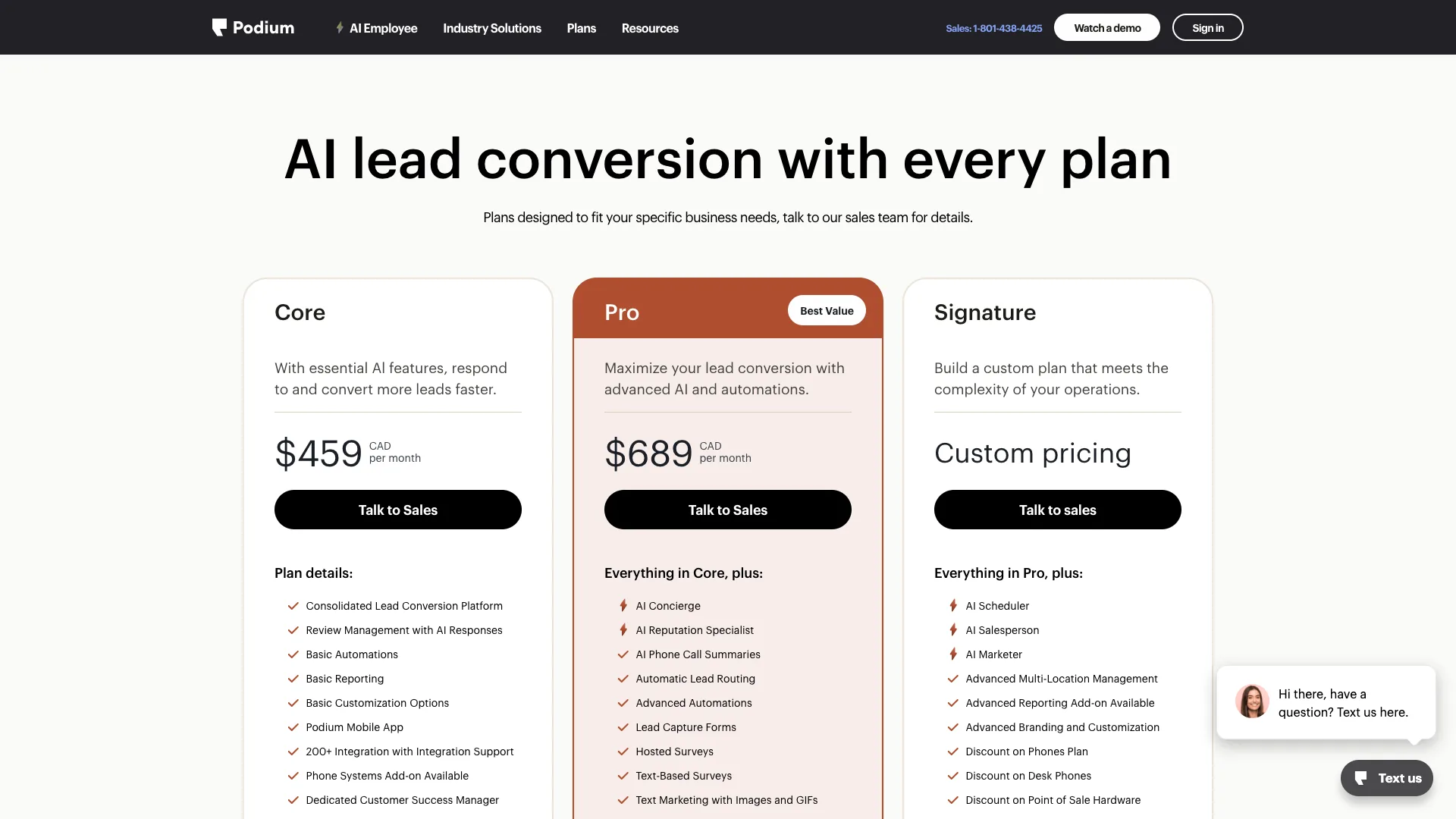 Jul 31, 2026
 Tech Stack
Podium vs Birdeye 2026: Pricing, Contracts and Review Gating
Only one of these two will tell you what it costs before a sales call, and even that number carries a carve-out aimed squarely at trade contractors.
Read Article Jul 31, 2026
 Tech Stack
Best Electrical Contractor Software 2026: 11 Ranked and Priced
An electrical contracting business makes two software purchases that do not substitute for each other, and every roundup answering this query covers only one of them. Eleven platforms, with a published price or an explicit statement that the vendor publishes none.
Read Article Jul 31, 2026
 Tech Stack
Best HVAC Software in 2026: Eleven Ranked Across Three Classes
An HVAC contracting business buys across three classes of software that do not substitute for each other, and every roundup answering this query covers only one of them. Eleven products, each with a published price or an explicit statement that the vendor publishes none.
Read Article Jul 30, 2026
 Tech Stack
AccuLynx Pricing 2026: The Real Cost of a Quote-Gated Plan
One published figure, two blank plan cards, and a contract that says things the pricing page does not. A line-by-line breakdown of what AccuLynx really bills.
Read Article Jul 30, 2026
 Tech Stack
Houzz Pro Canada Review 2026: Pricing and Alternatives
Houzz Pro serves different pricing renderings. What Canadian buyers see, how GST/HST and payments work, what Custom gates, and what the annual contract commits you to.
Read Article Jul 30, 2026
 Tech Stack
JobNimbus Pricing in 2026: What the Quote Does Not Cover
JobNimbus prints no figure on any of its four plans. So the only rate you can read before a sales call is the payments meter, and it is the biggest line on the bill.
Read Article Jul 30, 2026
 Tech Stack
JobNimbus Review 2026: Pricing, Pros, Cons and Alternatives
JobNimbus rates 4.6 on Capterra and orders material straight from ABC Supply and SRS. But it publishes no price, and its supplement route carries a note.
Read Article Jul 30, 2026
 Tech Stack
BuildOps Review 2026: Pricing, Contract Terms and Alternatives
BuildOps runs commercial service and projects on one platform, and publishes no pricing at all. The billing unit, the 30-day data-export window, and who it suits.
Read Article Jul 30, 2026
 Tech Stack
FieldPulse Review 2026: Pricing, Pros, Cons and Alternatives
FieldPulse rates 4.6 on Capterra and is the platform contractors name when they leave a bigger system. But it publishes no price, and the contract runs a year.
Read Article Jul 30, 2026
 Tech Stack
Service Fusion Review 2026: Pricing, Contract and Alternatives
Service Fusion bills flat per company with unlimited users, which is the best structural deal in field service software. The published plans, the contract behind the no-contract line, and the app score every other review gets wrong.
Read Article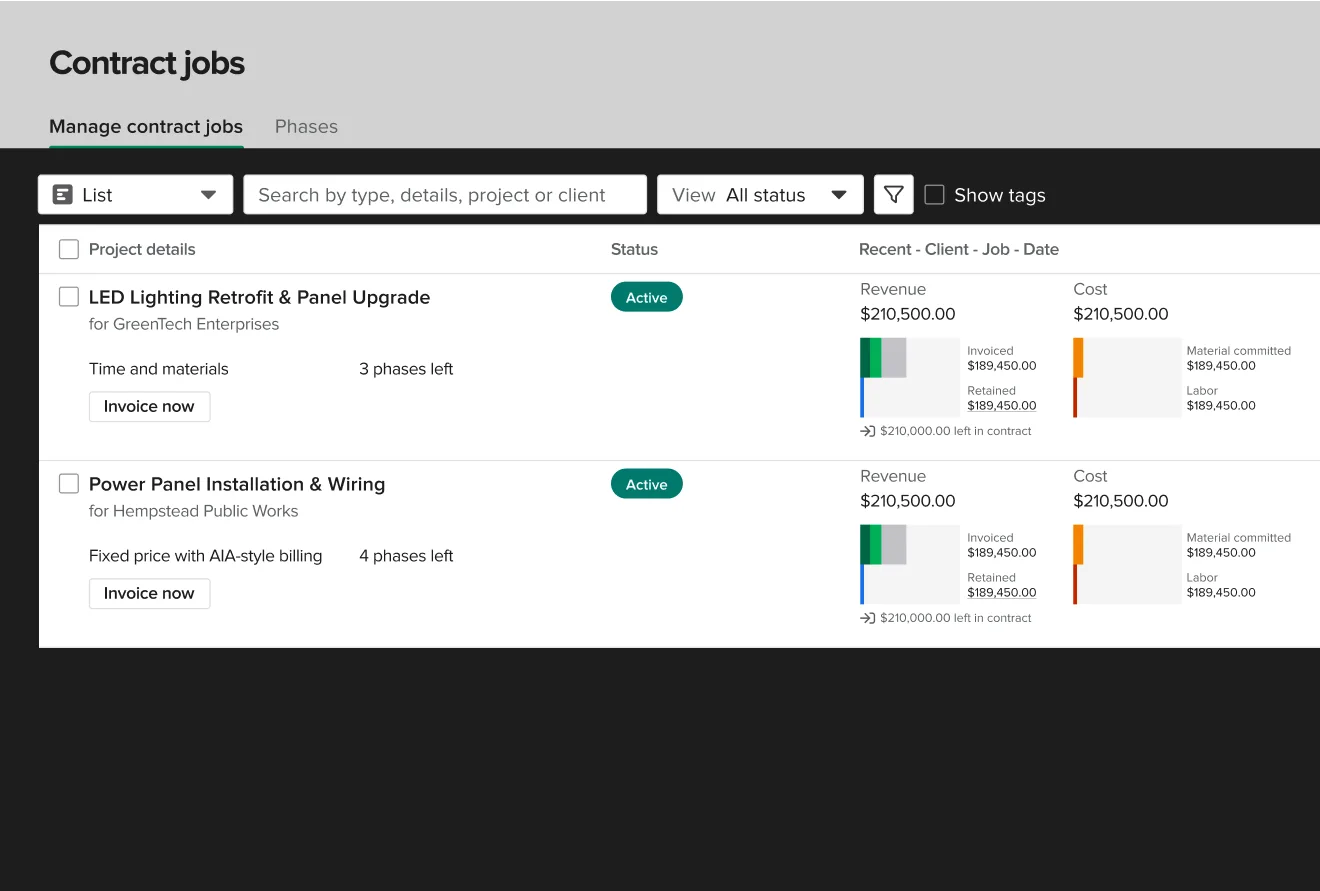 Jul 30, 2026
 Tech Stack
Knowify Review 2026: Pricing, Job Costing and Alternatives
Knowify rates 4.5 on Capterra and its weakest sub-score is features. What the $99 Core plan withholds, which way the QuickBooks sync really runs, and who should not buy it.
Read Article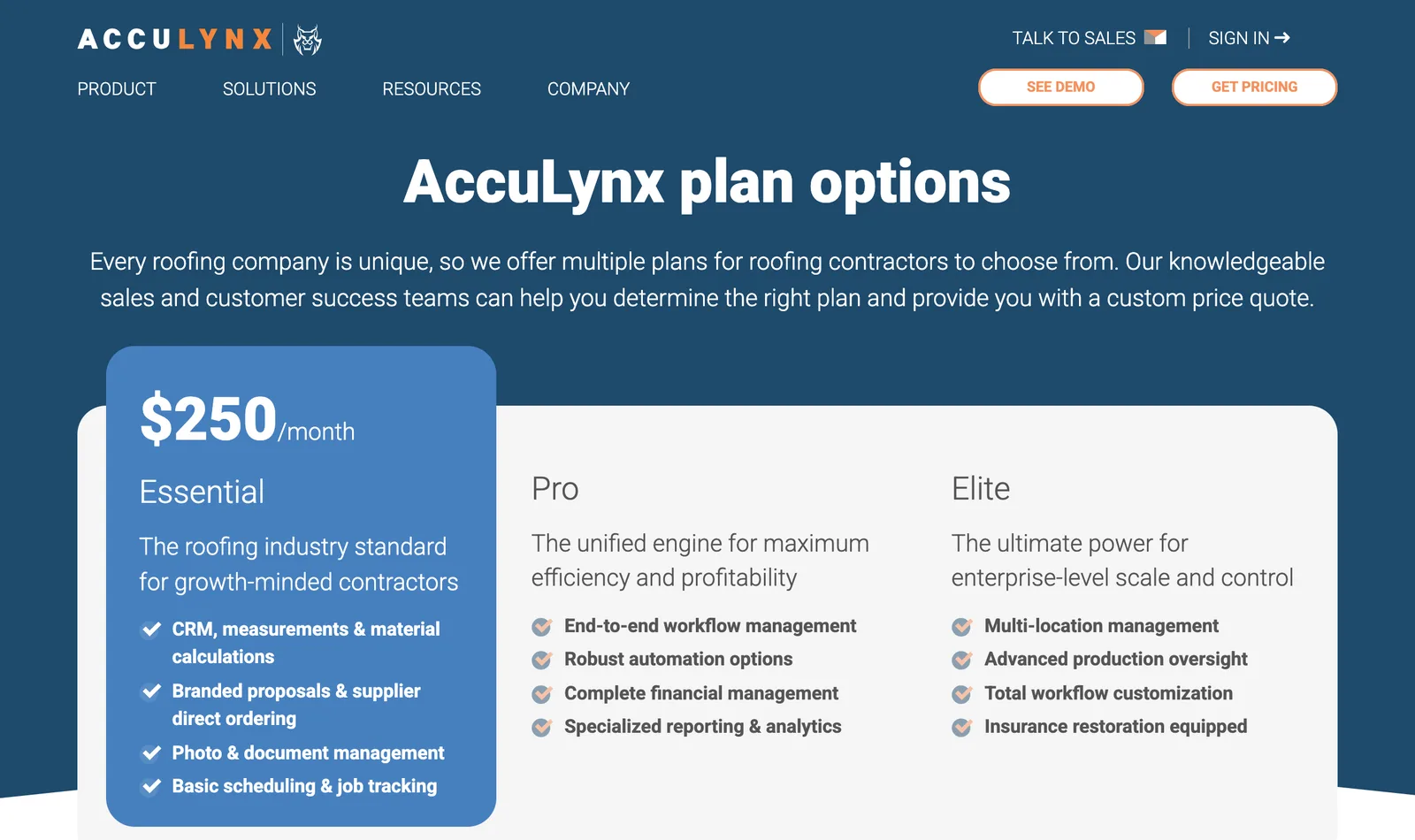 Jul 29, 2026
 Tech Stack
AccuLynx Review 2026: Pricing, Tier Gating, Alternatives
AccuLynx rates 4.6 across 846 reviews and now publishes an entry price. What that price omits, which tier holds the insurance workflow, and who should skip it.
Read Article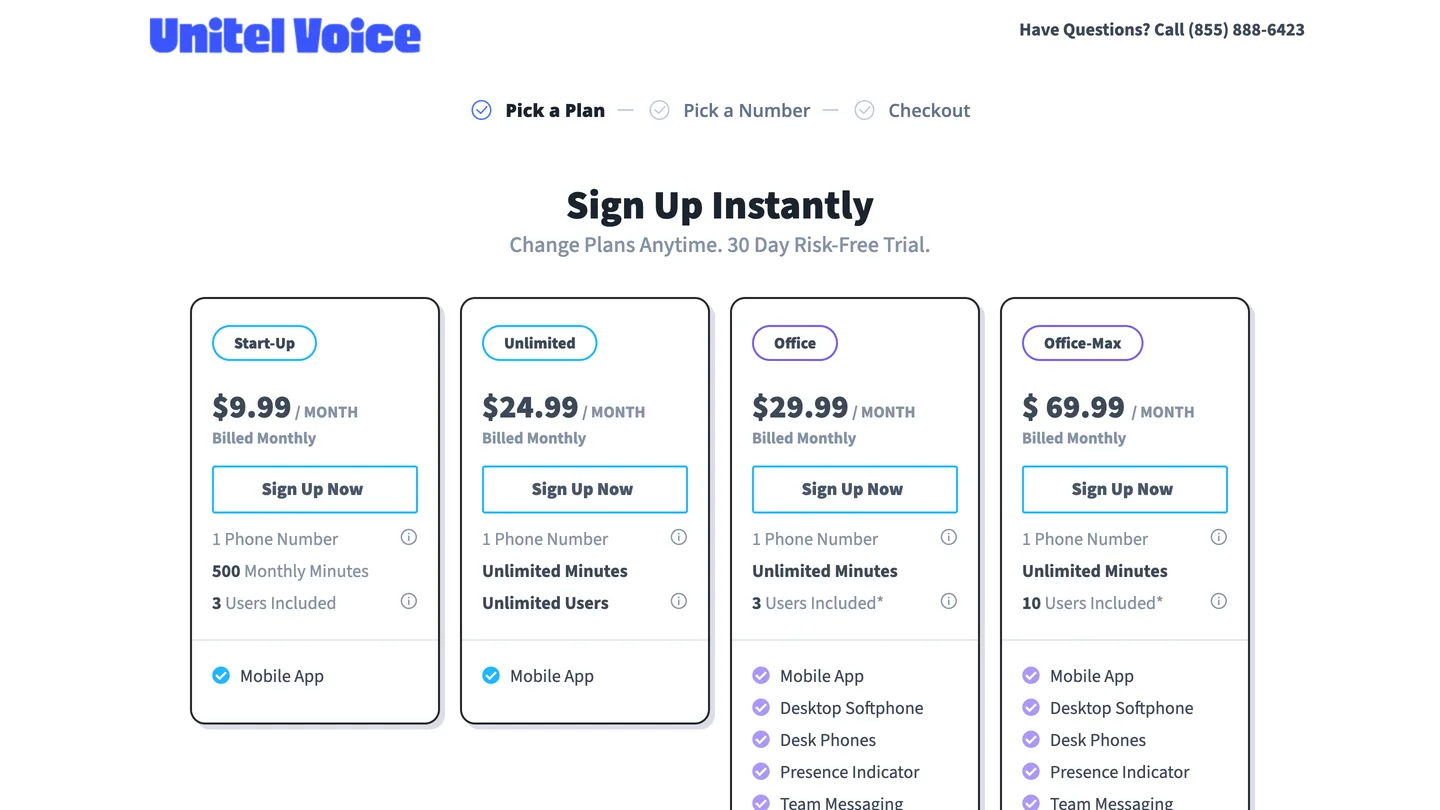 Jul 29, 2026
 Tech Stack
Unitel Voice Review 2026: Pricing, Features and Alternatives
Unitel Voice rates 4.6 on Capterra and gives a one-truck shop a business number for $9.99 a month. The published plans, the cost per call, and what it won't do.
Read Article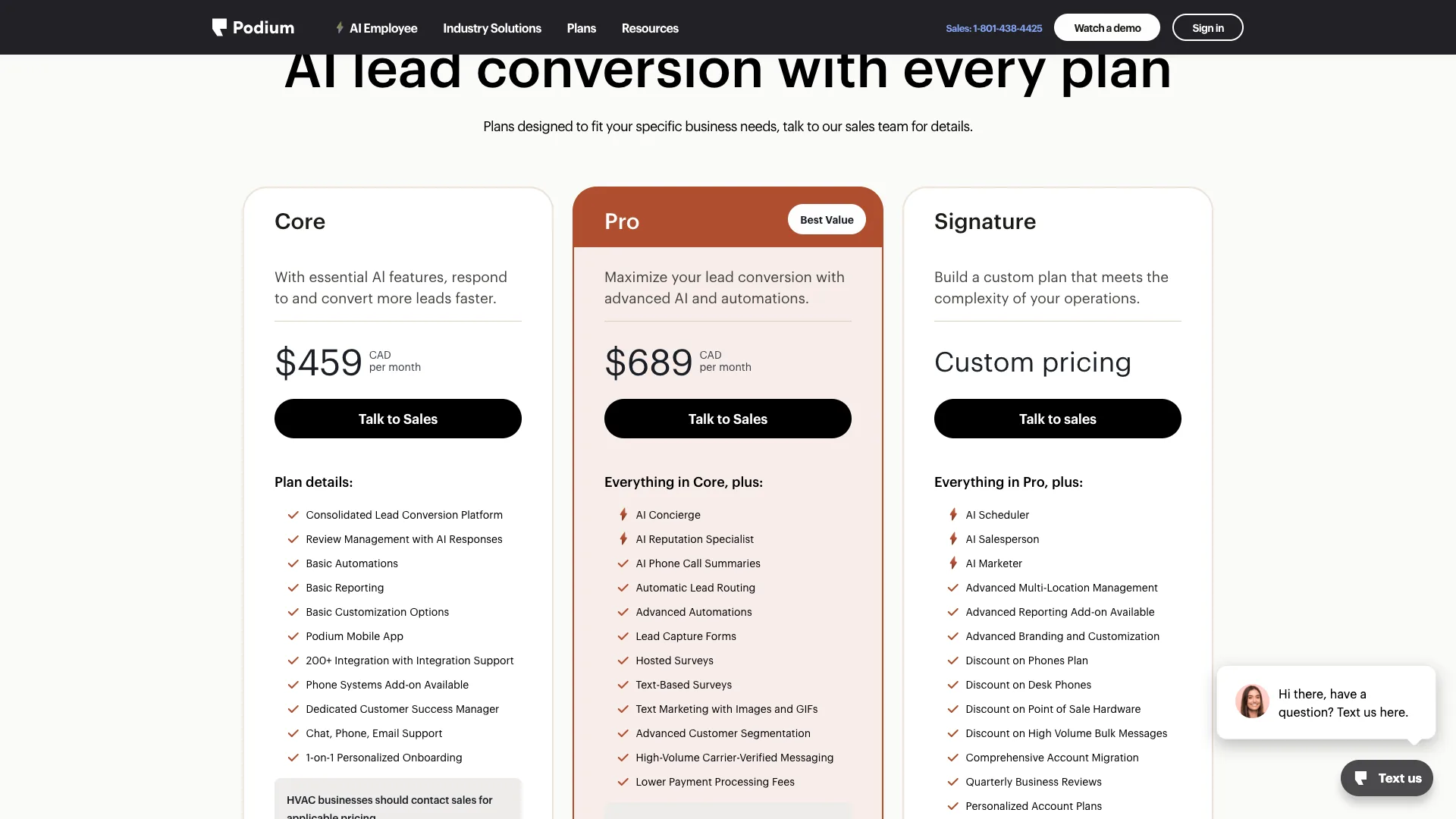 Jul 29, 2026
 Tech Stack
NiceJob vs Podium 2026: Pricing, Contracts and Review Gating
Both vendors print a price, at very different scale and in different currencies. The gap that matters is what Podium will not print: the billing unit, and whether a trade shop gets the number on the page.
Read Article Jul 28, 2026
 Tech Stack
CompanyCam Review 2026: Pricing, Pros, Cons and Alternatives
Every page ranking for CompanyCam still quotes a per-user price the vendor no longer charges. Here are the real plans, the seat math, and who should skip it.
Read Article Jul 28, 2026
 Tech Stack
NiceJob Review 2026: Pricing, Pros, Cons and Alternatives
NiceJob rates 4.9 on Capterra and refuses to gate negative reviews. Real plan pricing, the active-customer threshold nobody publishes, and who should skip it.
Read Article Jul 27, 2026
 Tech Stack
Buildertrend Review 2026: Pricing, Limits and Alternatives
Buildertrend rates 4.5 across 2,486 Capterra reviews and quotes against your revenue rather than your seat count. The workflows, the export problem, the alternatives.
Read Article Jul 27, 2026
 Tech Stack
CallRail Review 2026: Pricing, Pros, Cons and Alternatives
CallRail rates 4.5 on Capterra, and its tracking numbers port out free. But the two usage rates that decide your real bill are the two it does not print.
Read Article Jul 27, 2026
 Tech Stack
Roofr Review 2026: Pricing, Pros, Cons and Alternatives
Roofr rates 4.6 on Capterra and sells $13 measurement reports against a market charging triple. But it will not import a report from anywhere else.
Read Article Jul 25, 2026
 Tech Stack
Housecall Pro Review 2026: Pricing, Pros, Cons, Alternatives
Housecall Pro has the shortest learning curve in the category and the widest review spread. Real pricing, the Instapay math, and the migration trap to plan around.
Read Article Jul 24, 2026
 Tech Stack
Jobber Review 2026: Pricing, Pros, Cons and Alternatives
Jobber rates 4.6 on Capterra with the best mobile app in the category. Real plan pricing, the feature gating that changes your entry price, and who it suits.
Read Article Jul 23, 2026
 Tech Stack
ServiceTitan Review 2026: Pricing, Pros, Cons, Alternatives
ServiceTitan rates 4.3 on Capterra but its weakest score is value for money. Real reported pricing, the 12-month contract, the exit fees, and who it suits.
Read Article Jun 3, 2026
 Tech Stack
HVAC Online Scheduling: The 43% Losing After-Hours Bookings
HVAC leads every trade on online booking at just 56.7%, which still leaves 43% of sites forcing an after-hours customer to wait for a business-hours phone call.
Read Article