Microvellum Review 2026: Pricing, Pros, Cons, Alternatives
Third-party contract data puts real numbers on Microvellum. The 7 gaps reviewers name, and 6 alternatives that publish a price upfront.
Page at a glance
Microvellum is A deeply configurable AutoCAD/BricsCAD-hosted engine that turns a millwork drawing into CNC-ready parts, sold only by quote, with a ramp measured in months and no way to try it first. It publishes no price, so the only way to get a number is to ask a salesperson for one. The EULA defines four licence types for builds 23.1.1205.641 and greater, and the difference between them decides what a second seat costs you. A Float License Activation permits 'concurrent usage on any number of computer hardware machines only so long as the maximum number of concurrent users does not exceed the permitted number of users granted by the Licensor'. A Single License Activation is 'non-concurrent usage on a single (1) computer hardware machine retained for use by an identifiable user' and 'is not valid for machine virtualization'. A Writable License File is a one-time offline activation good for a 12-month subscription period. A Named User Subscription is the type you are given if you run Microvellum in a virtualised environment, and once its term expires 'access to the SOFTWARE PRODUCTS will automatically be deactivated unless renewed by the Licensee'. Section 1.5 sets the floor: 'Except as otherwise explicitly permitted by Microvellum, you may not Install or access the SOFTWARE PRODUCT other than on one (1) computer at a time.' A shop that outsources drafting pays twice, because a remote drafter needs their own licence and the shop still needs one on its end. It fits A 10 to 100 person commercial casework or architectural millwork shop that already runs a nested-base CNC router and can put one person on library engineering close to full time for the first six months It's the wrong buy for A freelance millwork draftsman or a one-person drafting service trying to add Microvellum as a marketable skill, because You can't learn it without buying it. Microvellum told a draftsman in exactly this position that trial versions are not offered, and a 17-year user told him that without a licence he was dead in the water. And even if you buy, a shop owner in the same thread explained that a freelancer needs to own a licence and the client shop still needs one on its end, so the arrangement costs two seats. So with no published price and a reported bundled entry near 50k in 2023, a solo practitioner has no viable path in. Alternatives that publish their prices are Mozaik Manufacturing from $125, SketchList 3D from $599.99, 2020 Design Flex from CA$2,095. A quote-only price and what third parties report instead, seven evidenced gaps and six alternatives, four of which publish a figure.
Start here if Microvellum is on your shortlist
Microvellum earns its money with A 10 to 100 person commercial casework or architectural millwork shop that already runs a nested-base CNC router and can put one person on library engineering close to full time for the first six months If that's you, it does the job. The sections below are the parts worth checking before you sign. But the fit is narrower than the marketing suggests, and the price isn't the whole cost.
The vendor publishes no price. But every number below was verified on 7 August 2026 and comes from a named third party that says which.
| Pricing model | Custom quote, no published price |
|---|---|
| Entry price | Quote only |
| Users | The EULA defines four licence types for builds 23.1.1205.641 and greater, and the differen |
| Ownership | INNERGY |
| Best fit | A 10 to 100 person commercial casework or architectural millwork shop that already runs a nested-base CNC router and can put one person on library engineering close to full time for the first six months |
| Accounting sync | INNERGY ERP (two-way), QuickBooks, Xero, Sage and every other general ledger (none) |
What works
- The whole system exists to end in machine-ready output, and it covers manual shops as well as nested-base routers
- The product library is the real system, and it's driven by spreadsheet formulas you have to learn
- Estimating runs off the same product data the engineers use, which is the structural argument for the platform
- The office side of the job leaves Microvellum entirely and lands in the parent company's ERP
- Toolbox lives inside somebody else's CAD application, and the vendor changed which one
What does not
- There's no trial version at any price, so the only way to evaluate Microvellum is to buy it
- The ramp is measured in months of a senior person's time, and that cost is invisible in the quote
- The perpetual licence is gone, and the EULA makes the conversion to subscription explicitly irreversible
- Support explicitly excludes your outside drafter, your IT, your SQL server and your data recovery
- Falling three major releases behind ends your updates and your support, so the subscription is effectively an upgrade obligation
Microvellum is A deeply configurable AutoCAD/BricsCAD-hosted engine that turns a millwork drawing into CNC-ready parts, sold only by quote, with a ramp measured in months and no way to try it first. It sells to Custom home building and Kitchen and bath contractors, and the shape of the product follows from that: Microvellum positions itself across the full manufacturing range rather than assuming a router, and its partner directory backs that up with 56 named CNC machinery manufacturers. The vendor claims machine-ready code generated directly from designs with automated tool pathing and material optimisation. The most credible independent confirmation comes from a Long Island millwork operator who used Microvellum alongside AlphaCAM, Cabinet Vision, Inventor and Fusion 360 and still routed his CNC-ready parts and assembly drawings through Microvellum, while reaching for AlphaCAM only for the odd geometry.
Ownership matters here more than it usually does. Microvellum is owned by INNERGY, so weigh roadmap risk alongside the feature list. An independent product can be bought and folded into somebody else's plan two years after you sign.
Who should be shortlisting Microvellum
It fits A 10 to 100 person commercial casework or architectural millwork shop that already runs a nested-base CNC router and can put one person on library engineering close to full time for the first six months That's the half most reviews print. Here's the other half, which is the one worth your time.
Don't buy it if you're A freelance millwork draftsman or a one-person drafting service trying to add Microvellum as a marketable skill. You can't learn it without buying it. Microvellum told a draftsman in exactly this position that trial versions are not offered, and a 17-year user told him that without a licence he was dead in the water. And even if you buy, a shop owner in the same thread explained that a freelancer needs to own a licence and the client shop still needs one on its end, so the arrangement costs two seats. So with no published price and a reported bundled entry near 50k in 2023, a solo practitioner has no viable path in. Look at SketchList 3D instead.
Don't buy it if you're A one to five person residential cabinet shop working from a table saw and a slider with no CNC router. Microvellum will run without CNC and the vendor says so, but you would be buying a quoted, no-trial, six-month-ramp engineering platform for its cut lists. But the economics don't survive contact with the alternatives, because Mozaik publishes $125 a month for exactly the non-CNC table-saw case and SketchList 3D publishes $599.99 a year with a 14-day trial. And neither requires an AutoCAD or BricsCAD subscription underneath it. Look at Mozaik Manufacturing instead.
Don't buy it if you're A shop that outsources one hundred percent of its drafting and wants the software only for CNC output. The support agreement excludes subcontractors and third-party companies by name, so the people doing your drafting can't open a ticket. And each of them needs their own licence, while the EULA forbids sharing one, since a Single License Activation is tied to one machine and one identifiable user and section 1.5 permits access on only one computer at a time. So you'd be paying for seats, support you can't use, and a six-month library ramp that belongs to somebody outside your company. Look at Cabinet Vision instead.
Don't buy it if you're A buyer who needs a firm budget number before starting a procurement process. Microvellum publishes no price on any page, offers no trial, and routes every pricing question to Contact Sales or an Account Manager. The only public figure is one buyer's self-reported bundled 2023 deal, and even he flagged that it included services you might not need. So if your board or your bank needs a number this quarter, the alternatives that publish real pricing will get you there and Microvellum won't. Look at 2020 Design Flex instead.
What you'll pay Microvellum in year one
You won't find a number on Microvellum's pricing page. What you'll find is a form. So the honest version of this section is about what the form asks and what the quote is indexed to.
The vendor's own wording is this, and nothing more: "Microvellum's packaging page is the closest thing the site has to a pricing page, and it describes the commercial model in full without ever naming a number. It explains that there is one package and an annual subscription with annual or monthly billing, then routes the price question to a Contact Sales button. No dollar figure appears anywhere on the packages page, the products page, or the homepage FAQ." So treat every third-party page printing tier names and figures for Microvellum with careful suspicion. Those numbers are not on the vendor's site today, and a roundup that reprints them is telling you what Microvellum used to charge somebody else.
And we aren't going to print a per-month number we can't open a vendor page and read. What exists instead is third-party reporting, dated, from people who saw real contracts. Read it as a range rather than as a quote you can hold anyone to.
| Reported range | Reported on | Source |
|---|---|---|
| close to 50k USD for a bundled 2023 purchase including onsite CNC integration, 40 hours of onsite training and custom setup; the subscription option didn't exist at that time | 2026-01-30 | A shop owner posting in WOODWEB's CAD forum, asked directly what a Microvellum licence costs, answered: 'When we purchased MV in 2023 the cost was close to 50k. However that includes many things you woudln't necesarily need.' He itemised what was inside that number: an onsite person to integrate Microvellum with the shop's CNC machine, 40 hours of onsite training, and the time to set the software up to the shop's specific manufacturing requirements. He added the licensing-model detail that matters most for anyone comparing quotes across years: 'In 2023 they did not offer subscriptions, but they do now.' This is a single self-reported figure from one buyer, for one bundled 2023 deal, and it is not a list price. |
| $30-$40K cited in 2014 as the cost of moving to a comparable system | 2014-12-16 | In an earlier WOODWEB thread, a Microvellum user arguing against switching to a competitor put the replacement cost of a comparable cabinet CAD/CAM system at '$30-$40K' and treated that as the sunk-cost scale of what a Microvellum implementation already represents. It is a 2014 order-of-magnitude reference from a user rather than a vendor figure, and it predates the subscription model entirely. |
The EULA defines four licence types for builds 23.1.1205.641 and greater, and the difference between them decides what a second seat costs you. A Float License Activation permits 'concurrent usage on any number of computer hardware machines only so long as the maximum number of concurrent users does not exceed the permitted number of users granted by the Licensor'. A Single License Activation is 'non-concurrent usage on a single (1) computer hardware machine retained for use by an identifiable user' and 'is not valid for machine virtualization'. A Writable License File is a one-time offline activation good for a 12-month subscription period. A Named User Subscription is the type you are given if you run Microvellum in a virtualised environment, and once its term expires 'access to the SOFTWARE PRODUCTS will automatically be deactivated unless renewed by the Licensee'. Section 1.5 sets the floor: 'Except as otherwise explicitly permitted by Microvellum, you may not Install or access the SOFTWARE PRODUCT other than on one (1) computer at a time.' A shop that outsources drafting pays twice, because a remote drafter needs their own licence and the shop still needs one on its end.
What isn't in the Microvellum number you get quoted
Payment processing. Microvellum sells software, not payments, and no processing rate appears anywhere on the site. So ask instead how the annual subscription is invoiced, whether monthly instalments carry a finance charge over the annual figure, and whether the Proposal permits payment by ACH rather than card.
Implementation and onboarding. Implementation is a paid, separately scoped engagement, and the vendor's own page separates it from the free training. Microvellum offers Microvellum University at no charge, then says 'Professional Services: Work with experienced industry experts who understand your workflows and can help tailor Microvellum to suit your needs.' The one buyer on the public record who broke out his 2023 spend said it included an onsite integrator for the CNC machine, 40 hours of onsite training, and custom setup time, and that even after all of it, 'it took 6 months of me sitting at my desk to get everything dialed in as well as keep production moving.'
Minimum term. The commercial term is one year. The packages page describes an annual subscription with annual or monthly billing, and the support page confirms the service side runs on the same clock: 'Your support and maintenance plan is valid for one year.' Monthly billing is a payment cadence inside an annual commitment, not a monthly contract, because the homepage FAQ frames it as 'full access to all features, updates, and technical support for an entire year—with the flexibility to pay annually or in monthly installments.'
Getting out. The EULA lets you terminate the licence agreement but not the money. Section 7(i) reads: 'You may terminate it at any time by notifying Microvellum in writing of your intent to terminate this EULA and uninstalling and returning the SOFTWARE PRODUCT to Microvellum, together with all copies, modifications and merged portions in any form. This EULA will terminate automatically upon your failure to comply with any term or condition contained in this EULA or the General Terms. Termination of this EULA does not affect or modify any payment obligations under the Proposal.' The commercial cancellation terms live in the Proposal and the General Terms, neither of which Microvellum publishes.
Auto-renewal. There is no self-serve renewal or cancellation path. The vendor's own answer to 'How do I renew my subscription?' is: 'To renew your subscription, please reach out to your account manager to discuss updating your account. If you're unsure who to contact, their details can be found in the Help/About section of Toolbox.' The support plan carries a proactive-outreach renewal instead: 'You will receive a notification before the renewal date, and our team will proactively reach out to ensure your plan remains active.' Whether the underlying subscription auto-renews is governed by the unpublished Proposal, so the renewal mechanics have to be read in the contract you are handed.
Modules sold separately. , . But the entry tier is not the price you'll pay. Add the modules your shop needs on day one and compare Microvellum on that total.
Third-party services you will also pay for. , , , . These are not on Microvellum's invoice, and they are still part of what this decision costs you every month.
"Third-party reporting puts Microvellum at close to 50k USD for a bundled 2023 purchase including onsite CNC integration, 40 hours of onsite training and custom setup; the subscription option didn't exist at that time, reported 2026-01-30."
A shop owner posting in WOODWEB's CAD forum, asked directly what a Microvellum licence costs, answered: 'When we purchased MV in 2023 the cost was close to 50k. However that includes many things you woudln't necesarily need.' He itemised what was inside that number: an onsite person to integrate Microvellum with the shop's CNC machine, 40 hours of onsite training, and the time to set the software up to the shop's specific manufacturing requirements. He added the licensing-model detail that matters most for anyone comparing quotes across years: 'In 2023 they did not offer subscriptions, but they do now.' This is a single self-reported figure from one buyer, for one bundled 2023 deal, and it is not a list price. (1-30)
And this is the kind of thing you only find by reading the complaints. Microvellum ended perpetual ownership through a component swap rather than a pricing announcement, and wrote the one-way door into the EULA. The trigger was technical, since replacing the AutoCAD OEM API with a Bricsys-licensed component genuinely required relicensing, but the commercial effect was to convert an installed base of owners into subscribers on a deadline, with suspension as the penalty for inaction. So anyone still comparing a remembered Microvellum purchase price against a current quote is comparing two different products commercially. And ask what the annual figure is in years two and three, because the conversion removed your only leverage.
The Microvellum costs that land afterwards
The subscription is the part everyone quotes. These are the lines that land afterwards, and the ones we could not find are named as unpublished rather than left blank.
Sold separately. , . Price the configuration you'll really run, because an add-on you need on day one is part of the price.
Third-party services you'll also pay for. , , , . None of these are on Microvellum's invoice, and all of them are part of what this decision costs every month.
"Microvellum answers the question of what it costs with this and nothing else: "Microvellum's packaging page is the closest thing the site has to a pricing page, and it describes the commercial model in full without ever naming a number. It explains that there is one package and an annual subscription with annual or monthly billing, then routes the price question to a Contact Sales button. No dollar figure appears anywhere on the packages page, the products page, or the homepage FAQ.""
Microvellum pricing page (2026)
"The EULA defines four licence types for builds 23.1.1205.641 and greater, and the difference between them decides what a second seat costs you. A Float License Activation permits 'concurrent usage on any number of computer hardware machines only so long as the maximum number of concurrent users does not exceed the permitted number of users granted by the Licensor'. A Single License Activation is 'non-concurrent usage on a single (1) computer hardware machine retained for use by an identifiable user' and 'is not valid for machine virtualization'. A Writable License File is a one-time offline activation good for a 12-month subscription period. A Named User Subscription is the type you are given if you run Microvellum in a virtualised environment, and once its term expires 'access to the SOFTWARE PRODUCTS will automatically be deactivated unless renewed by the Licensee'. Section 1.5 sets the floor: 'Except as otherwise explicitly permitted by Microvellum, you may not Install or access the SOFTWARE PRODUCT other than on one (1) computer at a time.' A shop that outsources drafting pays twice, because a remote drafter needs their own licence and the shop still needs one on its end."
Microvellum pricing page (2026)
"Microvellum is reported at close to 50k USD for a bundled 2023 purchase including onsite CNC integration, 40 hours of onsite training and custom setup; the subscription option didn't exist at that time as of 2026-01-30."
A shop owner posting in WOODWEB's CAD forum, asked directly what a Microvellum licence costs, answered: 'When we purchased MV in 2023 the cost was close to 50k. However that includes many things you woudln't necesarily need.' He itemised what was inside that number: an onsite person to integrate Microvellum with the shop's CNC machine, 40 hours of onsite training, and the time to set the software up to the shop's specific manufacturing requirements. He added the licensing-model detail that matters most for anyone comparing quotes across years: 'In 2023 they did not offer subscriptions, but they do now.' This is a single self-reported figure from one buyer, for one bundled 2023 deal, and it is not a list price. (1-30)
The five workflows you pay for
Feature totals are noise. So a shop in this category lives or dies on five things, and those are the five to grade, and each one below carries the evidence it's graded on.
The whole system exists to end in machine-ready output, and it covers manual shops as well as nested-base routers Microvellum positions itself across the full manufacturing range rather than assuming a router, and its partner directory backs that up with 56 named CNC machinery manufacturers. The vendor claims machine-ready code generated directly from designs with automated tool pathing and material optimisation. The most credible independent confirmation comes from a Long Island millwork operator who used Microvellum alongside AlphaCAM, Cabinet Vision, Inventor and Fusion 360 and still routed his CNC-ready parts and assembly drawings through Microvellum, while reaching for AlphaCAM only for the odd geometry. A cad/cam operator at a high-end custom millwork shop on long island who reviewed it on 2016-12-30 puts it: "I will say setting up Microvellum and getting it working for your particular build style is no easy task. But once you get it and understand the spreadsheet formulas that drive the program/cabinetry you are golden."
The product library is the real system, and it's driven by spreadsheet formulas you have to learn Every strength and every complaint in this bank traces back to the same architecture. Microvellum's differentiator is configurable product logic rather than a fixed catalogue, and the vendor describes personalising everything from product libraries to design workflows. And users describe the same thing from the inside as a spreadsheet-formula layer that must be understood before the software pays off, and as the reason a 40-hour training block only gets you started. So this is why the tool rewards a shop with a dedicated library owner and punishes one without. A cad/cam operator at a high-end custom millwork shop on long island, writing on 2016-12-30, describes it: "I will say setting up Microvellum and getting it working for your particular build style is no easy task. But once you get it and understand the spreadsheet formulas that drive the program/cabinetry you are golden."A shop owner who bought microvellum in 2023 and outsources drafting, ~2 years on the platform, writing on 2026-01-26, describes it: "Microvellum isn't a simple product. When we purchased a little over two years ago, we also paid for 40 hours of on site training. That 40 hours was just enough to get us started, it took 6 months of me sitting at my desk to get everything dialed in as well as keep production moving."
Estimating runs off the same product data the engineers use, which is the structural argument for the platform Microvellum's pitch to estimators is that quantities come out of the model rather than out of a parallel spreadsheet, so material lists and quotes share a source of truth with engineering. The vendor claims detailed reports covering material usage and optimisation, cut lists and pricing, with calculations for material, hardware, labour and overhead. And that single-source claim is the honest reason a shop tolerates the ramp, because the alternative in most millwork shops is a drafter and an estimator maintaining two versions of the same job.
The office side of the job leaves Microvellum entirely and lands in the parent company's ERP Microvellum doesn't run purchasing, job costing or scheduling itself. Those live in INNERGY ERP, which since the acquisition is a sibling product rather than a third party. The vendor frames the handoff as bill of materials and cut lists flowing into purchasing, job costing and scheduling, and describes the architecture as open. But what a buyer should notice is that the ERP recommendation and the CAD vendor are now the same company, which makes the integration story stronger and the vendor concentration higher.
Toolbox lives inside somebody else's CAD application, and the vendor changed which one Toolbox is an add-on layer for AutoCAD or BricsCAD rather than its own drawing environment, which is precisely why AutoCAD-fluent millwork drafters find it approachable and why the tool inherits a second subscription. And the deeper change is under the hood: Microvellum retired the AutoCAD OEM API component and replaced it with a Bricsys-licensed Toolbox BSB component as of July 20, 2025, which pulled a third party's EULA into the stack and forced the perpetual-to-subscription conversion at the same time.
Which trades get value from Microvellum
Fit differs by trade rather than by company size alone, and a blended paragraph hides that. Here is the split for the trades this one sells to.
Custom home building. The workflow that decides it is the whole system exists to end in machine-ready output, and it covers manual shops as well as nested-base routers, and the shop profile that gets value is ten to one hundred person commercial casework or architectural millwork shop running nested-base or cell-based cnc doing residential and commercial work. Where it stops being a fit is A freelance millwork draftsman or a one-person drafting service trying to add Microvellum as a marketable skill.
Kitchen and bath. The workflow that decides it is the whole system exists to end in machine-ready output, and it covers manual shops as well as nested-base routers, and the shop profile that gets value is ten to one hundred person commercial casework or architectural millwork shop running nested-base or cell-based cnc doing residential and commercial work. Where it stops being a fit is A freelance millwork draftsman or a one-person drafting service trying to add Microvellum as a marketable skill.
The Microvellum accounting link, and where it stops
INNERGY ERP connects both ways, on every plan. QuickBooks, Xero, Sage and every other general ledger connects, on every plan. Your costs map through cost codes, so test yours against your own chart of accounts before you commit. A code your books don't recognise is how a labour charge quietly lands somewhere useless.
Past those, the road ends. QuickBooks Online, QuickBooks Desktop, Xero, Sage, A published API or developer documentation, Self-serve data export or account closure documentation, Any listing on Capterra, Software Advice or GetApp do not connect. So if your books run on an ERP rather than the platforms named above, weigh that before anything else.
Beyond accounting it connects to CNC machinery manufacturers (56 counted) (The bulk of the partner directory is machine connectivity rather than software integration. Counted individually from the page rather than estimated, the Integrated CNC Connectivity section lists 56 distinct manufacturers, including Homag, Biesse, SCM Group, Holzher, Stiles, CR Onsrud, Thermwood, Komo, Northwood, Felder, Giben, Masterwood, Multicam, ShopBot, ShopSabre and Anderson, alongside Kawasaki Robotics for automation cells.), Cabinet hardware manufacturers (20 counted) (The Hardware section lists 20 distinct manufacturers whose catalogues feed the product library, including Blum, Hettich, Hafele, Grass, Salice, Accuride, Richelieu, Rev-A-Shelf, Knape & Vogt, Kesseböhmer, Titus, King Slide, Lockdowel and Peka. This is what makes the library claim real, because hardware bore patterns are the part of a cabinet library nobody wants to build by hand.), Industry associations (11 counted) (The third section is trade-body affiliation rather than integration: AWFS, AWMAC, the Cabinet Makers Association, CKCA, WIA, WMCO, IWIN, the National Association of Shopfitters, the Manufacturing Guild Mark, the Interior Fitout Association and AWI. The page notes that Microvellum's president sits on the AWFS Education Committee.), AutoCAD and BricsCAD (The host CAD platform, which is a dependency rather than an integration. Toolbox runs inside one of the two, and since July 20, 2025 the underlying component is Bricsys-licensed rather than an AutoCAD OEM build.). A public API exists: Microvellum describes its architecture as open in the context of connecting to INNERGY, but publishes no API documentation, no developer portal and no integration guide on any reachable page. The EULA pushes hard in the other direction: it prohibits reverse engineering, decompiling and cross-compiling except as required for interoperability with independently created software, prohibits any service-bureau or outsourced commercial use, and expressly prohibits combining the software with AI, machine learning or open-source tooling in a way that would subject it to those licences. Treat integration as a professional-services conversation rather than something your own developer can do.
Microvellum support, onboarding and the hours
Support is the line item nobody prices and everybody eventually needs. Onboarding for Microvellum: Implementation is a paid, separately scoped engagement, and the vendor's own page separates it from the free training. Microvellum offers Microvellum University at no charge, then says 'Professional Services: Work with experienced industry experts who understand your workflows and can help tailor Microvellum to suit your needs.' The one buyer on the public record who broke out his 2023 spend said it included an onsite integrator for the CNC machine, 40 hours of onsite training, and custom setup time, and that even after all of it, 'it took 6 months of me sitting at my desk to get everything dialed in as well as keep production moving.'
On 2014-12-10, an owner of a commercial shop building custom cabinetry, reception desks, conference tables and office furniture describes it: "We currently have Microvellum and have been very unhappy with dealing with the company. Very poor customer service, never got the training we were supposed to get and they are nickel and diming us to death even though we pay a yearly contract fee. Is anyone else dealing with this or having issues with them/software. If so how are you dealing with it?"
But a reviewer, says it differently: "I agree that customer service and rep service is not what it used to be. Would not recommend Microvellum at this time. They are working on too many projects. Toolbox-not complete, poor SQL impementation Micromanager-not complete-cannot compete with are real ERP Fluid Designer-an add on to Toolbox and will rely on Toolbox working correctly, again not complete On and on, too many irons in the fire."
What happens when you want to leave Microvellum
Nobody reads this section before they buy, and it's the one that costs money afterwards. Four terms decide what leaving looks like.
Minimum term. The commercial term is one year. The packages page describes an annual subscription with annual or monthly billing, and the support page confirms the service side runs on the same clock: 'Your support and maintenance plan is valid for one year.' Monthly billing is a payment cadence inside an annual commitment, not a monthly contract, because the homepage FAQ frames it as 'full access to all features, updates, and technical support for an entire year—with the flexibility to pay annually or in monthly installments.'
Auto-renewal. There is no self-serve renewal or cancellation path. The vendor's own answer to 'How do I renew my subscription?' is: 'To renew your subscription, please reach out to your account manager to discuss updating your account. If you're unsure who to contact, their details can be found in the Help/About section of Toolbox.' The support plan carries a proactive-outreach renewal instead: 'You will receive a notification before the renewal date, and our team will proactively reach out to ensure your plan remains active.' Whether the underlying subscription auto-renews is governed by the unpublished Proposal, so the renewal mechanics have to be read in the contract you are handed.
Early termination. The EULA lets you terminate the licence agreement but not the money. Section 7(i) reads: 'You may terminate it at any time by notifying Microvellum in writing of your intent to terminate this EULA and uninstalling and returning the SOFTWARE PRODUCT to Microvellum, together with all copies, modifications and merged portions in any form. This EULA will terminate automatically upon your failure to comply with any term or condition contained in this EULA or the General Terms. Termination of this EULA does not affect or modify any payment obligations under the Proposal.' The commercial cancellation terms live in the Proposal and the General Terms, neither of which Microvellum publishes.
Payment processing. Microvellum sells software, not payments, and no processing rate appears anywhere on the site. So ask instead how the annual subscription is invoiced, whether monthly instalments carry a finance charge over the annual figure, and whether the Proposal permits payment by ACH rather than card.
A tangent, but stay with it. The parent company's next product is marketed on fixing Microvellum's single most documented weakness, which means the strongest critique of Microvellum on the public record is written by its own owner. Every headline benefit on that page is a direct answer to a documented Microvellum complaint: learning curve, update disruption, and the IT and SQL burden the support page disclaims. So a shop signing a Microvellum subscription in 2026 is buying into a desktop product whose owner is publicly building a cloud successor with no announced price or date. And ask the rep on the record what INNERGY Engineering means for the Microvellum roadmap and for library portability, and get the answer in writing before you commit to a multi-year library build.
"Microvellum is reported at $30-$40K cited in 2014 as the cost of moving to a comparable system as of 2014-12-16."
In an earlier WOODWEB thread, a Microvellum user arguing against switching to a competitor put the replacement cost of a comparable cabinet CAD/CAM system at '$30-$40K' and treated that as the sunk-cost scale of what a Microvellum implementation already represents. It is a 2014 order-of-magnitude reference from a user rather than a vendor figure, and it predates the subscription model entirely. (2-16)
"When we purchased MV in 2023 the cost was close to 50k. However that includes many things you woudln't necesarily need. For example: It included an onsite person to integrate MV to our CNC machine. It included 40 hours of onsite training, they have done a lot of work to develop their online training since then. It included the time to setup the software to our specific manufacturing requirements. In 2023 they did not offer subscriptions, but they do now."
WOODWEB CAD Forum, Jeff Thomas (1-30)
"We currently have Microvellum and have been very unhappy with dealing with the company. Very poor customer service, never got the training we were supposed to get and they are nickel and diming us to death even though we pay a yearly contract fee. Is anyone else dealing with this or having issues with them/software. If so how are you dealing with it?"
WOODWEB CAD Forum, David (2-10)
The Microvellum gaps worth raising on the call
And these are the gaps worth raising before you sign. They come out of reviewer complaints and out of what the vendor's own pages carefully don't say.
There's no trial version at any price, so the only way to evaluate Microvellum is to buy it A freelance draftsman asked Microvellum directly how he could learn the software without purchasing it, and posted the rep's reply verbatim. The answer pointed him at marketing videos and then closed the door. A 17-year user replied to the same thread with the practical translation, which is that without a licence you can't do anything. A shop owner in the thread defended the policy on the grounds that Microvellum builds a custom configuration for each customer before handover, which is a coherent explanation and also an admission that the product you evaluate wouldn't be the product you get. But either way, the buyer carries the full evaluation risk. And compare that with SketchList 3D, which publishes a 14-day free trial with no credit card. A freelance millwork draftsman, quoting verbatim the email he received from a microvellum sales rep, writing on 2025-10-15, says: "Thanks for reaching out to us for info on learning MV! If youre looking for a job I usually suggest watching out MVU video training series to get you a good understanding of how MV works. https://www.microvellum.com/microvellum-university We dont offer trial versions of the software for this purchase, however." Because you can't test-drive it, make the demo do the work a trial would. Send the rep three of your genuinely awkward past jobs, the curved reception desk and the out-of-square wall condition, and require them to build those live rather than their own showcase kitchen. Then ask for two current reference customers whose shop size and work mix match yours, and call them without the rep on the line.
The ramp is measured in months of a senior person's time, and that cost is invisible in the quote The most detailed public account of a recent implementation comes from a shop that bought in 2023 with 40 hours of paid onsite training included. The owner's summary is that the 40 hours was just enough to get started and that it then took him six months at his desk to get everything dialled in while keeping production moving. And a separate user of seventeen years says he's still learning it. Another user who eventually became an advocate describes setting the software up for a particular build style as no easy task, with the payoff arriving only once you understand the spreadsheet formulas driving the product library. But none of that internal labour appears on any proposal. On 2026-01-26, a shop owner who bought microvellum in 2023 and outsources drafting, ~2 years on the platform, describes it: "Microvellum isn't a simple product. When we purchased a little over two years ago, we also paid for 40 hours of on site training. That 40 hours was just enough to get us started, it took 6 months of me sitting at my desk to get everything dialed in as well as keep production moving." Price the implementation as a headcount decision, not a software decision. So work out the fully loaded cost of your best drafter being roughly half-productive for six months and add it to the quote before you compare Microvellum against anything else. And if you have no one who can own the library, the ramp doesn't happen at all.
The perpetual licence is gone, and the EULA makes the conversion to subscription explicitly irreversible Microvellum retired perpetual ownership on a fixed date and wrote the mechanics into the EULA rather than a pricing page. The Permanent Term definition now carries the line that the option is no longer available after July 20, 2025. Section 1.7 goes further: because the AutoCAD OEM component was replaced with a Bricsys-licensed one, 'all perpetual basis licenses to the SOFTWARE PRODUCTS must be converted to annual sublicense basis or trial basis as of the Conversion Date', the choice 'cannot be reverted back to permanent license basis' once confirmed, and a licensee who does not act in time faces 'the suspension of authorization credentials for the Toolbox BSB license as of the Conversion Date'. So a shop that bought outright before 2025 is now on a renewal treadmill it didn't originally sign up for. If you hold a legacy perpetual licence, read section 1.7 before you sign anything else, because the conversion is one-way by contract. And if you're buying new, get the renewal uplift cap written into the Proposal in writing, since the vendor's only published commitment is that the subscription exists.
Support explicitly excludes your outside drafter, your IT, your SQL server and your data recovery The support and maintenance page is unusually candid about its own boundaries, and every boundary lands on a cost a millwork shop incurs. Support doesn't extend to subcontractors or third-party companies authorised to use your licence, which is exactly how most shops staff drafting. It doesn't cover IT-related activities or new computer setup. It doesn't cover SQL server configuration, even though the installation depends on one. It doesn't cover data recovery, and the page refers you to your own IT team if you lose Microvellum data. Personalised training is likewise pushed to a paid session with an Account Manager. But what you do get is unlimited tickets plus phone, email and remote assistance during business hours. Count how many of the people who will touch Microvellum are on your payroll. And every one who isn't sits outside the support agreement and needs their own licence anyway, so add both lines to the model before you sign.
Falling three major releases behind ends your updates and your support, so the subscription is effectively an upgrade obligation Microvellum defines legacy as any version older than the last three major releases and states that legacy versions no longer receive updates or support. Combined with the EULA's activation-security clause, which can disable the software if you substantially alter your computer hardware, and with the 30-day offline limit after activation, the practical picture is a product that must be kept current and connected. And the EULA also makes updates conditional on payment: Microvellum 'is not obligated to provide UPDATES or support and maintenance services for the SOFTWARE PRODUCTS that are activated and registered, unless Customer has paid for support services under the Proposal'. So ask what a major release cadence looks like in practice and how much library rework each one has historically caused, because in a heavily customised Microvellum install the upgrade cost is the library revalidation, not the installer.
The vendor tells you there are no tiers and no later unlocks, then sells library add-ons on the next page Microvellum's packages page is built around a single promise: one complete package, with everything included, 'without the need to choose between tiers or unlock additional functionality later', reinforced by a bullet reading 'No tiered editions to navigate'. But the products page, one click away on the same site, ends its product-library section with a parenthesis that says the opposite: closets, office furniture, toilet partitions and staircases are optional add-ons. The parent company's Microvellum page uses the same add-on framing. So no price is published for any of them, and a buyer can't tell whether the add-ons are trivial or a second subscription. Write your actual product mix into the RFQ, closets and toilet partitions and stairs included by name, and require the quote to state which of them are inside the base package and what each add-on costs annually. And don't accept the packages page's no-tiers language as an answer.
Support quality is the single most persistent complaint pattern, and the only public evidence is a decade old The one substantial public thread about Microvellum's company behaviour ran in December 2014 and produced four separate users describing poor service inside a week, including one who said the shop was being nickel and dimed to death despite paying a yearly contract fee, one who would not recommend the product at that time, and one who called support horrible. In the same thread a long-tenured user described a workaround that still reads as current advice, which was to abandon phone support and file e-tickets with a screen recording instead, and another user reported that the software had stabilised and his issues had gone away. And Microvellum's own head of the company posted his direct line in the thread. But the honest limitation is that this evidence is from 2014 and Microvellum has since been folded into INNERGY, so nobody can tell you from public sources whether the pattern still holds. And an owner of a commercial shop building custom cabinetry, reception desks, conference tables and office furniture, writing on 2014-12-10, describes it the same thing: "We currently have Microvellum and have been very unhappy with dealing with the company. Very poor customer service, never got the training we were supposed to get and they are nickel and diming us to death even though we pay a yearly contract fee. Is anyone else dealing with this or having issues with them/software. If so how are you dealing with it?" Treat support as the reference-check question rather than a spec question. So ask two current customers how long their last three tickets took to resolve, and ask specifically whether they call or file tickets, because the workaround from 2014 tells you which channel worked.
One more thing worth knowing. The packages page promises there are no tiers and no later unlocks. The products page then sells library add-ons, and neither page prices them. Both statements are recorded here because the contradiction is the finding. And a commercial casework shop doing toilet partitions, or a closet company, sits squarely inside the add-on list and would read the packages page as covering them. So put your real product mix in the RFQ by name and require the quote to state which libraries are inside the base subscription and what each add-on costs annually. Don't let the no-tiers language substitute for that answer.
One more thing worth knowing. The EULA gags benchmark publication, grants Microvellum audit rights over your books, and floors its own liability at five dollars. The benchmark clause partly explains why independent performance comparisons in this category are so thin, which is worth remembering when you can't find them. The audit clause reaches your financial records, not just your machines, so a shop with a floating licence should track concurrent usage deliberately. The assignment asymmetry matters most right now, because it's the clause that let the agreement travel to INNERGY without customer consent, and it would let it travel again.
One more thing worth knowing. Almost every operational task a shop needs during a Microvellum rollout is carved out of the support agreement by name. The carve-outs are unusually honest, and every one of them converts into either an IT contractor invoice or a paid Professional Services session at exactly the moment you're least able to absorb it. So build a rollout budget line for a database-capable IT resource before you sign, and ask the rep to quote a Professional Services block up front rather than discovering the rate mid-implementation.
One oddity, filed under things nobody mentions on a demo. The independent evidence base for Microvellum is one woodworking forum, and the newest complaint thread there is from 2014. This is a category quirk with a real buying consequence. Microvellum is sold entirely through quoted enterprise deals with no self-serve tier, so it never accumulates the volume of small-buyer reviews that populate Gartner's properties. But the absence of reviews isn't evidence of quality in either direction, and it means your reference calls carry more weight here than for any tool with a public review page. So insist on speaking to two current customers of your size whom you selected from the vendor's client stories list rather than ones the rep offered.
What Microvellum users report
Every quote below is transcribed from a published review, named to the platform that carries it and to the reviewer as that platform displays them. We read the corpus by complaint type rather than by star rating, which is how the disqualifying detail buried inside a five-star review gets found.
"We currently have Microvellum and have been very unhappy with dealing with the company. Very poor customer service, never got the training we were supposed to get and they are nickel and diming us to death even though we pay a yearly contract fee. Is anyone else dealing with this or having issues with them/software. If so how are you dealing with it?"
But an owner of a commercial shop building custom cabinetry, reception desks, conference tables and office furniture, writes it differently on WOODWEB CAD Forum
"I agree that customer service and rep service is not what it used to be. Would not recommend Microvellum at this time. They are working on too many projects. Toolbox-not complete, poor SQL impementation Micromanager-not complete-cannot compete with are real ERP Fluid Designer-an add on to Toolbox and will rely on Toolbox working correctly, again not complete On and on, too many irons in the fire."
And a reviewer, writing on 2014-12-13, says the same thing on WOODWEB CAD Forum
"We are also frustrated with MV and looking for a replacement. Horrible customer support!"
A reviewer, writing on 2014-12-15, puts it on WOODWEB CAD Forum
"Support: I've been dealing with MV for close to 10 years. The problems with phone support have always been the same. I'm on the East Coast, so I can never get someone in the morning. About a year ago, I stopped calling. I now login and submit an eticket through their website. Much better support this way. You can explain the problem, and even record a video of the issue you're having. I have never had an eticket fall through the cracks. Usually I get the issue solved within a day and a half."
A long-time microvellum user, roughly 10 years at time of writing, ~10 years on the platform, writing on 2014-12-16, reports it on WOODWEB CAD Forum
"We have been using MV for about three years now and we did have major support issues at first. However, they seemed to revolve around the version 7 bugs and a lack of proper training. Now we are on the most up to date release of MV 2014 and the software is very stable and we have learned how to use the software. I rarely have any issues with it now and we use it daily."
A deas millwork who reviewed it on 2014-12-16 says on WOODWEB CAD Forum
"I just think that if you change to another software then you have to invest another $30-$40K and you still have to overcome the learning curve which you are partialy through with MV."
But a deas millwork, ~3 years on the platform, reports it it differently on WOODWEB CAD Forum
"Not to add insult to an already bad subject (MicroVellum), but I went to Oregon to take their training class and was called the Devils Advocate by the trainer and the acting President at the time. The instructor could not perform the most basic steps with the program, so I was kicked out as I was asking to many questions."
And a reviewer, writing on 2014-12-27, writes the same thing on WOODWEB CAD Forum
"I will say setting up Microvellum and getting it working for your particular build style is no easy task. But once you get it and understand the spreadsheet formulas that drive the program/cabinetry you are golden."
A cad/cam operator at a high-end custom millwork shop on long island who reviewed it on 2016-12-30 puts it on WOODWEB CAD Forum
"After 17 years I'm still learning MV. Without a license you are dead in the water."
A microvellum user of 17 years, answering a draftsman asking how to learn the software without buying it, 17 years on the platform, writing on 2025-11-07, reports it on WOODWEB CAD Forum
"Microvellum isn't a simple product. When we purchased a little over two years ago, we also paid for 40 hours of on site training. That 40 hours was just enough to get us started, it took 6 months of me sitting at my desk to get everything dialed in as well as keep production moving."
A shop owner who bought microvellum in 2023 and outsources drafting who reviewed it on 2026-01-26 says on WOODWEB CAD Forum
"If you want to work as a freelancer with Microvellum, you would need to own your own license. You could potentially remote into a computer at the clients office, but this is typically less efficient, as well as they would also need a license on that workstation for you. Our remote drafter has his own license, and starts the job locally on his workstation. Once drawings are approved, the job is then uploaded to our server, and I take over making any adjustments needed after site measure."
But a shop owner who bought microvellum in 2023 and outsources drafting, ~2 years on the platform, writes it differently on WOODWEB CAD Forum
"When we purchased MV in 2023 the cost was close to 50k. However that includes many things you woudln't necesarily need. For example: It included an onsite person to integrate MV to our CNC machine. It included 40 hours of onsite training, they have done a lot of work to develop their online training since then. It included the time to setup the software to our specific manufacturing requirements. In 2023 they did not offer subscriptions, but they do now."
A shop owner who bought microvellum in 2023 and outsources drafting who reviewed it on 2026-01-30 puts it on WOODWEB CAD Forum
"Thanks for reaching out to us for info on learning MV! If youre looking for a job I usually suggest watching out MVU video training series to get you a good understanding of how MV works. https://www.microvellum.com/microvellum-university We dont offer trial versions of the software for this purchase, however."
A freelance millwork draftsman, quoting verbatim the email he received from a microvellum sales rep, describes it it plainly on WOODWEB CAD Forum
"The single greatest benefit to having Microvellum would be the limitless customizations and options we can offer our customers."
A qtk fine cabinetry. this is a vendor-published testimonial on microvellum's own homepage, not an independent review. puts it on Microvellum homepage (vendor-published testimonial)
"Microvellum simplifies complex joinery. What once took us two hours to draft now takes 30 minutes."
An indigo cabinets. this is a vendor-published testimonial on microvellum's own homepage, not an independent review., writes on Microvellum homepage (vendor-published testimonial)
How Microvellum compares
The realistic alternatives, and what each costs to start. Cheaper doesn't win here, and neither does expensive. Fit does.
| Tool | Entry price | Billing unit | Users included | Published? |
|---|---|---|---|---|
| Microvellum | Quote only | Custom quote | The EULA defines four licence types for builds 23.1.1205.641 | No |
| Cabinet Vision | Quote only | per licence (node-locked or network), quoted | 1 | No |
| Mozaik Manufacturing | $125 | per account, per month | 1 | Yes |
| SketchList 3D | $599.99 | per user, billed annually (shown as $49.99/mo) | 1 | Yes |
| 2020 Design Flex | CA$2,095 | per user, per year | 1 | Yes |
| Chief Architect Premier | $1,995/yr. | per user (single-user licence), per year | 1 | Yes |
| INNERGY Engineering | Quote only | not yet published (waitlist only) | No |
Cabinet Vision. Being the default second quote in this category, and the one competitor Microvellum users in the WOODWEB thread named when they talked about leaving. And it's stronger on out-of-the-box standard-carcass throughput, where a repeatable job reaches CNC files fast without a six-month library build. But It publishes no price either, so you swap one sales process for another, and it's modular rather than all-in, meaning machining, bidding, countertops, rendering and reporting are separately licensed multipliers on top of the core. And it doesn't live inside AutoCAD, so an AutoCAD-fluent drafting team loses the environment it already knows.
Mozaik Manufacturing. Publishing three real prices on its own home page where anyone can read them tonight, and covering the small non-CNC shop that Microvellum has nothing affordable for. Mozaik Manufacturing is $125 a month for table-saw shops, Mozaik CNC is $225 a month for nested routers, and Mozaik Enterprise is $325 a month for multi-machine control. But Nothing in its published material matches Microvellum's depth on commercial casework, architectural submittal drawings or the configurable engineering logic that large millwork jobs depend on. And it isn't an AutoCAD-hosted product, so it doesn't inherit the drafting environment a millwork team already uses.
SketchList 3D. Removing every barrier Microvellum puts up. It publishes a 14-day free trial with no credit card, it still sells a one-time licence at $999.99 with no subscription fee, and its two-year plan is $899.99. So for a freelance draftsman or a one-to-four person shop, it's the only product in this comparison you can evaluate and buy without talking to anyone. But It's furniture and cabinet design software rather than a manufacturing engine. It has no CNC machinery partner network anywhere near Microvellum's 56 manufacturers, no commercial casework tooling, and no ERP path. Its one-time licence explicitly excludes updates and support, which are sold as separate maintenance plans at $69.99 and $229.99.
2020 Design Flex. Publishing per-seat annual pricing on a real pricing page, which lets a kitchen and bath dealer budget without a sales call. It's far stronger on client-facing presentation and rendering for residential kitchen and bath selling, and it carries manufacturer catalogue data that a design-led showroom needs. But It's a design and specification tool for selling kitchens, not a manufacturing engine. And it doesn't generate the machine-ready CNC output, part-level engineering data or shop drawings that a millwork manufacturer buys Microvellum for.
Chief Architect Premier. Transparent published pricing, at $1,995 a year or $229 a month, and a much broader whole-home design remit covering framing, elevations and construction documents rather than casework alone. So a design-build remodeler who also sells cabinets gets far more of the job in one tool. But It doesn't do design-for-manufacturing. And there's no parametric cabinet-part engine, no CNC nesting, no machine-token library and no CNC manufacturer partner network, so a shop with a router still needs a second system.
INNERGY Engineering. This is the alternative most Microvellum buyers don't know they're choosing against, because it comes from the same parent. INNERGY's product menu lists it under a Coming soon heading as 'Fast, collaborative, cloud-based, 3D CAD/CAM software for woodworkers', and its pitch answers Microvellum's two loudest complaints directly: 'Easiest software to learn in the entire industry. New employees are productive in months, not years', plus browser-based multi-user collaboration and 'Never install another update again'. But It doesn't exist as a purchasable product yet. The only call to action on its page is 'See It First - Join the Waitlist', there's no published price, no shipping date and no independent user on record. It also has none of Microvellum's accumulated library depth or its 56-manufacturer CNC partner network.
"I agree that customer service and rep service is not what it used to be. Would not recommend Microvellum at this time. They are working on too many projects. Toolbox-not complete, poor SQL impementation Micromanager-not complete-cannot compete with are real ERP Fluid Designer-an add on to Toolbox and will rely on Toolbox working correctly, again not complete On and on, too many irons in the fire."
WOODWEB CAD Forum, Paul (2-13)
"We are also frustrated with MV and looking for a replacement. Horrible customer support!"
WOODWEB CAD Forum, Larry (2-15)
Who should not buy Microvellum
Don't buy Microvellum if you're A freelance millwork draftsman or a one-person drafting service trying to add Microvellum as a marketable skill. You can't learn it without buying it. Microvellum told a draftsman in exactly this position that trial versions are not offered, and a 17-year user told him that without a licence he was dead in the water. And even if you buy, a shop owner in the same thread explained that a freelancer needs to own a licence and the client shop still needs one on its end, so the arrangement costs two seats. So with no published price and a reported bundled entry near 50k in 2023, a solo practitioner has no viable path in. Look at SketchList 3D instead.
Don't buy Microvellum if you're A one to five person residential cabinet shop working from a table saw and a slider with no CNC router. Microvellum will run without CNC and the vendor says so, but you would be buying a quoted, no-trial, six-month-ramp engineering platform for its cut lists. But the economics don't survive contact with the alternatives, because Mozaik publishes $125 a month for exactly the non-CNC table-saw case and SketchList 3D publishes $599.99 a year with a 14-day trial. And neither requires an AutoCAD or BricsCAD subscription underneath it. Look at Mozaik Manufacturing instead.
Don't buy Microvellum if you're A shop that outsources one hundred percent of its drafting and wants the software only for CNC output. The support agreement excludes subcontractors and third-party companies by name, so the people doing your drafting can't open a ticket. And each of them needs their own licence, while the EULA forbids sharing one, since a Single License Activation is tied to one machine and one identifiable user and section 1.5 permits access on only one computer at a time. So you'd be paying for seats, support you can't use, and a six-month library ramp that belongs to somebody outside your company. Look at Cabinet Vision instead.
Don't buy Microvellum if you're A buyer who needs a firm budget number before starting a procurement process. Microvellum publishes no price on any page, offers no trial, and routes every pricing question to Contact Sales or an Account Manager. The only public figure is one buyer's self-reported bundled 2023 deal, and even he flagged that it included services you might not need. So if your board or your bank needs a number this quarter, the alternatives that publish real pricing will get you there and Microvellum won't. Look at 2020 Design Flex instead.
The verdict, by shop size
Solo drafter or one to four person shop, hand tools and a table saw, no CNC
No. Every structural feature of this purchase works against you at this size. There's no trial, so you can't evaluate it. And there's no published price, and the one public data point is a bundled deal near 50k. The ramp is six months of a senior person's time that you don't have. You'd also be carrying an AutoCAD or BricsCAD subscription underneath it. Mozaik publishes $125 a month for exactly the non-CNC table-saw case, and SketchList 3D publishes $599.99 a year with a 14-day free trial and no credit card. So start with one of those and revisit Microvellum when a nested-base router lands on your floor and you have someone who can own the library. This band runs 1 to 4 on the crew, doing residential work, and that's the profile the recommendation is written for.
Freelance millwork draftsman or a shop that outsources one hundred percent of drafting
No. The licensing and support terms are actively hostile to this model. Microvellum told a draftsman in this exact position that trial versions are not offered. A shop owner running the arrangement explained that the freelancer needs their own licence and the shop needs one on its end, so you pay twice. Then the support agreement excludes subcontractors and third-party companies by name, meaning the people doing the work can't open a ticket. So you'd be paying for two seats and a support contract that doesn't cover the person using the software. This band runs 1 to 10 on the crew, doing residential and commercial work, and that's the profile the recommendation is written for.
Five to ten person residential kitchen and bath shop with an entry-level CNC router
Only under conditions, and they are worth being honest about. This is the band where the answer genuinely depends on one variable, which is whether you have a person who can spend six months becoming the library owner. If you do, and your work is custom enough that a fixed catalogue keeps failing you, the configurable engine is the reason shops stay for a decade or more. But if you don't, the ramp doesn't happen, and a 40-hour training block won't save it. So before committing, force the demo to build two of your genuinely awkward jobs live, get every library add-on you need priced by name in the quote, and get the renewal uplift written into the Proposal. This band runs 5 to 10 on the crew, doing residential work, and that's the profile the recommendation is written for.
Ten to one hundred person commercial casework or architectural millwork shop running nested-base or cell-based CNC
Yes, and this is the shape the product is built for. This is the band the product was built for and the band that supplies its longest-tenured advocates, including a user of seventeen years and one of ten. At this size you have submittal-drawing volume that justifies automated drafting, enough repeat engineering to amortise the library build, an AutoCAD-fluent drafting team that inherits the environment, and a real person who can own the library. And the 56-manufacturer CNC partner list and the 20-manufacturer hardware library are worth more here than anywhere else. So go in with three things in writing: the add-on scope, the renewal cap, and a reference call with a shop your size that you found yourself. This band runs 10 to 100 on the crew, doing commercial and residential work, and that's the profile the recommendation is written for.
Any shop that needs a firm budget number before it can start procurement
No. Microvellum won't give you one without a sales cycle. And every pricing question on the site routes to Contact Sales or an Account Manager, no figure appears anywhere, and there's no trial to bound your risk. So if your timeline requires a defensible number this quarter, take the quote process seriously as a multi-week project or work with a vendor that publishes real pricing. This band runs undefined or more on the crew, doing residential and commercial and insurance and service work, and that's the profile the recommendation is written for.
The part of the Microvellum decision that's our lane
Last thing, and it's ours rather than the vendor's. We run conversion work for contractors and we inspect their sites at scale.
Microvellum won't show you a price, won't let you try it, and answers every commercial question with a Contact Sales button or an Account Manager, so the demo-request form is the only door into the entire business. And cabinet and millwork shops learn that pattern from the tools they buy and then run it on their own sites, where a homeowner sitting on a $40,000 kitchen budget hits a quote form and nothing else. Across the 380 contractor sites Fervor inspected, 95.8% carried a serious WCAG violation and 61.3% a critical one, and on a form-only site those failures land on the single element standing between the shop and the job: fields with no programmatic label, validation errors a screen reader never announces, and a submit button keyboard focus never reaches.
So we went and looked. We inspected 380 contractor websites for the Contractor CRO Index, and 82.8% of them loaded slowly enough that a quote form went unseen. But check the method before you take the number, which is why it is published. The workings are public in the Contractor CRO Index.
"82.8% of the 380 contractor websites inspected loaded slowly enough that a quote form went unseen."
Fervor Studio Contractor CRO Index (2026)
So price the platform properly. Then open your own site on a phone and time how long it takes before you could tap a call button. The numbers are all public.
See where your site is losing the jobs Microvellum would have managed
And it takes about three days. We use your site the way a homeowner would, then hand you the specific leaks.
Get a Site InspectionWhere all of this Microvellum detail came from
And here's what we can and can't stand behind on Microvellum. The basis is 15 vendor pages for Microvellum, read on 7 August 2026, and every review we could retrieve, sorted by complaint. And every figure above traces to a page we opened on that date, pricing included.
So: 15 quotes on this page, 13 from WOODWEB CAD Forum and two from Microvellum homepage (vendor-published testimonial).
And https://www.capterra.com/search/?query=Microvellum (403 to curl under four user agents including Googlebot; WebFetch reaches the domain but the search interface renders client-side and no product profile URL could be resolved), https://www.softwareadvice.com/cad/microvellum-profile/ (403 to curl, 404 via WebFetch; the /manufacturing/ variant also 404s), https://www.getapp.com/all-software/a/microvellum/reviews/ (403 to curl, 404 via WebFetch), https://www.g2.com/products/microvellum/reviews (403), https://html.duckduckgo.com/html/ (HTTP 202 challenge, no results returned), https://www.mojeek.com/search (returned no indexed results for the queries used), TrustRadius, Trustpilot and Reddit were not reachable for this product and carry no located Microvellum listing and Microvellum's own knowledge base and community at community.microvellum.com return HTTP 200 but render entirely client-side, so no help-centre article on data export or account closure could be read refused automated retrieval for Microvellum. Forum and social threads are the ones people most want quoted, and they are exactly the ones we cannot verify, so none of them are here.
What that leaves untested: the 'General Terms' and the 'Subscription Agreement', both incorporated into the EULA by reference and both governing cancellation, refunds and renewal, aren't published anywhere on microvellum.com. /general-terms and /subscription-agreement both return 404.. And everything above is 15 vendor pages and a review corpus, which is documentary rather than hands-on.
What Microvellum users say
We currently have Microvellum and have been very unhappy with dealing with the company. Very poor customer service, never got the training we were supposed to get and they are nickel and diming us to death even though we pay a yearly contract fee. Is anyone else dealing with this or having issues with them/software. If so how are you dealing with it?
I agree that customer service and rep service is not what it used to be. Would not recommend Microvellum at this time. They are working on too many projects. Toolbox-not complete, poor SQL impementation Micromanager-not complete-cannot compete with are real ERP Fluid Designer-an add on to Toolbox and will rely on Toolbox working correctly, again not complete On and on, too many irons in the fire.
We are also frustrated with MV and looking for a replacement. Horrible customer support!
Support: I've been dealing with MV for close to 10 years. The problems with phone support have always been the same. I'm on the East Coast, so I can never get someone in the morning. About a year ago, I stopped calling. I now login and submit an eticket through their website. Much better support this way. You can explain the problem, and even record a video of the issue you're having. I have never had an eticket fall through the cracks. Usually I get the issue solved within a day and a half.
We have been using MV for about three years now and we did have major support issues at first. However, they seemed to revolve around the version 7 bugs and a lack of proper training. Now we are on the most up to date release of MV 2014 and the software is very stable and we have learned how to use the software. I rarely have any issues with it now and we use it daily.
I just think that if you change to another software then you have to invest another $30-$40K and you still have to overcome the learning curve which you are partialy through with MV.
Not to add insult to an already bad subject (MicroVellum), but I went to Oregon to take their training class and was called the Devils Advocate by the trainer and the acting President at the time. The instructor could not perform the most basic steps with the program, so I was kicked out as I was asking to many questions.
I will say setting up Microvellum and getting it working for your particular build style is no easy task. But once you get it and understand the spreadsheet formulas that drive the program/cabinetry you are golden.
After 17 years I'm still learning MV. Without a license you are dead in the water.
Microvellum isn't a simple product. When we purchased a little over two years ago, we also paid for 40 hours of on site training. That 40 hours was just enough to get us started, it took 6 months of me sitting at my desk to get everything dialed in as well as keep production moving.
If you want to work as a freelancer with Microvellum, you would need to own your own license. You could potentially remote into a computer at the clients office, but this is typically less efficient, as well as they would also need a license on that workstation for you. Our remote drafter has his own license, and starts the job locally on his workstation. Once drawings are approved, the job is then uploaded to our server, and I take over making any adjustments needed after site measure.
When we purchased MV in 2023 the cost was close to 50k. However that includes many things you woudln't necesarily need. For example: It included an onsite person to integrate MV to our CNC machine. It included 40 hours of onsite training, they have done a lot of work to develop their online training since then. It included the time to setup the software to our specific manufacturing requirements. In 2023 they did not offer subscriptions, but they do now.
Thanks for reaching out to us for info on learning MV! If youre looking for a job I usually suggest watching out MVU video training series to get you a good understanding of how MV works. https://www.microvellum.com/microvellum-university We dont offer trial versions of the software for this purchase, however.
The single greatest benefit to having Microvellum would be the limitless customizations and options we can offer our customers.
Microvellum simplifies complex joinery. What once took us two hours to draft now takes 30 minutes.
Frequently asked questions
How much does Microvellum cost?
Microvellum doesn't publish a price. Its packages page describes a single complete package on an annual subscription with annual or monthly billing, then answers the price question with a Contact Sales button. The only public figure comes from a shop owner in WOODWEB's CAD forum who said his 2023 purchase was close to 50k, and he immediately qualified it: that number bundled an onsite person to integrate Microvellum with his CNC machine, 40 hours of onsite training, and custom setup time. And he also noted that in 2023 the subscription option didn't exist yet. So treat that as one buyer's bundled deal, not a list price.
Is there a free trial of Microvellum?
No. A freelance draftsman asked directly and posted the rep's reply verbatim in October 2025, which pointed him at the free Microvellum University videos and then said trial versions are not offered. A shop owner in the same thread explained the reasoning, which is that Microvellum builds a custom configuration for each customer before handover, so a generic trial would raise more questions than it answers. The EULA does define a Trial License granted at the licensor's discretion, but the sales answer in practice is no.
Can I still buy Microvellum outright instead of subscribing?
No, and the change is dated. The EULA's Permanent Term definition states that the perpetual option is no longer available after July 20, 2025. And the same clause that ended it also forces existing perpetual holders onto subscription, because the AutoCAD OEM component was replaced by a Bricsys-licensed Toolbox BSB component and all perpetual licences had to convert to an annual sublicence or trial basis by that date. The EULA is explicit that the conversion can't be reverted back to a permanent licence, and that failing to act results in suspended authorisation credentials.
Does Microvellum need AutoCAD, and is that an extra cost?
Toolbox runs inside a host CAD application rather than standing alone, and the vendor states it integrates with both BricsCAD and AutoCAD. So if your shop standardises on AutoCAD, you're paying Autodesk per seat on top of your Microvellum subscription, and Microvellum publishes neither figure. Since July 20, 2025 the underlying component has been Bricsys-licensed rather than an AutoCAD OEM build, and the Bricsys EULA is incorporated into the Microvellum agreement by reference.
Does Microvellum integrate with QuickBooks or Xero?
No. Searching the homepage, products page, packages page, the full partner directory, the support page, the EULA, the terms of use and the privacy policy returns zero occurrences of QuickBooks, Xero or the word accounting. And the partner directory is a machinery and hardware directory rather than a software one: counted individually, it holds 56 CNC machinery manufacturers, 20 cabinet-hardware manufacturers and 11 trade associations. So the only documented financial path is INNERGY ERP, which since the acquisition is a sibling product rather than a third party.
How long does it take to get productive on Microvellum?
Longer than any vendor page suggests. A shop that bought in 2023 with 40 hours of paid onsite training included says the training was just enough to get started, and that it then took six months at his desk to get everything dialled in while keeping production moving. And a seventeen-year user says he's still learning it. A third user describes setting it up for a particular build style as no easy task, with the payoff arriving only after you understand the spreadsheet formulas driving the library. So plan a headcount, not a training week.
Can my outside drafter use our Microvellum licence and get support?
No on both counts. The support FAQ states that support benefits are exclusively for your internal employees and do not extend to subcontractors or third-party companies authorised to use your licences. On the licence itself, the EULA permits access on only one computer at a time, and a Single License Activation is bound to one machine and one identifiable user. A shop owner running exactly this setup described the real-world result, which is that his remote drafter owns a licence and the shop owns another.
What happens to my software if I stop paying?
Access stops. The EULA states that once a Named User Subscription term expires, access to the software will automatically be deactivated unless renewed. And terminating the EULA doesn't release you from money owed, because section 7(i) says termination does not affect or modify any payment obligations under the Proposal. There's also no self-serve cancellation or renewal path: the vendor's own instruction is to reach out to your account manager, whose details sit in the Help/About section of Toolbox.
Who owns Microvellum now?
INNERGY. The Microvellum page on innergy.com states that Microvellum is now part of INNERGY, INNERGY's product menu lists Microvellum under its own Model column, Microvellum's careers link points to INNERGY's SmartRecruiters account, and Microvellum University now lives inside INNERGY peAk. But the buyer-relevant part is what sits next to it in that menu: a Coming soon column holding INNERGY Engineering, a cloud-based 3D CAD/CAM product from the same parent.
Is Microvellum reviewed on Capterra or G2?
It couldn't be found on any of them. No profile was locatable on Capterra, Software Advice or GetApp, the three Gartner Digital Markets properties that share one review pool. G2 returned a 403. Its SourceForge profile exists but carries zero reviews, and its BBB profile carries zero reviews. So practically all independent user evidence about Microvellum lives in WOODWEB's CAD forum, which is a genuine practitioner community and also a small and self-selecting sample.
Freshness
How we keep this page current
Three dates govern this review, and they carry different meanings. The initial source sweep is dated August 7, 2026; when only part of the evidence set is recaptured later, that later date is stated beside the refreshed claim. We last revised the page on August 7, 2026. And the user reviews we quote were posted over roughly the last 24 months, so their individual dates remain part of the evidence instead of being overwritten by a later pricing update.
We revise the page when Microvellum changes a published price or a contract term, when a rating we cite moves by more than a few tenths, or when the vendor ships something big enough to change the verdict. We never bump the date just to look fresh, because Google treats that as manipulation and so do we. If a figure here reads as stale by the time you land on it, treat it as a floor and check the vendor's own page. We linked it at every number for exactly that reason.
Sourcing
How this review was researched
Every figure on this page traces to a captured source linked inline where it appears. The initial sweep is dated August 7, 2026; any later, partial recapture is dated at the claim rather than relabelling the whole evidence set. Ratings come from Capterra, GetApp, Software Advice and the Apple App Store. Note that Capterra, GetApp and Software Advice share one Gartner Digital Markets review pool, so an identical score across all three is a single sample rather than three corroborating ones, and this page treats it that way. G2, TrustRadius and Trustpilot block automated access, so where their numbers appear they are labelled as reported rather than verified. No claim here is sourced from Reddit or from a contractor Facebook group, because neither could be retrieved and quoting them would mean inventing attribution. Pricing marked as reported comes from third-party roundups, never from Fervor. Fervor's own findings come from the Contractor CRO Index 2026.
About
About Fervor Studio
Fervor Studio is a conversion rate optimization (CRO) and web design studio for home services contractors across North America, based in Cochrane, Alberta. Fervor does not sell field service management software and is not an alternative to Microvellum. It publishes the Contractor CRO Index, a public benchmark measuring contractor website conversion potential using reproducible, open-source methods such as axe-core and Google Lighthouse. Fervor Studio is operated by Fervor Group Inc.
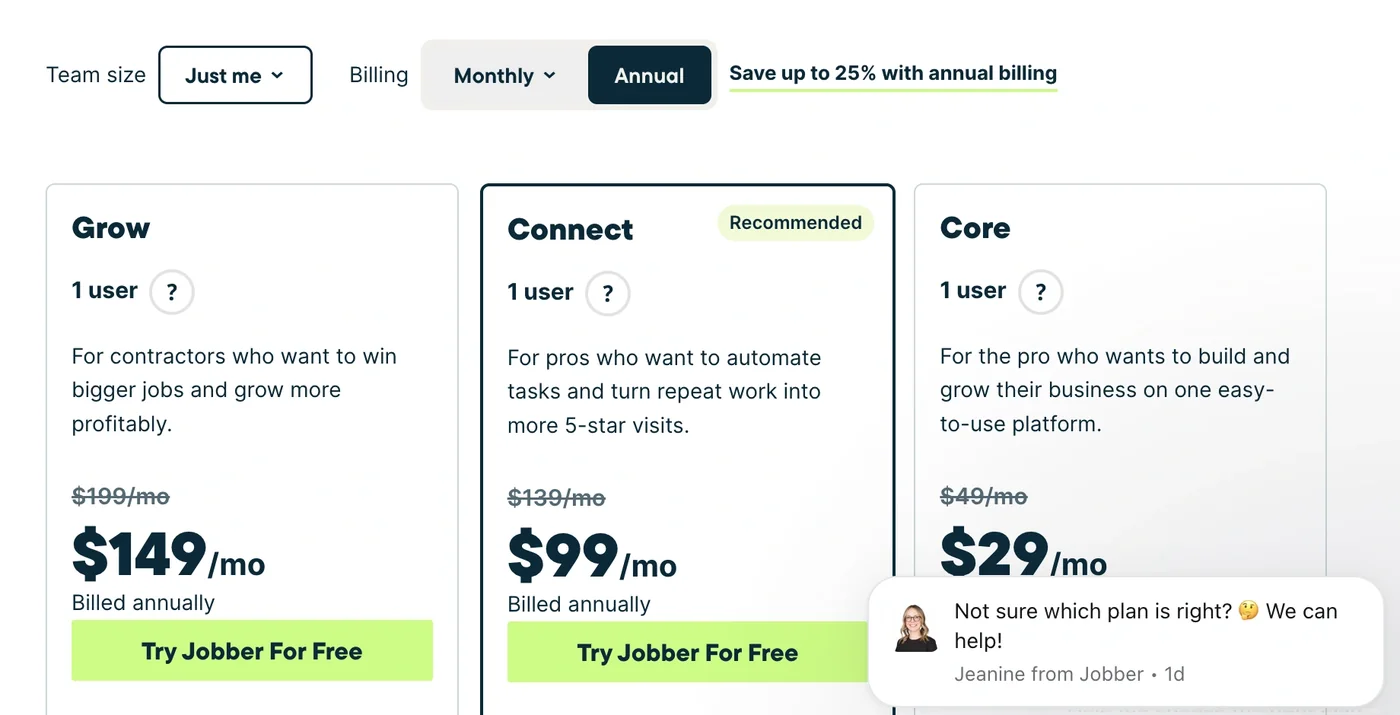 Aug 2, 2026
 Tech Stack
Best Plumbing Software in 2026: Ten Ranked Across Four Classes
A plumbing company’s work runs through four classes of software that do not substitute for each other, and it only buys two of them. Ten products, each with a published price or an explicit statement that the vendor publishes none.
Read Article Jul 31, 2026
 Tech Stack
NiceJob vs Birdeye 2026: Pricing, Contracts and Review Gating
One of these vendors puts its price on the page and its cancellation terms in writing. The other puts a form in front of both, and the complaint record is where its contract length shows up.
Read Article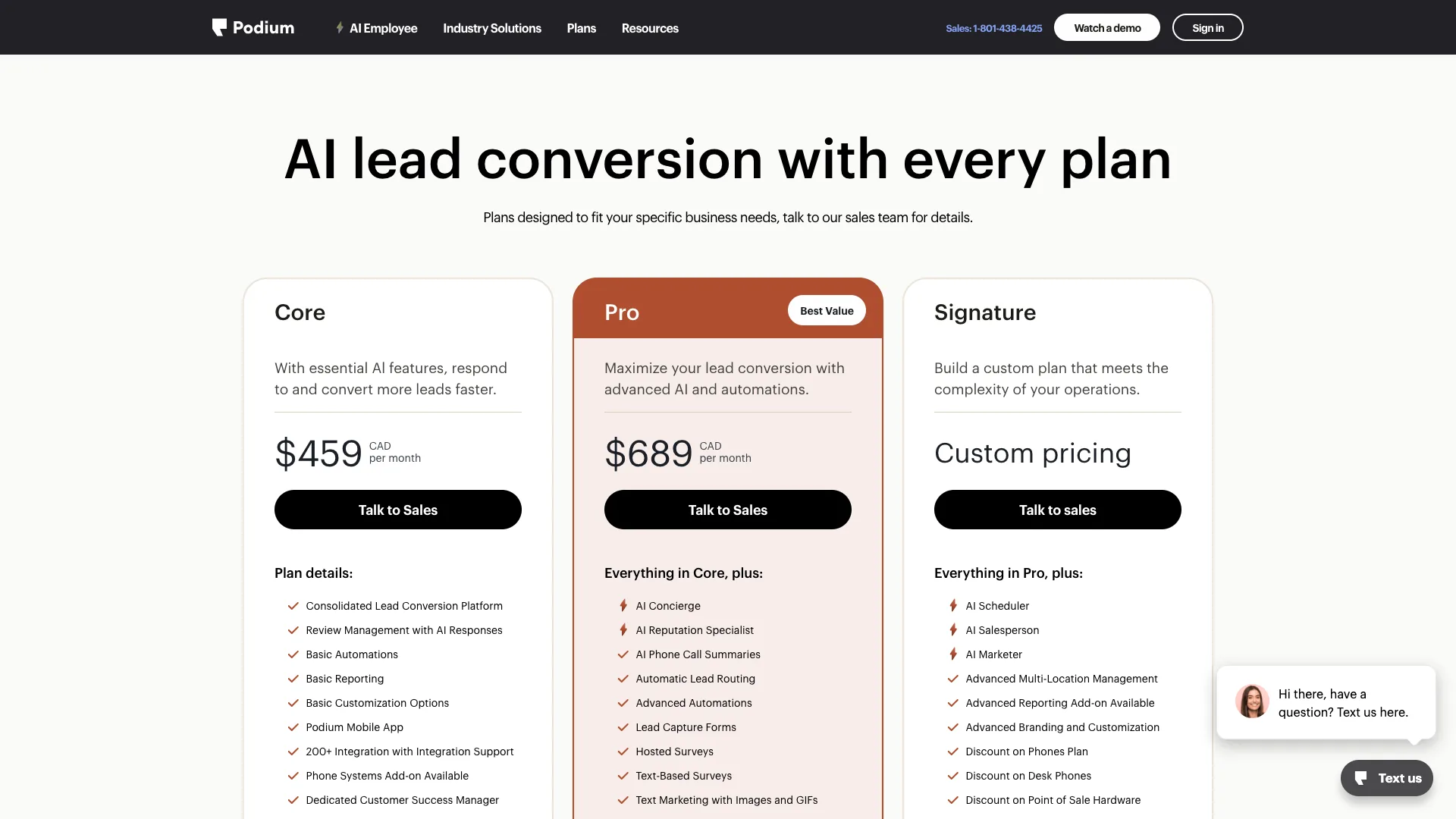 Jul 31, 2026
 Tech Stack
Podium vs Birdeye 2026: Pricing, Contracts and Review Gating
Only one of these two will tell you what it costs before a sales call, and even that number carries a carve-out aimed squarely at trade contractors.
Read Article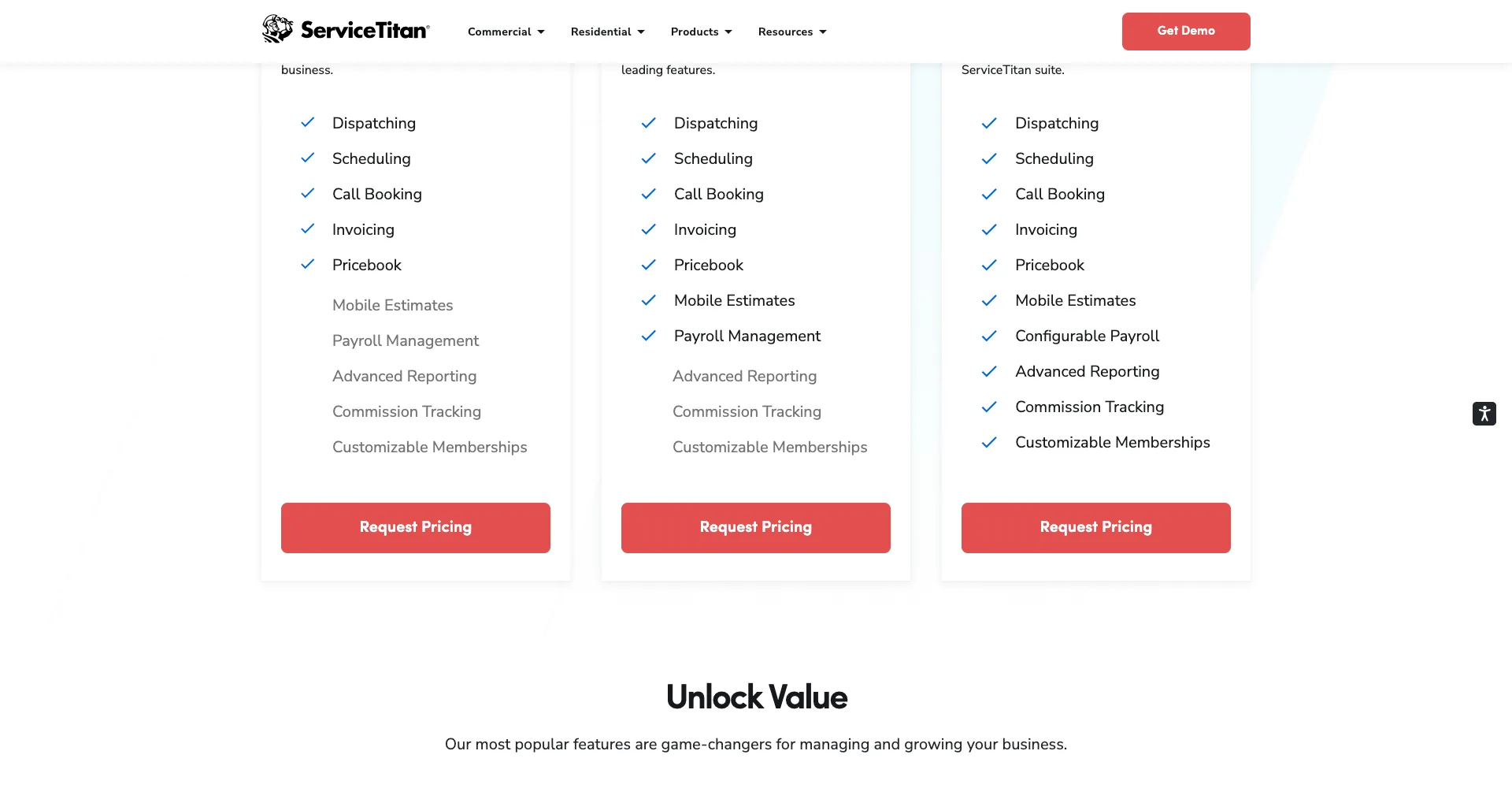 Jul 31, 2026
 Tech Stack
Best Electrical Contractor Software 2026: 11 Ranked and Priced
An electrical contracting business makes two software purchases that do not substitute for each other, and every roundup answering this query covers only one of them. Eleven platforms, with a published price or an explicit statement that the vendor publishes none.
Read Article Jul 31, 2026
 Tech Stack
Best HVAC Software in 2026: Eleven Ranked Across Three Classes
An HVAC contracting business buys across three classes of software that do not substitute for each other, and every roundup answering this query covers only one of them. Eleven products, each with a published price or an explicit statement that the vendor publishes none.
Read Article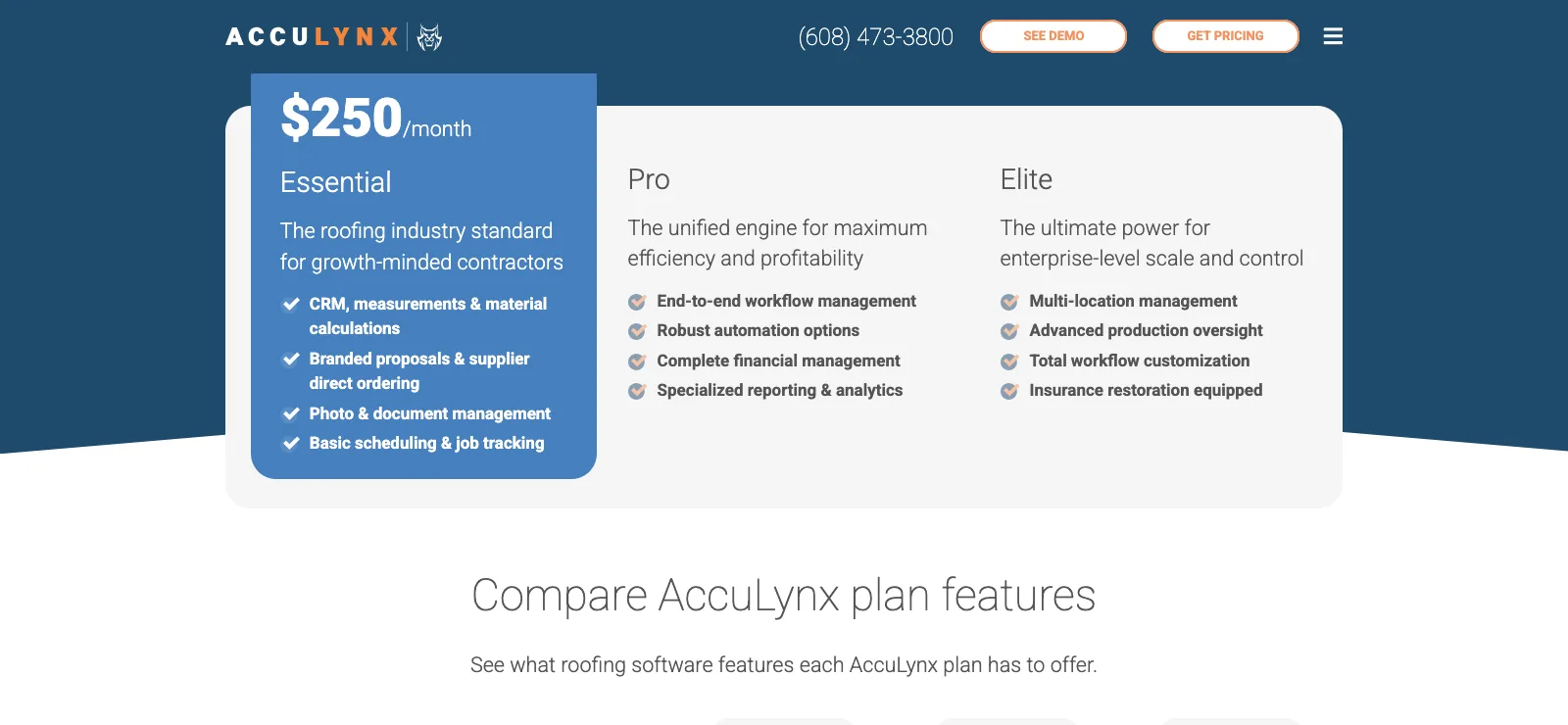 Jul 30, 2026
 Tech Stack
AccuLynx Pricing 2026: The Real Cost of a Quote-Gated Plan
One published figure, two blank plan cards, and a contract that says things the pricing page does not. A line-by-line breakdown of what AccuLynx really bills.
Read Article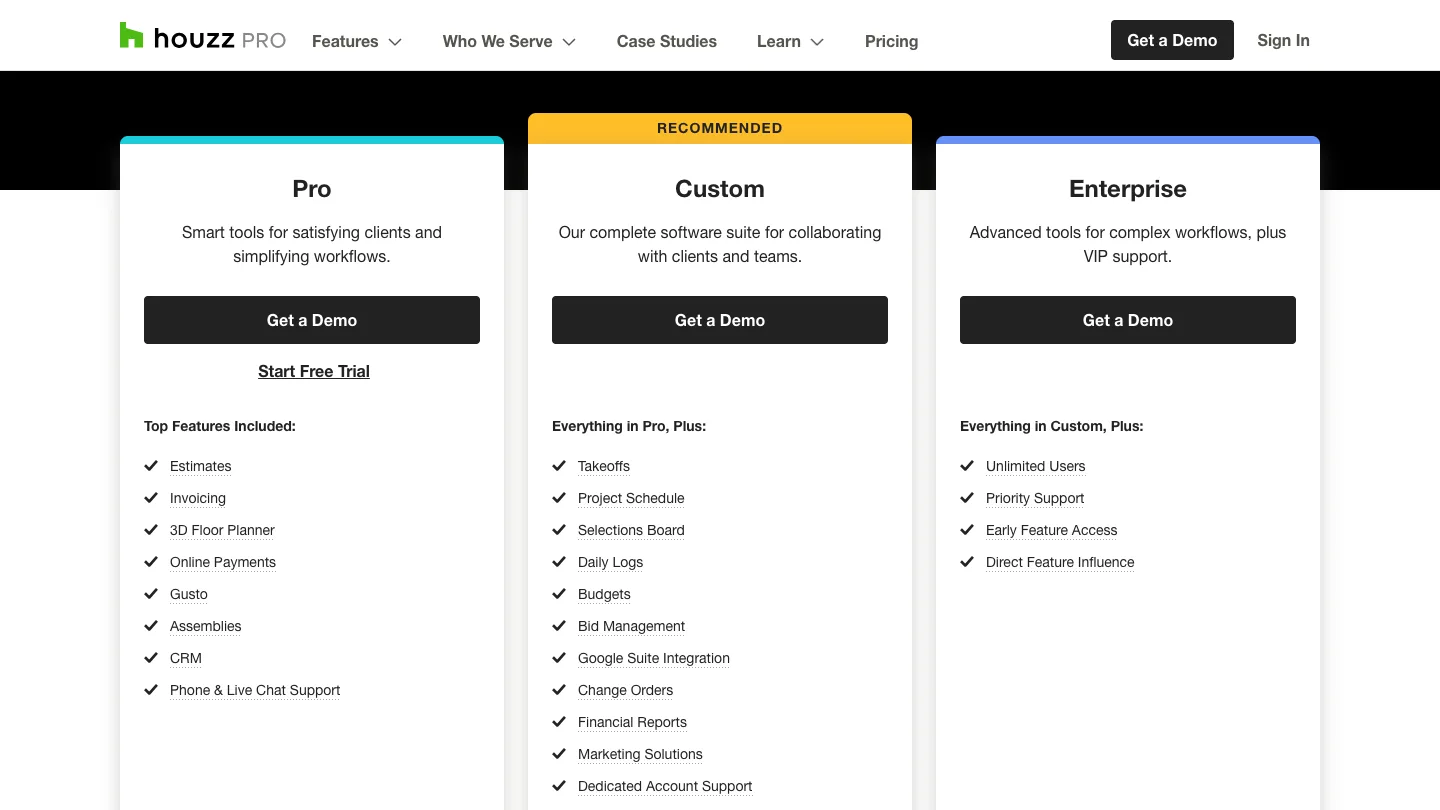 Jul 30, 2026
 Tech Stack
Houzz Pro Canada Review 2026: Pricing and Alternatives
Houzz Pro serves different pricing renderings. What Canadian buyers see, how GST/HST and payments work, what Custom gates, and what the annual contract commits you to.
Read Article Jul 30, 2026
 Tech Stack
JobNimbus Pricing in 2026: What the Quote Does Not Cover
JobNimbus prints no figure on any of its four plans. So the only rate you can read before a sales call is the payments meter, and it is the biggest line on the bill.
Read Article Jul 30, 2026
 Tech Stack
JobNimbus Review 2026: Pricing, Pros, Cons and Alternatives
JobNimbus rates 4.6 on Capterra and orders material straight from ABC Supply and SRS. But it publishes no price, and its supplement route carries a note.
Read Article Jul 30, 2026
 Tech Stack
BuildOps Review 2026: Pricing, Contract Terms and Alternatives
BuildOps runs commercial service and projects on one platform, and publishes no pricing at all. The billing unit, the 30-day data-export window, and who it suits.
Read Article Jul 30, 2026
 Tech Stack
FieldPulse Review 2026: Pricing, Pros, Cons and Alternatives
FieldPulse rates 4.6 on Capterra and is the platform contractors name when they leave a bigger system. But it publishes no price, and the contract runs a year.
Read Article Jul 30, 2026
 Tech Stack
Service Fusion Review 2026: Pricing, Contract and Alternatives
Service Fusion bills flat per company with unlimited users, which is the best structural deal in field service software. The published plans, the contract behind the no-contract line, and the app score every other review gets wrong.
Read Article Jul 30, 2026
 Tech Stack
Knowify Review 2026: Pricing, Job Costing and Alternatives
Knowify rates 4.5 on Capterra and its weakest sub-score is features. What the $99 Core plan withholds, which way the QuickBooks sync really runs, and who should not buy it.
Read Article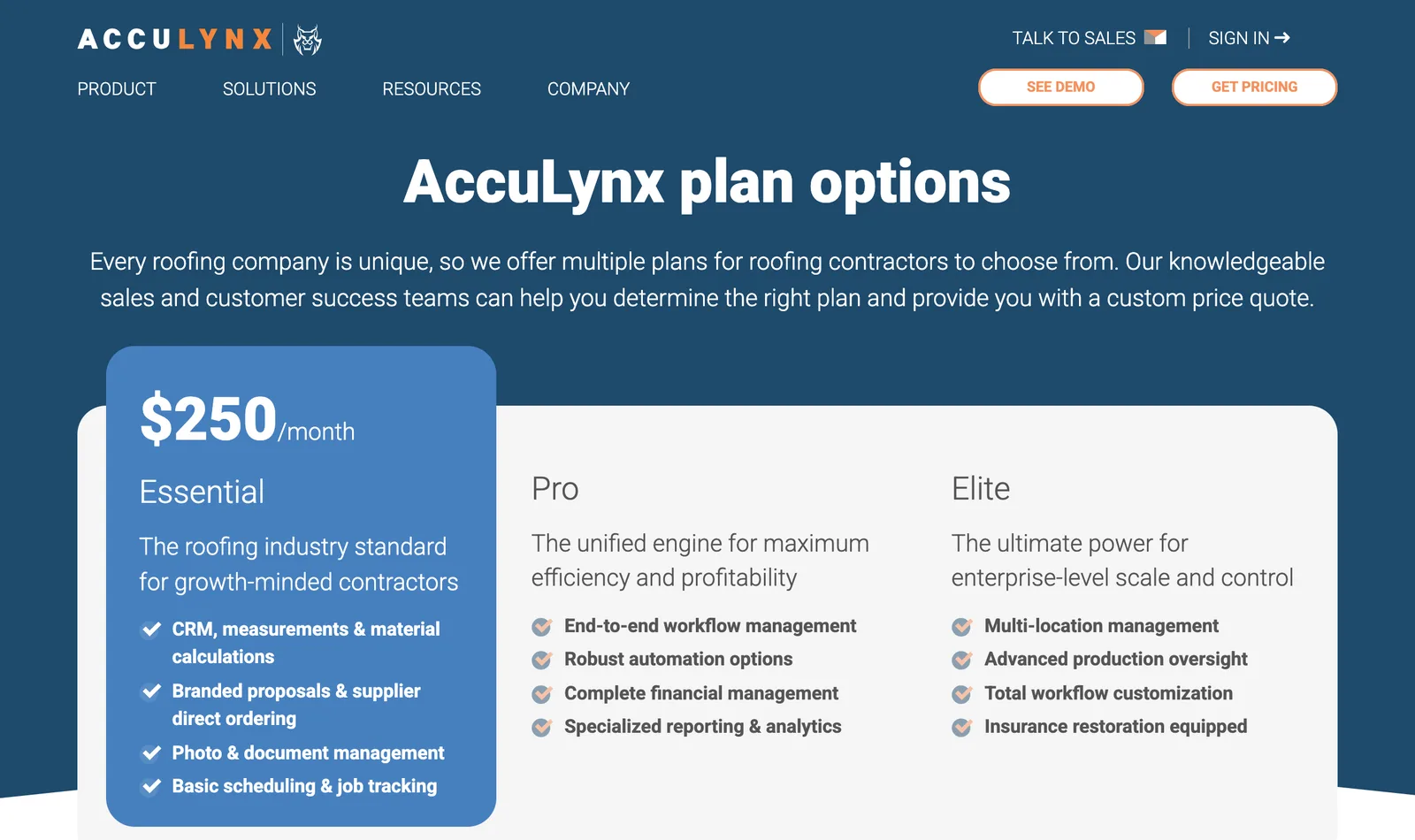 Jul 29, 2026
 Tech Stack
AccuLynx Review 2026: Pricing, Tier Gating, Alternatives
AccuLynx rates 4.6 across 846 reviews and now publishes an entry price. What that price omits, which tier holds the insurance workflow, and who should skip it.
Read Article Jul 29, 2026
 Tech Stack
Unitel Voice Review 2026: Pricing, Features and Alternatives
Unitel Voice rates 4.6 on Capterra and gives a one-truck shop a business number for $9.99 a month. The published plans, the cost per call, and what it won't do.
Read Article Jul 29, 2026
 Tech Stack
NiceJob vs Podium 2026: Pricing, Contracts and Review Gating
Both vendors print a price, at very different scale and in different currencies. The gap that matters is what Podium will not print: the billing unit, and whether a trade shop gets the number on the page.
Read Article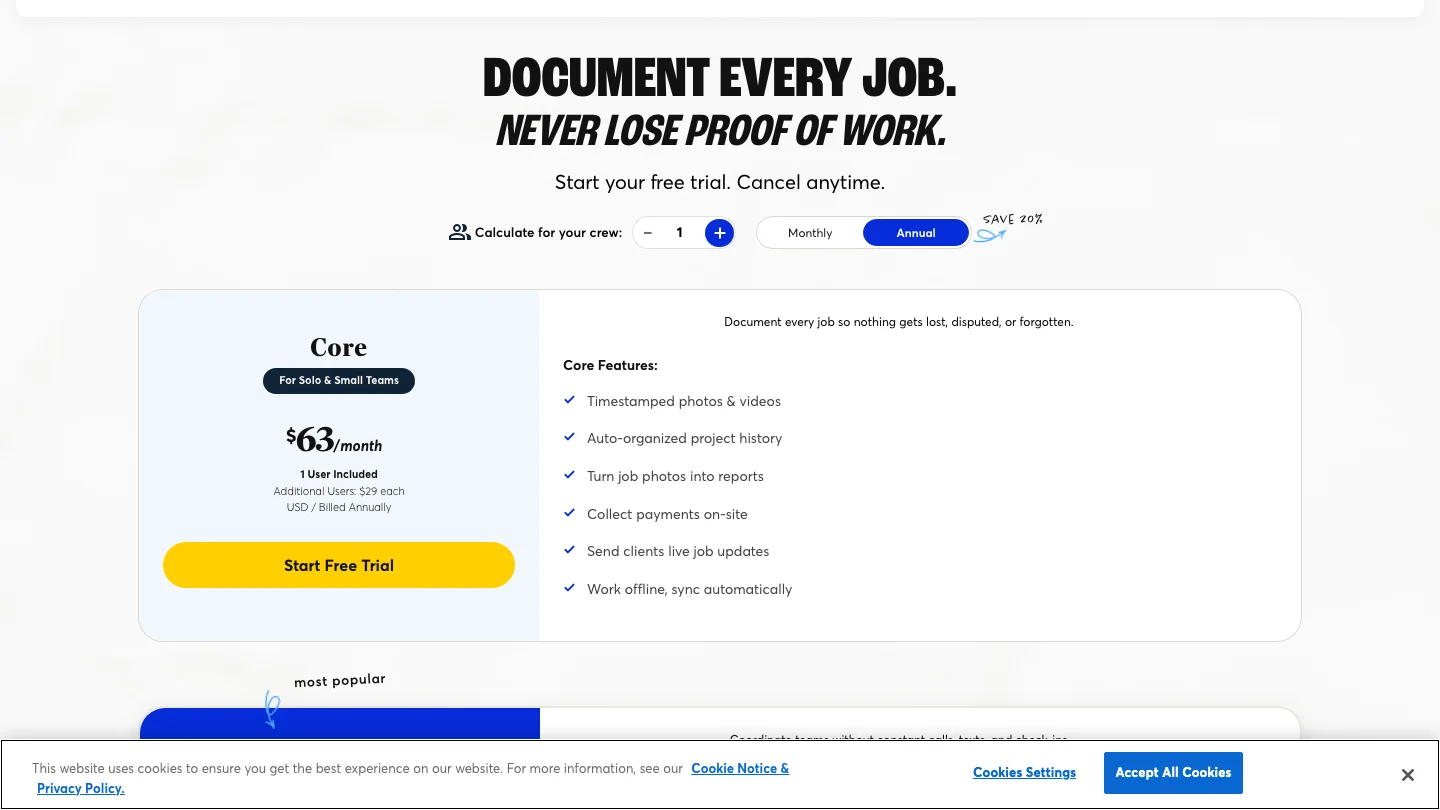 Jul 28, 2026
 Tech Stack
CompanyCam Review 2026: Pricing, Pros, Cons and Alternatives
Every page ranking for CompanyCam still quotes a per-user price the vendor no longer charges. Here are the real plans, the seat math, and who should skip it.
Read Article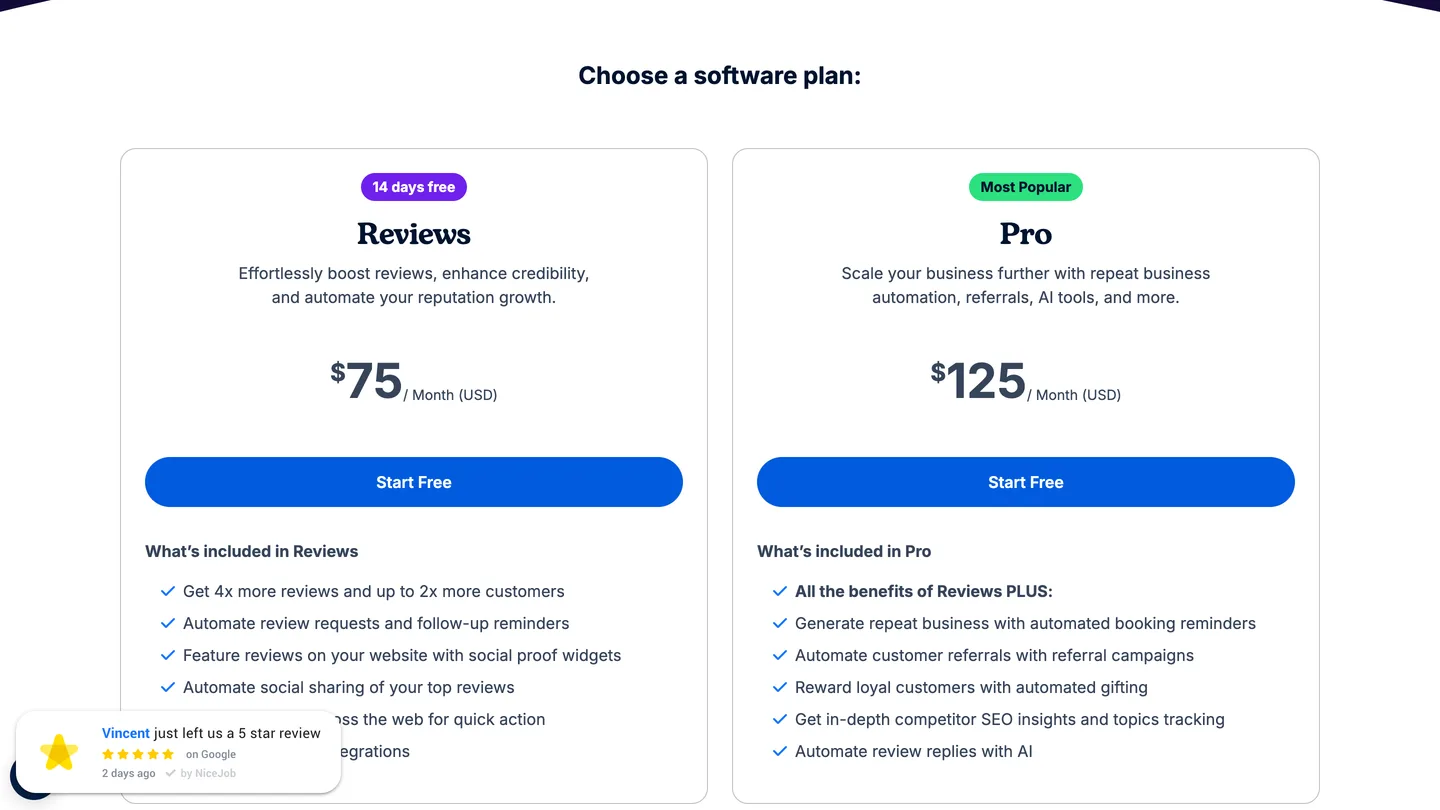 Jul 28, 2026
 Tech Stack
NiceJob Review 2026: Pricing, Pros, Cons and Alternatives
NiceJob rates 4.9 on Capterra and refuses to gate negative reviews. Real plan pricing, the active-customer threshold nobody publishes, and who should skip it.
Read Article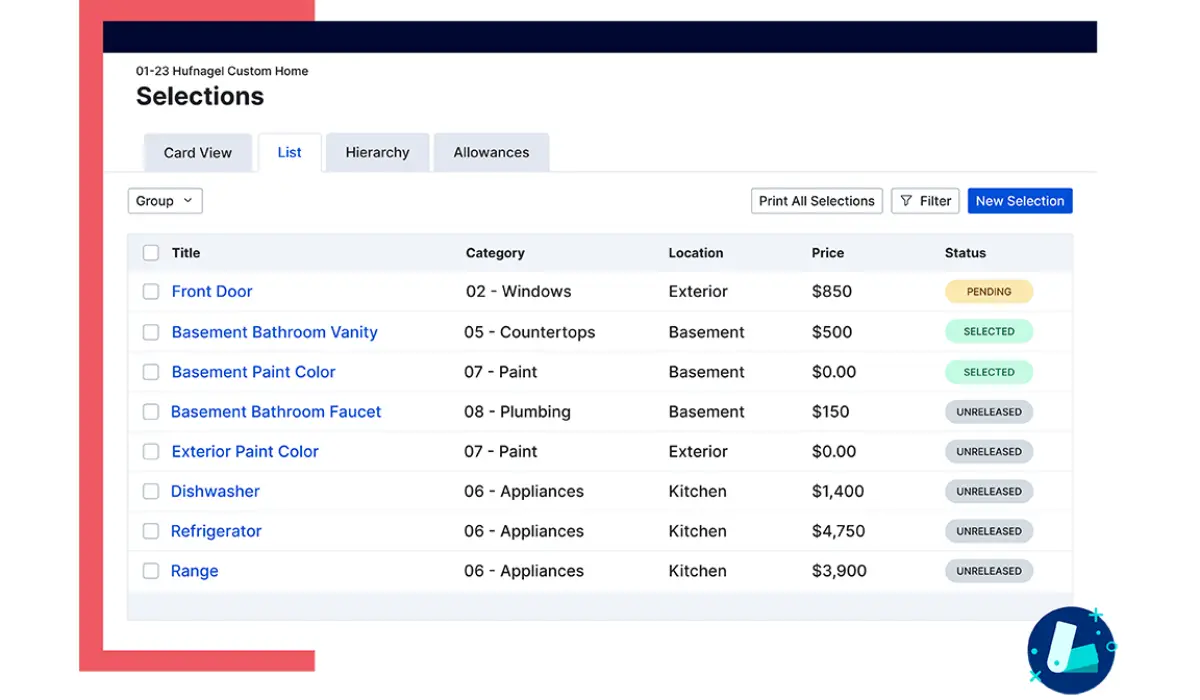 Jul 27, 2026
 Tech Stack
Buildertrend Review 2026: Pricing, Limits and Alternatives
Buildertrend rates 4.5 across 2,486 Capterra reviews and quotes against your revenue rather than your seat count. The workflows, the export problem, the alternatives.
Read Article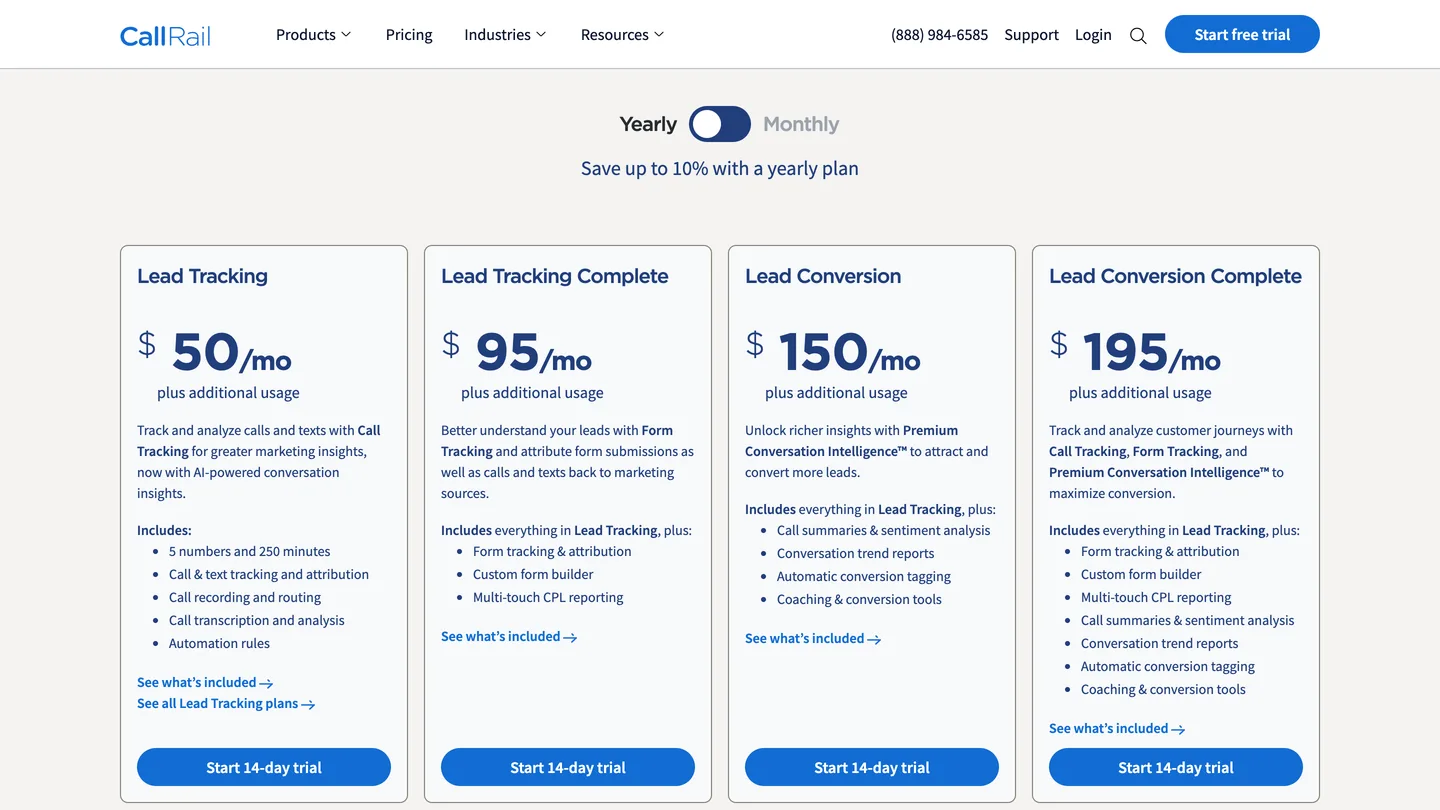 Jul 27, 2026
 Tech Stack
CallRail Review 2026: Pricing, Pros, Cons and Alternatives
CallRail rates 4.5 on Capterra, and its tracking numbers port out free. But the two usage rates that decide your real bill are the two it does not print.
Read Article Jul 27, 2026
 Tech Stack
Roofr Review 2026: Pricing, Pros, Cons and Alternatives
Roofr rates 4.6 on Capterra and sells $13 measurement reports against a market charging triple. But it will not import a report from anywhere else.
Read Article Jul 25, 2026
 Tech Stack
Housecall Pro Review 2026: Pricing, Pros, Cons, Alternatives
Housecall Pro has the shortest learning curve in the category and the widest review spread. Real pricing, the Instapay math, and the migration trap to plan around.
Read Article Jul 24, 2026
 Tech Stack
Jobber Review 2026: Pricing, Pros, Cons and Alternatives
Jobber rates 4.6 on Capterra with the best mobile app in the category. Real plan pricing, the feature gating that changes your entry price, and who it suits.
Read Article Jul 23, 2026
 Tech Stack
ServiceTitan Review 2026: Pricing, Pros, Cons, Alternatives
ServiceTitan rates 4.3 on Capterra but its weakest score is value for money. Real reported pricing, the 12-month contract, the exit fees, and who it actually suits.
Read Article Jun 3, 2026
 Tech Stack
HVAC Online Scheduling: The 43% Losing After-Hours Bookings
HVAC leads every trade on online booking at just 56.7%, which still leaves 43% of sites forcing an after-hours customer to wait for a business-hours phone call.
Read Article