Design Flex Review 2026: Pricing, Pros, Cons, Alternatives
Design Flex starts at CA$2,095. What each tier gates, the 7 limitations reviewers name, and 5 alternatives with published prices.
Page at a glance
Design Flex is It's the incumbent kitchen and bath design CAD in North American showrooms, and its real moat is the manufacturer cabinet catalog library that turns a 3D layout into a priced, orderable quote. It starts at CA$2,095 per user, per year. The license is sold per named user on a 12-month term. It is cloud-based rather than tied to a machine, so one licence can be used on several PCs, but only one at a time. The vendor FAQ states: 'Design Flex licenses are cloud-based, so you can sign in on multiple PCs. Just sign out from one device before logging in on another.' A second concurrent designer therefore needs a second subscription. It fits Kitchen and bath dealers and cabinet showrooms running one to ten designers on residential remodel and new-build cabinetry, where the designer sells manufacturer-branded cabinets and needs catalog pricing inside the drawing. It's the wrong buy for A design studio standardised on macOS, because Design Flex has no Mac build at all. The vendor FAQ states 'No, Design Flex is a Windows-based software', and the recommended machine carries a dedicated NVIDIA RTX3050 class GPU. So the licence cost is the smaller half of the switching cost. Alternatives that publish their prices are ProKitchen Online (with manufacturer catalogs) from $2,395, ProKitchen Online (generic catalogs only) from $1,795, Chief Architect Premier from $1,995. Four priced tiers, seven evidenced gaps and five alternatives, five of which publish a figure.
The short verdict on Design Flex
Design Flex earns its money with Kitchen and bath dealers and cabinet showrooms running one to ten designers on residential remodel and new-build cabinetry, where the designer sells manufacturer-branded cabinets and needs catalog pricing inside the drawing. If that's you, it does the job. The sections below are the parts worth checking before you sign. But the fit is narrower than the marketing suggests, and the price isn't the whole cost.
It starts at CA$2,095. And pricing was verified on 7 August 2026, so you can check every figure below in a browser tab.
| Pricing model | Published tiers |
|---|---|
| Entry price | CA$2,095 |
| Users | The license is sold per named user on a 12-month term. It is cloud-based rather than tied |
| Ownership | Cyncly |
| Best fit | Kitchen and bath dealers and cabinet showrooms running one to ten designers on residential remodel and new-build cabinetry, where the designer sells manufacturer-branded cabinets and needs catalog pricing inside the drawing. |
| Accounting sync | Generic accounting systems via the Application Integration Module (AIM) (one-way) |
What works
- The catalog is the product, because it turns a drawing into a priced order
- The Cycles engine is the closing tool, and it's included at every tier
- The licence follows the person, not the PC, but only one session at a time
- Cyncly Payments is now bundled, and it's the vendor's move into the dealer's cash flow
What does not
- The manufacturer catalogs that justify the purchase sit behind the upper tier
- It doesn't run on a Mac, and the recommended PC is a workstation
- Renewal is automatic, the notice window is ninety days, and the price can rise above inflation at the vendor's discretion
- Reviewers report crashes and slowdowns during live client work
- Support and training are priced as an upsell on top of a four-figure licence
Design Flex is It's the incumbent kitchen and bath design CAD in North American showrooms, and its real moat is the manufacturer cabinet catalog library that turns a 3D layout into a priced, orderable quote. It sells to Custom home building and Kitchen and bath and Remodeling contractors, and the shape of the product follows from that: The upper tier is sold on 'Real-time design and quoting workflows for quick turnarounds' and 'Manufacturer catalog and supplier integrations (largest selection in the industry)'. Reviewers consistently describe this as the reason they stay: they cite the ability to plug in full cabinetry manufacturer catalogs for quick design and pricing, and getting a price quoted immediately. But that coupling is also the lock-in, because a competitor without your brands can't replace it.
Ownership matters here more than it usually does. Design Flex is owned by Cyncly, so weigh roadmap risk alongside the feature list. An independent product can be bought and folded into somebody else's plan two years after you sign.
Who should be shortlisting Design Flex
It fits Kitchen and bath dealers and cabinet showrooms running one to ten designers on residential remodel and new-build cabinetry, where the designer sells manufacturer-branded cabinets and needs catalog pricing inside the drawing. That's the half most reviews print. Here's the other half, which is the one worth your time.
Don't buy it if you're A design studio standardised on macOS. Design Flex has no Mac build at all. The vendor FAQ states 'No, Design Flex is a Windows-based software', and the recommended machine carries a dedicated NVIDIA RTX3050 class GPU. So the licence cost is the smaller half of the switching cost. Look at Chief Architect Premier instead.
Don't buy it if you're A remodeler or custom home builder who wants job management, scheduling and client billing rather than cabinetry drafting. Design Flex is a design CAD tool, not a project management platform. Its only accounting link is the Application Integration Module, which the vendor describes as XML transfer rather than a named accounting connector. And the capabilities page names no CRM or ERP partner. Look at Buildertrend instead.
Don't buy it if you're A solo designer who works only in generic cabinetry and bills a handful of kitchens a year. Even the stripped Foundation plan is CA$2,095 per year with no monthly option and no refund, and it excludes manufacturer catalogs entirely. And a reviewer running a small design group asked for exactly this and described the alternative as an excessive blanket annual fee. Look at SketchUp Pro instead.
Don't buy it if you're A cabinet shop that needs the design file to drive a CNC router. Design Flex targets the specification and quoting end, not the machining end. So a reviewer names this directly, writing that the main reason companies still use other programs like Mosaik is for the CNC connection. Look at Mozaik CNC instead.
What Design Flex costs
The tiers are public. And that's worth more than it sounds in a category where half the vendors make you ask.
| Tier | Price | Billing unit | What it unlocks |
|---|---|---|---|
| Design Flex Foundation (without Success Plan) | CA$2,095 | per user, per year | Generic cloud configurable catalogs and generic file-based catalogs only, No manufacturer cabinet catalogs, No Closet module, No Application Integration Module (AIM) |
| Design Flex Foundation (with Success Plan) | CA$2,395 | per user, per year | Priority support line with Saturday hours, Weekly office hours, Onboarding program, Starter Training package |
| Design Flex (without Success Plan) | CA$2,695 | per user, per year | Manufacturer catalog and supplier integrations, Closet module, Application Integration Module (AIM) XML transfer to accounting |
| Design Flex (with Success Plan) | CA$3,195 | per user, per year | Manufacturer catalog and supplier integrations, Closet module, AIM, Priority support, Onboarding, Training discounts |
The license is sold per named user on a 12-month term. It is cloud-based rather than tied to a machine, so one licence can be used on several PCs, but only one at a time. The vendor FAQ states: 'Design Flex licenses are cloud-based, so you can sign in on multiple PCs. Just sign out from one device before logging in on another.' A second concurrent designer therefore needs a second subscription.
There is a discount for paying annually up front: And an annual prepay discount tells you an annual commitment exists, which is worth knowing before anyone mentions a term length out loud.
The Design Flex line items nobody mentions on the demo
Payment processing. Cyncly Payments is bundled into every Design Flex plan, but the processing rates are not published anywhere on the product page. The page claims 'simple, clear pricing with no hidden fees' and the FAQ states 'We offer a month-to-month agreement with no early termination fee', yet no percentage rate or per-transaction fee appears in the raw HTML. A buyer has to ask for the card rate before signing.
Implementation and onboarding. Onboarding is not included in the base licence. It arrives bundled in the optional Success Plan, which the vendor prices only by implication. The pricing FAQ says the Success Plan 'includes an onboarding program ($120 value), a Starter Training package ($710 value), 50% off one instructor-led training course per year ($425 value), and a permanent 15% discount on future training' and that 'the included training value alone covers the additional $300–$500 cost'. The $300 to $500 figure matches the gap between the with-Success-Plan and without-Success-Plan tier prices.
Minimum term. The minimum commitment is twelve months. Cyncly's Terms and Conditions define 'Minimum Period' or 'Initial Term' as 'a period of twelve (12) months starting from the Effective Date, unless an alternative Duration or Term is specified', and section 16.1 states the agreement 'shall continue for the Minimum Period'.
Getting out. There is no termination for convenience. Section 17.2 allows termination only for a significant breach that is not cured within thirty days. Section 9.1 then removes the money remedy: 'Unless otherwise provided by Law or by a particular offer detailed in the Order Form, all purchases are final and non-refundable.' A designer who stops using Design Flex in month two still pays for the full year.
Auto-renewal. Renewal is automatic and the escape window is wide. Section 16.2 states the agreement 'shall automatically renew for a successive one (1) Year term, each, an Auto-Renewal, unless otherwise stated in the Order Form', and section 16.3 requires 'written notice of non-renewal to the other Party ninety (90) Days prior to the end of the then-current term'. Section 16.4 adds that continued use after renewal starts 'shall constitute the Customer's express acceptance'. Section 7.5 lets Cyncly raise the renewal fee 'by the percentage increase in an appropriate local consumer prices index in the preceding 12 Month period, plus a percentage mark-up determined at Cyncly's sole discretion'.
Modules sold separately. , , . The Design Flex figure worth writing down is the one with your day-one modules already in it, not the headline tier.
Third-party services you will also pay for. , . These are not on Design Flex's invoice, and they are still part of what this decision costs you every month.
Worth a detour here. The Design Flex pricing page contradicts itself. Four tier cards show CA$2,095, CA$2,395, CA$2,695 and CA$3,195 per year, and the FAQ on the same page answers the cost question with '$2,495 per year', a bare-dollar figure matching none of them. And the FAQ answer also blends the two plans, describing Foundation's generic catalogs alongside the upper tier's manufacturer catalogs, Closet module and AIM. A buyer comparing Design Flex to ProKitchen's published $2,395 is probably comparing against the wrong figure, and possibly against the wrong currency. So insist the number lands on the Order Form with a currency code attached.
What a Design Flex quote leaves out
The subscription is the part everyone quotes. These are the lines that land afterwards, and the ones we could not find are named as unpublished rather than left blank.
Sold separately. , , . Price the configuration you'll really run, because an add-on you need on day one is part of the price.
Third-party services you'll also pay for. , . None of these are on Design Flex's invoice, and all of them are part of what this decision costs every month.
"Design Flex Design Flex Foundation (without Success Plan) is CA$2,095, per user, per year."
Design Flex pricing page (2026)
"Design Flex Design Flex Foundation (with Success Plan) is CA$2,395, per user, per year."
Design Flex pricing page (2026)
"The license is sold per named user on a 12-month term. It is cloud-based rather than tied to a machine, so one licence can be used on several PCs, but only one at a time. The vendor FAQ states: 'Design Flex licenses are cloud-based, so you can sign in on multiple PCs. Just sign out from one device before logging in on another.' A second concurrent designer therefore needs a second subscription."
Design Flex pricing page (2026)
The four workflows you pay for
Feature totals are noise. So a shop in this category lives or dies on four things, and those are the four to grade, and each one below carries the evidence it's graded on.
The catalog is the product, because it turns a drawing into a priced order The upper tier is sold on 'Real-time design and quoting workflows for quick turnarounds' and 'Manufacturer catalog and supplier integrations (largest selection in the industry)'. Reviewers consistently describe this as the reason they stay: they cite the ability to plug in full cabinetry manufacturer catalogs for quick design and pricing, and getting a price quoted immediately. But that coupling is also the lock-in, because a competitor without your brands can't replace it. And an owner, construction, Less than 6 months on the platform, writing on 2025-03-07, writes the same thing: "Its rendering quality and how it has the catalogs of the manufactures we sell"
The Cycles engine is the closing tool, and it's included at every tier Both plans include 'Cycles: Create high-quality renderings in a fraction of the time with Cycles rendering engine'. This is the single most praised capability across the review pool, with owners citing rendering quality first. But it's also where the complaints cluster, because lighting behaviour and colour accuracy are called out repeatedly by long-tenured users. And a designer, retail, 2+ years on the platform, writing on 2026-02-12, writes the same thing: "The lighting feature is completely messed up."
The licence follows the person, not the PC, but only one session at a time Cyncly moved off physical dongles to cloud licensing, which reviewers notice in both directions. One reviewer welcomes it, writing that no keys make it easier, while another wishes there were still a physical key version. So the practical rule is that a designer can sign in at the showroom and at home, but must sign out from one device before logging in on the other.
Cyncly Payments is now bundled, and it's the vendor's move into the dealer's cash flow The pricing page flags Cyncly Payments as a new feature on both tiers, describing it as a way to 'Get paid faster and stop chasing AR with the new integrated payments function'. But the payments product is sold on month-to-month terms with no early termination fee, which is a notably softer commitment than the design licence sitting beside it.
Which trades get value from Design Flex
Fit differs by trade rather than by company size alone, and a blended paragraph hides that. Here is the split for the trades this one sells to.
Custom home building. The workflow that decides it is the catalog is the product, because it turns a drawing into a priced order, and the shop profile that gets value is kitchen and bath dealer or cabinet showroom, 2 to 10 designers, selling manufacturer-branded cabinetry doing residential work. Where it stops being a fit is A design studio standardised on macOS.
Kitchen and bath. The workflow that decides it is the catalog is the product, because it turns a drawing into a priced order, and the shop profile that gets value is kitchen and bath dealer or cabinet showroom, 2 to 10 designers, selling manufacturer-branded cabinetry doing residential work. Where it stops being a fit is A design studio standardised on macOS.
Remodeling. The workflow that decides it is the catalog is the product, because it turns a drawing into a priced order, and the shop profile that gets value is kitchen and bath dealer or cabinet showroom, 2 to 10 designers, selling manufacturer-branded cabinetry doing residential work. Where it stops being a fit is A design studio standardised on macOS.
Your books, and whether Design Flex connects to them
Generic accounting systems via the Application Integration Module (AIM) connects one way only, so edits made in your books do not come back, gated to a higher tier. Your costs map through cost codes, so test yours against your own chart of accounts before you commit. A code your books don't recognise is how a labour charge quietly lands somewhere useless.
Past those, the road ends. QuickBooks, Xero, Named CRM or job-management partners, Published CAD interchange formats do not connect. So if your books run on an ERP rather than the platforms named above, weigh that before anything else.
Beyond accounting it connects to Cyncly Payments (It's an embedded payment platform bundled into both tiers for taking customer payments and running reports. And the processing rates aren't published.), SketchUp (SketchUp geometry can be brought into a Design Flex project, which reviewers use for non-cabinet elements.), Flex Cloud (It provides cloud project storage, auto-backup and synchronised settings across a team.), Manufacturer cabinet catalogs (Authorized dealers request access to locked manufacturer catalogs from inside the software's content browser.). A public API exists: No public API or developer documentation is offered on any Design Flex page. The nearest thing is the Application Integration Module, which is an XML file transfer rather than a programmable interface, and it is restricted to the upper tier.
Design Flex support, onboarding and the hours
Support is the line item nobody prices and everybody eventually needs. Onboarding for Design Flex: Onboarding is not included in the base licence. It arrives bundled in the optional Success Plan, which the vendor prices only by implication. The pricing FAQ says the Success Plan 'includes an onboarding program ($120 value), a Starter Training package ($710 value), 50% off one instructor-led training course per year ($425 value), and a permanent 15% discount on future training' and that 'the included training value alone covers the additional $300–$500 cost'. The $300 to $500 figure matches the gap between the with-Success-Plan and without-Success-Plan tier prices.
On 2026-02-07, a lead designer, design, Less than 6 months on the platform, puts it: "At $2,500 per year, having to pay extra for assistance feels out of step with the investment."
Design Flex lock-in, in plain terms
Nobody reads this section before they buy, and it's the one that costs money afterwards. Four terms decide what leaving looks like.
Minimum term. The minimum commitment is twelve months. Cyncly's Terms and Conditions define 'Minimum Period' or 'Initial Term' as 'a period of twelve (12) months starting from the Effective Date, unless an alternative Duration or Term is specified', and section 16.1 states the agreement 'shall continue for the Minimum Period'.
Auto-renewal. Renewal is automatic and the escape window is wide. Section 16.2 states the agreement 'shall automatically renew for a successive one (1) Year term, each, an Auto-Renewal, unless otherwise stated in the Order Form', and section 16.3 requires 'written notice of non-renewal to the other Party ninety (90) Days prior to the end of the then-current term'. Section 16.4 adds that continued use after renewal starts 'shall constitute the Customer's express acceptance'. Section 7.5 lets Cyncly raise the renewal fee 'by the percentage increase in an appropriate local consumer prices index in the preceding 12 Month period, plus a percentage mark-up determined at Cyncly's sole discretion'.
Early termination. There is no termination for convenience. Section 17.2 allows termination only for a significant breach that is not cured within thirty days. Section 9.1 then removes the money remedy: 'Unless otherwise provided by Law or by a particular offer detailed in the Order Form, all purchases are final and non-refundable.' A designer who stops using Design Flex in month two still pays for the full year.
Payment processing. Cyncly Payments is bundled into every Design Flex plan, but the processing rates are not published anywhere on the product page. The page claims 'simple, clear pricing with no hidden fees' and the FAQ states 'We offer a month-to-month agreement with no early termination fee', yet no percentage rate or per-transaction fee appears in the raw HTML. A buyer has to ask for the card rate before signing.
Side note, and it's a useful one: the manufacturer catalog library is simultaneously the reason to buy and the reason you can't leave, and Cyncly moved it up a tier. Foundation ships only generic catalogs, while manufacturer catalogs sit on the plan that costs CA$600 more per seat per year. And catalog access also depends on your dealer status with each brand, not only on your Cyncly tier. Switching cost is the brand coverage, not the licence. So before you compare quotes, list the cabinet lines you sell and confirm in writing that each one publishes a Design Flex catalog and that your dealer status turns it on.
"Cost, its priced higher than prokitchens"
Capterra, Gabriel L. (3-07)
"At $2,500 per year, having to pay extra for assistance feels out of step with the investment."
Capterra, Cheryl C. (2-07)
"To access catalogs from cabinet manufacturers, you now have to upgrade. The use of manufacturer catalogs was the main reason I use 2020. Now it is price prohibitive."
Capterra, Paul L. (2-03)
The Design Flex gaps worth raising on the call
These are specific enough that you can put each one to a salesperson as a yes or no question. That's deliberate. Vague complaints don't help you negotiate.
The manufacturer catalogs that justify the purchase sit behind the upper tier Foundation is the cheaper plan, and it deliberately excludes the thing most showrooms buy this software for. The vendor is explicit: Foundation includes 'access to generic cloud configurable catalogs and generic file-based catalogs', while the Design Flex tier adds 'Manufacturer catalog and supplier integrations'. So a dealer who sells branded cabinetry can't use the cheaper plan, which turns the real entry price into CA$2,695 rather than CA$2,095. An owner, construction who reviewed it on 2025-02-03 reports it: "To access catalogs from cabinet manufacturers, you now have to upgrade. The use of manufacturer catalogs was the main reason I use 2020. Now it is price prohibitive." Before you compare the headline price to a competitor, confirm which tier carries your specific cabinet brands, and quote the CA$2,695 or CA$3,195 line rather than the Foundation number.
It doesn't run on a Mac, and the recommended PC is a workstation The vendor FAQ answers the Mac question with a flat 'No, Design Flex is a Windows-based software.' The recommended spec is 'an Intel i7 (8 Core) or AMD Ryzen 7 processor, 16 GB RAM, and a dedicated graphics card such as the NVIDIA RTX3050'. So for a designer on a MacBook the true first-year cost includes a new machine, and the software is only supported on 64-bit Windows 10 and 11. Price the Windows workstation into year one before you compare Design Flex against a browser-based competitor, and check your existing GPU against the RTX3050 recommendation.
Renewal is automatic, the notice window is ninety days, and the price can rise above inflation at the vendor's discretion Section 16.2 auto-renews the agreement for a further year, and section 16.3 requires written non-renewal notice 'ninety (90) Days prior to the end of the then-current term'. Then section 7.5 permits Cyncly to raise renewal fees by a consumer price index increase 'plus a percentage mark-up determined at Cyncly's sole discretion'. Section 9.1 makes all purchases 'final and non-refundable', so missing the notice date costs a full year. Put a calendar reminder at day 270 of the term, not day 330. And ask for the uplift percentage to be capped in the Order Form, since section 7.5 defers to the Order Form.
Reviewers report crashes and slowdowns during live client work Stability is the most damaging complaint pattern in the review pool, because the software is used in front of a homeowner. One national account manager rated it five stars overall and still wrote that it shuts down at the worst moment, and a separate owner reports the file slowing when SketchUp geometry is loaded. And a five-star reviewer summarising their experience as hoping for a non shut down experience is a strong signal that the crash is tolerated rather than absent. And a national account manager, construction, 1-2 years on the platform, writing on 2025-04-09, reports it the same thing: "It shuts down in the most important times!" Ask for trial access and rebuild your most complex recent kitchen, including any SketchUp imports, before the ninety-day notice clock on a paid term starts running.
Support and training are priced as an upsell on top of a four-figure licence Every plan includes phone and online support, but priority support, onboarding and the training package only arrive with the Success Plan, which adds the CA$300 to CA$500 gap between the paired tiers. Reviewers notice. One lead designer objects to paying extra for assistance at that licence cost. And another buyer reports being recommended a video they didn't have access to after purchase. A lead designer, design, Less than 6 months on the platform, writing on 2026-02-07, writes: "At $2,500 per year, having to pay extra for assistance feels out of step with the investment." Decide the Success Plan question at purchase rather than later, because the discount structure is annual and the onboarding value is front-loaded into the first year.
Lighting and colour accuracy in renderings draw repeated complaints Rendering quality is the top-cited strength in this review pool, which makes the lighting complaints unusually pointed. Separate reviewers describe the lighting feature as broken, ask for lighting to be more straightforward, and report colours reading darker on screen than they should. So for a showroom that sells on the strength of a visual, a rendering that misrepresents a door colour is a warranty conversation waiting to happen. A designer, retail who reviewed it on 2026-02-12 describes it: "The lighting feature is completely messed up." Render one cabinet door in a colour you sell often and compare it against the physical sample under showroom lighting before you commit.
The support knowledge base is login-gated, so you can't check export or offboarding answers before buying The Design Flex support centre at design.support.cyncly.com returns HTTP 403 to an anonymous request, and support.cyncly.com redirects to a restricted page requiring sign-in. Neither the product page nor the capabilities page names a file export format such as DWG or DXF. So a prospective buyer can't verify how designs come out of the system before signing a twelve-month non-refundable agreement. Make the sales rep demonstrate a full project export on the trial and send you the resulting files. Then confirm in writing what you keep if you don't renew.
One more thing worth knowing. The pricing table rendered in Canadian dollars even on the /en-US/ path. Fetching https://www.cyncly.com/en-US/products/design-flex/pricing returned exactly the same CA$2,095, CA$2,395, CA$2,695 and CA$3,195 tier cards as the /en-CA/ and root paths, while the FAQ's $2,495 stayed unprefixed on all three. Don't quote a Design Flex price to a US contractor from a Canadian screenshot, and don't assume the /en-US/ URL shows US pricing. So confirm the currency with the rep in writing.
One more thing worth knowing. Three clauses compound into a costly trap. Section 16.2 auto-renews for a further year, section 16.3 demands written non-renewal notice ninety days before term end, and section 9.1 makes all purchases final and non-refundable. Then section 7.5 permits a renewal increase of a consumer price index rise 'plus a percentage mark-up determined at Cyncly's sole discretion'. Ninety days is a long notice window for a small showroom, and there's no refund remedy for missing it. So set the reminder at month nine of the term, and negotiate a renewal cap into the Order Form, which section 7.5 explicitly allows to override the default.
One more thing worth knowing. You can't research how to get your data out before you commit. The Design Flex support centre at design.support.cyncly.com returns HTTP 403 to an anonymous request, support.cyncly.com redirects to a restricted sign-in page, and no product page names a file export format such as DWG or DXF. Every offboarding question has to be asked of a salesperson rather than answered from documentation, and it has to be asked before a twelve-month non-refundable term begins. So get the answer in email, not on a call.
One more thing worth knowing. The brand the trade knows has been retired underneath the product. 2020spaces.com now 301-redirects to cyncly.com, the Cyncly product menu lists no product containing the string 2020, and the review pool is split between people describing 2020 Design Live and people describing Design Flex as though they were different tools. Search results, forum advice and older comparison articles about 2020 Design describe a product that no longer exists under that name or that pricing structure. So treat any 2020 Design price found outside cyncly.com as expired.
Small thing that turns out to matter. Crash reports come from satisfied users, which makes them more credible rather than less. The most striking example is a five-star reviewer whose stated cons are 'It shuts down in the most important times!' and whose overall summary reads '8/10 - hoping for a non shut down experience moving forward'. The star rating hides the risk here, because the people reporting crashes are the ones who like the product. So rebuild your most complex recent kitchen during the trial, with any SketchUp geometry included, rather than trusting the 4.3 average.
The Design Flex review corpus, read by complaint
Every quote below is transcribed from a published review, named to the platform that carries it and to the reviewer as that platform displays them. We read the corpus by complaint type rather than by star rating, which is how the disqualifying detail buried inside a five-star review gets found.
"Cost, its priced higher than prokitchens"
An owner, construction, Less than 6 months on the platform, writing on 2025-03-07, writes on Capterra
"At $2,500 per year, having to pay extra for assistance feels out of step with the investment."
On 2026-02-07, a lead designer, design, Less than 6 months on the platform, describes it on Capterra
"To access catalogs from cabinet manufacturers, you now have to upgrade. The use of manufacturer catalogs was the main reason I use 2020. Now it is price prohibitive."
But an owner, construction, 2+ years on the platform, puts it it differently on Capterra
"The price has gone up 100% since we first started using it."
A president, consumer goods, 1-2 years on the platform, writing on 2025-03-25, writes on Capterra
"The price. As a small design group, a menu option would allow us to pay for features we need and use vs. an excessive blanket annual fee. I also wish the lighting was more straightforward."
A senior designer project development, design who reviewed it on 2026-01-08 reports it on Capterra
"It shuts down in the most important times!"
And a national account manager, construction, 1-2 years on the platform, writing on 2025-04-09, reports it the same thing on Capterra
"I have used the 2020 software for many years and it was great until the new interface."
And a kitchen designer/project estimator, building materials, Less than 6 months on the platform, writing on 2025-02-26, reports it the same thing on Capterra
"The lighting feature is completely messed up."
A designer, retail who reviewed it on 2026-02-12 puts it on Capterra
"The software still has some issues with running slow when a lot of walls or sketchup items are in the file."
But an owner, design, 2+ years on the platform, says it differently on Capterra
"Receiving emails for new catalog downloads that i can not use"
And a CEO, construction, Less than 6 months on the platform, writing on 2025-04-01, says the same thing on Capterra
"An oldie but a goodie, I love the split screen that lets me draw on both the floor plan and elevation simultaneously."
On 2023-03-29, a designer, construction, 1-2 years on the platform, says on Capterra
"Its rendering quality and how it has the catalogs of the manufactures we sell"
And an owner, construction, Less than 6 months on the platform, writing on 2025-03-07, describes it the same thing on Capterra
How Design Flex compares
Four or five real options, each with what it does better and what it does worse. Both halves, or it's marketing.
| Tool | Entry price | Billing unit | Users included | Published? |
|---|---|---|---|---|
| Design Flex | CA$2,095 | per user, per year | The license is sold per named user on a 12-month term. It is | Yes |
| ProKitchen Online (with manufacturer catalogs) | $2,395 | per user, per year | 1 | Yes |
| ProKitchen Online (generic catalogs only) | $1,795 | per user, per year | 1 | Yes |
| Chief Architect Premier | $1,995 | per user, per year | 1 | Yes |
| Mozaik Manufacturing | $125 | per user, per month | 1 | Yes |
| Design Flex Foundation | CA$2,095 | per user, per year | 1 | Yes |
ProKitchen Online (with manufacturer catalogs). It publishes a directly comparable annual figure with manufacturer catalogs included, and it bundles ProCloset and ProCountertop rather than gating a closet module behind the top tier. And a Design Flex reviewer names the price gap unprompted, writing that it's priced higher than prokitchens. But It has a smaller manufacturer catalog library than the Cyncly content platform, which matters if your specific cabinet brands only publish to 2020 or Design Flex.
ProKitchen Online (generic catalogs only). It undercuts the equivalent Design Flex Foundation plan while still including cloud saving, ProCloset and ProCountertop, which Design Flex splits across tiers. But It carries no manufacturer catalogs at this price, exactly like Foundation, so it doesn't solve the branded-cabinetry quoting problem either.
Chief Architect Premier. It publishes a genuine monthly option at $229 per month alongside the annual plan, which answers the reviewer who wished for a monthly fee instead of a yearly one. And it also covers whole-house architectural work rather than cabinetry alone, which suits custom home builders and remodelers. But It's a general residential design tool without the manufacturer cabinet catalog and live pricing pipeline that keeps kitchen dealers on Design Flex.
Mozaik Manufacturing. It's the cheapest monthly entry of this group and it carries the design-to-manufacture path a cabinet shop needs. A Design Flex reviewer points at exactly this gap, saying the reason companies still use other programs is the CNC connection. And Cyncly owns Mozaik, so it's the in-family answer for shops that machine their own boxes. But It's built for cabinet manufacturing rather than showroom specification, so a dealer reselling branded cabinetry gets no manufacturer catalog quoting from it.
Design Flex Foundation. It's the same software and the same rendering engine for CA$600 less per year, and it's the right answer for a designer who specifies generic cabinetry or a shop that builds its own. But It excludes manufacturer catalogs, the Closet module and AIM. So a dealer selling branded cabinets can't work in it, which is why the practical entry price for a showroom is CA$2,695.
"The price has gone up 100% since we first started using it."
Capterra, Tanya D. (3-25)
"The price. As a small design group, a menu option would allow us to pay for features we need and use vs. an excessive blanket annual fee. I also wish the lighting was more straightforward."
Capterra, Diana S. (1-08)
Who should not buy Design Flex
Don't buy Design Flex if you're A design studio standardised on macOS. Design Flex has no Mac build at all. The vendor FAQ states 'No, Design Flex is a Windows-based software', and the recommended machine carries a dedicated NVIDIA RTX3050 class GPU. So the licence cost is the smaller half of the switching cost. Look at Chief Architect Premier instead.
Don't buy Design Flex if you're A remodeler or custom home builder who wants job management, scheduling and client billing rather than cabinetry drafting. Design Flex is a design CAD tool, not a project management platform. Its only accounting link is the Application Integration Module, which the vendor describes as XML transfer rather than a named accounting connector. And the capabilities page names no CRM or ERP partner. Look at Buildertrend instead.
Don't buy Design Flex if you're A solo designer who works only in generic cabinetry and bills a handful of kitchens a year. Even the stripped Foundation plan is CA$2,095 per year with no monthly option and no refund, and it excludes manufacturer catalogs entirely. And a reviewer running a small design group asked for exactly this and described the alternative as an excessive blanket annual fee. Look at SketchUp Pro instead.
Don't buy Design Flex if you're A cabinet shop that needs the design file to drive a CNC router. Design Flex targets the specification and quoting end, not the machining end. So a reviewer names this directly, writing that the main reason companies still use other programs like Mosaik is for the CNC connection. Look at Mozaik CNC instead.
The verdict, by shop size
Kitchen and bath dealer or cabinet showroom, 2 to 10 designers, selling manufacturer-branded cabinetry
Yes, and this is the shape the product is built for. This is the buyer the product is built for. The manufacturer catalog library and instant quoting are the workflow, reviewers cite them as the reason they stay, and no cheaper competitor carries the same breadth of brands. So budget CA$2,695 per designer per year at minimum, or CA$3,195 with the Success Plan, and treat the ninety-day non-renewal notice as a standing calendar item. This band runs 2 to 10 on the crew, doing residential work, and that's the profile the recommendation is written for.
Solo designer or one-person studio working mostly in generic cabinetry
Only under conditions, and they are worth being honest about. Foundation at CA$2,095 per year buys the same rendering engine, but there's no monthly plan, no refund and no manufacturer catalogs. So it only makes sense if you render enough kitchens to amortise a fixed annual cost. A reviewer running a small design group described the alternative as an excessive blanket annual fee, which is the honest framing at this volume. This band runs 1 to 1 on the crew, doing residential work, and that's the profile the recommendation is written for.
Any studio running macOS
No. There's no Mac build. The vendor answers the question directly with 'No, Design Flex is a Windows-based software', and the recommended spec includes a dedicated NVIDIA RTX3050 class card and 16 GB of RAM. And the hardware bill lands before the licence bill, and it recurs every refresh cycle. This band runs 1 or more on the crew, doing residential work, and that's the profile the recommendation is written for.
Remodeling contractor or custom home builder buying software to run jobs, schedules and client billing
No. Design Flex draws and prices cabinetry. It has no named accounting connector, no CRM partner and no published API, and its only accounting path is a generic XML export gated to the upper tier. So buying it to run a remodeling business means paying four figures a year for a drafting tool and still needing a job-management platform beside it. This band runs 3 or more on the crew, doing residential work, and that's the profile the recommendation is written for.
Cabinet shop machining its own boxes on a CNC router
No. The design-to-machine path isn't what this product does. A reviewer states the reason companies still use other programs is the CNC connection. And Cyncly's own Mozaik line starts at $125 per month and covers that ground, so the in-family answer costs less than half of Design Flex and does the job the shop needs. This band runs 2 or more on the crew, doing residential and commercial work, and that's the profile the recommendation is written for.
Something adjacent to Design Flex, then we'll get out of your way
A disclosure and a number. We're a web design studio for contractors, we don't sell software, and we measured something that sits right beside this decision.
A showroom pays up to CA$3,195 per designer per year for Design Flex, and reviewers are unanimous that rendering quality is what they're buying, because a photorealistic kitchen is what makes a homeowner say yes. But that persuasion only starts after the homeowner books an appointment, and the website is what has to earn the booking. Fervor inspected the contractor sites in its index and found 95.8% carry a serious WCAG violation and 61.3% a critical one, and image-heavy portfolio galleries with missing alt text and low-contrast captions are the exact pattern that produces those failures. So the best renderings Design Flex can produce end up in the least reachable part of the site.
We ran 380 contractor websites through the Contractor CRO Index. 95.8% of them carried a serious accessibility violation. The sample is every site we could inspect reproducibly, rather than a panel we picked. The workings are public in the Contractor CRO Index.
"95.8% of the 380 contractor websites inspected carried a serious accessibility violation."
Fervor Studio Contractor CRO Index (2026)
Buy the platform if it fits. But spend ten minutes on your own site first, on a phone, on mobile data, the way a homeowner would. The numbers are all public.
See where your site is losing the jobs Design Flex would have managed
We run your site the way a customer does, on a phone, and report exactly where the enquiries stop. Three days.
Get a Site InspectionOur Design Flex sources, and their limits
A word on limits. We read Design Flex's pages and its reviews, but we didn't operate it. So here's the basis. We read 20 vendor pages for Design Flex on 7 August 2026, and we went through the reviews looking for complaints rather than for averages. And every figure above traces to a page we opened on that date, pricing included.
So: twelve quotes on this page, twelve from Capterra.
And https://www.softwareadvice.com/construction/2020-design-profile/ returned HTTP 403 to a direct request, https://www.getapp.com/construction-software/a/2020-design/ returned HTTP 403 to a direct request, https://www.capterra.com/p/218525/2020-Design-Live/reviews/ returned HTTP 403 to direct curl with full browser headers, so review text couldn't be re-verified against raw HTML and comes from the rendered page only, https://design.support.cyncly.com/hc returned HTTP 403, so no help-centre article on data export or account closure could be read, https://support.cyncly.com/ redirected to a restricted sign-in page and https://www.g2.com/sellers/cyncly wasn't retrievable and G2 blocks automated access refused automated retrieval for Design Flex. Where their scores appear in third-party roundups we have left them out rather than pass on a number we could not open.
What that leaves untested: apple App Store and Google Play weren't checked, because Design Flex is a Windows desktop application with no mobile app. And everything above is 20 vendor pages and a review corpus, which is documentary rather than hands-on.
What Design Flex users say
Cost, its priced higher than prokitchens
At $2,500 per year, having to pay extra for assistance feels out of step with the investment.
To access catalogs from cabinet manufacturers, you now have to upgrade. The use of manufacturer catalogs was the main reason I use 2020. Now it is price prohibitive.
The price has gone up 100% since we first started using it.
The price. As a small design group, a menu option would allow us to pay for features we need and use vs. an excessive blanket annual fee. I also wish the lighting was more straightforward.
It shuts down in the most important times!
I have used the 2020 software for many years and it was great until the new interface.
The lighting feature is completely messed up.
The software still has some issues with running slow when a lot of walls or sketchup items are in the file.
Receiving emails for new catalog downloads that i can not use
An oldie but a goodie, I love the split screen that lets me draw on both the floor plan and elevation simultaneously.
Its rendering quality and how it has the catalogs of the manufactures we sell
Frequently asked questions
Is 2020 Design the same thing as Design Flex?
Effectively yes, and the naming is the first thing to sort out. Design Flex is the current product, and the vendor states that it 'builds on the trusted capabilities of 2020 Design Live, with the added benefits of cloud connectivity for greater flexibility and collaboration'. The old 2020spaces.com domain now 301-redirects to cyncly.com, and Capterra still hosts the listing at a 2020-Design-Live URL while displaying the Design Flex title. So if a rep quotes you on 2020 Design in 2026, they're quoting Design Flex.
How much does Design Flex cost?
The pricing page shows four figures, and they don't agree with the page's own FAQ. The tier cards list Design Flex Foundation at CA$2,095 per year without the Success Plan and CA$2,395 with it, and the full Design Flex plan at CA$2,695 without and CA$3,195 with. Further down the same page, the answer to 'How much does a Design Flex license cost?' says '$2,495 per year', which matches none of the four cards. So get the number confirmed in writing on the Order Form before you sign.
Do I need the more expensive tier?
You do if you sell branded cabinets. Foundation only includes generic catalogs, and the vendor is upfront that the difference between the plans 'comes down to one key question: do you sell manufacturer-branded cabinetry?' And the upper tier is also the only one that carries the Closet module and the AIM XML export to accounting. A long-tenured reviewer who was moved onto this structure called it price prohibitive, since manufacturer catalogs were the main reason they used the software at all.
Can I cancel, and what happens if I stop paying?
Cancelling mid-term isn't really an option. Cyncly's terms set a twelve-month Minimum Period, section 9.1 states that 'all purchases are final and non-refundable', and section 17.2 only permits termination for an uncured significant breach. So to stop the next year you must give written non-renewal notice ninety days before the term ends, because section 16.2 renews the agreement automatically. If you simply stop paying, the software stops: the vendor states that 'After 12 months, you'll need to renew to continue using the software.'
Will the price go up at renewal?
The contract allows it to, and by more than inflation. Section 7.5 lets Cyncly increase renewal fees 'by the percentage increase in an appropriate local consumer prices index in the preceding 12 Month period, plus a percentage mark-up determined at Cyncly's sole discretion'. Reviewers report feeling it. One president of a one-to-two-year customer wrote that the price has gone up 100% since they started. Because section 7.5 defers to the Order Form, a cap is worth negotiating there rather than arguing later.
Does Design Flex run on a Mac?
No. The vendor FAQ states plainly that 'Design Flex is a Windows-based software', and support is limited to 64-bit Windows 10 and 11. The recommended machine is an Intel i7 eight-core or AMD Ryzen 7 with 16 GB of RAM and a dedicated card such as an NVIDIA RTX3050. So a Mac studio should budget for a Windows workstation as part of year one.
Does it connect to my accounting software?
Not by name. No accounting partner such as QuickBooks or Xero appears anywhere on the Design Flex pages. The only route is the Application Integration Module, described as 'Use XML to transfer data electronically to accounting and other systems', and it's restricted to the upper Design Flex tier. And there's no public API either, so connecting it to your books is an integration project rather than a switch you flip.
How do I get my designs out if I leave?
This is the hardest question to answer before you buy, which is itself the finding. No export format such as DWG or DXF is documented on the product, pricing or capabilities pages, and the Design Flex support knowledge base returns HTTP 403 to anyone without a login. So ask for a full project export during the trial, get the files in your hands, and get the offboarding answer in writing before the twelve-month non-refundable term starts.
Freshness
How we keep this page current
Three dates govern this review, and they carry different meanings. The initial source sweep is dated August 7, 2026; when only part of the evidence set is recaptured later, that later date is stated beside the refreshed claim. We last revised the page on August 7, 2026. And the user reviews we quote were posted over roughly the last 24 months, so their individual dates remain part of the evidence instead of being overwritten by a later pricing update.
We revise the page when Design Flex changes a published price or a contract term, when a rating we cite moves by more than a few tenths, or when the vendor ships something big enough to change the verdict. We never bump the date just to look fresh, because Google treats that as manipulation and so do we. If a figure here reads as stale by the time you land on it, treat it as a floor and check the vendor's own page. We linked it at every number for exactly that reason.
Sourcing
How this review was researched
Every figure on this page traces to a captured source linked inline where it appears. The initial sweep is dated August 7, 2026; any later, partial recapture is dated at the claim rather than relabelling the whole evidence set. Ratings come from Capterra, GetApp, Software Advice and the Apple App Store. Note that Capterra, GetApp and Software Advice share one Gartner Digital Markets review pool, so an identical score across all three is a single sample rather than three corroborating ones, and this page treats it that way. G2, TrustRadius and Trustpilot block automated access, so where their numbers appear they are labelled as reported rather than verified. No claim here is sourced from Reddit or from a contractor Facebook group, because neither could be retrieved and quoting them would mean inventing attribution. Pricing marked as reported comes from third-party roundups, never from Fervor. Fervor's own findings come from the Contractor CRO Index 2026.
About
About Fervor Studio
Fervor Studio is a conversion rate optimization (CRO) and web design studio for home services contractors across North America, based in Cochrane, Alberta. Fervor does not sell field service management software and is not an alternative to Design Flex. It publishes the Contractor CRO Index, a public benchmark measuring contractor website conversion potential using reproducible, open-source methods such as axe-core and Google Lighthouse. Fervor Studio is operated by Fervor Group Inc.
 Aug 2, 2026
 Tech Stack
Best Plumbing Software in 2026: Ten Ranked Across Four Classes
A plumbing company’s work runs through four classes of software that do not substitute for each other, and it only buys two of them. Ten products, each with a published price or an explicit statement that the vendor publishes none.
Read Article Jul 31, 2026
 Tech Stack
NiceJob vs Birdeye 2026: Pricing, Contracts and Review Gating
One of these vendors puts its price on the page and its cancellation terms in writing. The other puts a form in front of both, and the complaint record is where its contract length shows up.
Read Article Jul 31, 2026
 Tech Stack
Podium vs Birdeye 2026: Pricing, Contracts and Review Gating
Only one of these two will tell you what it costs before a sales call, and even that number carries a carve-out aimed squarely at trade contractors.
Read Article Jul 31, 2026
 Tech Stack
Best Electrical Contractor Software 2026: 11 Ranked and Priced
An electrical contracting business makes two software purchases that do not substitute for each other, and every roundup answering this query covers only one of them. Eleven platforms, with a published price or an explicit statement that the vendor publishes none.
Read Article Jul 31, 2026
 Tech Stack
Best HVAC Software in 2026: Eleven Ranked Across Three Classes
An HVAC contracting business buys across three classes of software that do not substitute for each other, and every roundup answering this query covers only one of them. Eleven products, each with a published price or an explicit statement that the vendor publishes none.
Read Article Jul 30, 2026
 Tech Stack
AccuLynx Pricing 2026: The Real Cost of a Quote-Gated Plan
One published figure, two blank plan cards, and a contract that says things the pricing page does not. A line-by-line breakdown of what AccuLynx really bills.
Read Article Jul 30, 2026
 Tech Stack
Houzz Pro Canada Review 2026: Pricing and Alternatives
Houzz Pro serves different pricing renderings. What Canadian buyers see, how GST/HST and payments work, what Custom gates, and what the annual contract commits you to.
Read Article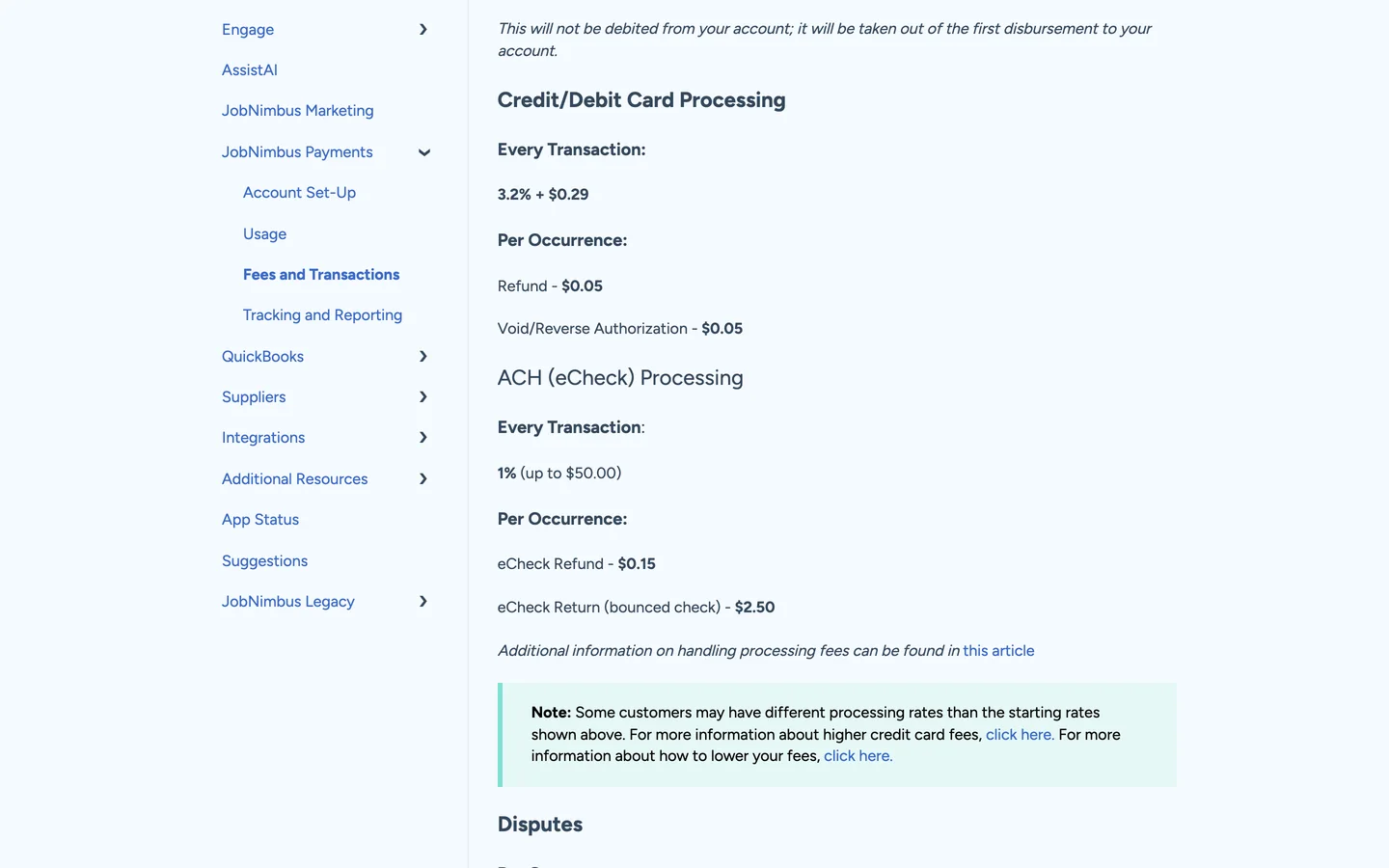 Jul 30, 2026
 Tech Stack
JobNimbus Pricing in 2026: What the Quote Does Not Cover
JobNimbus prints no figure on any of its four plans. So the only rate you can read before a sales call is the payments meter, and it is the biggest line on the bill.
Read Article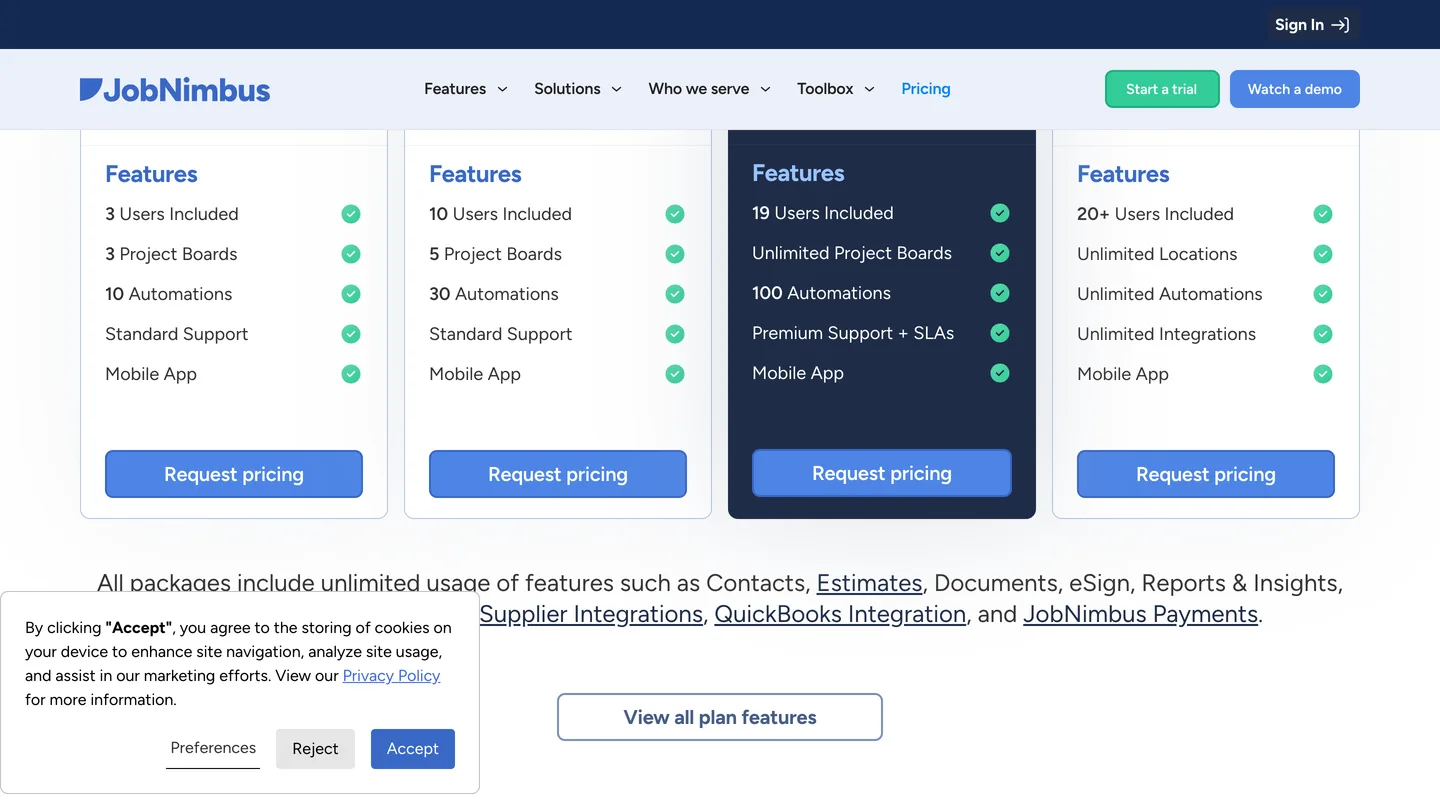 Jul 30, 2026
 Tech Stack
JobNimbus Review 2026: Pricing, Pros, Cons and Alternatives
JobNimbus rates 4.6 on Capterra and orders material straight from ABC Supply and SRS. But it publishes no price, and its supplement route carries a note.
Read Article Jul 30, 2026
 Tech Stack
BuildOps Review 2026: Pricing, Contract Terms and Alternatives
BuildOps runs commercial service and projects on one platform, and publishes no pricing at all. The billing unit, the 30-day data-export window, and who it suits.
Read Article Jul 30, 2026
 Tech Stack
FieldPulse Review 2026: Pricing, Pros, Cons and Alternatives
FieldPulse rates 4.6 on Capterra and is the platform contractors name when they leave a bigger system. But it publishes no price, and the contract runs a year.
Read Article Jul 30, 2026
 Tech Stack
Service Fusion Review 2026: Pricing, Contract and Alternatives
Service Fusion bills flat per company with unlimited users, which is the best structural deal in field service software. The published plans, the contract behind the no-contract line, and the app score every other review gets wrong.
Read Article Jul 30, 2026
 Tech Stack
Knowify Review 2026: Pricing, Job Costing and Alternatives
Knowify rates 4.5 on Capterra and its weakest sub-score is features. What the $99 Core plan withholds, which way the QuickBooks sync really runs, and who should not buy it.
Read Article Jul 29, 2026
 Tech Stack
AccuLynx Review 2026: Pricing, Tier Gating, Alternatives
AccuLynx rates 4.6 across 846 reviews and now publishes an entry price. What that price omits, which tier holds the insurance workflow, and who should skip it.
Read Article Jul 29, 2026
 Tech Stack
Unitel Voice Review 2026: Pricing, Features and Alternatives
Unitel Voice rates 4.6 on Capterra and gives a one-truck shop a business number for $9.99 a month. The published plans, the cost per call, and what it won't do.
Read Article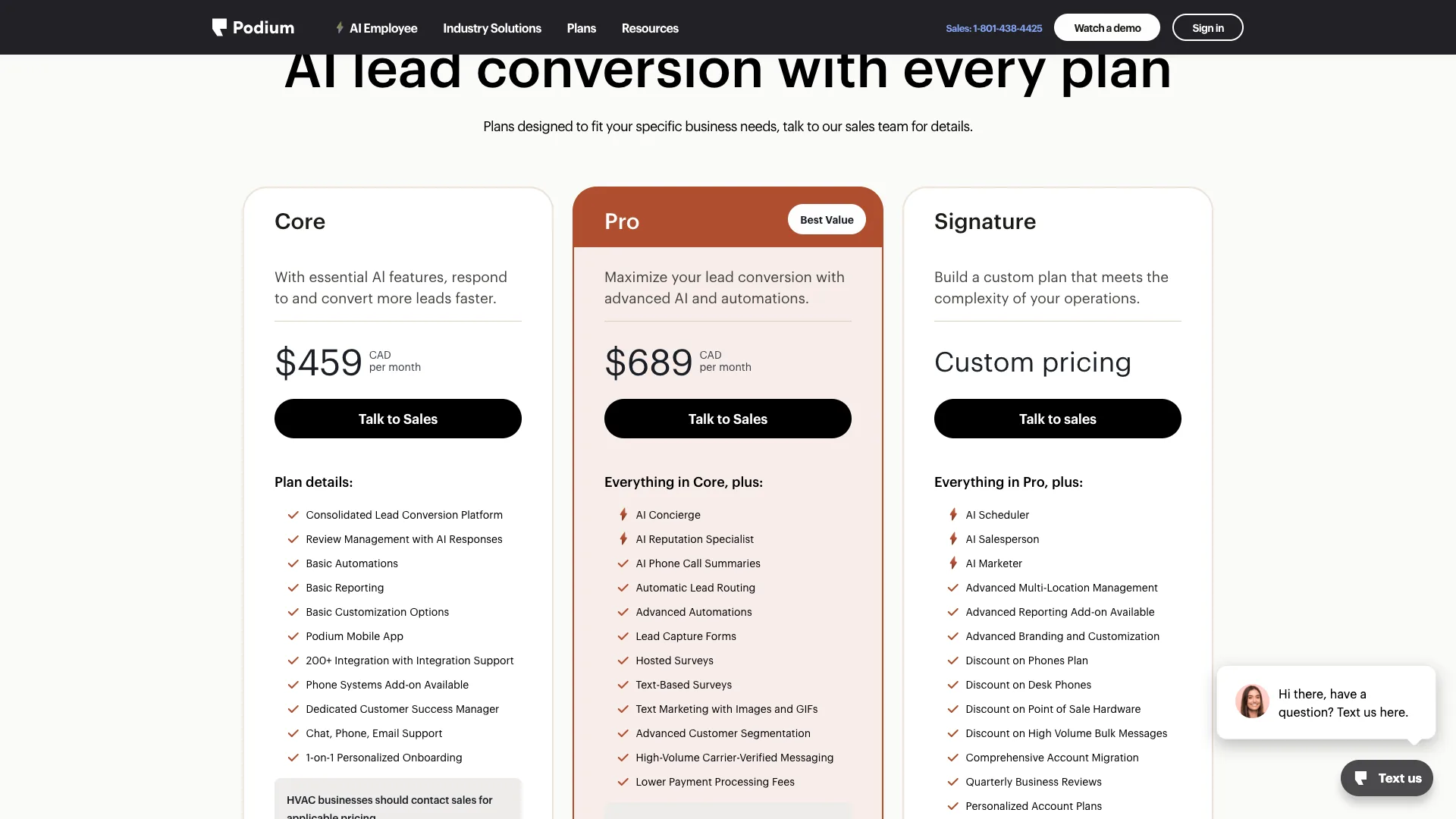 Jul 29, 2026
 Tech Stack
NiceJob vs Podium 2026: Pricing, Contracts and Review Gating
Both vendors print a price, at very different scale and in different currencies. The gap that matters is what Podium will not print: the billing unit, and whether a trade shop gets the number on the page.
Read Article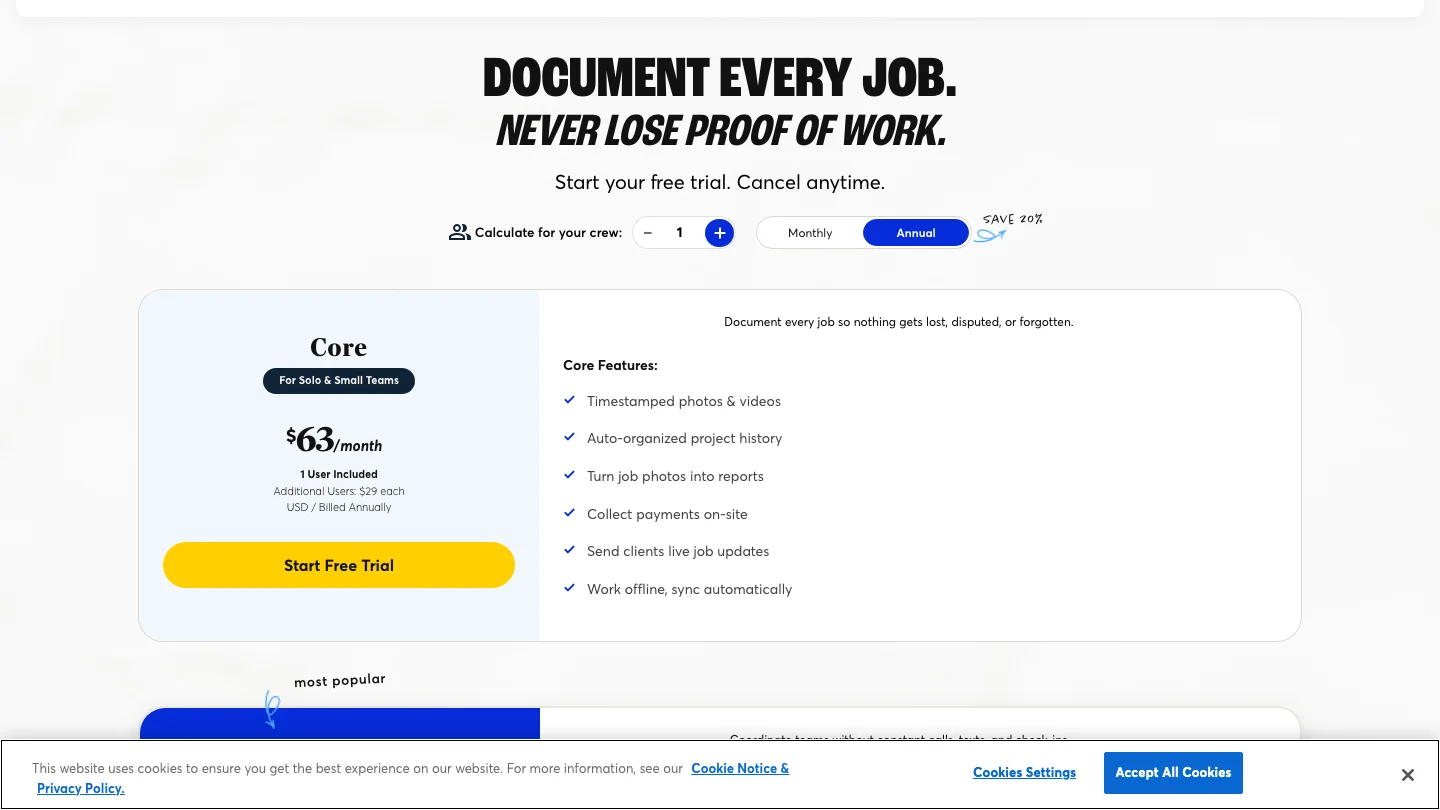 Jul 28, 2026
 Tech Stack
CompanyCam Review 2026: Pricing, Pros, Cons and Alternatives
Every page ranking for CompanyCam still quotes a per-user price the vendor no longer charges. Here are the real plans, the seat math, and who should skip it.
Read Article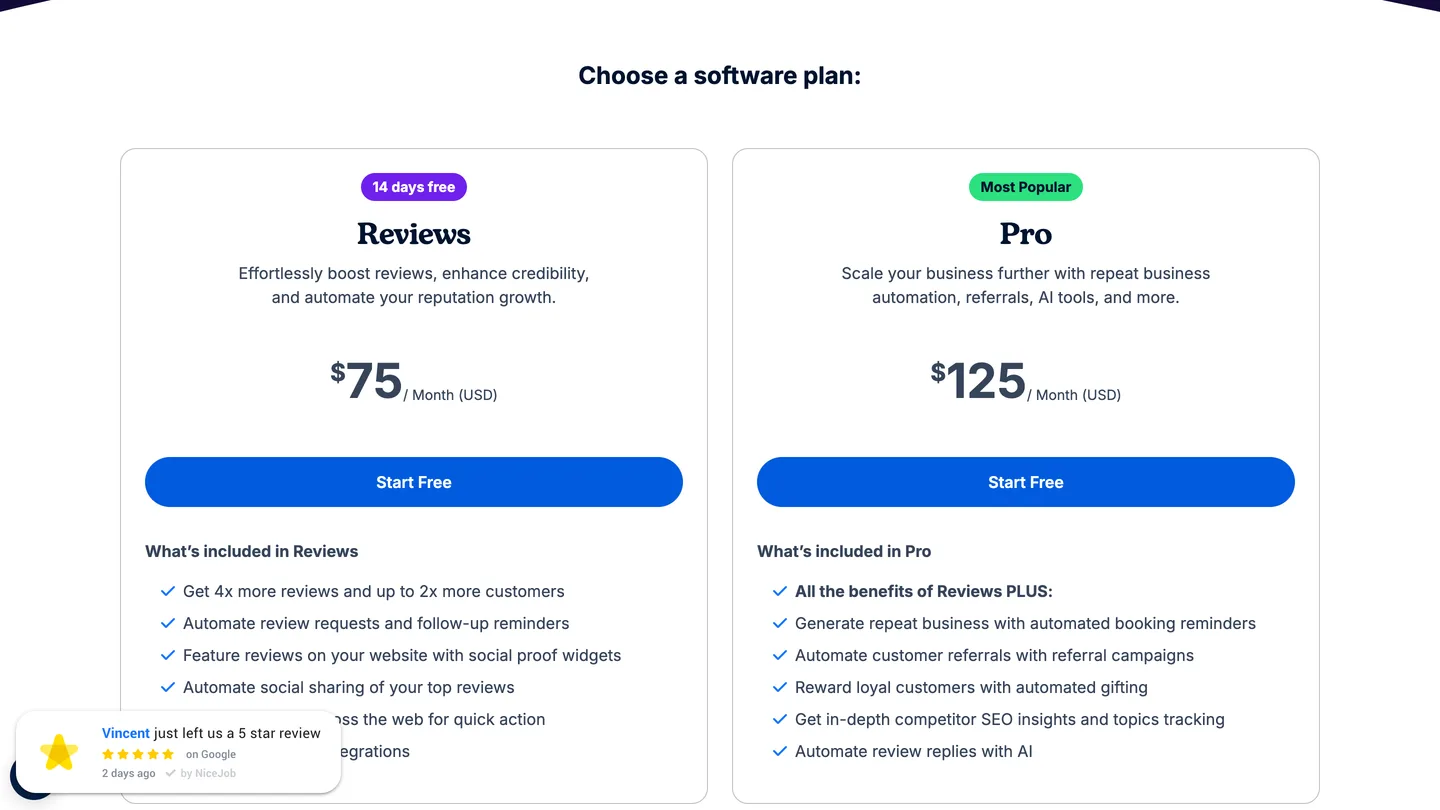 Jul 28, 2026
 Tech Stack
NiceJob Review 2026: Pricing, Pros, Cons and Alternatives
NiceJob rates 4.9 on Capterra and refuses to gate negative reviews. Real plan pricing, the active-customer threshold nobody publishes, and who should skip it.
Read Article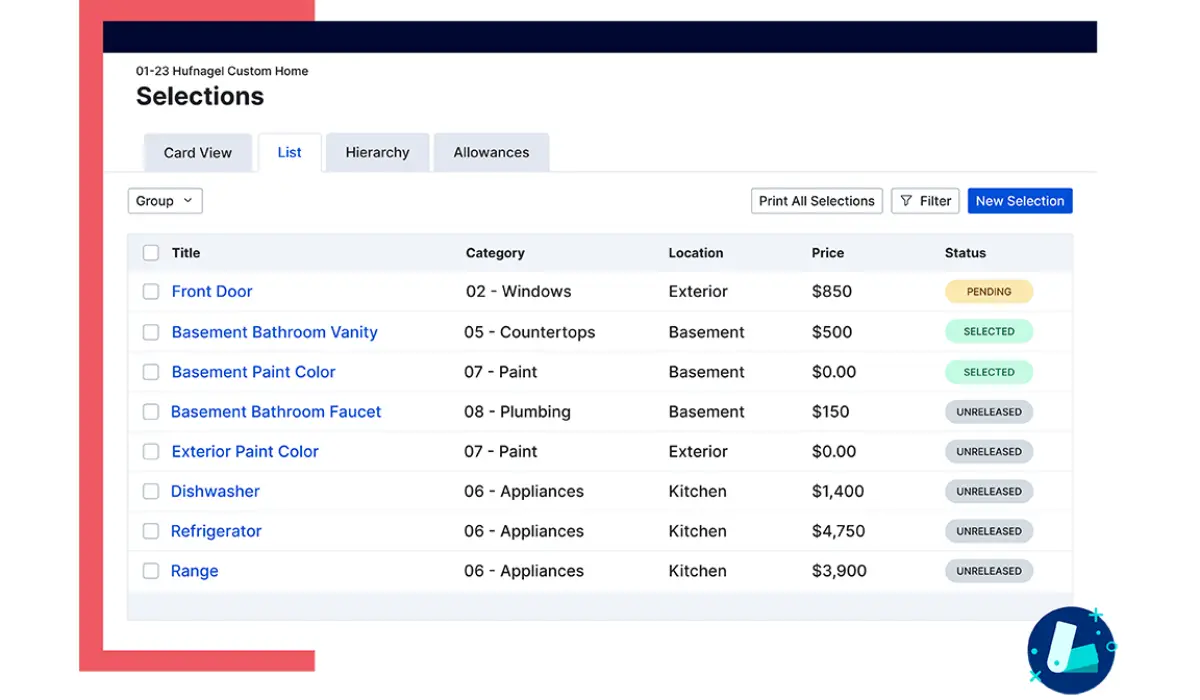 Jul 27, 2026
 Tech Stack
Buildertrend Review 2026: Pricing, Limits and Alternatives
Buildertrend rates 4.5 across 2,486 Capterra reviews and quotes against your revenue rather than your seat count. The workflows, the export problem, the alternatives.
Read Article Jul 27, 2026
 Tech Stack
CallRail Review 2026: Pricing, Pros, Cons and Alternatives
CallRail rates 4.5 on Capterra, and its tracking numbers port out free. But the two usage rates that decide your real bill are the two it does not print.
Read Article Jul 27, 2026
 Tech Stack
Roofr Review 2026: Pricing, Pros, Cons and Alternatives
Roofr rates 4.6 on Capterra and sells $13 measurement reports against a market charging triple. But it will not import a report from anywhere else.
Read Article Jul 25, 2026
 Tech Stack
Housecall Pro Review 2026: Pricing, Pros, Cons, Alternatives
Housecall Pro has the shortest learning curve in the category and the widest review spread. Real pricing, the Instapay math, and the migration trap to plan around.
Read Article Jul 24, 2026
 Tech Stack
Jobber Review 2026: Pricing, Pros, Cons and Alternatives
Jobber rates 4.6 on Capterra with the best mobile app in the category. Real plan pricing, the feature gating that changes your entry price, and who it suits.
Read Article Jul 23, 2026
 Tech Stack
ServiceTitan Review 2026: Pricing, Pros, Cons, Alternatives
ServiceTitan rates 4.3 on Capterra but its weakest score is value for money. Real reported pricing, the 12-month contract, the exit fees, and who it actually suits.
Read Article Jun 3, 2026
 Tech Stack
HVAC Online Scheduling: The 43% Losing After-Hours Bookings
HVAC leads every trade on online booking at just 56.7%, which still leaves 43% of sites forcing an after-hours customer to wait for a business-hours phone call.
Read Article