Contractor Foreman Review 2026: Pricing, Pros, Cons, Alternatives
Contractor Foreman starts at $49/month. What each tier gates, the 7 limitations reviewers name, and 4 alternatives with published prices.
Disclosure This article features tools from our brand partners. If you choose to use them, we may receive compensation at no extra cost to you.
Our editorial choices are independent of these affiliate arrangements. Read our full affiliate disclosure.
Fervor is a CRO and web design studio, not a software reseller, and no vendor paid for placement here or for a kinder verdict. Affiliate links are flagged where they appear, and they never change what we report.
Page at a glance
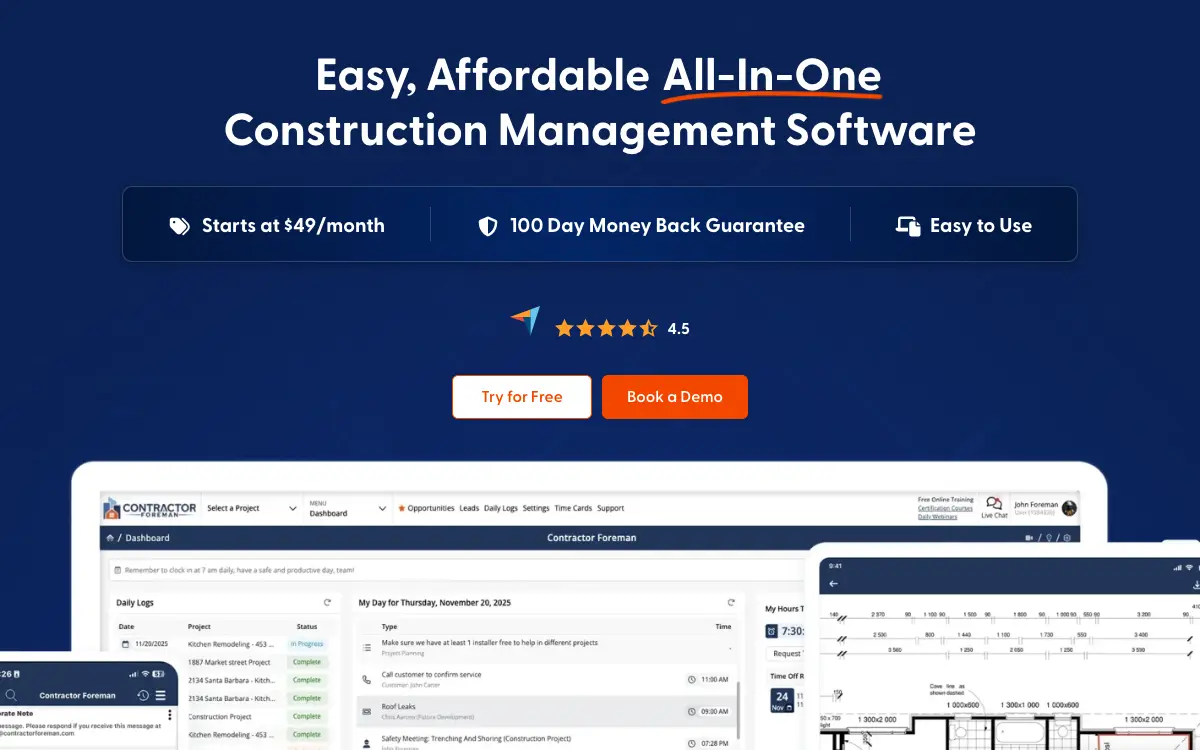
Contractor Foreman is the cheapest way to put a whole small construction company on one platform, because the price is charged to the company and not to each user. It starts at $49/month per account, 1 user, billed $588 annually. The subscription is charged to the company, not to each seat. The vendor's own pricing FAQ answers the question "Is the fee per user or for the whole company?" with "The fee listed on the website is the fee for the company as a whole." Each plan still carries a hard user cap (1, 3, 8, 15 or unlimited), so growing past the cap means moving up a whole tier rather than paying an add-a-seat rate. There is no published per-extra-user price. It fits a 3 to 15 person residential or light-commercial general contractor or remodeler running project work, where the office needs estimates, job costing and daily logs in one place and the field only needs a phone. It's the wrong buy for A contractor whose books live in QuickBooks Desktop and who isn't willing to migrate to QuickBooks Online., because The vendor retired QuickBooks Desktop syncing on January 1, 2026, won't provide migration support, and points you to a paid third party. And the alternative accounting path, Xero, was still listed as "Coming mid-2026" on the integrations page in August 2026. Alternatives that publish their prices are Knowify from $99/month, Jobber from $49/month. Nine priced tiers, seven evidenced gaps and four alternatives, two of which publish a figure.
What you're buying with Contractor Foreman, and what the demo skips
Contractor Foreman earns its money with a 3 to 15 person residential or light-commercial general contractor or remodeler running project work, where the office needs estimates, job costing and daily logs in one place and the field only needs a phone. If that's you, it does the job. The sections below are the parts worth checking before you sign. But the fit is narrower than the marketing suggests, and the price isn't the whole cost.
It starts at $49/month. And pricing was verified on 7 August 2026, so you can check every figure below in a browser tab.
| Pricing model | Published tiers |
|---|---|
| Entry price | $49/month |
| Users | The subscription is charged to the company, not to each seat. The vendor's own pricing FAQ |
| Ownership | Independent |
| Best fit | a 3 to 15 person residential or light-commercial general contractor or remodeler running project work, where the office needs estimates, job costing and daily logs in one place and the field only needs a phone. |
| Accounting sync | QuickBooks Online (two-way), QuickBooks Desktop (none), Xero (none) |
What works
- Estimating with takeoffs, a cost item database and markup control
- Job costing is the reason the accounting sync exists
- Daily logs, photos, time cards with GPS and geofence, and offline time cards
- Service tickets and a dispatch map sit alongside the project modules
- A client portal with online payment, on every plan
What does not
- QuickBooks Desktop syncing is already dead, and the marketing pages haven't caught up
- Change orders, schedules, daily logs, punchlists, RFIs, inspections and safety meetings never reach your accountant
- You can't configure the product to your process, and feature requests go to a popularity vote
- The bundled cost database is thin enough that estimators go back to vendor sheets
- Large estimates get slow, and the mobile app is the weaker half of the product
Contractor Foreman is the cheapest way to put a whole small construction company on one platform, because the price is charged to the company and not to each user. It sells to Cross-trade and Custom home building and Electrical and HVAC and Plumbing and Remodeling contractors, and the shape of the product follows from that: The estimating module carries bulk and line-item markups, a stored materials and pricing catalogue, cover sheets and click-to-approve estimates. A drawing takeoff tool sits upstream of it and exports quantities into the estimate. But the weak spot is the bundled Local Material Database, which the pricing page withholds from Basic and which reviewers say is missing common items.
Contractor Foreman fit, and where it stops
It fits a 3 to 15 person residential or light-commercial general contractor or remodeler running project work, where the office needs estimates, job costing and daily logs in one place and the field only needs a phone. That's the half most reviews print. Here's the other half, which is the one worth your time.
Don't buy it if you're A contractor whose books live in QuickBooks Desktop and who isn't willing to migrate to QuickBooks Online.. The vendor retired QuickBooks Desktop syncing on January 1, 2026, won't provide migration support, and points you to a paid third party. And the alternative accounting path, Xero, was still listed as "Coming mid-2026" on the integrations page in August 2026. Look at Knowify instead.
Don't buy it if you're A commercial general contractor running large projects with owner and architect collaboration, submittals at volume and formal AIA billing across many parties.. Contractor Foreman describes its own estimating scope as "You may not be building the next skyscraper downtown", and reviewers report the estimating screen slowing down on very large estimates. And the platform is deliberately built for small companies, with Capterra reporting that 99% of its reviewers come from small businesses. Look at Procore instead.
Don't buy it if you're A shop that needs the software bent to an unusual process, or that needs to pull its own data out through an API into a warehouse or a custom app.. Reviewers report no customization path and a vote-based feature request process. And the public Zapier surface only exposes customers, leads and file uploads, so projects, estimates, invoices and time cards have no documented self-serve programmatic route out. Look at Buildertrend instead.
Don't buy it if you're A one-truck service operator who wants month-to-month billing and no commitment.. There's no monthly plan. The shortest term sold is a quarter, the entry Basic plan is annual only at $588 up front, and cancelling mid-term forfeits the remainder because "no refund will be issued for any remaining time." Look at Jobber instead.
Contractor Foreman's price, and the part that isn't the price
Contractor Foreman prints its numbers on its own site. Good. That means you can price your real configuration tonight instead of waiting on a rep.
| Tier | Price | Billing unit | What it unlocks |
|---|---|---|---|
| Basic (annual) | $49/month | per account, 1 user, billed $588 annually | 1 user, 2 free private training sessions, no Local Material Database with pricing |
| Standard (annual) | $105/month | per account, up to 3 users, billed $1,264 annually | up to 3 users, 3 free private training sessions |
| Plus (annual) | $166/month | per account, up to 8 users, billed $1,997 annually | up to 8 users, 4 free private training sessions, eligibility for the 100 Day Money Back Guarantee |
| Pro (annual) | $221/month | per account, up to 15 users, billed $2,654 annually | up to 15 users, eligibility for the 100 Day Money Back Guarantee |
| Unlimited (annual) | $332/month | per account, unlimited users, billed $3,984 annually | unlimited users, unlimited free private training sessions, eligibility for the 100 Day Money Back Guarantee |
| Standard (quarterly) | $132/month | per account, up to 3 users, billed $395 quarterly | up to 3 users, not eligible for the 100 Day Money Back Guarantee |
| Plus (quarterly) | $206/month | per account, up to 8 users, billed $619 quarterly | up to 8 users, not eligible for the 100 Day Money Back Guarantee |
| Pro (quarterly) | $282/month | per account, up to 15 users, billed $845 quarterly | up to 15 users, not eligible for the 100 Day Money Back Guarantee |
| Unlimited (quarterly) | $415/month | per account, unlimited users, billed $1,245 quarterly | unlimited users, not eligible for the 100 Day Money Back Guarantee |
The subscription is charged to the company, not to each seat. The vendor's own pricing FAQ answers the question "Is the fee per user or for the whole company?" with "The fee listed on the website is the fee for the company as a whole." Each plan still carries a hard user cap (1, 3, 8, 15 or unlimited), so growing past the cap means moving up a whole tier rather than paying an add-a-seat rate. There is no published per-extra-user price.
There is a discount for paying annually up front: There is no monthly billing option at all. The pricing page offers only an Annual and a Quarterly toggle, and the monthly figures shown are the annual or quarterly total divided out. Annual prepay saves between $324 (Basic) and $996 (Unlimited) a year against the quarterly rate, and the pricing page prints those savings on each card. Only annual Plus, Pro and Unlimited buyers are eligible for the 100 Day Money Back Guarantee. And an annual prepay discount tells you an annual commitment exists, which is worth knowing before anyone mentions a term length out loud.
The Contractor Foreman costs that show up later
Payment processing. Card and bank payments run through Stripe and the vendor publishes the rates on its pricing FAQ: "Visa, Mastercard, Discover" at "2.9% + $0.30/transaction", "American Express" at "3.9% + $0.30/transaction", and "ACH Bank Transfers (eCheck)" at "1% of the transaction + $0.30/transaction ($10.00 max)". For Canada the page states "Processing fee for each transaction is 2.9% + $0.30" and "ACH (eCheck) is not available for Canada."
Implementation and onboarding. The Implementation Program is a separate paid engagement. The implementation page states "Normally an $1,100 charge, now only $500 for a limited time!" and the refund policy adds that "Our team will provide implementation assistance for a nominal fee as outlined on the Implementation webpage and within the signed agreement. This fee is non-refundable even if the Trial or Account is cancelled." Free private training sessions are included with every plan (2 on Basic, 3 on Standard, 4 on Plus, unlimited on Unlimited), and those are separate from the paid implementation.
Minimum term. The shortest commitment sold is one quarter. The pricing page presents only Annual and Quarterly billing, so even the smallest commitment is three months paid up front, and the entry Basic plan is sold on annual billing only. Every plan opens with a 30-day free trial before the first charge.
Getting out. There is no separate termination penalty, but there is also no proration back to you. The refund policy states "Once an account is cancelled, no refund will be issued for any remaining time." Cancelling in month two of an annual term therefore forfeits the remaining ten months unless the 100 Day Money Back Guarantee conditions are met.
Auto-renewal. Renewal is automatic and the burden of stopping it sits entirely with the account creator. The policy states "You are giving Contractor Foreman explicit permission to charge your card automatically at the end of the trial and with each subscription renewal" and "Cancellations must be made exclusively through Settings > Subscription Details > Cancel by the primary administrator (the person who created the account)." It also states "Our team members are unable to cancel the account for you" and that "The email going into junk or not being received does not justify a refund."
Modules sold separately. , , . The Contractor Foreman figure worth writing down is the one with your day-one modules already in it, not the headline tier.
Third-party services you will also pay for. , , . These are not on Contractor Foreman's invoice, and they are still part of what this decision costs you every month.
A tangent, but stay with it. Filing a chargeback costs you more than the disputed amount. Section 6.0 of the refund policy says a customer who disputes a payment "forfeits the right to a refund and/or future credit", and then binds the customer to pay the vendor's dispute and legal costs "as it pertains to the legal district of Rutherford County, North Carolina." The policy openly describes itself as the document your bank will read: "In the event of a dispute, your bank will refer to this policy to verify that payments and refunds were processed as outlined below." The card chargeback that most SaaS buyers treat as their backstop is contractually removed here. So the only real escape route is the 100 Day Guarantee, and that's available on three of the nine purchasable plan-and-term combinations.
What a Contractor Foreman quote leaves out
The subscription is the part everyone quotes. These are the lines that land afterwards, and the ones we could not find are named as unpublished rather than left blank.
Sold separately. , , . Price the configuration you'll really run, because an add-on you need on day one is part of the price.
Third-party services you'll also pay for. , , . None of these are on Contractor Foreman's invoice, and all of them are part of what this decision costs every month.
"Contractor Foreman Basic (annual) is $49/month, per account, 1 user, billed $588 annually."
Contractor Foreman pricing page (2026)
"Contractor Foreman Standard (annual) is $105/month, per account, up to 3 users, billed $1,264 annually."
Contractor Foreman pricing page (2026)
"The subscription is charged to the company, not to each seat. The vendor's own pricing FAQ answers the question "Is the fee per user or for the whole company?" with "The fee listed on the website is the fee for the company as a whole." Each plan still carries a hard user cap (1, 3, 8, 15 or unlimited), so growing past the cap means moving up a whole tier rather than paying an add-a-seat rate. There is no published per-extra-user price."
Contractor Foreman pricing page (2026)
The six workflows you pay for
Feature totals are noise. So a shop in this category lives or dies on six things, and those are the six to grade, and each one below carries the evidence it's graded on.
Estimating with takeoffs, a cost item database and markup control. The estimating module carries bulk and line-item markups, a stored materials and pricing catalogue, cover sheets and click-to-approve estimates. A drawing takeoff tool sits upstream of it and exports quantities into the estimate. But the weak spot is the bundled Local Material Database, which the pricing page withholds from Basic and which reviewers say is missing common items. A project manager, construction, 2-10 employees, 2+ years on the platform, describes it it plainly: "the live updated estimate database is missing tons of everyday items contractors utilize and forces us to look at google and pricing sheets from vendors."
Job costing is the reason the accounting sync exists. Estimates, bills, expenses, purchase orders, subcontracts and time cards all carry cost codes, and the platform reports estimated against actual. And the vendor's own guidance is unusually blunt about the ordering: bills must be created in Contractor Foreman rather than in QuickBooks "to keep your job costing accurate." On 2025-10-24, a project manager, construction, 2+ years on the platform, puts it: "When making very large estimates the software slows down a lot and it can be hard to navigate since it starts to really chunk along."
Daily logs, photos, time cards with GPS and geofence, and offline time cards. The field half is capture rather than management. Native iOS and Android apps handle daily logs, photos, punchlists and clock-in with GPS location and a project geofence radius. But offline time cards are a setting you enable rather than the default, and reviewers in low-signal areas notice the difference. A business operations manager, describes it: "Timecards can be painful in rural areas where signal is limited."An iphone app reviewer, writing on 2026-05-12, describes it: "While the website is much easier to utilize for creating invoices and estimates, this app allows me to check things on the go and communicate amounts and invoice numbers to customer and contractors while I am away from the office!"
Service tickets and a dispatch map sit alongside the project modules. Service Tickets cover dispatching, scheduling, time tracking, customer signature capture and invoicing, and a Dispatch Map and Calendar view exists. This is unusual for a construction PM product, and it's why a mixed project-plus-service contractor can consolidate here. But it's thinner than a dedicated field service platform, and the reviewer who rated the product lowest was using it exactly this way. A maintenance coordinator, construction, 11-50 employees who reviewed it on 2025-10-09 writes: "You are unable to customize the system in any way. Changes must come from a vote of many users so if other companies aren't using the system the way you are, there isn't much chance of getting options added."
A client portal with online payment, on every plan. The Client Portal isn't tier-gated. And clients get project visibility and can pay invoices online by card or bank transfer through Stripe, at rates the vendor publishes rather than hides.
Training is bundled, implementation is sold separately. Every plan includes free 1:1 private training sessions of roughly 40 minutes, counted by tier and reset annually, plus free weekly group sessions. But the paid Implementation Program is the one that imports your contacts, cost codes and cost item database. Reviewers rate the training and support highly, and one reports difficulty getting answers, so the experience isn't uniform. A project coordinator, construction who reviewed it on 2025-11-05 writes: "How easy it is to navigate and if you need help support is ready to jump in a help...They will go out of their way to get you all the training you want."An admin assistant writes: "It can be difficult to get answers or problems solved with the customer support center."
Contractor Foreman per trade, not per company size
Fit differs by trade rather than by company size alone, and a blended paragraph hides that. Here is the split for the trades this one sells to.
Cross-trade. The workflow that decides it is estimating with takeoffs, a cost item database and markup control, and the shop profile that gets value is 4 to 15 person residential or light-commercial gc or remodeler doing residential and commercial and service work. Where it stops being a fit is A contractor whose books live in QuickBooks Desktop and who isn't willing to migrate to QuickBooks Online..
Custom home building. The workflow that decides it is estimating with takeoffs, a cost item database and markup control, and the shop profile that gets value is 4 to 15 person residential or light-commercial gc or remodeler doing residential and commercial and service work. Where it stops being a fit is A contractor whose books live in QuickBooks Desktop and who isn't willing to migrate to QuickBooks Online..
Electrical. The workflow that decides it is estimating with takeoffs, a cost item database and markup control, and the shop profile that gets value is 4 to 15 person residential or light-commercial gc or remodeler doing residential and commercial and service work. Where it stops being a fit is A contractor whose books live in QuickBooks Desktop and who isn't willing to migrate to QuickBooks Online..
HVAC. The workflow that decides it is estimating with takeoffs, a cost item database and markup control, and the shop profile that gets value is 4 to 15 person residential or light-commercial gc or remodeler doing residential and commercial and service work. Where it stops being a fit is A contractor whose books live in QuickBooks Desktop and who isn't willing to migrate to QuickBooks Online..
Plumbing. The workflow that decides it is estimating with takeoffs, a cost item database and markup control, and the shop profile that gets value is 4 to 15 person residential or light-commercial gc or remodeler doing residential and commercial and service work. Where it stops being a fit is A contractor whose books live in QuickBooks Desktop and who isn't willing to migrate to QuickBooks Online..
Remodeling. The workflow that decides it is estimating with takeoffs, a cost item database and markup control, and the shop profile that gets value is 4 to 15 person residential or light-commercial gc or remodeler doing residential and commercial and service work. Where it stops being a fit is A contractor whose books live in QuickBooks Desktop and who isn't willing to migrate to QuickBooks Online..
Where your data goes when it leaves Contractor Foreman
QuickBooks Online connects both ways, on every plan. QuickBooks Desktop connects, on every plan. Xero connects, on every plan. Your costs map through cost codes, so test yours against your own chart of accounts before you commit. A code your books don't recognise is how a labour charge quietly lands somewhere useless.
Past those, the road ends. Xero, Sage, Foundation, Vista and other construction-specific ledgers, Payroll beyond Gusto, Programmatic access to project, estimate, invoice and time card records, Whole-account data export do not connect. So if your books run on an ERP rather than the platforms named above, weigh that before anything else.
Beyond accounting it connects to Stripe (Online invoice payment by card, bank transfer or over the phone, with rates published on the pricing FAQ.), Gusto (Time card export to payroll.), CompanyCam (Jobsite photo sync into project files.), Google and Outlook Calendar (Two-way calendar sync for milestones, meetings and deadlines.), Angi Leads (HomeAdvisor) (Lead import into the built-in CRM.), SweetPay (Consumer financing offered from an estimate.), Microsoft Project (Schedule import and export.), Zapier (Generic automation bridge, but only across CRM records.), Paddle.com (Merchant of record for your own subscription, not an optional integration.). A public API exists: There is no self-serve public API documented anywhere on the vendor's site, and the vendor does not publish API documentation. Capterra's feature grid marks API as present, but the only programmatic surface we could actually verify is Zapier, and that surface covers customers, leads and file uploads only. Treat API access as an unverified claim until the vendor shows you documentation.
Getting help from Contractor Foreman, and getting it fast
Support is the line item nobody prices and everybody eventually needs. Onboarding for Contractor Foreman: The Implementation Program is a separate paid engagement. The implementation page states "Normally an $1,100 charge, now only $500 for a limited time!" and the refund policy adds that "Our team will provide implementation assistance for a nominal fee as outlined on the Implementation webpage and within the signed agreement. This fee is non-refundable even if the Trial or Account is cancelled." Free private training sessions are included with every plan (2 on Basic, 3 on Standard, 4 on Plus, unlimited on Unlimited), and those are separate from the paid implementation.
But a project coordinator, construction, 1-2 years on the platform, puts it it differently: "How easy it is to navigate and if you need help support is ready to jump in a help...They will go out of their way to get you all the training you want."
An admin assistant writes: "It can be difficult to get answers or problems solved with the customer support center."
Contractor Foreman contracts, and getting out
Nobody reads this section before they buy, and it's the one that costs money afterwards. Four terms decide what leaving looks like.
Minimum term. The shortest commitment sold is one quarter. The pricing page presents only Annual and Quarterly billing, so even the smallest commitment is three months paid up front, and the entry Basic plan is sold on annual billing only. Every plan opens with a 30-day free trial before the first charge.
Auto-renewal. Renewal is automatic and the burden of stopping it sits entirely with the account creator. The policy states "You are giving Contractor Foreman explicit permission to charge your card automatically at the end of the trial and with each subscription renewal" and "Cancellations must be made exclusively through Settings > Subscription Details > Cancel by the primary administrator (the person who created the account)." It also states "Our team members are unable to cancel the account for you" and that "The email going into junk or not being received does not justify a refund."
Early termination. There is no separate termination penalty, but there is also no proration back to you. The refund policy states "Once an account is cancelled, no refund will be issued for any remaining time." Cancelling in month two of an annual term therefore forfeits the remaining ten months unless the 100 Day Money Back Guarantee conditions are met.
Payment processing. Card and bank payments run through Stripe and the vendor publishes the rates on its pricing FAQ: "Visa, Mastercard, Discover" at "2.9% + $0.30/transaction", "American Express" at "3.9% + $0.30/transaction", and "ACH Bank Transfers (eCheck)" at "1% of the transaction + $0.30/transaction ($10.00 max)". For Canada the page states "Processing fee for each transaction is 2.9% + $0.30" and "ACH (eCheck) is not available for Canada."
And this is the kind of thing you only find by reading the complaints. The vendor's own knowledge base killed QuickBooks Desktop syncing on January 1, 2026 and told customers the Desktop references would be pulled from the website. But seven months later they're still there. The integrations page still advertises "Two-way sync with QuickBooks Online and QuickBooks Desktop" and the pricing FAQ still says "We integrate with QuickBooks Online, QuickBooks Desktop and Zapier." And the replacement, Xero, was labelled "Coming mid-2026" and hadn't shipped when we checked in August 2026. A QuickBooks Desktop shop can buy this product today on the strength of a marketing page describing an integration the vendor retired, then discover it's on its own for the migration, because the same notice says the team "will not provide migration support".
"You are unable to customize the system in any way. Changes must come from a vote of many users so if other companies aren't using the system the way you are, there isn't much chance of getting options added."
Capterra, Monica P. (0-09)
"the live updated estimate database is missing tons of everyday items contractors utilize and forces us to look at google and pricing sheets from vendors."
Capterra, Timothy S. (2-11)
"When making very large estimates the software slows down a lot and it can be hard to navigate since it starts to really chunk along."
Capterra, Paul G. (0-24)
The Contractor Foreman problems that survive onboarding
And these are the gaps worth raising before you sign. They come out of reviewer complaints and out of what the vendor's own pages carefully don't say.
QuickBooks Desktop syncing is already dead, and the marketing pages haven't caught up. The knowledge base article "Important Update: QuickBooks Desktop Support Ends January 1, 2026" says that from that date there's "No more syncing with any version of QuickBooks Desktop", "No more development or support for the QuickBooks Desktop connector", and that "QuickBooks Desktop references will be removed from the Contractor Foreman website and materials." But as of August 2026 the integrations page still advertises "Two-way sync with QuickBooks Online and QuickBooks Desktop" and the pricing FAQ still says "We integrate with QuickBooks Online, QuickBooks Desktop and Zapier." So a QuickBooks Desktop shop reading the marketing pages would buy on a promise the vendor retired seven months earlier. So if you run QuickBooks Desktop, ask in writing whether your file will sync at all before you pay, and price in the third-party paid migration the vendor points you to.
Change orders, schedules, daily logs, punchlists, RFIs, inspections and safety meetings never reach your accountant. The vendor's own sync article lists what doesn't cross to QuickBooks: "Change orders stay in Contractor Foreman only. They do not sync to QuickBooks" and "Schedules, Daily Logs, Punchlists, RFIs, Inspections, Safety Meetings: None of these sync with QuickBooks." And time cards are one-way only, described as "one direction only, Contractor Foreman to QuickBooks". So if your bookkeeper works out of QuickBooks, approved change order value has to be re-entered by hand or invoiced out of Contractor Foreman first. Adopt the vendor's own recommended workflow and originate every bill, invoice and payment inside Contractor Foreman, because anything created in QuickBooks first won't job cost cleanly.
You can't configure the product to your process, and feature requests go to a popularity vote. A reviewer running service work reports there's no customization path and that changes are decided by aggregate demand rather than by your account. And that's the trade-off behind the price: one code base, one workflow, no per-tenant configuration. But a maintenance coordinator, construction, 11-50 employees, 6-12 months on the platform, puts it it differently: "You are unable to customize the system in any way. Changes must come from a vote of many users so if other companies aren't using the system the way you are, there isn't much chance of getting options added." So walk your three most unusual workflows through a trial account before you pay, because a workaround you discover in month four is permanent.
The bundled cost database is thin enough that estimators go back to vendor sheets. The Local Material Database with pricing is the one feature the pricing page withholds from the Basic plan, so it's positioned as a paid-up differentiator. But a two-year user on the Standard band reports it doesn't carry the everyday items a contractor buys. But a project manager, construction, 2-10 employees, 2+ years on the platform, describes it it differently: "the live updated estimate database is missing tons of everyday items contractors utilize and forces us to look at google and pricing sheets from vendors." So import your own cost items in the trial and judge the estimating module on your catalogue, not on the bundled one.
Large estimates get slow, and the mobile app is the weaker half of the product. Two independent reports point the same way. A project manager describes the estimating screen bogging down on very large estimates, and an App Store reviewer says the website is much easier than the app for building invoices and estimates. So the phone is a good field capture tool here rather than a second office. On 2025-10-24, a project manager, construction, 2+ years on the platform, writes: "When making very large estimates the software slows down a lot and it can be hard to navigate since it starts to really chunk along." So build your largest realistic estimate during the 30-day trial rather than a sample one, and keep estimating on desktop.
Time cards depend on signal, so rural crews lose the audit trail. A business operations manager reports that time cards are painful where coverage is limited. But the knowledge base does carry offline time card articles, so the capability exists. It's an opt-in setting rather than the default behaviour, and it covers time cards specifically rather than the whole app. A business operations manager describes it: "Timecards can be painful in rural areas where signal is limited." So turn on offline time cards during the trial and test a clock-in with the phone in airplane mode before you roll it out to a rural crew.
Product updates land without warning and reset how your team works. Two reviewers on different tenures describe the same pattern: updates arrive at inconvenient times and force a relearn of the basics. And on a platform with no per-tenant configuration, a workflow change ships to everyone at once. An operations manager and project manager, construction who reviewed it on 2026-05-21 says: "Updates can sometimes make you have to completely change how you do things, and updates come out at inconvenient times." So nominate one internal owner to read the What's New page each month, and the crew hears about a changed screen from you rather than from the screen.
One more thing worth knowing. the vendor publishes two different versions of its own guarantee terms, and they don't agree. The refund policy requires a 1:1 demo or kickoff call "within 7 days of the sign-up date" plus a separate training call at any point. The pricing page FAQ instead says you must have "participated in a free one-on-one training session within 30 days of signing up and within the last 30 days of when you are requesting a refund." And the refund policy adds a 10-active-days usage floor that the pricing FAQ doesn't mention at all. So it's the same guarantee, the same site, two different tests. So if you're buying an annual Plus, Pro or Unlimited plan because of the guarantee, book the demo call inside 7 days and log activity on at least 10 separate days a month. And satisfy the stricter of the two, because the refund policy is the document that governs.
One more thing worth knowing. the downgrade rule appears twice with two different outcomes. Section 7.0 of the refund policy says a downgrade within the first 30 days after signup or renewal triggers "a partial refund... for a maximum of 50% of the original amount paid", worked through with a $1000-to-$200 example. The pricing FAQ says something else entirely: "When downgrading, the difference between the two plans will remain on file as a non-refundable credit for the next renewal." One version returns cash, the other returns nothing but credit. So buy the tier you need rather than the tier you hope to grow into. Upgrading applies unused credit cleanly, but downgrading resolves under whichever clause the vendor cites.
One more thing worth knowing. the marketed integration surface and the actual programmatic surface are different sizes. The vendor sells Zapier as a bridge to "hundreds of apps", and Capterra's feature grid ticks the API box. Zapier's own published Contractor Foreman listing exposes seven triggers and two actions, all of them CRM records: Customer Created, Deleted and Archived; Lead Created, Deleted and Archived; File Uploaded; Create Customer; Create Lead. No project, estimate, invoice, purchase order, change order or time card object is exposed. Everything that makes this product valuable, the job costing and the estimate and cost data, has no verified route out except per-module Excel and PDF downloads. So assume any migration off this platform is a manual re-key, and price that into a five-year decision rather than a first-year one.
One more thing worth knowing. the EULA governing the mobile apps still carries an unfilled template variable in its governing-law clause. It reads "The laws of the Country, excluding its conflicts of law rules, shall govern this Agreement and your use of the Application." Country is capitalised as a defined term that the document never defines. The refund policy, by contrast, names a specific venue: Rutherford County, North Carolina. This is a small vendor operating off a template, not a signal of bad faith. But it tells you the refund and cancellation policy is the operative document, and that's the one you should read line by line before a card goes on file.
Worth a detour here. The criticism that recurs is the absence of a configuration layer, not a missing feature. Reviewers report there's no way to customize the system and that changes are decided by a vote of many users, that updates arrive at inconvenient times and force you to change how you work, and that changes to the platform require time to relearn the basics. And three separate reviewers over eight months describe one architecture: a single shared workflow that ships to everyone at once. That single shared workflow is exactly what makes $166 a month for 8 users possible. You're trading configurability for price, deliberately. So test your three most unusual processes during the 30-day trial, because a workaround you find in month four is permanent.
Contractor Foreman, from the people who bought it
Every quote below is transcribed from a published review, named to the platform that carries it and to the reviewer as that platform displays them. We read the corpus by complaint type rather than by star rating, which is how the disqualifying detail buried inside a five-star review gets found.
"You are unable to customize the system in any way. Changes must come from a vote of many users so if other companies aren't using the system the way you are, there isn't much chance of getting options added."
On 2025-10-09, a maintenance coordinator, construction, 11-50 employees, 6-12 months on the platform, puts it on Capterra
"the live updated estimate database is missing tons of everyday items contractors utilize and forces us to look at google and pricing sheets from vendors."
And a project manager, construction, 2-10 employees, 2+ years on the platform, writing on 2026-02-11, describes it the same thing on Capterra
"When making very large estimates the software slows down a lot and it can be hard to navigate since it starts to really chunk along."
On 2025-10-24, a project manager, construction, 2+ years on the platform, says on Capterra
"Updates can sometimes make you have to completely change how you do things, and updates come out at inconvenient times."
An operations manager and project manager, construction, 2+ years on the platform, writing on 2026-05-21, describes it on Capterra
"the initial learning curve can be somewhat steep for field personnel who are not accustomed to digital reporting."
A project manager, construction, 11-50 employees who reviewed it on 2026-06-05 describes it on Capterra
"One drawback is that the employee's name isn't shown on the daily log. While there is a picture of the employee, it's not always clear who the worker is."
On 2026-03-31, a personal assistant, construction, 2+ years on the platform, reports it on Capterra
"Software is very simple design wise, but there are really no complains in terms of that. Occasionally there are bugs but it does not happen consistently."
On 2026-03-04, an administrator, construction, 6-12 months on the platform, puts it on Capterra
"How easy it is to navigate and if you need help support is ready to jump in a help...They will go out of their way to get you all the training you want."
A project coordinator, construction, 1-2 years on the platform, writing on 2025-11-05, writes on Capterra
"It can be difficult to get answers or problems solved with the customer support center."
An admin assistant, reports it on GetApp
"Timecards can be painful in rural areas where signal is limited."
And a business operations manager, reports it the same thing on GetApp
"While the website is much easier to utilize for creating invoices and estimates, this app allows me to check things on the go and communicate amounts and invoice numbers to customer and contractors while I am away from the office!"
An iphone app reviewer, writes it plainly on Apple App Store
"Changes to the platform are usually welcome, but require additional time to relearn the platform basics."
But a project manager, architecture & planning, 1-2 years on the platform, describes it it differently on Capterra
What else you should be pricing beside Contractor Foreman
Four or five real options, each with what it does better and what it does worse. Both halves, or it's marketing.
| Tool | Entry price | Billing unit | Users included | Published? |
|---|---|---|---|---|
| Contractor Foreman | $49/month | per account, 1 user, billed $588 annually | The subscription is charged to the company, not to each seat | Yes |
| Knowify | $99/month | per account on annual billing, 1 user included, additional users $29/month | 1 on Core, 10 on Advanced, unlimited on Enterprise | Yes |
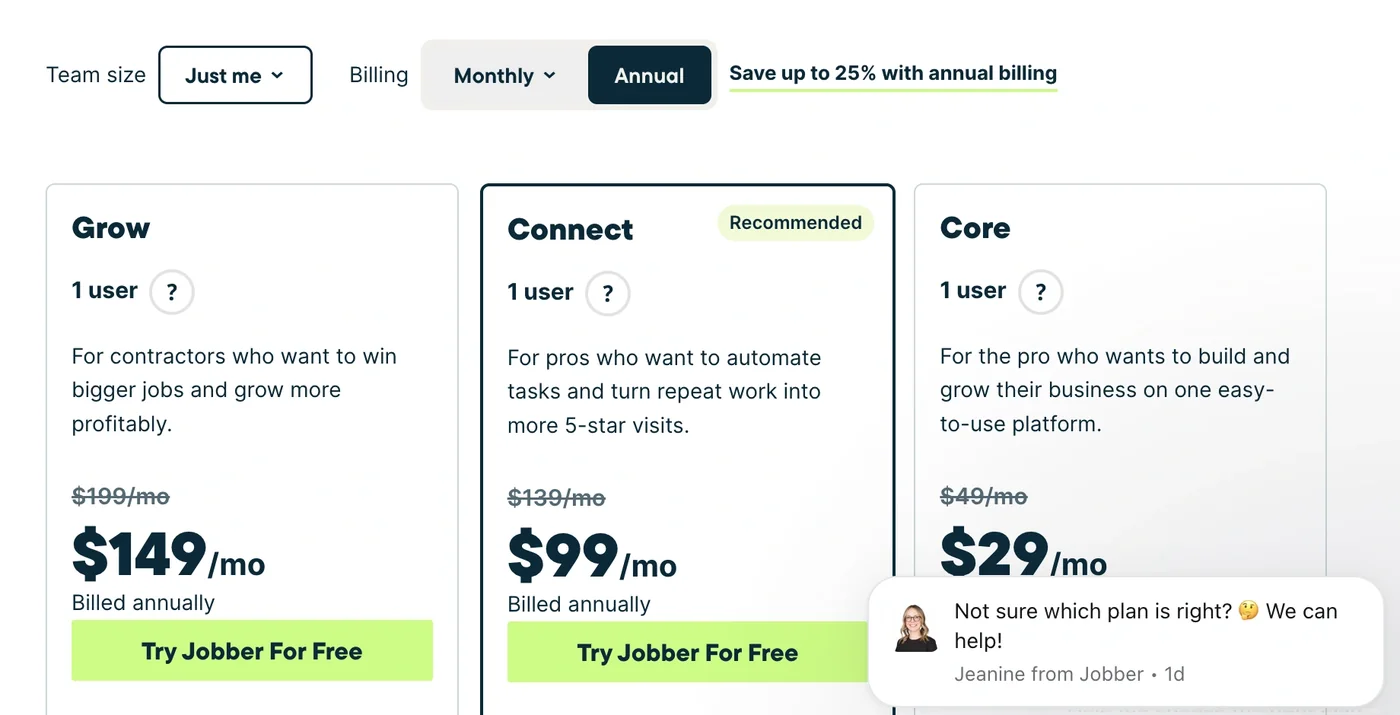
| Jobber | $49/month | per account month-to-month, 1 user included, additional users $29/month | 1 on Core, 5 on Connect, 10 on Grow | Yes |
| Buildertrend | Quote only | per account, unlimited users | Unlimited, per the vendor's own pricing page | No |
| Procore | Quote only | annual fee per product, priced on Annual Construction Volume, unlimited users | Unlimited | No |
Knowify. Contract job costing, AIA pay applications and prevailing wage, with a QuickBooks Online sync that's the product's spine rather than a bolt-on. But Price at scale. Core includes one user against Contractor Foreman's 8 users for $166, and every extra Knowify seat is $29 a month.
Jobber. Month-to-month billing with no commitment, a stronger mobile app, and dispatch-first service workflows. But Project construction. There's no takeoff, no schedule of values, no submittals or RFIs, and seats are metered so a growing crew raises the bill every hire.
Buildertrend. Custom home builder and remodeler workflows, client selections, and a much deeper partner ecosystem. But Price transparency. The pricing page is a quote form, so you can't compare it against Contractor Foreman without talking to a salesperson.
Procore. Commercial general contracting at scale, multi-party collaboration, submittals and drawings management on large projects. But Cost and fit for a small shop. Pricing scales with the dollar value of the work you put through it, which is the opposite of a flat company subscription.
"Updates can sometimes make you have to completely change how you do things, and updates come out at inconvenient times."
Capterra, Caiti M. (5-21)
"the initial learning curve can be somewhat steep for field personnel who are not accustomed to digital reporting."
Capterra, Ilkin B. (6-05)
Who should not buy Contractor Foreman
Don't buy Contractor Foreman if you're A contractor whose books live in QuickBooks Desktop and who isn't willing to migrate to QuickBooks Online.. The vendor retired QuickBooks Desktop syncing on January 1, 2026, won't provide migration support, and points you to a paid third party. And the alternative accounting path, Xero, was still listed as "Coming mid-2026" on the integrations page in August 2026. Look at Knowify instead.
Don't buy Contractor Foreman if you're A commercial general contractor running large projects with owner and architect collaboration, submittals at volume and formal AIA billing across many parties.. Contractor Foreman describes its own estimating scope as "You may not be building the next skyscraper downtown", and reviewers report the estimating screen slowing down on very large estimates. And the platform is deliberately built for small companies, with Capterra reporting that 99% of its reviewers come from small businesses. Look at Procore instead.
Don't buy Contractor Foreman if you're A shop that needs the software bent to an unusual process, or that needs to pull its own data out through an API into a warehouse or a custom app.. Reviewers report no customization path and a vote-based feature request process. And the public Zapier surface only exposes customers, leads and file uploads, so projects, estimates, invoices and time cards have no documented self-serve programmatic route out. Look at Buildertrend instead.
Don't buy Contractor Foreman if you're A one-truck service operator who wants month-to-month billing and no commitment.. There's no monthly plan. The shortest term sold is a quarter, the entry Basic plan is annual only at $588 up front, and cancelling mid-term forfeits the remainder because "no refund will be issued for any remaining time." Look at Jobber instead.
The verdict, by shop size
Solo operator or 2 to 3 person shop
Only under conditions, and they are worth being honest about. At $49 a month for Basic or $105 for three users, nothing else in the category gives one company this much module coverage. But the catch is that Basic is annual-only at $588 up front, Basic and Standard are both excluded from the 100 Day Money Back Guarantee, and Basic doesn't get the priced material database. So if you want an escape hatch you have to buy Plus at $166, which is a very different entry number. This band runs 1 to 3 on the crew, doing residential and service work, and that's the profile the recommendation is written for.
4 to 15 person residential or light-commercial GC or remodeler
Yes, and this is the shape the product is built for. This is the band the company-wide pricing model is built to win. Plus at $166 a month covers 8 users and Pro at $221 covers 15, so adding a project manager or a second estimator doesn't change the invoice. Capterra reports 99% of its reviewers come from small businesses and 87% from construction, which matches. But confirm your accounting sits in QuickBooks Online, not Desktop. This band runs 4 to 15 on the crew, doing residential and commercial work, and that's the profile the recommendation is written for.
15 to 100 person contractor with a real back office
Only under conditions, and they are worth being honest about. Unlimited at $332 a month is absurdly cheap for the headcount, and the vendor says it has 300+ employee customers. But you inherit three constraints at once: no per-tenant customization, no verified API to pull data into a warehouse, and estimating that reviewers say slows on very large estimates. So run your biggest estimate and your ugliest workflow through the 30-day trial before committing. This band runs 15 to 100 on the crew, doing residential and commercial and service work, and that's the profile the recommendation is written for.
Commercial GC on large projects, or any shop tied to QuickBooks Desktop
No. Two independent reasons. The vendor retired QuickBooks Desktop syncing on January 1, 2026 and won't help you migrate, while the replacement path to Xero was still labelled "Coming mid-2026" in August 2026. And the product describes its own estimating ceiling as "You may not be building the next skyscraper downtown", with reviewers confirming slowdowns on very large estimates. So Procore or Buildertrend are the right shortlist at that scale. This band runs undefined or more on the crew, doing commercial work, and that's the profile the recommendation is written for.
The part of the Contractor Foreman decision that's our lane
Now, this next bit is our own research, so weigh it accordingly. We don't sell contractor software and we're not an alternative to anything on this page.
Contractor Foreman charges the company rather than the seat, so the platform bill barely moves when you hire. So lead volume, not licence cost, is the variable that decides whether the software pays for itself. And the Angi Leads integration is the only lead source it plugs into, which means every other lead has to arrive through your own website first. But the platform has no view of that step.
We ran 380 contractor websites through the Contractor CRO Index. 82.8% of them had poor mobile loading performance. But check the method before you take the number, which is why it is published. The full write-up is in the Contractor CRO Index.
"82.8% of the 380 contractor websites inspected had poor mobile loading performance."
Fervor Studio Contractor CRO Index (2026)
Buy the platform if it fits. But spend ten minutes on your own site first, on a phone, on mobile data, the way a homeowner would. The numbers are all public.
See where your site is losing the jobs Contractor Foreman would have managed
And it takes 5 business days. We use your site the way a homeowner would, then hand you the specific leaks.
Get a Site InspectionWhat we checked on Contractor Foreman, and what we didn't
And here's what we can and can't stand behind on Contractor Foreman. What it is instead: Contractor Foreman's own 12 pages read line by line on 7 August 2026, plus the review corpus read by complaint type rather than by star rating. And every figure above traces to a page we opened on that date, pricing included.
So: twelve quotes on this page, nine from Capterra, two from GetApp and one from Apple App Store. Capterra, Software Advice and GetApp share one Gartner Digital Markets review pool, so a matching score across them is one sample rather than three corroborating ones.
And G2 (403), Trustpilot (403), TrustRadius (403) and Google Play (page returned navigation shell only, no review text) refused automated retrieval for Contractor Foreman. Where their scores appear in third-party roundups we have left them out rather than pass on a number we could not open.
What that leaves untested: we didn't open a trial account, so the in-app cancellation path, the offline time card behaviour and the presence or absence of a full-account export inside Settings are reported from vendor documentation rather than reproduced by us.. And everything above is twelve vendor pages and a review corpus, which is documentary rather than hands-on.
What Contractor Foreman users say
You are unable to customize the system in any way. Changes must come from a vote of many users so if other companies aren't using the system the way you are, there isn't much chance of getting options added.
the live updated estimate database is missing tons of everyday items contractors utilize and forces us to look at google and pricing sheets from vendors.
When making very large estimates the software slows down a lot and it can be hard to navigate since it starts to really chunk along.
Updates can sometimes make you have to completely change how you do things, and updates come out at inconvenient times.
the initial learning curve can be somewhat steep for field personnel who are not accustomed to digital reporting.
One drawback is that the employee's name isn't shown on the daily log. While there is a picture of the employee, it's not always clear who the worker is.
Software is very simple design wise, but there are really no complains in terms of that. Occasionally there are bugs but it does not happen consistently.
How easy it is to navigate and if you need help support is ready to jump in a help...They will go out of their way to get you all the training you want.
It can be difficult to get answers or problems solved with the customer support center.
Timecards can be painful in rural areas where signal is limited.
While the website is much easier to utilize for creating invoices and estimates, this app allows me to check things on the go and communicate amounts and invoice numbers to customer and contractors while I am away from the office!
Changes to the platform are usually welcome, but require additional time to relearn the platform basics.
Frequently asked questions
How much does Contractor Foreman cost?
Five tiers, priced to the company rather than to each seat. On annual billing: Basic $49 a month for 1 user ($588 a year), Standard $105 for up to 3 users ($1,264), Plus $166 for up to 8 users ($1,997), Pro $221 for up to 15 users ($2,654), and Unlimited $332 for unlimited users ($3,984). Quarterly billing costs more per month: Standard $132, Plus $206, Pro $282, Unlimited $415. And there's no monthly option, with Basic annual only.
Is the price per user?
No. The vendor's pricing FAQ answers this directly: "The fee listed on the website is the fee for the company as a whole." But each plan does carry a user cap, so growing from 8 users to 9 means moving from Plus to Pro rather than paying for one extra seat. And there's no published add-a-seat rate.
Does it still work with QuickBooks Desktop?
No. The vendor's own knowledge base announced that QuickBooks Desktop syncing ended January 1, 2026, along with connector development and support, and that Desktop references would be removed from the website. But those references were still on the live integrations page and pricing FAQ when we checked on 2026-08-07. The vendor also states it "will not provide migration support" and points customers to a paid third-party service. So QuickBooks Online is the supported path, and Xero was still listed as coming.
What does the 100 Day Money Back Guarantee require?
Five conditions, all of them. You must be on an annual Plus, Pro or Unlimited plan (quarterly and all Basic and Standard plans are excluded). You must complete a 1:1 demo or kickoff call within 7 days of signing up. You must attend at least one live 1:1 training call. Within 45 days you must have created one estimate, one project, one time card and one daily log. And you must show at least 10 active days in the 30 days immediately before you ask. The policy also warns that accounts doing most of that activity in the 72 hours before a refund request "may be considered ineligible".
What happens if I cancel mid-term?
You lose the remainder. The policy states "Once an account is cancelled, no refund will be issued for any remaining time." Only the primary administrator who created the account can cancel, and only through Settings > Subscription Details > Cancel. And support staff can't do it for you. So keep the cancellation confirmation email, because the policy treats it as the proof the cancellation happened.
Are there costs beyond the subscription?
Three worth budgeting. Stripe processing on any invoice paid online runs 2.9% + $0.30 for most cards, 3.9% + $0.30 for American Express and 1% + $0.30 capped at $10 for ACH. The Implementation Program is separate at $500, discounted from a stated $1,100, and it's non-refundable even if you cancel the trial. And QuickBooks Online is a separate Intuit subscription you buy yourself.
Can I get my data out?
Only piece by piece, as far as the public documentation goes. The knowledge base documents exporting files and photos, exporting a marked-up takeoff plan and exporting time cards in decimal format, and reports download as Excel or PDF. But no article documents a full-account export, and the only programmatic surface we could verify is Zapier, which exposes customers, leads and file uploads but not projects, estimates, invoices or time cards. And the refund policy's only data-retrieval promise is for vendor-initiated deactivation: "We will provide a minimum of 14 days to allow the customer to retrieve any records that need to be copied from the system."
Who bills me?
Paddle, not Contractor Foreman. The refund policy opens with "All financial transactions are handled by Paddle.com which is our Merchant of Record. You will see their name listed on the transaction." And that matters if you're reconciling a card statement or hunting for a charge you don't recognise.
Freshness
How we keep this page current
Three dates govern this review, and they carry different meanings. The initial source sweep is dated August 7, 2026; when only part of the evidence set is recaptured later, that later date is stated beside the refreshed claim. We last revised the page on August 7, 2026. And the user reviews we quote were posted over roughly the last 24 months, so their individual dates remain part of the evidence instead of being overwritten by a later pricing update.
We revise the page when Contractor Foreman changes a published price or a contract term, when a rating we cite moves by more than a few tenths, or when the vendor ships something big enough to change the verdict. We never bump the date just to look fresh, because Google treats that as manipulation and so do we. If a figure here reads as stale by the time you land on it, treat it as a floor and check the vendor's own page. We linked it at every number for exactly that reason.
Sourcing
How this review was researched
Every figure on this page traces to a captured source linked inline where it appears. The initial sweep is dated August 7, 2026; any later, partial recapture is dated at the claim rather than relabelling the whole evidence set. Ratings come from Capterra, GetApp, Software Advice and the Apple App Store. Note that Capterra, GetApp and Software Advice share one Gartner Digital Markets review pool, so an identical score across all three is a single sample rather than three corroborating ones, and this page treats it that way. G2, TrustRadius and Trustpilot block automated access, so where their numbers appear they are labelled as reported rather than verified. No claim here is sourced from Reddit or from a contractor Facebook group, because neither could be retrieved and quoting them would mean inventing attribution. Pricing marked as reported comes from third-party roundups, never from Fervor. Fervor's own findings come from the Contractor CRO Index 2026.
About
About Fervor Studio
Fervor Studio is a conversion rate optimization (CRO) and web design studio for home services contractors across North America, based in Cochrane, Alberta. Fervor does not sell field service management software and is not an alternative to Contractor Foreman. It publishes the Contractor CRO Index, a public benchmark measuring contractor website conversion potential using reproducible, open-source methods such as axe-core and Google Lighthouse. Fervor Studio is operated by Fervor Group Inc.
 Aug 2, 2026
 Tech Stack
Best Plumbing Software in 2026: Ten Ranked Across Four Classes
A plumbing company’s work runs through four classes of software that do not substitute for each other, and it only buys two of them. Ten products, each with a published price or an explicit statement that the vendor publishes none.
Read Article Jul 31, 2026
 Tech Stack
NiceJob vs Birdeye 2026: Pricing, Contracts and Review Gating
One of these vendors puts its price on the page and its cancellation terms in writing. The other puts a form in front of both, and the complaint record is where its contract length shows up.
Read Article Jul 31, 2026
 Tech Stack
Podium vs Birdeye 2026: Pricing, Contracts and Review Gating
Only one of these two will tell you what it costs before a sales call, and even that number carries a carve-out aimed squarely at trade contractors.
Read Article Jul 31, 2026
 Tech Stack
Best Electrical Contractor Software 2026: 11 Ranked and Priced
An electrical contracting business makes two software purchases that do not substitute for each other, and every roundup answering this query covers only one of them. Eleven platforms, with a published price or an explicit statement that the vendor publishes none.
Read Article Jul 31, 2026
 Tech Stack
Best HVAC Software in 2026: Eleven Ranked Across Three Classes
An HVAC contracting business buys across three classes of software that do not substitute for each other, and every roundup answering this query covers only one of them. Eleven products, each with a published price or an explicit statement that the vendor publishes none.
Read Article Jul 30, 2026
 Tech Stack
AccuLynx Pricing 2026: The Real Cost of a Quote-Gated Plan
One published figure, two blank plan cards, and a contract that says things the pricing page does not. A line-by-line breakdown of what AccuLynx really bills.
Read Article Jul 30, 2026
 Tech Stack
Houzz Pro Canada Review 2026: Pricing and Alternatives
Houzz Pro serves different pricing renderings. What Canadian buyers see, how GST/HST and payments work, what Custom gates, and what the annual contract commits you to.
Read Article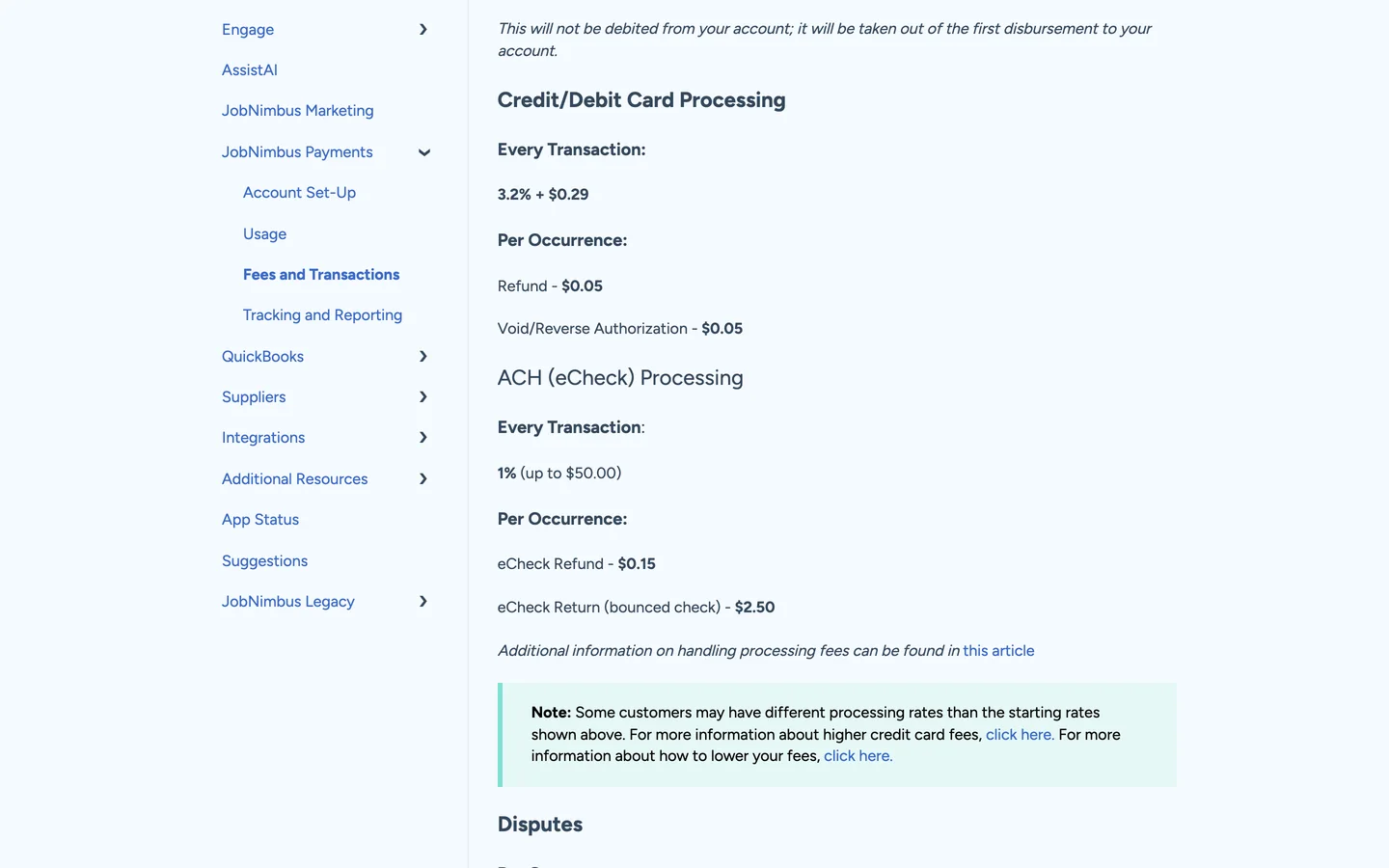 Jul 30, 2026
 Tech Stack
JobNimbus Pricing in 2026: What the Quote Does Not Cover
JobNimbus prints no figure on any of its four plans. So the only rate you can read before a sales call is the payments meter, and it is the biggest line on the bill.
Read Article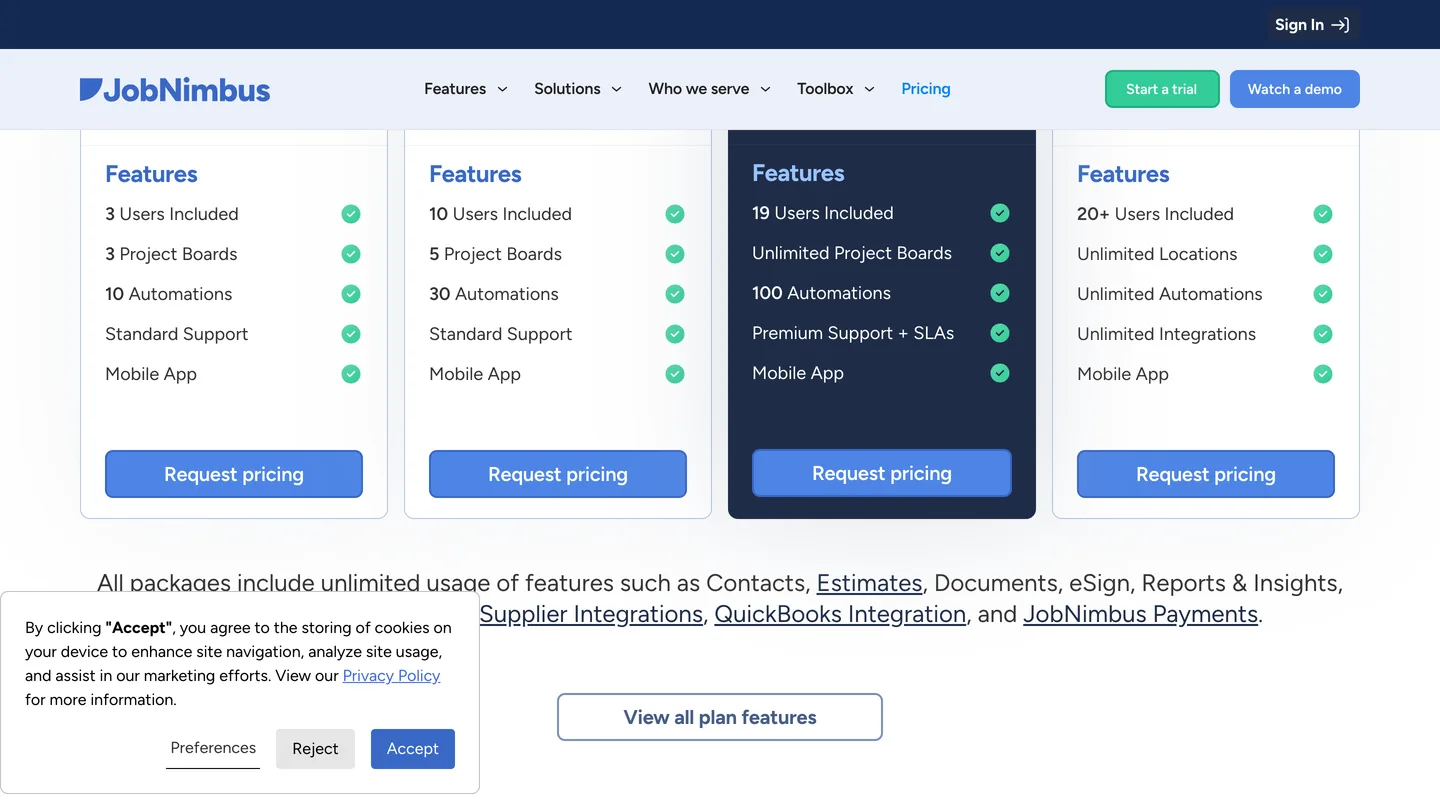 Jul 30, 2026
 Tech Stack
JobNimbus Review 2026: Pricing, Pros, Cons and Alternatives
JobNimbus rates 4.6 on Capterra and orders material straight from ABC Supply and SRS. But it publishes no price, and its supplement route carries a note.
Read Article Jul 30, 2026
 Tech Stack
BuildOps Review 2026: Pricing, Contract Terms and Alternatives
BuildOps runs commercial service and projects on one platform, and publishes no pricing at all. The billing unit, the 30-day data-export window, and who it suits.
Read Article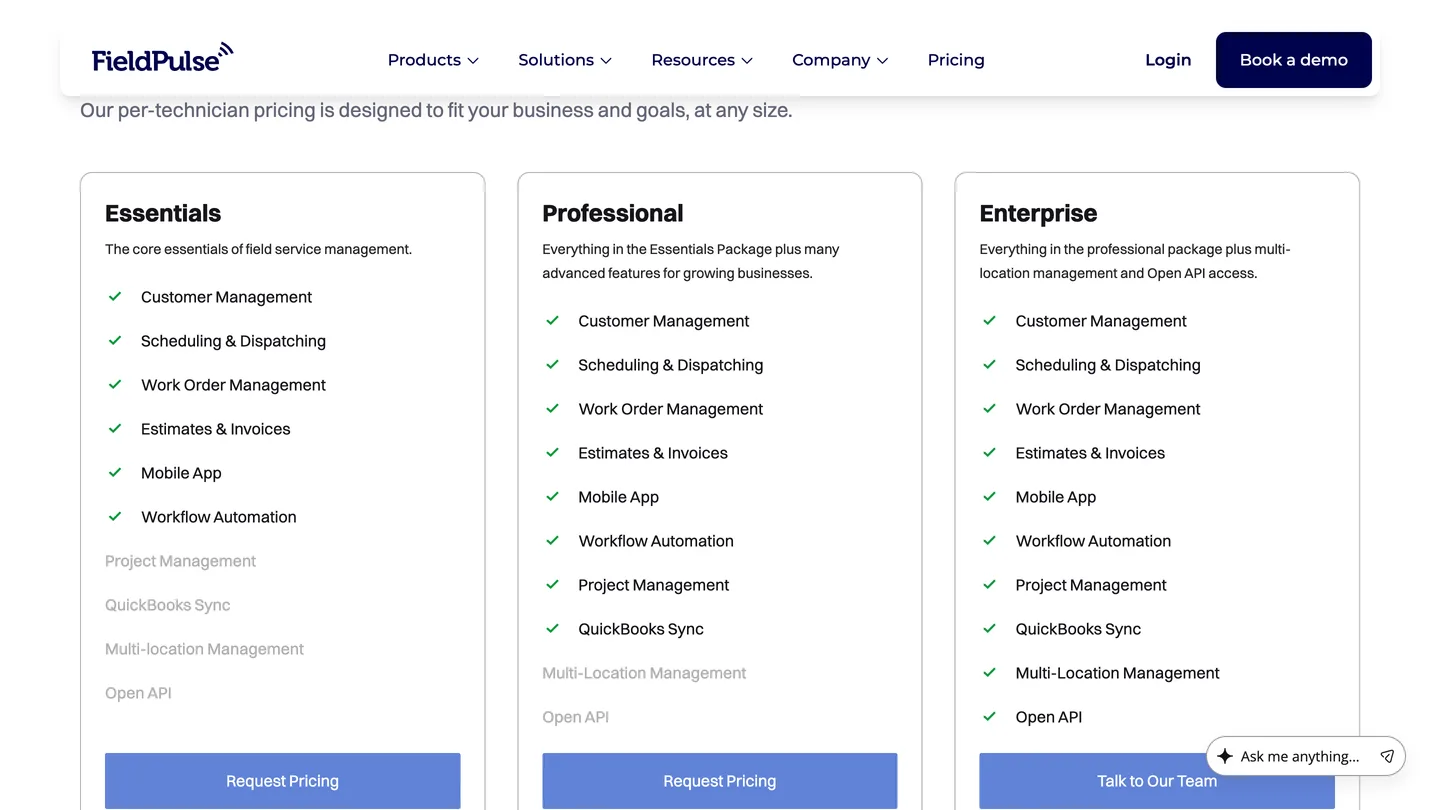 Jul 30, 2026
 Tech Stack
FieldPulse Review 2026: Pricing, Pros, Cons and Alternatives
FieldPulse rates 4.6 on Capterra and is the platform contractors name when they leave a bigger system. But it publishes no price, and the contract runs a year.
Read Article Jul 30, 2026
 Tech Stack
Service Fusion Review 2026: Pricing, Contract and Alternatives
Service Fusion bills flat per company with unlimited users, which is the best structural deal in field service software. The published plans, the contract behind the no-contract line, and the app score every other review gets wrong.
Read Article Jul 30, 2026
 Tech Stack
Knowify Review 2026: Pricing, Job Costing and Alternatives
Knowify rates 4.5 on Capterra and its weakest sub-score is features. What the $99 Core plan withholds, which way the QuickBooks sync really runs, and who should not buy it.
Read Article Jul 29, 2026
 Tech Stack
AccuLynx Review 2026: Pricing, Tier Gating, Alternatives
AccuLynx rates 4.6 across 846 reviews and now publishes an entry price. What that price omits, which tier holds the insurance workflow, and who should skip it.
Read Article Jul 29, 2026
 Tech Stack
Unitel Voice Review 2026: Pricing, Features and Alternatives
Unitel Voice rates 4.6 on Capterra and gives a one-truck shop a business number for $9.99 a month. The published plans, the cost per call, and what it won't do.
Read Article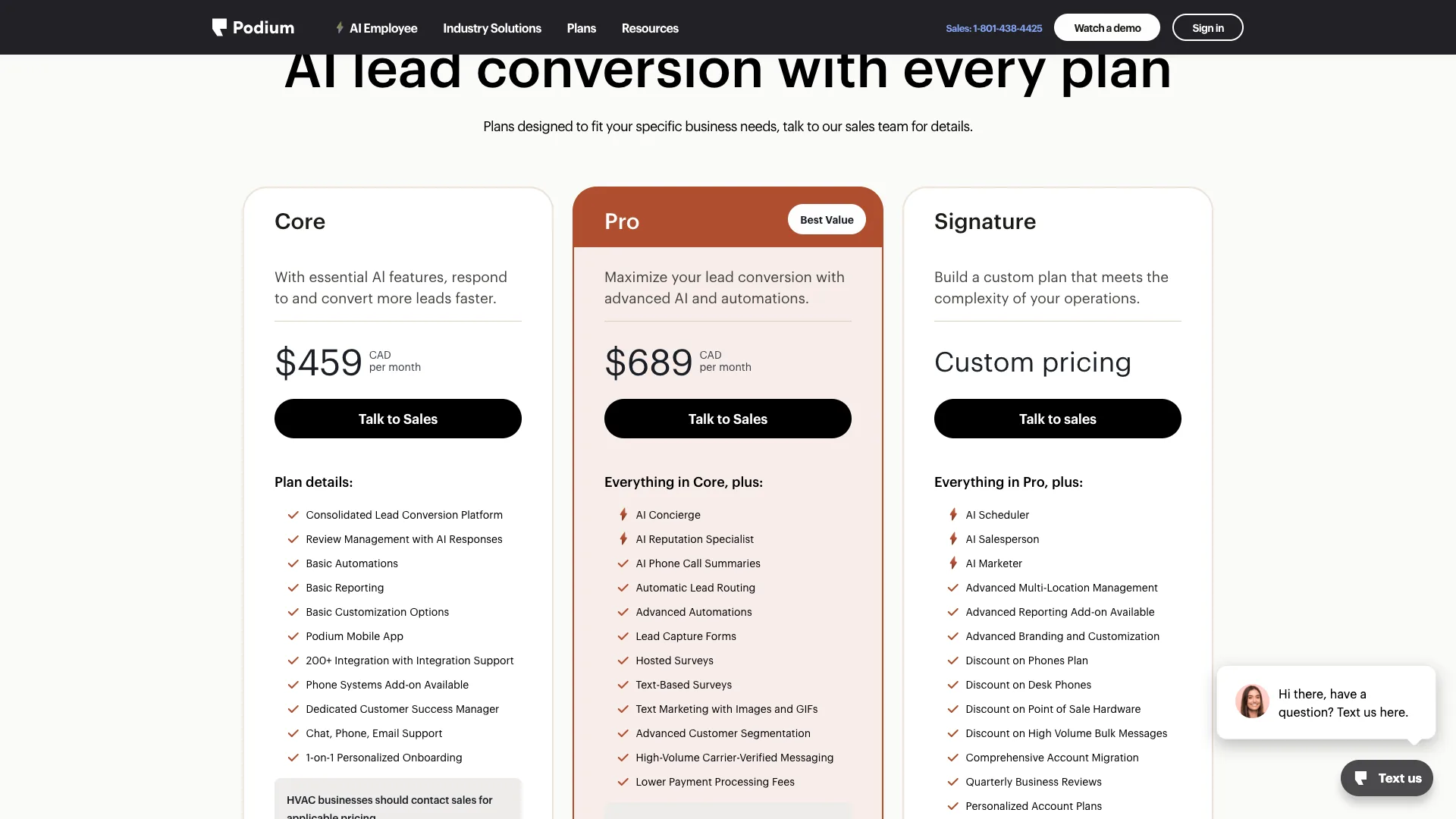 Jul 29, 2026
 Tech Stack
NiceJob vs Podium 2026: Pricing, Contracts and Review Gating
Both vendors print a price, at very different scale and in different currencies. The gap that matters is what Podium will not print: the billing unit, and whether a trade shop gets the number on the page.
Read Article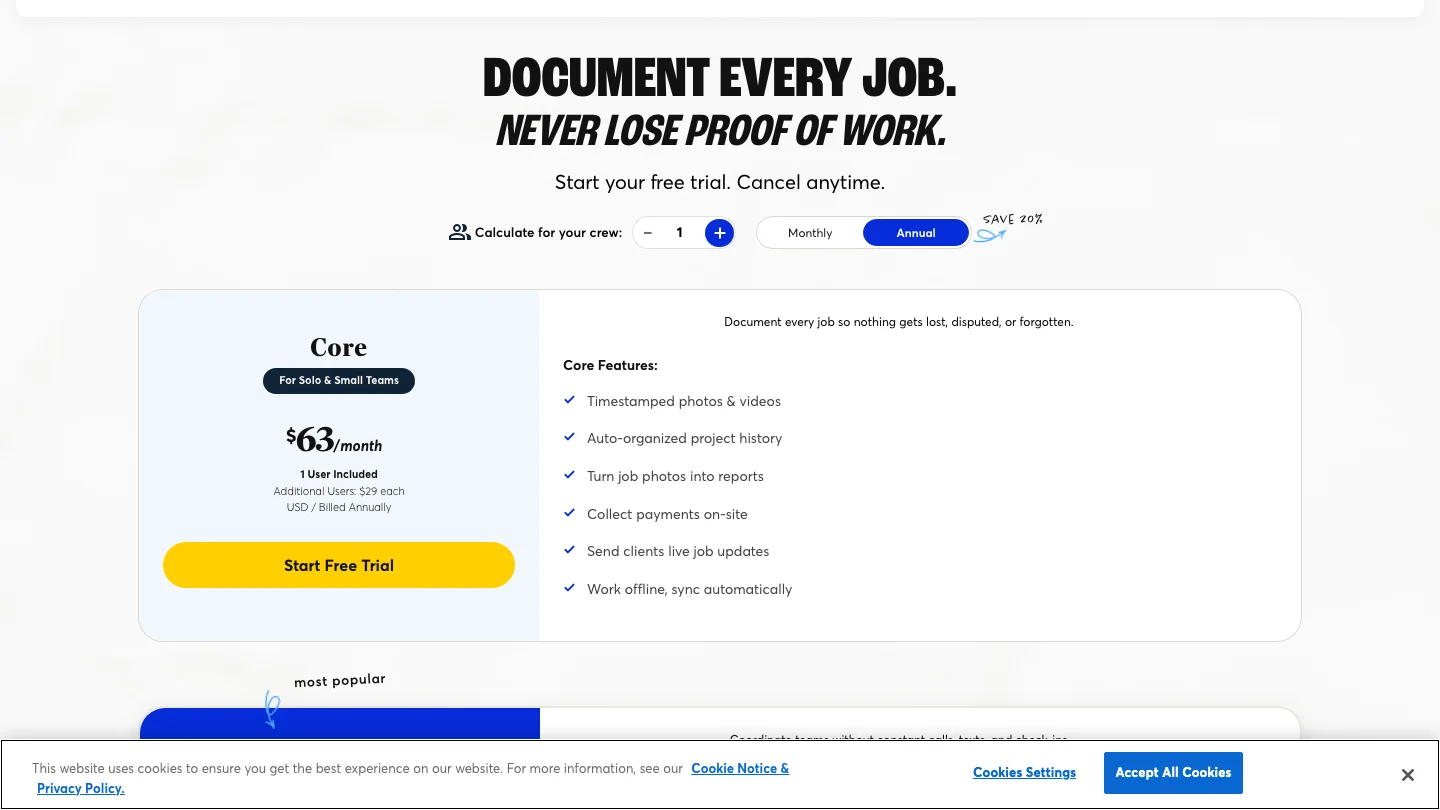 Jul 28, 2026
 Tech Stack
CompanyCam Review 2026: Pricing, Pros, Cons and Alternatives
Every page ranking for CompanyCam still quotes a per-user price the vendor no longer charges. Here are the real plans, the seat math, and who should skip it.
Read Article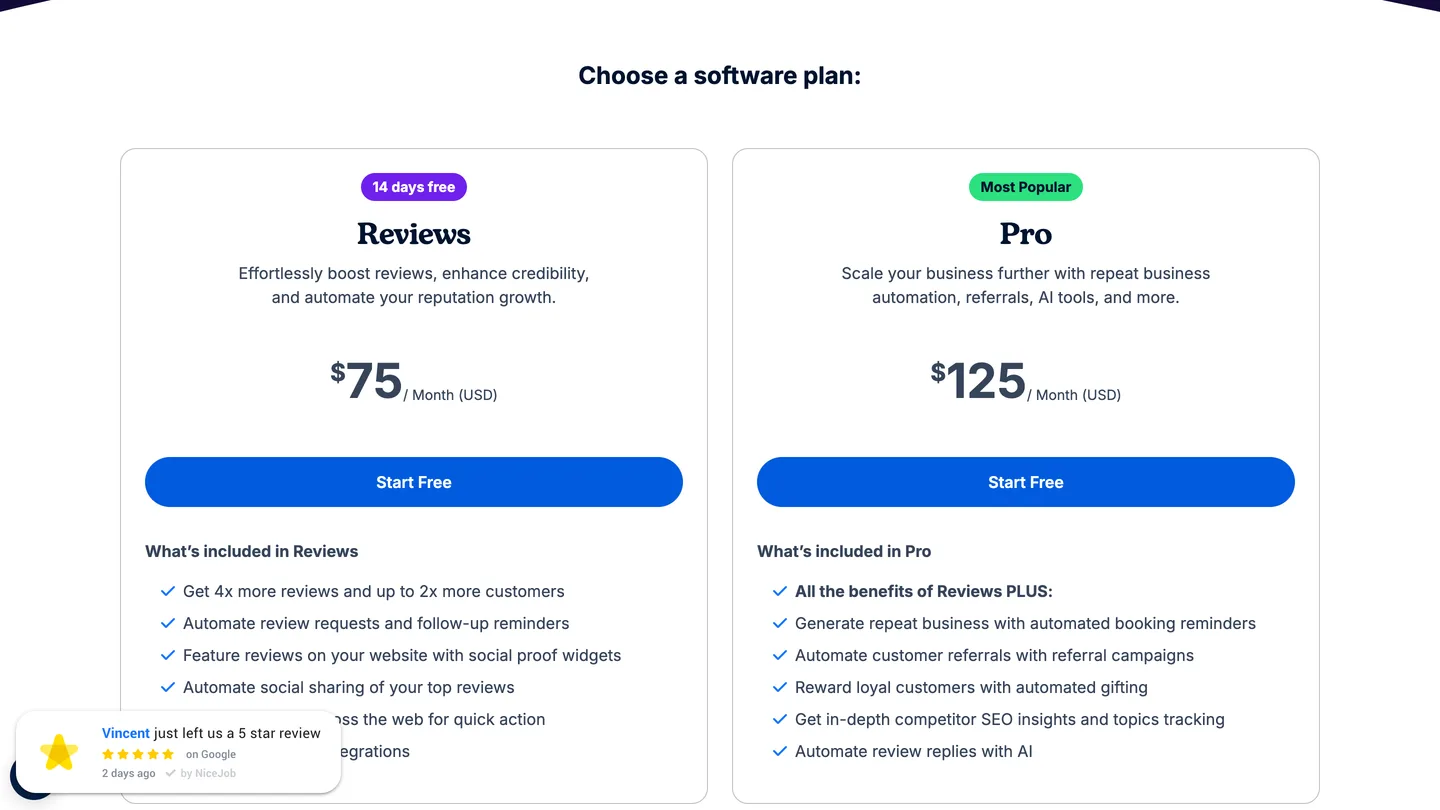 Jul 28, 2026
 Tech Stack
NiceJob Review 2026: Pricing, Pros, Cons and Alternatives
NiceJob rates 4.9 on Capterra and refuses to gate negative reviews. Real plan pricing, the active-customer threshold nobody publishes, and who should skip it.
Read Article Jul 27, 2026
 Tech Stack
Buildertrend Review 2026: Pricing, Limits and Alternatives
Buildertrend rates 4.5 across 2,486 Capterra reviews and quotes against your revenue rather than your seat count. The workflows, the export problem, the alternatives.
Read Article Jul 27, 2026
 Tech Stack
CallRail Review 2026: Pricing, Pros, Cons and Alternatives
CallRail rates 4.5 on Capterra, and its tracking numbers port out free. But the two usage rates that decide your real bill are the two it does not print.
Read Article Jul 27, 2026
 Tech Stack
Roofr Review 2026: Pricing, Pros, Cons and Alternatives
Roofr rates 4.6 on Capterra and sells $13 measurement reports against a market charging triple. But it will not import a report from anywhere else.
Read Article Jul 25, 2026
 Tech Stack
Housecall Pro Review 2026: Pricing, Pros, Cons, Alternatives
Housecall Pro has the shortest learning curve in the category and the widest review spread. Real pricing, the Instapay math, and the migration trap to plan around.
Read Article Jul 24, 2026
 Tech Stack
Jobber Review 2026: Pricing, Pros, Cons and Alternatives
Jobber rates 4.6 on Capterra with the best mobile app in the category. Real plan pricing, the feature gating that changes your entry price, and who it suits.
Read Article Jul 23, 2026
 Tech Stack
ServiceTitan Review 2026: Pricing, Pros, Cons, Alternatives
ServiceTitan rates 4.3 on Capterra but its weakest score is value for money. Real reported pricing, the 12-month contract, the exit fees, and who it suits.
Read Article Jun 3, 2026
 Tech Stack
HVAC Online Scheduling: The 43% Losing After-Hours Bookings
HVAC leads every trade on online booking at just 56.7%, which still leaves 43% of sites forcing an after-hours customer to wait for a business-hours phone call.
Read Article