















































































“Nay did an amazing job, you know. He was really patient. He got the work done the way I told him and he was just on point with the website. Pretty straightforward process. No going around the bush. He just did amazing work and I would 100% recommend.”
View on Google →Rank on Google for "HVAC near me" in Iqaluit.
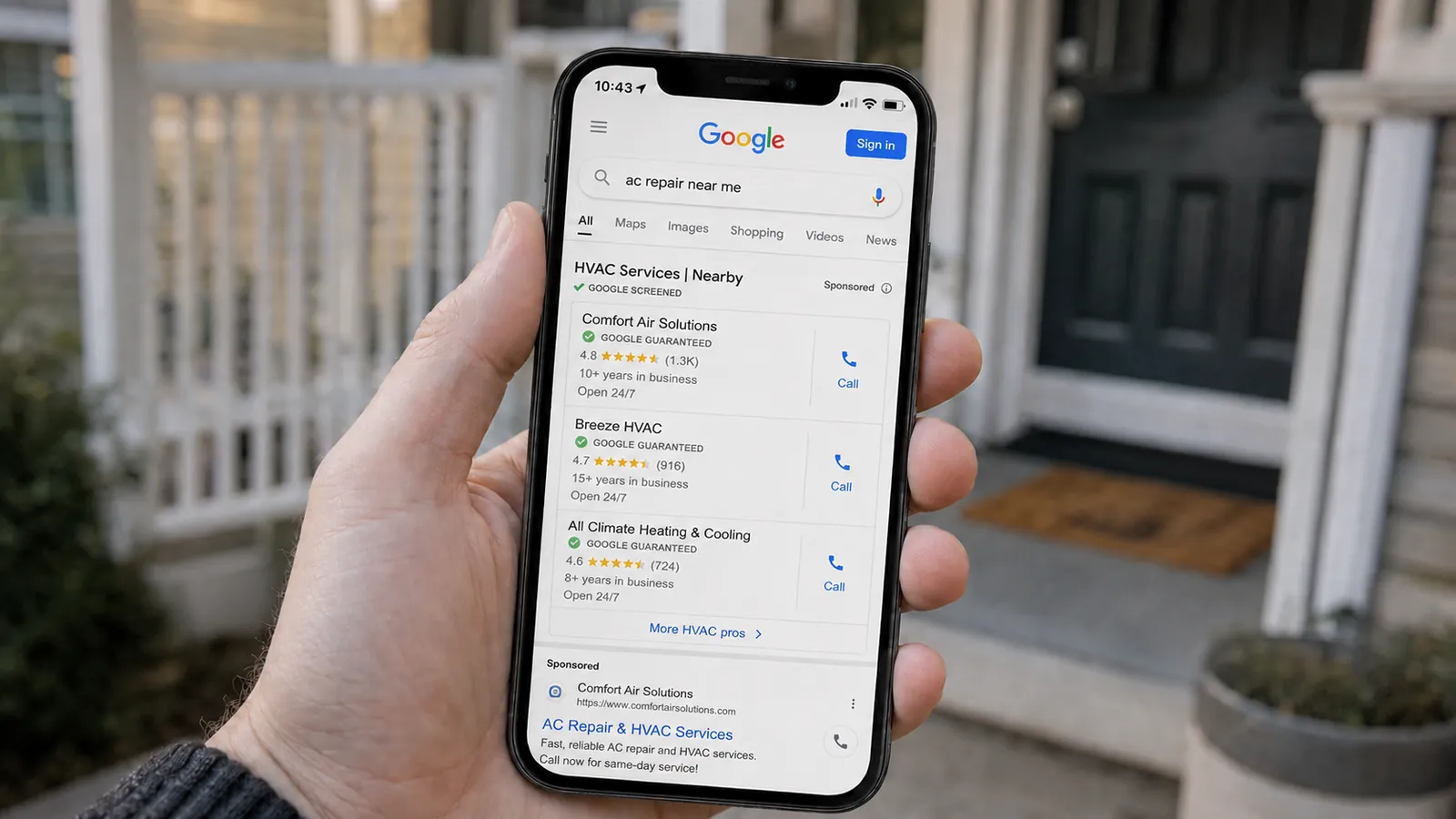
Right now, someone in Iqaluit is Googling "HVAC near me." We get you showing up first, then turn that click into a booked job.
How Can We Help?
Choose the option that suits your needs.
Let’s Investigate
We will send your Site Inspection to the email you provided.
You’re in.
We’ll send your Site Inspection within 5 business days.
Let’s Chat
Book a time that works for you.

“Attentive, listened to every revision request, delivered on time. Would work with him again.”
- Hamza Najam

“Patient, on point, straightforward. Did amazing work. Would 100% recommend.”
- Ruben Mederos, HyperTemp HVAC

“Responsive, creative, exceeded expectations. Already seeing greater engagement from our clients.”
- George Jeorgy, Jeorgy's Landscape Construction

“Top-tier professionalism, real web design expertise, ideas I hadn't considered. Confidently recommend.”
- Aws Nassani, Four Eleven Contracting
Let’s talk about what your website could be doing for your business.
Call Us TodayThe Iqaluit, NU HVAC specifics your website needs.
Every angle below comes from how Iqaluit, NU homeowners search, evaluate, and buy, built into your site to help boost conversions.
February averages minus 27 degrees
Iqaluit runs an extreme Arctic heating season across roughly nine to ten months, September through May or June. Your coldest month, February, averages about minus 27°C with lows near minus 31°C, and several days at or below minus 35°C hit every winter. So you size oil-fired forced-air furnaces and hydronic boilers for those design temperatures, and you insulate and heat-trace the oil supply lines so they never freeze up.
Oil is the only heating fuel
Do not write heat-pump or gas-furnace copy for this market. The Canada Energy Regulator confirms there are no natural gas pipelines anywhere in Nunavut, so oil trucked to an external tank at each house is the primary fuel for every home. And the federal Oil to Heat Pump Affordability Program excludes Nunavut by name over its grid-connection rule, so you can never offer an Iqaluit homeowner that conversion program.
Order before the sealift closes
Iqaluit has no road or rail link to the rest of Canada, so the single annual sealift, running roughly late June to late October, is a hard operational constraint that shapes your whole schedule. If a furnace, boiler, or major part misses that window, it either comes by costly air freight or waits up to a year for the next ship. So you plan major replacements around the sealift calendar.
Permafrost puts your equipment above ground
Permafrost dictates the entire install method here. Iqaluit buildings sit on steel piles roughly four feet off the ground, because no settled design code exists for foundations this far north, and some sites even need artificial ground cooling to protect the permafrost. So your HVAC equipment, ductwork, and oil lines typically run above grade rather than through a conventional heated basement.
There is no cooling season
Do not build AC-repair or AC-replacement content for Iqaluit, because there is effectively no residential cooling demand to sell. Your warmest month, July, averages only about 8.1°C with highs near 12°C, which leaves the city with cooling degree days close to zero. So the real summer work here is furnace and boiler tune-ups and oil-tank inspections, scheduled then because it is the only practical season for outdoor work.
Two federal programs you cannot offer
Stop offering two federal programs to Iqaluit homeowners. The Oil to Heat Pump Affordability Program excludes Nunavut outright over its integrated-grid requirement, and the Canada Greener Homes Grant closed nationwide, with December 31, 2025 the final day even to submit documents for already-approved requests. So neither is a live incentive here, and presenting either one to a Nunavut customer sets up a promise you cannot keep.
The live money is not for furnaces
Be careful which Nunavut programs you cite, because the live ones do not pay for heating equipment. The Sustainable Energy Support Policy covers 50% of renewable improvements up to $30,000, but only solar and wind, explicitly not furnaces or boilers. And the Qulliq Energy Corporation subsidy discounts electricity, 700 kWh monthly in summer and 1,000 in winter, not equipment. So do not present either as a furnace rebate to your customer.
Nunavut has no HVAC board
Nunavut has no dedicated HVAC or mechanical licensing board. Trade certification runs through the Nunavut Apprenticeship, Trade and Occupations Certification Board, and Oil Heat System Technician is a recognized Red Seal trade but voluntary here. And all building work, including your mechanical installs, falls under the Nunavut Building Code Act through the Office of the Chief Building Official, with permits issued via Service Nunavut and the City of Iqaluit.
The Arctic Market: Oil, Piles, and a Barge Schedule
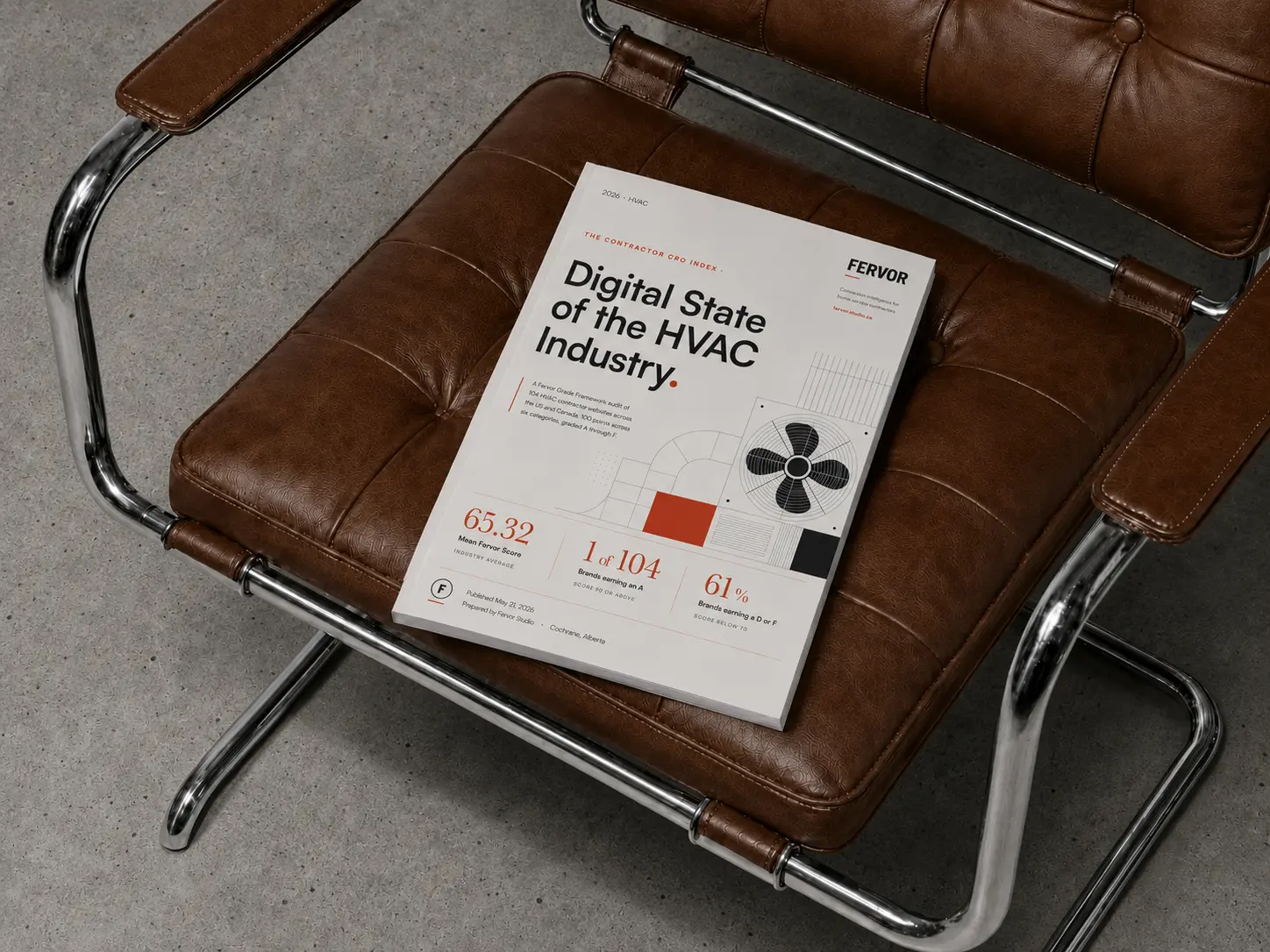
Three facts define this market. The numbers here come straight from our State of HVAC 2026.
Get My Site InspectionFirst, the fuel: Iqaluit heats with oil, delivered and metered, in houses built on piles over permafrost where a heating failure in February is an evacuation risk, not an inconvenience, and where the furnace room is the most important room in the building. The same crew also handles HVAC Conversion Rate Optimization in Iqaluit, NU.
Second, the logistics: every piece of equipment arrives by sealift in the open-water window or by airfreight at multiples of the cost, which makes the barge calendar the real demand calendar and inventory planning a competitive weapon worth publishing. Third, the search field: there is essentially no local HVAC content on the internet at all, which means the first shop to publish real pages owns the territory's capital outright.
So the first question for any HVAC SEO Iqaluit engagement isn't "what keywords do we target." It's whether your presence is built for the Arctic's actual conditions. And in this market, having a real presence at all is the entire differentiation. "64% of Canadians surveyed prefer homes with high-efficiency heating and cooling systems." - Abacus Data (2023)
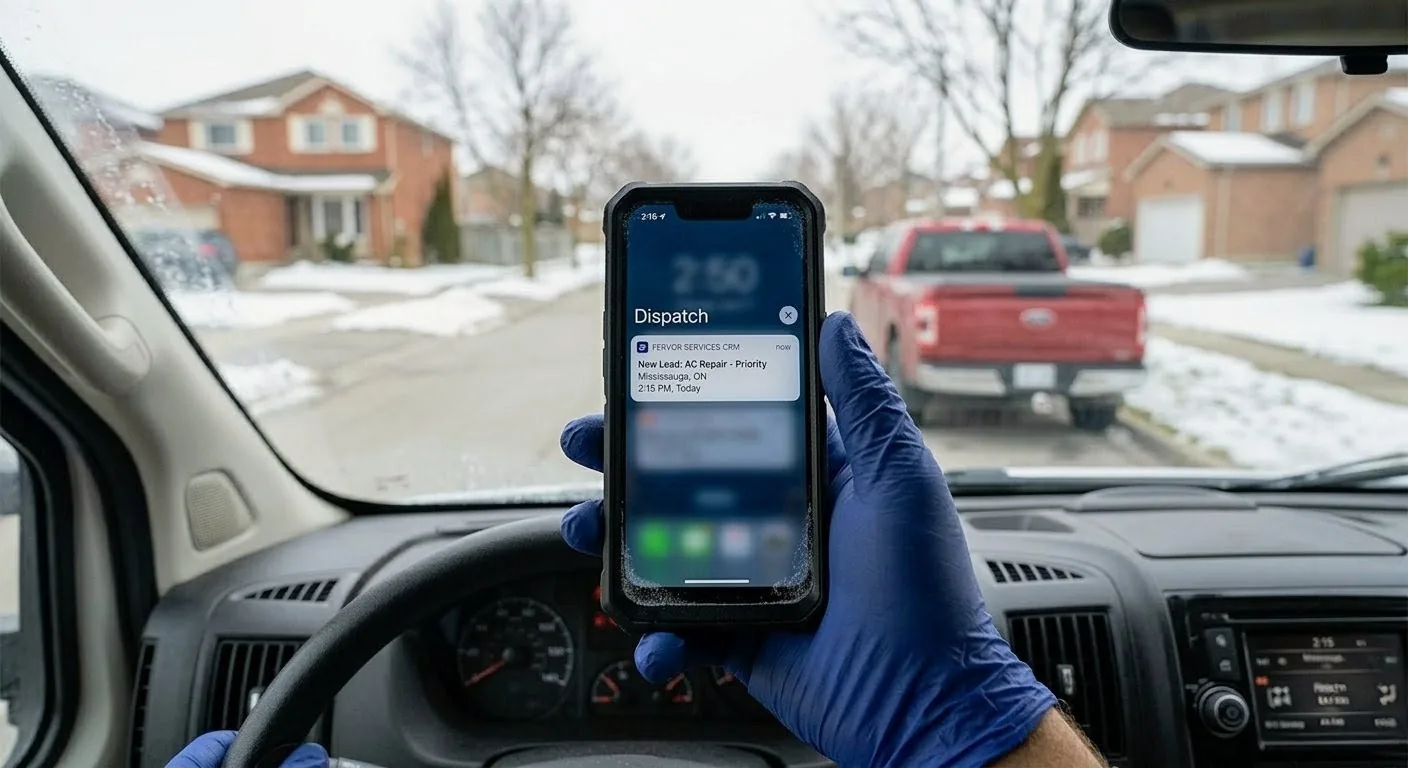
Nearly two in three buyers already want efficiency, and at Nunavut fuel prices the preference has more teeth than anywhere in the country. The fight, such as it is, is over which contractor they find. And the Local Pack is where that happens in seconds: review count, review recency, response rate, photos that look like this year. An Iqaluit HVAC SEO programme that skips the trust layer hands the coldest mornings in Canada to whoever didn't.
The Iqaluit Local Pack: Where HVAC SEO Weight Sits
Whitespark's 2026 Local Search Ranking Factors study puts Google Business Profile signals as the heaviest single category for Local Pack rankings, review signals close behind, and on-page third. Eight of the top ten Local Pack factors come straight from the profile. So more than half of your visibility when a Plateau homeowner searches "furnace repair" lives in GBP and reviews, not in your website.
Get My Site Inspection
Google Business Profile Setup for Arctic Contractors
Primary category: HVAC Contractor . Even with no cooling season, because the category carries the heating and ventilation queries that exist. Google caps you at four categories total , so pick secondaries off your actual ticket mix: Heating Contractor, Furnace Repair Service, and Mechanical Contractor.
Get My Site Inspection
One Service Page Per System Type, No Exceptions
Here's where hvac contractor seo iqaluit work separates from the southern template stuff. One "Our Services" page listing nine offerings ranks for none of them, because Google matches queries to pages, not to businesses. The homeowner searching "oil furnace repair Iqaluit" should land on your oil page with Arctic content on it, not a bullet list and a phone number.
Get My Site Inspection
Questions Contractors Ask Before Hiring Us
What does HVAC SEO in Iqaluit actually get me?
Calls from homeowners in Iqaluit who are already searching for your trade. The work is to rank you for the high-intent local queries that move revenue, then make sure the page converts the click once it lands.
How is this different from the last agency that burned me?
You see the scoring framework, the benchmark data behind it, and your ranked fix list before any remediation work begins. It is a diagnosis you can evaluate, not a promise you have to trust.
How do you know this works for my trade?
The Fervor Grade framework was built by scoring 380 contractor sites across roofing, remodeling, and HVAC. Your trade's patterns are in the data, not borrowed from SaaS or dentists.
How long does it take?
The Site Inspection takes 5 business days, and it needs about three minutes from you. The ranking work that follows is ongoing, because search is.
Who owns the website and the accounts?
You do. The domain, the content, the analytics, every account we touch. Day one. No ownership traps, no holding your site hostage if you leave.
What if I do not like what the inspection finds?
Then you found out something that was already costing you, and now you know where. The inspection surfaces what is actually wrong on the site so you can decide what to fix.
Do you only work with contractors in Iqaluit?
No. We work with HVAC contractors across the region, and the research covers national brands too, so the benchmark holds whether you are downtown or two towns over.
How much does it cost?
The Site Inspection is free. You only pay for the remediation work once you have seen the diagnosis and decided it is worth fixing.
Will the changes hurt my current rankings?
No. The work protects what already ranks. We map the URLs and the equity first, fix the conversion leaks, and improve the pages that search already trusts rather than wiping them.
What do I have to do during the project?
Very little. The intake takes minutes, and the build work is ours to run from there. You keep running crews. We will only ask for things no one else can give us, like your real service area and your best photos.
Still Have Questions?
Give us a call expressing your specific needs, and we’ll see if we are a good fit for each other.
From Our HVAC Clients
Real reviews from the contractors whose sites we rebuilt.

Google's Local Pack ranking runs on review volume and how recent those reviews are. Contractors tend to under-collect reviews they've already earned, because asking after every job is easy to forget in a busy week. NiceJob sends the ask automatically once a job wraps, so new reviews keep flowing without you remembering. You can also set it up to ask your past clients for reviews. If your CRM already handles review requests, use that. Either way, it works better as a system than as a task on someone's to-do list.
Free HVAC checklist
Before you go, grade your own site
Get The HVAC Website Diagnostic Checklist: the nine checks we pulled from inspecting 104 HVAC contractor sites. It takes about ten minutes, and it shows you which fix wins back the most jobs first.
Sent
Your checklist is on its way.
Your copy of The HVAC Website Diagnostic Checklist is landing in your inbox now. And if you would rather not wait, grab it right here.
Download it now