















































































“Nay did an amazing job, you know. He was really patient. He got the work done the way I told him and he was just on point with the website. Pretty straightforward process. No going around the bush. He just did amazing work and I would 100% recommend.”
View on Google →Iqaluit HVAC Conversion Rate Optimization
Turn more of your local visitors into booked jobs. We find your website's leaks and plug them, so the visitors you've got start booking jobs.
How Can We Help?
Choose the option that suits your needs.
Let’s Investigate
We will send your Site Inspection to the email you provided.
You’re in.
We’ll send your Site Inspection within 5 business days.
Let’s Chat
Book a time that works for you.

“Attentive, listened to every revision request, delivered on time. Would work with him again.”
- Hamza Najam

“Patient, on point, straightforward. Did amazing work. Would 100% recommend.”
- Ruben Mederos, HyperTemp HVAC

“Responsive, creative, exceeded expectations. Already seeing greater engagement from our clients.”
- George Jeorgy, Jeorgy's Landscape Construction

“Top-tier professionalism, real web design expertise, ideas I hadn't considered. Confidently recommend.”
- Aws Nassani, Four Eleven Contracting

Let’s talk about what your website could be doing for your business.
Call Us TodayThe Iqaluit, NU HVAC specifics your website needs.
Every angle below comes from how Iqaluit, NU homeowners search, evaluate, and buy, built into your site to help boost conversions.
February averages minus 27 degrees
Iqaluit runs an extreme Arctic heating season across roughly nine to ten months, September through May or June. Your coldest month, February, averages about minus 27°C with lows near minus 31°C, and several days at or below minus 35°C hit every winter. So you size oil-fired forced-air furnaces and hydronic boilers for those design temperatures, and you insulate and heat-trace the oil supply lines so they never freeze up.
Oil is the only heating fuel
Do not write heat-pump or gas-furnace copy for this market. The Canada Energy Regulator confirms there are no natural gas pipelines anywhere in Nunavut, so oil trucked to an external tank at each house is the primary fuel for every home. And the federal Oil to Heat Pump Affordability Program excludes Nunavut by name over its grid-connection rule, so you can never offer an Iqaluit homeowner that conversion program.
Order before the sealift closes
Iqaluit has no road or rail link to the rest of Canada, so the single annual sealift, running roughly late June to late October, is a hard operational constraint that shapes your whole schedule. If a furnace, boiler, or major part misses that window, it either comes by costly air freight or waits up to a year for the next ship. So you plan major replacements around the sealift calendar.
Permafrost puts your equipment above ground
Permafrost dictates the entire install method here. Iqaluit buildings sit on steel piles roughly four feet off the ground, because no settled design code exists for foundations this far north, and some sites even need artificial ground cooling to protect the permafrost. So your HVAC equipment, ductwork, and oil lines typically run above grade rather than through a conventional heated basement.
There is no cooling season
Do not build AC-repair or AC-replacement content for Iqaluit, because there is effectively no residential cooling demand to sell. Your warmest month, July, averages only about 8.1°C with highs near 12°C, which leaves the city with cooling degree days close to zero. So the real summer work here is furnace and boiler tune-ups and oil-tank inspections, scheduled then because it is the only practical season for outdoor work.
Two federal programs you cannot offer
Stop offering two federal programs to Iqaluit homeowners. The Oil to Heat Pump Affordability Program excludes Nunavut outright over its integrated-grid requirement, and the Canada Greener Homes Grant closed nationwide, with December 31, 2025 the final day even to submit documents for already-approved requests. So neither is a live incentive here, and presenting either one to a Nunavut customer sets up a promise you cannot keep.
The live money is not for furnaces
Be careful which Nunavut programs you cite, because the live ones do not pay for heating equipment. The Sustainable Energy Support Policy covers 50% of renewable improvements up to $30,000, but only solar and wind, explicitly not furnaces or boilers. And the Qulliq Energy Corporation subsidy discounts electricity, 700 kWh monthly in summer and 1,000 in winter, not equipment. So do not present either as a furnace rebate to your customer.
Nunavut has no HVAC board
Nunavut has no dedicated HVAC or mechanical licensing board. Trade certification runs through the Nunavut Apprenticeship, Trade and Occupations Certification Board, and Oil Heat System Technician is a recognized Red Seal trade but voluntary here. And all building work, including your mechanical installs, falls under the Nunavut Building Code Act through the Office of the Chief Building Official, with permits issued via Service Nunavut and the City of Iqaluit.
Where Iqaluit HVAC Sites Leak
Website conversion in this market carries the highest stakes in the country. This page is one piece of our HVAC Conversion Rate Optimization work.
Get My Site InspectionAt minus forty with a wind off the bay, a faltering furnace gives a household hours, the visitor isn't comparing shops, she's reaching for whoever answers, and the logistics multiply the questions: which parts are on the shelf versus on the next sealift, who coordinates with the fuel delivery, who services the system before the failure that cannot be allowed to happen. The numbers here come straight from our State of HVAC 2026.
And during every snap the same scene repeats: a household lands on a shop's site ready to book anything, and finds a number that rings to voicemail and a form that promises a callback within one business day. With the pipes on the clock, that promise reads as a no. The same crew also handles HVAC SEO in Iqaluit, NU.
That's a website conversion leak, and it has nothing to do with how the site looks. Iqaluit website conversion problems hide in plain sight precisely because the site seems fine to everyone who isn't freezing. The owner sees a presentable homepage, the southern agency sees a delivered project, and only the minus-forty household sees the dead end.
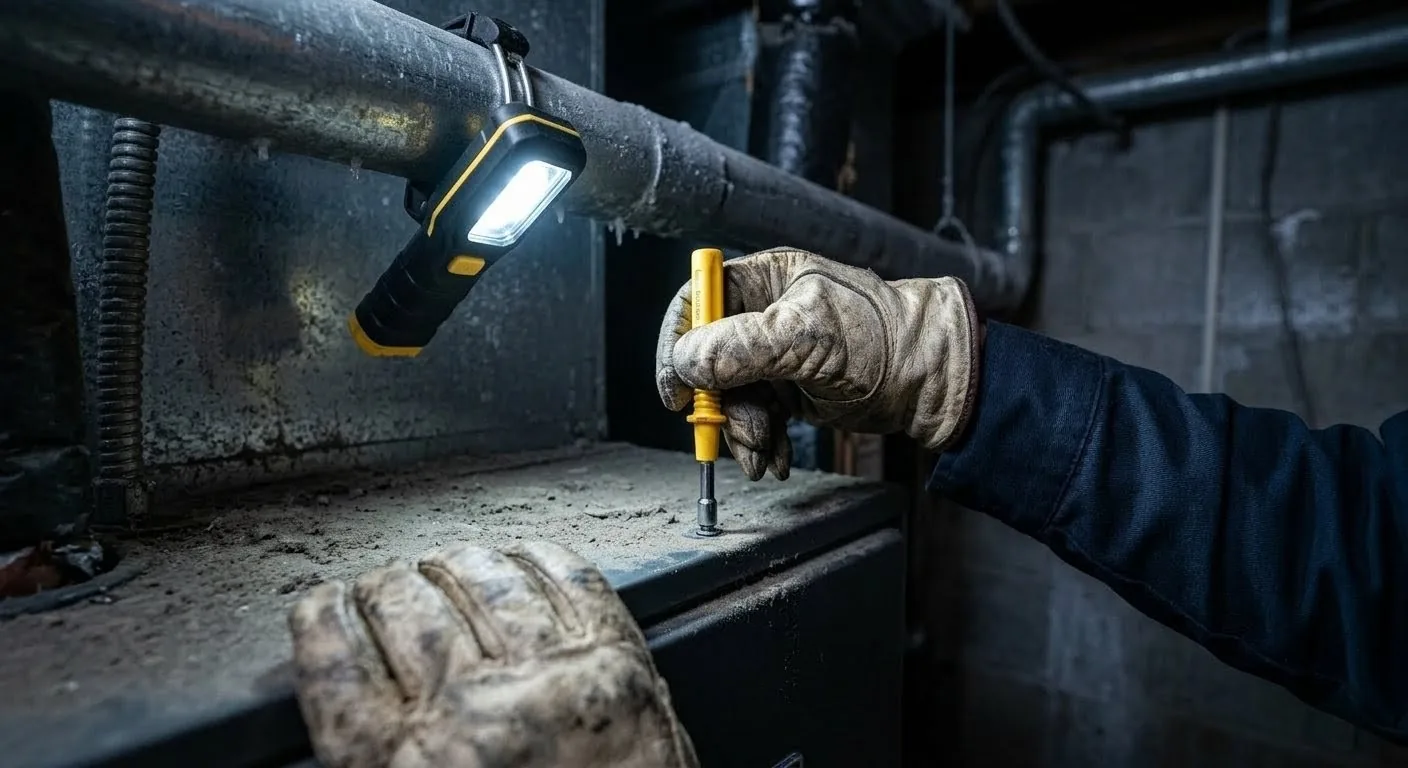
(If the site itself is the problem, a southern template that never finishes loading on Arctic networks, that's the build discipline, covered in HVAC website design in Iqaluit. And if you're invisible to begin with, start at Iqaluit HVAC SEO.) This page is the layer between: visitors in, booked jobs out. "The median HVAC contractor website scores 65 of 100, and the single best site in the study reached 90." - Fervor, Digital State of the HVAC Industry (2026) And the conversion categories drag that median down hardest. Lead capture and trust, the two layers this page lives in, are where the trade loses the most points, which means they're where an Arctic shop catches up fastest, before buying a single additional click.
The Conversion Baseline From the Inspection Data
Fervor's Digital State of the HVAC Industry work scored real contractor sites on one framework, evidence archived. The capture findings read like a leak map for the whole trade, and every number below is one your own website either beats or doesn't, auditable in an afternoon.
Get My Site Inspection
After-Hours Capture With Hours on the Clock
Iqaluit's highest-intent visitor arrives outside business hours by the nature of the failure: furnaces falter overnight when the temperature bottoms out, and at minus forty the search starts immediately. What she needs is to reach you now. What most sites give her is voicemail and a promise.
Get My Site Inspection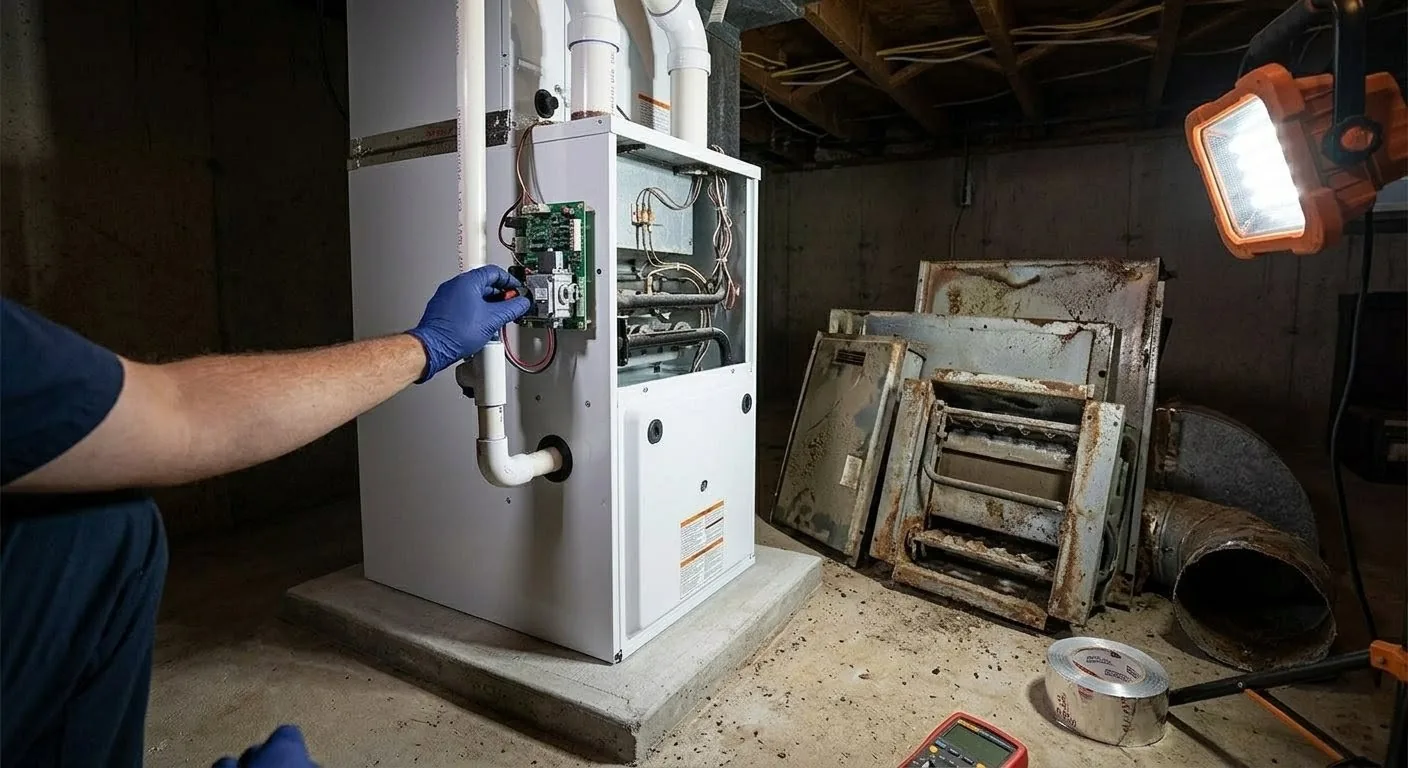
The Phone-First Reality
For all the channels, the Iqaluit household in crisis is still a caller. Minus forty converts by phone, in one tap or not at all.
Get My Site Inspection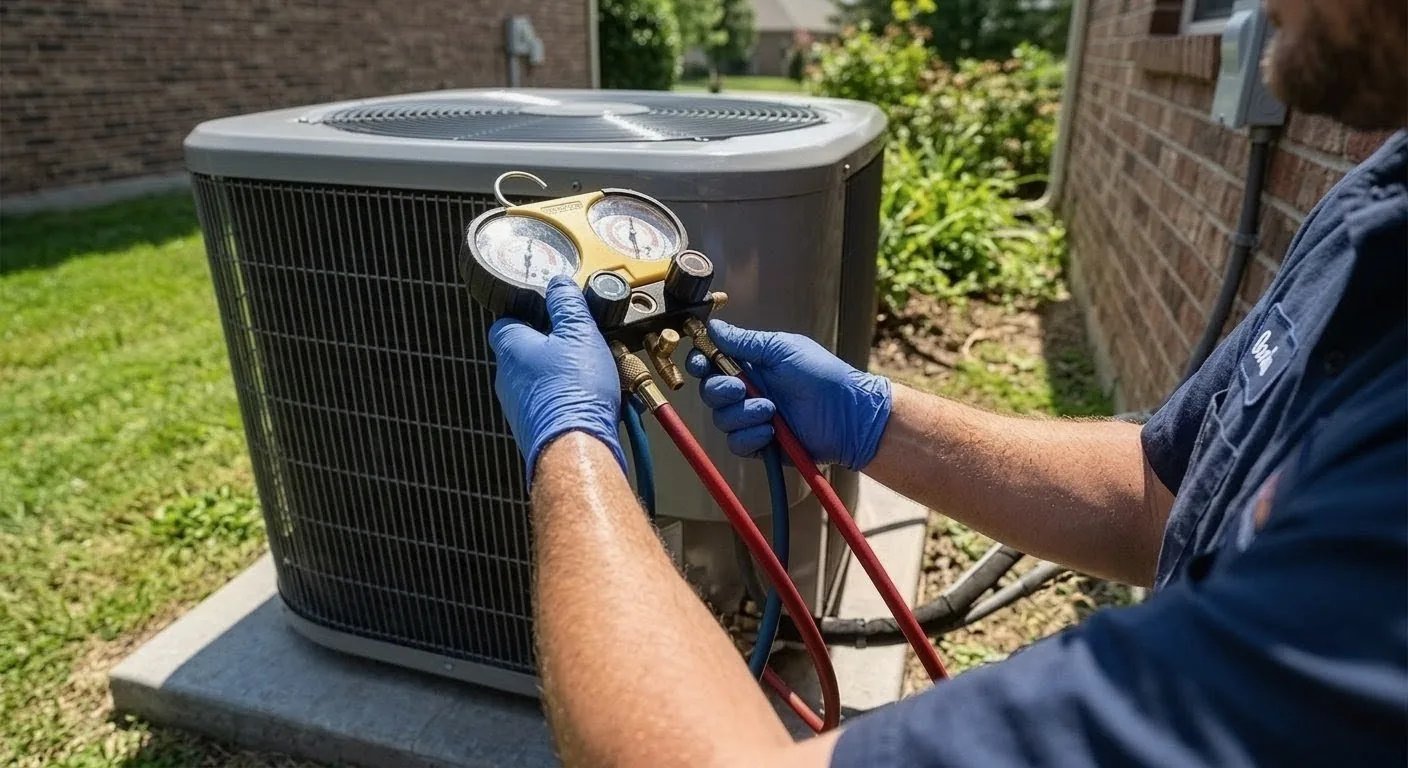
Questions Contractors Ask Before Hiring Us
What does HVAC CRO in Iqaluit actually get me?
A site that books the job instead of just describing it. The work is conversion architecture first, so every page in Iqaluit has a clear call path, real proof, and fast mobile load.
How is this different from the last agency that burned me?
You see the scoring framework, the benchmark data behind it, and your ranked fix list before any remediation work begins. It is a diagnosis you can evaluate, not a promise you have to trust.
How do you know this works for my trade?
The Fervor Grade framework was built by scoring 380 contractor sites across roofing, remodeling, and HVAC. Your trade's patterns are in the data, not borrowed from SaaS or dentists.
How long does it take?
A Booked by Design rebuild runs 30 to 60 days. It starts with a Site Inspection so the build targets the pages that are costing you calls.
Who owns the website and the accounts?
You do. The domain, the content, the analytics, every account we touch. Day one. No ownership traps, no holding your site hostage if you leave.
What if I do not like what the inspection finds?
Then you found out something that was already costing you, and now you know where. The inspection surfaces what is actually wrong on the site so you can decide what to fix.
Do you only work with contractors in Iqaluit?
No. We work with HVAC contractors across the region, and the research covers national brands too, so the benchmark holds whether you are downtown or two towns over.
How much does it cost?
A Booked by Design rebuild is one project price with no monthly lock-in. One booked job at your average ticket usually covers it, and we show you that math before you commit.
Will the changes hurt my current rankings?
No. The work protects what already ranks. We map the URLs and the equity first, fix the conversion leaks, and improve the pages that search already trusts rather than wiping them.
What do I have to do during the project?
Very little. The intake takes minutes, and the build work is ours to run from there. You keep running crews. We will only ask for things no one else can give us, like your real service area and your best photos.
Still Have Questions?
Give us a call expressing your specific needs, and we’ll see if we are a good fit for each other.
From Our HVAC Clients
Real reviews from the contractors whose sites we rebuilt.

Reviews carry more weight on a contractor site than most layout changes will. If yours are thin or the newest one is six months old, that's the fix worth making before you touch anything else. NiceJob handles the ask after each job so you can build up recent reviews without chasing customers by hand. If your CRM has follow-up automation, wire the ask into that instead. Either way, what shows on the page is what does the work.
As the fixes go in, you'll want proof they're booking more calls, so measure the call results. A service like CallRail puts a separate tracking number on each traffic source to easily track what's working. If you don't have a dedicated business line yet, Unitel Voice gives you local and toll-free numbers built for small businesses that a CallRail tracking number can forward to. Or you can lean on whatever call tracking your CRM already supports.
Free HVAC checklist
Before you go, grade your own site
Get The HVAC Website Diagnostic Checklist: the nine checks we pulled from inspecting 104 HVAC contractor sites. It takes about ten minutes, and it shows you which fix wins back the most jobs first.
Sent
Your checklist is on its way.
Your copy of The HVAC Website Diagnostic Checklist is landing in your inbox now. And if you would rather not wait, grab it right here.
Download it now