
















































































“Nay did an amazing job, you know. He was really patient. He got the work done the way I told him and he was just on point with the website. Pretty straightforward process. No going around the bush. He just did amazing work and I would 100% recommend.”
View on Google →Denver HVAC Conversion Rate Optimization
Turn more of your local visitors into booked jobs. We find your website's leaks and plug them, so the visitors you've got start booking jobs.
How Can We Help?
Choose the option that suits your needs.
Let’s Investigate
We will send your Site Inspection to the email you provided.
You’re in.
We’ll send your Site Inspection within 5 business days.
Let’s Chat
Book a time that works for you.

“Attentive, listened to every revision request, delivered on time. Would work with him again.”
- Hamza Najam

“Patient, on point, straightforward. Did amazing work. Would 100% recommend.”
- Ruben Mederos, HyperTemp HVAC

“Responsive, creative, exceeded expectations. Already seeing greater engagement from our clients.”
- George Jeorgy, Jeorgy's Landscape Construction

“Top-tier professionalism, real web design expertise, ideas I hadn't considered. Confidently recommend.”
- Aws Nassani, Four Eleven Contracting
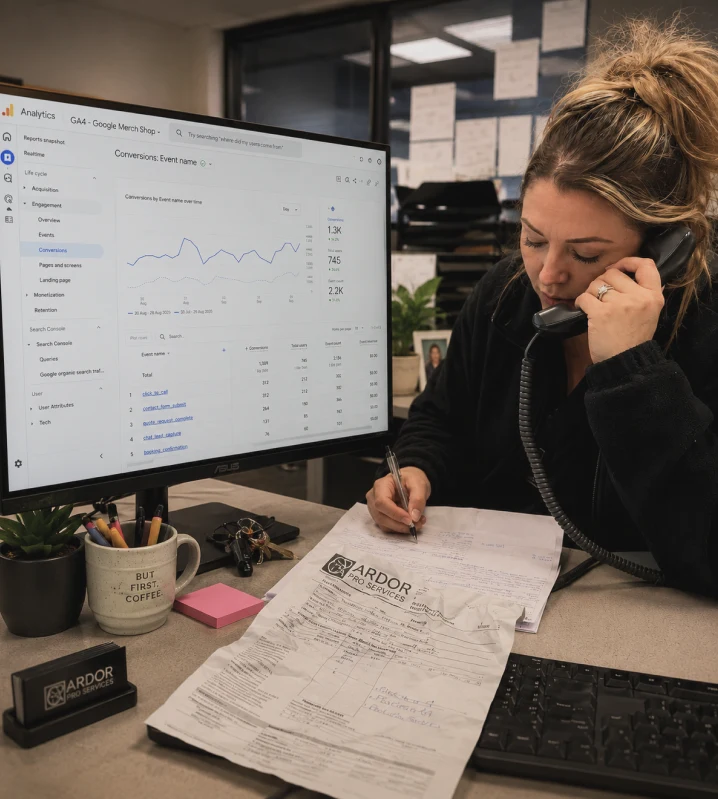
Let’s talk about what your website could be doing for your business.
Call Us TodayThe Denver, CO HVAC specifics your website needs.
Every angle below comes from how Denver, CO homeowners search, evaluate, and buy, built into your site to help boost conversions.
A Mile High Derates Your Furnace
Denver's 5,280-foot base elevation is a code requirement here. The adopted high-altitude fuel-gas provisions require derating gas-appliance input above 2,000 feet, commonly cited at 4% per 1,000 feet for atmospheric appliances, which local sources say works out to roughly a 20% real capacity cut at Denver's elevation. So a furnace sized off its sea-level BTU rating fails inspection and raises carbon-monoxide risk. And that is a conversation flatland installers routinely miss.
Denver's Top Rebate Wants A 5°F Heat Pump
To hit Xcel's best heat pump tier, your unit has to be a cold-climate model certified to hold at least 70% of rated heating capacity at 5°F outdoor air with a COP of 1.75 or higher. That is a materially higher bar than a standard heat pump, and it is the practical dividing line contractors quote against in Denver's cold, dry winters. So the spec you choose decides whether the top rebate is even on the table.
Colorado Discounts Heat Pumps At The Register
You get real money on a Denver heat pump right now. The Colorado Heat Pump Tax Credit is $1,000 per system in 2026, down from $1,500 at its 2024 launch, delivered as a point-of-sale discount through a state-registered contractor rather than a tax filing. And Xcel Energy stacks its own rebate on top, paying $2,250 per heating ton for qualifying cold-climate air-source heat pumps. So the two together move the install price meaningfully.
Hail Season Bundles With Your Roof Claim
The Front Range hail season runs roughly mid-April through mid-September, peaking late April into June, averaging 7 to 9 hail days a year with 3 or 4 catastrophic events. And your outdoor condenser fins take the same impact as the roof above them, so coil damage assessment and insurance-adjuster documentation is a recurring, seasonally concentrated service line. So it pays to tie your storm-damage work directly to Denver's roofing claim cycle.
Dry Air Tempts You To Undersize
Denver's semi-arid climate averages about 47% relative humidity with big day-to-night swings and roughly 270 sunny days a year. Low humidity makes the heat feel more tolerable than the thermometer reads, which pushes homeowners to undersize the AC on comfort alone. So a real Manual J load calc matters more here than in humid markets, and duct sealing and infiltration control carry extra weight because dry air changes how comfort feels indoors.
Energize Denver Does Not Touch Your House
Do not let the gas-ban headlines confuse a single-family homeowner. Denver's Energize Denver ordinance bans new fossil-fuel heating in large new commercial and multifamily construction and phases it out of big existing buildings, but the city opted single-family homes out of that mandate. A February 2026 process has opened to extend energy-code standards to single-family homes, but nothing is adopted yet, so it is not a current requirement on your furnace replacement.
Colorado Named The Signal
Colorado is one of the few states that points to the browser signal by name. The Colorado Privacy Act, in force since July 2023, makes you recognize a universal opt-out mechanism, and the Attorney General has confirmed Global Privacy Control counts. So when a Denver homeowner arrives with that signal on, your pixels and ad tags have to treat it as a firm opt-out of sale and targeted advertising.
Say What The Form Takes
Colorado gives your visitors the right to access, correct, and delete what you collected, plus the right to opt out of profiling. So your lead form needs a plain privacy notice that names what you gather and why, and sensitive data like precise location needs opt-in consent first. And only the Attorney General and district attorneys enforce this, so there is no private lawsuit, but the sweeps are real.
Where Denver HVAC Sites Leak
Website conversion in this market has a shape most metros don't: it spikes twice. This page is one piece of our HVAC Conversion Rate Optimization work.
Get My Site InspectionThe January cold snaps kill furnaces in trade samples across the front range, and the July heat advisories expose every undersized AC the altitude already strains. And during both waves the same scene repeats. A Highlands Ranch homeowner lands on a shop's site at 6am with the house at fifty-four degrees, ready to book anything, and finds a number that rings to voicemail and a form that promises a callback within one business day. By mid-morning she's on someone else's schedule. The numbers here come straight from our State of HVAC 2026.
That's a website conversion leak, and it has nothing to do with how the site looks. Denver website conversion problems hide in plain sight precisely because the site seems fine to everyone who isn't freezing. The owner sees a presentable homepage, the agency sees a delivered project, and only the 6am homeowner sees the dead end. The same crew also handles HVAC SEO in Denver, CO.
(If the site itself is the problem, slow on a phone or structurally broken, that's the build discipline, covered in HVAC website design in Denver. And if you're invisible to begin with, start at Denver HVAC SEO.) This page is the layer between: visitors in, booked jobs out. "Across 104 HVAC contractor websites inspected for the Digital State of the HVAC Industry report, the average site earns 65.32 of 100 points." - Fervor, Digital State of the HVAC Industry (2026)
And the conversion categories drag that average down hardest. Lead capture and trust, the two layers this page lives in, are where the trade loses the most points, which means they're where a Denver shop catches up fastest, before buying a single additional click in a crowded front-range auction. We run the same build nearby for HVAC Conversion Rate Optimization in Cheyenne, WY.
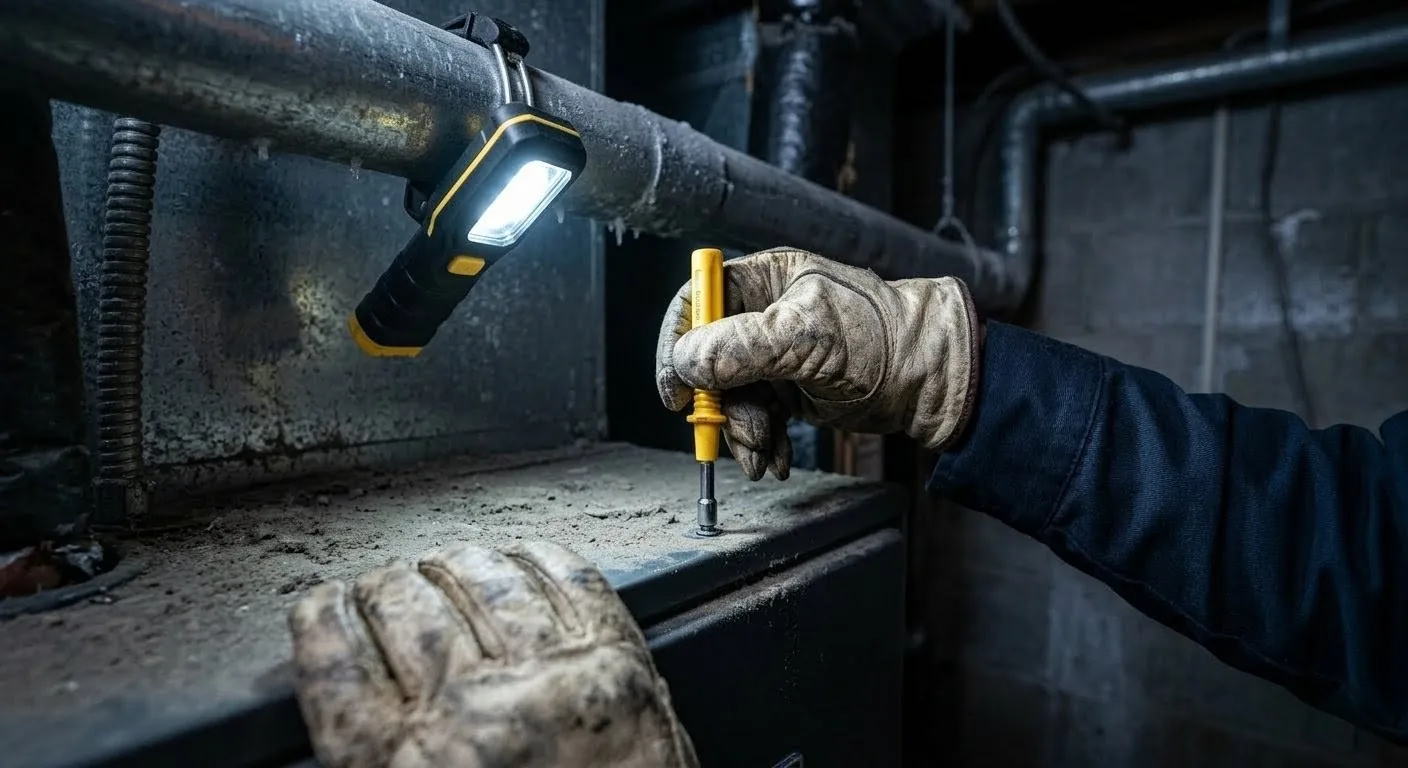
The Conversion Baseline From the Inspection Data
Fervor's Digital State of the HVAC Industry work scored real contractor sites on one framework, evidence archived. The capture findings read like a leak map for the whole trade, and every number below is one your own website either beats or doesn't, auditable in an afternoon.
Get My Site Inspection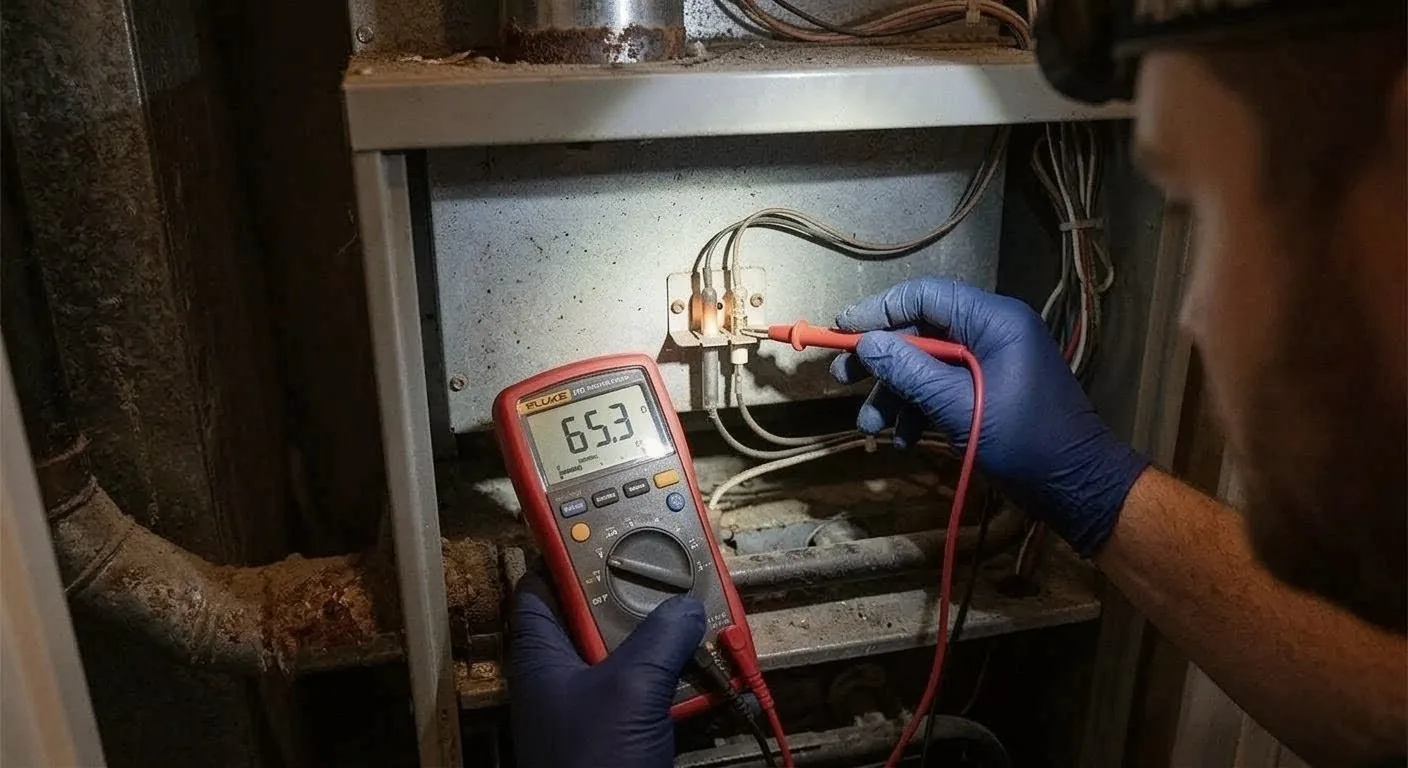
After-Hours Capture in a Two-Season Market
Denver's highest-intent visitor arrives outside business hours twice a year: the furnace that dies overnight in January and announces itself at 5:30am, the AC that gives up on a July Saturday. What she needs is to book now. What most sites give her is voicemail and a promise.
Get My Site Inspection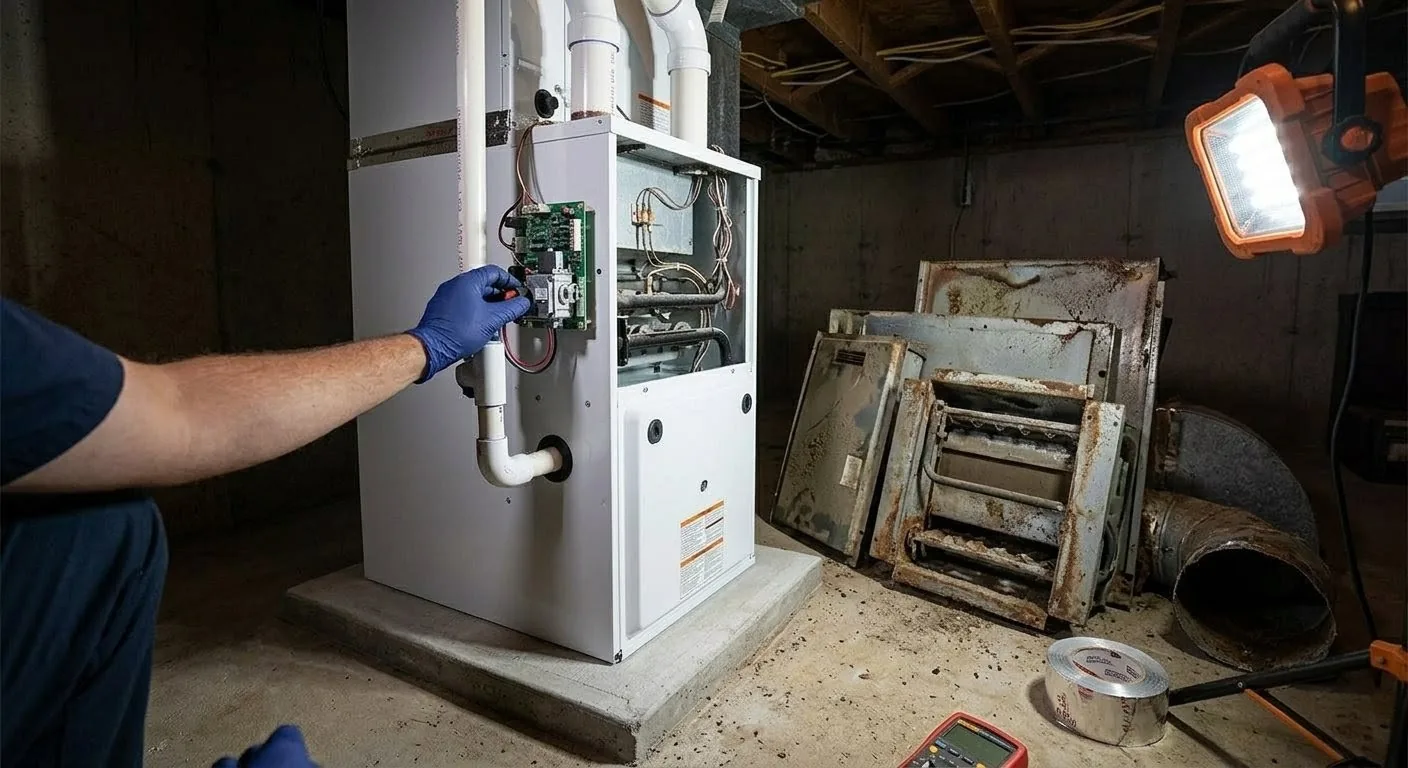
The Phone-First Reality
For all the channels, the Denver HVAC buyer in crisis is still a caller, emergency intent converts by phone, in one tap or not at all.
Get My Site Inspection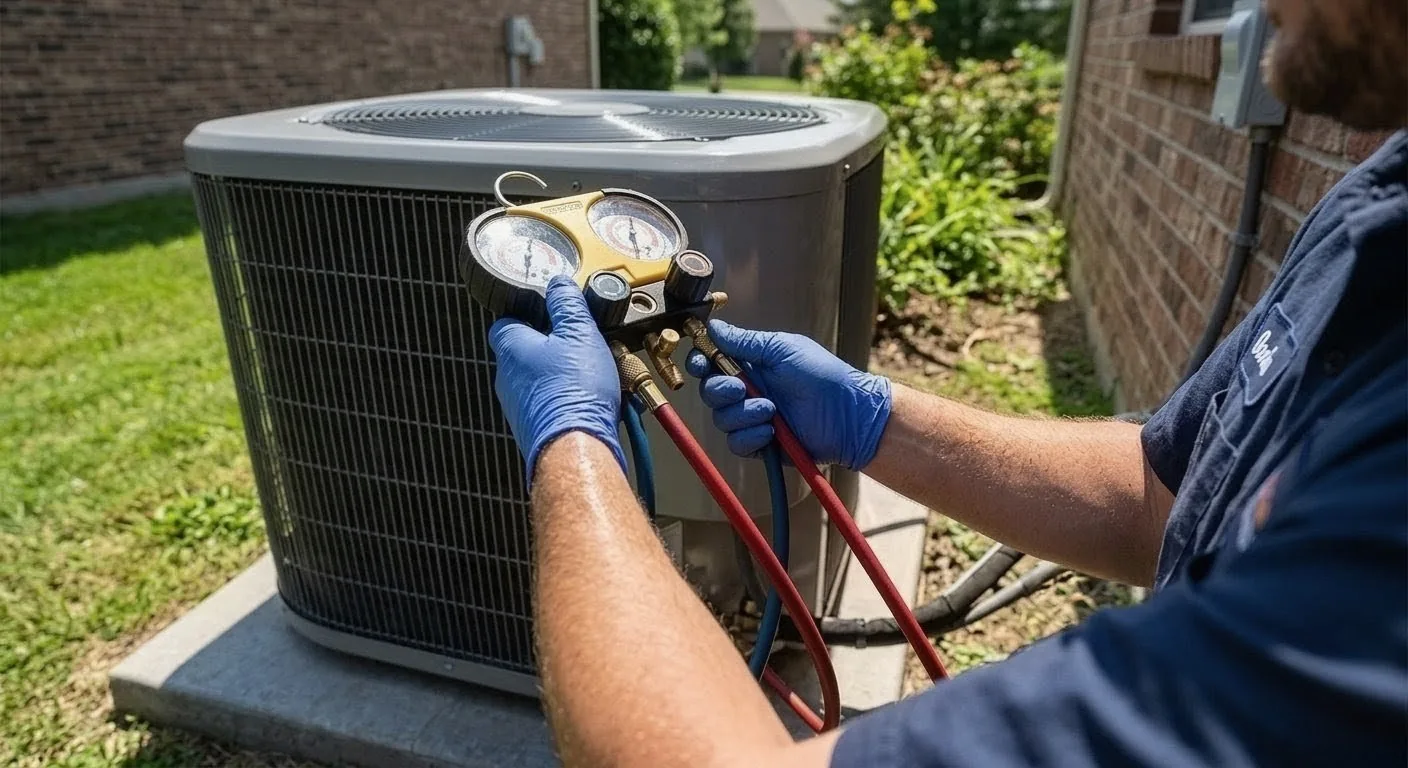
Questions Contractors Ask Before Hiring Us
What does HVAC CRO in Denver actually get me?
A site that books the job instead of just describing it. The work is conversion architecture first, so every page in Denver has a clear call path, real proof, and fast mobile load.
How is this different from the last agency that burned me?
You see the scoring framework, the benchmark data behind it, and your ranked fix list before any remediation work begins. It is a diagnosis you can evaluate, not a promise you have to trust.
How do you know this works for my trade?
The Fervor Grade framework was built by scoring 380 contractor sites across roofing, remodeling, and HVAC. Your trade's patterns are in the data, not borrowed from SaaS or dentists.
How long does it take?
A Booked by Design rebuild runs 30 to 60 days. It starts with a Site Inspection so the build targets the pages that are costing you calls.
Who owns the website and the accounts?
You do. The domain, the content, the analytics, every account we touch. Day one. No ownership traps, no holding your site hostage if you leave.
What if I do not like what the inspection finds?
Then you found out something that was already costing you, and now you know where. The inspection surfaces what is actually wrong on the site so you can decide what to fix.
Do you only work with contractors in Denver?
No. We work with HVAC contractors across the region, and the research covers national brands too, so the benchmark holds whether you are downtown or two towns over.
How much does it cost?
A Booked by Design rebuild is one project price with no monthly lock-in. One booked job at your average ticket usually covers it, and we show you that math before you commit.
Will the changes hurt my current rankings?
No. The work protects what already ranks. We map the URLs and the equity first, fix the conversion leaks, and improve the pages that search already trusts rather than wiping them.
What do I have to do during the project?
Very little. The intake takes minutes, and the build work is ours to run from there. You keep running crews. We will only ask for things no one else can give us, like your real service area and your best photos.
Still Have Questions?
Give us a call expressing your specific needs, and we’ll see if we are a good fit for each other.
From Our HVAC Clients
Real reviews from the contractors whose sites we rebuilt.

Reviews carry more weight on a contractor site than most layout changes will. If yours are thin or the newest one is six months old, that's the fix worth making before you touch anything else. NiceJob handles the ask after each job so you can build up recent reviews without chasing customers by hand. If your CRM has follow-up automation, wire the ask into that instead. Either way, what shows on the page is what does the work.
As the fixes go in, you'll want proof they're booking more calls, so measure the call results. A service like CallRail puts a separate tracking number on each traffic source to easily track what's working. If you don't have a dedicated business line yet, Unitel Voice gives you local and toll-free numbers built for small businesses that a CallRail tracking number can forward to. Or you can lean on whatever call tracking your CRM already supports.
Free HVAC checklist
Before you go, grade your own site
Get The HVAC Website Diagnostic Checklist: the nine checks we pulled from inspecting 104 HVAC contractor sites. It takes about ten minutes, and it shows you which fix wins back the most jobs first.
Sent
Your checklist is on its way.
Your copy of The HVAC Website Diagnostic Checklist is landing in your inbox now. And if you would rather not wait, grab it right here.
Download it now