Siro Review 2026: Pricing, Pros, Cons, Alternatives
Third-party contract data puts real numbers on Siro. The 10 gaps reviewers name, and 5 alternatives that publish a price upfront.
Disclosure This article features tools from our brand partners. If you choose to use them, we may receive compensation at no extra cost to you.
Our editorial choices are independent of these affiliate arrangements. Read our full affiliate disclosure.
Fervor is a CRO and web design studio, not a software reseller, and no vendor paid for placement here or for a kinder verdict. Affiliate links are flagged where they appear, and they never change what we report.
Page at a glance
Siro is field sales speech capture: reps tap record, Siro transcribes the in-person conversation and grades it against your sales process. It publishes no price, so the only way to get a number is to ask a salesperson for one. Per license, one per rep or technician. The vendor states there are no usage caps and no enterprise minimums, and that a five-rep company gets the same feature set as a 500-rep one. Onboarding and support are included in the license rather than sold separately. It fits a 5 to 50 rep in-home selling operation running replacement or retrofit work, where the sit-down pitch decides the job and no one else is in the room to hear it. It's the wrong buy for Owner-operator or a crew of one to four with no separate sales role, because The product coaches a sales conversation that someone other than the owner is having. So if you run every appointment yourself, you're paying per licence for a recording of your own voice and nobody to review it. And the vendor's own smallest worked example is a five-rep company. Alternatives that publish their prices are SalesRabbit from $59, CallRail from $50. A quote-only price and what third parties report instead, ten evidenced gaps and five alternatives, two of which publish a figure.
Whether Siro is worth it
Siro earns its money with a 5 to 50 rep in-home selling operation running replacement or retrofit work, where the sit-down pitch decides the job and no one else is in the room to hear it. If that's you, it does the job. The sections below are the parts worth checking before you sign. But the fit is narrower than the marketing suggests, and the price isn't the whole cost.
The vendor publishes no price. But every number below was verified on 7 August 2026 and comes from a named third party that says which.
| Pricing model | Custom quote, no published price |
|---|---|
| Entry price | Quote only |
| Users | Per license, one per rep or technician. The vendor states there are no usage caps and no e |
| Ownership | Independent |
| Best fit | a 5 to 50 rep in-home selling operation running replacement or retrofit work, where the sit-down pitch decides the job and no one else is in the room to hear it. |
| Accounting sync | QuickBooks (none), ServiceTitan (none) |
What works
- One tap in the pocket, and a door-to-door mode that splits the day into visits
- The AI grades the conversation against your sales process, not a generic script
- Twelve named connectors, all sales-side, plus a REST API for everything else
- Recordings come back as a download, once, inside a 30-day window
- Everything material lives on the Order Form, and the Order Form isn't public
What does not
- There's no price anywhere, and no pricing page to have missed
- The marketing says it never trains on your conversations. The contract says it can
- You get 30 days to pull your recordings out, and only if you ask in writing
- Transcripts aren't searchable by what was said
- Recording stops when the phone rings and doesn't start again
Siro is field sales speech capture: reps tap record, Siro transcribes the in-person conversation and grades it against your sales process. It sells to Electrical and HVAC and Plumbing and Roofing contractors, and the shape of the product follows from that: The rep taps record once and the phone stays in the pocket. And recording works offline and uploads when the phone reconnects, which matters in a basement or a rural service area. Door-to-door mode records continuously across a route and breaks the audio into individual visits afterward, so the rep isn't starting and stopping at every door.
Who Siro is for, and who it isn't
It fits a 5 to 50 rep in-home selling operation running replacement or retrofit work, where the sit-down pitch decides the job and no one else is in the room to hear it. That's the half most reviews print. Here's the other half, which is the one worth your time.
Don't buy it if you're Owner-operator or a crew of one to four with no separate sales role. The product coaches a sales conversation that someone other than the owner is having. So if you run every appointment yourself, you're paying per licence for a recording of your own voice and nobody to review it. And the vendor's own smallest worked example is a five-rep company. Look at CompanyCam instead.
Don't buy it if you're Phone-first service shops where the job is booked on the call, not at the kitchen table. Siro records the in-person visit. So if the money moment is the inbound call, you want call recording and conversation intelligence on the phone line instead, at a published price you can check before you talk to anyone. Look at CallRail instead.
Don't buy it if you're Contractors operating in all-party-consent jurisdictions with no consent script and no appetite to build one. The privacy policy makes the contractor solely responsible for meeting recording law. Deploying pocket recording into homeowners' living rooms without a disclosure process converts a coaching tool into a legal exposure, and the vendor has contracted out of helping.
Don't buy it if you're Shops that need the conversation data to land in ServiceTitan or QuickBooks without a developer. Neither appears among the 12 named integrations. The vendor's answer is a REST API and its own estimate is four hours of developer time, which assumes you have a developer. So for most contractors that's a project, not a checkbox.
Pricing: what Siro publishes and what it doesn't
Siro prices on request. And a quote-only vendor is telling you something before the call even starts, which is that the number moves depending on who's asking.
The vendor's own wording is this, and nothing more: "Siro describes its pricing model in detail but publishes no figure. Its own sitemap lists 29 pages and none of them is a pricing page; /pricing returns a 404. The only route to a number is the demo form." So treat every third-party page printing tier names and figures for Siro with careful suspicion. Those numbers are not on the vendor's site today, and a roundup that reprints them is telling you what Siro used to charge somebody else.
And we aren't going to print a per-month number we can't open a vendor page and read. What exists instead is third-party reporting, dated, from people who saw real contracts. Read it as a range rather than as a quote you can hold anyone to.
| Reported range | Reported on | Source |
|---|---|---|
| $200-$350 per rep per month, roughly $30,000-$40,000/year for a 10-person team plus setup. Published by SalesAsk, which sells a competing AI sales coaching product and states the figures are estimates, not Siro's numbers: "Siro's pricing isn't public, but based on industry conversations and competitor positioning, here's what you can expect." Treat as directional only. | 2026-03-26 | $200-$350/month per sales rep, 5-10 users minimum, annual contracts, $2,000-$5,000 setup depending on integration complexity |
| $3,000+ per user per year (roughly $250/user/month), annual contract, reported 10-seat minimum. Sourced from customer self-reports, not vendor documentation: "Pricing information based on publicly available data and customer reports as of July 2026." | 2026-07-01 | $3,000+ per user per year with a reported 10-seat minimum on an annual contract |
Per license, one per rep or technician. The vendor states there are no usage caps and no enterprise minimums, and that a five-rep company gets the same feature set as a 500-rep one. Onboarding and support are included in the license rather than sold separately.
The Siro costs that show up later
Payment processing. Siro doesn't take customer payments, so there's no processing rate. And if you want deposits collected at the kitchen table, that stays with your CRM or estimating tool.
Implementation and onboarding. The vendor says onboarding is bundled: "Onboarding and support are included in every license." No separate implementation fee is published, and no fee schedule appears in the Terms. Third-party estimates of a $2,000-$5,000 setup charge are unverified.
Minimum term. The Terms set no default term. It is whatever the sales rep writes on the paper: "The initial subscription term of the Agreement will be as set forth and agreed by the parties in the Order Form." Fee amounts are likewise pushed to the Order Form: "Customer will pay license fees ("Fees") in the amounts and pursuant to the payment terms described in the Order Form(s)."
Getting out. You cannot walk away mid-term and stop paying. "Except to the extent otherwise expressly stated in this Agreement or in an Order Form, all obligations to pay Fees are non-cancelable and all payments are non-refundable." Termination for cause requires material breach uncured within 30 days; a refund of unused prepaid fees is owed only when Siro is the party in breach.
Auto-renewal. It rolls automatically for another term of the same length unless you give notice: subscriptions "will renew automatically for an additional period of the same duration as the expiring subscription term unless Customer or Siro notifies the other party in writing at least 30 days prior to the end of the then-current subscription term of its desire not to renew." Renewal fees are charged to the payment method on record.
Modules sold separately. We found none. The published feature set appears to sit inside the tiers rather than behind separate line items, which is worth confirming against your own must-have list on the call.
Third-party services you will also pay for. . These are not on Siro's invoice, and they are still part of what this decision costs you every month.
"Third-party reporting puts Siro at $200-$350 per rep per month, roughly $30,000-$40,000/year for a 10-person team plus setup. Published by SalesAsk, which sells a competing AI sales coaching product and states the figures are estimates, not Siro's numbers: "Siro's pricing isn't public, but based on industry conversations and competitor positioning, here's what you can expect." Treat as directional only., reported 2026-03-26."
$200-$350/month per sales rep, 5-10 users minimum, annual contracts, $2,000-$5,000 setup depending on integration complexity (3-26)
One oddity, filed under things nobody mentions on a demo. Siro is precise about the shape of its pricing and silent on the size. It will tell you the model is per licence with no usage caps and no enterprise minimums, and that a five-rep shop gets the same platform as a 500-rep one. But it won't tell you what a licence costs, and its 29-page sitemap contains no pricing page to have overlooked. Meanwhile the two third-party estimates that exist put it at $200 to $350 per rep per month and at $3,000-plus per user per year, and both report a seat minimum the vendor explicitly denies. The vendor and the market disagree about whether a minimum exists. So that's the first question, not the price. Ask for licence cost, seat minimum and initial term in one email, and compare the answer against the no-minimums claim on their own website.
What a Siro quote leaves out
The subscription is the part everyone quotes. These are the lines that land afterwards, and the ones we could not find are named as unpublished rather than left blank.
Sold separately. We found none. The published feature set sits inside the tiers rather than behind separate line items, which is worth confirming against your own must-have list.
Third-party services you'll also pay for. . None of these are on Siro's invoice, and all of them are part of what this decision costs every month.
"Siro answers the question of what it costs with this and nothing else: "Siro describes its pricing model in detail but publishes no figure. Its own sitemap lists 29 pages and none of them is a pricing page; /pricing returns a 404. The only route to a number is the demo form.""
Siro pricing page (2026)
"Per license, one per rep or technician. The vendor states there are no usage caps and no enterprise minimums, and that a five-rep company gets the same feature set as a 500-rep one. Onboarding and support are included in the license rather than sold separately."
Siro pricing page (2026)
"Siro is reported at $200-$350 per rep per month, roughly $30,000-$40,000/year for a 10-person team plus setup. Published by SalesAsk, which sells a competing AI sales coaching product and states the figures are estimates, not Siro's numbers: "Siro's pricing isn't public, but based on industry conversations and competitor positioning, here's what you can expect." Treat as directional only. as of 2026-03-26."
$200-$350/month per sales rep, 5-10 users minimum, annual contracts, $2,000-$5,000 setup depending on integration complexity (3-26)
The five workflows you pay for
Feature totals are noise. So a shop in this category lives or dies on five things, and those are the five to grade, and each one below carries the evidence it's graded on.
One tap in the pocket, and a door-to-door mode that splits the day into visits. The rep taps record once and the phone stays in the pocket. And recording works offline and uploads when the phone reconnects, which matters in a basement or a rural service area. Door-to-door mode records continuously across a route and breaks the audio into individual visits afterward, so the rep isn't starting and stopping at every door. And a sales manager, writing on 2023-06-17, says the same thing: "the ability for new reps to share lost opportunities and receive feedback has expedited our feedback loop."
The AI grades the conversation against your sales process, not a generic script. Transcripts are scored against the organisation's own process, with key moments flagged and objections surfaced. So managers review clips rather than sitting in trucks. And two of the six reviews describe the same use: experienced reps' recordings become the training library that new reps learn from, which shortens the feedback loop from a ride-along cycle to same-day. But a sales coach, writes it differently: "the app does not automatically resume or at least prompt me to resume after I take a call."But a reviewer, writes it differently: "This app is really a great tool for self reflection and training purposes!"
Twelve named connectors, all sales-side, plus a REST API for everything else. The directory counts 12: Salesforce, HubSpot, Microsoft Dynamics, Pipedrive, CompanyCam, Hatch, SalesRabbit, Improveit360, Paradigm Vendo, Leap SalesPro, Ingage and LeadPerfection. And the pitch is that transcripts auto-fill CRM fields so reps stop typing notes. But anything not on that list goes through what Siro calls a headless REST API, with a vendor estimate of four hours for a developer already familiar with REST.
Recordings come back as a download, once, inside a 30-day window. There's an export path and it's narrow. You must ask in writing, the files are made available within 30 days of termination, and after that Siro has no retention obligation and may delete the content. The DPA sets deletion at 30 days past termination too. And nothing in the Terms promises the transcripts, scorecards or coaching history come with the audio.
Everything material lives on the Order Form, and the Order Form isn't public. Term length, fee amount and payment schedule are all pushed to a document you only see after the demo. And fees are non-cancelable and payments non-refundable. The subscription auto-renews for another term of the same length unless someone gives written notice 30 days out, and renewal fees are charged to the card on file. So a 12-month deal you forget about becomes a 24-month deal.
Siro per trade, not per company size
Fit differs by trade rather than by company size alone, and a blended paragraph hides that. Here is the split for the trades this one sells to.
Electrical. The workflow that decides it is one tap in the pocket, and a door-to-door mode that splits the day into visits, and the shop profile that gets value is mid-size multi-crew with a sales manager doing residential and commercial and service work. Where it stops being a fit is Owner-operator or a crew of one to four with no separate sales role.
HVAC. The workflow that decides it is one tap in the pocket, and a door-to-door mode that splits the day into visits, and the shop profile that gets value is mid-size multi-crew with a sales manager doing residential and commercial and service work. Where it stops being a fit is Owner-operator or a crew of one to four with no separate sales role.
Plumbing. The workflow that decides it is one tap in the pocket, and a door-to-door mode that splits the day into visits, and the shop profile that gets value is mid-size multi-crew with a sales manager doing residential and commercial and service work. Where it stops being a fit is Owner-operator or a crew of one to four with no separate sales role.
Roofing. The workflow that decides it is one tap in the pocket, and a door-to-door mode that splits the day into visits, and the shop profile that gets value is mid-size multi-crew with a sales manager doing residential and commercial and service work. Where it stops being a fit is Owner-operator or a crew of one to four with no separate sales role.
How Siro talks to your books
QuickBooks connects, on every plan. ServiceTitan connects, on every plan. Your costs map through cost codes, so test yours against your own chart of accounts before you commit. A code your books don't recognise is how a labour charge quietly lands somewhere useless.
Past those, the road ends. QuickBooks, Xero, ServiceTitan, Jobber, Housecall Pro, Zapier do not connect. So if your books run on an ERP rather than the platforms named above, weigh that before anything else.
Beyond accounting it connects to Salesforce (CRM sync; also a listed AppExchange package that requires a paid Siro subscription to function.), HubSpot (CRM sync), Microsoft Dynamics (CRM sync), Pipedrive (CRM sync), CompanyCam (Job photo documentation alongside the recorded conversation), Hatch (Lead follow-up and outreach automation), SalesRabbit (Door-to-door canvassing and territory management), Improveit360 (Home improvement CRM), Paradigm Vendo (In-home selling and quoting for windows and doors), Leap SalesPro (In-home sales presentation and contract signing), Ingage (Interactive sales presentations), LeadPerfection (Home improvement lead and appointment management). A public API exists: A headless REST API is offered as the general-purpose connector, with developer docs linked and a vendor estimate that "A developer familiar with REST APIs can have a working integration up in as little as four hours." No pricing or tier gate on API access is published.
Siro support, onboarding and the hours
Support is the line item nobody prices and everybody eventually needs. Onboarding for Siro: The vendor says onboarding is bundled: "Onboarding and support are included in every license." No separate implementation fee is published, and no fee schedule appears in the Terms. Third-party estimates of a $2,000-$5,000 setup charge are unverified.
The review corpus we read on 7 August 2026 carries no consistent signal on response times either way, so treat support as untested rather than good. Open a real ticket during the trial and time the reply, because that is the number no pricing page gives you.
Siro contracts, and getting out
Nobody reads this section before they buy, and it's the one that costs money afterwards. Four terms decide what leaving looks like.
Minimum term. The Terms set no default term. It is whatever the sales rep writes on the paper: "The initial subscription term of the Agreement will be as set forth and agreed by the parties in the Order Form." Fee amounts are likewise pushed to the Order Form: "Customer will pay license fees ("Fees") in the amounts and pursuant to the payment terms described in the Order Form(s)."
Auto-renewal. It rolls automatically for another term of the same length unless you give notice: subscriptions "will renew automatically for an additional period of the same duration as the expiring subscription term unless Customer or Siro notifies the other party in writing at least 30 days prior to the end of the then-current subscription term of its desire not to renew." Renewal fees are charged to the payment method on record.
Early termination. You cannot walk away mid-term and stop paying. "Except to the extent otherwise expressly stated in this Agreement or in an Order Form, all obligations to pay Fees are non-cancelable and all payments are non-refundable." Termination for cause requires material breach uncured within 30 days; a refund of unused prepaid fees is owed only when Siro is the party in breach.
Payment processing. Siro doesn't take customer payments, so there's no processing rate. And if you want deposits collected at the kitchen table, that stays with your CRM or estimating tool.
Worth a detour here. The exit is a 30-day, request-only door and it only covers the audio. Siro's obligation is to make "Customer's recorded calls available for download or export within 30 days following such termination" upon written request, after which it has no duty to retain anything and may delete the content. The DPA mirrors the 30-day deletion trigger. But nothing commits Siro to hand back the transcripts, the AI scorecards or the coaching annotations, which is the layer you paid for. Two years of recorded pitches is a training asset. So send the written export request the same day you give notice, and ask up front whether transcripts and scorecards are included in the export or only the raw audio files.
"Siro is reported at $3,000+ per user per year (roughly $250/user/month), annual contract, reported 10-seat minimum. Sourced from customer self-reports, not vendor documentation: "Pricing information based on publicly available data and customer reports as of July 2026." as of 2026-07-01."
$3,000+ per user per year with a reported 10-seat minimum on an annual contract (7-01)
"it has made it so much easier to help reps with tonality, see metrics on conversations, and the AI can help pinpoint where reps are struggling."
Apple App Store (US), DainaBunnie (4-10)
"the app does not automatically resume or at least prompt me to resume after I take a call."
Apple App Store (US), AllStatCoach (7-17)
The Siro gaps worth raising on the call
What follows came from reading the review corpus by complaint type rather than by star rating, which is how you find the disqualifying detail buried in a five-star review.
There's no price anywhere, and no pricing page to have missed. Siro's own sitemap lists 29 pages. But not one is a pricing page, and /pricing returns a 404. The vendor is unusually specific about the model, per licence, no usage caps, no enterprise minimums, and silent on the figure. And third-party numbers exist but come from a direct competitor and from unnamed customer self-reports, and they disagree with each other by a wide margin. Ask for the per-licence figure, the seat minimum and the term in one email before you take the demo. And if the number only arrives after a call, that tells you it moves.
The marketing says it never trains on your conversations. The contract says it can. The demo page states plainly that Siro never trains AI models on your conversations. But the Data Processing Addendum grants Siro permission to process customer data for "facilitating, maintaining and improving Siro's Services, including through machine learning, model training and testing activities", and the privacy policy lists "To train our speech-to-text engine and improve our data analytics models" as a purpose. So both can't be true at once, and the contract is the document that governs. Get the no-training promise written into the Order Form as a contract term. Because a sentence on a marketing page isn't one.
You get 30 days to pull your recordings out, and only if you ask in writing. Siro's export obligation is narrow and time-boxed: "upon written request, Siro will make Customer's recorded calls available for download or export within 30 days following such termination", after which "Siro will be under no obligation to maintain any Customer data" and "may delete any of the Content." The DPA sets the matching deletion trigger at 30 days. So miss the window and years of recorded pitches are gone, and there's no obligation to warn you first. Put a calendar reminder on the termination date. And send the written export request the same week you give notice, not after.
Transcripts aren't searchable by what was said. A 2025 reviewer who otherwise rates the app well asks for the ability to "pick up on what is said during an interaction" and notes you "can't search by content". But for a coaching tool the whole value is finding the moment a rep fumbled the price objection across a hundred recordings. And browsing chronologically doesn't scale past a handful of reps. And a door-to-door rep, writing on 2023-03-07, reports it the same thing: "It's genius how talk-to-text has turned into a tool we can use to become better." In the demo, ask them to search a keyword like "too expensive" across last month's recordings and show you the results. And don't accept a filtered-by-tag answer.
Recording stops when the phone rings and doesn't start again. The same reviewer reports the app "does not automatically resume or at least prompt me to resume after I take a call." And a field rep takes calls all day. So every incoming call is a silent hole in the record, and the rep only finds out when the coaching session has nothing to review. The same review asks for a home screen widget to start recording faster, which points at the same problem: the capture depends entirely on the rep remembering. And a door-to-door rep, writing on 2023-03-07, says the same thing: "It's genius how talk-to-text has turned into a tool we can use to become better." Ask what percentage of scheduled appointments produce a usable recording across their existing customers. Because coaching value is capped by capture rate.
Speakers aren't reliably told apart in the transcript. A reviewer asks for "a voice profile for each user" so the "user is always labeled correctly in the transcript." But without it, a two-rep ride-along or a homeowner-and-spouse conversation produces a transcript where you can't tell who said the thing you're grading. So that undercuts the scorecard, which is the product. A door-to-door rep, describes it it plainly: "It's genius how talk-to-text has turned into a tool we can use to become better." Bring a recording with three voices to the demo and ask them to run it. Check the speaker labels yourself.
Zero accounting integrations, and none named in the directory. The integrations page names 12 partners and every one is a CRM, canvassing or in-home sales tool: Salesforce, HubSpot, Microsoft Dynamics, Pipedrive, CompanyCam, Hatch, SalesRabbit, Improveit360, Paradigm Vendo, Leap SalesPro, Ingage, LeadPerfection. But there's no QuickBooks, no Xero, and no ServiceTitan on the list, despite ServiceTitan being the system many of the named trades run on. If you need Siro data in ServiceTitan, budget the REST API build. And the vendor's own claim is four hours for a developer familiar with REST, which is a developer you still have to pay.
The recording-consent legal risk is contractually yours, all of it. Siro's privacy policy puts the entire two-party consent problem on the contractor: the customer is "solely responsible for determining whether and how they wish to use our Services" and for ensuring "that all legal requirements applicable to the collection, recording and use of data through our Services are fully met by them." So in all-party-consent states a rep who taps record in a homeowner's kitchen without saying so is creating your liability, not Siro's. Write a scripted consent line into the rep's opening before the first licence goes live, and check your state's consent rule rather than assuming.
Sub-processors are approved in advance, sight unseen. The DPA names no sub-processor and asks you to pre-approve all of them: "Customer hereby provides Siro with a general authorization to engage all Sub-Processors that Siro deems necessary to providing the Services." And there's no published list to review, and no stated notice period before a new one is added. So your homeowners' recorded conversations move to whichever vendors Siro picks. Ask for the current sub-processor list in writing and for advance notice of changes. And if neither exists, price that in.
Review evidence outside the app stores is thin to non-existent. Siro has no Capterra listing, no Software Advice listing and no GetApp listing that could be found. G2 blocks automated access. The Salesforce AppExchange listing shows "No Ratings" and zero reviews. The App Store rating is strong at 4.8 from about 1,300 US ratings. But app-store ratings measure whether a rep likes tapping the button, not whether the owner got the close rate back. Ask for two reference customers in your trade at your headcount, and ask them what their capture rate and renewal decision were.
One more thing worth knowing. The most-repeated trust claim on the site is directly contradicted by the two documents that would decide a dispute. The demo page promises Siro never trains AI models on your conversations. The Data Processing Addendum grants Siro permission to process customer data for improving its services "including through machine learning, model training and testing activities", and the privacy policy lists "To train our speech-to-text engine and improve our data analytics models" as a stated purpose of data use. For any contractor recording homeowners in their kitchens, this is the clause that matters. So ask for the no-training promise as a written amendment to the Order Form. And if they won't put it in the contract, the marketing page was never the commitment you thought it was.
One more thing worth knowing. Speech-capture tools invert the usual software risk. Most contractor software fails by losing your data. But this one fails by collecting data you may not have had the right to collect. And Siro's privacy policy assigns that risk entirely to the contractor: the customer is "solely responsible" for ensuring "all legal requirements applicable to the collection, recording and use of data through our Services are fully met by them", and the DPA has you pre-authorise every sub-processor Siro "deems necessary" without naming one. Before the first licence goes live, check your state's consent rule, write the disclosure line into the rep's opening, and ask Siro for its current sub-processor list in writing. Because the tool is only as safe as the process you wrap around it.
Side note, and it's a useful one: the only substantive critical review in a 4.8-rated app store listing is about capture, not accuracy or price. The reviewer reports the app "does not automatically resume or at least prompt me to resume after I take a call", asks for a home-screen widget to start recording faster, and asks for speaker voice profiles so the transcript labels people correctly. And every one of those is a hole in the recording, not a flaw in the AI. So a coaching product's ceiling is whatever fraction of appointments got recorded. Ask the vendor for the average capture rate across comparable customers, in appointments recorded over appointments scheduled. And if they can't say, run a two-week pilot on one crew and count it yourself before you sign for the whole team.
Siro, from the people who bought it
Every quote below is transcribed from a published review, named to the platform that carries it and to the reviewer as that platform displays them. We read the corpus by complaint type rather than by star rating, which is how the disqualifying detail buried inside a five-star review gets found.
"it has made it so much easier to help reps with tonality, see metrics on conversations, and the AI can help pinpoint where reps are struggling."
A business owner who reviewed it on 2023-04-10 writes on Apple App Store (US)
"the app does not automatically resume or at least prompt me to resume after I take a call."
And a sales coach, writing on 2025-07-17, says the same thing on Apple App Store (US)
"It's genius how talk-to-text has turned into a tool we can use to become better."
And a door-to-door rep, writing on 2023-03-07, says the same thing on Apple App Store (US)
"the ability for new reps to share lost opportunities and receive feedback has expedited our feedback loop."
And a sales manager, writing on 2023-06-17, says the same thing on Apple App Store (US)
"This app is really a great tool for self reflection and training purposes!"
But a reviewer, puts it it differently on Apple App Store (Canada)
"We found utilizing this app for training individually & tracking stats were game changing."
A reviewer, writing on 2022-09-16, says on Apple App Store (Canada)
How Siro compares
Here's the shortlist Siro competes against in real deals. Some of these will tell you the price tonight. That difference tells you how the sales conversation is going to go.
| Tool | Entry price | Billing unit | Users included | Published? |
|---|---|---|---|---|
| Siro | Quote only | Custom quote | Per license, one per rep or technician. The vendor states th | No |
| Rilla | Quote only | per user | Quote on request, minimum user commitment reported | No |
| SalesRabbit | $59 | per user | 1 user per licence, no published minimum | Yes |
| CallRail | $50 | per account | Account-level, 5 tracking numbers and 250 minutes on the entry plan | Yes |
| Leap SalesPro | Quote only | per user | Quote on request | No |
| CompanyCam | Quote only | per user | Quote on request | No |
Rilla. Its heritage is short home-services calls, HVAC and plumbing technicians rather than long in-home sales sits, which is closer to how a service shop runs its day. But publishes no price either, and Siro's own comparison page asserts Rilla requires annual contracts with a minimum user commitment and cites customers charged $13,000 and $24,000 unexpectedly. That claim comes from a direct competitor, so verify it rather than take it.
SalesRabbit. Publishes every tier price openly, from $59 per user per month on Team to $75 on Pro monthly or $49 billed annually, and it owns the canvassing side Siro only listens to: territories, lead status, knock tracking. It also integrates with Siro rather than replacing it. But doesn't record or coach the conversation itself, and its useful pieces are add-ons priced separately, DataGrid AI at $19 to $31 per user per month, digital contracts at $13 to $20.
CallRail. It costs a published $50 a month for the whole account rather than per rep, records and transcribes phone calls, and adds conversation intelligence at the $150 Lead Conversion tier. For a shop whose selling happens on the phone it covers the same coaching job at a fraction of the spend. But can't record the in-person appointment at all, which is the entire reason to look at Siro. It also meters analysis minutes and doesn't publish the overage rate.
Leap SalesPro. It runs the in-home presentation itself, the pitch deck, the measure, the price and the signed contract, rather than only listening to it. So for a remodeler who has no structured in-home process yet, that's the bigger gap. But publishes no price, and does no conversation coaching. It's a Siro integration partner rather than a substitute, so a shop that wants both is buying both.
CompanyCam. Documents the job visually with time and location stamped photos, which is the evidence that settles a homeowner dispute. And it's cheaper to adopt and far easier to get crews to use than pocket recording. But captures nothing of what was said, so it doesn't touch the close-rate problem Siro is sold against. It's also a named Siro integration partner rather than a competitor.
"It's genius how talk-to-text has turned into a tool we can use to become better."
Apple App Store (US), Meggers$ (3-07)
"the ability for new reps to share lost opportunities and receive feedback has expedited our feedback loop."
Apple App Store (US), DC2pacers (6-17)
Who should not buy Siro
Don't buy Siro if you're Owner-operator or a crew of one to four with no separate sales role. The product coaches a sales conversation that someone other than the owner is having. So if you run every appointment yourself, you're paying per licence for a recording of your own voice and nobody to review it. And the vendor's own smallest worked example is a five-rep company. Look at CompanyCam instead.
Don't buy Siro if you're Phone-first service shops where the job is booked on the call, not at the kitchen table. Siro records the in-person visit. So if the money moment is the inbound call, you want call recording and conversation intelligence on the phone line instead, at a published price you can check before you talk to anyone. Look at CallRail instead.
Don't buy Siro if you're Contractors operating in all-party-consent jurisdictions with no consent script and no appetite to build one. The privacy policy makes the contractor solely responsible for meeting recording law. Deploying pocket recording into homeowners' living rooms without a disclosure process converts a coaching tool into a legal exposure, and the vendor has contracted out of helping.
Don't buy Siro if you're Shops that need the conversation data to land in ServiceTitan or QuickBooks without a developer. Neither appears among the 12 named integrations. The vendor's answer is a REST API and its own estimate is four hours of developer time, which assumes you have a developer. So for most contractors that's a project, not a checkbox.
The verdict, by shop size
Owner-operator, no separate sales rep
No. You'd be paying a per-licence fee, on an auto-renewing term with a non-refundable fee clause, to record yourself with nobody available to coach the tape. And Siro's own smallest worked example is a five-rep company, while every review that describes real value describes a manager reviewing someone else's conversation. So there's nothing here for a one-truck shop. This band runs 1 to 4 on the crew, doing residential and service work, and that's the profile the recommendation is written for.
Small in-home sales team
Only under conditions, and they are worth being honest about. This is the band the product is built for, and the coaching loop is genuinely the fastest way to fix a pitch problem. But it's conditional on three things: a per-licence figure in writing before the demo, the no-training promise moved from the marketing page into the Order Form, and a consent script written before the first recording. Third-party reports put the cost at $200 to $350 per rep per month, which at ten reps is a $30,000-plus annual line item, so the close-rate lift has to be real and not assumed. This band runs 5 to 15 on the crew, doing residential work, and that's the profile the recommendation is written for.
Mid-size multi-crew with a sales manager
Yes, and this is the shape the product is built for. At this size a sales manager can't physically ride along enough to coach, and that's exactly the constraint Siro removes. And the named integrations cover the CRMs this band runs, while the coaching library compounds as tenure turns over. Still, negotiate the term and the export terms, because the 30-day post-termination export window is the same whether you have five reps or fifty. This band runs 16 to 60 on the crew, doing residential and commercial work, and that's the profile the recommendation is written for.
Phone-booked service shops in all-party-consent states
No. Two problems stack. The money conversation happens on the phone, where cheaper published-price tools already record and analyse. And the privacy policy makes you solely responsible for recording law, so pocket recording in customers' homes without a disclosure process buys you liability alongside the subscription. So fix the phone coaching first. This band runs 3 to 40 on the crew, doing service work, and that's the profile the recommendation is written for.
One thing to check before you sign with Siro
Now, this next bit is our own research, so weigh it accordingly. We don't sell contractor software and we're not an alternative to anything on this page.
Siro fixes the conversation that already happened, at a per-rep price nobody will print. But it can't do anything about the homeowner who found you on a phone, waited on a slow page and booked the competitor instead, so the appointment Siro would have coached never got set. And capture at the door is worth less than capture at the top of the funnel, where the measurement is in seconds.
But we can put a figure on it. Of 380 contractor sites we inspected, 82.8% had poor mobile loading performance. So the sample is not curated: it is every contractor site the tooling could reach. All of it is documented in the Contractor CRO Index.
"82.8% of the 380 contractor websites inspected had poor mobile loading performance."
Fervor Studio Contractor CRO Index (2026)
And none of that argues against the purchase. It argues for checking the cheaper problem first. The numbers are all public.
See where your site is losing the jobs Siro would have managed
And it takes about three days. We use your site the way a homeowner would, then hand you the specific leaks.
Get a Site InspectionWhat we checked on Siro, and what we didn't
So what's this built on. Documents rather than a deployment: Siro was researched, not run. And what stands behind it is documentary: 13 vendor pages read on 7 August 2026, and a review corpus sorted by what went wrong. Pricing was verified the same day, and every figure above traces to a page we opened.
So: six quotes on this page, four from Apple App Store (US) and two from Apple App Store (Canada).
And G2 (HTTP 403), Convin pricing page (HTTP 403, used for alternative comparison), Google Play com.siro.rep (content truncated, no reviews extractable), TrustRadius (not reachable for review extraction), Trustpilot (no listing found) and Reddit (blocked) refused automated retrieval for Siro. Forum and social threads are the ones people most want quoted, and they are exactly the ones we cannot verify, so none of them are here.
What that leaves untested: we didn't run a Siro account, so the AI scorecard accuracy, the real-world capture rate and the quality of the CRM auto-fill are unverified.. And everything above is 13 vendor pages and a review corpus, which is documentary rather than hands-on.
What Siro users say
it has made it so much easier to help reps with tonality, see metrics on conversations, and the AI can help pinpoint where reps are struggling.
the app does not automatically resume or at least prompt me to resume after I take a call.
It's genius how talk-to-text has turned into a tool we can use to become better.
the ability for new reps to share lost opportunities and receive feedback has expedited our feedback loop.
This app is really a great tool for self reflection and training purposes!
We found utilizing this app for training individually & tracking stats were game changing.
Frequently asked questions
How much does Siro cost?
Siro doesn't publish a price. Its sitemap lists 29 pages and none of them is a pricing page, and siro.ai/pricing returns a 404. The vendor does describe the model: priced per licence, no usage caps, no enterprise minimums, with onboarding and support included. But for a figure you have to book a demo. And two third-party sources give estimates that disagree with each other, one competitor-published article says $200 to $350 per rep per month with a five to ten user minimum, another says $3,000-plus per user per year with a reported ten-seat minimum. Neither is Siro's number, so treat both as directional.
Does Siro have a minimum number of users?
The vendor says no. Its home improvement page states Siro is priced per licence "with no usage caps and no enterprise minimums, so a five-rep company gets the same platform... as a 500-rep one." But two third-party pricing write-ups contradict that and report minimums of five to ten seats. And since the real term lands on an Order Form that nobody publishes, get the minimum written down before you sign.
Does Siro train its AI on my customers' conversations?
The marketing and the contract disagree. The demo page says "Siro has SOC 2 Type II compliance, and we never train AI models on your conversations." The Data Processing Addendum permits processing "including through machine learning, model training and testing activities", and the privacy policy lists training the speech-to-text engine as a purpose. And the contract is what governs, so if the no-training promise matters to you, make it a term of the Order Form rather than trusting the webpage.
What happens to my recordings if I cancel?
You get one narrow window. Siro will make your recorded calls available for download or export within 30 days of termination, but only on written request, and after that it has no obligation to keep anything and may delete the content. The DPA sets deletion at 30 days past termination as well. And nothing in the Terms promises the transcripts, scorecards or coaching notes come out with the audio, so ask about those specifically.
Does the subscription auto-renew?
Yes. Subscriptions renew automatically for another period of the same length unless either side gives written notice at least 30 days before the current term ends, and renewal fees are charged to the payment method on file. And fees are non-cancelable and payments non-refundable, so missing the notice date on a 12-month deal commits you to another 12 months.
Does Siro integrate with ServiceTitan or QuickBooks?
No. The integrations directory names 12 partners, all of them CRM, canvassing or in-home selling tools: Salesforce, HubSpot, Microsoft Dynamics, Pipedrive, CompanyCam, Hatch, SalesRabbit, Improveit360, Paradigm Vendo, Leap SalesPro, Ingage and LeadPerfection. But neither ServiceTitan nor any accounting software appears. Siro's answer is a headless REST API, which it says a developer familiar with REST can wire up in about four hours. So that's a build, not a toggle.
Is it legal to record homeowners in their own homes?
That depends on your state, and Siro has contracted the question over to you. Its privacy policy says the customer is "solely responsible" for determining how to use the service and for ensuring "all legal requirements applicable to the collection, recording and use of data" are met. So in all-party-consent states that means a spoken disclosure before recording starts. And write the script before you hand out licences, not after.
Where can I read independent Siro reviews?
Not many places. Siro has no Capterra, Software Advice or GetApp listing that could be found, G2 blocks automated access, and its Salesforce AppExchange listing shows no ratings at all. So the Apple App Store is the substantive public source, at 4.8 from roughly 1,300 US ratings. But bear in mind app-store ratings come from reps rating an app, not owners rating a return.
Freshness
How we keep this page current
Three dates govern this review, and they carry different meanings. The initial source sweep is dated August 7, 2026; when only part of the evidence set is recaptured later, that later date is stated beside the refreshed claim. We last revised the page on August 7, 2026. And the user reviews we quote were posted over roughly the last 24 months, so their individual dates remain part of the evidence instead of being overwritten by a later pricing update.
We revise the page when Siro changes a published price or a contract term, when a rating we cite moves by more than a few tenths, or when the vendor ships something big enough to change the verdict. We never bump the date just to look fresh, because Google treats that as manipulation and so do we. If a figure here reads as stale by the time you land on it, treat it as a floor and check the vendor's own page. We linked it at every number for exactly that reason.
Sourcing
How this review was researched
Every figure on this page traces to a captured source linked inline where it appears. The initial sweep is dated August 7, 2026; any later, partial recapture is dated at the claim rather than relabelling the whole evidence set. Ratings come from Capterra, GetApp, Software Advice and the Apple App Store. Note that Capterra, GetApp and Software Advice share one Gartner Digital Markets review pool, so an identical score across all three is a single sample rather than three corroborating ones, and this page treats it that way. G2, TrustRadius and Trustpilot block automated access, so where their numbers appear they are labelled as reported rather than verified. No claim here is sourced from Reddit or from a contractor Facebook group, because neither could be retrieved and quoting them would mean inventing attribution. Pricing marked as reported comes from third-party roundups, never from Fervor. Fervor's own findings come from the Contractor CRO Index 2026.
About
About Fervor Studio
Fervor Studio is a conversion rate optimization (CRO) and web design studio for home services contractors across North America, based in Cochrane, Alberta. Fervor does not sell field service management software and is not an alternative to Siro. It publishes the Contractor CRO Index, a public benchmark measuring contractor website conversion potential using reproducible, open-source methods such as axe-core and Google Lighthouse. Fervor Studio is operated by Fervor Group Inc.
 Aug 2, 2026
 Tech Stack
Best Plumbing Software in 2026: Ten Ranked Across Four Classes
A plumbing company’s work runs through four classes of software that do not substitute for each other, and it only buys two of them. Ten products, each with a published price or an explicit statement that the vendor publishes none.
Read Article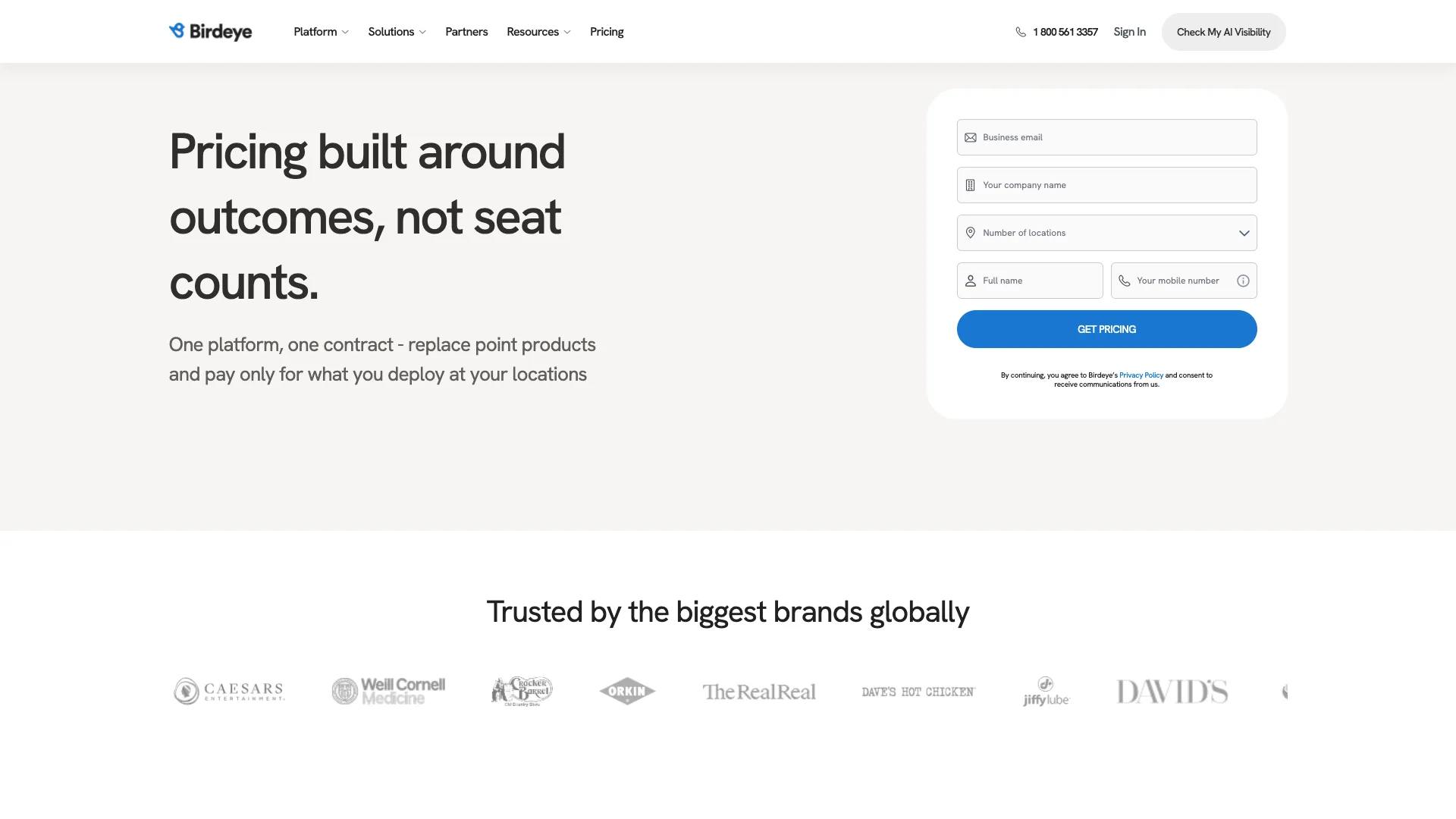 Jul 31, 2026
 Tech Stack
NiceJob vs Birdeye 2026: Pricing, Contracts and Review Gating
One of these vendors puts its price on the page and its cancellation terms in writing. The other puts a form in front of both, and the complaint record is where its contract length shows up.
Read Article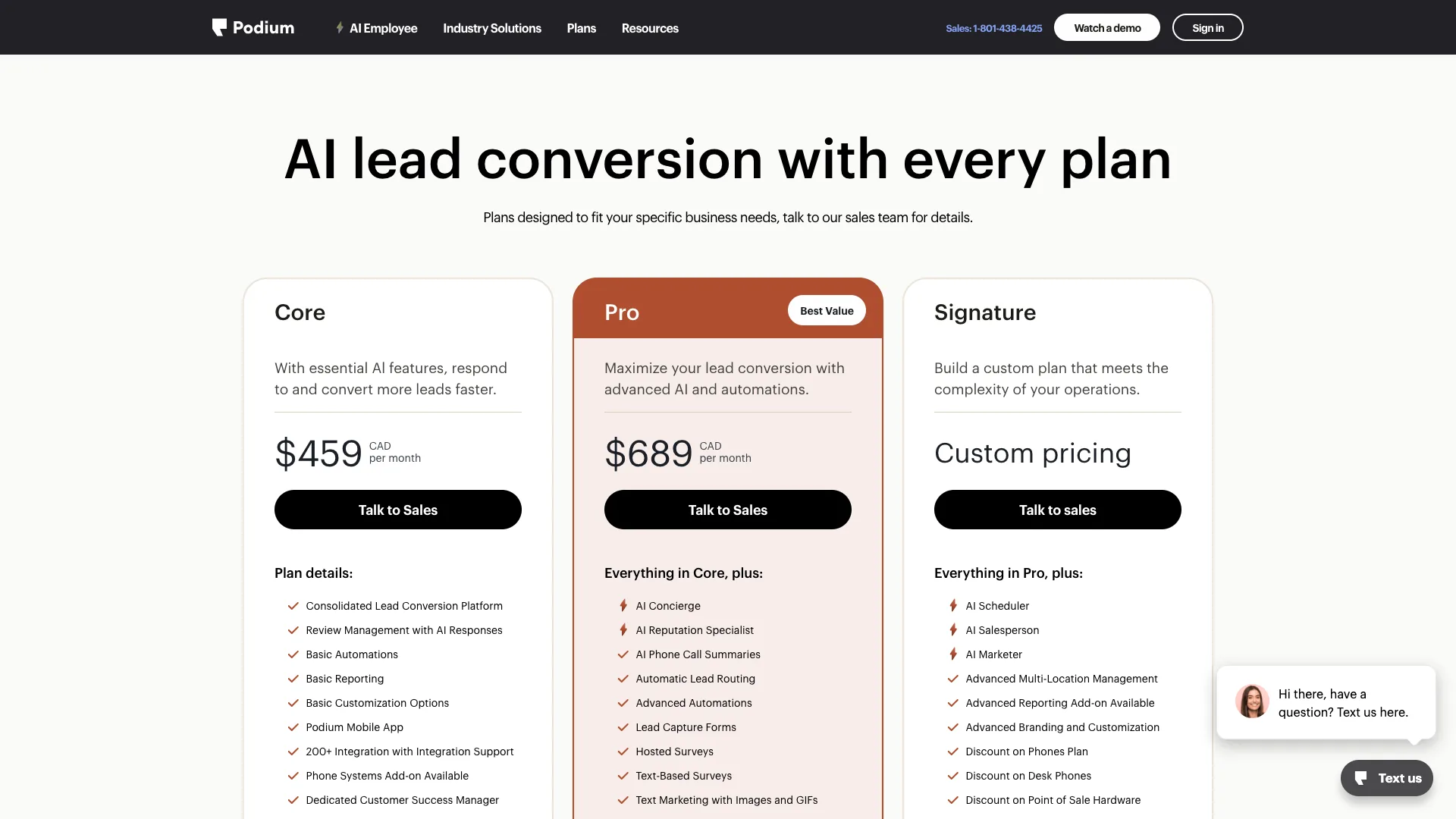 Jul 31, 2026
 Tech Stack
Podium vs Birdeye 2026: Pricing, Contracts and Review Gating
Only one of these two will tell you what it costs before a sales call, and even that number carries a carve-out aimed squarely at trade contractors.
Read Article Jul 31, 2026
 Tech Stack
Best Electrical Contractor Software 2026: 11 Ranked and Priced
An electrical contracting business makes two software purchases that do not substitute for each other, and every roundup answering this query covers only one of them. Eleven platforms, with a published price or an explicit statement that the vendor publishes none.
Read Article Jul 31, 2026
 Tech Stack
Best HVAC Software in 2026: Eleven Ranked Across Three Classes
An HVAC contracting business buys across three classes of software that do not substitute for each other, and every roundup answering this query covers only one of them. Eleven products, each with a published price or an explicit statement that the vendor publishes none.
Read Article Jul 30, 2026
 Tech Stack
AccuLynx Pricing 2026: The Real Cost of a Quote-Gated Plan
One published figure, two blank plan cards, and a contract that says things the pricing page does not. A line-by-line breakdown of what AccuLynx really bills.
Read Article Jul 30, 2026
 Tech Stack
Houzz Pro Canada Review 2026: Pricing and Alternatives
Houzz Pro serves different pricing renderings. What Canadian buyers see, how GST/HST and payments work, what Custom gates, and what the annual contract commits you to.
Read Article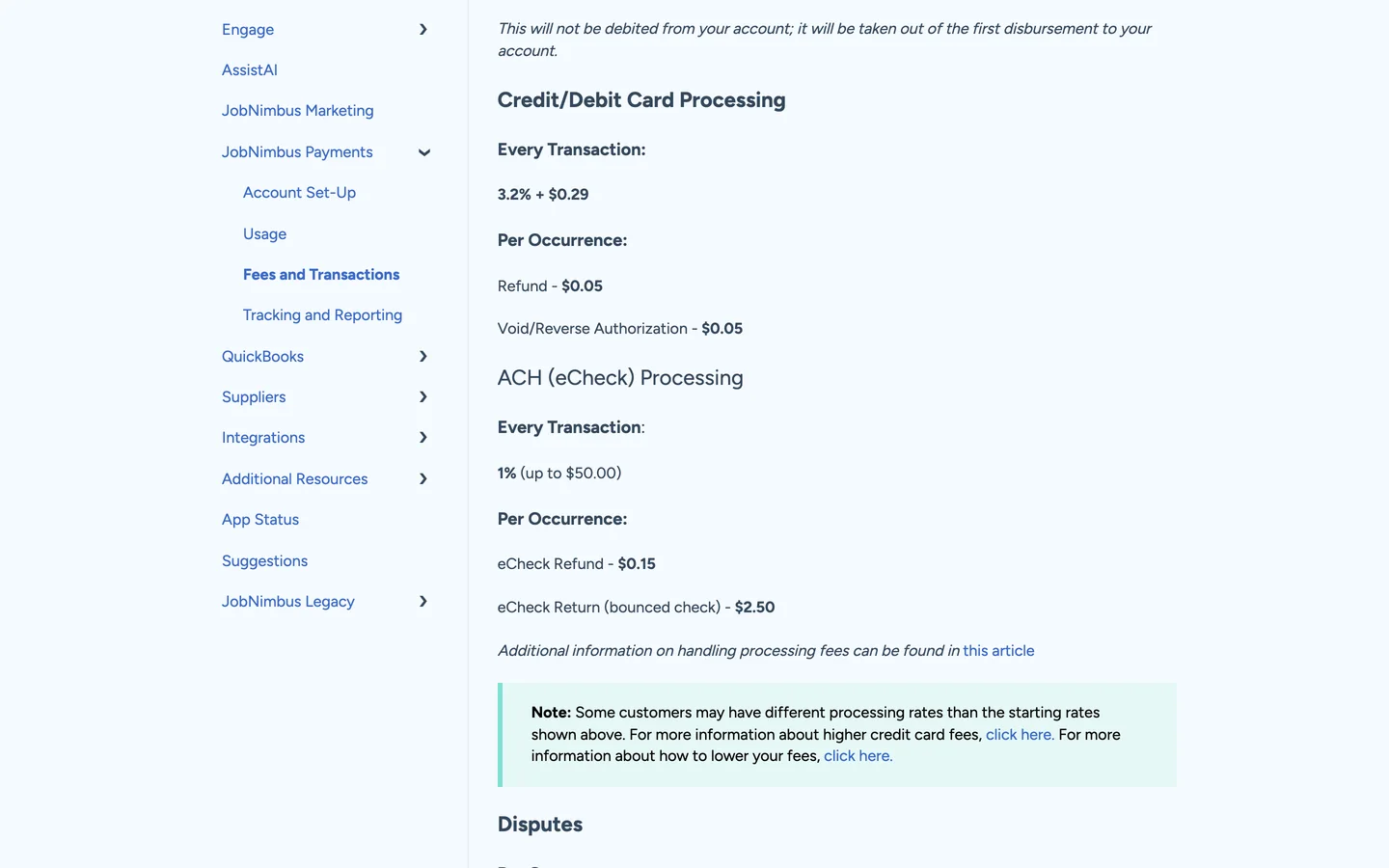 Jul 30, 2026
 Tech Stack
JobNimbus Pricing in 2026: What the Quote Does Not Cover
JobNimbus prints no figure on any of its four plans. So the only rate you can read before a sales call is the payments meter, and it is the biggest line on the bill.
Read Article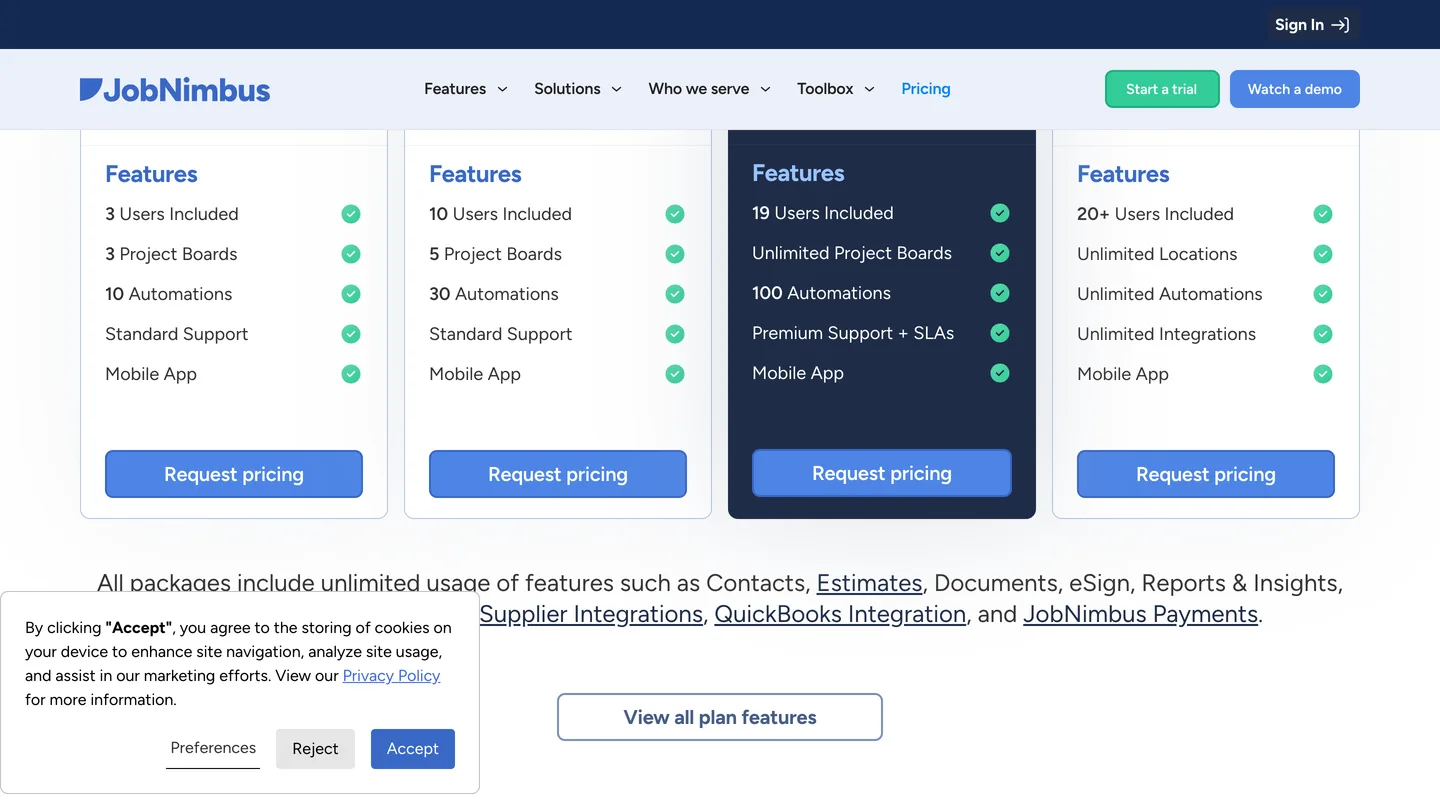 Jul 30, 2026
 Tech Stack
JobNimbus Review 2026: Pricing, Pros, Cons and Alternatives
JobNimbus rates 4.6 on Capterra and orders material straight from ABC Supply and SRS. But it publishes no price, and its supplement route carries a note.
Read Article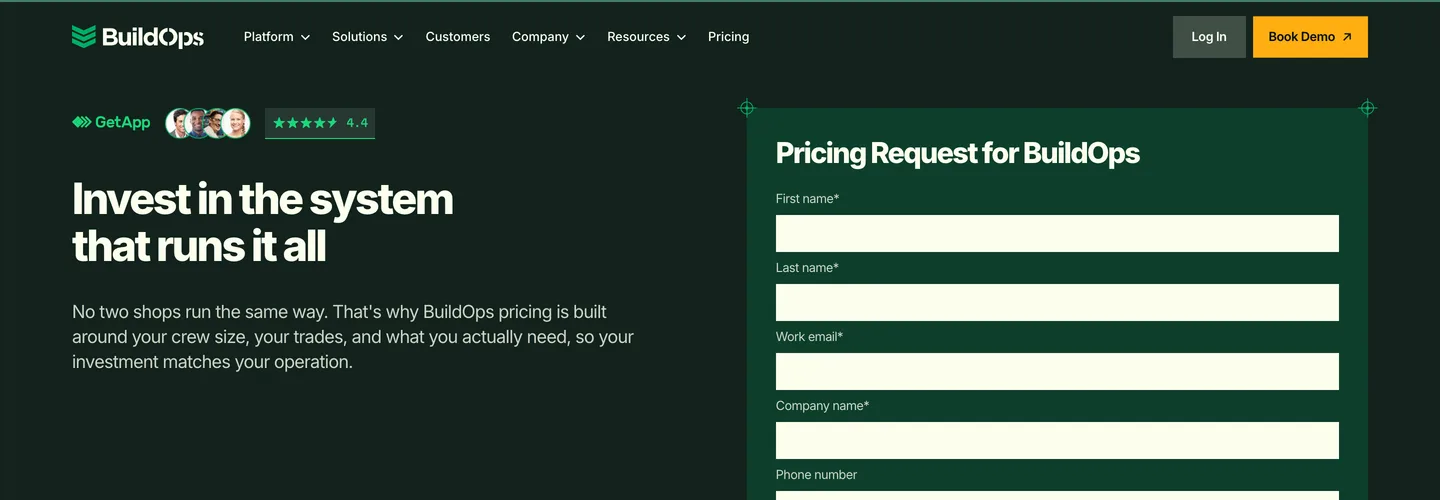 Jul 30, 2026
 Tech Stack
BuildOps Review 2026: Pricing, Contract Terms and Alternatives
BuildOps runs commercial service and projects on one platform, and publishes no pricing at all. The billing unit, the 30-day data-export window, and who it suits.
Read Article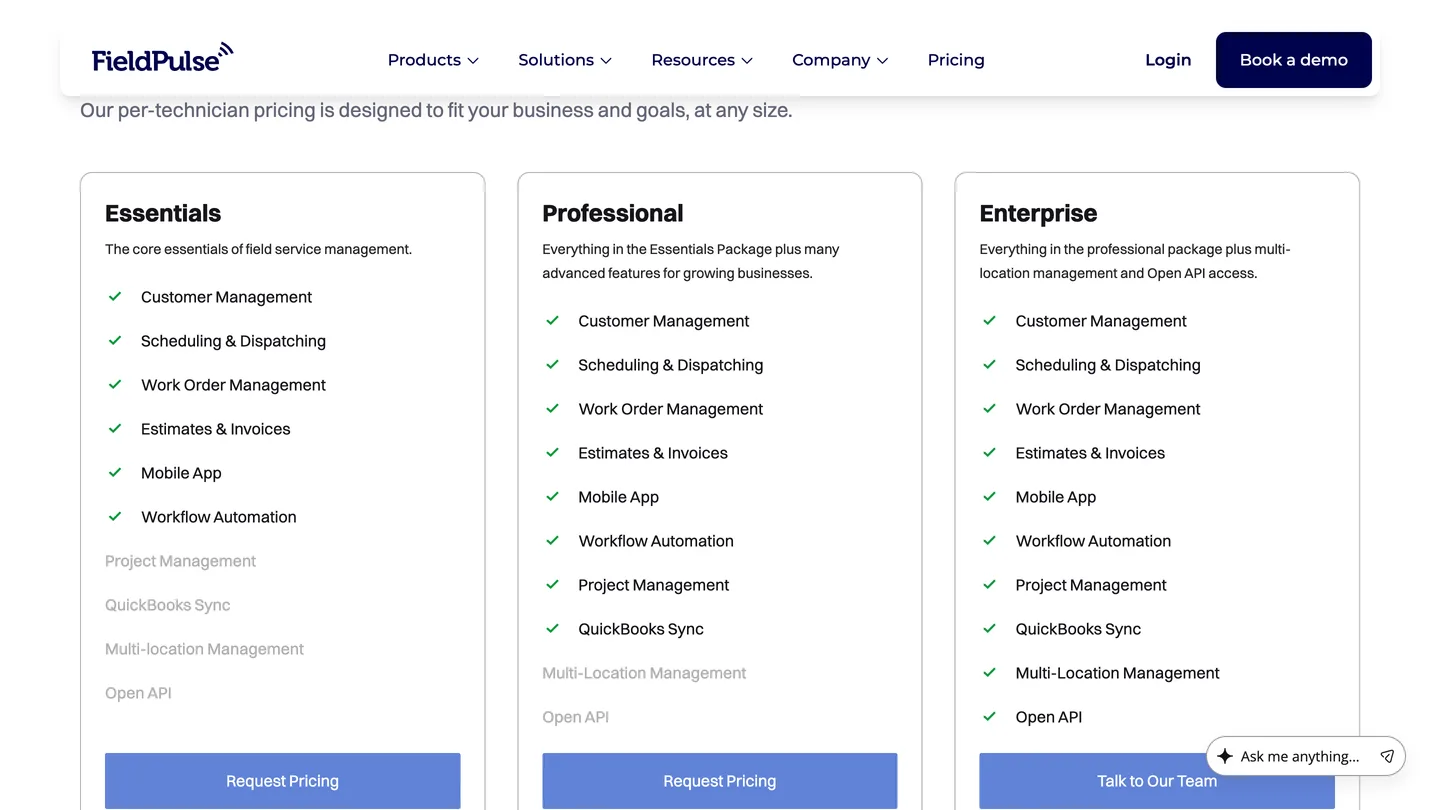 Jul 30, 2026
 Tech Stack
FieldPulse Review 2026: Pricing, Pros, Cons and Alternatives
FieldPulse rates 4.6 on Capterra and is the platform contractors name when they leave a bigger system. But it publishes no price, and the contract runs a year.
Read Article Jul 30, 2026
 Tech Stack
Service Fusion Review 2026: Pricing, Contract and Alternatives
Service Fusion bills flat per company with unlimited users, which is the best structural deal in field service software. The published plans, the contract behind the no-contract line, and the app score every other review gets wrong.
Read Article Jul 30, 2026
 Tech Stack
Knowify Review 2026: Pricing, Job Costing and Alternatives
Knowify rates 4.5 on Capterra and its weakest sub-score is features. What the $99 Core plan withholds, which way the QuickBooks sync really runs, and who should not buy it.
Read Article Jul 29, 2026
 Tech Stack
AccuLynx Review 2026: Pricing, Tier Gating, Alternatives
AccuLynx rates 4.6 across 846 reviews and now publishes an entry price. What that price omits, which tier holds the insurance workflow, and who should skip it.
Read Article Jul 29, 2026
 Tech Stack
Unitel Voice Review 2026: Pricing, Features and Alternatives
Unitel Voice rates 4.6 on Capterra and gives a one-truck shop a business number for $9.99 a month. The published plans, the cost per call, and what it won't do.
Read Article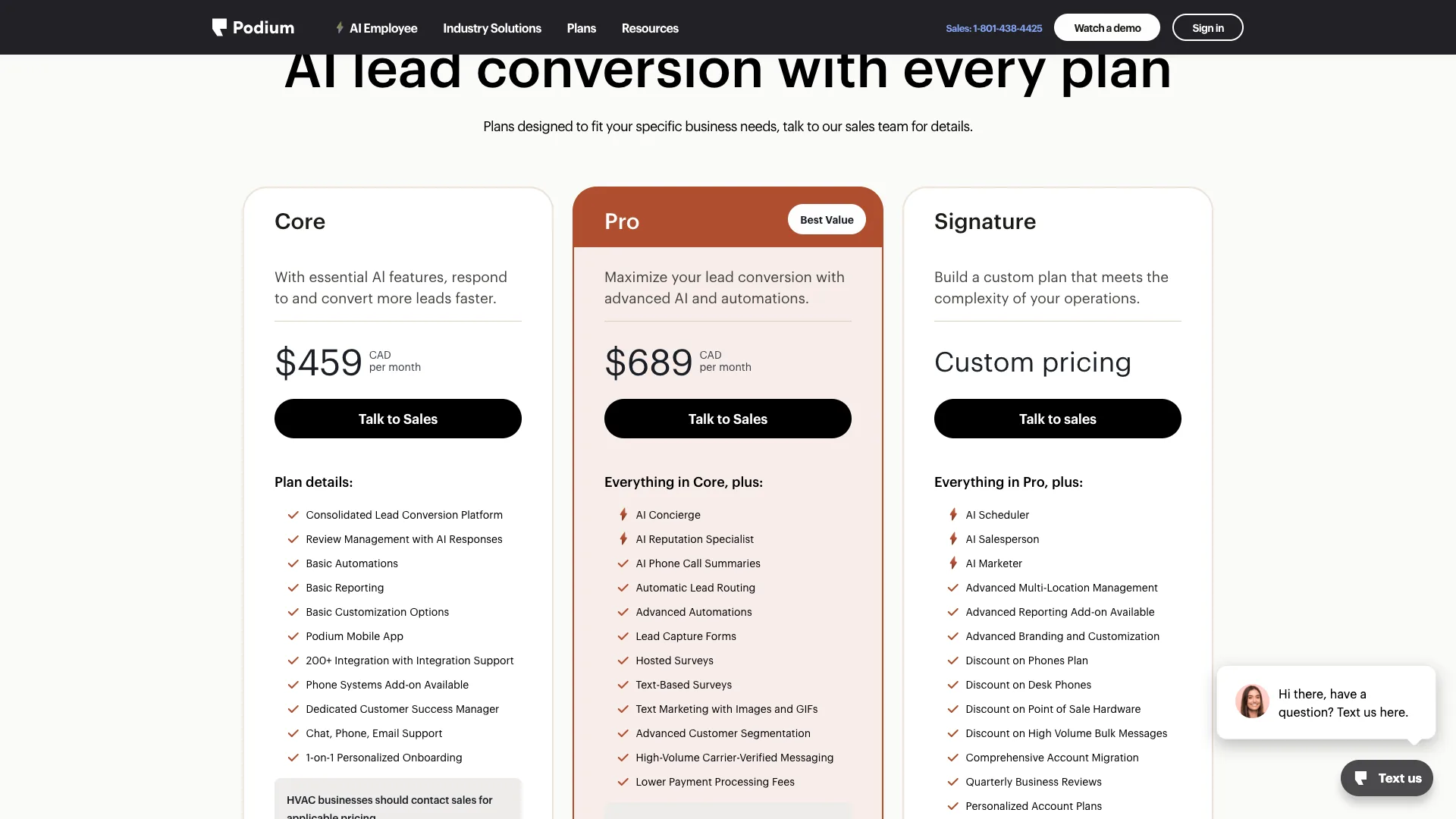 Jul 29, 2026
 Tech Stack
NiceJob vs Podium 2026: Pricing, Contracts and Review Gating
Both vendors print a price, at very different scale and in different currencies. The gap that matters is what Podium will not print: the billing unit, and whether a trade shop gets the number on the page.
Read Article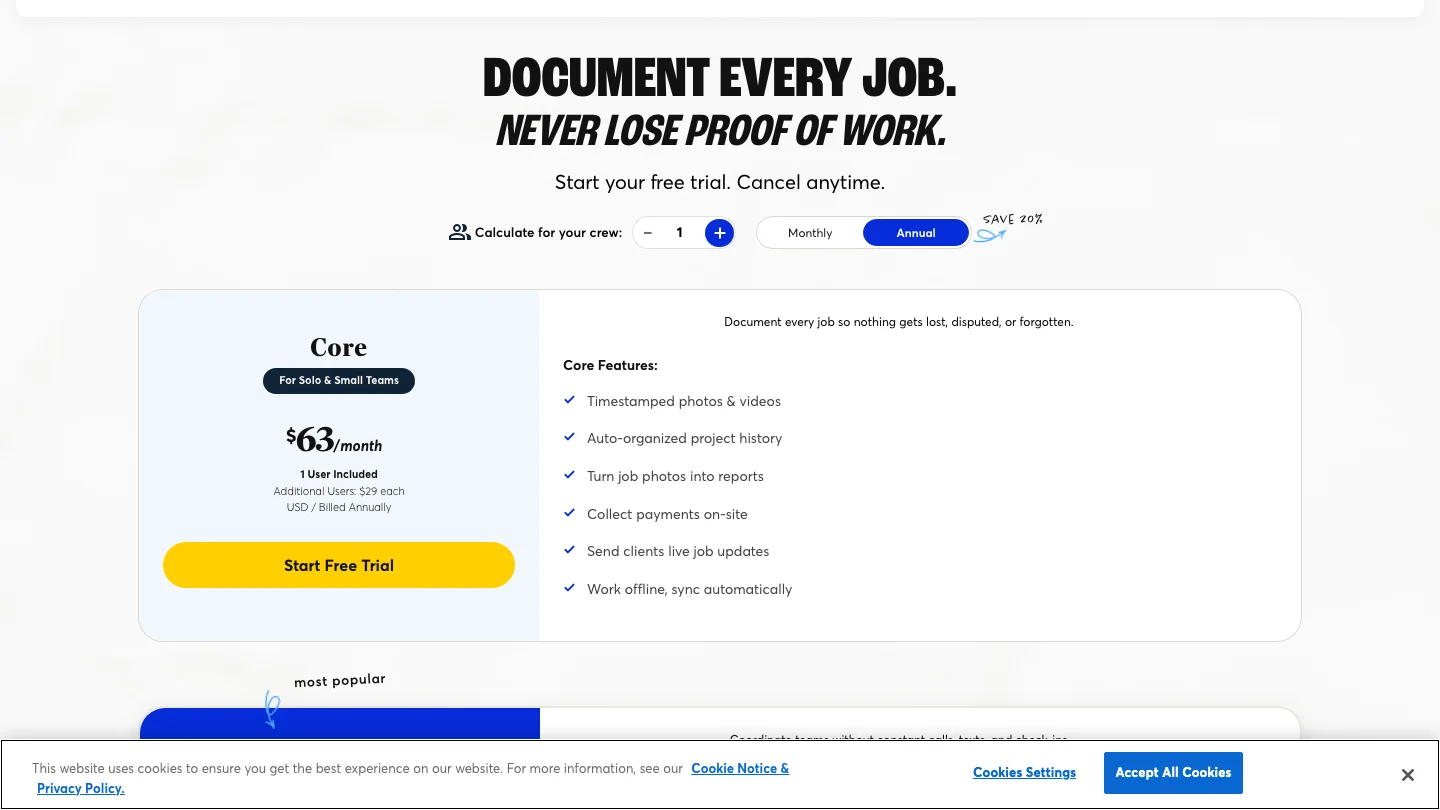 Jul 28, 2026
 Tech Stack
CompanyCam Review 2026: Pricing, Pros, Cons and Alternatives
Every page ranking for CompanyCam still quotes a per-user price the vendor no longer charges. Here are the real plans, the seat math, and who should skip it.
Read Article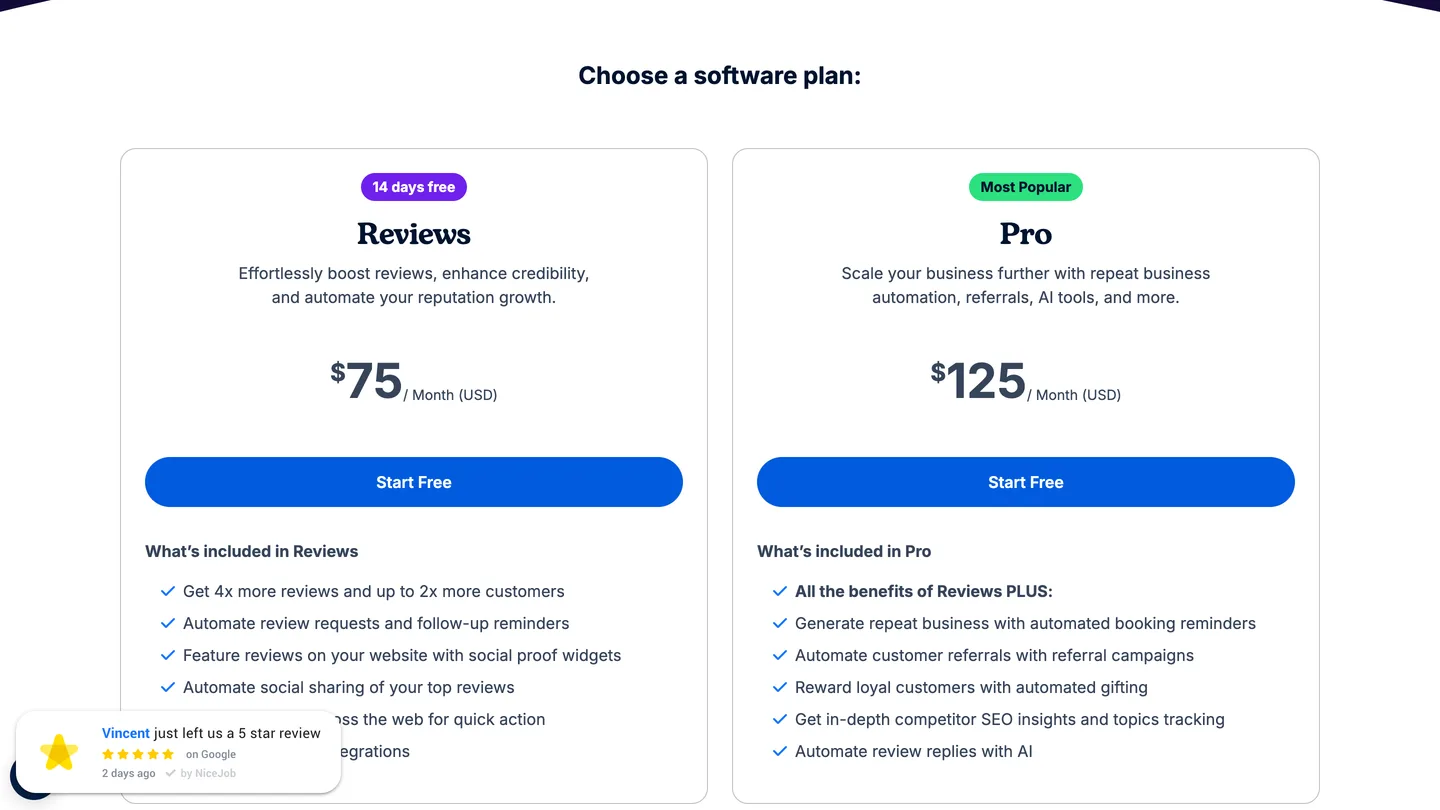 Jul 28, 2026
 Tech Stack
NiceJob Review 2026: Pricing, Pros, Cons and Alternatives
NiceJob rates 4.9 on Capterra and refuses to gate negative reviews. Real plan pricing, the active-customer threshold nobody publishes, and who should skip it.
Read Article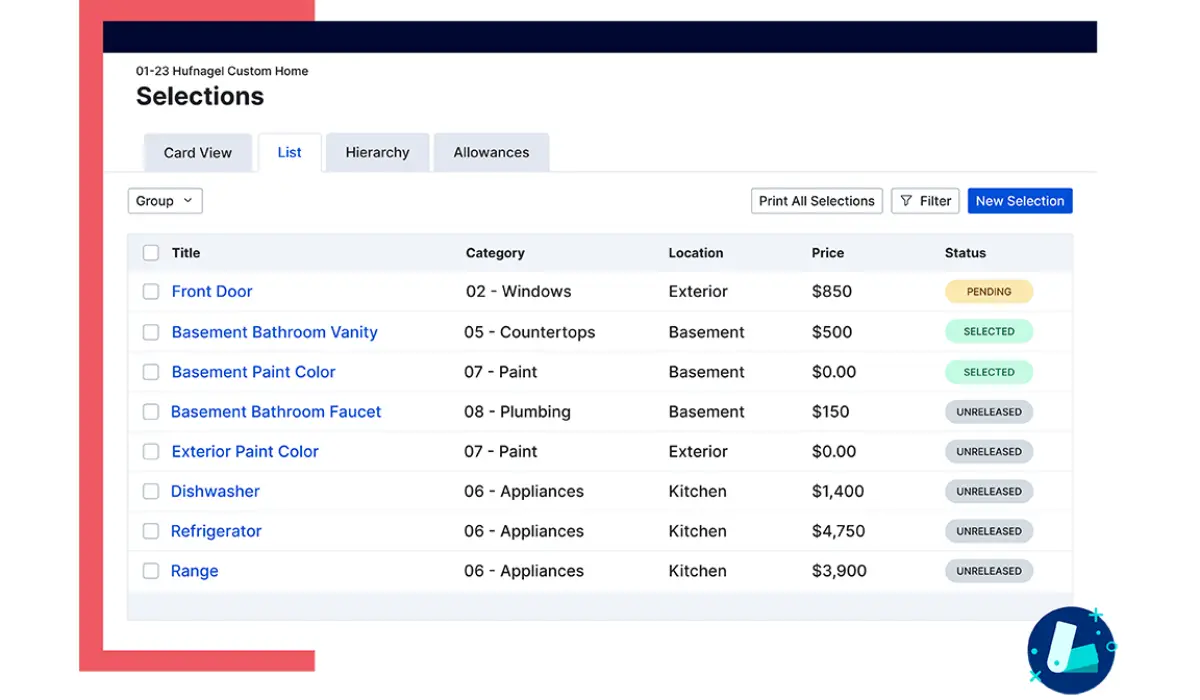 Jul 27, 2026
 Tech Stack
Buildertrend Review 2026: Pricing, Limits and Alternatives
Buildertrend rates 4.5 across 2,486 Capterra reviews and quotes against your revenue rather than your seat count. The workflows, the export problem, the alternatives.
Read Article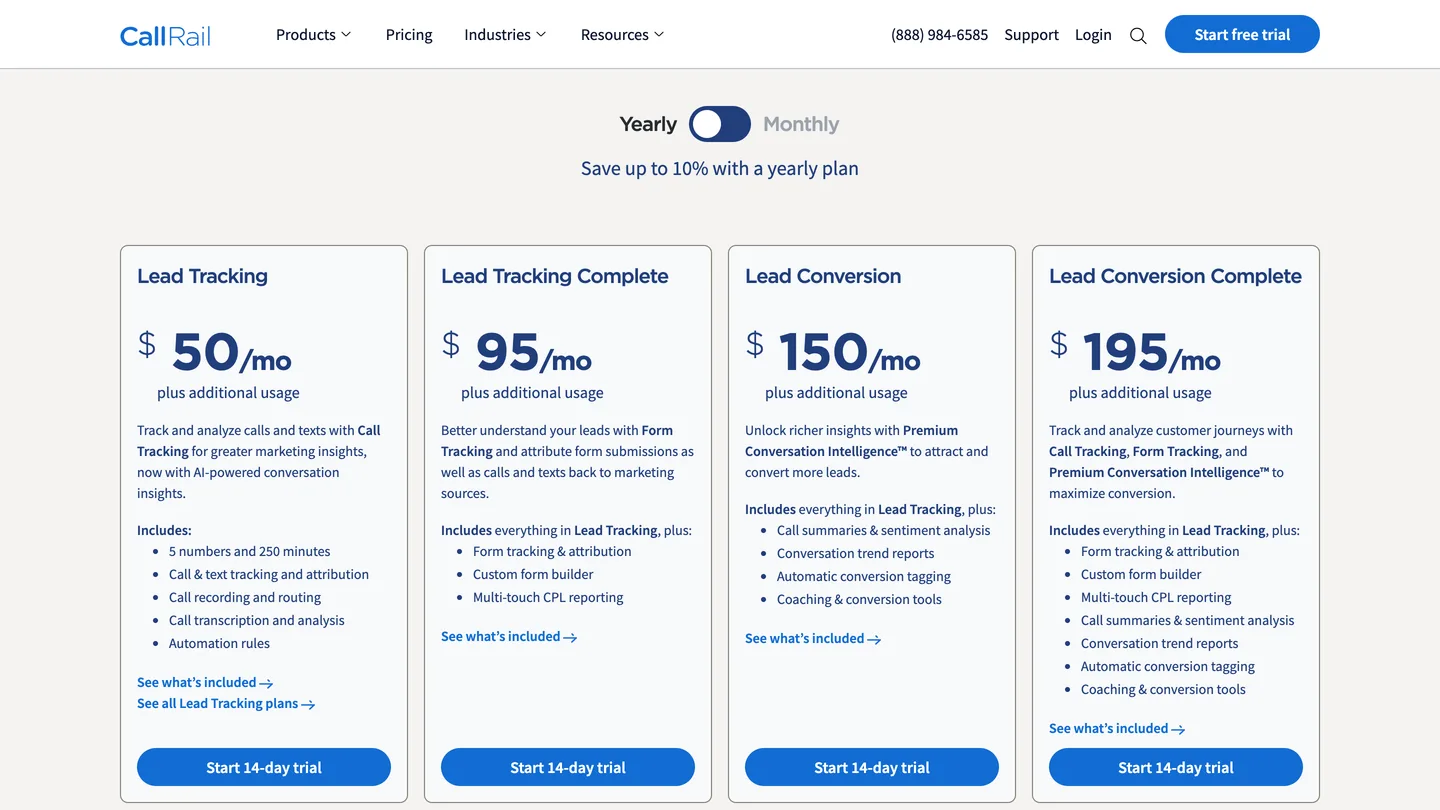 Jul 27, 2026
 Tech Stack
CallRail Review 2026: Pricing, Pros, Cons and Alternatives
CallRail rates 4.5 on Capterra, and its tracking numbers port out free. But the two usage rates that decide your real bill are the two it does not print.
Read Article Jul 27, 2026
 Tech Stack
Roofr Review 2026: Pricing, Pros, Cons and Alternatives
Roofr rates 4.6 on Capterra and sells $13 measurement reports against a market charging triple. But it will not import a report from anywhere else.
Read Article Jul 25, 2026
 Tech Stack
Housecall Pro Review 2026: Pricing, Pros, Cons, Alternatives
Housecall Pro has the shortest learning curve in the category and the widest review spread. Real pricing, the Instapay math, and the migration trap to plan around.
Read Article Jul 24, 2026
 Tech Stack
Jobber Review 2026: Pricing, Pros, Cons and Alternatives
Jobber rates 4.6 on Capterra with the best mobile app in the category. Real plan pricing, the feature gating that changes your entry price, and who it suits.
Read Article Jul 23, 2026
 Tech Stack
ServiceTitan Review 2026: Pricing, Pros, Cons, Alternatives
ServiceTitan rates 4.3 on Capterra but its weakest score is value for money. Real reported pricing, the 12-month contract, the exit fees, and who it actually suits.
Read Article Jun 3, 2026
 Tech Stack
HVAC Online Scheduling: The 43% Losing After-Hours Bookings
HVAC leads every trade on online booking at just 56.7%, which still leaves 43% of sites forcing an after-hours customer to wait for a business-hours phone call.
Read Article