Moraware Review 2026: Pricing, Pros, Cons, Alternatives
Moraware starts at $100. What each tier gates, the 8 limitations reviewers name, and 4 alternatives with published prices.
Page at a glance
Moraware is The default operating system for stone countertop shops: buy quoting first at $100 a seat, add scheduling later at $120 a seat with a three-seat floor, and add slab inventory last because it won't run without the scheduling product underneath it. It starts at $100 per user, per month. Everything is priced per named user, per month, per product. CounterGo is $100 per user per month with no stated floor. Systemize carries a hard floor: the pricing page states 'Minimum of 3 users required' and 'Additional users after 5 are $50 per month per user', so users one through five cost $120 each and users six and up cost $50 each. That makes the cheapest possible Systemize account $360 a month before a single job is written, and it means a five-person shop pays $120 a seat while a fifteen-person shop pays an effective $73 a seat. Inventory is another $50 per user per month on top and cannot be bought without Systemize. The Terms of Service ties seats to logins: 'You may create separate logins for as many people as Your plan allows' and sharing a login is called out as a security risk. It fits Countertop fabrication shops of roughly three to fifteen people running residential kitchen and bath work through their own template-fabricate-install crews, where the quote is drawn on a slab layout rather than typed into a line-item form. It's the wrong buy for A cabinet shop, a general remodeler, or a kitchen-and-bath dealer whose countertops are one line on a bigger job, because Moraware only does countertops and says so: 'At this time, Moraware is software made for countertop fabricators specifically.' And there's no cabinet module, no whole-project budget, no selections sheet and no client portal. So you'd be running two systems and reconciling them by hand. Alternatives that publish their prices are Quote Countertops from $499, JobTread from $199, Contractor Foreman from $49. Four priced tiers, eight evidenced gaps and four alternatives, three of which publish a figure.
The short verdict on Moraware
Moraware earns its money with Countertop fabrication shops of roughly three to fifteen people running residential kitchen and bath work through their own template-fabricate-install crews, where the quote is drawn on a slab layout rather than typed into a line-item form. If that's you, it does the job. The sections below are the parts worth checking before you sign. But the fit is narrower than the marketing suggests, and the price isn't the whole cost.
It starts at $100. And pricing was verified on 7 August 2026, so you can check every figure below in a browser tab.
| Pricing model | Published tiers |
|---|---|
| Entry price | $100 |
| Users | Everything is priced per named user, per month, per product. CounterGo is $100 per user pe |
| Ownership | Independent |
| Best fit | Countertop fabrication shops of roughly three to fifteen people running residential kitchen and bath work through their own template-fabricate-install crews, where the quote is drawn on a slab layout rather than typed into a line-item form. |
| Accounting sync | QuickBooks (Online and Desktop) (one-way), Xero, Sage, and every other accounting system (none) |
What works
- The quote is a slab layout, and that's the whole pitch
- Systemize is a whiteboard replacement first and a scheduling engine second
- Slab inventory is a paid add-on to a paid add-on, and the scanner is somebody else's hardware
- Data goes in easily and comes out one saved view at a time
- Eight weeks of a named specialist, included, and the vendor tells you to buy one product at a time
What does not
- Cancel the account and the data is gone. The vendor says so in the contract
- Export is per-view CSV. There's no documented way to get your drawings out
- Systemize has a three-seat floor, so scheduling starts at $360 a month
- QuickBooks is the only accounting integration, it's one-way, and it only exists in CounterGo
- No free trial, no self-serve signup, and no self-serve cancel. Both doors go through a human
Moraware is The default operating system for stone countertop shops: buy quoting first at $100 a seat, add scheduling later at $120 a seat with a three-seat floor, and add slab inventory last because it won't run without the scheduling product underneath it. It sells to Kitchen and bath contractors, and the shape of the product follows from that: CounterGo's differentiator is drawing the counter and laying it out on the actual slab, not line items, so the customer sees how many slabs the job eats and where the seam lands. Moraware sells this as a six-step drag-and-draw tool with automatic pricing, slab-count estimation and a layout-on-slab view. And reviewers describe using it as a closing device rather than an internal estimating tool: showing the homeowner the slab in front of them and justifying the seam. But the trade-off shows up the moment the shape isn't a normal kitchen.
Who should be shortlisting Moraware
It fits Countertop fabrication shops of roughly three to fifteen people running residential kitchen and bath work through their own template-fabricate-install crews, where the quote is drawn on a slab layout rather than typed into a line-item form. That's the half most reviews print. Here's the other half, which is the one worth your time.
Don't buy it if you're A cabinet shop, a general remodeler, or a kitchen-and-bath dealer whose countertops are one line on a bigger job. Moraware only does countertops and says so: 'At this time, Moraware is software made for countertop fabricators specifically.' And there's no cabinet module, no whole-project budget, no selections sheet and no client portal. So you'd be running two systems and reconciling them by hand. Look at JobTread instead.
Don't buy it if you're A one- or two-person fabricator who mainly wants a shared schedule. Systemize won't sell you fewer than three seats, so the cheapest shared calendar in the Moraware line is $360 a month. And below three people the only thing you can buy is CounterGo at $100, which is a quoting tool, not a scheduler. Look at Contractor Foreman instead.
Don't buy it if you're A shop running Xero, Sage, or an ERP rather than QuickBooks. QuickBooks is the only accounting integration in the product, it runs one direction, and it only exists on the CounterGo side. And Moraware's own answer for everyone else is manual re-entry: 'you can manually post the payment records.' Look at Stone Profit Systems instead.
Don't buy it if you're A fabricator outside the US, Canada, UK, Australia or New Zealand, or one whose office team doesn't work in English. Moraware states it supports customers in exactly those five countries and that 'Software, documentation, and customer support are only available in English.' Metric units, international currencies and some regional naming (splashback, upstand, hob) are configurable, but the language isn't.
What you'll pay Moraware in year one
So Moraware shows what it charges. Below is each tier, what it gates, and the costs that sit outside the subscription entirely.
| Tier | Price | Billing unit | What it unlocks |
|---|---|---|---|
| CounterGo (drawing and quoting) | $100 | per user, per month | 6-step drag and draw tool, automatic pricing calculations, slab-count estimation and layout-on-slab view, customizable price lists, QuickBooks integration |
| Systemize (scheduling and job management) | $120 | per user, per month | minimum of 3 users required, shared job calendar with customizable views, automated job scheduling and route mapping, customizable job forms and packets, API access |
| Systemize, users 6 and above | $50 | per user, per month | only applies after the first 5 users have been bought at $120 |
| Inventory (slab ordering and tracking) | $50 | per user, per month | Systemize is required for use of Moraware Inventory, purchase order process, slab labels, integration with jobs in Systemize |
Everything is priced per named user, per month, per product. CounterGo is $100 per user per month with no stated floor. Systemize carries a hard floor: the pricing page states 'Minimum of 3 users required' and 'Additional users after 5 are $50 per month per user', so users one through five cost $120 each and users six and up cost $50 each. That makes the cheapest possible Systemize account $360 a month before a single job is written, and it means a five-person shop pays $120 a seat while a fifteen-person shop pays an effective $73 a seat. Inventory is another $50 per user per month on top and cannot be bought without Systemize. The Terms of Service ties seats to logins: 'You may create separate logins for as many people as Your plan allows' and sharing a login is called out as a security risk.
There is a discount for paying annually up front: None. There is no annual plan to discount. All three products are listed as 'Billed monthly - no long-term contracts!' and the FAQ says the subscription is 'purely month-to-month'. A shop that would happily prepay a year to shave the rate has nothing to prepay against. And an annual prepay discount tells you an annual commitment exists, which is worth knowing before anyone mentions a term length out loud.
What isn't in the Moraware number you get quoted
Payment processing. Moraware does not process card payments and takes no percentage. CounterGo records payments and exports them out: the QuickBooks page lists 'CounterGo Payments can be exported to QuickBooks Invoices' as a feature, meaning the money is actually collected in QuickBooks, not in Moraware. There is no Moraware payment rail, no merchant account and no processing fee.
Implementation and onboarding. No implementation or setup fee. The FAQ answers 'Are there upfront costs or setup fees?' with 'No. We do not charge implementation fees.' Onboarding is bundled: a dedicated Onboarding Specialist for the first 8 weeks, described as usually three 45-minute Zoom calls, plus unlimited phone, email and video support.
Minimum term. None. Month to month. The pricing page repeats 'Billed monthly - no long-term contracts!' on all three products and the Why Moraware block states 'There are no yearly lock-in contracts'. The real minimum is a seat-count floor, not a time floor: three Systemize users.
Getting out. No early-termination fee, but no self-serve cancel either. Terms of Service 3.1: 'The account owner (as defined in the sign-up procedure) can cancel the account at any time by emailing or calling us to request cancellation.' Cancellation takes effect at the end of the current billing cycle. Refunds are discretionary, not contractual: 'We'll grant refunds in some cases.'
Auto-renewal. Yes, and it renews on a card on file. Terms of Service 2.1: 'The Service is made available on a pay-as-you-go basis and is charged at the beginning of Your monthly subscription term.' Section 2.2 adds that seat changes are prorated and charged immediately, and that 'Prices of all Moraware plans and Services are subject to change upon 30 days notice from us. Such notice may be provided at any time.'
Modules sold separately. We found none. The published feature set appears to sit inside the tiers rather than behind separate line items, which is worth confirming against your own must-have list on the call.
Third-party services you will also pay for. , , . These are not on Moraware's invoice, and they are still part of what this decision costs you every month.
One oddity, filed under things nobody mentions on a demo. Systemize seat pricing inverts at user six, so the smallest account Moraware will sell pays the highest rate per person in the entire price list. Users one to five cost $120 each; users six and up cost $50 each, a 58% drop. So if you're hovering at four or five office users, the sixth seat costs less than half the fifth and drags your blended rate down. And if you're at three, you're paying a small-shop premium for a product with a small-shop minimum, which is the worst square on the board.
The Moraware costs that land afterwards
The subscription is the part everyone quotes. These are the lines that land afterwards, and the ones we could not find are named as unpublished rather than left blank.
Sold separately. We found none. The published feature set sits inside the tiers rather than behind separate line items, which is worth confirming against your own must-have list.
Third-party services you'll also pay for. , , . None of these are on Moraware's invoice, and all of them are part of what this decision costs every month.
"Moraware CounterGo (drawing and quoting) is $100, per user, per month."
Moraware pricing page (2026)
"Moraware Systemize (scheduling and job management) is $120, per user, per month."
Moraware pricing page (2026)
"Everything is priced per named user, per month, per product. CounterGo is $100 per user per month with no stated floor. Systemize carries a hard floor: the pricing page states 'Minimum of 3 users required' and 'Additional users after 5 are $50 per month per user', so users one through five cost $120 each and users six and up cost $50 each. That makes the cheapest possible Systemize account $360 a month before a single job is written, and it means a five-person shop pays $120 a seat while a fifteen-person shop pays an effective $73 a seat. Inventory is another $50 per user per month on top and cannot be bought without Systemize. The Terms of Service ties seats to logins: 'You may create separate logins for as many people as Your plan allows' and sharing a login is called out as a security risk."
Moraware pricing page (2026)
The five workflows you pay for
Feature totals are noise. So a shop in this category lives or dies on five things, and those are the five to grade, and each one below carries the evidence it's graded on.
The quote is a slab layout, and that's the whole pitch. CounterGo's differentiator is drawing the counter and laying it out on the actual slab, not line items, so the customer sees how many slabs the job eats and where the seam lands. Moraware sells this as a six-step drag-and-draw tool with automatic pricing, slab-count estimation and a layout-on-slab view. And reviewers describe using it as a closing device rather than an internal estimating tool: showing the homeowner the slab in front of them and justifying the seam. But the trade-off shows up the moment the shape isn't a normal kitchen. And a reviewer, writes the same thing: "Moraware has increased our close rate by 30%. The ability to supe impose actual slabs is a huge benefit to our customers. On the labor side, we can accurately determine slab quantity, cut location, seam placement etc. It's a priceless tool for all fabricators. Every industry should have a program like Moraware."And a reviewer, writes the same thing: "Since I started using CounterGo my sales increased due to presentation, being able to show my customers how many slabs I'm going to need for their countertops and explain how adding a seam to there stone not only saves them money by not having to buy another slab, but also by minimizing the risk of breaking there stone on transport or install."And a project manager/sales, construction, 11-50 employees, Daily use, less than 12 months on the platform, writing on 2023-03-28, writes the same thing: "Designs that are unique are not easy to draw in CounterGo, need more flexibility for drawing tools. Pricing multiple materials is hard because some price features can't be changed for specific line-items (like freight charges between different suppliers)"
Systemize is a whiteboard replacement first and a scheduling engine second. The product page's own headline is 'Go ahead. Erase the whiteboard.' What it does is colour-coded shared calendars with per-role saved views, autoscheduling for fabrication and install dates, route mapping, and automatically generated print or digital job packets so each assignee gets the checklist and forms for their activity. And shops describe hanging a monitor in the shop running a Systemize view instead of a physical board. So the scheduling value shows up hardest on reschedules, which in countertop work is most days. And a reviewer, describes it the same thing: "Every morning we used to huddle around magnetic schedule board and spend hours debating how the template, fabrication and installation will all come together. Now that the shop made the transition to all electronic scheduling we have time to focus on the real work of the business."And a reviewer, describes it the same thing: "When jobs fall off or need to be added, I don't have to re-invent the wheel each time. My calendars are all live and accurate. With quick use of the mapping application, I can see if a new job fits a route or if a job falling off will significantly change a day. A true time saver."
Slab inventory is a paid add-on to a paid add-on, and the scanner is somebody else's hardware. Inventory handles slab and sink stock, purchase orders, slab labels and consumption against jobs in Systemize. It costs $50 per user per month and is unbuyable without Systemize, so the true floor is Systemize's three seats plus Inventory seats on top. Slab photography, the feature that makes remnant management and vein matching worth doing, comes from third-party scanners: Horus Software's Iris is integrated today and Park Industries' SlabVision is listed as 'Coming Soon!'. Moraware routes support for both back to the hardware vendor.
Data goes in easily and comes out one saved view at a time. Getting in is smooth: there's a documented QuickBooks and Peachtree customer-list import, slab-scanner image import, and DXF files can be attached to jobs. But getting out is thinner. The one export path documented in either knowledge base is view-level CSV. Systemize has an open API included in the subscription, which is the real escape hatch, but Moraware publishes no developer documentation at any obvious address, and the integrations page points custom API work at a third-party consultancy, DataBridge, who 'also do API custom programming with Moraware'. So combined with TOS 3.1, the practical exit plan is a consultant.
Eight weeks of a named specialist, included, and the vendor tells you to buy one product at a time. Every subscription includes a dedicated Onboarding Specialist for the first eight weeks plus unlimited phone, email and video support, with no setup fee. And Moraware's own sequencing advice is deliberately slow: start with CounterGo, add Systemize once quoting is running, add Inventory last. It says the reason plainly, that 'starting with one product at a time increases your chances of success'. So that's unusually honest for a vendor with three products to sell, and it also means the full stack is an eighteen-month build, not a purchase. A reviewer reports it: "Your support staff is amazing and they quickly adopted to our business module and helped with advice on needed dashboards and reports."
Moraware per trade, not per company size
Fit differs by trade rather than by company size alone, and a blended paragraph hides that. Here is the split for the trades this one sells to.
Kitchen and bath. The workflow that decides it is the quote is a slab layout, and that's the whole pitch, and the shop profile that gets value is three to eight person countertop shop with its own template and install crews doing residential and commercial work. Where it stops being a fit is A cabinet shop, a general remodeler, or a kitchen-and-bath dealer whose countertops are one line on a bigger job.
Where your data goes when it leaves Moraware
QuickBooks (Online and Desktop) connects one way only, so edits made in your books do not come back, gated to a higher tier. Xero, Sage, and every other accounting system connects, gated to a higher tier. Your costs map through cost codes, so test yours against your own chart of accounts before you commit. A code your books don't recognise is how a labour charge quietly lands somewhere useless.
Past those, the road ends. Zapier / Make / any no-code automation layer, Payment processing (Stripe, Square, or a native rail), CRM and marketing (HubSpot, Salesforce, Mailchimp) and review platforms, Public developer documentation for the Systemize open API, Cabinet, CAD/CAM and CNC software beyond the Slabsmith bridge do not connect. So if your books run on an ERP rather than the platforms named above, weigh that before anything else.
Beyond accounting it connects to Horus Software (Iris slab scanner) (Live hardware integration that imports slab data and slab images into Moraware Inventory. Moraware directs connection support to Horus, not to itself.), Park Industries (SlabVision digital slab scanner) (Second slab-scanner integration, not yet shipping. The integrations page marks it 'Coming Soon!' with no date.), DataBridge Integrations (Third-party inventory barcoding for Systemize, plus bridges from Systemize to Slabsmith and to Home Depot's IconX platform, plus custom API programming. This is the route to Home Depot as a channel, and it is not Moraware code.), Job Well Done (Third-party mobile web app for field-to-office communication against Systemize jobs: digitised paper forms, before-and-after photos, signature capture, and permission control over what field workers can see. In effect, the field app Moraware chose not to build.), Fifth Gear Technologies (SPEEDlabel) (Slab-label printing program built to work with Systemize, generating labels per part and per piece for shop organisation, loading and QC.), 7th Gear (iPhone/iPad barcode reconciliation app) (iOS App Store app that scans an inventory count and compares it against a Systemize inventory view to show differences. The only native mobile app in the Moraware orbit, and it belongs to somebody else.). A public API exists: Systemize includes an open API in the subscription, listed as a feature on the Systemize pricing card ('API access') and confirmed in the product FAQ: 'Yes, Systemize has an open API included in its subscription.' No public developer documentation was findable: api.moraware.com does not resolve, /api/ returns 404, and neither knowledge-base sitemap (402 articles) contains an API reference. CounterGo and Inventory do not list API access as an included feature.
Moraware support, and what it costs you
Support is the line item nobody prices and everybody eventually needs. Onboarding for Moraware: No implementation or setup fee. The FAQ answers 'Are there upfront costs or setup fees?' with 'No. We do not charge implementation fees.' Onboarding is bundled: a dedicated Onboarding Specialist for the first 8 weeks, described as usually three 45-minute Zoom calls, plus unlimited phone, email and video support.
And a reviewer, says the same thing: "Your support staff is amazing and they quickly adopted to our business module and helped with advice on needed dashboards and reports."
Moraware contracts, and getting out
Nobody reads this section before they buy, and it's the one that costs money afterwards. Four terms decide what leaving looks like.
Minimum term. None. Month to month. The pricing page repeats 'Billed monthly - no long-term contracts!' on all three products and the Why Moraware block states 'There are no yearly lock-in contracts'. The real minimum is a seat-count floor, not a time floor: three Systemize users.
Auto-renewal. Yes, and it renews on a card on file. Terms of Service 2.1: 'The Service is made available on a pay-as-you-go basis and is charged at the beginning of Your monthly subscription term.' Section 2.2 adds that seat changes are prorated and charged immediately, and that 'Prices of all Moraware plans and Services are subject to change upon 30 days notice from us. Such notice may be provided at any time.'
Early termination. No early-termination fee, but no self-serve cancel either. Terms of Service 3.1: 'The account owner (as defined in the sign-up procedure) can cancel the account at any time by emailing or calling us to request cancellation.' Cancellation takes effect at the end of the current billing cycle. Refunds are discretionary, not contractual: 'We'll grant refunds in some cases.'
Payment processing. Moraware does not process card payments and takes no percentage. CounterGo records payments and exports them out: the QuickBooks page lists 'CounterGo Payments can be exported to QuickBooks Invoices' as a feature, meaning the money is actually collected in QuickBooks, not in Moraware. There is no Moraware payment rail, no merchant account and no processing fee.
And this is the kind of thing you only find by reading the complaints. Moraware's marketing sells the absence of a contract, and its contract sells the presence of a data cliff. 'There are no yearly lock-in contracts' sits on the pricing page while TOS 3.1 says the data 'cannot be recovered once your account is cancelled'. Both are true. The lock-in was never the term length. A twenty-year Moraware shop is more locked in than a shop on a three-year contract with a competitor, because a contract expires and a data cliff doesn't. So treat quarterly CSV exports as a standing operating cost, and ask about the API before you need it.
"For the subscription price I think it lacks a lot of flexibility for designs that fall outside of a typical layout that we encounter regularly. More control over pricing specific things for multiple materials in a quote would make it easier too. Otherwise, for the majority of what we need it for, it works great."
Capterra (same review also appears on Software Advice and GetApp, which are all Gartner properties reading one review pool), Adrian B. (3-28)
"Designs that are unique are not easy to draw in CounterGo, need more flexibility for drawing tools. Pricing multiple materials is hard because some price features can't be changed for specific line-items (like freight charges between different suppliers)"
Capterra, Adrian B. (the 'Cons' field of the same Capterra review) (3-28)
"We are closing more quotes. CounterGo makes estimating faster and shortens the buying cycle. Systemize has created transparencies in the the job process, allowing us to identify bottl necks and attend to them more quickly. It has also helped us define employee roles and accountability. The employees can see how activities they are responsible for impact efficiencies."
Moraware testimonials page (vendor-published, not independently verified), Gavin van den Berg, Keystone Granite (2026)
Where Moraware falls short
So here's what breaks, sourced to the person who hit it.
Cancel the account and the data is gone. The vendor says so in the contract. Terms of Service 3.1 states, without qualification, that 'The information in your Systemize, JobTracker or CounterGo instance cannot be recovered once your account is cancelled.' There's no stated grace window, no export-on-exit period and no archival copy. And every quote, drawing, slab record, job note and attachment lives inside the account. So set that against the same TOS's cheerful cancellation language ('Let us know if you want to cancel your service') and the marketing line 'no long-term contracts', and the honest reading is that the switching cost is the twenty years of job history you can't take with you, not the contract. Before you cancel anything, export every view you care about to CSV and download every attached file by hand, because there's no bulk account export. And do the same export as a standing quarterly habit while you're still a customer.
Export is per-view CSV. There's no documented way to get your drawings out. The only export article in either knowledge base tells you to build a View and click Export to get a .csv 'that can be opened and manipulated in any spreadsheet application like Excel, Google Sheets, or Numbers'. That covers tabular data one saved view at a time. But it doesn't cover the CounterGo slab drawings, which are the single most labour-intensive artifact in the system and the reason the product exists. And a crawl of both knowledge-base sitemaps (402 articles across Systemize and CounterGo) surfaced no article on bulk account export, account closure, or getting drawings out in DXF or any other format. Systemize can accept DXF files as job attachments; nothing says it emits them. Ask sales in writing, before you sign, exactly what a full-account export contains and whether drawings are in it. And get the answer in email, not on a Zoom call.
Systemize has a three-seat floor, so scheduling starts at $360 a month. CounterGo has no stated user minimum, but Systemize does: 'Minimum of 3 users required'. At $120 a seat that's $360 a month before anyone has touched a calendar, and if you also want slab inventory it's $360 plus $50 a seat again, because Inventory won't run standalone. So a two-person shop that wants a shared job calendar can't buy one. And the per-seat price inverts as you grow, because users after five drop to $50, so the smallest permitted account pays the highest rate per person in the entire price list. So if you're under three people, price CounterGo alone at $100 and keep the whiteboard until headcount justifies the $360 floor.
QuickBooks is the only accounting integration, it's one-way, and it only exists in CounterGo. Moraware is explicit that QuickBooks is the sole accounting connection, and equally explicit that the flow only runs outward: 'One-way communication from CounterGo to QuickBooks keeps all your accounting information secure.' Nothing comes back. Payment status, credit memos and write-offs live in QuickBooks and never return to the quote. The integration also sits on the CounterGo side of the product line, which means a shop that buys Systemize alone for scheduling has no accounting integration at all. So anyone on Xero, Sage or a construction ERP is told to type it twice: 'you can manually post the payment records.' So if you aren't on QuickBooks, budget the bookkeeper hours for double entry, or accept that Moraware ends at the order and your accounting stack starts there.
No free trial, no self-serve signup, and no self-serve cancel. Both doors go through a human. You can't try it: 'We don't have a trial version of the software.' And you can't buy it without a call: the FAQ has an entry literally titled 'Why do I need a demo?' and the Systemize button on the pricing page says 'Book a Consultation Call'. And you can't leave it without a call either, because TOS 3.1 requires the account owner to cancel 'by emailing or calling us'. But the pricing page's own FAQ boasts that Moraware 'publishes pricing directly on its site rather than requiring a sales call to see it', which is true of the numbers and false of the transaction. So ask the demo rep to run your three ugliest real jobs, not their canned kitchen, because the demo is the only trial you get.
The drawing tool struggles with anything that isn't a normal kitchen. The single independent review anywhere reachable makes the same point twice: unusual shapes are hard to draw and multi-material quotes are hard to price correctly. The specific example given is freight, where line-item-level pricing can't vary by supplier inside one quote. For a shop whose bread and butter is rectangular kitchens that's noise. But for a shop doing curved commercial reception desks or mixed-supplier jobs, it's the whole estimate. A project manager/sales, construction, 11-50 employees who reviewed it on 2023-03-28 writes: "Designs that are unique are not easy to draw in CounterGo, need more flexibility for drawing tools. Pricing multiple materials is hard because some price features can't be changed for specific line-items (like freight charges between different suppliers)" Bring your weirdest recent job to the demo and make them draw it and price it live, with two suppliers and different freight.
Web only. There's no Moraware mobile app, by design. Moraware answers the question directly: 'Moraware is completely web-based, so no app is needed.' The reasoning offered is that an app would be a limited version of the software. So the practical consequence is that a templater or installer in a driveway is running the full web UI in a mobile browser and depending on 4G or LTE, and the vendor's own suggestion is to carry a tablet, specifically 'an iPad or Surface'. And there's no offline mode described anywhere. A third party, 7th Gear, sells the only Moraware-adjacent iOS app, and it does barcode inventory reconciliation, not field work. So test the calendar and job view on the actual phone your installers carry, on cellular, in a basement, before you assume the field team will use it.
Liability is capped at one month of fees or $100, whichever is bigger. TOS 8.1 caps Moraware's direct-damages exposure at 'THE MONTHLY SERVICE FEE PAID OR PAYABLE BY YOU FOR THE ONE MONTH PRECEDING THE TIME OF ANY CLAIM... OR ONE HUNDRED ($100) U.S. DOLLARS' and excludes lost profits, lost sales and lost data entirely. Combine that with the 'cannot be recovered once your account is cancelled' clause, the 'AS IS' warranty disclaimer, and the right to change the terms 'from time to time without prior notice', and the risk of a data event sits with the fabricator, not the vendor. And disputes go to California courts. Keep your own backup rhythm. Because the contract says the downside of losing the system is yours.
One more thing worth knowing. Moraware reserves the right to change both the price and the terms unilaterally, on different clocks: prices on 30 days' notice 'at any time', and the Terms of Service itself 'from time to time without prior notice'. And your only stated remedy for a terms change you dislike is to stop using the service, which triggers the data-deletion clause. The month-to-month freedom runs both directions and Moraware has the longer end of it. So model a price increase into your three-year cost, not just today's seat count.
One more thing worth knowing. Moraware copy-edits its own customers. The same testimonial appears in two different forms on two different pages: the testimonials page prints Tanya Chernioglo saying support 'quickly adopted to our business module', and the pricing page prints it as 'They quickly adapted to our business model', re-attributed to 'Tanya, America's Dream Homeworks'. Jeff Edwards' quote gets the same treatment, gaining an article on the Systemize page. Minor on its own, but it tells you the testimonials are curated marketing assets rather than a review feed, which matters more than usual here because they're almost the only reviews that exist. So weight them accordingly.
One more thing worth knowing. The product line is sequenced so that leaving gets harder in stages, and Moraware tells you the sequence out loud. Start with CounterGo, add Systemize once quoting works, add Inventory last because it can't run alone. And by the time all three are live, the shop's quotes, drawings, calendar, job history and slab yard are in one account with a per-view CSV export and a deletion clause. The staged adoption is genuinely good advice for implementation success and genuinely good architecture for retention. Both things are true. So decide at the Systemize step, not the Inventory step, because that's the last point where leaving is cheap.
And this is the kind of thing you only find by reading the complaints. There's essentially no independent review record for a product the vendor says runs one in four North American stone shops. One review, 3.0 stars, March 2023, across all three Gartner sites combined. Everything else with a name attached is on moraware.com. You can't triangulate this purchase from strangers. So the demo is the diligence: bring your three worst real jobs to it, and ask for reference calls with shops your size in your metro rather than reading the testimonials page.
What Moraware operators say, in their own words
Every quote below is transcribed from a published review, named to the platform that carries it and to the reviewer as that platform displays them. We read the corpus by complaint type rather than by star rating, which is how the disqualifying detail buried inside a five-star review gets found.
"For the subscription price I think it lacks a lot of flexibility for designs that fall outside of a typical layout that we encounter regularly. More control over pricing specific things for multiple materials in a quote would make it easier too. Otherwise, for the majority of what we need it for, it works great."
A project manager/sales, construction, 11-50 employees, Daily use, less than 12 months on the platform, writes it plainly on Capterra (same review also appears on Software Advice and GetApp, which are all Gartner properties reading one review pool)
"Designs that are unique are not easy to draw in CounterGo, need more flexibility for drawing tools. Pricing multiple materials is hard because some price features can't be changed for specific line-items (like freight charges between different suppliers)"
But a project manager/sales, construction, 11-50 employees, Daily use, less than 12 months on the platform, describes it it differently on Capterra
"We are closing more quotes. CounterGo makes estimating faster and shortens the buying cycle. Systemize has created transparencies in the the job process, allowing us to identify bottl necks and attend to them more quickly. It has also helped us define employee roles and accountability. The employees can see how activities they are responsible for impact efficiencies."
A reviewer, says it plainly on Moraware testimonials page (vendor-published, not independently verified)
"Every morning we used to huddle around magnetic schedule board and spend hours debating how the template, fabrication and installation will all come together. Now that the shop made the transition to all electronic scheduling we have time to focus on the real work of the business."
A reviewer, puts it it plainly on Moraware testimonials page (vendor-published). The same quote is reprinted on the Systemize product page in a copy-edited form that adds 'a magnetic schedule board'.
"Your support staff is amazing and they quickly adopted to our business module and helped with advice on needed dashboards and reports."
And a reviewer, reports it the same thing on Moraware testimonials page (vendor-published). The pricing page prints the same testimonial rewritten as 'Moraware support staff is amazing. They quickly adapted to our business model...' and attributes it to 'Tanya, America's Dream Homeworks'.
"Moraware has increased our close rate by 30%. The ability to supe impose actual slabs is a huge benefit to our customers. On the labor side, we can accurately determine slab quantity, cut location, seam placement etc. It's a priceless tool for all fabricators. Every industry should have a program like Moraware."
A reviewer, describes it it plainly on Moraware testimonials page (vendor-published, not independently verified)
"If you take the time to actually learn Moraware, it will help you tremendously! After learning Countergo, I am able to bid projects in minutes. I am winning more projects because I have everything I need to present multiple materials, brand, colors and many other options all under one quick quote. This gives my clients a faster way of making a decision right on the spot."
But a reviewer, reports it it differently on Moraware testimonials page (vendor-published, not independently verified)
"Since I started using CounterGo my sales increased due to presentation, being able to show my customers how many slabs I'm going to need for their countertops and explain how adding a seam to there stone not only saves them money by not having to buy another slab, but also by minimizing the risk of breaking there stone on transport or install."
But a reviewer, reports it it differently on Moraware testimonials page (vendor-published, not independently verified)
"When jobs fall off or need to be added, I don't have to re-invent the wheel each time. My calendars are all live and accurate. With quick use of the mapping application, I can see if a new job fits a route or if a job falling off will significantly change a day. A true time saver."
A reviewer says on Moraware testimonials page (vendor-published, not independently verified)
"Although we have only been using Moraware for a little over 3 months, we have seen a definite improvement and time savings in our operation from information flow to final invoicing."
But a reviewer, a little over 3 months on the platform, describes it it differently on Moraware testimonials page (vendor-published, not independently verified)
How Moraware compares
Four or five real options, each with what it does better and what it does worse. Both halves, or it's marketing.
| Tool | Entry price | Billing unit | Users included | Published? |
|---|---|---|---|---|
| Moraware | $100 | per user, per month | Everything is priced per named user, per month, per product. | Yes |
| Quote Countertops | $499 | per account, per month (annual equivalent $5,988; 30-day free trial) | Unlimited users and unlimited leads on the listed packages | Yes |
| Stone Profit Systems | Quote only | not published | not published | No |
| JobTread | $199 | per account, per month, plus $20 per month per internal user | Base account, then $20 per internal user per month | Yes |
| Contractor Foreman | $49 | per account, per month (annual billing; $588 at renewal) | 1 user on Basic; 3 on Standard at $105; 8 on Plus at $166; unlimited on the $332 tier | Yes |
Quote Countertops. Consumer-facing lead generation. It's a 4K kitchen and bathroom visualiser with a 5,000-product library, phone-verified lead capture, e-commerce checkout and a kiosk mode, aimed at getting a homeowner to configure and price a countertop on your website before anyone picks up a phone. But Running the shop. There's no scheduling, no template-fabricate-install workflow, no slab inventory and no job tracking. So it sells at the top of the funnel where Moraware sells the middle. And its own pricing page only prints a complete price for one of four packages.
Stone Profit Systems. Depth. It's a full ERP for the stone industry with modules for inventory, purchasing, quotations, estimates, holds, sales, scheduling, accounting and reporting, and it covers distributors and manufacturers as well as fabricators, including block yield analysis. So if you buy slabs by the container or run a factory, Moraware doesn't reach that far. But Being cheap or fast to adopt. No price is published anywhere on the site, the only call to action is 'Book a demo', and an ERP implementation is a different order of project than three 45-minute Zoom calls.
JobTread. Whole-project construction management: budgeting, estimating, change orders, customer portal, and no contract or setup fee with free implementation and training. And it's cheaper than Moraware for a small team once you count seats, covering work Moraware doesn't touch. But Countertops specifically. No slab layout, no seam planning, no slab-count estimation, no remnant tracking, no slab-scanner integration. So a fabricator would gain project management and lose the drawing tool that's the entire reason to buy CounterGo.
Contractor Foreman. Price and trialability. It's the cheapest way for a one- or two-person fabricator to get scheduling, estimating and job tracking, it has a 30-day free trial and a 100-day money-back guarantee, and it doesn't impose a three-seat floor. But Everything stone-specific. Generic construction software with no slab layout, no slab inventory, no fabrication phases and no countertop price lists. So you'd be building the trade logic yourself in custom fields.
"Every morning we used to huddle around magnetic schedule board and spend hours debating how the template, fabrication and installation will all come together. Now that the shop made the transition to all electronic scheduling we have time to focus on the real work of the business."
Moraware testimonials page (vendor-published). The same quote is reprinted on the Systemize product page in a copy-edited form that adds 'a magnetic schedule board'., Jeff Edwards, Oceana Designs (2026)
"Your support staff is amazing and they quickly adopted to our business module and helped with advice on needed dashboards and reports."
Moraware testimonials page (vendor-published). The pricing page prints the same testimonial rewritten as 'Moraware support staff is amazing. They quickly adapted to our business model...' and attributes it to 'Tanya, America's Dream Homeworks'., Tanya Chernioglo (2026)
Who should not buy Moraware
Don't buy Moraware if you're A cabinet shop, a general remodeler, or a kitchen-and-bath dealer whose countertops are one line on a bigger job. Moraware only does countertops and says so: 'At this time, Moraware is software made for countertop fabricators specifically.' And there's no cabinet module, no whole-project budget, no selections sheet and no client portal. So you'd be running two systems and reconciling them by hand. Look at JobTread instead.
Don't buy Moraware if you're A one- or two-person fabricator who mainly wants a shared schedule. Systemize won't sell you fewer than three seats, so the cheapest shared calendar in the Moraware line is $360 a month. And below three people the only thing you can buy is CounterGo at $100, which is a quoting tool, not a scheduler. Look at Contractor Foreman instead.
Don't buy Moraware if you're A shop running Xero, Sage, or an ERP rather than QuickBooks. QuickBooks is the only accounting integration in the product, it runs one direction, and it only exists on the CounterGo side. And Moraware's own answer for everyone else is manual re-entry: 'you can manually post the payment records.' Look at Stone Profit Systems instead.
Don't buy Moraware if you're A fabricator outside the US, Canada, UK, Australia or New Zealand, or one whose office team doesn't work in English. Moraware states it supports customers in exactly those five countries and that 'Software, documentation, and customer support are only available in English.' Metric units, international currencies and some regional naming (splashback, upstand, hob) are configurable, but the language isn't.
The verdict, by shop size
Solo fabricator or two-person shop, residential
No. Systemize won't sell you fewer than three seats, so the shared calendar you want costs $360 a month minimum. CounterGo alone at $100 is a defensible buy if you're losing jobs on slow or ugly quotes, but the full Moraware promise is priced out of reach at this size, and there's no trial to find that out cheaply. And Contractor Foreman at $49 with a 30-day trial answers the scheduling question for a tenth of the money. This band runs 1 to 2 on the crew, doing residential work, and that's the profile the recommendation is written for.
Three to eight person countertop shop with its own template and install crews
Yes, and this is the shape the product is built for. This is exactly who Moraware is priced and sequenced for. CounterGo at $100 pays for itself if it wins one extra kitchen a quarter, Systemize at three to five seats runs $360 to $600 and replaces the whiteboard argument every morning, onboarding is included with a named specialist for eight weeks, and there's no contract to be stuck in. So go in knowing the exit cost is your data, not a termination fee. This band runs 3 to 8 on the crew, doing residential work, and that's the profile the recommendation is written for.
Nine to twenty-five person fabricator running residential and light commercial, with a slab yard
Yes, and this is the shape the product is built for. The seat economics finally work in your favour here, because users after five drop from $120 to $50, so a fifteen-person Systemize account lands near $1,100 a month rather than $1,800. And add Inventory and a Horus scanner and the remnant and vein-matching problem gets solved properly. The open API and the DataBridge ecosystem give you an escape hatch the smaller shops can't afford to build. So budget for a consultant if you ever migrate. This band runs 9 to 25 on the crew, doing residential and commercial work, and that's the profile the recommendation is written for.
Kitchen-and-bath dealer or remodeler where countertops are one trade among several
No. Moraware is countertop-only by design and says so. There's no cabinet module, no whole-project budget, no selections workflow and no client portal, so you'd run Moraware plus a second system and reconcile them by hand while paying per seat in both. So buy project management first and revisit Moraware only if you bring fabrication in house. This band runs undefined or more on the crew, doing residential and commercial work, and that's the profile the recommendation is written for.
Multi-location fabricator, distributor, or anyone buying slabs by the container
Only under conditions, and they are worth being honest about. Systemize has an Enterprise Edition documented in the knowledge base that isn't on the public price list, so the published $120 and $50 numbers may not be the numbers you get quoted. And Moraware also stops at fabrication: no purchasing at container scale, no block yield, no general ledger. Worth a demo if fabrication is the bottleneck, but price a stone ERP alongside it and make them both quote the multi-site case in writing. This band runs 26 or more on the crew, doing commercial and residential work, and that's the profile the recommendation is written for.
Where we come into the Moraware question
One last thing, and it's off to the side of Moraware rather than about it. We're a CRO and web design studio, not a software reseller. And we ran a study that's relevant to anyone about to spend money on operations software.
Moraware sells speed at the counter, and prices it per seat: $100 a month for CounterGo so a salesperson can draw the slab layout in front of the homeowner and close on the spot, with no free trial to soften the commitment. But that seat only earns its keep on a lead that already reached the shop, and for a countertop fabricator most of those arrive through a quote-request form on the shop's own website. And Fervor inspected the contractor sites in its index and found 95.8% carry a serious WCAG violation and 61.3% a critical one, which means the estimate-request form standing between the homeowner and that $100 seat is very often the part of the sale nobody tested. So a shop paying Moraware for a faster quote while its form drops the request is buying velocity on the wrong side of the funnel.
So we went and looked. We inspected 380 contractor websites for the Contractor CRO Index, and 82.8% of them loaded slowly enough that a quote form went unseen. The sample is every site we could inspect reproducibly, rather than a panel we picked. The full write-up is in the Contractor CRO Index.
"82.8% of the 380 contractor websites inspected loaded slowly enough that a quote form went unseen."
Fervor Studio Contractor CRO Index (2026)
Buy the platform if it fits. But spend ten minutes on your own site first, on a phone, on mobile data, the way a homeowner would. The numbers are all public.
See where your site is losing the jobs Moraware would have managed
So we look at yours the same way we looked at those 380 sites, and tell you what is costing you calls.
Get a Site InspectionWhat we checked on Moraware, and what we didn't
We didn't run Moraware on a live job, and we won't imply otherwise. What it is instead: Moraware's own 15 pages read line by line on 7 August 2026, plus the review corpus read by complaint type rather than by star rating. And every figure above traces to a page we opened on that date, pricing included.
So: ten quotes on this page, six from Moraware testimonials page (vendor-published, not independently verified), one from Capterra (same review also appears on Software Advice and GetApp, which are all Gartner properties reading one review pool), one from Capterra, one from Moraware testimonials page (vendor-published). The same quote is reprinted on the Systemize product page in a copy-edited form that adds 'a magnetic schedule board'. and one from Moraware testimonials page (vendor-published). The pricing page prints the same testimonial rewritten as 'Moraware support staff is amazing. They quickly adapted to our business model...' and attributes it to 'Tanya, America's Dream Homeworks'..
And https://www.g2.com/products/moraware-systemize/reviews (403), https://www.g2.com/products/countergo/reviews (403), https://www.trustpilot.com/review/moraware.com (403), https://www.serchen.com/company/moraware (403), https://www.softwareadvice.co.uk/software/320138/countergo (403), https://www.slabware.com/pricing (403, so Slabware couldn't be used as an alternative), https://www.capterra.com/search/?query=Moraware (results are JavaScript-rendered and returned empty) and https://www.capterra.com/p/235607/Systemize/reviews/ (404: no reachable Capterra listing for Moraware Systemize) refused automated retrieval for Moraware. Where their scores appear in third-party roundups we have left them out rather than pass on a number we could not open.
What that leaves untested: https://inventoryhelp.moraware.com/inventory-help/ (Inventory knowledge base, not crawled). And everything above is 15 vendor pages and a review corpus, which is documentary rather than hands-on.
What Moraware users say
For the subscription price I think it lacks a lot of flexibility for designs that fall outside of a typical layout that we encounter regularly. More control over pricing specific things for multiple materials in a quote would make it easier too. Otherwise, for the majority of what we need it for, it works great.
Designs that are unique are not easy to draw in CounterGo, need more flexibility for drawing tools. Pricing multiple materials is hard because some price features can't be changed for specific line-items (like freight charges between different suppliers)
We are closing more quotes. CounterGo makes estimating faster and shortens the buying cycle. Systemize has created transparencies in the the job process, allowing us to identify bottl necks and attend to them more quickly. It has also helped us define employee roles and accountability. The employees can see how activities they are responsible for impact efficiencies.
Every morning we used to huddle around magnetic schedule board and spend hours debating how the template, fabrication and installation will all come together. Now that the shop made the transition to all electronic scheduling we have time to focus on the real work of the business.
Your support staff is amazing and they quickly adopted to our business module and helped with advice on needed dashboards and reports.
Moraware has increased our close rate by 30%. The ability to supe impose actual slabs is a huge benefit to our customers. On the labor side, we can accurately determine slab quantity, cut location, seam placement etc. It's a priceless tool for all fabricators. Every industry should have a program like Moraware.
If you take the time to actually learn Moraware, it will help you tremendously! After learning Countergo, I am able to bid projects in minutes. I am winning more projects because I have everything I need to present multiple materials, brand, colors and many other options all under one quick quote. This gives my clients a faster way of making a decision right on the spot.
Since I started using CounterGo my sales increased due to presentation, being able to show my customers how many slabs I'm going to need for their countertops and explain how adding a seam to there stone not only saves them money by not having to buy another slab, but also by minimizing the risk of breaking there stone on transport or install.
When jobs fall off or need to be added, I don't have to re-invent the wheel each time. My calendars are all live and accurate. With quick use of the mapping application, I can see if a new job fits a route or if a job falling off will significantly change a day. A true time saver.
Although we have only been using Moraware for a little over 3 months, we have seen a definite improvement and time savings in our operation from information flow to final invoicing.
Frequently asked questions
How much does Moraware cost?
Three separate per-user subscriptions, all billed monthly. CounterGo is $100 per user per month. Systemize is $120 per user per month with a hard minimum of three users, and users after the fifth drop to $50 each. Inventory is $50 per user per month and won't run without Systemize. So quoting alone starts at $100, quoting plus scheduling for a three-person office starts at $460, and there's no annual plan to discount because everything is month to month.
Is there a free trial?
No. Moraware states plainly that there's no trial version of the software, and the only way to see it is a demo with a salesperson. But what you get instead of a trial is the absence of lock-in: no contract, no cancellation fee and no implementation fee, so the vendor's argument is that you can leave in a month if it's wrong. And that argument is weaker than it sounds, because leaving means losing the data.
What happens to my data if I cancel?
The Terms of Service say it is gone: 'The information in your Systemize, JobTracker or CounterGo instance cannot be recovered once your account is cancelled.' And there's no bulk export documented in either knowledge base. The only export path published is per-view CSV out of CounterGo, and nothing documents exporting the slab drawings themselves. Systemize has an open API, which is the realistic way out, but Moraware publishes no developer documentation and points custom API work at a third-party consultancy.
Does Moraware integrate with QuickBooks, and with anything else?
QuickBooks yes, and it's the only accounting integration. It's included free with CounterGo, it works with most online and desktop versions, and it runs one direction only, from CounterGo out to QuickBooks as invoices or estimates. Nothing comes back. Systemize itself has no accounting integration. Everyone on Xero or Sage is told to post payment records manually. Beyond accounting, the integrations page lists six product integrations in total: two slab scanners (Horus Iris live, Park SlabVision coming soon), DataBridge, Job Well Done, SPEEDlabel and a 7th Gear barcode app, all built and priced by third parties.
Is there a Moraware app for the field crew?
No, and that's deliberate. Moraware is a web app and the vendor's position is that an app would be a limited version of the software, so templaters and installers run the full browser UI on a tablet over 4G or LTE. There's no documented offline mode. The only native mobile app in the ecosystem is a third-party iOS barcode reconciliation app from 7th Gear, and the field-communication app most shops end up adding, Job Well Done, is also a third party.
How do I cancel, and will I get a refund?
You can't cancel in the product. The Terms of Service require the account owner to cancel 'by emailing or calling us', and cancellation takes effect at the end of the current billing cycle. And refunds are discretionary rather than contractual: the TOS says 'We'll grant refunds in some cases', and gives two examples, a charge you meant to cancel before and up to two months of unused service. So nothing obliges Moraware to refund anything.
How many shops use it?
Depends which page you read, which is a finding in itself. The homepage says 'over 2,600 countertop shops'. The pricing page says 'Over 2,000 fabricating teams'. The About page body says 'over 14,000 users, in more than 2000 shops'. The About page FAQ, further down the same page, says 'over 2,600 shops' and 'over 20,000 individual users'. And all four numbers are live on moraware.com on the same day. So the safe reading is somewhere in the low thousands of shops, and the claim to treat with the most caution is 'running 1 in 4 stone shops in North America', which is unsourced.
Where can I read independent reviews?
Almost nowhere, and buyers should know that before they weigh the testimonials. Across Capterra, Software Advice and GetApp, which are three Gartner properties reading a single review pool, CounterGo has exactly one review, a 3.0 from Adrian B. in March 2023. And Systemize has no reachable listing on any of them. G2, TrustRadius, Trustpilot and Slabware's site all returned 403 to direct requests. Slashdot carries a CounterGo page with no user reviews at all. So everything else with a name on it comes from Moraware's own testimonials page.
Freshness
How we keep this page current
Three dates govern this review, and they carry different meanings. The initial source sweep is dated August 7, 2026; when only part of the evidence set is recaptured later, that later date is stated beside the refreshed claim. We last revised the page on August 7, 2026. And the user reviews we quote were posted over roughly the last 24 months, so their individual dates remain part of the evidence instead of being overwritten by a later pricing update.
We revise the page when Moraware changes a published price or a contract term, when a rating we cite moves by more than a few tenths, or when the vendor ships something big enough to change the verdict. We never bump the date just to look fresh, because Google treats that as manipulation and so do we. If a figure here reads as stale by the time you land on it, treat it as a floor and check the vendor's own page. We linked it at every number for exactly that reason.
Sourcing
How this review was researched
Every figure on this page traces to a captured source linked inline where it appears. The initial sweep is dated August 7, 2026; any later, partial recapture is dated at the claim rather than relabelling the whole evidence set. Ratings come from Capterra, GetApp, Software Advice and the Apple App Store. Note that Capterra, GetApp and Software Advice share one Gartner Digital Markets review pool, so an identical score across all three is a single sample rather than three corroborating ones, and this page treats it that way. G2, TrustRadius and Trustpilot block automated access, so where their numbers appear they are labelled as reported rather than verified. No claim here is sourced from Reddit or from a contractor Facebook group, because neither could be retrieved and quoting them would mean inventing attribution. Pricing marked as reported comes from third-party roundups, never from Fervor. Fervor's own findings come from the Contractor CRO Index 2026.
About
About Fervor Studio
Fervor Studio is a conversion rate optimization (CRO) and web design studio for home services contractors across North America, based in Cochrane, Alberta. Fervor does not sell field service management software and is not an alternative to Moraware. It publishes the Contractor CRO Index, a public benchmark measuring contractor website conversion potential using reproducible, open-source methods such as axe-core and Google Lighthouse. Fervor Studio is operated by Fervor Group Inc.
 Aug 2, 2026
 Tech Stack
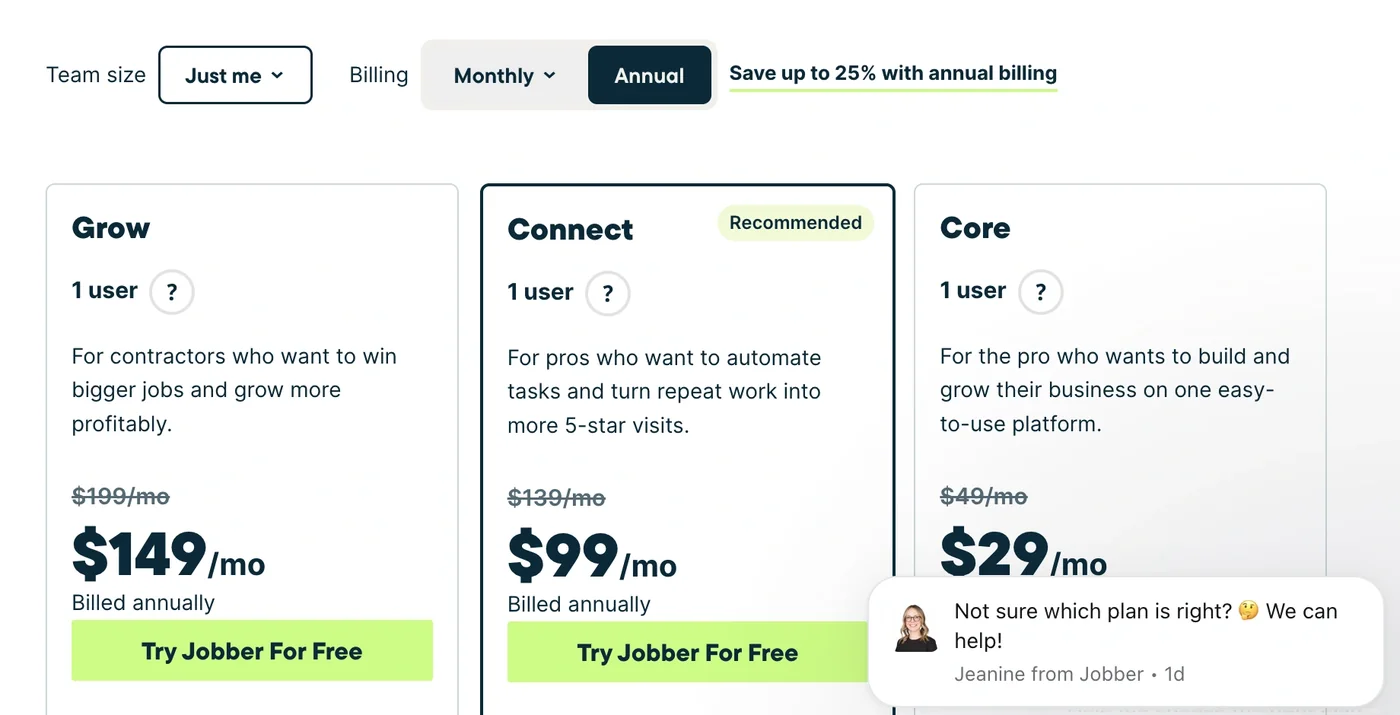
Best Plumbing Software in 2026: Ten Ranked Across Four Classes
A plumbing company’s work runs through four classes of software that do not substitute for each other, and it only buys two of them. Ten products, each with a published price or an explicit statement that the vendor publishes none.
Read Article Jul 31, 2026
 Tech Stack
NiceJob vs Birdeye 2026: Pricing, Contracts and Review Gating
One of these vendors puts its price on the page and its cancellation terms in writing. The other puts a form in front of both, and the complaint record is where its contract length shows up.
Read Article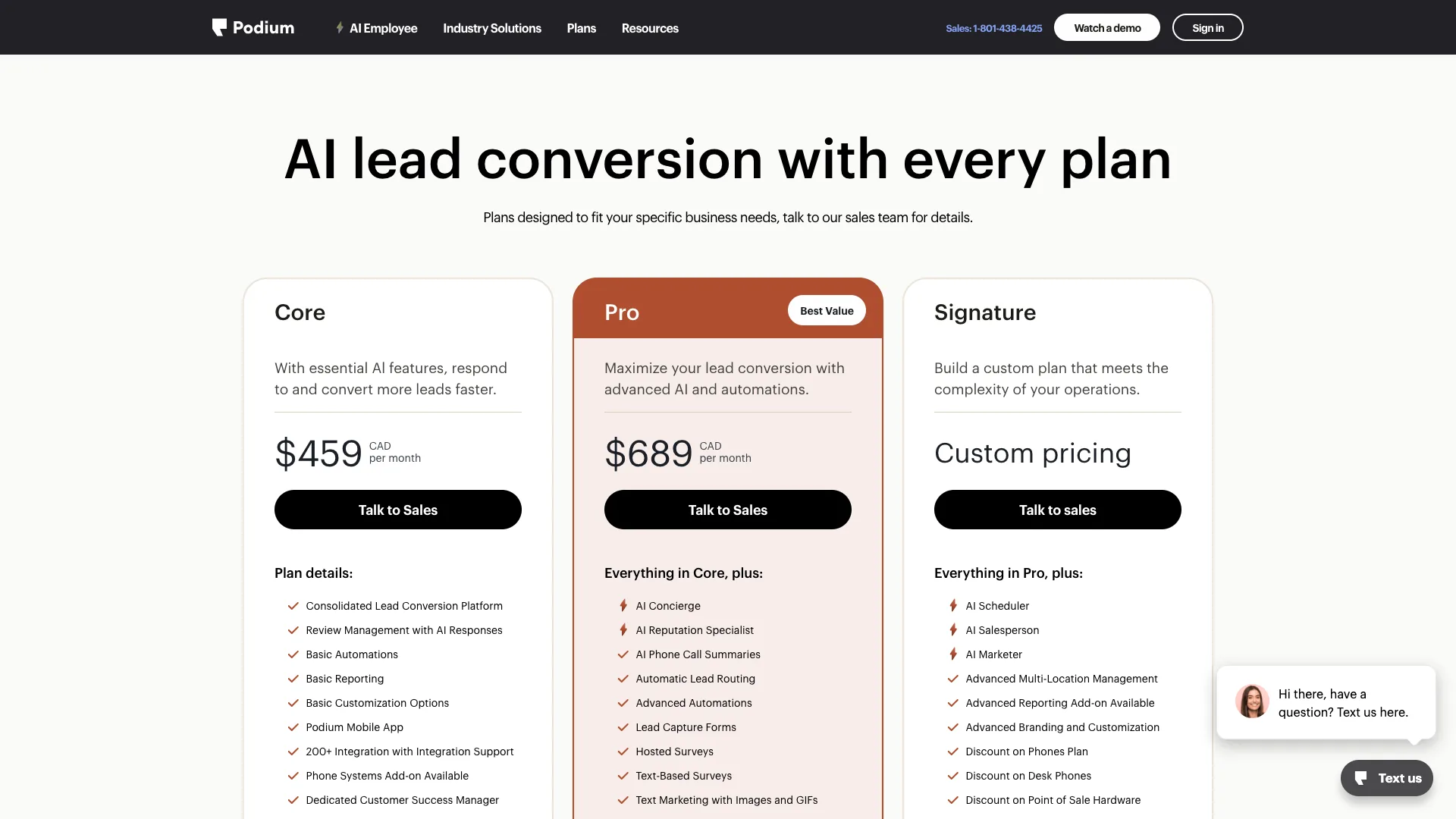 Jul 31, 2026
 Tech Stack
Podium vs Birdeye 2026: Pricing, Contracts and Review Gating
Only one of these two will tell you what it costs before a sales call, and even that number carries a carve-out aimed squarely at trade contractors.
Read Article Jul 31, 2026
 Tech Stack
Best Electrical Contractor Software 2026: 11 Ranked and Priced
An electrical contracting business makes two software purchases that do not substitute for each other, and every roundup answering this query covers only one of them. Eleven platforms, with a published price or an explicit statement that the vendor publishes none.
Read Article Jul 31, 2026
 Tech Stack
Best HVAC Software in 2026: Eleven Ranked Across Three Classes
An HVAC contracting business buys across three classes of software that do not substitute for each other, and every roundup answering this query covers only one of them. Eleven products, each with a published price or an explicit statement that the vendor publishes none.
Read Article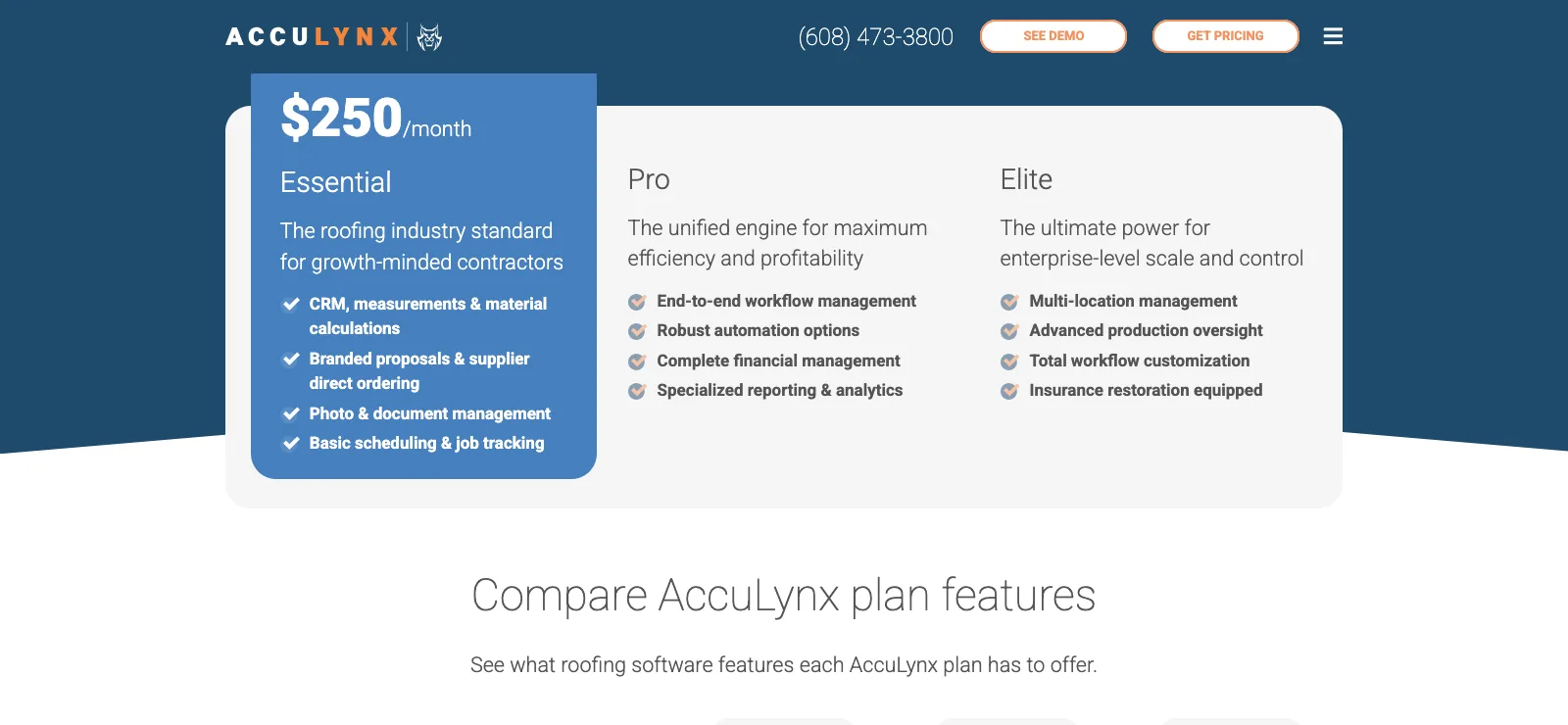 Jul 30, 2026
 Tech Stack
AccuLynx Pricing 2026: The Real Cost of a Quote-Gated Plan
One published figure, two blank plan cards, and a contract that says things the pricing page does not. A line-by-line breakdown of what AccuLynx really bills.
Read Article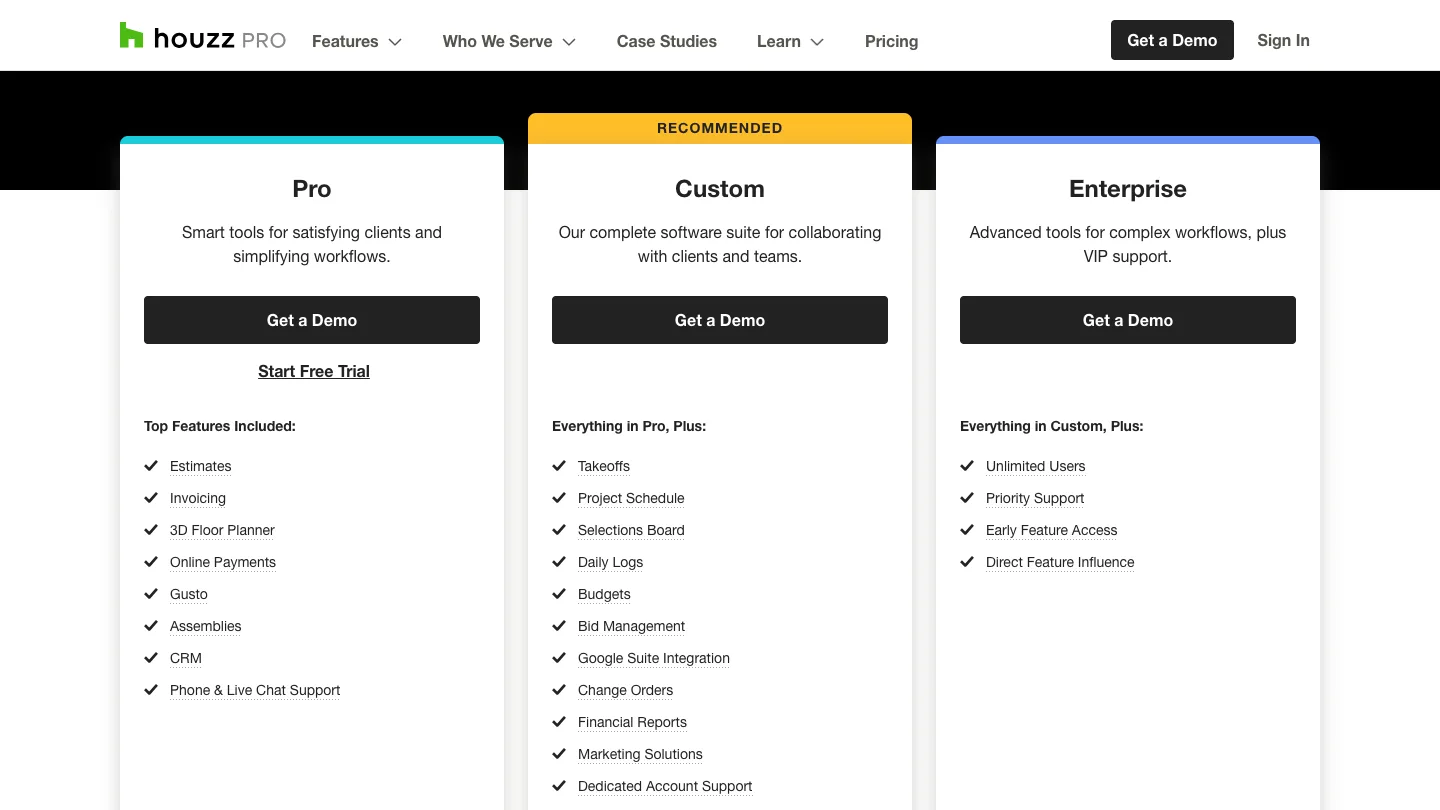 Jul 30, 2026
 Tech Stack
Houzz Pro Canada Review 2026: Pricing and Alternatives
Houzz Pro serves different pricing renderings. What Canadian buyers see, how GST/HST and payments work, what Custom gates, and what the annual contract commits you to.
Read Article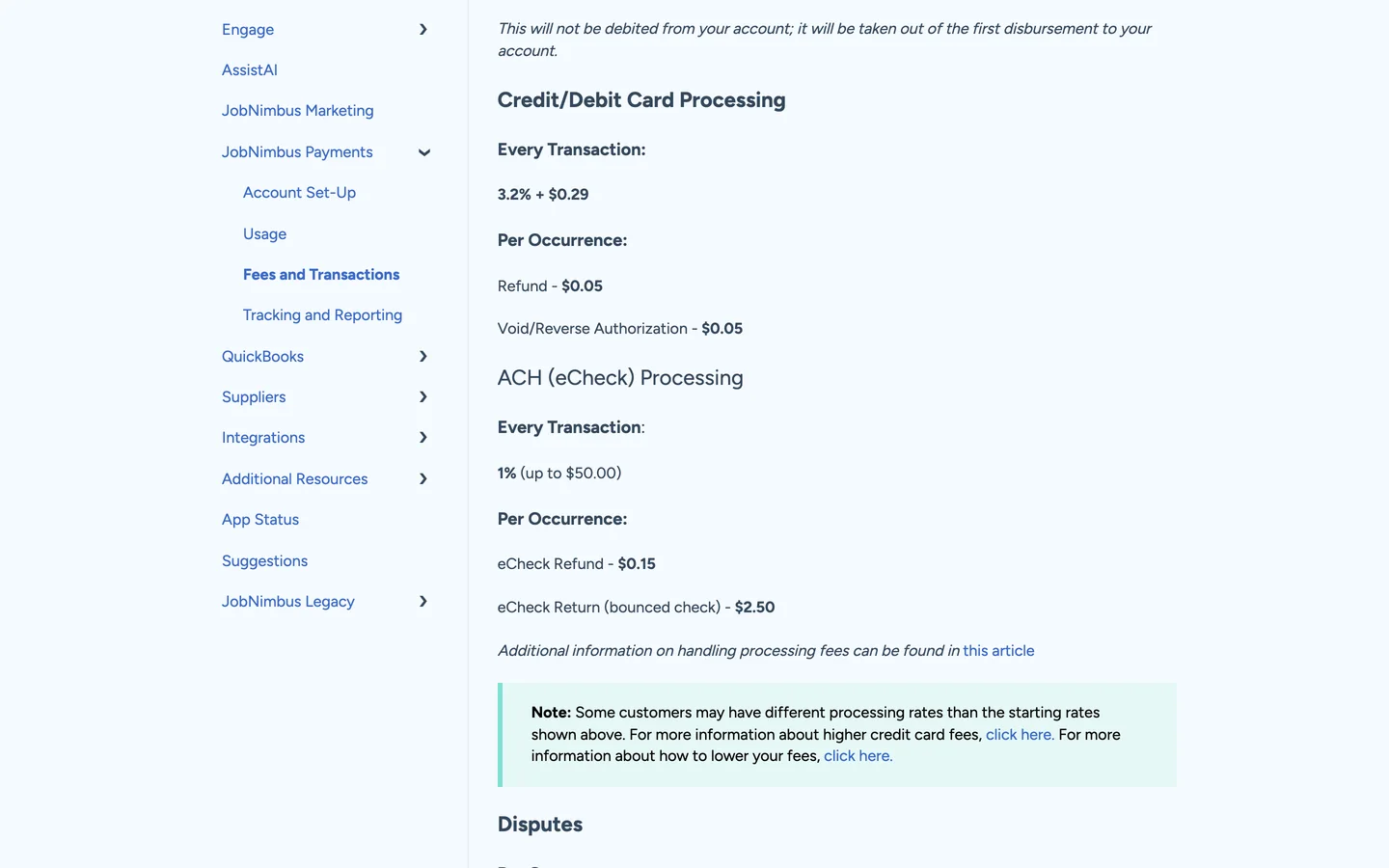 Jul 30, 2026
 Tech Stack
JobNimbus Pricing in 2026: What the Quote Does Not Cover
JobNimbus prints no figure on any of its four plans. So the only rate you can read before a sales call is the payments meter, and it is the biggest line on the bill.
Read Article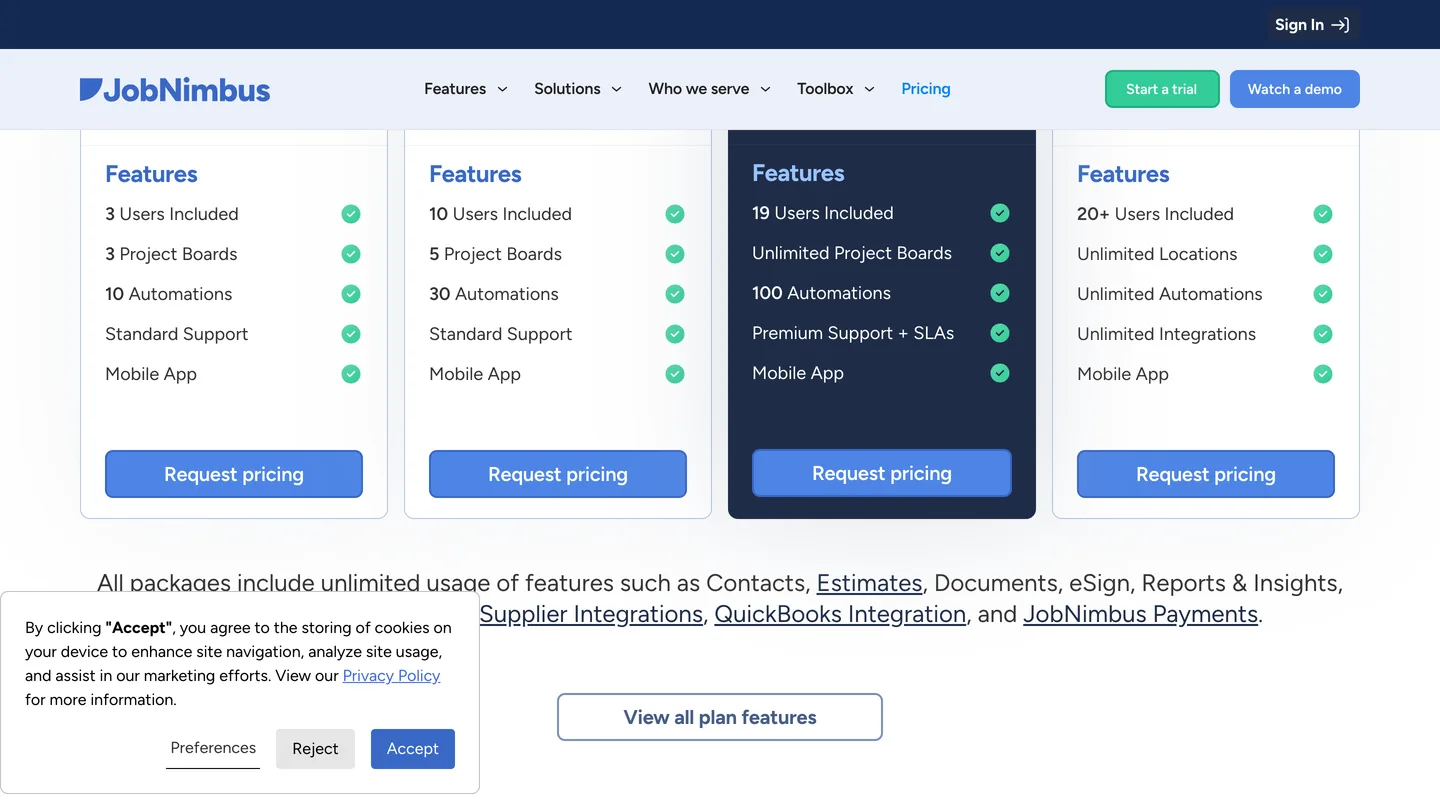 Jul 30, 2026
 Tech Stack
JobNimbus Review 2026: Pricing, Pros, Cons and Alternatives
JobNimbus rates 4.6 on Capterra and orders material straight from ABC Supply and SRS. But it publishes no price, and its supplement route carries a note.
Read Article Jul 30, 2026
 Tech Stack
BuildOps Review 2026: Pricing, Contract Terms and Alternatives
BuildOps runs commercial service and projects on one platform, and publishes no pricing at all. The billing unit, the 30-day data-export window, and who it suits.
Read Article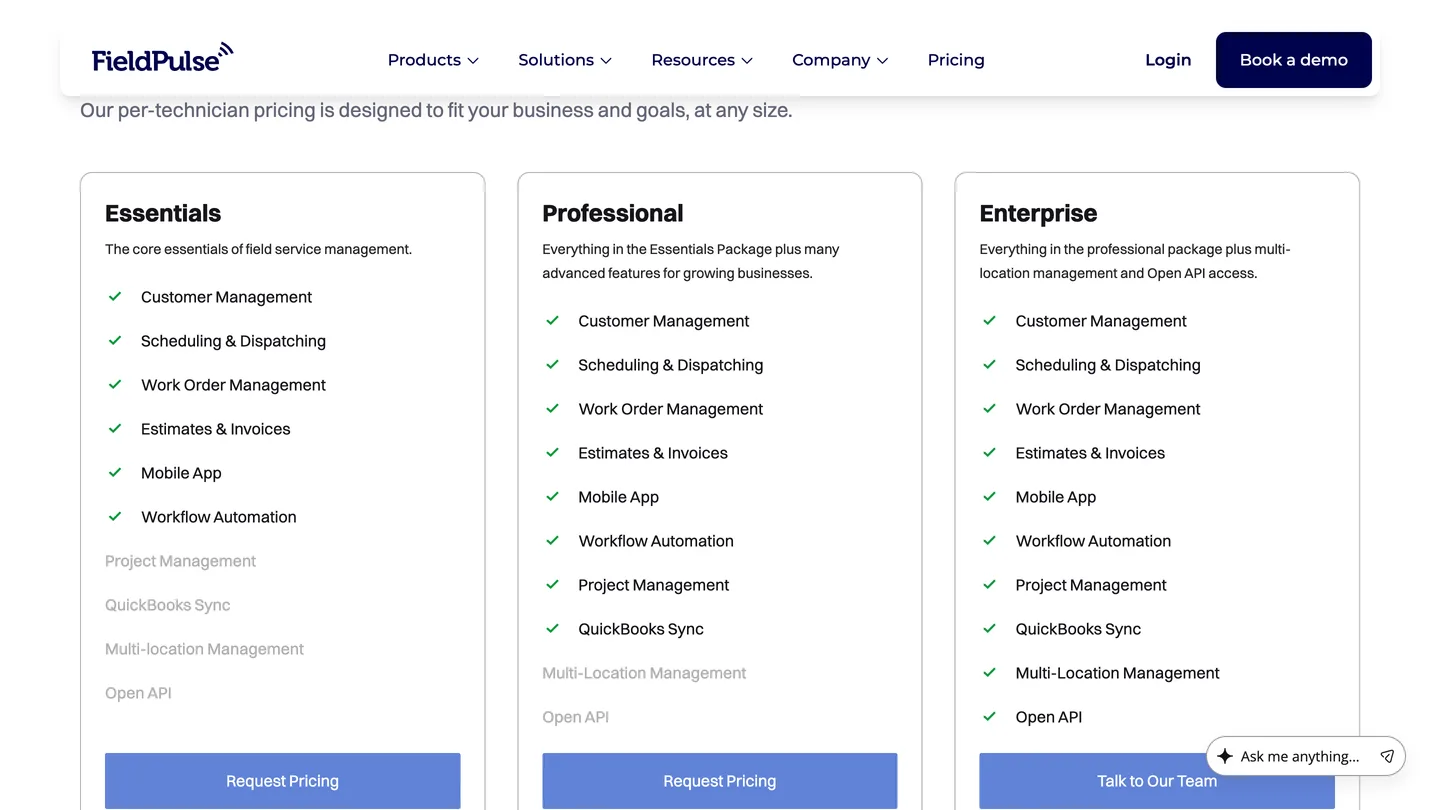 Jul 30, 2026
 Tech Stack
FieldPulse Review 2026: Pricing, Pros, Cons and Alternatives
FieldPulse rates 4.6 on Capterra and is the platform contractors name when they leave a bigger system. But it publishes no price, and the contract runs a year.
Read Article Jul 30, 2026
 Tech Stack
Service Fusion Review 2026: Pricing, Contract and Alternatives
Service Fusion bills flat per company with unlimited users, which is the best structural deal in field service software. The published plans, the contract behind the no-contract line, and the app score every other review gets wrong.
Read Article Jul 30, 2026
 Tech Stack
Knowify Review 2026: Pricing, Job Costing and Alternatives
Knowify rates 4.5 on Capterra and its weakest sub-score is features. What the $99 Core plan withholds, which way the QuickBooks sync really runs, and who should not buy it.
Read Article Jul 29, 2026
 Tech Stack
AccuLynx Review 2026: Pricing, Tier Gating, Alternatives
AccuLynx rates 4.6 across 846 reviews and now publishes an entry price. What that price omits, which tier holds the insurance workflow, and who should skip it.
Read Article Jul 29, 2026
 Tech Stack
Unitel Voice Review 2026: Pricing, Features and Alternatives
Unitel Voice rates 4.6 on Capterra and gives a one-truck shop a business number for $9.99 a month. The published plans, the cost per call, and what it won't do.
Read Article Jul 29, 2026
 Tech Stack
NiceJob vs Podium 2026: Pricing, Contracts and Review Gating
Both vendors print a price, at very different scale and in different currencies. The gap that matters is what Podium will not print: the billing unit, and whether a trade shop gets the number on the page.
Read Article Jul 28, 2026
 Tech Stack
CompanyCam Review 2026: Pricing, Pros, Cons and Alternatives
Every page ranking for CompanyCam still quotes a per-user price the vendor no longer charges. Here are the real plans, the seat math, and who should skip it.
Read Article Jul 28, 2026
 Tech Stack
NiceJob Review 2026: Pricing, Pros, Cons and Alternatives
NiceJob rates 4.9 on Capterra and refuses to gate negative reviews. Real plan pricing, the active-customer threshold nobody publishes, and who should skip it.
Read Article Jul 27, 2026
 Tech Stack
Buildertrend Review 2026: Pricing, Limits and Alternatives
Buildertrend rates 4.5 across 2,486 Capterra reviews and quotes against your revenue rather than your seat count. The workflows, the export problem, the alternatives.
Read Article Jul 27, 2026
 Tech Stack
CallRail Review 2026: Pricing, Pros, Cons and Alternatives
CallRail rates 4.5 on Capterra, and its tracking numbers port out free. But the two usage rates that decide your real bill are the two it does not print.
Read Article Jul 27, 2026
 Tech Stack
Roofr Review 2026: Pricing, Pros, Cons and Alternatives
Roofr rates 4.6 on Capterra and sells $13 measurement reports against a market charging triple. But it will not import a report from anywhere else.
Read Article Jul 25, 2026
 Tech Stack
Housecall Pro Review 2026: Pricing, Pros, Cons, Alternatives
Housecall Pro has the shortest learning curve in the category and the widest review spread. Real pricing, the Instapay math, and the migration trap to plan around.
Read Article Jul 24, 2026
 Tech Stack
Jobber Review 2026: Pricing, Pros, Cons and Alternatives
Jobber rates 4.6 on Capterra with the best mobile app in the category. Real plan pricing, the feature gating that changes your entry price, and who it suits.
Read Article Jul 23, 2026
 Tech Stack
ServiceTitan Review 2026: Pricing, Pros, Cons, Alternatives
ServiceTitan rates 4.3 on Capterra but its weakest score is value for money. Real reported pricing, the 12-month contract, the exit fees, and who it actually suits.
Read Article Jun 3, 2026
 Tech Stack
HVAC Online Scheduling: The 43% Losing After-Hours Bookings
HVAC leads every trade on online booking at just 56.7%, which still leaves 43% of sites forcing an after-hours customer to wait for a business-hours phone call.
Read Article