LMN Review 2026: Pricing, Pros, Cons, Alternatives
LMN starts at $297/month. What each tier gates, the 10 limitations reviewers name, and 4 alternatives with published prices.
Disclosure This article features tools from our brand partners. If you choose to use them, we may receive compensation at no extra cost to you.
Our editorial choices are independent of these affiliate arrangements. Read our full affiliate disclosure.
Fervor is a CRO and web design studio, not a software reseller, and no vendor paid for placement here or for a kinder verdict. Affiliate links are flagged where they appear, and they never change what we report.
Page at a glance
LMN is budget-first estimating for landscape contractors, where the software refuses to let you price a job until you've told it what your overhead costs. It starts at $297/month per account, including 1 office/crew lead license and 5 crew member licenses. LMN sells two different kinds of seat and counts them separately. Starter bundles 1 office/crew lead license with 5 crew member licenses at $297/month, and Professional bundles 3 office/crew lead licenses with 15 crew member licenses at $648/month. Both tiers carry the same footnote, that 'Additional licenses are available for a fee', and the vendor does not publish what an extra office seat or an extra crew seat costs. Enterprise is described only as starting at 100 users. So the published figure is a floor for a specific headcount shape, not a price for your headcount, and a contractor with 4 office staff on the Starter bundle is already outside the quoted number. It fits a landscape contractor running roughly 3 to 15 crews, somewhere between 10 and 50 employees, on a mix of recurring residential and commercial maintenance contracts plus design-build installation work, where the owner is trying to stop guessing at margin and start bidding off a real overhead recovery number. It's the wrong buy for A solo operator or a two-person mowing outfit doing residential maintenance, under roughly $250K in revenue, because Starter is $297/month before an unpriced onboarding fee, which is more than a full-time seasonal helper costs for a week. The tier is described as fitting 'companies with less than 10 employees', but the budget-based estimating engine only pays for itself when there's enough overhead to recover and enough crew hours to cost. And at two people the owner already knows where the time went. A free trial reviewer said it directly: 'My only con would be that i cant really afford it at this current time in my buisness.' Alternatives that publish their prices are SingleOps from $220/month, Jobber from $24/month, Service Autopilot from $49/month. Two priced tiers, ten evidenced gaps and four alternatives, three of which publish a figure.
What you're buying with LMN, and what the demo skips
LMN earns its money with a landscape contractor running roughly 3 to 15 crews, somewhere between 10 and 50 employees, on a mix of recurring residential and commercial maintenance contracts plus design-build installation work, where the owner is trying to stop guessing at margin and start bidding off a real overhead recovery number. If that's you, it does the job. The sections below are the parts worth checking before you sign. But the fit is narrower than the marketing suggests, and the price isn't the whole cost.
It starts at $297/month. And pricing was verified on 7 August 2026, so you can check every figure below in a browser tab.
| Pricing model | Published tiers |
|---|---|
| Entry price | $297/month |
| Users | LMN sells two different kinds of seat and counts them separately. Starter bundles 1 office |
| Ownership | [object Object] |
| Best fit | a landscape contractor running roughly 3 to 15 crews, somewhere between 10 and 50 employees, on a mix of recurring residential and commercial maintenance contracts plus design-build installation work, where the owner is trying to stop guessing at margin and start bidding off a real overhead recovery number. |
| Accounting sync | QuickBooks Online (two-way), QuickBooks Desktop (two-way), Xero (none) |
What works
- The budget comes first, and the estimate is derived from it rather than guessed alongside it
- Crews clock in from the LMN Crew app and hours land against the job, not against a generic timesheet
- Real-time job costing is a Professional feature, so the Starter tier costs jobs after the fact
- LMN Pay runs on Stripe and recently replaced the older Fiserv and Payrix rails
- Scheduling handles multiple departments running on different rhythms, and it's the module reviewers most often want improved
What does not
- The onboarding fee is mandatory, and the vendor never says what it costs
- Cancelling is no longer something you can do inside the software
- Sixty days written notice on an auto-renewing term, with a pre-agreed 5% annual increase
- The integration directory is five partners, and two of them are Granum's own products
- Zapier, the escape hatch for everything unintegrated, sits behind the $648 tier
LMN is budget-first estimating for landscape contractors, where the software refuses to let you price a job until you've told it what your overhead costs. It sells to Landscaping contractors, and the shape of the product follows from that: This is the reason LMN exists and the reason people tolerate the learning curve. The contractor builds an annual budget with overhead recovery in it, and every estimate then prices off that budget, so a bid carries the company's real cost of doing business rather than a remembered hourly rate. Reviewers describe the effect in almost identical terms. A president with two years on the platform says 'It has given us the confidence to bid without questioning the numbers.' An owner says it 'Really opened my eyes to my true numbers.' And the same mechanism produces the most common complaint, because forcing the breakdown is what makes it slow.
Ownership matters here more than it usually does. LMN is owned by [object Object], so weigh roadmap risk alongside the feature list. An independent product can be bought and folded into somebody else's plan two years after you sign.
Who should be shortlisting LMN
It fits a landscape contractor running roughly 3 to 15 crews, somewhere between 10 and 50 employees, on a mix of recurring residential and commercial maintenance contracts plus design-build installation work, where the owner is trying to stop guessing at margin and start bidding off a real overhead recovery number. That's the half most reviews print. Here's the other half, which is the one worth your time.
Don't buy it if you're A solo operator or a two-person mowing outfit doing residential maintenance, under roughly $250K in revenue. Starter is $297/month before an unpriced onboarding fee, which is more than a full-time seasonal helper costs for a week. The tier is described as fitting 'companies with less than 10 employees', but the budget-based estimating engine only pays for itself when there's enough overhead to recover and enough crew hours to cost. And at two people the owner already knows where the time went. A free trial reviewer said it directly: 'My only con would be that i cant really afford it at this current time in my buisness.' Look at Jobber instead.
Don't buy it if you're A tree care or plant health care company that doesn't do landscape installation. Granum sells a separate product for exactly this work. SingleOps is positioned as 'Our secure and reliable software platform dedicated to arborists' and starts at $220/month billed monthly, which is $77/month less than LMN Starter. So buying LMN for tree care means paying more for a product the same vendor has told you is aimed elsewhere. Look at SingleOps instead.
Don't buy it if you're A contractor whose books are on Xero or Sage, or who runs payroll through a system that needs a direct connection. The integrations directory lists QuickBooks Online and Desktop as the only accounting destination. There's no Xero path and no Sage path, and no payroll provider is named as a partner. And everything else is a Zapier build, and Zapier isn't available on the Starter tier. So switching your accounting platform to accommodate your field software is the tail wagging the dog. Look at Aspire instead.
Don't buy it if you're A buyer who needs to be able to leave quickly, for example a company being sold, a seasonal startup testing a first system, or an owner running a genuine head-to-head trial against another platform. The exit is slow by design. Fees are 'non-cancelable' and 'non-refundable', the term auto-renews unless you give sixty days written notice, and cancellation was deliberately removed from the app so it has to go through Support or an Account Manager. And none of that is unusual in SaaS contracts, but it's the opposite of what a buyer who wants optionality should sign. Look at Jobber instead.
What LMN costs
You can read LMN's prices without booking anything. So the headline figure is the easy part. What the entry tier quietly leaves out is the question.
| Tier | Price | Billing unit | What it unlocks |
|---|---|---|---|
| LMN Starter | $297/month | per account, including 1 office/crew lead license and 5 crew member licenses | Real-Time Job Costing, Equipment & Material Costing, Files & Photos on Documents, Zapier Integrations |
| LMN Professional | $648/month | per account, including 3 office/crew lead licenses and 15 crew member licenses | Enterprise Launch Package, Multi-location management, 2000+ SMS/mo |
| LMN Enterprise | Quote only | per account, starting at 100 users | Nothing beyond the tier below |
LMN sells two different kinds of seat and counts them separately. Starter bundles 1 office/crew lead license with 5 crew member licenses at $297/month, and Professional bundles 3 office/crew lead licenses with 15 crew member licenses at $648/month. Both tiers carry the same footnote, that 'Additional licenses are available for a fee', and the vendor does not publish what an extra office seat or an extra crew seat costs. Enterprise is described only as starting at 100 users. So the published figure is a floor for a specific headcount shape, not a price for your headcount, and a contractor with 4 office staff on the Starter bundle is already outside the quoted number.
There is a discount for paying annually up front: LMN publishes no annual discount. Both priced tiers are shown once, as '$297/mo, billed monthly*' and '$648/mo, billed monthly*', with no monthly-versus-annual toggle on the page. This is worth noticing because Granum's sibling product SingleOps, on the same website and the same template, does publish both, showing SingleOps Essential at '$220/mo, billed monthly' next to '$200/mo, billed annually'. The annual column exists in the company's pricing system. LMN just does not show one. And an annual prepay discount tells you an annual commitment exists, which is worth knowing before anyone mentions a term length out loud.
What a LMN quote leaves out
Payment processing. Ask for the LMN Pay card rate and the ACH rate in writing before you sign, and ask specifically whether the Stripe transaction fee is charged on the invoice total or on the invoice total plus any processing fee you pass through. The vendor's own help article says the Stripe fee 'will be applied to all transactions on the full amount that you receive (invoice amount + Stripe Processing fee)', so surcharging your customer also enlarges the base the processor charges you on. And the marketing page declines to give a number at all, saying only that 'Exact rates are available when you connect your account or speak with our team.'
Implementation and onboarding. An onboarding fee is mandatory and unpriced. Every headline price on the pricing page carries an asterisk, and the asterisk resolves to a single line at the bottom of the plan comparison: '*After a one-time onboarding fee'. The page also names three separate onboarding products, Starter Launch, Professional Launch and Enterprise Launch, and attaches a dollar figure to none of them. So the real first-year cost of Starter is $297/month multiplied by twelve plus an unknown, and the vendor has structured the page so the unknown is the only thing you cannot calculate.
Minimum term. Granum's terms of use set a floor rather than a fixed term, stating that 'in no event will a subscription term be shorter than thirty (30) days'. The actual committed term lives on your order form, not on the website, and the LMN help centre confirms this by saying cancellation terms including 'treatment of annual commitments' are 'based on your subscription agreement and order form'. A buyer reading the pricing page sees monthly billing and could reasonably assume a monthly commitment. The paper does not promise one.
Getting out. There is no early exit and no refund. Section 5.1 of the terms of use states that 'payment obligations are non-cancelable and fees paid are non-refundable'. Combined with the 60-day non-renewal notice, a contractor who decides in month two that the software is wrong for the business still owes the balance of the term and then has to give notice before the term that follows.
Auto-renewal. Subscriptions renew automatically and the notice window is long. Section 11.1 states that 'subscriptions will automatically renew for additional periods equal to the expiring subscription term or one year' unless 'Customer gives Granum written notice of non-renewal at least sixty (60) days before the end'. Section 5.1 also reserves a price increase at each renewal, and the customer pre-agrees to it: 'Customer agrees to an annual increase in fees for subscription services of up to 5%'. Miss the 60-day window on a one-year term and you are committed for another year at a rate that can be 5% higher than the one you signed.
Modules sold separately. , , . The LMN figure worth writing down is the one with your day-one modules already in it, not the headline tier.
Third-party services you will also pay for. . These are not on LMN's invoice, and they are still part of what this decision costs you every month.
One oddity, filed under things nobody mentions on a demo. LMN publishes its recurring prices in full and hides the one number that is hardest to recover from. Every headline figure is footnoted '*After a one-time onboarding fee', and the pricing page names three separate onboarding products, Starter Launch, Professional Launch and Enterprise Launch, without a dollar figure on any of them. So the page reads as transparent pricing precisely because the transparent part is the part you can compare, while the unpriced part is the part that lands in month one. Never compare LMN to another platform on the monthly figure alone. So get the Launch fee in writing, add it to twelve months of subscription, and compare total first-year cost. A contractor who benchmarks $297 against a competitor's monthly rate is comparing an incomplete number to a complete one and will draw the wrong conclusion.
Everything that is not the LMN subscription
The subscription is the part everyone quotes. These are the lines that land afterwards, and the ones we could not find are named as unpublished rather than left blank.
Sold separately. , , . Price the configuration you'll really run, because an add-on you need on day one is part of the price.
Third-party services you'll also pay for. . None of these are on LMN's invoice, and all of them are part of what this decision costs every month.
"LMN LMN Starter is $297/month, per account, including 1 office/crew lead license and 5 crew member licenses."
LMN pricing page (2026)
"LMN LMN Professional is $648/month, per account, including 3 office/crew lead licenses and 15 crew member licenses."
LMN pricing page (2026)
"LMN sells two different kinds of seat and counts them separately. Starter bundles 1 office/crew lead license with 5 crew member licenses at $297/month, and Professional bundles 3 office/crew lead licenses with 15 crew member licenses at $648/month. Both tiers carry the same footnote, that 'Additional licenses are available for a fee', and the vendor does not publish what an extra office seat or an extra crew seat costs. Enterprise is described only as starting at 100 users. So the published figure is a floor for a specific headcount shape, not a price for your headcount, and a contractor with 4 office staff on the Starter bundle is already outside the quoted number."
LMN pricing page (2026)
The six workflows you pay for
Feature totals are noise. So a shop in this category lives or dies on six things, and those are the six to grade, and each one below carries the evidence it's graded on.
The budget comes first, and the estimate is derived from it rather than guessed alongside it This is the reason LMN exists and the reason people tolerate the learning curve. The contractor builds an annual budget with overhead recovery in it, and every estimate then prices off that budget, so a bid carries the company's real cost of doing business rather than a remembered hourly rate. Reviewers describe the effect in almost identical terms. A president with two years on the platform says 'It has given us the confidence to bid without questioning the numbers.' An owner says it 'Really opened my eyes to my true numbers.' And the same mechanism produces the most common complaint, because forcing the breakdown is what makes it slow. And an office operations manager, environmental services, Less than 6 months on the platform, writing on 2026-05-06, reports it the same thing: "The estimates force you to break down so much that it can be unhelpful at times."
Crews clock in from the LMN Crew app and hours land against the job, not against a generic timesheet The crew app is how estimated hours meet actual hours, which is what makes job costing possible at all. A director of operations describes the mechanic: 'The mobile app allows the crews to clock in and out directly from job sites, making it easy to accurately assign labour hours to the correct project.' The weak point is adoption rather than concept. And the app itself carries a 3.3 App Store rating, and one reviewer flagged a display problem where 'A team at a job site will see 1.5 hours' when the man-hour figure was expected to read differently.
Real-time job costing is a Professional feature, so the Starter tier costs jobs after the fact The pricing page puts 'Real-Time Job Costing' and 'Equipment & Material Costing' in the Professional column, and the help centre confirms the upgrade motivation, describing real-time job costing as the ability to 'Track estimated vs. actual performance while jobs are in progress'. That distinction matters more than it sounds. Finding out a job went over on day two lets you fix it. Finding out at invoicing lets you record it. So a contractor buying Starter specifically to control margin is buying the reporting version of that capability, not the intervention version.
LMN Pay runs on Stripe and recently replaced the older Fiserv and Payrix rails Payments are native through LMN Pay, and the vendor says 'Most deposits arrive within 2 business days' with card, ACH and debit supported. And the help centre still carries live articles for the previous processors, including 'Payment Voids & Refunds | Fiserv & Payrix' alongside the newer Stripe articles, which tells you a processor migration happened recently enough that both sets of documentation are in service. One reviewer flagged the onboarding cost of that: 'The amount of time it took for LMN Pay. It took a while for my company to be set up.' A senior accountant, real estate, Less than 6 months on the platform, puts it it plainly: "The amount of time it took for LMN Pay. It took a while for my company to be set up."
Scheduling handles multiple departments running on different rhythms, and it's the module reviewers most often want improved An office operations manager praises 'The ease of scheduling multiple departments that all run differently', which is the real problem for a company doing weekly maintenance routes, one-off installs and snow response out of the same crew pool. But this is also where the complaints cluster. An owner switching from another system said 'Scheduling jobs seems to be a pain compared to last CRM. Needs simplified.' And another asked for colour coding: 'I'd love to be able to use colors to quickly tell apart weekly.' An owner, facilities services, Less than 6 months on the platform, describes it it plainly: "Scheduling jobs seems to be a pain compared to last CRM. Needs simplified."
Support is the single most praised thing about LMN, and it's also the thing that's priced separately Nearly every positive review names a person or the team rather than a feature. One owner says 'Customer service is second to none and the whole team is super friendly.' Another calls the onboarding and continued support 'unmatched compared to other big players.' And the commercial structure behind that is the Launch package, sold as Starter Launch, Professional Launch or Enterprise Launch and charged as the one-time onboarding fee. So the experience people rate highly is a paid product, and at least one reviewer got a thinner version of it: 'Felt as if on boarding was very rushed.'
LMN per trade, not per company size
Fit differs by trade rather than by company size alone, and a blended paragraph hides that. Here is the split for the trades this one sells to.
Landscaping. The workflow that decides it is the budget comes first, and the estimate is derived from it rather than guessed alongside it, and the shop profile that gets value is established landscape contractor, 10 to 50 employees, residential and commercial maintenance plus design-build doing residential and commercial and service work. Where it stops being a fit is A solo operator or a two-person mowing outfit doing residential maintenance, under roughly $250K in revenue.
The LMN integration that decides everything else
QuickBooks Online connects both ways, on every plan. QuickBooks Desktop connects both ways, on every plan. Xero connects, on every plan. Your costs map through cost codes, so test yours against your own chart of accounts before you commit. A code your books don't recognise is how a labour charge quietly lands somewhere useless.
Past those, the road ends. Xero and Sage, Dedicated payroll providers such as ADP or Gusto, Google Calendar and Microsoft 365 calendar, Review and reputation platforms do not connect. So if your books run on an ERP rather than the platforms named above, weigh that before anything else.
Beyond accounting it connects to Stripe (The payments rail underneath LMN Pay, supporting credit card, ACH and debit, with payouts and fees visible inside LMN under a Payout tab. Stripe is not an integration the customer chooses so much as the infrastructure LMN's own payments module runs on.), Greenius by Granum (Granum's own crew training and safety platform, connecting to both LMN and LMN Crew so crews reach training courses from the same app they clock into jobs with. It is listed as a paid add-on against all three LMN tiers with no price published.), Beam AI (AI-driven property measurement and takeoff, pulling site dimensions into LMN for bidding. This is the only genuinely third-party, non-accounting, non-Granum integration on the directory.), Zapier (The catch-all bridge to anything LMN does not connect to natively, named on the pricing page as a Professional-tier feature and therefore unavailable on Starter at $297/month.). A public API exists: LMN publishes no public API or developer documentation on its site, and the integrations page does not mention one. The stated answer for anything outside the five named partners is Zapier, framed as what to use when you 'need to push LMN data into a tool we don't integrate with directly'. Since Zapier appears in the Professional feature list rather than the Starter list, the practical position is that a $297/month customer has no programmatic route out of the platform at all.
What happens when LMN breaks
Support is the line item nobody prices and everybody eventually needs. Onboarding for LMN: An onboarding fee is mandatory and unpriced. Every headline price on the pricing page carries an asterisk, and the asterisk resolves to a single line at the bottom of the plan comparison: '*After a one-time onboarding fee'. The page also names three separate onboarding products, Starter Launch, Professional Launch and Enterprise Launch, and attaches a dollar figure to none of them. So the real first-year cost of Starter is $297/month multiplied by twelve plus an unknown, and the vendor has structured the page so the unknown is the only thing you cannot calculate.
The review corpus we read on 7 August 2026 carries no consistent signal on response times either way, so treat support as untested rather than good. Open a real ticket during the trial and time the reply, because that is the number no pricing page gives you.
What happens when you want to leave LMN
Nobody reads this section before they buy, and it's the one that costs money afterwards. Four terms decide what leaving looks like.
Minimum term. Granum's terms of use set a floor rather than a fixed term, stating that 'in no event will a subscription term be shorter than thirty (30) days'. The actual committed term lives on your order form, not on the website, and the LMN help centre confirms this by saying cancellation terms including 'treatment of annual commitments' are 'based on your subscription agreement and order form'. A buyer reading the pricing page sees monthly billing and could reasonably assume a monthly commitment. The paper does not promise one.
Auto-renewal. Subscriptions renew automatically and the notice window is long. Section 11.1 states that 'subscriptions will automatically renew for additional periods equal to the expiring subscription term or one year' unless 'Customer gives Granum written notice of non-renewal at least sixty (60) days before the end'. Section 5.1 also reserves a price increase at each renewal, and the customer pre-agrees to it: 'Customer agrees to an annual increase in fees for subscription services of up to 5%'. Miss the 60-day window on a one-year term and you are committed for another year at a rate that can be 5% higher than the one you signed.
Early termination. There is no early exit and no refund. Section 5.1 of the terms of use states that 'payment obligations are non-cancelable and fees paid are non-refundable'. Combined with the 60-day non-renewal notice, a contractor who decides in month two that the software is wrong for the business still owes the balance of the term and then has to give notice before the term that follows.
Payment processing. Ask for the LMN Pay card rate and the ACH rate in writing before you sign, and ask specifically whether the Stripe transaction fee is charged on the invoice total or on the invoice total plus any processing fee you pass through. The vendor's own help article says the Stripe fee 'will be applied to all transactions on the full amount that you receive (invoice amount + Stripe Processing fee)', so surcharging your customer also enlarges the base the processor charges you on. And the marketing page declines to give a number at all, saying only that 'Exact rates are available when you connect your account or speak with our team.'
A tangent, but stay with it. LMN deliberately removed the ability to cancel from inside the product. The help centre says plainly that upgrades, downgrades and cancellations 'are no longer self-serve in LMN' and that the in-app page is 'for visibility and billing portal access only'. The article then walks through what happens instead, where a team member will 'Review your current term and renewal date' and 'Confirm any outstanding invoices or balances' before processing anything. The framing is helpful and the effect is a mandatory save conversation with a person whose targets depend on the answer. Send your non-renewal notice in writing by email regardless of what the phone conversation concludes, so the sixty-day clock has an unambiguous timestamp. And the help article promises 'written confirmation of your cancellation date', so ask for that document and keep it.
"I wasn't expecting the price to be in American dollars, as it is quite a bit more."
Capterra, Andrew H. (1-23)
"It is extremely clicky. It seems some of the workflows are almost too involved."
Capterra, Brent T. (2-12)
"The complexity of the system. It is not as friendly as other apps to learn on my own."
Capterra, Carlos A. (2-11)
The LMN problems that survive onboarding
Read this section with your own workflow in mind. Half of what follows won't matter to you, and the other half might be the reason you pick something else.
The onboarding fee is mandatory, and the vendor never says what it costs Both published prices carry an asterisk that resolves to '*After a one-time onboarding fee'. The pricing page goes further and names three distinct onboarding products, Starter Launch, Professional Launch and Enterprise Launch, without pricing any of them. That's a deliberate structure. The recurring number is transparent so the page reads as honest pricing, and the one-time number that could easily equal several months of subscription stays behind a demo booking. So you can't build a first-year budget from this page. Before you book the demo, email and ask for the Launch fee for your tier as a flat number, in writing. If the answer is a range, ask what moves it to the top of the range. And add the fee to twelve months of subscription and compare that total against alternatives, because comparing $297 against a competitor's monthly rate is comparing an incomplete number.
Cancelling is no longer something you can do inside the software LMN removed subscription changes from the app. The help centre is explicit that 'Changes to your subscription package itself (upgrades, downgrades, or cancellations) are no longer self-serve in LMN' and that 'The in-app Subscription page is for visibility and billing portal access only'. So to cancel you gather your account details and contact Support or your Account Manager, who will 'Review your current term and renewal date' and 'Confirm any outstanding invoices or balances' before anything happens. Note the asymmetry. Upgrades also route through a human, but a save conversation on an upgrade costs you nothing, while a save conversation on a cancellation is the entire point of routing it through a human. Put your renewal date and a date 75 days before it into a calendar the day you sign. And send the non-renewal notice by email so you have a timestamp, and ask Support to reply with the written cancellation confirmation the help article promises.
Sixty days written notice on an auto-renewing term, with a pre-agreed 5% annual increase Granum's terms auto-renew the subscription 'for additional periods equal to the expiring subscription term or one year' unless you give 'written notice of non-renewal at least sixty (60) days before the end'. Section 5.1 then has you pre-agree to the price rising: 'Customer agrees to an annual increase in fees for subscription services of up to 5%.' Fees are also 'non-cancelable' and 'non-refundable'. Those three clauses compound. So a missed notice window on an annual term commits you to twelve more months at a higher rate with no refund available. Ask for your committed term in writing before signing, because the website's 'billed monthly' language describes the invoice cadence and not the commitment. Then ask whether the 5% escalator can be struck or capped for the first renewal, which is a normal thing to negotiate on a multi-year order form.
The integration directory is five partners, and two of them are Granum's own products LMN's integrations page names five things: Greenius by Granum, QuickBooks Online and Desktop, Stripe as the engine behind LMN Pay, Beam AI for measurement takeoffs, and Zapier. Greenius is a sibling product Granum sells you, and Stripe is the rail underneath LMN's own payments module rather than a third party you chose. So the genuinely external, non-Granum, non-payment integrations number two: QuickBooks and Beam AI. And everything else routes through Zapier, which the page frames as the answer to needing 'to push LMN data into a tool we don't integrate with directly'. Write down every tool you currently pay for, then check each one against those five names. And anything not on the list is a Zapier build you own and maintain, and Zapier isn't available on the Starter tier at all.
Zapier, the escape hatch for everything unintegrated, sits behind the $648 tier The Professional tier's feature list is 'Everything in Starter, plus: Real-Time Job Costing, Zapier Integrations, Files & Photos on Documents' and equipment and material costing. But Starter is the tier a smaller contractor buys, and it's also the tier with the thinnest native integration surface, which means the customer with the greatest need to bridge to outside tools is the one who can't. And moving up costs 118% more per month, from $297 to $648, and the jump is bundled, so a contractor who only wants the Zapier connection buys real-time job costing and the larger seat block along with it. So if any part of your stack depends on a Zapier bridge, price the comparison at $648/month rather than $297/month from the start, and check whether a competitor covers that integration natively at a lower tier.
Reviewers consistently describe a real learning curve, and several say the estimating depth works against them Across the Capterra set the same note repeats from very different roles. A COO writes about 'The complexity of the system. It is not as friendly as other apps to learn on my own.' An owner calls it 'extremely clicky' and says 'some of the workflows are almost too involved'. An office operations manager finds that 'The estimates force you to break down so much that it can be unhelpful at times.' A two-year president still describes it as 'Often a bit chunky. Flow isn't there yet.' And the budget-first design is the product's genuine strength and the source of the friction at the same time, because forcing full cost breakdown is exactly what produces the better margin number. But an office operations manager, environmental services, Less than 6 months on the platform, writes it differently: "The estimates force you to break down so much that it can be unhelpful at times." Budget real staff hours for setup rather than assuming the onboarding fee covers it, and identify one person in the office who will own the price list. And several reviewers who rated the product five stars still described setup as time consuming.
You're billed in US dollars regardless of where you operate LMN began as a Canadian company, Landscape Management Network Inc., and a Canadian reviewer records the surprise plainly: 'I wasn't expecting the price to be in American dollars, as it is quite a bit more.' The pricing page's own revenue calculator asks for 'Average Job Size (USD)', which confirms the currency, but the plan cards themselves show a bare dollar sign with no currency label next to it. So a Canadian contractor reading $297 and mentally budgeting $297 is understating the real cost by whatever the exchange rate is doing that month. On 2026-01-23, an owner, construction, Less than 6 months on the platform, describes it: "I wasn't expecting the price to be in American dollars, as it is quite a bit more." If you operate outside the United States, confirm the billing currency in writing and re-run your budget at the converted rate plus your card's foreign transaction fee. Then check whether the 5% renewal escalator applies on top of currency movement or instead of it.
Passing the processing fee to your customer enlarges the base Stripe charges you on LMN Pay lets you add a processing fee line to invoices, and the help article is careful to say that money 'is paid by your customer directly to you' and 'DOES NOT go directly to Stripe'. The catch is in the next section. The Stripe transaction fee 'will be applied to all transactions on the full amount that you receive (invoice amount + Stripe Processing fee), regardless of whether the LMN Pay Powered by Stripe Processing Fee is enabled.' So surcharging recovers less than the surcharge percentage suggests, because you pay the processor on the surcharge too. And LMN doesn't publish the Stripe rate anywhere, which makes the size of that gap impossible to calculate from public material. Get the card and ACH rates in writing, then model a typical invoice with and without the surcharge before you turn it on. And check your state or province, because surcharging rules aren't uniform and the software won't police them for you.
Your data lives for thirty days after termination, then it's gone Section 11.5 of Granum's terms states that after a thirty day period, 'we will have no obligation to maintain or provide Customer Data, and will thereafter delete or destroy all copies'. And thirty days is a short window for a landscape contractor to extract years of estimates, price lists, job cost history and timesheets, particularly when that window opens in the middle of a season and the office staff who know the system are also running the schedule. The terms describe deletion as an obligation the vendor is released from, not an export service it provides. Ask during the sales conversation what a full export contains and in what format, and get the answer before you sign rather than in the thirty days after you leave. So export a sample early in the subscription so you know what you'd be able to take with you.
The mobile apps that your crews live in are the weakest-rated part of the product The office-facing platform reviews well on Capterra at 4.6 out of 5 across 84 reviews. But the crew-facing apps don't track that. LMN Crew carries a 3.3 rating from 10 ratings on the US App Store, and the LMN CRM App sits at roughly 2.7 from 17 ratings. The rating counts are small enough that they're directional rather than conclusive, but the direction matters, because the crew app is the surface your least software-tolerant users touch every single day and it's where time data enters the system. And bad crew adoption means bad job costing, which is the whole reason to buy the platform. Put the crew app on a foreman's actual phone during the trial, on a real jobsite with real signal, before you commit. And ask the sales rep what happens to a clock-in when the phone has no service.
One more thing worth knowing. Three clauses in Granum's terms compound into a much harder exit than the monthly billing cadence suggests. The subscription 'will automatically renew for additional periods equal to the expiring subscription term or one year' unless written notice arrives 'at least sixty (60) days before the end'; fees are 'non-cancelable' and 'non-refundable'; and the customer pre-agrees that fees can rise, since 'Customer agrees to an annual increase in fees for subscription services of up to 5%'. None of those is remarkable alone. But together they mean a missed calendar reminder costs a full additional year at a higher rate with no refund path. The website's 'billed monthly' language describes the invoice, not the commitment, and the actual term lives on an order form you haven't seen yet. So ask for the committed term before signing, try to strike or cap the 5% escalator for the first renewal, and put a reminder 75 days before renewal in a calendar the day the contract starts.
One more thing worth knowing. Granum publishes an annual discount for one product and not the other, on the same website using the same page template. SingleOps shows '$220/mo, billed monthly' next to '$200/mo, billed annually' and even discloses its incremental seat cost at '+$55/mo for additional office or sales users'. But LMN shows a single column, '$297/mo, billed monthly*', with additional licences described only as 'available for a fee'. So the annual pricing capability and the per-seat disclosure both exist inside the company. LMN's page simply doesn't use them. Ask for an annual rate and for the per-seat cost of an extra office licence and an extra crew licence, and cite the SingleOps page if you get resistance. You're not asking the vendor to invent anything, you're asking it to quote you the way it already quotes its other product.
One more thing worth knowing. The office platform and the crew apps are rated by two different populations and the gap is wide. Capterra shows 4.6 out of 5 across 84 reviews, written overwhelmingly by owners, presidents and office managers. And the App Store shows LMN Crew at 3.3 from 10 ratings and the LMN CRM App at roughly 2.7 from 17. Sample sizes on the apps are small enough to be directional rather than conclusive, but the split is the one that matters operationally, because the people rating the platform highly aren't the people using the app that feeds it data. Job costing is only as good as the clock-ins behind it, so test the crew app on a foreman's real phone at a real jobsite during the trial. So ask specifically what happens to a clock-in when the phone drops signal, because that failure mode is what quietly corrupts a job cost report.
One more thing worth knowing. LMN moved its payments module from Fiserv and Payrix to Stripe recently enough that the help centre currently serves both generations of documentation side by side, including a live article titled 'Payment Voids & Refunds | Fiserv & Payrix' alongside newer Stripe articles on disputes, refunds and processing fees. And a reviewer records the customer-side cost of the transition: 'The amount of time it took for LMN Pay. It took a while for my company to be set up.' So if you're migrating from another system and plan to collect payments through LMN, treat merchant onboarding as its own timeline rather than as part of software setup, and don't schedule your first invoice run against the assumption that payments will be live on day one.
A tangent, but stay with it. The integrations directory is five entries, and the composition matters more than the count. Greenius is Granum's own product, Stripe is the rail under Granum's own payments module, and Zapier is a catch-all rather than an integration with anything specific. So that leaves QuickBooks and Beam AI as the only genuinely third-party connections a customer would have chosen independently. Meanwhile the Zapier escape hatch is a Professional-tier feature, so the customers with the thinnest native connectivity are the same customers who can't bridge around it. List every tool you pay for today and check each against those five names. So if more than one falls outside, price the decision at $648/month rather than $297/month, because you're buying Professional for the Zapier bridge whether you want the rest of the tier or not.
LMN, from the people who bought it
Every quote below is transcribed from a published review, named to the platform that carries it and to the reviewer as that platform displays them. We read the corpus by complaint type rather than by star rating, which is how the disqualifying detail buried inside a five-star review gets found.
"I wasn't expecting the price to be in American dollars, as it is quite a bit more."
An owner, construction, Less than 6 months on the platform, writes it plainly on Capterra
"It is extremely clicky. It seems some of the workflows are almost too involved."
An owner, business supplies and equipment, Less than 6 months on the platform, describes it it plainly on Capterra
"The complexity of the system. It is not as friendly as other apps to learn on my own."
A chief operating officer, consumer services, Less than 6 months on the platform, writing on 2026-02-11, reports it on Capterra
"Scheduling jobs seems to be a pain compared to last CRM. Needs simplified."
On 2025-09-12, an owner, facilities services, Less than 6 months on the platform, reports it on Capterra
"One thing we liked the least about the application is that it is only available in English."
On 2025-12-13, a CEO, architecture & planning, Less than 6 months on the platform, writes on Capterra
"There are some parts of LMN that are redundant and you may double charge."
An owner, environmental services, Less than 6 months on the platform, describes it it plainly on Capterra
"Not being able to automate a PO number once they are created. These have to be entered manually."
And a general manager, facilities services, Less than 6 months on the platform, writing on 2025-09-18, reports it the same thing on Capterra
"One downside I've found with LMN is the limitation around customer texting."
And an owner, chemicals, Less than 6 months on the platform, writing on 2026-01-28, puts it the same thing on Capterra
"The amount of time it took for LMN Pay. It took a while for my company to be set up."
A senior accountant, real estate who reviewed it on 2025-11-17 reports it on Capterra
"The estimates force you to break down so much that it can be unhelpful at times."
An office operations manager, environmental services who reviewed it on 2026-05-06 describes it on Capterra
"Often a bit chunky. Flow isn't there yet. I can also see integration with Ai needed in short time."
A president, construction, 2+ years on the platform, writing on 2026-07-14, puts it on Capterra
"There has been system confusion for us between the old legacy price list and the current price list."
An executive administrator, project coordinator, construction, 1-2 years on the platform, writing on 2025-10-17, writes on Capterra
"The hardest thing with LMN is having to learn it, but it can be more difficult if you don't have a system in place at all."
An owner, consumer services who reviewed it on 2025-09-29 reports it on Capterra
"Cant say any thing neg about this product. My only con would be that i cant really afford it at this current time in my buisness"
A co owner, consumer goods, Free Trial User on the platform, writing on 2019-12-06, puts it on Capterra
What LMN's competition charges
Four or five products a shop looking at LMN would also be looking at. Each row carries what the vendor publishes, plus what it does better and worse.
| Tool | Entry price | Billing unit | Users included | Published? |
|---|---|---|---|---|
| LMN | $297/month | per account, including 1 office/crew lead license and 5 crew member licenses | LMN sells two different kinds of seat and counts them separa | Yes |
| SingleOps | $220/month | per account, plus $55/mo for each additional office or sales user | Base package, with additional office or sales users charged separately | Yes |
| Jobber | $24/month | per account billed annually | 1 user | Yes |
| Service Autopilot | $49/month | per account, plus a sign up fee | Startup tier, user allocation not stated on the pricing page | Yes |
| Aspire | Quote only | single license fee billed monthly, with no per-user seat charge | Unlimited | No |
SingleOps. Tree care and plant health care work, which is what it is explicitly built for. And it's also the more transparent purchase from the same vendor, because SingleOps publishes both a monthly and an annual rate, shows the incremental per-user cost on the page, and doesn't footnote its prices with an unpriced onboarding fee. But Landscape budgeting depth. LMN's overhead recovery and budget-first estimating engine is the thing landscapers switch for, and SingleOps is aimed at arborists rather than at design-build and maintenance crews.
Jobber. Getting a small crew running this week at a fraction of the cost, with self-serve signup and no onboarding fee gate. And for a one to three person operation the difference between $24 and $297 plus an unknown implementation charge is decisive on its own. But Overhead recovery and budget-based estimating. Jobber prices jobs and doesn't make you build a company budget first, so the specific discipline that LMN buyers describe as eye-opening isn't the product.
Service Autopilot. Route-density lawn maintenance and marketing automation. And its top tier is built around Automations for client follow-up, which is precisely the thing one LMN reviewer put on a wish list when asked what was missing. But Design-build and installation estimating. And it also carries its own sign up fee, so the same first-year budgeting caution that applies to LMN applies here.
Aspire. Large commercial landscape operations running multiple branches. And its licensing model is the mirror image of LMN's, because Aspire states there's 'no limit to the number of users' and charges one fee, so a company with a lot of office staff isn't penalised per seat the way an LMN Starter customer is. But Price transparency and small-company fit. Aspire publishes no dollar figure at all, saying only that 'Pricing varies based on company size, complexity, and what solution best fits your business', and it's aimed well above the crew band LMN Starter serves.
"Scheduling jobs seems to be a pain compared to last CRM. Needs simplified."
Capterra, Ronnie D. (9-12)
"One thing we liked the least about the application is that it is only available in English."
Capterra, Laura E. (2-13)
Who should not buy LMN
Don't buy LMN if you're A solo operator or a two-person mowing outfit doing residential maintenance, under roughly $250K in revenue. Starter is $297/month before an unpriced onboarding fee, which is more than a full-time seasonal helper costs for a week. The tier is described as fitting 'companies with less than 10 employees', but the budget-based estimating engine only pays for itself when there's enough overhead to recover and enough crew hours to cost. And at two people the owner already knows where the time went. A free trial reviewer said it directly: 'My only con would be that i cant really afford it at this current time in my buisness.' Look at Jobber instead.
Don't buy LMN if you're A tree care or plant health care company that doesn't do landscape installation. Granum sells a separate product for exactly this work. SingleOps is positioned as 'Our secure and reliable software platform dedicated to arborists' and starts at $220/month billed monthly, which is $77/month less than LMN Starter. So buying LMN for tree care means paying more for a product the same vendor has told you is aimed elsewhere. Look at SingleOps instead.
Don't buy LMN if you're A contractor whose books are on Xero or Sage, or who runs payroll through a system that needs a direct connection. The integrations directory lists QuickBooks Online and Desktop as the only accounting destination. There's no Xero path and no Sage path, and no payroll provider is named as a partner. And everything else is a Zapier build, and Zapier isn't available on the Starter tier. So switching your accounting platform to accommodate your field software is the tail wagging the dog. Look at Aspire instead.
Don't buy LMN if you're A buyer who needs to be able to leave quickly, for example a company being sold, a seasonal startup testing a first system, or an owner running a genuine head-to-head trial against another platform. The exit is slow by design. Fees are 'non-cancelable' and 'non-refundable', the term auto-renews unless you give sixty days written notice, and cancellation was deliberately removed from the app so it has to go through Support or an Account Manager. And none of that is unusual in SaaS contracts, but it's the opposite of what a buyer who wants optionality should sign. Look at Jobber instead.
The verdict, by shop size
Solo operator or two-person residential maintenance outfit
No. The maths doesn't work and the contract makes a mistake expensive. At $297/month plus an onboarding fee the vendor won't quote, you're paying enterprise-shaped money to formalise cost knowledge you already carry in your head. Worse, the exit is slow: fees are non-refundable, the term auto-renews, and cancelling requires a conversation with Support rather than a button. So a business this size should be buying optionality, and LMN is explicitly not selling it. Jobber's $24/month entry is the honest comparison here. This band runs 1 to 2 on the crew, doing residential and service work, and that's the profile the recommendation is written for.
Growing landscape company, roughly 3 to 9 employees, mixed residential maintenance and installation
Only under conditions, and they are worth being honest about. This is the band Starter is aimed at, and the budget engine genuinely earns its keep here because it's the point where an owner stops being able to hold every job's cost in memory. Two conditions apply. First, get the Launch fee as a written number and add it to twelve months of subscription before you compare anything, because $297 isn't the price. Second, check whether anything in your stack needs Zapier, because Zapier lives on the $648 tier and that changes the comparison entirely. And if both clear, the reviewer pattern is strongly positive and the support experience is the most praised part of the product. This band runs 3 to 9 on the crew, doing residential and service work, and that's the profile the recommendation is written for.
Established landscape contractor, 10 to 50 employees, residential and commercial maintenance plus design-build
Yes, and this is the shape the product is built for. This is the fit the product was designed for and the band where Professional's real-time job costing changes decisions rather than just recording them. And the Capterra pattern at this size is consistent: presidents and owners describe bidding with confidence and seeing true numbers for the first time. The friction reviewers report, complexity and clickiness, is a fair trade when there's enough overhead and enough crew hours to justify the rigour. Still negotiate the 5% renewal escalator and diary the 60-day non-renewal date on day one. This band runs 10 to 50 on the crew, doing residential and commercial and service work, and that's the profile the recommendation is written for.
Multi-location operation at or above 100 users
Only under conditions, and they are worth being honest about. Enterprise is real, offering multi-location management and a dedicated Launch package, but it's entirely unpriced and starts at 100 users, so the whole cost picture moves behind a sales conversation. So at this size compare directly against Aspire, whose unlimited-user single-licence model is structurally friendlier to a company with a large office headcount than LMN's split of office licences and crew licences with both charged separately for overage. This band runs 100 or more on the crew, doing commercial and residential and service work, and that's the profile the recommendation is written for.
Tree care or plant health care company with no landscape installation work
No. Granum has already answered this question by selling a different product for it. SingleOps is described on the same website as the platform 'dedicated to arborists' and it starts at $220/month billed monthly, which is cheaper than LMN Starter and comes with a published annual rate on top. So choosing LMN for pure tree care means paying more for a worse fit from the same company. This band runs 1 or more on the crew, doing residential and commercial and service work, and that's the profile the recommendation is written for.
Snow and ice contractor operating a seasonal-only business
Only under conditions, and they are worth being honest about. LMN markets to snow and ice work directly and the budget engine handles seasonal overhead recovery well, which is exactly the hard part of pricing snow. But the contract is the problem. A subscription that auto-renews for a full year and requires sixty days written notice doesn't naturally match a business that runs hard for five months and goes quiet for seven. So ask explicitly whether a seasonal or reduced off-season term is available on the order form before you sign an annual commitment. This band runs 2 or more on the crew, doing commercial and service work, and that's the profile the recommendation is written for.
The part of the LMN decision that's our lane
We should declare an interest, or rather the absence of one. Fervor takes nothing from LMN or any of its rivals. What we've got is data on the demand side.
LMN's whole pitch is that a landscape contractor cannot price a job honestly until the real cost of doing business is visible, and the platform enforces that by refusing to let an estimate exist without a budget behind it. But the same contractor's website usually gets none of that discipline. Money goes into ads and into LMN itself, and the page that decides whether a lead ever reaches the CRM never gets measured. The parallel is exact: an unmeasured landing page is an unbudgeted job. And both feel fine right up until you count.
So we went and looked. We inspected 380 contractor websites for the Contractor CRO Index, and 82.8% of them had poor mobile loading performance. The sample is every site we could inspect reproducibly, rather than a panel we picked. All of it is documented in the Contractor CRO Index.
"82.8% of the 380 contractor websites inspected had poor mobile loading performance."
Fervor Studio Contractor CRO Index (2026)
And none of that argues against the purchase. It argues for checking the cheaper problem first. The numbers are all public.
See where your site is losing the jobs LMN would have managed
Fervor inspects your site the way a homeowner uses it, then shows you where calls leak out. About three days.
Get a Site InspectionWhat we checked on LMN, and what we didn't
We didn't run LMN on a live job, and we won't imply otherwise. The basis is 11 vendor pages for LMN, read on 7 August 2026, and every review we could retrieve, sorted by complaint. Prices were checked the same day. Nothing here is carried forward from an older sweep.
So: 14 quotes on this page, 14 from Capterra.
And https://www.softwareadvice.com/landscape/lmn-profile/ returned HTTP 403 on direct fetch, https://support.golmn.com/hc/en-us/search returned HTTP 403 on the rendered search page, so the Zendesk help centre API at /api/v2/help_center was used instead to locate and read articles, G2 was not reachable for this product, TrustRadius was not reachable for this product, Trustpilot was not reachable for this product and Reddit was not reachable for this product refused automated retrieval for LMN. Forum and social threads are the ones people most want quoted, and they are exactly the ones we cannot verify, so none of them are here.
What that leaves untested: the Google Play listings for com.golmn.lmncrew and com.golmn.lmncrmapp were located but their review text was not read. And everything above is eleven vendor pages and a review corpus, which is documentary rather than hands-on.
What LMN users say
I wasn't expecting the price to be in American dollars, as it is quite a bit more.
It is extremely clicky. It seems some of the workflows are almost too involved.
The complexity of the system. It is not as friendly as other apps to learn on my own.
Scheduling jobs seems to be a pain compared to last CRM. Needs simplified.
One thing we liked the least about the application is that it is only available in English.
There are some parts of LMN that are redundant and you may double charge.
Not being able to automate a PO number once they are created. These have to be entered manually.
One downside I've found with LMN is the limitation around customer texting.
The amount of time it took for LMN Pay. It took a while for my company to be set up.
The estimates force you to break down so much that it can be unhelpful at times.
Often a bit chunky. Flow isn't there yet. I can also see integration with Ai needed in short time.
There has been system confusion for us between the old legacy price list and the current price list.
The hardest thing with LMN is having to learn it, but it can be more difficult if you don't have a system in place at all.
Cant say any thing neg about this product. My only con would be that i cant really afford it at this current time in my buisness
Frequently asked questions
How much does LMN cost?
LMN publishes two prices and withholds the third. Starter is $297/month billed monthly and includes 1 office/crew lead license plus 5 crew member licenses. Professional is $648/month billed monthly and includes 3 office/crew lead licenses plus 15 crew member licenses. Enterprise says 'Contact sales for pricing' and starts at 100 users. And both published prices carry an asterisk resolving to '*After a one-time onboarding fee', and that fee is never given a number, so the real first-year cost can't be calculated from the pricing page.
Is LMN still called Landscape Management Network, and who owns it now?
The product is now just LMN, and it sits inside a parent company called Granum alongside SingleOps for tree care and Greenius for crew training. The original golmn.com domain 301-redirects to granum.com/lmn/. And the legal entity Landscape Management Network Inc. still appears as the publisher on the App Store listings. Practically, this matters because the contract you sign is Granum's terms of use, and the support and billing paths all run through Granum.
Can I cancel LMN myself, inside the software?
No. LMN removed it. The help centre states that 'Changes to your subscription package itself (upgrades, downgrades, or cancellations) are no longer self-serve in LMN' and that the in-app subscription page exists 'for visibility and billing portal access only'. So cancelling means contacting Support or your Account Manager, who will review your term and renewal date and confirm outstanding balances first. And Granum's terms also require written notice of non-renewal at least sixty days before the term ends, and fees already paid are non-refundable.
Does LMN integrate with Xero, or only QuickBooks?
QuickBooks only. The integrations directory's entire Accounting & Finance section is QuickBooks Online and Desktop plus Stripe, and Stripe is the payments rail rather than an accounting system. And Xero and Sage don't appear anywhere. So a Xero user would have to bridge through Zapier, which is a Professional-tier feature, so a Starter customer on Xero has no supported connection at all.
How many integrations does LMN have?
Five, counted directly off the vendor's own integrations page: Greenius by Granum, QuickBooks Online and Desktop, Stripe behind LMN Pay, Beam AI for measurement takeoffs, and Zapier. Two of those five are Granum's own products or infrastructure, so the genuinely external integrations number two. And Zapier is presented as the answer for everything else, and Zapier requires the $648/month Professional tier.
What does LMN Pay charge to process a payment?
The vendor doesn't say publicly. The LMN Pay page states only that it 'charges a transparent processing fee per transaction' with 'no monthly minimums, no hidden costs' and that 'Exact rates are available when you connect your account or speak with our team.' But there's a separate mechanic worth knowing before you enable surcharging: LMN's help article confirms the Stripe fee applies 'on the full amount that you receive (invoice amount + Stripe Processing fee)', so passing the fee to your customer also increases the amount the processor charges you on.
Is LMN hard to learn?
Reviewers say yes, consistently, including reviewers who rate it five stars. A COO wrote 'The complexity of the system. It is not as friendly as other apps to learn on my own.' An owner called it 'extremely clicky' with workflows that 'are almost too involved.' A two-year user still described it as 'Often a bit chunky.' And the complexity is largely intrinsic to the design, because the budget-first approach requires full cost breakdown before it can price anything. So the paid Launch onboarding is the vendor's answer, and it's the most praised part of the product.
What happens to my data if I leave LMN?
You get thirty days. Granum's terms state that after that period 'we will have no obligation to maintain or provide Customer Data, and will thereafter delete or destroy all copies'. And that's a short window in which to pull out years of price lists, estimates, job costing history and timesheets, and the terms describe it as a release from obligation rather than as an export service. So test a full export early in your subscription so you know what you'd be able to take with you.
Am I billed in Canadian or US dollars?
US dollars, despite LMN's Canadian origins. The pricing page's own revenue calculator asks for 'Average Job Size (USD)', and a Canadian reviewer recorded the surprise directly: 'I wasn't expecting the price to be in American dollars, as it is quite a bit more.' And the plan cards themselves show a bare dollar sign with no currency label, so a Canadian buyer budgeting $297 is understating the real cost by the exchange rate plus any foreign transaction fee.
Does LMN offer a discount for paying annually?
Not one it publishes. Both tiers are shown once, as '$297/mo, billed monthly*' and '$648/mo, billed monthly*', with no annual toggle. That's notable because Granum's sibling product SingleOps, on the same website and the same page template, publishes both, listing Essential at '$220/mo, billed monthly' and '$200/mo, billed annually'. So the company's pricing system clearly supports an annual column. And ask for one, because it costs nothing to ask and the precedent is on the next page over.
Freshness
How we keep this page current
Three dates govern this review, and they carry different meanings. The initial source sweep is dated August 7, 2026; when only part of the evidence set is recaptured later, that later date is stated beside the refreshed claim. We last revised the page on August 7, 2026. And the user reviews we quote were posted over roughly the last 24 months, so their individual dates remain part of the evidence instead of being overwritten by a later pricing update.
We revise the page when LMN changes a published price or a contract term, when a rating we cite moves by more than a few tenths, or when the vendor ships something big enough to change the verdict. We never bump the date just to look fresh, because Google treats that as manipulation and so do we. If a figure here reads as stale by the time you land on it, treat it as a floor and check the vendor's own page. We linked it at every number for exactly that reason.
Sourcing
How this review was researched
Every figure on this page traces to a captured source linked inline where it appears. The initial sweep is dated August 7, 2026; any later, partial recapture is dated at the claim rather than relabelling the whole evidence set. Ratings come from Capterra, GetApp, Software Advice and the Apple App Store. Note that Capterra, GetApp and Software Advice share one Gartner Digital Markets review pool, so an identical score across all three is a single sample rather than three corroborating ones, and this page treats it that way. G2, TrustRadius and Trustpilot block automated access, so where their numbers appear they are labelled as reported rather than verified. No claim here is sourced from Reddit or from a contractor Facebook group, because neither could be retrieved and quoting them would mean inventing attribution. Pricing marked as reported comes from third-party roundups, never from Fervor. Fervor's own findings come from the Contractor CRO Index 2026.
About
About Fervor Studio
Fervor Studio is a conversion rate optimization (CRO) and web design studio for home services contractors across North America, based in Cochrane, Alberta. Fervor does not sell field service management software and is not an alternative to LMN. It publishes the Contractor CRO Index, a public benchmark measuring contractor website conversion potential using reproducible, open-source methods such as axe-core and Google Lighthouse. Fervor Studio is operated by Fervor Group Inc.
 Aug 2, 2026
 Tech Stack
Best Plumbing Software in 2026: Ten Ranked Across Four Classes
A plumbing company’s work runs through four classes of software that do not substitute for each other, and it only buys two of them. Ten products, each with a published price or an explicit statement that the vendor publishes none.
Read Article Jul 31, 2026
 Tech Stack
NiceJob vs Birdeye 2026: Pricing, Contracts and Review Gating
One of these vendors puts its price on the page and its cancellation terms in writing. The other puts a form in front of both, and the complaint record is where its contract length shows up.
Read Article Jul 31, 2026
 Tech Stack
Podium vs Birdeye 2026: Pricing, Contracts and Review Gating
Only one of these two will tell you what it costs before a sales call, and even that number carries a carve-out aimed squarely at trade contractors.
Read Article Jul 31, 2026
 Tech Stack
Best Electrical Contractor Software 2026: 11 Ranked and Priced
An electrical contracting business makes two software purchases that do not substitute for each other, and every roundup answering this query covers only one of them. Eleven platforms, with a published price or an explicit statement that the vendor publishes none.
Read Article Jul 31, 2026
 Tech Stack
Best HVAC Software in 2026: Eleven Ranked Across Three Classes
An HVAC contracting business buys across three classes of software that do not substitute for each other, and every roundup answering this query covers only one of them. Eleven products, each with a published price or an explicit statement that the vendor publishes none.
Read Article Jul 30, 2026
 Tech Stack
AccuLynx Pricing 2026: The Real Cost of a Quote-Gated Plan
One published figure, two blank plan cards, and a contract that says things the pricing page does not. A line-by-line breakdown of what AccuLynx really bills.
Read Article Jul 30, 2026
 Tech Stack
Houzz Pro Canada Review 2026: Pricing and Alternatives
Houzz Pro serves different pricing renderings. What Canadian buyers see, how GST/HST and payments work, what Custom gates, and what the annual contract commits you to.
Read Article Jul 30, 2026
 Tech Stack
JobNimbus Pricing in 2026: What the Quote Does Not Cover
JobNimbus prints no figure on any of its four plans. So the only rate you can read before a sales call is the payments meter, and it is the biggest line on the bill.
Read Article Jul 30, 2026
 Tech Stack
JobNimbus Review 2026: Pricing, Pros, Cons and Alternatives
JobNimbus rates 4.6 on Capterra and orders material straight from ABC Supply and SRS. But it publishes no price, and its supplement route carries a note.
Read Article Jul 30, 2026
 Tech Stack
BuildOps Review 2026: Pricing, Contract Terms and Alternatives
BuildOps runs commercial service and projects on one platform, and publishes no pricing at all. The billing unit, the 30-day data-export window, and who it suits.
Read Article Jul 30, 2026
 Tech Stack
FieldPulse Review 2026: Pricing, Pros, Cons and Alternatives
FieldPulse rates 4.6 on Capterra and is the platform contractors name when they leave a bigger system. But it publishes no price, and the contract runs a year.
Read Article Jul 30, 2026
 Tech Stack
Service Fusion Review 2026: Pricing, Contract and Alternatives
Service Fusion bills flat per company with unlimited users, which is the best structural deal in field service software. The published plans, the contract behind the no-contract line, and the app score every other review gets wrong.
Read Article Jul 30, 2026
 Tech Stack
Knowify Review 2026: Pricing, Job Costing and Alternatives
Knowify rates 4.5 on Capterra and its weakest sub-score is features. What the $99 Core plan withholds, which way the QuickBooks sync really runs, and who should not buy it.
Read Article Jul 29, 2026
 Tech Stack
AccuLynx Review 2026: Pricing, Tier Gating, Alternatives
AccuLynx rates 4.6 across 846 reviews and now publishes an entry price. What that price omits, which tier holds the insurance workflow, and who should skip it.
Read Article Jul 29, 2026
 Tech Stack
Unitel Voice Review 2026: Pricing, Features and Alternatives
Unitel Voice rates 4.6 on Capterra and gives a one-truck shop a business number for $9.99 a month. The published plans, the cost per call, and what it won't do.
Read Article Jul 29, 2026
 Tech Stack
NiceJob vs Podium 2026: Pricing, Contracts and Review Gating
Both vendors print a price, at very different scale and in different currencies. The gap that matters is what Podium will not print: the billing unit, and whether a trade shop gets the number on the page.
Read Article Jul 28, 2026
 Tech Stack
CompanyCam Review 2026: Pricing, Pros, Cons and Alternatives
Every page ranking for CompanyCam still quotes a per-user price the vendor no longer charges. Here are the real plans, the seat math, and who should skip it.
Read Article Jul 28, 2026
 Tech Stack
NiceJob Review 2026: Pricing, Pros, Cons and Alternatives
NiceJob rates 4.9 on Capterra and refuses to gate negative reviews. Real plan pricing, the active-customer threshold nobody publishes, and who should skip it.
Read Article Jul 27, 2026
 Tech Stack
Buildertrend Review 2026: Pricing, Limits and Alternatives
Buildertrend rates 4.5 across 2,486 Capterra reviews and quotes against your revenue rather than your seat count. The workflows, the export problem, the alternatives.
Read Article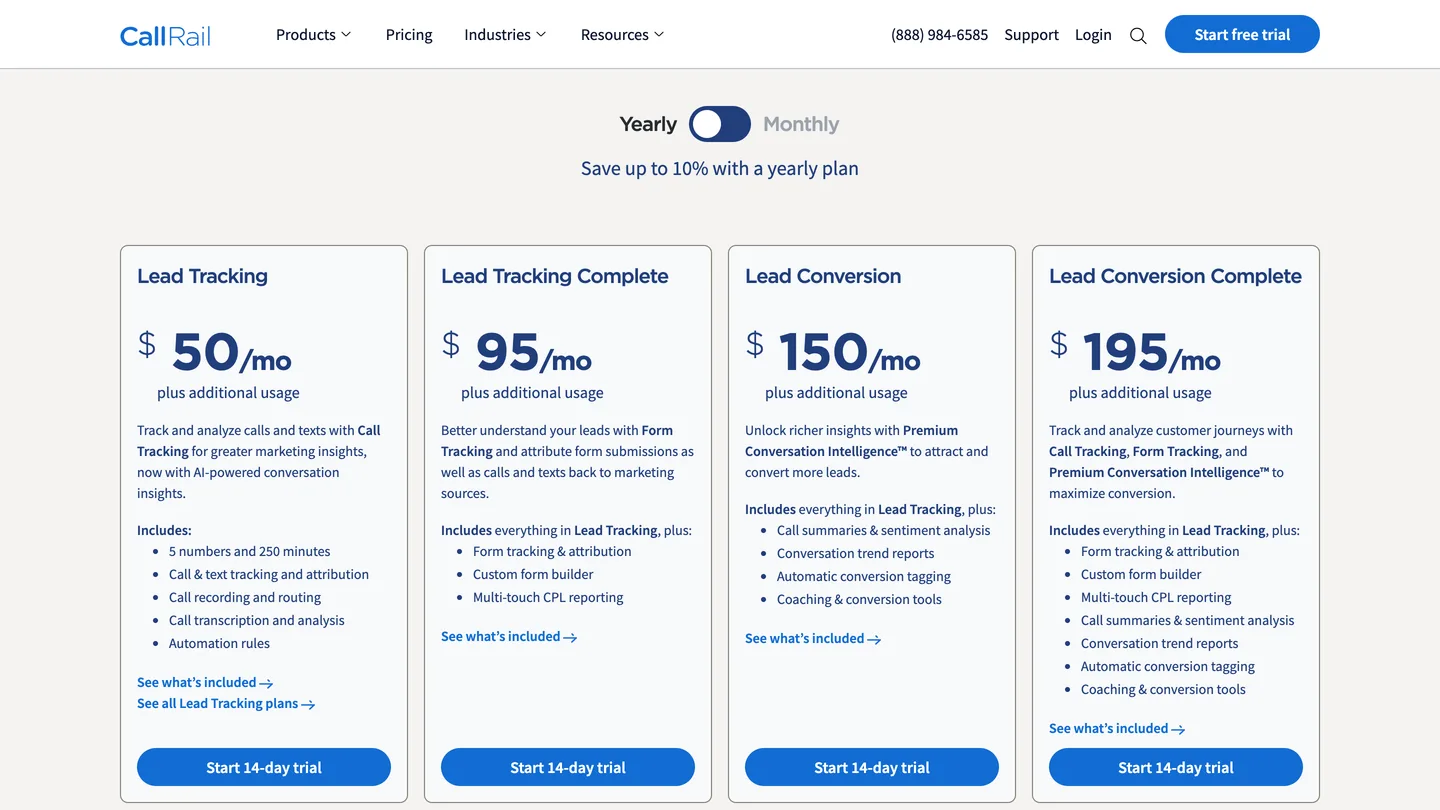 Jul 27, 2026
 Tech Stack
CallRail Review 2026: Pricing, Pros, Cons and Alternatives
CallRail rates 4.5 on Capterra, and its tracking numbers port out free. But the two usage rates that decide your real bill are the two it does not print.
Read Article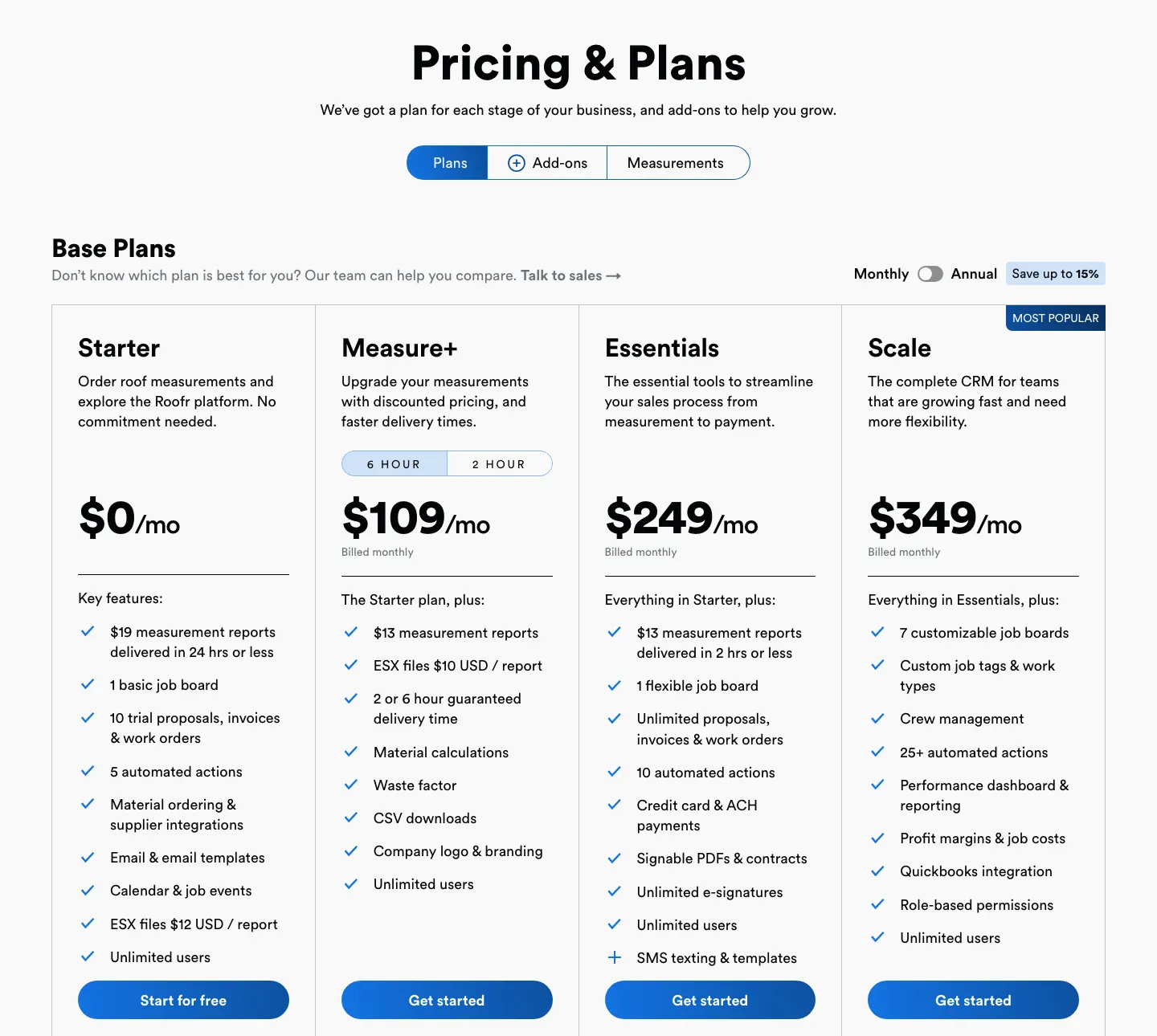 Jul 27, 2026
 Tech Stack
Roofr Review 2026: Pricing, Pros, Cons and Alternatives
Roofr rates 4.6 on Capterra and sells $13 measurement reports against a market charging triple. But it will not import a report from anywhere else.
Read Article Jul 25, 2026
 Tech Stack
Housecall Pro Review 2026: Pricing, Pros, Cons, Alternatives
Housecall Pro has the shortest learning curve in the category and the widest review spread. Real pricing, the Instapay math, and the migration trap to plan around.
Read Article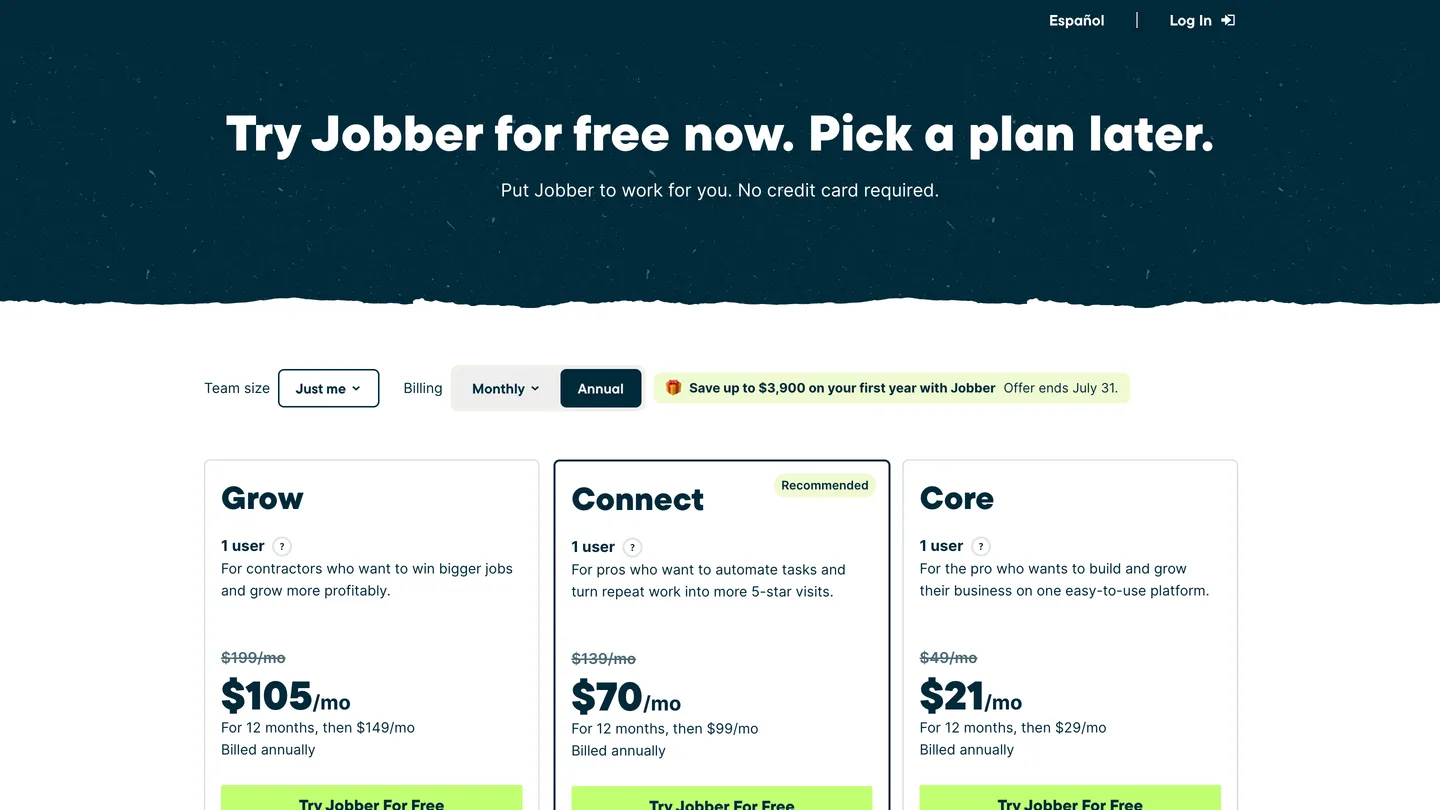 Jul 24, 2026
 Tech Stack
Jobber Review 2026: Pricing, Pros, Cons and Alternatives
Jobber rates 4.6 on Capterra with the best mobile app in the category. Real plan pricing, the feature gating that changes your entry price, and who it suits.
Read Article Jul 23, 2026
 Tech Stack
ServiceTitan Review 2026: Pricing, Pros, Cons, Alternatives
ServiceTitan rates 4.3 on Capterra but its weakest score is value for money. Real reported pricing, the 12-month contract, the exit fees, and who it actually suits.
Read Article Jun 3, 2026
 Tech Stack
HVAC Online Scheduling: The 43% Losing After-Hours Bookings
HVAC leads every trade on online booking at just 56.7%, which still leaves 43% of sites forcing an after-hours customer to wait for a business-hours phone call.
Read Article