Aspire Review 2026: Pricing, Pros, Cons, Alternatives
Third-party contract data puts real numbers on Aspire. The 7 gaps reviewers name, and 5 alternatives that publish a price upfront.
Disclosure This article features tools from our brand partners. If you choose to use them, we may receive compensation at no extra cost to you.
Our editorial choices are independent of these affiliate arrangements. Read our full affiliate disclosure.
Fervor is a CRO and web design studio, not a software reseller, and no vendor paid for placement here or for a kinder verdict. Affiliate links are flagged where they appear, and they never change what we report.
Page at a glance
Aspire is the commercial landscape operating system, priced off your revenue rather than your seat count, and sold on a three-year committed term. It publishes no price, so the only way to get a number is to ask a salesperson for one. Per account, not per seat. Aspire's FAQ states that a single license fee is billed monthly with no limit on the number of users, and its terms of service state that the service is invoiced on the customer's monthly revenues. That combination is unusual in this category, and it means headcount is not the cost lever. Revenue is. A Capterra reviewer describes the same mechanic from the buyer's side. It fits a commercial landscape or grounds maintenance contractor running roughly 25 to 300 field staff across multiple crews and branches, where recurring maintenance contracts and enhancement work are the core of the business and per-job margin is the number the owner manages to. It's the wrong buy for A solo operator or a two-to-four person lawn maintenance crew under roughly $1M in revenue, because Aspire's own site positions Crew Control as the lightweight product for small to medium businesses and reserves the Aspire platform for the enterprise tier. And a three-year committed term with a separation fee equal to the remaining balance is the wrong shape of risk for a business at that size, and the implementation load alone will outweigh the gain. Alternatives that publish their prices are LMN from $297/month, SingleOps from $220/month, Jobber from $24/month. A quote-only price and what third parties report instead, seven evidenced gaps and five alternatives, three of which publish a figure.
What you're buying with Aspire, and what the demo skips
Aspire earns its money with a commercial landscape or grounds maintenance contractor running roughly 25 to 300 field staff across multiple crews and branches, where recurring maintenance contracts and enhancement work are the core of the business and per-job margin is the number the owner manages to. If that's you, it does the job. The sections below are the parts worth checking before you sign. But the fit is narrower than the marketing suggests, and the price isn't the whole cost.
The vendor publishes no price. But every number below was verified on 7 August 2026 and comes from a named third party that says which.
| Pricing model | Custom quote, no published price |
|---|---|
| Entry price | Quote only |
| Users | Per account, not per seat. Aspire's FAQ states that a single license fee is billed monthly |
| Ownership | [object Object] |
| Best fit | a commercial landscape or grounds maintenance contractor running roughly 25 to 300 field staff across multiple crews and branches, where recurring maintenance contracts and enhancement work are the core of the business and per-job margin is the number the owner manages to. |
| Accounting sync | QuickBooks (one-way), Acumatica (one-way), Any other accounting system (NetSuite, Sage, Xero and similar) (none) |
What works
- Real-time cost against budget while the job is still open is the thing people buy
- The reporting engine is deep, and the depth is why the learning curve is steep
- Aspire runs the operation and hands finished numbers to a ledger you still own
- Support is ticket-first with no phone number, and reviews split hard on it
What does not
- The bill is indexed to your revenue, so a good year raises your software cost with no change in what you use
- Three-year committed term, and leaving early means paying out the balance
- The contract asks you to make Aspire your exclusive landscape business software
- The QuickBooks sync runs one way, so entry errors set in Aspire become permanent downstream
- Implementation is the most common complaint and it routinely overruns the quote
Aspire is the commercial landscape operating system, priced off your revenue rather than your seat count, and sold on a three-year committed term. It sells to Landscaping contractors, and the shape of the product follows from that: The single most consistent positive across platforms is that Aspire shows labour, material and equipment cost against budget before the job closes, which is the difference between finding a loss and preventing one. And reviewers describe eliminating double entry across landscape contracting and getting real-time access to information. So this is the workflow that justifies the price, and it's the one to stress-test in the demo with your own numbers.
Ownership matters here more than it usually does. Aspire is owned by [object Object], so weigh roadmap risk alongside the feature list. An independent product can be bought and folded into somebody else's plan two years after you sign.
Who Aspire is for, and who it isn't
It fits a commercial landscape or grounds maintenance contractor running roughly 25 to 300 field staff across multiple crews and branches, where recurring maintenance contracts and enhancement work are the core of the business and per-job margin is the number the owner manages to. That's the half most reviews print. Here's the other half, which is the one worth your time.
Don't buy it if you're A solo operator or a two-to-four person lawn maintenance crew under roughly $1M in revenue. Aspire's own site positions Crew Control as the lightweight product for small to medium businesses and reserves the Aspire platform for the enterprise tier. And a three-year committed term with a separation fee equal to the remaining balance is the wrong shape of risk for a business at that size, and the implementation load alone will outweigh the gain. Look at Jobber instead.
Don't buy it if you're A residential-only, high-volume, quick-turn service business where the job is booked, done and invoiced the same day. Aspire is built around recurring commercial maintenance contracts, enhancement work orders and multi-month job costing. So the estimating and contract machinery that justifies the price on a commercial portfolio is dead weight when the work type is a one-visit residential call, and the revenue-based fee gives you nothing back for the complexity you're not using. Look at Housecall Pro instead.
Don't buy it if you're A contractor whose revenue is mostly hardscape or landscape construction rather than maintenance. A Software Advice reviewer states that Aspire is mainly built out for landscape maintenance and completely falls apart on construction work. And the vendor has been expanding construction capability, but a buyer whose margin lives in construction phases, change orders and progress billing should verify that specific workflow against a construction-first platform rather than assume it. Look at Buildertrend instead.
Don't buy it if you're A contractor who needs to keep a second specialist system in the stack and cannot get written consent to do so. The exclusivity clause in section 17 asks you to use Aspire as your exclusive landscape business software provider. So if a niche tool is load-bearing for your business and the vendor won't carve it out in writing, the contract is a bad fit regardless of how good the product is. Look at SingleOps instead.
What you'll pay Aspire in year one
Aspire doesn't publish a price. That's the finding, not a gap in this page: you can't compare this product on cost until someone quotes you.
The vendor's own wording is this, and nothing more: "Aspire publishes no dollar figure anywhere on its site. The plans page and the FAQ both describe the pricing model in prose and route the buyer to sales. There is no /pricing URL at all, and the plans page that ranks for pricing queries carries no numbers." So treat every third-party page printing tier names and figures for Aspire with careful suspicion. Those numbers are not on the vendor's site today, and a roundup that reprints them is telling you what Aspire used to charge somebody else.
And we aren't going to print a per-month number we can't open a vendor page and read. What exists instead is third-party reporting, dated, from people who saw real contracts. Read it as a range rather than as a quote you can hold anyone to.
| Reported range | Reported on | Source |
|---|---|---|
| $300 to $500+ per user per month, plus implementation and onboarding fees | 2026-04-27 | FieldServiceSoftware.io's Aspire teardown reports a per-user rate from industry accounts, and states plainly that the vendor does not publish pricing. Treat this figure with caution, because it conflicts with Aspire's own contract language on how the fee is calculated. |
| roughly 0.5% to 1% of annual revenue, which the page works out to $15,000 to $30,000 per year for a landscape company doing $3M | 2026-04-01 | Granum's LMN vs Aspire comparison page reports a percentage-of-revenue model with a worked example. Granum owns LMN and SingleOps, so this is a direct competitor's characterisation of Aspire's pricing and it is not independently verified. It does, however, agree with Aspire's own terms of service on the billing basis. |
Per account, not per seat. Aspire's FAQ states that a single license fee is billed monthly with no limit on the number of users, and its terms of service state that the service is invoiced on the customer's monthly revenues. That combination is unusual in this category, and it means headcount is not the cost lever. Revenue is. A Capterra reviewer describes the same mechanic from the buyer's side.
There is a discount for paying annually up front: None published. Fees are drafted monthly by ACH regardless of the committed term, so there is no prepay-annually lever visible in the public contract. And an annual prepay discount tells you an annual commitment exists, which is worth knowing before anyone mentions a term length out loud.
What a Aspire quote leaves out
Payment processing. And the FAQ confirms electronic payments are quoted separately from the software. So ask for the card-present rate, the card-not-present rate, the ACH rate and any per-transaction fee in writing, and ask whether the rate is fixed for the three-year committed term. Separately, note that your own subscription fee is taken by ACH draft on the fifth of each month under section 6.2 of the terms.
Implementation and onboarding. Included in the monthly fee. The FAQ states that every Aspire client receives a complete implementation and training program as part of what the monthly fee covers, which is genuinely unusual in this category where five-figure onboarding invoices are normal. The implementation itself runs five phases, from data import through to handoff to a client success manager. Reviewers report it takes considerably longer than quoted.
Minimum term. Three years. Section 8.1 of the terms of service sets the initial committed term of an order at three (3) years, after which the agreement continues month to month unless the order says otherwise. This is the single most important number on the tool, and it is not mentioned on any marketing page.
Getting out. You pay out the rest of the term. Section 8.5.2 requires the customer to pay a separation fee equal to the Subscription Fees for the remainder of the then-current term, and section 6.1 states that all fees paid are non-refundable and non-recoupable. Walking away in month eight of a three-year term does not stop the bill.
Auto-renewal. After the three-year initial term the agreement continues on a month-to-month basis and either party may terminate on ninety (90) days' prior written notice under section 8.1. The February 2024 Access and Services Agreement states thirty (30) days for the equivalent clause, so the notice period you owe depends on which paper you signed. Check your own order form.
Modules sold separately. , , , . The Aspire figure worth writing down is the one with your day-one modules already in it, not the headline tier.
Third-party services you will also pay for. . These are not on Aspire's invoice, and they are still part of what this decision costs you every month.
"Third-party reporting puts Aspire at $300 to $500+ per user per month, plus implementation and onboarding fees, reported 2026-04-27."
FieldServiceSoftware.io's Aspire teardown reports a per-user rate from industry accounts, and states plainly that the vendor does not publish pricing. Treat this figure with caution, because it conflicts with Aspire's own contract language on how the fee is calculated. (4-27)
A tangent, but stay with it. The most widely repeated third-party figure for Aspire, roughly $300 to $500 per user per month, is contradicted by Aspire's own contract. The terms of service state the service is invoiced on the customer's monthly revenues, and the FAQ states a single monthly license fee with no limit on the number of users. So those two statements can't both be true alongside a per-user rate. Any buyer who budgets Aspire by multiplying a per-user rate by headcount has modelled the wrong variable and will be wrong in both directions. A 200-person crew with modest revenue is cheap under the real model and ruinous under the quoted one. A lean 30-person commercial operation with $12M in revenue is the reverse. So ask for the revenue definition in writing before you model anything.
Everything that is not the Aspire subscription
The subscription is the part everyone quotes. These are the lines that land afterwards, and the ones we could not find are named as unpublished rather than left blank.
Sold separately. , , , . Price the configuration you'll really run, because an add-on you need on day one is part of the price.
Third-party services you'll also pay for. . None of these are on Aspire's invoice, and all of them are part of what this decision costs every month.
"Aspire answers the question of what it costs with this and nothing else: "Aspire publishes no dollar figure anywhere on its site. The plans page and the FAQ both describe the pricing model in prose and route the buyer to sales. There is no /pricing URL at all, and the plans page that ranks for pricing queries carries no numbers.""
Aspire pricing page (2026)
"Per account, not per seat. Aspire's FAQ states that a single license fee is billed monthly with no limit on the number of users, and its terms of service state that the service is invoiced on the customer's monthly revenues. That combination is unusual in this category, and it means headcount is not the cost lever. Revenue is. A Capterra reviewer describes the same mechanic from the buyer's side."
Aspire pricing page (2026)
"Aspire is reported at $300 to $500+ per user per month, plus implementation and onboarding fees as of 2026-04-27."
FieldServiceSoftware.io's Aspire teardown reports a per-user rate from industry accounts, and states plainly that the vendor does not publish pricing. Treat this figure with caution, because it conflicts with Aspire's own contract language on how the fee is calculated. (4-27)
The four workflows you pay for
Feature totals are noise. So a shop in this category lives or dies on four things, and those are the four to grade, and each one below carries the evidence it's graded on.
Real-time cost against budget while the job is still open is the thing people buy The single most consistent positive across platforms is that Aspire shows labour, material and equipment cost against budget before the job closes, which is the difference between finding a loss and preventing one. And reviewers describe eliminating double entry across landscape contracting and getting real-time access to information. So this is the workflow that justifies the price, and it's the one to stress-test in the demo with your own numbers.
The reporting engine is deep, and the depth is why the learning curve is steep An operational systems manager describes advanced searches as intricate enough to run anything from the simplest data set to the most complex specific situation. And a president calls the reporting pretty slick while calling the platform expensive in the same breath. All reports export to PDF or Excel per the FAQ. But the trade-off shows up in reviews as rigidity: several users report that features can't be customised much to suit unique business needs.
Aspire runs the operation and hands finished numbers to a ledger you still own Aspire isn't an accounting package. It pushes deposits and purchase receipts into QuickBooks or Acumatica and provides revenue and cost of goods sold data for you to record. So that keeps the operational side clean, but it means month-end close is a two-system exercise and any correction has to be reasoned about in both places. And a fleet manager reports that end-of-month, portions of the accounting and refund processes take significantly longer than they should.
Support is ticket-first with no phone number, and reviews split hard on it AspireCare and the knowledge base are included at no additional cost, and Aspire recommends the ticket portal so there's a record, with a Zoom call available on request for complex issues. And plenty of reviewers call support helpful and patient. But the complaint pattern is specific and repeated: no phone line, a day or two for a CSM response, and slower handling during peak season, which for a landscape contractor is exactly when the software has to work.
Aspire trade fit
Fit differs by trade rather than by company size alone, and a blended paragraph hides that. Here is the split for the trades this one sells to.
Landscaping. The workflow that decides it is real-time cost against budget while the job is still open is the thing people buy, and the shop profile that gets value is established commercial landscape or grounds maintenance contractor, 25 to 150 field staff, single or multi-branch doing commercial and service work. Where it stops being a fit is A solo operator or a two-to-four person lawn maintenance crew under roughly $1M in revenue.
The Aspire accounting link, and where it stops
QuickBooks connects one way only, so edits made in your books do not come back, on every plan. Acumatica connects one way only, so edits made in your books do not come back, on every plan. Any other accounting system (NetSuite, Sage, Xero and similar) connects, gated to a higher tier. Your costs map through cost codes, so test yours against your own chart of accounts before you commit. A code your books don't recognise is how a labour charge quietly lands somewhere useless.
Past those, the road ends. Xero, NetSuite, Sage, Two-way accounting sync of any kind, Open, self-serve public API with bulk export do not connect. So if your books run on an ERP rather than the platforms named above, weigh that before anything else.
Beyond accounting it connects to Inova Payroll (Preferred payroll and HR provider with a custom integration built specifically for Aspire, listed in the partner marketplace as supporting 275+ shared clients. Payroll is quoted in addition to the software per the FAQ.), Blytheco (Acumatica ERP implementation partner listed in the Aspire marketplace for connecting Aspire to Acumatica.), i-Tech (Describes itself in the Aspire marketplace as the leading integration partner for landscaping companies using Aspire who need to connect field operations with back-office financials through Acumatica Cloud ERP.), Marketplace directory, counted (The Aspire Partner Marketplace integrations directory lists 15 partners: Savvy Otter, Property Intel, Blytheco (Acumatica), Weathermatic, MindCloud, SiteOne, Spentra, Out of the Box, Inova Payroll, Azuga, Marketing Pro, Voice for Turf, Protiv, Proposify and Scorpion.). A public API exists: An API exists, split into public APIs governed by the published API terms and private APIs subject to additional terms. Access for building your own accounting connection is described as an enterprise-tier option. The published terms reserve the right to charge for API use in future, cap caching of retrieved content at 24 hours, and prohibit scraping or bulk download. Treat it as an integration surface, not as a data-portability guarantee.
Aspire support, onboarding and the hours
Support is the line item nobody prices and everybody eventually needs. Onboarding for Aspire: Included in the monthly fee. The FAQ states that every Aspire client receives a complete implementation and training program as part of what the monthly fee covers, which is genuinely unusual in this category where five-figure onboarding invoices are normal. The implementation itself runs five phases, from data import through to handoff to a client success manager. Reviewers report it takes considerably longer than quoted.
But a general manager, facilities services, 2+ years on the platform, says it differently: "Communication with Aspire is difficult at times. We have no phone number to call...it often takes a day or 2 to get a response from our CSM."
A president, facilities services who reviewed it on 2026-07-15 describes it: "It is also expensive, and the customer support reps are lacking training. We use Miri...to help implement parts of Aspire, they are so much more knowledgeable than the staff at Aspire."
Aspire contracts, and getting out
Nobody reads this section before they buy, and it's the one that costs money afterwards. Four terms decide what leaving looks like.
Minimum term. Three years. Section 8.1 of the terms of service sets the initial committed term of an order at three (3) years, after which the agreement continues month to month unless the order says otherwise. This is the single most important number on the tool, and it is not mentioned on any marketing page.
Auto-renewal. After the three-year initial term the agreement continues on a month-to-month basis and either party may terminate on ninety (90) days' prior written notice under section 8.1. The February 2024 Access and Services Agreement states thirty (30) days for the equivalent clause, so the notice period you owe depends on which paper you signed. Check your own order form.
Early termination. You pay out the rest of the term. Section 8.5.2 requires the customer to pay a separation fee equal to the Subscription Fees for the remainder of the then-current term, and section 6.1 states that all fees paid are non-refundable and non-recoupable. Walking away in month eight of a three-year term does not stop the bill.
Payment processing. No card or ACH rate is published anywhere. And the FAQ confirms electronic payments are quoted separately from the software. So ask for the card-present rate, the card-not-present rate, the ACH rate and any per-transaction fee in writing, and ask whether the rate is fixed for the three-year committed term. Separately, note that your own subscription fee is taken by ACH draft on the fifth of each month under section 6.2 of the terms.
And this is the kind of thing you only find by reading the complaints. Aspire closes both data exits at once. The contract makes end-of-term export a paid, request-in-advance service followed by deletion, and the API terms independently forbid the bulk download you'd otherwise use to self-serve. The window to get years of job-costing history out is narrow, priced by the vendor, and closes on a date set by the contract rather than by you. So set the reminder at signing, not at renewal, and negotiate a fixed export price and a defined post-termination retention window into the order form. And a migration you can't fund is a migration you won't make, which is the point.
"Aspire is reported at roughly 0.5% to 1% of annual revenue, which the page works out to $15,000 to $30,000 per year for a landscape company doing $3M as of 2026-04-01."
Granum's LMN vs Aspire comparison page reports a percentage-of-revenue model with a worked example. Granum owns LMN and SingleOps, so this is a direct competitor's characterisation of Aspire's pricing and it is not independently verified. It does, however, agree with Aspire's own terms of service on the billing basis. (4-01)
"Aspire Billing is very manipulative and predatory. They once over charged us and then took 18 months to fix it...Extremely cumbersome to deploy and use. You will not get any real value out of it for several years."
Capterra, Tim G. (2-03)
"Cost of software is based on your revenue not the amount of customers"
Capterra, Gabriel M. (4-17)
What Aspire reviewers keep running into
So here's what breaks, sourced to the person who hit it.
The bill is indexed to your revenue, so a good year raises your software cost with no change in what you use Section 17 of the terms of service states that the service is invoiced on the customer's monthly revenues, and the FAQ confirms a single monthly license fee with unlimited users. But most contractor platforms charge per seat, which means you control the bill by controlling headcount. Aspire inverts that. So you can hold headcount flat, win one large commercial contract, and watch the software line rise anyway. And it also means the tool is cheapest exactly when you can least afford it and most expensive exactly when it's working. On 2023-04-17, a business intelligence manager, facilities services, 1-2 years on the platform, puts it: "Cost of software is based on your revenue not the amount of customers" Ask for the exact revenue definition used to calculate the fee, gross or net, and whether pass-through material and subcontractor costs are included. Then ask for the fee at your current revenue and at 2x your current revenue, in writing, before you sign.
Three-year committed term, and leaving early means paying out the balance Section 8.1 sets a three-year initial committed term. Section 8.5.2 requires a separation fee equal to the Subscription Fees for the remainder of the then-current term if you leave, and section 6.1 states all fees are non-refundable and non-recoupable. And none of that appears on any marketing page. So combined with revenue-based billing, the exposure isn't a fixed number you can budget once. It's three years of a figure that moves with your top line. Ask for a one-year term or a documented out clause tied to implementation milestones. And if the answer is no, model the separation fee at year two of your projected revenue, not today's, and decide whether you'd sign for that number.
The contract asks you to make Aspire your exclusive landscape business software Section 17 states that the customer shall use Aspire as its exclusive landscape business software provider in order to render proper and accurate invoicing. The stated reason is that the fee is revenue-based, so running a second system would let revenue escape the meter. But whatever the reason, the effect is a contractual constraint on your stack. And read against the gaps in the product, that's where the pinch shows up. Get written consent carved out in advance for anything you already run and intend to keep. And ask for a definition of landscape business software narrow enough that your CRM, your estimating spreadsheet or a niche tool doesn't breach it.
The QuickBooks sync runs one way, so entry errors set in Aspire become permanent downstream The accounting feature page describes data flowing out of Aspire into your ledger. Deposits sync to your accounting system, purchase receipts sync to your accounting system, and revenue and cost data is provided for you to record. But there's no described return path. And a user with two-plus years on the platform describes the consequence directly, calling the integration rigid and unidirectional and noting that initial data entry errors get locked in. API access to build a connection to anything other than QuickBooks or Acumatica is gated to enterprise-tier clients. On 2026-07-14, a director of operations, environmental services, 2+ years on the platform, says: "the system lacks flexibility; a rigid, unidirectional integration with QuickBooks means that any initial data entry errors are locked in" Have your bookkeeper sit in the demo and run a correction scenario end to end. Post a wrong deposit in Aspire, then ask exactly what steps fix it in both systems. And if the answer involves manual journal entries every time, price that labour into the comparison.
Implementation is the most common complaint and it routinely overruns the quote The vendor includes implementation in the monthly fee and runs a five-phase program. But reviewers still describe it as the hardest part. One executive VP calls it a nightmare and says the implementation team didn't know how landscape businesses work. An owner reports the sales-to-onboarding handoff dropped them entirely. Another owner reports implementation took five months against a promised three. And a president with two-plus years says you won't get real value out of it for several years. And an executive VP, consumer services, 1-2 years on the platform, writing on 2026-07-14, reports it the same thing: "The implementation process was kind of a nightmare - extremely unclear and very little support. The implementation team, while nice, didn't know how landscape businesses work." Ask for three reference customers of your size who went live in the last twelve months, and ask each one how long it took against the quote. And budget internal admin hours for the overrun, because that cost is yours whether or not the software fee covers the consultant.
Getting your data back out at the end is a paid service, and then it is deleted Section 8.5.5 states that Aspire will use commercially reasonable efforts to provide an export of customer data on termination, at its then-current time and materials rate, and only if you request it in writing before termination. After that window, all of your data, files and other information stored in the service will be unavailable and deleted. And the API isn't an escape hatch either: the API terms forbid storing or caching content for longer than 24 hours and forbid scraping or bulk download operations. Negotiate a defined export format, a fixed price and a defined post-termination retention window into the order form before you sign. Then set a calendar reminder well ahead of any renewal date, because the export right expires with the contract.
The mobile app is built for crews, not for managers A fleet manager with one to two years on the platform describes Aspire Mobile as just ok. And a Software Advice reviewer states the mobile app is geared more toward field use and lacks important functionality for managers. Reviewers also report loading issues and frustration using the app in the field with both managers and crews. So if your branch managers expect to run their day from a phone, test that specifically. Run the demo on a phone on cellular data, not on office wifi on a laptop, and have an actual crew leader drive it. And ask which manager-level approvals and reports are unavailable on mobile.
One more thing worth knowing. Aspire's contract runs a three-year committed term with a separation fee equal to all remaining subscription fees, and the fee itself floats with your revenue. So that combination means you can't compute your own maximum exposure at signing, because the number that gets multiplied by the remaining months isn't fixed. Every other cost in this category is a fixed monthly number you can multiply out. But Aspire's isn't. If you grow 40% in year two and then decide the fit is wrong, your exit fee grew 40% too. So ask for a fee cap or a fixed-fee schedule written into the order form, and treat that request as the real negotiation rather than the headline rate.
One more thing worth knowing. The revenue-based fee produces an exclusivity clause that most buyers never see coming. Because the meter reads your revenue, running a second system would let revenue escape it, so the contract requires Aspire to be your sole landscape business software provider. This is a stack constraint disguised as a billing-integrity clause, and it bites hardest exactly where the product has gaps. A construction-heavy operator who wants a construction-first tool alongside Aspire, or a firm attached to a niche estimating package, needs written consent up front. So ask for the carve-out during the sales cycle, when you still have leverage, not after go-live when you have none.
One more thing worth knowing. Aspire is the rare contractor platform where adding office seats costs nothing, because the fee is per account with unlimited users. And that inverts the standard buying calculus for this category and changes which competitor wins on total cost. A seat-based comparison run on today's headcount will systematically flatter the cheaper-looking competitor. So run the comparison on your projected headcount in year three instead, and run it against your projected revenue too, because those two curves move in opposite directions for Aspire versus everyone else. And the crossover point, not the entry price, is the number that decides this.
And this is the kind of thing you only find by reading the complaints. The negative reviews cluster on the same three things across four years and multiple platforms: implementation overruns, ticket-only support with no phone number, and day-to-day slowness. But the product capability is rarely the complaint. The delivery around it consistently is. The rating is high and the complaints are structural, which is the profile of a product that works once you get through the door and is hard to get through the door. So budget internal admin hours for a longer implementation than quoted, and make the reference calls specifically about time-to-value rather than about features.
The Aspire review corpus, read by complaint
Every quote below is transcribed from a published review, named to the platform that carries it and to the reviewer as that platform displays them. We read the corpus by complaint type rather than by star rating, which is how the disqualifying detail buried inside a five-star review gets found.
"Aspire Billing is very manipulative and predatory. They once over charged us and then took 18 months to fix it...Extremely cumbersome to deploy and use. You will not get any real value out of it for several years."
A president, construction, 2+ years on the platform, describes it it plainly on Capterra
"Cost of software is based on your revenue not the amount of customers"
A business intelligence manager, facilities services, 1-2 years on the platform, writing on 2023-04-17, reports it on Capterra
"It's a big investment - more than double what we were paying with our other software"
An owner, construction who reviewed it on 2022-08-11 reports it on Capterra
"the system lacks flexibility; a rigid, unidirectional integration with QuickBooks means that any initial data entry errors are locked in"
A director of operations, environmental services who reviewed it on 2026-07-14 puts it on Capterra
"Its expensive then they have add-ons that tie into the software which then increases the price more"
A COO, environmental services, 2+ years on the platform, writes it plainly on Capterra
"The implementation process was kind of a nightmare - extremely unclear and very little support. The implementation team, while nice, didn't know how landscape businesses work."
And an executive VP, consumer services, 1-2 years on the platform, writing on 2026-07-14, describes it the same thing on Capterra
"Communication with Aspire is difficult at times. We have no phone number to call...it often takes a day or 2 to get a response from our CSM."
A general manager, facilities services, 2+ years on the platform, reports it it plainly on Capterra
"It is also expensive, and the customer support reps are lacking training. We use Miri...to help implement parts of Aspire, they are so much more knowledgeable than the staff at Aspire."
A president, facilities services who reviewed it on 2026-07-15 puts it on Capterra
"extremely slow, endless clicking. Search filters do not always work"
But an account manager, farming, 1-2 years on the platform, writes it differently on Capterra
"Sales part sold me sunshine and rainbows -Between sales and onboarding we fell thru the cracks"
And an owner, environmental services, 6-12 months on the platform, writing on 2026-07-14, writes the same thing on Capterra
"Well for many of our employees this caused much headache, as needing one simple answer took days to resolve and in the meantime our operation is suffering by not having the support we need to operate the very costly software we are paying for."
And an admin, reports it the same thing on GetApp
"There are some aspects, like EOM, portions of the accounting, and refund processes that take significantly longer than they should. The mobile application, Aspire Mobile, is also just ok."
A fleet manager, consumer services, 1-2 years on the platform, writes it plainly on Capterra
What else you should be pricing beside Aspire
And these are the products Aspire loses deals to. Some publish a price; that tells you how long each evaluation will take.
| Tool | Entry price | Billing unit | Users included | Published? |
|---|---|---|---|---|
| Aspire | Quote only | Custom quote | Per account, not per seat. Aspire's FAQ states that a single | No |
| LMN | $297/month | per account (Starter includes 1 office or crew lead licence plus 5 crew member licences) | 6 on Starter, 18 on Professional | Yes |
| SingleOps | $220/month | per account, with additional office or sales users charged separately | Base allocation not stated; extra office or sales users cost $55/mo on Essential, $115/mo on Plus and $150/mo on Premier | Yes |
| Jobber | $24/month | per account (Core, billed annually, 1 user; $49/mo billed monthly) | 1 on Core, 5 on Connect, 10 on Grow, 15 on Plus | Yes |
| ServiceTitan | Quote only | per technician per month | Not published | No |
| Crew Control | Quote only | per account | Not published | No |
LMN. Publishing its price. LMN puts Starter at $297/mo and Professional at $648/mo on the page, with user counts attached, so you can size the cost before you talk to anyone. And its fee is flat per licence rather than indexed to your revenue. But Depth on large commercial portfolios. Aspire reviewers who moved from LMN cite job costing and reporting reach as the reason, and one owner accepted more than double the cost to make that move. And LMN Enterprise is quote-only above 100 users, so the transparency runs out at scale.
SingleOps. A visible three-tier ladder from $220/mo to $550/mo monthly (or $200 to $500 annual), so the cost curve as you add office staff is knowable in advance. Sensible fit for green-industry firms that want structure without a three-year commitment. But Enterprise-scale multi-branch reporting and the commercial maintenance contract machinery Aspire is built around. And the per-additional-user fees also mean the office-heavy business loses the flat-fee advantage faster than the headline suggests.
Jobber. Being affordable and fast to stand up for a small crew. Every tier is published with a user count, additional users are $29/mo each, and there's no three-year term to sign. But a reviewer who left Jobber for Aspire did so for job costing, not for price. But Contract-based commercial maintenance, multi-branch job costing and the enhancement-work reporting that commercial landscape operators need. And the reviewer who switched away cited exactly that gap.
ServiceTitan. Dispatch-heavy, call-driven service work and a much larger integration surface. Relevant here because ServiceTitan owns Aspire, so the two are stablemates rather than rivals, and a landscape buyer may be pitched either depending on work mix. But Landscape-specific estimating, crew routing and recurring grounds maintenance contracts, which is exactly the gap ServiceTitan bought Aspire to fill. And it's also quote-only, with three tiers (Starter, Essentials, The Works) all sitting behind a Request Pricing button, so it solves none of Aspire's price-opacity problem.
Crew Control. Being the vendor's own answer for a business too small for Aspire. Aspire's homepage describes Crew Control as lightweight business management tools for small to medium businesses, which is a useful admission about who the flagship is not for. But Everything Aspire is bought for. It's a deliberately reduced product, and its pricing isn't published either, so it inherits the same opacity without the depth.
"It's a big investment - more than double what we were paying with our other software"
Capterra, Brenna B. (8-11)
"the system lacks flexibility; a rigid, unidirectional integration with QuickBooks means that any initial data entry errors are locked in"
Capterra, Andrew B. (7-14)
Who should not buy Aspire
Don't buy Aspire if you're A solo operator or a two-to-four person lawn maintenance crew under roughly $1M in revenue. Aspire's own site positions Crew Control as the lightweight product for small to medium businesses and reserves the Aspire platform for the enterprise tier. And a three-year committed term with a separation fee equal to the remaining balance is the wrong shape of risk for a business at that size, and the implementation load alone will outweigh the gain. Look at Jobber instead.
Don't buy Aspire if you're A residential-only, high-volume, quick-turn service business where the job is booked, done and invoiced the same day. Aspire is built around recurring commercial maintenance contracts, enhancement work orders and multi-month job costing. So the estimating and contract machinery that justifies the price on a commercial portfolio is dead weight when the work type is a one-visit residential call, and the revenue-based fee gives you nothing back for the complexity you're not using. Look at Housecall Pro instead.
Don't buy Aspire if you're A contractor whose revenue is mostly hardscape or landscape construction rather than maintenance. A Software Advice reviewer states that Aspire is mainly built out for landscape maintenance and completely falls apart on construction work. And the vendor has been expanding construction capability, but a buyer whose margin lives in construction phases, change orders and progress billing should verify that specific workflow against a construction-first platform rather than assume it. Look at Buildertrend instead.
Don't buy Aspire if you're A contractor who needs to keep a second specialist system in the stack and cannot get written consent to do so. The exclusivity clause in section 17 asks you to use Aspire as your exclusive landscape business software provider. So if a niche tool is load-bearing for your business and the vendor won't carve it out in writing, the contract is a bad fit regardless of how good the product is. Look at SingleOps instead.
The verdict, by shop size
Solo operator to small crew, under roughly 10 field staff
No. Wrong product and wrong contract. Aspire's own site routes this band to Crew Control, and a three-year committed term with a separation fee equal to the remaining balance is an unreasonable risk at this size. And the implementation load alone, which multiple reviewers describe overrunning by months, will cost more in owner hours than the software saves. So Jobber at a published $24/mo annual or $49/mo monthly does the job without a term commitment. This band runs 1 to 10 on the crew, doing residential and service work, and that's the profile the recommendation is written for.
Growing landscape business, roughly 10 to 25 field staff, mixed residential and light commercial
Only under conditions, and they are worth being honest about. This is the band where the answer genuinely depends. If your revenue is concentrated in recurring commercial maintenance contracts and you're losing money on jobs you can't see into, the job costing is worth real money and Aspire is the category-correct tool. But if your work is still mostly one-visit residential, the revenue-based fee charges you for complexity you won't use. So get the fee quoted at today's revenue and at double it, get the revenue definition in writing, and compare the three-year total against LMN Professional at a published $648/mo. This band runs 10 to 25 on the crew, doing residential and commercial and service work, and that's the profile the recommendation is written for.
Established commercial landscape or grounds maintenance contractor, 25 to 150 field staff, single or multi-branch
Yes, and this is the shape the product is built for. This is Aspire's home ground and the reviews reflect it. Real-time job costing against budget, deep advanced-search reporting and estimating built for the way commercial landscape contracts work are the things buyers in this band consistently say they got. But go in clear-eyed about three things: implementation will take longer than quoted, support is ticket-first with no phone number, and the accounting sync runs one way into QuickBooks or Acumatica. And negotiate the export terms and the exclusivity carve-outs before signing, not after. This band runs 25 to 150 on the crew, doing commercial and service work, and that's the profile the recommendation is written for.
Multi-branch enterprise landscape operator, 150+ field staff
Yes, and this is the shape the product is built for. The unlimited-user licence model works strongly in your favour at this size, because the fee doesn't scale with the seats you keep adding, and enterprise-tier API access opens the door to ledgers beyond QuickBooks and Acumatica. But the exposure to watch is the revenue index: at enterprise revenue, a percentage-based fee is a large absolute number, and it moves every year without a renegotiation. So push hard for a cap, a fixed fee, or a documented tier ceiling in the order form. This band runs 150 or more on the crew, doing commercial and service work, and that's the profile the recommendation is written for.
Landscape construction or hardscape-led contractor at any size
Only under conditions, and they are worth being honest about. Aspire has been expanding construction capability, but a Software Advice reviewer states that the product is mainly built out for landscape maintenance and completely falls apart on construction work, and a construction-industry president with two-plus years gave it one star. So if construction is where your margin lives, don't take the maintenance demo as proof. And demand a construction-specific demo covering phased billing, change orders and progress invoicing, and run a construction-first platform alongside it in the evaluation. This band runs 5 or more on the crew, doing commercial and residential work, and that's the profile the recommendation is written for.
Something adjacent to Aspire, then we'll get out of your way
We should declare an interest, or rather the absence of one. Fervor takes nothing from Aspire or any of its rivals. What we've got is data on the demand side.
Aspire is one of the few contractor platforms that bills against your revenue instead of your headcount, so it's also one of the few that gets cheaper when the demand side of the business fails. That's a meter reading, not a discount, and the three-year committed term keeps the meter running either way. And Fervor inspected the contractor sites in its index and found 95.8% carry a serious WCAG violation and 61.3% a critical one, so for a lot of Aspire customers the revenue figure the invoice is indexed to is being held down by the website rather than by the crews.
And the number is worse than anyone guesses before they check. Across 380 inspected contractor sites, 95.8% carried a serious accessibility violation. So the sample is not curated: it is every contractor site the tooling could reach. The workings are public in the Contractor CRO Index.
"95.8% of the 380 contractor websites inspected carried a serious accessibility violation."
Fervor Studio Contractor CRO Index (2026)
So price the platform properly. Then open your own site on a phone and time how long it takes before you could tap a call button. The numbers are all public.
See where your site is losing the jobs Aspire would have managed
So we look at yours the same way we looked at those 380 sites, and tell you what is costing you calls.
Get a Site InspectionHow this Aspire page was researched
A word on limits. We read Aspire's pages and its reviews, but we didn't operate it. So here's the basis. We read 11 vendor pages for Aspire on 7 August 2026, and we went through the reviews looking for complaints rather than for averages. Prices were checked the same day. Nothing here is carried forward from an older sweep.
So: twelve quotes on this page, eleven from Capterra and one from GetApp.
And https://www.g2.com/products/aspire-aspire/reviews (HTTP 403 Forbidden), https://www.trustpilot.com/review/youraspire.com (HTTP 403 Forbidden), TrustRadius (not reachable, same block pattern as G2) and Reddit (blocked for automated fetch) refused automated retrieval for Aspire. Forum and social threads are the ones people most want quoted, and they are exactly the ones we cannot verify, so none of them are here.
What that leaves untested: https://www.youraspire.com/pricing (HTTP 404, no such URL exists on the vendor site). And everything above is eleven vendor pages and a review corpus, which is documentary rather than hands-on.
What Aspire users say
Aspire Billing is very manipulative and predatory. They once over charged us and then took 18 months to fix it...Extremely cumbersome to deploy and use. You will not get any real value out of it for several years.
Cost of software is based on your revenue not the amount of customers
It's a big investment - more than double what we were paying with our other software
the system lacks flexibility; a rigid, unidirectional integration with QuickBooks means that any initial data entry errors are locked in
Its expensive then they have add-ons that tie into the software which then increases the price more
The implementation process was kind of a nightmare - extremely unclear and very little support. The implementation team, while nice, didn't know how landscape businesses work.
Communication with Aspire is difficult at times. We have no phone number to call...it often takes a day or 2 to get a response from our CSM.
It is also expensive, and the customer support reps are lacking training. We use Miri...to help implement parts of Aspire, they are so much more knowledgeable than the staff at Aspire.
extremely slow, endless clicking. Search filters do not always work
Sales part sold me sunshine and rainbows -Between sales and onboarding we fell thru the cracks
Well for many of our employees this caused much headache, as needing one simple answer took days to resolve and in the meantime our operation is suffering by not having the support we need to operate the very costly software we are paying for.
There are some aspects, like EOM, portions of the accounting, and refund processes that take significantly longer than they should. The mobile application, Aspire Mobile, is also just ok.
Frequently asked questions
How much does Aspire cost?
Aspire publishes no price. Its plans page says only that pricing varies based on company size, complexity, and what solution best fits your business, and that a single license fee is billed monthly with no limit on the number of users. But the important detail sits in the contract rather than the marketing: section 17 of the terms of service states that the service is invoiced on the customer's monthly revenues. And a Capterra reviewer confirms it from the buyer's side, writing that cost of software is based on your revenue not the amount of customers. Third-party figures conflict. FieldServiceSoftware.io reports $300 to $500+ per user per month, while Granum, which owns competing products LMN and SingleOps, reports roughly 0.5% to 1% of annual revenue and works that out to $15,000 to $30,000 a year for a $3M company. Neither is confirmed by the vendor, and the per-user framing is hard to reconcile with Aspire's own unlimited-users language.
Is Aspire owned by ServiceTitan?
Yes. ServiceTitan announced plans to acquire Aspire in 2021, and ServiceTitan now lists Aspire as a product in its own catalogue. But Aspire continues to run its own site at youraspire.com, its own partner marketplace and its own contract paper, so in practice you're buying Aspire's terms, not ServiceTitan's. And it matters for one reason: if a ServiceTitan rep pitches you and an Aspire rep pitches you, you're talking to the same company about two different products with two different pricing models.
How long is the Aspire contract, and what happens if I want out?
Section 8.1 of the terms of service sets the initial committed term at three (3) years, after which the agreement continues month to month and either party can terminate on ninety (90) days' prior written notice. But the February 2024 Access and Services Agreement states thirty (30) days for that notice, so the number that binds you depends on which document your order form references. And if you leave inside the committed term, section 8.5.2 requires a separation fee equal to the Subscription Fees for the remainder of the then-current term, and section 6.1 states all fees paid are non-refundable and non-recoupable.
Does Aspire sync two-way with QuickBooks?
No. Aspire's own accounting page describes data moving out of Aspire into your ledger: deposits sync to your accounting system, purchase receipts sync to your accounting system, and revenue and cost of goods sold data is provided for you to record. But there's no described return path. A Capterra reviewer with more than two years on the platform puts it bluntly, describing a rigid, unidirectional integration with QuickBooks that means initial data entry errors are locked in. And QuickBooks and Acumatica are the only two natively supported ledgers. Anything else requires an API build that Aspire reserves for enterprise-tier clients.
Does the contract really require me to use Aspire exclusively?
Section 17 states that the customer shall use Aspire as its exclusive landscape business software provider in order to render proper and accurate invoicing, except with Aspire's prior written consent. The stated rationale is the revenue-based fee, since a parallel system would let revenue bypass the meter. So if you already run a specialist tool you intend to keep, get the carve-out written into the order form before signing rather than relying on asking later.
Can I get my data out of Aspire?
During the subscription, yes, at report level. The FAQ states all Aspire reports can be exported as a PDF or an Excel file. But at the end, the terms are tighter. Section 8.5.5 says Aspire will use commercially reasonable efforts to provide an export of customer data at its then-current time and materials rate, only if you request it in writing before termination or expiration, and that afterwards all your data, files and other information stored in the service will be unavailable and deleted. And the API doesn't help either: the API terms forbid caching retrieved content for longer than 24 hours and forbid scraping or bulk download operations. So negotiate a defined export format, a fixed price and a retention window into the order form up front.
How many integrations does Aspire have?
Fifteen partners are listed in the integrations section of the Aspire Partner Marketplace, counted rather than estimated: Savvy Otter, Property Intel, Blytheco, Weathermatic, MindCloud, SiteOne, Spentra, Out of the Box, Inova Payroll, Azuga, Marketing Pro, Voice for Turf, Protiv, Proposify and Scorpion. But several of those are services partners or consultancies rather than software connectors, and two of them (Blytheco and i-Tech) exist mainly to build the Acumatica connection for you. So compared with a horizontal field-service platform, that's a small directory, which is the usual trade-off for a trade-vertical product.
Is implementation included, and how long does it take?
It's included. The FAQ states every Aspire client receives a complete implementation and training program, post-implementation support and all future upgrades in the monthly fee, which is genuinely unusual in a category where five-figure onboarding invoices are standard. But duration isn't published. The program runs five phases, from importing contacts, properties and item catalogue through to handoff from an implementation manager to a client success manager. And reviewers consistently report it takes longer than quoted, including one owner who reports five months against a promised three, and an executive VP who describes the process as a nightmare with an implementation team that didn't know how landscape businesses work.
What does Aspire not include in the monthly fee?
The FAQ names three things quoted in addition to the software: electronic payments, payroll and GPS fleet management. And PropertyIntel is a separate Aspire product with its own terms of use. A Capterra reviewer describes the pattern from the outside, writing that its expensive then they have add-ons that tie into the software which then increases the price more. So you also still need to buy and run QuickBooks or Acumatica underneath, because Aspire isn't a general ledger.
Freshness
How we keep this page current
Three dates govern this review, and they carry different meanings. The initial source sweep is dated August 7, 2026; when only part of the evidence set is recaptured later, that later date is stated beside the refreshed claim. We last revised the page on August 7, 2026. And the user reviews we quote were posted over roughly the last 24 months, so their individual dates remain part of the evidence instead of being overwritten by a later pricing update.
We revise the page when Aspire changes a published price or a contract term, when a rating we cite moves by more than a few tenths, or when the vendor ships something big enough to change the verdict. We never bump the date just to look fresh, because Google treats that as manipulation and so do we. If a figure here reads as stale by the time you land on it, treat it as a floor and check the vendor's own page. We linked it at every number for exactly that reason.
Sourcing
How this review was researched
Every figure on this page traces to a captured source linked inline where it appears. The initial sweep is dated August 7, 2026; any later, partial recapture is dated at the claim rather than relabelling the whole evidence set. Ratings come from Capterra, GetApp, Software Advice and the Apple App Store. Note that Capterra, GetApp and Software Advice share one Gartner Digital Markets review pool, so an identical score across all three is a single sample rather than three corroborating ones, and this page treats it that way. G2, TrustRadius and Trustpilot block automated access, so where their numbers appear they are labelled as reported rather than verified. No claim here is sourced from Reddit or from a contractor Facebook group, because neither could be retrieved and quoting them would mean inventing attribution. Pricing marked as reported comes from third-party roundups, never from Fervor. Fervor's own findings come from the Contractor CRO Index 2026.
About
About Fervor Studio
Fervor Studio is a conversion rate optimization (CRO) and web design studio for home services contractors across North America, based in Cochrane, Alberta. Fervor does not sell field service management software and is not an alternative to Aspire. It publishes the Contractor CRO Index, a public benchmark measuring contractor website conversion potential using reproducible, open-source methods such as axe-core and Google Lighthouse. Fervor Studio is operated by Fervor Group Inc.
 Aug 2, 2026
 Tech Stack
Best Plumbing Software in 2026: Ten Ranked Across Four Classes
A plumbing company’s work runs through four classes of software that do not substitute for each other, and it only buys two of them. Ten products, each with a published price or an explicit statement that the vendor publishes none.
Read Article Jul 31, 2026
 Tech Stack
NiceJob vs Birdeye 2026: Pricing, Contracts and Review Gating
One of these vendors puts its price on the page and its cancellation terms in writing. The other puts a form in front of both, and the complaint record is where its contract length shows up.
Read Article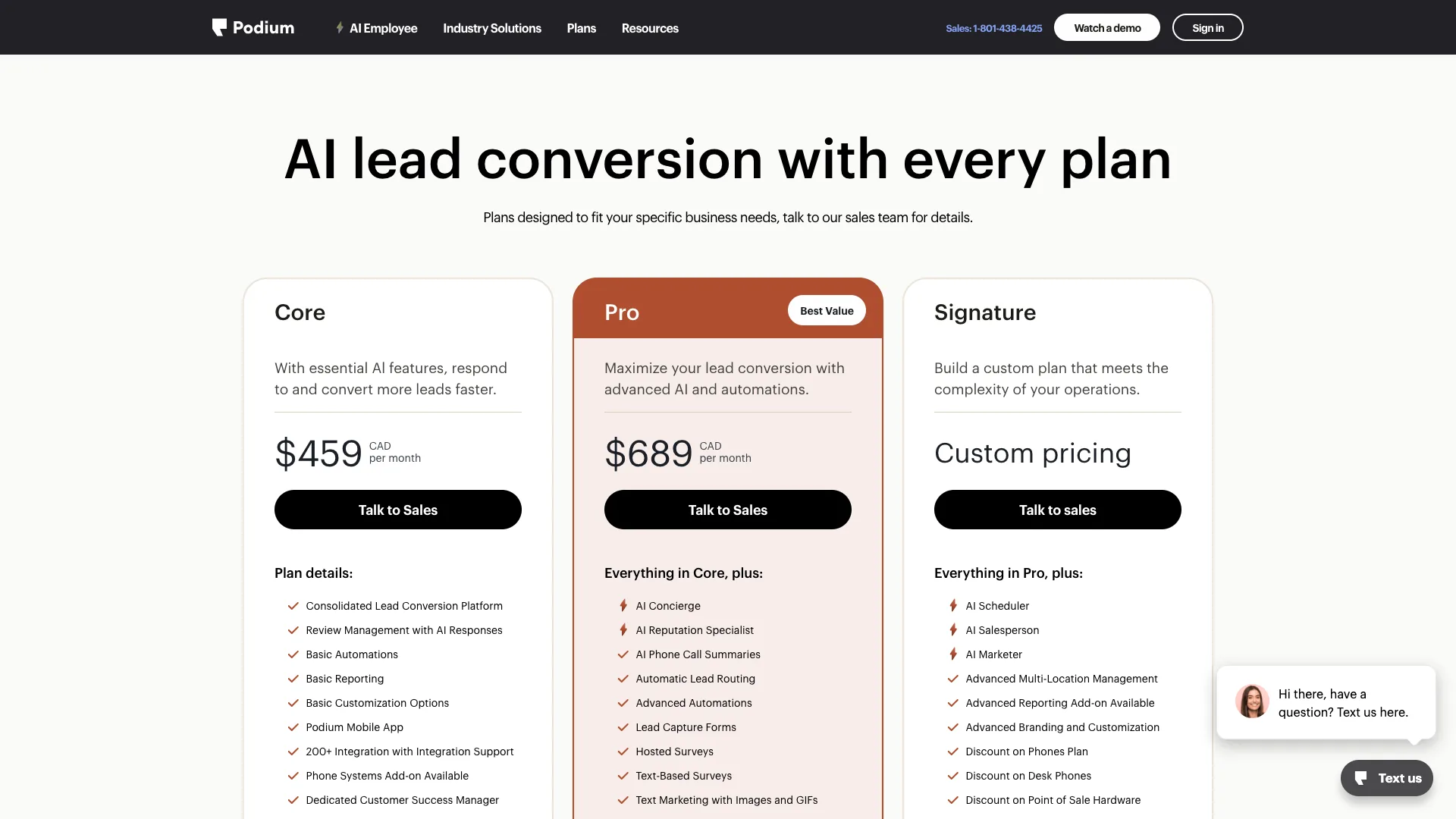 Jul 31, 2026
 Tech Stack
Podium vs Birdeye 2026: Pricing, Contracts and Review Gating
Only one of these two will tell you what it costs before a sales call, and even that number carries a carve-out aimed squarely at trade contractors.
Read Article Jul 31, 2026
 Tech Stack
Best Electrical Contractor Software 2026: 11 Ranked and Priced
An electrical contracting business makes two software purchases that do not substitute for each other, and every roundup answering this query covers only one of them. Eleven platforms, with a published price or an explicit statement that the vendor publishes none.
Read Article Jul 31, 2026
 Tech Stack
Best HVAC Software in 2026: Eleven Ranked Across Three Classes
An HVAC contracting business buys across three classes of software that do not substitute for each other, and every roundup answering this query covers only one of them. Eleven products, each with a published price or an explicit statement that the vendor publishes none.
Read Article Jul 30, 2026
 Tech Stack
AccuLynx Pricing 2026: The Real Cost of a Quote-Gated Plan
One published figure, two blank plan cards, and a contract that says things the pricing page does not. A line-by-line breakdown of what AccuLynx really bills.
Read Article Jul 30, 2026
 Tech Stack
Houzz Pro Canada Review 2026: Pricing and Alternatives
Houzz Pro serves different pricing renderings. What Canadian buyers see, how GST/HST and payments work, what Custom gates, and what the annual contract commits you to.
Read Article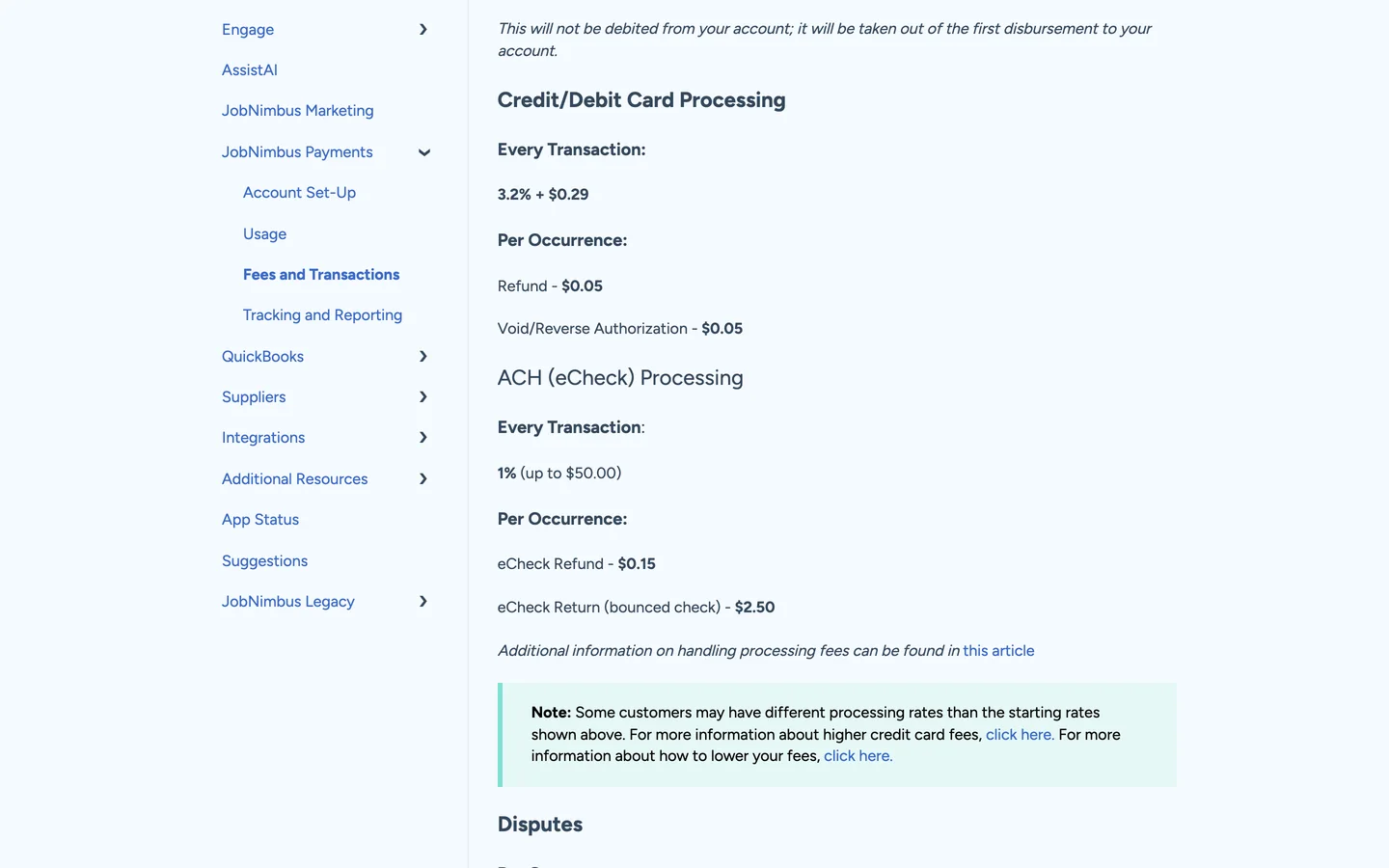 Jul 30, 2026
 Tech Stack
JobNimbus Pricing in 2026: What the Quote Does Not Cover
JobNimbus prints no figure on any of its four plans. So the only rate you can read before a sales call is the payments meter, and it is the biggest line on the bill.
Read Article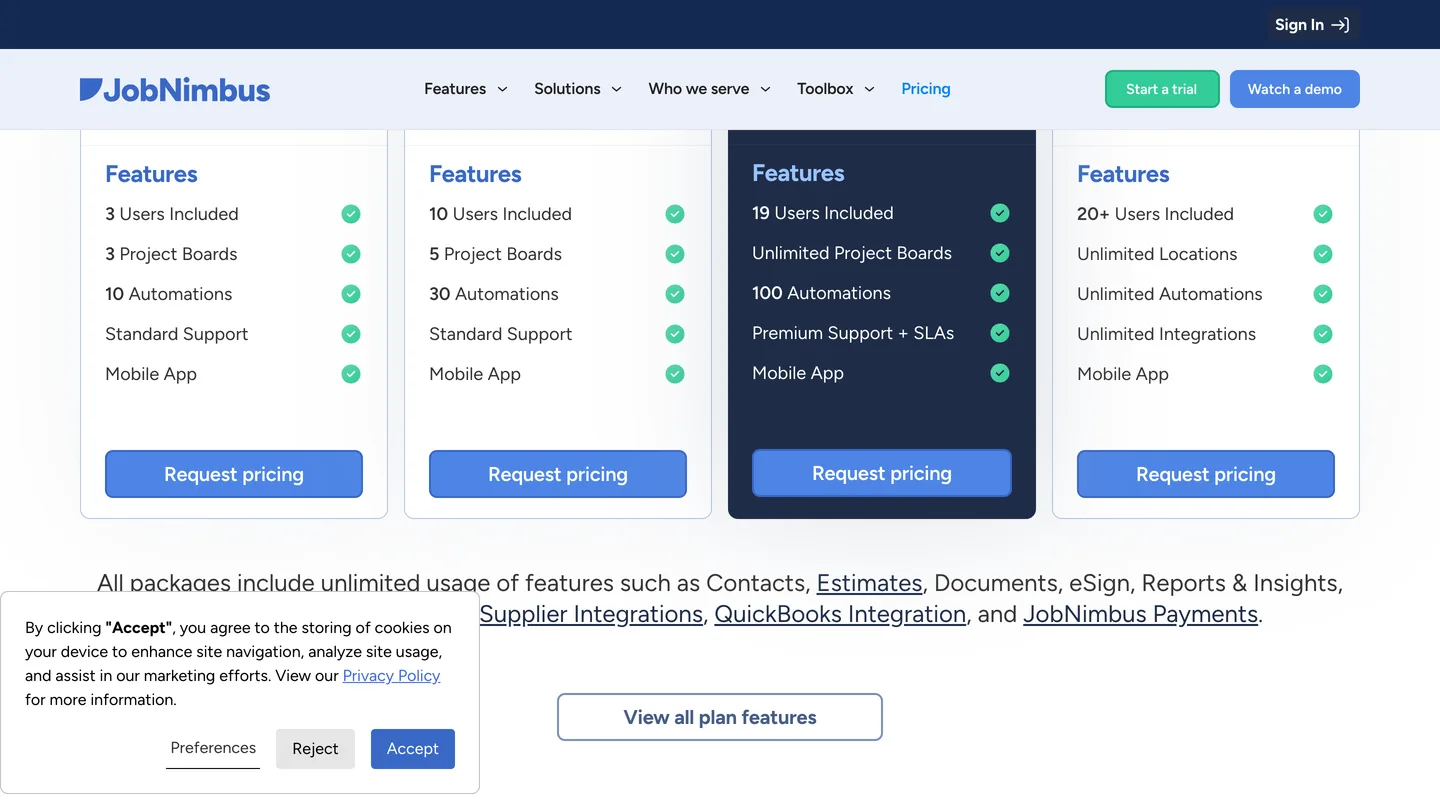 Jul 30, 2026
 Tech Stack
JobNimbus Review 2026: Pricing, Pros, Cons and Alternatives
JobNimbus rates 4.6 on Capterra and orders material straight from ABC Supply and SRS. But it publishes no price, and its supplement route carries a note.
Read Article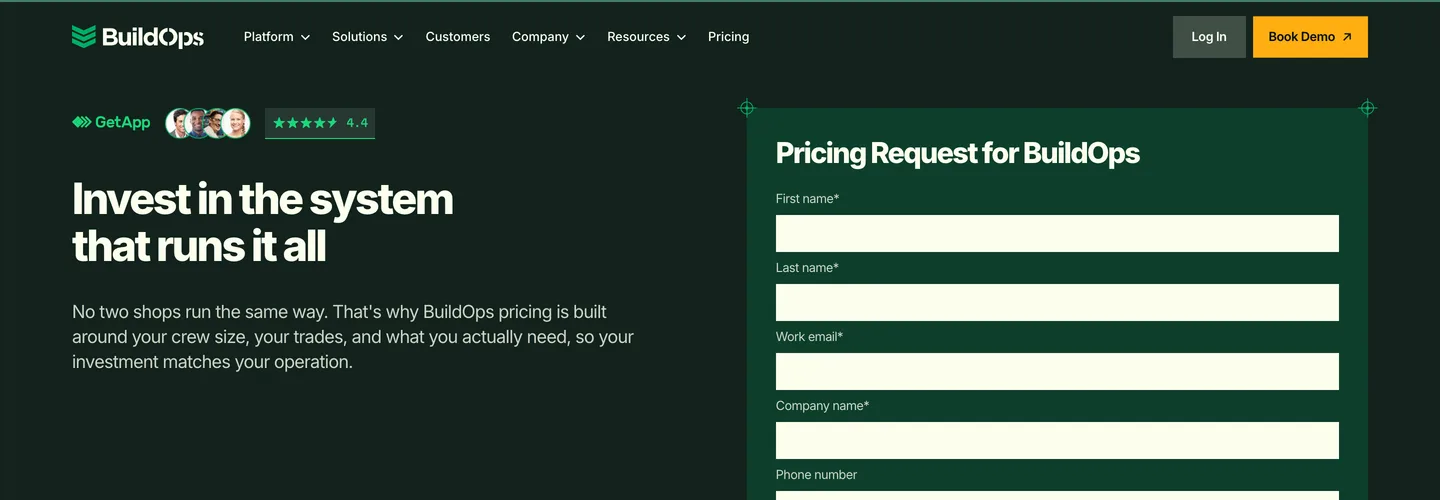 Jul 30, 2026
 Tech Stack
BuildOps Review 2026: Pricing, Contract Terms and Alternatives
BuildOps runs commercial service and projects on one platform, and publishes no pricing at all. The billing unit, the 30-day data-export window, and who it suits.
Read Article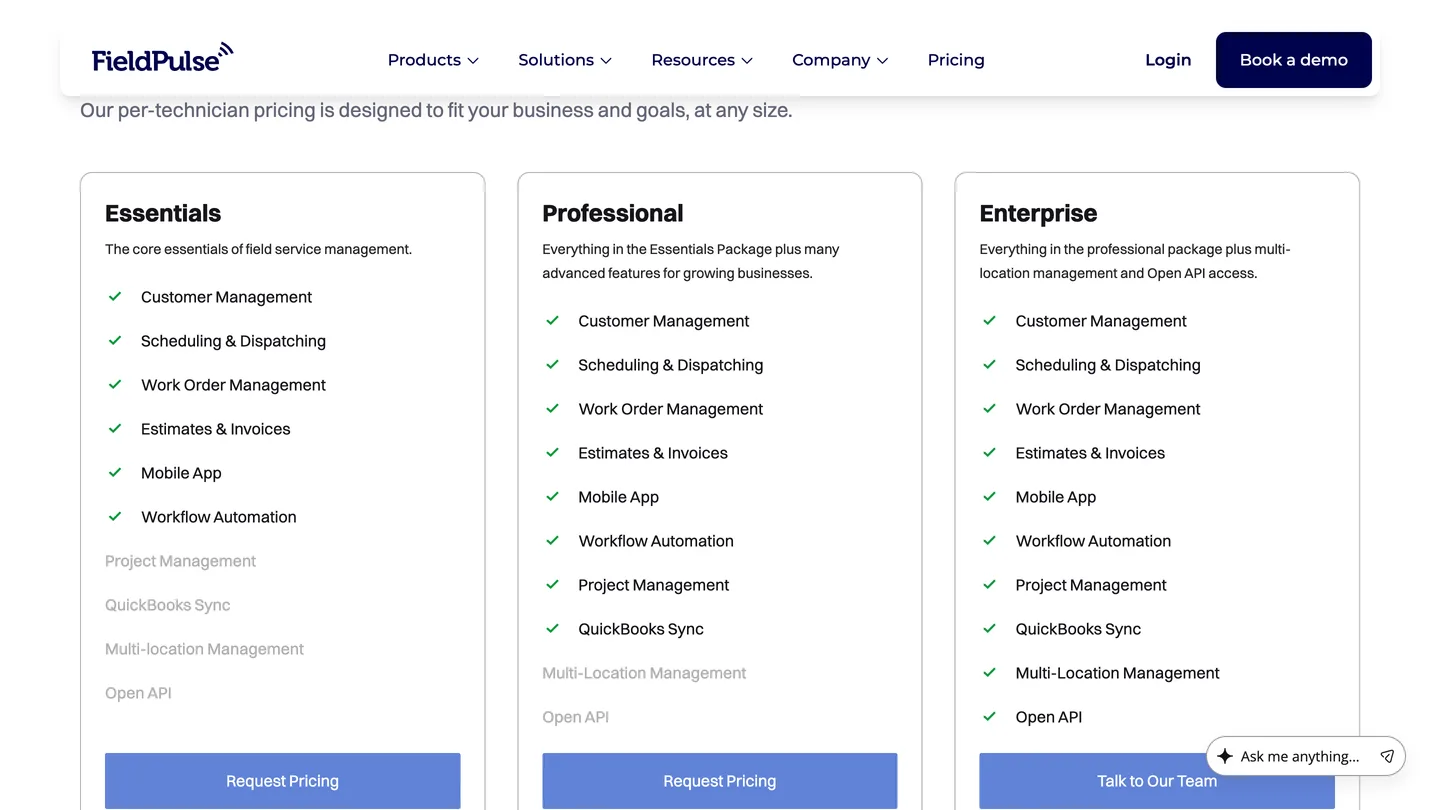 Jul 30, 2026
 Tech Stack
FieldPulse Review 2026: Pricing, Pros, Cons and Alternatives
FieldPulse rates 4.6 on Capterra and is the platform contractors name when they leave a bigger system. But it publishes no price, and the contract runs a year.
Read Article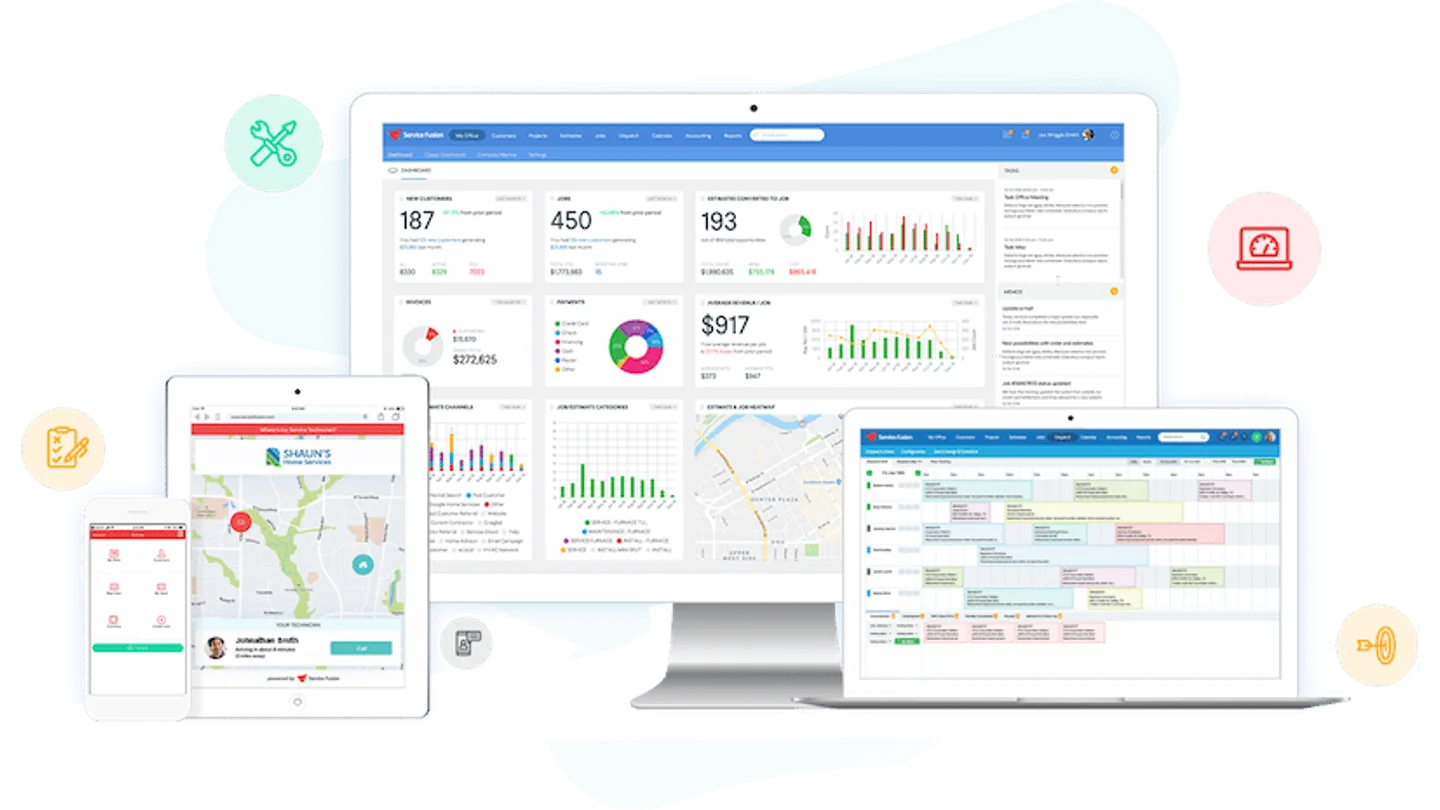 Jul 30, 2026
 Tech Stack
Service Fusion Review 2026: Pricing, Contract and Alternatives
Service Fusion bills flat per company with unlimited users, which is the best structural deal in field service software. The published plans, the contract behind the no-contract line, and the app score every other review gets wrong.
Read Article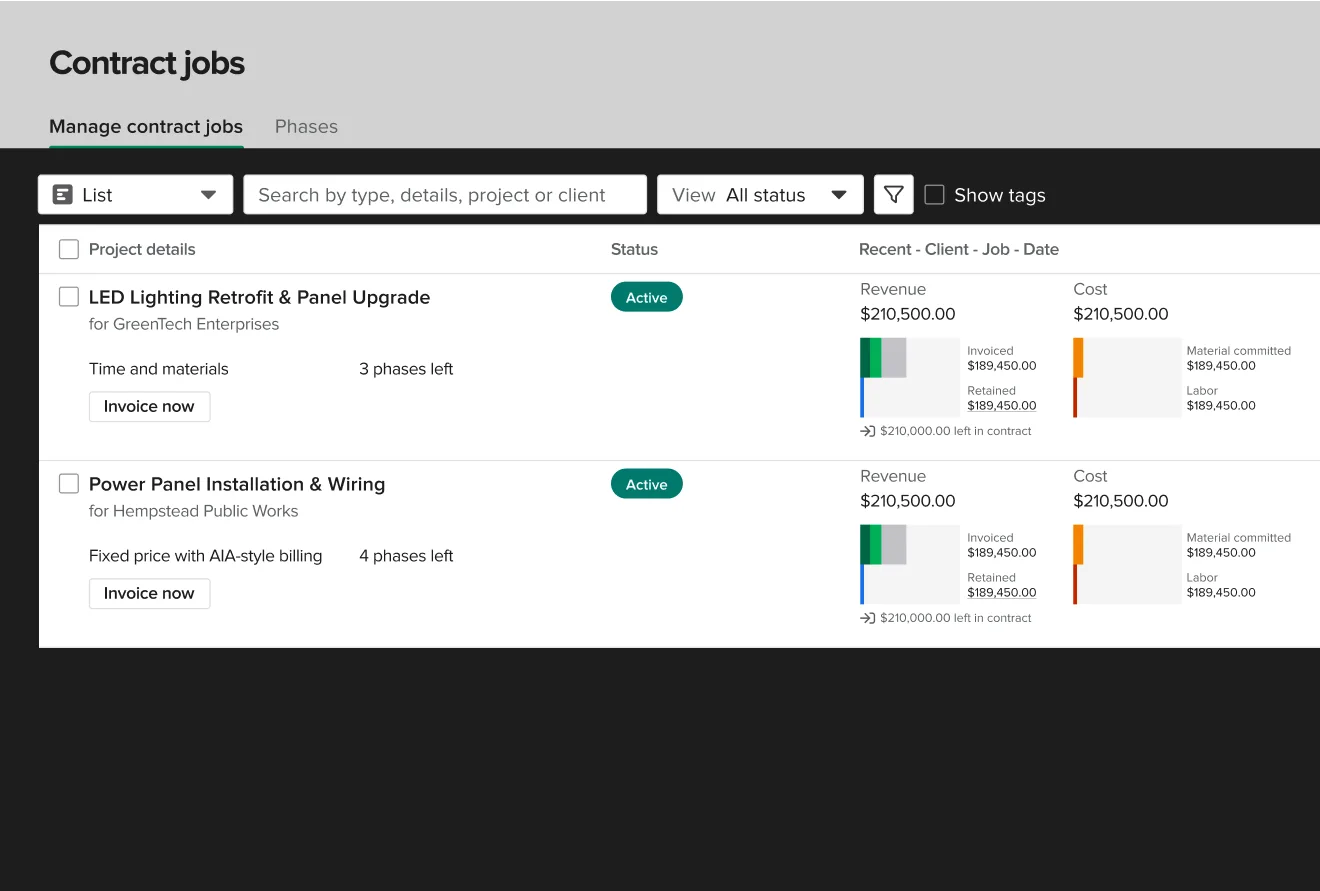 Jul 30, 2026
 Tech Stack
Knowify Review 2026: Pricing, Job Costing and Alternatives
Knowify rates 4.5 on Capterra and its weakest sub-score is features. What the $99 Core plan withholds, which way the QuickBooks sync really runs, and who should not buy it.
Read Article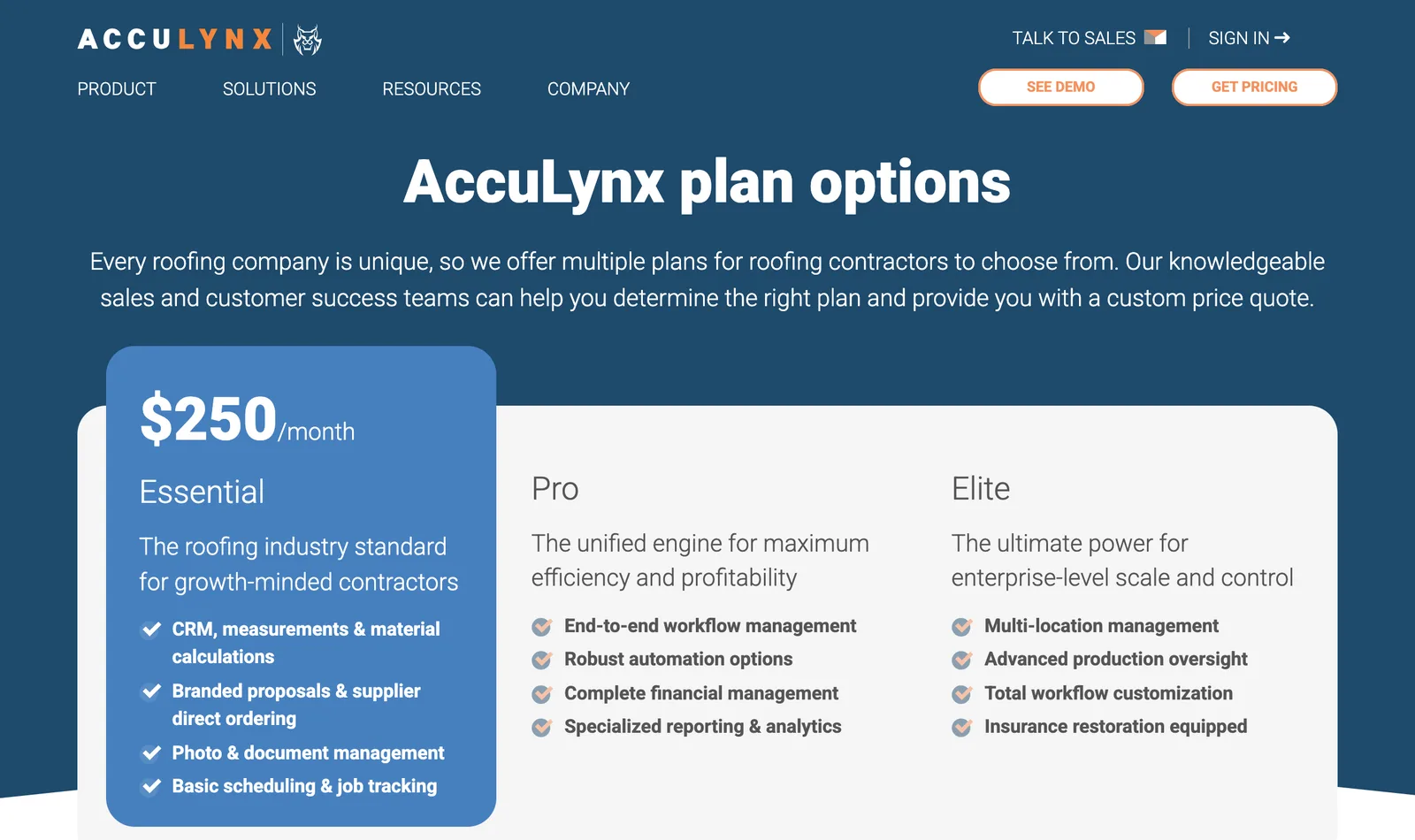 Jul 29, 2026
 Tech Stack
AccuLynx Review 2026: Pricing, Tier Gating, Alternatives
AccuLynx rates 4.6 across 846 reviews and now publishes an entry price. What that price omits, which tier holds the insurance workflow, and who should skip it.
Read Article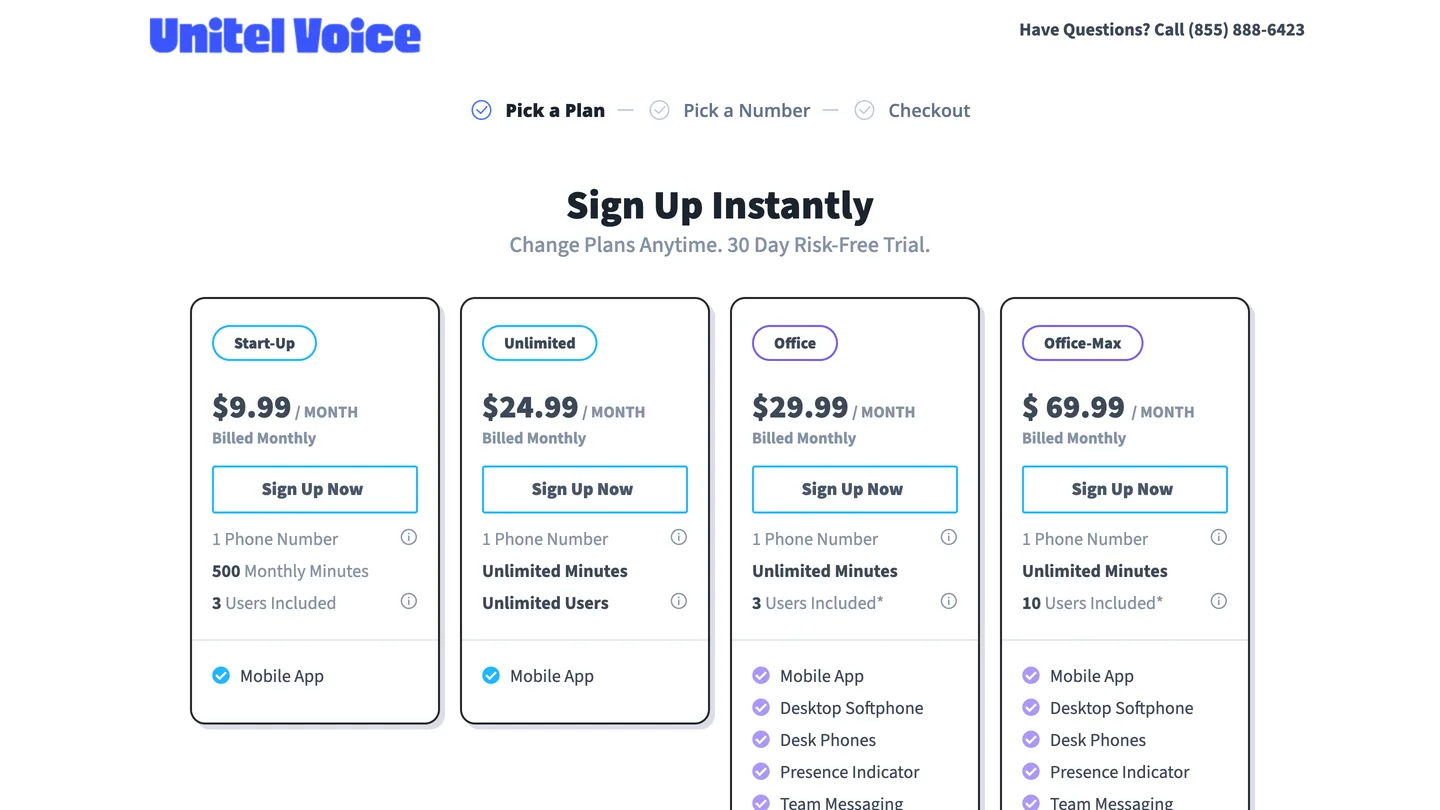 Jul 29, 2026
 Tech Stack
Unitel Voice Review 2026: Pricing, Features and Alternatives
Unitel Voice rates 4.6 on Capterra and gives a one-truck shop a business number for $9.99 a month. The published plans, the cost per call, and what it won't do.
Read Article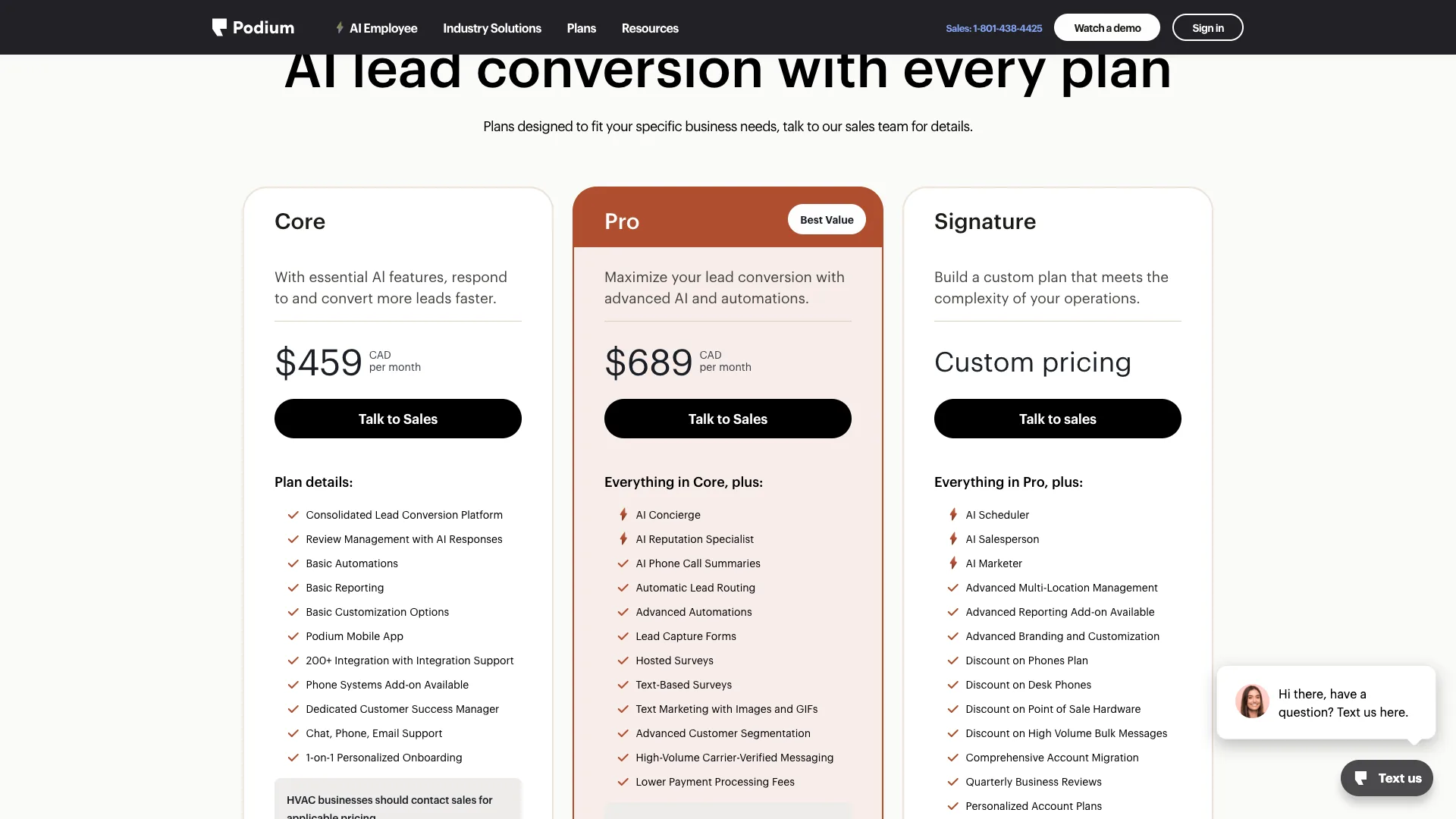 Jul 29, 2026
 Tech Stack
NiceJob vs Podium 2026: Pricing, Contracts and Review Gating
Both vendors print a price, at very different scale and in different currencies. The gap that matters is what Podium will not print: the billing unit, and whether a trade shop gets the number on the page.
Read Article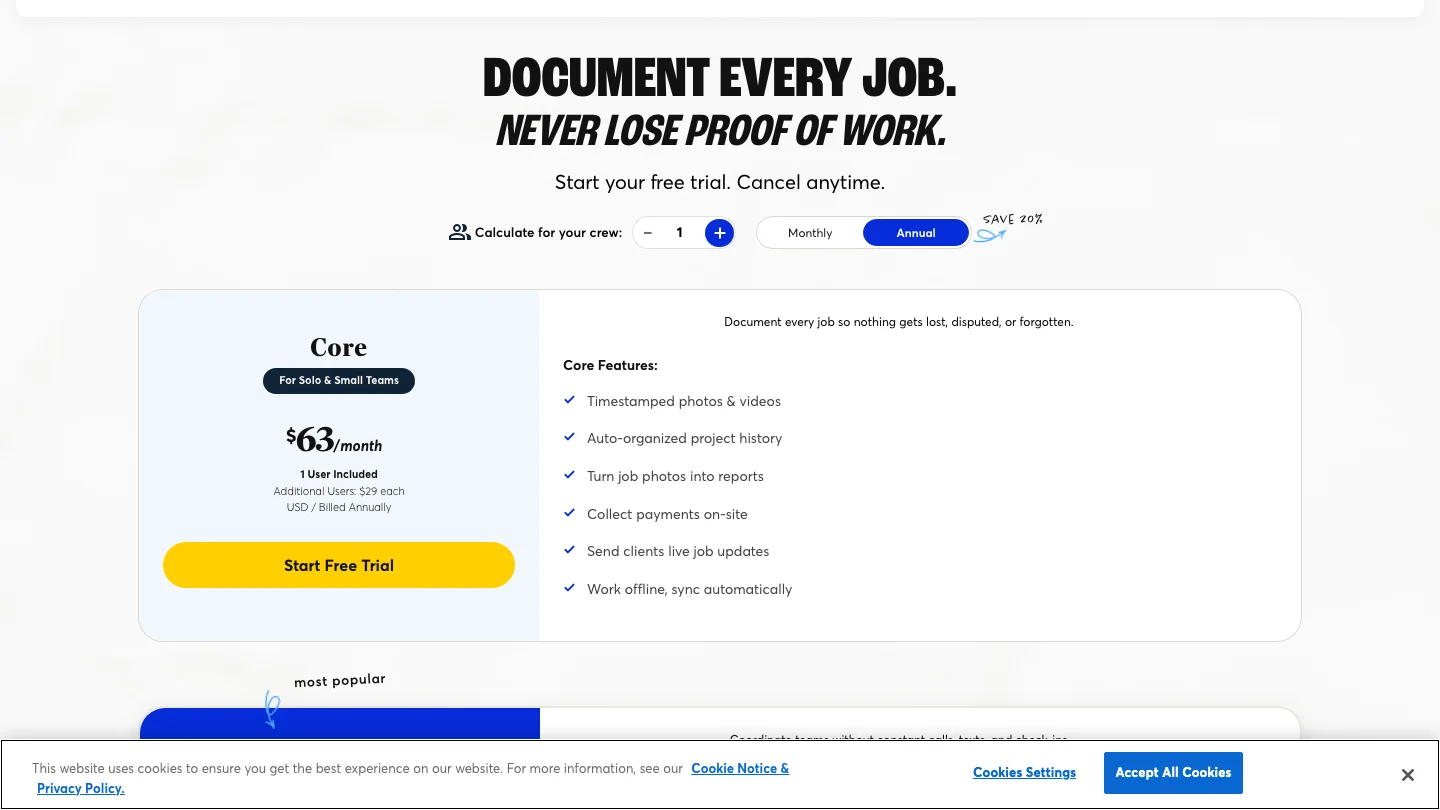 Jul 28, 2026
 Tech Stack
CompanyCam Review 2026: Pricing, Pros, Cons and Alternatives
Every page ranking for CompanyCam still quotes a per-user price the vendor no longer charges. Here are the real plans, the seat math, and who should skip it.
Read Article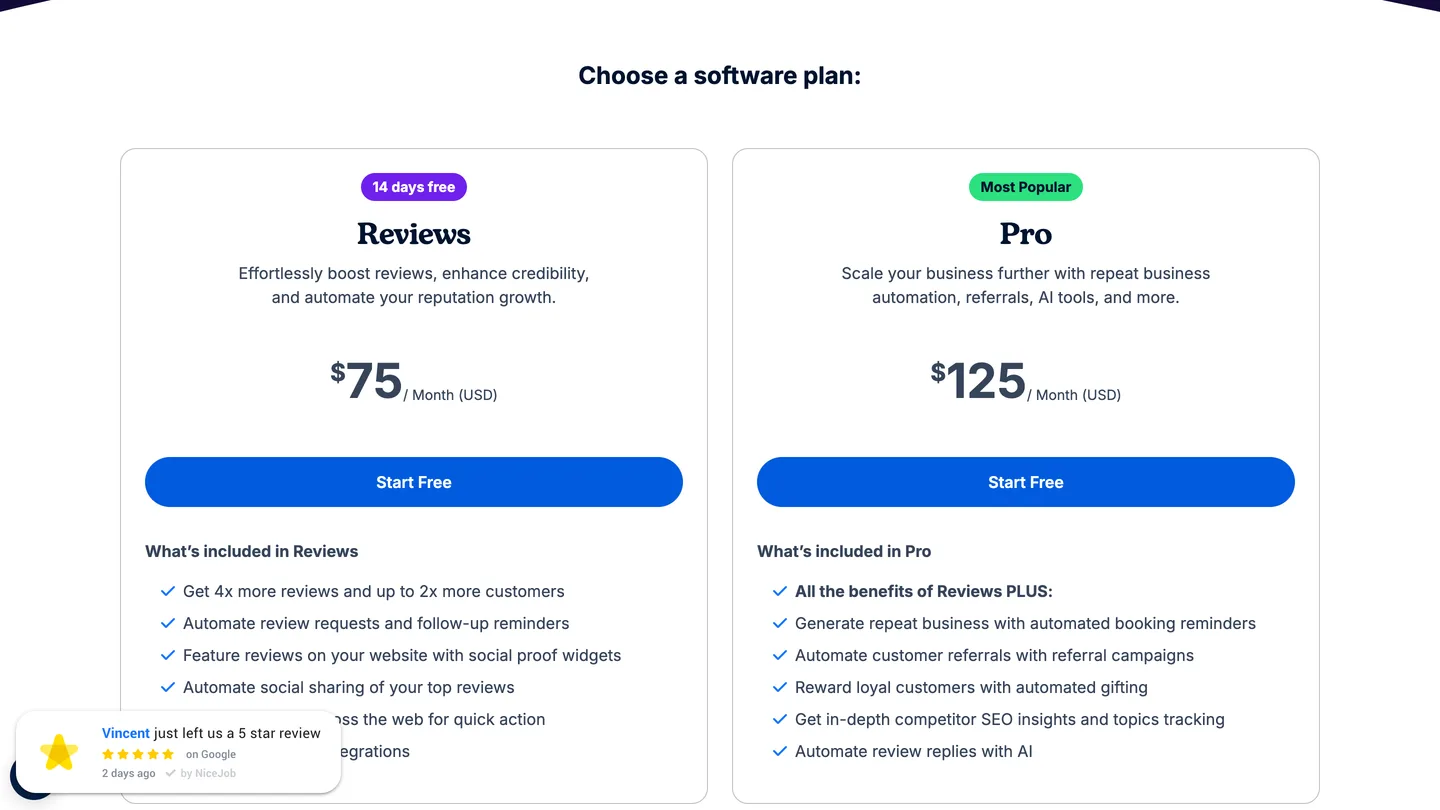 Jul 28, 2026
 Tech Stack
NiceJob Review 2026: Pricing, Pros, Cons and Alternatives
NiceJob rates 4.9 on Capterra and refuses to gate negative reviews. Real plan pricing, the active-customer threshold nobody publishes, and who should skip it.
Read Article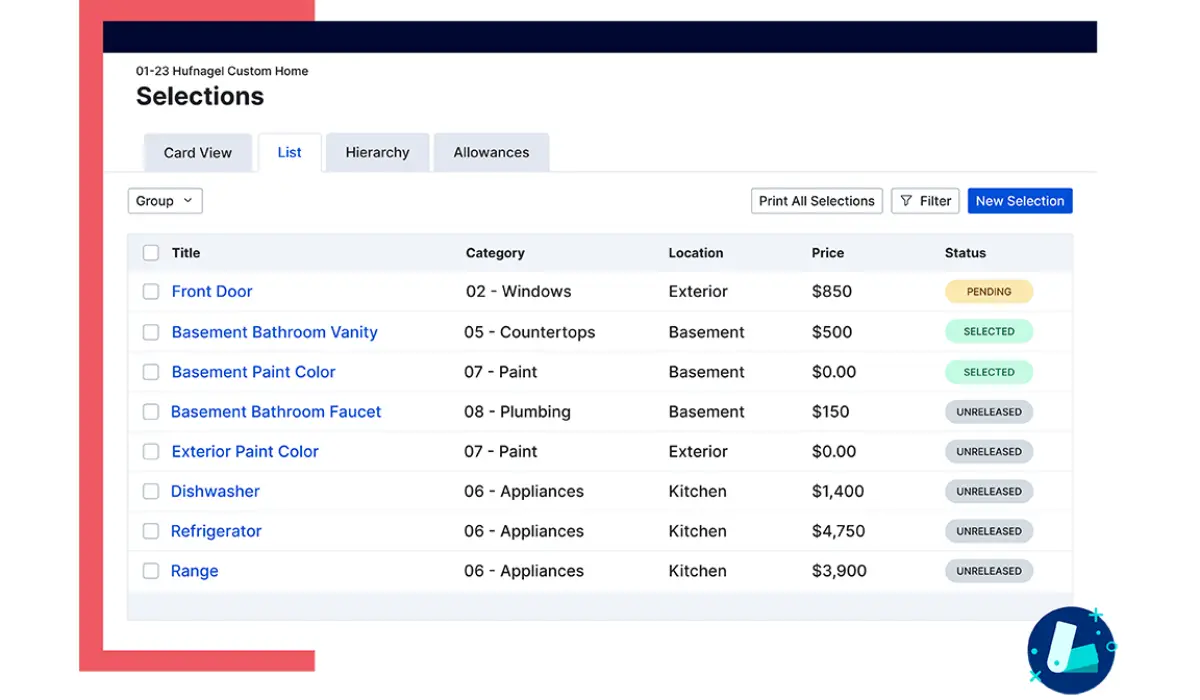 Jul 27, 2026
 Tech Stack
Buildertrend Review 2026: Pricing, Limits and Alternatives
Buildertrend rates 4.5 across 2,486 Capterra reviews and quotes against your revenue rather than your seat count. The workflows, the export problem, the alternatives.
Read Article Jul 27, 2026
 Tech Stack
CallRail Review 2026: Pricing, Pros, Cons and Alternatives
CallRail rates 4.5 on Capterra, and its tracking numbers port out free. But the two usage rates that decide your real bill are the two it does not print.
Read Article Jul 27, 2026
 Tech Stack
Roofr Review 2026: Pricing, Pros, Cons and Alternatives
Roofr rates 4.6 on Capterra and sells $13 measurement reports against a market charging triple. But it will not import a report from anywhere else.
Read Article Jul 25, 2026
 Tech Stack
Housecall Pro Review 2026: Pricing, Pros, Cons, Alternatives
Housecall Pro has the shortest learning curve in the category and the widest review spread. Real pricing, the Instapay math, and the migration trap to plan around.
Read Article Jul 24, 2026
 Tech Stack
Jobber Review 2026: Pricing, Pros, Cons and Alternatives
Jobber rates 4.6 on Capterra with the best mobile app in the category. Real plan pricing, the feature gating that changes your entry price, and who it suits.
Read Article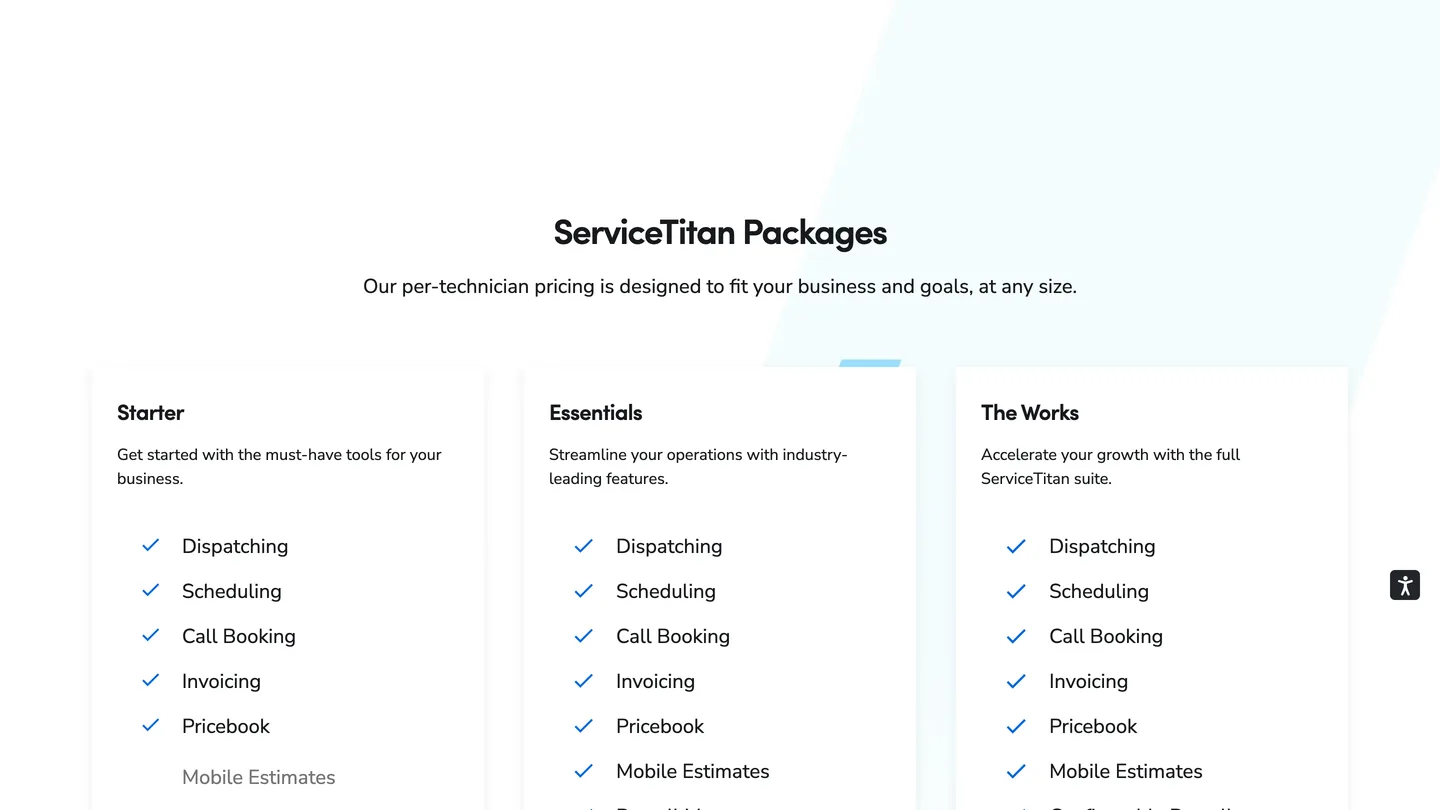 Jul 23, 2026
 Tech Stack
ServiceTitan Review 2026: Pricing, Pros, Cons, Alternatives
ServiceTitan rates 4.3 on Capterra but its weakest score is value for money. Real reported pricing, the 12-month contract, the exit fees, and who it suits.
Read Article Jun 3, 2026
 Tech Stack
HVAC Online Scheduling: The 43% Losing After-Hours Bookings
HVAC leads every trade on online booking at just 56.7%, which still leaves 43% of sites forcing an after-hours customer to wait for a business-hours phone call.
Read Article