Synchroteam Review 2026: Pricing, Pros, Cons, Alternatives
Synchroteam starts at $39/month. What each tier gates, the 7 limitations reviewers name, and 5 alternatives with published prices.
Disclosure This article features tools from our brand partners. If you choose to use them, we may receive compensation at no extra cost to you.
Our editorial choices are independent of these affiliate arrangements. Read our full affiliate disclosure.
Fervor is a CRO and web design studio, not a software reseller, and no vendor paid for placement here or for a kinder verdict. Affiliate links are flagged where they appear, and they never change what we report.
Page at a glance
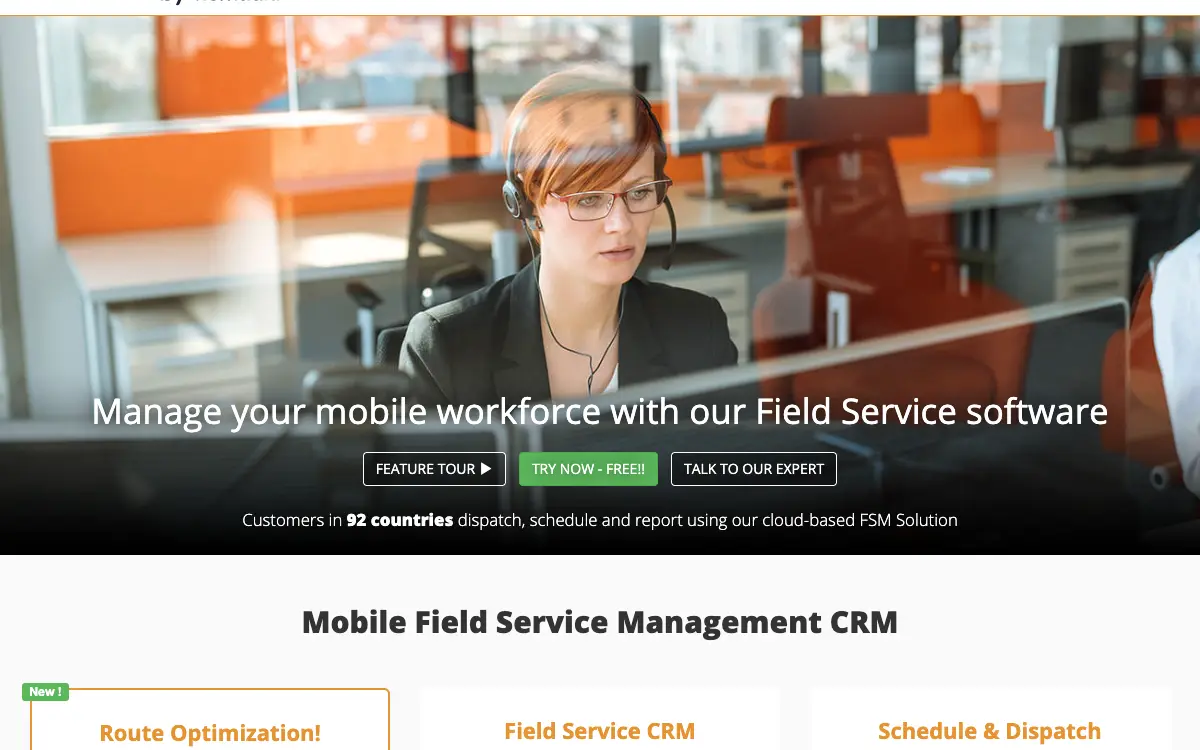
Synchroteam is Per-seat field service management with published pricing, a two-way QuickBooks Online sync and an unusually complete REST API, aimed at service and maintenance work rather than project construction. It starts at $39/month per user login, per month, billed annually. Every seat is billed, and the seat count includes office staff, not just field technicians. The one concession is a free first administrator, which only unlocks once you are paying for at least one mobile worker. A shop with 6 technicians and 2 office people pays for 7 seats, not 6. It fits A service and maintenance crew of roughly 3 to 30 technicians running recurring or contract-driven work orders, where the office wants dispatch, mobile job reports and invoicing in one place and is willing to pay per head. It's the wrong buy for A remodeler, custom home builder or deck builder running long multi-week projects with change orders, selections, draw schedules and subcontractor scheduling, because Synchroteam is built around the work order and the intervention, not the project. There's a multi-job Projects function, but no change order workflow, no selections, no budget-versus-actual job costing and no client-facing build schedule. And the trade list the vendor markets to is service work: carpet cleaning, HVAC, pest control, pool service, telecom, utilities. Alternatives that publish their prices are Jobber from $49/month, Housecall Pro from $59/month, Service Fusion from $208/month. Four priced tiers, seven evidenced gaps and five alternatives, three of which publish a figure.
Start here if Synchroteam is on your shortlist
Synchroteam earns its money with A service and maintenance crew of roughly 3 to 30 technicians running recurring or contract-driven work orders, where the office wants dispatch, mobile job reports and invoicing in one place and is willing to pay per head. If that's you, it does the job. The sections below are the parts worth checking before you sign. But the fit is narrower than the marketing suggests, and the price isn't the whole cost.
It starts at $39/month. And pricing was verified on 7 August 2026, so you can check every figure below in a browser tab.
| Pricing model | Published tiers |
|---|---|
| Entry price | $39/month |
| Users | Every seat is billed, and the seat count includes office staff, not just field technicians |
| Ownership | Nomadia Group |
| Best fit | A service and maintenance crew of roughly 3 to 30 technicians running recurring or contract-driven work orders, where the office wants dispatch, mobile job reports and invoicing in one place and is willing to pay per head. |
| Accounting sync | QuickBooks Online (two-way), Xero (one-way), Sage (one-way) |
What works
- Synchroteam prints its per-seat price, which most of this category refuses to do
- The directory is small and hand-counted, but the API underneath it is unusually complete
- Month-to-month freedom on the front end, absolute finality on the back end
- The mobile client is the product, and it's built for maintenance work rather than sales calls
- Export tooling exists and is well specified, which makes the deletion clause survivable
What does not
- The whole gap between Standard and Premium is one feature
- Cancellation deletes your data and the vendor says it can't be recovered
- Xero syncs one way, QuickBooks Online syncs both
- Card payments carry an above-market processing rate
- Interface complexity comes up repeatedly, across nine years of reviews
Synchroteam is Per-seat field service management with published pricing, a two-way QuickBooks Online sync and an unusually complete REST API, aimed at service and maintenance work rather than project construction. It sells to Cross-trade contractors, and the shape of the product follows from that: Four rates sit on the public pricing page with no form in front of them: Standard at $39 or $49 per user per month, Premium at $64 or $79. But ServiceTitan and FieldPulse, two of the closest functional comparisons, both route every buyer to a quote request. So a Synchroteam buyer can model total cost of ownership before speaking to anyone, which is rare enough to be a genuine differentiator.
Ownership matters here more than it usually does. Synchroteam is owned by Nomadia Group, so weigh roadmap risk alongside the feature list. An independent product can be bought and folded into somebody else's plan two years after you sign.
Who Synchroteam is for, and who it isn't
It fits A service and maintenance crew of roughly 3 to 30 technicians running recurring or contract-driven work orders, where the office wants dispatch, mobile job reports and invoicing in one place and is willing to pay per head. That's the half most reviews print. Here's the other half, which is the one worth your time.
Don't buy it if you're A remodeler, custom home builder or deck builder running long multi-week projects with change orders, selections, draw schedules and subcontractor scheduling. Synchroteam is built around the work order and the intervention, not the project. There's a multi-job Projects function, but no change order workflow, no selections, no budget-versus-actual job costing and no client-facing build schedule. And the trade list the vendor markets to is service work: carpet cleaning, HVAC, pest control, pool service, telecom, utilities. Look at Buildertrend instead.
Don't buy it if you're A one or two person operator who wants a low monthly floor and heavy consumer-facing polish such as online booking, review requests and text-first customer comms. Per-seat pricing looks cheap at two seats, but the free administrator only unlocks once a mobile worker is paid for, SMS is metered at $12 for 50 credits, and the interface is built for a dispatcher rather than an owner working out of a truck. And reviewers describe it as cluttered on first use. Look at Housecall Pro instead.
Don't buy it if you're A growing shop of 30 or more where most new seats are office and admin staff rather than billable technicians. Every administrator and manager login is a paid seat at the same rate as a technician. At 40 seats on Premium annual that's $30,720 a year, and none of that headcount is billable. So a flat-fee unlimited-user platform inverts the maths at that size. Look at Service Fusion instead.
Don't buy it if you're A contractor who wants the software to also drive lead generation, marketing attribution and call tracking. The integration directory holds 11 entries and none of them is a marketing, ads or call-tracking platform. There's no Google Local Services connection, no review-request engine and no attribution reporting. So everything past job intake is somebody else's tool, wired through Zapier or the API. Look at ServiceTitan instead.
Pricing: what Synchroteam publishes and what it doesn't
The tiers are public. And that's worth more than it sounds in a category where half the vendors make you ask.
| Tier | Price | Billing unit | What it unlocks |
|---|---|---|---|
| Standard (annual billing) | $39/month | per user login, per month, billed annually | Everything on the feature list except Route Optimization, Free QuickBooks Online, Xero, Sage and Zoho CRM connectors, REST API access and Zapier integration, Unlimited storage |
| Standard (monthly billing) | $49/month | per user login, per month, billed monthly | Same feature set as annual Standard, at the month-to-month rate |
| Premium (annual billing) | $64/month | per user login, per month, billed annually | Route Optimization, which is the only line item flagged PREMIUM FEATURE on the published feature list |
| Premium (monthly billing) | $79/month | per user login, per month, billed monthly | Same feature set as annual Premium, at the month-to-month rate |
Every seat is billed, and the seat count includes office staff, not just field technicians. The one concession is a free first administrator, which only unlocks once you are paying for at least one mobile worker. A shop with 6 technicians and 2 office people pays for 7 seats, not 6.
There is a discount for paying annually up front: Paying annually drops Standard from $49 to $39 per user per month and Premium from $79 to $64 per user per month, which is a 20 percent and 19 percent saving respectively. The saving is real, but it is bought with a full year of prepayment against a refund clause that pays nothing back if you leave early. And an annual prepay discount tells you an annual commitment exists, which is worth knowing before anyone mentions a term length out loud.
Everything that isn't the Synchroteam subscription
Payment processing. Card payments run through Stripe at 3.4% + $0.30 per transaction in the USA, and 1.9% + 0.25 EUR in the UK and Euro zone. The US rate sits roughly half a point above Stripe's own standard published card rate, so the convenience of collecting in the field carries a spread. Visa, Mastercard and American Express are accepted. Synchroteam charges nothing to switch the module on.
Implementation and onboarding. There is no implementation fee. The pricing page commits to free setup and training, no hosting fees and no setup or upgrade fees, which is unusual in a category where four-figure onboarding charges are normal.
Minimum term. None on the monthly plan. The vendor states it is a month-to-month agreement cancellable at any time. Choosing annual billing commits you to the full subscription period, because the terms bill at the start of the elected term and refund nothing for unused months.
Getting out. No separate penalty fee, but no money comes back either. The terms state there are no refunds or credits for partial months of Service, plan downgrades, or refunds for months unused if you close your account before the end of your subscription period, and add that no exceptions will be made. The pricing FAQ puts it more bluntly.
Auto-renewal. The service is charged at the start of your elected subscription term, monthly or annually, and continues billing until the account owner cancels through the Account link in the app. The terms state there are no other means of canceling your account, so an email or phone call to support does not stop the charge.
Modules sold separately. , . And this is where a Synchroteam quote drifts from the published tier. A module you need immediately is part of the price, not an extra.
Third-party services you will also pay for. . These are not on Synchroteam's invoice, and they are still part of what this decision costs you every month.
Small thing that turns out to matter. The entire 64 percent price gap between Standard and Premium buys exactly one feature, and the vendor's own product page describes that same feature as a separately purchased add-on. A buyer talked onto Premium during a trial may be paying $25 per user per month for a module they could be asked to buy again. On a ten-seat annual contract that's $3,000 a year riding on an ambiguity the vendor hasn't resolved across two of its own pages. So get the inclusion confirmed by email before the term starts.
The Synchroteam costs that land afterwards
The subscription is the part everyone quotes. These are the lines that land afterwards, and the ones we could not find are named as unpublished rather than left blank.
Sold separately. , . Price the configuration you'll really run, because an add-on you need on day one is part of the price.
Third-party services you'll also pay for. . None of these are on Synchroteam's invoice, and all of them are part of what this decision costs every month.
"Synchroteam Standard (annual billing) is $39/month, per user login, per month, billed annually."
Synchroteam pricing page (2026)
"Synchroteam Standard (monthly billing) is $49/month, per user login, per month, billed monthly."
Synchroteam pricing page (2026)
"Every seat is billed, and the seat count includes office staff, not just field technicians. The one concession is a free first administrator, which only unlocks once you are paying for at least one mobile worker. A shop with 6 technicians and 2 office people pays for 7 seats, not 6."
Synchroteam pricing page (2026)
The five workflows you pay for
Feature totals are noise. So a shop in this category lives or dies on five things, and those are the five to grade, and each one below carries the evidence it's graded on.
Synchroteam prints its per-seat price, which most of this category refuses to do Four rates sit on the public pricing page with no form in front of them: Standard at $39 or $49 per user per month, Premium at $64 or $79. But ServiceTitan and FieldPulse, two of the closest functional comparisons, both route every buyer to a quote request. So a Synchroteam buyer can model total cost of ownership before speaking to anyone, which is rare enough to be a genuine differentiator.
The directory is small and hand-counted, but the API underneath it is unusually complete The Extensions directory holds exactly 11 entries: Customer Portal, Online Booking, Photo Gallery, Payment Processing, Notifications, Calendars, Quickbooks, Xero, Zapier, Zoho CRM and Custom. And that's a short list next to platforms advertising hundreds. But the compensation is a documented REST API covering activities, customers, sites, equipment, jobs, invoices, quotations, credit notes, parts, inventory, users, teams and custom fields, throttled at 1000 requests a minute, included free on every plan rather than gated to a top tier.
Month-to-month freedom on the front end, absolute finality on the back end The vendor leans hard on flexibility in its marketing, promising no strings attached and cancel at any time, and it's telling the truth about the commitment. But what it doesn't put on the pricing page in the same size type is what happens next. Cancellation is immediate, nothing is refunded, and the data is deleted. Those two postures aren't contradictory. Still, a buyer who only reads the pricing FAQ will be surprised by the second one.
The mobile client is the product, and it's built for maintenance work rather than sales calls The feature list gives the mobile app an offline client on iOS and Android, signature capture, photo annotation, barcode scanning, serialised parts tracking, mobile invoicing and collection, and the ability to suspend, reschedule or deny a job from the handset. That set points at equipment maintenance and contract service, not at in-home selling. And reviewers who like the product tend to name exactly those capabilities. On 2024-05-15, a business service engineer, 6-12 months on the platform, describes it: "All modules are important, but the most amazing is the possibility of being an equipment maintenance provider."On 2019-03-01, a services director, 6-12 months on the platform, describes it: "The ability to manage digital reports and quotations directly from the Cell phone."
Export tooling exists and is well specified, which makes the deletion clause survivable The feature list names data export across interventions, activities, clients, catalogue and users, customisable data exports, invoice export in CSV and XLS, invoice export in Sage format, and customisable PDFs of reports, quotes, invoices and credit notes. The pricing page advertises one-click data import and export. And combined with the REST API, a leaving customer has real routes out. But the catch is purely one of sequencing, because the exit door closes the moment you cancel.
How Synchroteam lands by trade
Fit differs by trade rather than by company size alone, and a blended paragraph hides that. Here is the split for the trades this one sells to.
Cross-trade. The workflow that decides it is synchroteam prints its per-seat price, which most of this category refuses to do, and the shop profile that gets value is service and maintenance crew, 3 to 30 technicians doing service and commercial and residential work. Where it stops being a fit is A remodeler, custom home builder or deck builder running long multi-week projects with change orders, selections, draw schedules and subcontractor scheduling.
How Synchroteam talks to your books
QuickBooks Online connects both ways, on every plan. Xero connects one way only, so edits made in your books do not come back, on every plan. Sage connects one way only, so edits made in your books do not come back, on every plan. Your costs map through cost codes, so test yours against your own chart of accounts before you commit. A code your books don't recognise is how a labour charge quietly lands somewhere useless.
Past those, the road ends. Sage is missing from its own directory, No marketing, ads or call-tracking integrations, No payroll integration, No business intelligence or analytics partner do not connect. So if your books run on an ERP rather than the platforms named above, weigh that before anything else.
Beyond accounting it connects to Zoho CRM (Bi-directional sync of customers, sites and contacts, free on every plan. Note that it moves the customer record only, not jobs or invoices.), Zapier (The escape hatch for everything the 11-entry directory doesn't cover, using triggers and actions.), Stripe (Card collection from the back office and from the technician's handset, including invoice presentation, signature and payment confirmation on site.), Microsoft Outlook, Apple iCal and Google Calendar (A free per-user calendar connector that pushes assigned jobs into the technician's own calendar, so appointments are visible without opening the Synchroteam app.). A public API exists: A documented REST API at api.synchroteam.com, version 3, using HTTP Basic authentication over HTTPS with a base64-encoded domain and API key. Endpoints cover activities, activity types, customers, sites, equipment, jobs, invoices, quotations, credit notes, parts, inventory, users, teams, custom fields, attachments, messages, timeline, projects and recurrences. Throttling is 1000 requests per minute plus a daily quota, returning HTTP 429 when exceeded. Access is included free on every plan rather than reserved for a top tier, which is the opposite of how most of this category treats API access.
Synchroteam support, and what it costs you
Support is the line item nobody prices and everybody eventually needs. Onboarding for Synchroteam: There is no implementation fee. The pricing page commits to free setup and training, no hosting fees and no setup or upgrade fees, which is unusual in a category where four-figure onboarding charges are normal.
A commercial service owner, says it plainly: "NO SUPPORT ! Take it or leave it attitude - They don't care about improving the software"
An IT operations manager, 6-12 months on the platform, says it plainly: "We have issues with the android app in some phones, we also had several issues that lasted a couple of days, so the support was not that fast"
What happens when you want to leave Synchroteam
Nobody reads this section before they buy, and it's the one that costs money afterwards. Four terms decide what leaving looks like.
Minimum term. None on the monthly plan. The vendor states it is a month-to-month agreement cancellable at any time. Choosing annual billing commits you to the full subscription period, because the terms bill at the start of the elected term and refund nothing for unused months.
Auto-renewal. The service is charged at the start of your elected subscription term, monthly or annually, and continues billing until the account owner cancels through the Account link in the app. The terms state there are no other means of canceling your account, so an email or phone call to support does not stop the charge.
Early termination. No separate penalty fee, but no money comes back either. The terms state there are no refunds or credits for partial months of Service, plan downgrades, or refunds for months unused if you close your account before the end of your subscription period, and add that no exceptions will be made. The pricing FAQ puts it more bluntly.
Payment processing. Card payments run through Stripe at 3.4% + $0.30 per transaction in the USA, and 1.9% + 0.25 EUR in the UK and Euro zone. The US rate sits roughly half a point above Stripe's own standard published card rate, so the convenience of collecting in the field carries a spread. Visa, Mastercard and American Express are accepted. Synchroteam charges nothing to switch the module on.
Side note, and it's a useful one: cancellation is a delete, not a wind-down. There's no described grace window, no dormant archive and no read-only mode, and the vendor states the data can't be recovered. This inverts the usual migration sequence. Most contractors cancel first and then discover what they needed, which works at vendors that keep an archive. But here the export has to be complete and verified before the cancel button is pressed, and the only cancellation route is a link inside the app, because the terms state there are no other means of canceling your account.
"Pricing is in euro which makes the fluctuation of costs due to rising/falling dollar rates difficult to anticipate how much is withdrawn each month."
Capterra, Ryan P. (2-27)
"NO SUPPORT ! Take it or leave it attitude - They don't care about improving the software"
Capterra, William D. (7-27)
"The inability for my tech to pause a job and restart it without creating an extra ticket when you look back on job reports."
Capterra, Victor G. (5-23)
The Synchroteam gaps worth raising on the call
What follows came from reading the review corpus by complaint type rather than by star rating, which is how you find the disqualifying detail buried in a five-star review.
The whole gap between Standard and Premium is one feature The published feature list runs to more than a hundred line items and flags exactly one of them PREMIUM FEATURE: Route Optimization. But moving from Standard to Premium costs an extra $25 per user per month on annual billing, a 64 percent increase, and it buys that single module. And a ten-seat shop pays $3,000 more a year for it. Worse, the Route Optimization product page describes the same module as a paid option available on request, which reads as a separate charge rather than a tier inclusion. Before paying the Premium delta, email support and ask in writing whether Route Optimization is included at the Premium rate or billed on top of it, and get the answer before you sign an annual term.
Cancellation deletes your data and the vendor says it can't be recovered Most field service platforms keep a dormant archive after you leave, or give you a grace window to pull records. But Synchroteam's terms do the opposite. Cancellation takes effect immediately, access to content ends at that moment, and the vendor deletes it. So any job history, photo, signed report or invoice you didn't export before clicking cancel is gone. And that matters most for warranty callbacks and insurance disputes, where a five year old signed job report is the evidence. Run a full export of interventions, activities, clients, catalogue and users, plus your photo gallery and PDF reports, and confirm the files open, before you cancel anything. And don't cancel first and export second.
Xero syncs one way, QuickBooks Online syncs both The vendor markets accounting integration as a headline inclusion. But the two connectors aren't equivalent. The QuickBooks Online connector runs automated bi-directional synchronization of customers, contacts, products and invoices. The Xero connector only pushes invoices from Synchroteam into Xero and creates new customers there. And nothing flows back. So a Xero shop that edits a customer record or marks an invoice paid in the accounting system won't see that reflected in Synchroteam. If you run Xero, decide up front which system owns the customer record, and expect to reconcile payment status manually or through Zapier.
Card payments carry an above-market processing rate Collecting on site runs through Stripe at 3.4% plus $0.30 per transaction in the USA. But Stripe's own standard card rate is lower, so Synchroteam is taking a spread on top. And on a shop doing $600,000 a year in card volume, half a point is roughly $3,000, which is more than the annual software bill for several seats. Compare the blended rate against your current merchant account on real volume. And if the spread costs more than the seats, invoice out of your accounting system and let Synchroteam handle only the job record.
Interface complexity comes up repeatedly, across nine years of reviews The complaint is that the density of features makes the screen hard to read, not that the software lacks them. And reviewers in 2023 and again in 2026 describe the same problem in almost the same words, which suggests it's a design posture rather than a bug that got fixed. So for a crew where technicians aren't comfortable with software, that shows up as slower adoption and more office chasing. A CEO who reviewed it on 2026-07-01 writes: "The user interface looks a bit cluttered and takes some getting used to during initial onboarding." Put two of your least technical technicians on the 14 day trial and watch them complete a job report unassisted. And don't evaluate this from the admin console.
The mobile app draws specific device and connectivity complaints There's an offline mobile client for iOS and Android on the feature list. But reviewers report Android behaviour varying by handset, and separately report that tracking technicians in weak-signal areas is unreliable. And both matter for trades working rural routes, basements, plant rooms and roofs, which is a large share of field service work. On 2018-05-30, a social worker, 1-2 years on the platform, reports it: "In areas where there is slow connection tracking down the various employees can be challenging in that situation" Trial the app on the exact handset models your crew carries, in a genuinely dead zone, and confirm a job report written offline syncs cleanly when signal returns.
No native business intelligence layer, and support quality varies by region Reporting is limited to customisable reports, dashboards and CSV or XLS exports. And there's no analytics or BI module, so anything beyond canned reporting means exporting to a spreadsheet or pulling the REST API into your own tool. Support responsiveness also draws region-specific criticism rather than uniform praise. A CEO, Less than 6 months on the platform, puts it it plainly: "The support in brazil and the tool doesn't have a BI tool." If you need margin-by-job or technician-profitability reporting, budget for the API work or a separate BI tool, and ask the sales team which support region will cover your time zone.
One more thing worth knowing. The interface-complexity complaint is stable across nine years of reviews, which makes it a design posture rather than a backlog item. Don't evaluate this product from the admin console, because the density that frustrates technicians is exactly what a dispatcher likes. So put your two least technical field staff on the 14 day trial and make them complete a job report unassisted. If they can, the economics are strong. But if they can't, the seat price stops mattering.
One more thing worth knowing. The Xero and QuickBooks connectors are marketed as one capability but behave completely differently, and only the QuickBooks path is genuinely two-way. A Xero shop inherits a permanent reconciliation chore, because payments recorded in Xero never reach Synchroteam and the field team will be looking at stale balances. So if you're on Xero and choosing now, either budget for Zapier glue or weigh moving the books to QuickBooks Online as part of the same decision.
Side note, and it's a useful one: synchroteam gives away the two things this category normally sells hardest: full REST API access and published pricing. And it charges instead for a routing module. For a technically capable shop this flips the total cost of ownership calculation. The integrations directory is small at 11 entries, but an included API plus Zapier means the gaps are closable with work rather than with an upgrade, and the published rate means you can model four years of cost before anyone calls you.
The Synchroteam review corpus, read by complaint
Every quote below is transcribed from a published review, named to the platform that carries it and to the reviewer as that platform displays them. We read the corpus by complaint type rather than by star rating, which is how the disqualifying detail buried inside a five-star review gets found.
"Pricing is in euro which makes the fluctuation of costs due to rising/falling dollar rates difficult to anticipate how much is withdrawn each month."
An owner who reviewed it on 2017-12-27 writes on Capterra
"NO SUPPORT ! Take it or leave it attitude - They don't care about improving the software"
A commercial service owner who reviewed it on 2016-07-27 writes on Capterra
"The inability for my tech to pause a job and restart it without creating an extra ticket when you look back on job reports."
A project manager who reviewed it on 2023-05-23 reports it on Capterra
"I find its user interface somewhat complicated and unintuitive."
But a tsu, says it differently on Capterra
"The user interface looks a bit cluttered and takes some getting used to during initial onboarding."
On 2026-07-01, a CEO, 1-2 years on the platform, reports it on Capterra
"We have issues with the android app in some phones, we also had several issues that lasted a couple of days, so the support was not that fast"
On 2018-02-08, an IT operations manager, 6-12 months on the platform, reports it on Capterra
"In areas where there is slow connection tracking down the various employees can be challenging in that situation"
A social worker, 1-2 years on the platform, says it plainly on Capterra
"The support in brazil and the tool doesn't have a BI tool."
On 2018-11-09, a CEO, Less than 6 months on the platform, says on Capterra
"The calendar is robust and cleanly designed ,it makes scheduling easy ."
A project manager, 1-2 years on the platform, writing on 2021-08-19, says on Capterra
"Huge time-saving capability over paper-based job and direct input invoice processes"
But a financial controller, 6-12 months on the platform, reports it it differently on Capterra
"All modules are important, but the most amazing is the possibility of being an equipment maintenance provider."
But a business service engineer, 6-12 months on the platform, says it differently on Capterra
"The ability to manage digital reports and quotations directly from the Cell phone."
A services director, 6-12 months on the platform, puts it it plainly on Capterra
"responsive, ease of use, ability to set own parameters"
A service delivery manager, 1-2 years on the platform, writing on 2024-05-14, says on Capterra
How Synchroteam compares
Alternatives a buyer would genuinely shortlist against Synchroteam. Read the billing unit beside each figure rather than the figure on its own, because a per-seat price and a flat platform fee aren't comparable numbers.
| Tool | Entry price | Billing unit | Users included | Published? |
|---|---|---|---|---|
| Synchroteam | $39/month | per user login, per month, billed annually | Every seat is billed, and the seat count includes office sta | Yes |
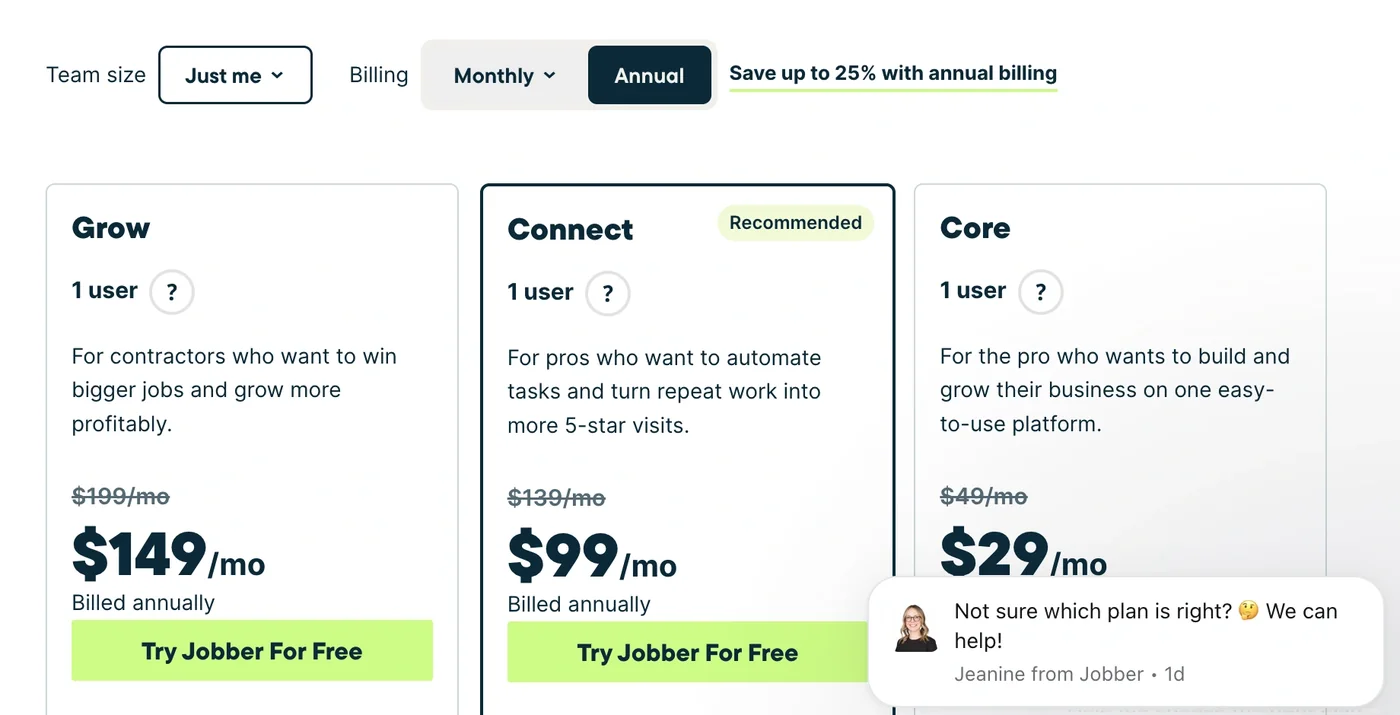
| Jobber | $49/month | per account, per month, 1 user included, extra users $29/month each | 1 on Core, Connect and Grow; 5 on Plus | Yes |
| Housecall Pro | $59/month | per account, per month, billed annually | Not published on the pricing page | Yes |
| Service Fusion | $208/month | per account, per month, billed annually, unlimited users | Unlimited on every tier | Yes |
| ServiceTitan | Quote only | per technician, quoted | Not published | No |
| FieldPulse | Quote only | per seat, purchased upfront for the contract term | Not published | No |
Jobber. Consumer-facing polish. Online booking, client hub, quoting and review flow are far more finished, and a solo or two-person shop pays a lower floor because the first seat is bundled into the plan fee. But Cost at scale. Once you pass roughly eight seats the $29 per extra user stacks on top of a plan fee that's already higher than Synchroteam's whole per-seat rate. And there's no equipment maintenance depth or serialised parts tracking.
Housecall Pro. Homeowner-facing service businesses. Marketing tooling, review requests, consumer text comms and payment flow are more developed, and the mobile experience is friendlier for technicians who aren't comfortable with software. But Transparency on seats. The pricing page doesn't publish how many users each tier includes or what extras cost, so total cost of ownership needs a sales conversation. But Synchroteam prints all four of its rates.
Service Fusion. Headcount economics. Every seat is free after the platform fee, so a shop adding office staff, dispatchers and estimators doesn't pay per head. And at 20 or more total logins it's dramatically cheaper than per-seat pricing. But Small crews. The $208 floor is more than five Synchroteam Standard seats, so a three-person operation pays for capacity it won't use for years.
ServiceTitan. Depth for large residential service operations. Call booking, marketing attribution, memberships, pricebook, financing and reporting go far beyond anything in Synchroteam. But Buyer transparency and cost. Every tier ends in a Request Pricing button, implementation is a real project, and the price point is out of reach for the crew band Synchroteam serves.
FieldPulse. Seat flexibility. It splits full-access seats from cheaper field-only seats, so a crew heavy on technicians and light on office staff can be cheaper than a flat per-login rate. But Commitment and transparency. Seats are bought upfront for the contract term rather than adjusted month to month, and no rate is published, so the buyer can't model cost without a sales call.
"I find its user interface somewhat complicated and unintuitive."
Capterra, Carlos Orlando R. (7-07)
"The user interface looks a bit cluttered and takes some getting used to during initial onboarding."
Capterra, Shyam Kishor P. (7-01)
Who should not buy Synchroteam
Don't buy Synchroteam if you're A remodeler, custom home builder or deck builder running long multi-week projects with change orders, selections, draw schedules and subcontractor scheduling. Synchroteam is built around the work order and the intervention, not the project. There's a multi-job Projects function, but no change order workflow, no selections, no budget-versus-actual job costing and no client-facing build schedule. And the trade list the vendor markets to is service work: carpet cleaning, HVAC, pest control, pool service, telecom, utilities. Look at Buildertrend instead.
Don't buy Synchroteam if you're A one or two person operator who wants a low monthly floor and heavy consumer-facing polish such as online booking, review requests and text-first customer comms. Per-seat pricing looks cheap at two seats, but the free administrator only unlocks once a mobile worker is paid for, SMS is metered at $12 for 50 credits, and the interface is built for a dispatcher rather than an owner working out of a truck. And reviewers describe it as cluttered on first use. Look at Housecall Pro instead.
Don't buy Synchroteam if you're A growing shop of 30 or more where most new seats are office and admin staff rather than billable technicians. Every administrator and manager login is a paid seat at the same rate as a technician. At 40 seats on Premium annual that's $30,720 a year, and none of that headcount is billable. So a flat-fee unlimited-user platform inverts the maths at that size. Look at Service Fusion instead.
Don't buy Synchroteam if you're A contractor who wants the software to also drive lead generation, marketing attribution and call tracking. The integration directory holds 11 entries and none of them is a marketing, ads or call-tracking platform. There's no Google Local Services connection, no review-request engine and no attribution reporting. So everything past job intake is somebody else's tool, wired through Zapier or the API. Look at ServiceTitan instead.
The verdict, by shop size
Solo operator or two-person crew
No. The fit is the problem here, not the cost. At two seats Synchroteam is cheap. But the free administrator only unlocks once a mobile worker is paid for, texting customers is metered at $12 per 50 messages, and reviewers consistently describe the interface as cluttered on first contact. An owner working out of a truck needs booking, reminders and payment to be effortless, and this product optimises for a dispatcher watching a board instead. So Housecall Pro or Jobber will get a one-truck operation live faster and keep the homeowner experience cleaner. This band runs 1 to 2 on the crew, doing residential and service work, and that's the profile the recommendation is written for.
Service and maintenance crew, 3 to 30 technicians
Yes, and this is the shape the product is built for. This is the band the product was built for. Recurring contracts, equipment and site inventories, serialised parts, offline mobile job reports, signature capture and a free two-way QuickBooks Online sync cover the whole loop for contract-driven service work. And Standard at $39 per user per month annually is genuinely cheap for the feature depth, the REST API is included rather than gated, and there's no implementation fee. But stay on Standard unless you've proved you need Route Optimization, and export your data on a schedule so the deletion-on-cancellation clause never becomes your problem. This band runs 3 to 30 on the crew, doing service and commercial and residential work, and that's the profile the recommendation is written for.
Larger service operation with heavy office headcount, 30 or more logins
Only under conditions, and they are worth being honest about. The software will hold up. But the pricing model turns against you because every administrator, manager and dispatcher costs the same as a billable technician. Forty Premium seats on annual billing is $30,720 a year. So run the comparison against a flat unlimited-user platform before renewing, and if you stay, note that the terms let the vendor change prices on fourteen days notice at any time, so build headroom into the budget. This band runs 30 or more on the crew, doing commercial and service work, and that's the profile the recommendation is written for.
Project-based construction: remodeling, custom homes, decks, kitchen and bath
No. Synchroteam models the work order, not the project. There's no change order workflow, no selections, no draw schedule, no budget-versus-actual job costing and no client-facing build timeline. And the vendor's own industry pages point at carpet cleaning, HVAC, pest control, pool service, telecom and utilities, all of which are service work. So a remodeler will spend the first month trying to force a multi-week build into an intervention record and the second month leaving. This band runs 2 or more on the crew, doing residential and commercial work, and that's the profile the recommendation is written for.
Insurance restoration and claims-driven work
Only under conditions, and they are worth being honest about. The documentation side is strong: annotated photos, signature capture, customisable PDF reports and a photo gallery all support a claim file. But what's missing is anything carrier-facing, and the deletion-on-cancellation clause is a serious hazard when claims reopen years later. So if you go this route, treat Synchroteam as the capture layer and archive every completed job packet into storage you control, on a schedule, not at cancellation. This band runs 3 or more on the crew, doing insurance and commercial work, and that's the profile the recommendation is written for.
Something adjacent to Synchroteam, then we'll get out of your way
We should say what our stake is here, which is none. Fervor is a web design and conversion studio for contractors. No vendor on this page pays us. But we measured something adjacent that changes what this purchase is worth.
Synchroteam bills per user login and counts the office in the seat total, so six technicians and two dispatchers is seven paid seats rather than six, at $39 each per month on an annual term that refunds nothing for the months you don't use. And those dispatch seats are pure demand-processing capacity: they're paid to turn incoming requests into scheduled jobs, and they cost the same on a week when nothing comes in. Fervor inspected the contractor sites in its index and found 95.8% carrying a serious WCAG violation, the kind that stops a quote form being completable by keyboard or screen reader, which is one way a shop ends up paying full price for a dispatcher with an empty queue.
But we can put a figure on it. Of 380 contractor sites we inspected, 82.8% loaded slowly enough that a quote form went unseen. So the sample is not curated: it is every contractor site the tooling could reach. All of it is documented in the Contractor CRO Index.
"82.8% of the 380 contractor websites inspected loaded slowly enough that a quote form went unseen."
Fervor Studio Contractor CRO Index (2026)
Buy the platform if it fits. But spend ten minutes on your own site first, on a phone, on mobile data, the way a homeowner would. The numbers are all public.
See where your site is losing the jobs Synchroteam would have managed
Fervor inspects your site the way a homeowner uses it, then shows you where calls leak out. About three days.
Get a Site InspectionWhat we checked on Synchroteam, and what we didn't
And here's what we can and can't stand behind on Synchroteam. So here's the basis. We read 16 vendor pages for Synchroteam on 7 August 2026, and we went through the reviews looking for complaints rather than for averages. Pricing was verified the same day, and every figure above traces to a page we opened.
So: 13 quotes on this page, 13 from Capterra.
And https://support.synchroteam.com/hc/en-us returned HTTP 403 to both WebFetch and a desktop-Chrome curl, so the help-centre articles on data export and account closure couldn't be read directly. Export scope was recovered from the published feature list instead., https://www.g2.com/products/synchroteam/reviews (G2 blocks automated fetching), https://play.google.com/store/apps/details?id=com.synchroteam.mobile returned HTTP 404, and the Google Play listing couldn't be located without further search budget, https://apps.apple.com/us/app/synchroteam/id670310396 returned HTTP 404, so App Store ratings and reviews weren't captured and TrustRadius, Trustpilot and Reddit weren't reachable for this tool within the session's search budget refused automated retrieval for Synchroteam. Forum and social threads are the ones people most want quoted, and they are exactly the ones we cannot verify, so none of them are here.
What that leaves untested: the product itself wasn't trialled, so offline mobile sync behaviour, Android device compatibility and the actual export file contents are reported from vendor documentation and reviews rather than firsthand. And everything above is 16 vendor pages and a review corpus, which is documentary rather than hands-on.
What Synchroteam users say
Pricing is in euro which makes the fluctuation of costs due to rising/falling dollar rates difficult to anticipate how much is withdrawn each month.
NO SUPPORT ! Take it or leave it attitude - They don't care about improving the software
The inability for my tech to pause a job and restart it without creating an extra ticket when you look back on job reports.
I find its user interface somewhat complicated and unintuitive.
The user interface looks a bit cluttered and takes some getting used to during initial onboarding.
We have issues with the android app in some phones, we also had several issues that lasted a couple of days, so the support was not that fast
In areas where there is slow connection tracking down the various employees can be challenging in that situation
The support in brazil and the tool doesn't have a BI tool.
The calendar is robust and cleanly designed ,it makes scheduling easy .
Huge time-saving capability over paper-based job and direct input invoice processes
All modules are important, but the most amazing is the possibility of being an equipment maintenance provider.
The ability to manage digital reports and quotations directly from the Cell phone.
responsive, ease of use, ability to set own parameters
Frequently asked questions
How much does Synchroteam cost?
Two plans, both priced per user login. Standard is $39 per user per month on annual billing or $49 month to month. Premium is $64 per user per month annually or $79 month to month. And both figures are printed on the public pricing page, which is unusual in this category. But remember that the seat count includes office staff, not just technicians, so a shop with six technicians and two people in the office is buying seven seats after the one free administrator.
What do I get for the extra money on Premium?
Route Optimization, and nothing else. It's the only line item flagged PREMIUM FEATURE on the published feature list. And that's a $25 per user per month jump on annual billing, so ten seats costs $3,000 a year more for one module. But confusingly, the Route Optimization product page also calls it a paid option available on request and asks you to email support to subscribe, so get it in writing whether the Premium rate covers it or whether it's billed on top.
What happens to my data if I cancel?
It gets deleted, and the vendor says it can't be recovered. The terms state you lose access to all your content on cancellation and that Synchroteam deletes it in the normal course of business. And there's no grace period described and no archive. So export everything first, including interventions, activities, clients, catalogue, users, invoices and your photo gallery. The export tooling is good. But it stops working the moment you cancel.
Do I get a refund if I leave partway through an annual term?
No. The pricing FAQ answers this in three words: all sales are final. And the terms are more specific, ruling out refunds or credits for partial months, plan downgrades, or unused months if you close the account before the end of the subscription period, and adding that no exceptions will be made. The month-to-month plan is genuinely cancellable at any time, but you still pay out the current period.
Does it connect to QuickBooks and Xero?
Both, free on every plan. But they aren't equivalent. QuickBooks Online runs automated bi-directional sync of customers, contacts, products and invoices. Xero is push-only, sending invoices from Synchroteam into Xero and creating new customers there, with nothing flowing back. So if you run Xero, decide which system owns the customer record before you start, because payment status won't reconcile itself.
Are there hidden costs beyond the seat price?
Three worth budgeting for. Card payments run through Stripe at 3.4% plus $0.30 per transaction in the USA, which is above Stripe's own standard card rate. Text message notifications are metered, with only 10 free credits and packs at $12 for 50, $90 for 500 and $180 for 2,000. And Route Optimization is a paid module with no published price. But setup, training, hosting and upgrades are genuinely free, and the API costs nothing.
Can the vendor raise my price?
Yes, on fourteen days notice, and the terms explicitly say such notice may be provided at any time. That applies to all plans and services. It's a standard SaaS clause. But it's worth knowing before you build a fixed annual budget around a forty-seat deployment.
Is Synchroteam an independent company?
No longer. It joined the Nomadia Group, a European SaaS company serving mobile professionals, in July 2023. So that matters mainly for roadmap risk, because feature priorities at an acquired product tend to follow the parent's strategy rather than the original customer base.
Freshness
How we keep this page current
Three dates govern this review, and they carry different meanings. The initial source sweep is dated August 7, 2026; when only part of the evidence set is recaptured later, that later date is stated beside the refreshed claim. We last revised the page on August 7, 2026. And the user reviews we quote were posted over roughly the last 24 months, so their individual dates remain part of the evidence instead of being overwritten by a later pricing update.
We revise the page when Synchroteam changes a published price or a contract term, when a rating we cite moves by more than a few tenths, or when the vendor ships something big enough to change the verdict. We never bump the date just to look fresh, because Google treats that as manipulation and so do we. If a figure here reads as stale by the time you land on it, treat it as a floor and check the vendor's own page. We linked it at every number for exactly that reason.
Sourcing
How this review was researched
Every figure on this page traces to a captured source linked inline where it appears. The initial sweep is dated August 7, 2026; any later, partial recapture is dated at the claim rather than relabelling the whole evidence set. Ratings come from Capterra, GetApp, Software Advice and the Apple App Store. Note that Capterra, GetApp and Software Advice share one Gartner Digital Markets review pool, so an identical score across all three is a single sample rather than three corroborating ones, and this page treats it that way. G2, TrustRadius and Trustpilot block automated access, so where their numbers appear they are labelled as reported rather than verified. No claim here is sourced from Reddit or from a contractor Facebook group, because neither could be retrieved and quoting them would mean inventing attribution. Pricing marked as reported comes from third-party roundups, never from Fervor. Fervor's own findings come from the Contractor CRO Index 2026.
About
About Fervor Studio
Fervor Studio is a conversion rate optimization (CRO) and web design studio for home services contractors across North America, based in Cochrane, Alberta. Fervor does not sell field service management software and is not an alternative to Synchroteam. It publishes the Contractor CRO Index, a public benchmark measuring contractor website conversion potential using reproducible, open-source methods such as axe-core and Google Lighthouse. Fervor Studio is operated by Fervor Group Inc.
 Aug 2, 2026
 Tech Stack
Best Plumbing Software in 2026: Ten Ranked Across Four Classes
A plumbing company’s work runs through four classes of software that do not substitute for each other, and it only buys two of them. Ten products, each with a published price or an explicit statement that the vendor publishes none.
Read Article Jul 31, 2026
 Tech Stack
NiceJob vs Birdeye 2026: Pricing, Contracts and Review Gating
One of these vendors puts its price on the page and its cancellation terms in writing. The other puts a form in front of both, and the complaint record is where its contract length shows up.
Read Article Jul 31, 2026
 Tech Stack
Podium vs Birdeye 2026: Pricing, Contracts and Review Gating
Only one of these two will tell you what it costs before a sales call, and even that number carries a carve-out aimed squarely at trade contractors.
Read Article Jul 31, 2026
 Tech Stack
Best Electrical Contractor Software 2026: 11 Ranked and Priced
An electrical contracting business makes two software purchases that do not substitute for each other, and every roundup answering this query covers only one of them. Eleven platforms, with a published price or an explicit statement that the vendor publishes none.
Read Article Jul 31, 2026
 Tech Stack
Best HVAC Software in 2026: Eleven Ranked Across Three Classes
An HVAC contracting business buys across three classes of software that do not substitute for each other, and every roundup answering this query covers only one of them. Eleven products, each with a published price or an explicit statement that the vendor publishes none.
Read Article Jul 30, 2026
 Tech Stack
AccuLynx Pricing 2026: The Real Cost of a Quote-Gated Plan
One published figure, two blank plan cards, and a contract that says things the pricing page does not. A line-by-line breakdown of what AccuLynx really bills.
Read Article Jul 30, 2026
 Tech Stack
Houzz Pro Canada Review 2026: Pricing and Alternatives
Houzz Pro serves different pricing renderings. What Canadian buyers see, how GST/HST and payments work, what Custom gates, and what the annual contract commits you to.
Read Article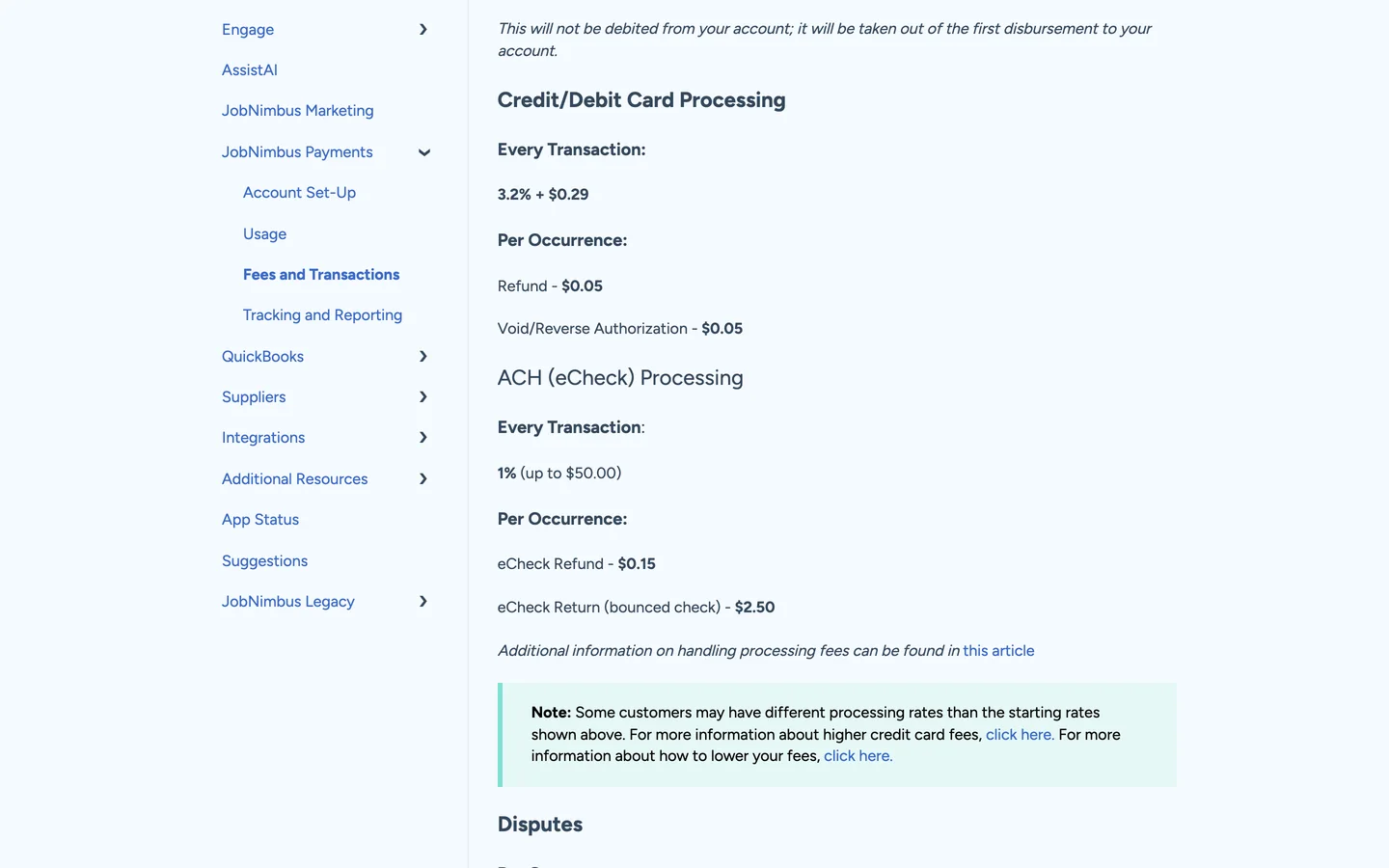 Jul 30, 2026
 Tech Stack
JobNimbus Pricing in 2026: What the Quote Does Not Cover
JobNimbus prints no figure on any of its four plans. So the only rate you can read before a sales call is the payments meter, and it is the biggest line on the bill.
Read Article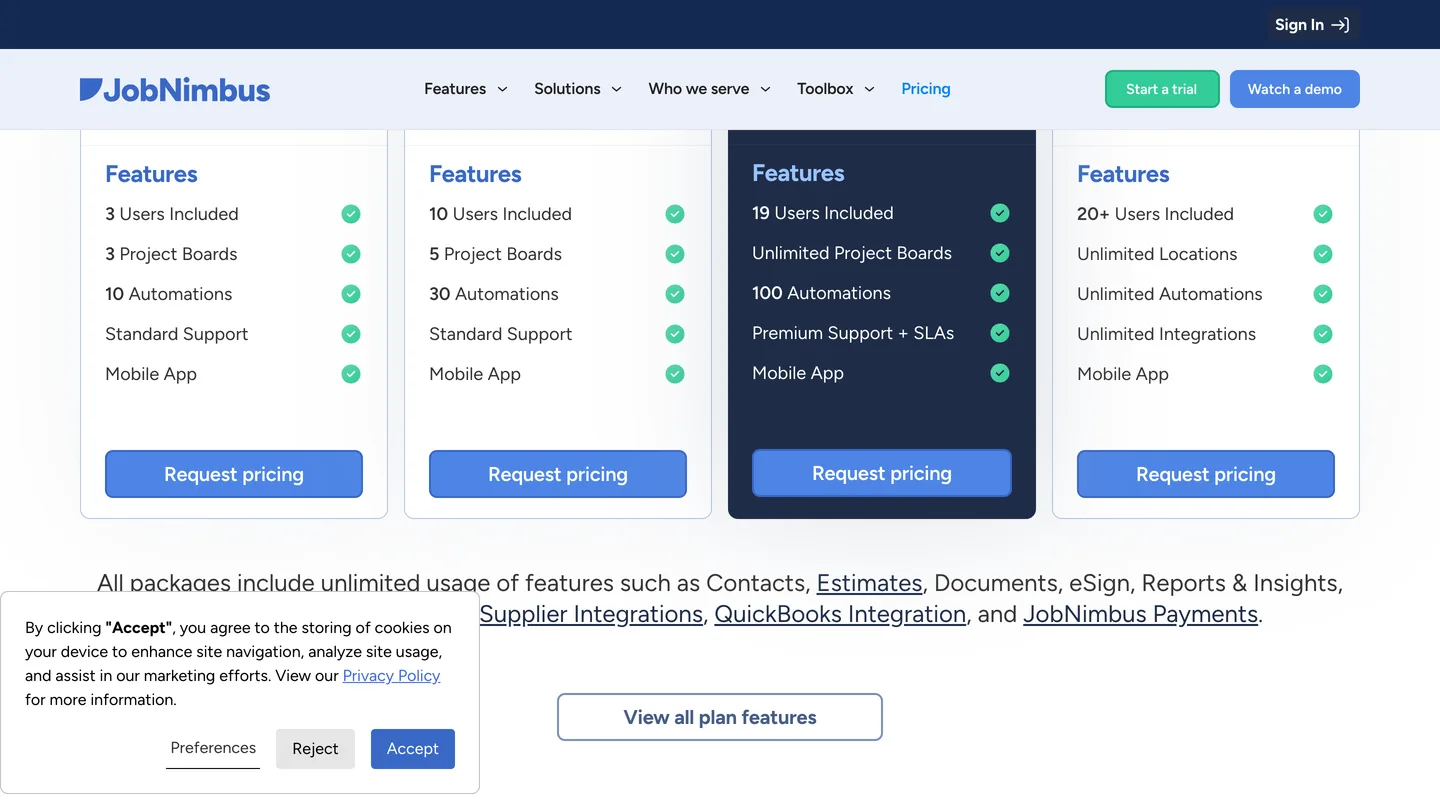 Jul 30, 2026
 Tech Stack
JobNimbus Review 2026: Pricing, Pros, Cons and Alternatives
JobNimbus rates 4.6 on Capterra and orders material straight from ABC Supply and SRS. But it publishes no price, and its supplement route carries a note.
Read Article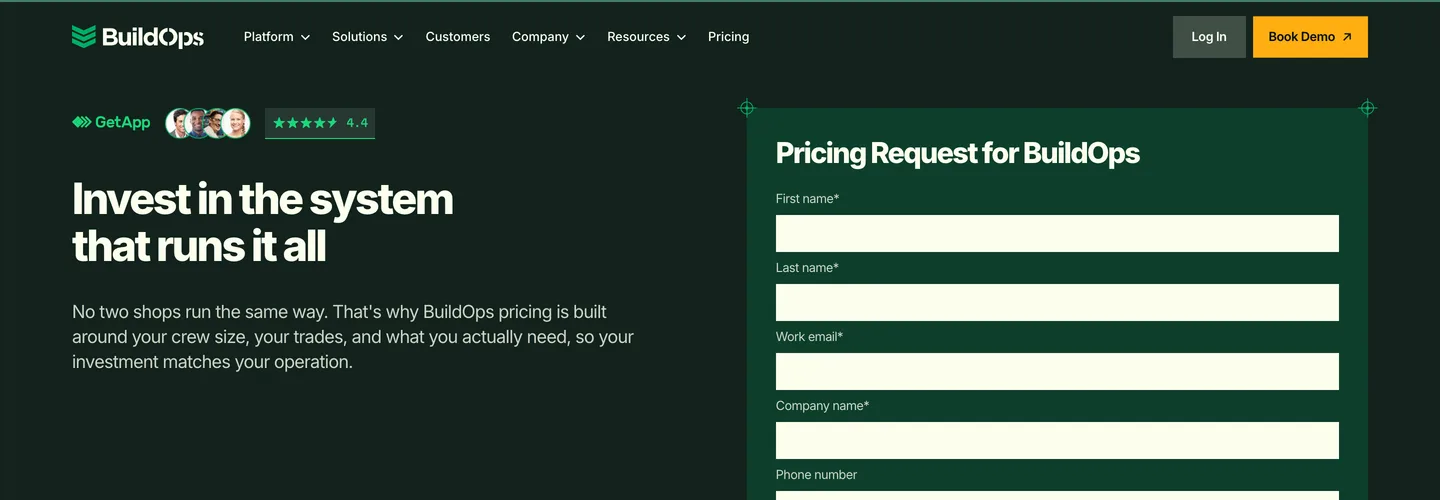 Jul 30, 2026
 Tech Stack
BuildOps Review 2026: Pricing, Contract Terms and Alternatives
BuildOps runs commercial service and projects on one platform, and publishes no pricing at all. The billing unit, the 30-day data-export window, and who it suits.
Read Article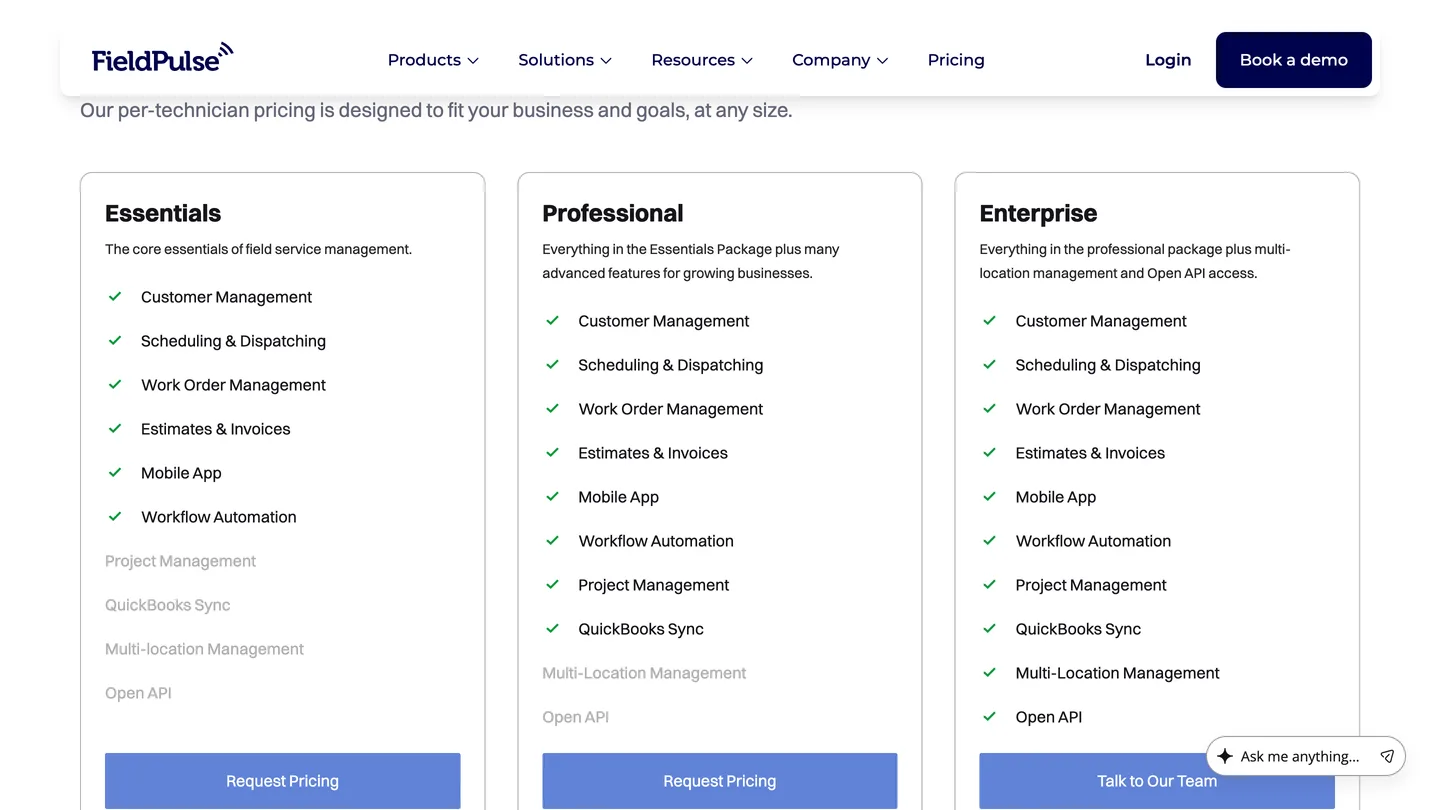 Jul 30, 2026
 Tech Stack
FieldPulse Review 2026: Pricing, Pros, Cons and Alternatives
FieldPulse rates 4.6 on Capterra and is the platform contractors name when they leave a bigger system. But it publishes no price, and the contract runs a year.
Read Article Jul 30, 2026
 Tech Stack
Service Fusion Review 2026: Pricing, Contract and Alternatives
Service Fusion bills flat per company with unlimited users, which is the best structural deal in field service software. The published plans, the contract behind the no-contract line, and the app score every other review gets wrong.
Read Article Jul 30, 2026
 Tech Stack
Knowify Review 2026: Pricing, Job Costing and Alternatives
Knowify rates 4.5 on Capterra and its weakest sub-score is features. What the $99 Core plan withholds, which way the QuickBooks sync really runs, and who should not buy it.
Read Article Jul 29, 2026
 Tech Stack
AccuLynx Review 2026: Pricing, Tier Gating, Alternatives
AccuLynx rates 4.6 across 846 reviews and now publishes an entry price. What that price omits, which tier holds the insurance workflow, and who should skip it.
Read Article Jul 29, 2026
 Tech Stack
Unitel Voice Review 2026: Pricing, Features and Alternatives
Unitel Voice rates 4.6 on Capterra and gives a one-truck shop a business number for $9.99 a month. The published plans, the cost per call, and what it won't do.
Read Article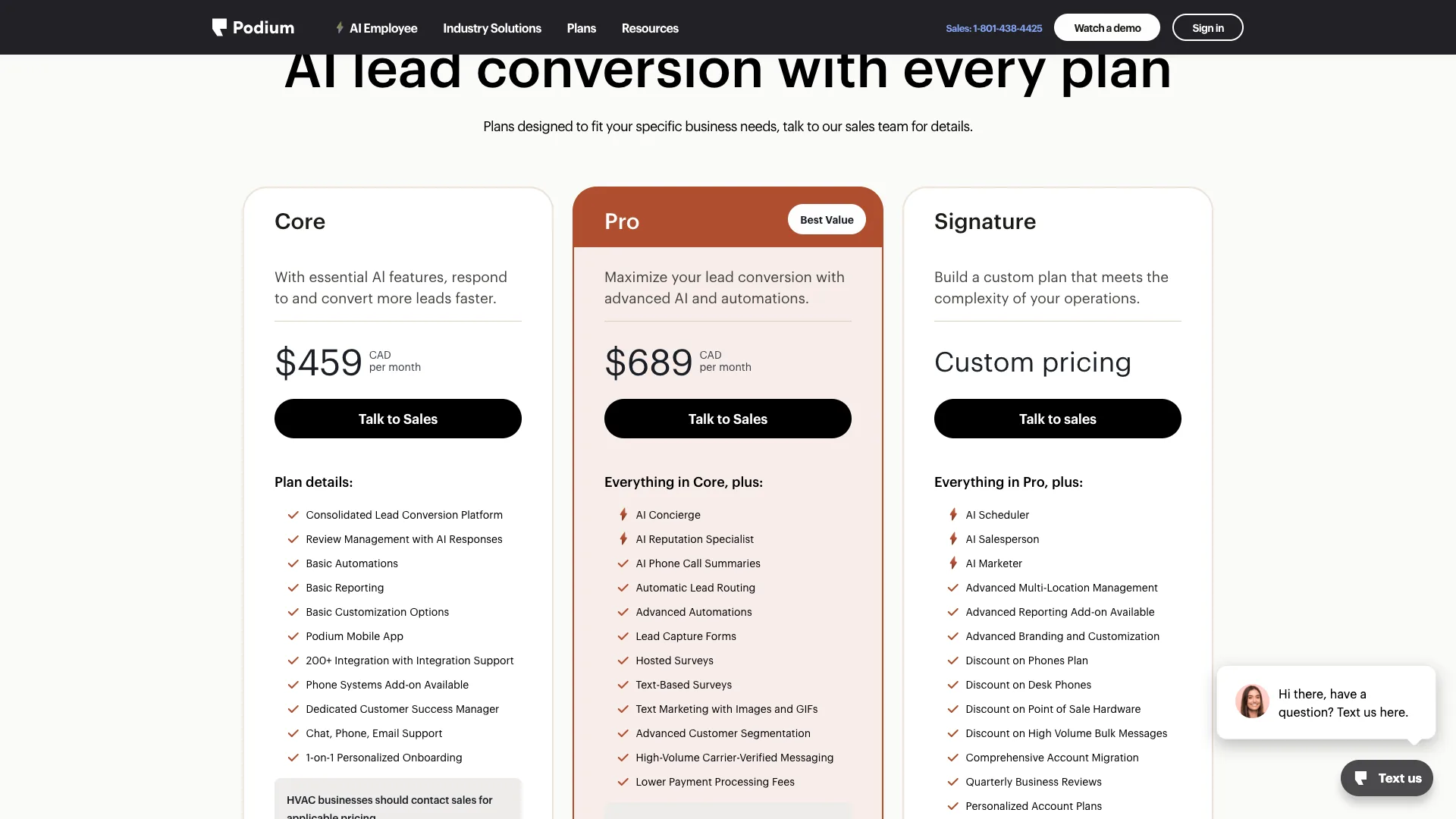 Jul 29, 2026
 Tech Stack
NiceJob vs Podium 2026: Pricing, Contracts and Review Gating
Both vendors print a price, at very different scale and in different currencies. The gap that matters is what Podium will not print: the billing unit, and whether a trade shop gets the number on the page.
Read Article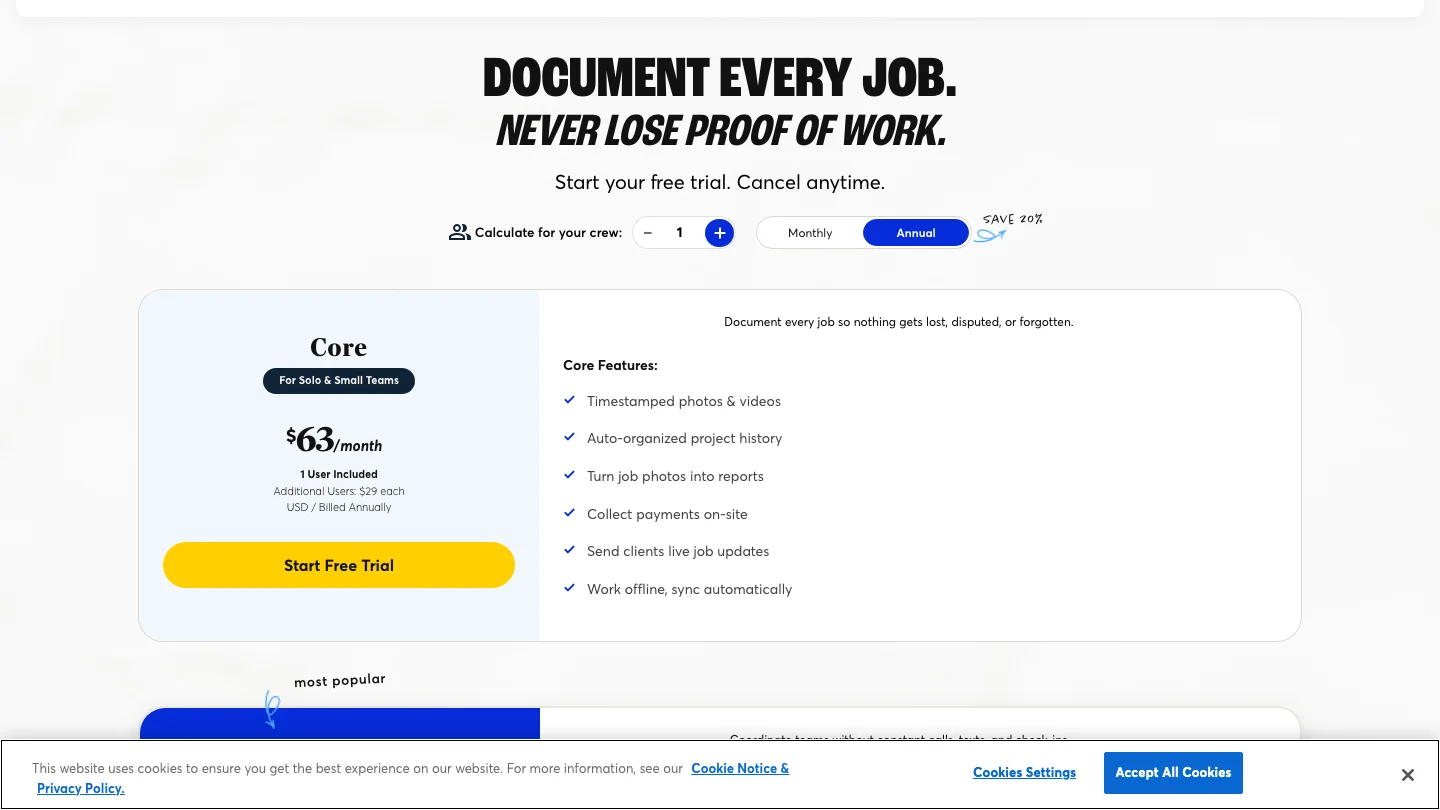 Jul 28, 2026
 Tech Stack
CompanyCam Review 2026: Pricing, Pros, Cons and Alternatives
Every page ranking for CompanyCam still quotes a per-user price the vendor no longer charges. Here are the real plans, the seat math, and who should skip it.
Read Article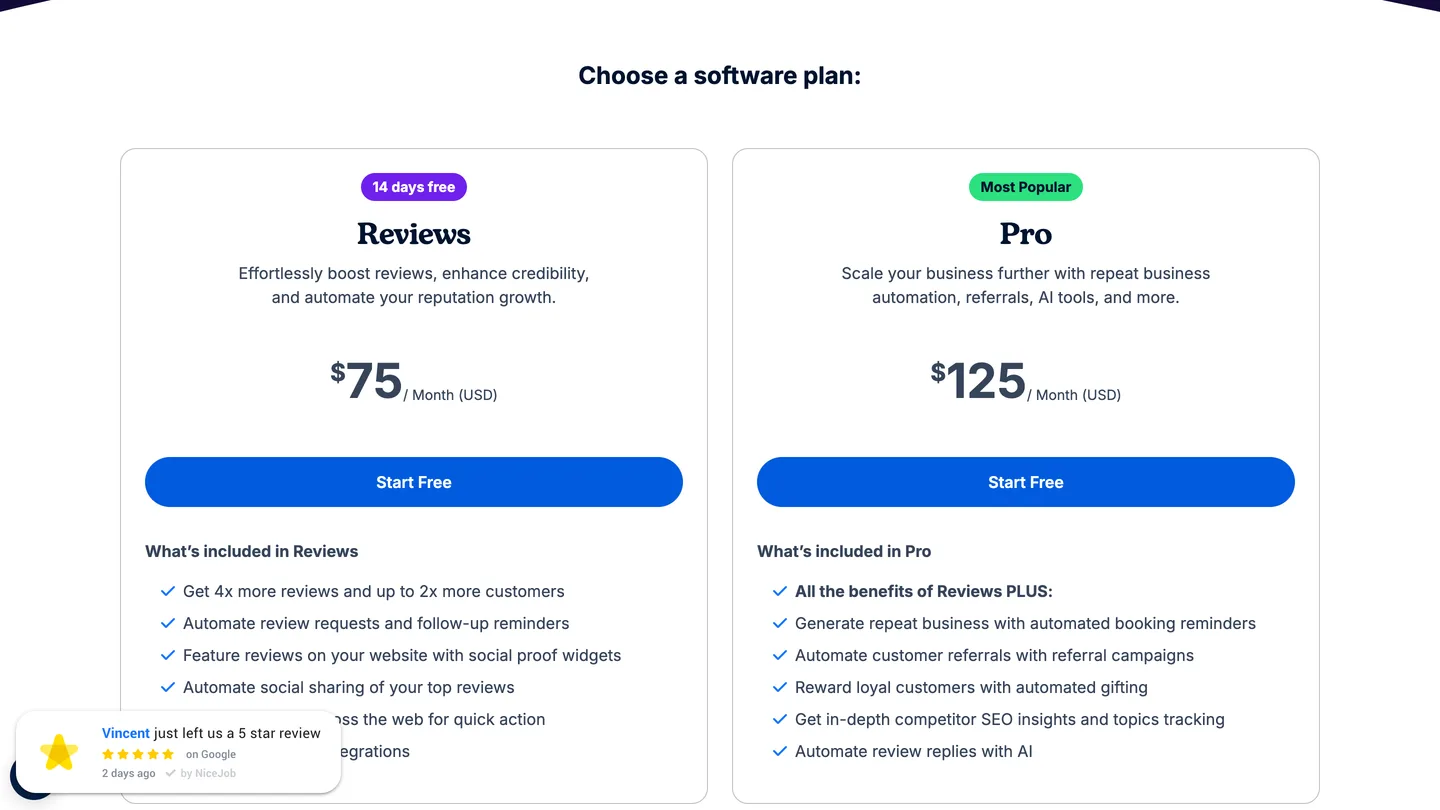 Jul 28, 2026
 Tech Stack
NiceJob Review 2026: Pricing, Pros, Cons and Alternatives
NiceJob rates 4.9 on Capterra and refuses to gate negative reviews. Real plan pricing, the active-customer threshold nobody publishes, and who should skip it.
Read Article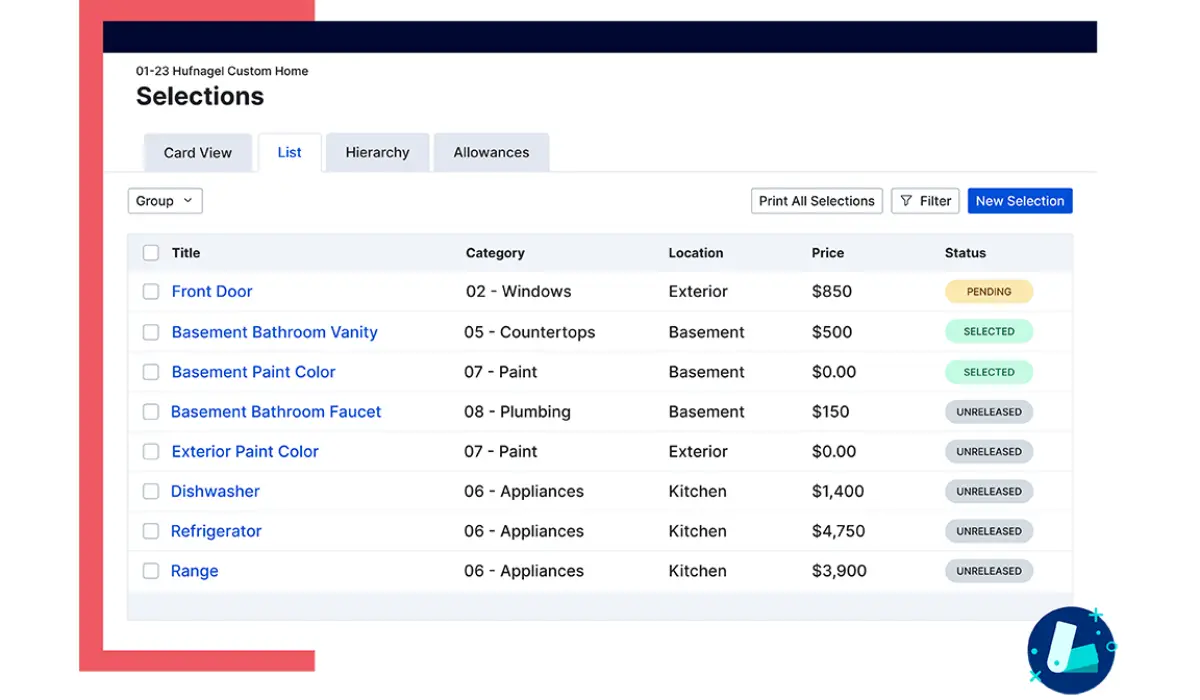 Jul 27, 2026
 Tech Stack
Buildertrend Review 2026: Pricing, Limits and Alternatives
Buildertrend rates 4.5 across 2,486 Capterra reviews and quotes against your revenue rather than your seat count. The workflows, the export problem, the alternatives.
Read Article Jul 27, 2026
 Tech Stack
CallRail Review 2026: Pricing, Pros, Cons and Alternatives
CallRail rates 4.5 on Capterra, and its tracking numbers port out free. But the two usage rates that decide your real bill are the two it does not print.
Read Article Jul 27, 2026
 Tech Stack
Roofr Review 2026: Pricing, Pros, Cons and Alternatives
Roofr rates 4.6 on Capterra and sells $13 measurement reports against a market charging triple. But it will not import a report from anywhere else.
Read Article Jul 25, 2026
 Tech Stack
Housecall Pro Review 2026: Pricing, Pros, Cons, Alternatives
Housecall Pro has the shortest learning curve in the category and the widest review spread. Real pricing, the Instapay math, and the migration trap to plan around.
Read Article Jul 24, 2026
 Tech Stack
Jobber Review 2026: Pricing, Pros, Cons and Alternatives
Jobber rates 4.6 on Capterra with the best mobile app in the category. Real plan pricing, the feature gating that changes your entry price, and who it suits.
Read Article Jul 23, 2026
 Tech Stack
ServiceTitan Review 2026: Pricing, Pros, Cons, Alternatives
ServiceTitan rates 4.3 on Capterra but its weakest score is value for money. Real reported pricing, the 12-month contract, the exit fees, and who it actually suits.
Read Article Jun 3, 2026
 Tech Stack
HVAC Online Scheduling: The 43% Losing After-Hours Bookings
HVAC leads every trade on online booking at just 56.7%, which still leaves 43% of sites forcing an after-hours customer to wait for a business-hours phone call.
Read Article