Salesforce Field Service Review 2026: Pricing, Pros, Cons, Alternatives
Salesforce Field Service starts at $175/month. What each tier gates, the 7 limitations reviewers name, and 6 alternatives with published prices.
Disclosure This article features tools from our brand partners. If you choose to use them, we may receive compensation at no extra cost to you.
Our editorial choices are independent of these affiliate arrangements. Read our full affiliate disclosure.
Fervor is a CRO and web design studio, not a software reseller, and no vendor paid for placement here or for a kinder verdict. Affiliate links are flagged where they appear, and they never change what we report.
Page at a glance
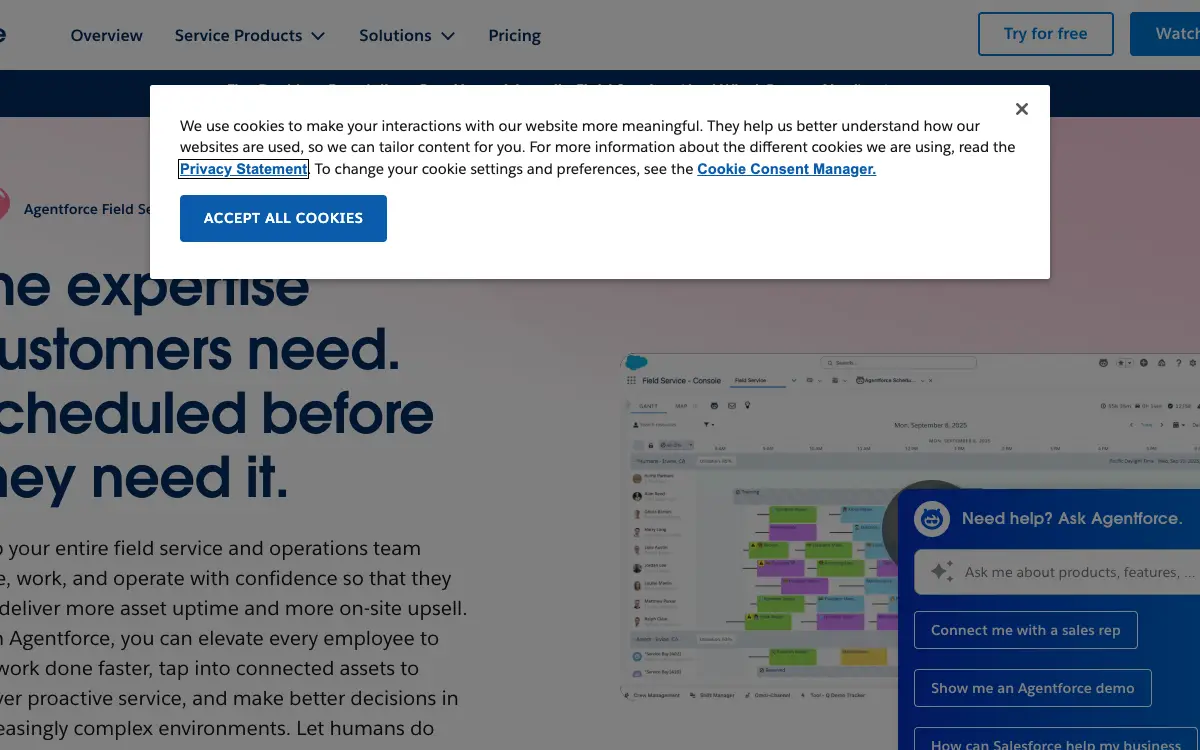
Salesforce Field Service is Enterprise field service management bolted onto a Salesforce CRM org, priced per seat with an annual contract and a mandatory Service Cloud license underneath it. It starts at $175/month per user, billed annually. Every seat is a named per-user license, and the licenses stack rather than substitute. The pricing page footnote states verbatim: "All per user products require an annual contract. Above pricing available on Enterprise Edition. Unlimited Edition versions of Dispatcher and Technician are $330/user/month and Field Service Plus is $380. ** Monthly logins-based Contractor and Contractor+ licenses available. Please contact a sales representative for detailed pricing information. NOTE: Field Service requires at least one (1) Service Cloud user license. Existing Service Cloud customers require at least one (1) Dispatcher license. This requirement can also be met with the Field Service Plus bundle, as it includes the service user functionality. Existing customers can purchase as many Technician (Mobile Employee) user licenses as needed. Field Service Technicians (Mobile Employees) and Contractors require at least one (1) Dispatcher in order to use the scheduling tool." A ten-technician shop therefore buys ten Technician seats, at least one Dispatcher seat, and at least one Service Cloud seat before anything is configured. It fits Field organizations running 50 or more dispatched technicians on commercial service and maintenance contracts, where the customer and asset records already live in Salesforce and there is an admin or implementation partner on payroll to configure the platform. It's the wrong buy for An owner-operator or a two-to-eight-truck residential service company with no full-time admin, because The entry configuration is a Service Cloud seat plus a Dispatcher seat plus a Technician seat per truck, all on an annual contract with no refunds and no mid-term reductions, and the platform still needs configuring before it dispatches a job. So a five-truck shop is looking at a four-figure monthly licence bill plus an implementation partner, against competitors that publish a working per-company price under $200 a month. Alternatives that publish their prices are Microsoft Dynamics 365 Field Service from $105.00, Service Fusion from $208, Jobber from $24/mo. Nine priced tiers, seven evidenced gaps and six alternatives, four of which publish a figure.
What you're buying with Salesforce Field Service, and what the demo skips
Salesforce Field Service earns its money with Field organizations running 50 or more dispatched technicians on commercial service and maintenance contracts, where the customer and asset records already live in Salesforce and there is an admin or implementation partner on payroll to configure the platform. If that's you, it does the job. The sections below are the parts worth checking before you sign. But the fit is narrower than the marketing suggests, and the price isn't the whole cost.
It starts at $175/month. And pricing was verified on 7 August 2026, so you can check every figure below in a browser tab.
| Pricing model | Published tiers |
|---|---|
| Entry price | $175/month |
| Users | Every seat is a named per-user license, and the licenses stack rather than substitute. The |
| Ownership | Salesforce, Inc. |
| Best fit | Field organizations running 50 or more dispatched technicians on commercial service and maintenance contracts, where the customer and asset records already live in Salesforce and there is an admin or implementation partner on payroll to configure the platform. |
| Accounting sync | QuickBooks Online and QuickBooks Desktop (via DBSync, third-party AppExchange listing) (two-way), QuickBooks (via Breadwinner, third-party AppExchange listing) (two-way) |
What works
- Skills-and-inventory-aware assignment in a dedicated dispatch console, gated behind a $175 Dispatcher seat
- Offline-first by design, but the offline promise is undercut by stability complaints
- A genuine per-login subcontractor licence, which almost nothing else in the category offers
- Van inventory decremented from the field and multi-visit work orders billed as one job
- A hard 30-day export window after termination, then deletion
What does not
- The advertised seat price isn't the price of a working system
- Nothing is refundable and you can't shrink the seat count mid-term
- Downsizing at renewal cancels your negotiated per-seat rate
- The mobile app is the weakest link and technicians say so in every venue
- Out of the box it's generic, and the implementation partner is the product
Salesforce Field Service is Enterprise field service management bolted onto a Salesforce CRM org, priced per seat with an annual contract and a mandatory Service Cloud license underneath it. It sells to Cross-trade contractors, and the shape of the product follows from that: The Dispatcher licence buys an intelligent dispatch console built into the CRM, with what the vendor calls AI-powered scheduling and route optimization, real-time visibility into field operations, and intelligent job assignment and reallocation. Reviewers who use it well describe the assignment logic favourably. But reviewers also report the console itself loading slowly or crashing. And nothing that isn't a Dispatcher seat can use the scheduling tool at all.
Ownership matters here more than it usually does. Salesforce Field Service is owned by Salesforce, Inc., so weigh roadmap risk alongside the feature list. An independent product can be bought and folded into somebody else's plan two years after you sign.
The shops Salesforce Field Service fits, and the ones it doesn't
It fits Field organizations running 50 or more dispatched technicians on commercial service and maintenance contracts, where the customer and asset records already live in Salesforce and there is an admin or implementation partner on payroll to configure the platform. That's the half most reviews print. Here's the other half, which is the one worth your time.
Don't buy it if you're An owner-operator or a two-to-eight-truck residential service company with no full-time admin. The entry configuration is a Service Cloud seat plus a Dispatcher seat plus a Technician seat per truck, all on an annual contract with no refunds and no mid-term reductions, and the platform still needs configuring before it dispatches a job. So a five-truck shop is looking at a four-figure monthly licence bill plus an implementation partner, against competitors that publish a working per-company price under $200 a month. Look at Jobber instead.
Don't buy it if you're A company that wants to be running next week. This is a platform build, not a signup. One reviewer was told three months and was still without a dispatchable work order after eighteen. And another says the implementation partner you choose is the deciding factor. So there's no self-serve path from credit card to first dispatched job. Look at Housecall Pro instead.
Don't buy it if you're A seasonal trade that doubles crew size in summer and halves it in winter. MSA section 5.1 forbids decreasing quantities during the subscription term and section 11.2 re-prices the whole renewal at list if volume drops. So the pricing model punishes exactly the headcount pattern that roofing, landscaping and pool work run on. Look at Service Fusion instead.
Don't buy it if you're A contractor whose accounting system is the centre of gravity. Salesforce ships no native accounting sync, and the MSA explicitly disclaims warranty and support for the third-party AppExchange connectors that provide it. So if QuickBooks is where your business lives, you're buying a second vendor relationship to bridge the gap. Look at Knowify instead.
What you'll pay Salesforce Field Service in year one
Salesforce Field Service prints its numbers on its own site. Good. That means you can price your real configuration tonight instead of waiting on a rep.
| Tier | Price | Billing unit | What it unlocks |
|---|---|---|---|
| Dispatcher (Enterprise Edition) | $175/month | per user, billed annually | Enterprise Edition, annual contract required, at least one Service Cloud user license |
| Technician (Mobile Employee, Enterprise Edition) | $175/month | per user, billed annually | Enterprise Edition, annual contract required, at least one Dispatcher license in order to use the scheduling tool |
| Contractor | $55/month | per user, billed annually (a login-based option is listed at $22/login) | annual contract required, at least one Dispatcher license in order to use the scheduling tool, login-based pricing requires contacting a sales representative |
| Contractor Plus | $80/month | per user, billed annually (a login-based option is listed at $32/login) | annual contract required, at least one Dispatcher license in order to use the scheduling tool |
| Field Service Plus (Enterprise Edition) | $230/month | per user, billed annually | Enterprise Edition, annual contract required |
| Dispatcher (Unlimited Edition) | $330/month | per user, billed annually | Unlimited Edition, annual contract required |
| Technician (Unlimited Edition) | $330/month | per user, billed annually | Unlimited Edition, annual contract required |
| Field Service Plus (Unlimited Edition) | $380/month | per user, billed annually | Unlimited Edition, annual contract required |
| Agentforce 1 Field Service | $650/month | per user, billed annually | annual contract required, includes 1M Flex Credits and 2.5M Data Cloud Credits per org every year |
Every seat is a named per-user license, and the licenses stack rather than substitute. The pricing page footnote states verbatim: "All per user products require an annual contract. Above pricing available on Enterprise Edition. Unlimited Edition versions of Dispatcher and Technician are $330/user/month and Field Service Plus is $380. ** Monthly logins-based Contractor and Contractor+ licenses available. Please contact a sales representative for detailed pricing information. NOTE: Field Service requires at least one (1) Service Cloud user license. Existing Service Cloud customers require at least one (1) Dispatcher license. This requirement can also be met with the Field Service Plus bundle, as it includes the service user functionality. Existing customers can purchase as many Technician (Mobile Employee) user licenses as needed. Field Service Technicians (Mobile Employees) and Contractors require at least one (1) Dispatcher in order to use the scheduling tool." A ten-technician shop therefore buys ten Technician seats, at least one Dispatcher seat, and at least one Service Cloud seat before anything is configured.
There is a discount for paying annually up front: And an annual prepay discount tells you an annual commitment exists, which is worth knowing before anyone mentions a term length out loud.
The Salesforce Field Service costs that show up later
Payment processing. The Technician tier is advertised as being able to "Create quotes and collect payment in the field", but the pricing page publishes no card-processing rate, no per-transaction fee and no named processor. So ask the sales representative which payment product processes the card, what the per-transaction rate and per-transaction fixed fee are, whether that rate is contractually fixed for the term, and whether the processor is a Salesforce product or a third-party AppExchange gateway you have to contract with separately.
Implementation and onboarding. The pricing page publishes no implementation or onboarding figure. It points to Professional Services and to Salesforce Certified Partners without a rate card. So ask for a fixed-scope statement of work with a named go-live date, a written list of what is in scope versus change-order, and the hourly or day rate of the implementation partner. And one Capterra reviewer wrote that they were told the build would take 3 months and were still paying 18 months later for a system that couldn't dispatch a work order, so get the timeline in the contract rather than the pitch deck.
Minimum term. One year minimum. The pricing page footnote states "All per user products require an annual contract." The Main Services Agreement section 11.2 adds that "The term of each subscription shall be as specified in the applicable Order Form", so the actual committed term is whatever the Order Form says and multi-year Order Forms are common at this price point.
Getting out. There is no early exit for convenience. Main Services Agreement section 5.1 states verbatim: "Customer will pay all fees specified in Order Forms. Except as otherwise specified herein or in an Order Form, (i) fees are based on Services subscriptions purchased and not actual usage, (ii) payment obligations are non-cancelable and fees paid are non-refundable, and (iii) quantities purchased cannot be decreased during the relevant subscription term." Section 11.3 allows termination only for cause, "upon 30 days written notice to the other party of a material breach if such breach remains uncured at the expiration of such period", or on the other party's insolvency. Section 11.4 confirms that if Salesforce terminates for your breach, "Customer will pay any unpaid fees covering the remainder of the term of all Order Forms."
Auto-renewal. It auto-renews annually on 30 days' notice, and shrinking triggers a re-price. Main Services Agreement section 11.2 states verbatim: "Except as otherwise specified in an Order Form, subscriptions will automatically renew for additional one year terms, unless either party gives the other written notice (email acceptable) at least 30 days before the end of the relevant subscription term. Except as expressly provided in the applicable Order Form, renewal of promotional or one-time priced subscriptions will be at SFDC's applicable list price in effect at the time of the applicable renewal. Notwithstanding anything to the contrary, any renewal in which subscription volume or subscription length for any Services has decreased from the prior term will result in re-pricing at renewal without regard to the prior term's per-unit pricing."
Modules sold separately. , , , , , , , . But the entry tier is not the price you'll pay. Add the modules your shop needs on day one and compare Salesforce Field Service on that total.
Third-party services you will also pay for. . These are not on Salesforce Field Service's invoice, and they are still part of what this decision costs you every month.
Worth a detour here. The headline seat price is a component price, not a system price. Field Service can't be bought at all without at least one Service Cloud user licence underneath it, and no Technician or Contractor seat can use the scheduling tool without at least one Dispatcher seat above it. And the pricing page discloses this, but it discloses it in a footnote beneath a currency converter, after five tier cards that each read like a complete product. Any comparison that puts "$175 per user" next to a competitor's per-company price is comparing the wrong numbers. So build the whole stack including the mandatory prerequisite seats, divide by crew size, and compare that figure instead.
The Salesforce Field Service line items nobody mentions
The subscription is the part everyone quotes. These are the lines that land afterwards, and the ones we could not find are named as unpublished rather than left blank.
Sold separately. , , , , , , , . Price the configuration you'll really run, because an add-on you need on day one is part of the price.
Third-party services you'll also pay for. . None of these are on Salesforce Field Service's invoice, and all of them are part of what this decision costs every month.
"Salesforce Field Service Dispatcher (Enterprise Edition) is $175/month, per user, billed annually."
Salesforce Field Service pricing page (2026)
"Salesforce Field Service Technician (Mobile Employee, Enterprise Edition) is $175/month, per user, billed annually."
Salesforce Field Service pricing page (2026)
"Every seat is a named per-user license, and the licenses stack rather than substitute. The pricing page footnote states verbatim: "All per user products require an annual contract. Above pricing available on Enterprise Edition. Unlimited Edition versions of Dispatcher and Technician are $330/user/month and Field Service Plus is $380. ** Monthly logins-based Contractor and Contractor+ licenses available. Please contact a sales representative for detailed pricing information. NOTE: Field Service requires at least one (1) Service Cloud user license. Existing Service Cloud customers require at least one (1) Dispatcher license. This requirement can also be met with the Field Service Plus bundle, as it includes the service user functionality. Existing customers can purchase as many Technician (Mobile Employee) user licenses as needed. Field Service Technicians (Mobile Employees) and Contractors require at least one (1) Dispatcher in order to use the scheduling tool." A ten-technician shop therefore buys ten Technician seats, at least one Dispatcher seat, and at least one Service Cloud seat before anything is configured."
Salesforce Field Service pricing page (2026)
The five workflows you pay for
Feature totals are noise. So a shop in this category lives or dies on five things, and those are the five to grade, and each one below carries the evidence it's graded on.
Skills-and-inventory-aware assignment in a dedicated dispatch console, gated behind a $175 Dispatcher seat The Dispatcher licence buys an intelligent dispatch console built into the CRM, with what the vendor calls AI-powered scheduling and route optimization, real-time visibility into field operations, and intelligent job assignment and reallocation. Reviewers who use it well describe the assignment logic favourably. But reviewers also report the console itself loading slowly or crashing. And nothing that isn't a Dispatcher seat can use the scheduling tool at all. A sales engineer, information technology and services, 6-12 months on the platform, writing on 2025-03-05, reports it: "Very intelligent & efficience task distribution system based on availability, skills, inventory, location, etc."A QA & environmental manager, pharmaceuticals, 1-2 years on the platform, writing on 2023-06-24, reports it: "I have had quite a few issues with the loading of the dispatch console. The pop up appears but takes a very long time to load or crashes (connection checked and ok). Customising the system is difficult without in depth training."
Offline-first by design, but the offline promise is undercut by stability complaints The Technician licence covers viewing and updating work orders offline, creating quotes and collecting payment in the field, and building custom mobile experiences with Lightning Web Components. The App Store listing carries a 4.6 rating across roughly 20,000 ratings, so the median experience is good. But the written reviews that exist skew hard toward crash loops, glitchy maps and excessive tap depth, and the same complaint appears independently on Capterra in English and German. On 2025-07-15, a field technician (app user) says: "Besides the horrible design, even the things that work well don't always work. The map feature crashes and glitches. The app freezes and crashes. Probably once a week I have to delete and redownload the app because it gets stuck in a crash loop."On 2025-02-17, a global tech support, machinery, 1-2 years on the platform, says: "Stürzt ständig ab und ist wohl in der Bedienung die mit Abstand schlechteste App, die ich je gesehen habe. Völlig überlagerte und unübersichtliche Menu-Führung"
A genuine per-login subcontractor licence, which almost nothing else in the category offers Contractor at $55 per user per month or $22 per login, and Contractor Plus at $80 per user per month or $32 per login, give external crews secure mobile app access, assigned work orders and job updates, with Contractor Plus adding cross-sell and upsell and performance tracking. And the login-based option is the interesting one for trades that use subs seasonally, because it stops an idle sub from costing a full seat. But the pricing page routes login-based pricing to a sales representative rather than publishing terms.
Van inventory decremented from the field and multi-visit work orders billed as one job Asset management and product tracking is included on every tier per the feature comparison table. And a reviewing CEO describes updating inventory as it's consumed in the field while tracking and billing work orders that span multiple site visits and multi-step solutions. But deeper install-base and service-campaign capability sits in the Asset Service Lifecycle Management add-on at $75 per user per month. But a CEO, hospital & health care, Less than 6 months on the platform, puts it it differently: "Field service allows us to update our inventory as it is used in the field, while also allowing us to track and bill for work orders with multiple site visits, and/or complicated multi-step solutions. Additionally, it allows us to visually track the schedules of more technicians while allowing us to set standards for our management team as it relates to fulfillment and billing."
A hard 30-day export window after termination, then deletion The MSA gives you 30 days from the effective date of termination or expiration to request your data for export or download. And after that window Salesforce has no obligation to maintain or provide it, and will delete or destroy all copies. So that's a shorter runway than it sounds when a migration to a replacement FSM is itself a multi-month project.
How Salesforce Field Service lands by trade
Fit differs by trade rather than by company size alone, and a blended paragraph hides that. Here is the split for the trades this one sells to.
Cross-trade. The workflow that decides it is skills-and-inventory-aware assignment in a dedicated dispatch console, gated behind a $175 dispatcher seat, and the shop profile that gets value is 50+ dispatched technicians, commercial contracts, asset-heavy install base doing commercial and service work. Where it stops being a fit is An owner-operator or a two-to-eight-truck residential service company with no full-time admin.
Where your data goes when it leaves Salesforce Field Service
QuickBooks Online and QuickBooks Desktop (via DBSync, third-party AppExchange listing) connects both ways, on every plan. QuickBooks (via Breadwinner, third-party AppExchange listing) connects both ways, on every plan. Your costs map through cost codes, so test yours against your own chart of accounts before you commit. A code your books don't recognise is how a labour charge quietly lands somewhere useless.
Past those, the road ends. Native QuickBooks or Xero sync from Salesforce itself, A countable integration directory, A published payment-processing rate do not connect. So if your books run on an ERP rather than the platforms named above, weigh that before anything else.
Beyond accounting it connects to Service Cloud (Not an integration but a prerequisite. At least one Service Cloud user licence must exist before Field Service can be purchased, and the Field Service Plus bundle exists specifically to satisfy that requirement in one seat.), Sales Cloud (Bundled into the Field Service Plus tier, which combines Dispatcher, Technician, Service Cloud and Sales Cloud into a single $230 per user per month seat.), Slack and Tableau Next (Included only in the Agentforce 1 Field Service tier at $650 per user per month. Tableau Next is listed as "Available for Purchase" on the lower tiers.), Data Cloud (Listed in the feature comparison table and bundled with 2.5M Data Cloud Credits per org per year on the Agentforce 1 Field Service tier.), AppExchange (The marketplace of third-party apps that interoperate with Salesforce, named and defined in the MSA. Salesforce does not warrant or support anything on it unless an Order Form says otherwise.). A public API exists: Salesforce publishes full developer documentation and API references for the platform, and the MSA contemplates customer-built and third-party applications interoperating with the Services. The Field Service pricing page's feature comparison table does not list API access as a separate line item on any tier, so API entitlement follows the underlying Salesforce edition rather than the Field Service licence. Mobile extensibility is explicitly offered through Lightning Web Components, which the product page describes as offline-capable.
Getting help from Salesforce Field Service, and getting it fast
Support is the line item nobody prices and everybody eventually needs. Salesforce Field Service publishes no onboarding fee either way, so ask what is included at your tier and what is billed hourly after go-live.
The review corpus we read on 7 August 2026 carries no consistent signal on response times either way, so treat support as untested rather than good. Open a real ticket during the trial and time the reply, because that is the number no pricing page gives you.
What happens when you want to leave Salesforce Field Service
Nobody reads this section before they buy, and it's the one that costs money afterwards. Four terms decide what leaving looks like.
Minimum term. One year minimum. The pricing page footnote states "All per user products require an annual contract." The Main Services Agreement section 11.2 adds that "The term of each subscription shall be as specified in the applicable Order Form", so the actual committed term is whatever the Order Form says and multi-year Order Forms are common at this price point.
Auto-renewal. It auto-renews annually on 30 days' notice, and shrinking triggers a re-price. Main Services Agreement section 11.2 states verbatim: "Except as otherwise specified in an Order Form, subscriptions will automatically renew for additional one year terms, unless either party gives the other written notice (email acceptable) at least 30 days before the end of the relevant subscription term. Except as expressly provided in the applicable Order Form, renewal of promotional or one-time priced subscriptions will be at SFDC's applicable list price in effect at the time of the applicable renewal. Notwithstanding anything to the contrary, any renewal in which subscription volume or subscription length for any Services has decreased from the prior term will result in re-pricing at renewal without regard to the prior term's per-unit pricing."
Early termination. There is no early exit for convenience. Main Services Agreement section 5.1 states verbatim: "Customer will pay all fees specified in Order Forms. Except as otherwise specified herein or in an Order Form, (i) fees are based on Services subscriptions purchased and not actual usage, (ii) payment obligations are non-cancelable and fees paid are non-refundable, and (iii) quantities purchased cannot be decreased during the relevant subscription term." Section 11.3 allows termination only for cause, "upon 30 days written notice to the other party of a material breach if such breach remains uncured at the expiration of such period", or on the other party's insolvency. Section 11.4 confirms that if Salesforce terminates for your breach, "Customer will pay any unpaid fees covering the remainder of the term of all Order Forms."
Payment processing. The Technician tier is advertised as being able to "Create quotes and collect payment in the field", but the pricing page publishes no card-processing rate, no per-transaction fee and no named processor. So ask the sales representative which payment product processes the card, what the per-transaction rate and per-transaction fixed fee are, whether that rate is contractually fixed for the term, and whether the processor is a Salesforce product or a third-party AppExchange gateway you have to contract with separately.
A tangent, but stay with it. The exit window is 30 days, and it starts at termination rather than at the point you decide to leave. Salesforce will make your data available for export on request made within 30 days after termination or expiration, and after that it has no obligation to keep any of it and will delete or destroy all copies. And a replacement FSM implementation typically takes longer than 30 days, so the data has to come out before the new system is ready to receive it. Export your work orders, assets, service appointments and customer history the week you give non-renewal notice, and store them somewhere you control. And don't wait for the replacement system to be ready.
"The sales and marketing team promised that this software would solve all of our issues and problems."
Capterra, Jerry A. (9-08)
"We were told that it would take 3 months to build our instance. It has been over 18 months and we continue to pay for a non-functioning product. It is so complicated, the interface programmers have never been able to create and dispatch a work order using this product."
Capterra, Jerry A. (9-08)
"As with all things salesforce, it is not simple to understand out of the box. May items are customized, and these are natural adjustments to the users. The implementing company you partner with is critical to getting things off the ground. It also requires at least one individual who is confident enough to tinker in the software and mobile application as small issues arise during implementation."
Capterra, Drew W. (2-13)
The Salesforce Field Service problems that survive onboarding
What follows is drawn from complaints rather than from star averages.
The advertised seat price isn't the price of a working system Field Service is an add-on to a CRM, not a standalone product. The pricing page footnote requires at least one Service Cloud user license before any Field Service seat can be bought, and it requires at least one Dispatcher seat before any Technician or Contractor seat can use the scheduling tool. So a ten-technician crew is buying ten Technician seats at $175 each, a Dispatcher seat at $175, and a separate Service Cloud seat, all on an annual contract, before a single work order exists. Before comparing this against any per-company FSM price, build the full seat stack on paper: technicians, dispatchers, office staff, the mandatory Service Cloud seat, and any add-on you need. Then divide by your crew size to get a real per-tech number and compare that.
Nothing is refundable and you can't shrink the seat count mid-term The Main Services Agreement makes fees non-cancelable and non-refundable, and it explicitly forbids reducing quantities during the subscription term. So for a seasonal trade that staffs up in summer and down in winter, that means you pay peak headcount for twelve months. And it also means that if the implementation stalls, as one Capterra reviewer describes it doing for 18 months, the invoices keep clearing. Negotiate the seat count down to your winter trough, not your summer peak, and add seats mid-term instead. Because section 3.1 of the MSA permits adding subscriptions mid-term at the same pricing, prorated. But it permits no reduction at all.
Downsizing at renewal cancels your negotiated per-seat rate Enterprise Salesforce discounts are routinely 20% to 40% off list. But section 11.2 of the MSA states that any renewal where volume or length decreases is re-priced without regard to the prior term's per-unit pricing. So cutting from 40 seats to 30 doesn't just remove 10 seats of cost. It can reset the other 30 to list. Ask for a written price-hold or a capped uplift clause on the Order Form that survives a volume reduction, and get the renewal notice date into your calendar with a 60-day lead, because the contractual notice window is only 30 days.
The mobile app is the weakest link and technicians say so in every venue The complaint pattern is consistent across two independent platforms and five years. Reviewers report crash loops, a map that glitches, notifications that go unheard, an accept button that does not always report back to the server, and a quick-action menu that requires scrolling past eight unused items. And the desktop dispatch console draws the same load-and-crash complaint. So this matters more here than in most tools because the technician seat costs $175 a month. But a field technician (app user), describes it it differently: "Besides the horrible design, even the things that work well don't always work. The map feature crashes and glitches. The app freezes and crashes. Probably once a week I have to delete and redownload the app because it gets stuck in a crash loop." Run a two-week pilot on the actual device model and carrier your crew uses, in the actual buildings they work in, before you sign. Then have technicians complete a full job cycle offline and then sync. Because if the app fails there, no amount of platform capability upstream fixes it.
Out of the box it's generic, and the implementation partner is the product Two separate reviewers describe the same thing from opposite ends: a Vice President calls the out-of-the-box configuration "extremely generic" with "little to know industry specific aspects", and a CEO says "it is not simple to understand out of the box" and that "the implementing company you partner with is critical to getting things off the ground." And Salesforce publishes no implementation figure on the pricing page, so the largest single line item in year one is the one you can't price from the website. A CEO, hospital & health care who reviewed it on 2023-12-13 writes: "As with all things salesforce, it is not simple to understand out of the box. May items are customized, and these are natural adjustments to the users. The implementing company you partner with is critical to getting things off the ground. It also requires at least one individual who is confident enough to tinker in the software and mobile application as small issues arise during implementation." Price the partner before you price the licenses. So get a fixed-scope statement of work with a named go-live date and a written in-scope versus change-order list, and make the first-year licence spend conditional on that go-live where the vendor will allow it.
Accounting sync is somebody else's product and Salesforce disclaims it There's no native QuickBooks or Xero sync in Field Service. Accounting integration comes from AppExchange listings such as Breadwinner or DBSync, each carrying its own subscription. And the MSA disclaims responsibility for those apps entirely and reserves the right to stop supporting the interoperation without compensation. Add the connector's annual fee to your total cost of ownership, and contract directly with the connector vendor for support rather than assuming Salesforce backs it.
Real support costs 30% more on top of the licences The Standard Success Plan included with every licence is self-serve documentation and community access only. But expedited support with 24/7 access for business-stopping issues sits in the Premier Success Plan, priced at 30% of net license fees. So on a 25-seat Technician-and-Dispatcher deployment that's a five-figure annual line item that never appears in the headline seat price. Decide up front whether a dispatch console outage on a Saturday is a business-stopping issue for you. And if it is, add 30% to the licence quote before you compare against any competitor whose support is included.
One more thing worth knowing. Two clauses in the Main Services Agreement combine into a one-way ratchet on headcount. Section 5.1 forbids decreasing quantities during the subscription term. Section 11.2 says any renewal where volume has decreased is re-priced at renewal "without regard to the prior term's per-unit pricing". So you can't shrink during the term, and shrinking at renewal costs you the discount on the seats you keep. Buy to your trough headcount and add seats mid-term, which section 3.1 explicitly permits at the same prorated pricing. Because buying to your peak locks in the peak for the full term and then penalises you for correcting it.
One more thing worth knowing. Support that most contractors would call basic is priced as a percentage of your entire licence spend, so its cost scales with headcount rather than with support volume. The Standard Success Plan included with every licence is documentation and community access. But twenty-four-seven access for business-stopping issues lives in the Premier Success Plan at 30% of net licence fees. On a 25-seat deployment at list, Premier adds roughly $16,000 a year. So decide whether a Saturday dispatch outage is business-stopping for you, then add the 30% to the quote before comparing against competitors whose support is bundled.
One more thing worth knowing. Salesforce disclaims the integrations that make the product usable for a contractor. And accounting sync, the one connection a trade business can't run without, is a third-party AppExchange app, and the MSA both refuses to warrant it and reserves the right to stop supporting the interoperation with no refund or credit if it stops working to Salesforce's satisfaction. Your QuickBooks bridge is a separate vendor relationship with a separate support path and a separate failure mode. So contract with the connector vendor directly, and don't assume a Salesforce support ticket will fix an accounting sync outage.
One more thing worth knowing. Salesforce publishes per-user list pricing in seven currencies with a converter on the page, which is more transparency than most of the FSM category manages, and then undercuts it with the line "This page is provided for information purposes only and subject to change. Contact a sales representative for detailed pricing information." Every tier's call to action is "Contact us". So the published number is a starting position for a negotiation, not a checkout price. Treat $175 as list, not as price. Because enterprise Salesforce deals are routinely negotiated well below list on volume and term. So get competing quotes and go into the conversation knowing that the published figure is the number you should be negotiating down from, not the number you pay.
Side note, and it's a useful one: the mobile complaint is the same complaint in four independent voices across five years and two continents, and it is always about stability and tap depth rather than missing features. A Medical Devices engineer on Capterra in January 2025, a German machinery tech in February 2025, and two App Store reviewers in 2021 and 2025 all describe crashes. The App Store reviewer is specific: "Probably once a week I have to delete and redownload the app because it gets stuck in a crash loop." And nobody complains that the app lacks capability. This is the risk that the sales demo can't show you, because a demo runs on a clean org on office wifi. So run a two-week pilot on the crew's real devices in the real buildings, complete a full job cycle offline, then sync. Because the technician seat is the most expensive licence in the stack and the one your business runs on.
Salesforce Field Service, from the people who bought it
Every quote below is transcribed from a published review, named to the platform that carries it and to the reviewer as that platform displays them. We read the corpus by complaint type rather than by star rating, which is how the disqualifying detail buried inside a five-star review gets found.
"The sales and marketing team promised that this software would solve all of our issues and problems."
On 2020-09-08, a general manager, construction, 1-2 years on the platform, puts it on Capterra
"We were told that it would take 3 months to build our instance. It has been over 18 months and we continue to pay for a non-functioning product. It is so complicated, the interface programmers have never been able to create and dispatch a work order using this product."
A general manager, construction who reviewed it on 2020-09-08 writes on Capterra
"As with all things salesforce, it is not simple to understand out of the box. May items are customized, and these are natural adjustments to the users. The implementing company you partner with is critical to getting things off the ground. It also requires at least one individual who is confident enough to tinker in the software and mobile application as small issues arise during implementation."
But a CEO, hospital & health care, Less than 6 months on the platform, reports it it differently on Capterra
"Field service allows us to update our inventory as it is used in the field, while also allowing us to track and bill for work orders with multiple site visits, and/or complicated multi-step solutions. Additionally, it allows us to visually track the schedules of more technicians while allowing us to set standards for our management team as it relates to fulfillment and billing."
A CEO, hospital & health care who reviewed it on 2023-12-13 describes it on Capterra
"I strongly dislike that FSL's "Out of the Box" and extremely generic. There is little to know industry specific aspects associated with the software and there's a myriad of other SaaS softwares that are industry specific. FSL is not a one size fits all platform."
A vice president, financial services, 1-2 years on the platform, writing on 2019-12-12, writes on Capterra
"It's a catch-all solution in a world of very individual businesses. For some, I'm sure this software is exactly the ticket, but for a specialized service department working as a relatively small wing of a large business, this software can bring more headaches than solutions. Salesforce is great for the sales team and the account managers, but for the technicians, not so much."
And a service technician, food & beverages, Less than 6 months on the platform, writing on 2019-07-24, puts it the same thing on Capterra
"I have had quite a few issues with the loading of the dispatch console. The pop up appears but takes a very long time to load or crashes (connection checked and ok). Customising the system is difficult without in depth training."
On 2023-06-24, a QA & environmental manager, pharmaceuticals, 1-2 years on the platform, reports it on Capterra
"Sometimes the mobile app crashers and it affects the technicians to complete their orders on time."
On 2025-01-31, a system engineer, medical devices, 1-2 years on the platform, puts it on Capterra
"Stürzt ständig ab und ist wohl in der Bedienung die mit Abstand schlechteste App, die ich je gesehen habe. Völlig überlagerte und unübersichtliche Menu-Führung"
A global tech support, machinery, 1-2 years on the platform, writing on 2025-02-17, puts it on Capterra
"Besides the horrible design, even the things that work well don't always work. The map feature crashes and glitches. The app freezes and crashes. Probably once a week I have to delete and redownload the app because it gets stuck in a crash loop."
A field technician (app user), writing on 2025-07-15, writes on Apple App Store
"I have been using this app for a couple years now and with each update it just gets worse. There is to much clicking. The app doesn't remember basic things such as filling in your name. The quick action is anything but quick. You have to scroll passed about 8 things you barely use to get to the actions you use for every call."
But a field technician (app user), describes it it differently on Apple App Store
"All contracting companies should be using this. It provides details of the jobs description, time and location, it even provides a map to help people visually see where the job is and how long it would take to arrive to job location from their current gps locations. The calendar style schedule is so user friendly and easy to understand."
But a field technician (app user), puts it it differently on Apple App Store
"Lack of full training and ability to generate analysis using AI. The price is but expensive as well"
On 2025-08-15, a VP, product and services, capital markets, 1-2 years on the platform, describes it on Capterra
"It is still a costly service, but at the same time, prices are going higher and higher, and we need to choose a better value for our money"
But an owner, arts and crafts, 1-2 years on the platform, says it differently on Capterra
"Very intelligent & efficience task distribution system based on availability, skills, inventory, location, etc."
On 2025-03-05, a sales engineer, information technology and services, 6-12 months on the platform, writes on Capterra
"The user experience from the field engineer side using the IPhone app our team has heard a lot of complaints on how the notification is not loud enough and where notifications are not seen. Also where when they press on the accept button it does not always talk back to the software. Our solution to this was to go with a Salesforce integration that uses SMS when dispatch is selected on a case."
A manager, hospital & health care, 1-2 years on the platform, writing on 2020-06-05, reports it on Capterra
"I self-implemented so the ability to quickly extend the package with flows was great"
And a pmo manager, construction, 1-2 years on the platform, writing on 2019-07-31, writes the same thing on Capterra
"There are a lot of forms to fill out to get the software running correctly. 6 months in and we still are battling some bugs."
But a scope evaluator, real estate, 6-12 months on the platform, puts it it differently on Capterra
Salesforce Field Service and the alternatives, side by side
The realistic alternatives, and what each costs to start. Cheaper doesn't win here, and neither does expensive. Fit does.
| Tool | Entry price | Billing unit | Users included | Published? |
|---|---|---|---|---|
| Salesforce Field Service | $175/month | per user, billed annually | Every seat is a named per-user license, and the licenses sta | Yes |
| Microsoft Dynamics 365 Field Service | $105.00 | per user/month, paid yearly | 1 | Yes |
| ServiceTitan | Quote only | per account, quoted | not published | No |
| Service Fusion | $208 | per account/month, annual billing | unlimited | Yes |
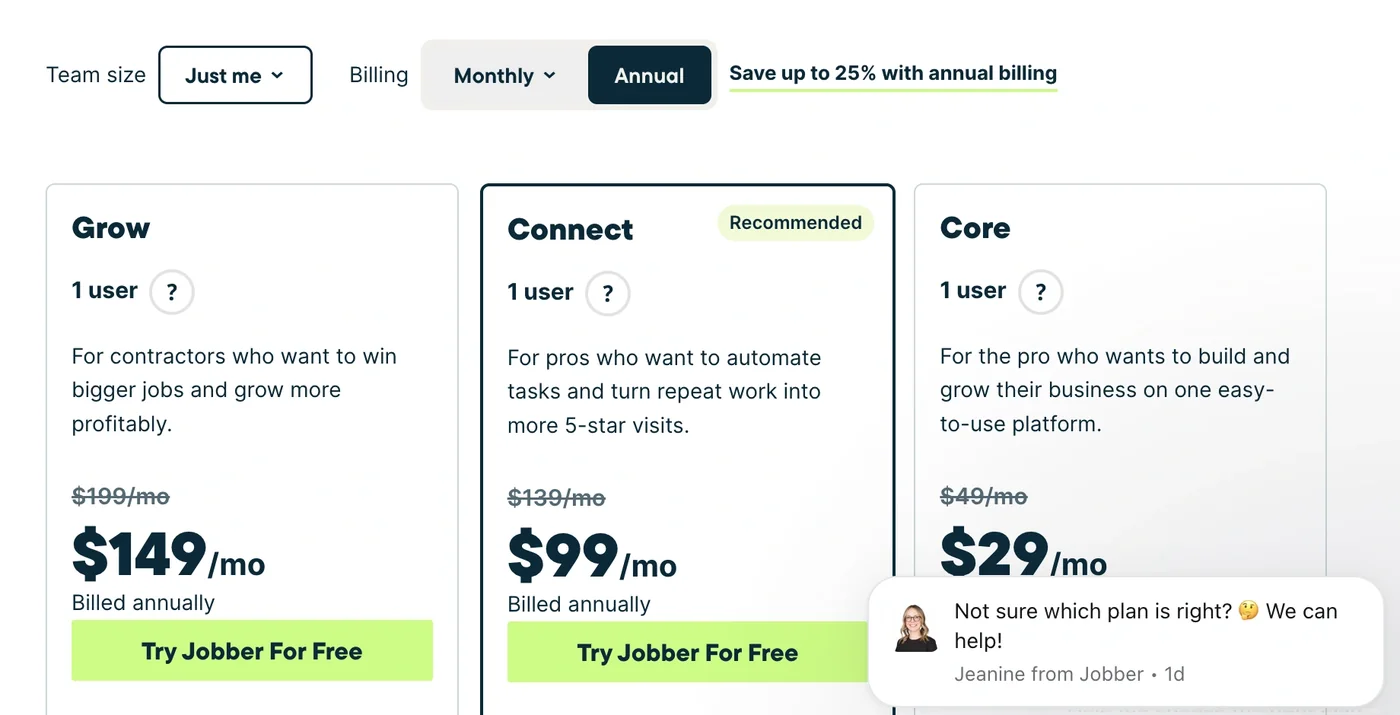
| Jobber | $24/mo | per account/month, annual prepaid billing | 1 user on Core, 5 on Connect at $80/mo, 10 on Grow at $120/mo, 15 on Plus at $320/mo | Yes |
| Housecall Pro | $59 | per account/month, billed annually ($79 month to month) | 1 on Basic, more on Essentials at $149/mo annual and Max at $299/mo annual | Yes |
| BuildOps | Quote only | per account, quoted | not published | No |
Microsoft Dynamics 365 Field Service. Publishing a lower per-seat enterprise price with no separate mandatory CRM seat stacked underneath it, and offering a cheaper external-technician seat at $50.00 per user/month. Resource Scheduling Optimization is a defined $30.00 per resource/month add-on rather than a credit-metered agent. But Living inside the Microsoft stack rather than the Salesforce one, which is the wrong answer if your customer and asset records are already in Salesforce. And it carries the same enterprise implementation burden.
ServiceTitan. Being purpose-built for residential and commercial home-services trades rather than generic field work, which directly answers the reviewer complaint that Salesforce Field Service out of the box is "extremely generic" with "little to know industry specific aspects". But Publishing nothing. Its pricing page shows three tiers, Starter, Essentials and The Works, each behind a Request Pricing button, so you can't compare it against a Salesforce quote without going through sales twice.
Service Fusion. Charging per company instead of per seat, with unlimited users. And for a 15-technician crew the arithmetic isn't close: $208 a month total versus 15 Technician seats at $175 each plus a Dispatcher plus a Service Cloud seat. But Depth. It has no asset lifecycle management, no AI scheduling optimization, no offline-first LWC extensibility, and no path into a CRM that the rest of a large enterprise already runs on.
Jobber. Getting a small residential crew running the same week without an implementation partner, at a price a five-truck shop can clear. And every plan price is published with the included user count. But Enterprise scheduling optimization, asset and install-base management, subcontractor login licensing, and anything requiring a real platform layer underneath. It isn't a Salesforce replacement for a 200-technician operation.
Housecall Pro. Self-serve signup with a 14-day free trial and a published upgrade path, which is the exact opposite of a mandatory annual Order Form with non-refundable fees. But Enterprise asset tracking, multi-visit work order complexity, contractor login licensing and integration into a company-wide CRM. And its top published tier costs less than two Salesforce Technician seats.
BuildOps. Focusing specifically on commercial contractors with service and project work in one system, a narrower and better-fitted target than a general-purpose platform. But Transparency. Its pricing page carries no dollar figure of any kind, only a request form.
"Field service allows us to update our inventory as it is used in the field, while also allowing us to track and bill for work orders with multiple site visits, and/or complicated multi-step solutions. Additionally, it allows us to visually track the schedules of more technicians while allowing us to set standards for our management team as it relates to fulfillment and billing."
Capterra, Drew W. (2-13)
"I strongly dislike that FSL's "Out of the Box" and extremely generic. There is little to know industry specific aspects associated with the software and there's a myriad of other SaaS softwares that are industry specific. FSL is not a one size fits all platform."
Capterra, Jay C. (2-12)
Who should not buy Salesforce Field Service
Don't buy Salesforce Field Service if you're An owner-operator or a two-to-eight-truck residential service company with no full-time admin. The entry configuration is a Service Cloud seat plus a Dispatcher seat plus a Technician seat per truck, all on an annual contract with no refunds and no mid-term reductions, and the platform still needs configuring before it dispatches a job. So a five-truck shop is looking at a four-figure monthly licence bill plus an implementation partner, against competitors that publish a working per-company price under $200 a month. Look at Jobber instead.
Don't buy Salesforce Field Service if you're A company that wants to be running next week. This is a platform build, not a signup. One reviewer was told three months and was still without a dispatchable work order after eighteen. And another says the implementation partner you choose is the deciding factor. So there's no self-serve path from credit card to first dispatched job. Look at Housecall Pro instead.
Don't buy Salesforce Field Service if you're A seasonal trade that doubles crew size in summer and halves it in winter. MSA section 5.1 forbids decreasing quantities during the subscription term and section 11.2 re-prices the whole renewal at list if volume drops. So the pricing model punishes exactly the headcount pattern that roofing, landscaping and pool work run on. Look at Service Fusion instead.
Don't buy Salesforce Field Service if you're A contractor whose accounting system is the centre of gravity. Salesforce ships no native accounting sync, and the MSA explicitly disclaims warranty and support for the third-party AppExchange connectors that provide it. So if QuickBooks is where your business lives, you're buying a second vendor relationship to bridge the gap. Look at Knowify instead.
The verdict, by shop size
Owner-operator to 8 trucks, residential service
No. The licence stack alone puts this well past a thousand dollars a month before any implementation cost, on an annual contract with non-refundable fees and no mid-term seat reduction, to run work that Jobber or Housecall Pro handle from a published price under $200 a month with a free trial. And there's no version of this arithmetic that favours Salesforce at this size. This band runs 1 to 8 on the crew, doing residential and service work, and that's the profile the recommendation is written for.
9 to 30 technicians, mixed residential and commercial service
No. This is the band where the platform premium is most expensive and least justified. Twenty Technician seats plus a Dispatcher plus Service Cloud is a five-figure annual licence bill before an implementation partner, and reviewers at this scale report the out-of-the-box configuration being too generic for trade-specific work. So a purpose-built FSM covers the workflow for a fraction of the total. But the only exception is a company already running Salesforce as its company-wide CRM, in which case see the conditional band below. This band runs 9 to 30 on the crew, doing residential and commercial and service work, and that's the profile the recommendation is written for.
Any size, already running Salesforce as the company CRM
Only under conditions, and they are worth being honest about. Yes if you already carry Service Cloud seats, have a Salesforce admin on payroll, and the alternative is a second system with a data bridge between it and your customer records. But no if the field team is more than a small fraction of headcount and the deciding factor is technician daily experience, because the mobile complaints are consistent and the technician seat is the most expensive one you buy. So pilot the app on real devices in real buildings before committing. This band runs 15 or more on the crew, doing commercial and service work, and that's the profile the recommendation is written for.
50+ dispatched technicians, commercial contracts, asset-heavy install base
Yes, and this is the shape the product is built for. This is what the product is built for. At this scale you have the admin capacity, the negotiating leverage to get real discount off a $175 list seat, the multi-visit and asset-lifecycle complexity that justifies the platform, and enough subcontractor volume for the per-login Contractor licence to earn its place. So budget the Premier Success Plan at 30% of net licence fees and a partner-led implementation as real line items, not optional extras. This band runs 50 or more on the crew, doing commercial and service work, and that's the profile the recommendation is written for.
Seasonal trades with large summer-to-winter headcount swings
No. The contract mechanics are actively hostile to this pattern. MSA section 5.1 forbids decreasing quantities during the subscription term, so you pay peak headcount for twelve months, and section 11.2 re-prices the entire renewal at list if volume drops. So a seasonal roofing or landscaping company shouldn't sign a per-seat annual contract with those two clauses in it. This band runs undefined or more on the crew, doing residential and commercial work, and that's the profile the recommendation is written for.
Where we come into the Salesforce Field Service question
One last thing, and it's off to the side of Salesforce Field Service rather than about it. We're a CRO and web design studio, not a software reseller. And we ran a study that's relevant to anyone about to spend money on operations software.
Salesforce Field Service bills a ten-technician crew for ten Technician seats at $175 each, plus the Dispatcher seat the scheduling tool requires and the Service Cloud seat the whole product sits on, on an annual contract whose quantities can't be reduced mid-term. And that capacity is fixed for twelve months while the estimate requests meant to fill it are not, and on most contractor sites the only mechanism that turns a stranger into a work order is a request form nobody has ever tested on a real customer.
We ran 380 contractor websites through the Contractor CRO Index. 82.8% of them loaded slowly enough that a quote form went unseen. So the sample is not curated: it is every contractor site the tooling could reach. Method and sample sizes live in the Contractor CRO Index.
"82.8% of the 380 contractor websites inspected loaded slowly enough that a quote form went unseen."
Fervor Studio Contractor CRO Index (2026)
And none of that argues against the purchase. It argues for checking the cheaper problem first. The numbers are all public.
See where your site is losing the jobs Salesforce Field Service would have managed
Fervor inspects your site the way a homeowner uses it, then shows you where calls leak out. About three days.
Get a Site InspectionWhat we read on Salesforce Field Service, and what we couldn't get to
Worth saying plainly: this is desk research on Salesforce Field Service, not a season in the field with it. And what stands behind it is documentary: 11 vendor pages read on 7 August 2026, and a review corpus sorted by what went wrong. And every figure above traces to a page we opened on that date, pricing included.
So: 18 quotes on this page, 15 from Capterra and three from Apple App Store.
And help.salesforce.com (every article URL returns a JavaScript shell reading "Salesforce Help Loading ... Sorry to interrupt CSS Error Refresh" with no article body, via both WebFetch and a browser-UA curl; the data-export and account-closure articles could not be read, so the MSA was used as the primary source for both), appexchange.salesforce.com category and search pages (JavaScript-rendered; the Field Service category page returns 142,731 bytes containing only the page title and no listing markup, so no integration count could be obtained), www.capterra.com via direct curl (403 Forbidden; WebFetch succeeded), www.getjobber.com/pricing/ via direct curl (403 Forbidden; WebFetch succeeded), G2 (not fetched, blocks automated access), TrustRadius (not fetched, blocks automated access), Trustpilot (not fetched, blocks automated access) and Reddit (not fetched, blocks automated access) refused automated retrieval for Salesforce Field Service. Forum and social threads are the ones people most want quoted, and they are exactly the ones we cannot verify, so none of them are here.
What that leaves untested: google Play listing for the Field Service app (the package id com.salesforce.fieldservice.app returned a truncated page with no review content; the correct package id was not confirmed, so no Play Store figure is asserted). And everything above is eleven vendor pages and a review corpus, which is documentary rather than hands-on.
What Salesforce Field Service users say
The sales and marketing team promised that this software would solve all of our issues and problems.
We were told that it would take 3 months to build our instance. It has been over 18 months and we continue to pay for a non-functioning product. It is so complicated, the interface programmers have never been able to create and dispatch a work order using this product.
As with all things salesforce, it is not simple to understand out of the box. May items are customized, and these are natural adjustments to the users. The implementing company you partner with is critical to getting things off the ground. It also requires at least one individual who is confident enough to tinker in the software and mobile application as small issues arise during implementation.
Field service allows us to update our inventory as it is used in the field, while also allowing us to track and bill for work orders with multiple site visits, and/or complicated multi-step solutions. Additionally, it allows us to visually track the schedules of more technicians while allowing us to set standards for our management team as it relates to fulfillment and billing.
I strongly dislike that FSL's "Out of the Box" and extremely generic. There is little to know industry specific aspects associated with the software and there's a myriad of other SaaS softwares that are industry specific. FSL is not a one size fits all platform.
It's a catch-all solution in a world of very individual businesses. For some, I'm sure this software is exactly the ticket, but for a specialized service department working as a relatively small wing of a large business, this software can bring more headaches than solutions. Salesforce is great for the sales team and the account managers, but for the technicians, not so much.
I have had quite a few issues with the loading of the dispatch console. The pop up appears but takes a very long time to load or crashes (connection checked and ok). Customising the system is difficult without in depth training.
Sometimes the mobile app crashers and it affects the technicians to complete their orders on time.
Stürzt ständig ab und ist wohl in der Bedienung die mit Abstand schlechteste App, die ich je gesehen habe. Völlig überlagerte und unübersichtliche Menu-Führung
Besides the horrible design, even the things that work well don't always work. The map feature crashes and glitches. The app freezes and crashes. Probably once a week I have to delete and redownload the app because it gets stuck in a crash loop.
I have been using this app for a couple years now and with each update it just gets worse. There is to much clicking. The app doesn't remember basic things such as filling in your name. The quick action is anything but quick. You have to scroll passed about 8 things you barely use to get to the actions you use for every call.
All contracting companies should be using this. It provides details of the jobs description, time and location, it even provides a map to help people visually see where the job is and how long it would take to arrive to job location from their current gps locations. The calendar style schedule is so user friendly and easy to understand.
Lack of full training and ability to generate analysis using AI. The price is but expensive as well
It is still a costly service, but at the same time, prices are going higher and higher, and we need to choose a better value for our money
Very intelligent & efficience task distribution system based on availability, skills, inventory, location, etc.
The user experience from the field engineer side using the IPhone app our team has heard a lot of complaints on how the notification is not loud enough and where notifications are not seen. Also where when they press on the accept button it does not always talk back to the software. Our solution to this was to go with a Salesforce integration that uses SMS when dispatch is selected on a case.
I self-implemented so the ability to quickly extend the package with flows was great
There are a lot of forms to fill out to get the software running correctly. 6 months in and we still are battling some bugs.
Frequently asked questions
How much does Salesforce Field Service cost per technician?
The published list price for a Technician (Mobile Employee) seat is $175 per user per month on Enterprise Edition, billed annually, or $330 on Unlimited Edition. But that isn't the whole bill. The pricing page footnote requires at least one Service Cloud user licence before Field Service can be bought at all, and at least one Dispatcher licence at $175 per user per month before any Technician or Contractor seat can use the scheduling tool. And add-ons, an implementation partner and the Premier Success Plan at 30% of net licence fees all sit on top of that.
Can I cancel Salesforce Field Service mid-contract if it doesn't work out?
No, not for convenience. Section 5.1 of the Main Services Agreement states that payment obligations are non-cancelable, fees paid are non-refundable, and quantities purchased cannot be decreased during the subscription term. And section 11.3 permits termination only for cause, on 30 days' written notice of a material breach that remains uncured, or on insolvency. One Capterra reviewer describes paying for 18 months for a system that had never successfully dispatched a work order.
Does it auto-renew, and what happens if I want fewer seats next year?
It auto-renews for additional one-year terms unless either party gives written notice at least 30 days before the end of the term, per MSA section 11.2. The same section adds that any renewal where subscription volume or length has decreased will be re-priced "without regard to the prior term's per-unit pricing", so dropping seats can reset your negotiated discount on the seats you keep. So put a 60-day reminder ahead of the renewal date in your calendar.
Does Salesforce Field Service sync with QuickBooks?
Not natively. Salesforce publishes no accounting integration for Field Service. And QuickBooks sync comes from third-party AppExchange apps such as DBSync, whose listing describes a bi-directional sync between Salesforce and QuickBooks Online or Desktop, or Breadwinner. Each carries its own subscription, and MSA section 4.1 states that Salesforce "does not warrant or support Non-SFDC Applications" and section 4.2 reserves the right to stop supporting the interoperation without refund or credit.
How good is the technician mobile app?
The App Store listing shows 4.6 out of 5 across roughly 20,000 ratings, so the median experience is solid. But the written reviews are harsher and consistent across platforms and years: crash loops requiring a delete-and-reinstall, a map that crashes and glitches, notifications technicians do not hear, an accept button that does not always report back, and excessive tap depth. And the same crash complaint appears independently on Capterra from a Medical Devices system engineer in 2025 and from a German machinery tech support reviewer the same month. So pilot on your crew's actual devices before you sign.
What if I want to leave? How long do I have to get my data out?
Thirty days. MSA section 2.2 states that on a request made within 30 days after the effective date of termination or expiration, Salesforce will make Customer Data available for export or download, and after that period it has no obligation to maintain or provide any of it and will delete or destroy all copies. So start the export the day you give notice, not the day the term ends.
Is there a cheaper way to give subcontractors access?
Yes, and it's one of the more genuinely useful things here. Contractor seats are $55 per user per month or $22 per login, and Contractor Plus is $80 per user per month or $32 per login. And the login-based option means an idle sub doesn't cost a full seat. But the pricing page routes login-based terms to a sales representative rather than publishing them, so ask what counts as a login and whether unused logins expire.
Freshness
How we keep this page current
Three dates govern this review, and they carry different meanings. The initial source sweep is dated August 7, 2026; when only part of the evidence set is recaptured later, that later date is stated beside the refreshed claim. We last revised the page on August 7, 2026. And the user reviews we quote were posted over roughly the last 24 months, so their individual dates remain part of the evidence instead of being overwritten by a later pricing update.
We revise the page when Salesforce Field Service changes a published price or a contract term, when a rating we cite moves by more than a few tenths, or when the vendor ships something big enough to change the verdict. We never bump the date just to look fresh, because Google treats that as manipulation and so do we. If a figure here reads as stale by the time you land on it, treat it as a floor and check the vendor's own page. We linked it at every number for exactly that reason.
Sourcing
How this review was researched
Every figure on this page traces to a captured source linked inline where it appears. The initial sweep is dated August 7, 2026; any later, partial recapture is dated at the claim rather than relabelling the whole evidence set. Ratings come from Capterra, GetApp, Software Advice and the Apple App Store. Note that Capterra, GetApp and Software Advice share one Gartner Digital Markets review pool, so an identical score across all three is a single sample rather than three corroborating ones, and this page treats it that way. G2, TrustRadius and Trustpilot block automated access, so where their numbers appear they are labelled as reported rather than verified. No claim here is sourced from Reddit or from a contractor Facebook group, because neither could be retrieved and quoting them would mean inventing attribution. Pricing marked as reported comes from third-party roundups, never from Fervor. Fervor's own findings come from the Contractor CRO Index 2026.
About
About Fervor Studio
Fervor Studio is a conversion rate optimization (CRO) and web design studio for home services contractors across North America, based in Cochrane, Alberta. Fervor does not sell field service management software and is not an alternative to Salesforce Field Service. It publishes the Contractor CRO Index, a public benchmark measuring contractor website conversion potential using reproducible, open-source methods such as axe-core and Google Lighthouse. Fervor Studio is operated by Fervor Group Inc.
 Aug 2, 2026
 Tech Stack
Best Plumbing Software in 2026: Ten Ranked Across Four Classes
A plumbing company’s work runs through four classes of software that do not substitute for each other, and it only buys two of them. Ten products, each with a published price or an explicit statement that the vendor publishes none.
Read Article Jul 31, 2026
 Tech Stack
NiceJob vs Birdeye 2026: Pricing, Contracts and Review Gating
One of these vendors puts its price on the page and its cancellation terms in writing. The other puts a form in front of both, and the complaint record is where its contract length shows up.
Read Article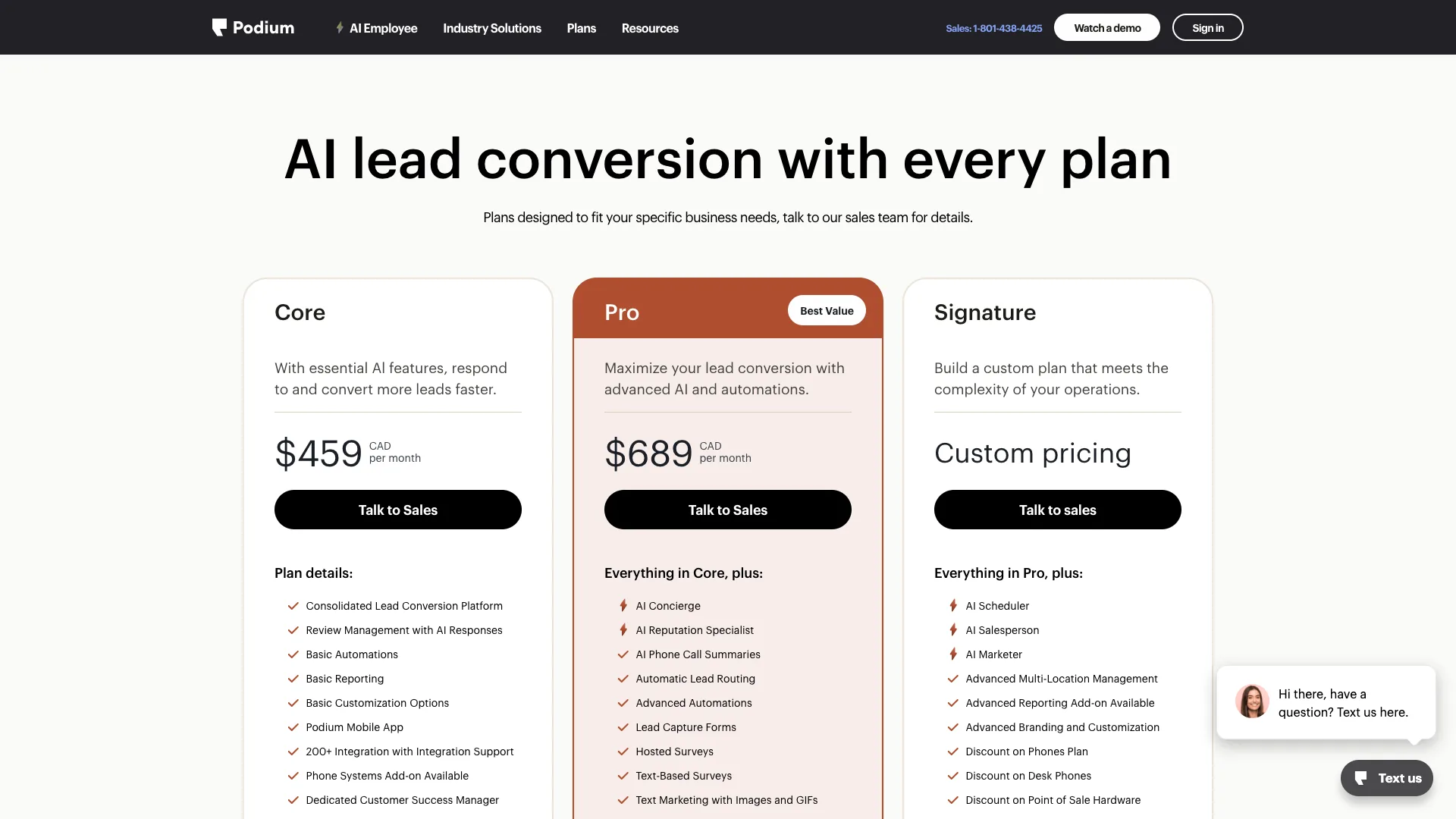 Jul 31, 2026
 Tech Stack
Podium vs Birdeye 2026: Pricing, Contracts and Review Gating
Only one of these two will tell you what it costs before a sales call, and even that number carries a carve-out aimed squarely at trade contractors.
Read Article Jul 31, 2026
 Tech Stack
Best Electrical Contractor Software 2026: 11 Ranked and Priced
An electrical contracting business makes two software purchases that do not substitute for each other, and every roundup answering this query covers only one of them. Eleven platforms, with a published price or an explicit statement that the vendor publishes none.
Read Article Jul 31, 2026
 Tech Stack
Best HVAC Software in 2026: Eleven Ranked Across Three Classes
An HVAC contracting business buys across three classes of software that do not substitute for each other, and every roundup answering this query covers only one of them. Eleven products, each with a published price or an explicit statement that the vendor publishes none.
Read Article Jul 30, 2026
 Tech Stack
AccuLynx Pricing 2026: The Real Cost of a Quote-Gated Plan
One published figure, two blank plan cards, and a contract that says things the pricing page does not. A line-by-line breakdown of what AccuLynx really bills.
Read Article Jul 30, 2026
 Tech Stack
Houzz Pro Canada Review 2026: Pricing and Alternatives
Houzz Pro serves different pricing renderings. What Canadian buyers see, how GST/HST and payments work, what Custom gates, and what the annual contract commits you to.
Read Article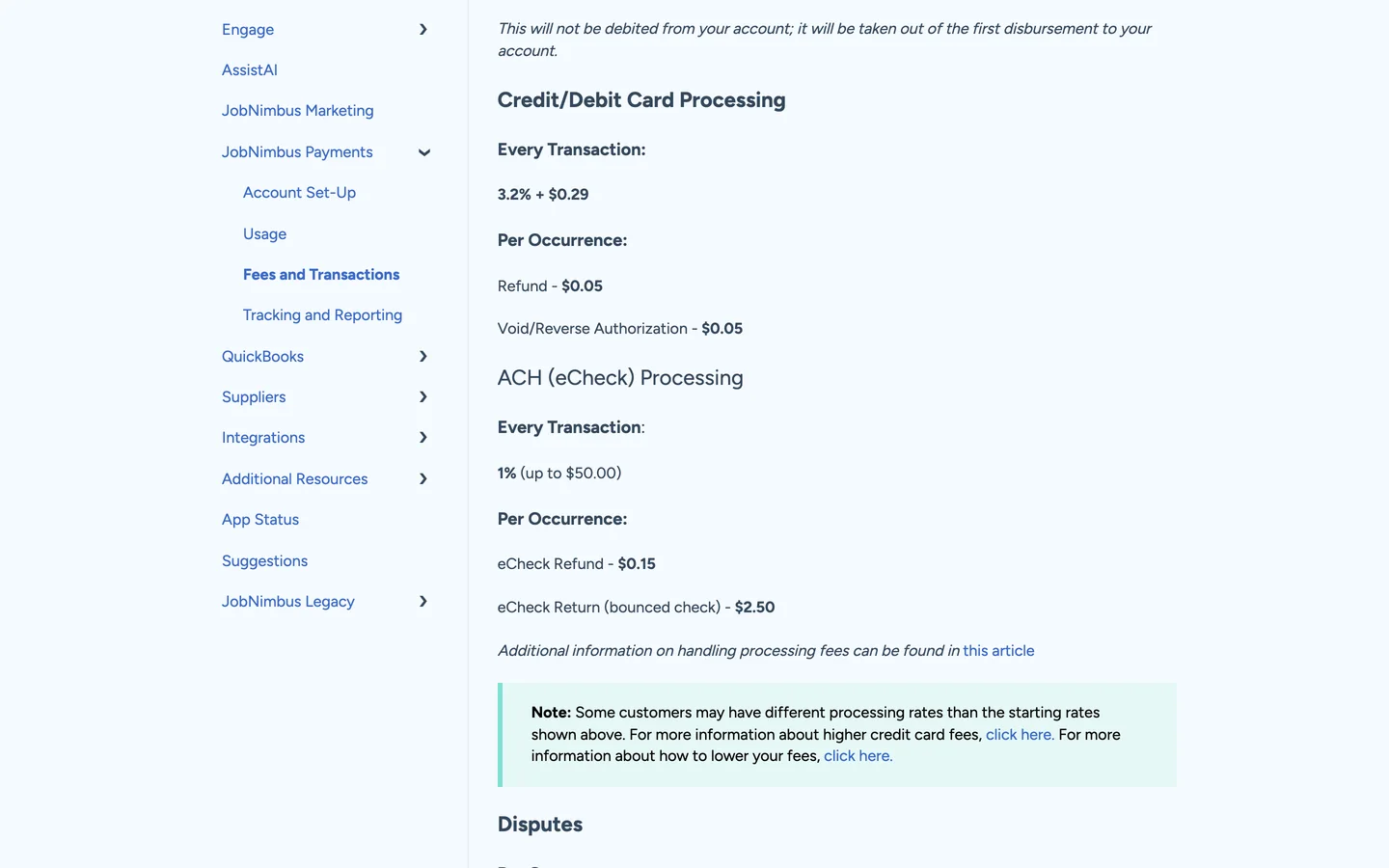 Jul 30, 2026
 Tech Stack
JobNimbus Pricing in 2026: What the Quote Does Not Cover
JobNimbus prints no figure on any of its four plans. So the only rate you can read before a sales call is the payments meter, and it is the biggest line on the bill.
Read Article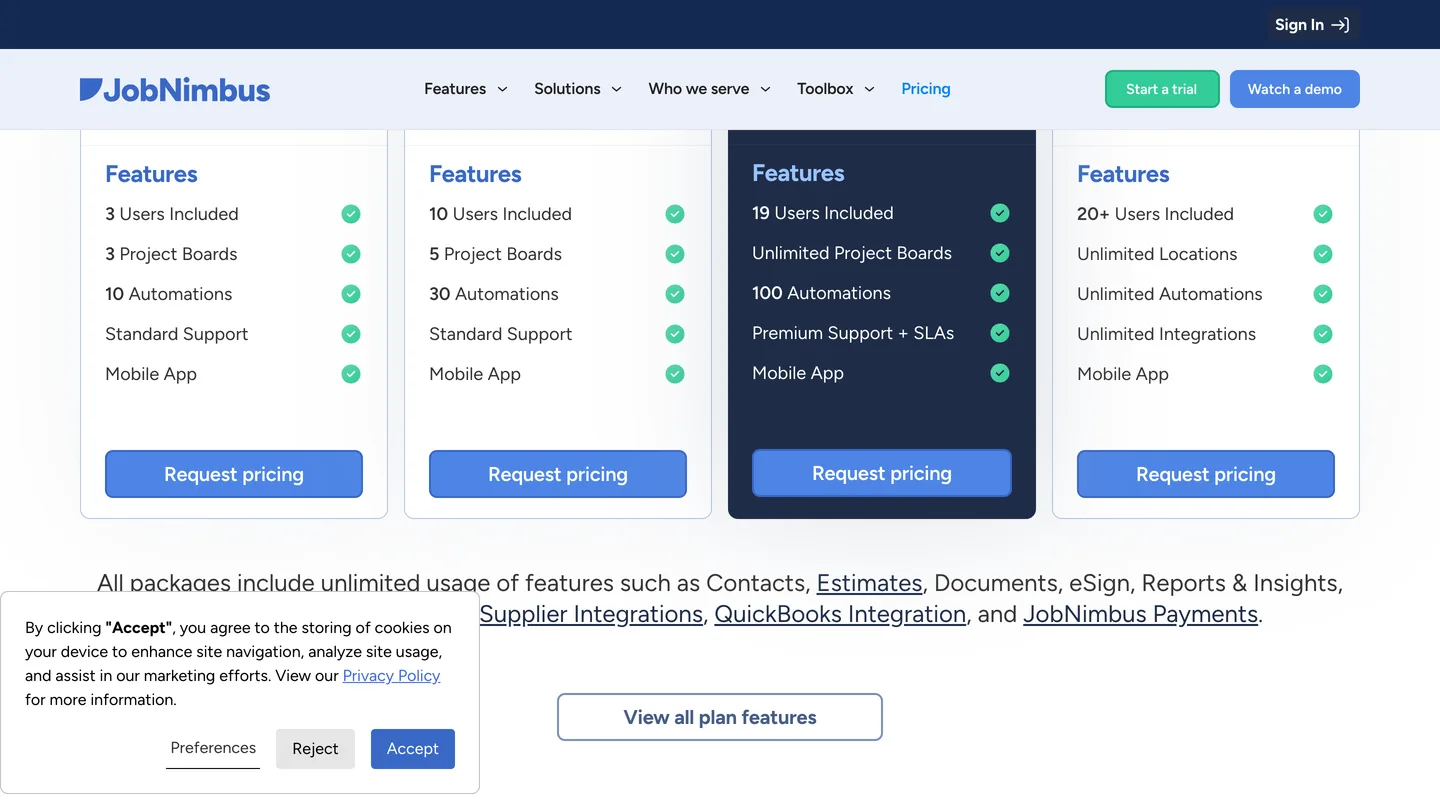 Jul 30, 2026
 Tech Stack
JobNimbus Review 2026: Pricing, Pros, Cons and Alternatives
JobNimbus rates 4.6 on Capterra and orders material straight from ABC Supply and SRS. But it publishes no price, and its supplement route carries a note.
Read Article Jul 30, 2026
 Tech Stack
BuildOps Review 2026: Pricing, Contract Terms and Alternatives
BuildOps runs commercial service and projects on one platform, and publishes no pricing at all. The billing unit, the 30-day data-export window, and who it suits.
Read Article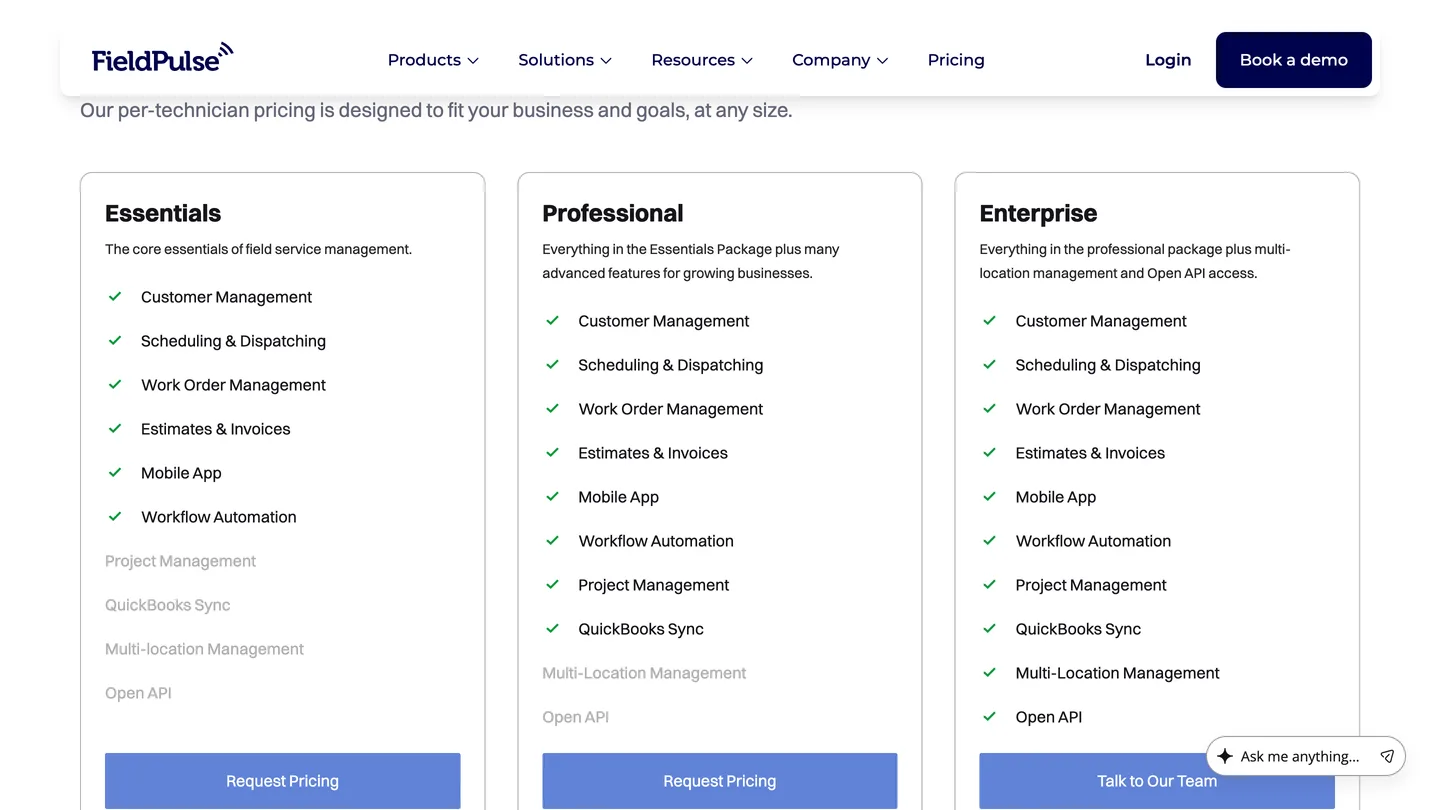 Jul 30, 2026
 Tech Stack
FieldPulse Review 2026: Pricing, Pros, Cons and Alternatives
FieldPulse rates 4.6 on Capterra and is the platform contractors name when they leave a bigger system. But it publishes no price, and the contract runs a year.
Read Article Jul 30, 2026
 Tech Stack
Service Fusion Review 2026: Pricing, Contract and Alternatives
Service Fusion bills flat per company with unlimited users, which is the best structural deal in field service software. The published plans, the contract behind the no-contract line, and the app score every other review gets wrong.
Read Article Jul 30, 2026
 Tech Stack
Knowify Review 2026: Pricing, Job Costing and Alternatives
Knowify rates 4.5 on Capterra and its weakest sub-score is features. What the $99 Core plan withholds, which way the QuickBooks sync really runs, and who should not buy it.
Read Article Jul 29, 2026
 Tech Stack
AccuLynx Review 2026: Pricing, Tier Gating, Alternatives
AccuLynx rates 4.6 across 846 reviews and now publishes an entry price. What that price omits, which tier holds the insurance workflow, and who should skip it.
Read Article Jul 29, 2026
 Tech Stack
Unitel Voice Review 2026: Pricing, Features and Alternatives
Unitel Voice rates 4.6 on Capterra and gives a one-truck shop a business number for $9.99 a month. The published plans, the cost per call, and what it won't do.
Read Article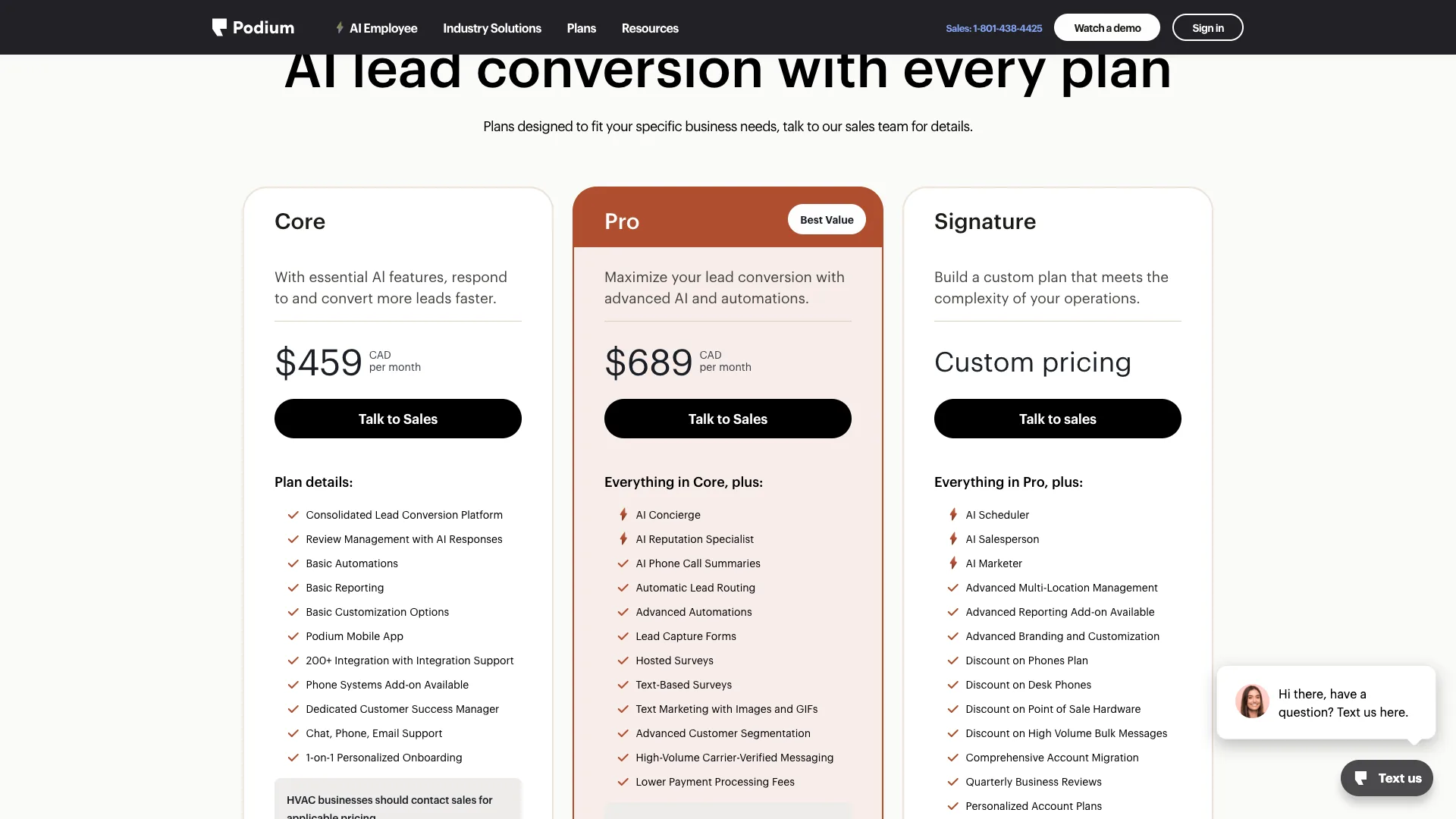 Jul 29, 2026
 Tech Stack
NiceJob vs Podium 2026: Pricing, Contracts and Review Gating
Both vendors print a price, at very different scale and in different currencies. The gap that matters is what Podium will not print: the billing unit, and whether a trade shop gets the number on the page.
Read Article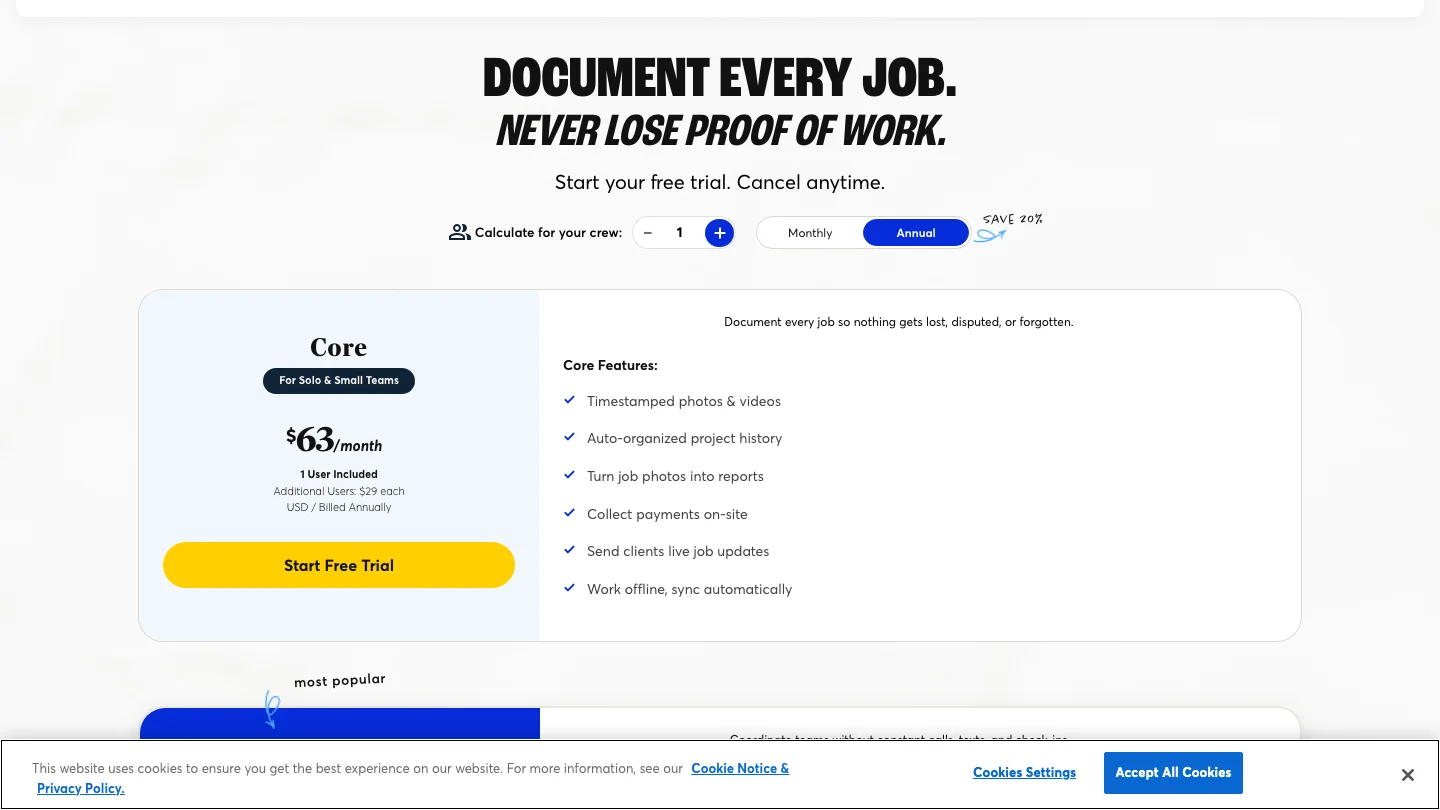 Jul 28, 2026
 Tech Stack
CompanyCam Review 2026: Pricing, Pros, Cons and Alternatives
Every page ranking for CompanyCam still quotes a per-user price the vendor no longer charges. Here are the real plans, the seat math, and who should skip it.
Read Article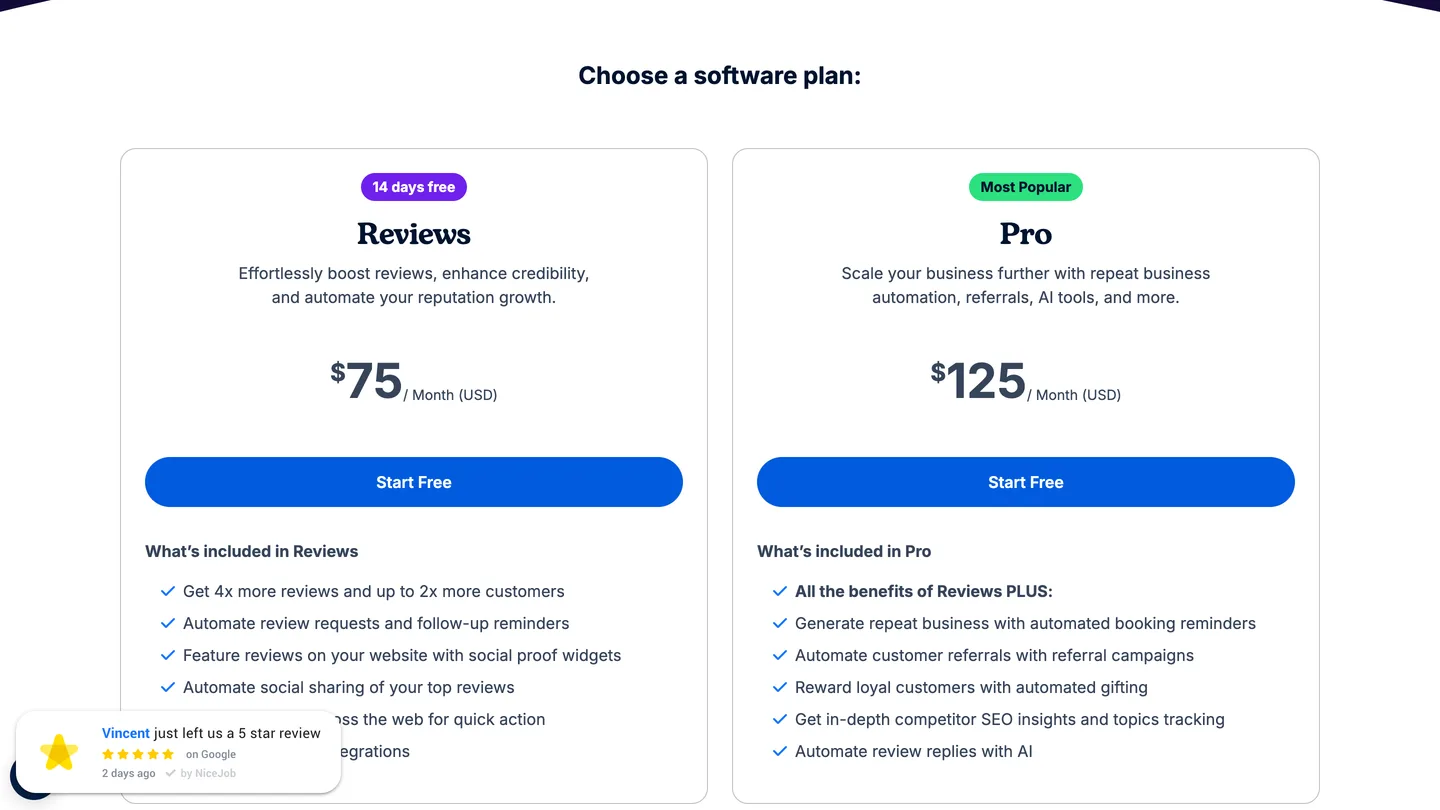 Jul 28, 2026
 Tech Stack
NiceJob Review 2026: Pricing, Pros, Cons and Alternatives
NiceJob rates 4.9 on Capterra and refuses to gate negative reviews. Real plan pricing, the active-customer threshold nobody publishes, and who should skip it.
Read Article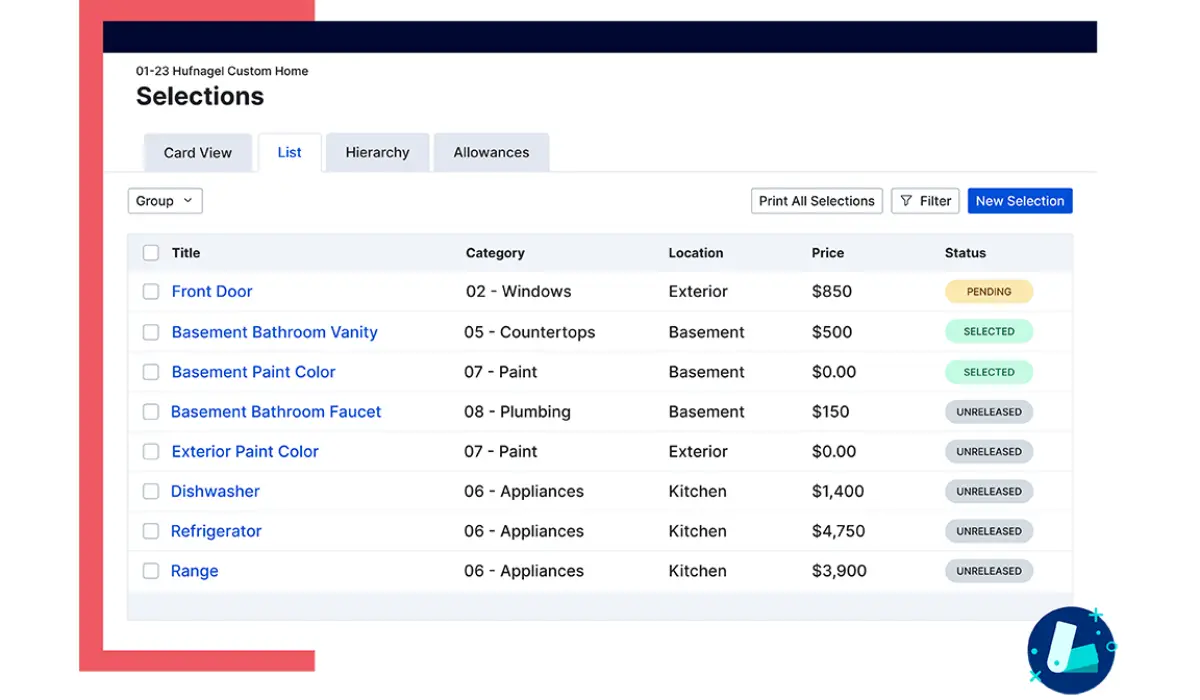 Jul 27, 2026
 Tech Stack
Buildertrend Review 2026: Pricing, Limits and Alternatives
Buildertrend rates 4.5 across 2,486 Capterra reviews and quotes against your revenue rather than your seat count. The workflows, the export problem, the alternatives.
Read Article Jul 27, 2026
 Tech Stack
CallRail Review 2026: Pricing, Pros, Cons and Alternatives
CallRail rates 4.5 on Capterra, and its tracking numbers port out free. But the two usage rates that decide your real bill are the two it does not print.
Read Article Jul 27, 2026
 Tech Stack
Roofr Review 2026: Pricing, Pros, Cons and Alternatives
Roofr rates 4.6 on Capterra and sells $13 measurement reports against a market charging triple. But it will not import a report from anywhere else.
Read Article Jul 25, 2026
 Tech Stack
Housecall Pro Review 2026: Pricing, Pros, Cons, Alternatives
Housecall Pro has the shortest learning curve in the category and the widest review spread. Real pricing, the Instapay math, and the migration trap to plan around.
Read Article Jul 24, 2026
 Tech Stack
Jobber Review 2026: Pricing, Pros, Cons and Alternatives
Jobber rates 4.6 on Capterra with the best mobile app in the category. Real plan pricing, the feature gating that changes your entry price, and who it suits.
Read Article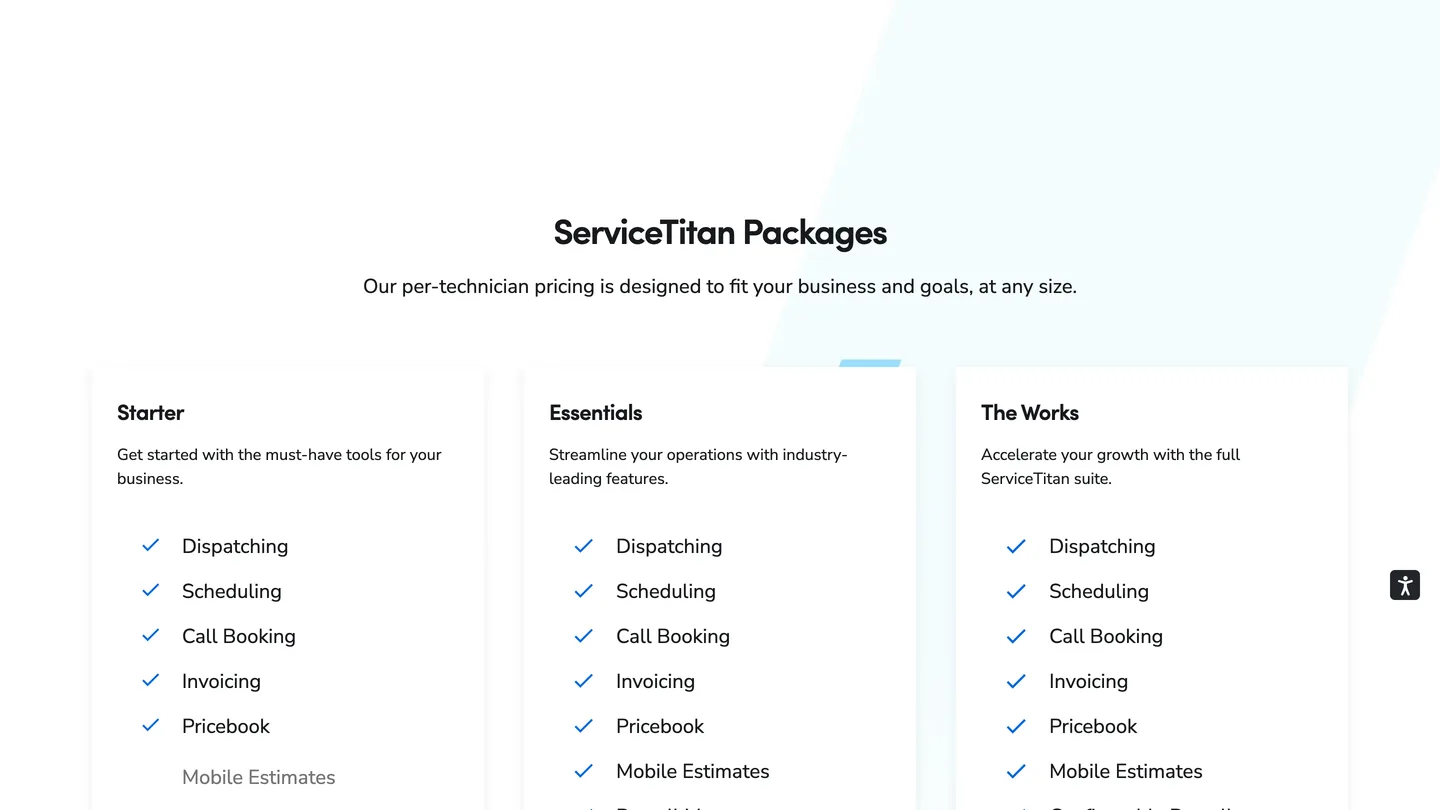 Jul 23, 2026
 Tech Stack
ServiceTitan Review 2026: Pricing, Pros, Cons, Alternatives
ServiceTitan rates 4.3 on Capterra but its weakest score is value for money. Real reported pricing, the 12-month contract, the exit fees, and who it actually suits.
Read Article Jun 3, 2026
 Tech Stack
HVAC Online Scheduling: The 43% Losing After-Hours Bookings
HVAC leads every trade on online booking at just 56.7%, which still leaves 43% of sites forcing an after-hours customer to wait for a business-hours phone call.
Read Article