RoofLink Review 2026: Pricing, Pros, Cons, Alternatives
RoofLink starts at $400/month. What each tier gates, the 8 limitations reviewers name, and 5 alternatives with published prices.
Disclosure This article features tools from our brand partners. If you choose to use them, we may receive compensation at no extra cost to you.
Our editorial choices are independent of these affiliate arrangements. Read our full affiliate disclosure.
Fervor is a CRO and web design studio, not a software reseller, and no vendor paid for placement here or for a kinder verdict. Affiliate links are flagged where they appear, and they never change what we report.
Page at a glance
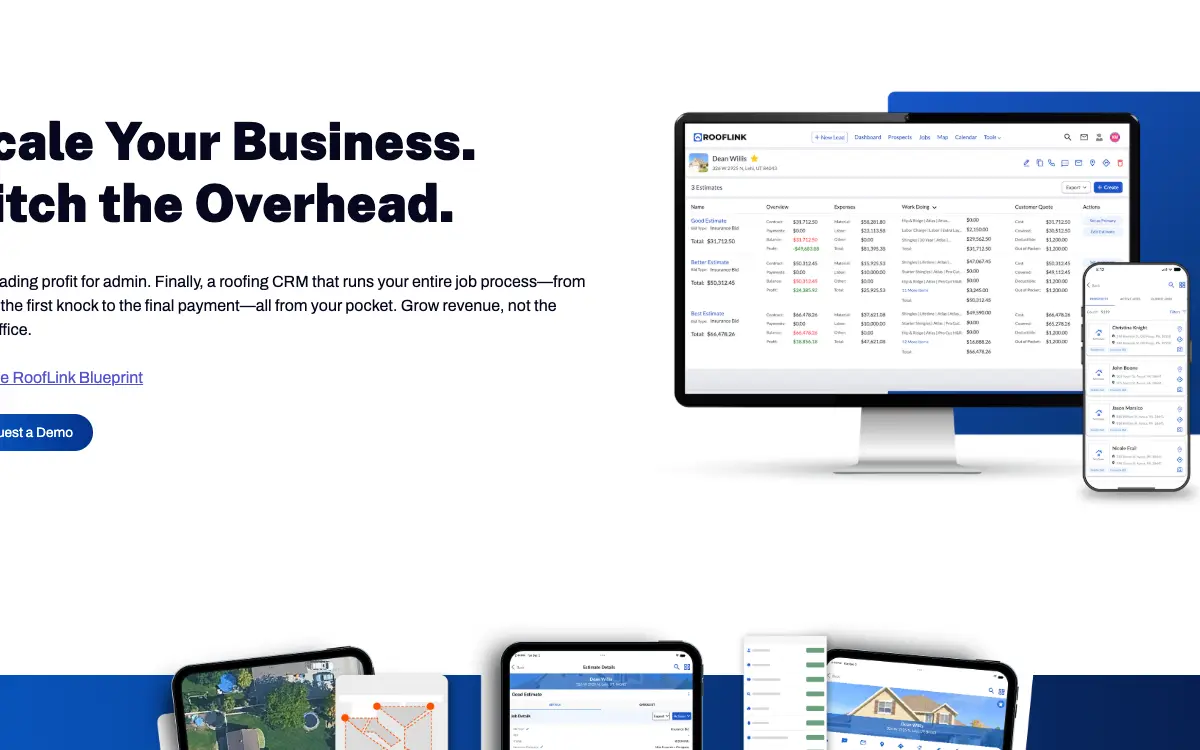
RoofLink is The roofing CRM that includes its own measurement tool, so you're not paying per report to EagleView on top of a subscription. It starts at $400/month per user. Billing runs on active licences with a contracted user minimum, and you pay the minimum even when fewer people are active. Inactivating a user frees the licence for someone else at no extra cost, but it does not reduce the bill below the minimum. Adding users above your high-water mark generates a prorated invoice mid-cycle. It fits Storm and insurance roofing companies running roughly 10 to 50 seats, where door-knocking crews and a production office need to work out of the same record. It's the wrong buy for A one-to-three-person residential roofing company doing retail replacements with no canvassing crew, because Every published version of the price is a per-seat subscription with a setup fee attached, and the cheapest published figure still lands above what a small shop pays for a measurement-first tool. And the canvassing map, territory assignment and weather overlays are the parts that justify the seat rate, and a two-person retail operation uses none of them. Alternatives that publish their prices are Roofr from $109, AccuLynx from $250, CompanyCam from $63. Four priced tiers, eight evidenced gaps and five alternatives, three of which publish a figure.
Start here if RoofLink is on your shortlist
RoofLink earns its money with Storm and insurance roofing companies running roughly 10 to 50 seats, where door-knocking crews and a production office need to work out of the same record. If that's you, it does the job. The sections below are the parts worth checking before you sign. But the fit is narrower than the marketing suggests, and the price isn't the whole cost.
It starts at $400/month. And pricing was verified on 7 August 2026, so you can check every figure below in a browser tab.
| Pricing model | Published tiers |
|---|---|
| Entry price | $400/month |
| Users | Billing runs on active licences with a contracted user minimum, and you pay the minimum ev |
| Ownership | SalesRabbit, Inc. |
| Best fit | Storm and insurance roofing companies running roughly 10 to 50 seats, where door-knocking crews and a production office need to work out of the same record. |
| Accounting sync | QuickBooks Online Plus (two-way), QuickBooks Online Plus (scope and cost, per the FAQ) (two-way) |
What works
- Measurement is built in, not bought per report
- Milestones move the job, not a person dragging a card
- Weather data comes from public sources, overlaid on the canvassing map
- Onboarding is a two-to-three-week build, and it isn't self-serve
- SRS ordering runs off the bid with live pricing
What does not
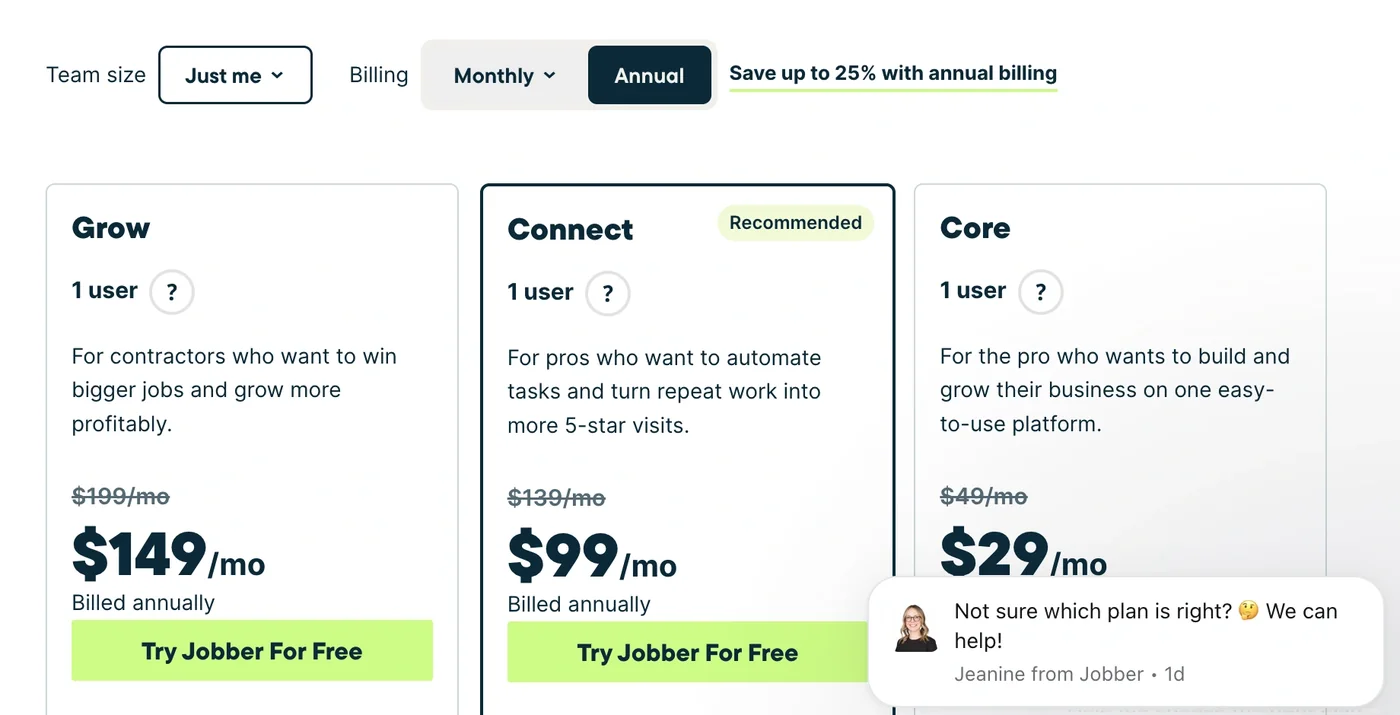
- RoofLink publishes two different seat prices on its own website
- The marketing FAQ promises month-to-month, and the contract you sign doesn't
- Getting your data back requires a written request inside a thirty-day window
- The QuickBooks integration is the single most named weak point among long-tenured users
- Photo upload reliability is inconsistent enough that a new user flagged it in month one
RoofLink is The roofing CRM that includes its own measurement tool, so you're not paying per report to EagleView on top of a subscription. It sells to Roofing contractors, and the shape of the product follows from that: The primary measurement tool is do-it-yourself tracing rather than an ordered report. You trace the perimeter, then hips, ridges and valleys, drop accessories like vents and pipe boots onto the drawing, and a product template converts the drawing into an estimate, a material order and a work order in one action. And it also handles gutter takeoff and fence measurement, which matters on storm claims where the roof isn't the only line item.
Ownership matters here more than it usually does. RoofLink is owned by SalesRabbit, Inc., so weigh roadmap risk alongside the feature list. An independent product can be bought and folded into somebody else's plan two years after you sign.
The shops RoofLink fits, and the ones it doesn't
It fits Storm and insurance roofing companies running roughly 10 to 50 seats, where door-knocking crews and a production office need to work out of the same record. That's the half most reviews print. Here's the other half, which is the one worth your time.
Don't buy it if you're A one-to-three-person residential roofing company doing retail replacements with no canvassing crew. Every published version of the price is a per-seat subscription with a setup fee attached, and the cheapest published figure still lands above what a small shop pays for a measurement-first tool. And the canvassing map, territory assignment and weather overlays are the parts that justify the seat rate, and a two-person retail operation uses none of them. Look at Roofr instead.
Don't buy it if you're A contractor who needs a signed commitment that the subscription is genuinely month-to-month. The vendor's marketing FAQ says month-to-month with no penalty, and the binding Terms say non-cancelable, non-refundable, auto-renewing into one-year terms with no termination for convenience. So until an Order Form says otherwise in writing, the safe assumption is an annual commitment. Look at Jobber instead.
Don't buy it if you're A multi-trade contractor running roofing alongside HVAC, siding or service work. The product is roofing-shaped from the measurement tool down. And the FAQ concedes that adding trades means mapping products into the roofing product library rather than running a second trade properly, and there's no service-agreement or recurring-maintenance layer in the platform. Look at ServiceTitan instead.
Don't buy it if you're A company whose accounting sits in QuickBooks Desktop, Xero or Sage. The counted integration directory lists exactly one accounting partner and it's QuickBooks Online Plus. So everything else in your finance stack becomes manual entry or a Zapier build you maintain yourself. Look at Knowify instead.
The money question on RoofLink
And RoofLink publishes its tiers, which puts it ahead of most of this category before you compare a single feature.
| Tier | Price | Billing unit | What it unlocks |
|---|---|---|---|
| RoofLink, list price on the pricing page | $400/month | per user | Nothing beyond the tier below |
| RoofLink, rate quoted on the vendor's own FAQ page | $120/month | per user | volume discount described as available for larger companies, amount not published |
| RoofLink standalone, sold through the SalesRabbit storefront | $120/month | per user | Nothing beyond the tier below |
| RoofLink plus SalesRabbit Pro bundle | $160/month | per user | DataGrid AI, Weather, Digital Contracts, described as a limited time offer |
Billing runs on active licences with a contracted user minimum, and you pay the minimum even when fewer people are active. Inactivating a user frees the licence for someone else at no extra cost, but it does not reduce the bill below the minimum. Adding users above your high-water mark generates a prorated invoice mid-cycle.
There is a discount for paying annually up front: And an annual prepay discount tells you an annual commitment exists, which is worth knowing before anyone mentions a term length out loud.
Everything that isn't the RoofLink subscription
Payment processing. Paying RoofLink by credit card carries a processing fee that the vendor does not fix in the contract. The percentage is disclosed at the moment of the transaction and the contract reserves the right to change it. Separately, taking money from homeowners runs through Stripe, whose rates are set by Stripe rather than RoofLink.
Implementation and onboarding. The pricing page names a flat one-time $1,500 setup fee. The FAQ page on the same domain instead says the setup fee varies by company. Onboarding itself is quoted at 10 to 14 business days.
Minimum term. The binding Terms describe a Subscription Term set on the Order Form that renews into successive one-year terms, and they make payment obligations non-cancelable. The vendor's marketing FAQ says the opposite, that the subscription is month-to-month and cancellable at any time without penalty. The Order Form controls, because the Terms say a conflicting Order Form provision prevails.
Getting out. There is no early-termination fee as such, because there is no termination for convenience to trigger one. Either party can only terminate for uncured material breach after a thirty-day cure window and a ten-business-day escalation step, or for bankruptcy. Everything already committed stays owed, and nothing already paid comes back. The parent's own Billing FAQ puts it plainly.
Auto-renewal. Renewal is automatic into successive one-year terms at then-current pricing unless you send email notice to billing@salesrabbit.com at least thirty days before the term ends. Notice by phone call to your account manager is not what the contract asks for.
Modules sold separately. , . But the entry tier is not the price you'll pay. Add the modules your shop needs on day one and compare RoofLink on that total.
Third-party services you will also pay for. , . These are not on RoofLink's invoice, and they are still part of what this decision costs you every month.
One oddity, filed under things nobody mentions on a demo. RoofLink is the only tool in this set whose own website publishes two prices that differ by more than three times. The pricing page says $400 per user per month. The FAQ page, same domain, says $120. And both are live, both are indexed, and neither acknowledges the other. The SalesRabbit storefront and Software Advice both say $120, which suggests the pricing page carries a newer list rate that the FAQ never caught up to, or a rate the sales team never charges. On a 20-seat account the spread between those two published rates is $67,200 a year. So print both pages, bring them to the demo, and make the rep reconcile them before anything else gets discussed. Because a vendor that can't keep its own price straight across two pages won't volunteer the cheaper one.
Everything that is not the RoofLink subscription
The subscription is the part everyone quotes. These are the lines that land afterwards, and the ones we could not find are named as unpublished rather than left blank.
Sold separately. , . Price the configuration you'll really run, because an add-on you need on day one is part of the price.
Third-party services you'll also pay for. , . None of these are on RoofLink's invoice, and all of them are part of what this decision costs every month.
"RoofLink RoofLink, list price on the pricing page is $400/month, per user."
RoofLink pricing page (2026)
"RoofLink RoofLink, rate quoted on the vendor's own FAQ page is $120/month, per user."
RoofLink pricing page (2026)
"Billing runs on active licences with a contracted user minimum, and you pay the minimum even when fewer people are active. Inactivating a user frees the licence for someone else at no extra cost, but it does not reduce the bill below the minimum. Adding users above your high-water mark generates a prorated invoice mid-cycle."
RoofLink pricing page (2026)
The five workflows you pay for
Feature totals are noise. So a shop in this category lives or dies on five things, and those are the five to grade, and each one below carries the evidence it's graded on.
Measurement is built in, not bought per report. The primary measurement tool is do-it-yourself tracing rather than an ordered report. You trace the perimeter, then hips, ridges and valleys, drop accessories like vents and pipe boots onto the drawing, and a product template converts the drawing into an estimate, a material order and a work order in one action. And it also handles gutter takeoff and fence measurement, which matters on storm claims where the roof isn't the only line item. The vendor's own wording is "When completed, a template of products is applied to create the estimate, material order, and work order instantly.". The vendor's own wording is "One flat rate, no per-measurement costs, no surprise add-ons".
Milestones move the job, not a person dragging a card. The vendor's own differentiator claim is that completing a milestone advances the project through the pipeline and updates the dashboard automatically, instead of the board-and-card pattern where somebody has to remember to move the tile. And reviewers who stayed two years or more consistently name automations and configurability as the reason. A CEO, construction, 51-200 employees, 2+ years on the platform, writing on 2024-01-19, reports it: "Need a few more customer service support people"A president, construction, 11-50 employees, 2+ years on the platform, writing on 2024-01-24, reports it: "Roof.link is fully customizable and not a simple out of the box product. It allows us to create custom workflows that meet our needs, instead of what a developer who has never done our job thinks we need. The customer support team is awesome and switching to Roof.link has saved us substantial money over our previous software, Acculynx." The vendor's own wording is "Most other CRMs have boards that customers manually move to and from, basically replicating digital post-it notes.".
Weather data comes from public sources, overlaid on the canvassing map. RoofLink pulls individual weather spotter events from the National Weather Service and overlays NOAA radar. So that's a meaningful disclosure, because it tells you the storm layer is public data presented well rather than a proprietary hail model. And territory assignment, pin dropping and bulk email and text from the map sit on the same surface. The vendor's own wording is "We pull individual weather spotter events from The National Weather Service. We overlay radar data from the National Oceanic and Atmospheric Administration, NOAA.".
Onboarding is a two-to-three-week build, and it isn't self-serve. The vendor quotes 10 to 14 business days and says the pace depends on how fast you supply requested items. Roof templates get built with your products during that window, and roughly a dozen e-signable contracts come pre-built. And a reviewer who has switched CRMs repeatedly makes the point that training on every aspect is the only thing that makes any of them work. An ios app user, describes it it plainly: "I've been with plenty of different CRM's over the years and what I have found is that the only way to make a CRM work is to actually train on every aspect." The vendor's own wording is "Onboarding varies depending on the customer's ability to supply requested items. Typically it takes 10-14 business days.".
SRS ordering runs off the bid with live pricing. The SRS Distribution integration checks live pricing and places orders through a shared account, so the material order generated from the measurement drawing becomes a real purchase order without rekeying. So that closes the loop the measurement tool opens, and it's the part of the stack that a distributor relationship changes. The vendor's own wording is "With live pricing checks, seamless ordering connected through one mutual account, roofers can eliminate double entry, reduce errors, and manage every job step in one platform.".
RoofLink trade fit
Fit differs by trade rather than by company size alone, and a blended paragraph hides that. Here is the split for the trades this one sells to.
Roofing. The workflow that decides it is measurement is built in, not bought per report, and the shop profile that gets value is ten to fifty seats, storm and insurance restoration with door-knocking crews doing residential and insurance and commercial work. Where it stops being a fit is A one-to-three-person residential roofing company doing retail replacements with no canvassing crew.
How RoofLink talks to your books
QuickBooks Online Plus connects both ways, on every plan. QuickBooks Online Plus (scope and cost, per the FAQ) connects both ways, on every plan. Your costs map through cost codes, so test yours against your own chart of accounts before you commit. A code your books don't recognise is how a labour charge quietly lands somewhere useless.
Past those, the road ends. Xero, Sage and QuickBooks Desktop, Review generation and reputation platforms, Call tracking, Published developer documentation do not connect. So if your books run on an ERP rather than the platforms named above, weigh that before anything else.
Beyond accounting it connects to SalesRabbit (Two-way sync with the parent company's canvassing platform. Creates prospects in RoofLink from SalesRabbit leads, assigns lead owners, and maps statuses across both systems. And the published capability table marks two-way sync, form submission, lead status auto-submission and user assignment as supported, and leaves custom fields, lead file attachments and post-submit status updates unmarked.), SRS Distribution (Live material pricing checks and direct ordering from the bid through a shared account.), Hover (Pulls Hover roof measurement data directly into RoofLink jobs after account linking.), EagleView Edge (Sources and applies EagleView reports inside the project workflow.), GAF QuickMeasure (Pulls QuickMeasure report summaries into RoofLink measurements, then applies roof templates to generate estimates and orders.), Stripe (In-app ACH and credit card collection from the field.), CompanyCam (Syncs customer data and transfers job site photos into RoofLink for tagging in estimates, reports and invoices.), Zapier (Connects RoofLink to other apps through the account's guest API, in both directions, with milestone and trigger-based outbound sends.). A public API exists: Every account includes what the vendor calls a guest API, used to pull customer data in from other apps and to push data out on milestones or triggers. Zapier is the documented route. The navigation advertises a Developer API page, but that URL returns a 404, so there is no public endpoint reference, authentication doc or rate limit published.
RoofLink support, onboarding and the hours
Support is the line item nobody prices and everybody eventually needs. Onboarding for RoofLink: The pricing page names a flat one-time $1,500 setup fee. The FAQ page on the same domain instead says the setup fee varies by company. Onboarding itself is quoted at 10 to 14 business days.
The review corpus we read on 7 August 2026 carries no consistent signal on response times either way, so treat support as untested rather than good. Open a real ticket during the trial and time the reply, because that is the number no pricing page gives you.
Before you sign with RoofLink: the exit
Nobody reads this section before they buy, and it's the one that costs money afterwards. Four terms decide what leaving looks like.
Minimum term. The binding Terms describe a Subscription Term set on the Order Form that renews into successive one-year terms, and they make payment obligations non-cancelable. The vendor's marketing FAQ says the opposite, that the subscription is month-to-month and cancellable at any time without penalty. The Order Form controls, because the Terms say a conflicting Order Form provision prevails.
Auto-renewal. Renewal is automatic into successive one-year terms at then-current pricing unless you send email notice to billing@salesrabbit.com at least thirty days before the term ends. Notice by phone call to your account manager is not what the contract asks for.
Early termination. There is no early-termination fee as such, because there is no termination for convenience to trigger one. Either party can only terminate for uncured material breach after a thirty-day cure window and a ten-business-day escalation step, or for bankruptcy. Everything already committed stays owed, and nothing already paid comes back. The parent's own Billing FAQ puts it plainly.
Payment processing. Paying RoofLink by credit card carries a processing fee that the vendor does not fix in the contract. The percentage is disclosed at the moment of the transaction and the contract reserves the right to change it. Separately, taking money from homeowners runs through Stripe, whose rates are set by Stripe rather than RoofLink.
Worth a detour here. Three clauses stack into an exit problem that no single clause creates on its own. Data return requires a written request inside thirty days of termination. RoofLink may deactivate or delete the account and all related files immediately on termination, with no waiting period tied to that thirty-day window. And a confidentiality clause specifically covering pricing means you can't compare notes with the peer who could tell you what a fair renewal looks like. Export while the account is live and you can still log in. So pull job photos, signed contracts, customer records and measurement drawings on a schedule during the subscription, not in the thirty days after you cancel, because the deletion right doesn't pause for the return right.
"Roof.link is fully customizable and not a simple out of the box product. It allows us to create custom workflows that meet our needs, instead of what a developer who has never done our job thinks we need. The customer support team is awesome and switching to Roof.link has saved us substantial money over our previous software, Acculynx."
Capterra, Dustin E. (1-24)
"It was clunky and not super user friendly."
Capterra, Joshua C. (1-19)
"Very inconsistent with photo upload time"
Capterra, Scott P. (1-09)
The RoofLink problems that survive onboarding
These are specific enough that you can put each one to a salesperson as a yes or no question. That's deliberate. Vague complaints don't help you negotiate.
RoofLink publishes two different seat prices on its own website. The pricing page says $400 per user per month. But the FAQ page on the same domain says the current fee is $120 per user. The SalesRabbit storefront also says $120, and Software Advice lists the starting price as $120. So four vendor-adjacent sources, and one of them is more than three times the others. And nobody looking at rooflink.com can tell which number their quote will be built from. Bring both pages to the demo and ask which one applies to you before you talk about anything else. And get the seat rate, the minimum seat count and the setup fee written on the Order Form, not said out loud.
The marketing FAQ promises month-to-month, and the contract you sign doesn't. The FAQ says there's no long-term commitment and you can cancel anytime without penalty. But the Terms of Use say payment obligations are non-cancelable, that the Subscription Term auto-renews into successive one-year terms, and that neither party can terminate outside of a breach or bankruptcy. And the parent company's Billing FAQ states flatly that accounts remain active for the full contract length. So two of those three documents are the ones a lawyer would read. If a rep repeats the month-to-month line, ask them to write it into the Order Form. And the Terms say a conflicting Order Form provision prevails, so that sentence is the only version of the promise that survives.
Getting your data back requires a written request inside a thirty-day window. The FAQ says you own your data and it's yours to download if you leave. But the contract is narrower. RoofLink returns Customer Data in an industry-standard format only if you ask in writing within thirty days of termination, and after that it can charge its then-current rates or simply decline. And a separate clause lets RoofLink deactivate or delete the account and all related files immediately on termination. Export before you cancel, not after. So pull job photos, contracts, customer records and the measurement drawings while the account is still live, because the thirty-day clock starts at termination and the deletion right doesn't wait for it.
The QuickBooks integration is the single most named weak point among long-tenured users. An owner with more than two years on the platform says outright that he is not a fan of the QuickBooks integration, in the same breath as wanting visibility into job size and material on work that is not yet complete. So that combination points at the accounting handoff rather than at the CRM. But the vendor calls the same integration industry-leading and the best on the market. On 2024-01-19, an owner, construction, 11-50 employees, 2+ years on the platform, says: "Not a fan of QB integration. Wish i could see size of job and material on work not completed" Run one real job end to end in a sandbox before you migrate. Then push an estimate, a material order, a partial payment and a commission into QuickBooks Online Plus and check whether your bookkeeper recognises what lands.
Photo upload reliability is inconsistent enough that a new user flagged it in month one. A project manager at a 51 to 200 employee company, less than six months in, praised the navigation and then named upload time as the one complaint. And for a storm roofer, photo capture is the insurance file. So upload timing that varies isn't a cosmetic issue when an adjuster meeting depends on the images being there. A project manager, building materials, 51-200 employees, Less than 6 months on the platform, writing on 2024-11-09, says: "Very inconsistent with photo upload time" Test uploads from a real roof on cellular, not from the office on wifi. Then time a forty-photo job and check whether the images appear in the web app before the crew leaves the site.
The mobile apps rate a full point below the directory listings. Capterra shows 4.9 out of 5 across 10 reviews. But the iOS app sits at 4.0 across 42 ratings and the Android app at 3.8 across 15 reviews. The directory sample is small, recent and clustered around January 2024, which is the pattern of a review drive. And the app store sample is larger, unprompted and lower. So field crews rate the app, and office staff rate the platform. Put the app on two reps' phones during the trial and let them rate it, because your reps are the population the 3.8 came from.
Add-ons are all-seats-or-nothing. You can't buy DataGrid AI, Weather or Digital Contracts for the four people who need them. The parent company's Billing FAQ says the plan, the billing cycle and every add-on apply to all user licences. So on a 30-seat account, a $40 per user per month bundle is $1,200 a month whether four people use it or thirty. Price add-ons as seat count times twelve months before you agree to a trial of them, and decide on the whole-account number rather than the per-user one.
The contract forbids you from discussing what you paid. The Terms carry a mutual confidentiality clause that covers the terms of the agreement, and names pricing explicitly. And in a trade where owners compare software costs at every association meeting, that clause is what keeps a $400 quote and a $120 quote from ever meeting in the same room. Ask your peers what they pay before you sign, because afterwards you're contractually the wrong person to ask.
One more thing worth knowing. The vendor's marketing FAQ and its binding Terms of Use make directly opposite promises about commitment, and the Terms contain the clause that decides which one wins. The FAQ says there's no long-term commitment and you can cancel anytime without penalty. But the Terms say all payment obligations are non-cancelable and non-refundable, that the Subscription Term auto-renews into successive one-year terms at then-current pricing, and that there is no termination for convenience at all. Buried in the same Terms is the tiebreaker: where an Order Form conflicts with the Terms, the Order Form prevails. The Order Form is the only document where the month-to-month promise becomes enforceable. So ask for one sentence on it: this subscription is month-to-month and may be cancelled with thirty days notice without penalty. And if the rep won't write it, the FAQ was marketing and you're signing an annual deal.
One more thing worth knowing. RoofLink is now the roofing CRM inside a canvassing company, and the integration between the two is documented more precisely than either company's own pricing. The SalesRabbit connector publishes a capability table confirming two-way sync, form submission, lead status auto-submission and user assignment, while explicitly leaving custom fields, lead file attachments and post-submit status updates unmarked. But that level of field-by-field honesty appears nowhere in RoofLink's QuickBooks documentation, which is described only as industry-leading and the best on the market. If you run custom lead fields or attach files to leads in SalesRabbit, those don't cross into RoofLink and you'll find out during onboarding. So ask for the same field-level map for QuickBooks before you migrate a book of jobs, because no published equivalent exists.
Worth a detour here. The complaints cluster on the handoffs rather than the core. QuickBooks sync, photo upload timing, and support headcount are the three named weak points, and all three are places where RoofLink meets something outside itself. But the CRM, the measurement tool and the automations draw praise from users with two or more years on the platform. And every negative comes from either a very new user or a much larger company. Weight the demo toward the seams. So push one real job through QuickBooks Online Plus end to end, upload forty photos from a roof on cellular, and time a support ticket. Because the parts of the product the vendor demos best are the parts nobody complains about anyway.
What RoofLink users report
Every quote below is transcribed from a published review, named to the platform that carries it and to the reviewer as that platform displays them. We read the corpus by complaint type rather than by star rating, which is how the disqualifying detail buried inside a five-star review gets found.
"Roof.link is fully customizable and not a simple out of the box product. It allows us to create custom workflows that meet our needs, instead of what a developer who has never done our job thinks we need. The customer support team is awesome and switching to Roof.link has saved us substantial money over our previous software, Acculynx."
A president, construction, 11-50 employees, 2+ years on the platform, reports it it plainly on Capterra
"It was clunky and not super user friendly."
And a general manager, construction, 51-200 employees, 1-2 years on the platform, writing on 2024-11-19, puts it the same thing on Capterra
"Very inconsistent with photo upload time"
A project manager, building materials, 51-200 employees who reviewed it on 2024-11-09 describes it on Capterra
"Not a fan of QB integration. Wish i could see size of job and material on work not completed"
And an owner, construction, 11-50 employees, 2+ years on the platform, writing on 2024-01-19, reports it the same thing on Capterra
"Need a few more customer service support people"
A CEO, construction, 51-200 employees, 2+ years on the platform, writing on 2024-01-19, writes on Capterra
"Like us, they are a newer company. Like us, there are some occasional bugs to work out. Despite that, their urgency and responsiveness in getting those resolved really make this a non-issue."
A general manager, construction, 11-50 employees, 1-2 years on the platform, puts it it plainly on Capterra
"The best part about Rooflink for us is the customizability. We were able to seamlessly incorporate our contracts, service requests, material order forms, all company forms etc. into Rooflink and tag information to fit exactly where it is needed."
A sales manager, construction, 11-50 employees who reviewed it on 2024-01-24 puts it on Capterra
"User friendly. Making custom widgets to fit our company"
On 2024-01-22, an office manager, construction, 11-50 employees, 2+ years on the platform, writes on Capterra
"What I like the most is the support you receive when you need something as well as the ease of going through their CRM platform when you are a new user"
But a managing partner, construction, 11-50 employees, 6-12 months on the platform, writes it differently on Capterra
"Customer support can be better but it's a great product/service."
A CEO, computer software, 2-10 employees who reviewed it on 2024-02-01 reports it on Capterra
"I've been with plenty of different CRM's over the years and what I have found is that the only way to make a CRM work is to actually train on every aspect."
On 2024-09-04, an ios app user reports it on Apple App Store
"I've been using RoofLink for over two years now. Definitely love how they keep updating and keeps on getting better and better."
And an ios app user, 2+ years on the platform, writing on 2025-01-12, writes the same thing on Apple App Store
"Customer service is amazing. I'm glad I find this app. I've been trying older brands previews with another business and for Roofing this is the best."
An ios app user, small roofing contractor who reviewed it on 2025-04-23 describes it on Apple App Store
"This is by far the best one I have used! It keeps all the info you need for customers and jobs at your fingertips in an organized fashion!"
On 2023-02-08, an ios app user writes on Apple App Store
What else you should be pricing beside RoofLink
Four or five products a shop looking at RoofLink would also be looking at. Each row carries what the vendor publishes, plus what it does better and worse.
| Tool | Entry price | Billing unit | Users included | Published? |
|---|---|---|---|---|
| RoofLink | $400/month | per user | Billing runs on active licences with a contracted user minim | Yes |
| Roofr | $109 | per month, billed annually, Pro plan | plan-level rather than per seat, and a permanently free tier exists with reports at $19 each | Yes |
| AccuLynx | $250 | per month, Essential plan, billing unit not printed on the page | not disclosed on the plan options page | Yes |
| JobNimbus | Quote only | per user, quoted by sales | not disclosed | No |
| CompanyCam | $63 | per month, billed annually, Core plan, 1 user included, additional users $29 each | 1 on Core, 3 on Crew and Scale | Yes |
| ServiceTitan | Quote only | per technician, quoted by sales | not disclosed | No |
Roofr. Starting cheap and staying honest about it. The free plan is a real plan with proposals and CRM, and you can price a single estimate exactly. And every figure sits in plain text on one page. But Canvassing, territory management and storm work. There's no weather overlay layer and no distributor ordering integration of the SRS kind.
AccuLynx. Depth in insurance-restoration workflow and supplement handling, and a much longer operating history in roofing. It's the incumbent RoofLink customers most often name switching away from. But Cost. A RoofLink president says explicitly that switching off AccuLynx saved substantial money, and AccuLynx publishes only its entry tier before going to quote.
JobNimbus. Mobile field experience by a wide margin. The iOS app carries 4.8 across more than 12,000 ratings against RoofLink's 4.0 across 42, and that gap is the crew's daily experience. But Price transparency. No figure appears anywhere on the pricing page, so you can't compare before you talk to somebody.
CompanyCam. Photo capture and job documentation, which is the exact thing a RoofLink reviewer named as inconsistent. And it also integrates with RoofLink rather than replacing it. But Everything else. There's no measurement tool, no estimating, no material ordering and no pipeline, so it's an addition to a CRM rather than a substitute for one.
ServiceTitan. Multi-trade operations and service work. If roofing sits beside HVAC, plumbing or a maintenance-agreement book, this is the category that handles all of it. But Roofing specificity and cost. There's no built-in aerial measurement tool, no storm canvassing layer, and no published price at all.
"Not a fan of QB integration. Wish i could see size of job and material on work not completed"
Capterra, Michael D. (1-19)
"Need a few more customer service support people"
Capterra, Brandon W. (1-19)
Who should not buy RoofLink
Don't buy RoofLink if you're A one-to-three-person residential roofing company doing retail replacements with no canvassing crew. Every published version of the price is a per-seat subscription with a setup fee attached, and the cheapest published figure still lands above what a small shop pays for a measurement-first tool. And the canvassing map, territory assignment and weather overlays are the parts that justify the seat rate, and a two-person retail operation uses none of them. Look at Roofr instead.
Don't buy RoofLink if you're A contractor who needs a signed commitment that the subscription is genuinely month-to-month. The vendor's marketing FAQ says month-to-month with no penalty, and the binding Terms say non-cancelable, non-refundable, auto-renewing into one-year terms with no termination for convenience. So until an Order Form says otherwise in writing, the safe assumption is an annual commitment. Look at Jobber instead.
Don't buy RoofLink if you're A multi-trade contractor running roofing alongside HVAC, siding or service work. The product is roofing-shaped from the measurement tool down. And the FAQ concedes that adding trades means mapping products into the roofing product library rather than running a second trade properly, and there's no service-agreement or recurring-maintenance layer in the platform. Look at ServiceTitan instead.
Don't buy RoofLink if you're A company whose accounting sits in QuickBooks Desktop, Xero or Sage. The counted integration directory lists exactly one accounting partner and it's QuickBooks Online Plus. So everything else in your finance stack becomes manual entry or a Zapier build you maintain yourself. Look at Knowify instead.
The verdict, by shop size
Solo operator to three-person retail roofing crew
No. Even at the lowest published figure of $120 a seat, plus a setup fee that one vendor page puts at $1,500 and another says varies, you're paying for canvassing, territory assignment and storm overlays you'll never open. And the measurement tool is the only part you want, and Roofr sells that at $19 a report on a free plan. This band runs 1 to 3 on the crew, doing residential work, and that's the profile the recommendation is written for.
Five to ten seats, residential replacement with some storm work
Only under conditions, and they are worth being honest about. The economics work if you're currently paying EagleView or Hover per report and a separate CRM subscription, because unlimited in-house measurement collapses two line items into one. But the condition is the contract. So get the seat rate and the term written on the Order Form, because the FAQ and the Terms of Use say opposite things about whether you're committing for a year. This band runs 5 to 10 on the crew, doing residential and insurance work, and that's the profile the recommendation is written for.
Ten to fifty seats, storm and insurance restoration with door-knocking crews
Yes, and this is the shape the product is built for. This is the band the product is shaped for, and it's where the long-tenure reviewers sit. Canvassing feeds the CRM, milestones advance production without anybody dragging cards, and SRS ordering runs off the measurement drawing. And the SalesRabbit acquisition strengthens the canvassing half rather than diluting it. But budget for the add-on bundle across every seat, because you can't buy it for a subset. This band runs 10 to 50 on the crew, doing residential and insurance work, and that's the profile the recommendation is written for.
Fifty seats and above, or roofing alongside another trade
No. The 51 to 200 employee reviewer is the one who called it clunky and not super user friendly, and that's the only enterprise-scale voice in the sample. And adding a second trade means mapping products into a roofing product library rather than running that trade properly, and there's no service-agreement layer at all. So at that size the per-seat maths on an undisclosed volume discount also needs to be negotiated rather than assumed. This band runs 50 or more on the crew, doing residential and commercial and service work, and that's the profile the recommendation is written for.
One thing to check before you sign with RoofLink
We should declare an interest, or rather the absence of one. Fervor takes nothing from RoofLink or any of its rivals. What we've got is data on the demand side.
RoofLink sells itself on collapsing the software stack so a roofer can double volume without doubling overhead, and the pricing page leads with it. Then the same company publishes $400 on one page and $120 on another, and a month-to-month promise its own contract contradicts. A contractor who lands on that pricing page and can't resolve the number doesn't call for clarification. They open a second tab. And the cost of an unresolved number on a page is the same as the cost of a page that never loads, and roofing buyers comparison-shop three tools before anybody picks up a phone.
And the number is worse than anyone guesses before they check. Across 380 inspected contractor sites, 82.8% had poor mobile loading performance. But check the method before you take the number, which is why it is published. The full write-up is in the Contractor CRO Index.
"82.8% of the 380 contractor websites inspected had poor mobile loading performance."
Fervor Studio Contractor CRO Index (2026)
Buy the platform if it fits. But spend ten minutes on your own site first, on a phone, on mobile data, the way a homeowner would. The numbers are all public.
See where your site is losing the jobs RoofLink would have managed
We run your site the way a customer does, on a phone, and report exactly where the enquiries stop. Three days.
Get a Site InspectionHow this RoofLink page was researched
We didn't run RoofLink on a live job, and we won't imply otherwise. The basis is 12 vendor pages for RoofLink, read on 7 August 2026, and every review we could retrieve, sorted by complaint. So each number carries the date it was read, and the page it was read from.
So: 14 quotes on this page, ten from Capterra and four from Apple App Store. Capterra and Software Advice share one Gartner Digital Markets review pool, so a matching score across them is one sample rather than two corroborating ones.
And G2, TrustRadius, Trustpilot, Reddit, GetApp (HTTP 403 on both direct fetch and rendered fetch), SalesRabbit help centre web UI (HTTP 403; article content retrieved through the public Zendesk Help Center API instead) and Capterra direct HTTP fetch (HTTP 403; page content retrieved through the rendered fetch path instead) refused automated retrieval for RoofLink. Forum and social threads are the ones people most want quoted, and they are exactly the ones we cannot verify, so none of them are here.
What that leaves untested: we didn't run a paid account, so the do-it-yourself measurement tool's accuracy against an EagleView report is reported by the vendor rather than measured by us.. And everything above is twelve vendor pages and a review corpus, which is documentary rather than hands-on.
What RoofLink users say
Roof.link is fully customizable and not a simple out of the box product. It allows us to create custom workflows that meet our needs, instead of what a developer who has never done our job thinks we need. The customer support team is awesome and switching to Roof.link has saved us substantial money over our previous software, Acculynx.
It was clunky and not super user friendly.
Very inconsistent with photo upload time
Not a fan of QB integration. Wish i could see size of job and material on work not completed
Need a few more customer service support people
Like us, they are a newer company. Like us, there are some occasional bugs to work out. Despite that, their urgency and responsiveness in getting those resolved really make this a non-issue.
The best part about Rooflink for us is the customizability. We were able to seamlessly incorporate our contracts, service requests, material order forms, all company forms etc. into Rooflink and tag information to fit exactly where it is needed.
User friendly. Making custom widgets to fit our company
What I like the most is the support you receive when you need something as well as the ease of going through their CRM platform when you are a new user
Customer support can be better but it's a great product/service.
I've been with plenty of different CRM's over the years and what I have found is that the only way to make a CRM work is to actually train on every aspect.
I've been using RoofLink for over two years now. Definitely love how they keep updating and keeps on getting better and better.
Customer service is amazing. I'm glad I find this app. I've been trying older brands previews with another business and for Roofing this is the best.
This is by far the best one I have used! It keeps all the info you need for customers and jobs at your fingertips in an organized fashion!
Frequently asked questions
How much does RoofLink cost?
That depends which of the vendor's own pages you read. The pricing page at rooflink.com/pricing/ says $400 per user per month plus a one-time $1,500 setup fee. But the FAQ page on the same site says the current fee is $120 per user with discounts available for larger companies and a setup fee based on company complexity. The SalesRabbit storefront also says $120 per user per month standalone, or $160 bundled with SalesRabbit Pro. Software Advice lists the starting price as $120 per user per month. So treat $120 as the figure most sources agree on, and get your actual rate in writing on the Order Form before you sign anything.
Is RoofLink month-to-month or an annual contract?
The marketing FAQ says month-to-month and cancel anytime without penalty. But the Terms of Use say payment obligations are non-cancelable and non-refundable, and that the Subscription Term auto-renews into successive one-year terms unless you email billing@salesrabbit.com at least thirty days before it ends. And the parent company's Billing FAQ says accounts remain active for the full contract length. So the contract governs, and the Order Form overrides the Terms where they conflict, so month-to-month is only real if it's written on your Order Form.
Who owns RoofLink?
SalesRabbit acquired RoofLink in November 2024. The corporate entity in the site footer is Build.Link, LLC, at 2590 Oakmont Drive, Round Rock, Texas, and legal notices under the Terms route to SalesRabbit, Inc. in Lehi, Utah. And SalesRabbit also acquired Roofle in January 2026, so RoofLink now sits alongside a canvassing platform and a roofing e-commerce product under one owner.
Do I still need EagleView or Hover if I use RoofLink?
Not necessarily. RoofLink includes unlimited do-it-yourself aerial measurement, where you trace the perimeter, hips, ridges and valleys and drop accessories onto the drawing, and a product template turns that into an estimate, material order and work order. And it also handles gutter takeoff and fence measurement. But if you want ordered reports instead, it integrates with EagleView Edge, Hover and GAF QuickMeasure, but those are priced by those vendors, not by RoofLink.
What happens to my data if I cancel?
Export it before you cancel. The FAQ says you own your data and can download it, but the contract is narrower: RoofLink will transmit your data in an industry-standard format only if you make a written request within thirty days of termination, and after that it can charge its then-current rates or decline entirely. And a separate clause lets RoofLink deactivate or delete the account and all related files immediately on termination. The contract also grants RoofLink a standing right to aggregate and de-identify your data for benchmarking, which survives regardless.
How many integrations does RoofLink have?
Nine, counted from the integration partners directory: SRS Distribution, SalesRabbit, QuickBooks Online Plus, Hover, GAF QuickMeasure, Stripe, CompanyCam, Zapier and EagleView Edge. QuickBooks Online Plus is the only accounting partner, so Xero, Sage and QuickBooks Desktop shops are on manual entry or Zapier. And the integrations page itself advertises dozens, but that number describes the SalesRabbit platform catalogue, and the list on it is JavaScript-rendered rather than readable in the page source.
How long does onboarding take?
The vendor quotes 10 to 14 business days, and says the pace depends on how quickly you supply what they ask for. Roof templates get built with your own products during that window, and roughly a dozen lawyer-reviewed, e-signable contracts come pre-loaded with your logo. And reviewers who praise the platform tend to be the ones who trained on it properly, and a reviewer who has cycled through several CRMs says training on every aspect is the only thing that makes any of them stick.
Why do the app store ratings look worse than the review-site ratings?
Because they measure different people. Capterra shows 4.9 from 10 reviews, most of them dated within days of each other in January 2024, which is the shape of a solicited review drive. But the iOS app sits at 4.0 across 42 unprompted ratings and the Android app at 3.8 across 15. Office staff and owners write the directory reviews. And field reps write the app reviews, and the app is what your field reps will use.
Freshness
How we keep this page current
Three dates govern this review, and they carry different meanings. The initial source sweep is dated August 7, 2026; when only part of the evidence set is recaptured later, that later date is stated beside the refreshed claim. We last revised the page on August 7, 2026. And the user reviews we quote were posted over roughly the last 24 months, so their individual dates remain part of the evidence instead of being overwritten by a later pricing update.
We revise the page when RoofLink changes a published price or a contract term, when a rating we cite moves by more than a few tenths, or when the vendor ships something big enough to change the verdict. We never bump the date just to look fresh, because Google treats that as manipulation and so do we. If a figure here reads as stale by the time you land on it, treat it as a floor and check the vendor's own page. We linked it at every number for exactly that reason.
Sourcing
How this review was researched
Every figure on this page traces to a captured source linked inline where it appears. The initial sweep is dated August 7, 2026; any later, partial recapture is dated at the claim rather than relabelling the whole evidence set. Ratings come from Capterra, GetApp, Software Advice and the Apple App Store. Note that Capterra, GetApp and Software Advice share one Gartner Digital Markets review pool, so an identical score across all three is a single sample rather than three corroborating ones, and this page treats it that way. G2, TrustRadius and Trustpilot block automated access, so where their numbers appear they are labelled as reported rather than verified. No claim here is sourced from Reddit or from a contractor Facebook group, because neither could be retrieved and quoting them would mean inventing attribution. Pricing marked as reported comes from third-party roundups, never from Fervor. Fervor's own findings come from the Contractor CRO Index 2026.
About
About Fervor Studio
Fervor Studio is a conversion rate optimization (CRO) and web design studio for home services contractors across North America, based in Cochrane, Alberta. Fervor does not sell field service management software and is not an alternative to RoofLink. It publishes the Contractor CRO Index, a public benchmark measuring contractor website conversion potential using reproducible, open-source methods such as axe-core and Google Lighthouse. Fervor Studio is operated by Fervor Group Inc.
 Aug 2, 2026
 Tech Stack
Best Plumbing Software in 2026: Ten Ranked Across Four Classes
A plumbing company’s work runs through four classes of software that do not substitute for each other, and it only buys two of them. Ten products, each with a published price or an explicit statement that the vendor publishes none.
Read Article Jul 31, 2026
 Tech Stack
NiceJob vs Birdeye 2026: Pricing, Contracts and Review Gating
One of these vendors puts its price on the page and its cancellation terms in writing. The other puts a form in front of both, and the complaint record is where its contract length shows up.
Read Article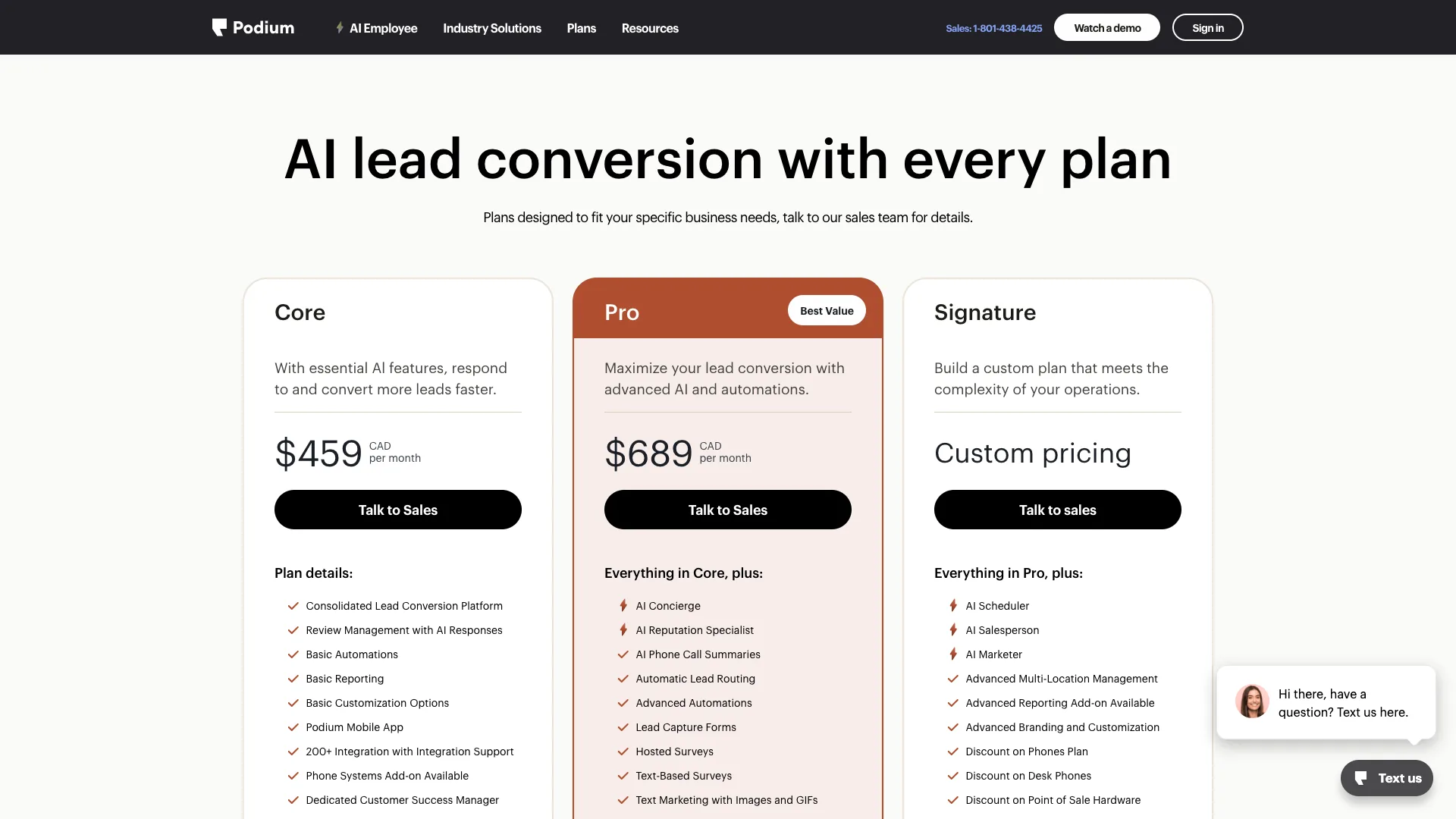 Jul 31, 2026
 Tech Stack
Podium vs Birdeye 2026: Pricing, Contracts and Review Gating
Only one of these two will tell you what it costs before a sales call, and even that number carries a carve-out aimed squarely at trade contractors.
Read Article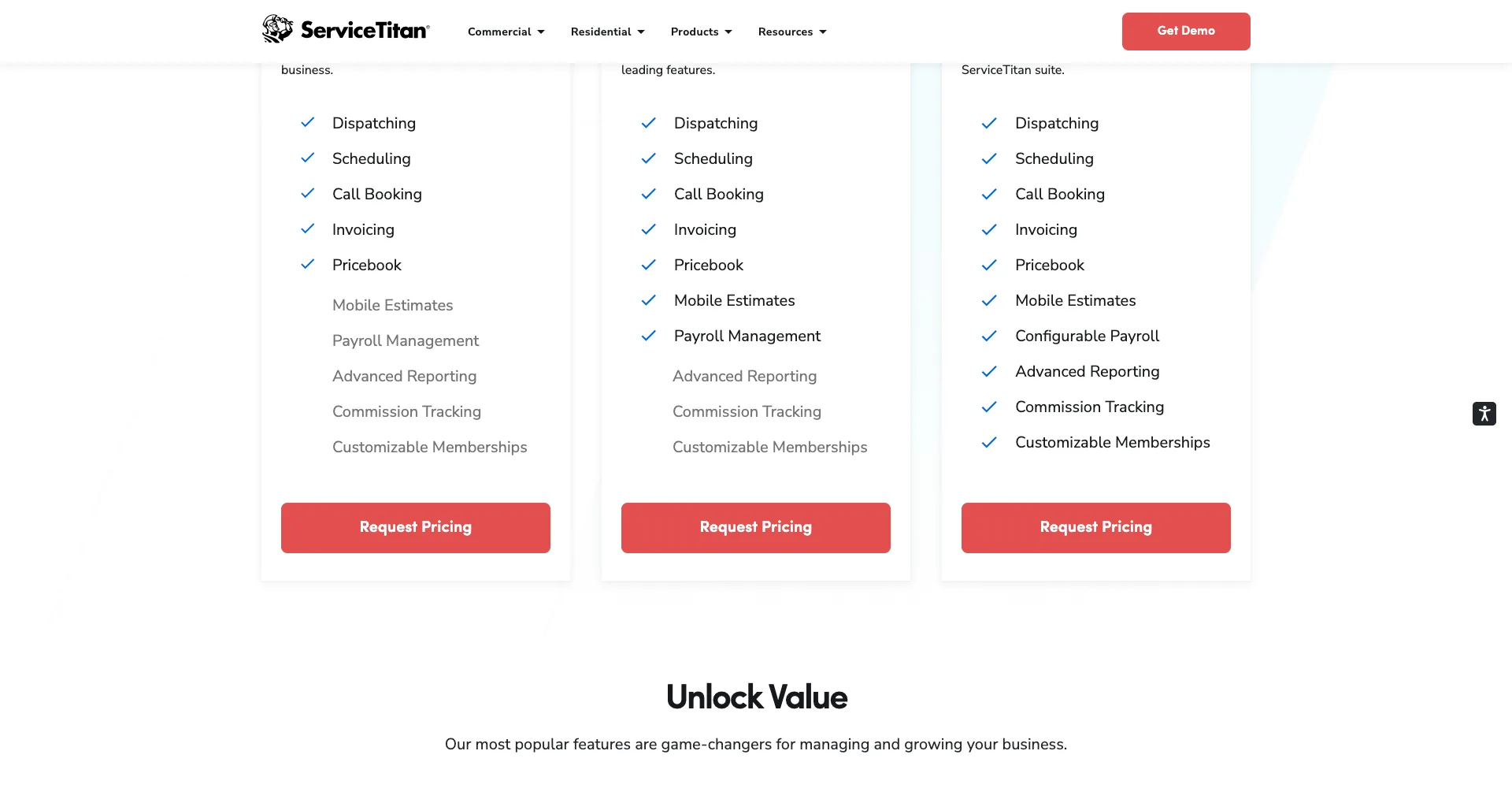 Jul 31, 2026
 Tech Stack
Best Electrical Contractor Software 2026: 11 Ranked and Priced
An electrical contracting business makes two software purchases that do not substitute for each other, and every roundup answering this query covers only one of them. Eleven platforms, with a published price or an explicit statement that the vendor publishes none.
Read Article Jul 31, 2026
 Tech Stack
Best HVAC Software in 2026: Eleven Ranked Across Three Classes
An HVAC contracting business buys across three classes of software that do not substitute for each other, and every roundup answering this query covers only one of them. Eleven products, each with a published price or an explicit statement that the vendor publishes none.
Read Article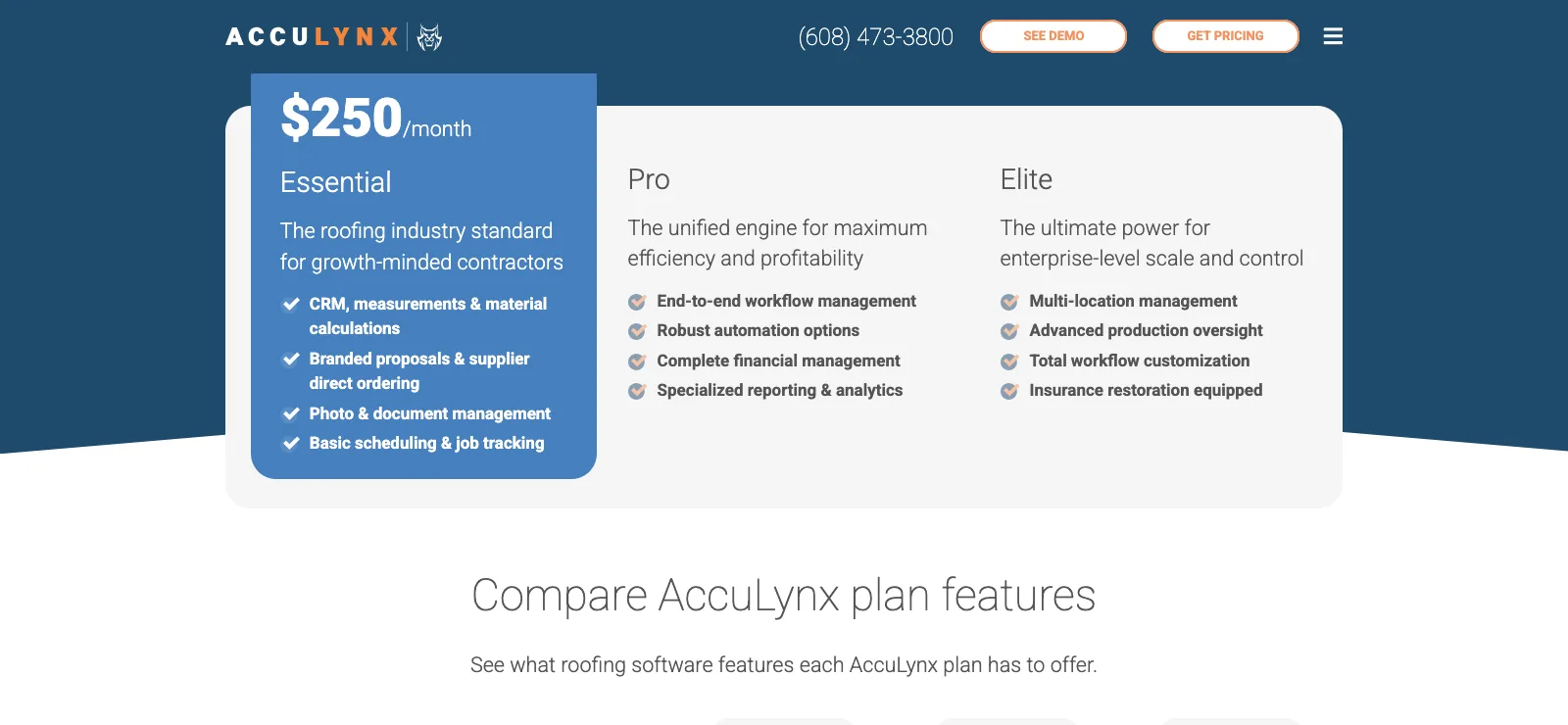 Jul 30, 2026
 Tech Stack
AccuLynx Pricing 2026: The Real Cost of a Quote-Gated Plan
One published figure, two blank plan cards, and a contract that says things the pricing page does not. A line-by-line breakdown of what AccuLynx really bills.
Read Article Jul 30, 2026
 Tech Stack
Houzz Pro Canada Review 2026: Pricing and Alternatives
Houzz Pro serves different pricing renderings. What Canadian buyers see, how GST/HST and payments work, what Custom gates, and what the annual contract commits you to.
Read Article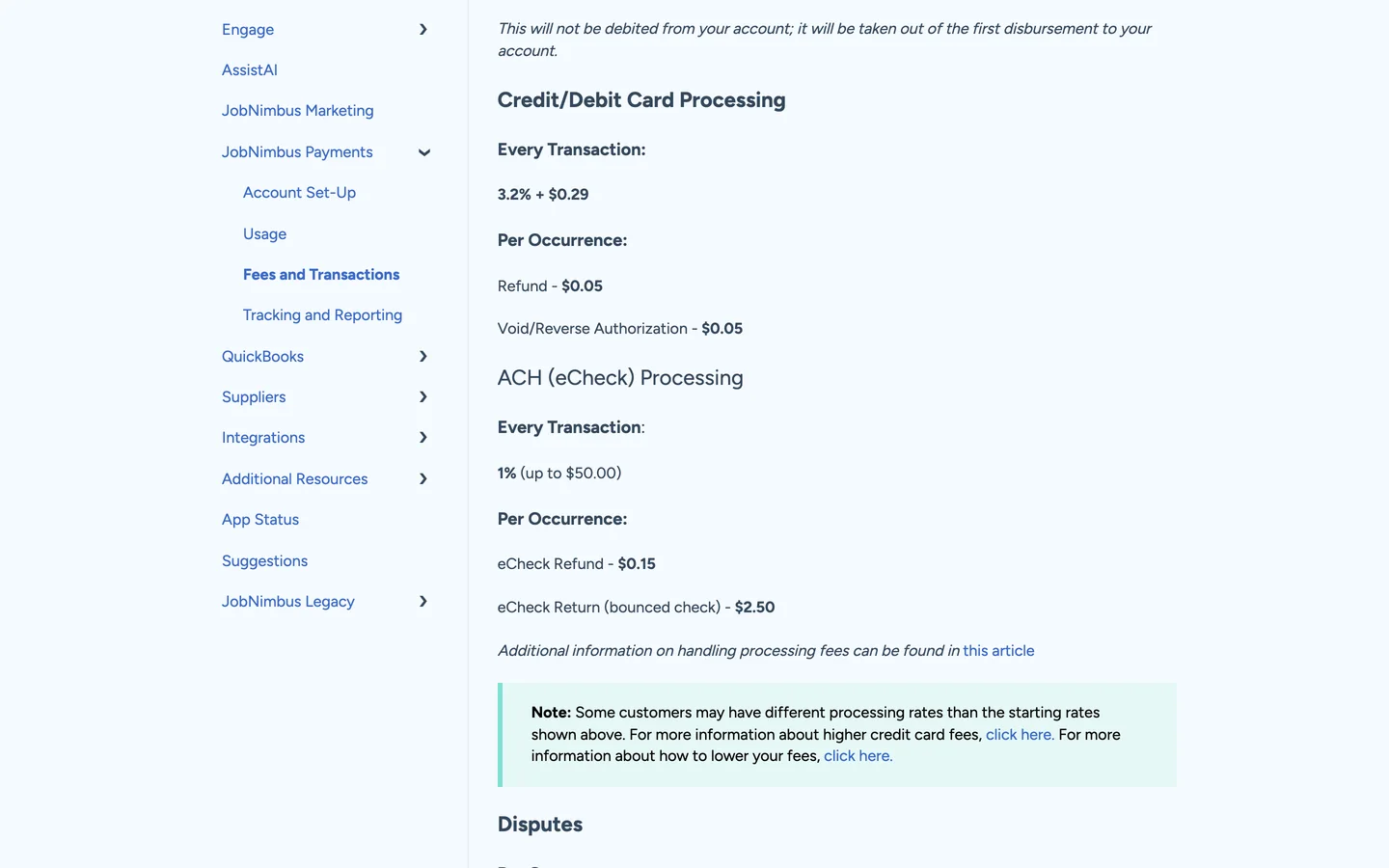 Jul 30, 2026
 Tech Stack
JobNimbus Pricing in 2026: What the Quote Does Not Cover
JobNimbus prints no figure on any of its four plans. So the only rate you can read before a sales call is the payments meter, and it is the biggest line on the bill.
Read Article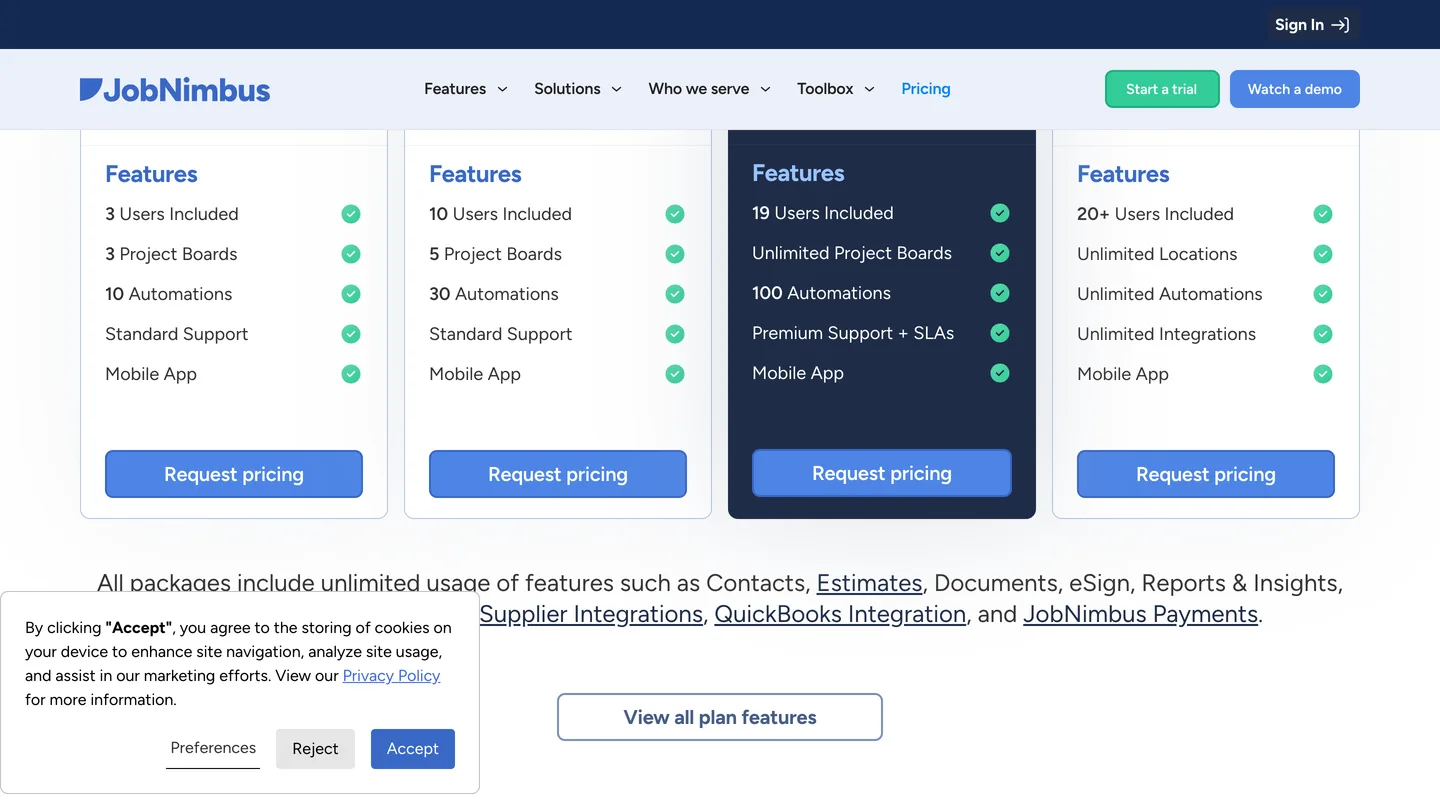 Jul 30, 2026
 Tech Stack
JobNimbus Review 2026: Pricing, Pros, Cons and Alternatives
JobNimbus rates 4.6 on Capterra and orders material straight from ABC Supply and SRS. But it publishes no price, and its supplement route carries a note.
Read Article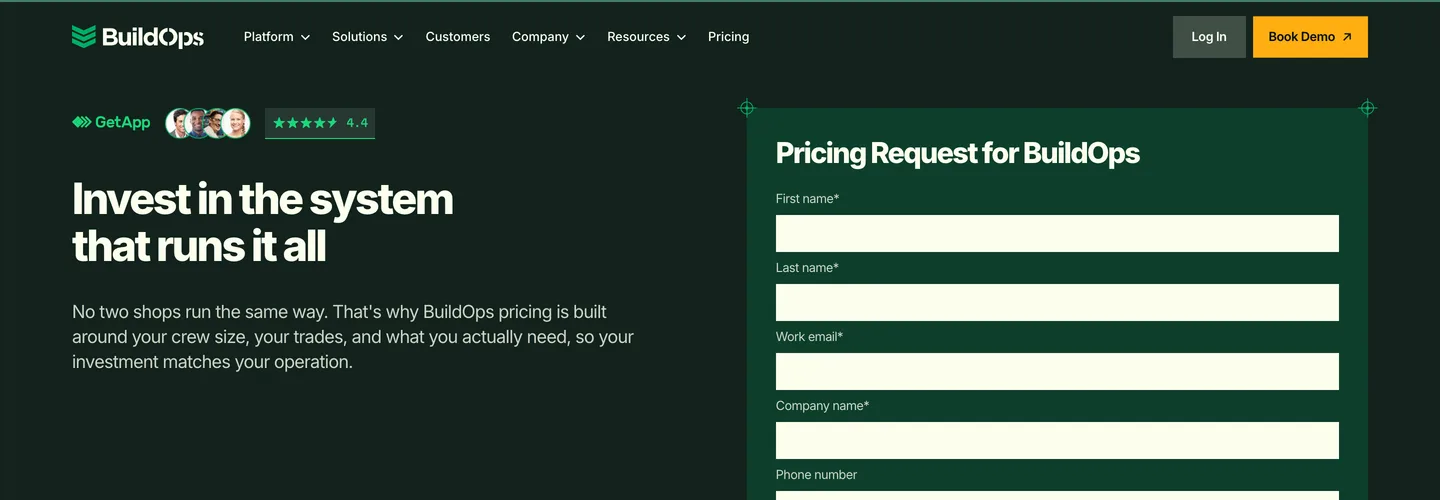 Jul 30, 2026
 Tech Stack
BuildOps Review 2026: Pricing, Contract Terms and Alternatives
BuildOps runs commercial service and projects on one platform, and publishes no pricing at all. The billing unit, the 30-day data-export window, and who it suits.
Read Article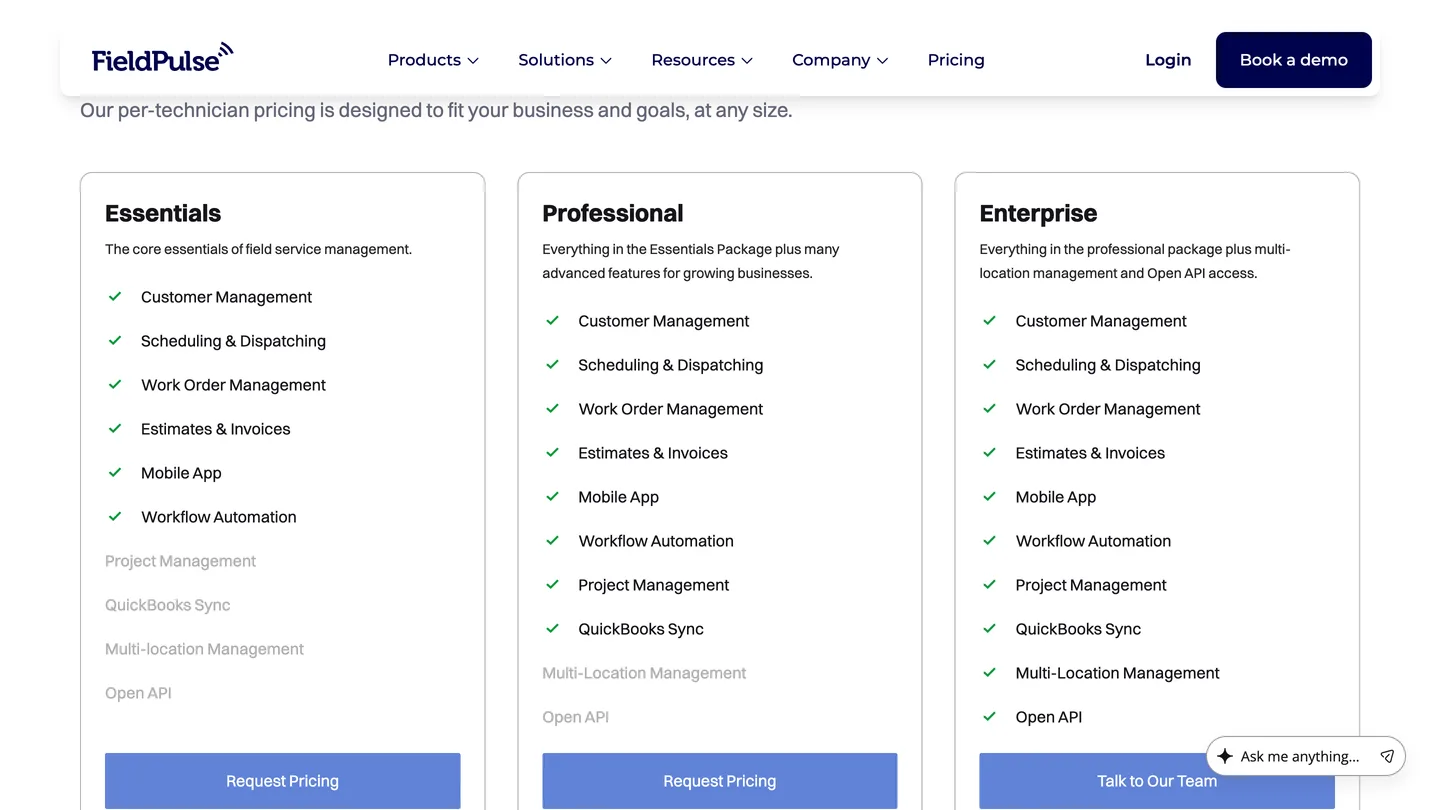 Jul 30, 2026
 Tech Stack
FieldPulse Review 2026: Pricing, Pros, Cons and Alternatives
FieldPulse rates 4.6 on Capterra and is the platform contractors name when they leave a bigger system. But it publishes no price, and the contract runs a year.
Read Article Jul 30, 2026
 Tech Stack
Service Fusion Review 2026: Pricing, Contract and Alternatives
Service Fusion bills flat per company with unlimited users, which is the best structural deal in field service software. The published plans, the contract behind the no-contract line, and the app score every other review gets wrong.
Read Article Jul 30, 2026
 Tech Stack
Knowify Review 2026: Pricing, Job Costing and Alternatives
Knowify rates 4.5 on Capterra and its weakest sub-score is features. What the $99 Core plan withholds, which way the QuickBooks sync really runs, and who should not buy it.
Read Article Jul 29, 2026
 Tech Stack
AccuLynx Review 2026: Pricing, Tier Gating, Alternatives
AccuLynx rates 4.6 across 846 reviews and now publishes an entry price. What that price omits, which tier holds the insurance workflow, and who should skip it.
Read Article Jul 29, 2026
 Tech Stack
Unitel Voice Review 2026: Pricing, Features and Alternatives
Unitel Voice rates 4.6 on Capterra and gives a one-truck shop a business number for $9.99 a month. The published plans, the cost per call, and what it won't do.
Read Article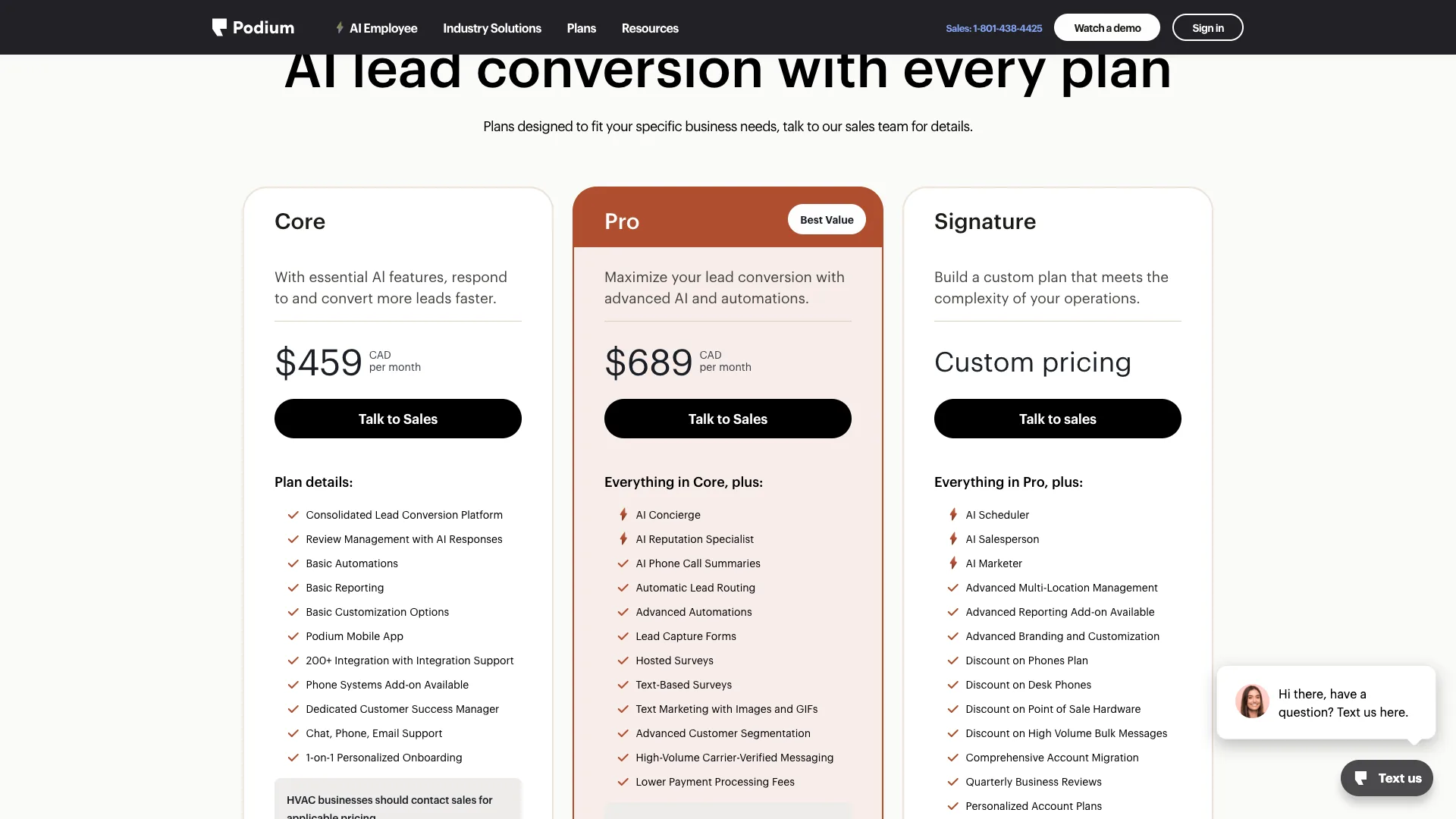 Jul 29, 2026
 Tech Stack
NiceJob vs Podium 2026: Pricing, Contracts and Review Gating
Both vendors print a price, at very different scale and in different currencies. The gap that matters is what Podium will not print: the billing unit, and whether a trade shop gets the number on the page.
Read Article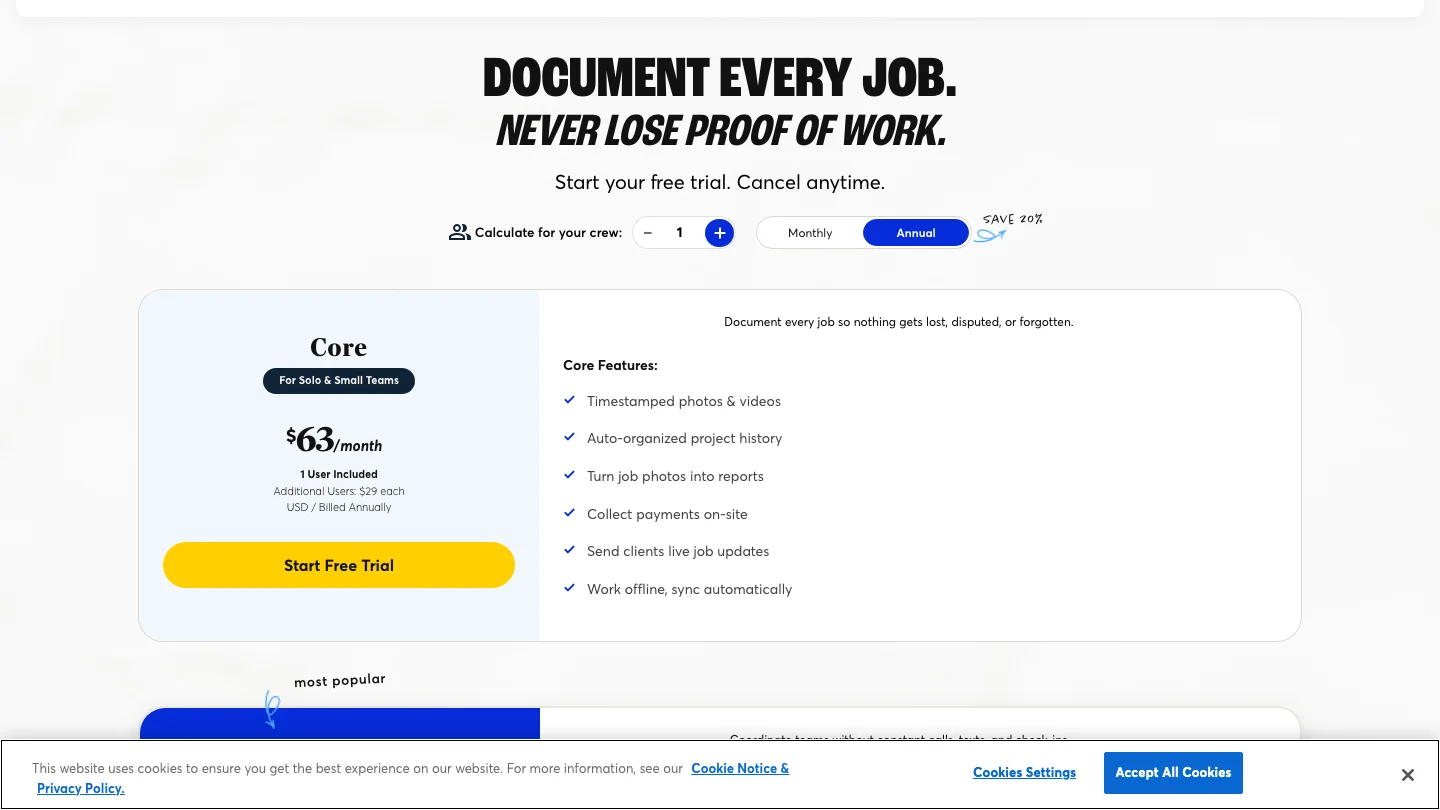 Jul 28, 2026
 Tech Stack
CompanyCam Review 2026: Pricing, Pros, Cons and Alternatives
Every page ranking for CompanyCam still quotes a per-user price the vendor no longer charges. Here are the real plans, the seat math, and who should skip it.
Read Article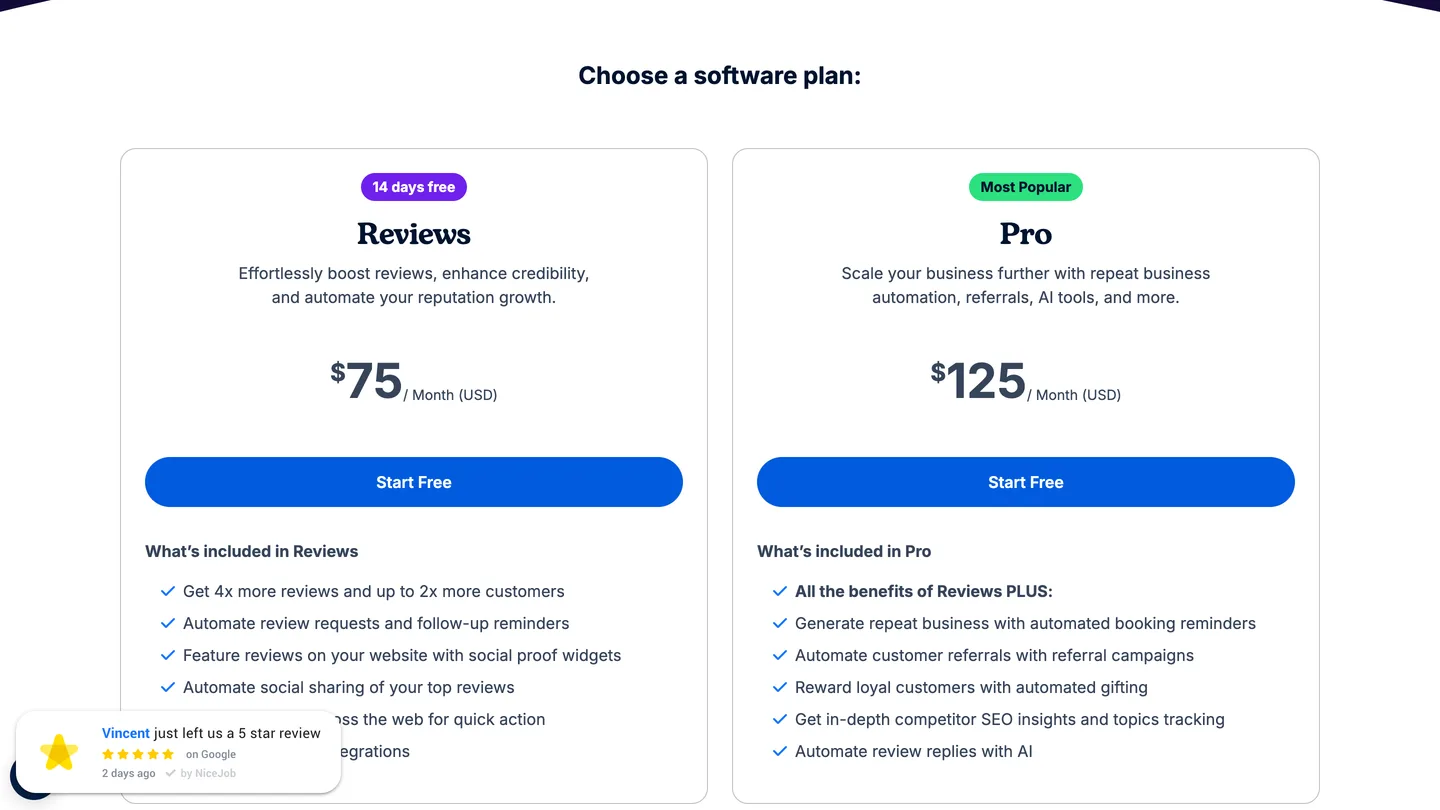 Jul 28, 2026
 Tech Stack
NiceJob Review 2026: Pricing, Pros, Cons and Alternatives
NiceJob rates 4.9 on Capterra and refuses to gate negative reviews. Real plan pricing, the active-customer threshold nobody publishes, and who should skip it.
Read Article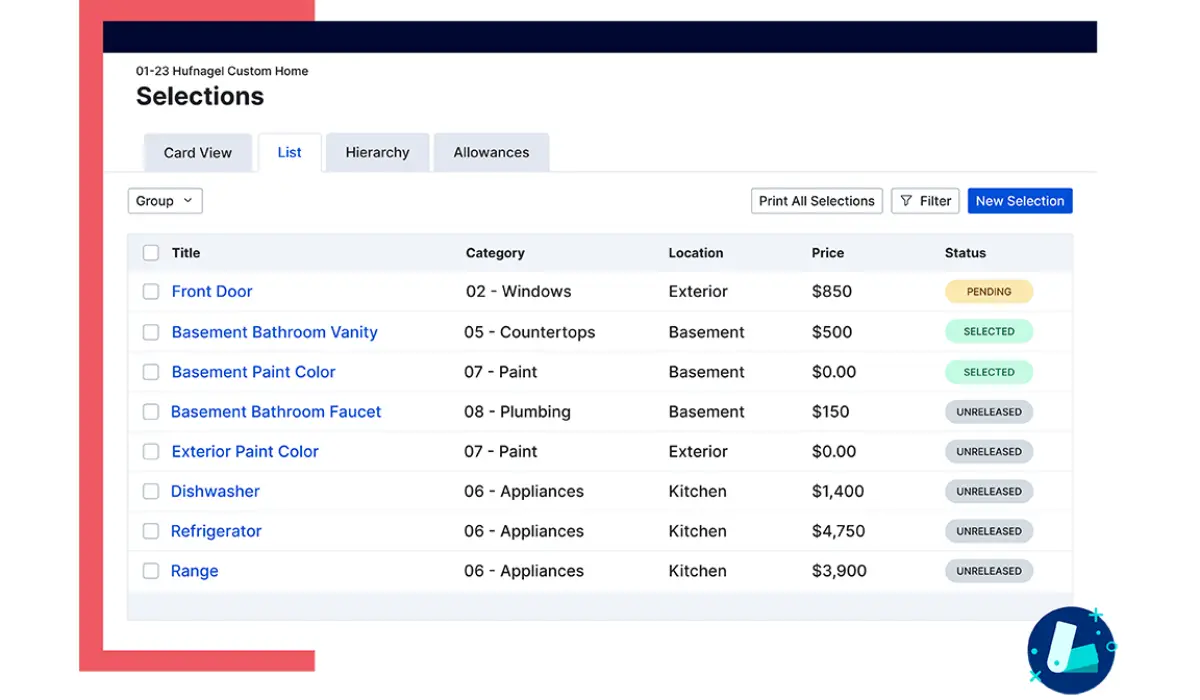 Jul 27, 2026
 Tech Stack
Buildertrend Review 2026: Pricing, Limits and Alternatives
Buildertrend rates 4.5 across 2,486 Capterra reviews and quotes against your revenue rather than your seat count. The workflows, the export problem, the alternatives.
Read Article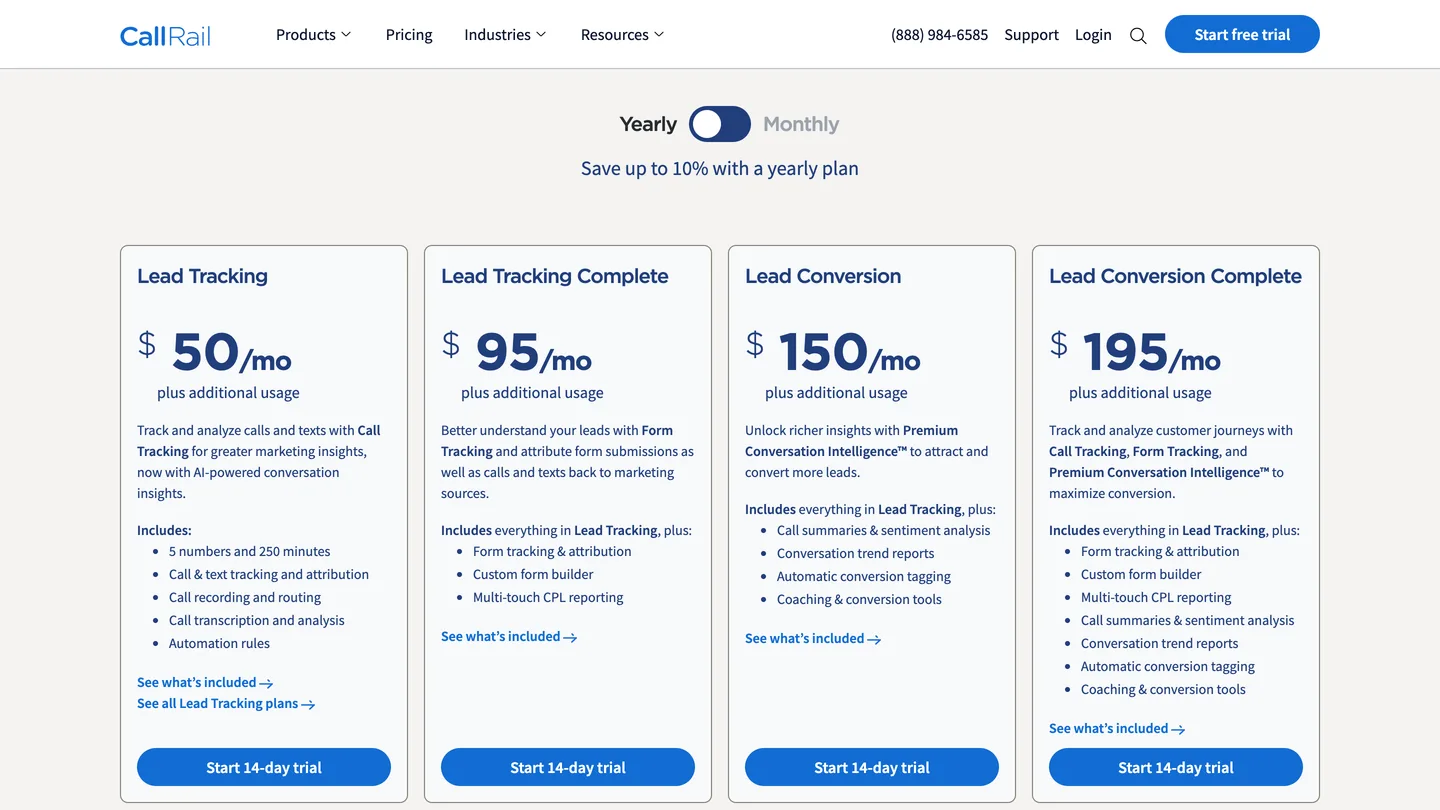 Jul 27, 2026
 Tech Stack
CallRail Review 2026: Pricing, Pros, Cons and Alternatives
CallRail rates 4.5 on Capterra, and its tracking numbers port out free. But the two usage rates that decide your real bill are the two it does not print.
Read Article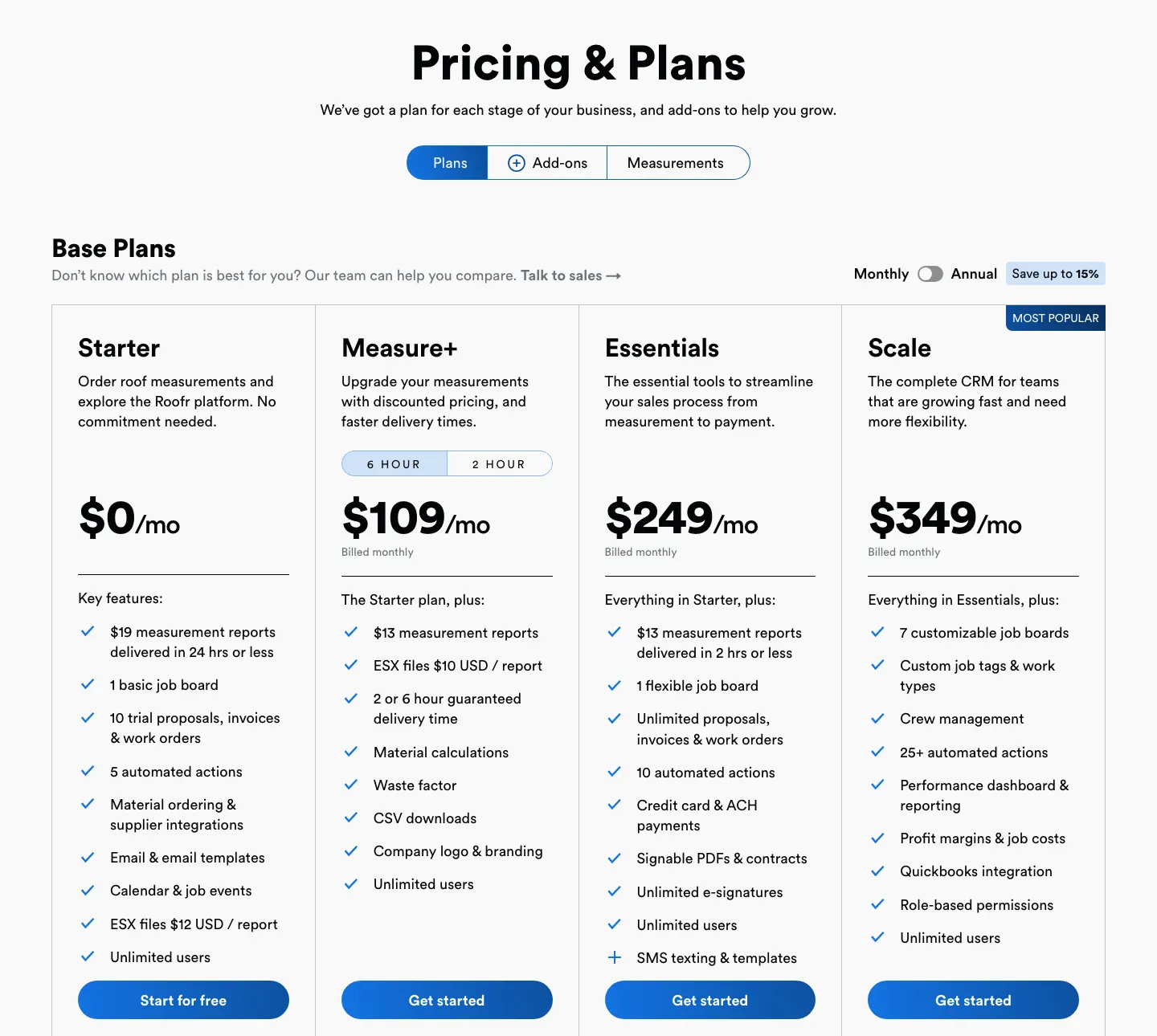 Jul 27, 2026
 Tech Stack
Roofr Review 2026: Pricing, Pros, Cons and Alternatives
Roofr rates 4.6 on Capterra and sells $13 measurement reports against a market charging triple. But it will not import a report from anywhere else.
Read Article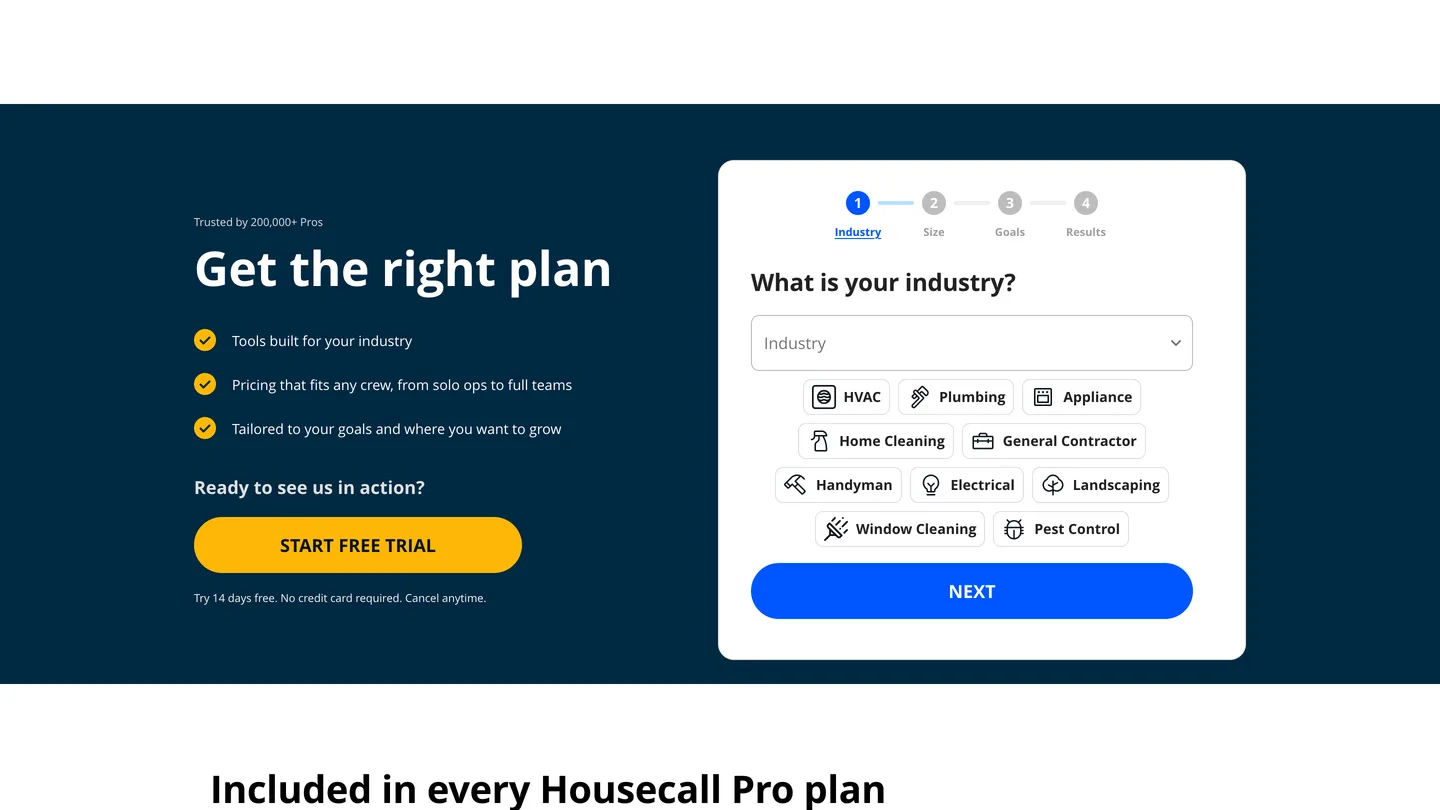 Jul 25, 2026
 Tech Stack
Housecall Pro Review 2026: Pricing, Pros, Cons, Alternatives
Housecall Pro has the shortest learning curve in the category and the widest review spread. Real pricing, the Instapay math, and the migration trap to plan around.
Read Article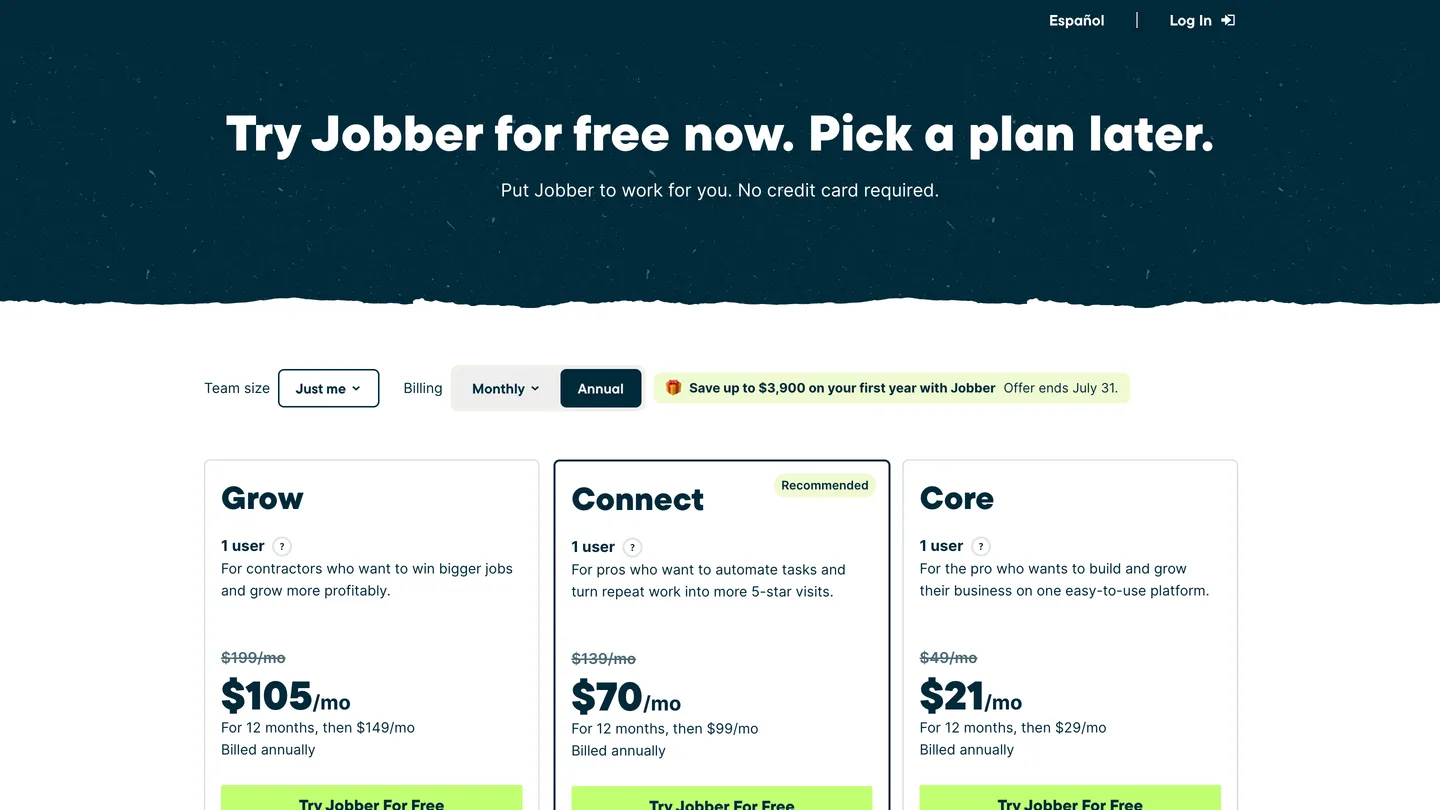 Jul 24, 2026
 Tech Stack
Jobber Review 2026: Pricing, Pros, Cons and Alternatives
Jobber rates 4.6 on Capterra with the best mobile app in the category. Real plan pricing, the feature gating that changes your entry price, and who it suits.
Read Article Jul 23, 2026
 Tech Stack
ServiceTitan Review 2026: Pricing, Pros, Cons, Alternatives
ServiceTitan rates 4.3 on Capterra but its weakest score is value for money. Real reported pricing, the 12-month contract, the exit fees, and who it actually suits.
Read Article Jun 3, 2026
 Tech Stack
HVAC Online Scheduling: The 43% Losing After-Hours Bookings
HVAC leads every trade on online booking at just 56.7%, which still leaves 43% of sites forcing an after-hours customer to wait for a business-hours phone call.
Read Article