Procore Review 2026: Pricing, Pros, Cons, Alternatives
Third-party contract data puts real numbers on Procore. The 7 gaps reviewers name, and 6 alternatives that publish a price upfront.

Page at a glance
Procore is enterprise construction project management for general contractors and specialty contractors running commercial work, sold by annual construction volume with unlimited seats rather than by user count. It publishes no price, so the only way to get a number is to ask a salesperson for one. Seats are unlimited and free, and that is genuinely unusual in this category. Your field crew, your PMs, every subcontractor and the owner all get logins at no marginal cost, because the meter is on construction volume instead. The trade is that adding a person costs nothing and winning more work costs a lot. It fits a general contractor or large specialty contractor with 25 to several hundred people running commercial and institutional projects, where dozens of subcontractors, an architect and an owner all need the same drawing set and the same RFI log, and where somebody in the office already owns document control as a job. It's the wrong buy for A residential remodeler or custom builder under twenty people running homeowner-facing jobs, because Procore's coordination problem is many parties on one controlled document set. A remodeler's problem is selections, allowances, change orders the homeowner has to approve, and a client who wants to see progress photos. Procore has no homeowner-facing client portal built for that relationship, and reviewers with smaller firms describe it as overkill in nearly identical language. So you'd also be paying an annual fee indexed to construction volume for modules you won't open. Alternatives that publish their prices are Contractor Foreman from $49.00/month, ConstructionOnline from $475.00/month, Houzz Pro from $399.00/month. A quote-only price and what third parties report instead, seven evidenced gaps and six alternatives, three of which publish a figure.
What you're buying with Procore, and what the demo skips
Procore earns its money with a general contractor or large specialty contractor with 25 to several hundred people running commercial and institutional projects, where dozens of subcontractors, an architect and an owner all need the same drawing set and the same RFI log, and where somebody in the office already owns document control as a job. If that's you, it does the job. The sections below are the parts worth checking before you sign. But the fit is narrower than the marketing suggests, and the price isn't the whole cost.
The vendor publishes no price. But every number below was verified on 7 August 2026 and comes from a named third party that says which.
| Pricing model | Custom quote, no published price |
|---|---|
| Entry price | Quote only |
| Users | Seats are unlimited and free, and that is genuinely unusual in this category. Your field c |
| Ownership | Independent |
| Best fit | a general contractor or large specialty contractor with 25 to several hundred people running commercial and institutional projects, where dozens of subcontractors, an architect and an owner all need the same drawing set and the same RFI log, and where somebody in the office already owns document control as a job. |
| Accounting sync | QuickBooks Online (two-way), Sage 300 Construction & Real Estate (two-way), Twelve further ERP and accounting connectors (two-way) |
What works
- This is the thing Procore is best at, and reviewers say so unprompted
- The financial side is where the friction lives, and editing history is punishing
- Strong in the field, heavy on the device
- Rigid by design, which is a feature until it isn't
What does not
- The renewal-cancellation window is ten days wide, and notice goes to an inbox nobody has in their contacts
- Procore can audit your books once a year, and bill you at list price for what it finds
- You get thirty days of read-only access to pull your data out, and the export tool is a Windows desktop app
- It's too much machine for small crews, and reviewers keep saying so in the same words
- Subcontractor adoption is your problem, and it's the thing that decides whether the money was worth it
Procore is enterprise construction project management for general contractors and specialty contractors running commercial work, sold by annual construction volume with unlimited seats rather than by user count. It sells to Cross-trade contractors, and the shape of the product follows from that: Version control on drawings is automatic. Upload a revision and the register updates itself, and RFIs, bulletins and ASIs hyperlink back into the sheet they came from. And several reviewers named it as the single feature that justified the platform, describing a drawing storage tool that keeps all revisions and updates automatically as soon as a new one is uploaded, and the ability to consult the latest plans on a tablet and annotate anomalies in real time.
The shops Procore fits, and the ones it doesn't
It fits a general contractor or large specialty contractor with 25 to several hundred people running commercial and institutional projects, where dozens of subcontractors, an architect and an owner all need the same drawing set and the same RFI log, and where somebody in the office already owns document control as a job. That's the half most reviews print. Here's the other half, which is the one worth your time.
Don't buy it if you're A residential remodeler or custom builder under twenty people running homeowner-facing jobs. Procore's coordination problem is many parties on one controlled document set. A remodeler's problem is selections, allowances, change orders the homeowner has to approve, and a client who wants to see progress photos. Procore has no homeowner-facing client portal built for that relationship, and reviewers with smaller firms describe it as overkill in nearly identical language. So you'd also be paying an annual fee indexed to construction volume for modules you won't open. Look at Buildertrend instead.
Don't buy it if you're A service and repair contractor dispatching techs to same-day calls. Procore is project management, not field service management. There's no dispatch board, no technician routing, no on-site invoicing and card capture, no recurring maintenance agreement engine. A VP at a facilities services firm said outright that on small routine maintenance work Procore's administrative processes slow execution instead of accelerating it. So that's the tool telling you what it isn't for. Look at ServiceTitan instead.
Don't buy it if you're Any contractor who can't commit to a full year and needs the option to walk. There's no termination for convenience anywhere in the Subscription and Services Agreement. Section 4.1 makes all payment obligations non-cancelable and all fees non-refundable, Section 10.2 auto-renews you annually on ten days notice, and the only exits are the other party's uncured material breach or insolvency. So if your revenue is lumpy enough that next year is a real question, this is a bad contract shape for you regardless of how good the software is. Look at Knowify instead.
Don't buy it if you're A contractor whose deciding factor is getting the office out of double entry with QuickBooks Online. The QuickBooks Online connector doesn't carry prime contracts, prime contract invoices and payments, budgets, commitments or timecards, and it requires QuickBooks Online Plus or Advanced. So if removing re-keying is the business case, verify the sync table for your exact edition first, because the parts of the workflow that generate the most re-keying are the parts that don't cross.
The money question on Procore
Open the pricing page and count the dollar figures. There aren't any. Procore keeps its numbers behind a sales call, and that's the first thing worth knowing before you book one.
The vendor's own wording is this, and nothing more: "Procore declines to publish any figure and answers its own "How much does Procore cost?" question with a description of the pricing method instead of a price. The method itself is the finding: the bill is indexed to your annual construction volume, so the number moves when your revenue moves, not when your headcount does." So treat every third-party page printing tier names and figures for Procore with careful suspicion. Those numbers are not on the vendor's site today, and a roundup that reprints them is telling you what Procore used to charge somebody else.
And we aren't going to print a per-month number we can't open a vendor page and read. What exists instead is third-party reporting, dated, from people who saw real contracts. Read it as a range rather than as a quote you can hold anyone to.
| Reported range | Reported on | Source |
|---|---|---|
| $10K per year | 2026-08-07 | Capterra records a starting price for Procore rather than leaving the field blank, which is the only concrete entry-point figure found on a directory that fetches cleanly. |
| Starting price: Connect with an advisor for pricing | 2026-08-07 | Software Advice declines to carry a figure at all and routes the question to a sales conversation, which corroborates that no self-serve price exists to be quoted. |
| No sample data | 2026-08-07 | Vendr, which sells buyers benchmark data drawn from real closed contracts, has a Procore page but shows no sample data on it, so there is no median or average contract value available from the one source that would normally have one. |
Seats are unlimited and free, and that is genuinely unusual in this category. Your field crew, your PMs, every subcontractor and the owner all get logins at no marginal cost, because the meter is on construction volume instead. The trade is that adding a person costs nothing and winning more work costs a lot.
Everything that isn't the Procore subscription
Payment processing. Procore Pay is a separate product that moves subcontractor payments and lien waivers, and it appears in the QuickBooks Online connector documentation as a US-only capability. No processing rate is published anywhere on the site. So ask for the card and ACH rates in writing, and ask whether Procore Pay is required to get commitment payments to sync back into your ERP.
Implementation and onboarding. The pricing page lists implementation services among what is included in the contract, but Procore also sells Professional Services separately and answers a distinct FAQ about them. Those two facts sit next to each other without being reconciled, so "implementation is included" is a claim to test against the actual SOW, not a settled fact. The agreement treats SOWs as separate paid instruments alongside Orders.
Minimum term. One year, set by the Order rather than by the agreement, and the agreement supplies a one-year default when the Order is silent. The base agreement itself runs until terminated and can only be walked away from on ninety days notice when there are no active Orders, which is to say never, while you are a customer.
Getting out. There is no termination for convenience. You can only terminate for the other party's uncured material breach, on thirty days notice, or on insolvency. Everything you have already committed to is locked, and everything you have already paid is gone.
Auto-renewal. Automatic, annual, and the window to stop it is ten days wide. Notice has to go to a specific address, autorenewals@procore.com, not to your account rep and not to support. Miss the window by a day and you have bought another year of an annual, non-refundable, non-cancelable contract. Any promotional pricing you negotiated on the way in also evaporates at renewal unless the Order says otherwise.
Modules sold separately. , , . And an add-on you need in week one is part of what Procore costs, so the number to compare is the configuration you'd really run.
Third-party services you will also pay for. , . These are not on Procore's invoice, and they are still part of what this decision costs you every month.
"Third-party reporting puts Procore at $10K per year, reported 2026-08-07."
Capterra records a starting price for Procore rather than leaving the field blank, which is the only concrete entry-point figure found on a directory that fetches cleanly. (8-07)
Worth a detour here. The window to stop an annual auto-renewal is ten days, and the notice has to reach a dedicated inbox that appears nowhere in the sales process. Thirty and sixty day windows are the SaaS norm. Ten days converts a routine administrative task into a trap, and Section 4.1 makes the consequence a full year of non-cancelable, non-refundable fees. Section 10.2 defers to the Order, so a thirty-day window is negotiable. So ask for it before you sign, because you won't get it after.
Everything that is not the Procore subscription
The subscription is the part everyone quotes. These are the lines that land afterwards, and the ones we could not find are named as unpublished rather than left blank.
Sold separately. , , . Price the configuration you'll really run, because an add-on you need on day one is part of the price.
Third-party services you'll also pay for. , . None of these are on Procore's invoice, and all of them are part of what this decision costs every month.
"Procore answers the question of what it costs with this and nothing else: "Procore declines to publish any figure and answers its own "How much does Procore cost?" question with a description of the pricing method instead of a price. The method itself is the finding: the bill is indexed to your annual construction volume, so the number moves when your revenue moves, not when your headcount does.""
Procore pricing page (2026)
"Seats are unlimited and free, and that is genuinely unusual in this category. Your field crew, your PMs, every subcontractor and the owner all get logins at no marginal cost, because the meter is on construction volume instead. The trade is that adding a person costs nothing and winning more work costs a lot."
Procore pricing page (2026)
"Procore is reported at $10K per year as of 2026-08-07."
Capterra records a starting price for Procore rather than leaving the field blank, which is the only concrete entry-point figure found on a directory that fetches cleanly. (8-07)
The four workflows you pay for
Feature totals are noise. So a shop in this category lives or dies on four things, and those are the four to grade, and each one below carries the evidence it's graded on.
This is the thing Procore is best at, and reviewers say so unprompted Version control on drawings is automatic. Upload a revision and the register updates itself, and RFIs, bulletins and ASIs hyperlink back into the sheet they came from. And several reviewers named it as the single feature that justified the platform, describing a drawing storage tool that keeps all revisions and updates automatically as soon as a new one is uploaded, and the ability to consult the latest plans on a tablet and annotate anomalies in real time.
The financial side is where the friction lives, and editing history is punishing But reviewers who like the document tooling still flag the money tooling. One PM described having to edit every subsequent change order status after amending an older change order. A contract administrator hit a hard wall creating a commitment change order from a change event with more than one line item. Another reviewer described a pay application workflow that meant entering the billing, exporting a PDF, signing it manually and reuploading the signed application with waivers, and compared it unfavourably to GCPay and Textura. And a project manager, construction, 1-2 years on the platform, writing on 2025-09-02, puts it the same thing: "Financial management is convoluted and requires too many steps. If a user has to edit an older change order for some reason, all subsequent change order statuses need to be edited which is a big waste of productive time."
Strong in the field, heavy on the device The field app is repeatedly called out as the benchmark for photographing a defect, linking it to the drawing and assigning it to the responsible sub in one motion. But the consistent counterweight is battery and data consumption, which shows up in two separate reviews and matters on remote sites where nobody is near a charger. Google Play rates the app 3.7 against 4.6 on the App Store, which is a wide enough split to be worth testing on the phones your crew carries. On 2026-05-12, a vice president at jpk and associates, inc., construction, 2+ years on the platform, reports it: "The price is very high, which makes it more suitable for large projects or big companies. I've also noticed that the mobile app consumes a lot of battery and data, which is sometimes problematic on isolated job sites."
Rigid by design, which is a feature until it isn't Procore standardizes workflows so that a hundred parties behave the same way, and the cost of that is that it bends less than a spreadsheet. Reviewers describe it as a little rigid when it comes to customization, not very customizable and quite restrictive on form building, and note that tools which aren't customizable enough push them back into Excel to track certain information. So if your process is genuinely unusual, expect to change the process rather than the software. On 2025-03-20, a training coordinator, construction, 1-2 years on the platform, puts it: "Procore was not very customizable and quite restrictive when it come to form building. We did find ways around this to make it work but would've been easier with more customization."
How Procore lands by trade
Fit differs by trade rather than by company size alone, and a blended paragraph hides that. Here is the split for the trades this one sells to.
Cross-trade. The workflow that decides it is this is the thing procore is best at, and reviewers say so unprompted, and the shop profile that gets value is commercial general contractor, 50 or more people, multiple concurrent institutional or commercial projects doing commercial and residential work. Where it stops being a fit is A residential remodeler or custom builder under twenty people running homeowner-facing jobs.
The Procore integration that decides everything else
QuickBooks Online connects both ways, gated to a higher tier. Sage 300 Construction & Real Estate connects both ways, gated to a higher tier. Twelve further ERP and accounting connectors connects both ways, gated to a higher tier. Your costs map through cost codes, so test yours against your own chart of accounts before you commit. A code your books don't recognise is how a labour charge quietly lands somewhere useless.
Past those, the road ends. Foundation Software, Prime contract financials in QuickBooks Online, Published API rate limits do not connect. So if your books run on an ERP rather than the platforms named above, weigh that before anything else.
Beyond accounting it connects to Procore App Marketplace (The full third-party app directory, spanning categories from drone capture and reality capture to safety, field productivity and prequalification. Company admin permissions are required to install and configure a Marketplace app, and there's no cap on how many you install.), Procore Pay (Procore's own subcontractor payment and lien-waiver product, sold as a separate module. It surfaces in the QuickBooks Online connector documentation as a US-only capability for commitment payments and payment records.), hh2 (Third-party synchronization middleware used by the Sage 300 CRE integration for certain data types, meaning a separate vendor sits in the path between Procore and your general ledger.), Procore Extracts (A Windows desktop application that archives a project's data to a local folder structure. It's the practical answer to "how do I get everything out", and it's worth knowing exists before you need it.). A public API exists: Procore operates a public developer platform and the Subscription and Services Agreement explicitly contemplates third-party products reaching your data through it. Two things in Section 3 are worth reading before you build anything on it: those third parties may charge you their own fee, and Procore can stop supporting an integration at any time without owing you anything back. Section 2.2 separately forbids using the Services to benchmark against a non-Procore product or to build a competing one.
Procore support, and what it costs you
Support is the line item nobody prices and everybody eventually needs. Onboarding for Procore: The pricing page lists implementation services among what is included in the contract, but Procore also sells Professional Services separately and answers a distinct FAQ about them. Those two facts sit next to each other without being reconciled, so "implementation is included" is a claim to test against the actual SOW, not a settled fact. The agreement treats SOWs as separate paid instruments alongside Orders.
And a contract admin, construction, 2+ years on the platform, writing on 2024-12-10, reports it the same thing: "The customer service response & the knowledge should be improved upon especially for the price that this paid."
On 2018-01-10, a project administrator, construction, 1-2 years on the platform, puts it: "No ERP integration on-the-spot customer support (issues usually take 24-48 hours to resolve), inability to receive notifications for daily logs"
Procore contracts, and getting out
Nobody reads this section before they buy, and it's the one that costs money afterwards. Four terms decide what leaving looks like.
Minimum term. One year, set by the Order rather than by the agreement, and the agreement supplies a one-year default when the Order is silent. The base agreement itself runs until terminated and can only be walked away from on ninety days notice when there are no active Orders, which is to say never, while you are a customer.
Auto-renewal. Automatic, annual, and the window to stop it is ten days wide. Notice has to go to a specific address, autorenewals@procore.com, not to your account rep and not to support. Miss the window by a day and you have bought another year of an annual, non-refundable, non-cancelable contract. Any promotional pricing you negotiated on the way in also evaporates at renewal unless the Order says otherwise.
Early termination. There is no termination for convenience. You can only terminate for the other party's uncured material breach, on thirty days notice, or on insolvency. Everything you have already committed to is locked, and everything you have already paid is gone.
Payment processing. Procore Pay is a separate product that moves subcontractor payments and lien waivers, and it appears in the QuickBooks Online connector documentation as a US-only capability. No processing rate is published anywhere on the site. So ask for the card and ACH rates in writing, and ask whether Procore Pay is required to get commitment payments to sync back into your ERP.
Worth a detour here. The exit path is thirty days of read-only access, and the archive tool is a single-project Windows desktop application that mostly emits PDFs. A GC with sixty active jobs can't realistically extract sixty projects, one at a time, on one Windows machine, inside thirty days, while also standing up a replacement system. The practical effect is that the switching cost is high enough to be a renewal lever. So run one extract in year one so you know what you're dealing with while you still have leverage.
"Procore is reported at Starting price: Connect with an advisor for pricing as of 2026-08-07."
Software Advice declines to carry a figure at all and routes the question to a sales conversation, which corroborates that no self-serve price exists to be quoted. (8-07)
"The price - Procore is by far, the most expensive solution that we reviewed. While it more than ticked the tickboxes in terms of functionality, the value for money just wasn't there."
Capterra, John B. (5-28)
"The cost was not made for small businesses - when it came to renewal they weren't very accomodating and we got the impression that they were moving to bigger companies than ours"
Capterra, Verified Reviewer (8-12)
What Procore reviewers keep running into
But the gaps are specific rather than atmospheric, which is what makes them useful.
The renewal-cancellation window is ten days wide, and notice goes to an inbox nobody has in their contacts Section 10.2 of the Subscription and Services Agreement auto-renews you for a full year unless either party gives notice at least ten days before the term ends, and Procore's notice has to be sent to autorenewals@procore.com specifically. But most SaaS contracts give you thirty or sixty days. So ten days means a single vacation, a single reorganization of who owns vendor management, or a single unread calendar reminder buys you another year of an agreement that Section 4.1 makes non-cancelable and non-refundable. So before you sign, put a calendar reminder at term-end minus forty-five days with the autorenewals@procore.com address in the body, and give it to two people. Then ask the rep to write a thirty-day notice window into the Order, since Section 10.2 explicitly defers to whatever the Order says.
Procore can audit your books once a year, and bill you at list price for what it finds Because the fee is indexed to annual construction volume, Procore reserves a contractual right to check whether the volume you declared matches the volume you built. Section 4.5 lets its subscription management team request invoice details, project budgets, contract values and change orders, and gives you fifteen business days to hand them over. And anything above your Usage Metrics gets invoiced as an Overage at Procore's then-current standard rates, which is list price, not the rate you negotiated. So a good year doesn't just cost you more, it costs you more at a worse rate. Negotiate a stated overage rate in the Order rather than leaving it at "then-current standard rates", and negotiate a volume band with headroom rather than a number that matches last year exactly. And ask what the true-up looks like for a customer who grew thirty percent.
You get thirty days of read-only access to pull your data out, and the export tool is a Windows desktop app Section 10.5 gives you thirty days after termination to retrieve your Customer Data through read-only access, after which Procore has no obligation to keep it and may delete it. The tool Procore points you at for a full archive, Procore Extracts, is a Windows application that runs project by project, requires Admin permissions on each tool you want to extract, only works on projects set to Active, needs the machine to stay awake and online for the whole run, and pauses after three failed resume attempts. And most of what comes out is PDF rather than structured data. But thirty days isn't a lot of runway for a contractor with sixty active jobs. Run Procore Extracts on one representative closed project during your first year, on a Windows machine, and look at what lands in the folder. So if the output isn't something your next system can ingest, you've found your real switching cost while you still have time to plan for it. The extract tutorial is at support.procore.com/products/procore-extracts.
It's too much machine for small crews, and reviewers keep saying so in the same words The complaint isn't that Procore is bad. It's that the administrative weight it imposes only pays off above a certain project complexity. A VP at a two-to-ten person facilities firm said the heavy administrative processes slow execution down on routine maintenance work. A renovation PM called it a sledgehammer for smaller projects. An architecture reviewer told smaller firms to look the other way because it is overkill. And that's three people in three different roles arriving at the same conclusion independently. But a VP world class maintenance reliability, facilities services, 2-10 employees, 2+ years on the platform, reports it it differently: "For small, routine maintenance projects, the heavy administrative processes imposed by the tool can sometimes slow down execution instead of accelerating it." Count how many parties need simultaneous access to a controlled drawing set on your typical job. So if the answer is fewer than six, the coordination problem Procore solves isn't the problem you have, and you'll pay for it anyway.
Subcontractor adoption is your problem, and it's the thing that decides whether the money was worth it Procore's unlimited-seat model is genuinely generous, but a free login isn't adoption. Reviewers repeatedly describe onboarding subs as the hard part: training is required to get all parties aligned and is challenging for subs new to digital tools, onboarding new subcontractors without training is a pain, and one site manager noted that benefiting from the full functionality required the full team to be on it. So a Procore that half your trades ignore is an expensive document repository. An operations manager, construction, 2+ years on the platform, puts it it plainly: "Training is required in order to get all parties in alignment and that can be challenging, especially for subcontractors new to digital tools. The cost is also a factor if you've only got a few modules in your application." Before signing, ask your three highest-volume subs whether they already use Procore on someone else's jobs. If they do, adoption is close to free. And if they don't, budget training time for every trade partner and ask Procore what onboarding support for subcontractors is included versus billable.
The accounting connection is real but narrow, and half the financial workflow doesn't cross it The QuickBooks Online integration is documented in detail and that detail is where the constraint lives. Prime contracts and prime contract change orders, prime contract invoices and payments, budgets, commitments and commitment change orders, and timecards don't sync. New projects have to be created in QuickBooks and imported into Procore rather than the other way around, and the integration is limited to one QuickBooks Online company per Procore site. And Sage 300 CRE syncs far more but requires hh2 middleware and forbids creating jobs in both systems and linking them. Write down the five financial numbers your controller re-keys today, then check each one against the sync table for your specific ERP before you buy. So if commitments and budgets are on that list, the integration isn't going to remove the re-keying.
Interest on late invoices runs at 1.5% per month and the service gets suspended after ten business days Section 4.2 accrues interest at the higher of 1.5% per month or the maximum the law allows, which is roughly a 19.6% annualized rate. If any undisputed portion of an invoice goes unpaid ten business days after Procore notifies you the account is overdue, Procore can suspend the Services. And for a contractor mid-project, suspension means losing access to the current drawing set and the RFI log at the same time. Make sure the Procore invoice goes to a monitored AP inbox and not to whoever signed the contract. Because an annual invoice that lands once a year is exactly the kind that sits unread.
One more thing worth knowing. Volume-based pricing comes with an annual right to audit your books, and anything above your declared volume is billed at list price rather than at your negotiated rate. Every discount you negotiate applies only to the volume band you declared. Grow past it and the incremental volume prices at rack rate, which quietly erodes the deal you thought you got. So two asks fix this: a stated overage rate written into the Order, and a band with headroom for the growth year you're planning for.
One more thing worth knowing. Unlimited free seats are the reason to buy it and the reason the network effect compounds, and it's why a subcontractor's Procore decision is usually made by somebody else. If you're a specialty contractor evaluating Procore, check first whether the GCs you work for already run it. Their instance may give you everything you need for free, which makes your own subscription duplicated spend. And the corollary for a GC is that adoption is cheap when your subs already have logins from other jobs, and expensive when they don't.
One more thing worth knowing. The ERP connection is directional in ways that dictate where records must be born, which reshapes your office workflow rather than just wiring two systems together. Whoever opens a new job today may not be allowed to keep doing it. On QuickBooks Online the accountant becomes the person who starts every project. On Sage 300 CRE commitments have to originate on the Procore side, which moves subcontract creation out of accounting. So map who does what before go-live, because the integration will decide it for you otherwise.
And this is the kind of thing you only find by reading the complaints. The negative reviews cluster on the same axis, and it's fit rather than quality. Three reviewers in three unrelated roles independently told smaller firms not to buy it. Procore holds 4.5 stars across 2,670 Capterra reviews, so the aggregate score won't warn a small contractor away. The warning is inside the Cons field of otherwise positive reviews, which is exactly where a rating average hides it. So read the cons on four and five star reviews, not the one-star ones.
Procore, from the people who bought it
Every quote below is transcribed from a published review, named to the platform that carries it and to the reviewer as that platform displays them. We read the corpus by complaint type rather than by star rating, which is how the disqualifying detail buried inside a five-star review gets found.
"The price - Procore is by far, the most expensive solution that we reviewed. While it more than ticked the tickboxes in terms of functionality, the value for money just wasn't there."
A territory manager, construction, 1-2 years on the platform, writing on 2025-05-28, writes on Capterra
"The cost was not made for small businesses - when it came to renewal they weren't very accomodating and we got the impression that they were moving to bigger companies than ours"
But a development manager, construction, 2+ years on the platform, reports it it differently on Capterra
"I think its very pricy, but a good product. If you have a smaller firm look the other way because its overkill."
An ait, architecture & planning, 6-12 months on the platform, puts it it plainly on Capterra
"Financial management is convoluted and requires too many steps. If a user has to edit an older change order for some reason, all subsequent change order statuses need to be edited which is a big waste of productive time."
A project manager, construction, 1-2 years on the platform, reports it it plainly on Capterra
"So many things wrong with Procore! It makes me change my password too often - every 3 months! Why? Is someone going to steal my password and log on to do my work for me? It's not a financial site and it does not need a new password! Also, when I do manage to log on (always a huge chore) the interface is completely non-intuitive."
A vice president, construction, 1-2 years on the platform, writing on 2025-05-19, describes it on Capterra
"Training is required in order to get all parties in alignment and that can be challenging, especially for subcontractors new to digital tools. The cost is also a factor if you've only got a few modules in your application."
An operations manager, construction, 2+ years on the platform, says it plainly on Capterra
"It's a sledgehammer for smaller projects and is a pain to onboard new subcontractors to it without training."
A renovation project manager, construction, 2+ years on the platform, writing on 2025-07-06, describes it on Capterra
"The customer service response & the knowledge should be improved upon especially for the price that this paid."
On 2024-12-10, a contract admin, construction, 2+ years on the platform, says on Capterra
"For small, routine maintenance projects, the heavy administrative processes imposed by the tool can sometimes slow down execution instead of accelerating it."
A VP world class maintenance reliability, facilities services, 2-10 employees, 2+ years on the platform, says it plainly on Capterra
"The price is very high, which makes it more suitable for large projects or big companies. I've also noticed that the mobile app consumes a lot of battery and data, which is sometimes problematic on isolated job sites."
A vice president at jpk and associates, inc., construction, 2+ years on the platform, puts it it plainly on Capterra
"No ERP integration on-the-spot customer support (issues usually take 24-48 hours to resolve), inability to receive notifications for daily logs"
A project administrator, construction, 1-2 years on the platform, says it plainly on Capterra
"There is not way to access your account unless you pay so once the free trial is over if you dont subscribe you can no loger access it"
A ml siding, construction, Free trial on the platform, writing on 2025-10-21, says on Capterra
"Procore was not very customizable and quite restrictive when it come to form building. We did find ways around this to make it work but would've been easier with more customization."
But a training coordinator, construction, 1-2 years on the platform, writes it differently on Capterra
"Maybe a bit too good and have too many features for a smaller company like ours - apparently it is also very costly"
An assistant site manager, construction, 1-2 years on the platform, writing on 2025-10-19, says on Capterra
The realistic shortlist against Procore
Four or five real options, each with what it does better and what it does worse. Both halves, or it's marketing.
| Tool | Entry price | Billing unit | Users included | Published? |
|---|---|---|---|---|
| Procore | Quote only | Custom quote | Seats are unlimited and free, and that is genuinely unusual | No |
| Buildertrend | Quote only | per account | unlimited | No |
| Contractor Foreman | $49.00/month | per account | capped by plan | Yes |
| ConstructionOnline | $475.00/month | per user | 1 | Yes |
| Houzz Pro | $399.00/month | per account | capped by plan | Yes |
| Autodesk Construction Cloud | Quote only | per user | quoted | No |
| Knowify | Quote only | per account | quoted | No |
Buildertrend. residential work with a homeowner in the loop: selections, allowances, client-approved change orders and a client portal built for someone who isn't in construction. But large commercial coordination. It doesn't carry the submittal, RFI and prime contract machinery that a GC running institutional work needs, and its ERP connector layer is far thinner.
Contractor Foreman. price, by roughly two orders of magnitude against Capterra's $10K-per-year entry figure for Procore. It covers a broad feature surface for small contractors who need something rather than nothing. But depth in every one of those features, and in the network effect. Subs already have Procore logins from other GCs, which is a real adoption advantage Contractor Foreman doesn't have.
ConstructionOnline. publishing a price you can plan against, and at scheduling depth for contractors who live in Gantt charts. But seat economics. Procore's unlimited-seat model means every sub and the owner get in free, whereas a per-user price this high forces you to ration access, which is exactly the behaviour that kills adoption.
Houzz Pro. lead generation and the homeowner-facing side of residential design-build, which Procore doesn't attempt at all. But everything a commercial GC needs. It isn't a comparable product for anyone coordinating twenty subcontractors against a controlled drawing set.
Autodesk Construction Cloud. design-side and BIM continuity, since the model, the coordination and the field all sit inside the Autodesk stack you're probably already licensing for Revit. But seat cost as you scale field and subcontractor access, because it's licensed per user rather than by construction volume. Adding a hundred subs is free on Procore and isn't free here.
Knowify. job costing and QuickBooks alignment for specialty subcontractors, where the accounting connection is the point rather than a module you add on. But multi-party document control. It's built for the sub's view of a job, not the GC's view of forty parties on one project record.
"I think its very pricy, but a good product. If you have a smaller firm look the other way because its overkill."
Capterra, abdiel P. (2-04)
"The price is very high, which makes it more suitable for large projects or big companies. I've also noticed that the mobile app consumes a lot of battery and data, which is sometimes problematic on isolated job sites."
Capterra, Patrick K. (5-12)
Who should not buy Procore
Don't buy Procore if you're A residential remodeler or custom builder under twenty people running homeowner-facing jobs. Procore's coordination problem is many parties on one controlled document set. A remodeler's problem is selections, allowances, change orders the homeowner has to approve, and a client who wants to see progress photos. Procore has no homeowner-facing client portal built for that relationship, and reviewers with smaller firms describe it as overkill in nearly identical language. So you'd also be paying an annual fee indexed to construction volume for modules you won't open. Look at Buildertrend instead.
Don't buy Procore if you're A service and repair contractor dispatching techs to same-day calls. Procore is project management, not field service management. There's no dispatch board, no technician routing, no on-site invoicing and card capture, no recurring maintenance agreement engine. A VP at a facilities services firm said outright that on small routine maintenance work Procore's administrative processes slow execution instead of accelerating it. So that's the tool telling you what it isn't for. Look at ServiceTitan instead.
Don't buy Procore if you're Any contractor who can't commit to a full year and needs the option to walk. There's no termination for convenience anywhere in the Subscription and Services Agreement. Section 4.1 makes all payment obligations non-cancelable and all fees non-refundable, Section 10.2 auto-renews you annually on ten days notice, and the only exits are the other party's uncured material breach or insolvency. So if your revenue is lumpy enough that next year is a real question, this is a bad contract shape for you regardless of how good the software is. Look at Knowify instead.
Don't buy Procore if you're A contractor whose deciding factor is getting the office out of double entry with QuickBooks Online. The QuickBooks Online connector doesn't carry prime contracts, prime contract invoices and payments, budgets, commitments or timecards, and it requires QuickBooks Online Plus or Advanced. So if removing re-keying is the business case, verify the sync table for your exact edition first, because the parts of the workflow that generate the most re-keying are the parts that don't cross.
The verdict, by shop size
Commercial general contractor, 50 or more people, multiple concurrent institutional or commercial projects
Yes, and this is the shape the product is built for. This is the shape Procore was built for and the shape the economics work for. Unlimited seats mean every trade partner, the architect and the owner get access without a seat negotiation, and the drawing version control plus RFI and submittal machinery is genuinely best in class. At this size the ACV-based fee is a small fraction of overhead and the coordination savings are real. So negotiate the overage rate and the renewal notice window in the Order, and put the autorenewals@procore.com address in two people's calendars. This band runs 50 or more on the crew, doing commercial work, and that's the profile the recommendation is written for.
Large specialty contractor, 25 to 50 people, working primarily as a sub on commercial projects
Only under conditions, and they are worth being honest about. It's conditional on two things. First, whether the GCs you work for already run Procore, because if they do you may get the access you need through their instance at no cost to you, and buying your own is duplicated spend. Second, whether your ERP is on the well-supported list. Sage 300 CRE and Vista customers get a deep connection. QuickBooks Online customers should read the do-not-sync list before assuming double entry goes away. So if your GCs aren't on Procore and your accounting is QBO, the case is weak. This band runs 25 to 50 on the crew, doing commercial work, and that's the profile the recommendation is written for.
Residential remodeler or custom home builder under 25 people
No. The reviews say this in three different voices: overkill for a smaller firm, a sledgehammer for smaller projects, and too many features for a smaller company. Procore has no homeowner-facing portal for selections, allowances and client-approved change orders, which is where a remodeler's margin leaks. So you'd be paying an annual, non-refundable fee indexed to your construction volume for a coordination problem you don't have. Buildertrend or Knowify fit the workflow far better. This band runs 1 to 25 on the crew, doing residential work, and that's the profile the recommendation is written for.
Service, repair and maintenance contractor of any size
No. Procore has no dispatch board, no technician routing, no on-site card capture and no maintenance agreement engine. A VP at a facilities services firm said directly that on small routine maintenance projects the heavy administrative processes slow execution instead of accelerating it. So buying a project management platform to run same-day service calls is the wrong category of tool, not the wrong price point. This band runs 1 or more on the crew, doing service work, and that's the profile the recommendation is written for.
Any contractor with lumpy revenue who needs the option to leave inside twelve months
No. The contract shape rules this out independently of how good the software is. No termination for convenience, all payment obligations non-cancelable, all fees non-refundable, annual auto-renewal with a ten-day notice window, and promotional pricing that reverts to list at renewal unless the Order says otherwise. So if there's a real chance next year looks different, this is the wrong agreement to sign. This band runs undefined or more on the crew, doing commercial and residential work, and that's the profile the recommendation is written for.
Where we come into the Procore question
We should declare an interest, or rather the absence of one. Fervor takes nothing from Procore or any of its rivals. What we've got is data on the demand side.
Procore bills against the dollar value of the work you put in place, not against how many people log in. That makes it the rare software line item where winning more work is what raises the invoice. It also means the two levers that decide whether the spend pays back are outside the software entirely: how much work you win, and how fast your site turns a searcher into a booked estimate. And a contractor paying an annual fee indexed to construction volume, whose site takes four seconds to render a hero image on a phone in a truck, is paying enterprise coordination costs on a lead pipeline that's leaking before the coordination even starts.
And the number is worse than anyone guesses before they check. Across 380 inspected contractor sites, 82.8% had poor mobile loading performance. So the sample is not curated: it is every contractor site the tooling could reach. All of it is documented in the Contractor CRO Index.
"82.8% of the 380 contractor websites inspected had poor mobile loading performance."
Fervor Studio Contractor CRO Index (2026)
So do both. The second one is usually cheaper to fix than the first one is to buy. The numbers are all public.
See where your site is losing the jobs Procore would have managed
And it takes about three days. We use your site the way a homeowner would, then hand you the specific leaks.
Get a Site InspectionOur Procore sources, and their limits
And here's what we can and can't stand behind on Procore. So here's the basis. We read 17 vendor pages for Procore on 7 August 2026, and we went through the reviews looking for complaints rather than for averages. Prices were checked the same day. Nothing here is carried forward from an older sweep.
So: 14 quotes on this page, 14 from Capterra.
And G2 (https://www.g2.com/products/procore/reviews returned HTTP 403), TrustRadius (https://www.trustradius.com/products/procore/reviews returned HTTP 403), Trustpilot (https://www.trustpilot.com/review/procore.com returned HTTP 403), Google Play (https://play.google.com/store/apps/details?id=com.procore.activities returned a truncated shell with no ratings or review text; the 3.7/5 across 3,200 ratings figure used here is Procore's own claim on its platform page, not a figure read off the store), Reddit (not reachable) and Procore legal HTML pages (/legal/subscription-agreements/standard, /online, /api-terms-and-conditions all render as JavaScript navigation shells and return no agreement text to a fetcher; the SSA PDF was used instead) refused automated retrieval for Procore. Forum and social threads are the ones people most want quoted, and they are exactly the ones we cannot verify, so none of them are here.
What that leaves untested: we didn't run Procore on a live job. There's no self-serve trial anyone can sign up for without a sales conversation, and one Capterra reviewer noted that once a trial ends there's no way to access the account without paying.. And everything above is 17 vendor pages and a review corpus, which is documentary rather than hands-on.
What Procore users say
The price - Procore is by far, the most expensive solution that we reviewed. While it more than ticked the tickboxes in terms of functionality, the value for money just wasn't there.
The cost was not made for small businesses - when it came to renewal they weren't very accomodating and we got the impression that they were moving to bigger companies than ours
I think its very pricy, but a good product. If you have a smaller firm look the other way because its overkill.
Financial management is convoluted and requires too many steps. If a user has to edit an older change order for some reason, all subsequent change order statuses need to be edited which is a big waste of productive time.
So many things wrong with Procore! It makes me change my password too often - every 3 months! Why? Is someone going to steal my password and log on to do my work for me? It's not a financial site and it does not need a new password! Also, when I do manage to log on (always a huge chore) the interface is completely non-intuitive.
Training is required in order to get all parties in alignment and that can be challenging, especially for subcontractors new to digital tools. The cost is also a factor if you've only got a few modules in your application.
It's a sledgehammer for smaller projects and is a pain to onboard new subcontractors to it without training.
The customer service response & the knowledge should be improved upon especially for the price that this paid.
For small, routine maintenance projects, the heavy administrative processes imposed by the tool can sometimes slow down execution instead of accelerating it.
The price is very high, which makes it more suitable for large projects or big companies. I've also noticed that the mobile app consumes a lot of battery and data, which is sometimes problematic on isolated job sites.
No ERP integration on-the-spot customer support (issues usually take 24-48 hours to resolve), inability to receive notifications for daily logs
There is not way to access your account unless you pay so once the free trial is over if you dont subscribe you can no loger access it
Procore was not very customizable and quite restrictive when it come to form building. We did find ways around this to make it work but would've been easier with more customization.
Maybe a bit too good and have too many features for a smaller company like ours - apparently it is also very costly
Frequently asked questions
How much does Procore cost?
Procore doesn't publish a price. Its own pricing page answers the question with a method rather than a number: an upfront annual fee, by product, based on your Annual Construction Volume, which it defines as the aggregate dollar value of construction work across your projects. The only concrete entry-point figure found on a directory that fetches cleanly is Capterra's, which records a starting price of $10K per year. Software Advice carries no figure at all and routes the question to an advisor. Vendr, which normally publishes benchmark contract values from real closed deals, shows no sample data for Procore. So treat any specific number you see in a blog roundup as unverified unless it names its source.
Does Procore charge per user?
No, and this is the genuinely unusual part of the model. Seats are unlimited and free, including for subcontractors, owners and the design team, and data storage is unlimited too. The meter is on construction volume instead. That inverts the normal calculus: adding fifty people to the platform costs nothing, and winning a bigger year costs more. And it means Procore has a contractual interest in verifying what you built, which Section 4.5 of the Subscription and Services Agreement gives it the right to do once a year by requesting your invoice details, project budgets, contract values and change orders.
Can I cancel Procore mid-contract?
No. The Subscription and Services Agreement has no termination for convenience. Section 4.1 states that all payment obligations are non-cancelable and fees paid are non-refundable, and the only exits in Section 10.4 are the other party's uncured material breach after thirty days notice, or insolvency. You can stop the next term. But the window is narrow: Section 10.2 auto-renews you for a year unless you give notice at least ten days before term end, and that notice has to go to autorenewals@procore.com specifically.
What happens to my data if I leave Procore?
You get thirty days. Section 10.5 says Procore will make your Customer Data available via read-only access for thirty days after termination so you can retrieve it, and after that it has no obligation to keep it and may delete it. The tool for a full archive is Procore Extracts, a Windows desktop application that runs one project at a time, needs Admin permissions on each tool, only works on projects set to Active, requires the machine to stay awake and online for the whole run, and outputs mostly PDFs with attachments in their original file types. So test it on one closed project during your first year rather than discovering its limits in your last thirty days.
Does Procore integrate with QuickBooks?
Yes, with both QuickBooks Online and QuickBooks Desktop, but read the boundaries. The Online integration requires QuickBooks Online Plus or Advanced, since Simple Start and Essentials aren't supported, and it's limited to one QuickBooks company per Procore site. It carries WBS codes, companies, subcontractor invoices and owner invoices out, and projects, vendors, direct costs and job cost transactions back. But it doesn't carry prime contracts, prime contract change orders, prime contract invoices and payments, budgets, commitments and commitment change orders, or timecards. New projects must be created in QuickBooks and imported into Procore, not the reverse.
How many integrations does Procore have?
Procore's platform page claims 500+ partner integrations across the App Marketplace. The accounting and ERP category specifically holds fourteen entries, counted on 2026-08-07: QuickBooks Online, QuickBooks Desktop, Sage 300 CRE, Sage 100 Contractor, Sage Intacct, Viewpoint Spectrum, Vista, CMiC, MRI Platform X, NetSuite, Acumatica via Procore Edge, Workday, Xero and Yardi Voyager. And marketplace apps aren't automatically free: Procore's help centre says the costs associated with each app are managed by the app publisher, and company admin permissions are required to install one.
Is Procore worth it for a small contractor?
Usually not, and the reviews are unusually consistent about why. It isn't that the software is weak. It's that the administrative weight only pays off once enough separate parties need the same controlled record at the same time. A VP at a two-to-ten person facilities firm said the heavy administrative processes slow execution down on routine work. A renovation PM called it a sledgehammer for smaller projects. An architecture reviewer told smaller firms to look the other way. So count the parties who need simultaneous access to your drawing set. Below about six, you're buying a solution to somebody else's problem.
What is the Procore Subscription Review and should I worry about it?
It's the audit clause that makes volume-based pricing enforceable. Section 4.5 lets Procore's subscription management team, no more than once a year, request copies of records evidencing your Usage Metrics, naming invoice details, project budgets, contract values and change orders as examples, with fifteen business days to produce them. And if your real volume exceeded what your Order says, Procore invoices the difference as Overages at its then-current standard rates, which means list price rather than your negotiated rate. It isn't something to fear, but it's something to price in: negotiate a stated overage rate and a volume band with headroom rather than a band that exactly matches last year.
Freshness
How we keep this page current
Three dates govern this review, and they carry different meanings. The initial source sweep is dated August 7, 2026; when only part of the evidence set is recaptured later, that later date is stated beside the refreshed claim. We last revised the page on August 7, 2026. And the user reviews we quote were posted over roughly the last 24 months, so their individual dates remain part of the evidence instead of being overwritten by a later pricing update.
We revise the page when Procore changes a published price or a contract term, when a rating we cite moves by more than a few tenths, or when the vendor ships something big enough to change the verdict. We never bump the date just to look fresh, because Google treats that as manipulation and so do we. If a figure here reads as stale by the time you land on it, treat it as a floor and check the vendor's own page. We linked it at every number for exactly that reason.
Sourcing
How this review was researched
Every figure on this page traces to a captured source linked inline where it appears. The initial sweep is dated August 7, 2026; any later, partial recapture is dated at the claim rather than relabelling the whole evidence set. Ratings come from Capterra, GetApp, Software Advice and the Apple App Store. Note that Capterra, GetApp and Software Advice share one Gartner Digital Markets review pool, so an identical score across all three is a single sample rather than three corroborating ones, and this page treats it that way. G2, TrustRadius and Trustpilot block automated access, so where their numbers appear they are labelled as reported rather than verified. No claim here is sourced from Reddit or from a contractor Facebook group, because neither could be retrieved and quoting them would mean inventing attribution. Pricing marked as reported comes from third-party roundups, never from Fervor. Fervor's own findings come from the Contractor CRO Index 2026.
About
About Fervor Studio
Fervor Studio is a conversion rate optimization (CRO) and web design studio for home services contractors across North America, based in Cochrane, Alberta. Fervor does not sell field service management software and is not an alternative to Procore. It publishes the Contractor CRO Index, a public benchmark measuring contractor website conversion potential using reproducible, open-source methods such as axe-core and Google Lighthouse. Fervor Studio is operated by Fervor Group Inc.
 Aug 2, 2026
 Tech Stack
Best Plumbing Software in 2026: Ten Ranked Across Four Classes
A plumbing company’s work runs through four classes of software that do not substitute for each other, and it only buys two of them. Ten products, each with a published price or an explicit statement that the vendor publishes none.
Read Article Jul 31, 2026
 Tech Stack
NiceJob vs Birdeye 2026: Pricing, Contracts and Review Gating
One of these vendors puts its price on the page and its cancellation terms in writing. The other puts a form in front of both, and the complaint record is where its contract length shows up.
Read Article Jul 31, 2026
 Tech Stack
Podium vs Birdeye 2026: Pricing, Contracts and Review Gating
Only one of these two will tell you what it costs before a sales call, and even that number carries a carve-out aimed squarely at trade contractors.
Read Article Jul 31, 2026
 Tech Stack
Best Electrical Contractor Software 2026: 11 Ranked and Priced
An electrical contracting business makes two software purchases that do not substitute for each other, and every roundup answering this query covers only one of them. Eleven platforms, with a published price or an explicit statement that the vendor publishes none.
Read Article Jul 31, 2026
 Tech Stack
Best HVAC Software in 2026: Eleven Ranked Across Three Classes
An HVAC contracting business buys across three classes of software that do not substitute for each other, and every roundup answering this query covers only one of them. Eleven products, each with a published price or an explicit statement that the vendor publishes none.
Read Article Jul 30, 2026
 Tech Stack
AccuLynx Pricing 2026: The Real Cost of a Quote-Gated Plan
One published figure, two blank plan cards, and a contract that says things the pricing page does not. A line-by-line breakdown of what AccuLynx really bills.
Read Article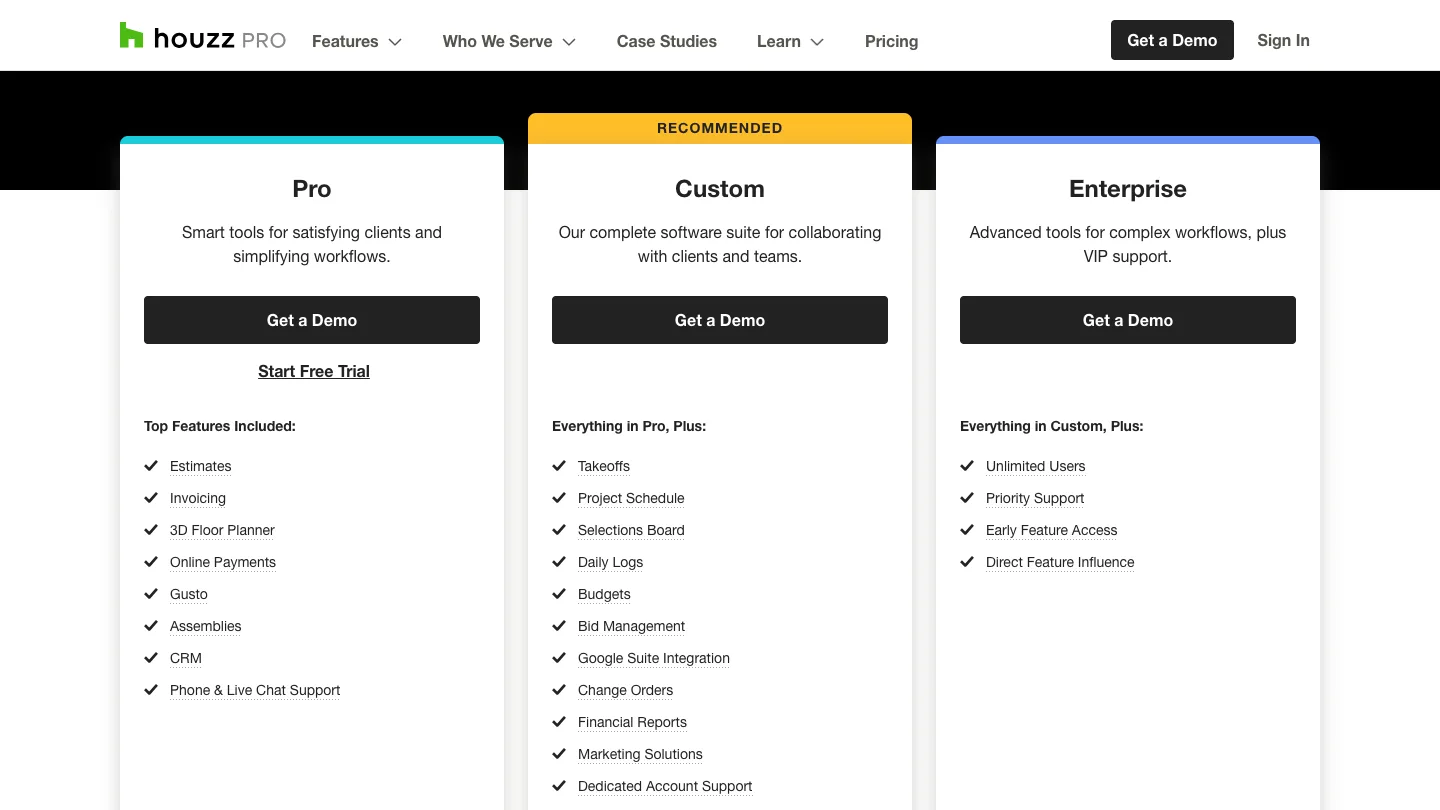 Jul 30, 2026
 Tech Stack
Houzz Pro Canada Review 2026: Pricing and Alternatives
Houzz Pro serves different pricing renderings. What Canadian buyers see, how GST/HST and payments work, what Custom gates, and what the annual contract commits you to.
Read Article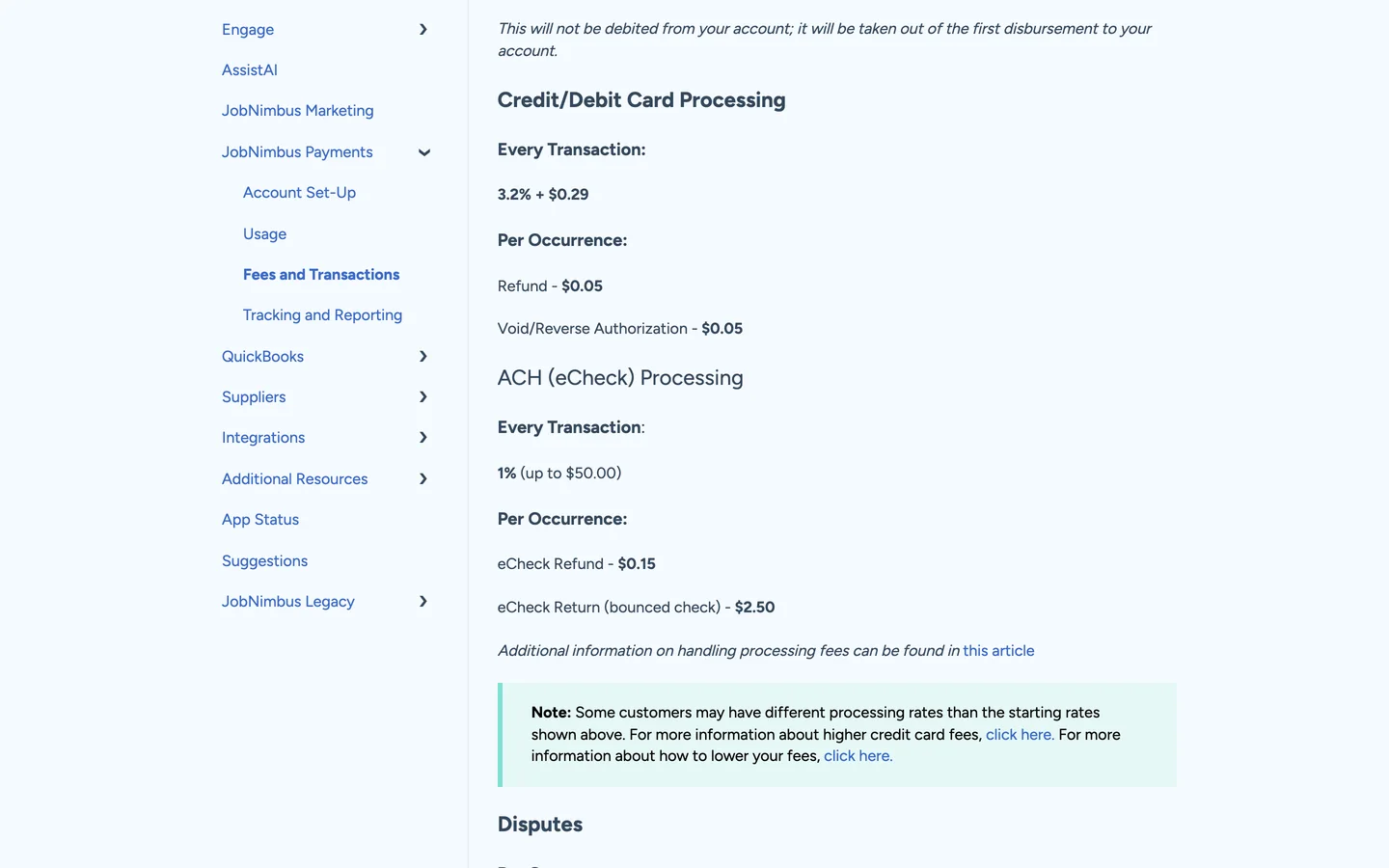 Jul 30, 2026
 Tech Stack
JobNimbus Pricing in 2026: What the Quote Does Not Cover
JobNimbus prints no figure on any of its four plans. So the only rate you can read before a sales call is the payments meter, and it is the biggest line on the bill.
Read Article Jul 30, 2026
 Tech Stack
JobNimbus Review 2026: Pricing, Pros, Cons and Alternatives
JobNimbus rates 4.6 on Capterra and orders material straight from ABC Supply and SRS. But it publishes no price, and its supplement route carries a note.
Read Article Jul 30, 2026
 Tech Stack
BuildOps Review 2026: Pricing, Contract Terms and Alternatives
BuildOps runs commercial service and projects on one platform, and publishes no pricing at all. The billing unit, the 30-day data-export window, and who it suits.
Read Article Jul 30, 2026
 Tech Stack
FieldPulse Review 2026: Pricing, Pros, Cons and Alternatives
FieldPulse rates 4.6 on Capterra and is the platform contractors name when they leave a bigger system. But it publishes no price, and the contract runs a year.
Read Article Jul 30, 2026
 Tech Stack
Service Fusion Review 2026: Pricing, Contract and Alternatives
Service Fusion bills flat per company with unlimited users, which is the best structural deal in field service software. The published plans, the contract behind the no-contract line, and the app score every other review gets wrong.
Read Article Jul 30, 2026
 Tech Stack
Knowify Review 2026: Pricing, Job Costing and Alternatives
Knowify rates 4.5 on Capterra and its weakest sub-score is features. What the $99 Core plan withholds, which way the QuickBooks sync really runs, and who should not buy it.
Read Article Jul 29, 2026
 Tech Stack
AccuLynx Review 2026: Pricing, Tier Gating, Alternatives
AccuLynx rates 4.6 across 846 reviews and now publishes an entry price. What that price omits, which tier holds the insurance workflow, and who should skip it.
Read Article Jul 29, 2026
 Tech Stack
Unitel Voice Review 2026: Pricing, Features and Alternatives
Unitel Voice rates 4.6 on Capterra and gives a one-truck shop a business number for $9.99 a month. The published plans, the cost per call, and what it won't do.
Read Article Jul 29, 2026
 Tech Stack
NiceJob vs Podium 2026: Pricing, Contracts and Review Gating
Both vendors print a price, at very different scale and in different currencies. The gap that matters is what Podium will not print: the billing unit, and whether a trade shop gets the number on the page.
Read Article Jul 28, 2026
 Tech Stack
CompanyCam Review 2026: Pricing, Pros, Cons and Alternatives
Every page ranking for CompanyCam still quotes a per-user price the vendor no longer charges. Here are the real plans, the seat math, and who should skip it.
Read Article Jul 28, 2026
 Tech Stack
NiceJob Review 2026: Pricing, Pros, Cons and Alternatives
NiceJob rates 4.9 on Capterra and refuses to gate negative reviews. Real plan pricing, the active-customer threshold nobody publishes, and who should skip it.
Read Article Jul 27, 2026
 Tech Stack
Buildertrend Review 2026: Pricing, Limits and Alternatives
Buildertrend rates 4.5 across 2,486 Capterra reviews and quotes against your revenue rather than your seat count. The workflows, the export problem, the alternatives.
Read Article Jul 27, 2026
 Tech Stack
CallRail Review 2026: Pricing, Pros, Cons and Alternatives
CallRail rates 4.5 on Capterra, and its tracking numbers port out free. But the two usage rates that decide your real bill are the two it does not print.
Read Article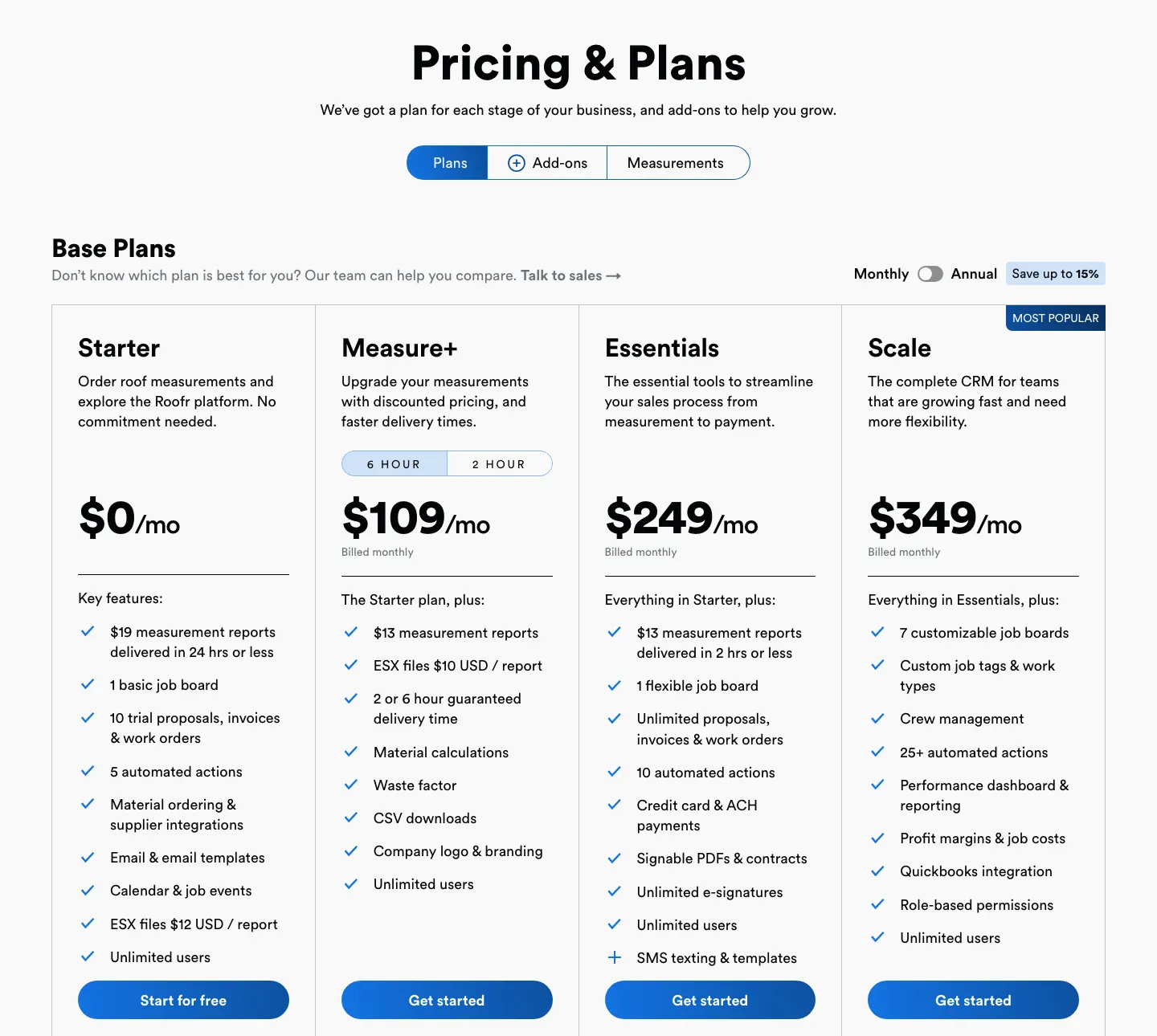 Jul 27, 2026
 Tech Stack
Roofr Review 2026: Pricing, Pros, Cons and Alternatives
Roofr rates 4.6 on Capterra and sells $13 measurement reports against a market charging triple. But it will not import a report from anywhere else.
Read Article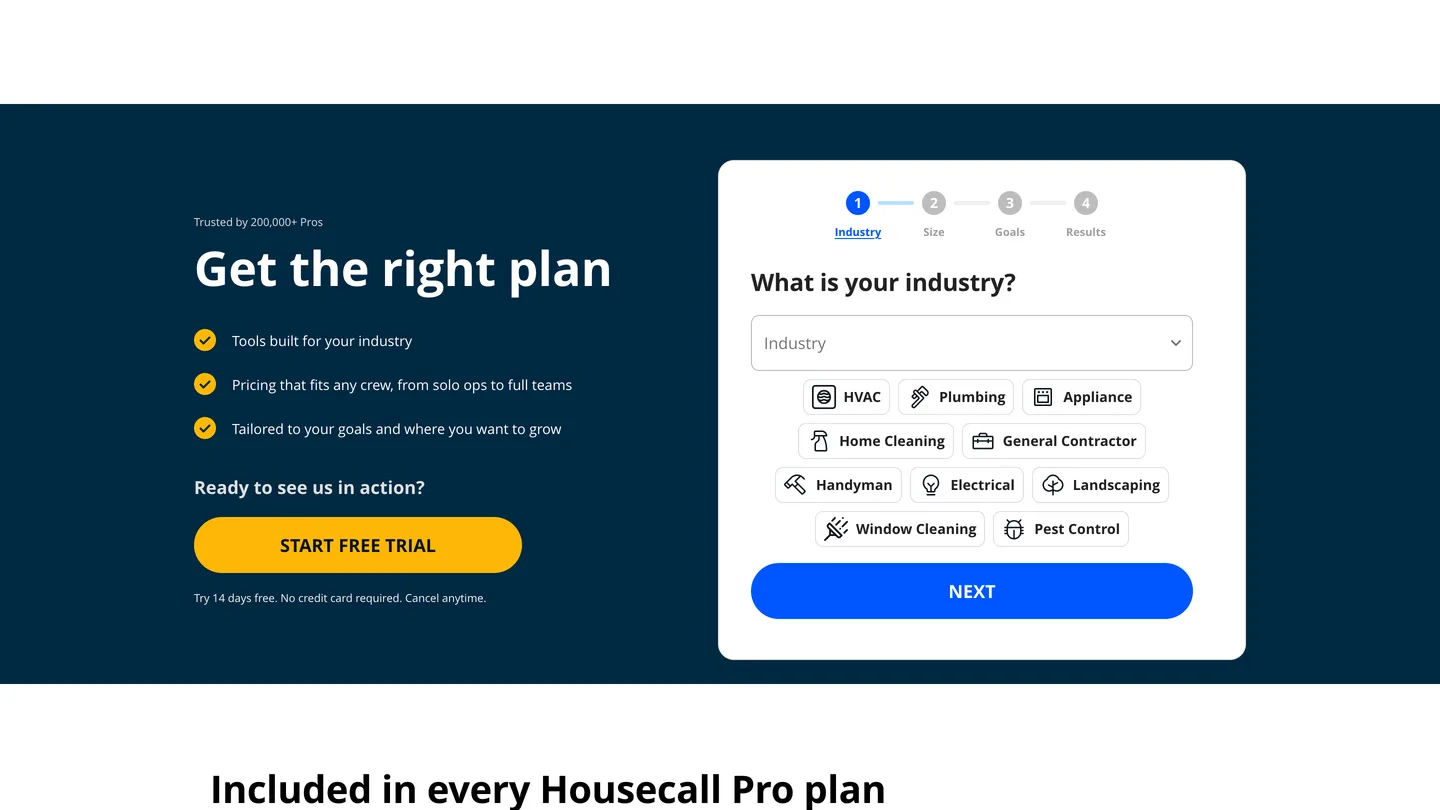 Jul 25, 2026
 Tech Stack
Housecall Pro Review 2026: Pricing, Pros, Cons, Alternatives
Housecall Pro has the shortest learning curve in the category and the widest review spread. Real pricing, the Instapay math, and the migration trap to plan around.
Read Article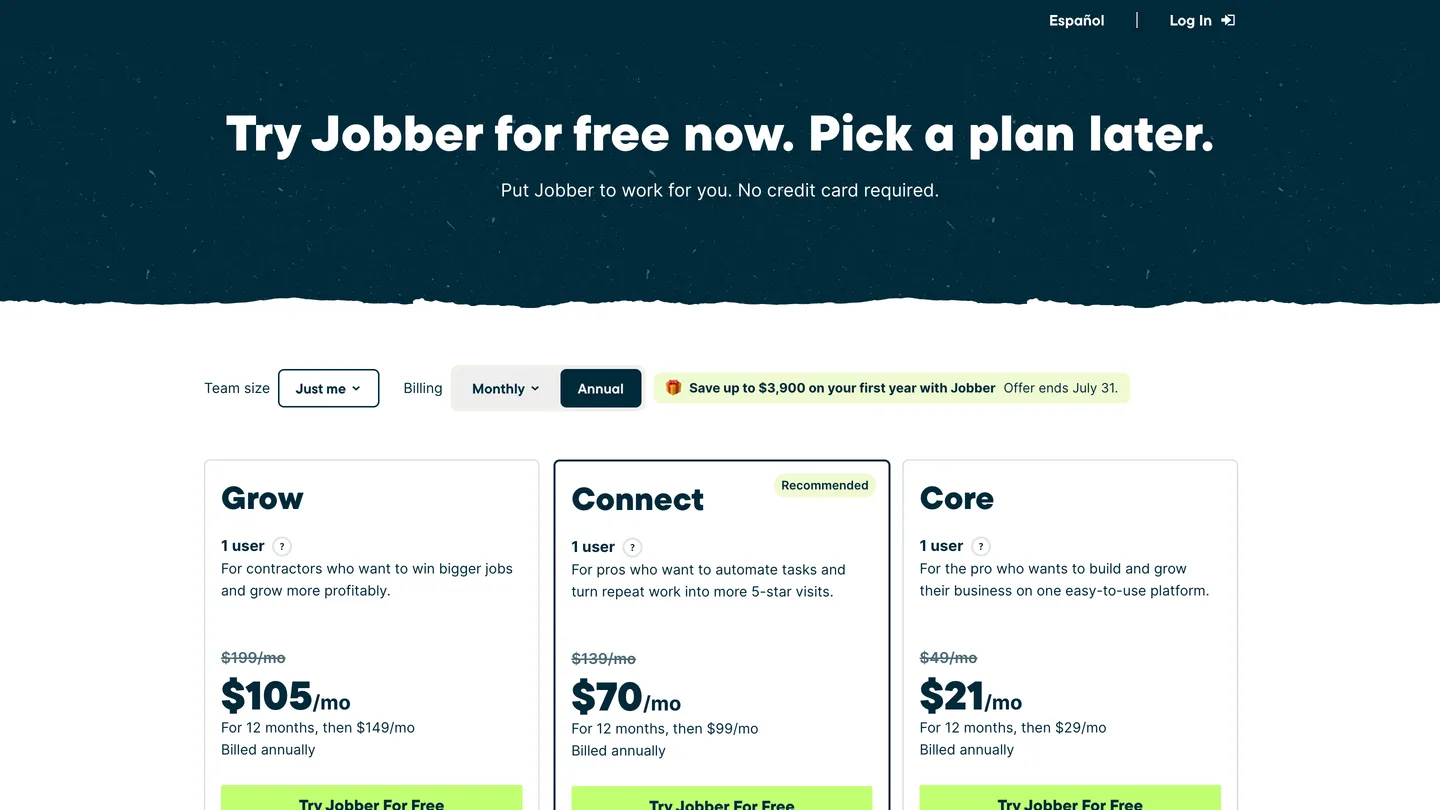 Jul 24, 2026
 Tech Stack
Jobber Review 2026: Pricing, Pros, Cons and Alternatives
Jobber rates 4.6 on Capterra with the best mobile app in the category. Real plan pricing, the feature gating that changes your entry price, and who it suits.
Read Article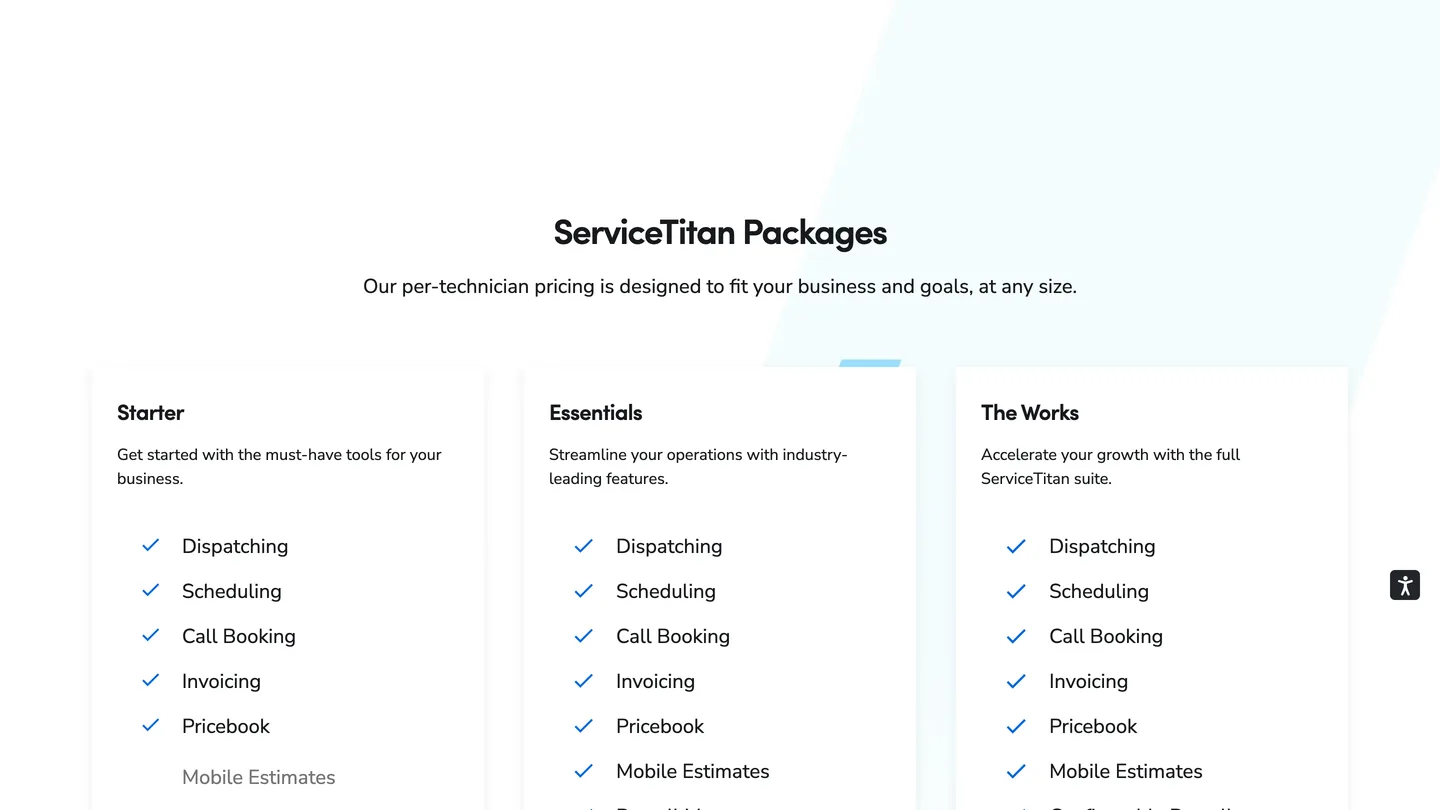 Jul 23, 2026
 Tech Stack
ServiceTitan Review 2026: Pricing, Pros, Cons, Alternatives
ServiceTitan rates 4.3 on Capterra but its weakest score is value for money. Real reported pricing, the 12-month contract, the exit fees, and who it actually suits.
Read Article Jun 3, 2026
 Tech Stack
HVAC Online Scheduling: The 43% Losing After-Hours Bookings
HVAC leads every trade on online booking at just 56.7%, which still leaves 43% of sites forcing an after-hours customer to wait for a business-hours phone call.
Read Article