Quo (formerly OpenPhone) Review 2026: Pricing, Pros, Cons, Alternatives
Quo (formerly OpenPhone) starts at $19. What each tier gates, the 7 limitations reviewers name, and 5 alternatives with published prices.
Disclosure This article features tools from our brand partners. If you choose to use them, we may receive compensation at no extra cost to you.
Our editorial choices are independent of these affiliate arrangements. Read our full affiliate disclosure.
Fervor is a CRO and web design studio, not a software reseller, and no vendor paid for placement here or for a kinder verdict. Affiliate links are flagged where they appear, and they never change what we report.
Page at a glance
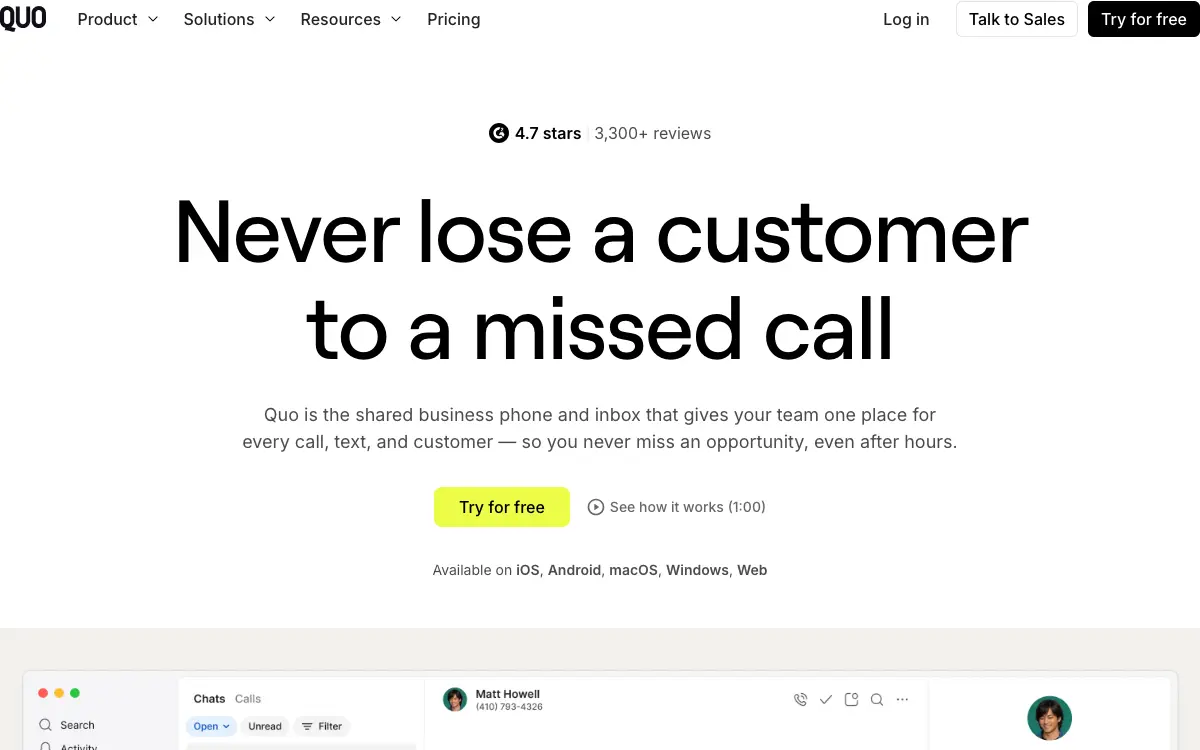
Quo (formerly OpenPhone) is A per-user business phone and texting app with a shared team inbox and an AI call answerer, priced from $15 to $47 per user per month, where the texting a contractor wants is gated behind US carrier registration that judges the contractor's website. It starts at $19 per user, per month. Every plan is priced per user per month, and each user includes exactly one local or toll-free number. The pricing page states "One new or ported phone number (local or toll-free) per user" and "Per user/per month" on all three plans. Extra numbers beyond the user count cost $5/month each on every tier. Starter caps a shared phone number at "Up to 10 paid users" and caps Tasks at "Up to 10 open tasks"; Business and Scale lift the user cap to unlimited. Adding a user mid-cycle bills prorated immediately; removing one revokes access right away but the seat stays billed through the end of the current period. It fits Owner-operator through roughly 10-seat residential service crews who mainly want a shared business number with texting and a light AI answerer, and who either already run Jobber or are content to keep their job records somewhere Quo doesn't touch. It's the wrong buy for A contractor with no website, or a thin one-page site with no privacy policy and no opt-in language on the contact form, because Texting is the feature most contractors buy this for, and texting US numbers is blocked until The Campaign Registry approves a registration that inspects the business's web presence. And the subscription bills from day one whether or not the registration ever clears, rejections cost $15 each to resubmit, and reviewers describe waiting weeks with no way to reach a human. So buying the phone system before fixing the website inverts the order of operations. Alternatives that publish their prices are Grasshopper from $14/month (billed as $168 USD per year), Google Voice from $10 USD, Nextiva from $15. Eight priced tiers, seven evidenced gaps and five alternatives, five of which publish a figure.
The short verdict on Quo (formerly OpenPhone)
Quo (formerly OpenPhone) earns its money with Owner-operator through roughly 10-seat residential service crews who mainly want a shared business number with texting and a light AI answerer, and who either already run Jobber or are content to keep their job records somewhere Quo doesn't touch. If that's you, it does the job. The sections below are the parts worth checking before you sign. But the fit is narrower than the marketing suggests, and the price isn't the whole cost.
It starts at $19. And pricing was verified on 7 August 2026, so you can check every figure below in a browser tab.
| Pricing model | Published tiers |
|---|---|
| Entry price | $19 |
| Users | Every plan is priced per user per month, and each user includes exactly one local or toll- |
| Ownership | Independent |
| Best fit | Owner-operator through roughly 10-seat residential service crews who mainly want a shared business number with texting and a light AI answerer, and who either already run Jobber or are content to keep their job records somewhere Quo doesn't touch. |
| Accounting sync | QuickBooks (none) |
What works
- One shared number lands in a team inbox on everyone's existing cell, with drag-and-drop routing instead of a handset system
- Unlimited US and Canada texting on paper, blocked in practice until a third party approves your business
- Sona answers 24/7 on every plan, but it's metered at 100 credits per call with only 10 free calls a month
- Self-serve cancellation is genuinely easy, but the data that leaves with you is a fraction of what you generated
- Jobber is the one native home-services hook, and it pushes one way
What does not
- Texting US customers is gated behind carrier registration that judges your website, and each rejection costs another fee
- The data export deliberately omits the recordings, transcripts and AI summaries you paid extra to generate
- Porting your numbers out doesn't cancel your subscription, and Quo says so
- Texts your website or Zapier sends cost money and fail silently when the pre-paid balance empties, while the identical text is free from the app
- Quo contradicts itself on how long your numbers survive cancellation: 60 days on the pricing page, 30 in the help centre, 14 if a payment fails
Quo (formerly OpenPhone) is A per-user business phone and texting app with a shared team inbox and an AI call answerer, priced from $15 to $47 per user per month, where the texting a contractor wants is gated behind US carrier registration that judges the contractor's website. It sells to Cross-trade contractors, and the shape of the product follows from that: Quo replaces the desk phone entirely. A caller dials one business number and Quo routes by call flow, ring group, phone menu or business hours to whichever team member should take it, on the phone they already carry. And the vendor pitches this at home services directly: "Drag-and-drop call flows that route emergencies, new job requests, and billing questions to the right team or on-call tech the first time." Everything lands in a shared inbox so "When someone's out sick, on vacation, or leaves the company, nothing is lost." But the catch on the entry tier is that Starter has no call forwarding, no phone menus and no analytics at all; routing beyond the basics starts at Business. And reliability is the live complaint, with reviewers reporting calls that never ring and notification badges that never clear.
Who Quo (formerly OpenPhone) is for, and who it isn't
It fits Owner-operator through roughly 10-seat residential service crews who mainly want a shared business number with texting and a light AI answerer, and who either already run Jobber or are content to keep their job records somewhere Quo doesn't touch. That's the half most reviews print. Here's the other half, which is the one worth your time.
Don't buy it if you're A contractor with no website, or a thin one-page site with no privacy policy and no opt-in language on the contact form. Texting is the feature most contractors buy this for, and texting US numbers is blocked until The Campaign Registry approves a registration that inspects the business's web presence. And the subscription bills from day one whether or not the registration ever clears, rejections cost $15 each to resubmit, and reviewers describe waiting weeks with no way to reach a human. So buying the phone system before fixing the website inverts the order of operations. Look at Grasshopper instead.
Don't buy it if you're A shop already standardised on ServiceTitan, Housecall Pro, AccuLynx, JobNimbus or QuickBooks-centred operations. The integration directory has 23 partners and none of them is an accounting package or any field-service platform except Jobber and DripJobs. Every call, text and voicemail would reach the system of record through Zapier or Make, and those automated messages bill at $0.01 per segment from a pre-paid balance that stops the automation dead when it empties. So the phone system would sit outside the operational stack rather than inside it. Look at Housecall Pro instead.
Don't buy it if you're Any contractor planning outbound prospecting, cold texting a purchased list, or door-knock follow-up campaigns. The Fair Use Policy bans it outright, listing "Cold calling and/or messaging, including but not limited to any messages without proper consent and opt-out language" among prohibited uses, and Quo "reserves the right to impose limits and charge overages on your usage of the Services or to terminate your use of the Services at any time in our discretion." And reviewers describe accounts frozen on automated suspicion with no human to appeal to, including one who wrote that the platform "will shut you down in a heartbeat based on speculation." Look at CallRail instead.
Don't buy it if you're A crew that needs a guaranteed human on the phone during storm season or emergency call-outs. Quo is software, not an answering service. Its human coverage for the contractor is Sona, an AI agent metered at 100 credits per call with only 10 calls free per month, and its own inbound phone support is Scale-tier only and limited to Monday to Friday, 8 AM to 5 PM PT. Reviewers report calls silently not ringing at all, one writing that after switching "we don't get about 50% of important calls." And a missed storm call costs more than the entire subscription. Look at AnswerConnect instead.
What Quo (formerly OpenPhone) costs
Quo (formerly OpenPhone) prints its numbers on its own site. Good. That means you can price your real configuration tonight instead of waiting on a rep.
| Tier | Price | Billing unit | What it unlocks |
|---|---|---|---|
| Starter (monthly) | $19 | per user, per month | Nothing beyond the tier below |
| Starter (annual) | $15 | per user, per month, billed annually at $180 | annual prepayment |
| Business (monthly) | $33 | per user, per month | AI call summaries and transcripts, group calling, call transfers, HubSpot and Salesforce integrations, phone menus, analytics and reporting, auto call recording, live chat support |
| Business (annual) | $23 | per user, per month, billed annually at $276 | annual prepayment |
| Scale (monthly) | $47 | per user, per month | AI call tags, dedicated onboarding support, priority live chat and email support, inbound phone support |
| Scale (annual) | $35 | per user, per month, billed annually at $420 | annual prepayment |
| Sona AI credits Tier 2 | $25 | per account, per month (4,000 credits, 40 calls, $0.75 per-call overage) | exceeding the 1,000 free credits every plan includes |
| Sona AI credits Tier 5 | $199 | per account, per month (60,000 credits, 600 calls, $0.45 per-call overage) | exceeding the 1,000 free credits every plan includes |
Every plan is priced per user per month, and each user includes exactly one local or toll-free number. The pricing page states "One new or ported phone number (local or toll-free) per user" and "Per user/per month" on all three plans. Extra numbers beyond the user count cost $5/month each on every tier. Starter caps a shared phone number at "Up to 10 paid users" and caps Tasks at "Up to 10 open tasks"; Business and Scale lift the user cap to unlimited. Adding a user mid-cycle bills prorated immediately; removing one revokes access right away but the seat stays billed through the end of the current period.
There is a discount for paying annually up front: And an annual prepay discount tells you an annual commitment exists, which is worth knowing before anyone mentions a term length out loud.
The Quo (formerly OpenPhone) costs that show up later
Payment processing. Quo is a phone system, not a payment processor, and it does not collect customer payments for a contractor. Its own subscription can be billed by card, through the Apple App Store, or through Google Play, and the vendor warns that switching between them double-charges if the old subscription is not cancelled: "add your payment information to Quo before you cancel your subscription elsewhere to avoid interruptions." Separately, a pre-paid "Voice & messaging balance" funds international usage and API/integration texting.
Implementation and onboarding. No setup or implementation fee is published on any tier. Number porting is free from Quo's side ("Porting numbers: Free (though third-party fees may apply)"), and "Dedicated onboarding support" is a feature of the Scale plan rather than a paid service. The unavoidable setup cost is US carrier registration, not Quo's own labour.
Minimum term. Self-serve plans run month-to-month or annually with no published minimum term, and the vendor offers a 7-day free trial ("Try Quo risk-free for 7 days. Cancel anytime (we'll even remind you)."). Sales-led customers land on a different regime entirely: the Terms of Service describe an Order Form with an "Order Form Initial Term" set on the Order Form itself, and fees "invoiced annually in advance" payable within thirty days, with a late fee of "the lesser of 1.5% per month or the maximum amount permitted by applicable law."
Getting out. There is no early-termination penalty as such, because there are no refunds instead. The support documentation is blunt: "No refunds: Payments already made are non-refundable" and "Service continues: Account remains active until billing period ends." The Terms repeat it: "all Fees paid are non-refundable and are not subject to set-off." A contractor who prepays a year and quits in month two forfeits the balance.
Auto-renewal. Order Form customers auto-renew for a term equal to the last one unless someone gives thirty days' written notice: the Order Form "shall automatically renew for additional successive periods of equal duration to the Order Form Initial Term (each, a 'Order Form Renewal Term') unless either party notifies the other party of such party's intention not to renew no later than thirty (30) days prior to the expiration." Renewal also absorbs any seats added mid-term, so an over-limit year renews at the higher count by default.
Modules sold separately. , , , . And an add-on you need in week one is part of what Quo (formerly OpenPhone) costs, so the number to compare is the configuration you'd really run.
Third-party services you will also pay for. . These are not on Quo (formerly OpenPhone)'s invoice, and they are still part of what this decision costs you every month.
Worth a detour here. For Order Form customers, getting your own data back after termination is discretionary and chargeable. The Terms of Service reserve both the format and the decision to Quo, cap the request window at thirty days, and then make the export itself billable. The word is "may", not "will". So any contractor signing an Order Form rather than self-serving through the app should negotiate a written export commitment with a format and a price of zero before signing, because the default position gives the vendor every lever at the exact moment the relationship has ended.
Everything that is not the Quo (formerly OpenPhone) subscription
The subscription is the part everyone quotes. These are the lines that land afterwards, and the ones we could not find are named as unpublished rather than left blank.
Sold separately. , , , . Price the configuration you'll really run, because an add-on you need on day one is part of the price.
Third-party services you'll also pay for. . None of these are on Quo (formerly OpenPhone)'s invoice, and all of them are part of what this decision costs every month.
"Quo (formerly OpenPhone) Starter (monthly) is $19, per user, per month."
Quo (formerly OpenPhone) pricing page (2026)
"Quo (formerly OpenPhone) Starter (annual) is $15, per user, per month, billed annually at $180."
Quo (formerly OpenPhone) pricing page (2026)
"Every plan is priced per user per month, and each user includes exactly one local or toll-free number. The pricing page states "One new or ported phone number (local or toll-free) per user" and "Per user/per month" on all three plans. Extra numbers beyond the user count cost $5/month each on every tier. Starter caps a shared phone number at "Up to 10 paid users" and caps Tasks at "Up to 10 open tasks"; Business and Scale lift the user cap to unlimited. Adding a user mid-cycle bills prorated immediately; removing one revokes access right away but the seat stays billed through the end of the current period."
Quo (formerly OpenPhone) pricing page (2026)
The five workflows you pay for
Feature totals are noise. So a shop in this category lives or dies on five things, and those are the five to grade, and each one below carries the evidence it's graded on.
One shared number lands in a team inbox on everyone's existing cell, with drag-and-drop routing instead of a handset system Quo replaces the desk phone entirely. A caller dials one business number and Quo routes by call flow, ring group, phone menu or business hours to whichever team member should take it, on the phone they already carry. And the vendor pitches this at home services directly: "Drag-and-drop call flows that route emergencies, new job requests, and billing questions to the right team or on-call tech the first time." Everything lands in a shared inbox so "When someone's out sick, on vacation, or leaves the company, nothing is lost." But the catch on the entry tier is that Starter has no call forwarding, no phone menus and no analytics at all; routing beyond the basics starts at Business. And reliability is the live complaint, with reviewers reporting calls that never ring and notification badges that never clear. But a business owner, writes it differently: "Switched to Quo to have a call menu and try to reduce spam calls. Now we don’t get about 50% of important calls. Our phones do not ring and we just get a message that “no one answered” later on. Have tried contacting support several times with no help at all and zero solutions to fix it. It’s unfortunate because it would be a really cool addition to our business if it just worked as it is supposed to."But a window cleaning business owner, writes it differently: "We have been using QUO for my new Window Cleaning Business the past month and we really love our new VOIP number. We use it 100% on our mobile app and everything works great!! Clients love the SONA AI feature!!"
Unlimited US and Canada texting on paper, blocked in practice until a third party approves your business All three tiers show "Unlimited" messaging to US and Canada, with an asterisk pointing at the Fair Usage Policy and a "Registration required" note. The registration is The Campaign Registry, and Quo is candid that it involves two reviews, the second a manual human read of the form. Cost is $19.50 one-time, $1.50 to $3 monthly, and $15 for every resubmission. And reviewers describe this as the single worst part of the product, and the complaints are consistent across months: approval taking weeks, denials with no explanation, repeat charges, and a subscription billing throughout. One paying customer summarised it as paying "over $40 a month for myself my one employee to take calls but not text!" An owner with one employee who reviewed it on 2026-07-28 describes it: "I have been dealing with an issue for weeks attempting to get my business number approved for text messaging. There is no one to contact and the emails take days to go back and forth. Also advertised that the plan I chose would allow up To 10 people to use the account for the monthly costs. NO it’s that cost per person. So I pay over $40 a month for myself my one employee to take calls but not text! feels scammy. And we will see if they can get this resolved."A small business owner who reviewed it on 2026-06-17 describes it: "We own a small business and the functions this app offers would be great IF THEY WORKED. They want you to pay a monthly that MAY OR MAY NOT get extra fees that there is little way of controlling. You also can NOT text without paying at least $20 to verify your number which WILL be denied AT LEAST one time and every time it is denied you have to pay the $20 again it is just a BIG SCAM."
Sona answers 24/7 on every plan, but it's metered at 100 credits per call with only 10 free calls a month Sona is Quo's AI answering agent, and the vendor now includes it on all three tiers rather than gating it behind Scale. But the meter is the thing to understand. Every plan comes with "1,000 free automation credits (10 calls) included," and "1 Call = 100 credits." A residential service business taking ten after-hours calls in a single storm week has exhausted the month's allowance, after which overage runs $1.00 per call on the free tier, falling to $0.45 per call only if the contractor is already paying $199/month for Tier 5. Reviewers like the capability and dislike the accounting: one four-star customer wrote that billing "could be much more straightforward rather than being billed in credits instead of actions." But a business owner, reports it it differently: "Great service so far! It could be five stars with just a few few little tweaks. One of the main ones is being able to send group text messages. I’ve been satisfied with the call quality and the simplicity of the platform. I’ve started using Sona AI and it’s moving in the right direction. I’m excited to see the improvements over the next year. One thing I don’t like is how the billing works. It could be much more straightforward rather than being billed in credits instead of actions."But a window cleaning business owner, reports it it differently: "We have been using QUO for my new Window Cleaning Business the past month and we really love our new VOIP number. We use it 100% on our mobile app and everything works great!! Clients love the SONA AI feature!!"
Self-serve cancellation is genuinely easy, but the data that leaves with you is a fraction of what you generated Quo makes a point of easy cancellation, and the claim survives checking: the app has a Cancel Subscription button and the FAQ says "Unlike our competitors, we won't make you call us just to cancel your subscription." But what follows is less generous. Payments already made are non-refundable. The export is owner-only, arrives by email within 24 hours, and the download link "expires after 72 hours." It contains contacts, call logs and message logs only. Permanent account deletion isn't self-service at all and requires emailing support with the subject line "Request to permanently delete [Company name] account". And for Order Form customers the Terms reserve the right to make post-termination export both discretionary and chargeable. But a business owner, reports it it differently: "Love the functionality, layout, and convenience of this app. The only thing it lacks is RCS supported messaging. I also wish there was a way to export certain date ranges of conversations for internal records."
Jobber is the one native home-services hook, and it pushes one way For a contractor the integration story is short. Jobber syncs "call summaries and transcripts" and "contact details" so "your team always knows who called", and DripJobs syncs "Quo calls into DripJobs job records". Both push from Quo outward. But only HubSpot is described as genuinely bidirectional, with contacts "updated in both directions", and HubSpot and Salesforce are gated to Business and above. Everything else routes through Zapier ("8,000+ apps"), Make ("3,000+ apps") or Webhooks, which is still in Beta. Note that the AI summaries Jobber receives are the same artefacts the CSV export refuses to give back, so the job record in Jobber may end up the only durable copy. An information technology and services, 51-200 employees, used daily for less than 12 months, Less than 12 months on the platform, puts it it plainly: "Their mobile app constantly failed, we had more call drops than we've ever had before, and every time we called in trying to get something fixed they tried charging us each and every time"
Which trades get value from Quo (formerly OpenPhone)
Fit differs by trade rather than by company size alone, and a blended paragraph hides that. Here is the split for the trades this one sells to.
Cross-trade. The workflow that decides it is one shared number lands in a team inbox on everyone's existing cell, with drag-and-drop routing instead of a handset system, and the shop profile that gets value is owner-operator, 1-2 people, residential service, with a real website already live doing residential and service work. Where it stops being a fit is A contractor with no website, or a thin one-page site with no privacy policy and no opt-in language on the contact form.
Your books, and whether Quo (formerly OpenPhone) connects to them
QuickBooks connects, on every plan. Your costs map through cost codes, so test yours against your own chart of accounts before you commit. A code your books don't recognise is how a labour charge quietly lands somewhere useless.
Past those, the road ends. ServiceTitan, Housecall Pro, Workiz, JobNimbus and AccuLynx, QuickBooks, Xero, Sage, FreshBooks and every other accounting package, RCS messaging and date-range conversation export do not connect. So if your books run on an ERP rather than the platforms named above, weigh that before anything else.
Beyond accounting it connects to Jobber (One-way push of call summaries, transcripts and contact details from Quo into Jobber, tagged Home services and CRM in the directory. This is the single native field-service integration a residential contractor is likely to use.), DripJobs (Partner-built one-way sync of Quo calls into DripJobs job records. The only other Home services tagged integration in the directory.), HubSpot (The only integration Quo describes as bidirectional. Gated to Business ($33/user/mo monthly) and above.), Zapier and Make (The bridge to everything Quo doesn't integrate with natively, which for a contractor means ServiceTitan, Housecall Pro, AccuLynx, JobNimbus and QuickBooks. Available on all tiers, but texts sent this way are metered.), Claude and ChatGPT (MCP) (Official MCP servers letting an AI assistant read calls, texts and contacts. Included on every tier including Starter, which is unusual for a $15/user product.), Slack (Pushes call, text and voicemail notifications into a Slack channel or DM. Available on all tiers.). A public API exists: A public API ships on every tier, including $15/user Starter, where most competitors reserve it for an enterprise plan. The pricing page lists "Quo API" under "All plans include", alongside official MCP servers for Claude and ChatGPT and a developer documentation site. The commercial catch is metering: messages sent through the API draw "$0.01 per segment" from a pre-paid Voice & messaging balance rather than the subscription, and "If your pre-paid balance runs out, API and integration messages will fail." Webhooks exist for inbound events but remain labelled Beta.
Quo (formerly OpenPhone) support, and what it costs you
Support is the line item nobody prices and everybody eventually needs. Onboarding for Quo (formerly OpenPhone): No setup or implementation fee is published on any tier. Number porting is free from Quo's side ("Porting numbers: Free (though third-party fees may apply)"), and "Dedicated onboarding support" is a feature of the Scale plan rather than a paid service. The unavoidable setup cost is US carrier registration, not Quo's own labour.
An existing openphone customer, describes it it plainly: "OpenPhone sold to quo and ever since it has not been good. I’ve submitted many support requests and they are not fixing the issues with the service."
And a long-term customer, writing on 2026-03-26, writes the same thing: "New rebrand making everything look ugly. Dark mode now has background color black instead of a more elegant dark purple. Instead of actually improving core functionality such as how new messages on phone only appearing after 10 second wait, or replying directly to a message in team chat, they focus on adding more bright yellow colors so their UI looks trash. International calls that do not connect are still billed anyway. Their support emails are mostly just canned responses and do not address your issue directly. Wait times for a response can be up to 4-6 days. Extremely delusional company"
Quo (formerly OpenPhone) contracts, and getting out
Nobody reads this section before they buy, and it's the one that costs money afterwards. Four terms decide what leaving looks like.
Minimum term. Self-serve plans run month-to-month or annually with no published minimum term, and the vendor offers a 7-day free trial ("Try Quo risk-free for 7 days. Cancel anytime (we'll even remind you)."). Sales-led customers land on a different regime entirely: the Terms of Service describe an Order Form with an "Order Form Initial Term" set on the Order Form itself, and fees "invoiced annually in advance" payable within thirty days, with a late fee of "the lesser of 1.5% per month or the maximum amount permitted by applicable law."
Auto-renewal. Order Form customers auto-renew for a term equal to the last one unless someone gives thirty days' written notice: the Order Form "shall automatically renew for additional successive periods of equal duration to the Order Form Initial Term (each, a 'Order Form Renewal Term') unless either party notifies the other party of such party's intention not to renew no later than thirty (30) days prior to the expiration." Renewal also absorbs any seats added mid-term, so an over-limit year renews at the higher count by default.
Early termination. There is no early-termination penalty as such, because there are no refunds instead. The support documentation is blunt: "No refunds: Payments already made are non-refundable" and "Service continues: Account remains active until billing period ends." The Terms repeat it: "all Fees paid are non-refundable and are not subject to set-off." A contractor who prepays a year and quits in month two forfeits the balance.
Payment processing. Quo is a phone system, not a payment processor, and it does not collect customer payments for a contractor. Its own subscription can be billed by card, through the Apple App Store, or through Google Play, and the vendor warns that switching between them double-charges if the old subscription is not cancelled: "add your payment information to Quo before you cancel your subscription elsewhere to avoid interruptions." Separately, a pre-paid "Voice & messaging balance" funds international usage and API/integration texting.
Small thing that turns out to matter. The export is engineered to return the cheap data and keep the expensive data. Contacts, call logs and message logs come out as CSV. Call recordings, call transcripts, AI summaries, voicemail files, media attachments and internal team threads don't. And those excluded items are precisely what the Business and Scale tiers charge a premium to produce. A contractor who uses call recordings to document what a homeowner approved is building that evidence inside a box it can't leave. So treat every recording that could matter in a change-order or scope dispute as something to download individually at the time, or push it to Jobber, which is the only place the summaries durably land outside Quo.
"You can’t text. They must verify website and many small businesses don’t have a website. It’s a total PIA. They safe a FB page is enough, but the page must be embellished, and up to their par. If most businesses were that big, they’d just get a regular phone. Definitely not worth your time"
Apple App Store, Kaycee1206 (7-31)
"I have been dealing with an issue for weeks attempting to get my business number approved for text messaging. There is no one to contact and the emails take days to go back and forth. Also advertised that the plan I chose would allow up To 10 people to use the account for the monthly costs. NO it’s that cost per person. So I pay over $40 a month for myself my one employee to take calls but not text! feels scammy. And we will see if they can get this resolved."
Apple App Store, 1treehillgurl (7-28)
"Needed a separate number for my VERY busy construction business to try and reclaim part of my life. App came highly recommended. Once I logged on it wouldn’t let me past the “tell us about your business page” so I used the ai feature to describe the issue. The chatbot explained that screen didn’t exist. If there’s this much confusion and lack of accountability just trying to sign up I’d NEVER trust it to help run my company"
Apple App Store, dave3601977 (6-18)
The Quo (formerly OpenPhone) problems that survive onboarding
Six things worth raising, and each one's answerable with a yes or a no on a call.
Texting US customers is gated behind carrier registration that judges your website, and each rejection costs another fee Calling works the moment a contractor signs up. Texting doesn't. The pricing page footnotes messaging with "Registration required" and explains that The Campaign Registry runs a two-phase review, where "a third-party entity then does a second manual review of the information you supply in the registration form." But what that review inspects is the business's web presence. One reviewer put the consequence plainly, and the awkward grammar is theirs: "You can't text. They must verify website and many small businesses don't have a website." Rejections aren't free either, because Quo lists a "Resubmission fee: $15 if your application needs to be resubmitted" on top of the $19.50 initial fee. And reviewers describe the loop running for weeks while the subscription bills. And a small business owner, writing on 2026-07-31, says the same thing: "You can’t text. They must verify website and many small businesses don’t have a website. It’s a total PIA. They safe a FB page is enough, but the page must be embellished, and up to their par. If most businesses were that big, they’d just get a regular phone. Definitely not worth your time" Before you pay for a single seat, look at your own website the way a carrier reviewer will: a working site at your business name, your business name and address matching your registration exactly, a privacy policy, and opt-in language wherever you collect a phone number. So fix that first, then buy the phone system. And if you have no website at all, budget for one before you budget for Quo.
The data export deliberately omits the recordings, transcripts and AI summaries you paid extra to generate Quo exports contacts, call logs and message logs as CSV. Its own help centre then lists what doesn't come with you, and the list is everything of value on the upper tiers: "Call recordings and audio files," "Call transcripts and AI summaries," "Voicemail files," "Images and media attachments," and "Internal team comments and threads." A contractor pays $33 or $47 per user per month specifically for AI call summaries and auto call recording, uses them to document what a homeowner agreed to, and then can't take any of it to the next vendor. But a five-star reviewer noticed the shape of the problem from inside the product: he wished "there was a way to export certain date ranges of conversations for internal records." Treat call recordings as write-only from day one. So if a recording or an AI summary is ever going to matter in a dispute over scope or price, download that individual file to your own storage when the job closes. Don't assume a bulk export will rescue it later, because it won't.
Porting your numbers out doesn't cancel your subscription, and Quo says so The port-out documentation carries a billing section that most people will never read until it has already cost them: "You're responsible for charges until the port completes," "Port completion doesn't automatically cancel your subscription," and "Contact support to adjust billing after successful port." So a contractor who moves numbers to a new carrier, watches the transfer complete, and assumes the relationship is over keeps getting billed for seats attached to numbers that no longer ring. And porting out is also blocked during the trial: "You must have an active paid account to initiate a port-out request." So combine that with a support function that reviewers describe as email-and-bot only and the exit takes two separate deliberate acts. Diary two tasks, not one. So port the numbers, confirm they ring at the new carrier, then separately cancel the Quo subscription in Plan & billing and keep the confirmation email. Check the next card statement to confirm the charge stopped.
Texts your website or Zapier sends cost money and fail silently when the pre-paid balance empties, while the identical text is free from the app This is the split that catches automated contractors. Quo's own table says a US or Canada text sent from the Quo app is "Included in your subscription," and the same text sent from the "API or Integration (Make, Zapier, Clay)" is "$0.01 per US/CA segment from pre-paid credits." But the failure mode is worse than the price. Quo warns: "If your pre-paid balance runs out, API and integration messages will fail, often with a 'not enough prepaid credits' error, even though the same US/CA texts are free when sent from the Quo app." A contractor whose website form fires an instant "got your request, we'll call within the hour" text through Zapier loses exactly that automation, at the moment a lead converts, with no signal beyond an error in a log nobody watches. So if any lead-response automation runs through the API, Zapier, Make or Clay, turn on auto-recharge on the Voice & messaging balance before you launch it, and add a monitor that alerts you when an outbound automation fails. Never let a first-response text depend on a balance that can hit zero quietly.
Quo contradicts itself on how long your numbers survive cancellation: 60 days on the pricing page, 30 in the help centre, 14 if a payment fails The pricing page FAQ tells a prospect that "all numbers will be saved for 60 days before being removed from your workspace." The subscription help article tells a customer "Number retention: Phone numbers held for 30 days maximum." And a third figure applies if the card bounces rather than the customer quitting: "14-day number retention: Shorter retention period for failed payments," after "5 retry attempts." The export article adds that workspace data is "retained for 30 days after subscription cancellation" with "automatic data deletion after retention period." So for a contractor the number on the truck wrap is the asset, not the software, and the window to rescue it may be a quarter of what the sales page implies. Assume 14 days, not 60. Keep a card on file that won't expire. And if you ever intend to leave, start the port-out before you cancel rather than after. Get the retention window confirmed in writing by support if the number is on your vehicles and signage.
Zero accounting integrations, and only two of the 23 partners serve home services at all Counted rather than estimated, the integration directory lists 23 unique partners. Nine of them are CRMs aimed at sales teams (HubSpot, Salesforce, Pipedrive, Zoho, Attio, HighLevel, Clay, Clio, Triple Session), several are AI and automation surfaces (Claude, ChatGPT, Zapier, Make, Pipedream, Relay.app, Webhooks), and exactly two carry the Home services tag: Jobber and DripJobs. But searching the directory for QuickBooks, Xero, Sage, ServiceTitan, Housecall Pro, Workiz, JobNimbus or AccuLynx returns nothing, because none exists. And the directory's own category list runs "CRM, Sales & prospecting, AI assistant, Automation, Collaboration, Contact management, Conversation intelligence, Home services, Legal" with no accounting category to put one in. If you run ServiceTitan, Housecall Pro, AccuLynx or JobNimbus, price the Zapier or Make tier you'll need to bridge the gap, and remember those automated texts bill at $0.01 per segment from pre-paid credits. And if you run Jobber, the native integration is real but one-directional, so check that call summaries landing on the job record is the workflow you wanted.
The rebrand from OpenPhone to Quo is visibly unfinished, and long-standing customers report the product got worse across it openphone.com now redirects to quo.com. But the seams are on the vendor's own pages. The pricing page carries two copyright lines at once, "© 0000 OpenPhone Technologies, Inc. All rights reserved." and "© 2025 Quo, Inc. All rights reserved." Feature tooltips on that same page still say "Every user added to your OpenPhone workspace" and "transfer your existing phone number into OpenPhone for free," and the closing call to action reads "Try OpenPhone risk-free for 7 days." The Fair Use Policy identifies the company as "OpenPhone (DBA: Quo)" and the Terms of Service still open by naming "OPENPHONE TECHNOLOGIES, INC.." Support articles route through help@openphone.co. Reviewers connect the rebrand to a decline, which may be correlation rather than cause, but the pattern repeats across recent one and two-star reviews. An existing openphone customer, writing on 2026-03-27, writes: "OpenPhone sold to quo and ever since it has not been good. I’ve submitted many support requests and they are not fixing the issues with the service." Search under both names when you research this product, because half the reviews, help articles and comparison pages still say OpenPhone. And weight reviews from 2026 more heavily than the glowing 2020-2023 set, since they describe a materially different support organisation.
One more thing worth knowing. The same text message is free or paid depending on what sent it, and the paid path stops working without warning. A US text a human sends from the Quo app is included in the subscription. But the identical text sent by the API, Zapier, Make or Clay costs $0.01 per segment from a separate pre-paid balance, and when that balance empties the automation fails rather than falling back. Any contractor whose website form triggers an instant acknowledgment text is running that lead-response promise through the metered path. So enable auto-recharge before launching the automation and alert on failures, because the failure lands silently at the exact moment a lead converts and the contractor's first impression is a text that never arrived.
One more thing worth knowing. Leaving takes two deliberate acts and the vendor documents that most people only perform one. Completing a port-out doesn't end the subscription, and Quo says so in its own help centre rather than burying it. Contractors leaving a phone system are usually leaving because support already failed them, which makes "contact support to adjust billing" the least reliable step in the sequence. So cancel in the app yourself after the port confirms, then verify on the next card statement rather than trusting the ticket.
One more thing worth knowing. The App Store rating gap tells the story of the rebrand better than any single review. Apple shows 4.41 across 10,788 ratings and Google Play shows 4.6 across 9.28K, both healthy lifetime averages, but the recent Apple reviews skew heavily negative and cluster on three specific themes: no human support, surprise seat charges, and carrier registration limbo. And long-standing customers repeatedly attribute the decline to the OpenPhone-to-Quo transition. Lifetime star averages on this product are a poor guide, because they're weighted by three good years before the rebrand. So read only reviews from 2026 forward, and weight the support complaints heavily, because a contractor whose business line stops ringing needs a human on a phone and Quo's own inbound phone support is Scale-tier and weekday-daytime only.
Worth a detour here. This is a phone product whose headline feature is gated on the quality of the buyer's website. Texting US numbers requires Campaign Registry approval, and the second phase of that review is a human reading your business details against your web presence. So a contractor with no site, or a site missing a privacy policy and SMS opt-in language, pays the full subscription and gets calling only. Order of operations matters more than the software choice. So a contractor should get the website registration-ready before paying for any texting-capable phone system, because the same gate exists at Grasshopper and every other US SMS provider. Buying the phone tool first just starts the meter on a feature that can't turn on.
What Quo (formerly OpenPhone) operators say, in their own words
Every quote below is transcribed from a published review, named to the platform that carries it and to the reviewer as that platform displays them. We read the corpus by complaint type rather than by star rating, which is how the disqualifying detail buried inside a five-star review gets found.
"You can’t text. They must verify website and many small businesses don’t have a website. It’s a total PIA. They safe a FB page is enough, but the page must be embellished, and up to their par. If most businesses were that big, they’d just get a regular phone. Definitely not worth your time"
A small business owner who reviewed it on 2026-07-31 says on Apple App Store
"I have been dealing with an issue for weeks attempting to get my business number approved for text messaging. There is no one to contact and the emails take days to go back and forth. Also advertised that the plan I chose would allow up To 10 people to use the account for the monthly costs. NO it’s that cost per person. So I pay over $40 a month for myself my one employee to take calls but not text! feels scammy. And we will see if they can get this resolved."
An owner with one employee who reviewed it on 2026-07-28 puts it on Apple App Store
"Needed a separate number for my VERY busy construction business to try and reclaim part of my life. App came highly recommended. Once I logged on it wouldn’t let me past the “tell us about your business page” so I used the ai feature to describe the issue. The chatbot explained that screen didn’t exist. If there’s this much confusion and lack of accountability just trying to sign up I’d NEVER trust it to help run my company"
A construction business owner who reviewed it on 2026-06-18 reports it on Apple App Store
"We have been using QUO for my new Window Cleaning Business the past month and we really love our new VOIP number. We use it 100% on our mobile app and everything works great!! Clients love the SONA AI feature!!"
A window cleaning business owner, says it plainly on Apple App Store
"We own a small business and the functions this app offers would be great IF THEY WORKED. They want you to pay a monthly that MAY OR MAY NOT get extra fees that there is little way of controlling. You also can NOT text without paying at least $20 to verify your number which WILL be denied AT LEAST one time and every time it is denied you have to pay the $20 again it is just a BIG SCAM."
A small business owner who reviewed it on 2026-06-17 reports it on Apple App Store
"Buyer beware. They don’t validate inbound calls to avoid scammers so i get like 100 scam calls per day. I clicked on add users as part of the setup with no notification of extra charges they auto billed be for a year at $45 per month instead of $15. No refunds! Good luck."
A business owner who reviewed it on 2026-07-06 writes on Apple App Store
"I signed up for one account, one user. Cost $20.25 after 7 day trial. End of trial bill $60.77. Why because they took my created emails from GoDaddy, made them users and sent invites to those emails. All three emails are me: info, admin and my name. Easy fix right? Nope. The bill stays. You can pay for nothing and next month the bill will drop. If you wanna get scammed this is the place."
A solo user, writing on 2026-06-29, says on Apple App Store
"Great service so far! It could be five stars with just a few few little tweaks. One of the main ones is being able to send group text messages. I’ve been satisfied with the call quality and the simplicity of the platform. I’ve started using Sona AI and it’s moving in the right direction. I’m excited to see the improvements over the next year. One thing I don’t like is how the billing works. It could be much more straightforward rather than being billed in credits instead of actions."
A business owner, writing on 2026-02-24, puts it on Apple App Store
"Love the functionality, layout, and convenience of this app. The only thing it lacks is RCS supported messaging. I also wish there was a way to export certain date ranges of conversations for internal records."
On 2025-12-18, a business owner reports it on Apple App Store
"Switched to Quo to have a call menu and try to reduce spam calls. Now we don’t get about 50% of important calls. Our phones do not ring and we just get a message that “no one answered” later on. Have tried contacting support several times with no help at all and zero solutions to fix it. It’s unfortunate because it would be a really cool addition to our business if it just worked as it is supposed to."
And a business owner, writing on 2026-03-20, puts it the same thing on Apple App Store
"OpenPhone sold to quo and ever since it has not been good. I’ve submitted many support requests and they are not fixing the issues with the service."
An existing openphone customer, writing on 2026-03-27, puts it on Apple App Store
"New rebrand making everything look ugly. Dark mode now has background color black instead of a more elegant dark purple. Instead of actually improving core functionality such as how new messages on phone only appearing after 10 second wait, or replying directly to a message in team chat, they focus on adding more bright yellow colors so their UI looks trash. International calls that do not connect are still billed anyway. Their support emails are mostly just canned responses and do not address your issue directly. Wait times for a response can be up to 4-6 days. Extremely delusional company"
But a long-term customer, puts it it differently on Apple App Store
"Had problems initially porting my number due to my problems from my previous service. I worked with one tech person at OpenPhone who was proactive, communicative, and really made me feel like my business was super important to them. The service is crystal clear, and everyone I've reached out with has been responsive very quick. Love the new services that keep being introduced, especially the auto transcript of voicemail and call recordings. Havent used the auto attendant, but plan to soon. So many features all for one low price. OpenPhone is a great business partner to have."
But a construction, 2-10 employees, used daily for less than 6 months, Less than 6 months on the platform, puts it it differently on Software Advice
"Their mobile app constantly failed, we had more call drops than we've ever had before, and every time we called in trying to get something fixed they tried charging us each and every time"
And an information technology and services, 51-200 employees, used daily for less than 12 months, Less than 12 months on the platform, writing on 2022-10, puts it the same thing on Software Advice
"If you want a reliable long term platform, this isn't the one. They will shut you down in a heartbeat based on speculation. Customer service/retention means nothing to this company at all. I set it up for business use to contact and follow up with my customers however, that only lasted less than 2 days. Don't be fooled by the price, you pay for what you get. I wouldn't recommend this platform to my worst enemy...IT ABSOLUTELY SUCKS!!!!"
On 2024-10, a financial services, 2-10 employees, used daily for free trial, Free trial on the platform, writes on Software Advice
What Quo (formerly OpenPhone)'s competition charges
Four or five products a shop looking at Quo (formerly OpenPhone) would also be looking at. Each row carries what the vendor publishes, plus what it does better and worse.
| Tool | Entry price | Billing unit | Users included | Published? |
|---|---|---|---|---|
| Quo (formerly OpenPhone) | $19 | per user, per month | Every plan is priced per user per month, and each user inclu | Yes |
| Grasshopper | $14/month (billed as $168 USD per year) | per account | Unlimited users on a per-account price rather than per seat | Yes |
| Google Voice | $10 USD | per user, per month | Up to 10 users on Starter; unlimited on Standard and above | Yes |
| Nextiva | $15 | per user, per month, billed annually | Priced per user | Yes |
| Unitel Voice | $9.99 | per month | 3 users and 1 number on Start-Up; unlimited users on the $24.99 Unlimited plan | Yes |
| AnswerConnect | CA$325 | per account, per month (100 minutes included) | Priced by answered minutes, not by seat | Yes |
Grasshopper. Flat per-account pricing that doesn't multiply by crew size, so a five-person crew pays once rather than five times. A contractor comparing $14/month against Quo's $15 per user per month is comparing $168/year to $900/year at five seats. But No integrations directory at all, no API, no AI answering agent, and no shared team inbox in Quo's sense. Its own carrier registration is gated on the contractor's website in exactly the same way, so it solves the seat maths without solving the texting problem.
Google Voice. A third cheaper per seat than Quo's cheapest annual rate, inside Google Workspace a contractor probably already pays for, with a 24/7 support SLA. Several Quo reviewers name it as where they went next. But No AI answering agent, no shared team inbox for texts, thin business texting, and no field-service integrations whatsoever. It's a phone number rather than a customer communication system.
Nextiva. Matches Quo's annual entry price exactly while offering a fuller UCaaS stack, desk-phone support and a real support organisation, which is the single loudest complaint in Quo's recent reviews. But The annual price is bound to "a 12-month or longer minimum term agreement", where Quo's self-serve monthly plan can be cancelled from inside the app with no minimum term. Quo is also considerably simpler to set up.
Unitel Voice. The cheapest published entry point of the group, and its $24.99 Unlimited plan covers unlimited users and minutes for less than two Quo seats. For an owner plus two office staff the arithmetic isn't close. But No AI answering, no MCP or modern API surface, a far smaller feature set and minimal integration story. It's a virtual phone system rather than a communications platform.
AnswerConnect. Real humans answer, which is the thing Quo can't do at any price. For storm-season overflow or emergency call-outs where a missed call is a lost five-figure job, a live receptionist beats an AI agent metered at 100 credits per call. But Roughly twenty times the monthly cost of a single Quo seat, billed on included minutes that overrun. It answers calls rather than replacing your phone system, so most contractors would run it alongside something like Quo rather than instead of it.
"We have been using QUO for my new Window Cleaning Business the past month and we really love our new VOIP number. We use it 100% on our mobile app and everything works great!! Clients love the SONA AI feature!!"
Apple App Store, C-Clear Window Cleaning (GA) (4-13)
"We own a small business and the functions this app offers would be great IF THEY WORKED. They want you to pay a monthly that MAY OR MAY NOT get extra fees that there is little way of controlling. You also can NOT text without paying at least $20 to verify your number which WILL be denied AT LEAST one time and every time it is denied you have to pay the $20 again it is just a BIG SCAM."
Apple App Store, JustineR06 (6-17)
Who should not buy Quo (formerly OpenPhone)
Don't buy Quo (formerly OpenPhone) if you're A contractor with no website, or a thin one-page site with no privacy policy and no opt-in language on the contact form. Texting is the feature most contractors buy this for, and texting US numbers is blocked until The Campaign Registry approves a registration that inspects the business's web presence. And the subscription bills from day one whether or not the registration ever clears, rejections cost $15 each to resubmit, and reviewers describe waiting weeks with no way to reach a human. So buying the phone system before fixing the website inverts the order of operations. Look at Grasshopper instead.
Don't buy Quo (formerly OpenPhone) if you're A shop already standardised on ServiceTitan, Housecall Pro, AccuLynx, JobNimbus or QuickBooks-centred operations. The integration directory has 23 partners and none of them is an accounting package or any field-service platform except Jobber and DripJobs. Every call, text and voicemail would reach the system of record through Zapier or Make, and those automated messages bill at $0.01 per segment from a pre-paid balance that stops the automation dead when it empties. So the phone system would sit outside the operational stack rather than inside it. Look at Housecall Pro instead.
Don't buy Quo (formerly OpenPhone) if you're Any contractor planning outbound prospecting, cold texting a purchased list, or door-knock follow-up campaigns. The Fair Use Policy bans it outright, listing "Cold calling and/or messaging, including but not limited to any messages without proper consent and opt-out language" among prohibited uses, and Quo "reserves the right to impose limits and charge overages on your usage of the Services or to terminate your use of the Services at any time in our discretion." And reviewers describe accounts frozen on automated suspicion with no human to appeal to, including one who wrote that the platform "will shut you down in a heartbeat based on speculation." Look at CallRail instead.
Don't buy Quo (formerly OpenPhone) if you're A crew that needs a guaranteed human on the phone during storm season or emergency call-outs. Quo is software, not an answering service. Its human coverage for the contractor is Sona, an AI agent metered at 100 credits per call with only 10 calls free per month, and its own inbound phone support is Scale-tier only and limited to Monday to Friday, 8 AM to 5 PM PT. Reviewers report calls silently not ringing at all, one writing that after switching "we don't get about 50% of important calls." And a missed storm call costs more than the entire subscription. Look at AnswerConnect instead.
The verdict, by shop size
Owner-operator, 1-2 people, residential service, with a real website already live
Yes, and this is the shape the product is built for. At $15 per user per month annually this is among the cheapest ways to get a business number, voicemail transcription, a public API and MCP access to your own call history, and 10 free AI-answered calls a month. And one or two seats keeps the per-user model harmless. But the decisive precondition is the website: if the site is live with a privacy policy and opt-in language on the contact form, carrier registration clears and the product does what it says. And budget $19.50 once and up to $3 a month for The Campaign Registry on top. This band runs 1 to 2 on the crew, doing residential and service work, and that's the profile the recommendation is written for.
3-10 person residential crew running Jobber
Only under conditions, and they are worth being honest about. Business tier at $23 per user per month annually is where the features contractors need begin: call forwarding, phone menus, analytics, auto call recording and AI summaries. Ten seats is $2,760 a year, which is real money against Grasshopper's $168 flat. So say yes only if the native Jobber sync and the shared inbox genuinely change how the office runs, and go in knowing that recordings and AI summaries can't be exported later, that Sona's 10 free calls a month won't cover a storm week, and that support is email and chat rather than a phone number. This band runs 3 to 10 on the crew, doing residential and service work, and that's the profile the recommendation is written for.
Contractor with no website, or a site with no privacy policy and no SMS opt-in language
No. Texting is the reason to buy this and it won't turn on. Carrier registration inspects the business's web presence, rejections cost $15 each to resubmit, the subscription bills throughout, and reviewers report the loop running for weeks with only email support to appeal to. One put it flatly: "You can't text. They must verify website and many small businesses don't have a website." So fix the website first. The phone system is the cheap part of this problem. This band runs 1 or more on the crew, doing residential and commercial and service work, and that's the profile the recommendation is written for.
Commercial or insurance-restoration shop on ServiceTitan, AccuLynx or JobNimbus
No. Nothing in the 23-partner directory connects to that stack, and there's no accounting integration of any kind. Every call, text and voicemail would reach the system of record through Zapier or Make, where automated texts bill at $0.01 per segment from a pre-paid balance that kills the automation when it empties. Commercial and insurance work also depends on durable documentation of what was agreed, and the export deliberately excludes call recordings, transcripts and AI summaries. So pick a phone system your field-service platform already speaks to. This band runs 5 or more on the crew, doing commercial and insurance work, and that's the profile the recommendation is written for.
Any crew whose after-hours calls must reach a human
Only under conditions, and they are worth being honest about. Sona will answer at 2am, and a window-cleaning owner on the App Store reports that clients "love the SONA AI feature". But 10 free calls a month is one bad night, overage runs up to $1.00 per call, and multiple 2026 reviewers report calls that never rang at all. So if a missed emergency call costs four figures, pair Quo with a live answering service rather than trusting the AI alone, and test inbound ringing on every device weekly during the trial. This band runs 1 or more on the crew, doing residential and commercial and service work, and that's the profile the recommendation is written for.
Where we come into the Quo (formerly OpenPhone) question
Last thing, and it's ours rather than the vendor's. We run conversion work for contractors and we inspect their sites at scale.
Quo (formerly OpenPhone) sells unlimited US texting on all three tiers and then makes it conditional on the contractor's own website, because the second phase of Campaign Registry approval is a human reading your web presence, at $19.50 up front and $15 for every resubmission while the per-seat subscription bills regardless. One reviewer's summary was "You can't text. They must verify website and many small businesses don't have a website." And the trap tightens on the automation side, where Quo charges $0.01 per segment for texts fired by a website form through Zapier and lets them fail outright when the pre-paid balance empties, so the instant lead-response text dies exactly when a lead converts. Fervor inspected the contractor sites in its index and found 95.8% carry a serious WCAG violation and 61.3% a critical one, concentrated in the phone and form capture layer, which means the same broken markup that's failing the registration review is already losing the calls the phone system was bought to answer.
And the number is worse than anyone guesses before they check. Across 380 inspected contractor sites, 82.8% loaded slowly enough that a quote form went unseen. So the sample is not curated: it is every contractor site the tooling could reach. The full write-up is in the Contractor CRO Index.
"82.8% of the 380 contractor websites inspected loaded slowly enough that a quote form went unseen."
Fervor Studio Contractor CRO Index (2026)
And none of that argues against the purchase. It argues for checking the cheaper problem first. The numbers are all public.
See where your site is losing the jobs Quo (formerly OpenPhone) would have managed
We run your site the way a customer does, on a phone, and report exactly where the enquiries stop. Three days.
Get a Site InspectionWhat we read on Quo (formerly OpenPhone), and what we couldn't get to
So what's this built on. Documents rather than a deployment: Quo (formerly OpenPhone) was researched, not run. So here's the basis. We read 16 vendor pages for Quo (formerly OpenPhone) on 7 August 2026, and we went through the reviews looking for complaints rather than for averages. So each number carries the date it was read, and the page it was read from.
So: 15 quotes on this page, twelve from Apple App Store and three from Software Advice.
And https://www.capterra.com/ — 403 to curl on every product URL tried. A WebFetch against the guessed product id 178415 returned reviews for an unrelated product called School Bus Manager, so that id is wrong and every figure from it was discarded rather than recorded., https://www.getapp.com/ — 403 to curl. Not separately usable in any case: GetApp, Capterra and Software Advice are all Gartner properties reading one review pool, and the Software Advice reviewer avatars are served from cdn0.capterra-static.com, which is direct evidence of the shared pool., https://www.g2.com/ — blocks automated retrieval, as it does for every tool in this set., https://www.trustradius.com/ — blocks automated retrieval., https://www.trustpilot.com/ — blocks automated retrieval. and https://www.reddit.com/ — fully blocked to automated retrieval. refused automated retrieval for Quo (formerly OpenPhone). Forum and social threads are the ones people most want quoted, and they are exactly the ones we cannot verify, so none of them are here.
What that leaves untested: the in-app experience. Every figure here comes from published vendor pages, published help documentation, app store APIs and third-party review platforms. Nobody signed up, so the actual behaviour of Sona, call routing reliability and the true billing display weren't observed first-hand.. And everything above is 16 vendor pages and a review corpus, which is documentary rather than hands-on.
What Quo (formerly OpenPhone) users say
You can’t text. They must verify website and many small businesses don’t have a website. It’s a total PIA. They safe a FB page is enough, but the page must be embellished, and up to their par. If most businesses were that big, they’d just get a regular phone. Definitely not worth your time
I have been dealing with an issue for weeks attempting to get my business number approved for text messaging. There is no one to contact and the emails take days to go back and forth. Also advertised that the plan I chose would allow up To 10 people to use the account for the monthly costs. NO it’s that cost per person. So I pay over $40 a month for myself my one employee to take calls but not text! feels scammy. And we will see if they can get this resolved.
Needed a separate number for my VERY busy construction business to try and reclaim part of my life. App came highly recommended. Once I logged on it wouldn’t let me past the “tell us about your business page” so I used the ai feature to describe the issue. The chatbot explained that screen didn’t exist. If there’s this much confusion and lack of accountability just trying to sign up I’d NEVER trust it to help run my company
We have been using QUO for my new Window Cleaning Business the past month and we really love our new VOIP number. We use it 100% on our mobile app and everything works great!! Clients love the SONA AI feature!!
We own a small business and the functions this app offers would be great IF THEY WORKED. They want you to pay a monthly that MAY OR MAY NOT get extra fees that there is little way of controlling. You also can NOT text without paying at least $20 to verify your number which WILL be denied AT LEAST one time and every time it is denied you have to pay the $20 again it is just a BIG SCAM.
Buyer beware. They don’t validate inbound calls to avoid scammers so i get like 100 scam calls per day. I clicked on add users as part of the setup with no notification of extra charges they auto billed be for a year at $45 per month instead of $15. No refunds! Good luck.
I signed up for one account, one user. Cost $20.25 after 7 day trial. End of trial bill $60.77. Why because they took my created emails from GoDaddy, made them users and sent invites to those emails. All three emails are me: info, admin and my name. Easy fix right? Nope. The bill stays. You can pay for nothing and next month the bill will drop. If you wanna get scammed this is the place.
Great service so far! It could be five stars with just a few few little tweaks. One of the main ones is being able to send group text messages. I’ve been satisfied with the call quality and the simplicity of the platform. I’ve started using Sona AI and it’s moving in the right direction. I’m excited to see the improvements over the next year. One thing I don’t like is how the billing works. It could be much more straightforward rather than being billed in credits instead of actions.
Love the functionality, layout, and convenience of this app. The only thing it lacks is RCS supported messaging. I also wish there was a way to export certain date ranges of conversations for internal records.
Switched to Quo to have a call menu and try to reduce spam calls. Now we don’t get about 50% of important calls. Our phones do not ring and we just get a message that “no one answered” later on. Have tried contacting support several times with no help at all and zero solutions to fix it. It’s unfortunate because it would be a really cool addition to our business if it just worked as it is supposed to.
OpenPhone sold to quo and ever since it has not been good. I’ve submitted many support requests and they are not fixing the issues with the service.
New rebrand making everything look ugly. Dark mode now has background color black instead of a more elegant dark purple. Instead of actually improving core functionality such as how new messages on phone only appearing after 10 second wait, or replying directly to a message in team chat, they focus on adding more bright yellow colors so their UI looks trash. International calls that do not connect are still billed anyway. Their support emails are mostly just canned responses and do not address your issue directly. Wait times for a response can be up to 4-6 days. Extremely delusional company
Had problems initially porting my number due to my problems from my previous service. I worked with one tech person at OpenPhone who was proactive, communicative, and really made me feel like my business was super important to them. The service is crystal clear, and everyone I've reached out with has been responsive very quick. Love the new services that keep being introduced, especially the auto transcript of voicemail and call recordings. Havent used the auto attendant, but plan to soon. So many features all for one low price. OpenPhone is a great business partner to have.
Their mobile app constantly failed, we had more call drops than we've ever had before, and every time we called in trying to get something fixed they tried charging us each and every time
If you want a reliable long term platform, this isn't the one. They will shut you down in a heartbeat based on speculation. Customer service/retention means nothing to this company at all. I set it up for business use to contact and follow up with my customers however, that only lasted less than 2 days. Don't be fooled by the price, you pay for what you get. I wouldn't recommend this platform to my worst enemy...IT ABSOLUTELY SUCKS!!!!
Frequently asked questions
Is OpenPhone still called OpenPhone?
No. The product is now Quo, and openphone.com redirects to quo.com. But the rebrand is only half-applied, so a contractor researching it will find both names everywhere. Quo's own pricing page still carries the line "Try OpenPhone risk-free for 7 days" and a tooltip about "your OpenPhone workspace", the Fair Use Policy identifies the company as "OpenPhone (DBA: Quo)", the Terms of Service name OpenPhone Technologies, Inc., and support articles route to help@openphone.co. Both app stores list it as "Quo (formerly OpenPhone)". So search under both names when you read reviews.
What does Quo cost for a five-person crew?
Prices are per user per month. Five seats on Starter annually is $15 each, so $900 a year. Five on Business, which is where call forwarding, phone menus, analytics and AI call summaries begin, is $23 each or $1,380 a year. Five on Scale is $35 each or $2,100. Add $19.50 once and $1.50 to $3 a month to The Campaign Registry before you can text US numbers, $5 a month for any number beyond one per user, and Sona AI credits beyond the 10 free calls a month if you use the AI answerer.
Why can't I text my customers after signing up?
Because The Campaign Registry hasn't approved you yet. Any business texting US numbers has to register, and Quo describes a two-phase review where "a third-party entity then does a second manual review of the information you supply in the registration form." And that review looks at your business's web presence, which is why contractors without a proper website get stuck. It costs $19.50 up front, $1.50 to $3 a month ongoing, and $15 every time a rejected application is resubmitted. Calling works immediately; texting doesn't.
Can I take my call recordings and AI summaries with me if I leave?
No. Quo exports contacts, call logs and message logs as CSV, and its own documentation lists what is excluded: call recordings and audio files, call transcripts and AI summaries, voicemail files, images and media attachments, and internal team comments. And those are exactly the artefacts you pay Business or Scale rates to generate. For Order Form customers the Terms go further, making post-termination export discretionary and "billable at Quo's standard rates then in effect." Download anything that might matter in a dispute at the time, not later.
If I port my numbers to another carrier, does my subscription end?
No, and this catches people. Quo's port-out documentation says plainly that "Port completion doesn't automatically cancel your subscription" and "You're responsible for charges until the port completes," then tells you to "Contact support to adjust billing after successful port." Cancelling is a separate act in Plan & billing. You also can't port out during the trial, since an active paid account is required. So port first, confirm the numbers ring at the new carrier, then cancel and keep the confirmation.
How long does Quo hold my phone number after I cancel?
Quo gives three different answers. The pricing page FAQ says "all numbers will be saved for 60 days before being removed from your workspace." The support article on managing your subscription says "Number retention: Phone numbers held for 30 days maximum." And if the retention is triggered by a failed payment rather than a cancellation, it drops to "14-day number retention" after five retry attempts. Workspace data is separately described as retained 30 days with automatic deletion afterwards. So plan around 14 days, because your number is on your trucks and Quo hasn't settled on a figure.
Does Quo work with QuickBooks, ServiceTitan or Housecall Pro?
None of them. The integration directory has 23 partners, and exactly two carry the Home services tag: Jobber and DripJobs. There's no accounting integration of any kind and no accounting category in the directory's filter list. Everything else goes through Zapier, Make or Webhooks, which is still in Beta. And if you run ServiceTitan, Housecall Pro, AccuLynx or JobNimbus, price the automation tier you'll need, and note that texts sent through those bridges cost $0.01 per segment from a pre-paid balance rather than coming out of your subscription.
Can I use Quo for cold outreach to homeowners?
No. The Fair Use Policy prohibits "Cold calling and/or messaging, including but not limited to any messages without proper consent and opt-out language," and Quo reserves the right "to impose limits and charge overages on your usage of the Services or to terminate your use of the Services at any time in our discretion." And enforcement appears to be automated and abrupt. One reviewer on Software Advice wrote that the company "will shut you down in a heartbeat based on speculation," and another described an account frozen after two years of compliant use.
Freshness
How we keep this page current
Three dates govern this review, and they carry different meanings. The initial source sweep is dated August 7, 2026; when only part of the evidence set is recaptured later, that later date is stated beside the refreshed claim. We last revised the page on August 7, 2026. And the user reviews we quote were posted over roughly the last 24 months, so their individual dates remain part of the evidence instead of being overwritten by a later pricing update.
We revise the page when Quo (formerly OpenPhone) changes a published price or a contract term, when a rating we cite moves by more than a few tenths, or when the vendor ships something big enough to change the verdict. We never bump the date just to look fresh, because Google treats that as manipulation and so do we. If a figure here reads as stale by the time you land on it, treat it as a floor and check the vendor's own page. We linked it at every number for exactly that reason.
Sourcing
How this review was researched
Every figure on this page traces to a captured source linked inline where it appears. The initial sweep is dated August 7, 2026; any later, partial recapture is dated at the claim rather than relabelling the whole evidence set. Ratings come from Capterra, GetApp, Software Advice and the Apple App Store. Note that Capterra, GetApp and Software Advice share one Gartner Digital Markets review pool, so an identical score across all three is a single sample rather than three corroborating ones, and this page treats it that way. G2, TrustRadius and Trustpilot block automated access, so where their numbers appear they are labelled as reported rather than verified. No claim here is sourced from Reddit or from a contractor Facebook group, because neither could be retrieved and quoting them would mean inventing attribution. Pricing marked as reported comes from third-party roundups, never from Fervor. Fervor's own findings come from the Contractor CRO Index 2026.
About
About Fervor Studio
Fervor Studio is a conversion rate optimization (CRO) and web design studio for home services contractors across North America, based in Cochrane, Alberta. Fervor does not sell field service management software and is not an alternative to Quo (formerly OpenPhone). It publishes the Contractor CRO Index, a public benchmark measuring contractor website conversion potential using reproducible, open-source methods such as axe-core and Google Lighthouse. Fervor Studio is operated by Fervor Group Inc.
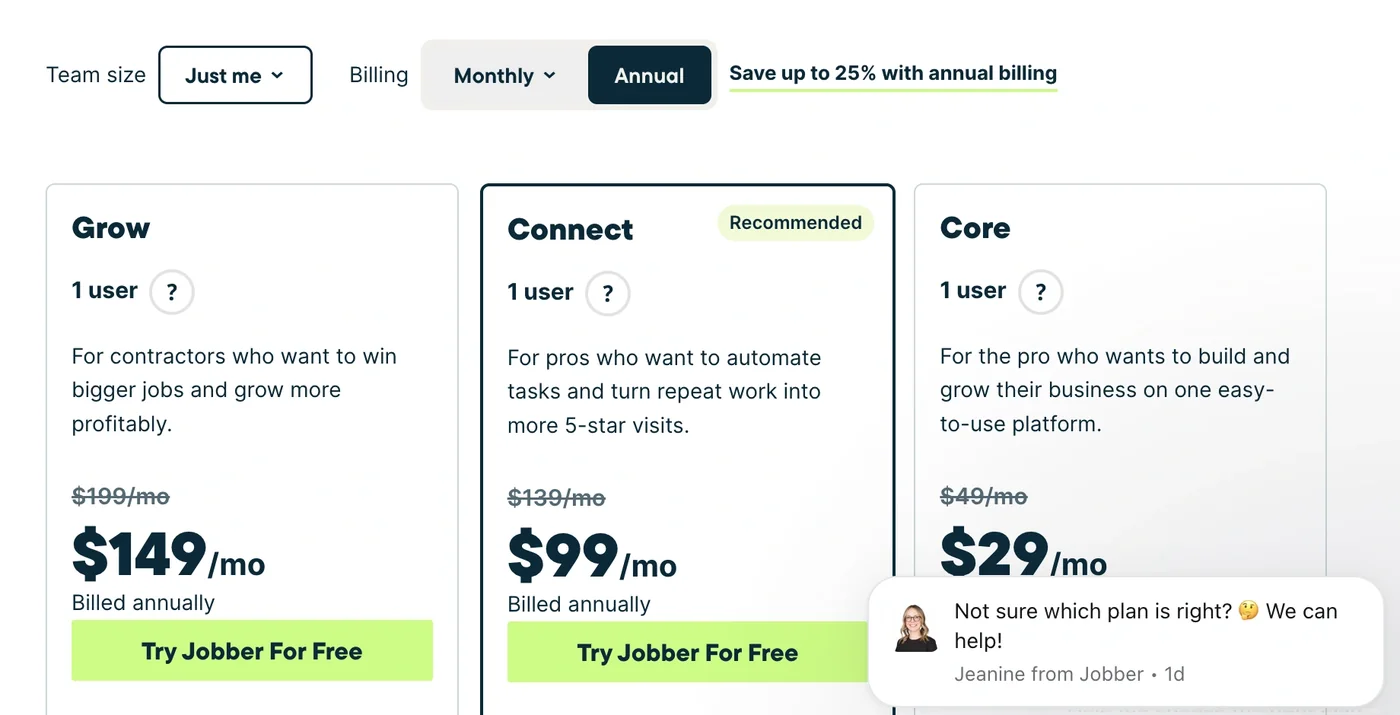 Aug 2, 2026
 Tech Stack
Best Plumbing Software in 2026: Ten Ranked Across Four Classes
A plumbing company’s work runs through four classes of software that do not substitute for each other, and it only buys two of them. Ten products, each with a published price or an explicit statement that the vendor publishes none.
Read Article Jul 31, 2026
 Tech Stack
NiceJob vs Birdeye 2026: Pricing, Contracts and Review Gating
One of these vendors puts its price on the page and its cancellation terms in writing. The other puts a form in front of both, and the complaint record is where its contract length shows up.
Read Article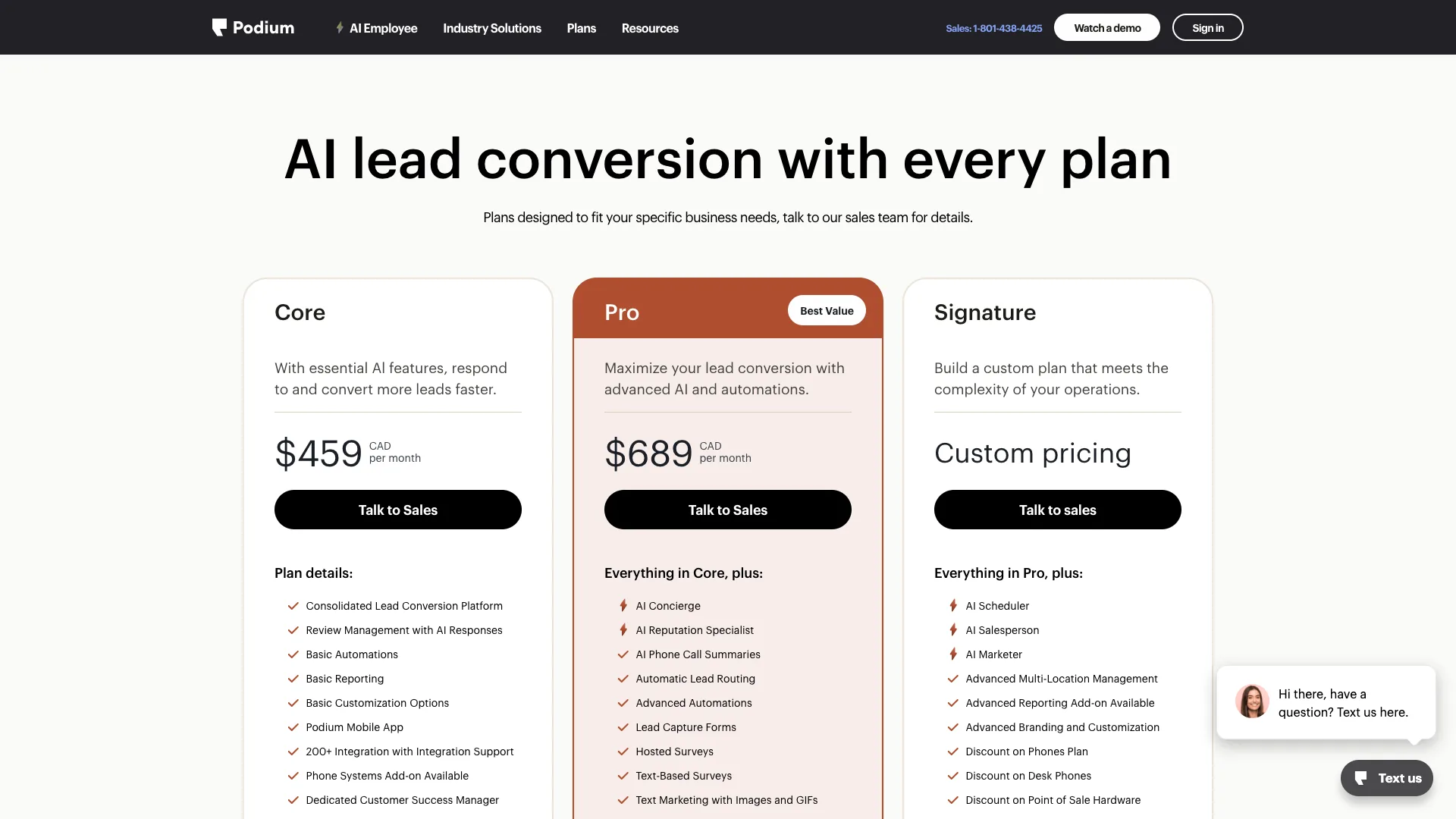 Jul 31, 2026
 Tech Stack
Podium vs Birdeye 2026: Pricing, Contracts and Review Gating
Only one of these two will tell you what it costs before a sales call, and even that number carries a carve-out aimed squarely at trade contractors.
Read Article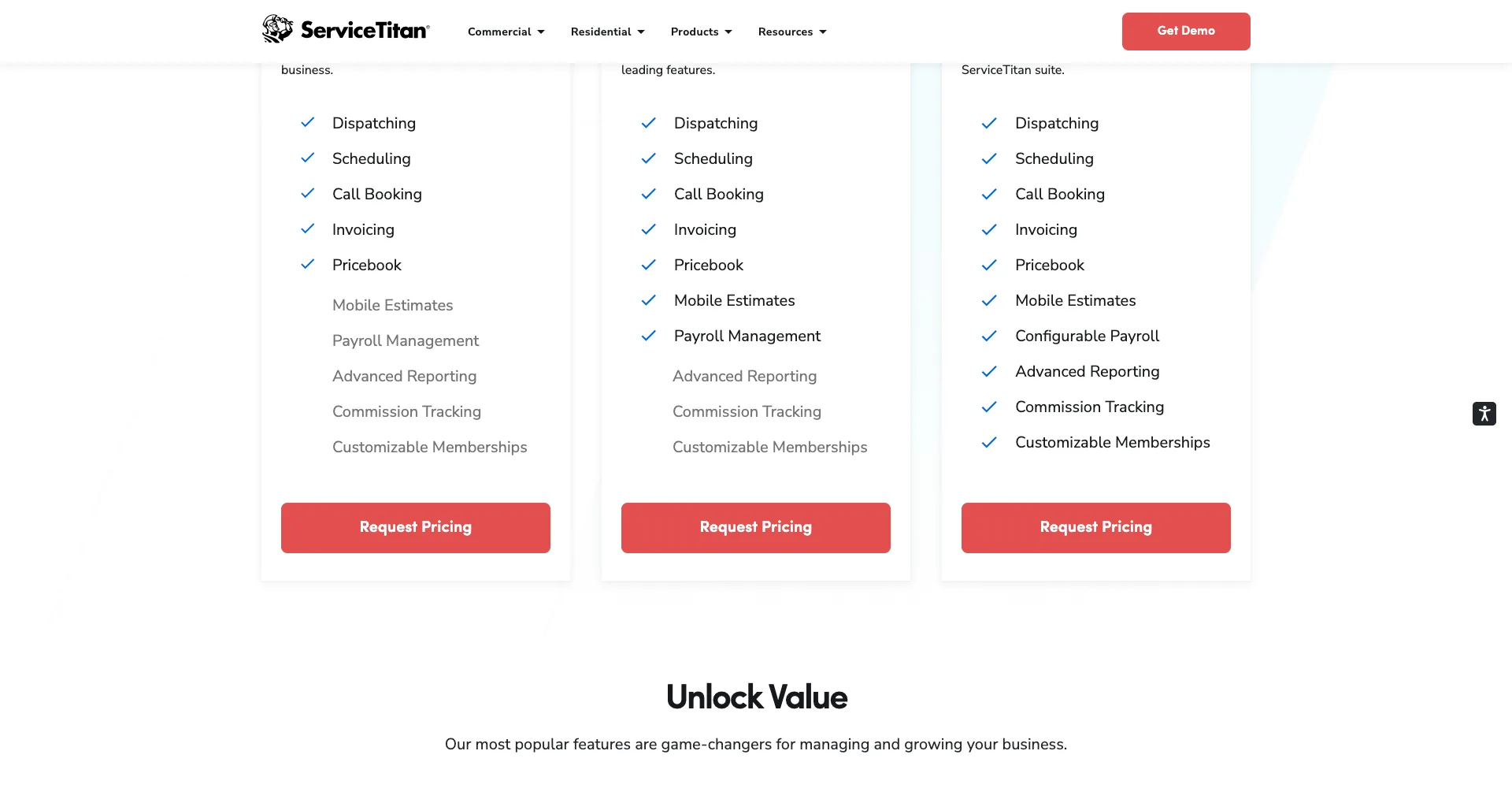 Jul 31, 2026
 Tech Stack
Best Electrical Contractor Software 2026: 11 Ranked and Priced
An electrical contracting business makes two software purchases that do not substitute for each other, and every roundup answering this query covers only one of them. Eleven platforms, with a published price or an explicit statement that the vendor publishes none.
Read Article Jul 31, 2026
 Tech Stack
Best HVAC Software in 2026: Eleven Ranked Across Three Classes
An HVAC contracting business buys across three classes of software that do not substitute for each other, and every roundup answering this query covers only one of them. Eleven products, each with a published price or an explicit statement that the vendor publishes none.
Read Article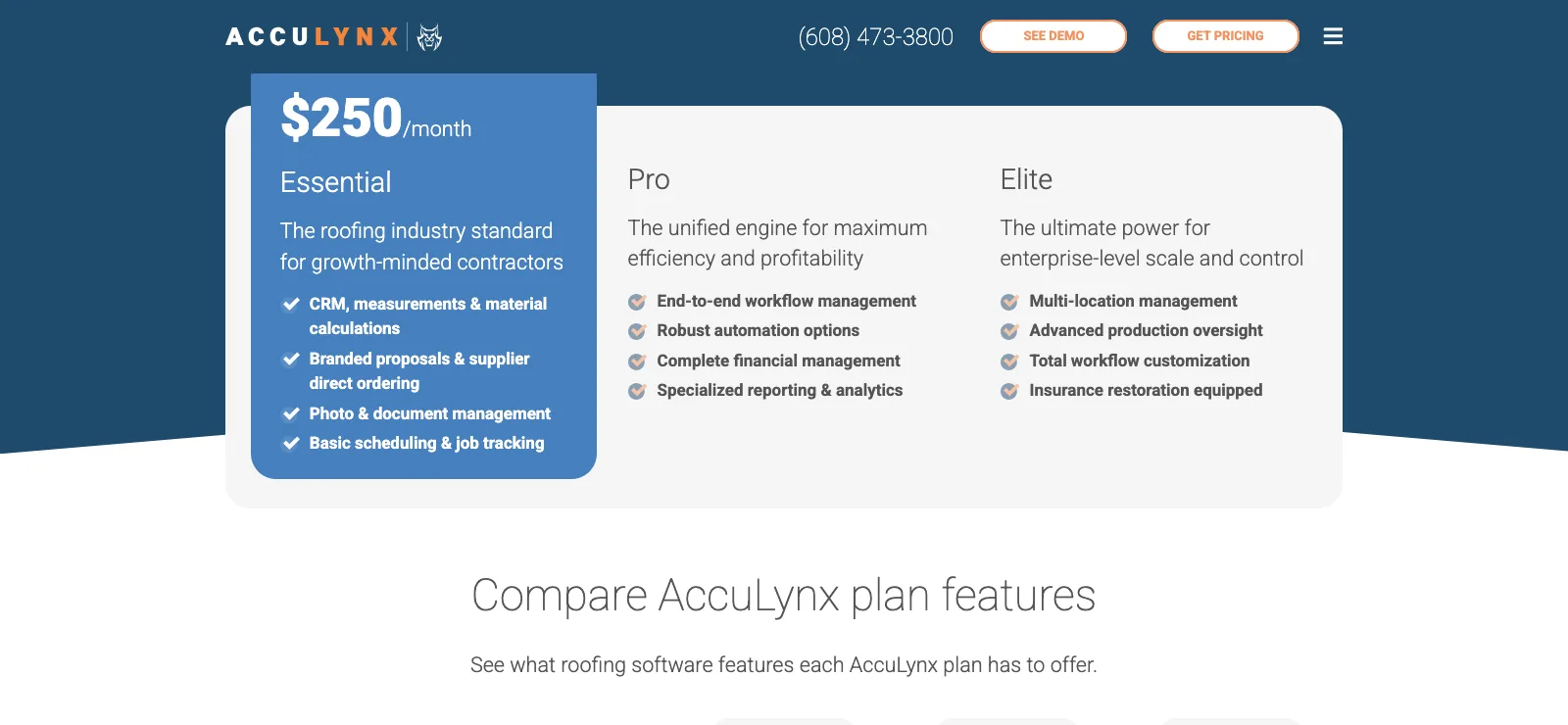 Jul 30, 2026
 Tech Stack
AccuLynx Pricing 2026: The Real Cost of a Quote-Gated Plan
One published figure, two blank plan cards, and a contract that says things the pricing page does not. A line-by-line breakdown of what AccuLynx really bills.
Read Article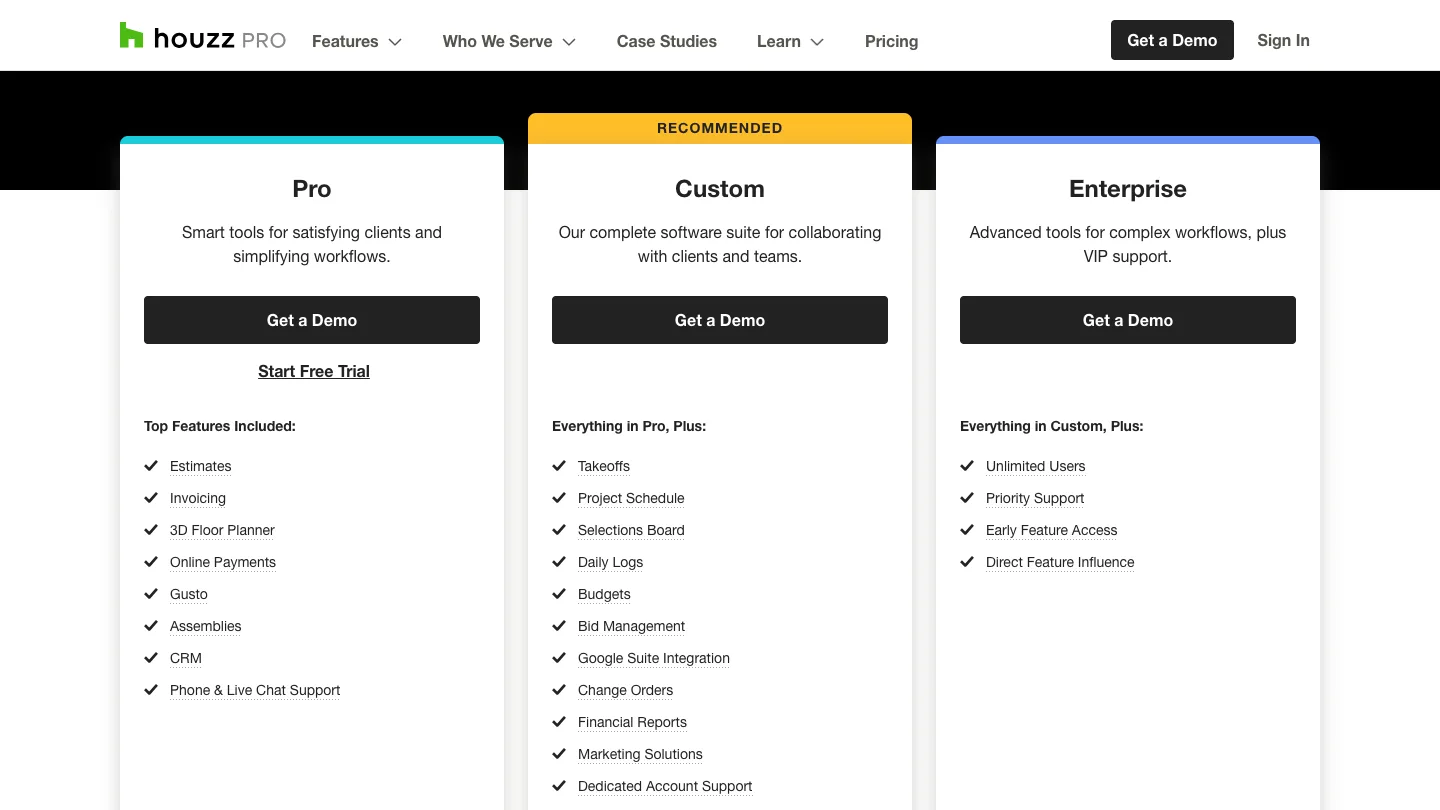 Jul 30, 2026
 Tech Stack
Houzz Pro Canada Review 2026: Pricing and Alternatives
Houzz Pro serves different pricing renderings. What Canadian buyers see, how GST/HST and payments work, what Custom gates, and what the annual contract commits you to.
Read Article Jul 30, 2026
 Tech Stack
JobNimbus Pricing in 2026: What the Quote Does Not Cover
JobNimbus prints no figure on any of its four plans. So the only rate you can read before a sales call is the payments meter, and it is the biggest line on the bill.
Read Article Jul 30, 2026
 Tech Stack
JobNimbus Review 2026: Pricing, Pros, Cons and Alternatives
JobNimbus rates 4.6 on Capterra and orders material straight from ABC Supply and SRS. But it publishes no price, and its supplement route carries a note.
Read Article Jul 30, 2026
 Tech Stack
BuildOps Review 2026: Pricing, Contract Terms and Alternatives
BuildOps runs commercial service and projects on one platform, and publishes no pricing at all. The billing unit, the 30-day data-export window, and who it suits.
Read Article Jul 30, 2026
 Tech Stack
FieldPulse Review 2026: Pricing, Pros, Cons and Alternatives
FieldPulse rates 4.6 on Capterra and is the platform contractors name when they leave a bigger system. But it publishes no price, and the contract runs a year.
Read Article Jul 30, 2026
 Tech Stack
Service Fusion Review 2026: Pricing, Contract and Alternatives
Service Fusion bills flat per company with unlimited users, which is the best structural deal in field service software. The published plans, the contract behind the no-contract line, and the app score every other review gets wrong.
Read Article Jul 30, 2026
 Tech Stack
Knowify Review 2026: Pricing, Job Costing and Alternatives
Knowify rates 4.5 on Capterra and its weakest sub-score is features. What the $99 Core plan withholds, which way the QuickBooks sync really runs, and who should not buy it.
Read Article Jul 29, 2026
 Tech Stack
AccuLynx Review 2026: Pricing, Tier Gating, Alternatives
AccuLynx rates 4.6 across 846 reviews and now publishes an entry price. What that price omits, which tier holds the insurance workflow, and who should skip it.
Read Article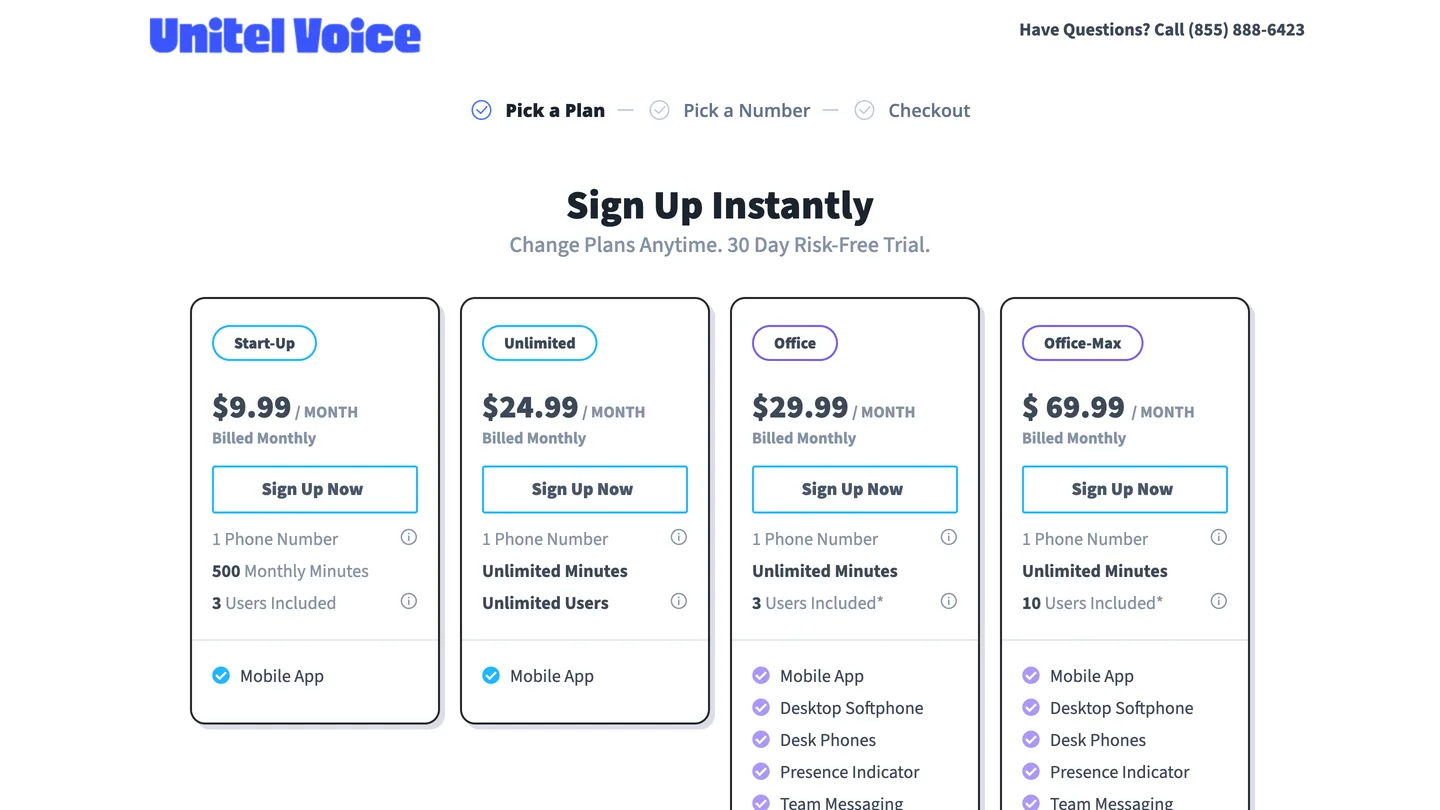 Jul 29, 2026
 Tech Stack
Unitel Voice Review 2026: Pricing, Features and Alternatives
Unitel Voice rates 4.6 on Capterra and gives a one-truck shop a business number for $9.99 a month. The published plans, the cost per call, and what it won't do.
Read Article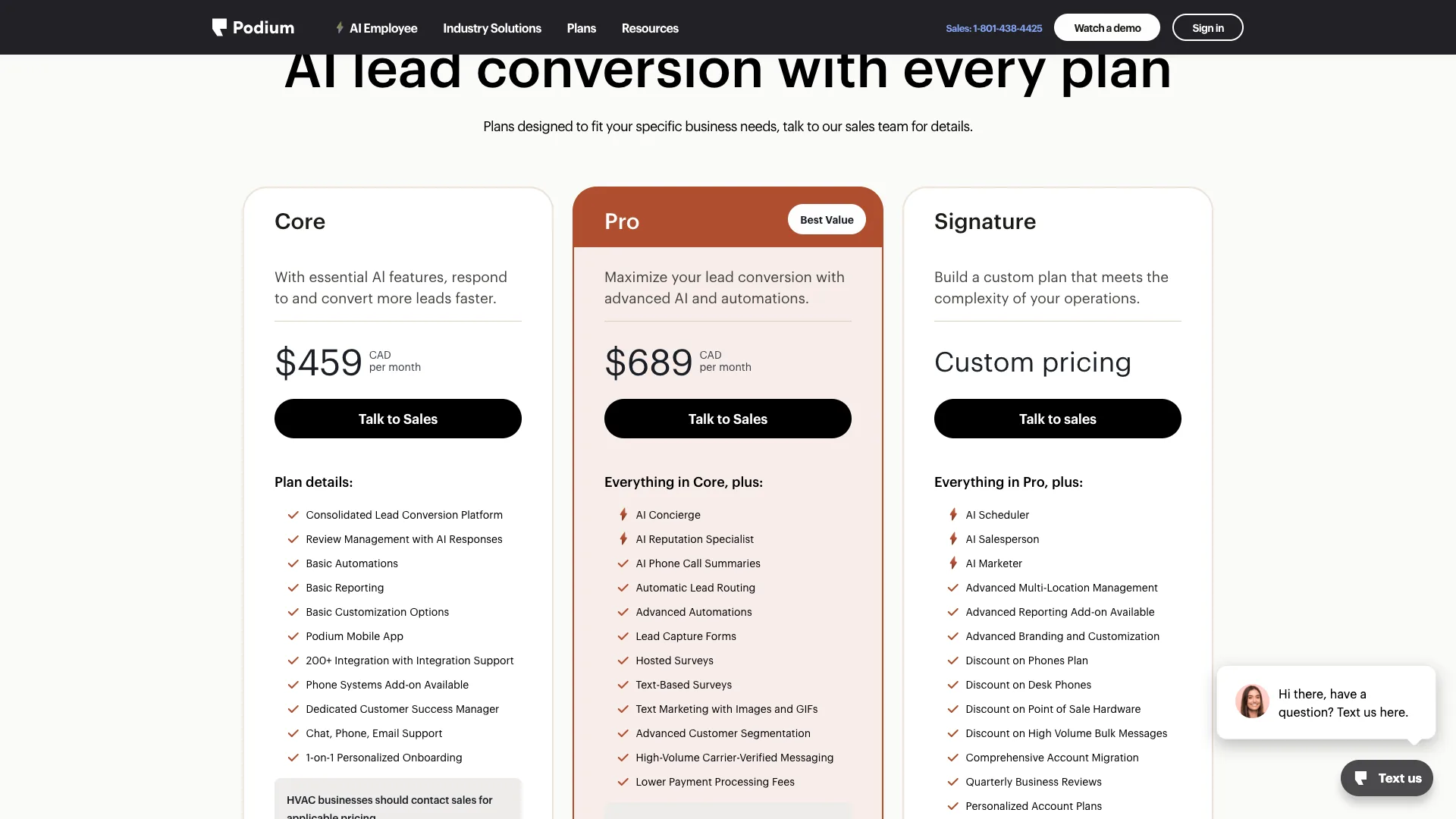 Jul 29, 2026
 Tech Stack
NiceJob vs Podium 2026: Pricing, Contracts and Review Gating
Both vendors print a price, at very different scale and in different currencies. The gap that matters is what Podium will not print: the billing unit, and whether a trade shop gets the number on the page.
Read Article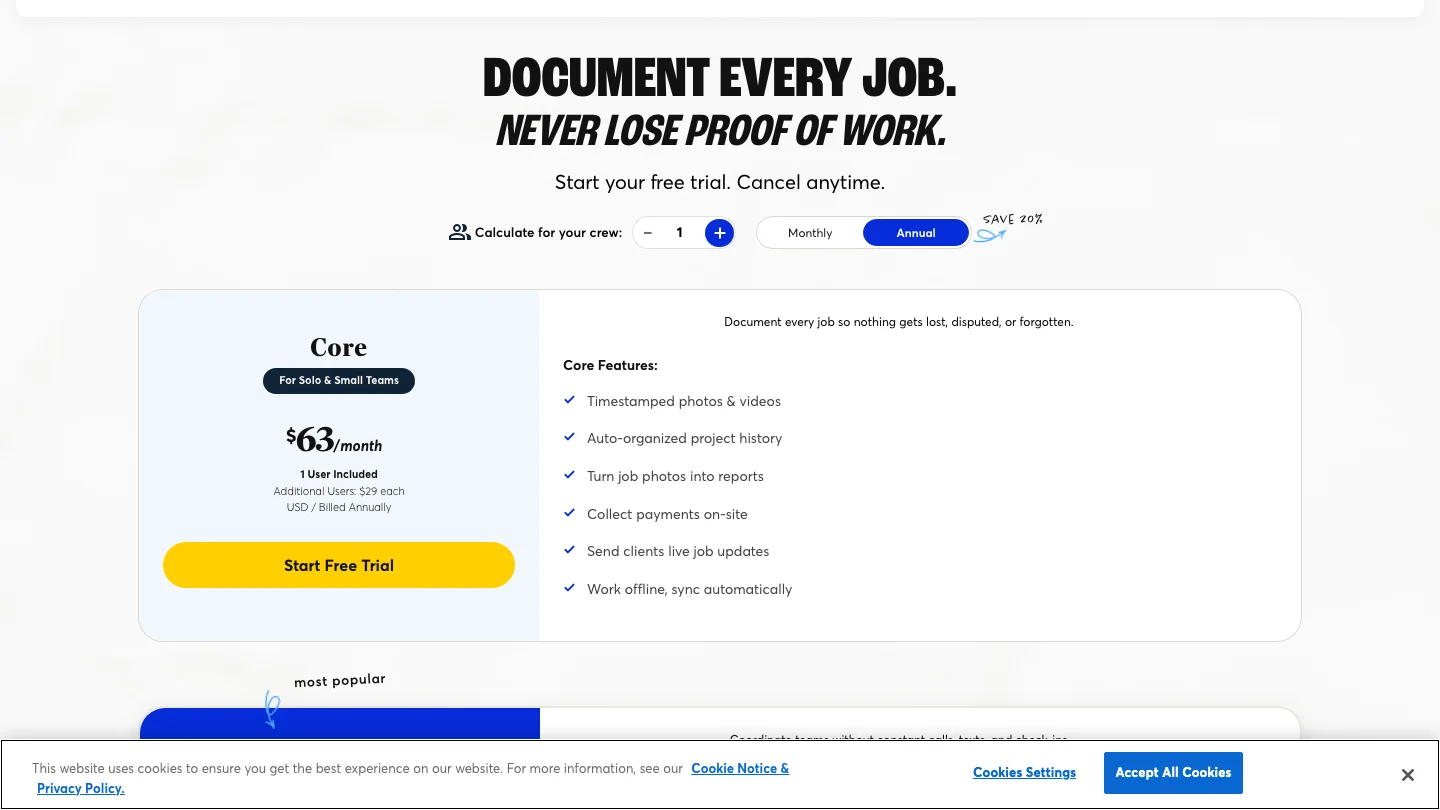 Jul 28, 2026
 Tech Stack
CompanyCam Review 2026: Pricing, Pros, Cons and Alternatives
Every page ranking for CompanyCam still quotes a per-user price the vendor no longer charges. Here are the real plans, the seat math, and who should skip it.
Read Article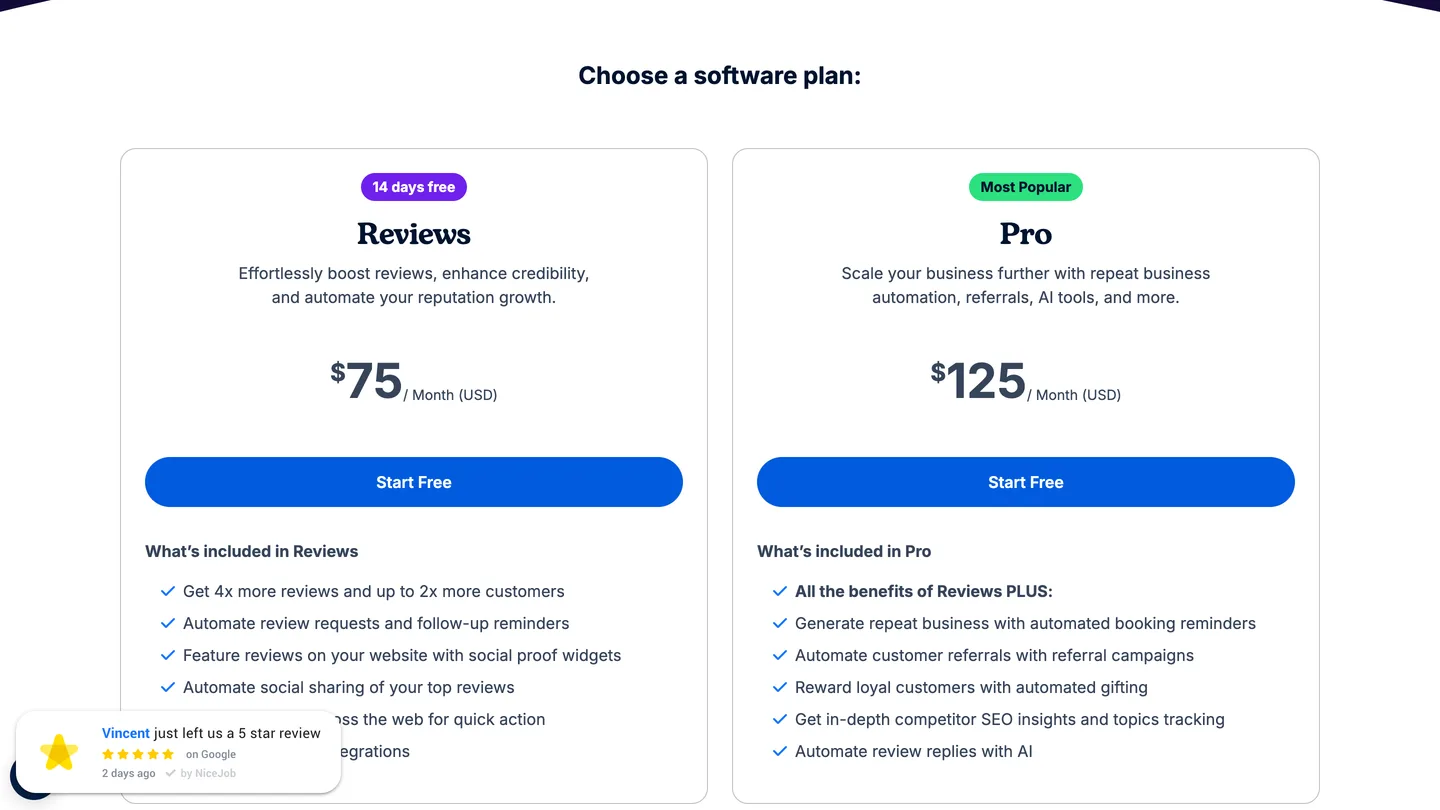 Jul 28, 2026
 Tech Stack
NiceJob Review 2026: Pricing, Pros, Cons and Alternatives
NiceJob rates 4.9 on Capterra and refuses to gate negative reviews. Real plan pricing, the active-customer threshold nobody publishes, and who should skip it.
Read Article Jul 27, 2026
 Tech Stack
Buildertrend Review 2026: Pricing, Limits and Alternatives
Buildertrend rates 4.5 across 2,486 Capterra reviews and quotes against your revenue rather than your seat count. The workflows, the export problem, the alternatives.
Read Article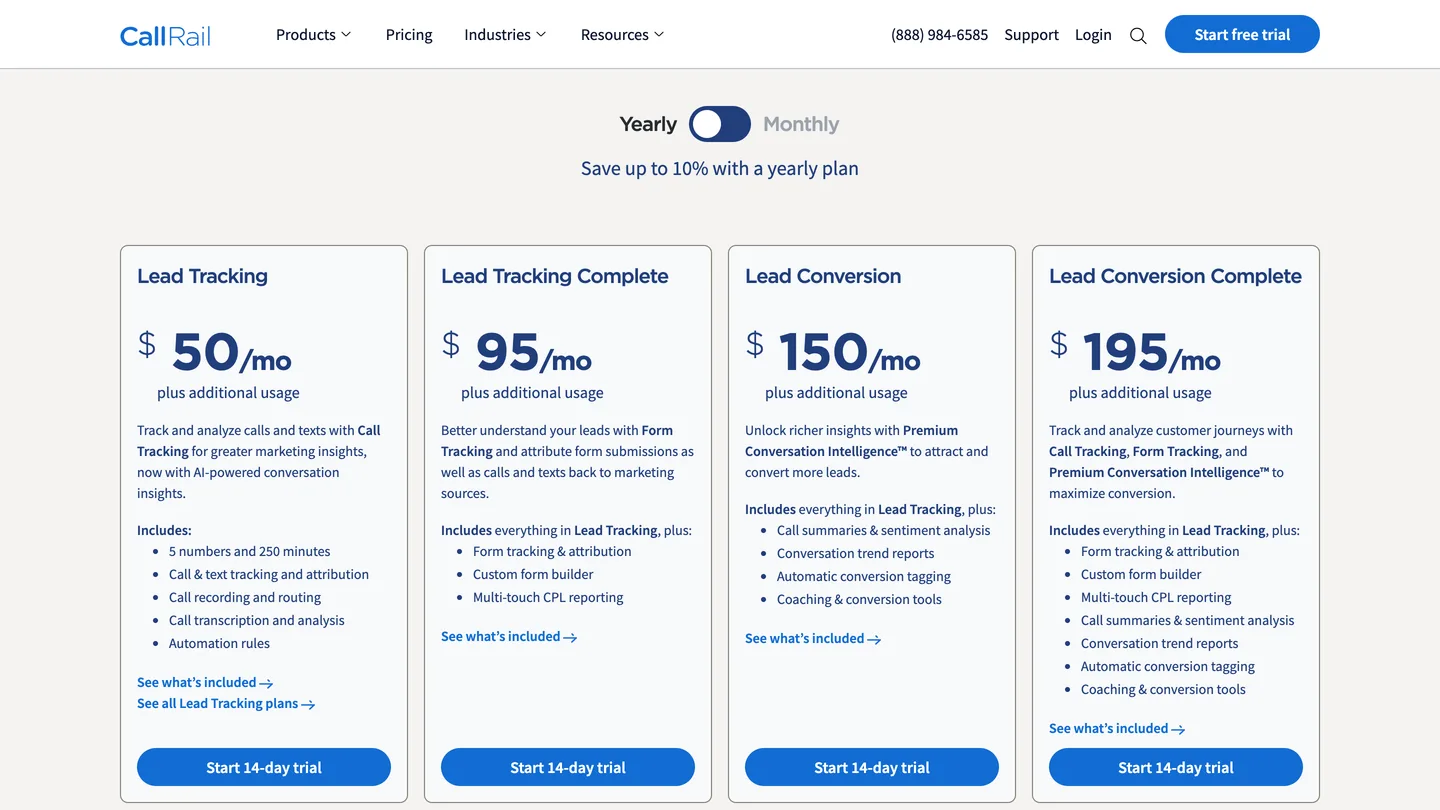 Jul 27, 2026
 Tech Stack
CallRail Review 2026: Pricing, Pros, Cons and Alternatives
CallRail rates 4.5 on Capterra, and its tracking numbers port out free. But the two usage rates that decide your real bill are the two it does not print.
Read Article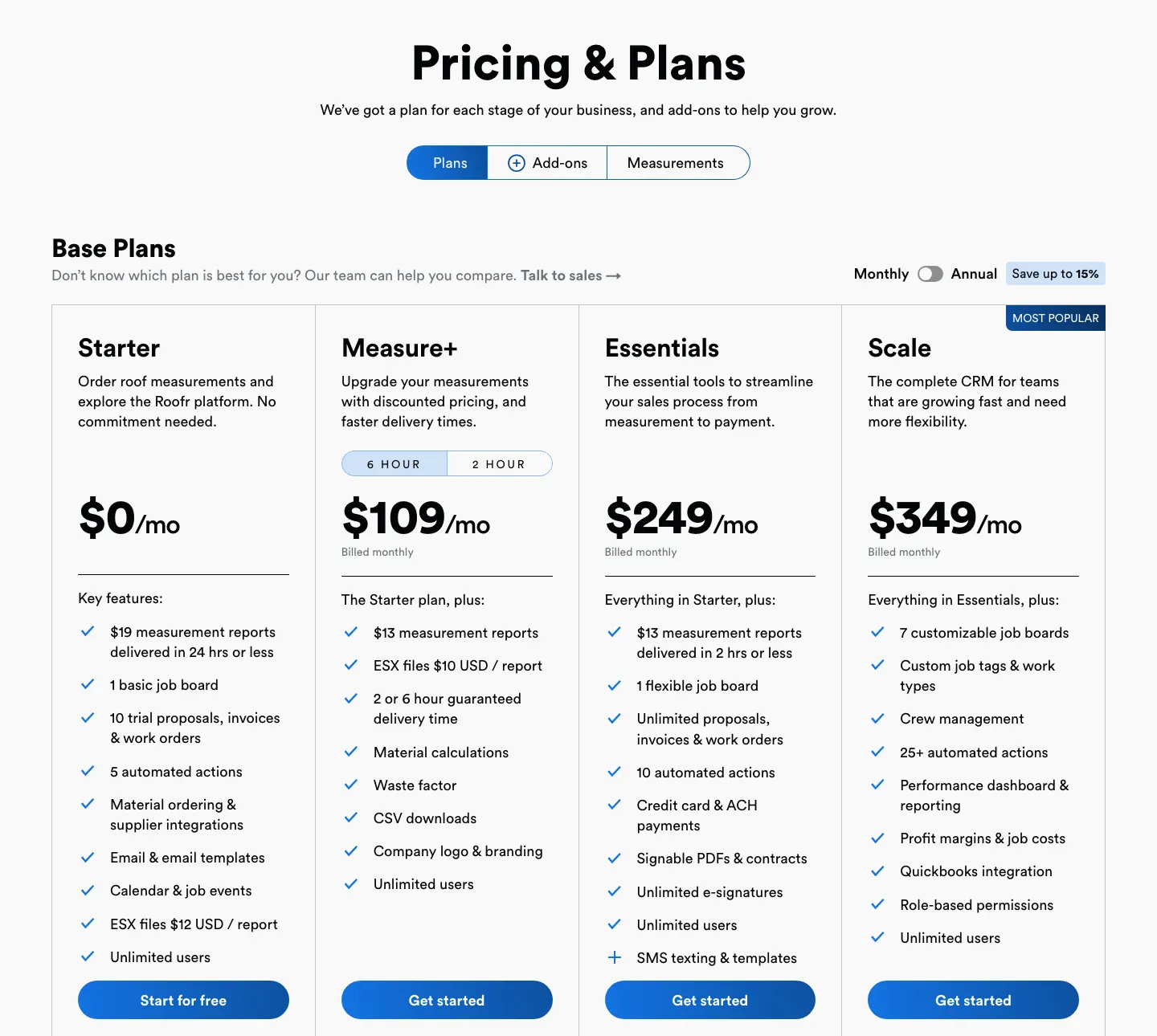 Jul 27, 2026
 Tech Stack
Roofr Review 2026: Pricing, Pros, Cons and Alternatives
Roofr rates 4.6 on Capterra and sells $13 measurement reports against a market charging triple. But it will not import a report from anywhere else.
Read Article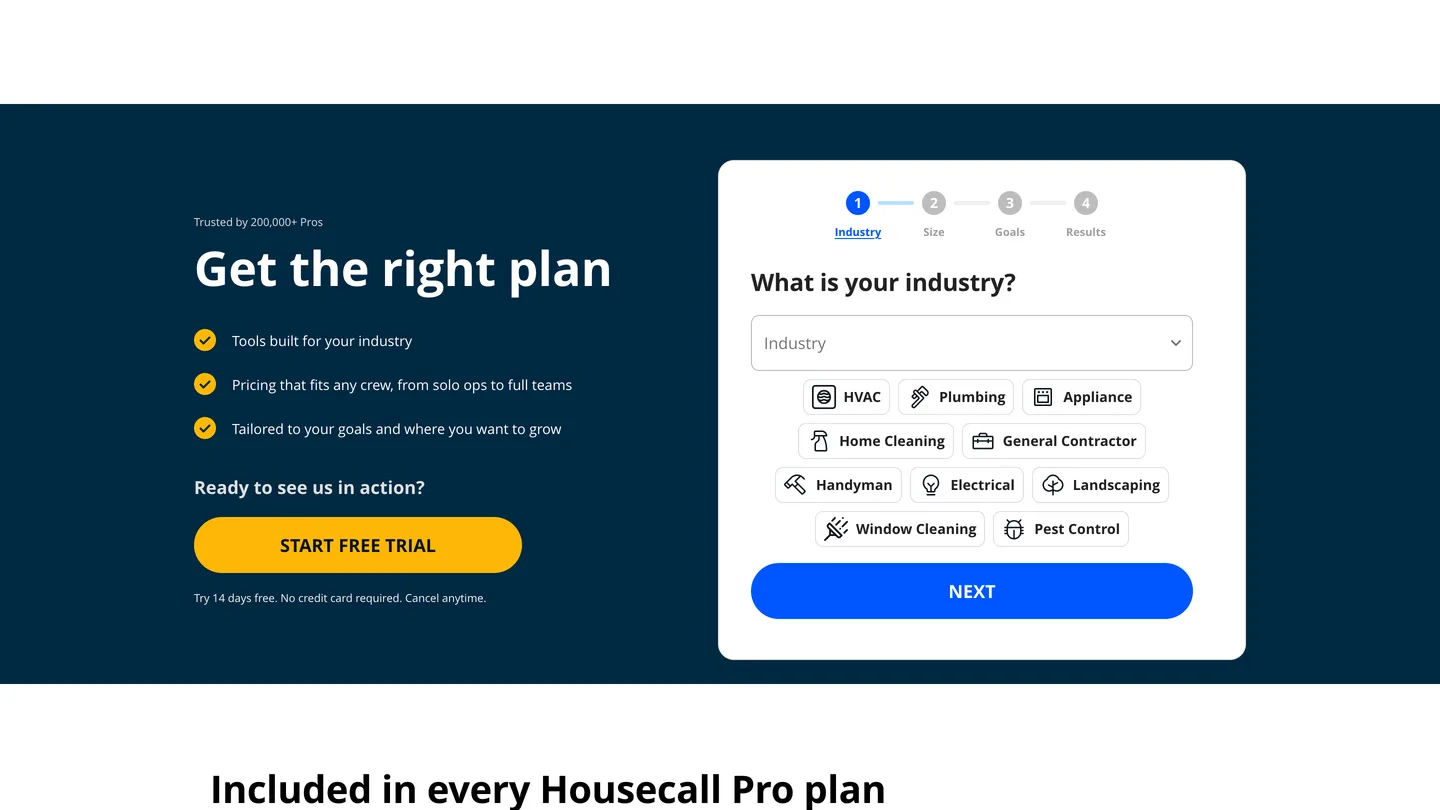 Jul 25, 2026
 Tech Stack
Housecall Pro Review 2026: Pricing, Pros, Cons, Alternatives
Housecall Pro has the shortest learning curve in the category and the widest review spread. Real pricing, the Instapay math, and the migration trap to plan around.
Read Article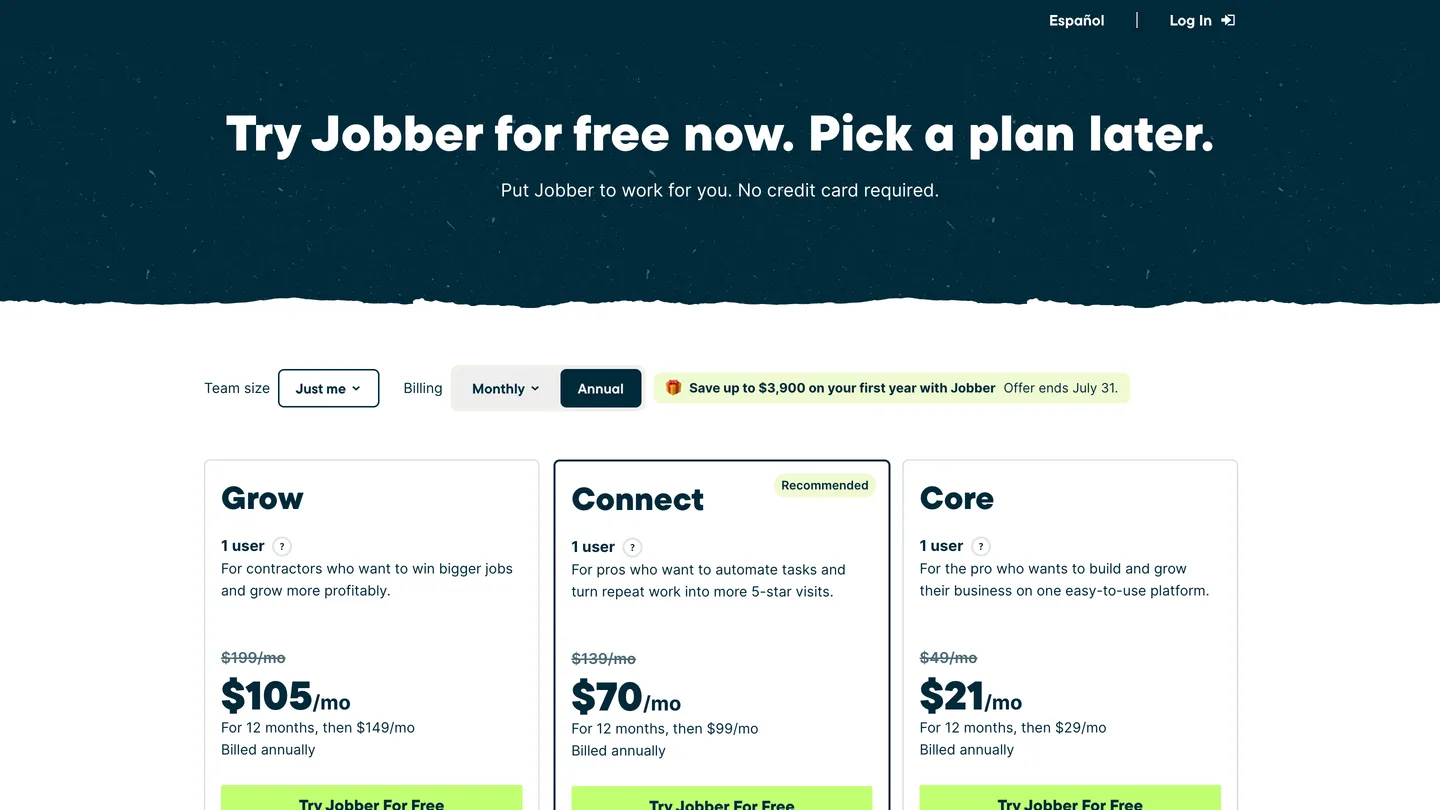 Jul 24, 2026
 Tech Stack
Jobber Review 2026: Pricing, Pros, Cons and Alternatives
Jobber rates 4.6 on Capterra with the best mobile app in the category. Real plan pricing, the feature gating that changes your entry price, and who it suits.
Read Article Jul 23, 2026
 Tech Stack
ServiceTitan Review 2026: Pricing, Pros, Cons, Alternatives
ServiceTitan rates 4.3 on Capterra but its weakest score is value for money. Real reported pricing, the 12-month contract, the exit fees, and who it actually suits.
Read Article Jun 3, 2026
 Tech Stack
HVAC Online Scheduling: The 43% Losing After-Hours Bookings
HVAC leads every trade on online booking at just 56.7%, which still leaves 43% of sites forcing an after-hours customer to wait for a business-hours phone call.
Read Article