Laser Products LT-2D3D Review 2026: Pricing, Pros, Cons, Alternatives
Laser Products LT-2D3D starts at $54. What each tier gates, the 8 limitations reviewers name, and 5 alternatives with published prices.
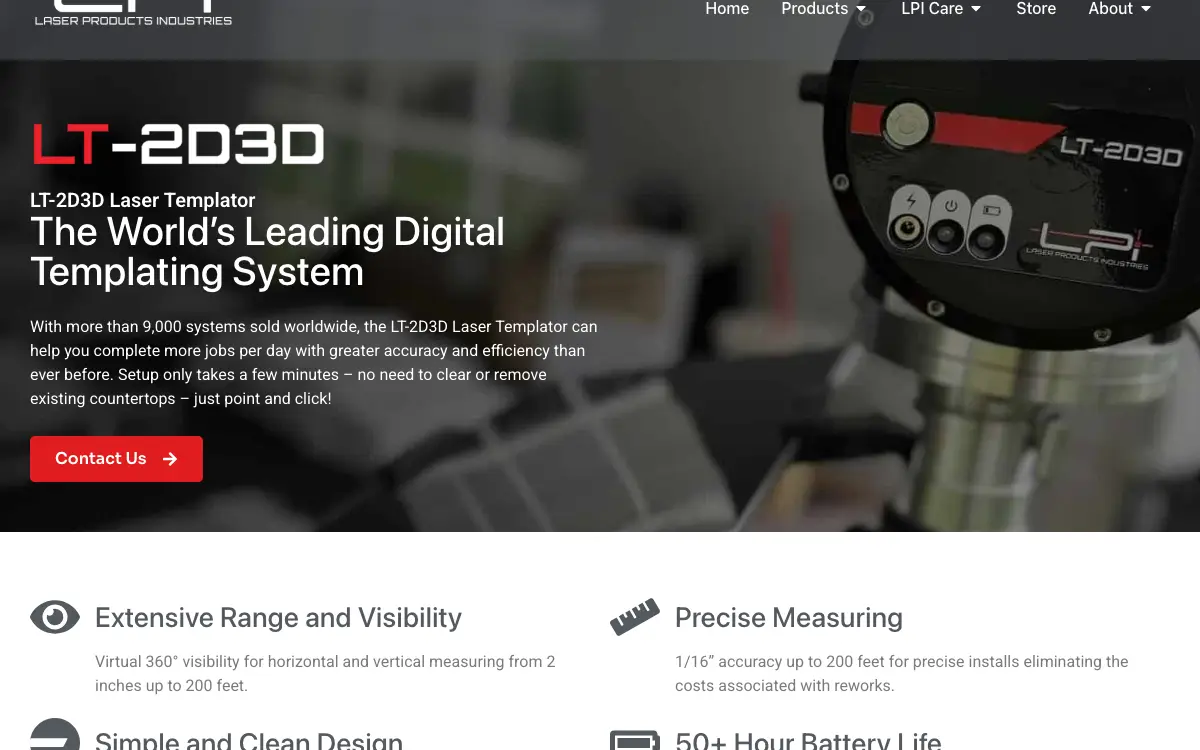
Page at a glance
Laser Products LT-2D3D is A laser templating rig you buy outright, wrapped in a per-seat software subscription you then rent forever, priced so the software bill outruns the hardware inside four years. It starts at $54 per user, per month, billed annually. Licensing is per named Authorized User, not per device and not per shop. The licence agreement defines Authorized Users as employees and independent contractors who agree to the terms, and limits the grant to 'a single authorized log-in for, as applicable, the display and retrieval of the Cloud Software ... or the installation and use of the On-Premise Software ... for each Authorized User'. Password sharing is contractually prohibited and LPI reserves an audit right: if its records show more Authorized Users than the customer paid for, the customer owes the shortfall retroactively, and if the underpayment exceeds five percent of fees for the period the customer also pays LPI's audit costs. There are two licence types. Universal gives full access to LT3Raptor and LPI Cloud and is aimed at templators, programmers and managers. Cloud gives full LPI Cloud access but view-only access in LT3Raptor and is aimed at owners, schedulers, installers and front office or sales staff. Roles (Admin, Accounting, Limited) sit on top of licences and restrict function, not price. It fits Countertop and stone fabrication shops running roughly 2 to 20 people who template residential kitchen and bath work and already own or are buying a CNC saw or router from one of the 19 brands LPI names. It's the wrong buy for A solo installer or a two-person shop templating fewer than two kitchens a week, because The economics only work on volume. And Jimmy Roth's published payback claim of two and a half to three months comes from a shop running three lasers, and LPI's own financing examples put monthly payments between $500 and $2,250 before a single software seat is licensed. So at low job counts a shop is carrying a hardware note plus $54 per month per templator for a rig that sits in a case most of the week. Alternatives that publish their prices are Moraware Systemize (with CounterGo) from $120, LPI LT3Essential (one-time licence, same hardware) from $3,500. 14 priced tiers, eight evidenced gaps and five alternatives, two of which publish a figure.
Whether Laser Products LT-2D3D is worth it
Laser Products LT-2D3D earns its money with Countertop and stone fabrication shops running roughly 2 to 20 people who template residential kitchen and bath work and already own or are buying a CNC saw or router from one of the 19 brands LPI names. If that's you, it does the job. The sections below are the parts worth checking before you sign. But the fit is narrower than the marketing suggests, and the price isn't the whole cost.
It starts at $54. And pricing was verified on 7 August 2026, so you can check every figure below in a browser tab.
| Pricing model | Published tiers |
|---|---|
| Entry price | $54 |
| Users | Licensing is per named Authorized User, not per device and not per shop. The licence agree |
| Ownership | Independent |
| Best fit | Countertop and stone fabrication shops running roughly 2 to 20 people who template residential kitchen and bath work and already own or are buying a CNC saw or router from one of the 19 brands LPI names. |
| Accounting sync | QuickBooks (none), Moraware (Systemize / CounterGo) (one-way) |
What works
- The pitch is that the DXF leaves the jobsite before the templator does
- Nineteen CNC brands are named on the compatibility page, counted from the logo wall
- Nesting is the feature LPI's own customers quantify, and it's subscription-only
- StoneTag is free as software and expensive as consumables
- Buying the newer 5X laser still doesn't turn on its headline features without the subscription
What does not
- Every review reachable anywhere is one LPI or its distributor chose to print
- The software rent eventually costs more than the laser
- LPI has published a formal refusal to offer an open API
- The software won't drive anyone else's laser, and the standalone tier won't drive a laser at all
- LT1 dies on 31 March 2027, and the replacement is a subscription
Laser Products LT-2D3D is A laser templating rig you buy outright, wrapped in a per-seat software subscription you then rent forever, priced so the software bill outruns the hardware inside four years. It sells to Kitchen and bath contractors, and the shape of the product follows from that: LPI's stated workflow is measure, detail, draw, then email a CNC-ready file straight from the site so the shop can order material or quote while the templator drives to the next job. LPI's vice president of sales and marketing Rich Katzmann described it as a real-time exchange of data replacing 'the old manual way using sticks and glue'. And on the customer side, Clayton Steffen of Mette's Custom Countertops reports the same shape of outcome: files arriving saw-ready and faster from the field than from the shop.
Laser Products LT-2D3D fit, and where it stops
It fits Countertop and stone fabrication shops running roughly 2 to 20 people who template residential kitchen and bath work and already own or are buying a CNC saw or router from one of the 19 brands LPI names. That's the half most reviews print. Here's the other half, which is the one worth your time.
Don't buy it if you're A solo installer or a two-person shop templating fewer than two kitchens a week. The economics only work on volume. And Jimmy Roth's published payback claim of two and a half to three months comes from a shop running three lasers, and LPI's own financing examples put monthly payments between $500 and $2,250 before a single software seat is licensed. So at low job counts a shop is carrying a hardware note plus $54 per month per templator for a rig that sits in a case most of the week. Look at Manual templating plus a Leica DISTO and a laptop, until job volume justifies the rig instead.
Don't buy it if you're A shop whose plan depends on templating data flowing into estimating, CRM or accounting automatically. LPI has published a formal, dated refusal to offer open API access to LPI Cloud, and the only named business-software integration anywhere in its material is Moraware, sold as a paid add-on on the full LT3Raptor tier. And there's no QuickBooks, Xero, Sage or Zapier path. Look at Moraware Systemize as the system of record, with templating treated as a file drop instead.
Don't buy it if you're A shop that already standardized on Proliner or another non-LPI measuring device. LPI states 'LT3Rpator will not connect to any 3rd party, non-LPI laser measuring or digital templating device.' And the Standalone tier that would let you use the drawing tools costs $120 per user per month, more than double the $54 rate, carries a $1,000 setup fee, and explicitly excludes device connection. Look at Prodim Proliner with its own software stack instead.
Don't buy it if you're A Mac or iPad shop, or one on a locked-down managed Windows fleet with no IT support. LT3Raptor is a Windows UWP application with a recommended floor of an Intel i5 and 8GB RAM, and its single most-read support article is a VPN failure requiring a domain allow list and an administrator-run loopback exemption. And there's no non-Windows client. Look at A templating vendor with a tablet-native client instead.
What Laser Products LT-2D3D costs
So Laser Products LT-2D3D shows what it charges. Below is each tier, what it gates, and the costs that sit outside the subscription entirely.
| Tier | Price | Billing unit | What it unlocks |
|---|---|---|---|
| Universal User License, 1 to 4 users, billed yearly | $54 | per user, per month, billed annually | All functions on the LT3Raptor platform and the LPI Cloud web application, It requires a laser templator purchased from LPI or an authorized distributor |
| Universal User License, 5 to 10 users, billed yearly | $47 | per user, per month, billed annually | Volume band, 5 to 10 seats |
| Universal User License, 11 to 19 users, billed yearly | $40 | per user, per month, billed annually | Volume band, 11 to 19 seats, 20+ users is 'Call for Enterprise Pricing' |
| Universal User License, 1 to 4 users, billed monthly | $60 | per user, per month, billed monthly | Monthly billing carries the highest per-seat rate in every band |
| Universal User License, 5 to 10 users, billed monthly | $55 | per user, per month, billed monthly | Volume band, 5 to 10 seats |
| Universal User License, 11 to 19 users, billed monthly | $50 | per user, per month, billed monthly | Volume band, 11 to 19 seats |
| Cloud User License, 1 to 4 users, billed yearly | $32 | per user, per month, billed annually | View-only access in the LT3Raptor software application, Full access only in the LPI Cloud web application, Intended for owners, schedulers, installers and front office or sales staff |
| Cloud User License, 5 to 10 users, billed yearly | $27 | per user, per month, billed annually | View-only in LT3Raptor |
| Cloud User License, 11 to 19 users, billed yearly | $22 | per user, per month, billed annually | View-only in LT3Raptor, 20+ users is 'Call for Enterprise Pricing' |
| Cloud User License, 1 to 4 users, billed monthly | $35 | per user, per month, billed monthly | View-only in LT3Raptor |
| LT3Essential, one-time licence, MSRP | $3,500 | per account, one-time purchase | Omits Agreements, Basic CNC saw pages, Job photos and the Moraware integration, No LPI Cloud job sync, no StoneTag, no nesting, no template intelligence, Additional licences are $950 each |
| LT3Essential, one-time licence, existing-customer price | $1,950 | per account, one-time purchase | Buyer must have purchased the LT-2D3D or 5X directly from LPI or an authorized distributor, Footnote reads 'One time purchase price for existing customers ($3,5000 MSRP)', a typo for $3,500 |
| LT3Raptor Standalone | $120 | per user, per month ($1,440 per year) | For companies that did not buy their laser from LPI or an authorized distributor, Device connection is explicitly NOT included, so it edits but cannot drive a laser, Setup fee is $1,000 rather than $500 |
| StoneTag setup package (optional) | $3,150 | per account, one-time purchase | It includes colour printer, extra ink set, 4 rolls of tags (qty. 1,000) and setup support, Label rolls then run $45.00 to $58.00 per roll depending on volume and auto-renewal, Restricted to US customers who bought a laser templator from LPI or an authorized distributor |
Licensing is per named Authorized User, not per device and not per shop. The licence agreement defines Authorized Users as employees and independent contractors who agree to the terms, and limits the grant to 'a single authorized log-in for, as applicable, the display and retrieval of the Cloud Software ... or the installation and use of the On-Premise Software ... for each Authorized User'. Password sharing is contractually prohibited and LPI reserves an audit right: if its records show more Authorized Users than the customer paid for, the customer owes the shortfall retroactively, and if the underpayment exceeds five percent of fees for the period the customer also pays LPI's audit costs. There are two licence types. Universal gives full access to LT3Raptor and LPI Cloud and is aimed at templators, programmers and managers. Cloud gives full LPI Cloud access but view-only access in LT3Raptor and is aimed at owners, schedulers, installers and front office or sales staff. Roles (Admin, Accounting, Limited) sit on top of licences and restrict function, not price.
There is a discount for paying annually up front: And an annual prepay discount tells you an annual commitment exists, which is worth knowing before anyone mentions a term length out loud.
The Laser Products LT-2D3D costs that show up later
Payment processing. Ask whether card payments carry a surcharge, whether ACH is available, and what happens on a failed card. And the licence agreement's only stated payment mechanic is a late-payment penalty of 1.5 percent per month on any undisputed balance unpaid 30 days after invoice date, so ask what triggers that clock on a subscription seat.
Implementation and onboarding. A one-time initial setup fee of $500 is required, and LPI states it 'includes account setup in LT3Raptor and LPI Cloud, online training, and access to our LMS.' The same fee is $1,000 on the LT3Raptor Standalone path for shops that did not buy their laser from LPI. LPI also sells on-site training: the Platinum warranty includes initial on-site training and a 25 percent discount on repeat or follow-up on-site training, which means repeat on-site training is a billable event.
Minimum term. The agreement sets no universal minimum term in its own text: 'The term of each Order Form will be set forth on such Order Form.' In practice the published annual rates ($54, $47, $40 and the Cloud equivalents) are labelled 'Billed Yearly', so taking the advertised price commits a shop to a 12-month order form. The monthly-billed rates are 10 to 20 percent higher and buy the shorter term.
Getting out. The termination rights are asymmetric. LPI 'may terminate this Agreement for convenience and without cause by giving thirty (30) days' prior written notice', with a pro-rata refund of prepaid fees. The customer gets no matching convenience right. A customer can only terminate on LPI's uncured material breach after 30 days' notice, on a bankruptcy or receivership event, or by rejecting an amendment that 'materially and adversely affects Client's rights' inside a 30-day notice window, in which case prepaid fees are refunded pro-rata. Absent one of those, a shop that stops needing seats waits out the term.
Auto-renewal. Order forms 'will automatically renew for subsequent like terms unless either Party gives the other written notice of its intention not to renew no later than thirty (30) days prior to the end of the then-current term.' The hardware warranties auto-renew on the same pattern: 'LPI Care extended warranties automatically renew at the end of their term for the same length of coverage unless a cancellation request is submitted in advance.' A shop therefore carries two independent renewal clocks, one on software and one on warranty, and the warranty wording does not name a notice period at all.
Modules sold separately. , , , , . The Laser Products LT-2D3D figure worth writing down is the one with your day-one modules already in it, not the headline tier.
Third-party services you will also pay for. , , , , . These are not on Laser Products LT-2D3D's invoice, and they are still part of what this decision costs you every month.
"Third-party reporting puts Laser Products LT-2D3D at $18,500 to $19,400 total financed outlay, derived from LPI's own six payment examples, reported 2026-08-07."
LPI's own financing page publishes six worked monthly-payment examples for buying the LT-2D3D. With $5,000 down the estimated payments are $2,250 per month over 6 months, $1,150 per month over 12 months and $800 per month over 18 months. With $10,000 down they are $1,420, $730 and $500 for the same terms. LPI states these are estimates on approved credit through its partner JP Financial. Those figures are rendered by JavaScript counters (the static HTML shows placeholder '$1000' and '$100' text, with the real values carried in data-to-value attributes), so a reader without JavaScript sees the wrong numbers. Multiplying each example out puts total financed outlay in a tight band of roughly $18,500 to $19,400, which is this bank's arithmetic on LPI's published examples and not a price LPI states. (8-07)
A tangent, but stay with it. LPI reserves the right to audit a shop's books to count software seats, and charges the shop for the audit when the shortfall is big enough. The habit of letting a second templator borrow a login for a busy week is a metered liability with a retroactive bill attached, not a grey area. So shops with seasonal crews should buy Cloud seats at $32 rather than share Universal seats at $54.
Everything that is not the Laser Products LT-2D3D subscription
The subscription is the part everyone quotes. These are the lines that land afterwards, and the ones we could not find are named as unpublished rather than left blank.
Sold separately. , , , , . Price the configuration you'll really run, because an add-on you need on day one is part of the price.
Third-party services you'll also pay for. , , , , . None of these are on Laser Products LT-2D3D's invoice, and all of them are part of what this decision costs every month.
"Laser Products LT-2D3D Universal User License, 1 to 4 users, billed yearly is $54, per user, per month, billed annually."
Laser Products LT-2D3D pricing page (2026)
"Laser Products LT-2D3D Universal User License, 5 to 10 users, billed yearly is $47, per user, per month, billed annually."
Laser Products LT-2D3D pricing page (2026)
"Licensing is per named Authorized User, not per device and not per shop. The licence agreement defines Authorized Users as employees and independent contractors who agree to the terms, and limits the grant to 'a single authorized log-in for, as applicable, the display and retrieval of the Cloud Software ... or the installation and use of the On-Premise Software ... for each Authorized User'. Password sharing is contractually prohibited and LPI reserves an audit right: if its records show more Authorized Users than the customer paid for, the customer owes the shortfall retroactively, and if the underpayment exceeds five percent of fees for the period the customer also pays LPI's audit costs. There are two licence types. Universal gives full access to LT3Raptor and LPI Cloud and is aimed at templators, programmers and managers. Cloud gives full LPI Cloud access but view-only access in LT3Raptor and is aimed at owners, schedulers, installers and front office or sales staff. Roles (Admin, Accounting, Limited) sit on top of licences and restrict function, not price."
Laser Products LT-2D3D pricing page (2026)
The six workflows you pay for
Feature totals are noise. So a shop in this category lives or dies on six things, and those are the six to grade, and each one below carries the evidence it's graded on.
The pitch is that the DXF leaves the jobsite before the templator does LPI's stated workflow is measure, detail, draw, then email a CNC-ready file straight from the site so the shop can order material or quote while the templator drives to the next job. LPI's vice president of sales and marketing Rich Katzmann described it as a real-time exchange of data replacing 'the old manual way using sticks and glue'. And on the customer side, Clayton Steffen of Mette's Custom Countertops reports the same shape of outcome: files arriving saw-ready and faster from the field than from the shop.
Nineteen CNC brands are named on the compatibility page, counted from the logo wall Achilli, BACA, Breton, Biesse, CMS, Comandulli, Denver, Donatoni, Feist Machine Service, GMM, Helios, Intermac, Northwood, OMAG, Park Industries, Poseidon, Prussiani, Sasso and Thibaut. That's a count of the logo images on the page, not an LPI-published number: LPI itself only claims 'a majority of CNC brands'. And no accounting, ERP, CRM or estimating vendor appears anywhere on that page.
Nesting is the feature LPI's own customers quantify, and it's subscription-only Job nesting sits on the full LT3Raptor tier and is absent from the LT3Essential feature list. And two vendor-published testimonials put numbers on it: Emanuel Cardenas of A&E Granite describes nesting a job with one less slab than the previous program produced, and Greg Barnert of Precision Stone Works reports an hour of layout collapsing to a minute. So slab yield is the clearest line from this software to money, and it's the line that disappears if a shop takes the one-time licence.
StoneTag is free as software and expensive as consumables LPI states 'StoneTag is included with LT3Raptor, no additional fee' and then prices the printer, ink and labels: a $3,150 optional setup package, label rolls from $45.00 to $58.00 depending on volume and whether you take auto-renewal, ink at $170 per kit or $45 per cartridge, and maintenance boxes at $45 each. And the auto-renewal pricing includes shipping; the on-demand pricing doesn't. StoneTag is unavailable on LT3Essential.
Buying the newer 5X laser still doesn't turn on its headline features without the subscription The 5X page advertises spline capture and depth scan / surface level mapping, then footnotes both: 'Feature only available with a subscription to the full LT3Raptor platform.' So the 5X ships with LT3Raptor Essential as its base software, so a shop that buys the newer laser and keeps the base licence has paid for capability the software won't let it use.
You own your data, but the window to get it out is thirty days and the format is 'commercially reasonable' The licence agreement confirms the customer 'is and shall remain the sole and exclusive owner of all right, title, and interest in and to Client Data'. On termination, though, extraction is request-driven and time-boxed: 'Upon Client's written request made within thirty (30) days after the effective date of termination, LPI will make Client Data available to Client for export in a commercially reasonable format; thereafter, LPI may delete or destroy Client Data in the ordinary course.' And the agreement also grants LPI a standing right to aggregate, anonymize and de-identify customer data to improve and build new versions of the software, and that right survives termination.
How Laser Products LT-2D3D lands by trade
Fit differs by trade rather than by company size alone, and a blended paragraph hides that. Here is the split for the trades this one sells to.
Kitchen and bath. The workflow that decides it is the pitch is that the dxf leaves the jobsite before the templator does, and the shop profile that gets value is established countertop shop, 3 to 10 people, residential kitchen and bath, cnc in the shop doing residential and commercial work. Where it stops being a fit is A solo installer or a two-person shop templating fewer than two kitchens a week.
The Laser Products LT-2D3D accounting link, and where it stops
QuickBooks connects, on every plan. Moraware (Systemize / CounterGo) connects one way only, so edits made in your books do not come back, gated to a higher tier. Your costs map through cost codes, so test yours against your own chart of accounts before you commit. A code your books don't recognise is how a labour charge quietly lands somewhere useless.
Past those, the road ends. Any open API, QuickBooks, Xero, Sage, Zapier or any middleware, CRM, estimating and lead-management tools, Non-LPI laser measuring hardware do not connect. So if your books run on an ERP rather than the platforms named above, weigh that before anything else.
Beyond accounting it connects to 19 CNC manufacturers and distributors (Machine-specific file output. Counted from the logo wall: Achilli, BACA, Breton, Biesse, CMS, Comandulli, Denver, Donatoni, Feist Machine Service, GMM, Helios, Intermac, Northwood, OMAG, Park Industries, Poseidon, Prussiani, Sasso, Thibaut.), Epson C4000 / C3500 label printers (StoneTag label printing hardware, configured through LPI support articles and supplied in the $3,150 setup package.), Allen Datagraph (AllenCAD) vinyl plotters (Plotting templates to vinyl, with LPI-published install, transfer and calibration articles.), Leica 3D Disto (A legacy Leica measuring device LPI still documents installation and configuration for.), TeamViewer (Remote support tooling, distributed as a direct executable download from LPI's own domain.), JP Financial (Equipment financing partner for LT-2D3D purchases.). A public API exists: There is no public API, and this is a stated policy rather than a gap. LPI published a standalone document under its trust site explaining the refusal on five grounds: security and privacy threat surface, control over data and intellectual property, performance and support load, cost of running a public API platform, and legal or regulatory exposure. The document is dated 26 August 2025 and closes by saying LPI 'remain[s] open to strategic partnerships and integrations under controlled conditions'. The only API endpoints a customer will ever see are api.lpicloud.com and api.templator.com, named in a support article as domains to allow through a corporate VPN, and those are internal.
Laser Products LT-2D3D support, and what it costs you
Support is the line item nobody prices and everybody eventually needs. Onboarding for Laser Products LT-2D3D: A one-time initial setup fee of $500 is required, and LPI states it 'includes account setup in LT3Raptor and LPI Cloud, online training, and access to our LMS.' The same fee is $1,000 on the LT3Raptor Standalone path for shops that did not buy their laser from LPI. LPI also sells on-site training: the Platinum warranty includes initial on-site training and a 25 percent discount on repeat or follow-up on-site training, which means repeat on-site training is a billable event.
A lira measurement, describes it: "I have always appreciated the company's customer service. Amazingly unmatched with just about any company I have ever dealt with... thank you!"
Laser Products LT-2D3D lock-in, in plain terms
Nobody reads this section before they buy, and it's the one that costs money afterwards. Four terms decide what leaving looks like.
Minimum term. The agreement sets no universal minimum term in its own text: 'The term of each Order Form will be set forth on such Order Form.' In practice the published annual rates ($54, $47, $40 and the Cloud equivalents) are labelled 'Billed Yearly', so taking the advertised price commits a shop to a 12-month order form. The monthly-billed rates are 10 to 20 percent higher and buy the shorter term.
Auto-renewal. Order forms 'will automatically renew for subsequent like terms unless either Party gives the other written notice of its intention not to renew no later than thirty (30) days prior to the end of the then-current term.' The hardware warranties auto-renew on the same pattern: 'LPI Care extended warranties automatically renew at the end of their term for the same length of coverage unless a cancellation request is submitted in advance.' A shop therefore carries two independent renewal clocks, one on software and one on warranty, and the warranty wording does not name a notice period at all.
Early termination. The termination rights are asymmetric. LPI 'may terminate this Agreement for convenience and without cause by giving thirty (30) days' prior written notice', with a pro-rata refund of prepaid fees. The customer gets no matching convenience right. A customer can only terminate on LPI's uncured material breach after 30 days' notice, on a bankruptcy or receivership event, or by rejecting an amendment that 'materially and adversely affects Client's rights' inside a 30-day notice window, in which case prepaid fees are refunded pro-rata. Absent one of those, a shop that stops needing seats waits out the term.
Payment processing. Ask whether card payments carry a surcharge, whether ACH is available, and what happens on a failed card. And the licence agreement's only stated payment mechanic is a late-payment penalty of 1.5 percent per month on any undisputed balance unpaid 30 days after invoice date, so ask what triggers that clock on a subscription seat.
And this is the kind of thing you only find by reading the complaints. Most vendors leave the API off the roadmap. But LPI wrote a policy document explaining why it will never be there. This is unusually honest and unusually final. So a buyer can stop waiting for the QuickBooks connector and price manual re-entry, or a Moraware add-on, into the total cost from day one.
"Laser Products LT-2D3D is reported at $18,500 to $19,400 total financed outlay, derived from LPI's own six payment examples as of 2026-08-07."
LPI's own financing page publishes six worked monthly-payment examples for buying the LT-2D3D. With $5,000 down the estimated payments are $2,250 per month over 6 months, $1,150 per month over 12 months and $800 per month over 18 months. With $10,000 down they are $1,420, $730 and $500 for the same terms. LPI states these are estimates on approved credit through its partner JP Financial. Those figures are rendered by JavaScript counters (the static HTML shows placeholder '$1000' and '$100' text, with the real values carried in data-to-value attributes), so a reader without JavaScript sees the wrong numbers. Multiplying each example out puts total financed outlay in a tight band of roughly $18,500 to $19,400, which is this bank's arithmetic on LPI's published examples and not a price LPI states. (8-07)
"Laser Products LT-2D3D is reported at $6,000 to $10,000 for the system as of 2026-03-13."
SlabWise, a countertop-buyer content site, states 'Approximately $6,000-$10,000 for the system, plus ongoing software subscription'. Both figures are present in the page's raw HTML. Treat this as weak: the page repeats its own URL slug as though it were the product name ('Should lt-2d3d review be on your shortlist?', 'A thorough lt 2d3d review helps fabricators make informed decisions'), which is the signature of templated, machine-generated review content rather than a shop that bought one. It also sits well below what LPI's own financing examples imply. (3-13)
"The only problem I have with our new LT laser is that we didn't buy one sooner. It is amazing how much difference there is between the LT and our last laser."
Laser Products Industries homepage testimonial (vendor-published), Jim Dwyre (2026)
The Laser Products LT-2D3D problems that survive onboarding
What follows is drawn from complaints rather than from star averages.
Every review reachable anywhere is one LPI or its distributor chose to print Capterra, Software Advice, GetApp, G2, Trustpilot and the BBB all return 403 or carry no listing for LT3Raptor or Laser Products Industries. And there's no App Store or Google Play app to mine. So the only named, quotable user commentary that exists on the open web sits on laserproductsus.com and laserproductsca.com, which means a buyer researching this tool is reading a curated wall and nothing else. The nearest thing to a user community is a private Facebook group LPI links from its own support site. Don't accept the testimonial wall as due diligence. So ask LPI for three reference shops of your size in your metro who bought in the last 18 months, and call them yourself. Ask specifically about the LT1 migration and about what the software bill looks like in year three.
The software rent eventually costs more than the laser The hardware is a one-time purchase, but LT3Raptor is a permanent per-seat subscription and LPI publishes no way to own it outright at the full feature level. A four-person shop on the cheapest published rate pays $54 per user per month billed annually, which is $2,592 a year, plus a $500 one-time setup fee. So against the $18,500 to $19,400 that LPI's own financing examples imply for a financed system, the subscription overtakes the hardware somewhere in year seven for four seats, and much sooner for a bigger crew. There's a one-time alternative (LT3Essential at $3,500 MSRP) but it's stripped: no LPI Cloud job sync, no nesting, no StoneTag, no Moraware integration, no agreements, no job photos. Price the ten-year total, not the sticker. So count every seat you'll license, including the Cloud seats for schedulers and installers at $32 each, and decide up front whether LT3Essential's feature cuts are survivable before you accept the subscription.
LPI has published a formal refusal to offer an open API This isn't an omission a roadmap will fix. LPI posted a dated statement titled 'API Access to LPI Cloud' explaining 'the decision to not offer Open API access to LPI Cloud', citing security, IP control, infrastructure load, cost and compliance. So practically, that means your templating data can't be pulled into your own estimating stack, your CRM, your accounting system or a reporting warehouse without LPI's involvement. LPI says it's 'actively exploring controlled, vetted integration partnerships' instead. If any part of your plan depends on templating data flowing automatically into another system, get that integration named in the order form before you sign, or budget for manual re-entry permanently.
The software won't drive anyone else's laser, and the standalone tier won't drive a laser at all LPI states the point plainly in a footnote on its own upgrade page. And buying the software doesn't buy you an escape hatch from the hardware, and buying the hardware second-hand from a third party pushes you onto a more expensive path: the Standalone tier is $120 per user per month with a $1,000 setup fee and explicitly excludes device connection, versus $54 per user per month and a $500 setup fee for shops that bought from LPI or an authorized distributor. Buy new from LPI or a named authorized distributor, or accept that a used unit costs you roughly double per seat per month plus an LT Support Package priced only on request.
LT1 dies on 31 March 2027, and the replacement is a subscription Shops that bought an LT-2D3D years ago and run the old LT1 software face a forced move. And LPI says LT1 keeps functioning after the date, but support, bug fixes and training stop. But the hardware is mostly safe (R4.0 and R4.1 units work with LT3), so this is a software-economics migration, not a hardware one: a shop that paid once for LT1 lands on either a $3,500 one-time LT3Essential licence with features removed, or a per-seat subscription that never ends. If you're on LT1, price both LT3 paths now while the 'upgrade incentives' LPI advertises are still on the table, and confirm in writing which of your LT1 features survive the move.
Windows-only, UWP-packaged, and fragile behind a corporate VPN LT3Raptor is a Universal Windows Platform app, which shows up in support tickets as permissions and network-isolation problems rather than templating problems. And the VPN article alone has 26,978 views, and its fix involves adding four LPI domains to a VPN allow list and running a checknetisolation loopback exemption from an administrator terminal, with LPI's own warning that the exemption 'should be evaluated, approved, and monitored by qualified IT personnel'. There's no Mac or iPad path. If your shop runs a managed VPN or an MDM-locked fleet, get IT to allow lpicloud.com, api.lpicloud.com, templator.com and api.templator.com before the first job, not after.
The warranty page contradicts itself on tablet coverage The LPI Care comparison table lists 'Accidental damage Surface Pro tablet repair/replacement' and 'Loaner tablet during repairs' as covered items, then the footnotes underneath state flatly that Surface Pro tablets are not covered. And a separate footnote narrows the accidental-damage line to 'One (1) incident of the customer's tablet covered within first year of LT unit ownership'. And the tablet is included in every system, so this is the component most likely to break and the coverage on it is the least legible thing on the page. Get tablet coverage spelled out in the order form. So ask what happens in month 13 when the tablet a templator drops on a jobsite is out of the one-incident window.
Outside the United States there's no published price for anything Both pricing blocks carry the same footnote, and the StoneTag block adds a second gate on top of it. So a Canadian or UK shop can't compare LPI against Proliner on price without a sales call, and the Canadian distributor site publishes different company statistics than the US site, which suggests the regional properties aren't maintained in lockstep. If you're outside the US, ask your distributor for the US price sheet alongside the local quote and make them explain the delta line by line.
One more thing worth knowing. LPI's upgrade page prices LT3Raptor at two different numbers using JavaScript counters, and the footnote under both says $1,440 a year, which matches neither the $54 rate on the pricing page nor its own $648 annual total. The $54 you found on the pricing page may be a conditional rate tied to buying a 5X directly from LPI, and the standard rate may be $120. So get the per-seat number, the condition attached to it, and the setup fee ($500 or $1,000) written into the order form, because the vendor's own two pages don't agree.
One more thing worth knowing. The LT1 end-of-life converts a shop that paid once into a shop that pays monthly, and the hardware compatibility is the sweetener that makes the software change go down. An LT1 shop should read the incentive window as a negotiation window. But the leverage expires in March 2027, and LPI has already told everyone the date.
One more thing worth knowing. LPI publishes three different counts of its own installed base across its own properties, and they don't reconcile. Nothing sinister, most likely just boilerplate that never got updated across three properties. But it's a fair signal about how carefully the marketing numbers are maintained, and a reason to treat the '98% Customer Support Satisfaction' counter on the homepage as unsourced until LPI says who measured it and when.
A tangent, but stay with it. The support article with the most traffic by a factor of nearly three is about the app going offline behind a VPN, not about templating at all. The recurring pain in this product is Windows plumbing, not measurement. So budget for someone who can talk to your IT provider, and settle the VPN question before the first paid job rather than in a customer's kitchen.
What Laser Products LT-2D3D users report
Every quote below is transcribed from a published review, named to the platform that carries it and to the reviewer as that platform displays them. We read the corpus by complaint type rather than by star rating, which is how the disqualifying detail buried inside a five-star review gets found.
"The only problem I have with our new LT laser is that we didn't buy one sooner. It is amazing how much difference there is between the LT and our last laser."
But an ellis james, inc., says it differently on Laser Products Industries homepage testimonial (vendor-published)
"I have always appreciated the company's customer service. Amazingly unmatched with just about any company I have ever dealt with... thank you!"
A lira measurement writes on Laser Products Industries homepage testimonial (vendor-published)
"With the Raptor program, when I send my files in, they are ready for the saw/CNC. I can do it faster in the field than they can at the shop. [LT3Raptor] is just going to make it easier on me, the shop and the whole business."
And a mette's custom countertops, writes the same thing on Laser Products Industries homepage testimonial (vendor-published)
"The nesting is simple. We had a job just this morning and nested it [on another program] and then nested it in LT3Raptor with one less slab. So we saved one slab!"
But an a&e granite, writes it differently on Laser Products Industries LT3Raptor SaaS page testimonial (vendor-published)
"I'm really excited about the new software and its nesting features. One click and I put everything on the slab, so everything that used to take me an hour, now takes me one minute."
A precision stone works ltd., says on Laser Products Industries LT3Raptor SaaS page testimonial (vendor-published)
"We felt like we needed some of the features of the newer system. As it turned out, we were able to map the stairwell to under 1/16” including the turns. We did so well with he measuring that the installer was able to put the stairwell in without having to do any work on-site."
A project manager, cain millwork, rochelle, il, reports it it plainly on Laser Products Industries Canada testimonials page, Cain Millwork case study (distributor-published)
"I did the math and I estimate that it took me two-and-a-half to three months to pay for my lasers. There's less waste in materials, the savings in the guys' time, the amount of time driving around, the increased number of templates, and the decrease in turnaround time which gives me the ability to get more jobs. It's a no-brainer."
A president, austin countertops, writes it plainly on Laser Products Industries Canada testimonials page, Austin Countertops case study (distributor-published)
"We decided to go digital because we were buying a CNC router. The Laser Templator has helped to take our shop from manual to completely digital and all of our kitchens fit perfectly."
A president, cadenza granite & marble describes it on Laser Products Industries Canada testimonials page, Cadenza Granite & Marble case study (distributor-published)
"Since teaming up with LPI, we have seen a growth rate of 25% per year and a productivity increase of 30%. At the same time, we have seen a dramatic improvement in accuracy and have totally eliminated the cost of templating supplies. The result is more customers and a better bottom line."
An owner, the countertop factory, reports it on Laser Products Industries Canada testimonials page, The Countertop Factory case study (distributor-published)
"I show up to a jobsite looking professional, carrying high tech equipment and the customers are impressed. It sets me apart from my competition, something that every company must now focus on. It's so fast that the customers love that I can spend more time with them talking about the details of the job and working on designs."
An independent digital measuring contractor, later manager of measurers and cnc operators at the countertop factory writes on Laser Products Industries Canada testimonials page, Edward Rangle case study (distributor-published)
What Laser Products LT-2D3D's competition charges
Four or five products a shop looking at Laser Products LT-2D3D would also be looking at. Each row carries what the vendor publishes, plus what it does better and worse.
| Tool | Entry price | Billing unit | Users included | Published? |
|---|---|---|---|---|
| Laser Products LT-2D3D | $54 | per user, per month, billed annually | Licensing is per named Authorized User, not per device and n | Yes |
| Prodim Proliner (V9 / V7 / Quick IPT) | Quote only | per system | Not published | No |
| ETemplate Systems ELaser Pro 3D | Quote only | per system | Not published | No |
| Leica DISTO with CabinetVision (Hexagon) | Quote only | per device plus software licence | Not published | No |
| Moraware Systemize (with CounterGo) | $120 | per user, per month (minimum 3 users; additional users after 5 are $50 per user per month) | 3 minimum | Yes |
| LPI LT3Essential (one-time licence, same hardware) | $3,500 | per account, one-time purchase ($1,950 for existing LPI customers; $950 per additional licence) | 1 | Yes |
Prodim Proliner (V9 / V7 / Quick IPT). Breadth of industry beyond stone. Prodim sells the same measuring engine into glass, marine, furniture, doors and windows, and automotive interiors, and runs its own support offices across Europe, North America, Oceania, Brazil, South America, Asia, Africa and the Middle East. So a shop doing more than countertops gets more use out of one device. But Price transparency is no better than LPI's on hardware, and worse overall: LPI at least publishes its full software rate card, while Prodim publishes no figure of any kind.
ETemplate Systems ELaser Pro 3D. Pairs its Measure Manager software with Leica laser heads custom-designed for 2D and 3D work, which keeps the optics on a mainstream metrology platform rather than a single vendor's proprietary head. But Far smaller installed base in North American countertop shops than LPI, which claims 9,000 systems sold worldwide, so peer references and trained templators are harder to find.
Leica DISTO with CabinetVision (Hexagon). Lowest entry cost of the group and the least lock-in. The DISTO is a handheld that fits a tripod, works with most phones, tablets and laptops, and ships with the free DISTO Plan app. And Hexagon owns both Leica and CabinetVision, so there's a first-party utility joining the two for shops already on CabinetVision. But It's a measuring device with apps bolted on rather than a templating system. No slab nesting, no job workflow, no label printing, and no direct saw-page generation for 19 CNC brands.
Moraware Systemize (with CounterGo). It publishes real pricing and it integrates with the business stack: QuickBooks export via CounterGo, plus Horus Software, Park Industries, Job Well Done, DataBridge and SPEEDlabel. CounterGo adds drawing and quoting at $100 per user per month. And this is the system of record LPI's paid Moraware add-on is trying to reach. But It doesn't measure anything. Moraware is job management and quoting, so it complements a templating rig rather than replacing one, and its integrations directory names no laser-templating vendor at all.
LPI LT3Essential (one-time licence, same hardware). It ends the subscription. A shop that only needs measure, edit and export to fabricate pays once, and it runs on the same LT-2D3D hardware. And it's also the base software bundled with the new 5X laser. But The cuts are deep: no LPI Cloud job sync, no job nesting, no StoneTag label printing, no Moraware integration, no agreements or checklists, no job photos, no template intelligence error checking, and no basic CNC saw pages. And spline capture and depth scan on the 5X are also locked behind the full subscription.
"I have always appreciated the company's customer service. Amazingly unmatched with just about any company I have ever dealt with... thank you!"
Laser Products Industries homepage testimonial (vendor-published), Denny Lira (2026)
"With the Raptor program, when I send my files in, they are ready for the saw/CNC. I can do it faster in the field than they can at the shop. [LT3Raptor] is just going to make it easier on me, the shop and the whole business."
Laser Products Industries homepage testimonial (vendor-published), Clayton Steffen (2026)
Who should not buy Laser Products LT-2D3D
Don't buy Laser Products LT-2D3D if you're A solo installer or a two-person shop templating fewer than two kitchens a week. The economics only work on volume. And Jimmy Roth's published payback claim of two and a half to three months comes from a shop running three lasers, and LPI's own financing examples put monthly payments between $500 and $2,250 before a single software seat is licensed. So at low job counts a shop is carrying a hardware note plus $54 per month per templator for a rig that sits in a case most of the week. Look at Manual templating plus a Leica DISTO and a laptop, until job volume justifies the rig instead.
Don't buy Laser Products LT-2D3D if you're A shop whose plan depends on templating data flowing into estimating, CRM or accounting automatically. LPI has published a formal, dated refusal to offer open API access to LPI Cloud, and the only named business-software integration anywhere in its material is Moraware, sold as a paid add-on on the full LT3Raptor tier. And there's no QuickBooks, Xero, Sage or Zapier path. Look at Moraware Systemize as the system of record, with templating treated as a file drop instead.
Don't buy Laser Products LT-2D3D if you're A shop that already standardized on Proliner or another non-LPI measuring device. LPI states 'LT3Rpator will not connect to any 3rd party, non-LPI laser measuring or digital templating device.' And the Standalone tier that would let you use the drawing tools costs $120 per user per month, more than double the $54 rate, carries a $1,000 setup fee, and explicitly excludes device connection. Look at Prodim Proliner with its own software stack instead.
Don't buy Laser Products LT-2D3D if you're A Mac or iPad shop, or one on a locked-down managed Windows fleet with no IT support. LT3Raptor is a Windows UWP application with a recommended floor of an Intel i5 and 8GB RAM, and its single most-read support article is a VPN failure requiring a domain allow list and an administrator-run loopback exemption. And there's no non-Windows client. Look at A templating vendor with a tablet-native client instead.
The verdict, by shop size
Solo templater or two-person shop, low job volume
No. The payback stories LPI publishes all come from shops running multiple lasers at volume. So at one or two kitchens a week you're carrying a financed hardware note that LPI's own examples put between $500 and $2,250 a month, plus $54 per templator per month for software, plus a $500 setup fee, on a rig that idles most of the week. Measure by hand and revisit when the job board justifies it. This band runs 1 to 2 on the crew, doing residential work, and that's the profile the recommendation is written for.
Established countertop shop, 3 to 10 people, residential kitchen and bath, CNC in the shop
Yes, and this is the shape the product is built for. This is the band the whole product is built for. Files land saw-ready on one of 19 supported CNC brands, nesting recovers slab yield that customers put real numbers against, and the $47 per-user annual rate in the 5 to 10 band keeps software under $6,000 a year even fully seated. But go in with eyes open on two things: the subscription never ends, and there's no API, so anything you want in your accounting or CRM you'll key in by hand or route through Moraware as a paid add-on. This band runs 3 to 10 on the crew, doing residential and commercial work, and that's the profile the recommendation is written for.
Shop already standardized on Proliner, Flexijet or another non-LPI device
No. LPI's own footnote settles it: the software won't connect to any third-party laser. So the only route in is LT3Raptor Standalone at $120 per user per month with a $1,000 setup fee and no device connection, which is more than double the normal rate for a drawing tool. Switching means replacing hardware, not adding software. This band runs 2 or more on the crew, doing residential and commercial work, and that's the profile the recommendation is written for.
Larger fabricator, 11 to 19 seats, mixed residential and commercial
Only under conditions, and they are worth being honest about. The per-seat rate is at its best here ($40 annual Universal, $22 annual Cloud), and mixing Cloud seats for schedulers and installers against Universal seats for templators keeps the bill sane. Conditional on two things. First, the audit clause: LPI can inspect your books and charge retroactively for undercounted seats, plus its audit costs if the shortfall tops five percent, so seat hygiene has to be real. And second, at this size a shop usually wants reporting across jobs, and with no open API you're stuck with whatever LPI Cloud shows you. This band runs 11 to 19 on the crew, doing residential and commercial work, and that's the profile the recommendation is written for.
Shops outside the United States
Only under conditions, and they are worth being honest about. The product is the same but the price discovery isn't. And every published rate is fenced to US customers, so a Canadian, UK or Australian shop negotiates blind against a distributor. Conditional on getting the US rate card in front of you and making the distributor justify the difference. This band runs 2 or more on the crew, doing residential and commercial work, and that's the profile the recommendation is written for.
One thing to check before you sign with Laser Products LT-2D3D
We should declare an interest, or rather the absence of one. Fervor takes nothing from Laser Products LT-2D3D or any of its rivals. What we've got is data on the demand side.
The Laser Products LT-2D3D sells one promise above all others: the CNC-ready file leaves the jobsite before the templator does, so the shop can order material and quote while he drives to the next kitchen. But that promise dies on the homeowner's side of the transaction, because the appointment that puts a templator in that kitchen still comes off a website form, and LPI's own financing examples put $500 to $2,250 a month of hardware payments on the shop before a single template is booked. So a fabricator who has compressed field-to-fabrication down to minutes and still takes three days to answer a quote request has bought speed in the one place the customer can't see it.
But we can put a figure on it. Of 380 contractor sites we inspected, 82.8% loaded slowly enough that a quote form went unseen. But check the method before you take the number, which is why it is published. The workings are public in the Contractor CRO Index.
"82.8% of the 380 contractor websites inspected loaded slowly enough that a quote form went unseen."
Fervor Studio Contractor CRO Index (2026)
So do both. The second one is usually cheaper to fix than the first one is to buy. The numbers are all public.
See where your site is losing the jobs Laser Products LT-2D3D would have managed
Fervor inspects your site the way a homeowner uses it, then shows you where calls leak out. About three days.
Get a Site InspectionOur Laser Products LT-2D3D sources, and their limits
Before the sources, the honest caveat. Nobody here's used this product in anger. And what stands behind it is documentary: 43 vendor pages read on 7 August 2026, and a review corpus sorted by what went wrong. And every figure above traces to a page we opened on that date, pricing included.
So: ten quotes on this page, three from Laser Products Industries homepage testimonial (vendor-published), two from Laser Products Industries LT3Raptor SaaS page testimonial (vendor-published), one from Laser Products Industries Canada testimonials page, Cain Millwork case study (distributor-published), one from Laser Products Industries Canada testimonials page, Austin Countertops case study (distributor-published), one from Laser Products Industries Canada testimonials page, Cadenza Granite & Marble case study (distributor-published), one from Laser Products Industries Canada testimonials page, The Countertop Factory case study (distributor-published) and one from Laser Products Industries Canada testimonials page, Edward Rangle case study (distributor-published).
And G2 (https://www.g2.com/products/lt3raptor/reviews) returned HTTP 403, Trustpilot (https://www.trustpilot.com/review/laserproductsus.com) returned HTTP 403 to both curl and WebFetch, Better Business Bureau profile for Laser Products Industries returned HTTP 403, Reddit r/Countertops search: WebFetch refused the domain outright, Capterra, Software Advice and GetApp all returned HTTP 403 to direct requests; note that all three are Gartner properties reading one review pool, so they would have counted as a single source even if reachable, LPI's own user community is a private Facebook group (https://www.facebook.com/groups/laserproductsindustriesknowledgeshare), not readable and Slippery Rock Gazette articles on LPI returned HTTP 404 at the URLs surfaced by search refused automated retrieval for Laser Products LT-2D3D. Forum and social threads are the ones people most want quoted, and they are exactly the ones we cannot verify, so none of them are here.
What that leaves untested: the Salesforce-hosted portal at https://laserproducts.my.site.com/support/s/ (it 301s to the WordPress support site, which was read instead). And everything above is 43 vendor pages and a review corpus, which is documentary rather than hands-on.
What Laser Products LT-2D3D users say
The only problem I have with our new LT laser is that we didn't buy one sooner. It is amazing how much difference there is between the LT and our last laser.
I have always appreciated the company's customer service. Amazingly unmatched with just about any company I have ever dealt with... thank you!
With the Raptor program, when I send my files in, they are ready for the saw/CNC. I can do it faster in the field than they can at the shop. [LT3Raptor] is just going to make it easier on me, the shop and the whole business.
The nesting is simple. We had a job just this morning and nested it [on another program] and then nested it in LT3Raptor with one less slab. So we saved one slab!
I'm really excited about the new software and its nesting features. One click and I put everything on the slab, so everything that used to take me an hour, now takes me one minute.
We felt like we needed some of the features of the newer system. As it turned out, we were able to map the stairwell to under 1/16” including the turns. We did so well with he measuring that the installer was able to put the stairwell in without having to do any work on-site.
I did the math and I estimate that it took me two-and-a-half to three months to pay for my lasers. There's less waste in materials, the savings in the guys' time, the amount of time driving around, the increased number of templates, and the decrease in turnaround time which gives me the ability to get more jobs. It's a no-brainer.
We decided to go digital because we were buying a CNC router. The Laser Templator has helped to take our shop from manual to completely digital and all of our kitchens fit perfectly.
Since teaming up with LPI, we have seen a growth rate of 25% per year and a productivity increase of 30%. At the same time, we have seen a dramatic improvement in accuracy and have totally eliminated the cost of templating supplies. The result is more customers and a better bottom line.
I show up to a jobsite looking professional, carrying high tech equipment and the customers are impressed. It sets me apart from my competition, something that every company must now focus on. It's so fast that the customers love that I can spend more time with them talking about the details of the job and working on designs.
Frequently asked questions
How much does the LT-2D3D cost?
LPI never publishes a hardware price. Not on the product page, not in the online store, not on the European distributor's site. But what it does publish is financing: six worked examples showing estimated payments of $2,250, $1,150 and $800 a month on 6, 12 and 18-month terms with $5,000 down, or $1,420, $730 and $500 with $10,000 down, all on approved credit through JP Financial. So multiply those out and total financed outlay lands in a tight band around $18,500 to $19,400, which is arithmetic on LPI's numbers rather than a price LPI states. A separate content site, SlabWise, claims roughly $6,000 to $10,000, but that page reads as machine-generated and sits far below what LPI's own financing maths implies. Get a written quote.
Is the software included, or is it a subscription?
It's a subscription, and LPI publishes the rate card in full. The Universal User License runs $54 per user per month billed yearly for 1 to 4 users, $47 for 5 to 10, and $40 for 11 to 19, with 20 or more priced by phone. But monthly billing costs more: $60, $55 and $50 for the same bands. There's a cheaper Cloud User License at $32, $27 and $22 billed yearly, but it's view-only inside LT3Raptor and is meant for owners, schedulers, installers and office staff rather than templators. And every path also carries a one-time $500 setup fee.
Can I buy the software outright instead of subscribing?
Yes, but it's a different product. LT3Essential is a one-time purchase at $3,500 MSRP, or $1,950 if you already bought an LT-2D3D or 5X directly from LPI or an authorized distributor, with additional licences at $950 each. It gives you measure, edit and export. But it doesn't give you LPI Cloud job sync, job nesting, StoneTag label printing, the Moraware integration, agreements and checklists, job photos, template intelligence error checking, or automated CNC saw pages. And nesting in particular is the feature LPI's own customers put slab-savings numbers against, so read that cut carefully.
Does LT3Raptor connect to QuickBooks or my other software?
No, and there's no API to build it yourself. LPI published a dated statement on its trust site explaining its decision not to offer open API access to LPI Cloud, citing security, data control, infrastructure load, cost and compliance. And the only named third-party business-software integration in the whole catalogue is Moraware, and LPI sells it as a paid add-on available only on the full LT3Raptor tier. So if you want QuickBooks in this stack, it comes from Moraware's own CounterGo integration, not from LPI.
What happens to my LT1 software in 2027?
LPI has set LT1 end-of-life at 31 March 2027. The software keeps running on existing installs after that date, but support, bug fixes and training stop. And your hardware is probably fine: LT3 works with LT-2D3D units in R4.0 and R4.1 revisions as well as the new 5X, and the serial number on the bottom of the laser tells you which you have. LPI recommends a tablet or PC with at least an Intel i5 and 8GB RAM, and warns that an i3 with 4GB will run it badly. But the real change is commercial, because a one-time LT1 licence becomes either a $3,500 LT3Essential purchase with features removed or an open-ended per-seat subscription.
What does the contract do that I should know about before signing?
Four things. Order forms auto-renew for like terms unless you give written notice at least 30 days before the term ends, and the LPI Care warranties auto-renew separately on their own clock. LPI can terminate for convenience on 30 days' notice with a pro-rata refund; you can't, absent material breach or a materially adverse contract amendment. And LPI can audit your books to verify seat counts and bill you retroactively, plus its audit costs if the underpayment exceeds five percent. And on exit, you have a 30-day written-request window to get your data out 'in a commercially reasonable format' before LPI may delete it.
Where can I read independent reviews of this thing?
Nowhere, effectively. Capterra, Software Advice, GetApp, G2, Trustpilot and the BBB all block or carry no listing for LT3Raptor or Laser Products Industries, there's no mobile app to mine for ratings, and the user community LPI points customers to is a private Facebook group. And every quotable customer statement on the open web sits on LPI's own site or its Canadian distributor's testimonials page. So treat the testimonial wall as marketing and go get your own references.
How accurate is it, really?
LPI's published claim is '1/16” accuracy up to 200 feet', with 'Virtual 360° visibility for horizontal and vertical measuring from 2 inches up to 200 feet' and a '50+ Hour Battery Life' that LPI says means charging once a week. But the only independent corroboration of the accuracy figure this research could reach is a customer account of mapping a university stairwell 'to under 1/16” including the turns' on a distributor-published case study, which isn't independent. And no third-party lab or trade-publication accuracy test was findable.
Freshness
How we keep this page current
Three dates govern this review, and they carry different meanings. The initial source sweep is dated August 7, 2026; when only part of the evidence set is recaptured later, that later date is stated beside the refreshed claim. We last revised the page on August 7, 2026. And the user reviews we quote were posted over roughly the last 24 months, so their individual dates remain part of the evidence instead of being overwritten by a later pricing update.
We revise the page when Laser Products LT-2D3D changes a published price or a contract term, when a rating we cite moves by more than a few tenths, or when the vendor ships something big enough to change the verdict. We never bump the date just to look fresh, because Google treats that as manipulation and so do we. If a figure here reads as stale by the time you land on it, treat it as a floor and check the vendor's own page. We linked it at every number for exactly that reason.
Sourcing
How this review was researched
Every figure on this page traces to a captured source linked inline where it appears. The initial sweep is dated August 7, 2026; any later, partial recapture is dated at the claim rather than relabelling the whole evidence set. Ratings come from Capterra, GetApp, Software Advice and the Apple App Store. Note that Capterra, GetApp and Software Advice share one Gartner Digital Markets review pool, so an identical score across all three is a single sample rather than three corroborating ones, and this page treats it that way. G2, TrustRadius and Trustpilot block automated access, so where their numbers appear they are labelled as reported rather than verified. No claim here is sourced from Reddit or from a contractor Facebook group, because neither could be retrieved and quoting them would mean inventing attribution. Pricing marked as reported comes from third-party roundups, never from Fervor. Fervor's own findings come from the Contractor CRO Index 2026.
About
About Fervor Studio
Fervor Studio is a conversion rate optimization (CRO) and web design studio for home services contractors across North America, based in Cochrane, Alberta. Fervor does not sell field service management software and is not an alternative to Laser Products LT-2D3D. It publishes the Contractor CRO Index, a public benchmark measuring contractor website conversion potential using reproducible, open-source methods such as axe-core and Google Lighthouse. Fervor Studio is operated by Fervor Group Inc.
 Aug 2, 2026
 Tech Stack
Best Plumbing Software in 2026: Ten Ranked Across Four Classes
A plumbing company’s work runs through four classes of software that do not substitute for each other, and it only buys two of them. Ten products, each with a published price or an explicit statement that the vendor publishes none.
Read Article Jul 31, 2026
 Tech Stack
NiceJob vs Birdeye 2026: Pricing, Contracts and Review Gating
One of these vendors puts its price on the page and its cancellation terms in writing. The other puts a form in front of both, and the complaint record is where its contract length shows up.
Read Article Jul 31, 2026
 Tech Stack
Podium vs Birdeye 2026: Pricing, Contracts and Review Gating
Only one of these two will tell you what it costs before a sales call, and even that number carries a carve-out aimed squarely at trade contractors.
Read Article Jul 31, 2026
 Tech Stack
Best Electrical Contractor Software 2026: 11 Ranked and Priced
An electrical contracting business makes two software purchases that do not substitute for each other, and every roundup answering this query covers only one of them. Eleven platforms, with a published price or an explicit statement that the vendor publishes none.
Read Article Jul 31, 2026
 Tech Stack
Best HVAC Software in 2026: Eleven Ranked Across Three Classes
An HVAC contracting business buys across three classes of software that do not substitute for each other, and every roundup answering this query covers only one of them. Eleven products, each with a published price or an explicit statement that the vendor publishes none.
Read Article Jul 30, 2026
 Tech Stack
AccuLynx Pricing 2026: The Real Cost of a Quote-Gated Plan
One published figure, two blank plan cards, and a contract that says things the pricing page does not. A line-by-line breakdown of what AccuLynx really bills.
Read Article Jul 30, 2026
 Tech Stack
Houzz Pro Canada Review 2026: Pricing and Alternatives
Houzz Pro serves different pricing renderings. What Canadian buyers see, how GST/HST and payments work, what Custom gates, and what the annual contract commits you to.
Read Article Jul 30, 2026
 Tech Stack
JobNimbus Pricing in 2026: What the Quote Does Not Cover
JobNimbus prints no figure on any of its four plans. So the only rate you can read before a sales call is the payments meter, and it is the biggest line on the bill.
Read Article Jul 30, 2026
 Tech Stack
JobNimbus Review 2026: Pricing, Pros, Cons and Alternatives
JobNimbus rates 4.6 on Capterra and orders material straight from ABC Supply and SRS. But it publishes no price, and its supplement route carries a note.
Read Article Jul 30, 2026
 Tech Stack
BuildOps Review 2026: Pricing, Contract Terms and Alternatives
BuildOps runs commercial service and projects on one platform, and publishes no pricing at all. The billing unit, the 30-day data-export window, and who it suits.
Read Article Jul 30, 2026
 Tech Stack
FieldPulse Review 2026: Pricing, Pros, Cons and Alternatives
FieldPulse rates 4.6 on Capterra and is the platform contractors name when they leave a bigger system. But it publishes no price, and the contract runs a year.
Read Article Jul 30, 2026
 Tech Stack
Service Fusion Review 2026: Pricing, Contract and Alternatives
Service Fusion bills flat per company with unlimited users, which is the best structural deal in field service software. The published plans, the contract behind the no-contract line, and the app score every other review gets wrong.
Read Article Jul 30, 2026
 Tech Stack
Knowify Review 2026: Pricing, Job Costing and Alternatives
Knowify rates 4.5 on Capterra and its weakest sub-score is features. What the $99 Core plan withholds, which way the QuickBooks sync really runs, and who should not buy it.
Read Article Jul 29, 2026
 Tech Stack
AccuLynx Review 2026: Pricing, Tier Gating, Alternatives
AccuLynx rates 4.6 across 846 reviews and now publishes an entry price. What that price omits, which tier holds the insurance workflow, and who should skip it.
Read Article Jul 29, 2026
 Tech Stack
Unitel Voice Review 2026: Pricing, Features and Alternatives
Unitel Voice rates 4.6 on Capterra and gives a one-truck shop a business number for $9.99 a month. The published plans, the cost per call, and what it won't do.
Read Article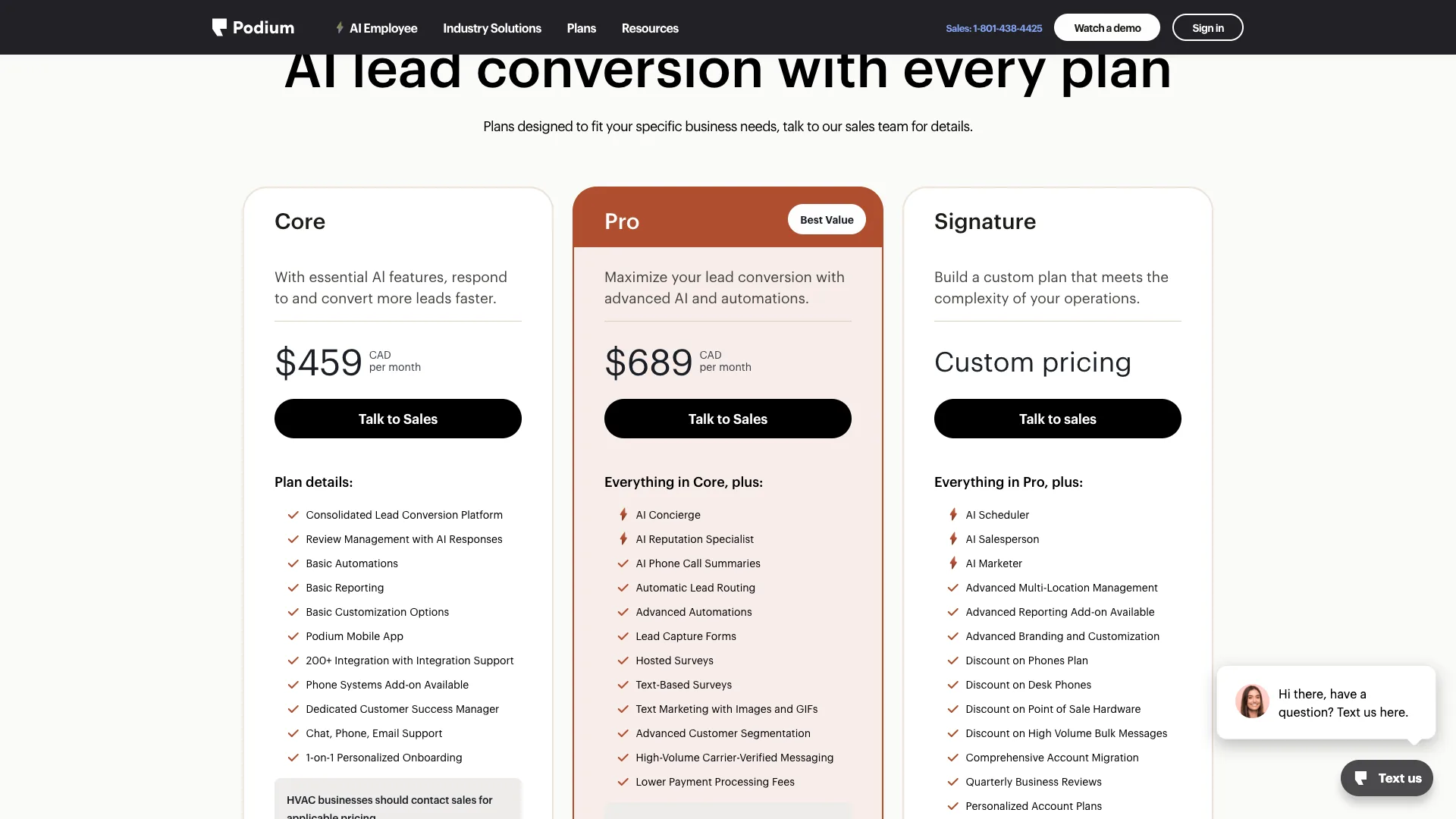 Jul 29, 2026
 Tech Stack
NiceJob vs Podium 2026: Pricing, Contracts and Review Gating
Both vendors print a price, at very different scale and in different currencies. The gap that matters is what Podium will not print: the billing unit, and whether a trade shop gets the number on the page.
Read Article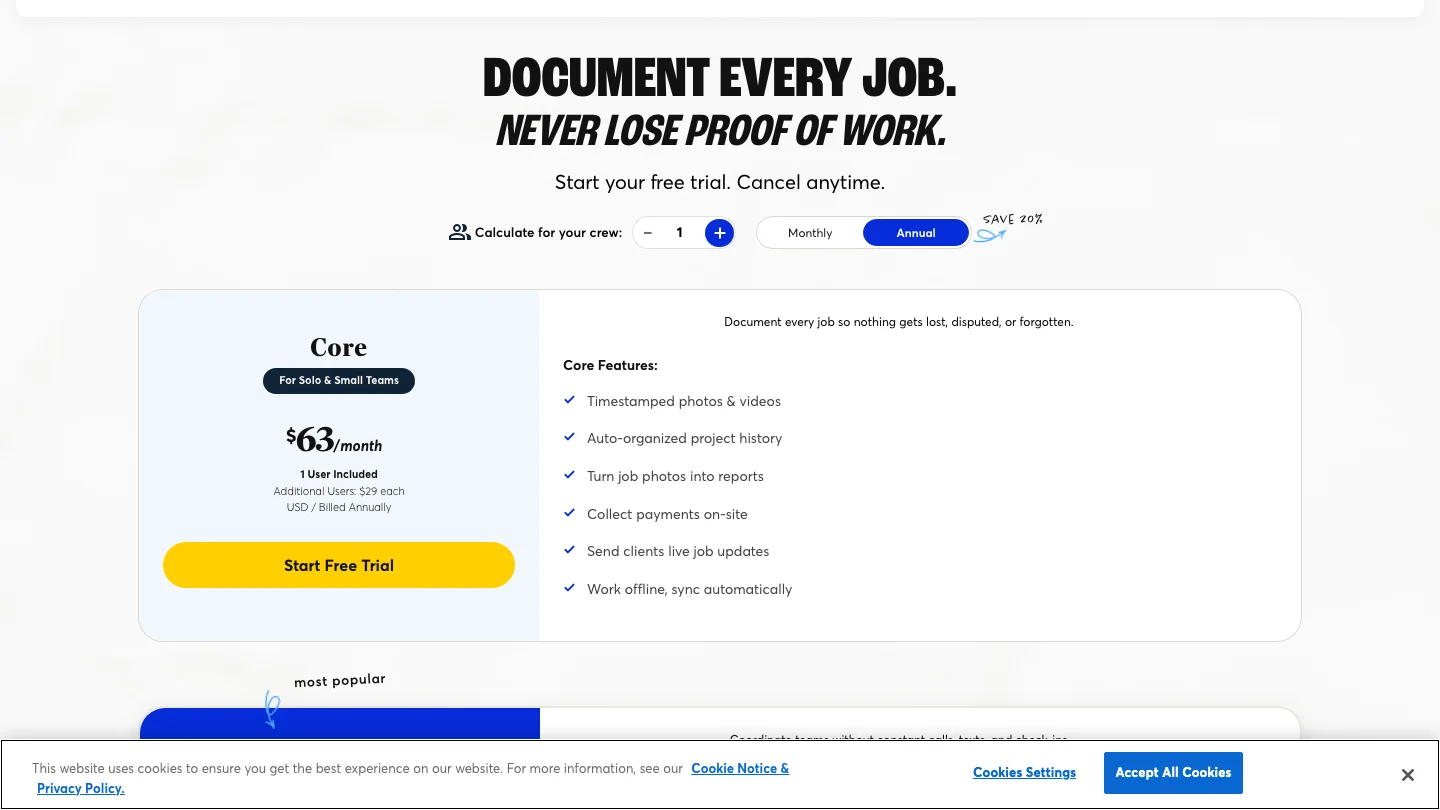 Jul 28, 2026
 Tech Stack
CompanyCam Review 2026: Pricing, Pros, Cons and Alternatives
Every page ranking for CompanyCam still quotes a per-user price the vendor no longer charges. Here are the real plans, the seat math, and who should skip it.
Read Article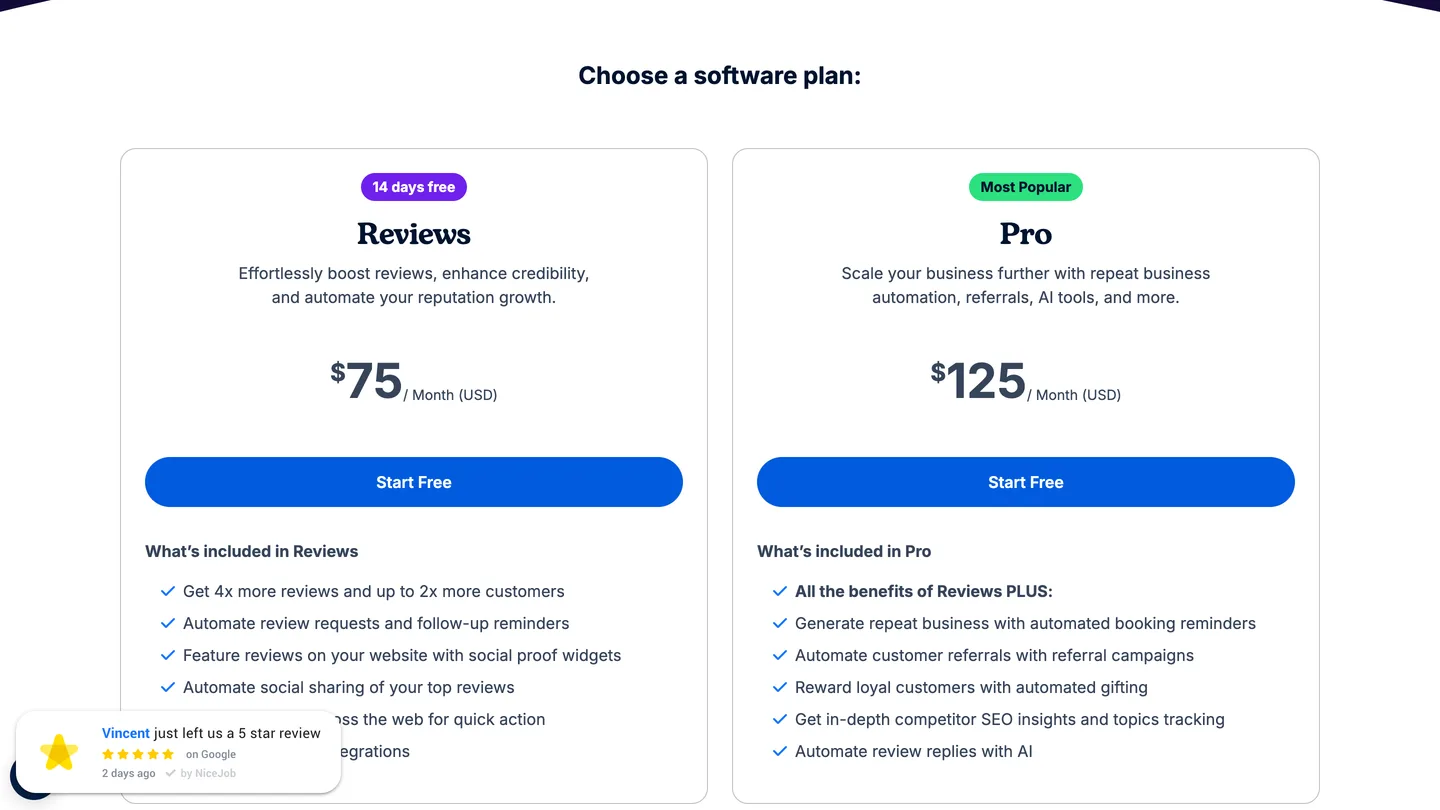 Jul 28, 2026
 Tech Stack
NiceJob Review 2026: Pricing, Pros, Cons and Alternatives
NiceJob rates 4.9 on Capterra and refuses to gate negative reviews. Real plan pricing, the active-customer threshold nobody publishes, and who should skip it.
Read Article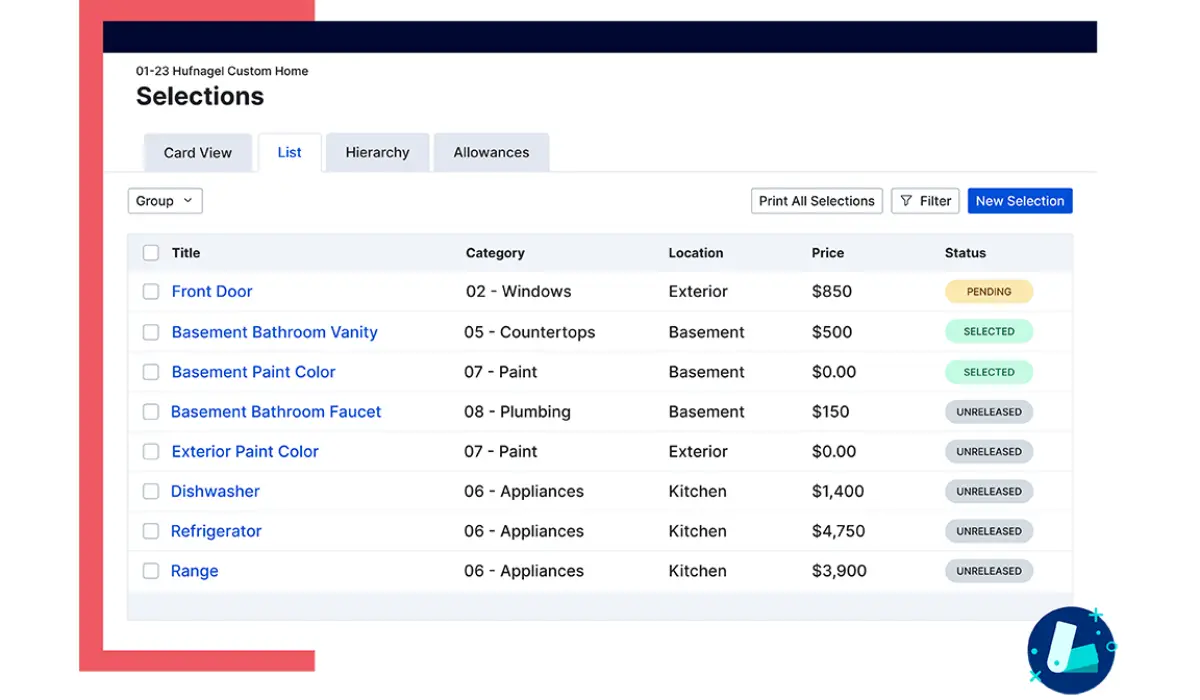 Jul 27, 2026
 Tech Stack
Buildertrend Review 2026: Pricing, Limits and Alternatives
Buildertrend rates 4.5 across 2,486 Capterra reviews and quotes against your revenue rather than your seat count. The workflows, the export problem, the alternatives.
Read Article Jul 27, 2026
 Tech Stack
CallRail Review 2026: Pricing, Pros, Cons and Alternatives
CallRail rates 4.5 on Capterra, and its tracking numbers port out free. But the two usage rates that decide your real bill are the two it does not print.
Read Article Jul 27, 2026
 Tech Stack
Roofr Review 2026: Pricing, Pros, Cons and Alternatives
Roofr rates 4.6 on Capterra and sells $13 measurement reports against a market charging triple. But it will not import a report from anywhere else.
Read Article Jul 25, 2026
 Tech Stack
Housecall Pro Review 2026: Pricing, Pros, Cons, Alternatives
Housecall Pro has the shortest learning curve in the category and the widest review spread. Real pricing, the Instapay math, and the migration trap to plan around.
Read Article Jul 24, 2026
 Tech Stack
Jobber Review 2026: Pricing, Pros, Cons and Alternatives
Jobber rates 4.6 on Capterra with the best mobile app in the category. Real plan pricing, the feature gating that changes your entry price, and who it suits.
Read Article Jul 23, 2026
 Tech Stack
ServiceTitan Review 2026: Pricing, Pros, Cons, Alternatives
ServiceTitan rates 4.3 on Capterra but its weakest score is value for money. Real reported pricing, the 12-month contract, the exit fees, and who it actually suits.
Read Article Jun 3, 2026
 Tech Stack
HVAC Online Scheduling: The 43% Losing After-Hours Bookings
HVAC leads every trade on online booking at just 56.7%, which still leaves 43% of sites forcing an after-hours customer to wait for a business-hours phone call.
Read Article