HubSpot Review 2026: Pricing, Pros, Cons, Alternatives
HubSpot starts at $0/month. What each tier gates, the 6 limitations reviewers name, and 5 alternatives with published prices.
Disclosure This article features tools from our brand partners. If you choose to use them, we may receive compensation at no extra cost to you.
Our editorial choices are independent of these affiliate arrangements. Read our full affiliate disclosure.
Fervor is a CRO and web design studio, not a software reseller, and no vendor paid for placement here or for a kinder verdict. Affiliate links are flagged where they appear, and they never change what we report.
Page at a glance
HubSpot is A sales-and-marketing CRM that contractors adopt for the deal pipeline, not for running the work. It starts at $0/month per account. Sales Hub and Service Hub are billed per seat, not per company. The pricing page states Starter, Professional and Enterprise all as a per-seat rate ($7 or $20, $90 or $100, and $150 per month per seat respectively). Marketing Hub inverts the model: Professional is a flat $800/month that bundles 3 core seats with each extra seat at $45/month, and Enterprise is $3,600/month bundling 5 core seats with extras at $75/month. The free tier is capped at 2 users. It fits Office-heavy contracting businesses of roughly 1 to 25 people running long-cycle commercial, design-build or remodel sales, where the unit of work is a quoted deal that takes weeks to close rather than a same-day service call. It's the wrong buy for Emergency and same-day service contractors dispatching technicians (HVAC, plumbing, electrical, restoration), because HubSpot has no dispatch board, no route or drive-time view, no technician mobile job workflow and no job costing. The unit of work in HubSpot is a deal that progresses over weeks, not a call that has to be on a truck in ninety minutes. And nothing in the pricing pages offers a dispatch module at any tier. Alternatives that publish their prices are Jobber from $49/month, Housecall Pro from $59/month. Nine priced tiers, six evidenced gaps and five alternatives, two of which publish a figure.
The short verdict on HubSpot
HubSpot earns its money with Office-heavy contracting businesses of roughly 1 to 25 people running long-cycle commercial, design-build or remodel sales, where the unit of work is a quoted deal that takes weeks to close rather than a same-day service call. If that's you, it does the job. The sections below are the parts worth checking before you sign. But the fit is narrower than the marketing suggests, and the price isn't the whole cost.
It starts at $0/month. And pricing was verified on 7 August 2026, so you can check every figure below in a browser tab.
| Pricing model | Published tiers |
|---|---|
| Entry price | $0/month |
| Users | Sales Hub and Service Hub are billed per seat, not per company. The pricing page states St |
| Ownership | Independent |
| Best fit | Office-heavy contracting businesses of roughly 1 to 25 people running long-cycle commercial, design-build or remodel sales, where the unit of work is a quoted deal that takes weeks to close rather than a same-day service call. |
| Accounting sync | QuickBooks Online (two-way), Xero (two-way) |
What works
- This is the part HubSpot genuinely does better than any contractor-native tool
- Absent
- Present but geographically fenced and fee-opaque
- Export is unusually generous, and that matters more than it sounds
- The data walks out easily, the contract doesn't
What does not
- There's no field-service layer at all, so HubSpot is half a stack for anyone who dispatches crews
- The jump from Starter to Professional is roughly a 13x per-seat increase plus a mandatory onboarding fee
- You can't downgrade mid-term, and the marketing contact tier locks separately
- Cancelling is a toggle you have to remember, and missing it costs a full term
- The accounting sync is real but brittle in ways that hit contractors specifically
HubSpot is A sales-and-marketing CRM that contractors adopt for the deal pipeline, not for running the work. It sells to Cross-trade contractors, and the shape of the product follows from that: Forms, email tracking, sequences, meeting links and a customisable deal pipeline all sit on one contact record, and the free tier already includes contact management and activity tracking. And for a design-build or commercial contractor whose sales cycle runs six weeks with four stakeholders, the multi-touch attribution and the sequence tooling are a real advantage over a field-service CRM's flat lead list.
The shops HubSpot fits, and the ones it doesn't
It fits Office-heavy contracting businesses of roughly 1 to 25 people running long-cycle commercial, design-build or remodel sales, where the unit of work is a quoted deal that takes weeks to close rather than a same-day service call. That's the half most reviews print. Here's the other half, which is the one worth your time.
Don't buy it if you're Emergency and same-day service contractors dispatching technicians (HVAC, plumbing, electrical, restoration). HubSpot has no dispatch board, no route or drive-time view, no technician mobile job workflow and no job costing. The unit of work in HubSpot is a deal that progresses over weeks, not a call that has to be on a truck in ninety minutes. And nothing in the pricing pages offers a dispatch module at any tier. Look at Housecall Pro instead.
Don't buy it if you're Roofing and exterior contractors who need measurement, material ordering and supplier integration. HubSpot can't produce a roof measurement, build a material list, or push an order to a supplier. So contractors in these trades end up running HubSpot purely as a lead inbox while the real production system lives elsewhere, which means paying twice for contact records that then drift out of sync. Look at JobNimbus instead.
Don't buy it if you're Owner-operators and two-truck shops who just want quoting, scheduling and getting paid. A Capterra Growth Consultant put it plainly: 'If you don't have a large team with different departments and multiple pipelines in play, this system is simply overpowered for what you'd need.' And the free tier caps at 2 users, while the first tier that unlocks meaningful automation costs $90 per seat per month plus $1,500 up front. Look at Jobber instead.
What you'll pay HubSpot in year one
HubSpot prints its numbers on its own site. Good. That means you can price your real configuration tonight instead of waiting on a rep.
| Tier | Price | Billing unit | What it unlocks |
|---|---|---|---|
| Free Tools | $0/month | per account | Nothing beyond the tier below |
| Starter Customer Platform (annual) | $7/month | per user | annual commitment, new customers only promotional rate |
| Starter Customer Platform (monthly) | $20/month | per user | Nothing beyond the tier below |
| Sales Hub Professional (annual) | $90/month | per user | annual commitment, required $1,500 one-time Professional Onboarding fee |
| Sales Hub Professional (monthly) | $100/month | per user | required $1,500 one-time Professional Onboarding fee |
| Sales Hub Enterprise | $150/month | per user | required $3,500 one-time Enterprise Onboarding fee, listed as a starting price |
| Service Hub Professional (annual) | $90/month | per user | required $1,500 one-time Professional Onboarding fee |
| Marketing Hub Professional (annual) | $800/month | per account | includes 3 core seats, additional seats $45/month each, 2,000 marketing contacts included, required $3,000 one-time onboarding fee |
| Marketing Hub Enterprise | $3,600/month | per account | includes 5 core seats, additional seats $75/month each, 10,000 marketing contacts included, required $7,000 one-time onboarding fee |
Sales Hub and Service Hub are billed per seat, not per company. The pricing page states Starter, Professional and Enterprise all as a per-seat rate ($7 or $20, $90 or $100, and $150 per month per seat respectively). Marketing Hub inverts the model: Professional is a flat $800/month that bundles 3 core seats with each extra seat at $45/month, and Enterprise is $3,600/month bundling 5 core seats with extras at $75/month. The free tier is capped at 2 users.
There is a discount for paying annually up front: Annual commitment cuts the Starter seat rate from $20/month to $7/month and the Sales Hub Professional seat rate from $100/month to $90/month. Marketing Hub Professional drops from $890/month to $800/month on annual. And an annual prepay discount tells you an annual commitment exists, which is worth knowing before anyone mentions a term length out loud.
What isn't in the HubSpot number you get quoted
Payment processing. HubSpot payments is geographically restricted. The setup article states: 'HubSpot payments is only available to businesses and organizations that are located and operating in the United States, the United Kingdom, and Canada.' The same article says only 'Fees apply when using HubSpot payments' and links out to a fee FAQ rather than publishing the card and ACH rates inline; the linked fee-FAQ URL returned HTTP 404 when checked on 2026-08-07, so the exact percentages are not recorded here.
Implementation and onboarding. Onboarding is a mandatory line item at Professional and above, not an optional service. Sales Hub and Service Hub Professional carry a required one-time $1,500 Professional Onboarding fee and Enterprise a required one-time $3,500 Enterprise Onboarding fee. Marketing Hub is steeper: $3,000 one-time at Professional and $7,000 one-time at Enterprise.
Minimum term. The Customer Terms of Service state: 'Your Initial Term will be specified in your Order, and, unless otherwise specified in your Order, your subscription will automatically renew for the shorter of the same duration as your prior term or one year.' The commitment term is set on the Order Form rather than fixed in the public terms, so a contractor signing an annual order is locked for the full year.
Getting out. There is no early exit. The cancellation article states: 'Mid-contract cancellations are not permitted. This means your subscription will be automatically canceled on your renewal date, not immediately.' The Terms of Service add: 'You are not permitted to downgrade your Subscription Service during your Current Term. You may downgrade your Subscription Services at your next renewal date upon completion of a new Order Form.' Fees already paid do not come back: 'All payment obligations are non-cancelable and all amounts paid are non-refundable, except as specifically provided for in this Agreement.'
Auto-renewal. Renewal is opt-out, and the opt-out is a toggle you have to remember to flip. The terms read: 'If you do not turn off the auto-renewal setting in the Account & Billing section of your HubSpot account, your Subscription will renew automatically' and 'you must turn off the auto-renewal setting in the Account & Billing section of your HubSpot account prior to the end of your Current Term.' Renewal can also carry a price rise: 'Upon renewal, we may increase your Subscription Fees up to our then-current list price... we will notify you at least thirty (30) days in advance of your renewal.' HubSpot's own help article separately asks customers to contact a rep 'at least five business days prior to your renewal date' to discuss changes.
Modules sold separately. , , , . And this is where a HubSpot quote drifts from the published tier. A module you need immediately is part of the price, not an extra.
And this is the kind of thing you only find by reading the complaints. HubSpot runs two independent lock-ins at once, and most buyers only notice the first one. The subscription can't be downgraded mid-term, and separately the marketing contact tier can't be downgraded mid-term either. And those are different clocks governed by different documents. A contractor who imports a purchased list in March is stuck at that contact tier through the whole term even after deleting the list. So set the tier off your genuinely marketable contacts, not your database size.
The HubSpot line items nobody mentions
The subscription is the part everyone quotes. These are the lines that land afterwards, and the ones we could not find are named as unpublished rather than left blank.
Sold separately. , , , . Price the configuration you'll really run, because an add-on you need on day one is part of the price.
"HubSpot Free Tools is $0/month, per account."
HubSpot pricing page (2026)
"HubSpot Starter Customer Platform (annual) is $7/month, per user."
HubSpot pricing page (2026)
"Sales Hub and Service Hub are billed per seat, not per company. The pricing page states Starter, Professional and Enterprise all as a per-seat rate ($7 or $20, $90 or $100, and $150 per month per seat respectively). Marketing Hub inverts the model: Professional is a flat $800/month that bundles 3 core seats with each extra seat at $45/month, and Enterprise is $3,600/month bundling 5 core seats with extras at $75/month. The free tier is capped at 2 users."
HubSpot pricing page (2026)
The five workflows you pay for
Feature totals are noise. So a shop in this category lives or dies on five things, and those are the five to grade, and each one below carries the evidence it's graded on.
This is the part HubSpot genuinely does better than any contractor-native tool Forms, email tracking, sequences, meeting links and a customisable deal pipeline all sit on one contact record, and the free tier already includes contact management and activity tracking. And for a design-build or commercial contractor whose sales cycle runs six weeks with four stakeholders, the multi-touch attribution and the sequence tooling are a real advantage over a field-service CRM's flat lead list.
Absent There's no crew calendar, no dispatch board, no drive-time routing and no technician assignment anywhere in the hub lineup. And HubSpot's meetings tool books a sales appointment into a rep's calendar, which is a different thing from putting a two-person crew on a roof at 7am with the right materials on the truck.
Present but geographically fenced and fee-opaque HubSpot can create invoices and take payment, and it will sync those invoices two-way with QuickBooks Online or Xero. But the catch is that HubSpot payments 'is only available to businesses and organizations that are located and operating in the United States, the United Kingdom, and Canada', and the setup article declines to publish the processing rates, saying only that 'Fees apply when using HubSpot payments'.
Export is unusually generous, and that matters more than it sounds HubSpot allows up to 300 exports in a rolling 24 hour window and up to three simultaneous exports, in CSV, XLSX or XLS, across contacts, companies, deals, tickets, calls, payments and custom objects. CSV has no row or column limit. Download links expire after 30 days. And for a category where the usual exit story is a support ticket and a wait, this is a genuinely low-friction way out.
The data walks out easily, the contract doesn't Data portability and contractual portability are different problems, and HubSpot is strong on the first and rigid on the second. You can export everything in an afternoon. But you still can't cancel mid-term, can't downgrade mid-term, and get no refund on what you've already paid. And after the effective cancellation date the account is downgraded to HubSpot's free tools rather than deleted, which at least means the records stay reachable while you migrate.
HubSpot trade fit
Fit differs by trade rather than by company size alone, and a blended paragraph hides that. Here is the split for the trades this one sells to.
Cross-trade. The workflow that decides it is this is the part hubspot genuinely does better than any contractor-native tool, and the shop profile that gets value is commercial and design-build contractors, 10 to 25 office staff, long sales cycles doing commercial and residential work. Where it stops being a fit is Emergency and same-day service contractors dispatching technicians (HVAC, plumbing, electrical, restoration).
Your books, and whether HubSpot connects to them
QuickBooks Online connects both ways, on every plan. Xero connects both ways, gated to a higher tier. Your costs map through cost codes, so test yours against your own chart of accounts before you commit. A code your books don't recognise is how a labour charge quietly lands somewhere useless.
Past those, the road ends. ServiceTitan, Jobber, Total marketplace app count do not connect. So if your books run on an ERP rather than the platforms named above, weigh that before anything else.
Beyond accounting it connects to Gmail (Email send, log and track from inside the CRM record), Google Calendar (Two-way calendar sync for the meetings scheduler), Zapier (Generic automation bridge to tools with no native HubSpot app, which is how most field-service tools connect), Accounting category (whole) (Counted directory listing for finance and accounting apps). A public API exists: HubSpot publishes a full public REST API with date-based versioning introduced in the 2026-03 release, using the endpoint pattern '/api-name/2026-03/resource'. HubSpot states this 'gives HubSpot the ability to ship updates on a predictable schedule' and that a previous version keeps working 'until its end-of-life date, giving you time to migrate'. Per-tier daily call limits could not be verified: the API usage-details page 307-redirects to an authenticated app.hubspot.com login.
Getting help from HubSpot, and getting it fast
Support is the line item nobody prices and everybody eventually needs. Onboarding for HubSpot: Onboarding is a mandatory line item at Professional and above, not an optional service. Sales Hub and Service Hub Professional carry a required one-time $1,500 Professional Onboarding fee and Enterprise a required one-time $3,500 Enterprise Onboarding fee. Marketing Hub is steeper: $3,000 one-time at Professional and $7,000 one-time at Enterprise.
The review corpus we read on 7 August 2026 carries no consistent signal on response times either way, so treat support as untested rather than good. Open a real ticket during the trial and time the reply, because that is the number no pricing page gives you.
What happens when you want to leave HubSpot
Nobody reads this section before they buy, and it's the one that costs money afterwards. Four terms decide what leaving looks like.
Minimum term. The Customer Terms of Service state: 'Your Initial Term will be specified in your Order, and, unless otherwise specified in your Order, your subscription will automatically renew for the shorter of the same duration as your prior term or one year.' The commitment term is set on the Order Form rather than fixed in the public terms, so a contractor signing an annual order is locked for the full year.
Auto-renewal. Renewal is opt-out, and the opt-out is a toggle you have to remember to flip. The terms read: 'If you do not turn off the auto-renewal setting in the Account & Billing section of your HubSpot account, your Subscription will renew automatically' and 'you must turn off the auto-renewal setting in the Account & Billing section of your HubSpot account prior to the end of your Current Term.' Renewal can also carry a price rise: 'Upon renewal, we may increase your Subscription Fees up to our then-current list price... we will notify you at least thirty (30) days in advance of your renewal.' HubSpot's own help article separately asks customers to contact a rep 'at least five business days prior to your renewal date' to discuss changes.
Early termination. There is no early exit. The cancellation article states: 'Mid-contract cancellations are not permitted. This means your subscription will be automatically canceled on your renewal date, not immediately.' The Terms of Service add: 'You are not permitted to downgrade your Subscription Service during your Current Term. You may downgrade your Subscription Services at your next renewal date upon completion of a new Order Form.' Fees already paid do not come back: 'All payment obligations are non-cancelable and all amounts paid are non-refundable, except as specifically provided for in this Agreement.'
Payment processing. HubSpot payments is geographically restricted. The setup article states: 'HubSpot payments is only available to businesses and organizations that are located and operating in the United States, the United Kingdom, and Canada.' The same article says only 'Fees apply when using HubSpot payments' and links out to a fee FAQ rather than publishing the card and ACH rates inline; the linked fee-FAQ URL returned HTTP 404 when checked on 2026-08-07, so the exact percentages are not recorded here.
Small thing that turns out to matter. HubSpot is unusually generous on data portability and unusually rigid on contractual portability, and the two get confused. Your records leave easily. But your money doesn't. If you're leaving, export first and cancel auto-renewal immediately, because the export takes an afternoon and the contract exit takes until your renewal date.
"Setting up contacts and pipelines took longer than expected. Didn't always make sense right away, but after a few tries, started clicking."
Capterra, Mark W. (5-28)
"HunSpot has the ability to modify the page to see what I would like it to see. They make the work flow easy and the milestones help me move through the leads easy."
Capterra, Levi Y. (4-28)
"I wasn't able to bulk edit like I would've wanted to like a spreadsheet, but with the rate Hubspot innovates this may already be an option!"
Capterra, Verified Reviewer (7-28)
Where HubSpot falls short
And these are the gaps worth raising before you sign. They come out of reviewer complaints and out of what the vendor's own pages carefully don't say.
There's no field-service layer at all, so HubSpot is half a stack for anyone who dispatches crews HubSpot sells Sales, Marketing, Service, Content, Data and Revenue hubs. But none of them schedule a crew to an address, price a job off a materials list, track time on site, or give a technician a mobile job view. So a contractor running HubSpot is running a deal pipeline, and still needs a second system for the work itself. That second subscription is the real cost of the decision, and it never appears on HubSpot's pricing page. Price HubSpot plus the field-service tool you'll still need, then compare that combined number against a single contractor-native platform before you sign anything.
The jump from Starter to Professional is roughly a 13x per-seat increase plus a mandatory onboarding fee Starter is $7 per seat per month on annual. Sales Hub Professional is $90 per seat per month on annual, and HubSpot's page states the cost 'does not include required one-time Professional Onboarding fee of $1,500'. So a five-person sales desk goes from $420 a year to $5,400 a year plus $1,500 up front, and most of the features a growing contractor wants (sequences depth, custom reporting, deeper automation) sit above that line. Ask the rep in writing whether the onboarding fee is waivable and whether it recurs on any later hub addition. And get the answer on the order form.
You can't downgrade mid-term, and the marketing contact tier locks separately Two independent ratchets run at once. The Terms of Service say 'You are not permitted to downgrade your Subscription Service during your Current Term.' The Marketing Hub pricing page adds a second one: 'Once you select a contact tier, you cannot downgrade to a lower contact tier until your contract renews.' So a contractor who imports a bought list, or who has a big season and then a slow one, buys the peak and pays for it until renewal. Set your contact tier off your real marketable list, not your total database. And mark your renewal date in a calendar the day you sign.
Cancelling is a toggle you have to remember, and missing it costs a full term HubSpot renews by default. The terms read 'If you do not turn off the auto-renewal setting in the Account & Billing section of your HubSpot account, your Subscription will renew automatically', and the help article confirms 'Mid-contract cancellations are not permitted.' There's no grace refund either: 'All payment obligations are non-cancelable and all amounts paid are non-refundable.' And renewal can come in higher, since HubSpot reserves the right to 'increase your Subscription Fees up to our then-current list price' with thirty days' notice. Flip the auto-renewal toggle off the moment you decide to leave rather than waiting for the renewal notice, because the deadline is the end of the current term and nothing is refundable after it passes.
The accounting sync is real but brittle in ways that hit contractors specifically HubSpot builds its own QuickBooks Online and Xero data syncs, and both can run two-way. But the fine print bites where contractor invoicing lives. HubSpot's Xero article states credit card fees do not sync to Xero invoices and require manual reconciliation, tax rates created in HubSpot do not sync to Xero, and only six currencies are supported. The QuickBooks article warns that 'Some edits can't be made in QuickBooks Online to invoices created in HubSpot', including line item modifications and tax adjustments, and that non-US QuickBooks Online versions require synced invoices to include tax. Decide up front whether invoices originate in HubSpot or in your accounting package, and never let both sides create them, because the edit restrictions run one direction only.
Contractor-specific review evidence is thin, which is itself the finding HubSpot CRM carries 4,477 reviews on Capterra at a 4.5 overall rating, but the construction and contracting reviewers are a rounding error inside that pool, and the ones who do appear describe generic pipeline use rather than trade workflows. One construction Director of Sales praises milestone-based lead movement. One construction Owner is 'still ignoring half the features'. And that's what adoption looks like when a general CRM lands in a trade business. Ask HubSpot's rep for two reference customers in your exact trade at your exact revenue band, and treat a vague answer as the answer.
One more thing worth knowing. The onboarding fee is compulsory, not a services upsell, and HubSpot flags it in the small print under the seat price rather than in the headline number. Sales and Service Hub carry $1,500 at Professional and $3,500 at Enterprise. And Marketing Hub carries $3,000 and $7,000. A five-seat Sales Hub Professional year is $5,400 in subscription and $6,900 all in. So compare that against a contractor-native platform's total, not against the seat rate.
One more thing worth knowing. The import path creates schema debt quietly. Bringing a contractor's spreadsheet in without pre-mapping fields spawns duplicate custom properties, and duplicate contact records are the most commonly named friction point in the review corpus. Map every spreadsheet column to an existing HubSpot property before the first import. And run a dedupe pass on the same day, because cleaning it up after the pipeline is live is far more work.
Side note, and it's a useful one: hubSpot is the only tool in this comparison set that isn't a contractor tool at all, and that shows up in the review corpus rather than in the marketing. And across 4,477 Capterra reviews, construction reviewers are rare, and the ones present describe generic pipeline use rather than any trade workflow. Judge HubSpot on whether your sales motion looks like software sales, not on whether it looks like contracting. So if your deals close in one visit, the fit is wrong regardless of the rating.
What HubSpot operators say, in their own words
Every quote below is transcribed from a published review, named to the platform that carries it and to the reviewer as that platform displays them. We read the corpus by complaint type rather than by star rating, which is how the disqualifying detail buried inside a five-star review gets found.
"Setting up contacts and pipelines took longer than expected. Didn't always make sense right away, but after a few tries, started clicking."
An owner, construction, 1-2 years on the platform, writing on 2025-05-28, describes it on Capterra
"HunSpot has the ability to modify the page to see what I would like it to see. They make the work flow easy and the milestones help me move through the leads easy."
A director of sales, construction, 1-2 years on the platform, reports it it plainly on Capterra
"I wasn't able to bulk edit like I would've wanted to like a spreadsheet, but with the rate Hubspot innovates this may already be an option!"
And a business development manager, construction, 2+ years on the platform, writing on 2025-07-28, puts it the same thing on Capterra
"Sometimes have multiples of the same prospects can be an issue migrating or merging it to one."
On 2025-05-08, an assistant center manager, real estate, 1-2 years on the platform, reports it on Capterra
"Pricing can scale quickly as you unlock advanced features, and some limitations (like per-seat pricing for Sales Pro or needing Ops Hub for deeper automations) can sneak up on teams."
But a director of strategic operations, retail, 2+ years on the platform, reports it it differently on Capterra
"What I don't love is the pricing. While HubSpot offers a lot of value, it can become expensive fairly quickly as you add more contacts and as you start needing more advanced features."
But an owner, marketing and advertising, 1-2 years on the platform, puts it it differently on Capterra
"If you don't have a large team with different departments and multiple pipelines in play, this system is simply overpowered for what you'd need."
A growth consultant, marketing & advertising, 6-12 months on the platform, reports it it plainly on Capterra
"This hasn't happened to me just a few times, but every time I export a contact from Excel, HubSpot creates new properties if I don't set everything correctly."
But a customer service agent, health/wellness/fitness, 2+ years on the platform, describes it it differently on Capterra
"The free plan includes contact management and activity tracking features, which is useful for recording client interactions."
A technical support specialist reports it on GetApp
"Their support is great.the system is very easy to configure.the way the onboarding works makes it easy to start with in days"
And a commercial manager, computer software, 1-2 years on the platform, writing on 2026-01-30, says the same thing on Capterra
How HubSpot compares
The shortlist a buyer weighing HubSpot would put together. Billing units differ, so read the unit rather than the figure.
| Tool | Entry price | Billing unit | Users included | Published? |
|---|---|---|---|---|
| HubSpot | $0/month | per account | Sales Hub and Service Hub are billed per seat, not per compa | Yes |
| Jobber | $49/month | per account | 1 user on Core, additional users $29/month each | Yes |
| Housecall Pro | $59/month | per account | Not stated on the pricing page; the page presents a 'How many users?' selector without publishing the per-user rate | Yes |
| JobNimbus | Quote only | per user | Essentials up to 3, Pro up to 10, Premium up to 19, Enterprise 20+ | No |
| ServiceTitan | Quote only | per tech | Not published; per-technician pricing quoted per business | No |
| FieldPulse | Quote only | per user | Seats purchased upfront for the contract term, split into full-access seats and field-only seats | No |
Jobber. Quoting, scheduling, dispatching and invoicing a residential service crew end to end, with no separate field tool needed and no mandatory onboarding fee. But Long-cycle sales nurture. There's no email sequence engine, no marketing automation and no multi-touch attribution the way HubSpot has.
Housecall Pro. Same-day dispatch, technician mobile workflow and taking payment in the field, which HubSpot doesn't do at all. But Sales pipeline depth for multi-stakeholder commercial deals, and marketing email at scale.
JobNimbus. Roofing and exterior production workflow, including measurement and supplier ordering, plus a pipeline built around jobs rather than deals. But Price transparency. Every tier says 'Request pricing', so you can't budget without a sales call, where HubSpot puts its per-seat rates on a public page.
ServiceTitan. Running a large multi-crew service operation with call booking, dispatch, capacity planning and financial reporting in one system. But Cost and commitment at small scale, and price transparency. The pricing page states 'Our per-technician pricing is designed to fit your business and goals, at any size' behind a 'Request Pricing' button.
FieldPulse. Field-only seat pricing, which lets a contractor put techs on cheap mobile seats instead of paying a full CRM seat rate per head the way HubSpot does. But Published pricing. FieldPulse states 'Pricing is customized to your team size and setup. Contact us for a quote', and seats are bought upfront for the contract term.
"Sometimes have multiples of the same prospects can be an issue migrating or merging it to one."
Capterra, Daniel K. (5-08)
"Pricing can scale quickly as you unlock advanced features, and some limitations (like per-seat pricing for Sales Pro or needing Ops Hub for deeper automations) can sneak up on teams."
Capterra, Grant H. (5-21)
Who should not buy HubSpot
Don't buy HubSpot if you're Emergency and same-day service contractors dispatching technicians (HVAC, plumbing, electrical, restoration). HubSpot has no dispatch board, no route or drive-time view, no technician mobile job workflow and no job costing. The unit of work in HubSpot is a deal that progresses over weeks, not a call that has to be on a truck in ninety minutes. And nothing in the pricing pages offers a dispatch module at any tier. Look at Housecall Pro instead.
Don't buy HubSpot if you're Roofing and exterior contractors who need measurement, material ordering and supplier integration. HubSpot can't produce a roof measurement, build a material list, or push an order to a supplier. So contractors in these trades end up running HubSpot purely as a lead inbox while the real production system lives elsewhere, which means paying twice for contact records that then drift out of sync. Look at JobNimbus instead.
Don't buy HubSpot if you're Owner-operators and two-truck shops who just want quoting, scheduling and getting paid. A Capterra Growth Consultant put it plainly: 'If you don't have a large team with different departments and multiple pipelines in play, this system is simply overpowered for what you'd need.' And the free tier caps at 2 users, while the first tier that unlocks meaningful automation costs $90 per seat per month plus $1,500 up front. Look at Jobber instead.
The verdict, by shop size
Owner-operator, 1 to 3 people, residential service
No. HubSpot solves nothing this business is stuck on. There's no scheduling, no dispatch, no job costing and no field mobile app, so you'd still buy a field-service tool and then pay HubSpot on top for a contact list. And the free tier caps at 2 users. The moment you need real automation the price is $90 per seat per month plus a required $1,500 onboarding fee. A Capterra Growth Consultant said it directly: 'this system is simply overpowered for what you'd need.' This band runs 1 to 3 on the crew, doing residential and service work, and that's the profile the recommendation is written for.
4 to 15 crew, mixed residential service and project work
Only under conditions, and they are worth being honest about. Worth it only if your sales cycle is long enough to justify a nurture engine, and only alongside a field-service platform you've already committed to. Run HubSpot free or Starter as the lead and nurture layer, keep production in the trade tool, and connect the two through the accounting sync or Zapier. But don't go to Professional until you can name the specific automation you're buying, because that step is roughly 13x the seat rate plus $1,500 up front and there's no way back down before renewal. This band runs 4 to 15 on the crew, doing residential and service work, and that's the profile the recommendation is written for.
Commercial and design-build contractors, 10 to 25 office staff, long sales cycles
Yes, and this is the shape the product is built for. This is the band HubSpot is genuinely built for. A six-week bid cycle with four stakeholders, an estimator, a BD lead and a proposal to track is exactly what deal pipelines, sequences and multi-touch attribution are for, and no contractor-native CRM matches that depth. So budget the $1,500 or $3,500 onboarding fee as a real line item, set the marketing contact tier off your marketable list rather than your total database, and diarise the renewal date the day you sign. This band runs 10 to 25 on the crew, doing commercial work, and that's the profile the recommendation is written for.
Emergency service contractors of any size
No. A same-day trade lives or dies on the dispatch board, and HubSpot doesn't have one at any price. Every hub HubSpot sells (Sales, Marketing, Service, Content, Data, Revenue) is an office system. So buying it as your primary tool means the thing that runs your business is still unbought. This band runs 1 or more on the crew, doing service work, and that's the profile the recommendation is written for.
One thing to check before you sign with HubSpot
Last thing, and it's ours rather than the vendor's. We run conversion work for contractors and we inspect their sites at scale.
HubSpot bills by contact tier and its own pricing page says you can't drop to a lower tier until the contract renews, so the tier you sign is a pre-paid bet on how many contacts your website will hand you over the next twelve months. But a contact only exists once somebody completes a form. And Fervor looked at 380 contractor websites and 95.8% carried a serious WCAG violation, which is a lot of quote forms nobody can finish, on a CRM seat you've already paid for.
But we can put a figure on it. Of 380 contractor sites we inspected, 82.8% loaded slowly enough that a quote form went unseen. So the sample is not curated: it is every contractor site the tooling could reach. The full write-up is in the Contractor CRO Index.
"82.8% of the 380 contractor websites inspected loaded slowly enough that a quote form went unseen."
Fervor Studio Contractor CRO Index (2026)
So price the platform properly. Then open your own site on a phone and time how long it takes before you could tap a call button. The numbers are all public.
See where your site is losing the jobs HubSpot would have managed
Fervor inspects your site the way a homeowner uses it, then shows you where calls leak out. About three days.
Get a Site InspectionWhere all of this HubSpot detail came from
What this page is, and what it isn't. We read HubSpot's own pages and its review corpus. We didn't operate it. The basis is 18 vendor pages for HubSpot, read on 7 August 2026, and every review we could retrieve, sorted by complaint. Prices were checked the same day. Nothing here is carried forward from an older sweep.
So: ten quotes on this page, nine from Capterra and one from GetApp.
And https://apps.apple.com/us/app/hubspot-crm-sales-marketing/id1107727864 (HTTP 404 on the guessed App Store ID; correct listing not located before the web-search budget ran out), https://knowledge.hubspot.com/payments/hubspot-payments-fees-faq (HTTP 404, so the card and ACH processing rates couldn't be recorded), https://developers.hubspot.com/docs/guides/apps/api-usage/usage-details (307 redirect to an authenticated app.hubspot.com login, so per-tier API rate limits couldn't be verified), https://www.softwareadvice.com/crm/hubspot-review/ (HTTP 410 Gone), https://www.softwareadvice.com/crm/hubspot-crm-profile/reviews/ (HTTP 404), https://ecosystem.hubspot.com/marketplace/apps/quickbooks-data-sync (listing body is JavaScript-rendered; returned navigation chrome only), https://ecosystem.hubspot.com/marketplace/apps/xero (listing body is JavaScript-rendered; returned navigation chrome only), G2 (blocks automated fetch), TrustRadius (blocks automated fetch), Trustpilot (blocks automated fetch) and Reddit (blocks automated fetch) refused automated retrieval for HubSpot. Forum and social threads are the ones people most want quoted, and they are exactly the ones we cannot verify, so none of them are here.
What that leaves untested: live sign-up flow for the free tier (no account created). And everything above is 18 vendor pages and a review corpus, which is documentary rather than hands-on.
What HubSpot users say
Setting up contacts and pipelines took longer than expected. Didn't always make sense right away, but after a few tries, started clicking.
HunSpot has the ability to modify the page to see what I would like it to see. They make the work flow easy and the milestones help me move through the leads easy.
I wasn't able to bulk edit like I would've wanted to like a spreadsheet, but with the rate Hubspot innovates this may already be an option!
Sometimes have multiples of the same prospects can be an issue migrating or merging it to one.
Pricing can scale quickly as you unlock advanced features, and some limitations (like per-seat pricing for Sales Pro or needing Ops Hub for deeper automations) can sneak up on teams.
What I don't love is the pricing. While HubSpot offers a lot of value, it can become expensive fairly quickly as you add more contacts and as you start needing more advanced features.
If you don't have a large team with different departments and multiple pipelines in play, this system is simply overpowered for what you'd need.
This hasn't happened to me just a few times, but every time I export a contact from Excel, HubSpot creates new properties if I don't set everything correctly.
The free plan includes contact management and activity tracking features, which is useful for recording client interactions.
Their support is great.the system is very easy to configure.the way the onboarding works makes it easy to start with in days
Frequently asked questions
Is HubSpot free for a contractor?
Yes, and the free tier isn't a trial. HubSpot's pricing page states it's 'Free for up to 2 users. No credit card required', with up to 1,000 contacts and no time limit. You get contact, lead and deal management plus activity logging for emails, calls, notes and meetings. But what you don't get is scheduling, dispatch, job costing or a technician mobile app, because HubSpot doesn't build those at any tier.
What does HubSpot cost once you go past free?
Starter is $7 per seat per month on annual billing or $20 per seat per month monthly. Sales Hub Professional is $90 per seat per month on annual or $100 monthly, and HubSpot's own page says that figure 'does not include required one-time Professional Onboarding fee of $1,500'. Enterprise starts at $150 per seat per month with a required one-time $3,500 onboarding fee. And Marketing Hub prices differently again: $800 per month flat for Professional (3 seats bundled, $45 per extra seat) with a $3,000 onboarding fee, and $3,600 per month for Enterprise with a $7,000 onboarding fee.
Can I cancel HubSpot mid-contract if it isn't working out?
No. HubSpot's help article states 'Mid-contract cancellations are not permitted. This means your subscription will be automatically canceled on your renewal date, not immediately.' The Terms of Service add that you can't downgrade during the current term either, and that 'All payment obligations are non-cancelable and all amounts paid are non-refundable.' So cancelling means turning off the auto-renewal toggle in Account & Billing before the current term ends, after which the account drops to HubSpot's free tools rather than disappearing.
Does HubSpot sync with QuickBooks or Xero?
Both, and HubSpot builds both syncs itself rather than leaving them to a third party. QuickBooks Online syncs contacts to customers, products to products and services, invoices to invoices and credit memos to credit memos, each configurable one-way in either direction or bidirectional. Xero syncs contacts, products, invoices and payments applied to invoices. But read the limits before you commit: HubSpot warns that some edits can't be made in QuickBooks Online to invoices created in HubSpot, and that credit card fees don't sync to Xero invoices and need manual reconciliation.
Will HubSpot's price go up when I renew?
It can. The Customer Terms of Service state: 'Upon renewal, we may increase your Subscription Fees up to our then-current list price... we will notify you at least thirty (30) days in advance of your renewal and the increased fees will apply at the start of the next Renewal Term.' Your only lever is refusal: 'If you do not agree to this increase, you can choose to terminate your subscription at the end of your Current Term.' And since the Starter annual rate is flagged on the pricing page as a promotional rate for new customers only, that gap between promo and list is exactly where a renewal increase would land.
How hard is it to get my data out of HubSpot?
Easier than most tools in this category. HubSpot allows up to 300 exports in a rolling 24 hour window and three simultaneous exports, in CSV, XLSX or XLS, covering contacts, companies, deals, tickets, appointments, calls, payments and custom objects. CSV has no row or column limit. But download links expire after 30 days, so pull the files and store them somewhere you control rather than leaving them in the queue.
Can HubSpot replace my field-service software?
No. HubSpot sells Sales, Marketing, Service, Content, Data and Revenue hubs, and none of them dispatch a crew, route a truck, cost a job or give a technician a mobile work order. If you dispatch, you need both systems. So price the pair together before deciding, because a single contractor-native platform is often cheaper than HubSpot Professional plus a field tool.
What is the catch with HubSpot's marketing contact tiers?
They ratchet one direction. HubSpot's Marketing Hub pricing page states: 'Once you select a contact tier, you cannot downgrade to a lower contact tier until your contract renews.' Starter includes 1,000 contacts, Professional 2,000 and Enterprise 10,000, and email send limits are calculated as a multiple of that tier (5x, 10x and 20x per calendar month). So a one-off list import can push you into a higher tier you then pay for until renewal.
Freshness
How we keep this page current
Three dates govern this review, and they carry different meanings. The initial source sweep is dated August 7, 2026; when only part of the evidence set is recaptured later, that later date is stated beside the refreshed claim. We last revised the page on August 7, 2026. And the user reviews we quote were posted over roughly the last 24 months, so their individual dates remain part of the evidence instead of being overwritten by a later pricing update.
We revise the page when HubSpot changes a published price or a contract term, when a rating we cite moves by more than a few tenths, or when the vendor ships something big enough to change the verdict. We never bump the date just to look fresh, because Google treats that as manipulation and so do we. If a figure here reads as stale by the time you land on it, treat it as a floor and check the vendor's own page. We linked it at every number for exactly that reason.
Sourcing
How this review was researched
Every figure on this page traces to a captured source linked inline where it appears. The initial sweep is dated August 7, 2026; any later, partial recapture is dated at the claim rather than relabelling the whole evidence set. Ratings come from Capterra, GetApp, Software Advice and the Apple App Store. Note that Capterra, GetApp and Software Advice share one Gartner Digital Markets review pool, so an identical score across all three is a single sample rather than three corroborating ones, and this page treats it that way. G2, TrustRadius and Trustpilot block automated access, so where their numbers appear they are labelled as reported rather than verified. No claim here is sourced from Reddit or from a contractor Facebook group, because neither could be retrieved and quoting them would mean inventing attribution. Pricing marked as reported comes from third-party roundups, never from Fervor. Fervor's own findings come from the Contractor CRO Index 2026.
About
About Fervor Studio
Fervor Studio is a conversion rate optimization (CRO) and web design studio for home services contractors across North America, based in Cochrane, Alberta. Fervor does not sell field service management software and is not an alternative to HubSpot. It publishes the Contractor CRO Index, a public benchmark measuring contractor website conversion potential using reproducible, open-source methods such as axe-core and Google Lighthouse. Fervor Studio is operated by Fervor Group Inc.
 Aug 2, 2026
 Tech Stack
Best Plumbing Software in 2026: Ten Ranked Across Four Classes
A plumbing company’s work runs through four classes of software that do not substitute for each other, and it only buys two of them. Ten products, each with a published price or an explicit statement that the vendor publishes none.
Read Article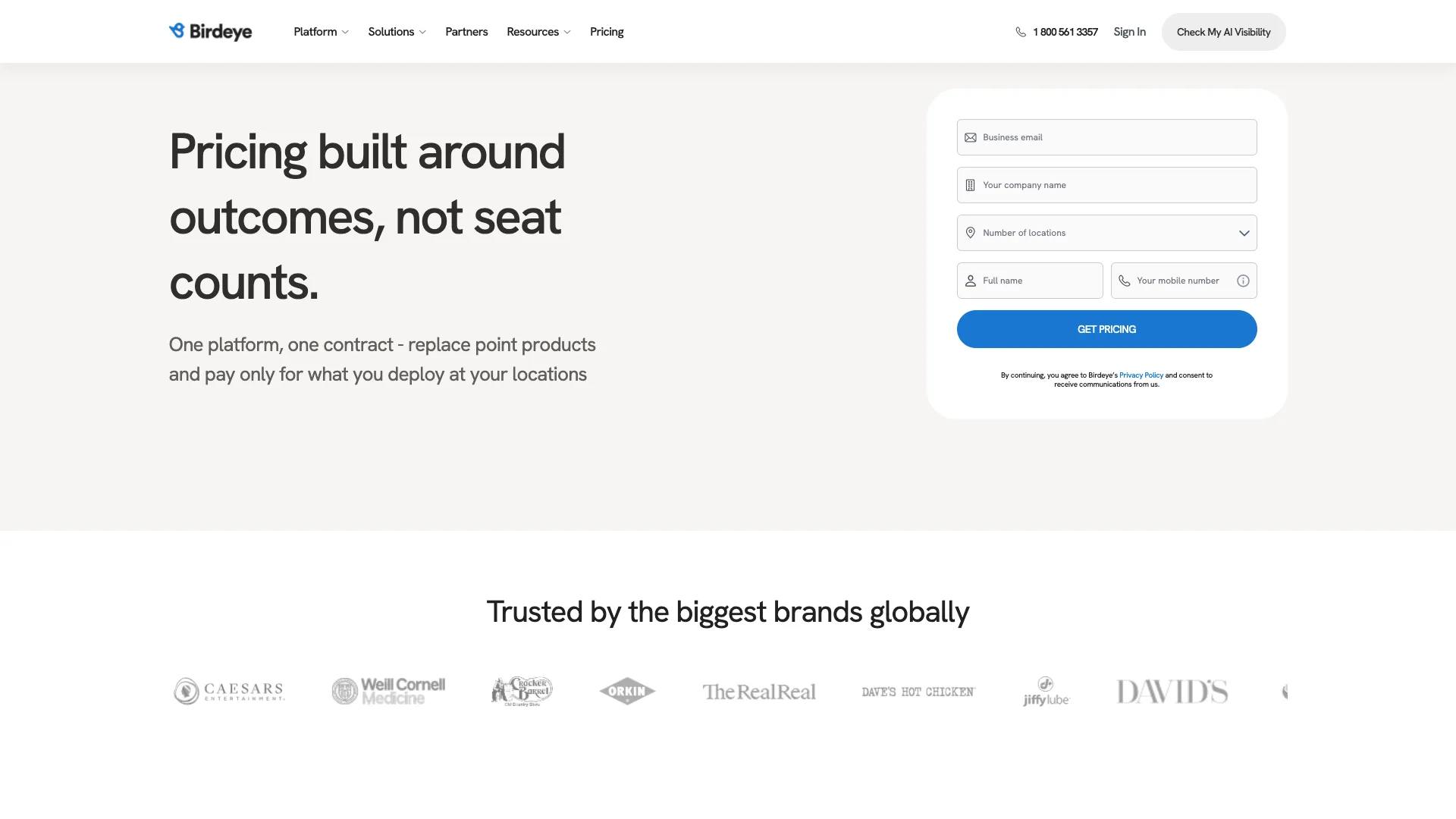 Jul 31, 2026
 Tech Stack
NiceJob vs Birdeye 2026: Pricing, Contracts and Review Gating
One of these vendors puts its price on the page and its cancellation terms in writing. The other puts a form in front of both, and the complaint record is where its contract length shows up.
Read Article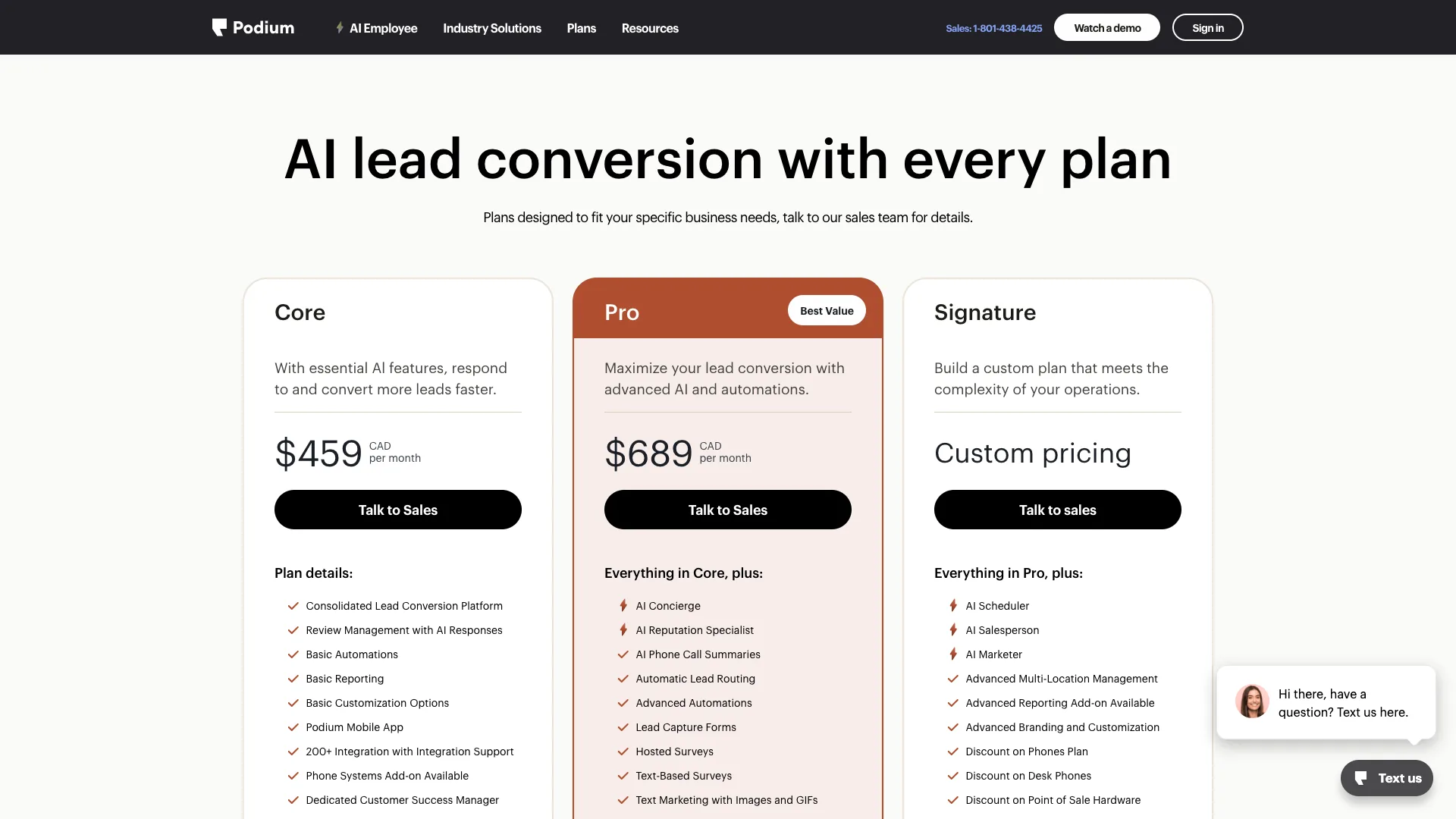 Jul 31, 2026
 Tech Stack
Podium vs Birdeye 2026: Pricing, Contracts and Review Gating
Only one of these two will tell you what it costs before a sales call, and even that number carries a carve-out aimed squarely at trade contractors.
Read Article Jul 31, 2026
 Tech Stack
Best Electrical Contractor Software 2026: 11 Ranked and Priced
An electrical contracting business makes two software purchases that do not substitute for each other, and every roundup answering this query covers only one of them. Eleven platforms, with a published price or an explicit statement that the vendor publishes none.
Read Article Jul 31, 2026
 Tech Stack
Best HVAC Software in 2026: Eleven Ranked Across Three Classes
An HVAC contracting business buys across three classes of software that do not substitute for each other, and every roundup answering this query covers only one of them. Eleven products, each with a published price or an explicit statement that the vendor publishes none.
Read Article Jul 30, 2026
 Tech Stack
AccuLynx Pricing 2026: The Real Cost of a Quote-Gated Plan
One published figure, two blank plan cards, and a contract that says things the pricing page does not. A line-by-line breakdown of what AccuLynx really bills.
Read Article Jul 30, 2026
 Tech Stack
Houzz Pro Canada Review 2026: Pricing and Alternatives
Houzz Pro serves different pricing renderings. What Canadian buyers see, how GST/HST and payments work, what Custom gates, and what the annual contract commits you to.
Read Article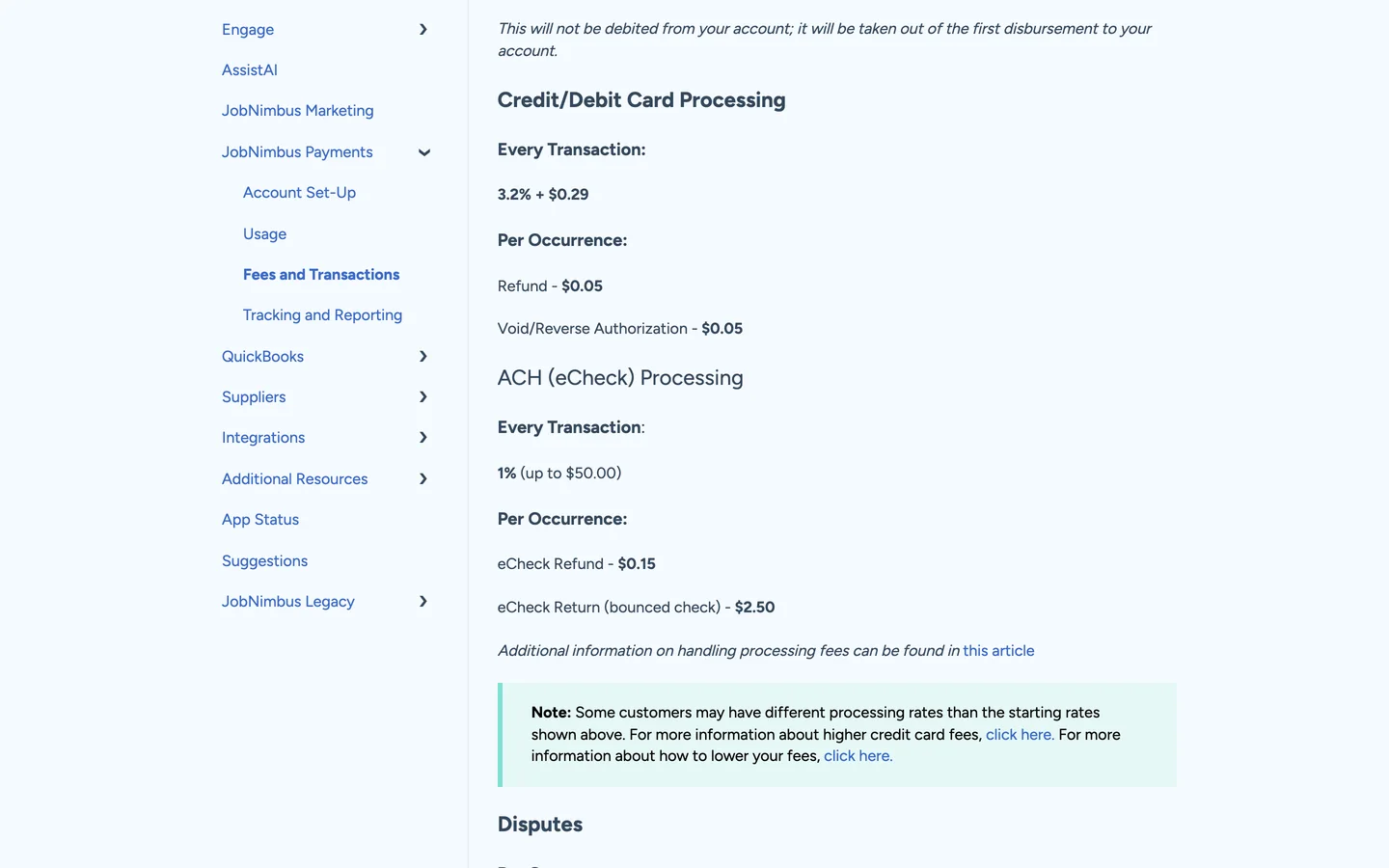 Jul 30, 2026
 Tech Stack
JobNimbus Pricing in 2026: What the Quote Does Not Cover
JobNimbus prints no figure on any of its four plans. So the only rate you can read before a sales call is the payments meter, and it is the biggest line on the bill.
Read Article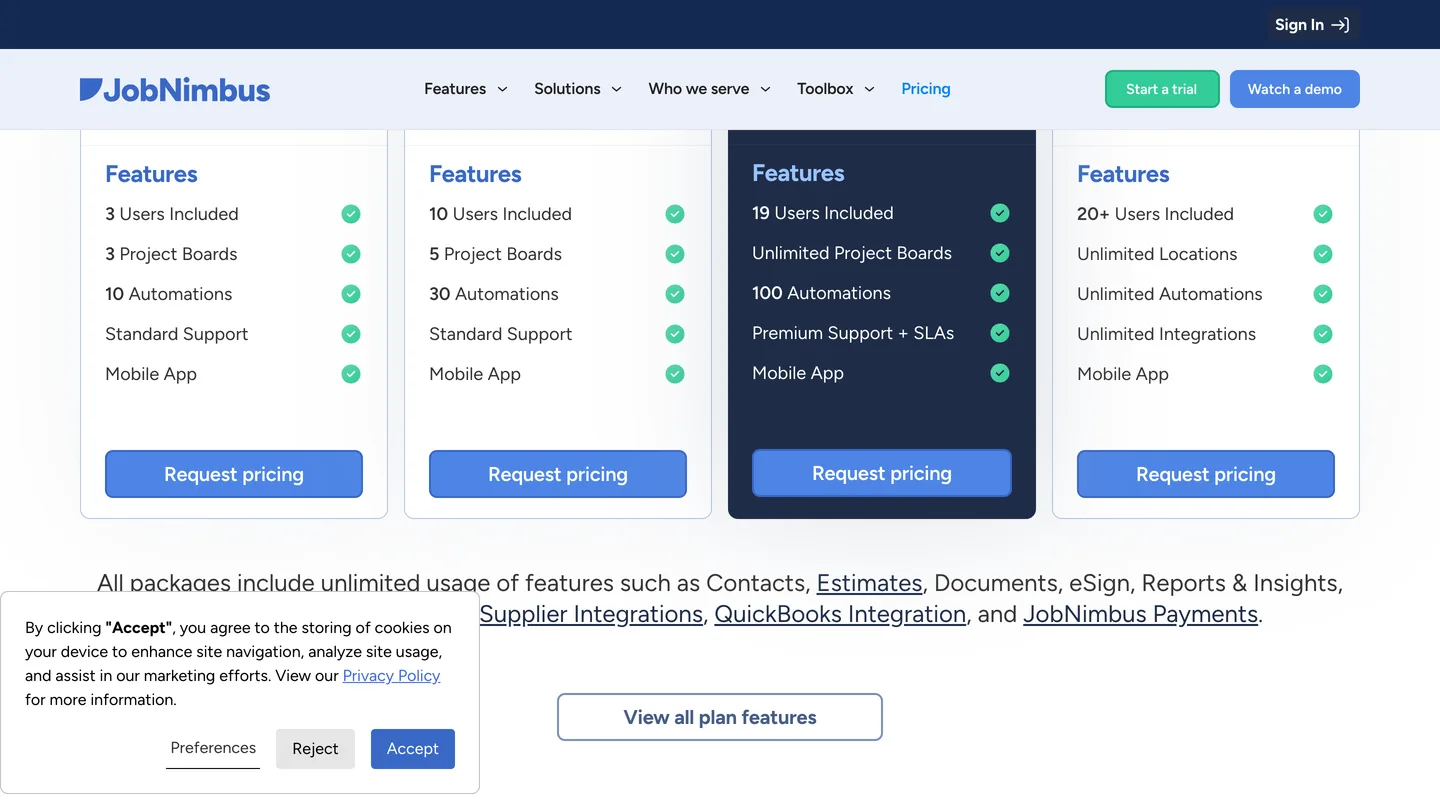 Jul 30, 2026
 Tech Stack
JobNimbus Review 2026: Pricing, Pros, Cons and Alternatives
JobNimbus rates 4.6 on Capterra and orders material straight from ABC Supply and SRS. But it publishes no price, and its supplement route carries a note.
Read Article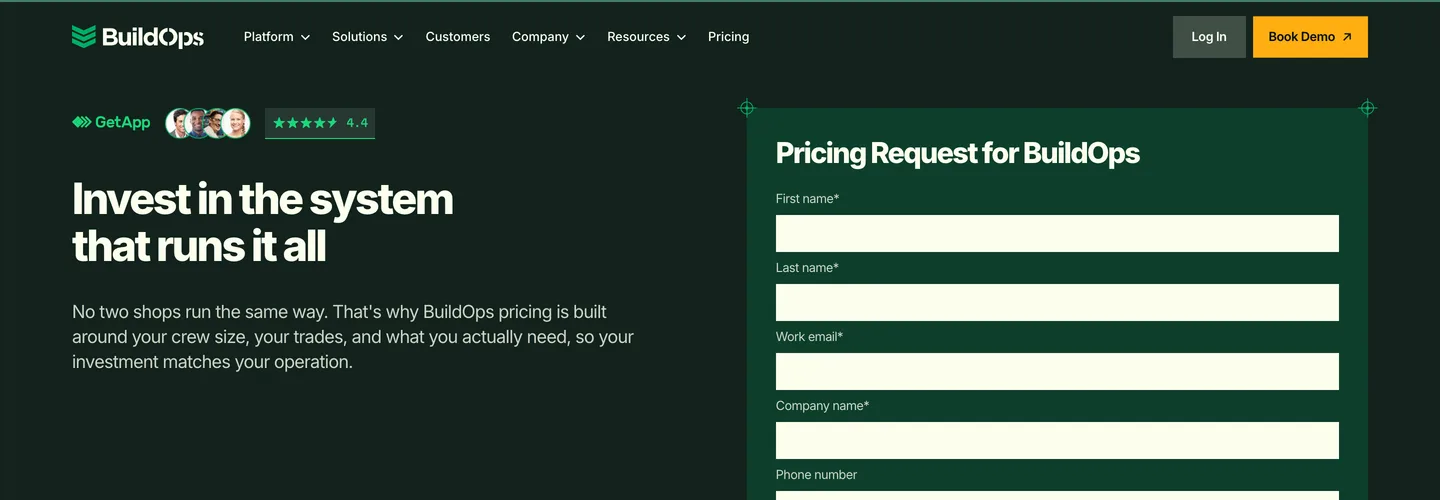 Jul 30, 2026
 Tech Stack
BuildOps Review 2026: Pricing, Contract Terms and Alternatives
BuildOps runs commercial service and projects on one platform, and publishes no pricing at all. The billing unit, the 30-day data-export window, and who it suits.
Read Article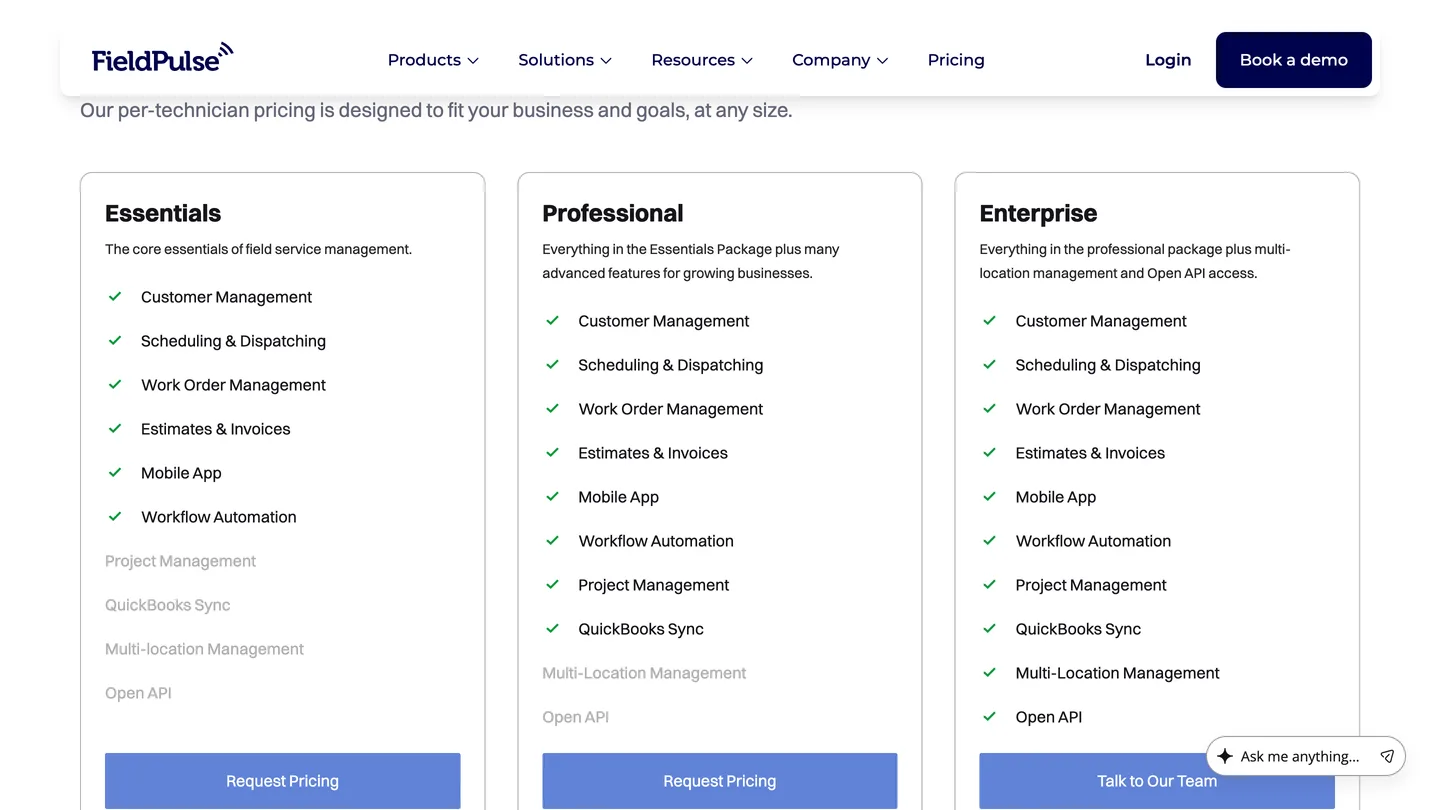 Jul 30, 2026
 Tech Stack
FieldPulse Review 2026: Pricing, Pros, Cons and Alternatives
FieldPulse rates 4.6 on Capterra and is the platform contractors name when they leave a bigger system. But it publishes no price, and the contract runs a year.
Read Article Jul 30, 2026
 Tech Stack
Service Fusion Review 2026: Pricing, Contract and Alternatives
Service Fusion bills flat per company with unlimited users, which is the best structural deal in field service software. The published plans, the contract behind the no-contract line, and the app score every other review gets wrong.
Read Article Jul 30, 2026
 Tech Stack
Knowify Review 2026: Pricing, Job Costing and Alternatives
Knowify rates 4.5 on Capterra and its weakest sub-score is features. What the $99 Core plan withholds, which way the QuickBooks sync really runs, and who should not buy it.
Read Article Jul 29, 2026
 Tech Stack
AccuLynx Review 2026: Pricing, Tier Gating, Alternatives
AccuLynx rates 4.6 across 846 reviews and now publishes an entry price. What that price omits, which tier holds the insurance workflow, and who should skip it.
Read Article Jul 29, 2026
 Tech Stack
Unitel Voice Review 2026: Pricing, Features and Alternatives
Unitel Voice rates 4.6 on Capterra and gives a one-truck shop a business number for $9.99 a month. The published plans, the cost per call, and what it won't do.
Read Article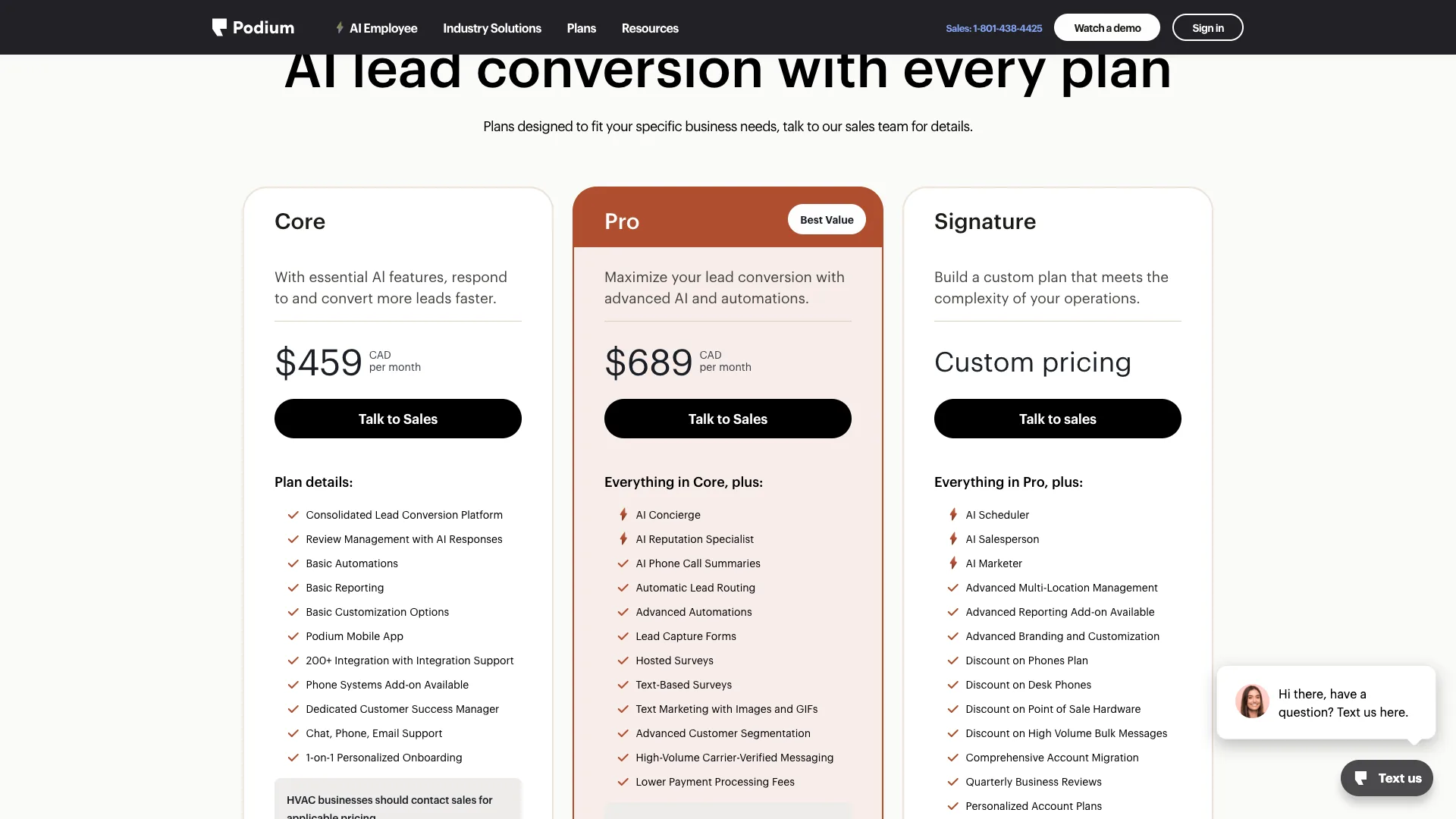 Jul 29, 2026
 Tech Stack
NiceJob vs Podium 2026: Pricing, Contracts and Review Gating
Both vendors print a price, at very different scale and in different currencies. The gap that matters is what Podium will not print: the billing unit, and whether a trade shop gets the number on the page.
Read Article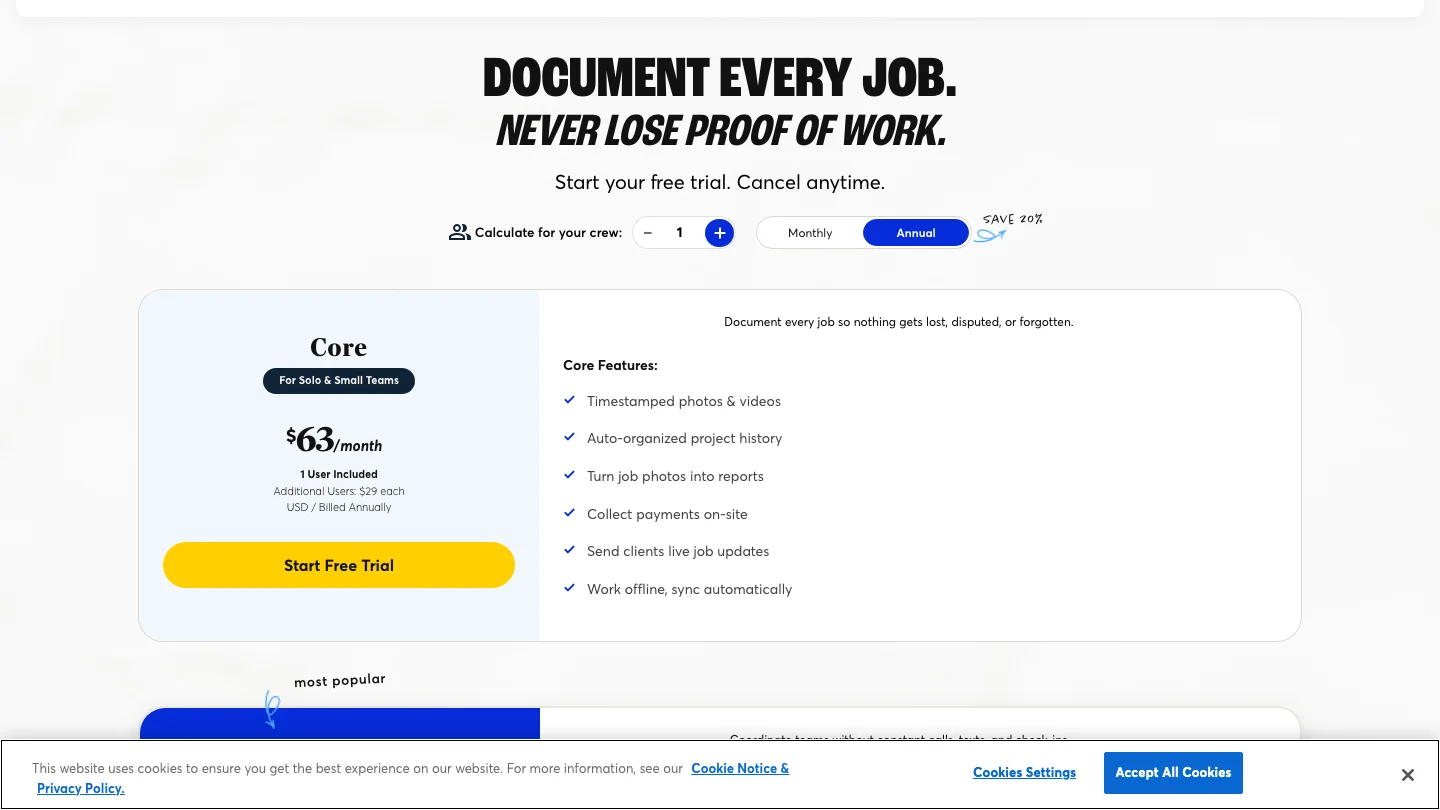 Jul 28, 2026
 Tech Stack
CompanyCam Review 2026: Pricing, Pros, Cons and Alternatives
Every page ranking for CompanyCam still quotes a per-user price the vendor no longer charges. Here are the real plans, the seat math, and who should skip it.
Read Article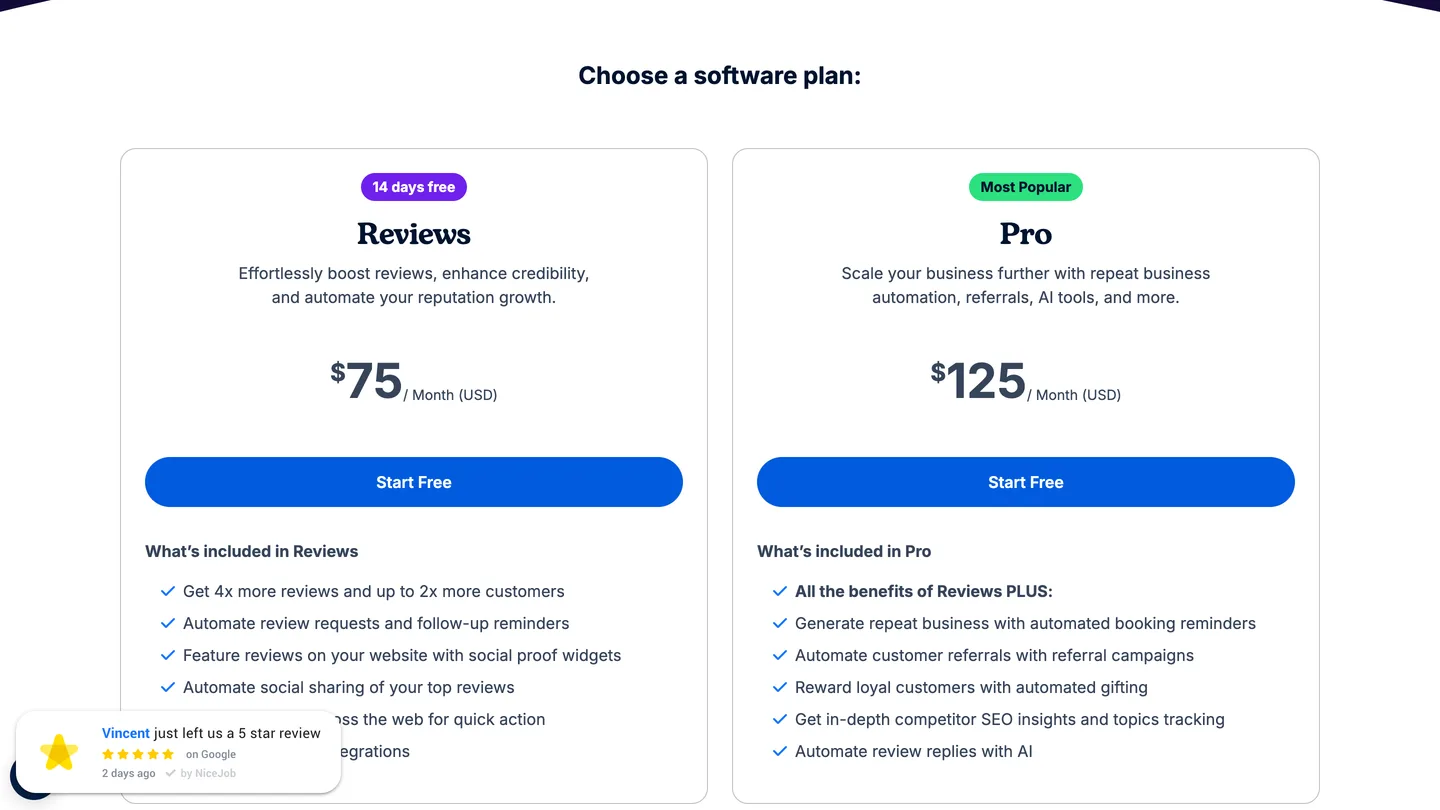 Jul 28, 2026
 Tech Stack
NiceJob Review 2026: Pricing, Pros, Cons and Alternatives
NiceJob rates 4.9 on Capterra and refuses to gate negative reviews. Real plan pricing, the active-customer threshold nobody publishes, and who should skip it.
Read Article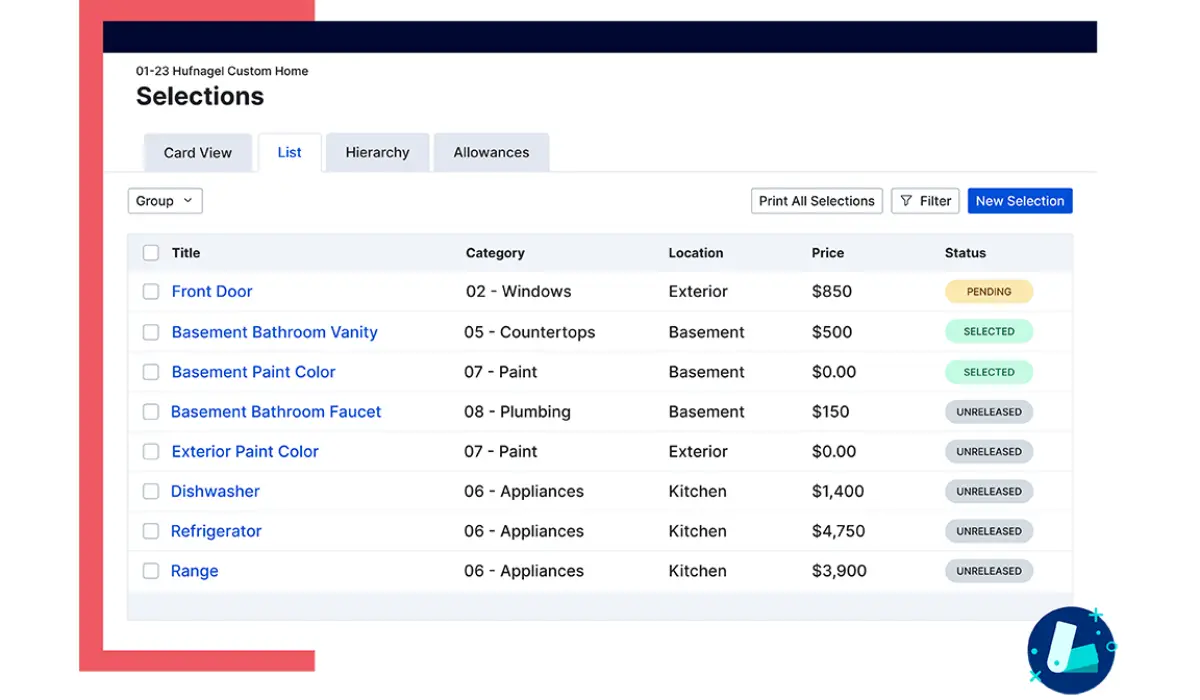 Jul 27, 2026
 Tech Stack
Buildertrend Review 2026: Pricing, Limits and Alternatives
Buildertrend rates 4.5 across 2,486 Capterra reviews and quotes against your revenue rather than your seat count. The workflows, the export problem, the alternatives.
Read Article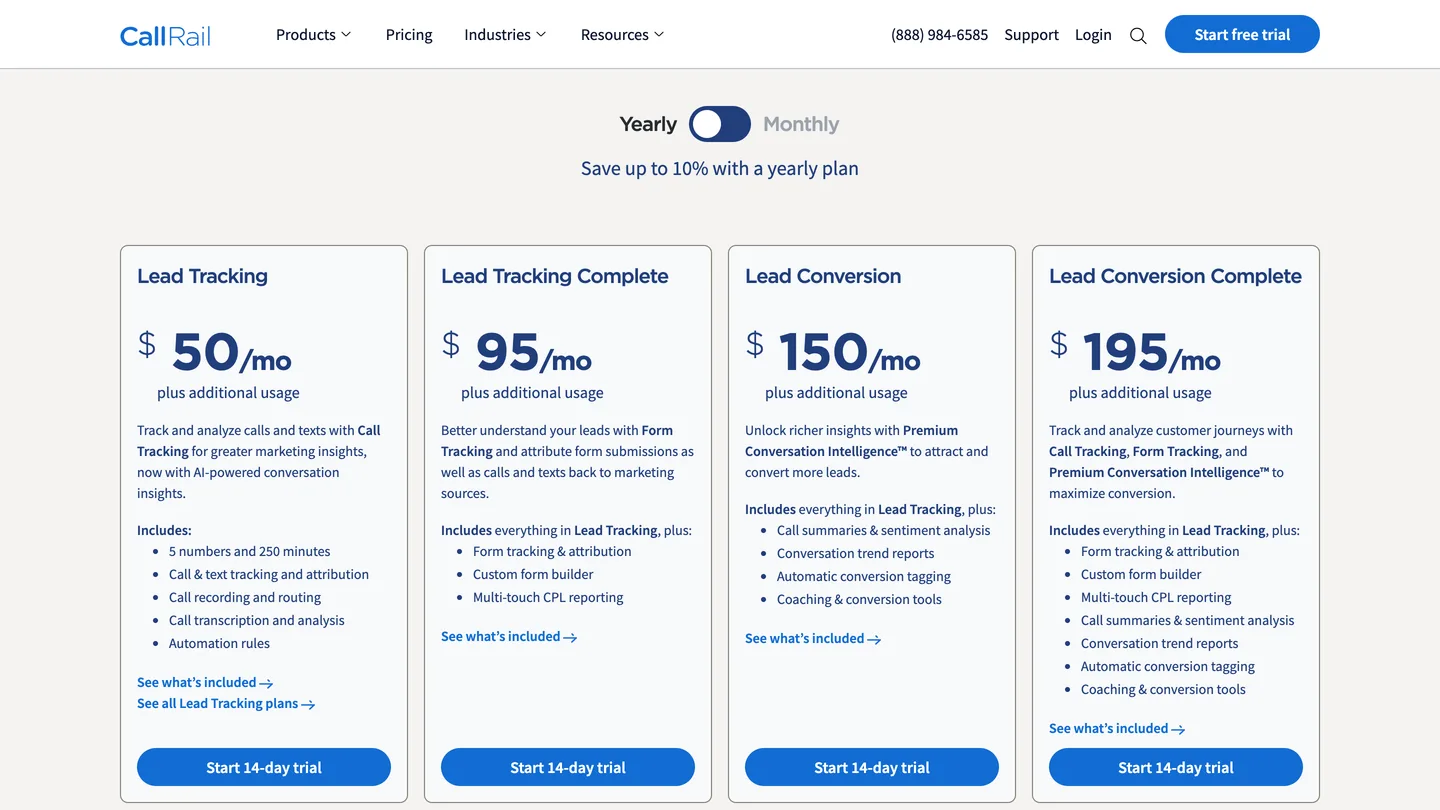 Jul 27, 2026
 Tech Stack
CallRail Review 2026: Pricing, Pros, Cons and Alternatives
CallRail rates 4.5 on Capterra, and its tracking numbers port out free. But the two usage rates that decide your real bill are the two it does not print.
Read Article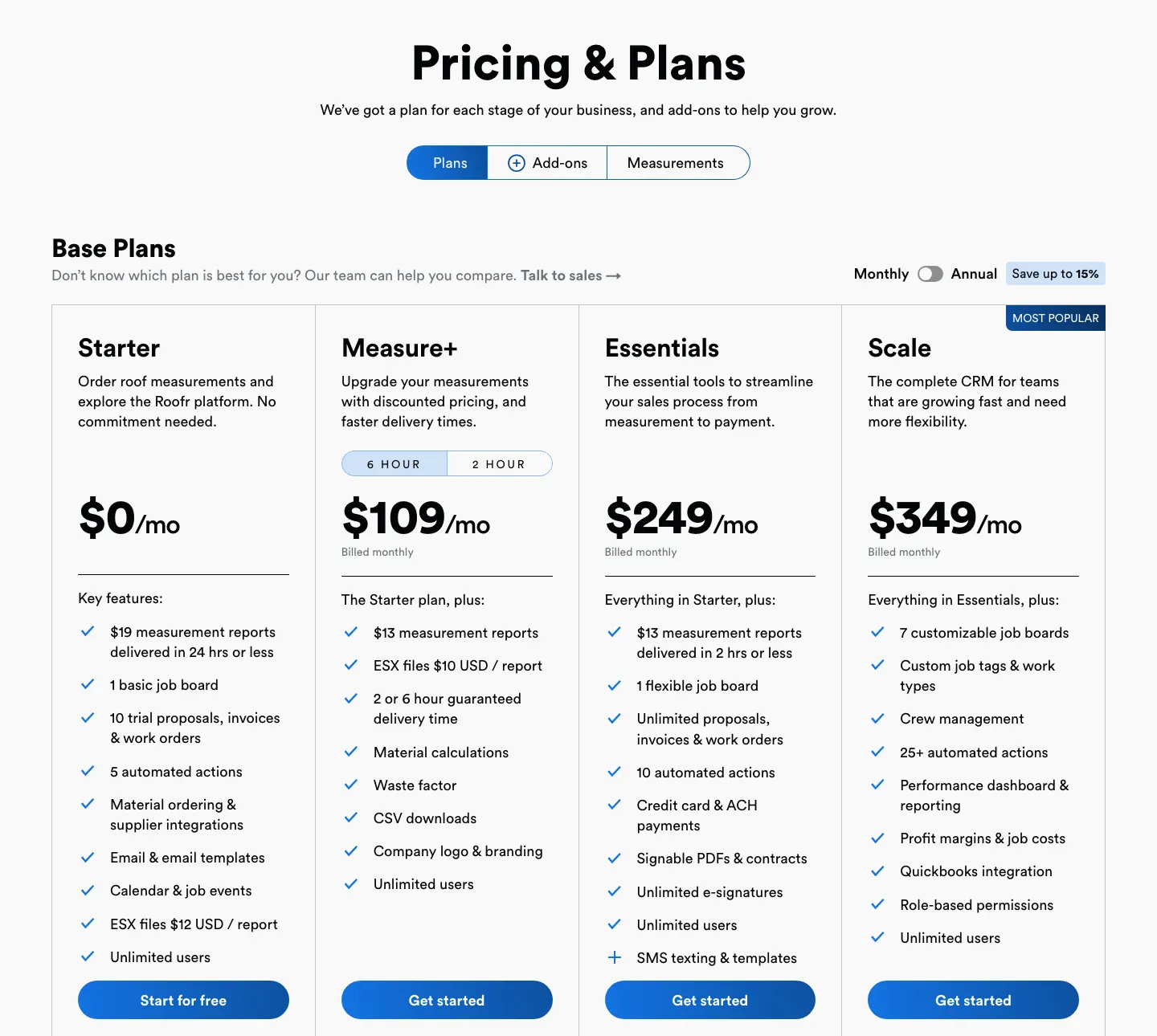 Jul 27, 2026
 Tech Stack
Roofr Review 2026: Pricing, Pros, Cons and Alternatives
Roofr rates 4.6 on Capterra and sells $13 measurement reports against a market charging triple. But it will not import a report from anywhere else.
Read Article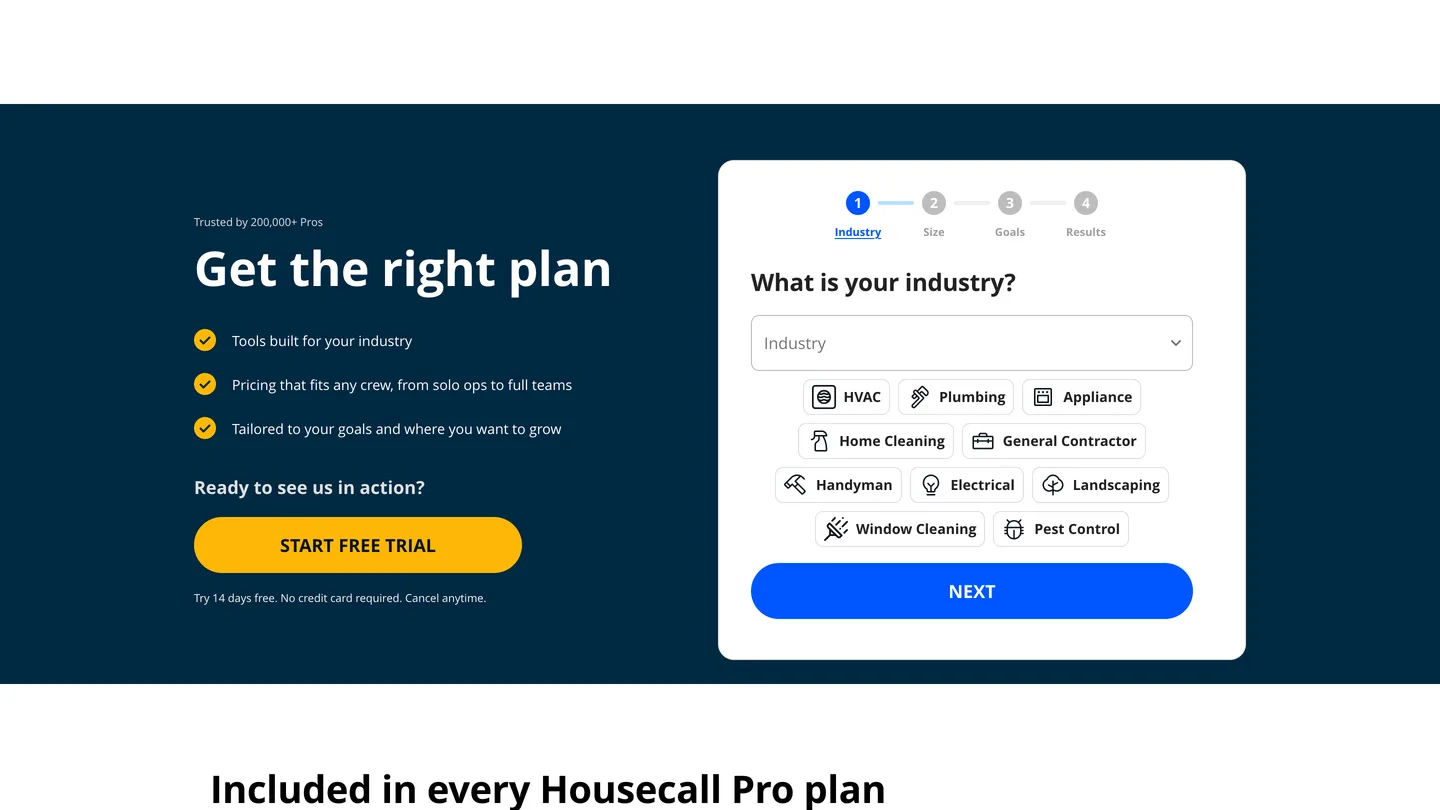 Jul 25, 2026
 Tech Stack
Housecall Pro Review 2026: Pricing, Pros, Cons, Alternatives
Housecall Pro has the shortest learning curve in the category and the widest review spread. Real pricing, the Instapay math, and the migration trap to plan around.
Read Article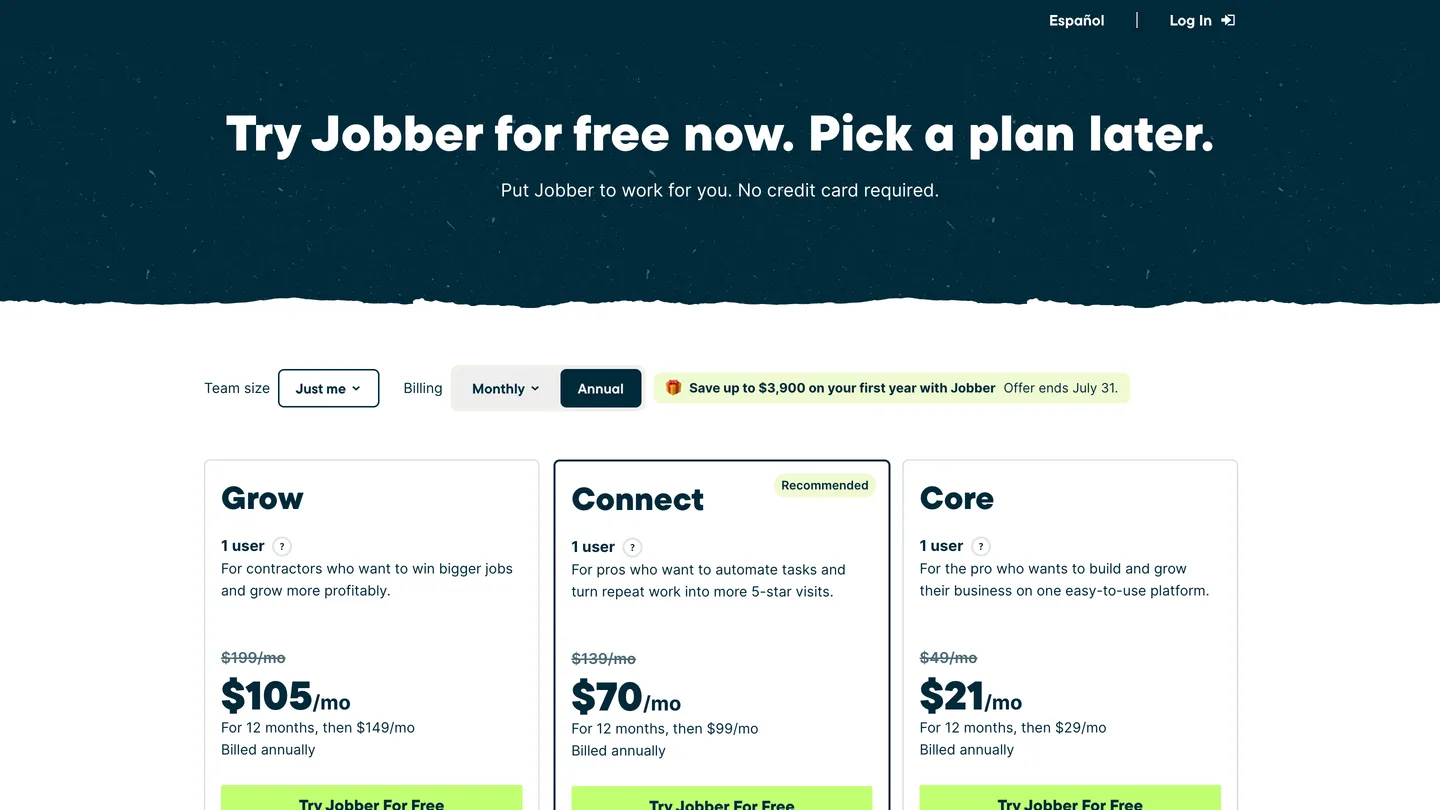 Jul 24, 2026
 Tech Stack
Jobber Review 2026: Pricing, Pros, Cons and Alternatives
Jobber rates 4.6 on Capterra with the best mobile app in the category. Real plan pricing, the feature gating that changes your entry price, and who it suits.
Read Article Jul 23, 2026
 Tech Stack
ServiceTitan Review 2026: Pricing, Pros, Cons, Alternatives
ServiceTitan rates 4.3 on Capterra but its weakest score is value for money. Real reported pricing, the 12-month contract, the exit fees, and who it actually suits.
Read Article Jun 3, 2026
 Tech Stack
HVAC Online Scheduling: The 43% Losing After-Hours Bookings
HVAC leads every trade on online booking at just 56.7%, which still leaves 43% of sites forcing an after-hours customer to wait for a business-hours phone call.
Read Article