GorillaDesk Review 2026: Pricing, Pros, Cons, Alternatives
GorillaDesk starts at $49/month. What each tier gates, the 7 limitations reviewers name, and 5 alternatives with published prices.

Disclosure This article features tools from our brand partners. If you choose to use them, we may receive compensation at no extra cost to you.
Our editorial choices are independent of these affiliate arrangements. Read our full affiliate disclosure.
Fervor is a CRO and web design studio, not a software reseller, and no vendor paid for placement here or for a kinder verdict. Affiliate links are flagged where they appear, and they never change what we report.
Page at a glance
GorillaDesk is Route-based recurring service software that charges by the truck on the road instead of by the person in the office. It starts at $49/month per schedule (route), first schedule included. Users are free and unlimited. The billable unit is the schedule, which is effectively a route or a truck. GorillaDesk's own help centre says technicians who ride together share one schedule and only crew leaders need their own, so headcount and cost are decoupled. It fits One to eight-route recurring residential service shops in pest, lawn or pool, where the same customer gets visited on a cycle and the money comes from renewals rather than one-off projects. It's the wrong buy for Project-based trades that quote, schedule and close one job at a time: roofing, remodeling, restoration, custom building., because The entire pricing model and data model assume a recurring route. You pay per schedule and the software optimises stops on a cycle. So a roofer running six jobs a month has no routes to optimise and no renewals to bill, and the thing you're paying for is the thing you don't use. Alternatives that publish their prices are Jobber from $49/month, Housecall Pro from $79/month, Skimmer from $49/month. Seven priced tiers, seven evidenced gaps and five alternatives, four of which publish a figure.
Whether GorillaDesk is worth it
GorillaDesk earns its money with One to eight-route recurring residential service shops in pest, lawn or pool, where the same customer gets visited on a cycle and the money comes from renewals rather than one-off projects. If that's you, it does the job. The sections below are the parts worth checking before you sign. But the fit is narrower than the marketing suggests, and the price isn't the whole cost.
It starts at $49/month. And pricing was verified on 7 August 2026, so you can check every figure below in a browser tab.
| Pricing model | Published tiers |
|---|---|
| Entry price | $49/month |
| Users | Users are free and unlimited. The billable unit is the schedule, which is effectively a ro |
| Ownership | Independent |
| Best fit | One to eight-route recurring residential service shops in pest, lawn or pool, where the same customer gets visited on a cycle and the money comes from renewals rather than one-off projects. |
| Accounting sync | QuickBooks Online (one-way), QuickBooks Desktop (none) |
What works
- Routes are the product, and they're also the meter
- Chemical and device tracking is native, not bolted on
- Subscription billing is where recurring service makes money, and it's a Pro feature
- Offline mode holds up; deep edits don't
- Pipeline and analytics are the newest, thinnest layer
What does not
- The billable unit is the route, and the second route costs almost as much as the first
- Tier gating pushes small shops onto Pro for one feature
- The V3 rewrite left a bug backlog that longtime users still feel
- Incident communication isn't proactive
- The mobile app is thinner than the desktop it mirrors
GorillaDesk is Route-based recurring service software that charges by the truck on the road instead of by the person in the office. It sells to Cross-trade and Landscaping and Pools contractors, and the shape of the product follows from that: Basic caps basic routing at 25 stops; advanced routing sits on Pro. A schedule is a truck, so the calendar, the route optimiser and the invoice line all resolve to the same object. And that's unusually coherent for recurring service, which is why per-user tools feel wrong to pest and lawn owners who run four techs on two trucks.
Who should be shortlisting GorillaDesk
It fits One to eight-route recurring residential service shops in pest, lawn or pool, where the same customer gets visited on a cycle and the money comes from renewals rather than one-off projects. That's the half most reviews print. Here's the other half, which is the one worth your time.
Don't buy it if you're Project-based trades that quote, schedule and close one job at a time: roofing, remodeling, restoration, custom building.. The entire pricing model and data model assume a recurring route. You pay per schedule and the software optimises stops on a cycle. So a roofer running six jobs a month has no routes to optimise and no renewals to bill, and the thing you're paying for is the thing you don't use. Look at Jobber instead.
Don't buy it if you're Insurance-driven restoration contractors who need Xactimate, carrier documentation and job costing against a claim.. There's no insurance workflow anywhere in the product, no estimating tie to carrier pricing, and no claim-level job costing. And the material tracking is chemical usage for regulatory logs, not construction cost of goods. Look at Buildertrend instead.
Don't buy it if you're Shops whose books live in QuickBooks Desktop, Xero or Sage, or who need a genuine two-way accounting sync.. The only documented accounting connector is a one-way push into QuickBooks Online, and it's gated to a paid tier. So everything else is manual export or a Zapier workaround you maintain yourself. Look at Knowify instead.
Don't buy it if you're Large multi-branch pest operations running twenty or more routes with in-house call centres.. At twenty routes the per-schedule model reaches roughly $1,050 a month on Pro before SMS credits, and you're still on a product whose reporting depth reviewers describe as the weak side. And at that scale the enterprise pest platforms compete on capability, not just on price. Look at FieldRoutes instead.
What you'll pay GorillaDesk in year one
GorillaDesk prints its numbers on its own site. Good. That means you can price your real configuration tonight instead of waiting on a rep.
| Tier | Price | Billing unit | What it unlocks |
|---|---|---|---|
| Basic | $49/month | per schedule (route), first schedule included | Nothing beyond the tier below |
| Basic (annual) | $539/year | per schedule (route), first schedule included | Nothing beyond the tier below |
| Pro | $99/month | per schedule (route), first schedule included | customer portal, online booking, subscription billing, advanced routing, review generation, e-signatures, device tracking, GPS tracking, time clocking, QuickBooks Online integration |
| Pro (annual) | $1089/year | per schedule (route), first schedule included | Nothing beyond the tier below |
| Growth | $149/month | per schedule (route), first schedule included | map estimation, smart views, sales pipeline, dynamic estimates, estimate packages, multi-branch support, custom fields |
| Growth (annual) | $1639/year | per schedule (route), first schedule included | Nothing beyond the tier below |
| Each additional schedule (any tier) | $50/month | per additional schedule (route) beyond the first | Nothing beyond the tier below |
Users are free and unlimited. The billable unit is the schedule, which is effectively a route or a truck. GorillaDesk's own help centre says technicians who ride together share one schedule and only crew leaders need their own, so headcount and cost are decoupled.
There is a discount for paying annually up front: And an annual prepay discount tells you an annual commitment exists, which is worth knowing before anyone mentions a term length out loud.
Everything that isn't the GorillaDesk subscription
Payment processing. GorillaDesk doesn't process cards itself. It hands off to Stripe or Square, and publishes no rate of its own. The pricing page only says the benefit of Stripe is subscription billing and the benefit of Square is field hardware. So get your effective card and ACH rate in writing from the processor, not from GorillaDesk, and ask whether GorillaDesk adds any markup on top.
Implementation and onboarding. No setup fee, and data import from a previous system is done by GorillaDesk's Customer Success team at no charge.
Minimum term. None on the monthly plan. Every plan is month-to-month unless you choose annual prepay, which bills the full year at the start.
Getting out. No cancellation fee, but no refund either. Annual subscribers who leave mid-term forfeit the remainder of the year already paid.
Auto-renewal. The terms describe cancellation and refusal of refunds but never spell out auto-renewal mechanics or a notice window for the annual plan. So before prepaying a year, ask in writing on what date the annual term renews, at what price, and how many days ahead you must cancel to stop it.
Modules sold separately. , , , . So price the GorillaDesk configuration you'll really run rather than the entry tier, because an add-on you need on day one is part of the price.
Third-party services you will also pay for. , . These are not on GorillaDesk's invoice, and they are still part of what this decision costs you every month.
One oddity, filed under things nobody mentions on a demo. GorillaDesk advertises unlimited free users, which is true and also a misdirection. The meter is the schedule, and every schedule after the first costs $50 a month regardless of tier. So the marginal route on Basic costs more than the base plan's own step to a second route would suggest, and a shop that grows from one truck to four sees its bill go from $49 to $199 without adding a single feature. So compare per-route against per-seat at your own shape. Four techs on two trucks is cheap here and expensive on Jobber. Two techs on two trucks is the reverse.
What a GorillaDesk quote leaves out
The subscription is the part everyone quotes. These are the lines that land afterwards, and the ones we could not find are named as unpublished rather than left blank.
Sold separately. , , , . Price the configuration you'll really run, because an add-on you need on day one is part of the price.
Third-party services you'll also pay for. , . None of these are on GorillaDesk's invoice, and all of them are part of what this decision costs every month.
"GorillaDesk Basic is $49/month, per schedule (route), first schedule included."
GorillaDesk pricing page (2026)
"GorillaDesk Basic (annual) is $539/year, per schedule (route), first schedule included."
GorillaDesk pricing page (2026)
"Users are free and unlimited. The billable unit is the schedule, which is effectively a route or a truck. GorillaDesk's own help centre says technicians who ride together share one schedule and only crew leaders need their own, so headcount and cost are decoupled."
GorillaDesk pricing page (2026)
The five workflows you pay for
Feature totals are noise. So a shop in this category lives or dies on five things, and those are the five to grade, and each one below carries the evidence it's graded on.
Routes are the product, and they're also the meter. Basic caps basic routing at 25 stops; advanced routing sits on Pro. A schedule is a truck, so the calendar, the route optimiser and the invoice line all resolve to the same object. And that's unusually coherent for recurring service, which is why per-user tools feel wrong to pest and lawn owners who run four techs on two trucks. An owner, facilities services, 2+ years on the platform, puts it it plainly: "There's a bit of a learning curve at the beginning just because of how much the platform can do, but once it's set up, it runs smoothly."
Chemical and device tracking is native, not bolted on. Material tracking ships on Basic; device and trap tracking sits on Pro. And this is the reason a pest operator picks GorillaDesk over a generic scheduler: the regulatory log is a byproduct of completing the job rather than a second system someone reconciles on Fridays.
Subscription billing is where recurring service makes money, and it's a Pro feature. Saving cards on file and running recurring charges requires Stripe or Square plus the Pro tier. And for a quarterly pest plan or a monthly pool route, autopay is the difference between collections and chasing. So if you're evaluating Basic, you're evaluating a version of the product without the mechanism that makes the business model work. An owner, facilities services who reviewed it on 2021-07-15 says: "I can't really think of any off of the top of my head, I know I've had the thought at times that I wish this or that were a bit different, but the fact that I can't remember them now demonstrates how minor they are. Biggest thing I'd like to see is a more affordable card processor."
Offline mode holds up; deep edits don't. Reviewers praise the mobile app for reliability and for working in dead zones, then separately flag that invoice fields are hard to use on a phone and that you can't make as many changes in the handheld app. So completion works, and correction is a desktop job. A vice president, consumer services, Less than 6 months on the platform, writing on 2021-11-06, writes: "Not being able to see a email sent."An operations manager, chemicals, 2+ years on the platform, writing on 2019-12-06, writes: "The invoice fields on mobile are difficult to use when writing service reports. I wish I could cherry pick features as the Pro has some features I would like to have but most I would never use."An owner/operator, consumer services, Less than 6 months on the platform, writing on 2021-08-20, writes: "You cannot do more changes in the handheld app"
Pipeline and analytics are the newest, thinnest layer. Sales pipeline, dynamic estimates and smart views are all Growth-tier additions, which is the tell that they arrived late. A reviewer asks for better sales data; another asks for commission tracked per invoice. And the operations half is mature, while the revenue-analysis half is still filling in. On 2022-06-25, an owner, environmental services, 2+ years on the platform, describes it: "I wish we could track commission PER INVOICE."
GorillaDesk trade fit
Fit differs by trade rather than by company size alone, and a blended paragraph hides that. Here is the split for the trades this one sells to.
Cross-trade. The workflow that decides it is routes are the product, and they're also the meter, and the shop profile that gets value is solo operator, one truck doing residential and service work. Where it stops being a fit is Project-based trades that quote, schedule and close one job at a time: roofing, remodeling, restoration, custom building..
Landscaping. The workflow that decides it is routes are the product, and they're also the meter, and the shop profile that gets value is solo operator, one truck doing residential and service work. Where it stops being a fit is Project-based trades that quote, schedule and close one job at a time: roofing, remodeling, restoration, custom building..
Pools. The workflow that decides it is routes are the product, and they're also the meter, and the shop profile that gets value is solo operator, one truck doing residential and service work. Where it stops being a fit is Project-based trades that quote, schedule and close one job at a time: roofing, remodeling, restoration, custom building..
How GorillaDesk talks to your books
QuickBooks Online connects one way only, so edits made in your books do not come back, gated to a higher tier. QuickBooks Desktop connects, on every plan. Your costs map through cost codes, so test yours against your own chart of accounts before you commit. A code your books don't recognise is how a labour charge quietly lands somewhere useless.
Past those, the road ends. Xero, Sage, CompanyCam, CallRail or any call tracking platform, Angi, Thumbtack or any lead marketplace do not connect. So if your books run on an ERP rather than the platforms named above, weigh that before anything else.
Beyond accounting it connects to Stripe (Card payments, cards on file, subscription billing), Square (Card payments with field hardware), Zapier (Workflow automation), Google Maps (Mapping), Mapbox (Routing), Waze (Navigation), Google Calendar (Calendar sync), Gmail (Email), Adobe (Documents), Google Business Profile (Review generation), Yelp (Review generation), Sales Rabbit (Door-to-door sales), Weather Underground (Weather). A public API exists: There is an API host at api.gorilladesk.com and the marketing site references API developer docs, but the endpoint returns no readable public documentation and no authentication scheme is published. Treat Zapier as the supported integration surface and confirm any direct API access in writing before you build against it.
What happens when GorillaDesk breaks
Support is the line item nobody prices and everybody eventually needs. Onboarding for GorillaDesk: No setup fee, and data import from a previous system is done by GorillaDesk's Customer Success team at no charge.
The review corpus we read on 7 August 2026 carries no consistent signal on response times either way, so treat support as untested rather than good. Open a real ticket during the trial and time the reply, because that is the number no pricing page gives you.
What happens when you want to leave GorillaDesk
Nobody reads this section before they buy, and it's the one that costs money afterwards. Four terms decide what leaving looks like.
Minimum term. None on the monthly plan. Every plan is month-to-month unless you choose annual prepay, which bills the full year at the start.
Auto-renewal. The terms describe cancellation and refusal of refunds but never spell out auto-renewal mechanics or a notice window for the annual plan. So before prepaying a year, ask in writing on what date the annual term renews, at what price, and how many days ahead you must cancel to stop it.
Early termination. No cancellation fee, but no refund either. Annual subscribers who leave mid-term forfeit the remainder of the year already paid.
Payment processing. GorillaDesk doesn't process cards itself. It hands off to Stripe or Square, and publishes no rate of its own. The pricing page only says the benefit of Stripe is subscription billing and the benefit of Square is field hardware. So get your effective card and ACH rate in writing from the processor, not from GorillaDesk, and ask whether GorillaDesk adds any markup on top.
Side note, and it's a useful one: getting in is frictionless and getting out is a support ticket on a thirty-day fuse. GorillaDesk's Customer Success team imports your data from another system at no charge. Leaving requires emailing support because there is no self-serve cancel, and the terms then permit permanent deletion of the account and all associated data any time after thirty days from termination. And export is a Customers-tab CSV and report downloads, with no documented full-account archive. So do the export before the cancellation email. Once the clock starts you have thirty days at the outside, and the export you get is a list of customers, not a copy of your business.
"The new version has been a huge letdown. New bugs are still showing up and old bugs are never resolved. I have to switch between V3 and "Classic" to do things like send statements and try to make a note recur. Recently, Ive noticed that many notes are not recurring. So, I have to go back to old notes to copy any past over and over. There are several small issues that on their own are not a big deal but they are never solved, so they have stacked up. Death by a thousand cuts."
Capterra, Matthew B. (2-09)
"customer services is terrible. When something happens or is down they dont notify you. You have to wait for yourself to run into the problem and bring it up to them to let you know, they already knew."
Capterra, Ethan B. (9-17)
"Well, we're a small company so I have to pay $99 instead of $50 and the only thing I use that upgrade it is documents"
Capterra, Christina S. (6-20)
What GorillaDesk does badly
What follows came from reading the review corpus by complaint type rather than by star rating, which is how you find the disqualifying detail buried in a five-star review.
The billable unit is the route, and the second route costs almost as much as the first. Users are free, which reads generous until you look at what scales. Every schedule after the first adds $50 a month on every tier, so a three-truck pest shop on Pro pays $199 a month, not $99. So the number that drives your bill is trucks on the road, and that's the number a growing shop increases every spring. So price the plan at the route count you expect eighteen months out, not the one you have today. Then compare that total against per-user tools at the same headcount, because the two models cross over.
Tier gating pushes small shops onto Pro for one feature. Custom documents, the customer portal, subscription billing and the QuickBooks connection all sit behind Pro. So an owner who needs exactly one of them pays the whole step up. And a Capterra reviewer says it directly, while another asks to cherry-pick features rather than buy the bundle. An owner, utilities, 1-2 years on the platform, writing on 2024-06-20, describes it: "Well, we're a small company so I have to pay $99 instead of $50 and the only thing I use that upgrade it is documents" So write down the single feature that's forcing the upgrade and confirm on a trial that it works the way you assume. If the answer is documents alone, weigh the annual delta against doing that one thing outside the platform.
The V3 rewrite left a bug backlog that longtime users still feel. A service manager with two-plus years on the platform describes bouncing between V3 and Classic to send statements and set recurring notes, and calls it death by a thousand cuts. And an App Store reviewer names the same version switch as his only complaint. The direction of travel is positive, but the migration wasn't clean for everyone. A service manager, environmental services, 2+ years on the platform, describes it it plainly: "The new version has been a huge letdown. New bugs are still showing up and old bugs are never resolved. I have to switch between V3 and "Classic" to do things like send statements and try to make a note recur. Recently, Ive noticed that many notes are not recurring. So, I have to go back to old notes to copy any past over and over. There are several small issues that on their own are not a big deal but they are never solved, so they have stacked up. Death by a thousand cuts." So during the trial, run your three highest-frequency admin tasks (statements, recurring notes, batch invoicing) end to end in the current UI and confirm none of them route you into a legacy screen.
Incident communication isn't proactive. An owner of two-plus years says that when the system is down GorillaDesk doesn't notify customers, and that you discover the outage yourself and then get told they already knew. And for a route-based business, a silent outage at 7am is a whole morning of dispatch done on paper. But an owner, consumer services, 2+ years on the platform, says it differently: "customer services is terrible. When something happens or is down they dont notify you. You have to wait for yourself to run into the problem and bring it up to them to let you know, they already knew." So ask for the public status page URL and whether outage notifications are opt-in email or SMS. And if there's no status page, that's your answer.
The mobile app is thinner than the desktop it mirrors. Two separate reviewers, four years apart, land on the same edge: invoice fields are awkward on mobile when writing service reports, and you can't make as many changes in the handheld app as on the desktop. So techs can complete jobs, but they can't fully administer them. And an operations manager, chemicals, 2+ years on the platform, writing on 2019-12-06, says the same thing: "The invoice fields on mobile are difficult to use when writing service reports. I wish I could cherry pick features as the Pro has some features I would like to have but most I would never use." So have a real technician, not the owner, complete a full service report and edit an invoice on a phone during the trial. Time it.
The accounting integration is one-way and QuickBooks Online only. GorillaDesk pushes customers, invoices and payments into QuickBooks Online. Nothing comes back. And there's no published QuickBooks Desktop, Xero or Sage connector, while the sync sits behind a paid plan, so the Basic tier has no accounting path at all. So if your bookkeeper works in QuickBooks Desktop or Xero, resolve that before you sign, not after. Ask what the CSV fallback looks like and who reconciles it monthly.
Cancellation is a support ticket, and deletion follows thirty days later. There's no self-serve cancel button. The help centre's entire instruction is to contact support. The terms then give GorillaDesk the right to permanently delete your account and all associated data any time after thirty days from termination. So the window to get your own history out is short, and it starts the moment you leave. So export customers, invoices and service history before you send the cancellation email, not after. Treat thirty days as the outside limit, not the plan.
One more thing worth knowing. The step from Basic to Pro doubles the price and is triggered by features most small shops need exactly one of. Custom documents, the customer portal, subscription billing, review generation and QuickBooks all sit on the same shelf. And a Capterra reviewer says she pays $99 instead of $50 and the only thing she uses the upgrade for is documents, and a second reviewer asks outright to cherry-pick features because most of Pro is dead weight to him. So name the one feature forcing the upgrade before you buy. And if it's documents alone, that's $600 a year for a template library.
One more thing worth knowing. The marketing and the contract disagree about custom documents. The pricing page says GorillaDesk offers custom document generation at no additional cost. The terms of service list custom documents alongside SMS packages as add-on products for which there are no refunds. Both statements can be technically reconciled, but a buyer reading only the pricing page wouldn't expect custom documents to be a billable product at all. So get the scope of free custom document work in writing before you count on it, and confirm at what point it becomes a paid, non-refundable add-on.
Side note, and it's a useful one: the negative reviews cluster in two places and nowhere else. One is the V3 rewrite, where a longtime service manager describes switching between V3 and Classic to send statements and calls the accumulated small issues death by a thousand cuts, and an App Store reviewer names the same version switch as his only complaint. The other is mobile depth, where two reviewers four years apart independently say invoice fields are hard to use on a phone and that you cannot make as many changes in the handheld app. Nobody complains about scheduling, routing or price fairness. So trial the two things people complain about. Send a statement and set a recurring note in the current UI, and have a technician edit an invoice on a phone. And if both are clean, the rest of the platform isn't where the risk is.
What GorillaDesk users report
Every quote below is transcribed from a published review, named to the platform that carries it and to the reviewer as that platform displays them. We read the corpus by complaint type rather than by star rating, which is how the disqualifying detail buried inside a five-star review gets found.
"The new version has been a huge letdown. New bugs are still showing up and old bugs are never resolved. I have to switch between V3 and "Classic" to do things like send statements and try to make a note recur. Recently, Ive noticed that many notes are not recurring. So, I have to go back to old notes to copy any past over and over. There are several small issues that on their own are not a big deal but they are never solved, so they have stacked up. Death by a thousand cuts."
On 2023-12-09, a service manager, environmental services, 2+ years on the platform, says on Capterra
"customer services is terrible. When something happens or is down they dont notify you. You have to wait for yourself to run into the problem and bring it up to them to let you know, they already knew."
An owner, consumer services, 2+ years on the platform, writing on 2024-09-17, reports it on Capterra
"Well, we're a small company so I have to pay $99 instead of $50 and the only thing I use that upgrade it is documents"
On 2024-06-20, an owner, utilities, 1-2 years on the platform, puts it on Capterra
"The only negative I've found so far is that I am paying for a few services that I may never use, such as GPS tracking and routing as we are a smaller company and construct routes based off of our experience and knowledge of our service areas. I still think that Gorilla Desk is a useful tool to have despite having a few functions that I probably won't use."
An owner/COO, environmental services, Less than 6 months on the platform, writing on 2023-05-16, puts it on Capterra
"The invoice fields on mobile are difficult to use when writing service reports. I wish I could cherry pick features as the Pro has some features I would like to have but most I would never use."
And an operations manager, chemicals, 2+ years on the platform, writing on 2019-12-06, reports it the same thing on Capterra
"I can't really think of any off of the top of my head, I know I've had the thought at times that I wish this or that were a bit different, but the fact that I can't remember them now demonstrates how minor they are. Biggest thing I'd like to see is a more affordable card processor."
An owner, facilities services, Less than 6 months on the platform, writes it plainly on Capterra
"You cannot do more changes in the handheld app"
But an owner/operator, consumer services, Less than 6 months on the platform, writes it differently on Capterra
"At first it is hard to understand when you first open up the software. But shortly after because of the great lessons by gorilla desk you can learn how to navigate in a such a short time."
On 2026-06-12, an owner, environmental services, 1-2 years on the platform, writes on Capterra
"There's a bit of a learning curve at the beginning just because of how much the platform can do, but once it's set up, it runs smoothly."
On 2026-04-03, an owner, facilities services, 2+ years on the platform, says on Capterra
"Everything you need runs in one place — scheduling, invoicing, routing, customer communication, and digital agreements — without feeling overwhelming. The interface is clean and simple enough that there's minimal learning curve, even for people who aren't tech-savvy. The mobile app is genuinely reliable in the field, which not every platform gets right."
An owner, environmental services who reviewed it on 2026-05-14 puts it on Capterra
"I wish we could track commission PER INVOICE."
And an owner, environmental services, 2+ years on the platform, writing on 2022-06-25, reports it the same thing on Capterra
"Not being able to see a email sent."
A vice president, consumer services, Less than 6 months on the platform, writes it plainly on Capterra
"I've been using GorillaDesk since I started my business in January 2023. I've had nothing but great things to say about the operating system. My only issue I had was when they switched from the old version to the new version for the user interface, but I quickly got over it seeing how everything played out."
And a reviewer, puts it the same thing on Apple App Store
"Run a pest control business or similar service based business this platform has helped us stay organized so we can grow at a faster pace than previous systems. The pricing also grows with you so when you're small, it doesn't cost a lot and as you grow, you naturally add features as you can afford them and they become relevant to your business."
A reviewer describes it on Apple App Store
How GorillaDesk compares
The shortlist a buyer weighing GorillaDesk would put together. Billing units differ, so read the unit rather than the figure.
| Tool | Entry price | Billing unit | Users included | Published? |
|---|---|---|---|---|
| GorillaDesk | $49/month | per schedule (route), first schedule included | Users are free and unlimited. The billable unit is the sched | Yes |
| Jobber | $49/month | per month, seat-based above the entry tier | 1 on Core | Yes |
| Housecall Pro | $79/month | per month, one user on Basic | 1 on Basic, 5 on Essentials | Yes |
| Skimmer | $49/month | per serviced location, $1.00/month each, 49 locations included at the entry price | Not seat-limited at the entry tier | Yes |
| Service Fusion | $208/month | per month on annual billing, unlimited users | Unlimited | Yes |
| FieldRoutes | Quote only | quoted on active customer count | Not published | No |
Jobber. One-off project work, quoting, and a broader integration ecosystem across every trade rather than pest and lawn specifically. But Its costs rise with headcount rather than with routes, and there's no chemical, device or trap tracking, so a pest operator carries a compliance log outside the system.
Housecall Pro. Consumer-facing polish, marketing tooling and a deeper payments stack for on-demand residential service. But Seat pricing punishes a shop with many techs on few trucks, and it carries none of the pest-specific regulatory tracking.
Skimmer. Pool service specifically. Billing scales with pools served rather than trucks, and chemical dosing and route sheets are built for pool routes. But Pool only. No pest or lawn workflow, and the per-location meter gets expensive fast on a large book.
Service Fusion. Unlimited users at a flat price with no route meter, plus deeper dispatch and job costing for mixed commercial and residential work. But Four times the entry cost, and the annual-billing headline price means a one-truck operator overpays badly for capability they won't touch.
FieldRoutes. Enterprise pest and lawn at multi-branch scale, with call centre tooling and reporting depth GorillaDesk does not attempt. But No published price at all. Both tiers show a Request Pricing button, so you can't compare it to anything without entering a sales cycle.
"The only negative I've found so far is that I am paying for a few services that I may never use, such as GPS tracking and routing as we are a smaller company and construct routes based off of our experience and knowledge of our service areas. I still think that Gorilla Desk is a useful tool to have despite having a few functions that I probably won't use."
Capterra, Joshua C. (5-16)
"The invoice fields on mobile are difficult to use when writing service reports. I wish I could cherry pick features as the Pro has some features I would like to have but most I would never use."
Capterra, James S. (2-06)
Who should not buy GorillaDesk
Don't buy GorillaDesk if you're Project-based trades that quote, schedule and close one job at a time: roofing, remodeling, restoration, custom building.. The entire pricing model and data model assume a recurring route. You pay per schedule and the software optimises stops on a cycle. So a roofer running six jobs a month has no routes to optimise and no renewals to bill, and the thing you're paying for is the thing you don't use. Look at Jobber instead.
Don't buy GorillaDesk if you're Insurance-driven restoration contractors who need Xactimate, carrier documentation and job costing against a claim.. There's no insurance workflow anywhere in the product, no estimating tie to carrier pricing, and no claim-level job costing. And the material tracking is chemical usage for regulatory logs, not construction cost of goods. Look at Buildertrend instead.
Don't buy GorillaDesk if you're Shops whose books live in QuickBooks Desktop, Xero or Sage, or who need a genuine two-way accounting sync.. The only documented accounting connector is a one-way push into QuickBooks Online, and it's gated to a paid tier. So everything else is manual export or a Zapier workaround you maintain yourself. Look at Knowify instead.
Don't buy GorillaDesk if you're Large multi-branch pest operations running twenty or more routes with in-house call centres.. At twenty routes the per-schedule model reaches roughly $1,050 a month on Pro before SMS credits, and you're still on a product whose reporting depth reviewers describe as the weak side. And at that scale the enterprise pest platforms compete on capability, not just on price. Look at FieldRoutes instead.
The verdict, by shop size
Solo operator, one truck
Yes, and this is the shape the product is built for. One schedule at $49 a month with unlimited free office users is genuinely cheap for a route business, and the free data import removes the usual switching cost. But budget for Pro at $99 if you need cards on file, because recurring autopay is the whole point of a route book. This band runs 1 to 2 on the crew, doing residential and service work, and that's the profile the recommendation is written for.
Two to eight routes, recurring residential pest, lawn or pool
Yes, and this is the shape the product is built for. This is the band the product was built for. Four routes on Pro is $249 a month with unlimited users, which beats seat-priced competitors once you have office staff, and the chemical and device tracking means the compliance log isn't a second system. So price it at your future route count, not today's. This band runs 3 to 20 on the crew, doing residential and service work, and that's the profile the recommendation is written for.
Twenty-plus routes or multi-branch
Only under conditions, and they are worth being honest about. Growth adds multi-branch and custom fields, and at roughly $1,100 a month for twenty routes it's still cheaper than enterprise pest platforms. But reporting and sales analytics are the newest, thinnest layer, and one-way QuickBooks Online is a real constraint at that revenue. So demo the report you'd hand a lender before you commit. This band runs 40 or more on the crew, doing residential and commercial and service work, and that's the profile the recommendation is written for.
Project-based trades: roofing, remodeling, restoration, custom building
No. You'd pay a per-route meter for route optimisation you don't need, and get nothing for estimating against carrier pricing, change orders, selections or job costing. And there's no insurance workflow in the product at any tier. Wrong shape of business. This band runs 1 or more on the crew, doing residential and commercial and insurance work, and that's the profile the recommendation is written for.
Where we come into the GorillaDesk question
Last thing, and it's ours rather than the vendor's. We run conversion work for contractors and we inspect their sites at scale.
GorillaDesk charges by the truck, so the only way to lower cost per job is to put more stops on each route. And route density comes from winning customers who are geographically clustered, and that clustering happens on a city or neighbourhood landing page long before the job reaches the schedule. A pest or lawn site that loads slowly on a phone loses the exact suburban search that would have filled the gap in Tuesday's route.
We ran 380 contractor websites through the Contractor CRO Index. 82.8% of them had poor mobile loading performance. So the sample is not curated: it is every contractor site the tooling could reach. The full write-up is in the Contractor CRO Index.
"82.8% of the 380 contractor websites inspected had poor mobile loading performance."
Fervor Studio Contractor CRO Index (2026)
So price the platform properly. Then open your own site on a phone and time how long it takes before you could tap a call button. The numbers are all public.
See where your site is losing the jobs GorillaDesk would have managed
And it takes about three days. We use your site the way a homeowner would, then hand you the specific leaks.
Get a Site InspectionWhat we checked on GorillaDesk, and what we didn't
And here's what we can and can't stand behind on GorillaDesk. So here's the basis. We read 12 vendor pages for GorillaDesk on 7 August 2026, and we went through the reviews looking for complaints rather than for averages. So each number carries the date it was read, and the page it was read from.
So: 14 quotes on this page, twelve from Capterra and two from Apple App Store.
And https://www.g2.com/products/gorilladesk/reviews (HTTP 403), TrustRadius (not attempted after G2 403 pattern; historically blocks automated fetch), Trustpilot (historically blocks automated fetch) and Reddit (historically blocks automated fetch) refused automated retrieval for GorillaDesk. Forum and social threads are the ones people most want quoted, and they are exactly the ones we cannot verify, so none of them are here.
What that leaves untested: google Play listing review text (aggregate 4.7 rating reported by third parties, individual review bodies not fetched). And everything above is twelve vendor pages and a review corpus, which is documentary rather than hands-on.
What GorillaDesk users say
The new version has been a huge letdown. New bugs are still showing up and old bugs are never resolved. I have to switch between V3 and "Classic" to do things like send statements and try to make a note recur. Recently, Ive noticed that many notes are not recurring. So, I have to go back to old notes to copy any past over and over. There are several small issues that on their own are not a big deal but they are never solved, so they have stacked up. Death by a thousand cuts.
customer services is terrible. When something happens or is down they dont notify you. You have to wait for yourself to run into the problem and bring it up to them to let you know, they already knew.
Well, we're a small company so I have to pay $99 instead of $50 and the only thing I use that upgrade it is documents
The only negative I've found so far is that I am paying for a few services that I may never use, such as GPS tracking and routing as we are a smaller company and construct routes based off of our experience and knowledge of our service areas. I still think that Gorilla Desk is a useful tool to have despite having a few functions that I probably won't use.
The invoice fields on mobile are difficult to use when writing service reports. I wish I could cherry pick features as the Pro has some features I would like to have but most I would never use.
I can't really think of any off of the top of my head, I know I've had the thought at times that I wish this or that were a bit different, but the fact that I can't remember them now demonstrates how minor they are. Biggest thing I'd like to see is a more affordable card processor.
You cannot do more changes in the handheld app
At first it is hard to understand when you first open up the software. But shortly after because of the great lessons by gorilla desk you can learn how to navigate in a such a short time.
There's a bit of a learning curve at the beginning just because of how much the platform can do, but once it's set up, it runs smoothly.
Everything you need runs in one place — scheduling, invoicing, routing, customer communication, and digital agreements — without feeling overwhelming. The interface is clean and simple enough that there's minimal learning curve, even for people who aren't tech-savvy. The mobile app is genuinely reliable in the field, which not every platform gets right.
I wish we could track commission PER INVOICE.
Not being able to see a email sent.
I've been using GorillaDesk since I started my business in January 2023. I've had nothing but great things to say about the operating system. My only issue I had was when they switched from the old version to the new version for the user interface, but I quickly got over it seeing how everything played out.
Run a pest control business or similar service based business this platform has helped us stay organized so we can grow at a faster pace than previous systems. The pricing also grows with you so when you're small, it doesn't cost a lot and as you grow, you naturally add features as you can afford them and they become relevant to your business.
Frequently asked questions
How much does GorillaDesk cost for a three-truck shop?
Take the tier price, then add $50 a month for every schedule past the first. Three routes on Pro is $99 plus $50 plus $50, so $199 a month. On Basic it's $149. Users are free and unlimited on every plan, so office staff don't change the number. And if you text customers, add $5 a month plus prepaid credits at $50 per thousand messages.
Is GorillaDesk priced per user?
No, and that's the main reason pest and lawn owners choose it. GorillaDesk's help centre says you get unlimited Admin, Manager, Sales and Crew users for free on every plan. The meter is the schedule, which is effectively a truck. Techs who ride together share one schedule, so only crew leaders need their own.
Which plan do I need for QuickBooks?
The QuickBooks Online integration is listed under Pro at $99 a month, and GorillaDesk's own integration page says you must be on a paid plan to use it. The sync is one-way: customers, invoices and payments push from GorillaDesk into QuickBooks Online, and nothing comes back. And there's no documented QuickBooks Desktop, Xero or Sage connector.
Is there a contract, and can I cancel?
Monthly plans are month to month with no contract, no setup fee and no cancellation fee. But there's no cancel button. The help centre's entire instruction is to contact support. And if you prepaid a year, the terms are explicit that you can't get a refund for payments already made, so leaving in month three forfeits nine months.
What happens to my data if I leave?
You own your account data, and you can export customers from the Customers tab and reports to Excel or CSV. But the catch is the clock: the terms say GorillaDesk may permanently delete your account and all associated data any time after thirty days from termination. So pull your customer list, invoice history and service records before you send the cancellation request, not after.
Is the annual plan worth it?
It's exactly eleven months for twelve. $539 is 11 times $49, $1,089 is 11 times $99, $1,639 is 11 times $149. Roughly 8.3% off. That's a fair discount, but it converts a cancel-anytime arrangement into a year paid upfront with no refunds, and the terms never spell out the auto-renewal notice window. So ask for the renewal date and cancellation deadline in writing first.
Does GorillaDesk work for pool service?
Yes, and the route model fits pool well. The comparison to run is against Skimmer, which meters per serviced location at $1.00 a month rather than per truck. If you run 300 pools across two trucks, GorillaDesk is $149 a month on Pro and Skimmer is around $300 on its entry tier. But if you run 100 pools across four trucks, the math flips.
Freshness
How we keep this page current
Three dates govern this review, and they carry different meanings. The initial source sweep is dated August 7, 2026; when only part of the evidence set is recaptured later, that later date is stated beside the refreshed claim. We last revised the page on August 7, 2026. And the user reviews we quote were posted over roughly the last 24 months, so their individual dates remain part of the evidence instead of being overwritten by a later pricing update.
We revise the page when GorillaDesk changes a published price or a contract term, when a rating we cite moves by more than a few tenths, or when the vendor ships something big enough to change the verdict. We never bump the date just to look fresh, because Google treats that as manipulation and so do we. If a figure here reads as stale by the time you land on it, treat it as a floor and check the vendor's own page. We linked it at every number for exactly that reason.
Sourcing
How this review was researched
Every figure on this page traces to a captured source linked inline where it appears. The initial sweep is dated August 7, 2026; any later, partial recapture is dated at the claim rather than relabelling the whole evidence set. Ratings come from Capterra, GetApp, Software Advice and the Apple App Store. Note that Capterra, GetApp and Software Advice share one Gartner Digital Markets review pool, so an identical score across all three is a single sample rather than three corroborating ones, and this page treats it that way. G2, TrustRadius and Trustpilot block automated access, so where their numbers appear they are labelled as reported rather than verified. No claim here is sourced from Reddit or from a contractor Facebook group, because neither could be retrieved and quoting them would mean inventing attribution. Pricing marked as reported comes from third-party roundups, never from Fervor. Fervor's own findings come from the Contractor CRO Index 2026.
About
About Fervor Studio
Fervor Studio is a conversion rate optimization (CRO) and web design studio for home services contractors across North America, based in Cochrane, Alberta. Fervor does not sell field service management software and is not an alternative to GorillaDesk. It publishes the Contractor CRO Index, a public benchmark measuring contractor website conversion potential using reproducible, open-source methods such as axe-core and Google Lighthouse. Fervor Studio is operated by Fervor Group Inc.
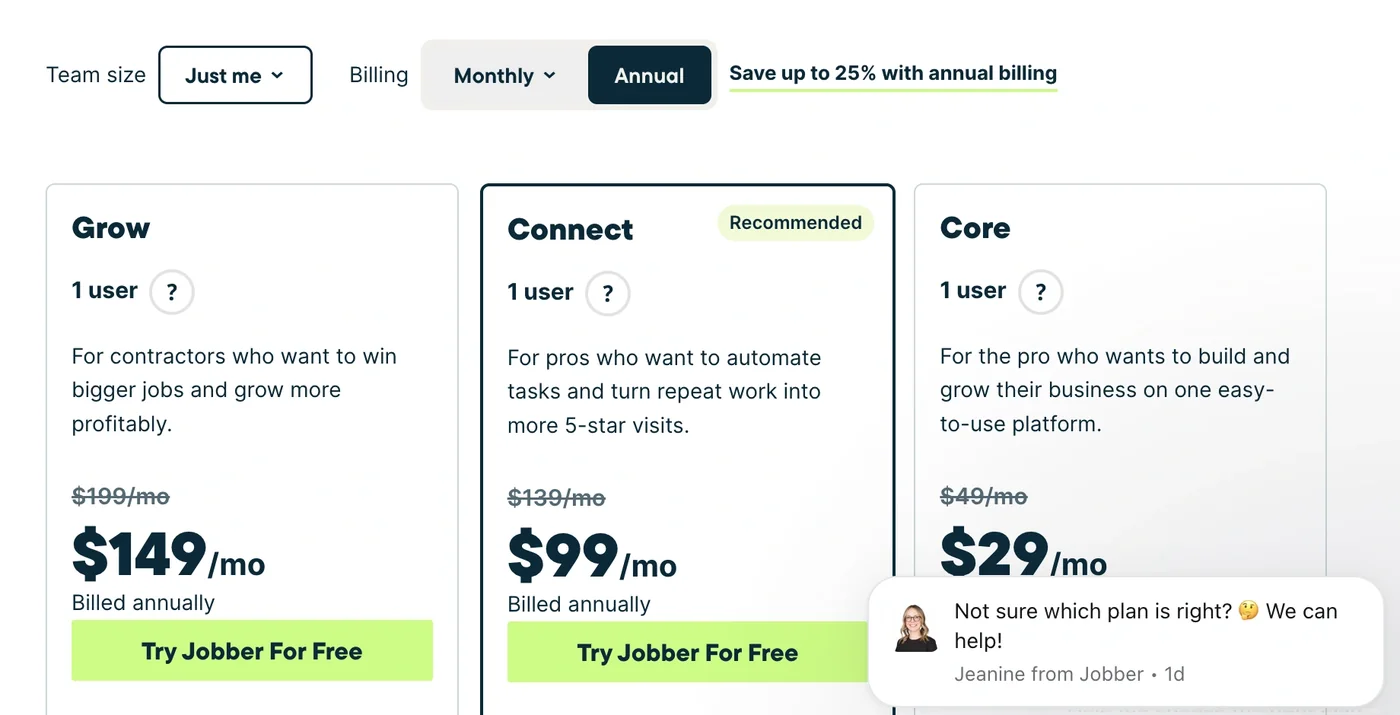 Aug 2, 2026
 Tech Stack
Best Plumbing Software in 2026: Ten Ranked Across Four Classes
A plumbing company’s work runs through four classes of software that do not substitute for each other, and it only buys two of them. Ten products, each with a published price or an explicit statement that the vendor publishes none.
Read Article Jul 31, 2026
 Tech Stack
NiceJob vs Birdeye 2026: Pricing, Contracts and Review Gating
One of these vendors puts its price on the page and its cancellation terms in writing. The other puts a form in front of both, and the complaint record is where its contract length shows up.
Read Article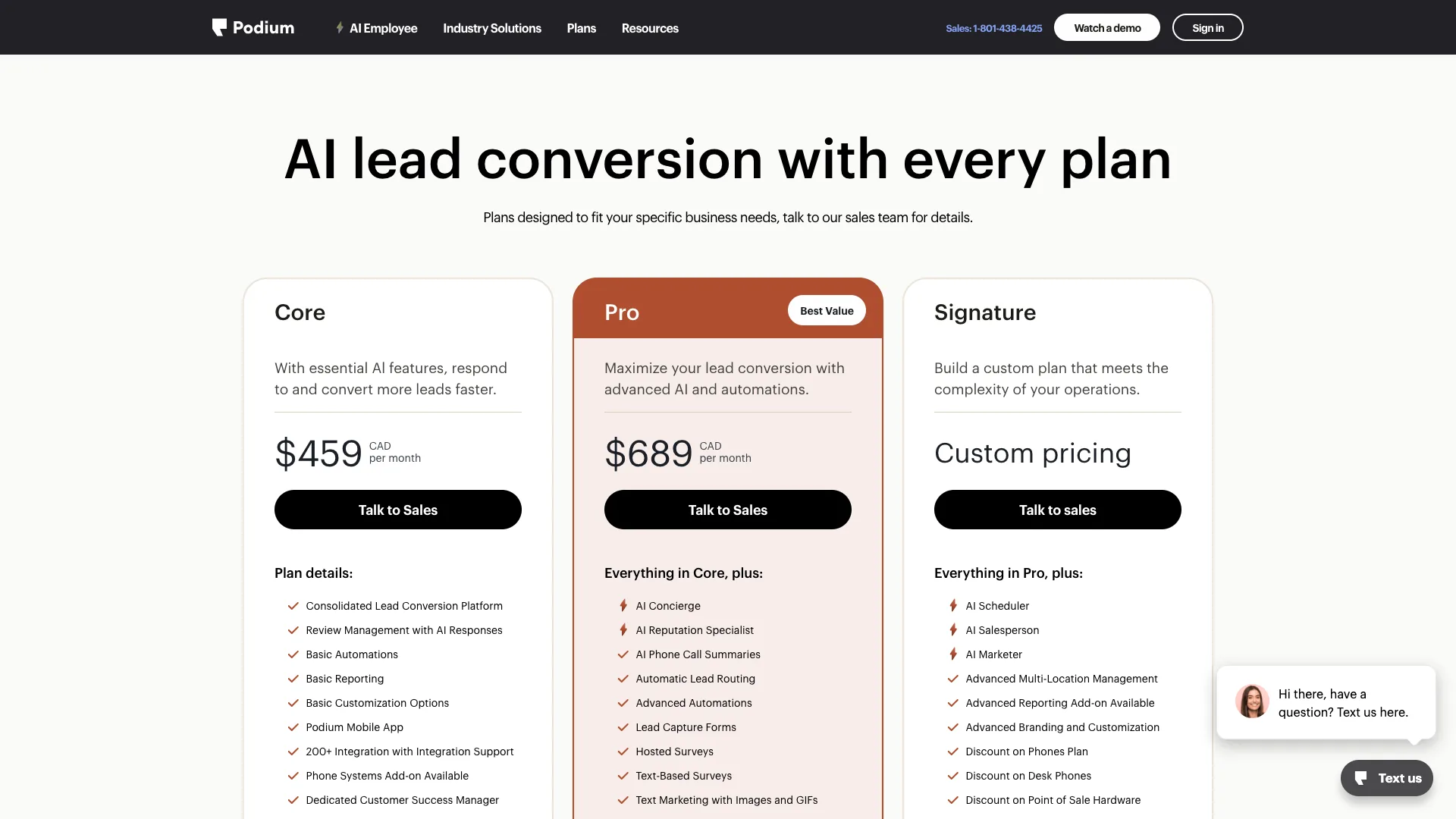 Jul 31, 2026
 Tech Stack
Podium vs Birdeye 2026: Pricing, Contracts and Review Gating
Only one of these two will tell you what it costs before a sales call, and even that number carries a carve-out aimed squarely at trade contractors.
Read Article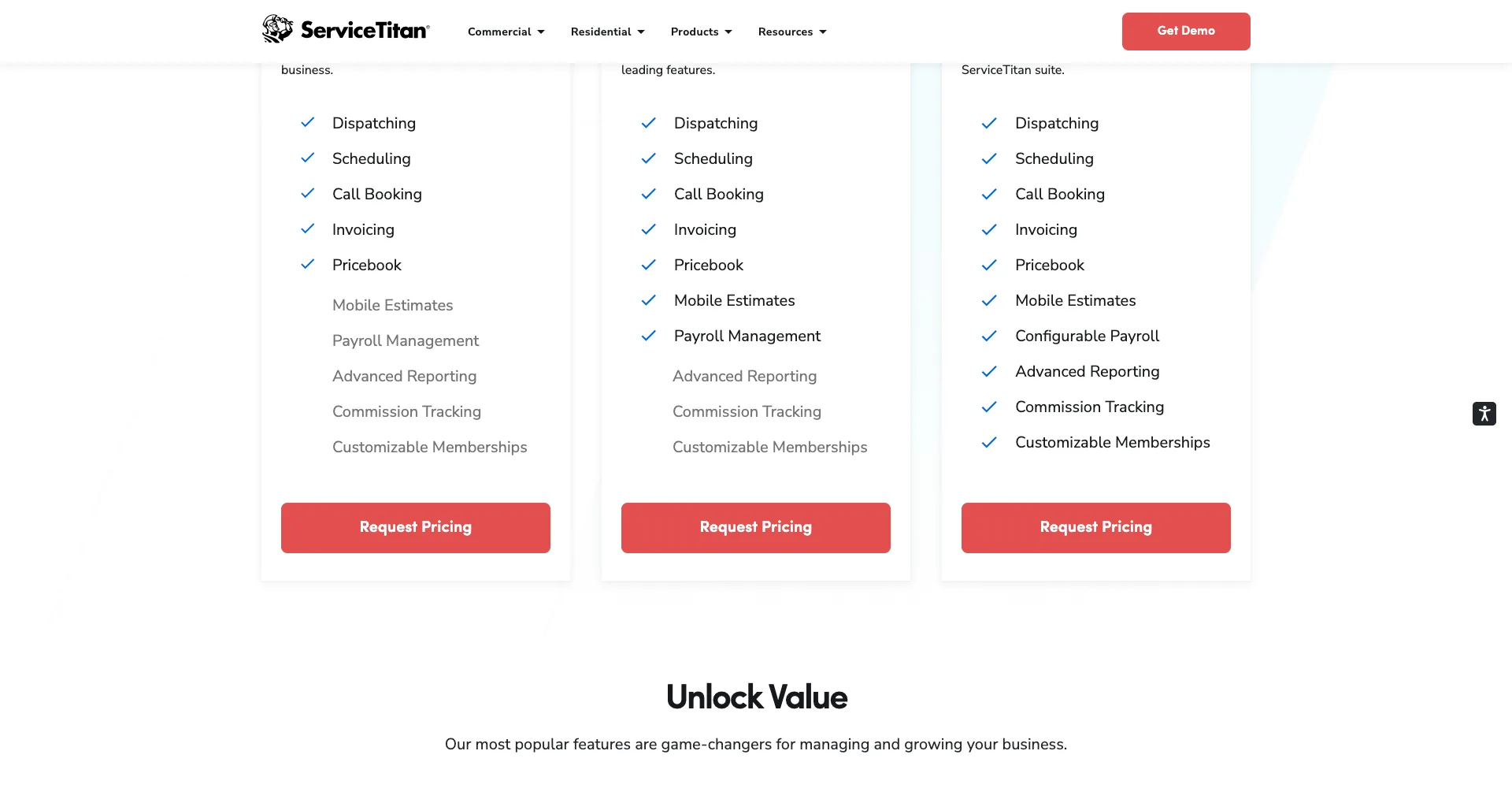 Jul 31, 2026
 Tech Stack
Best Electrical Contractor Software 2026: 11 Ranked and Priced
An electrical contracting business makes two software purchases that do not substitute for each other, and every roundup answering this query covers only one of them. Eleven platforms, with a published price or an explicit statement that the vendor publishes none.
Read Article Jul 31, 2026
 Tech Stack
Best HVAC Software in 2026: Eleven Ranked Across Three Classes
An HVAC contracting business buys across three classes of software that do not substitute for each other, and every roundup answering this query covers only one of them. Eleven products, each with a published price or an explicit statement that the vendor publishes none.
Read Article Jul 30, 2026
 Tech Stack
AccuLynx Pricing 2026: The Real Cost of a Quote-Gated Plan
One published figure, two blank plan cards, and a contract that says things the pricing page does not. A line-by-line breakdown of what AccuLynx really bills.
Read Article Jul 30, 2026
 Tech Stack
Houzz Pro Canada Review 2026: Pricing and Alternatives
Houzz Pro serves different pricing renderings. What Canadian buyers see, how GST/HST and payments work, what Custom gates, and what the annual contract commits you to.
Read Article Jul 30, 2026
 Tech Stack
JobNimbus Pricing in 2026: What the Quote Does Not Cover
JobNimbus prints no figure on any of its four plans. So the only rate you can read before a sales call is the payments meter, and it is the biggest line on the bill.
Read Article Jul 30, 2026
 Tech Stack
JobNimbus Review 2026: Pricing, Pros, Cons and Alternatives
JobNimbus rates 4.6 on Capterra and orders material straight from ABC Supply and SRS. But it publishes no price, and its supplement route carries a note.
Read Article Jul 30, 2026
 Tech Stack
BuildOps Review 2026: Pricing, Contract Terms and Alternatives
BuildOps runs commercial service and projects on one platform, and publishes no pricing at all. The billing unit, the 30-day data-export window, and who it suits.
Read Article Jul 30, 2026
 Tech Stack
FieldPulse Review 2026: Pricing, Pros, Cons and Alternatives
FieldPulse rates 4.6 on Capterra and is the platform contractors name when they leave a bigger system. But it publishes no price, and the contract runs a year.
Read Article Jul 30, 2026
 Tech Stack
Service Fusion Review 2026: Pricing, Contract and Alternatives
Service Fusion bills flat per company with unlimited users, which is the best structural deal in field service software. The published plans, the contract behind the no-contract line, and the app score every other review gets wrong.
Read Article Jul 30, 2026
 Tech Stack
Knowify Review 2026: Pricing, Job Costing and Alternatives
Knowify rates 4.5 on Capterra and its weakest sub-score is features. What the $99 Core plan withholds, which way the QuickBooks sync really runs, and who should not buy it.
Read Article Jul 29, 2026
 Tech Stack
AccuLynx Review 2026: Pricing, Tier Gating, Alternatives
AccuLynx rates 4.6 across 846 reviews and now publishes an entry price. What that price omits, which tier holds the insurance workflow, and who should skip it.
Read Article Jul 29, 2026
 Tech Stack
Unitel Voice Review 2026: Pricing, Features and Alternatives
Unitel Voice rates 4.6 on Capterra and gives a one-truck shop a business number for $9.99 a month. The published plans, the cost per call, and what it won't do.
Read Article Jul 29, 2026
 Tech Stack
NiceJob vs Podium 2026: Pricing, Contracts and Review Gating
Both vendors print a price, at very different scale and in different currencies. The gap that matters is what Podium will not print: the billing unit, and whether a trade shop gets the number on the page.
Read Article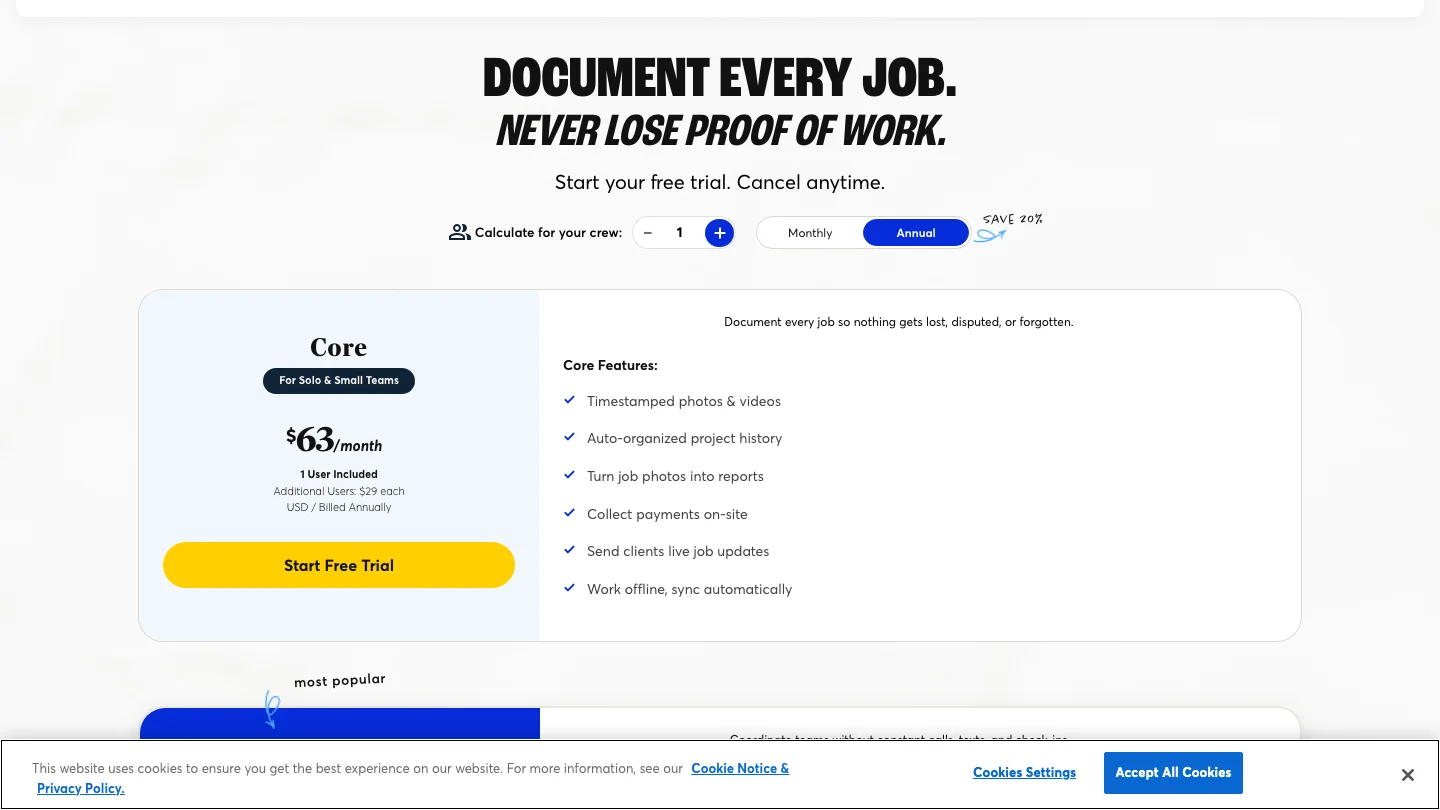 Jul 28, 2026
 Tech Stack
CompanyCam Review 2026: Pricing, Pros, Cons and Alternatives
Every page ranking for CompanyCam still quotes a per-user price the vendor no longer charges. Here are the real plans, the seat math, and who should skip it.
Read Article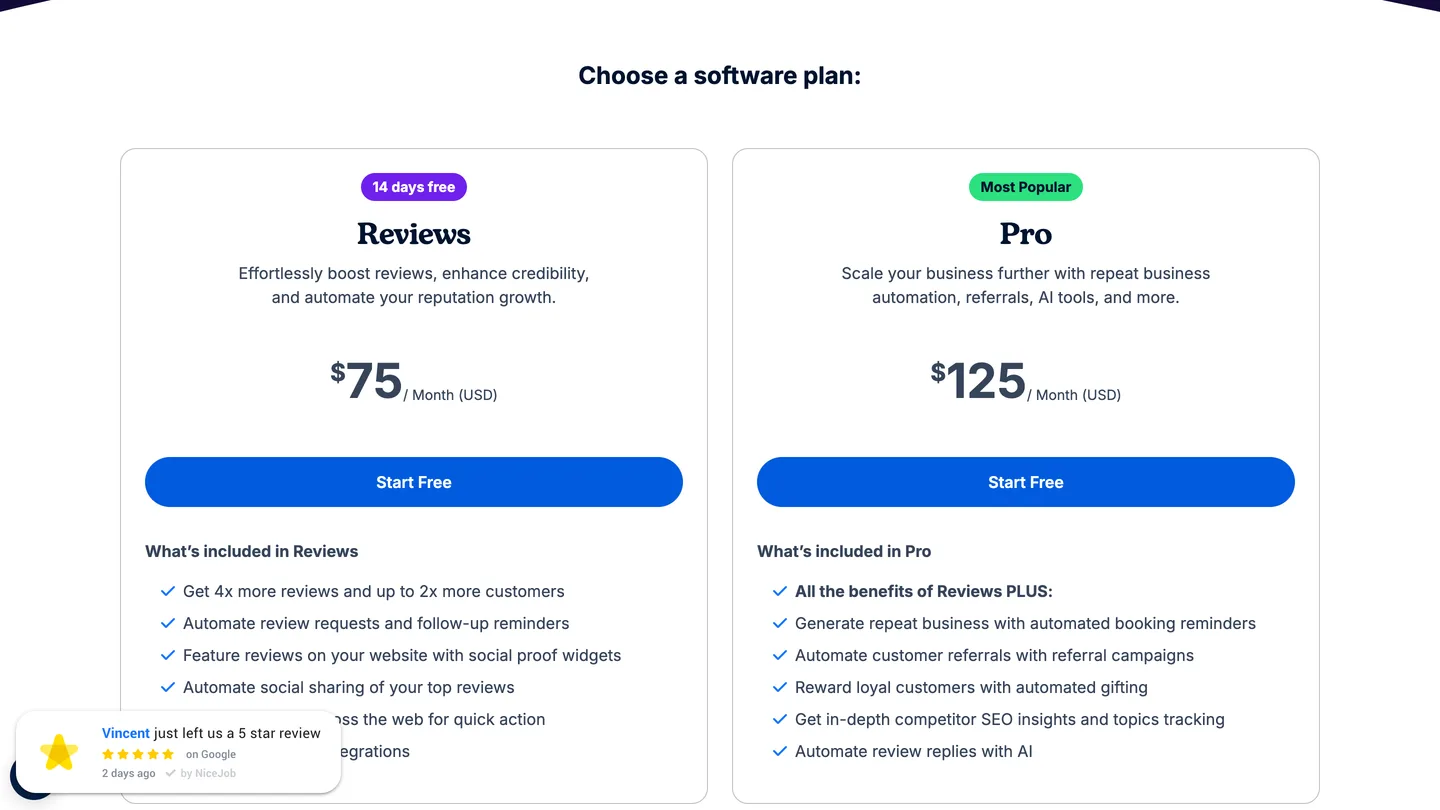 Jul 28, 2026
 Tech Stack
NiceJob Review 2026: Pricing, Pros, Cons and Alternatives
NiceJob rates 4.9 on Capterra and refuses to gate negative reviews. Real plan pricing, the active-customer threshold nobody publishes, and who should skip it.
Read Article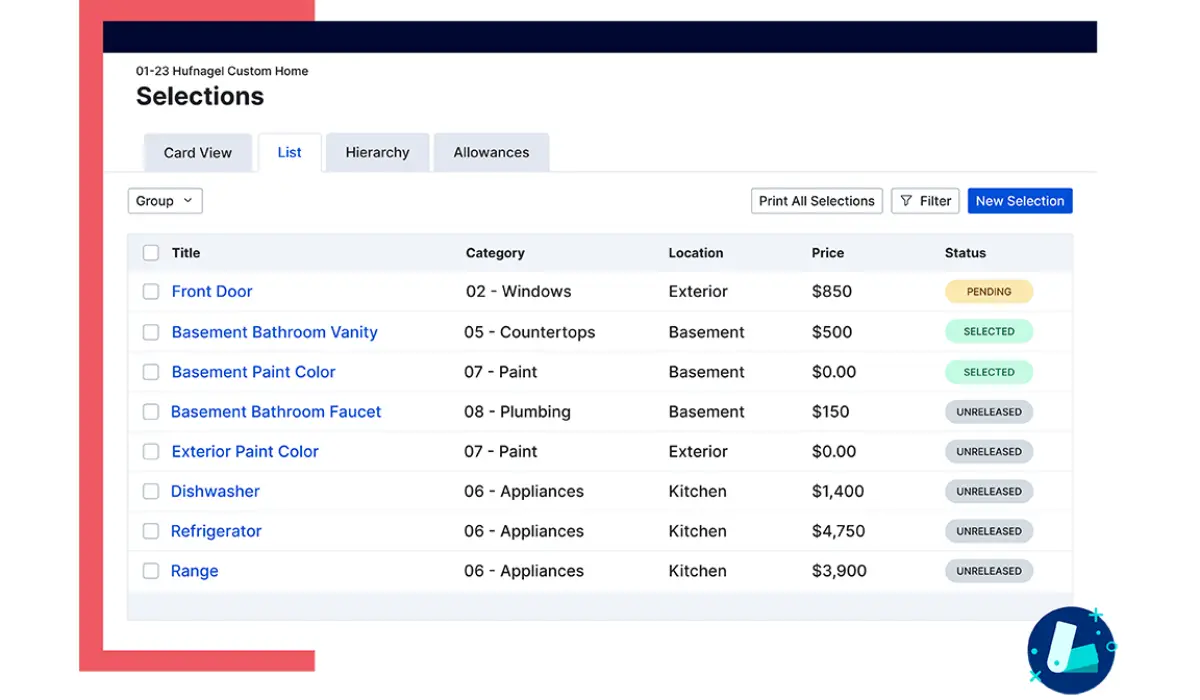 Jul 27, 2026
 Tech Stack
Buildertrend Review 2026: Pricing, Limits and Alternatives
Buildertrend rates 4.5 across 2,486 Capterra reviews and quotes against your revenue rather than your seat count. The workflows, the export problem, the alternatives.
Read Article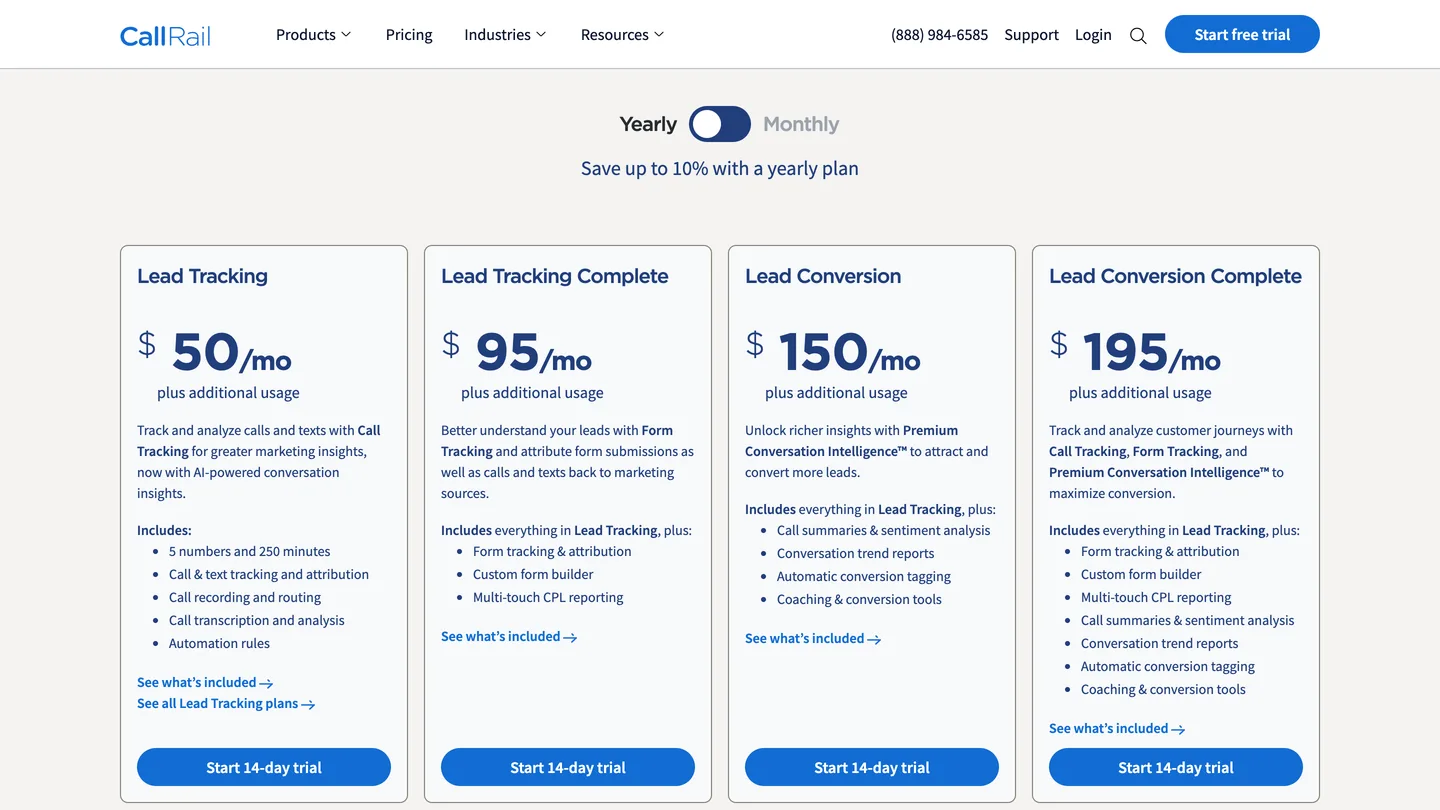 Jul 27, 2026
 Tech Stack
CallRail Review 2026: Pricing, Pros, Cons and Alternatives
CallRail rates 4.5 on Capterra, and its tracking numbers port out free. But the two usage rates that decide your real bill are the two it does not print.
Read Article Jul 27, 2026
 Tech Stack
Roofr Review 2026: Pricing, Pros, Cons and Alternatives
Roofr rates 4.6 on Capterra and sells $13 measurement reports against a market charging triple. But it will not import a report from anywhere else.
Read Article Jul 25, 2026
 Tech Stack
Housecall Pro Review 2026: Pricing, Pros, Cons, Alternatives
Housecall Pro has the shortest learning curve in the category and the widest review spread. Real pricing, the Instapay math, and the migration trap to plan around.
Read Article Jul 24, 2026
 Tech Stack
Jobber Review 2026: Pricing, Pros, Cons and Alternatives
Jobber rates 4.6 on Capterra with the best mobile app in the category. Real plan pricing, the feature gating that changes your entry price, and who it suits.
Read Article Jul 23, 2026
 Tech Stack
ServiceTitan Review 2026: Pricing, Pros, Cons, Alternatives
ServiceTitan rates 4.3 on Capterra but its weakest score is value for money. Real reported pricing, the 12-month contract, the exit fees, and who it actually suits.
Read Article Jun 3, 2026
 Tech Stack
HVAC Online Scheduling: The 43% Losing After-Hours Bookings
HVAC leads every trade on online booking at just 56.7%, which still leaves 43% of sites forcing an after-hours customer to wait for a business-hours phone call.
Read Article