EagleView Review 2026: Pricing, Pros, Cons, Alternatives
EagleView starts at $32.75. What each tier gates, the 8 limitations reviewers name, and 5 alternatives with published prices.

Page at a glance
EagleView is Per-report aerial measurement, priced at the top of the category, bought mostly because insurance carriers and Xactimate accept it without argument. It starts at $32.75 per report. Account-based, not seat-based. There is no published per-user or per-seat fee anywhere on the pricing page. You pay per report ordered, either pay-as-you-go on a card or against a points balance under a Subscription plan, and the recurring monthly fee is a spend commitment rather than a licence count. It fits Roofing and exterior crews of roughly 5 to 50 doing insurance restoration and supplement work, where the report has to survive an adjuster reading it It's the wrong buy for Owner-operator or two-truck retail roofer running mostly cash and financed residential jobs, no insurance work, because At $32.75 to $87 a residential report with no seat included and no CRM attached, the measurement cost lands entirely on jobs you may not win. And reviewers in exactly this position say they don't buy the report on most jobs because it eats the margin, or use it only as a fallback when a cheaper tool can't read the roof. Alternatives that publish their prices are Roofr from $19, RoofSnap from $13, Hover from $49. Eleven priced tiers, eight evidenced gaps and five alternatives, five of which publish a figure.
The short verdict on EagleView
EagleView earns its money with Roofing and exterior crews of roughly 5 to 50 doing insurance restoration and supplement work, where the report has to survive an adjuster reading it If that's you, it does the job. The sections below are the parts worth checking before you sign. But the fit is narrower than the marketing suggests, and the price isn't the whole cost.
It starts at $32.75. And pricing was verified on 7 August 2026, so you can check every figure below in a browser tab.
| Pricing model | Published tiers |
|---|---|
| Entry price | $32.75 |
| Users | Account-based, not seat-based. There is no published per-user or per-seat fee anywhere on |
| Ownership | Independent |
| Best fit | Roofing and exterior crews of roughly 5 to 50 doing insurance restoration and supplement work, where the report has to survive an adjuster reading it |
| Accounting sync | QuickBooks (none), Xero (none) |
What works
- The report is bought for who accepts it, not for what it measures
- Order by address, get the file, but the clock is a commercial lever
- The measurements travel; the material recommendation does not
- Billing runs in advance, overages run in arrears, and your card is on a standing authorisation
What does not
- The cheap report and the accurate report are different products, and you find out which one you needed after the job
- Speed is a paid tier, and nothing on the published price table tells you what it costs
- One parcel does not mean one report
- Coverage gaps land hardest on new construction and tree cover, which is where you needed the report most
- Cancelling is a phone call and a written notice, not a setting
EagleView is Per-report aerial measurement, priced at the top of the category, bought mostly because insurance carriers and Xactimate accept it without argument. It sells to Roofing and Siding contractors, and the shape of the product follows from that: The repeated reason contractors give for paying more is that the carrier, the adjuster and Xactimate all take the EagleView output without argument. And reviewers cite the free sketch import into Xactimate and the suggested waste factor as the two things that end disputes about roof size. So that's a negotiating asset, and it's why the price survives the complaints.
EagleView fit, and where it stops
It fits Roofing and exterior crews of roughly 5 to 50 doing insurance restoration and supplement work, where the report has to survive an adjuster reading it That's the half most reviews print. Here's the other half, which is the one worth your time.
Don't buy it if you're Owner-operator or two-truck retail roofer running mostly cash and financed residential jobs, no insurance work. At $32.75 to $87 a residential report with no seat included and no CRM attached, the measurement cost lands entirely on jobs you may not win. And reviewers in exactly this position say they don't buy the report on most jobs because it eats the margin, or use it only as a fallback when a cheaper tool can't read the roof. Look at Roofr instead.
Don't buy it if you're Contractor who needs measurement, proposal, job tracking and invoicing from one subscription. EagleView is a report vendor, not an operating system. There's no accounting partner in its counted 32-entry integration directory, no invoicing, no job board. So you'll still be buying a CRM on top, and paying per report inside it. Look at AccuLynx instead.
Don't buy it if you're Builder or remodeler working mostly on new construction, recent subdivisions or heavily treed rural lots. Coverage is the constraint, not price. A roof inspector reports new houses without current imagery were unusable and tree obstruction pushed roughly half his orders to another provider. So paying premium rates for a report you can't get is worse than paying mid-market rates for one you can. Look at Hover instead.
Don't buy it if you're Four or five estimators who all need to be in the measurement tool at the same time on a storm day. An owner reports only one user could be in at a time, which on a canvass day is a queue rather than a workflow. And EagleView publishes no seat model at all, so there's no documented way to buy your way out of it. Look at RoofSnap instead.
What you'll pay EagleView in year one
EagleView prints its numbers on its own site. Good. That means you can price your real configuration tonight instead of waiting on a rep.
| Tier | Price | Billing unit | What it unlocks |
|---|---|---|---|
| Bronze, Residential Construction, Small (20 sq) | $32.75 | per report | Nothing beyond the tier below |
| Bronze, Residential Construction, Medium (40 sq) | $60 | per report | Nothing beyond the tier below |
| Bronze, Residential Construction, Large (40+ sq) | $87 | per report | Nothing beyond the tier below |
| Bronze, Commercial Construction | $89.50 | per report | Nothing beyond the tier below |
| Bid Perfect, Residential (all published tiers) | $18 | per report | Nothing beyond the tier below |
| Gutter, Residential (all published tiers) | $13.75 | per report | Nothing beyond the tier below |
| Walls, Windows & Doors, Residential (Bronze) | $78 | per report | Nothing beyond the tier below |
| Walls, Commercial (all published tiers) | $221.25 | per report | Nothing beyond the tier below |
| Full House, Residential (Bronze) | $105 | per report | Nothing beyond the tier below |
| Silver plan, Residential Construction Small (20 sq) | $27.50 | per report | prepaid monthly or yearly commitment, sales rep approval, the qualifying spend level is not published |
| Gold plan, Residential Construction Small (20 sq) | $24.25 | per report | prepaid monthly or yearly commitment, sales rep approval, purchase volume or buying through a distributor |
| Platinum (Premium) | Quote only | per report | Call for pricing, sales conversation |
Account-based, not seat-based. There is no published per-user or per-seat fee anywhere on the pricing page. You pay per report ordered, either pay-as-you-go on a card or against a points balance under a Subscription plan, and the recurring monthly fee is a spend commitment rather than a licence count.
There is a discount for paying annually up front: And an annual prepay discount tells you an annual commitment exists, which is worth knowing before anyone mentions a term length out loud.
What a EagleView quote leaves out
Payment processing. EagleView does not process your customers' payments; it is a measurement vendor, not a payments product. What it does do is hold a standing authorisation on your card: "You hereby authorize us to automatically charge the credit card number on file for your account at the time we invoice for your recurring monthly fee, at the end of the month for your overage charges, or at any time during the month in the event your actual usage is substantially higher than your recurring monthly fee."
Implementation and onboarding. Ask whether there's any onboarding, training or account-setup fee for a Subscription plan, and get the answer in the order form rather than on a call.
Minimum term. The Service Agreement repeatedly references a "Subscription plan expiration date" and bills on calendar months, but it never states how long a term is. Individual pay-as-you-go orders carry no term at all: "If you are submitting orders one at a time, and are not on a Subscription plan, you will be billed when the report is sent to you."
Getting out. Early termination fees exist but are never quantified or explained in the public agreement. They appear only once, inside the delinquent-accounts clause: "EagleView may suspend or terminate the Subscription without prior notice, in which case all accrued charges shall be immediately due (including Early Termination Fees if assessed by EagleView)".
Auto-renewal. Auto-renews by default, and stopping it takes written notice a month ahead: "The account renews automatically upon the Subscription plan expiration date, unless customer provides 30 days written notice of cancellation." Separately the Cancellation Policy says "You can cancel or suspend your membership at any time by calling customer service during our business hours", which is a phone call, not a button.
Modules sold separately. , , , . And this is where a EagleView quote drifts from the published tier. A module you need immediately is part of the price, not an extra.
"Third-party reporting puts EagleView at $15 to $38 per report, reported 2025-05-28."
A roof inspector reports the real-world per-report spread he paid across a mixed residential book (5-28)
A tangent, but stay with it. Signing up on behalf of your company can attach the debt to you personally, and the clause sits above the terms rather than buried in them. The person who sets up the account is usually an office manager or an estimator, not the owner. And under this clause that person can be pursued for the balance directly, ahead of the LLC. So decide deliberately whose name goes on the account, and tell them what they're agreeing to.
The EagleView line items nobody mentions
The subscription is the part everyone quotes. These are the lines that land afterwards, and the ones we could not find are named as unpublished rather than left blank.
Sold separately. , , , . Price the configuration you'll really run, because an add-on you need on day one is part of the price.
"EagleView Bronze, Residential Construction, Small (20 sq) is $32.75, per report."
EagleView pricing page (2026)
"EagleView Bronze, Residential Construction, Medium (40 sq) is $60, per report."
EagleView pricing page (2026)
"Account-based, not seat-based. There is no published per-user or per-seat fee anywhere on the pricing page. You pay per report ordered, either pay-as-you-go on a card or against a points balance under a Subscription plan, and the recurring monthly fee is a spend commitment rather than a licence count."
EagleView pricing page (2026)
The four workflows you pay for
Feature totals are noise. So a shop in this category lives or dies on four things, and those are the four to grade, and each one below carries the evidence it's graded on.
The report is bought for who accepts it, not for what it measures The repeated reason contractors give for paying more is that the carrier, the adjuster and Xactimate all take the EagleView output without argument. And reviewers cite the free sketch import into Xactimate and the suggested waste factor as the two things that end disputes about roof size. So that's a negotiating asset, and it's why the price survives the complaints.
Order by address, get the file, but the clock is a commercial lever Standard flow is address in, report to inbox, often inside a day. But where it breaks is speed and exceptions. Multi-parcel orders route to a manual confirmation step that has stranded contractors on hold, and sub-three-hour delivery is sold as a premium that isn't on the published price list.
The measurements travel; the material recommendation does not The exported data lands in Xactimate and CRMs cleanly, but a project management director describes having to open the PDF and retype the suggested material quantities and the summary totals because those fields aren't in the exported data. So on a high-volume desk that's a per-report manual tax on top of the per-report fee.
Billing runs in advance, overages run in arrears, and your card is on a standing authorisation The recurring fee bills in advance on the first of the month, overage bills the following month, and EagleView reserves the right to charge the card mid-month if usage runs substantially over. So storm months hit the card twice: once for the plan, once for the surge.
EagleView per trade, not per company size
Fit differs by trade rather than by company size alone, and a blended paragraph hides that. Here is the split for the trades this one sells to.
Roofing. The workflow that decides it is the report is bought for who accepts it, not for what it measures, and the shop profile that gets value is 5 to 20 crew doing meaningful insurance restoration doing residential and commercial and insurance work. Where it stops being a fit is Owner-operator or two-truck retail roofer running mostly cash and financed residential jobs, no insurance work.
Siding. The workflow that decides it is the report is bought for who accepts it, not for what it measures, and the shop profile that gets value is 5 to 20 crew doing meaningful insurance restoration doing residential and commercial and insurance work. Where it stops being a fit is Owner-operator or two-truck retail roofer running mostly cash and financed residential jobs, no insurance work.
How EagleView talks to your books
QuickBooks connects, on every plan. Xero connects, on every plan. Your costs map through cost codes, so test yours against your own chart of accounts before you commit. A code your books don't recognise is how a labour charge quietly lands somewhere useless.
Past those, the road ends. QuickBooks / Xero / any accounting or bookkeeping system, Xactimate / Verisk, Self-serve account closure do not connect. So if your books run on an ERP rather than the platforms named above, weigh that before anything else.
Beyond accounting it connects to AccuLynx (Order and pull EagleView reports inside the AccuLynx job record; reviewers call the handoff clean), JobNimbus (Order EagleView reports from inside JobNimbus jobs), ServiceTitan (EagleView property data inside ServiceTitan for bidding), Jobber (Listed integration partner), JobTread (Listed integration partner), Leap (Listed integration partner), Contractors Cloud (Listed integration partner), One Click Contractor (Listed integration partner), Estimating Edge (Upload EagleView output into EDGE Smart Takeoff assemblies), Roofle, Proline, Demand IQ, Reworked.AI, Roof Chief, Paradigm Vendo, Alethia Digital, GiddyUp, Estimate Mastery, Breakthrough Academy (Software, lead-services and training partners in the same directory), ABC Supply, SRS Distribution, Gulfeagle Supply, QXO, American Wholesale, Nemeon (Distributors, several of which resell EagleView reports at reduced pricing), Owens Corning, CertainTeed, Atlas Roofing, IKO, TAMKO, Decra, PABCO Roofing (Manufacturer partners), Xactimate (Verisk) (Roof sketch imports into Xactimate estimates). A public API exists: Public developer platform with free developer accounts, a self-serve sandbox on real data, Postman collections and rotatable keys. Verbatim: "Get started for free by signing up, creating an app, and generating credentials, all at no cost to you." and "Test production behavior with real data from a defined area in your self-serve sandbox." Pricing for production API calls is not published.
Getting help from EagleView, and getting it fast
Support is the line item nobody prices and everybody eventually needs. EagleView publishes no onboarding fee either way, so ask what is included at your tier and what is billed hourly after go-live.
The review corpus we read on 7 August 2026 carries no consistent signal on response times either way, so treat support as untested rather than good. Open a real ticket during the trial and time the reply, because that is the number no pricing page gives you.
EagleView contracts, and getting out
Nobody reads this section before they buy, and it's the one that costs money afterwards. Four terms decide what leaving looks like.
Minimum term. The Service Agreement repeatedly references a "Subscription plan expiration date" and bills on calendar months, but it never states how long a term is. Individual pay-as-you-go orders carry no term at all: "If you are submitting orders one at a time, and are not on a Subscription plan, you will be billed when the report is sent to you."
Auto-renewal. Auto-renews by default, and stopping it takes written notice a month ahead: "The account renews automatically upon the Subscription plan expiration date, unless customer provides 30 days written notice of cancellation." Separately the Cancellation Policy says "You can cancel or suspend your membership at any time by calling customer service during our business hours", which is a phone call, not a button.
Early termination. Early termination fees exist but are never quantified or explained in the public agreement. They appear only once, inside the delinquent-accounts clause: "EagleView may suspend or terminate the Subscription without prior notice, in which case all accrued charges shall be immediately due (including Early Termination Fees if assessed by EagleView)".
Payment processing. EagleView does not process your customers' payments; it is a measurement vendor, not a payments product. What it does do is hold a standing authorisation on your card: "You hereby authorize us to automatically charge the credit card number on file for your account at the time we invoice for your recurring monthly fee, at the end of the month for your overage charges, or at any time during the month in the event your actual usage is substantially higher than your recurring monthly fee."
Side note, and it's a useful one: the dependency that locks contractors in is Xactimate acceptance, and it isn't documented anywhere on EagleView's own integrations page. The switching cost is whether the adjuster on the other side accepts the new sketch, not data migration. And that's a relationship risk, not a technical one, and no feature comparison chart will show it to you. So test a cheaper report on a live supplement before you move the whole book.
"EagleView is reported at $15 to $38 per report as of 2025-05-28."
A roof inspector reports the real-world per-report spread he paid across a mixed residential book (5-28)
"EagleView is reported at $145 for three buildings, plus an added charge to remove two of them as of 2026-03-17."
An owner reports being billed for a three-building order, then charged again to remove buildings he had asked to exclude (3-17)
"We have been using Eagleview to provide us with a shingle report to quote on roofs and have found that the reports consistently underestimate the shingles needed.. We have been ordering their "bid perfect" report. We're finding that this report consistently under estimates the amount of shingles needed. We had a recent job at a home completed and the basic shingle report (including waste factor) underestimated the shingles needed by 6 squares! We called Eagle and they told us that had we selected their next step up premium report (costing up to $87), we would have received a much more accurate report."
Capterra, Deborah B. (1-10)
What EagleView reviewers keep running into
What follows is drawn from complaints rather than from star averages.
The cheap report and the accurate report are different products, and you find out which one you needed after the job Bid Perfect lists at $18 and the large residential Construction report at $87. But a contractor running Bid Perfect for shingle counts found it short by six squares on a completed job, and EagleView declined to show what the premium report would have returned on that same address so she could verify the upsell was real. But a sales and marketing, construction, 51-200 employees, 1-2 years on the platform, puts it it differently: "We have been using Eagleview to provide us with a shingle report to quote on roofs and have found that the reports consistently underestimate the shingles needed.. We have been ordering their "bid perfect" report. We're finding that this report consistently under estimates the amount of shingles needed. We had a recent job at a home completed and the basic shingle report (including waste factor) underestimated the shingles needed by 6 squares! We called Eagle and they told us that had we selected their next step up premium report (costing up to $87), we would have received a much more accurate report." Before standardising on Bid Perfect, order both a Bid Perfect and a full Construction report on three houses you've already re-roofed and know the true bundle count for. Then compare against your actual material invoices, not against each other.
Speed is a paid tier, and nothing on the published price table tells you what it costs The pricing page lists twelve report prices across four plans and zero delivery-speed prices. But contractors report an expedite premium for sub-three-hour turnaround, with one long-time customer arguing reports that used to arrive in three hours now sit until the premium is paid. Get the expedite fee schedule in writing before you sign anything, and price it into your same-day quote promise. And if you sell on speed, the rush fee is your real per-report cost, not the list price.
One parcel does not mean one report Multi-structure properties bill per structure. And one owner paid $145 for a three-building order, was told extra structures were extra charges, then was charged again to remove buildings he'd explicitly asked to exclude in the order notes. An owner, construction, 2+ years on the platform, puts it it plainly: "unhappy they did not read my notes about excluding the buildings NEXT to the one I needed. Paid them 145$ for three buildings and called out exactly what I wanted for one of them. They included additional buildings and then charged me more money to remove what I didn't need. You can't charge MORE money for LESS measurements. Uncool." On any property with a detached garage, shop or barn, call in the order rather than typing notes into the form. And confirm in writing which structures are billable before it goes to production.
Coverage gaps land hardest on new construction and tree cover, which is where you needed the report most A roof inspector reports that newer houses without current imagery made EagleView unusable and that tree obstruction pushed roughly half his reports to another provider. And several other reviewers describe falling back to 2D-only output when trees block the view. But a roof inspector, construction, 2+ years on the platform, describes it it differently: "For newer houses without available satellite imagery, EagleView was unusable, forcing us to rely on Hover or manual methods. Tree obstructions also caused issues, making us switch about half our reports, and the $15-$38 per report cost felt steep for smaller jobs." Keep a second measurement source live for new builds and heavily treed neighbourhoods. So budget for the fallback rather than assuming one vendor covers your whole territory.
Cancelling is a phone call and a written notice, not a setting The Service Agreement puts cancellation on two tracks that don't fully agree: the Cancellation Policy says you can cancel or suspend at any time by phoning customer service during business hours, while the Subscription clause says the account auto-renews at the plan expiration date unless you give 30 days written notice. And there's no self-serve cancel path documented anywhere, and support hold times are a recurring complaint. Cancel in writing to customersupport@eagleview.com even if you also phone, diary the notice date 35 days before your renewal, and keep the email as your proof of notice.
Unused points are money you cannot get back Subscription plans run on a points balance. If you overbuy a slow quarter, the agreement is explicit that the balance isn't refundable. But it never expires, which is the trade EagleView offers instead, and it's still cash sitting on their balance sheet not yours. Size the monthly commitment to your slowest month, not your average one. And overage bills in arrears anyway, so undercommitting costs you the discount, while overcommitting costs you the cash outright.
Signing on behalf of your company can make you personally liable The Guaranty/Authorization block at the top of the Service Agreement is a personal guarantee. So whoever clicks through on behalf of an LLC or corporation agrees to be jointly responsible for the money, and agrees EagleView can come after them first. Read that clause before an office manager or estimator sets up the account in their own name. And if a personal guarantee isn't acceptable, raise it with the sales rep before signup rather than after a disputed invoice.
You have ten days to dispute a charge, in writing, to a physical address Billing disputes carry a short waiver window. So miss it and the agreement says you've given up the objection and any further remedy, and the written notice has to go to a Bothell, Washington street address. Put the invoice on a ten-day review calendar the day it lands. Because if your bookkeeper reconciles monthly, the dispute window has already closed by the time anyone looks.
One more thing worth knowing. EagleView publishes twelve per-report prices and zero prices for the two things that change your bill most: speed and extra structures. A published list price you can point at feels like transparency, so nobody thinks to ask what's missing from it. So price your same-day quote promise off the expedite fee, not the list price, and get the multi-structure rule in the order form before your first storm.
One more thing worth knowing. Aerial measurement fails on exactly the two property types where a contractor most wants to avoid a site visit: brand-new builds and heavy tree cover. This is a category limit, not an EagleView defect, and no aerial vendor solves it. So any territory with new subdivisions or mature canopy needs a second measurement method budgeted from day one. And contractors who plan for one vendor discover the gap at the worst moment, standing in a driveway with a customer waiting.
One more thing worth knowing. There's no self-serve way out. And cancelling is a phone call to a support line whose hold times are themselves a documented complaint. Combine that with a 30-day written notice requirement and auto-renewal and you get an accidental extra term. So send written notice by email regardless of what the phone script says, and diary it 35 days before renewal.
And this is the kind of thing you only find by reading the complaints. The negative reviews are almost never about accuracy. Ten years of them are about price relative to alternatives, and then a newer, sharper cluster about the company monetising things that used to be included. Churn here is triggered by a bill that behaved differently than expected, not by a bad report. And two reviewers name their exit explicitly, one to Roofr and one back to manual field measurement after an hour and eighteen minutes on hold. So if you sell against EagleView, the wedge is billing predictability, not measurement quality.
What people running EagleView tell you
Every quote below is transcribed from a published review, named to the platform that carries it and to the reviewer as that platform displays them. We read the corpus by complaint type rather than by star rating, which is how the disqualifying detail buried inside a five-star review gets found.
"We have been using Eagleview to provide us with a shingle report to quote on roofs and have found that the reports consistently underestimate the shingles needed.. We have been ordering their "bid perfect" report. We're finding that this report consistently under estimates the amount of shingles needed. We had a recent job at a home completed and the basic shingle report (including waste factor) underestimated the shingles needed by 6 squares! We called Eagle and they told us that had we selected their next step up premium report (costing up to $87), we would have received a much more accurate report."
A sales and marketing, construction, 51-200 employees, 1-2 years on the platform, reports it it plainly on Capterra
"We never had to wait more than 3 hours to get our reports before. Now, if we want them in 3 hours or less we have to pay a premium. We know that they can actually have most of their reports in less than 3 hours. That means that now they intentionally hold the reports for 48 hours to force us to pay for premium delivery."
A manager, construction, 2+ years on the platform, writing on 2019-08-21, writes on Capterra
"unhappy they did not read my notes about excluding the buildings NEXT to the one I needed. Paid them 145$ for three buildings and called out exactly what I wanted for one of them. They included additional buildings and then charged me more money to remove what I didn't need. You can't charge MORE money for LESS measurements. Uncool."
An owner, construction who reviewed it on 2026-03-17 describes it on Capterra
"I sat on hold for over an hour today waiting for a customer service representative who never even came to the line. I received an email over a zoned residential property that had 5 structures on it, so I clicked all parcels on property. get and email back 40 min later stating that I needed to accept the site map and additional charges would incur. I replied, I agree and please rush me the reports. It changed status to in progress and when i woke up, it was back to confirm status by calling customer service. So i sat on hold for 1 hr and 18 minutes waiting to confirm something already approved to no avail."
On 2023-05-25, an owner, construction, 2+ years on the platform, writes on Capterra
"One con for this software is that 1 user is allowed on at a time. In a company with 4-5 estimators this can cost time and money."
An owner, construction who reviewed it on 2018-12-10 puts it on Capterra
"For newer houses without available satellite imagery, EagleView was unusable, forcing us to rely on Hover or manual methods. Tree obstructions also caused issues, making us switch about half our reports, and the $15-$38 per report cost felt steep for smaller jobs."
A roof inspector, construction who reviewed it on 2025-05-28 writes on Capterra
"Expensive, similar reports are out there for as little as $10.oo. Longer lead times. Others can turn in hours for no additional up charge, Need to grow woth the time"
And an owner, construction, 2+ years on the platform, writing on 2020-09-22, describes it the same thing on Capterra
"SOMETIMES MEASUREMENTS ARE A LITTLE LIGHT AND SOMETIMES THEY ARE A LITTLE TOO HEAVY CAUSING SHORTAGES OF MATERIAL FROM TIME TO TIME AND OVERAGE ON MATERIAL FROM TIME TO TIME"
A project manager, construction, 1-2 years on the platform, describes it it plainly on Capterra
"I feel that the price point of EagleView can be improved. While EagleView definitely offers the best product, we struggle to decide if the benefits outweigh the price differential."
A GM, construction who reviewed it on 2023-04-07 says on Capterra
"What I like least is the cost. I don't buy eagleviews on most of my jobs because it would eat into to much of my profit."
But an estimator, construction, 2+ years on the platform, reports it it differently on Capterra
"The software and imagery seem to be behind the times. The picture is always grainy and not near the quality of even free Google Earth Pro. You can also now measure on these free products so I am beginning to question way we pay for a lesser quality product"
An estimating manager, construction who reviewed it on 2020-08-04 says on Capterra
"It was good while it lasted. We are using Roofr now."
An owner, construction, not stated on the platform, reports it it plainly on Capterra
"We use it as a back up to other roofing measurement softwares when we can't get a good read of measurements. The reason for that is because it's quite expensive compared to other softwares."
A systems manager, construction, not stated on the platform, describes it it plainly on Capterra
"It integrates with acculynx which make deployment and use very easy"
And a production manager, construction, not stated on the platform, writing on 2022-05-26, says the same thing on Capterra
The realistic shortlist against EagleView
Four or five products a shop looking at EagleView would also be looking at. Each row carries what the vendor publishes, plus what it does better and worse.
| Tool | Entry price | Billing unit | Users included | Published? |
|---|---|---|---|---|
| EagleView | $32.75 | per report | Account-based, not seat-based. There is no published per-use | Yes |
| Roofr | $19 | per report on the free Starter plan; $13 per report on paid plans from $109/month per company | unlimited users, priced per company | Yes |
| RoofSnap | $13 | per measurement order pay-as-you-go; subscriptions from $105/month per user, or $52/month per user annually at 10+ users | 1 user per seat; 5 HD roof images included per user per month on the monthly plan | Yes |
| Hover | $49 | per property, roof-only capture on Starter; $29 per property on Pro at $99/month per company | team subscription, not seat-priced | Yes |
| 1ESX | $10.99 | per report, no subscription | no seat model, ordering is per report | Yes |
| Google Earth Pro (manual measurement) | $0 | per account | unlimited | Yes |
Roofr. Cost per report and the fact that proposals, invoicing and a job board come with the subscription. "Measurement Reports are always pay-as-you-go, no matter which plan you're on." But Carrier and adjuster familiarity. Nobody in the Capterra set says an insurer waved a Roofr report through the way they say it about EagleView.
RoofSnap. Unlimited draw-it-yourself measurement, which means tree cover and missing imagery don't stop the estimate. Real per-seat model for a multi-estimator desk. But Self-drawn sketches carry your liability, not a vendor's. No comparable insurance-acceptance reputation.
Hover. Ground-based phone capture, which works on new construction and under tree cover where aerial imagery doesn't exist. First 3 projects free. But Somebody has to physically go to the property and shoot it. And that's the whole thing EagleView removes.
1ESX. Price and unbundled turnaround. "Residential Roof ESX Only, $10.99", unlimited facets, same-day service guarantee, with a stated "4-6 Hour Expedited Turnaround for a $10 Fee" rather than an unpublished premium. But Brand recognition with carriers, imagery archive depth, and there's no CRM ecosystem around it.
Google Earth Pro (manual measurement). Free, and an EagleView customer says the imagery beats what he was paying for: "The picture is always grainy and not near the quality of even free Google Earth Pro. You can also now measure on these free products so I am beginning to question way we pay for a lesser quality product". But No pitch, no facet breakdown, no waste factor, no ESX export, and no third party standing behind the number when an adjuster disputes it.
"We never had to wait more than 3 hours to get our reports before. Now, if we want them in 3 hours or less we have to pay a premium. We know that they can actually have most of their reports in less than 3 hours. That means that now they intentionally hold the reports for 48 hours to force us to pay for premium delivery."
Capterra, Jose N. (8-21)
"unhappy they did not read my notes about excluding the buildings NEXT to the one I needed. Paid them 145$ for three buildings and called out exactly what I wanted for one of them. They included additional buildings and then charged me more money to remove what I didn't need. You can't charge MORE money for LESS measurements. Uncool."
Capterra, Jeff B. (3-17)
Who should not buy EagleView
Don't buy EagleView if you're Owner-operator or two-truck retail roofer running mostly cash and financed residential jobs, no insurance work. At $32.75 to $87 a residential report with no seat included and no CRM attached, the measurement cost lands entirely on jobs you may not win. And reviewers in exactly this position say they don't buy the report on most jobs because it eats the margin, or use it only as a fallback when a cheaper tool can't read the roof. Look at Roofr instead.
Don't buy EagleView if you're Contractor who needs measurement, proposal, job tracking and invoicing from one subscription. EagleView is a report vendor, not an operating system. There's no accounting partner in its counted 32-entry integration directory, no invoicing, no job board. So you'll still be buying a CRM on top, and paying per report inside it. Look at AccuLynx instead.
Don't buy EagleView if you're Builder or remodeler working mostly on new construction, recent subdivisions or heavily treed rural lots. Coverage is the constraint, not price. A roof inspector reports new houses without current imagery were unusable and tree obstruction pushed roughly half his orders to another provider. So paying premium rates for a report you can't get is worse than paying mid-market rates for one you can. Look at Hover instead.
Don't buy EagleView if you're Four or five estimators who all need to be in the measurement tool at the same time on a storm day. An owner reports only one user could be in at a time, which on a canvass day is a queue rather than a workflow. And EagleView publishes no seat model at all, so there's no documented way to buy your way out of it. Look at RoofSnap instead.
The verdict, by shop size
Solo operator or 2-truck retail roofer, no insurance work
No. You'd be paying the category's highest per-report price for a credential you never cash in. The premium exists because carriers and Xactimate accept the report; on cash and finance retail jobs nobody is checking. So $32.75 to $87 a report on jobs you win maybe a third of the time is a margin leak, and the reviewers in your position say so plainly: they don't buy it on most jobs. And buy a $13 to $19 report, or draw it yourself, and put the difference into a better proposal. This band runs 1 to 4 on the crew, doing residential work, and that's the profile the recommendation is written for.
5 to 20 crew doing meaningful insurance restoration
Yes, and this is the shape the product is built for. This is the band the product is priced for. One resolved size dispute on a supplement pays for a lot of $87 reports, and the Xactimate sketch import plus the suggested waste factor are the two things reviewers say end arguments with adjusters. But get the expedite fee schedule and the multi-structure billing rule in writing first, size the monthly commitment to your slowest month, and keep a cheap second source for new builds and treed lots. This band runs 5 to 20 on the crew, doing residential and insurance work, and that's the profile the recommendation is written for.
20+ crew, high volume, commercial and multi-structure heavy
Only under conditions, and they are worth being honest about. Volume is exactly what unlocks Gold and Platinum pricing, and buying through a distributor you already order material from can cut the rate further. But it's conditional, because two things bite at this scale: commercial and multi-parcel orders route through a manual confirmation step that has left contractors on hold for over an hour, and the per-report data handoff still drops the material recommendation, so someone retypes it. So negotiate the Platinum quote against a real 12-month order count, and get the multi-structure billing rule specified in the order form. This band runs 20 or more on the crew, doing commercial and insurance work, and that's the profile the recommendation is written for.
New-construction builders and remodelers in recent subdivisions or heavy tree cover
No. Coverage, not price, is the disqualifier. A roof inspector reports EagleView was unusable on newer houses without current imagery and that tree obstruction pushed about half his reports elsewhere. And a premium report you can't get is worth less than a mid-priced one you can. So ground-capture or draw-it-yourself tools fit this work better. This band runs 1 or more on the crew, doing residential work, and that's the profile the recommendation is written for.
Siding and exterior remodel specialists, no roofing
Only under conditions, and they are worth being honest about. The wall products exist and reviewers rate them, but the pricing changes the maths: Walls, Windows & Doors residential lists at $78 and commercial Walls at $221.25, against $40 for the lighter Walls product. And without insurance work in the mix, the acceptance premium buys you nothing, so this only pays if the wall report is genuinely replacing a site visit and a ladder day on every quote. This band runs 3 or more on the crew, doing residential work, and that's the profile the recommendation is written for.
One thing to check before you sign with EagleView
Last thing, and it's ours rather than the vendor's. We run conversion work for contractors and we inspect their sites at scale.
EagleView's own pricing page ships its prices in server-rendered HTML, so the numbers are painted with the first response instead of after a JavaScript hydration pass. And that's the right call, and it's worth noticing because most contractor sites do the opposite with their proof: the aerial report images and project photos that make the site persuasive are dumped in at full resolution, become the largest contentful paint element, and push it past two and a half seconds on a phone in a driveway. So the asset you paid $87 for shouldn't be the thing that costs you the lead.
We ran 380 contractor websites through the Contractor CRO Index. 82.8% of them had poor mobile loading performance. So the sample is not curated: it is every contractor site the tooling could reach. Method and sample sizes live in the Contractor CRO Index.
"82.8% of the 380 contractor websites inspected had poor mobile loading performance."
Fervor Studio Contractor CRO Index (2026)
So price the platform properly. Then open your own site on a phone and time how long it takes before you could tap a call button. The numbers are all public.
See where your site is losing the jobs EagleView would have managed
And it takes about three days. We use your site the way a homeowner would, then hand you the specific leaks.
Get a Site InspectionWhat we checked on EagleView, and what we didn't
And here's what we can and can't stand behind on EagleView. What it is instead: EagleView's own 7 pages read line by line on 7 August 2026, plus the review corpus read by complaint type rather than by star rating. Pricing was verified the same day, and every figure above traces to a page we opened.
So: 14 quotes on this page, 14 from Capterra.
And https://www.capterra.com/p/175004/EagleView-Roofing/reviews/ via direct curl (403; the page was read successfully through WebFetch instead), https://www.g2.com/products/eagleview-eagleview/ (G2 blocks automated fetch), https://www.trustradius.com (blocks automated fetch), https://www.trustpilot.com (blocks automated fetch), reddit.com (blocks automated fetch), https://www.gaf.com/en-us/for-professionals/quickmeasure (403; GAF QuickMeasure pricing could not be verified and was therefore left out of alternatives) and https://www.1esx.com/pricing/ via WebFetch (403; prices were read from the raw HTML of the same URL via curl instead) refused automated retrieval for EagleView. Forum and social threads are the ones people most want quoted, and they are exactly the ones we cannot verify, so none of them are here.
What that leaves untested: apple App Store and Google Play listings for the EagleView mobile app (web search budget exhausted before the store URLs could be resolved; no app-store review quotes are included). And everything above is seven vendor pages and a review corpus, which is documentary rather than hands-on.
What EagleView users say
We have been using Eagleview to provide us with a shingle report to quote on roofs and have found that the reports consistently underestimate the shingles needed.. We have been ordering their "bid perfect" report. We're finding that this report consistently under estimates the amount of shingles needed. We had a recent job at a home completed and the basic shingle report (including waste factor) underestimated the shingles needed by 6 squares! We called Eagle and they told us that had we selected their next step up premium report (costing up to $87), we would have received a much more accurate report.
We never had to wait more than 3 hours to get our reports before. Now, if we want them in 3 hours or less we have to pay a premium. We know that they can actually have most of their reports in less than 3 hours. That means that now they intentionally hold the reports for 48 hours to force us to pay for premium delivery.
unhappy they did not read my notes about excluding the buildings NEXT to the one I needed. Paid them 145$ for three buildings and called out exactly what I wanted for one of them. They included additional buildings and then charged me more money to remove what I didn't need. You can't charge MORE money for LESS measurements. Uncool.
I sat on hold for over an hour today waiting for a customer service representative who never even came to the line. I received an email over a zoned residential property that had 5 structures on it, so I clicked all parcels on property. get and email back 40 min later stating that I needed to accept the site map and additional charges would incur. I replied, I agree and please rush me the reports. It changed status to in progress and when i woke up, it was back to confirm status by calling customer service. So i sat on hold for 1 hr and 18 minutes waiting to confirm something already approved to no avail.
One con for this software is that 1 user is allowed on at a time. In a company with 4-5 estimators this can cost time and money.
For newer houses without available satellite imagery, EagleView was unusable, forcing us to rely on Hover or manual methods. Tree obstructions also caused issues, making us switch about half our reports, and the $15-$38 per report cost felt steep for smaller jobs.
Expensive, similar reports are out there for as little as $10.oo. Longer lead times. Others can turn in hours for no additional up charge, Need to grow woth the time
SOMETIMES MEASUREMENTS ARE A LITTLE LIGHT AND SOMETIMES THEY ARE A LITTLE TOO HEAVY CAUSING SHORTAGES OF MATERIAL FROM TIME TO TIME AND OVERAGE ON MATERIAL FROM TIME TO TIME
I feel that the price point of EagleView can be improved. While EagleView definitely offers the best product, we struggle to decide if the benefits outweigh the price differential.
What I like least is the cost. I don't buy eagleviews on most of my jobs because it would eat into to much of my profit.
The software and imagery seem to be behind the times. The picture is always grainy and not near the quality of even free Google Earth Pro. You can also now measure on these free products so I am beginning to question way we pay for a lesser quality product
It was good while it lasted. We are using Roofr now.
We use it as a back up to other roofing measurement softwares when we can't get a good read of measurements. The reason for that is because it's quite expensive compared to other softwares.
It integrates with acculynx which make deployment and use very easy
Frequently asked questions
How much does an EagleView report cost?
EagleView publishes per-report list prices, which is more than most vendors in this category do. On the standard Bronze plan a residential Construction report runs $32.75 for a small roof (20 sq), $60 for medium (40 sq) and $87 for large (40+ sq); commercial is $89.50. And the cheaper products are Bid Perfect at $18 residential and gutter measurements at $13.75. Silver and Gold shave a few dollars off each, and the entire Platinum column says "Call for pricing". But real-world spend reported by contractors sits in the $15 to $38 band for routine residential work, higher once you add structures or speed.
Is there a monthly fee, or do I just pay per report?
Both models exist. Pay-as-you-go means you're billed when the report is sent and there's no commitment. Subscription plans work on points: a recurring monthly fee bills in advance on the first of the month, points are only deducted when an order is filled, and overage points are billed the following month at a higher rate. And there's no per-seat licence fee published anywhere, which is unusual in contractor software and means the cost scales with report volume, not headcount.
What happens to my unused points if I stop ordering?
You don't get the money back. The Service Agreement is explicit: there's no refund for unused points, but they never expire. So EagleView's stated preference is that you suspend the account rather than cancel it, precisely so the balance stays usable. And if you cancel outright, the final bill is calculated as the recurring monthly fee less actual usage, and any difference is refunded within thirty days of that final bill.
How do I cancel, and how much notice do I need to give?
There's no cancel button. The Cancellation Policy says you can cancel or suspend by phoning customer service during business hours, while the Subscription clause says the account auto-renews at the plan expiration date unless you give 30 days written notice. But those two sentences don't fully agree, so do both: send written notice to customersupport@eagleview.com at least 35 days out and phone to confirm. Keep the email. And account deletion and data requests go to the same address, with a stated 30-day response window.
Does EagleView integrate with QuickBooks?
No. Counting EagleView's own partner directory on 2026-08-07 returns 32 partners, and not one is an accounting system. The directory's Business Type filter only offers Software & Technology, Materials & Manufacturing and Distribution. So report spend reaches your books through whatever CRM you bought separately, or through a distributor invoice if you order via ABC Supply, SRS or another distribution partner.
Why do contractors keep paying more for EagleView than for the alternatives?
Acceptance. The recurring theme across reviews is that carriers, adjusters and Xactimate take the report without argument, not that the measurements are uniquely accurate. One GM describes using it to settle roof-size discrepancies with insurance carriers, and the suggested waste factor as the thing that puts homeowner, contractor and carrier on the same page. So if you don't fight adjusters for a living, you're paying for a credential you never present.
Is EagleView accurate enough to order materials from directly?
Verify before you standardise on it. EagleView markets 98%+ accuracy, and plenty of reviewers say measurements are spot on. But a project manager reports measurements running both light and heavy and causing material shortages and overages, and a sales-and-marketing lead documents a Bid Perfect report short by six squares including waste factor on a completed job. So order the cheap and the expensive report on three houses you've already re-roofed, then compare both against your actual material invoices.
Can multiple estimators use it at once?
EagleView publishes no seat model at all, so there's nothing on the pricing page that answers this. One owner running four to five estimators reports only one user could be logged in at a time and calls it a time and money cost. So if your storm-day workflow has several people ordering and reading reports simultaneously, confirm concurrency with the sales rep before you commit.
Are there fees that aren't on the price list?
Yes, several. Expedited delivery is charged as a premium with no published rate. Extra structures on a parcel bill as extra reports. And a suspended account carries a $100.00 reactivation fee, late balances accrue the greater of 1.5% per month or $5.00 per month, and early termination fees are referenced in the delinquency clause without ever being quantified. So ask for all of these in writing before signup.
Freshness
How we keep this page current
Three dates govern this review, and they carry different meanings. The initial source sweep is dated August 7, 2026; when only part of the evidence set is recaptured later, that later date is stated beside the refreshed claim. We last revised the page on August 7, 2026. And the user reviews we quote were posted over roughly the last 24 months, so their individual dates remain part of the evidence instead of being overwritten by a later pricing update.
We revise the page when EagleView changes a published price or a contract term, when a rating we cite moves by more than a few tenths, or when the vendor ships something big enough to change the verdict. We never bump the date just to look fresh, because Google treats that as manipulation and so do we. If a figure here reads as stale by the time you land on it, treat it as a floor and check the vendor's own page. We linked it at every number for exactly that reason.
Sourcing
How this review was researched
Every figure on this page traces to a captured source linked inline where it appears. The initial sweep is dated August 7, 2026; any later, partial recapture is dated at the claim rather than relabelling the whole evidence set. Ratings come from Capterra, GetApp, Software Advice and the Apple App Store. Note that Capterra, GetApp and Software Advice share one Gartner Digital Markets review pool, so an identical score across all three is a single sample rather than three corroborating ones, and this page treats it that way. G2, TrustRadius and Trustpilot block automated access, so where their numbers appear they are labelled as reported rather than verified. No claim here is sourced from Reddit or from a contractor Facebook group, because neither could be retrieved and quoting them would mean inventing attribution. Pricing marked as reported comes from third-party roundups, never from Fervor. Fervor's own findings come from the Contractor CRO Index 2026.
About
About Fervor Studio
Fervor Studio is a conversion rate optimization (CRO) and web design studio for home services contractors across North America, based in Cochrane, Alberta. Fervor does not sell field service management software and is not an alternative to EagleView. It publishes the Contractor CRO Index, a public benchmark measuring contractor website conversion potential using reproducible, open-source methods such as axe-core and Google Lighthouse. Fervor Studio is operated by Fervor Group Inc.
 Aug 2, 2026
 Tech Stack
Best Plumbing Software in 2026: Ten Ranked Across Four Classes
A plumbing company’s work runs through four classes of software that do not substitute for each other, and it only buys two of them. Ten products, each with a published price or an explicit statement that the vendor publishes none.
Read Article Jul 31, 2026
 Tech Stack
NiceJob vs Birdeye 2026: Pricing, Contracts and Review Gating
One of these vendors puts its price on the page and its cancellation terms in writing. The other puts a form in front of both, and the complaint record is where its contract length shows up.
Read Article Jul 31, 2026
 Tech Stack
Podium vs Birdeye 2026: Pricing, Contracts and Review Gating
Only one of these two will tell you what it costs before a sales call, and even that number carries a carve-out aimed squarely at trade contractors.
Read Article Jul 31, 2026
 Tech Stack
Best Electrical Contractor Software 2026: 11 Ranked and Priced
An electrical contracting business makes two software purchases that do not substitute for each other, and every roundup answering this query covers only one of them. Eleven platforms, with a published price or an explicit statement that the vendor publishes none.
Read Article Jul 31, 2026
 Tech Stack
Best HVAC Software in 2026: Eleven Ranked Across Three Classes
An HVAC contracting business buys across three classes of software that do not substitute for each other, and every roundup answering this query covers only one of them. Eleven products, each with a published price or an explicit statement that the vendor publishes none.
Read Article Jul 30, 2026
 Tech Stack
AccuLynx Pricing 2026: The Real Cost of a Quote-Gated Plan
One published figure, two blank plan cards, and a contract that says things the pricing page does not. A line-by-line breakdown of what AccuLynx really bills.
Read Article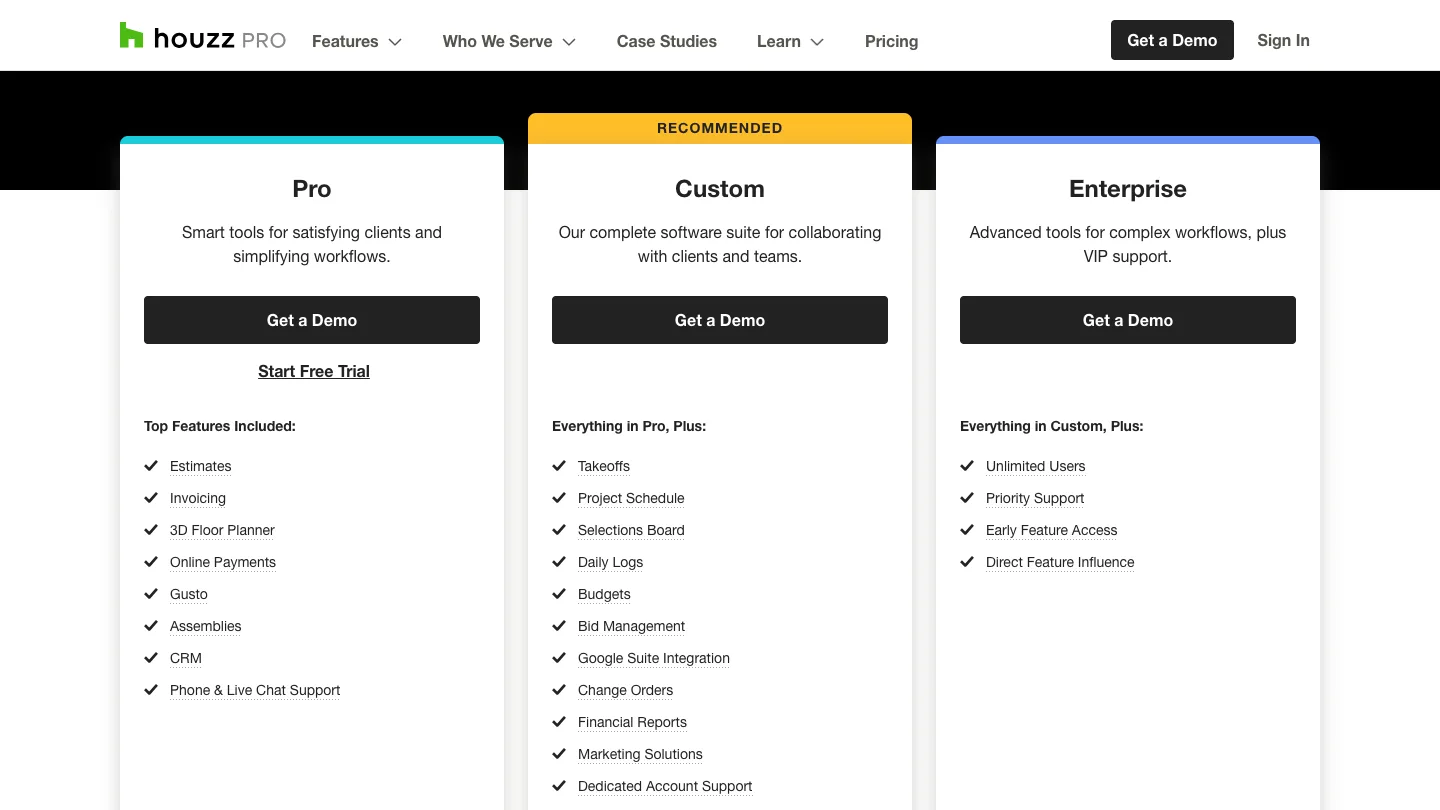 Jul 30, 2026
 Tech Stack
Houzz Pro Canada Review 2026: Pricing and Alternatives
Houzz Pro serves different pricing renderings. What Canadian buyers see, how GST/HST and payments work, what Custom gates, and what the annual contract commits you to.
Read Article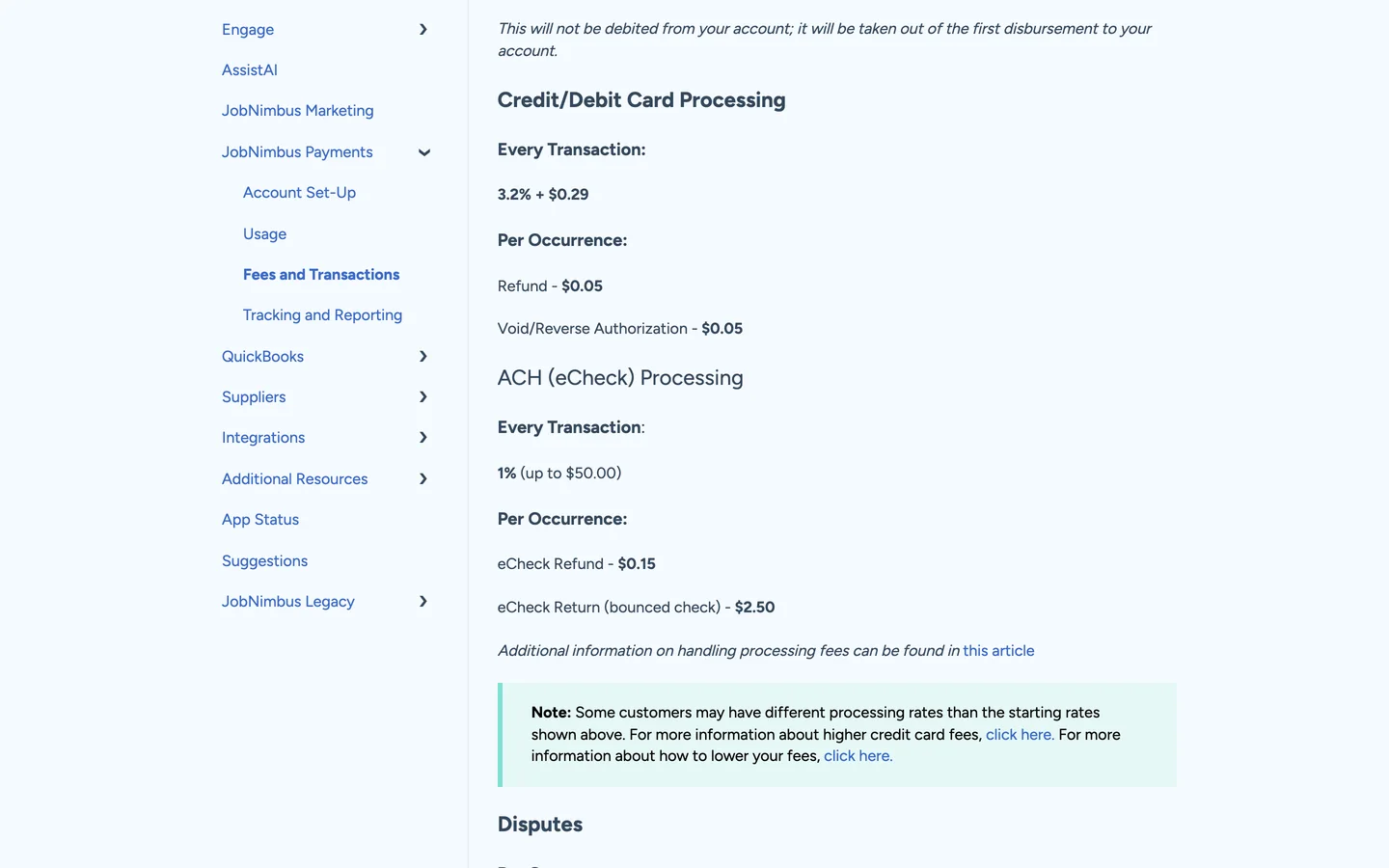 Jul 30, 2026
 Tech Stack
JobNimbus Pricing in 2026: What the Quote Does Not Cover
JobNimbus prints no figure on any of its four plans. So the only rate you can read before a sales call is the payments meter, and it is the biggest line on the bill.
Read Article Jul 30, 2026
 Tech Stack
JobNimbus Review 2026: Pricing, Pros, Cons and Alternatives
JobNimbus rates 4.6 on Capterra and orders material straight from ABC Supply and SRS. But it publishes no price, and its supplement route carries a note.
Read Article Jul 30, 2026
 Tech Stack
BuildOps Review 2026: Pricing, Contract Terms and Alternatives
BuildOps runs commercial service and projects on one platform, and publishes no pricing at all. The billing unit, the 30-day data-export window, and who it suits.
Read Article Jul 30, 2026
 Tech Stack
FieldPulse Review 2026: Pricing, Pros, Cons and Alternatives
FieldPulse rates 4.6 on Capterra and is the platform contractors name when they leave a bigger system. But it publishes no price, and the contract runs a year.
Read Article Jul 30, 2026
 Tech Stack
Service Fusion Review 2026: Pricing, Contract and Alternatives
Service Fusion bills flat per company with unlimited users, which is the best structural deal in field service software. The published plans, the contract behind the no-contract line, and the app score every other review gets wrong.
Read Article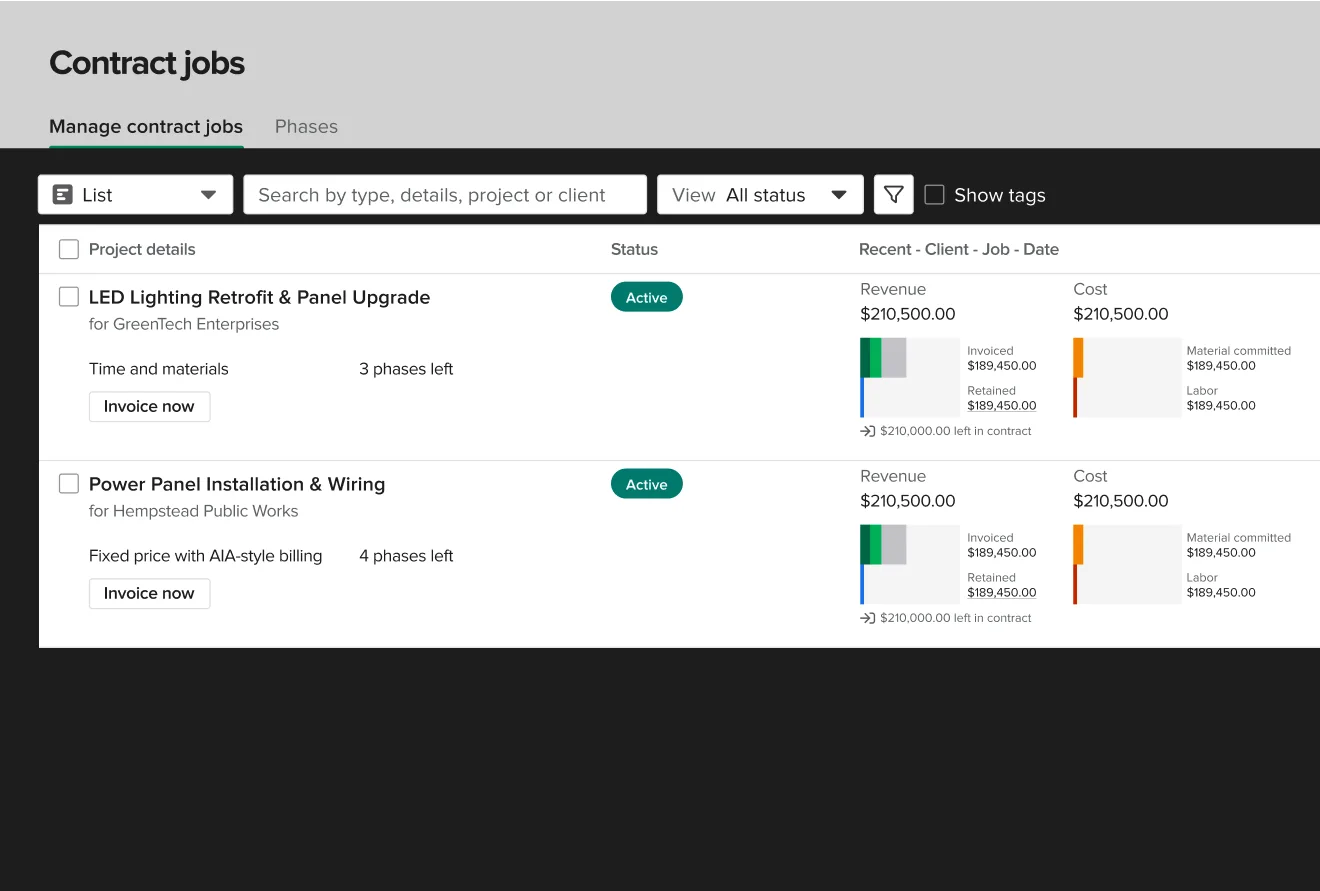 Jul 30, 2026
 Tech Stack
Knowify Review 2026: Pricing, Job Costing and Alternatives
Knowify rates 4.5 on Capterra and its weakest sub-score is features. What the $99 Core plan withholds, which way the QuickBooks sync really runs, and who should not buy it.
Read Article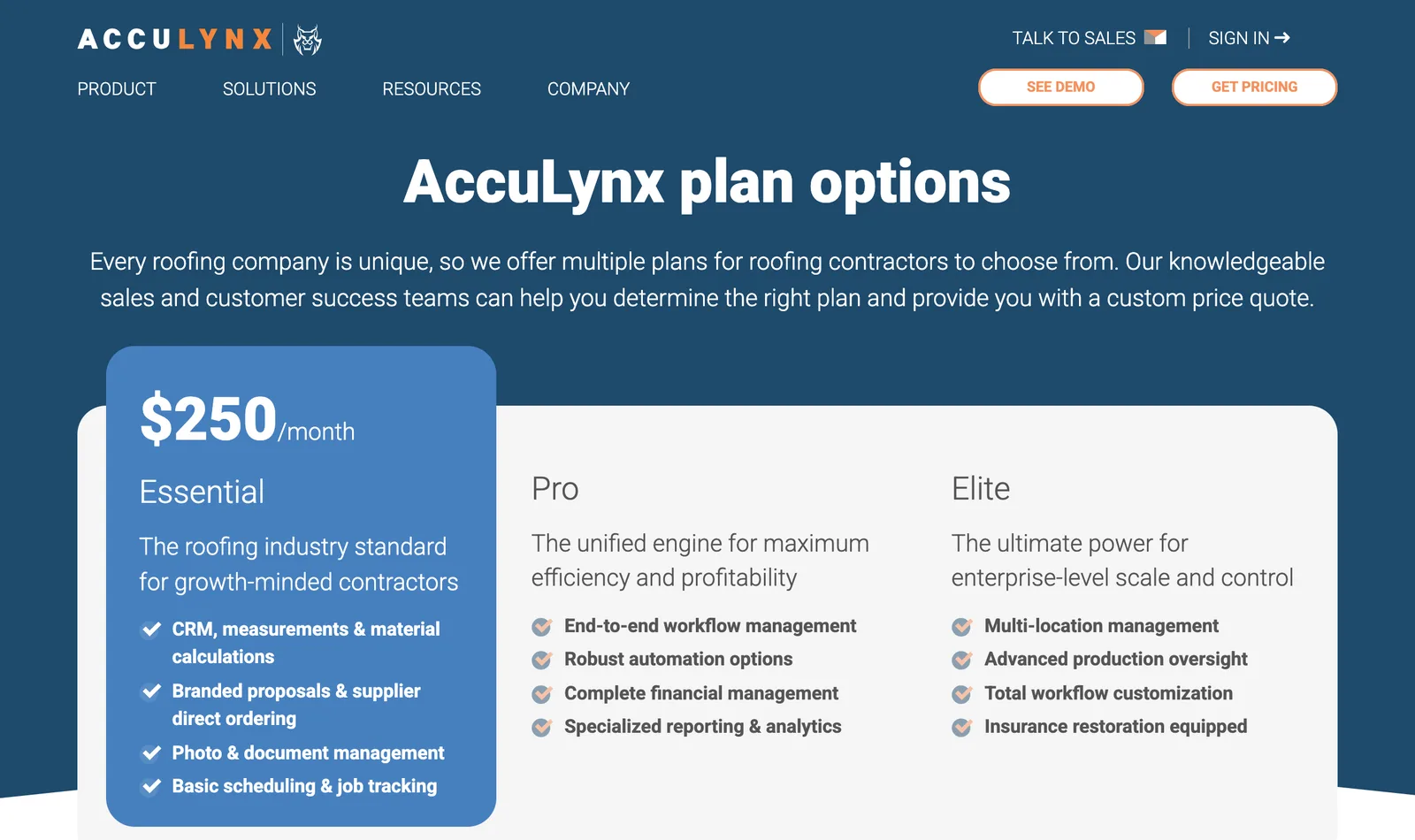 Jul 29, 2026
 Tech Stack
AccuLynx Review 2026: Pricing, Tier Gating, Alternatives
AccuLynx rates 4.6 across 846 reviews and now publishes an entry price. What that price omits, which tier holds the insurance workflow, and who should skip it.
Read Article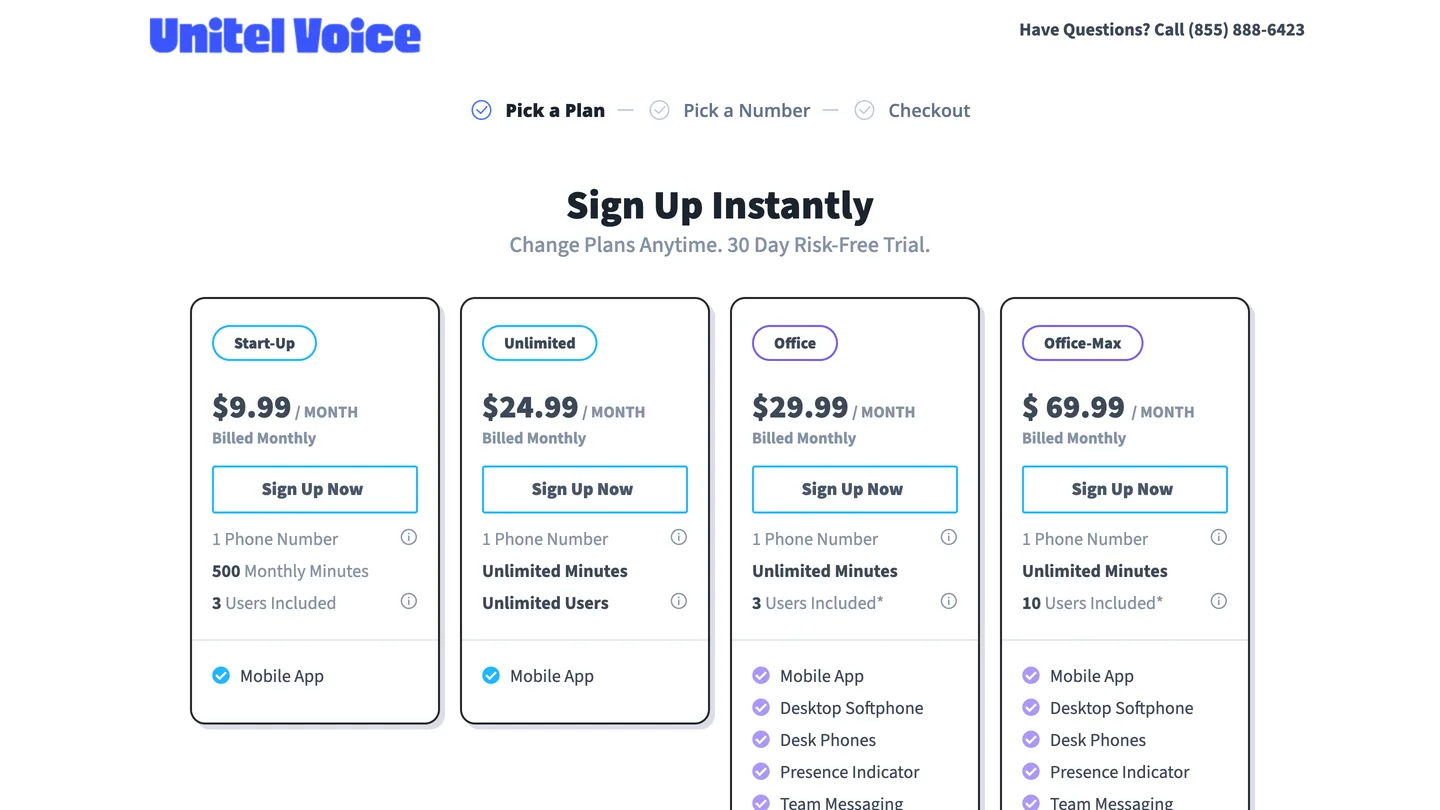 Jul 29, 2026
 Tech Stack
Unitel Voice Review 2026: Pricing, Features and Alternatives
Unitel Voice rates 4.6 on Capterra and gives a one-truck shop a business number for $9.99 a month. The published plans, the cost per call, and what it won't do.
Read Article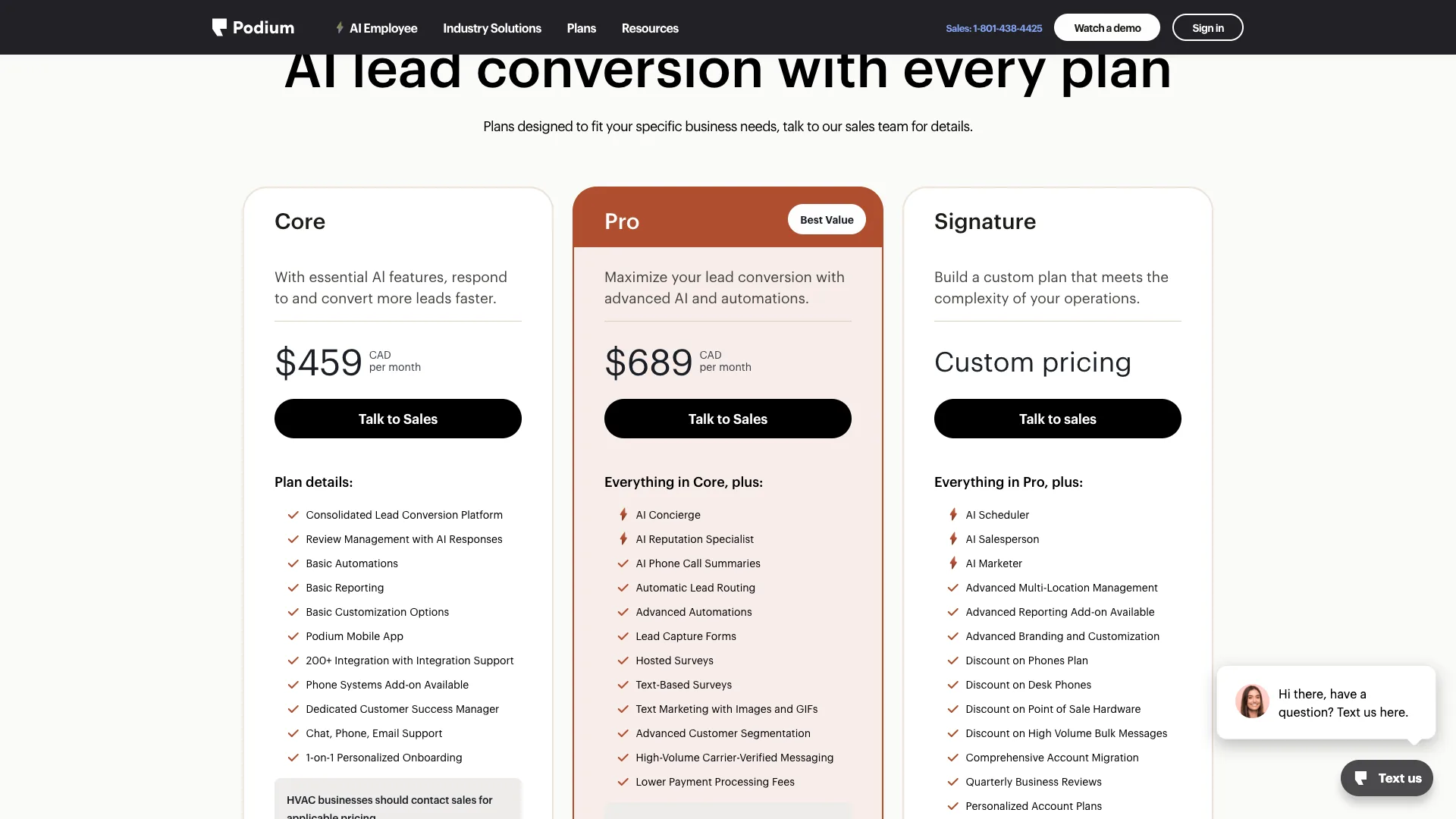 Jul 29, 2026
 Tech Stack
NiceJob vs Podium 2026: Pricing, Contracts and Review Gating
Both vendors print a price, at very different scale and in different currencies. The gap that matters is what Podium will not print: the billing unit, and whether a trade shop gets the number on the page.
Read Article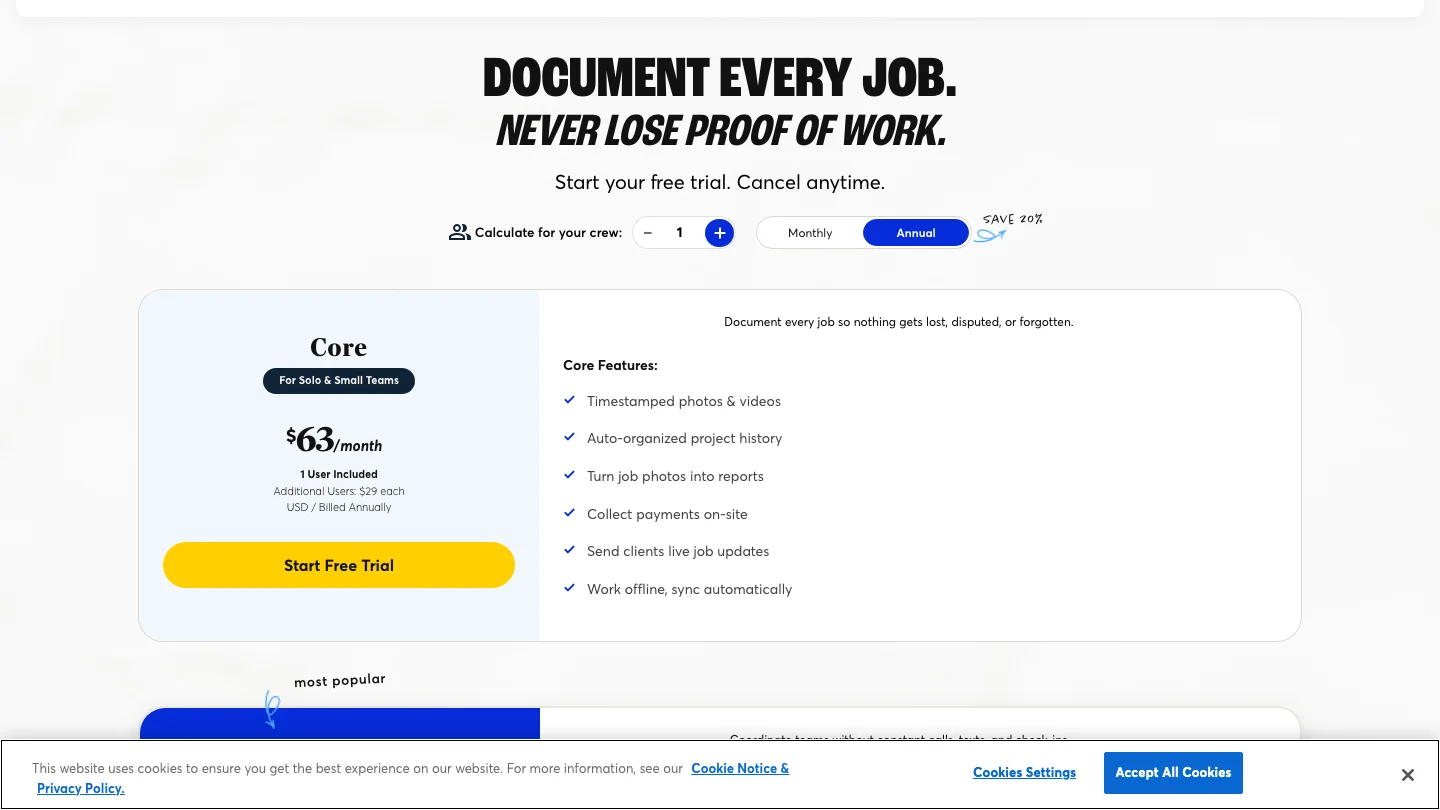 Jul 28, 2026
 Tech Stack
CompanyCam Review 2026: Pricing, Pros, Cons and Alternatives
Every page ranking for CompanyCam still quotes a per-user price the vendor no longer charges. Here are the real plans, the seat math, and who should skip it.
Read Article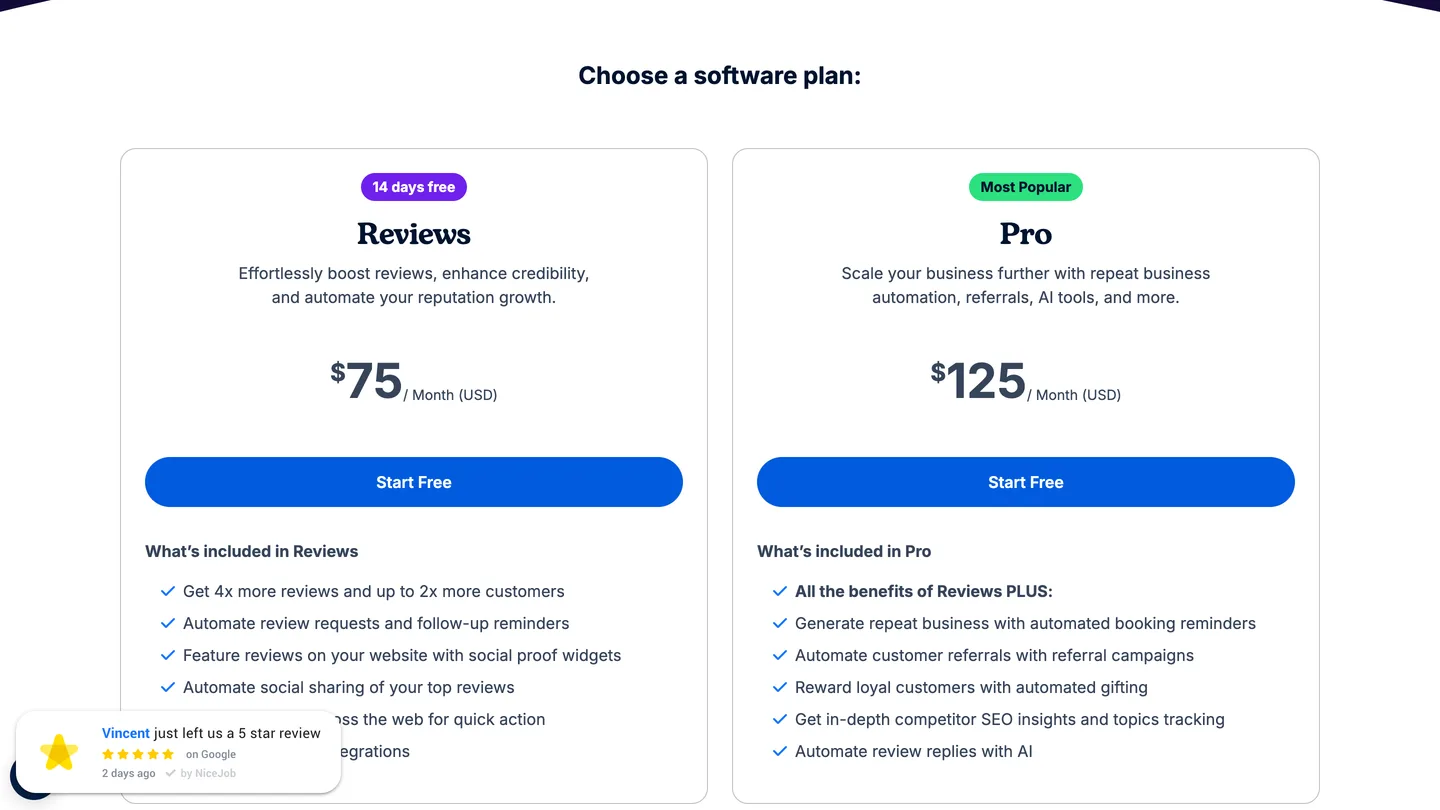 Jul 28, 2026
 Tech Stack
NiceJob Review 2026: Pricing, Pros, Cons and Alternatives
NiceJob rates 4.9 on Capterra and refuses to gate negative reviews. Real plan pricing, the active-customer threshold nobody publishes, and who should skip it.
Read Article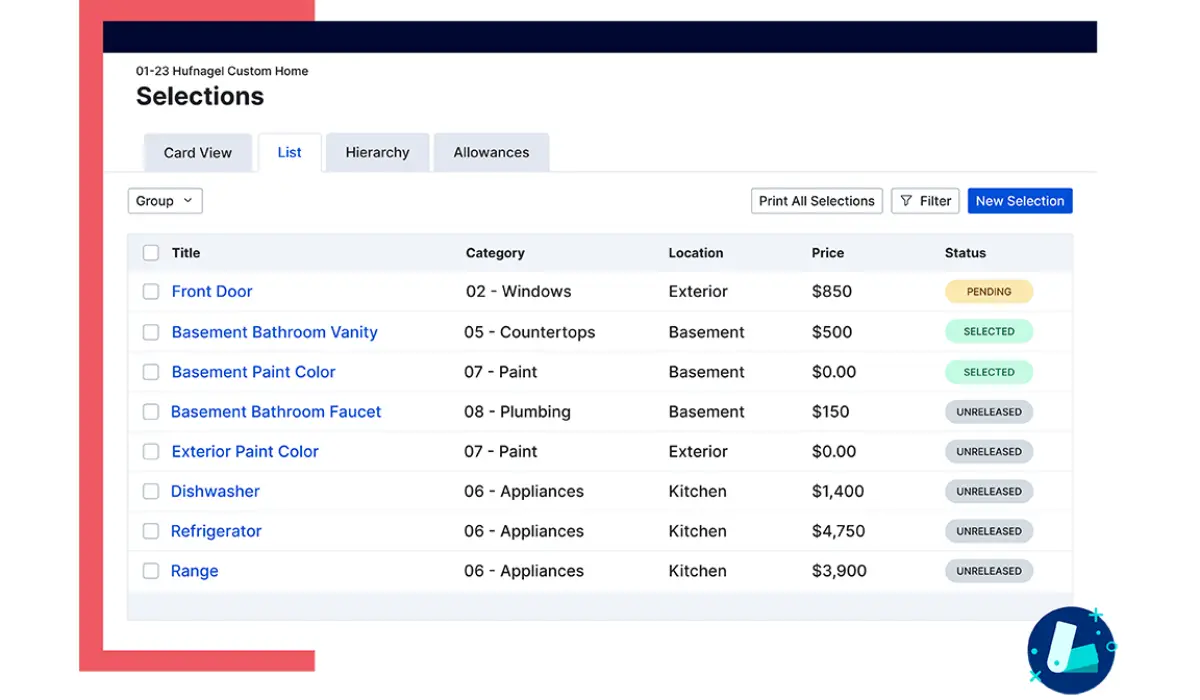 Jul 27, 2026
 Tech Stack
Buildertrend Review 2026: Pricing, Limits and Alternatives
Buildertrend rates 4.5 across 2,486 Capterra reviews and quotes against your revenue rather than your seat count. The workflows, the export problem, the alternatives.
Read Article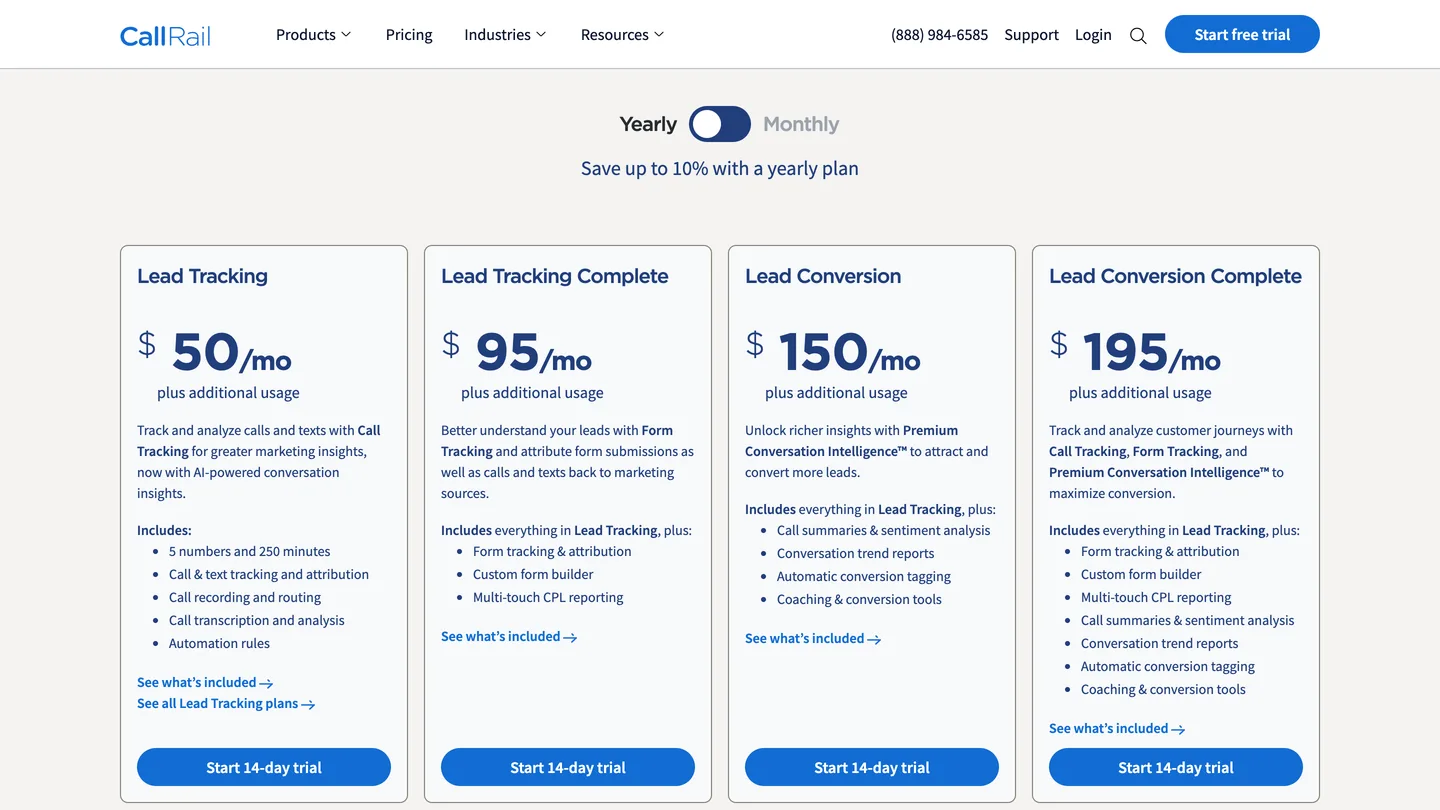 Jul 27, 2026
 Tech Stack
CallRail Review 2026: Pricing, Pros, Cons and Alternatives
CallRail rates 4.5 on Capterra, and its tracking numbers port out free. But the two usage rates that decide your real bill are the two it does not print.
Read Article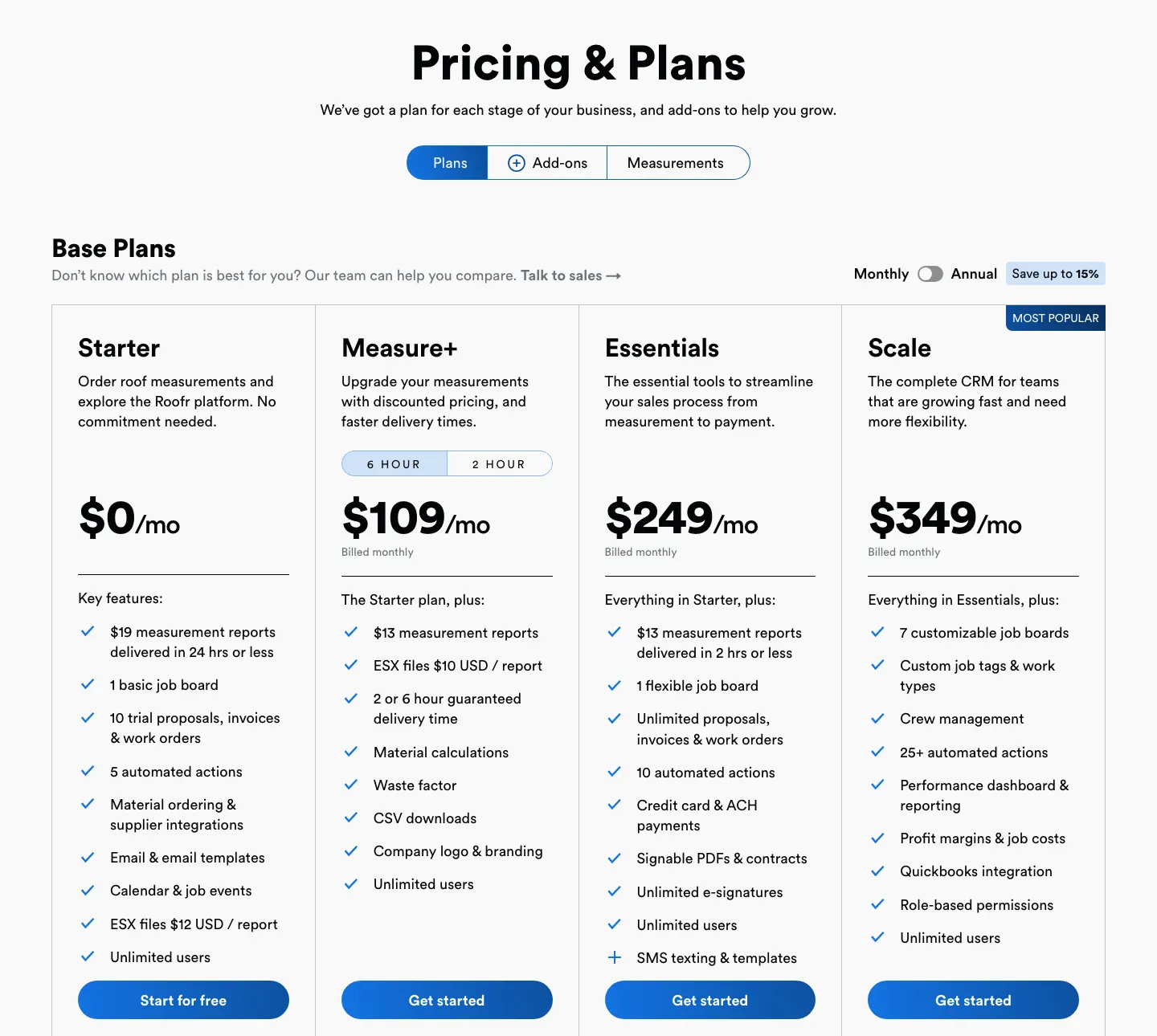 Jul 27, 2026
 Tech Stack
Roofr Review 2026: Pricing, Pros, Cons and Alternatives
Roofr rates 4.6 on Capterra and sells $13 measurement reports against a market charging triple. But it will not import a report from anywhere else.
Read Article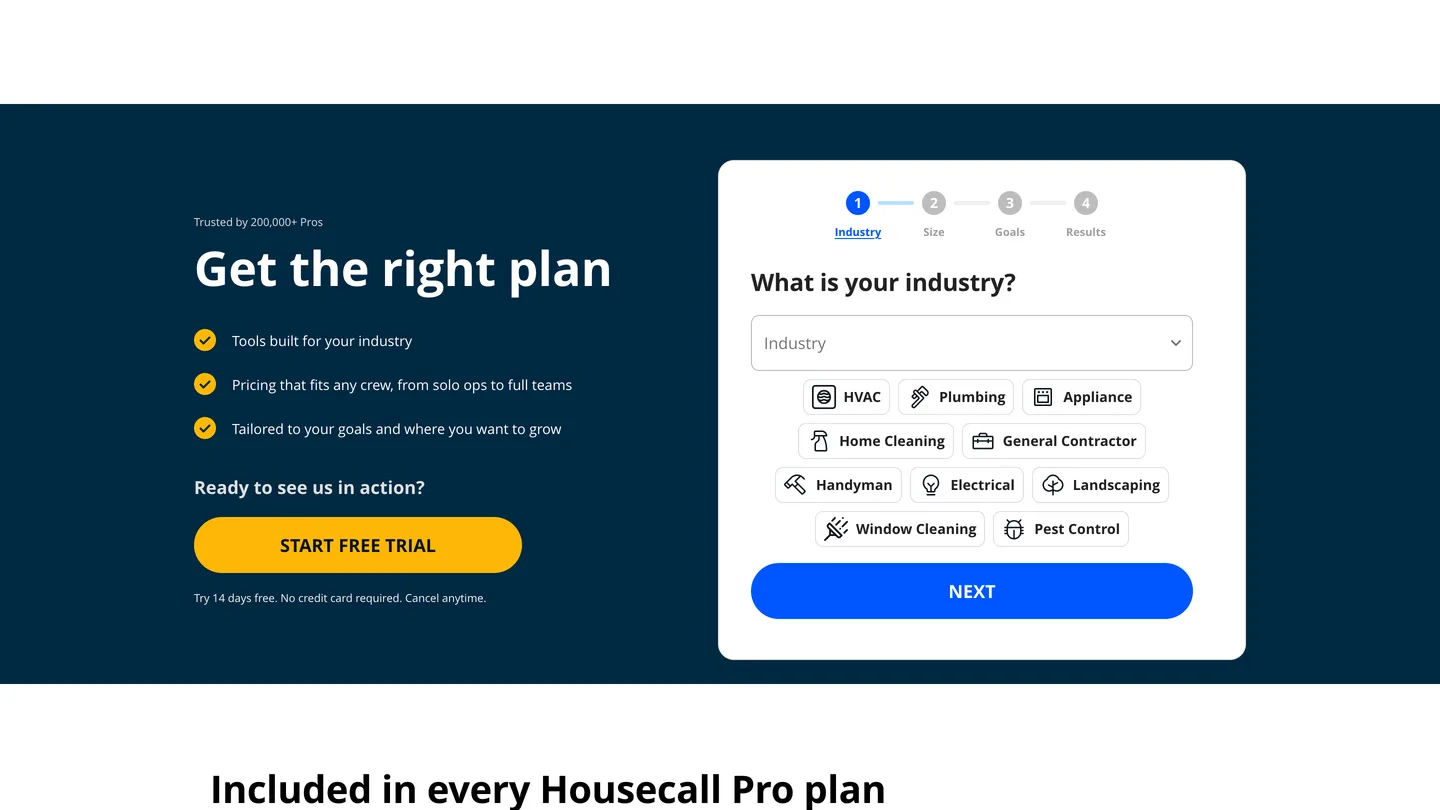 Jul 25, 2026
 Tech Stack
Housecall Pro Review 2026: Pricing, Pros, Cons, Alternatives
Housecall Pro has the shortest learning curve in the category and the widest review spread. Real pricing, the Instapay math, and the migration trap to plan around.
Read Article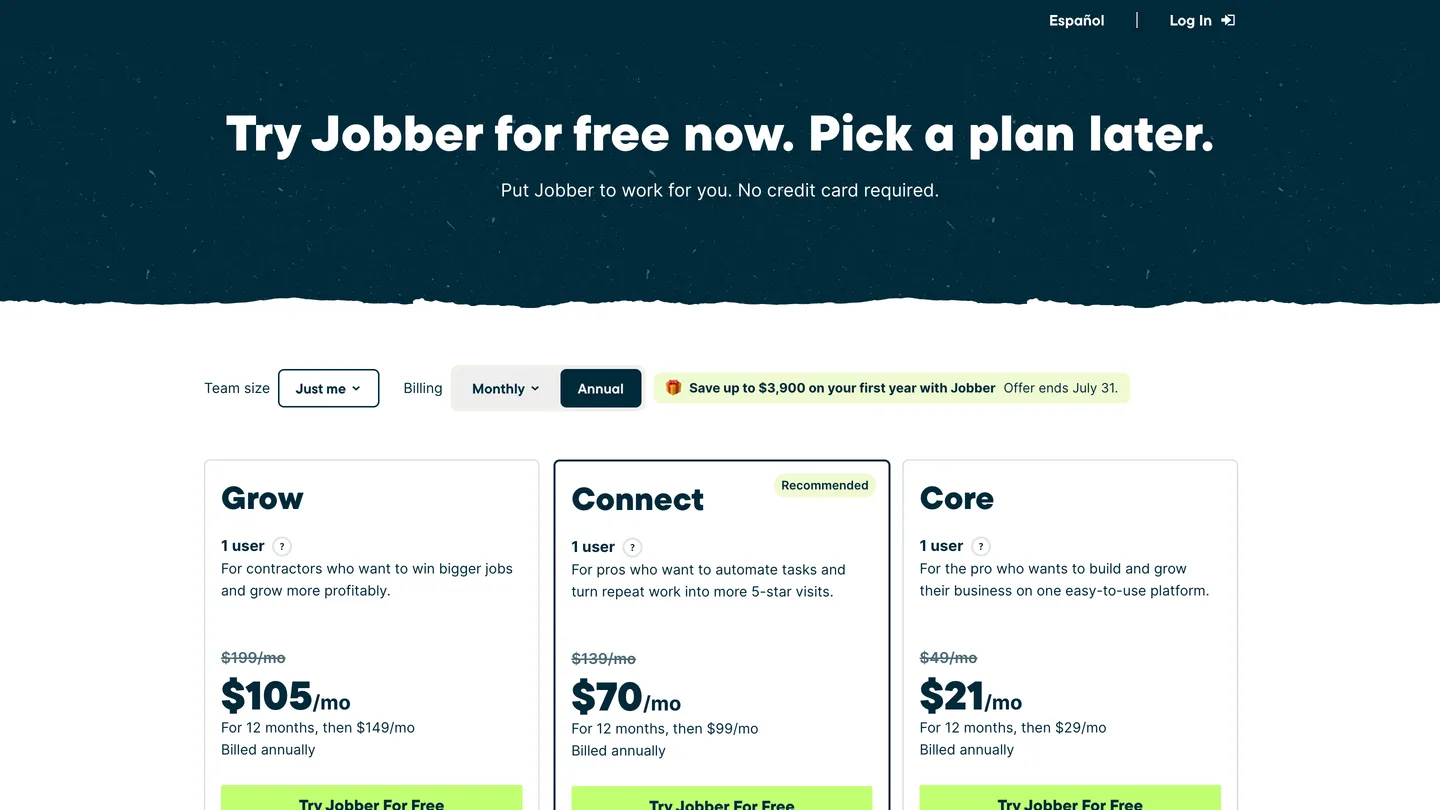 Jul 24, 2026
 Tech Stack
Jobber Review 2026: Pricing, Pros, Cons and Alternatives
Jobber rates 4.6 on Capterra with the best mobile app in the category. Real plan pricing, the feature gating that changes your entry price, and who it suits.
Read Article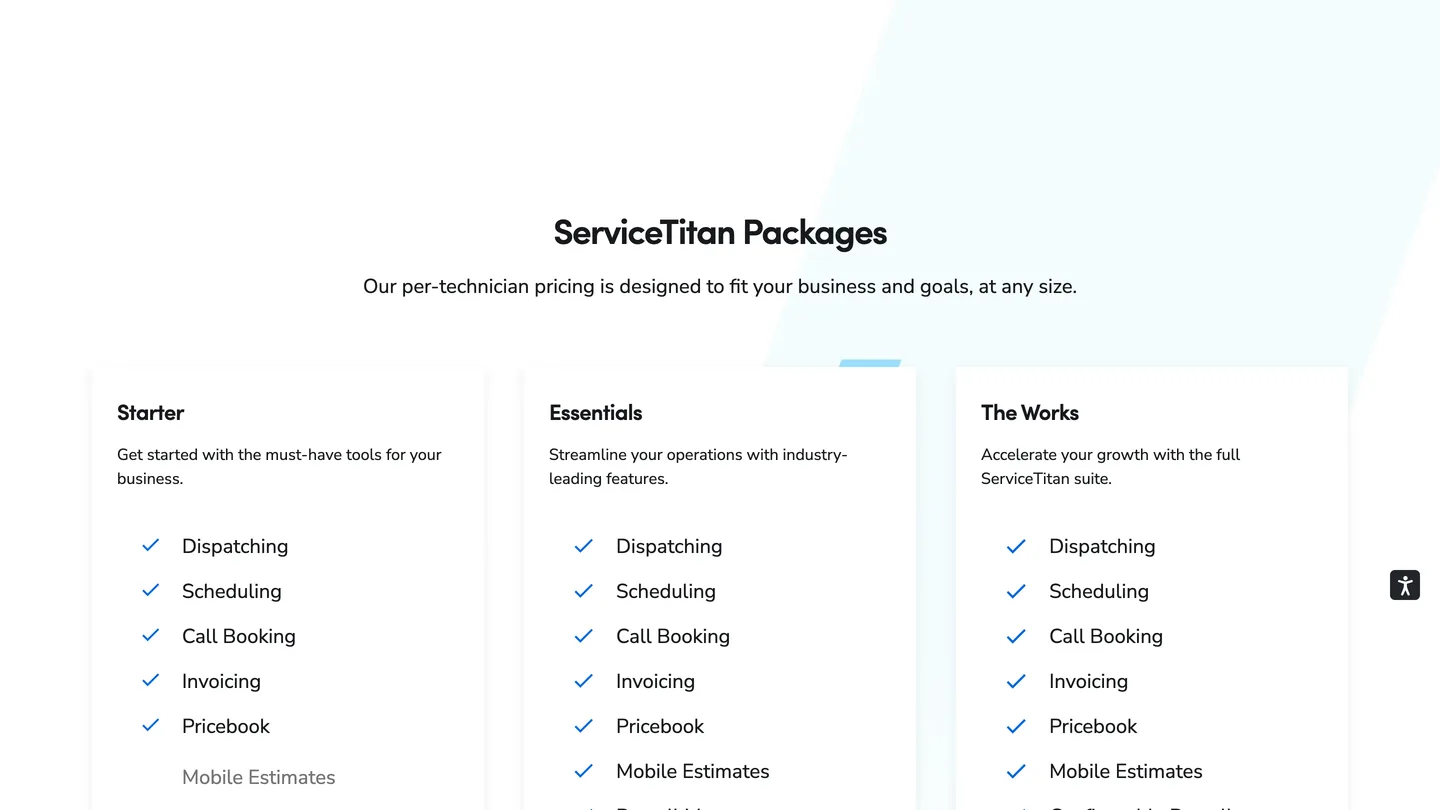 Jul 23, 2026
 Tech Stack
ServiceTitan Review 2026: Pricing, Pros, Cons, Alternatives
ServiceTitan rates 4.3 on Capterra but its weakest score is value for money. Real reported pricing, the 12-month contract, the exit fees, and who it actually suits.
Read Article Jun 3, 2026
 Tech Stack
HVAC Online Scheduling: The 43% Losing After-Hours Bookings
HVAC leads every trade on online booking at just 56.7%, which still leaves 43% of sites forcing an after-hours customer to wait for a business-hours phone call.
Read Article