Dataforma Review 2026: Pricing, Pros, Cons, Alternatives
Third-party contract data puts real numbers on Dataforma. The 7 gaps reviewers name, and 6 alternatives that publish a price upfront.
Disclosure This article features tools from our brand partners. If you choose to use them, we may receive compensation at no extra cost to you.
Our editorial choices are independent of these affiliate arrangements. Read our full affiliate disclosure.
Fervor is a CRO and web design studio, not a software reseller, and no vendor paid for placement here or for a kinder verdict. Affiliate links are flagged where they appear, and they never change what we report.
Page at a glance
Dataforma is a work-order-first field service platform for commercial contractors, organised around buildings and service history instead of around leads. It publishes no price, so the only way to get a number is to ask a salesperson for one. The billing unit is genuinely contested. Capterra and Software Advice both list Dataforma as priced per feature per month, which would make headcount irrelevant. A customer review on Capterra describes the opposite: a mid-contract move to a per-user fee that would have doubled their bill at their existing user count. Both cannot be right, and the vendor publishes nothing that settles it, so the billing unit is something you have to pin down in writing before you sign. It fits a 15 to 150-person commercial roofing or mechanical contractor doing recurring service and maintenance work on a repeat portfolio of buildings, where the same roof gets visited for years and the history matters more than the pitch. It's the wrong buy for a residential roofer selling storm and insurance work, because Dataforma is built around buildings and recurring service history, not around a lead pipeline. It has no estimating module, no supplement or Xactimate workflow, no aerial measurement integration on its published list, and a reviewer notes the leads module doesn't carry data into work orders without re-entry. So a residential roofer would be buying the half of the product they don't use. Alternatives that publish their prices are AccuLynx from $250, Service Fusion from $208, Jobber from $49. A quote-only price and what third parties report instead, seven evidenced gaps and six alternatives, four of which publish a figure.
Whether Dataforma is worth it
Dataforma earns its money with a 15 to 150-person commercial roofing or mechanical contractor doing recurring service and maintenance work on a repeat portfolio of buildings, where the same roof gets visited for years and the history matters more than the pitch. If that's you, it does the job. The sections below are the parts worth checking before you sign. But the fit is narrower than the marketing suggests, and the price isn't the whole cost.
The vendor publishes no price. But every number below was verified on 7 August 2026 and comes from a named third party that says which.
| Pricing model | Custom quote, no published price |
|---|---|
| Entry price | Quote only |
| Users | The billing unit is genuinely contested. Capterra and Software Advice both list Dataforma |
| Ownership | Independent |
| Best fit | a 15 to 150-person commercial roofing or mechanical contractor doing recurring service and maintenance work on a repeat portfolio of buildings, where the same roof gets visited for years and the history matters more than the pitch. |
| Accounting sync | QuickBooks Online (one-way) |
What works
- The work order side is the product, and it's the half people defend
- The record is organised by building, which is the right shape for commercial service
- The project side is where reviewers stop defending it
- Two weeks of scheduled training, six sessions, and a documented fast path
- Support is the highest-rated dimension, and it's also the oldest complaint
What does not
- No estimating module, and a QuickBooks story that changed underneath customers
- The accounting build-out made things worse before it made them better
- Ease of use is the lowest-rated dimension across 105 reviews
- Reviewers call it a closed system, and one asks for it to be API friendly
- Mobile photo upload fails often enough that a company president names it
Dataforma is a work-order-first field service platform for commercial contractors, organised around buildings and service history instead of around leads. It sells to Cross-trade and Roofing contractors, and the shape of the product follows from that: The clearest signal across the review body is a split verdict along one seam: work orders good, projects less so. An office manager titles her review around exactly that split and calls the work order side super slick and understandable by field users. An office admin reviewing in 2024 names scheduling tickets to field employees and ease of invoicing as the two things it does. And a sales director credits it with letting his service department double in size.
Who Dataforma is for, and who it isn't
It fits a 15 to 150-person commercial roofing or mechanical contractor doing recurring service and maintenance work on a repeat portfolio of buildings, where the same roof gets visited for years and the history matters more than the pitch. That's the half most reviews print. Here's the other half, which is the one worth your time.
Don't buy it if you're a residential roofer selling storm and insurance work. Dataforma is built around buildings and recurring service history, not around a lead pipeline. It has no estimating module, no supplement or Xactimate workflow, no aerial measurement integration on its published list, and a reviewer notes the leads module doesn't carry data into work orders without re-entry. So a residential roofer would be buying the half of the product they don't use. Look at AccuLynx instead.
Don't buy it if you're a one to five person shop. There's no published price and no self-serve sign-up, only a phone number and an account manager. The onboarding path is six training sessions over two weeks. So a small crew is buying a two-week implementation and a blind quote to run work they can still run in a spreadsheet. Look at Jobber instead.
Don't buy it if you're a contractor who needs their software to price the job. An owner records the gap plainly: no estimating ability. The features page lists Bid & Proposal Management, which is document production, not takeoff and pricing. So if your estimator lives in the software, this isn't the software. Look at BuildOps instead.
Don't buy it if you're anyone who needs a firm software budget before the fiscal year starts. No price is published, the billing unit is disputed between the aggregators and a customer, and one customer describes a mid-relationship pricing model change that would have doubled their bill. So you can't forecast this line item from public information.
What Dataforma costs
You won't find a number on Dataforma's pricing page. What you'll find is a form. So the honest version of this section is about what the form asks and what the quote is indexed to.
The vendor's own wording is this, and nothing more: "Dataforma publishes no pricing page. Its own sitemap index lists 22 pages and not one of them is a pricing page: the closest thing is the Sign Up page, which routes you to a phone number instead of a figure. The path /pricing/ returns a 301 to the homepage, though so does any unknown path on the site, so that is a catch-all and not a deliberate suppression. The Sign Up page's own wording is the vendor's closest statement on how you find out what it costs." So treat every third-party page printing tier names and figures for Dataforma with careful suspicion. Those numbers are not on the vendor's site today, and a roundup that reprints them is telling you what Dataforma used to charge somebody else.
And we aren't going to print a per-month number we can't open a vendor page and read. What exists instead is third-party reporting, dated, from people who saw real contracts. Read it as a range rather than as a quote you can hold anyone to.
| Reported range | Reported on | Source |
|---|---|---|
| $69.99 Per Feature, Per Month | 2026-08-07 | Capterra |
| $69.99 per month, listed as per feature | 2026-08-07 | Software Advice |
| $8,398.80 to $20,997 first-year total for 10 users, derived by assuming 1 to 3 features | 2026-08-07 | ITQlick, which builds a total-cost estimate on top of the same $69.99 figure rather than sourcing an independent one |
The billing unit is genuinely contested. Capterra and Software Advice both list Dataforma as priced per feature per month, which would make headcount irrelevant. A customer review on Capterra describes the opposite: a mid-contract move to a per-user fee that would have doubled their bill at their existing user count. Both cannot be right, and the vendor publishes nothing that settles it, so the billing unit is something you have to pin down in writing before you sign.
The Dataforma costs that show up later
Payment processing. Stripe is named as the payment processor integration on the Integrations & API page. No rate, no markup and no per-transaction figure is published anywhere on the site.
Implementation and onboarding. Dataforma publishes a 2-Week Quick Start Guide describing six virtual training sessions covering database foundations, work orders, the mobile app, inspections, projects and the client portal, and says you can go live in a week without historical data. It never states whether that onboarding is included in the subscription or billed separately.
Minimum term. The published Terms of Service is a website terms document, not a subscription agreement. And it contains no term length at all. Ask for the order form and the master agreement before you sign, because that's where the term lives.
Getting out. So assume you owe the balance of whatever term the order form sets, and get the exit cost written down.
Auto-renewal. Ask whether the term rolls automatically, and pin down what notice window kills it.
Modules sold separately. , . But the entry tier is not the price you'll pay. Add the modules your shop needs on day one and compare Dataforma on that total.
"Third-party reporting puts Dataforma at $69.99 Per Feature, Per Month, reported 2026-08-07."
Capterra (8-07)
A tangent, but stay with it. The one public number for Dataforma, $69.99 per feature per month, describes a billing model that a paying customer says the company moved away from. Capterra and Software Advice both list per-feature pricing. But a facilities office manager reviewing on Capterra describes a mid-relationship switch to per-user billing that would have doubled his bill at his existing headcount. So the figure everyone shortlists against may be attached to a pricing model that no longer applies, and the aggregators haven't caught up. Don't budget from $69.99. Ask the rep for the billing unit in writing, then ask what a five-head increase does to the invoice. And if the answer is per user, your growth plan is also your cost plan.
What a Dataforma quote leaves out
The subscription is the part everyone quotes. These are the lines that land afterwards, and the ones we could not find are named as unpublished rather than left blank.
Sold separately. , . Price the configuration you'll really run, because an add-on you need on day one is part of the price.
"Dataforma answers the question of what it costs with this and nothing else: "Dataforma publishes no pricing page. Its own sitemap index lists 22 pages and not one of them is a pricing page: the closest thing is the Sign Up page, which routes you to a phone number instead of a figure. The path /pricing/ returns a 301 to the homepage, though so does any unknown path on the site, so that is a catch-all and not a deliberate suppression. The Sign Up page's own wording is the vendor's closest statement on how you find out what it costs.""
Dataforma pricing page (2026)
"The billing unit is genuinely contested. Capterra and Software Advice both list Dataforma as priced per feature per month, which would make headcount irrelevant. A customer review on Capterra describes the opposite: a mid-contract move to a per-user fee that would have doubled their bill at their existing user count. Both cannot be right, and the vendor publishes nothing that settles it, so the billing unit is something you have to pin down in writing before you sign."
Dataforma pricing page (2026)
"Dataforma is reported at $69.99 Per Feature, Per Month as of 2026-08-07."
Capterra (8-07)
The six workflows you pay for
Feature totals are noise. So a shop in this category lives or dies on six things, and those are the six to grade, and each one below carries the evidence it's graded on.
The work order side is the product, and it's the half people defend. The clearest signal across the review body is a split verdict along one seam: work orders good, projects less so. An office manager titles her review around exactly that split and calls the work order side super slick and understandable by field users. An office admin reviewing in 2024 names scheduling tickets to field employees and ease of invoicing as the two things it does. And a sales director credits it with letting his service department double in size. But an office manager, construction, says it differently: "Project side is clucky. Also do not like that it is not compatible with any other software systems. They would like for the system to be all inclusive but the new accounting software adds more steps to the process and is not very helpful."But an office admin HR, construction, says it differently: "Ability to schedule tickets for employees in field- ease of creating invoice"
The record is organised by building, which is the right shape for commercial service. Dataforma stores work against the building rather than the customer, so a roof keeps its history when the property changes hands. A controller names this specifically as the thing she values: tracking work at a building regardless of who owns it or what type of work it was. And for a contractor holding a maintenance portfolio, that's the difference between a searchable asset history and a pile of invoices. A controller, construction, puts it it plainly: "Now that Dataforma is trying to integrate accounting software, there are many issues. I don't have confidence that modules will work correctly. They should have stuck to what they were doing well."
The project side is where reviewers stop defending it. The same reviewers who praise work orders describe the project module as clunky, and one adds that the newer accounting layer added steps rather than removing them. An executive administrator calls the reporting functions poor and the field tech experience poor in the same sentence. But Dataforma's own features page lists Gantt charts, change orders and project calendars, so the capability exists on paper. On 2019-09-23, an office manager, construction says: "Project side is clucky. Also do not like that it is not compatible with any other software systems. They would like for the system to be all inclusive but the new accounting software adds more steps to the process and is not very helpful."On 2019-09-18, an executive administrator, construction says: "the program itself is not a simple program, report functions are poor, use for field tech poor."
Two weeks of scheduled training, six sessions, and a documented fast path. Dataforma publishes an actual onboarding plan rather than a promise. Six virtual sessions of one to two hours each cover contacts and buildings, work order to invoice, the mobile app, roof inspections, projects from approval to closeout, and the client portal. And it documents a go-live-in-a-week option where you skip historical data and add records as they arrive, with Excel batch import available for the fuller path.
Support is the highest-rated dimension, and it's also the oldest complaint. Capterra scores customer service at 4.6, the product's best number, and Dataforma cites Software Advice recognition for Best in Customer Support on its own support page. Against that, the single one-star review in the set is entirely about support failure, and a 2024 two-star review still leads with poor customer support. So the pattern reads as high average with a bad tail rather than as consistent failure. A president, construction, writing on 2017-02-14, puts it: "Like all vendors in the construction industry, they make all kinds of promises to get a sale and are very attentive until they get your check. Then it's on to the next sale and you are old news."A construction, 51-200 employees, Used daily for less than 2 years on the platform, writing on 2024-10-01, puts it: "Poor customer support, not intuitive, price"
The vendor commits in writing to returning your data in an importable format. Dataforma's FAQ states plainly that everything you enter is yours and that on departure it returns all your data in a format you can upload into another system. That's a stronger and more specific promise than most vendors in this category put in public, and it's worth holding them to. But the caveat is that it sits in marketing copy, not in the Terms of Service, which contains no data-return clause at all.
Dataforma per trade, not per company size
Fit differs by trade rather than by company size alone, and a blended paragraph hides that. Here is the split for the trades this one sells to.
Cross-trade. The workflow that decides it is the work order side is the product, and it's the half people defend, and the shop profile that gets value is 15 to 60 doing commercial and service work. Where it stops being a fit is a residential roofer selling storm and insurance work.
Roofing. The workflow that decides it is the work order side is the product, and it's the half people defend, and the shop profile that gets value is 15 to 60 doing commercial and service work. Where it stops being a fit is a residential roofer selling storm and insurance work.
The Dataforma accounting link, and where it stops
QuickBooks Online connects one way only, so edits made in your books do not come back, on every plan. Your costs map through cost codes, so test yours against your own chart of accounts before you commit. A code your books don't recognise is how a labour charge quietly lands somewhere useless.
Past those, the road ends. QuickBooks Desktop, Aerial measurement, meaning EagleView, Hover or GAF QuickMeasure, Xactimate and insurance supplementing, Payroll do not connect. So if your books run on an ERP rather than the platforms named above, weigh that before anything else.
Beyond accounting it connects to Microsoft Outlook & Gmail (email integration, carrying an asterisk that routes to Dataforma's Compliance & Disclosures page confirming its Google API use complies with the Limited Use requirements), FollowUp CRM (construction bid-tracking CRM), Stripe (payment processing, no rate published), Pegnato's PRIN App (roof intelligence network reporting), CompanyCam (jobsite photo documentation), QXO (building products distribution). A public API exists: Dataforma publishes a REST API and describes it as a RESTful JSON interface transmitted over HTTP, configurable with specific permissions and authentication protocols, and open to contractors, hired developers and third-party vendors. It is invitation-worded rather than self-serve: the page closes with an invitation to inquire, and no developer portal, key-provisioning flow or reference documentation is linked publicly. A reviewer separately describes the product as a closed system needing to be API friendly.
What happens when Dataforma breaks
Support is the line item nobody prices and everybody eventually needs. Onboarding for Dataforma: Dataforma publishes a 2-Week Quick Start Guide describing six virtual training sessions covering database foundations, work orders, the mobile app, inspections, projects and the client portal, and says you can go live in a week without historical data. It never states whether that onboarding is included in the subscription or billed separately.
The review corpus we read on 7 August 2026 carries no consistent signal on response times either way, so treat support as untested rather than good. Open a real ticket during the trial and time the reply, because that is the number no pricing page gives you.
Dataforma contracts, and getting out
Nobody reads this section before they buy, and it's the one that costs money afterwards. Four terms decide what leaving looks like.
Minimum term. The published Terms of Service is a website terms document, not a subscription agreement. And it contains no term length at all. Ask for the order form and the master agreement before you sign, because that's where the term lives.
Auto-renewal. No renewal clause is published. Ask whether the term rolls automatically, and pin down what notice window kills it.
Early termination. Nothing published addresses early termination charges. So assume you owe the balance of whatever term the order form sets, and get the exit cost written down.
Payment processing. Stripe is named as the payment processor integration on the Integrations & API page. No rate, no markup and no per-transaction figure is published anywhere on the site.
One oddity, filed under things nobody mentions on a demo. Dataforma makes the strongest public data-return promise in this category and then leaves it out of the only contract it publishes. Its FAQ says: "Everything you enter into our work order management software is yours. If you ever leave us (but why would you?), we return all of your data in a format you can upload into another system." That's specific and it's generous. But it's also marketing copy. And the Terms of Service has no data clause of any kind, so the promise carries no contractual weight as published. Take the FAQ wording to the sales call and ask for it verbatim in the signed agreement, with a format named and a turnaround window attached. And they've already published the sentence, so there's no reason to refuse it.
"Dataforma is reported at $69.99 per month, listed as per feature as of 2026-08-07."
Software Advice (8-07)
"To go along with this, they recently raised their fees, charging a per user fee which if we would have kept our current users, our price would have doubled. So this has been a big setback for us. Dataforma is not a polished or finished product, thus the high price really is not justified at this point."
Capterra, Jonathan S. (9-24)
"Not designed for larger contractors Closed systems -needs to be API FRIENDLY Not connected through MS OUTLOOK CLUNKY to navigate Focused on accounting not basic core competencies"
Capterra, Stephen L. (9-17)
What Dataforma reviewers keep running into
Every one of these is checkable on a demo call. None of it is a matter of taste, and each one traces to a vendor page or a named reviewer.
No estimating module, and a QuickBooks story that changed underneath customers. An owner reviewing in 2019 records both gaps in one line: no estimating ability, and no direct QuickBooks connection. Dataforma now lists QuickBooks Online on its Integrations page, so the second half has been closed since. But it was closed after that customer had already bought. And the estimating gap isn't addressed anywhere on the features page, which lists Bid & Proposal Management but never estimating. And an owner, construction, writing on 2019-09-18, reports it the same thing: "Does not have estimating ability. Does not communicate directly with Quickbooks." If you estimate inside your software today, get the demo to walk a real takeoff end to end rather than a proposal template. And confirm in writing whether QuickBooks Desktop or only QuickBooks Online is supported.
The accounting build-out made things worse before it made them better. Two separate reviewers, a controller and an office manager, describe the same period: Dataforma adding accounting, modules losing reliability, manual updating appearing where it hadn't been, and steps being added rather than removed. And one of them says outright that the company should have stayed in its lane. On 2019-09-18, a controller, construction says: "Now that Dataforma is trying to integrate accounting software, there are many issues. I don't have confidence that modules will work correctly. They should have stuck to what they were doing well." Ask which modules shipped in the last twelve months. And insist on speaking to a reference who's live on the accounting side, not just work orders.
Ease of use is the lowest-rated dimension across 105 reviews. Capterra scores Dataforma 4.3 overall on 105 reviews, with customer service at 4.6 and ease of use at 3.9. That spread is the whole product in two numbers: people like the company more than they like the interface. And reviewers independently describe too many clicks, a steep initial curve, and daunting complexity. Put your least technical office admin in the trial seat, not your operations manager. Because the 3.9 lands on them.
Reviewers call it a closed system, and one asks for it to be API friendly. Dataforma does publish a RESTful JSON API and describes it as well documented. But a construction reviewer working with larger contractors describes the product as a closed system twice in one review, once in the pros and once in the cons, and asks for API friendliness by name. So that's a reviewer who's tried to get data out and found the route harder than the documentation suggests. On 2019-09-17, a head coach, construction says: "Not designed for larger contractors Closed systems -needs to be API FRIENDLY Not connected through MS OUTLOOK CLUNKY to navigate Focused on accounting not basic core competencies" Before signing, ask for API documentation access during evaluation rather than after, and ask whether API use carries a separate charge. Because the Integrations page invites you to inquire about the API, which isn't the same as granting it.
Mobile photo upload fails often enough that a company president names it. The mobile app is the reason most commercial roofers look at Dataforma, because photos from the roof are what make the invoice defensible. But a president reports daily glitches and photos frequently failing to load through the phone app. And a second reviewer separately calls the photo pop-up viewer clunky. A president, construction, says it plainly: "Glitches daily. Unable to load photos many times through the app on the phone. Difficulty when creating customers/companies with the new changes." Trial the app on a real roof with poor signal and 40 photos, not on office wifi with four.
Custom templates carry a separate charge on top of the subscription. Dataforma markets custom templates as a differentiator, and a customer confirms they had the biggest impact on their office. But a different customer records being billed extra for them and objects to it. So the feature that makes the product fit your business is the feature that isn't in the base price. But a service coordinator, construction, says it differently: "The additional cost for templates is unfair at best." Count the templates you need and ask for the per-template price in the quote. Then add it to the annual figure before you compare against anything else.
The published Terms of Service is a website document, not a subscription agreement. Dataforma's linked Terms of Service is a Termageddon-generated website terms page. It covers prohibited uses, copyright complaints and liability limits. But it has no subscription term, no auto-renewal clause, no cancellation notice period, no refund policy and no data-return provision. So every commercial mechanic that matters lives in a contract you can't read until you're in a sales conversation, and a customer testimonial on the vendor's own site confirms contracts get signed. Ask for the master agreement and order form as a PDF before the demo call, not after. And if they won't send it, that's your answer about how the term is going to read.
One more thing worth knowing. Dataforma links a Terms of Service that is not a software contract. It's a Termageddon-generated website terms page: prohibited uses, DMCA process, a liability cap limited to the fees received from you, Pennsylvania law and a class action waiver. And it contains zero subscription mechanics. No term, no renewal, no notice period, no refunds, no data return. The only termination sentence in it reads "We reserve the right to terminate your account anytime at our sole discretion." That's the vendor's exit right, published. Yours isn't. Every commercial mechanic that decides what leaving costs is in a document you haven't read. So ask for the master agreement and order form as a PDF before the first demo, and read the notice window first.
One more thing worth knowing. Dataforma is one of the few contractor platforms that keys the record to the building rather than to the customer. A controller names that specifically as the reason she uses it: tracking work at a building regardless of who owns it or what type of work it was. In residential software the customer is the primary object and the address is an attribute. But in commercial roofing that's backwards, because the roof outlasts the property manager, the ownership and often the contractor. And it explains every complaint in the file: reviewers who want a sales pipeline are fighting a schema that was never built for one. Ask yourself which object your business revolves around. If it's the building, Dataforma's shape is right and the clunkiness is a tax worth paying. But if it's the deal, no amount of configuration fixes the mismatch.
One more thing worth knowing. Dataforma publishes an unusually honest import position: it will help you decide what data isn't worth bringing. Its FAQ says it can help you decide what data is worth importing, that it wants you to keep as much history as possible, but that it doesn't want to start on the wrong foot by bringing in redundant data or data with missing records. And paired with the documented option to go live in a week with no historical data at all, that's a vendor telling you the migration is the hard part and offering to skip it. Decide before the kickoff call how many years of building history you need searchable. Because every year you insist on carrying is onboarding time, and Dataforma has already told you it would rather you left some behind.
One oddity, filed under things nobody mentions on a demo. The complaints cluster around one event rather than around the product generally. Four separate 2019 reviewers, a controller, an office manager, a president and a facilities manager, all describe the same period in the same terms: Dataforma adding accounting, modules becoming unreliable, manual work appearing, and steps being added. One says the company "should have stuck to what they were doing well." And ease of use sits at 3.9 while customer service sits at 4.6, which is the signature of a company people like fighting software people don't. The complaints are about a build-out, not a broken product, and the build-out is seven years old now. So ask what shipped in the last year and demand a reference who's live on the newest module, because the review corpus can't tell you whether the transition finished.
Dataforma, from the people who bought it
Every quote below is transcribed from a published review, named to the platform that carries it and to the reviewer as that platform displays them. We read the corpus by complaint type rather than by star rating, which is how the disqualifying detail buried inside a five-star review gets found.
"To go along with this, they recently raised their fees, charging a per user fee which if we would have kept our current users, our price would have doubled. So this has been a big setback for us. Dataforma is not a polished or finished product, thus the high price really is not justified at this point."
But an office manager, facilities services, describes it it differently on Capterra
"Not designed for larger contractors Closed systems -needs to be API FRIENDLY Not connected through MS OUTLOOK CLUNKY to navigate Focused on accounting not basic core competencies"
But a head coach, construction, writes it differently on Capterra
"Does not have estimating ability. Does not communicate directly with Quickbooks."
An owner, construction who reviewed it on 2019-09-18 puts it on Capterra
"Needs to allow you to complete windows before updating after every entry. Boggs down, kicks you off too often requiring you log back in, sometimes several times in a day. Poor customer service, lack of follow through, privacy concerns."
A president, construction who reviewed it on 2017-02-14 reports it on Capterra
"Like all vendors in the construction industry, they make all kinds of promises to get a sale and are very attentive until they get your check. Then it's on to the next sale and you are old news."
But a president, construction, says it differently on Capterra
"Poor customer support, not intuitive, price"
A construction, 51-200 employees, Used daily for less than 2 years on the platform, says it plainly on Software Advice
"to many clicks to enter basic info. needs to be designed/ organized by a roofer and not a computer engineer."
And a construction, 11-50 employees, Used daily for more than 2 years on the platform, writing on 2019-09-01, describes it the same thing on Software Advice
"Now that Dataforma is trying to integrate accounting software, there are many issues. I don't have confidence that modules will work correctly. They should have stuck to what they were doing well."
But a controller, construction, says it differently on Capterra
"Project side is clucky. Also do not like that it is not compatible with any other software systems. They would like for the system to be all inclusive but the new accounting software adds more steps to the process and is not very helpful."
An office manager, construction who reviewed it on 2019-09-23 writes on Capterra
"Glitches daily. Unable to load photos many times through the app on the phone. Difficulty when creating customers/companies with the new changes."
A president, construction, writing on 2019-09-23, puts it on Capterra
"The additional cost for templates is unfair at best."
A service coordinator, construction, describes it it plainly on Capterra
"the program itself is not a simple program, report functions are poor, use for field tech poor."
On 2019-09-18, an executive administrator, construction puts it on Capterra
"Full accounting functionality not available yet, resulting in double entry"
An office manager, construction, writing on 2019-01-22, describes it on Capterra
"The level of customization, flexibility, and overall stability of this software has made it invaluable to our business."
A construction, 11-50 employees who reviewed it on 2019-09-01 says on Software Advice
"The software is very powerful and useful once the foundation is built"
A construction, 201-500 employees, Used daily for less than 2 years on the platform, puts it it plainly on Software Advice
"Not very user friendly in the beginning, the learning curve is steep"
But a construction, 11-50 employees, Used daily for less than 12 months on the platform, puts it it differently on Software Advice
"Ability to schedule tickets for employees in field- ease of creating invoice"
On 2024-08-19, an office admin HR, construction describes it on Capterra
What Dataforma's competition charges
Four or five real options, each with what it does better and what it does worse. Both halves, or it's marketing.
| Tool | Entry price | Billing unit | Users included | Published? |
|---|---|---|---|---|
| Dataforma | Quote only | Custom quote | The billing unit is genuinely contested. Capterra and Softwa | No |
| BuildOps | Quote only | per user, not published | Not stated | No |
| AccuLynx | $250 | per month on the Essential plan, unit not printed on the page | Not stated | Yes |
| Service Fusion | $208 | per month on annual billing, unlimited users | Unlimited | Yes |
| Jobber | $49 | per month on Core with no commitment | 1 on Core | Yes |
| ServiceTitan | Quote only | per technician, not published | Not stated | No |
| Roofr | $109 | per month billed annually on Pro | Not stated | Yes |
BuildOps. It's the modern commercial service platform, built for mechanical and specialty trades with service agreements, dispatch and estimating in one place, and it hasn't spent a decade carrying legacy UI debt. But it publishes no price either, so you're comparing two blind quotes, and its roofing-specific depth is thinner than a product built by roofers.
AccuLynx. It prints at least one real figure, has estimating and aerial measurement built in, and carries supplier direct ordering that Dataforma doesn't list. But it's aimed squarely at residential and insurance roofing, so a commercial maintenance portfolio with recurring building service is the wrong shape for it, and two of its three tiers are unpriced.
Service Fusion. Unlimited users at a published flat rate removes the exact ambiguity that makes Dataforma hard to budget, and every tier price is on the page. But it's a general field service product with no roofing-specific building history, no roof inspection workflow and no commercial maintenance portfolio model.
Jobber. Every figure is published, it's self-serve, and a small crew can be running the same week without an implementation plan. But it has no commercial project management, no building-level asset history and no roof inspection reporting, so it stops working the moment your work is a portfolio rather than a route.
ServiceTitan. Far deeper commercial service agreement management, dispatch and reporting, and a much larger integration surface. But it's materially more expensive at every headcount people report, and it's a mechanical and home-services product first, so roofing-specific workflow is thin.
Roofr. Full published price list, measurement reports built in, and proposals that close residential work fast. But it's a residential sales tool, not a commercial service system, with no building portfolio history and no work order dispatch depth.
"Does not have estimating ability. Does not communicate directly with Quickbooks."
Capterra, Eric L. (9-18)
"Needs to allow you to complete windows before updating after every entry. Boggs down, kicks you off too often requiring you log back in, sometimes several times in a day. Poor customer service, lack of follow through, privacy concerns."
Capterra, Dennis N. (2-14)
Who should not buy Dataforma
Don't buy Dataforma if you're a residential roofer selling storm and insurance work. Dataforma is built around buildings and recurring service history, not around a lead pipeline. It has no estimating module, no supplement or Xactimate workflow, no aerial measurement integration on its published list, and a reviewer notes the leads module doesn't carry data into work orders without re-entry. So a residential roofer would be buying the half of the product they don't use. Look at AccuLynx instead.
Don't buy Dataforma if you're a one to five person shop. There's no published price and no self-serve sign-up, only a phone number and an account manager. The onboarding path is six training sessions over two weeks. So a small crew is buying a two-week implementation and a blind quote to run work they can still run in a spreadsheet. Look at Jobber instead.
Don't buy Dataforma if you're a contractor who needs their software to price the job. An owner records the gap plainly: no estimating ability. The features page lists Bid & Proposal Management, which is document production, not takeoff and pricing. So if your estimator lives in the software, this isn't the software. Look at BuildOps instead.
Don't buy Dataforma if you're anyone who needs a firm software budget before the fiscal year starts. No price is published, the billing unit is disputed between the aggregators and a customer, and one customer describes a mid-relationship pricing model change that would have doubled their bill. So you can't forecast this line item from public information.
The verdict, by shop size
Solo to 5
No. There's no self-serve sign-up, no published price and a two-week structured onboarding. So a five-person shop would spend more of its first month on training calls than on roofs, and would still not know what the renewal costs. Jobber prints its whole price list and starts the same afternoon. This band runs 1 to 5 on the crew, doing residential and service work, and that's the profile the recommendation is written for.
6 to 14
Only under conditions, and they are worth being honest about. This is the band where the building-history model starts to pay, but only if you already hold a repeat maintenance portfolio. But if your work is one-off replacements, you're buying a service system to run project work and reviewers say the project side is the weak half. So get the quote, get the term in writing, and count the template charges before you compare. This band runs 6 to 14 on the crew, doing commercial and service work, and that's the profile the recommendation is written for.
15 to 60
Yes, and this is the shape the product is built for. This is Dataforma's actual home. A commercial roofer running recurring leak calls and maintenance across dozens of buildings gets a record shaped exactly like the work, plus the highest-rated support in the category and an explicit written promise to hand your data back on the way out. So budget for custom templates, and pin the billing unit down before signing. This band runs 15 to 60 on the crew, doing commercial and service work, and that's the profile the recommendation is written for.
60 to 150
Only under conditions, and they are worth being honest about. Still viable, but a reviewer working with larger contractors says flatly it isn't designed for them and calls it a closed system needing API friendliness. And at this size you'll want to pipe data into a warehouse or a separate accounting stack, so make API access a condition of the contract rather than a hope. This band runs 60 to 150 on the crew, doing commercial and service work, and that's the profile the recommendation is written for.
Residential storm and insurance work at any size
No. No estimating module, no Xactimate path, no aerial measurement partner on the published integration list, and a lead module a reviewer says makes you re-enter data on the way to a work order. So every part of a storm-restoration workflow is missing. This band runs undefined or more on the crew, doing residential and insurance work, and that's the profile the recommendation is written for.
A number worth thirty seconds before you buy Dataforma
One last thing, and it's off to the side of Dataforma rather than about it. We're a CRO and web design studio, not a software reseller. And we ran a study that's relevant to anyone about to spend money on operations software.
Dataforma sells to commercial roofers whose next job comes from a property manager who already knows them, so the website carries less of the load than it would for a residential shop. But that same property manager checks the site before renewing a maintenance agreement, and commercial contractor sites are among the slowest we measure: heavy hero video, uncompressed jobsite photography, and a portfolio gallery that ships every image at full resolution. So a commercial buyer comparing three bidders on a phone between site visits abandons the slow one before the first heading paints. The building history you keep in Dataforma is invisible to that buyer. What loads in the first two seconds isn't.
So we went and looked. We inspected 380 contractor websites for the Contractor CRO Index, and 82.8% of them had poor mobile loading performance. The sample is every site we could inspect reproducibly, rather than a panel we picked. All of it is documented in the Contractor CRO Index.
"82.8% of the 380 contractor websites inspected had poor mobile loading performance."
Fervor Studio Contractor CRO Index (2026)
Buy the platform if it fits. But spend ten minutes on your own site first, on a phone, on mobile data, the way a homeowner would. The numbers are all public.
See where your site is losing the jobs Dataforma would have managed
We run your site the way a customer does, on a phone, and report exactly where the enquiries stop. Three days.
Get a Site InspectionWhere all of this Dataforma detail came from
We didn't run Dataforma on a live job, and we won't imply otherwise. What it is instead: Dataforma's own 17 pages read line by line on 7 August 2026, plus the review corpus read by complaint type rather than by star rating. So each number carries the date it was read, and the page it was read from.
So: 17 quotes on this page, twelve from Capterra and five from Software Advice. Capterra, Software Advice and GetApp share one Gartner Digital Markets review pool, so a matching score across them is one sample rather than three corroborating ones.
And G2 — product page exists at g2.com/products/dataforma but review content wasn't reachable, TrustRadius, Trustpilot, Reddit, Capterra and Software Advice both return HTTP 403 to direct HTTP clients; review content was reachable only through the rendering fetch path and Software Advice's paginated and sorted review URLs are JavaScript-rendered and returned no review bodies; only the server-rendered profile page yielded review text refused automated retrieval for Dataforma. Forum and social threads are the ones people most want quoted, and they are exactly the ones we cannot verify, so none of them are here.
What that leaves untested: no quote was requested, so the actual price at any headcount is unknown to us, as is whether the billing unit is per user or per feature today. And everything above is 17 vendor pages and a review corpus, which is documentary rather than hands-on.
What Dataforma users say
To go along with this, they recently raised their fees, charging a per user fee which if we would have kept our current users, our price would have doubled. So this has been a big setback for us. Dataforma is not a polished or finished product, thus the high price really is not justified at this point.
Not designed for larger contractors Closed systems -needs to be API FRIENDLY Not connected through MS OUTLOOK CLUNKY to navigate Focused on accounting not basic core competencies
Does not have estimating ability. Does not communicate directly with Quickbooks.
Needs to allow you to complete windows before updating after every entry. Boggs down, kicks you off too often requiring you log back in, sometimes several times in a day. Poor customer service, lack of follow through, privacy concerns.
Like all vendors in the construction industry, they make all kinds of promises to get a sale and are very attentive until they get your check. Then it's on to the next sale and you are old news.
Poor customer support, not intuitive, price
to many clicks to enter basic info. needs to be designed/ organized by a roofer and not a computer engineer.
Now that Dataforma is trying to integrate accounting software, there are many issues. I don't have confidence that modules will work correctly. They should have stuck to what they were doing well.
Project side is clucky. Also do not like that it is not compatible with any other software systems. They would like for the system to be all inclusive but the new accounting software adds more steps to the process and is not very helpful.
Glitches daily. Unable to load photos many times through the app on the phone. Difficulty when creating customers/companies with the new changes.
The additional cost for templates is unfair at best.
the program itself is not a simple program, report functions are poor, use for field tech poor.
Full accounting functionality not available yet, resulting in double entry
The level of customization, flexibility, and overall stability of this software has made it invaluable to our business.
The software is very powerful and useful once the foundation is built
Not very user friendly in the beginning, the learning curve is steep
Ability to schedule tickets for employees in field- ease of creating invoice
Frequently asked questions
How much does Dataforma cost?
Dataforma doesn't publish a price. Its own sitemap lists 22 pages and none of them is a pricing page, and its Sign Up page answers the question with a phone number: "Please reach out to our sales team for more assistance if you have questions." Capterra and Software Advice both list a starting figure of $69.99 per feature per month, which is the only third-party number in circulation. But ITQlick's often-quoted first-year total of roughly $8,400 to $21,000 for ten users isn't an independent figure. It's that same $69.99 multiplied by an assumption of one to three features.
Is Dataforma priced per user or per feature?
Nobody outside the company can say for certain, and that's the honest answer. The aggregators list it per feature per month. But a customer reviewing on Capterra describes the opposite and describes it changing: they report that Dataforma "recently raised their fees, charging a per user fee which if we would have kept our current users, our price would have doubled." So get the billing unit written into the order form. And if the unit is per user, ask what happens when you hire.
Does Dataforma integrate with QuickBooks?
QuickBooks Online is one of seven integration entries listed on Dataforma's Integrations & API page, alongside Microsoft Outlook and Gmail, FollowUp CRM, Stripe, Pegnato's PRIN App, CompanyCam and QXO. QuickBooks Desktop isn't named anywhere. But note that a 2019 owner review says Dataforma "Does not communicate directly with Quickbooks", so the connection is newer than a good deal of the review body, and no sync direction or field mapping is published.
Can I get my data out of Dataforma if I leave?
The vendor commits to it in its FAQ, in unusually direct language: "Everything you enter into our work order management software is yours. If you ever leave us (but why would you?), we return all of your data in a format you can upload into another system." That's a stronger public promise than most competitors make. But the catch is where it lives: it's in marketing copy, and Dataforma's published Terms of Service contains no data-return clause at all. So ask for it in the signed agreement.
What does Dataforma's contract commit me to?
Publicly, nothing you can read. The document linked as Terms of Service is a website terms page generated by Termageddon. It covers prohibited uses, copyright complaints, a liability cap limited to fees received from you, Pennsylvania governing law, York County venue and a class action waiver. But it has no subscription term, no auto-renewal clause, no cancellation notice period and no refund policy. So the real commercial terms sit in an order form and master agreement you only see once you're in a sales conversation, and a testimonial on Dataforma's own site confirms customers sign contracts.
Is Dataforma good for residential roofing?
No. It's built for commercial service work, organised around buildings and recurring maintenance history rather than around a sales pipeline. An owner review names the two disqualifying gaps directly: "Does not have estimating ability." And there's also no aerial measurement partner and no Xactimate path on the published integration list. So a residential storm roofer should look at AccuLynx or Roofr instead.
How long does Dataforma take to implement?
The vendor publishes a real plan rather than a slogan. Its 2-Week Quick Start Guide describes six virtual training sessions of one to two hours each, covering contacts and buildings, work order through invoicing, the mobile app, roof inspections, projects from approval to closeout and the client portal, and states you can learn the main functions in 2 weeks. And there's also a documented fast path where you go live in a week without historical data and add records as they come in. But whether that onboarding is included in the subscription or billed separately isn't published.
How well reviewed is Dataforma?
Capterra shows 4.3 overall from 105 reviews. The interesting part is the spread inside that: customer service scores 4.6 and ease of use scores 3.9. So people consistently rate the company higher than the software. And the review body backs that up, with repeated praise for support and repeated complaints about click count, learning curve and daily glitches. But most of the corpus is from 2018 and 2019, with only a handful of entries from 2024, so recent evidence is thin.
Freshness
How we keep this page current
Three dates govern this review, and they carry different meanings. The initial source sweep is dated August 7, 2026; when only part of the evidence set is recaptured later, that later date is stated beside the refreshed claim. We last revised the page on August 7, 2026. And the user reviews we quote were posted over roughly the last 24 months, so their individual dates remain part of the evidence instead of being overwritten by a later pricing update.
We revise the page when Dataforma changes a published price or a contract term, when a rating we cite moves by more than a few tenths, or when the vendor ships something big enough to change the verdict. We never bump the date just to look fresh, because Google treats that as manipulation and so do we. If a figure here reads as stale by the time you land on it, treat it as a floor and check the vendor's own page. We linked it at every number for exactly that reason.
Sourcing
How this review was researched
Every figure on this page traces to a captured source linked inline where it appears. The initial sweep is dated August 7, 2026; any later, partial recapture is dated at the claim rather than relabelling the whole evidence set. Ratings come from Capterra, GetApp, Software Advice and the Apple App Store. Note that Capterra, GetApp and Software Advice share one Gartner Digital Markets review pool, so an identical score across all three is a single sample rather than three corroborating ones, and this page treats it that way. G2, TrustRadius and Trustpilot block automated access, so where their numbers appear they are labelled as reported rather than verified. No claim here is sourced from Reddit or from a contractor Facebook group, because neither could be retrieved and quoting them would mean inventing attribution. Pricing marked as reported comes from third-party roundups, never from Fervor. Fervor's own findings come from the Contractor CRO Index 2026.
About
About Fervor Studio
Fervor Studio is a conversion rate optimization (CRO) and web design studio for home services contractors across North America, based in Cochrane, Alberta. Fervor does not sell field service management software and is not an alternative to Dataforma. It publishes the Contractor CRO Index, a public benchmark measuring contractor website conversion potential using reproducible, open-source methods such as axe-core and Google Lighthouse. Fervor Studio is operated by Fervor Group Inc.
 Aug 2, 2026
 Tech Stack
Best Plumbing Software in 2026: Ten Ranked Across Four Classes
A plumbing company’s work runs through four classes of software that do not substitute for each other, and it only buys two of them. Ten products, each with a published price or an explicit statement that the vendor publishes none.
Read Article Jul 31, 2026
 Tech Stack
NiceJob vs Birdeye 2026: Pricing, Contracts and Review Gating
One of these vendors puts its price on the page and its cancellation terms in writing. The other puts a form in front of both, and the complaint record is where its contract length shows up.
Read Article Jul 31, 2026
 Tech Stack
Podium vs Birdeye 2026: Pricing, Contracts and Review Gating
Only one of these two will tell you what it costs before a sales call, and even that number carries a carve-out aimed squarely at trade contractors.
Read Article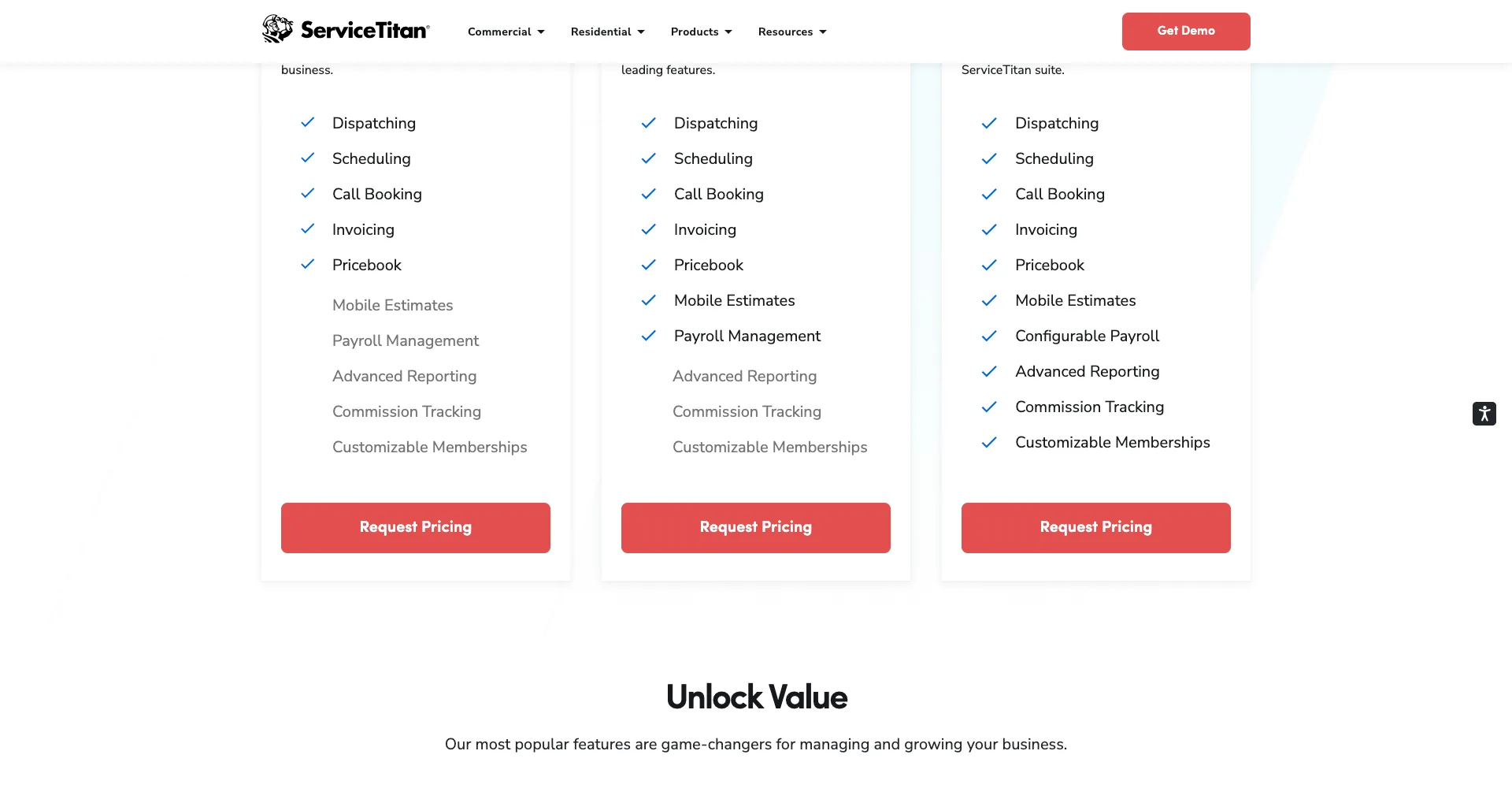 Jul 31, 2026
 Tech Stack
Best Electrical Contractor Software 2026: 11 Ranked and Priced
An electrical contracting business makes two software purchases that do not substitute for each other, and every roundup answering this query covers only one of them. Eleven platforms, with a published price or an explicit statement that the vendor publishes none.
Read Article Jul 31, 2026
 Tech Stack
Best HVAC Software in 2026: Eleven Ranked Across Three Classes
An HVAC contracting business buys across three classes of software that do not substitute for each other, and every roundup answering this query covers only one of them. Eleven products, each with a published price or an explicit statement that the vendor publishes none.
Read Article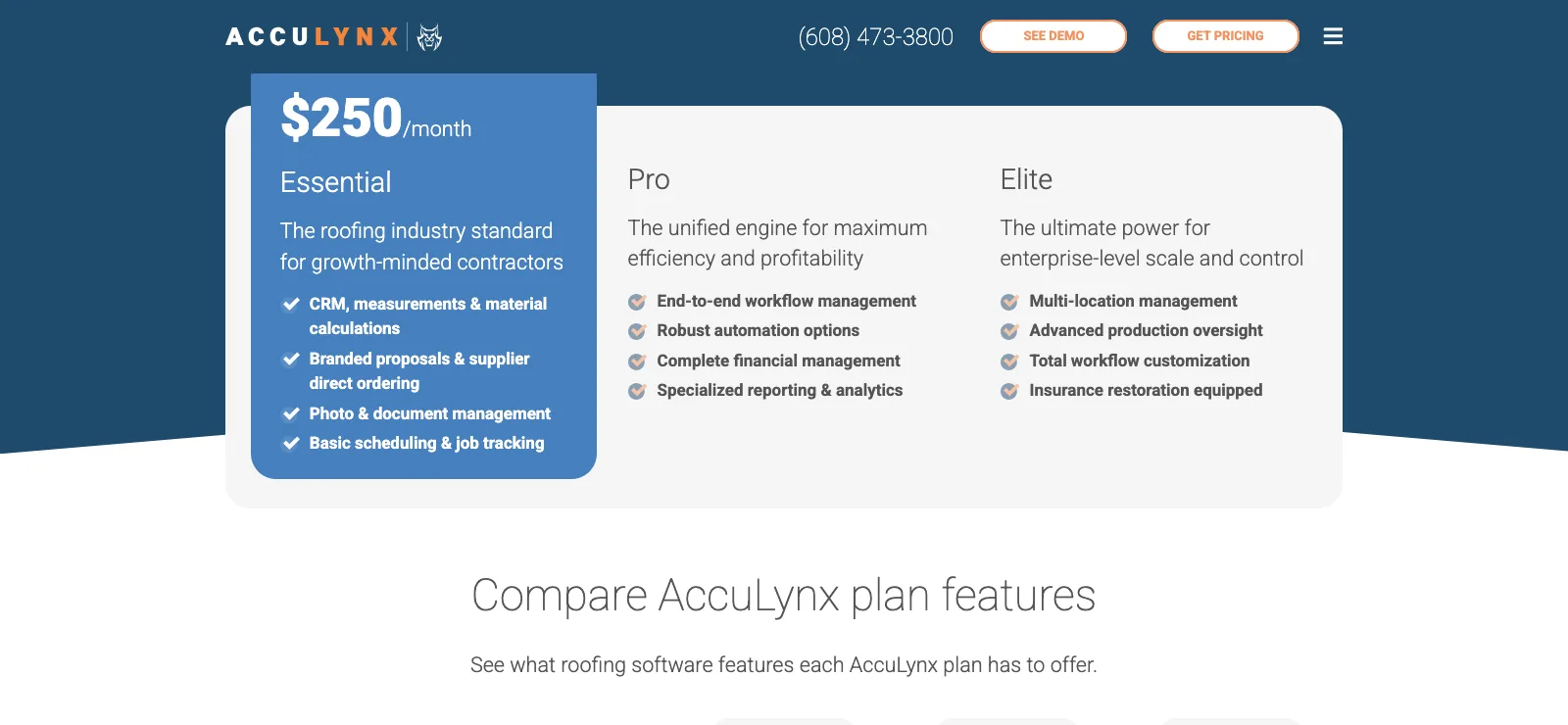 Jul 30, 2026
 Tech Stack
AccuLynx Pricing 2026: The Real Cost of a Quote-Gated Plan
One published figure, two blank plan cards, and a contract that says things the pricing page does not. A line-by-line breakdown of what AccuLynx really bills.
Read Article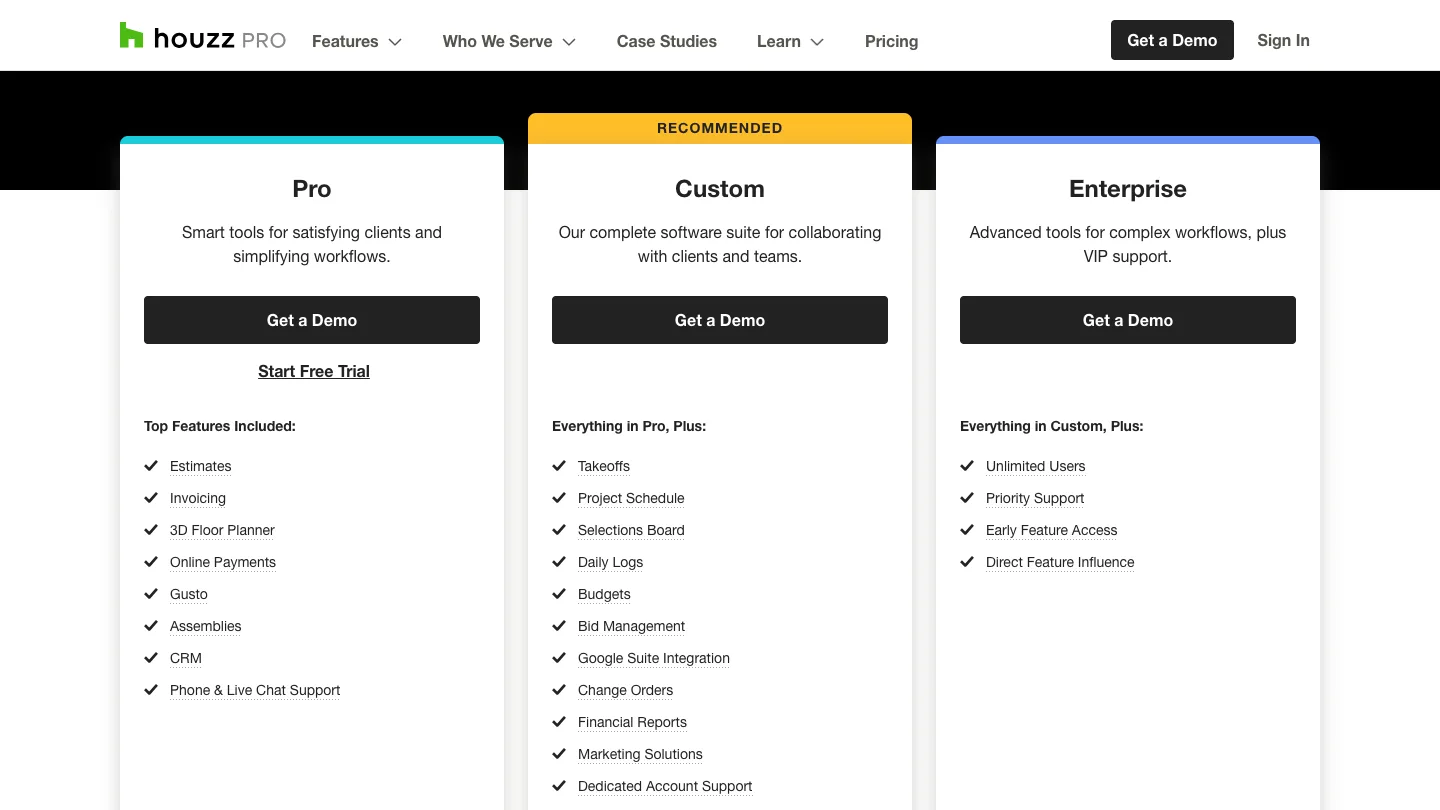 Jul 30, 2026
 Tech Stack
Houzz Pro Canada Review 2026: Pricing and Alternatives
Houzz Pro serves different pricing renderings. What Canadian buyers see, how GST/HST and payments work, what Custom gates, and what the annual contract commits you to.
Read Article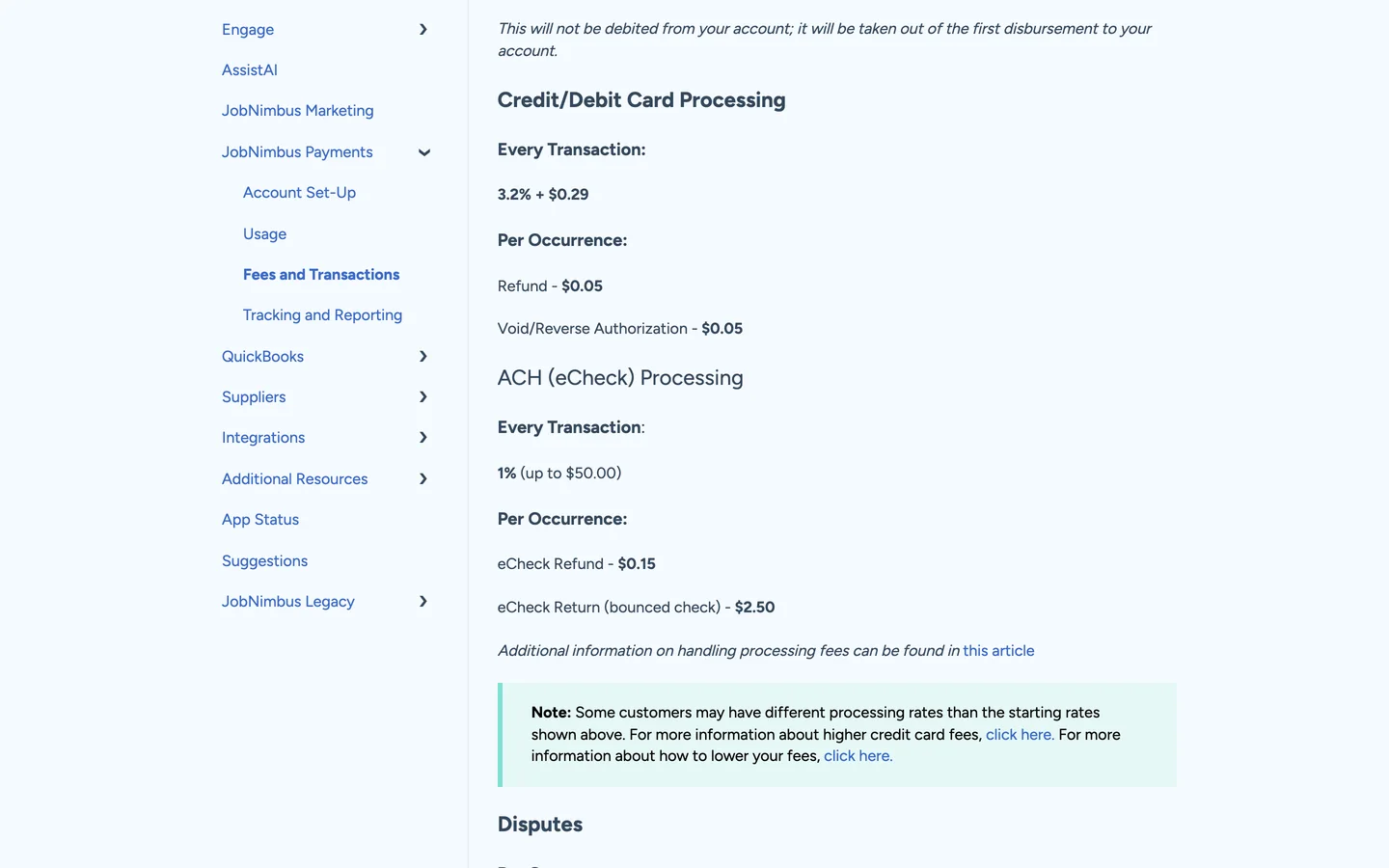 Jul 30, 2026
 Tech Stack
JobNimbus Pricing in 2026: What the Quote Does Not Cover
JobNimbus prints no figure on any of its four plans. So the only rate you can read before a sales call is the payments meter, and it is the biggest line on the bill.
Read Article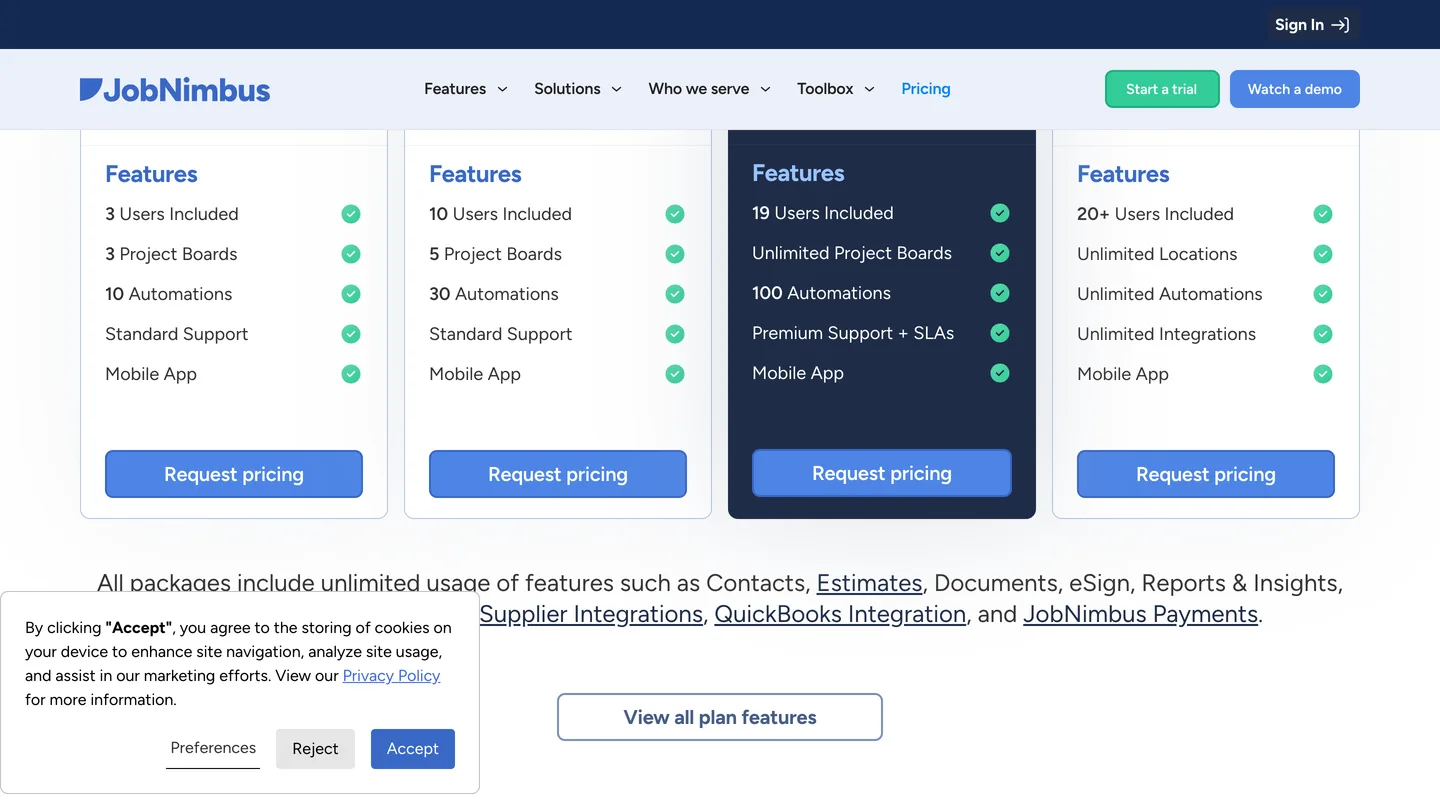 Jul 30, 2026
 Tech Stack
JobNimbus Review 2026: Pricing, Pros, Cons and Alternatives
JobNimbus rates 4.6 on Capterra and orders material straight from ABC Supply and SRS. But it publishes no price, and its supplement route carries a note.
Read Article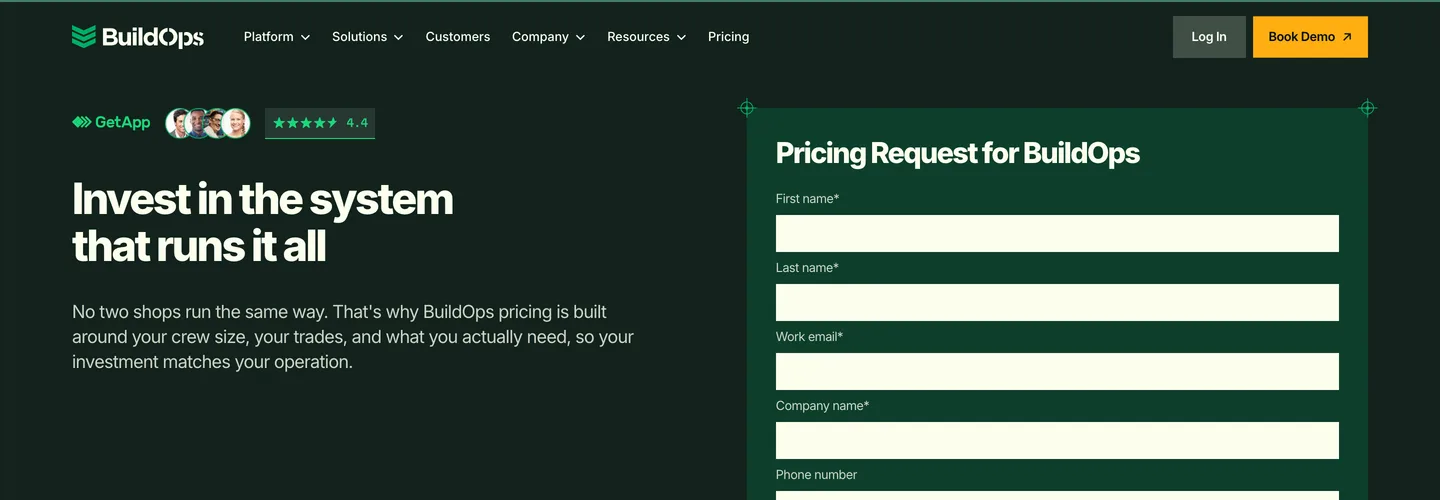 Jul 30, 2026
 Tech Stack
BuildOps Review 2026: Pricing, Contract Terms and Alternatives
BuildOps runs commercial service and projects on one platform, and publishes no pricing at all. The billing unit, the 30-day data-export window, and who it suits.
Read Article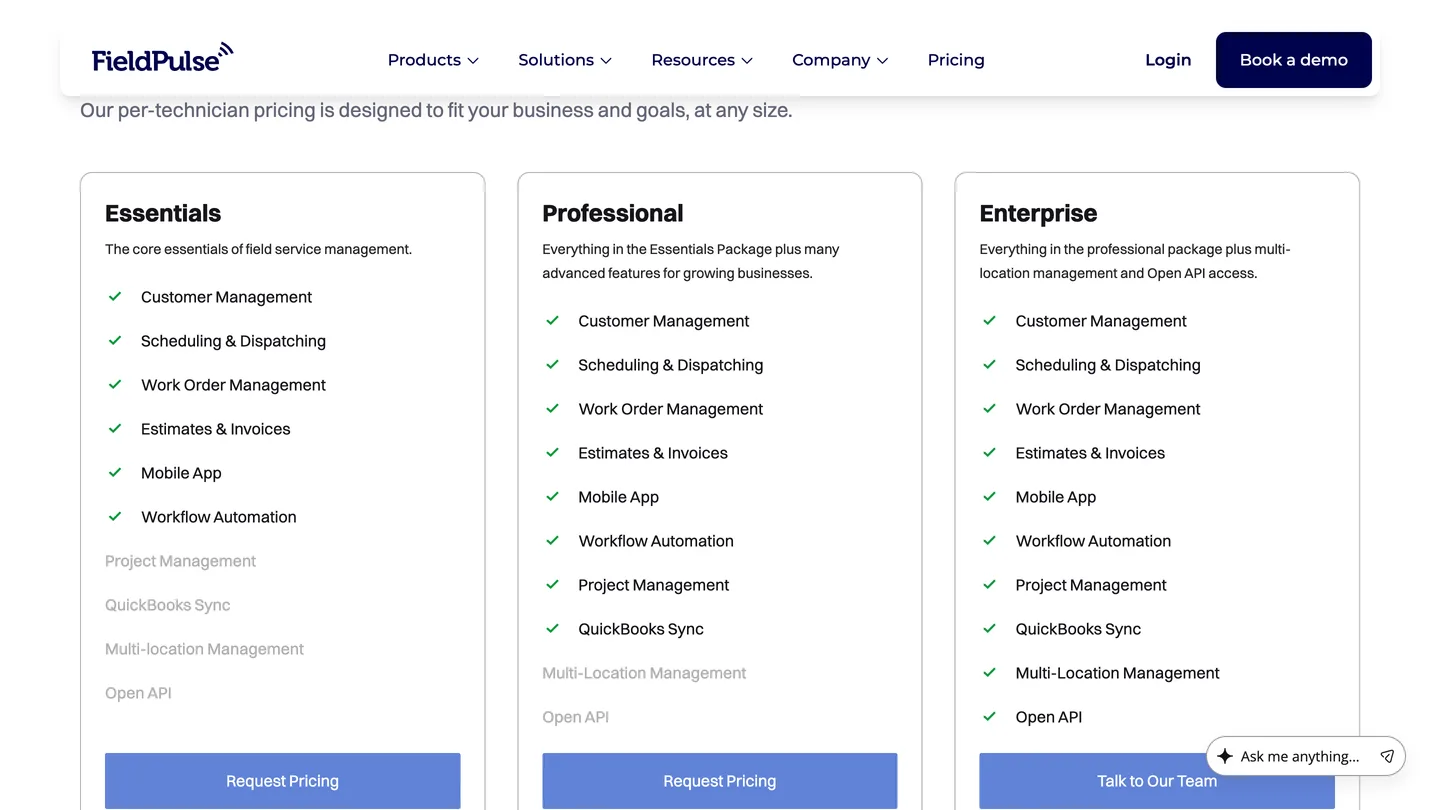 Jul 30, 2026
 Tech Stack
FieldPulse Review 2026: Pricing, Pros, Cons and Alternatives
FieldPulse rates 4.6 on Capterra and is the platform contractors name when they leave a bigger system. But it publishes no price, and the contract runs a year.
Read Article Jul 30, 2026
 Tech Stack
Service Fusion Review 2026: Pricing, Contract and Alternatives
Service Fusion bills flat per company with unlimited users, which is the best structural deal in field service software. The published plans, the contract behind the no-contract line, and the app score every other review gets wrong.
Read Article Jul 30, 2026
 Tech Stack
Knowify Review 2026: Pricing, Job Costing and Alternatives
Knowify rates 4.5 on Capterra and its weakest sub-score is features. What the $99 Core plan withholds, which way the QuickBooks sync really runs, and who should not buy it.
Read Article Jul 29, 2026
 Tech Stack
AccuLynx Review 2026: Pricing, Tier Gating, Alternatives
AccuLynx rates 4.6 across 846 reviews and now publishes an entry price. What that price omits, which tier holds the insurance workflow, and who should skip it.
Read Article Jul 29, 2026
 Tech Stack
Unitel Voice Review 2026: Pricing, Features and Alternatives
Unitel Voice rates 4.6 on Capterra and gives a one-truck shop a business number for $9.99 a month. The published plans, the cost per call, and what it won't do.
Read Article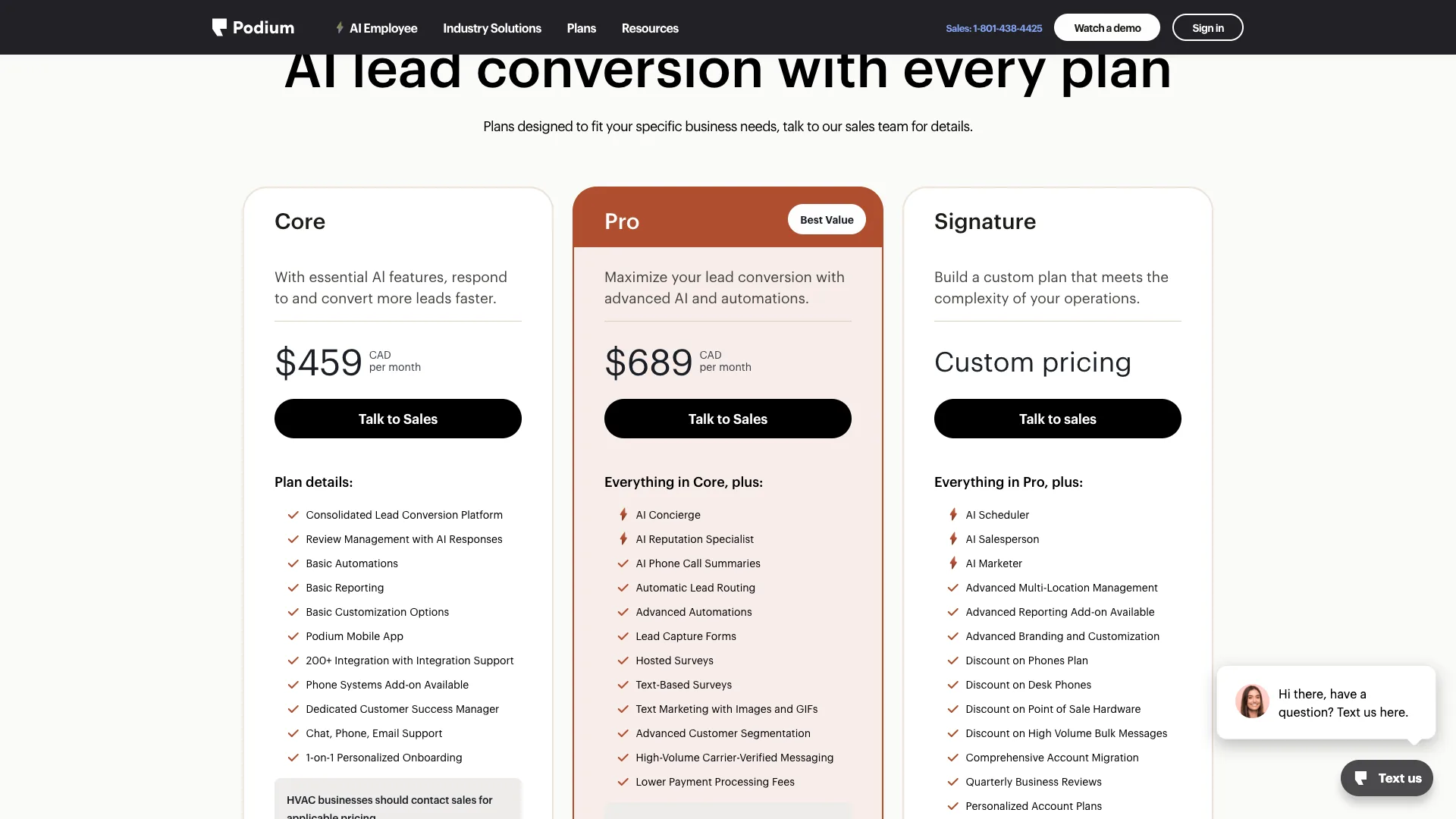 Jul 29, 2026
 Tech Stack
NiceJob vs Podium 2026: Pricing, Contracts and Review Gating
Both vendors print a price, at very different scale and in different currencies. The gap that matters is what Podium will not print: the billing unit, and whether a trade shop gets the number on the page.
Read Article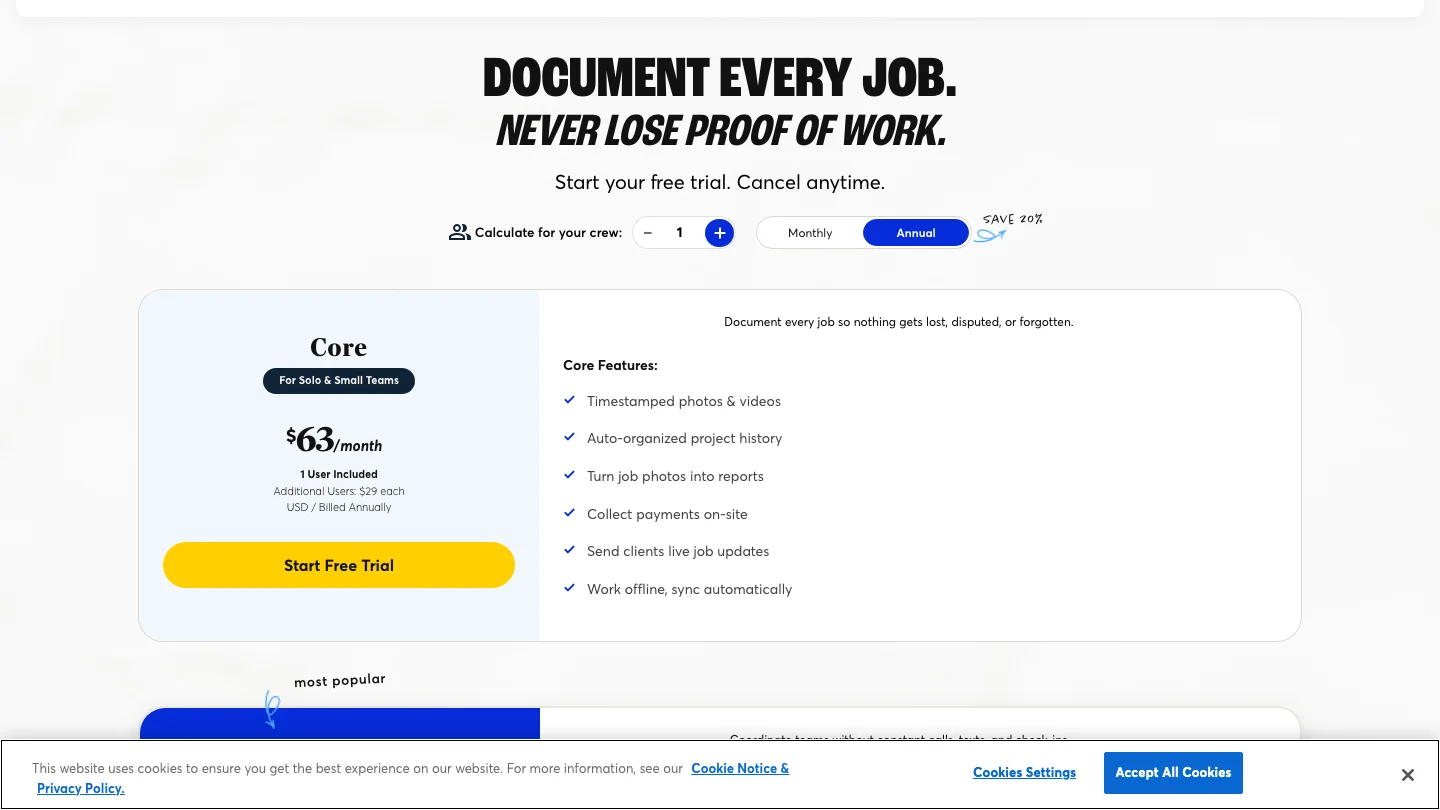 Jul 28, 2026
 Tech Stack
CompanyCam Review 2026: Pricing, Pros, Cons and Alternatives
Every page ranking for CompanyCam still quotes a per-user price the vendor no longer charges. Here are the real plans, the seat math, and who should skip it.
Read Article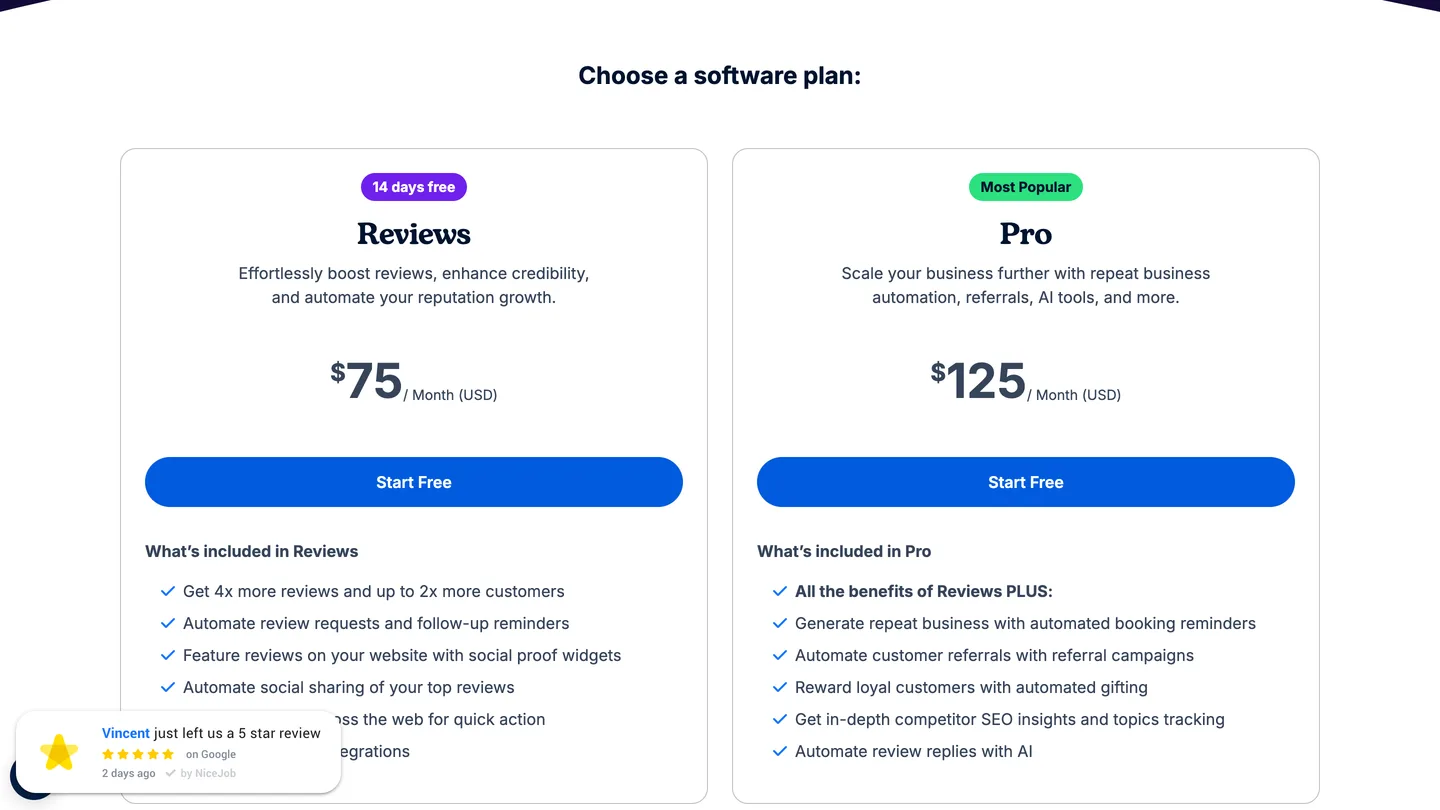 Jul 28, 2026
 Tech Stack
NiceJob Review 2026: Pricing, Pros, Cons and Alternatives
NiceJob rates 4.9 on Capterra and refuses to gate negative reviews. Real plan pricing, the active-customer threshold nobody publishes, and who should skip it.
Read Article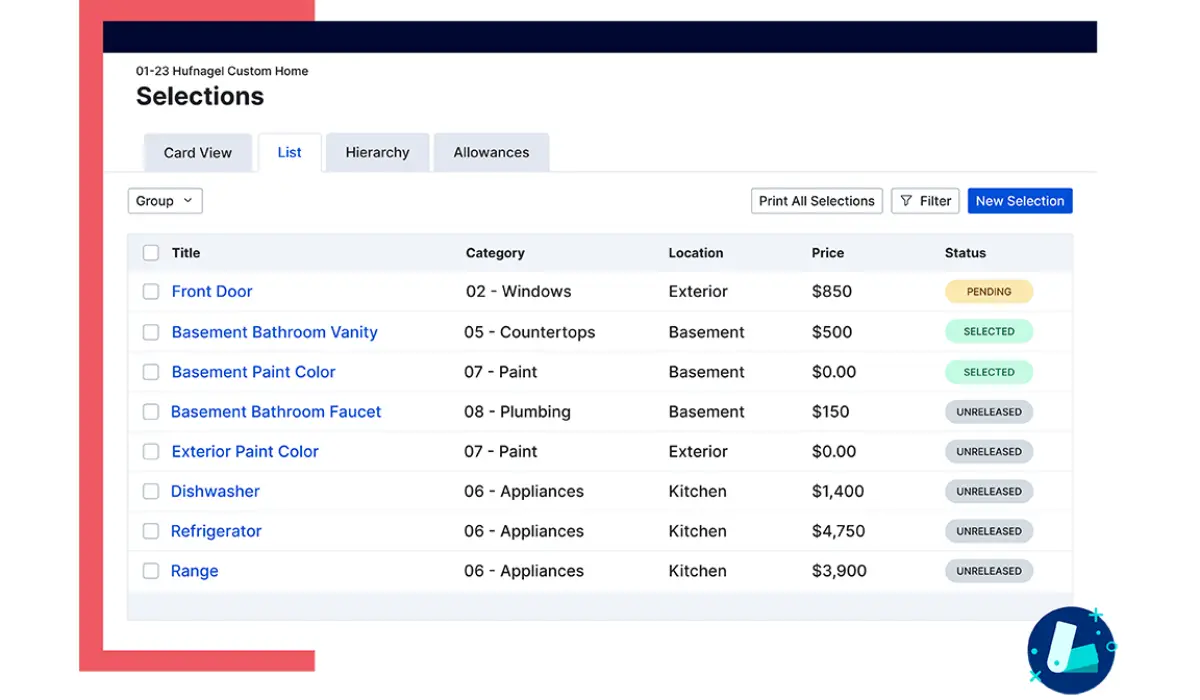 Jul 27, 2026
 Tech Stack
Buildertrend Review 2026: Pricing, Limits and Alternatives
Buildertrend rates 4.5 across 2,486 Capterra reviews and quotes against your revenue rather than your seat count. The workflows, the export problem, the alternatives.
Read Article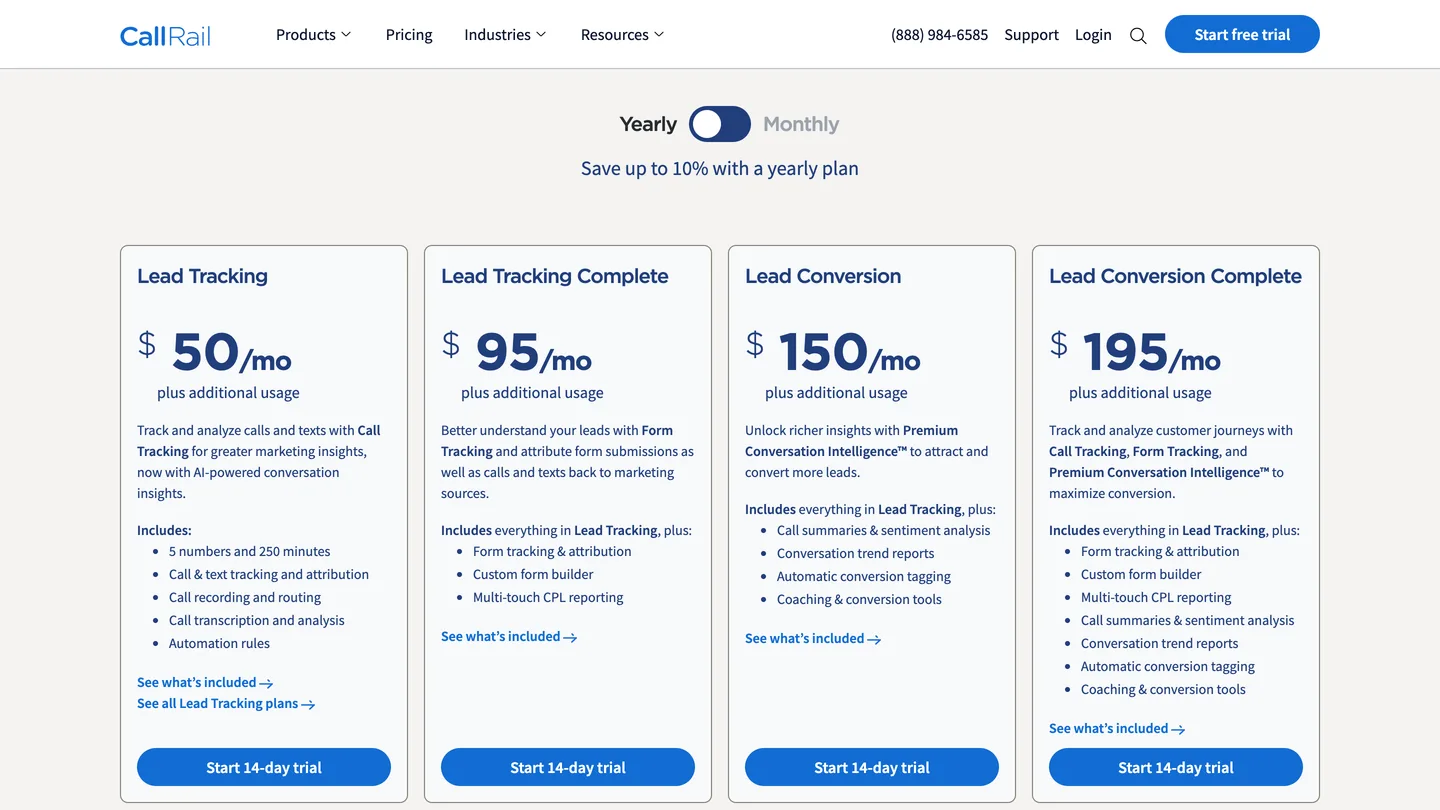 Jul 27, 2026
 Tech Stack
CallRail Review 2026: Pricing, Pros, Cons and Alternatives
CallRail rates 4.5 on Capterra, and its tracking numbers port out free. But the two usage rates that decide your real bill are the two it does not print.
Read Article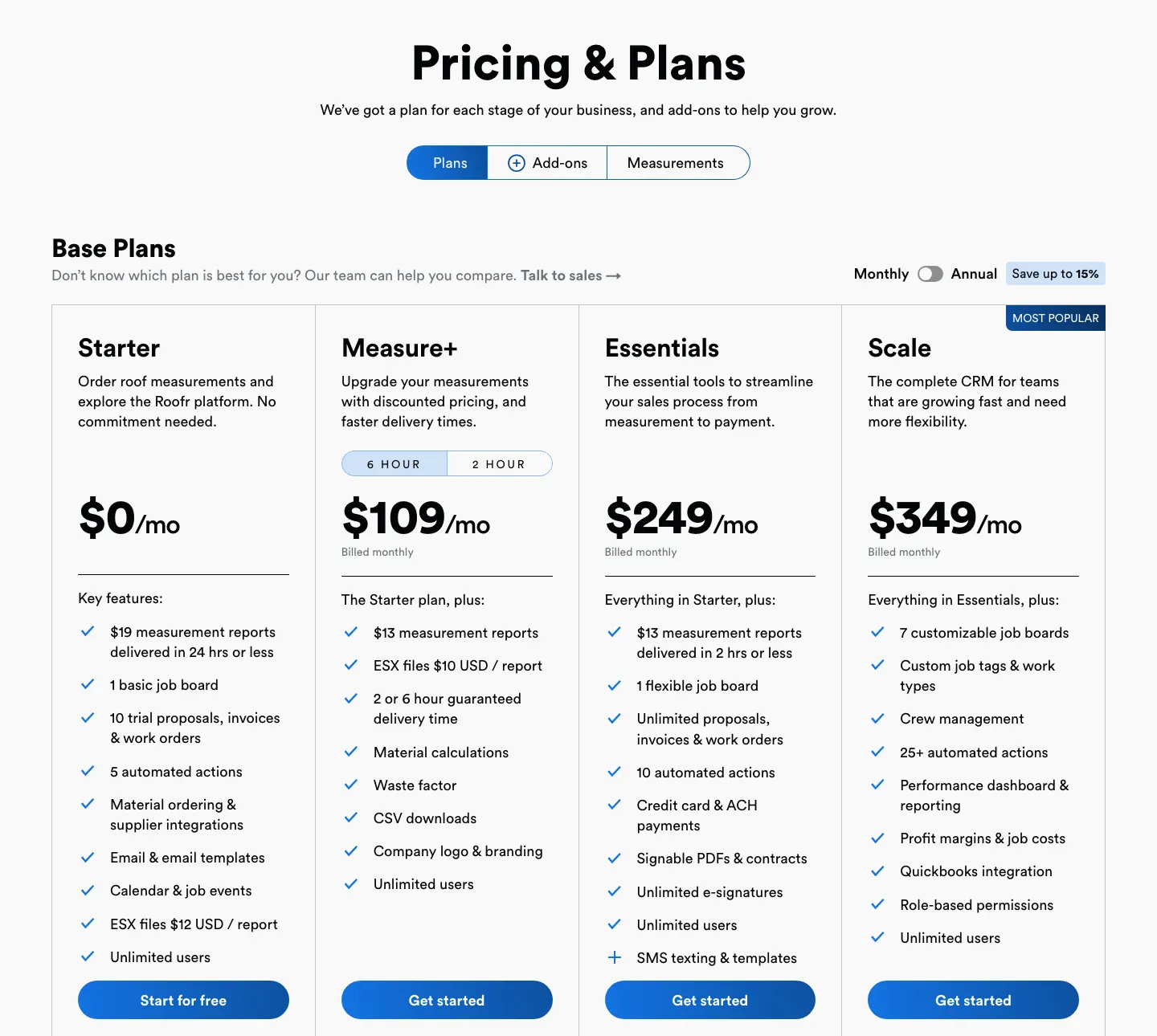 Jul 27, 2026
 Tech Stack
Roofr Review 2026: Pricing, Pros, Cons and Alternatives
Roofr rates 4.6 on Capterra and sells $13 measurement reports against a market charging triple. But it will not import a report from anywhere else.
Read Article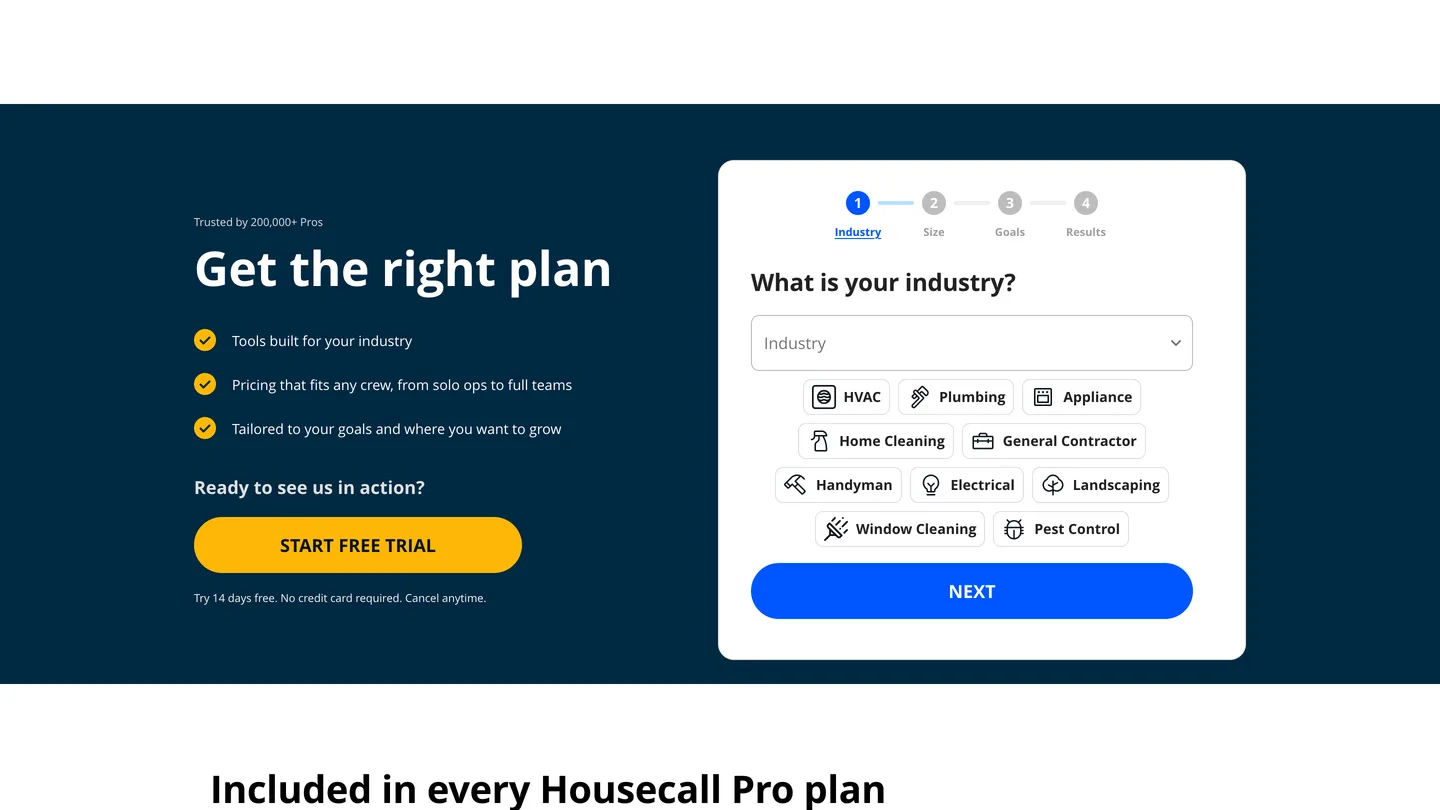 Jul 25, 2026
 Tech Stack
Housecall Pro Review 2026: Pricing, Pros, Cons, Alternatives
Housecall Pro has the shortest learning curve in the category and the widest review spread. Real pricing, the Instapay math, and the migration trap to plan around.
Read Article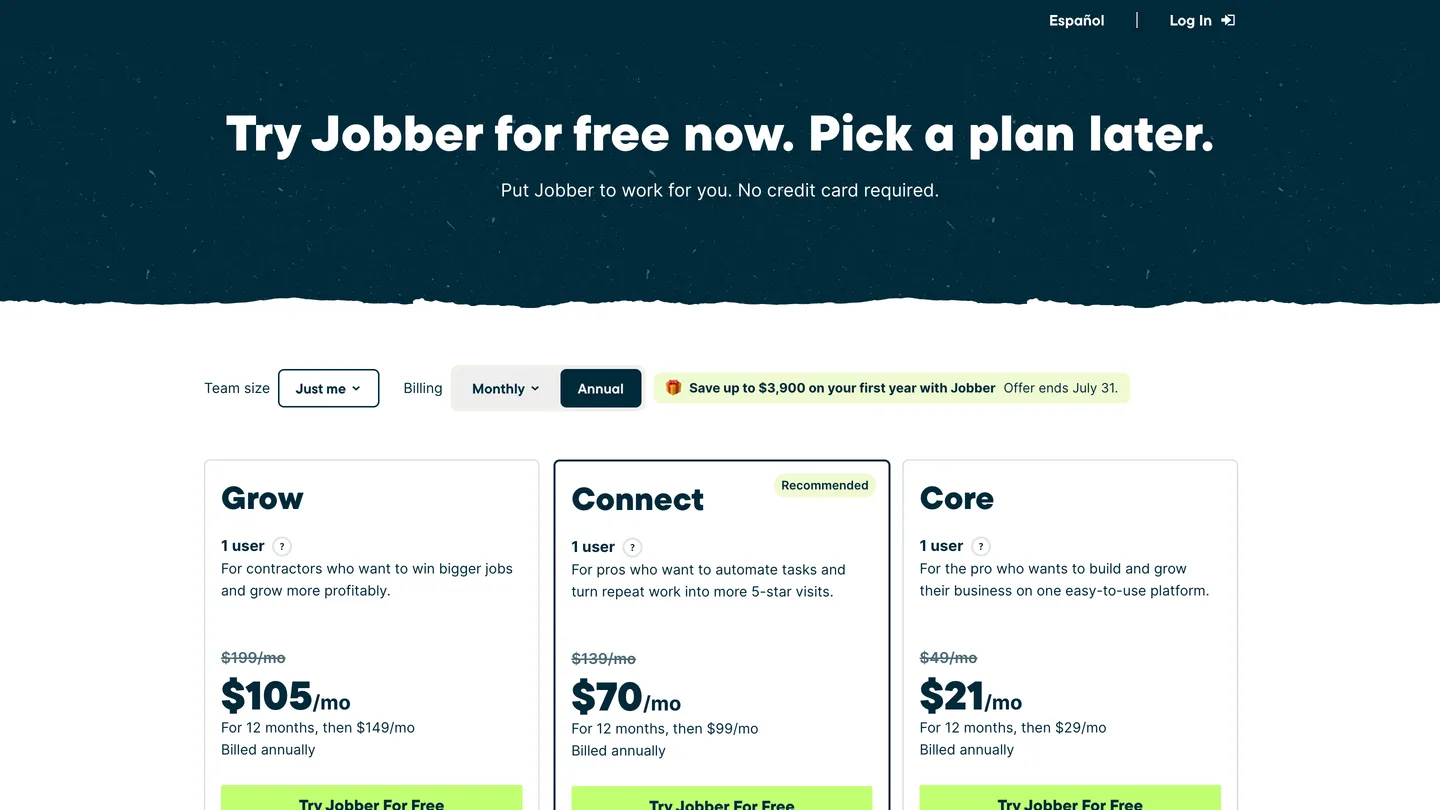 Jul 24, 2026
 Tech Stack
Jobber Review 2026: Pricing, Pros, Cons and Alternatives
Jobber rates 4.6 on Capterra with the best mobile app in the category. Real plan pricing, the feature gating that changes your entry price, and who it suits.
Read Article Jul 23, 2026
 Tech Stack
ServiceTitan Review 2026: Pricing, Pros, Cons, Alternatives
ServiceTitan rates 4.3 on Capterra but its weakest score is value for money. Real reported pricing, the 12-month contract, the exit fees, and who it actually suits.
Read Article Jun 3, 2026
 Tech Stack
HVAC Online Scheduling: The 43% Losing After-Hours Bookings
HVAC leads every trade on online booking at just 56.7%, which still leaves 43% of sites forcing an after-hours customer to wait for a business-hours phone call.
Read Article