Commusoft Review 2026: Pricing, Pros, Cons, Alternatives
What Commusoft quotes you starts with the questions its form asks. The 8 gaps reviewers name, and 6 alternatives that print a price instead.

Disclosure This article features tools from our brand partners. If you choose to use them, we may receive compensation at no extra cost to you.
Our editorial choices are independent of these affiliate arrangements. Read our full affiliate disclosure.
Fervor is a CRO and web design studio, not a software reseller, and no vendor paid for placement here or for a kinder verdict. Affiliate links are flagged where they appear, and they never change what we report.
Page at a glance
Commusoft is Compliance-heavy job management for 6-plus-person UK service and maintenance firms that live on certificates, PPM contracts and SLAs, sold only on an annual contract at a price you have to phone for. It publishes no price, so the only way to get a number is to ask a salesperson for one. Strictly per-person. Every office worker, manager and engineer who touches the system needs a paid licence. The vendor's Plans FAQ states: "All office staff, managers, and engineers who access the software require a licence. Each user receives their own secure login details, which appear in the diary for you to schedule work orders or appointments. This individual access is vital for maintaining security audits and accountability." Three licence types exist: Contracted (12-month, price locked, renews annually), Monthly rolling (added on top of contracted licences, added and removed as needed, aimed at seasonal workers), and Daily (billed monthly on days actually used, aimed at subcontractors). Storage is a shared pool sized by Contracted plus Rolling licences only; Daily licences add no storage. It fits Established 6 to 50 person plumbing, heating, gas and electrical service firms doing recurring maintenance and reactive service work with certificate and PPM obligations, rather than one-off project or new-build work. It's the wrong buy for Sole traders and 1 to 3 person crews, because Commusoft screens you out itself. Select a team size of 1-3 on the demo form and the vendor responds: "To ensure our platform delivers a genuine return on investment, Commusoft is specifically designed for businesses with 6 or more staff." And per-person licensing on a 12-month contract, plus mandatory paid onboarding, plus a Core i7 desktop floor, is a fixed cost base a three-person shop can't amortise. Alternatives that publish their prices are Joblogic from £45, Tradify from $47 USD, Jobber from $49. A quote-only price and what third parties report instead, eight evidenced gaps and six alternatives, five of which publish a figure.
Commusoft, in one paragraph
Commusoft earns its money with Established 6 to 50 person plumbing, heating, gas and electrical service firms doing recurring maintenance and reactive service work with certificate and PPM obligations, rather than one-off project or new-build work. If that's you, it does the job. The sections below are the parts worth checking before you sign. But the fit is narrower than the marketing suggests, and the price isn't the whole cost.
The vendor publishes no price. But every number below was verified on 7 August 2026 and comes from a named third party that says which.
| Pricing model | Custom quote, no published price |
|---|---|
| Entry price | Quote only |
| Users | Strictly per-person. Every office worker, manager and engineer who touches the system need |
| Ownership | Independent |
| Best fit | Established 6 to 50 person plumbing, heating, gas and electrical service firms doing recurring maintenance and reactive service work with certificate and PPM obligations, rather than one-off project or new-build work. |
| Accounting sync | Xero (two-way), QuickBooks Online (two-way), Sage Accounting (one-way), FreeAgent (one-way) |
What works
- The certificate and asset trail is the reason UK gas and electrical firms pick this over cheaper tools
- PPM, service contracts and SLA monitoring are the middle tier's whole reason to exist
- Training is compulsory, structured, and by several accounts billed again when you change tiers
- Three licence types genuinely handle seasonal and subcontract labour, but only above a committed contracted base
- Support quality is the single most praised thing about Commusoft and one of the more common complaints, depending on the channel you get
What does not
- There's no price anywhere. Not a range, not a starting figure, not a minimum licence count
- The 12-month term auto-renews and carries a contractual right to raise your price up to 10 percent every year
- Falling 8 days late on an invoice is a contractual default, and default lets Commusoft bill out the entire remaining term
- Getting your data out at the end is discretionary and chargeable, and at least one customer says the databases were deleted
- Storage is metered against your licence count, and running out means deleting job photos one at a time
Commusoft is Compliance-heavy job management for 6-plus-person UK service and maintenance firms that live on certificates, PPM contracts and SLAs, sold only on an annual contract at a price you have to phone for. It sells to Electrical and HVAC and Plumbing and Roofing contractors, and the shape of the product follows from that: Digital forms, safety certificates and per-appliance service history are core rather than bolt-on, and engineers can record physical detail on site. Reviewers repeatedly cite appliance information, meter and stopcock locations, parts fitted and photographs as the thing they wouldn't give up. But that same trail is what makes the exit terms (clause 12.7.3) dangerous: the more of your compliance record lives here, the more expensive leaving becomes.
Who should be shortlisting Commusoft
It fits Established 6 to 50 person plumbing, heating, gas and electrical service firms doing recurring maintenance and reactive service work with certificate and PPM obligations, rather than one-off project or new-build work. That's the half most reviews print. Here's the other half, which is the one worth your time.
Don't buy it if you're Sole traders and 1 to 3 person crews. Commusoft screens you out itself. Select a team size of 1-3 on the demo form and the vendor responds: "To ensure our platform delivers a genuine return on investment, Commusoft is specifically designed for businesses with 6 or more staff." And per-person licensing on a 12-month contract, plus mandatory paid onboarding, plus a Core i7 desktop floor, is a fixed cost base a three-person shop can't amortise. Look at Jobber instead.
Don't buy it if you're Roofing, remodeling and other project-based contractors. Every part of Commusoft's own positioning points at recurring service work: PPM scheduling, service contracts, SLA monitoring, asset and appliance history, gas and electrical certificates, service reminders. Its trade pages are plumbing and heating, gas engineer, electrician and renewables. Capterra's reviewer mix is 57 to 58 percent construction with utilities and facilities services behind it, and the review corpus is full of boilers, meters and stopcocks. And there's no roofing measurement, no material ordering by squares, no production board built around multi-week builds. Look at AccuLynx instead.
Don't buy it if you're Anyone who needs to trial software without a year of exposure. The base commitment is 12 months (clause 1.1.8), notice can't expire before the Initial Period ends (clause 3), and a reviewer reports the cooling-off window is 14 days. And fourteen days isn't long enough to migrate a customer database, retrain an office and get engineers using an app in the field, which is exactly the complaint that reviewer makes. So if you need to prove the fit before you commit a year, this procurement model is wrong for you. Look at Housecall Pro instead.
Don't buy it if you're US contractors who want month-to-month billing and a public price. Commusoft is a UK company (Commusoft Ltd, with a Commusoft Inc US entity) selling a UK contract shape: annual term, 30-day notice, 7-day invoice terms, a 10 percent annual uplift right. But US FSM competitors publish prices and sell month-to-month. So if your buying process needs a number on a website and the ability to leave in 30 days, you won't get either here. Look at Service Fusion instead.
Commusoft's price, and the part that isn't the price
There's no published price for Commusoft. The pricing page asks you to get in touch, so every figure below comes from somewhere other than the vendor, and each one says where.
The vendor's own wording is this, and nothing more: "Commusoft answers its own "How much does Commusoft cost?" FAQ by refusing to give a number and redirecting to a sales conversation." So treat every third-party page printing tier names and figures for Commusoft with careful suspicion. Those numbers are not on the vendor's site today, and a roundup that reprints them is telling you what Commusoft used to charge somebody else.
And we are not going to print a per-month number we cannot open a page and read. We checked https://www.capterra.com/p/149651/Commusoft/ — Capterra's pricing block reads "Contact vendor for pricing" with no starting figure, https://www.softwareadvice.com/field-service/commusoft-profile/ — starting price reads "Connect with an advisor for pricing", pricing model listed as custom quote, https://www.getapp.com/operations-management-software/a/commusoft/ — GetApp shows no starting price and contradicts Capterra on whether a free trial exists, https://www.itqlick.com/commusoft/pricing — states "starts at $70 per user/month", $700-$900/month at 10 users and $6,000-$8,000/month at 100 users, but names no source, vendor quote or methodology behind any of those figures, https://www.commusoft.com/en-gb/plans/ — the vendor's own Plans page, which the FAQ says holds "details about minimum licenses required", contains no price and no minimum licence count. The only third-party site publishing hard numbers (ITQlick) attributes them to nothing. It names no customer, no quote, no invoice and no methodology, and its per-user figure and its 10-user band don't reconcile with each other. And Capterra, Software Advice and GetApp all decline to state a figure at all, while the two of them that answer the free-trial question contradict each other. Rather than launder an unsourced content-farm number into a range, this bank records the absence. So ask Commusoft for a written per-licence rate on the Order Form before signing, because the Order Form, not the website, is where the number legally lives (clause 1.1.11). So the absence is the finding: go into the demo knowing that nobody outside the vendor can tell you what you will be quoted, and that any page claiming otherwise is quoting a structure that has moved.
Strictly per-person. Every office worker, manager and engineer who touches the system needs a paid licence. The vendor's Plans FAQ states: "All office staff, managers, and engineers who access the software require a licence. Each user receives their own secure login details, which appear in the diary for you to schedule work orders or appointments. This individual access is vital for maintaining security audits and accountability." Three licence types exist: Contracted (12-month, price locked, renews annually), Monthly rolling (added on top of contracted licences, added and removed as needed, aimed at seasonal workers), and Daily (billed monthly on days actually used, aimed at subcontractors). Storage is a shared pool sized by Contracted plus Rolling licences only; Daily licences add no storage.
There is a discount for paying annually up front: No discount percentage is published. The vendor frames the 12-month commitment as a price lock rather than a discount: "Contracted licences lock in your price and are committed to for a 12-month contract period, which renews on an annual basis." The contract separately permits a rise of up to 10 percent at each anniversary (clause 4.8), so the "lock" holds only within a contract year. And an annual prepay discount tells you an annual commitment exists, which is worth knowing before anyone mentions a term length out loud.
What a Commusoft quote leaves out
Payment processing. Commusoft's Stripe page describes on-site card payments, a Pay Now link and the customer portal, and states payments land in your bank within 7 days, but names no percentage, no per-transaction fee and no statement of whether Commusoft adds a margin on top of Stripe's own rate. And the GoCardless integration page is equally silent on direct-debit fees. So ask: do you take any share, markup or platform fee on Stripe or GoCardless volume processed through Commusoft, and is that in writing on the Order Form?
Implementation and onboarding. Onboarding is bundled into the package and is not optional. The vendor states: "We consider onboarding essential, not optional. The system will become the backbone of your business, so we commit to ensuring your team is expertly trained." It covers personalised training sessions, integration and workflow setup, a follow-up session about eight weeks after the last session, and periodic business reviews. No fee figure is published. A Capterra reviewer reports it is separately and repeatedly charged: "It is mandatory to pay for the training, and this cost is incurred again if you upgrade the package."
Minimum term. 12 months. "Initial Period" is defined in clause 1.1.8 as "the period of 12 months commencing on the Commencement Date". The Plans FAQ says the same in plain English: "Our standard plans are built on a 12-month contract to ensure you lock in your price and dedicated support." Monthly rolling and Daily licences sit on top of a contracted plan; they are not a way to avoid the 12-month base commitment.
Getting out. Clause 12.6 is a liquidated-damages clause that bites when Commusoft terminates for your default: "In the event that this Agreement is terminated by Provider under this clause 12 then the Customer shall pay Provider a sum by way of agreed and liquidated damages for Provider's losses and damages by reason thereof such sum being equal to 100% for each Month or part of a Month between the date of such termination and the earliest date on which this Agreement could have expired or been terminated by the Customer in accordance with clause 3." The trigger bar is low: clause 12.1.1 makes it an act of default "if the Customer fails to pay any moneys due pursuant hereto within 7 days of the due date therefor", and clause 4.6 sets invoices as "payable within 7 days after the date thereof". Clauses 12.3.1 and 12.3.2 also let Commusoft terminate immediately if you undergo a change of control or are merged or reorganised where you are not the surviving entity. No customer-side early-exit-for-convenience right exists.
Auto-renewal. Yes, and it rolls automatically with a 30-day notice window. Clause 3: the agreement "shall commence on the Commencement Date and shall (subject to the provisions for termination set out in this Agreement) continue for the Initial Period and thereafter until terminated by either party giving to the other not less than 30 days' notice in writing (any such notice to expire not earlier than the end of the Initial Period)." Clause 4.8 attaches an annual uplift right to the same anniversary: "Provider shall be entitled to increase the Service Fee with effect from each anniversary of the Commencement Date by giving at least 30 days' prior written notice to the Customer. Such increase measured as a percentage of the then current Service Fee shall not exceed 10 percent."
Modules sold separately. , , , , , , , . So price the Commusoft configuration you'll really run rather than the entry tier, because an add-on you need on day one is part of the price.
Side note, and it's a useful one: the default trigger and the acceleration clause are only 14 days apart. Invoices are due 7 days after issue (clause 4.6), non-payment 7 days past due is a contractual act of default (clause 12.1.1), and default lets Commusoft terminate and then bill 100 percent of every remaining month of the term as liquidated damages (clause 12.6). In most SaaS contracts a late invoice gets you a dunning email. But here, a fortnight of accounts-payable drift is enough to hand the vendor a right to accelerate the entire remaining term. Contractors run lumpy cash flow by nature. So put the subscription on direct debit before month one, and ask for the 7-day payment window to be extended to 30 on the Order Form.
Everything that is not the Commusoft subscription
The subscription is the part everyone quotes. These are the lines that land afterwards, and the ones we could not find are named as unpublished rather than left blank.
Sold separately. , , , , , , , . Price the configuration you'll really run, because an add-on you need on day one is part of the price.
"Commusoft answers the question of what it costs with this and nothing else: "Commusoft answers its own "How much does Commusoft cost?" FAQ by refusing to give a number and redirecting to a sales conversation.""
Commusoft pricing page (2026)
"Strictly per-person. Every office worker, manager and engineer who touches the system needs a paid licence. The vendor's Plans FAQ states: "All office staff, managers, and engineers who access the software require a licence. Each user receives their own secure login details, which appear in the diary for you to schedule work orders or appointments. This individual access is vital for maintaining security audits and accountability." Three licence types exist: Contracted (12-month, price locked, renews annually), Monthly rolling (added on top of contracted licences, added and removed as needed, aimed at seasonal workers), and Daily (billed monthly on days actually used, aimed at subcontractors). Storage is a shared pool sized by Contracted plus Rolling licences only; Daily licences add no storage."
Commusoft pricing page (2026)
"The learning curve is steep forcing the allocation of several hours to train staff. overall pricing sits in the higher bracket of the market, and long-term contract requirements can be a financial deterrent for small setups."
Capterra, Brad D. (7-06)
The six workflows you pay for
Feature totals are noise. So a shop in this category lives or dies on six things, and those are the six to grade, and each one below carries the evidence it's graded on.
The certificate and asset trail is the reason UK gas and electrical firms pick this over cheaper tools. Digital forms, safety certificates and per-appliance service history are core rather than bolt-on, and engineers can record physical detail on site. Reviewers repeatedly cite appliance information, meter and stopcock locations, parts fitted and photographs as the thing they wouldn't give up. But that same trail is what makes the exit terms (clause 12.7.3) dangerous: the more of your compliance record lives here, the more expensive leaving becomes. But a plumbing and heating, 4 users, 8 years on the platform, reports it it differently: "We have used Commusoft for 8 years for our small company. We have 4 people using this at once throughout the day to keep our jobs running smoothly. The level of record keeping for the appliance information, meter location, parts fitted, photographs etc is really useful. The communications we can send to our customers via email or SMS from Commusoft is fantastic and always impresses our customers. It also integrates perfectly with Xero which is a must for us. The support ticket system is very good too and gives you confidence that any issues will be resolved."
PPM, service contracts and SLA monitoring are the middle tier's whole reason to exist. Commusoft explicitly gates commercial contracts, PPM scheduling, multi-location stock and SLA monitoring behind the Customer Journey tier, and sells recurring billing on service contracts as the way to lock in predictable revenue. And there's an SFG20 integration for uploading building-maintenance PPM schedules directly. So if planned maintenance is a small share of your revenue, you're paying for the tier's headline capability and not using it.
Training is compulsory, structured, and by several accounts billed again when you change tiers. The vendor bundles personalised training, integration setup, a follow-up session about eight weeks later and periodic business reviews, and states outright that onboarding isn't optional. Reviewers split cleanly on this: those who did the training describe an overwhelming system that became manageable, and those who didn't describe a system they couldn't work. One reviewer reports paying for training again on upgrading the package. So budget the time as well as the money. But a director, construction, 2+ years on the platform, says it differently: "It is mandatory to pay for the training, and this cost is incurred again if you upgrade the package"But an operational manager, utilities, 2+ years on the platform, says it differently: "it can be a bit overwhelming when boarding however the team provides training which makes it a lot easier to use"
Three licence types genuinely handle seasonal and subcontract labour, but only above a committed contracted base. Monthly Rolling licences can be added and removed for temporary or seasonal workers. Daily licences bill on days used and suit subcontractors. This is more thoughtful than most FSM per-seat models. But the catch is structural: Monthly and Daily sit on top of your contracted plan, Daily licences contribute nothing to your storage pool, and the contracted base itself is committed for 12 months with no published mechanism to shrink it mid-term.
Support quality is the single most praised thing about Commusoft and one of the more common complaints, depending on the channel you get. Software Advice scores customer support at 4.8, the highest of its four sub-ratings, and the review corpus is thick with praise for response times and industry knowledge. But the counter-pattern is narrow and specific: reviewers who wanted a phone number and got email only, and reviewers who felt answers missed the question. Commusoft's Plans page promises "Phone and email support based in your country", so if phone access matters, confirm it applies to your tier and region before signing. But an operations manager, electrical/electronic manufacturing, 2+ years on the platform, says it differently: "The support is done over email, there isn't a specific number we can call to talk to somebody over the phone."But a CEO, construction, 2+ years on the platform, says it differently: "support doesn't really answer the question you're asking. Can be a bit complicated to use and lots of features are unused"
Two-way accounting sync is real and broad, and it's the workflow reviewers name most often as the reason they stay. Xero and QuickBooks Online both run two-way, and the QuickBooks sync covers the supplier side as well as the customer side, which most FSM tools skip. And Sage Accounting and FreeAgent are also supported, which matters in the UK where Sage is entrenched. But there are two cautions from the review corpus: one reviewer had every customer duplicated in QuickBooks on connection, and another had CIS invoices with domestic reverse VAT rejected by the accounting side.
Commusoft per trade, not per company size
Fit differs by trade rather than by company size alone, and a blended paragraph hides that. Here is the split for the trades this one sells to.
Electrical. The workflow that decides it is the certificate and asset trail is the reason uk gas and electrical firms pick this over cheaper tools, and the shop profile that gets value is 16 to 50 staff with commercial ppm contracts and sla obligations doing residential and commercial and service work. Where it stops being a fit is Sole traders and 1 to 3 person crews.
HVAC. The workflow that decides it is the certificate and asset trail is the reason uk gas and electrical firms pick this over cheaper tools, and the shop profile that gets value is 16 to 50 staff with commercial ppm contracts and sla obligations doing residential and commercial and service work. Where it stops being a fit is Sole traders and 1 to 3 person crews.
Plumbing. The workflow that decides it is the certificate and asset trail is the reason uk gas and electrical firms pick this over cheaper tools, and the shop profile that gets value is 16 to 50 staff with commercial ppm contracts and sla obligations doing residential and commercial and service work. Where it stops being a fit is Sole traders and 1 to 3 person crews.
Roofing. The workflow that decides it is the certificate and asset trail is the reason uk gas and electrical firms pick this over cheaper tools, and the shop profile that gets value is 16 to 50 staff with commercial ppm contracts and sla obligations doing residential and commercial and service work. Where it stops being a fit is Sole traders and 1 to 3 person crews.
The Commusoft integration that decides everything else
Xero connects both ways, on every plan. QuickBooks Online connects both ways, on every plan. Sage Accounting connects one way only, so edits made in your books do not come back, on every plan. FreeAgent connects one way only, so edits made in your books do not come back, on every plan. Your costs map through cost codes, so test yours against your own chart of accounts before you commit. A code your books don't recognise is how a labour charge quietly lands somewhere useless.
Past those, the road ends. QuickBooks Desktop, Sage 50 / Sage 200, CompanyCam, Google Local Services Ads / Angi / Checkatrade lead sources, Review and reputation platforms, Payroll do not connect. So if your books run on an ERP rather than the platforms named above, weigh that before anything else.
Beyond accounting it connects to Stripe (Card payments taken on site from the mobile app, via a Pay Now link, or through the customer portal, auto-reconciled against the invoice. Commusoft states payments reach your bank within 7 days. But no fee or rate is published on the page.), GoCardless (Direct debit and recurring billing schedules, positioned as a way to reduce credit card fees. No rate published.), Zapier (General-purpose automation bridge to tools with no native connector.), HubSpot (Syncs HubSpot CRM sales and customer data into Commusoft.), Pipedrive (Connects and syncs Pipedrive CRM account data with Commusoft.), Mailchimp (Send targeted promotional email to existing customers without leaving Commusoft.), Gmail and Outlook Mail (Two-way email syncing for Gmail; customer and job information surfaced inside Outlook.), Google Calendar and Outlook Calendar (Bidirectional calendar sync so events created in either calendar appear in the other.), PartsArena Pro (Syncs boiler and heating parts data from PartsArena Pro into Commusoft. And it's a UK-specific advantage no US FSM tool offers.), Wolseley and City Plumbing (Live merchant parts pricing and purchase orders inside Commusoft, from two UK plumbing and heating merchants.), Worcester Bosch (Worcester Accredited Installers receive service and warranty jobs directly into Commusoft from the manufacturer.), SFG20 (Upload SFG20 building-maintenance PPM schedules into Commusoft.), naturalForms (Custom digital form generation and completion in the field.), Spruce (Converts a Spruce enquiry into a Commusoft opportunity. Notable because Commusoft states this one isn't self-serve: "To set up the Spruce integration, contact Commusoft directly. From there, our support team will guide you through the manual setup process."). A public API exists: A public API exists. Commusoft runs a status-page component named "Our Public API" and publishes API documentation on Apiary at commusoft.docs.apiary.io. Neither source states who is eligible, whether API access is gated to a tier, whether it costs extra, or what the rate limits are, and the Plans page does not mention the API at all. Treat API access as something to negotiate onto the Order Form rather than something you are entitled to.
Commusoft support, onboarding and the hours
Support is the line item nobody prices and everybody eventually needs. Onboarding for Commusoft: Onboarding is bundled into the package and is not optional. The vendor states: "We consider onboarding essential, not optional. The system will become the backbone of your business, so we commit to ensuring your team is expertly trained." It covers personalised training sessions, integration and workflow setup, a follow-up session about eight weeks after the last session, and periodic business reviews. No fee figure is published. A Capterra reviewer reports it is separately and repeatedly charged: "It is mandatory to pay for the training, and this cost is incurred again if you upgrade the package."
The review corpus we read on 7 August 2026 carries no consistent signal on response times either way, so treat support as untested rather than good. Open a real ticket during the trial and time the reply, because that is the number no pricing page gives you.
The Commusoft term, and what leaving costs
Nobody reads this section before they buy, and it's the one that costs money afterwards. Four terms decide what leaving looks like.
Minimum term. 12 months. "Initial Period" is defined in clause 1.1.8 as "the period of 12 months commencing on the Commencement Date". The Plans FAQ says the same in plain English: "Our standard plans are built on a 12-month contract to ensure you lock in your price and dedicated support." Monthly rolling and Daily licences sit on top of a contracted plan; they are not a way to avoid the 12-month base commitment.
Auto-renewal. Yes, and it rolls automatically with a 30-day notice window. Clause 3: the agreement "shall commence on the Commencement Date and shall (subject to the provisions for termination set out in this Agreement) continue for the Initial Period and thereafter until terminated by either party giving to the other not less than 30 days' notice in writing (any such notice to expire not earlier than the end of the Initial Period)." Clause 4.8 attaches an annual uplift right to the same anniversary: "Provider shall be entitled to increase the Service Fee with effect from each anniversary of the Commencement Date by giving at least 30 days' prior written notice to the Customer. Such increase measured as a percentage of the then current Service Fee shall not exceed 10 percent."
Early termination. Clause 12.6 is a liquidated-damages clause that bites when Commusoft terminates for your default: "In the event that this Agreement is terminated by Provider under this clause 12 then the Customer shall pay Provider a sum by way of agreed and liquidated damages for Provider's losses and damages by reason thereof such sum being equal to 100% for each Month or part of a Month between the date of such termination and the earliest date on which this Agreement could have expired or been terminated by the Customer in accordance with clause 3." The trigger bar is low: clause 12.1.1 makes it an act of default "if the Customer fails to pay any moneys due pursuant hereto within 7 days of the due date therefor", and clause 4.6 sets invoices as "payable within 7 days after the date thereof". Clauses 12.3.1 and 12.3.2 also let Commusoft terminate immediately if you undergo a change of control or are merged or reorganised where you are not the surviving entity. No customer-side early-exit-for-convenience right exists.
Payment processing. Commusoft's Stripe page describes on-site card payments, a Pay Now link and the customer portal, and states payments land in your bank within 7 days, but names no percentage, no per-transaction fee and no statement of whether Commusoft adds a margin on top of Stripe's own rate. And the GoCardless integration page is equally silent on direct-debit fees. So ask: do you take any share, markup or platform fee on Stripe or GoCardless volume processed through Commusoft, and is that in writing on the Order Form?
A tangent, but stay with it. Exit help is optional for the vendor and billable to you. Clause 12.7.3 makes handover assistance discretionary, clause 10.1.2.6 disclaims liability for data loss, and there's no contractual data-export obligation anywhere in the terms. Clause 13.5 says your data is yours, but ownership without a delivery obligation is a nice sentence in a contract you can't enforce quickly. And Gas Safe and electrical certificates carry statutory retention duties that don't end when your subscription does. So negotiate an egress SLA before signing, and export your certificate archive quarterly for the life of the account.
"They have a 'computer says no' attitude to customer service. They have no interest in improving or taking on suggestions. An unaffiliated third-party facebook group is their customer service operatives' suggestion for putting ideas, complaints and suggestions forward as they have no internal mechanism for this - they absolutely don't care what their customers think of them! The 14-day cooling-off period isn't nearly long enough to see if it works for your company. Aggressive and pitiless. Avoid them!"
Capterra, Joseph P. (7-24)
"Upon deciding this wasn't cost effective we left Commusoft and all databases deleted and some data files sent to us in computer data but no real information on customers that was stored with Commusoft."
Capterra, Marcus C. (9-15)
"It is mandatory to pay for the training, and this cost is incurred again if you upgrade the package"
Capterra, Giovanni B. (8-05)
The Commusoft problems that survive onboarding
What follows came from reading the review corpus by complaint type rather than by star rating, which is how you find the disqualifying detail buried in a five-star review.
There's no price anywhere. Not a range, not a starting figure, not a minimum licence count. Commusoft's own FAQ answers the cost question by pointing at the Plans page, and the Plans page publishes tier names, licence types, add-on names and a fourteen-item FAQ, but no number. The FAQ even promises the Plans page holds "details about minimum licenses required"; it doesn't. And three review aggregators that normally surface a starting price all record it as quote-only. The number legally lives on the Order Form, which clause 1.1.11 defines as the document "detailing the scope of the Services, Service Fee, number of permitted users, number of modules". But you can't see that document until you're in a sales process. Before the demo, ask for the per-licence Contracted, Monthly Rolling and Daily rates in writing, the minimum contracted licence count, and the storage allowance per licence. And get all four on the Order Form, not in an email from a rep.
The 12-month term auto-renews and carries a contractual right to raise your price up to 10 percent every year. Clause 3 rolls the agreement past the 12-month Initial Period and keeps rolling until someone gives 30 days' written notice, and that notice can't expire before the end of the Initial Period. Clause 4.8 then lets Commusoft lift the Service Fee at every anniversary on 30 days' notice, capped at 10 percent. Marketing calls the contracted licence a price lock. But it locks the price for one year at a time and hands the vendor a pre-agreed uplift lever at each renewal. Diarise a cancellation-notice reminder 45 days before each anniversary. And ask in writing whether the vendor will cap or waive the clause 4.8 uplift for the first two renewals, then get that variation onto the Order Form.
Falling 8 days late on an invoice is a contractual default, and default lets Commusoft bill out the entire remaining term. Clause 4.6 makes invoices payable within 7 days of the invoice date, which is aggressive for a trade business. Clause 12.1.1 turns non-payment within 7 days of that due date into an "act of default". Clause 12.2.2 then lets Commusoft terminate forthwith, and clause 12.6 makes you pay 100 percent of the fee for every remaining month to the earliest date the agreement could have ended. So a cash-flow wobble on a single invoice is enough to arm a full-term acceleration. Put the subscription on direct debit or a card on file so a manual payment run can never trigger clause 12.1.1. And ask for the payment window to be extended from 7 days to 30 on the Order Form.
Getting your data out at the end is discretionary and chargeable, and at least one customer says the databases were deleted. Clause 13.5 confirms your data stays your property, which sounds reassuring until you read clause 12.7.3: handover assistance happens only if Commusoft "in its sole discretion" agrees, and you pay standard rates for it. Clause 10.1.2.6 separately excludes all liability for "loss of or damage to data". And a long-tenure customer describes exactly the failure mode that combination allows: leaving, having the databases deleted, and receiving raw files without usable customer information. So for a trade that has to retain gas and electrical certificates for years, that's a compliance problem, not just an inconvenience. And a heating engineer, construction, 2+ years on the platform, writing on 2020-09-15, reports it the same thing: "Upon deciding this wasn't cost effective we left Commusoft and all databases deleted and some data files sent to us in computer data but no real information on customers that was stored with Commusoft." Before signing, get a written data-egress commitment: format (CSV or SQL, not PDF), scope (customers, jobs, invoices, certificates, photos), turnaround, cost, and a retention window before deletion. And independently, export your certificate archive quarterly for the whole time you're a customer.
Storage is metered against your licence count, and running out means deleting job photos one at a time. The Plans FAQ confirms storage is a shared pool sized by Contracted plus Rolling licences, with Daily licences contributing nothing, and that the pool holds site photos, videos and PDF certificates. Jobs, customers and invoices are unlimited; the media attached to them isn't. And reviewers across four separate years describe the same experience: buying more space, manually deleting old media, or being offered a storage upgrade in exchange for leaving a review. And an office manager, facilities services, 2+ years on the platform, writing on 2024-03-04, puts it the same thing: "Storage issues arise from time to time which require us to individually go into old jobs and delete pictures/videos" So estimate your annual photo and video volume (jobs per year times photos per job times average file size) and ask what allowance your licence count buys and what an overage costs, in writing, before you sign.
You can't shrink your contracted licence count mid-term when a crew member leaves. Clause 4.5 handles increases explicitly and pro-rates them upward, including part-months. But it says nothing about decreases. Contracted licences are, by the vendor's own description, "committed to for a 12-month contract period". The flexible Monthly Rolling and Daily licences sit on top of that committed base, not instead of it. And a customer who lost his only engineer describes being held to two licences as a sole trader. Contract the minimum licence count you're certain of all year, and cover peaks and probationary hires with Monthly Rolling licences. And ask explicitly whether contracted licences can be reduced at renewal only, or never mid-term.
The desktop system requirement Commusoft publishes is a Core i7 with 16GB of RAM for a browser app. The vendor's own FAQ lists minimum desktop requirements of an Intel Core i7, 16GB RAM, latest Chrome, Edge or Safari, and a 1280x768 display. And that's a heavy floor for a web application and a real capital cost if your office is running older machines. Mobile requires Android 12 or newer, or iOS 17 or newer, which will strip out older engineer handsets. So audit your office PCs and engineer handsets against that spec before you sign, and add any hardware refresh to the total cost of the decision.
The mobile app is a different product from the desktop, and quoting on site is where that shows. Commusoft is a mature, deep desktop system, and the engineer app is a narrower window onto it. And reviewers who bounced out inside six months name the split directly, while longer-tenure reviewers describe the same shape more mildly: wanting to edit more from the app, wanting settings and reports on the iPad, wanting information the desktop has but the phone doesn't. A director, facilities services, Less than 6 months on the platform, writing on 2024-05-18, writes: "The fact the app is totally different from the desktop and you can't do on site quotes." During the trial, have a real engineer attempt a full on-site quote, a certificate and a parts lookup from a phone with the office closed. And don't accept an office-desktop demo as evidence the field workflow works.
One more thing worth knowing. Commusoft calls the 12-month contracted licence a price lock while holding a contractual right to raise the fee up to 10 percent at every anniversary. Both statements are true, and the marketing one is the incomplete one. Compounded, a 10 percent annual uplift roughly doubles the bill in eight years, and you've already agreed to it. Because you can't benchmark the starting number against a published price, you can't tell whether year-one is a discount that unwinds or a fair rate that drifts. So ask for the uplift to be capped at CPI, or waived for the first two renewals, in writing on the Order Form.
One more thing worth knowing. Storage is the throttle nobody prices in. Your allowance is a pooled figure derived from Contracted plus Rolling licence count, it holds the site photos, videos and PDF certificates that make the system worth using, and Daily licences add users without adding a byte of space. The system's whole value proposition is the evidential record: photos of the install, the certificate PDF, the video of the fault. So metering exactly that creates a perverse incentive to delete your own compliance evidence to stay under an allowance. And get the per-licence allowance and the overage rate in writing, then never let running out be resolved by deleting job media.
One more thing worth knowing. The support rating splits cleanly by channel, not by quality. Software Advice scores customer support at 4.8, its highest sub-rating, while the recurring complaint is specifically the absence of a phone number. The ticket system is genuinely well-run, which is why the aggregate score is high. But if your office manager needs someone on a phone when the diary breaks on a Monday morning, an excellent email queue doesn't solve that. So confirm in writing whether phone support applies to your tier and your region before you sign, because the marketing promise and the review evidence don't match.
A tangent, but stay with it. Commusoft publishes a crew floor and enforces it at the form. And it's the only FSM vendor in this set that tells a segment of buyers, in writing, not to buy. Take it at face value rather than treating it as a sales technique. It tells you the product's fixed cost base (per-head licensing, compulsory paid onboarding, a Core i7 desktop floor) only amortises above roughly six people, which is a more useful sizing signal than any feature comparison table. And it tells you the vendor's own ICP, so if you're below it you'll be the account fighting the product rather than using it.
What Commusoft operators say, in their own words
Every quote below is transcribed from a published review, named to the platform that carries it and to the reviewer as that platform displays them. We read the corpus by complaint type rather than by star rating, which is how the disqualifying detail buried inside a five-star review gets found.
"They have a 'computer says no' attitude to customer service. They have no interest in improving or taking on suggestions. An unaffiliated third-party facebook group is their customer service operatives' suggestion for putting ideas, complaints and suggestions forward as they have no internal mechanism for this - they absolutely don't care what their customers think of them! The 14-day cooling-off period isn't nearly long enough to see if it works for your company. Aggressive and pitiless. Avoid them!"
But a director, mechanical or industrial engineering, 6-12 months on the platform, describes it it differently on Capterra
"Upon deciding this wasn't cost effective we left Commusoft and all databases deleted and some data files sent to us in computer data but no real information on customers that was stored with Commusoft."
A heating engineer, construction who reviewed it on 2020-09-15 says on Capterra
"The learning curve is steep forcing the allocation of several hours to train staff. overall pricing sits in the higher bracket of the market, and long-term contract requirements can be a financial deterrent for small setups."
A maintenance manager, industrial automation who reviewed it on 2026-07-06 reports it on Capterra
"It is mandatory to pay for the training, and this cost is incurred again if you upgrade the package"
A director, construction who reviewed it on 2019-08-05 says on Capterra
"the only downside is that you have to buy extra data when you have run out"
But a head of maintenance, construction, 2+ years on the platform, puts it it differently on Capterra
"Storage issues arise from time to time which require us to individually go into old jobs and delete pictures/videos"
And an office manager, facilities services, 2+ years on the platform, writing on 2024-03-04, writes the same thing on Capterra
"Having to leave reviews to get an upgrade on the storage for the platform"
On 2021-11-23, a director, construction, 2+ years on the platform, reports it on Capterra
"The fact the app is totally different from the desktop and you can't do on site quotes."
A director, facilities services, Less than 6 months on the platform, writing on 2024-05-18, reports it on Capterra
"The support is done over email, there isn't a specific number we can call to talk to somebody over the phone."
But an operations manager, electrical/electronic manufacturing, 2+ years on the platform, says it differently on Capterra
"Vehicle tracking system doesn't work well Bespoke forms (certificates) are expensive Unable to move further forwards with Commusoft with new feartues No CRM No Skip logic"
A director, construction who reviewed it on 2020-06-11 reports it on Capterra
"support doesn't really answer the question you're asking. Can be a bit complicated to use and lots of features are unused"
A CEO, construction, 2+ years on the platform, describes it it plainly on Capterra
"Commusoft is an easy to use, CRM software to help manage day to day diaries for our engineers and estate agents. They are constantly upgrading their software to improve features and their support team is very helpful when you are stuck."
On 2024-07-08, an operational manager, utilities, 2+ years on the platform, describes it on Capterra
"it can be a bit overwhelming when boarding however the team provides training which makes it a lot easier to use"
An operational manager, utilities who reviewed it on 2024-07-08 reports it on Capterra
"We have used Commusoft for 8 years for our small company. We have 4 people using this at once throughout the day to keep our jobs running smoothly. The level of record keeping for the appliance information, meter location, parts fitted, photographs etc is really useful. The communications we can send to our customers via email or SMS from Commusoft is fantastic and always impresses our customers. It also integrates perfectly with Xero which is a must for us. The support ticket system is very good too and gives you confidence that any issues will be resolved."
On 2021-05-13, a plumbing and heating, 4 users, 8 years on the platform, puts it on Apple App Store (UK)
"It only logs travel when travelling to the job, not returning."
But a director, construction, 2+ years on the platform, says it differently on Capterra
What else you should be pricing beside Commusoft
Here's the shortlist Commusoft competes against in real deals. Some of these will tell you the price tonight. That difference tells you how the sales conversation is going to go.
| Tool | Entry price | Billing unit | Users included | Published? |
|---|---|---|---|---|
| Commusoft | Quote only | Custom quote | Strictly per-person. Every office worker, manager and engine | No |
| Joblogic | £45 | per user, per month, billed annually | 1 (per-user pricing scales linearly to 50 users) | Yes |
| Tradify | $47 USD | per user, per month | 1 | Yes |
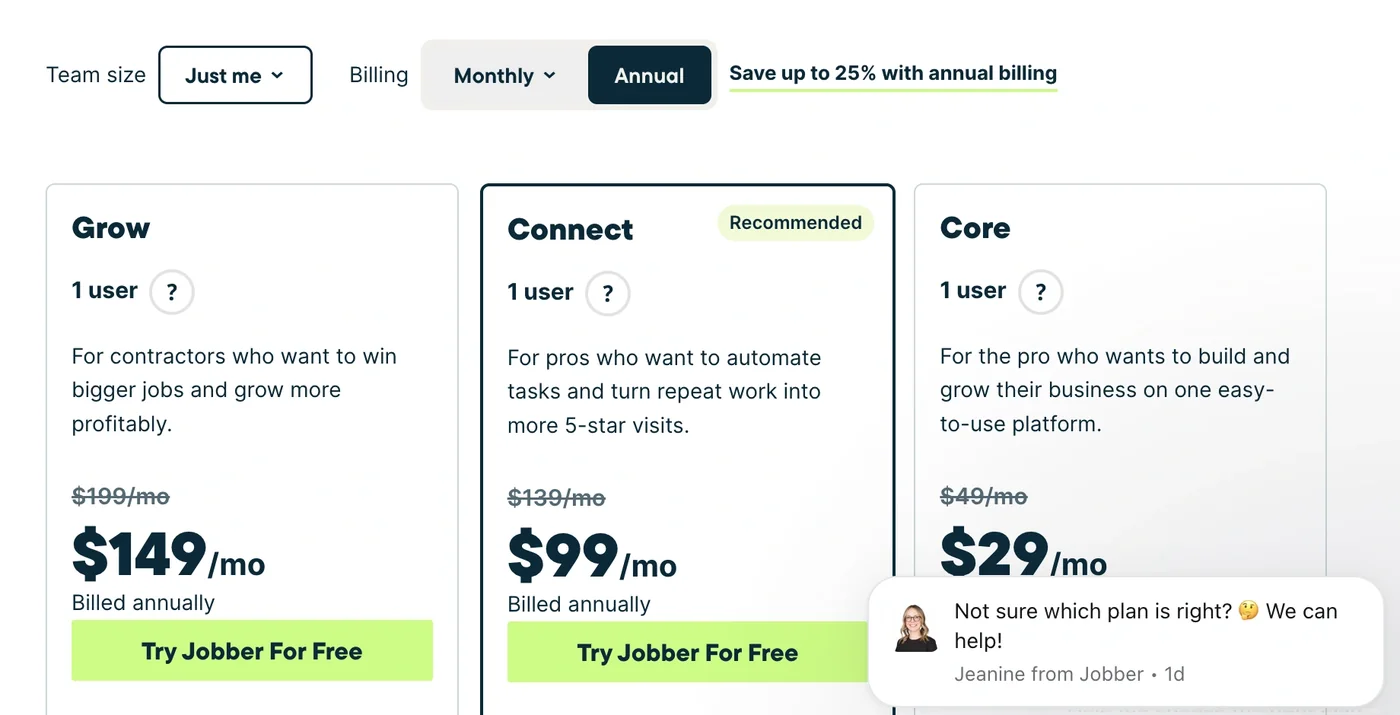
| Jobber | $49 | per month, no commitment | 1 on Core | Yes |
| Housecall Pro | $79 | per month, or $59 billed annually, one user | 1 on Basic, 5 on Essentials, 8 on MAX | Yes |
| Service Fusion | $208 | per month, annual billing, unlimited users | Unlimited | Yes |
| ServiceTitan | Quote only | per account | Not published | No |
Joblogic. It publishes an actual number. Joblogic is the closest UK-market like-for-like on reactive and planned maintenance, and it puts a per-user price on the page instead of routing you to a sales call. And its Standard tier explicitly welcomes sole traders and small teams, the exact segment Commusoft turns away. But Only the entry tier is priced; Premium is "Pricing on request" and Enterprise is custom, so the transparency runs out at the same place Commusoft's does. And no PartsArena, Wolseley, City Plumbing or Worcester Bosch equivalent depth is claimed.
Tradify. Small-team economics and self-serve buying. Three fully published per-user tiers, no minimum staff count, no annual lock advertised at the entry tier. And for a 2 to 5 person plumbing or electrical firm that Commusoft explicitly declines to sell to, this is the shape that fits. But Nothing like Commusoft's PPM, service-contract, SLA-monitoring and asset-maintenance depth, and no merchant or manufacturer integrations. And prices display in USD rather than GBP even for UK buyers.
Jobber. Month-to-month billing with no annual term, a published price ladder, and a far gentler onboarding curve. So if your objection to Commusoft is the 12-month commitment or the sales-call-to-see-a-price model, this removes both. But Residential service bias. No gas or electrical certificate engine, no PPM contract machinery, no UK merchant integrations, and per-user costs climb fast once you add office staff.
Housecall Pro. It bundles users into the tier price rather than charging per head, which changes the maths sharply for an office-heavy team. And the tiers are fully published, with a straightforward self-serve start. But US-centric. No UK compliance certificates, no PPM or SLA layer, no UK merchant or manufacturer connectors, and thin commercial-contract handling.
Service Fusion. Unlimited users at a flat monthly rate. For a 15 to 40 person operation this is the single biggest structural difference from Commusoft's per-head model, and it removes the incentive to under-license office staff. But Annual billing on the published price, US-only orientation, and no equivalent of Commusoft's certificate, PPM or asset-history depth.
ServiceTitan. Depth at the top end: reporting, capacity planning, pricebook and call-centre tooling built for 50-plus-tech commercial operations that outgrow Commusoft's Automation tier. But Same opacity problem as Commusoft and worse. No published price, heavier implementation, and a per-tech cost structure that's materially higher. And it's US-first, with no UK certificate or merchant ecosystem.
"the only downside is that you have to buy extra data when you have run out"
Capterra, Kelly J. (2-27)
"Storage issues arise from time to time which require us to individually go into old jobs and delete pictures/videos"
Capterra, Waleed A. (3-04)
Who should not buy Commusoft
Don't buy Commusoft if you're Sole traders and 1 to 3 person crews. Commusoft screens you out itself. Select a team size of 1-3 on the demo form and the vendor responds: "To ensure our platform delivers a genuine return on investment, Commusoft is specifically designed for businesses with 6 or more staff." And per-person licensing on a 12-month contract, plus mandatory paid onboarding, plus a Core i7 desktop floor, is a fixed cost base a three-person shop can't amortise. Look at Jobber instead.
Don't buy Commusoft if you're Roofing, remodeling and other project-based contractors. Every part of Commusoft's own positioning points at recurring service work: PPM scheduling, service contracts, SLA monitoring, asset and appliance history, gas and electrical certificates, service reminders. Its trade pages are plumbing and heating, gas engineer, electrician and renewables. Capterra's reviewer mix is 57 to 58 percent construction with utilities and facilities services behind it, and the review corpus is full of boilers, meters and stopcocks. And there's no roofing measurement, no material ordering by squares, no production board built around multi-week builds. Look at AccuLynx instead.
Don't buy Commusoft if you're Anyone who needs to trial software without a year of exposure. The base commitment is 12 months (clause 1.1.8), notice can't expire before the Initial Period ends (clause 3), and a reviewer reports the cooling-off window is 14 days. And fourteen days isn't long enough to migrate a customer database, retrain an office and get engineers using an app in the field, which is exactly the complaint that reviewer makes. So if you need to prove the fit before you commit a year, this procurement model is wrong for you. Look at Housecall Pro instead.
Don't buy Commusoft if you're US contractors who want month-to-month billing and a public price. Commusoft is a UK company (Commusoft Ltd, with a Commusoft Inc US entity) selling a UK contract shape: annual term, 30-day notice, 7-day invoice terms, a 10 percent annual uplift right. But US FSM competitors publish prices and sell month-to-month. So if your buying process needs a number on a website and the ability to leave in 30 days, you won't get either here. Look at Service Fusion instead.
The verdict, by shop size
Sole trader to 5 staff
No. Commusoft says no to you before you say no to it. Select 1-3 staff on the demo form and the vendor tells you the platform is designed for 6 or more. Even at 4 or 5, the maths is hostile: every office worker and engineer needs a paid licence, the base term is 12 months, onboarding is compulsory and separately charged, the desktop spec floor is a Core i7 with 16GB RAM, and there's no published price to sanity-check any of it against your revenue. So Tradify or Jobber will do 80 percent of what you need at a price you can read off a web page and leave whenever you want. This band runs 1 to 5 on the crew, doing residential and service work, and that's the profile the recommendation is written for.
6 to 15 staff, UK gas, heating, plumbing or electrical service work
Only under conditions, and they are worth being honest about. This is the band Commusoft is genuinely built for, and the certificate engine, appliance-level service history, PartsArena, Wolseley, City Plumbing and Worcester Bosch connections are things no US-built competitor offers. But say yes only after you have four numbers in writing on the Order Form: the per-licence rate for each of the three licence types, the minimum contracted licence count, the storage allowance and the overage cost, and the onboarding fee including whether it recurs on a tier upgrade. Then negotiate two clauses: extend the 7-day payment window in clause 4.6, and cap or waive the 10 percent annual uplift in clause 4.8 for your first two renewals. Without those, you're signing a year to a price you can't benchmark. This band runs 6 to 15 on the crew, doing residential and service work, and that's the profile the recommendation is written for.
16 to 50 staff with commercial PPM contracts and SLA obligations
Yes, and this is the shape the product is built for. At this size the Customer Journey and Automation tiers earn their keep. PPM scheduling, SLA monitoring, multi-location stock, mass scheduling, customisable security roles and the SFG20 schedule import are hard to assemble elsewhere, and the two-way QuickBooks sync covering suppliers as well as customers removes a genuine back-office job. And per-head pricing hurts less when the alternative is three tools and a spreadsheet. Still get the exit terms fixed before signing: clause 12.7.3 makes handover discretionary and chargeable and clause 10.1.2.6 disclaims liability for data loss, so demand a written data-egress commitment covering format, scope, turnaround and a retention window. This band runs 16 to 50 on the crew, doing commercial and service work, and that's the profile the recommendation is written for.
Roofing, remodeling and project-based builders of any size
No. Wrong category. Commusoft's product surface is service work: reactive jobs, planned maintenance, appliance history, safety certificates, service reminders, recurring contracts. And there's no roofing measurement, no insurance supplement workflow, no material takeoff, no production board for multi-week builds. Its own industry pages are plumbing and heating, gas, electrical and renewables. So you'd be paying UK service-compliance premiums for machinery you'll never open. This band runs 1 or more on the crew, doing residential and commercial and insurance work, and that's the profile the recommendation is written for.
US contractors of any size
Only under conditions, and they are worth being honest about. Commusoft Inc exists and the US site is live, but you're buying a UK contract shape and a UK integration ecosystem. The 12-month term, 30-day notice, 7-day invoice window and 10 percent annual uplift right are all standard here and unusual against US FSM competitors that sell month to month with a published price. And the merchant and manufacturer integrations that make Commusoft special (PartsArena, Wolseley, City Plumbing, Worcester Bosch) are all UK-only. So consider it only if commercial PPM and asset-maintenance depth is the deciding factor and you've run the same requirement past ServiceTitan and BuildOps. Note also that the demo form returns "We are not available in your region yet" for some countries, so confirm coverage before you invest time. This band runs 1 or more on the crew, doing residential and commercial and service work, and that's the profile the recommendation is written for.
Where we come into the Commusoft question
One last thing, and it's off to the side of Commusoft rather than about it. We're a CRO and web design studio, not a software reseller. And we ran a study that's relevant to anyone about to spend money on operations software.
Commusoft's own funnel is the argument for its own product category. The vendor spent effort building a form that reads team size and, for 1-3 person crews, returns a polite refusal instead of a demo booking, because it worked out that below six staff the deal loses money. But contractor websites almost never do the equivalent. They accept every enquiry identically, then the office spends its week qualifying out the jobs it never wanted. And the other half of that lesson is the part Commusoft got wrong: its plans page is 464KB of HTML that renders three tier names and no price, so a buyer who came to answer one question waits for a heavy page and leaves without an answer. Speed and answers are the same problem. Every second of LCP on a contractor's quote page is a second before the visitor learns whether you serve their postcode, their trade and their budget, and the visitors you lose in that window are disproportionately the ones who were closest to buying.
So we went and looked. We inspected 380 contractor websites for the Contractor CRO Index, and 82.8% of them had poor mobile loading performance. But check the method before you take the number, which is why it is published. Method and sample sizes live in the Contractor CRO Index.
"82.8% of the 380 contractor websites inspected had poor mobile loading performance."
Fervor Studio Contractor CRO Index (2026)
So price the platform properly. Then open your own site on a phone and time how long it takes before you could tap a call button. The numbers are all public.
See where your site is losing the jobs Commusoft would have managed
And it takes about three days. We use your site the way a homeowner would, then hand you the specific leaks.
Get a Site InspectionHow this Commusoft page was researched
Before the sources, the honest caveat. Nobody here's used this product in anger. And what stands behind it is documentary: 12 vendor pages read on 7 August 2026, and a review corpus sorted by what went wrong. Pricing was verified the same day, and every figure above traces to a page we opened.
So: 15 quotes on this page, 14 from Capterra and one from Apple App Store (UK).
And G2 (https://www.g2.com/products/commusoft/pricing) — not retrievable, TrustRadius — not retrievable, Trustpilot — not retrievable, Reddit — not retrievable, Google Play (https://play.google.com/store/apps/details?id=com.commusoft.v4) — returned navigation chrome only, no rating, review count or review bodies, Capterra via direct HTTP client — returns HTTP 403 to non-browser clients, so all Capterra extraction went through the rendering fetcher, https://support.commusoft.co.uk/hc/en-us — TLS handshake failure on every attempt, so no help-centre article on data export or account closure could be read. Export and closure mechanics in this bank come from the contract and from reviewer accounts, not from vendor documentation. and https://apps.xero.com/us/app/commusoft — request timed out refused automated retrieval for Commusoft. Forum and social threads are the ones people most want quoted, and they are exactly the ones we cannot verify, so none of them are here.
What that leaves untested: https://www.reviews.co.uk/company-reviews/store/commusoft — vendor-hosted review widget, not independently moderated, so not used. And everything above is twelve vendor pages and a review corpus, which is documentary rather than hands-on.
What Commusoft users say
They have a 'computer says no' attitude to customer service. They have no interest in improving or taking on suggestions. An unaffiliated third-party facebook group is their customer service operatives' suggestion for putting ideas, complaints and suggestions forward as they have no internal mechanism for this - they absolutely don't care what their customers think of them! The 14-day cooling-off period isn't nearly long enough to see if it works for your company. Aggressive and pitiless. Avoid them!
Upon deciding this wasn't cost effective we left Commusoft and all databases deleted and some data files sent to us in computer data but no real information on customers that was stored with Commusoft.
The learning curve is steep forcing the allocation of several hours to train staff. overall pricing sits in the higher bracket of the market, and long-term contract requirements can be a financial deterrent for small setups.
It is mandatory to pay for the training, and this cost is incurred again if you upgrade the package
the only downside is that you have to buy extra data when you have run out
Storage issues arise from time to time which require us to individually go into old jobs and delete pictures/videos
Having to leave reviews to get an upgrade on the storage for the platform
The fact the app is totally different from the desktop and you can't do on site quotes.
The support is done over email, there isn't a specific number we can call to talk to somebody over the phone.
Vehicle tracking system doesn't work well Bespoke forms (certificates) are expensive Unable to move further forwards with Commusoft with new feartues No CRM No Skip logic
support doesn't really answer the question you're asking. Can be a bit complicated to use and lots of features are unused
Commusoft is an easy to use, CRM software to help manage day to day diaries for our engineers and estate agents. They are constantly upgrading their software to improve features and their support team is very helpful when you are stuck.
it can be a bit overwhelming when boarding however the team provides training which makes it a lot easier to use
We have used Commusoft for 8 years for our small company. We have 4 people using this at once throughout the day to keep our jobs running smoothly. The level of record keeping for the appliance information, meter location, parts fitted, photographs etc is really useful. The communications we can send to our customers via email or SMS from Commusoft is fantastic and always impresses our customers. It also integrates perfectly with Xero which is a must for us. The support ticket system is very good too and gives you confidence that any issues will be resolved.
It only logs travel when travelling to the job, not returning.
Frequently asked questions
How much does Commusoft cost?
Nobody outside a Commusoft sales conversation knows. The vendor's own FAQ answers the question with "For specific pricing queries, it's always best to speak to our team directly" and points at the Plans page. The Plans page publishes three tier names (Go Paperless, Customer Journey, Automation), four add-on names, three licence types and a fourteen-item FAQ, and not one figure. The FAQ even says the Plans page holds "details about minimum licenses required"; it doesn't. And Capterra, Software Advice and GetApp all record it as quote-only. The one site publishing hard numbers cites no source or methodology for them, so this bank doesn't repeat them. So the price legally lives on the Order Form, which clause 1.1.11 defines as the document detailing the Service Fee, number of permitted users and number of modules.
Is Commusoft priced per user?
Yes, strictly. The Plans FAQ states "All office staff, managers, and engineers who access the software require a licence", and each user gets their own login that appears in the diary. There are three licence types. Contracted licences lock your price for a 12-month period and renew annually. Monthly Rolling licences sit on top of the contracted plan and can be added and removed for seasonal workers. Daily licences bill monthly on days used and are aimed at subcontractors. But one catch is worth knowing: your storage pool is sized by Contracted plus Rolling licences only, so Daily licences add users without adding any space for their job photos.
What is the minimum contract length, and does it auto-renew?
Twelve months, and yes. Clause 1.1.8 defines the Initial Period as 12 months from the Commencement Date, and the Plans FAQ says the same thing plainly: "Our standard plans are built on a 12-month contract to ensure you lock in your price and dedicated support." Clause 3 then rolls the agreement on until either side gives at least 30 days' written notice, and that notice can't expire before the end of the Initial Period. And clause 4.8 separately lets Commusoft raise the fee at each anniversary on 30 days' notice, capped at 10 percent. So set a calendar reminder 45 days before every anniversary, because the notice window and the price-rise notice window are the same 30 days.
What happens if I pay an invoice late?
More than you'd expect. Clause 4.6 makes invoices payable within 7 days of the invoice date. Clause 12.1.1 makes it an act of default if you fail to pay within 7 days of that due date. Once you're in default, clause 12.2 lets Commusoft suspend the service or terminate immediately, and clause 12.6 then makes you pay liquidated damages equal to 100 percent of the fee for every remaining month to the earliest date the agreement could have ended. And clause 4.7 adds interest at 3 percent over NatWest base rate on top. So put the subscription on direct debit so a slow manual payment run can never reach that trigger.
Can I get my data out if I leave?
Your data is legally yours (clause 13.5 says Customer Data "shall remain at all times the exclusive property of the Customer"), but the mechanics aren't on your side. Clause 12.7.3 says Commusoft "may in its sole discretion agree to provide any assistance" with handover to a third party, and that you pay standard rates for it. Clause 10.1.2.6 excludes all liability for loss of or damage to data. And a long-tenure Capterra reviewer describes exactly what that permits: leaving, having all databases deleted, and receiving raw data files with "no real information on customers". So for a firm holding years of gas and electrical certificates, negotiate a written egress commitment (format, scope, turnaround, cost, retention window) before you sign, and export your certificate archive quarterly regardless.
Is there a storage limit?
Yes, and it bites. Jobs, customers and invoices are unlimited, but attachments aren't. The Plans FAQ confirms storage is a shared pool sized by your Contracted plus Rolling licence count, used by site photos, videos and PDF certificates, with Daily licences contributing nothing. Reviewers across 2021, 2024 and beyond describe buying extra data when they ran out, going into old jobs to delete pictures and videos one at a time, and being offered a storage upgrade in return for leaving a review. So estimate your annual media volume and get the allowance and overage cost in writing before signing.
How many integrations does Commusoft have?
Twenty-one, counted from the partner headings in the public directory. Four accounting (QuickBooks Online, Xero, Sage Accounting, FreeAgent), two payments (Stripe, GoCardless), two CRM (HubSpot, Pipedrive), four email and calendar (Gmail, Outlook Mail, Google Calendar, Outlook Calendar), Zapier, naturalForms, SFG20, Spruce, and four UK-specific trade connections: PartsArena, Wolseley, City Plumbing and Worcester Bosch. Those last four are the real differentiator and have no US equivalent. But only three of the 21 have dedicated detail pages, so most of what you know about the other 18 is a one-paragraph directory blurb. And the notable absences are QuickBooks Desktop, any payroll partner, any review platform, and any paid-lead source connector.
Does Commusoft work for a one or two person business?
Commusoft says no. Select a team size of 1-3 on its demo form and it responds: "To ensure our platform delivers a genuine return on investment, Commusoft is specifically designed for businesses with 6 or more staff." And that's unusually honest and worth taking at face value. Below six people, per-head licensing on an annual term with compulsory paid onboarding is a fixed cost you can't spread. So Tradify (from $47 USD per user per month) and Joblogic (from £45 per user per month billed annually) both publish prices and both welcome small teams.
Is Commusoft any good for roofing?
No. Commusoft is a service and maintenance platform, not a project platform. Everything it leads with is recurring work: PPM scheduling, service contracts, SLA monitoring, appliance and asset service history, gas and electrical certificates, service reminders. Its own industry pages are plumbing and heating, gas engineer, electrician and renewables, and the Capterra review corpus is boilers, meters and stopcocks. And there's no measurement tool, no material takeoff, no insurance supplement workflow and no production board for multi-week builds. So a roofer would be paying for UK service-compliance machinery they'll never open.
Does Commusoft have a free trial?
The vendor's Plans page says "Start your free trial today" with an email capture form, but the review directories disagree with each other and with the vendor. Capterra records free trial as not available and free version as not included. GetApp records both as yes. Software Advice records both as not available. So given the 12-month contract shape and the compulsory paid onboarding, treat the trial as a guided sales-led evaluation rather than self-serve access. One reviewer refers to a 14-day cooling-off period and argues it "isn't nearly long enough to see if it works for your company", which is a fair complaint about a system that requires structured training before staff can use it properly.
Freshness
How we keep this page current
Three dates govern this review, and they carry different meanings. The initial source sweep is dated August 7, 2026; when only part of the evidence set is recaptured later, that later date is stated beside the refreshed claim. We last revised the page on August 7, 2026. And the user reviews we quote were posted over roughly the last 24 months, so their individual dates remain part of the evidence instead of being overwritten by a later pricing update.
We revise the page when Commusoft changes a published price or a contract term, when a rating we cite moves by more than a few tenths, or when the vendor ships something big enough to change the verdict. We never bump the date just to look fresh, because Google treats that as manipulation and so do we. If a figure here reads as stale by the time you land on it, treat it as a floor and check the vendor's own page. We linked it at every number for exactly that reason.
Sourcing
How this review was researched
Every figure on this page traces to a captured source linked inline where it appears. The initial sweep is dated August 7, 2026; any later, partial recapture is dated at the claim rather than relabelling the whole evidence set. Ratings come from Capterra, GetApp, Software Advice and the Apple App Store. Note that Capterra, GetApp and Software Advice share one Gartner Digital Markets review pool, so an identical score across all three is a single sample rather than three corroborating ones, and this page treats it that way. G2, TrustRadius and Trustpilot block automated access, so where their numbers appear they are labelled as reported rather than verified. No claim here is sourced from Reddit or from a contractor Facebook group, because neither could be retrieved and quoting them would mean inventing attribution. Pricing marked as reported comes from third-party roundups, never from Fervor. Fervor's own findings come from the Contractor CRO Index 2026.
About
About Fervor Studio
Fervor Studio is a conversion rate optimization (CRO) and web design studio for home services contractors across North America, based in Cochrane, Alberta. Fervor does not sell field service management software and is not an alternative to Commusoft. It publishes the Contractor CRO Index, a public benchmark measuring contractor website conversion potential using reproducible, open-source methods such as axe-core and Google Lighthouse. Fervor Studio is operated by Fervor Group Inc.
 Aug 2, 2026
 Tech Stack
Best Plumbing Software in 2026: Ten Ranked Across Four Classes
A plumbing company’s work runs through four classes of software that do not substitute for each other, and it only buys two of them. Ten products, each with a published price or an explicit statement that the vendor publishes none.
Read Article Jul 31, 2026
 Tech Stack
NiceJob vs Birdeye 2026: Pricing, Contracts and Review Gating
One of these vendors puts its price on the page and its cancellation terms in writing. The other puts a form in front of both, and the complaint record is where its contract length shows up.
Read Article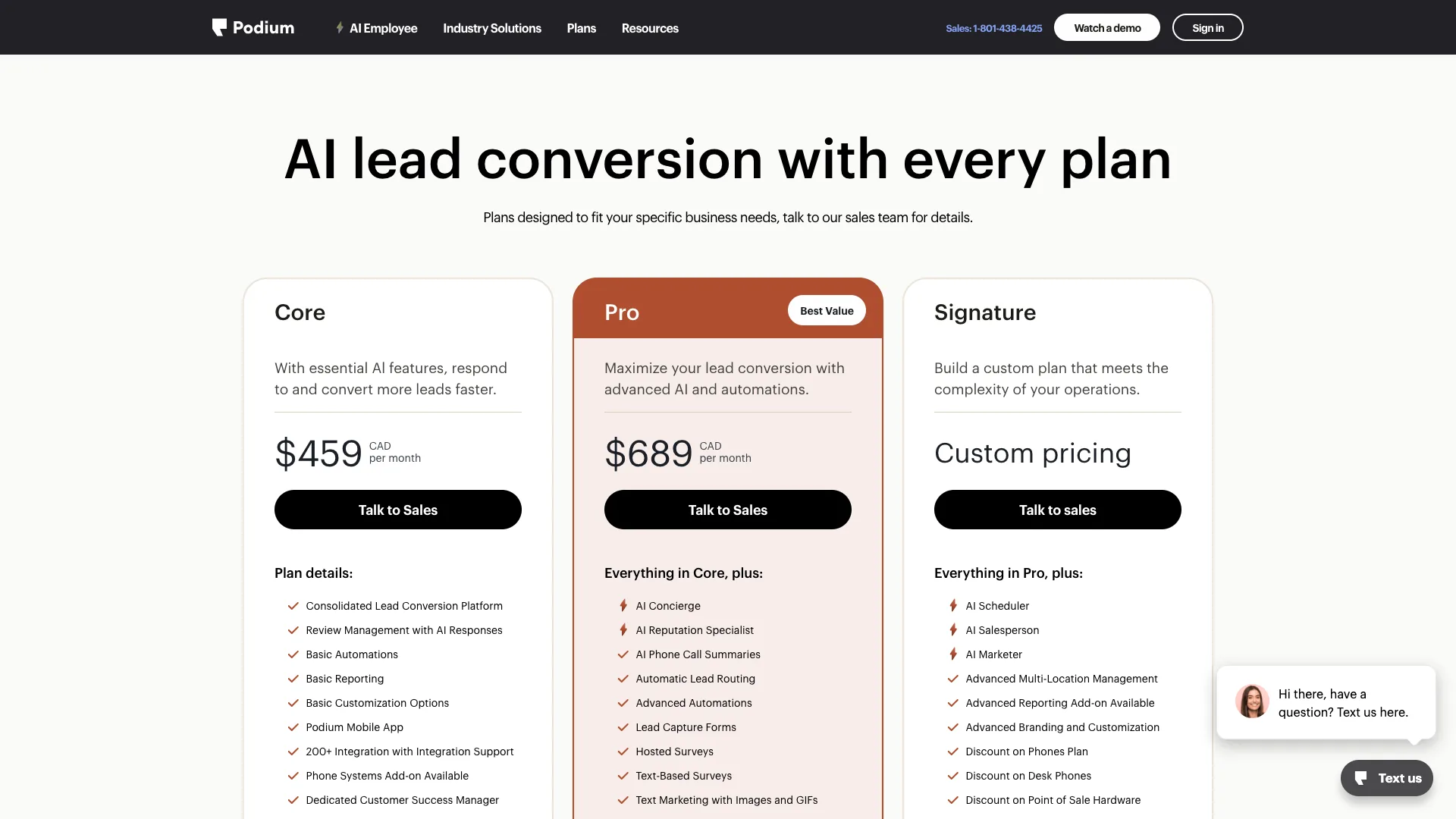 Jul 31, 2026
 Tech Stack
Podium vs Birdeye 2026: Pricing, Contracts and Review Gating
Only one of these two will tell you what it costs before a sales call, and even that number carries a carve-out aimed squarely at trade contractors.
Read Article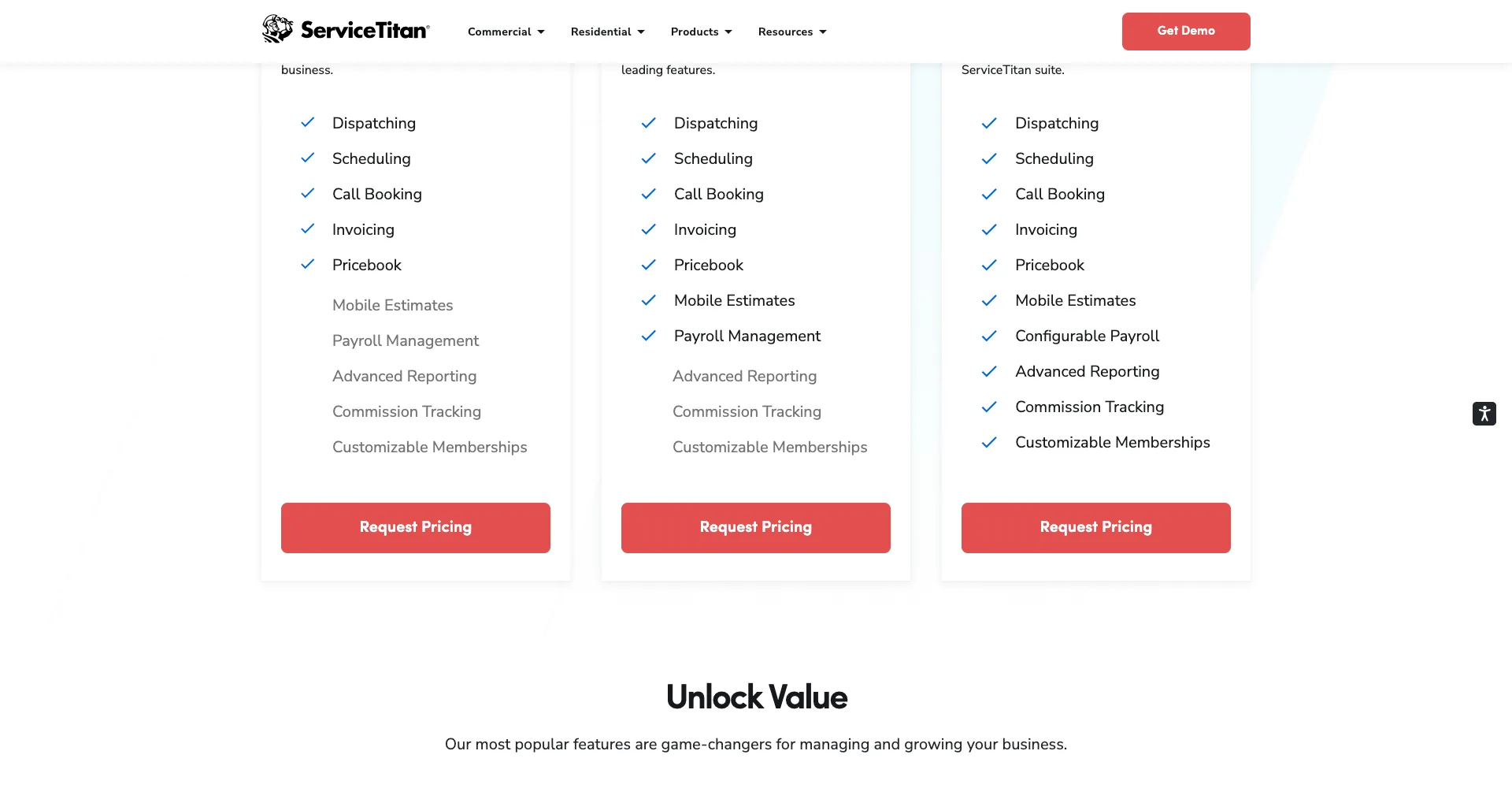 Jul 31, 2026
 Tech Stack
Best Electrical Contractor Software 2026: 11 Ranked and Priced
An electrical contracting business makes two software purchases that do not substitute for each other, and every roundup answering this query covers only one of them. Eleven platforms, with a published price or an explicit statement that the vendor publishes none.
Read Article Jul 31, 2026
 Tech Stack
Best HVAC Software in 2026: Eleven Ranked Across Three Classes
An HVAC contracting business buys across three classes of software that do not substitute for each other, and every roundup answering this query covers only one of them. Eleven products, each with a published price or an explicit statement that the vendor publishes none.
Read Article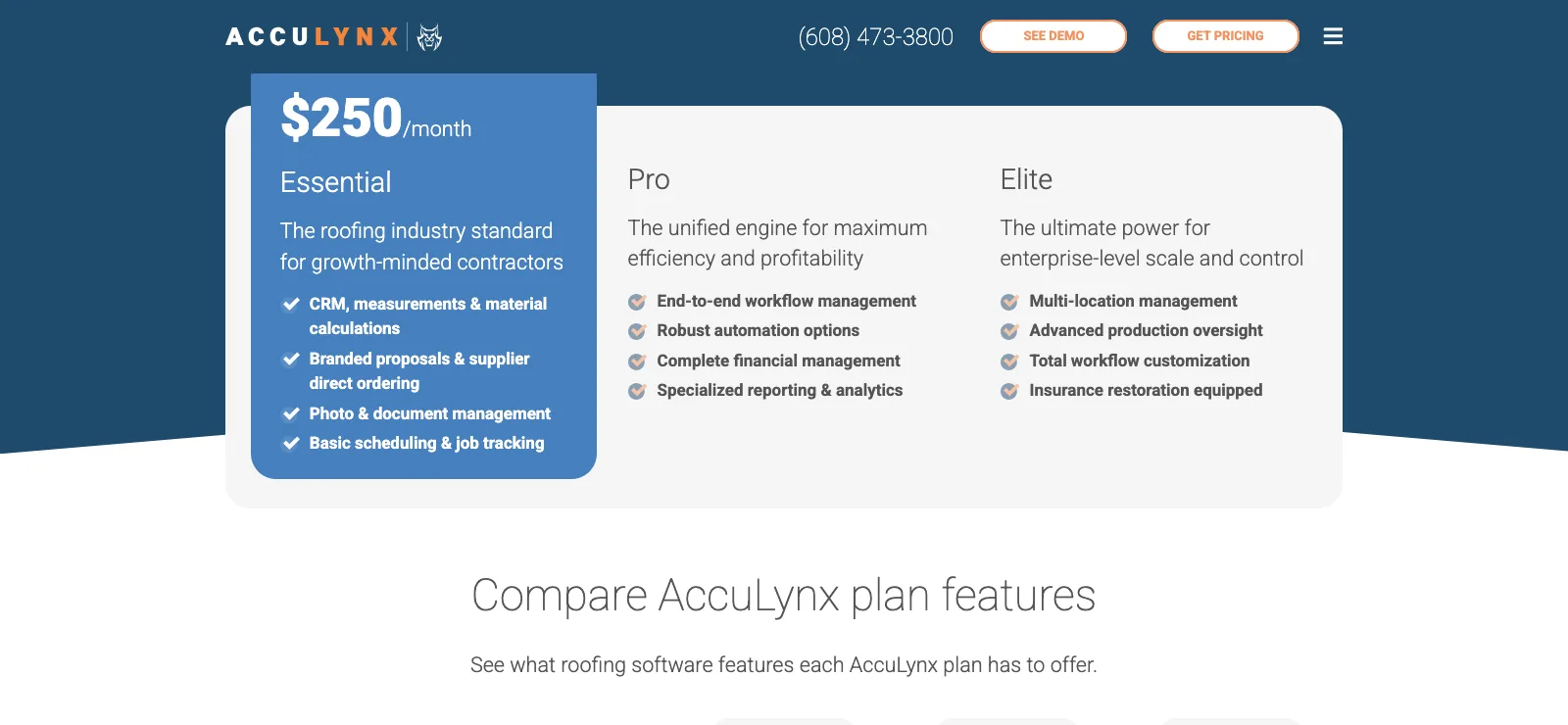 Jul 30, 2026
 Tech Stack
AccuLynx Pricing 2026: The Real Cost of a Quote-Gated Plan
One published figure, two blank plan cards, and a contract that says things the pricing page does not. A line-by-line breakdown of what AccuLynx really bills.
Read Article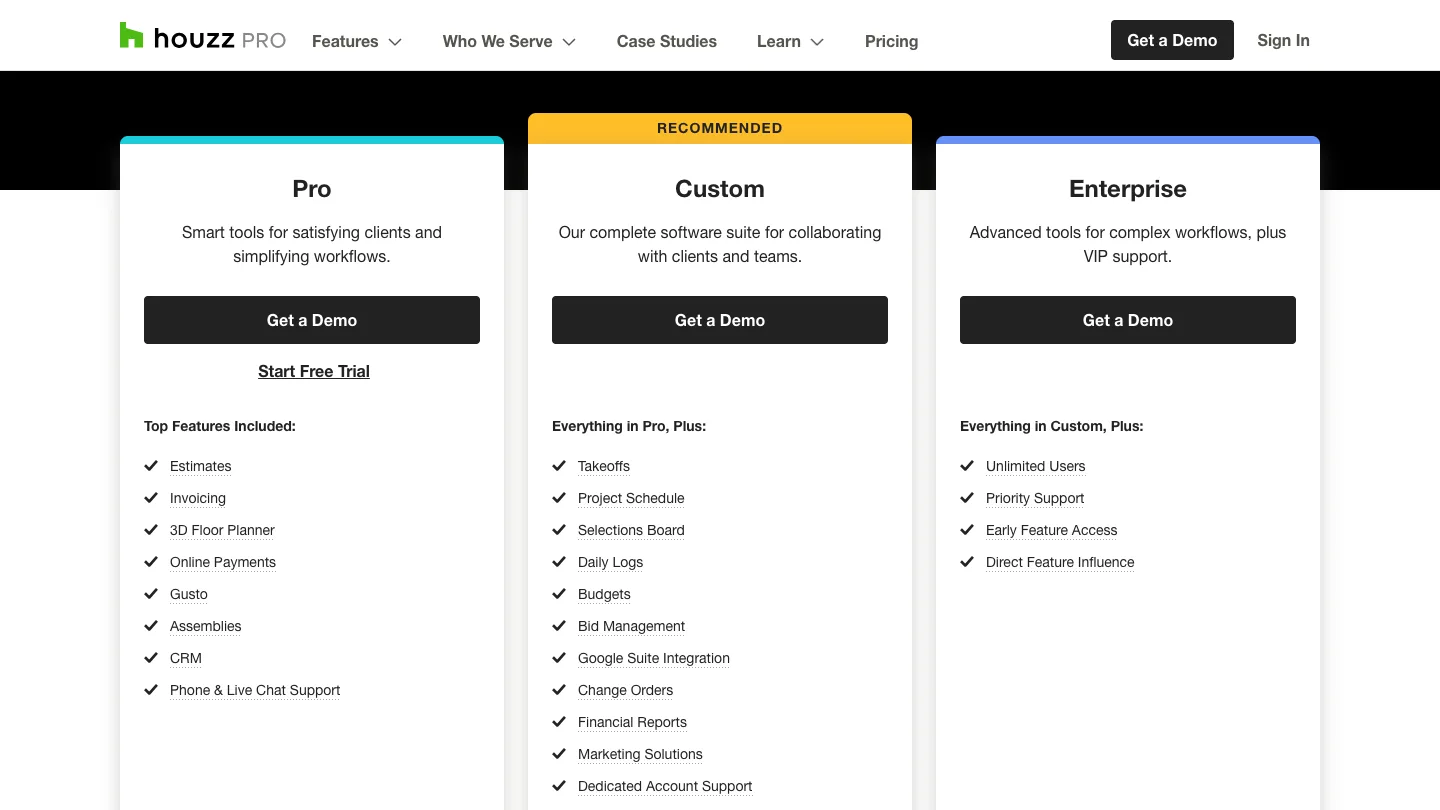 Jul 30, 2026
 Tech Stack
Houzz Pro Canada Review 2026: Pricing and Alternatives
Houzz Pro serves different pricing renderings. What Canadian buyers see, how GST/HST and payments work, what Custom gates, and what the annual contract commits you to.
Read Article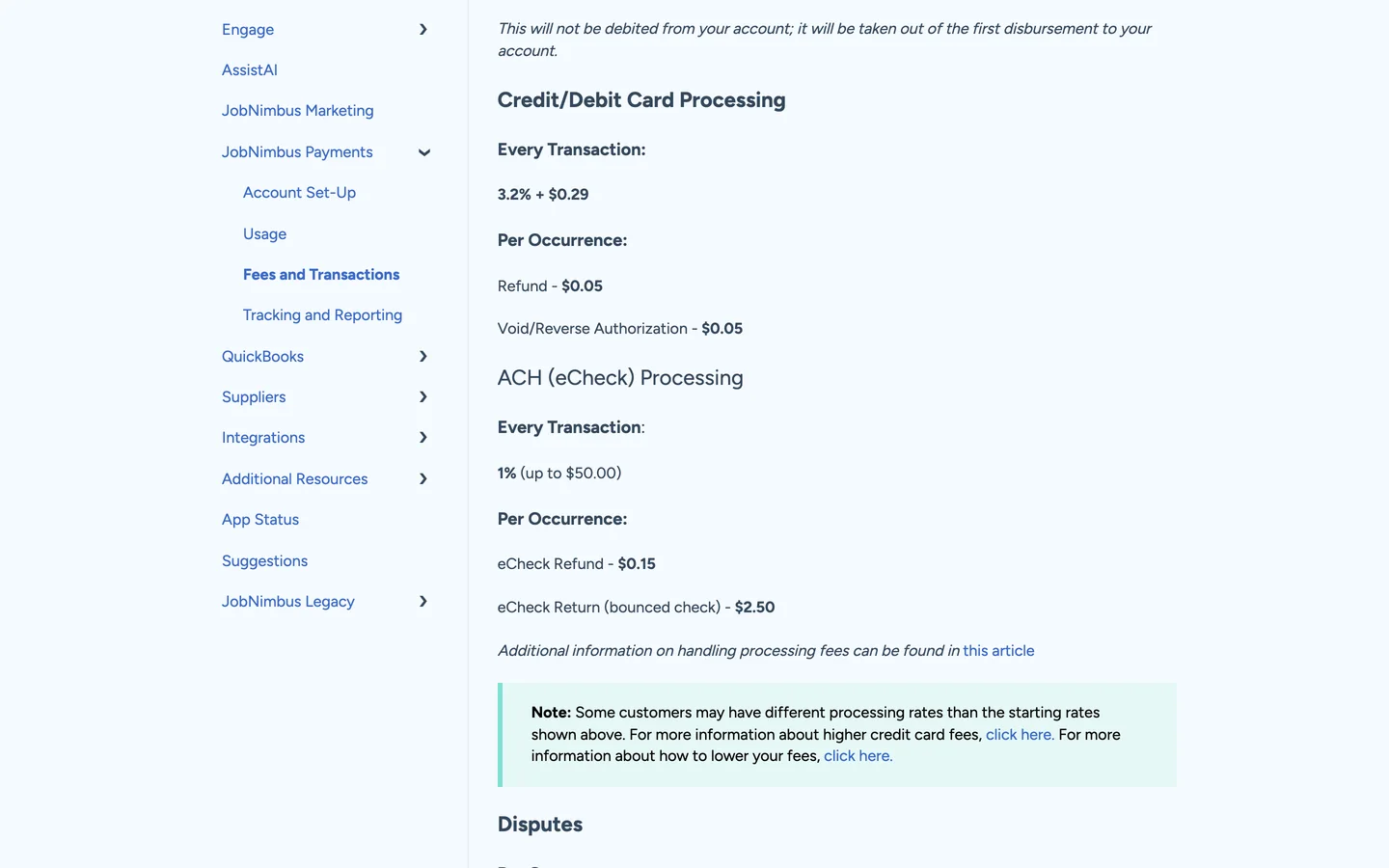 Jul 30, 2026
 Tech Stack
JobNimbus Pricing in 2026: What the Quote Does Not Cover
JobNimbus prints no figure on any of its four plans. So the only rate you can read before a sales call is the payments meter, and it is the biggest line on the bill.
Read Article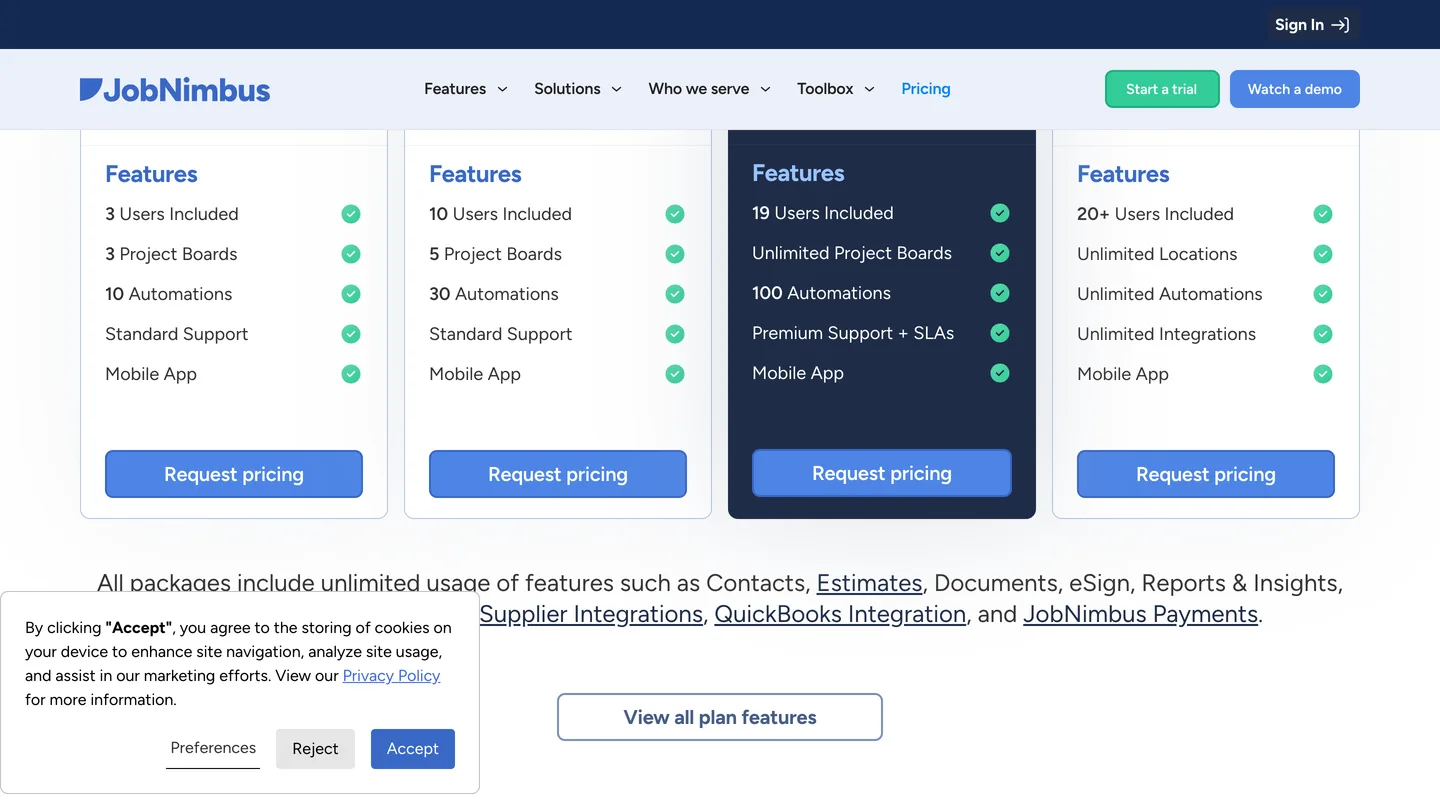 Jul 30, 2026
 Tech Stack
JobNimbus Review 2026: Pricing, Pros, Cons and Alternatives
JobNimbus rates 4.6 on Capterra and orders material straight from ABC Supply and SRS. But it publishes no price, and its supplement route carries a note.
Read Article Jul 30, 2026
 Tech Stack
BuildOps Review 2026: Pricing, Contract Terms and Alternatives
BuildOps runs commercial service and projects on one platform, and publishes no pricing at all. The billing unit, the 30-day data-export window, and who it suits.
Read Article Jul 30, 2026
 Tech Stack
FieldPulse Review 2026: Pricing, Pros, Cons and Alternatives
FieldPulse rates 4.6 on Capterra and is the platform contractors name when they leave a bigger system. But it publishes no price, and the contract runs a year.
Read Article Jul 30, 2026
 Tech Stack
Service Fusion Review 2026: Pricing, Contract and Alternatives
Service Fusion bills flat per company with unlimited users, which is the best structural deal in field service software. The published plans, the contract behind the no-contract line, and the app score every other review gets wrong.
Read Article Jul 30, 2026
 Tech Stack
Knowify Review 2026: Pricing, Job Costing and Alternatives
Knowify rates 4.5 on Capterra and its weakest sub-score is features. What the $99 Core plan withholds, which way the QuickBooks sync really runs, and who should not buy it.
Read Article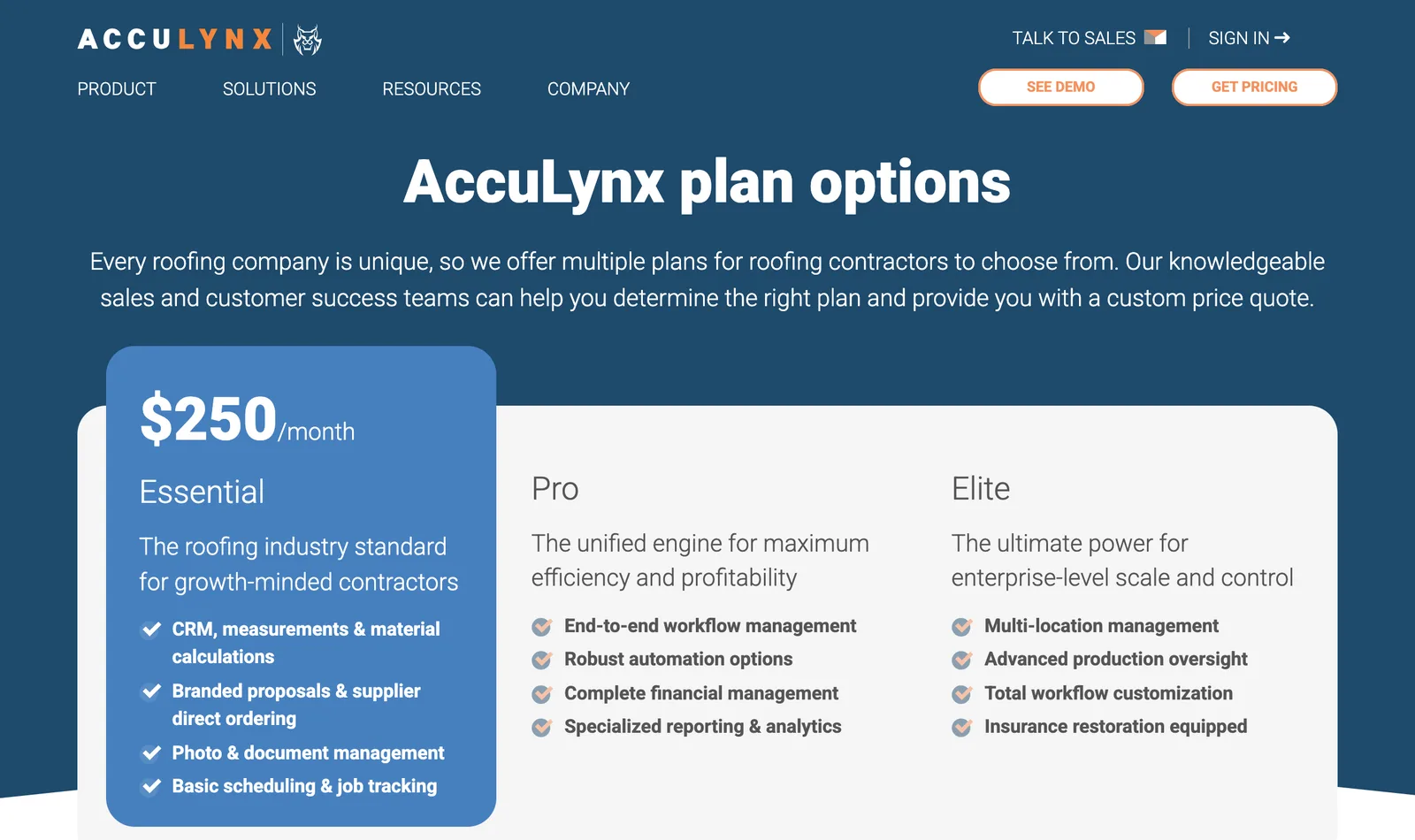 Jul 29, 2026
 Tech Stack
AccuLynx Review 2026: Pricing, Tier Gating, Alternatives
AccuLynx rates 4.6 across 846 reviews and now publishes an entry price. What that price omits, which tier holds the insurance workflow, and who should skip it.
Read Article Jul 29, 2026
 Tech Stack
Unitel Voice Review 2026: Pricing, Features and Alternatives
Unitel Voice rates 4.6 on Capterra and gives a one-truck shop a business number for $9.99 a month. The published plans, the cost per call, and what it won't do.
Read Article Jul 29, 2026
 Tech Stack
NiceJob vs Podium 2026: Pricing, Contracts and Review Gating
Both vendors print a price, at very different scale and in different currencies. The gap that matters is what Podium will not print: the billing unit, and whether a trade shop gets the number on the page.
Read Article Jul 28, 2026
 Tech Stack
CompanyCam Review 2026: Pricing, Pros, Cons and Alternatives
Every page ranking for CompanyCam still quotes a per-user price the vendor no longer charges. Here are the real plans, the seat math, and who should skip it.
Read Article Jul 28, 2026
 Tech Stack
NiceJob Review 2026: Pricing, Pros, Cons and Alternatives
NiceJob rates 4.9 on Capterra and refuses to gate negative reviews. Real plan pricing, the active-customer threshold nobody publishes, and who should skip it.
Read Article Jul 27, 2026
 Tech Stack
Buildertrend Review 2026: Pricing, Limits and Alternatives
Buildertrend rates 4.5 across 2,486 Capterra reviews and quotes against your revenue rather than your seat count. The workflows, the export problem, the alternatives.
Read Article Jul 27, 2026
 Tech Stack
CallRail Review 2026: Pricing, Pros, Cons and Alternatives
CallRail rates 4.5 on Capterra, and its tracking numbers port out free. But the two usage rates that decide your real bill are the two it does not print.
Read Article Jul 27, 2026
 Tech Stack
Roofr Review 2026: Pricing, Pros, Cons and Alternatives
Roofr rates 4.6 on Capterra and sells $13 measurement reports against a market charging triple. But it will not import a report from anywhere else.
Read Article Jul 25, 2026
 Tech Stack
Housecall Pro Review 2026: Pricing, Pros, Cons, Alternatives
Housecall Pro has the shortest learning curve in the category and the widest review spread. Real pricing, the Instapay math, and the migration trap to plan around.
Read Article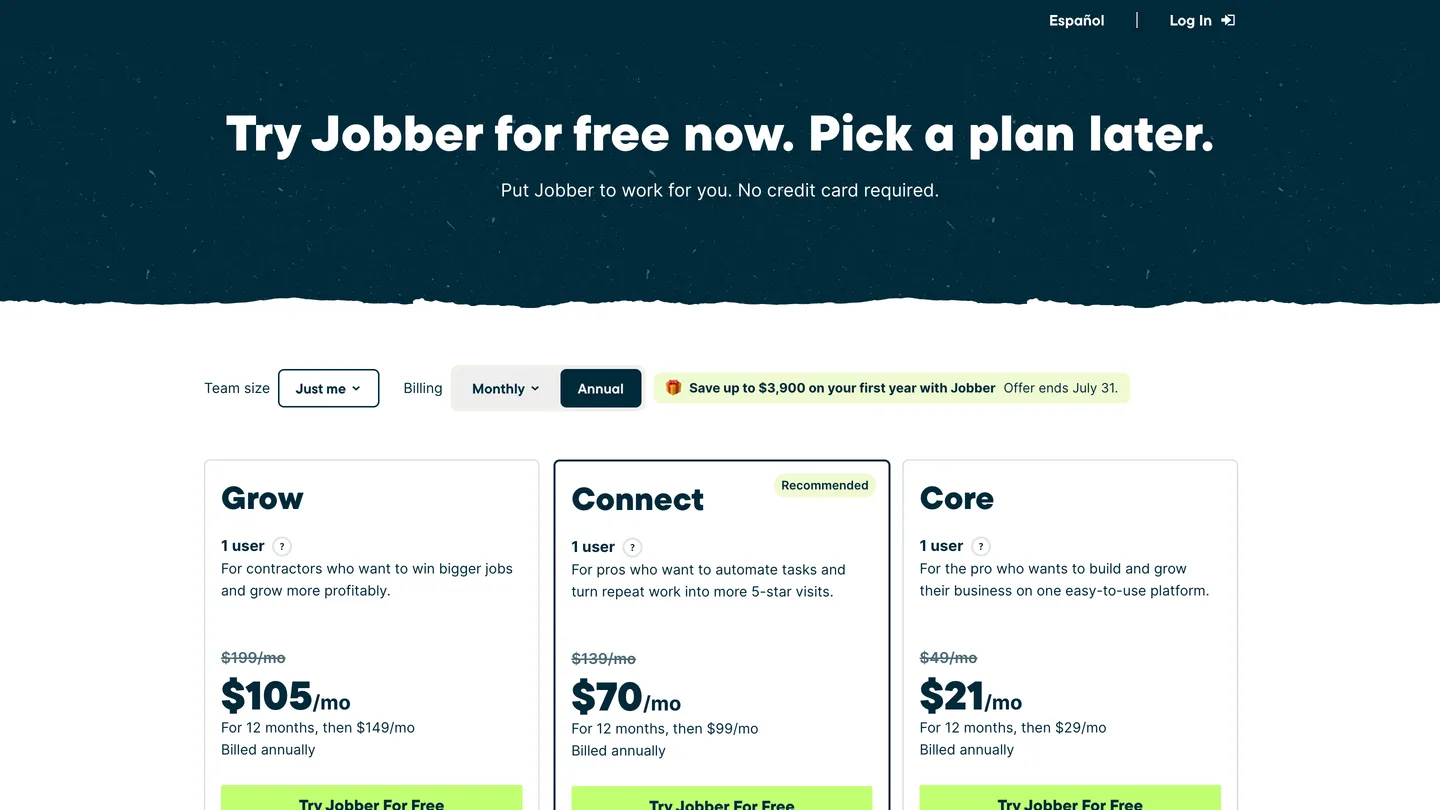 Jul 24, 2026
 Tech Stack
Jobber Review 2026: Pricing, Pros, Cons and Alternatives
Jobber rates 4.6 on Capterra with the best mobile app in the category. Real plan pricing, the feature gating that changes your entry price, and who it suits.
Read Article Jul 23, 2026
 Tech Stack
ServiceTitan Review 2026: Pricing, Pros, Cons, Alternatives
ServiceTitan rates 4.3 on Capterra but its weakest score is value for money. Real reported pricing, the 12-month contract, the exit fees, and who it actually suits.
Read Article Jun 3, 2026
 Tech Stack
HVAC Online Scheduling: The 43% Losing After-Hours Bookings
HVAC leads every trade on online booking at just 56.7%, which still leaves 43% of sites forcing an after-hours customer to wait for a business-hours phone call.
Read Article