Birdeye Review 2026: Pricing, Pros, Cons, Alternatives
Third-party contract data puts real numbers on Birdeye. The 7 gaps reviewers name, and 5 alternatives that publish a price upfront.
Disclosure This article features tools from our brand partners. If you choose to use them, we may receive compensation at no extra cost to you.
Our editorial choices are independent of these affiliate arrangements. Read our full affiliate disclosure.
Fervor is a CRO and web design studio, not a software reseller, and no vendor paid for placement here or for a kinder verdict. Affiliate links are flagged where they appear, and they never change what we report.
Page at a glance
Birdeye is a per-location reputation platform that automates review requests off your FSM or CRM, syndicates to 200+ sites, and rolls listings, messaging and surveys into one inbox. It publishes no price, so the only way to get a number is to ask a salesperson for one. Priced per location, not per seat. The vendor states the evaluation basis explicitly and frames seat count as deliberately not the unit: the pricing page headline is 'Pricing built around outcomes, not seat counts.' Cost scales with location count and with which modular products you switch on. Contracts are described as typically annual. It fits a multi-location contractor of roughly 10 to 200 field staff running residential service work across several branded locations, where review volume and listing accuracy per location is the actual constraint. Not for a single-truck operator. It's the wrong buy for A single-truck or two-truck residential contractor doing under roughly $500K, who mainly wants an automatic text asking for a Google review after the job closes, because Birdeye is priced per location for multi-location businesses, has no published entry price, and puts a 90-day notice window and a sales-mediated cancellation in front of you. And your FSM almost certainly already sends review requests. Housecall Pro includes review management on its cheapest plan at $59/mo billed annually. So paying a separate per-location reputation subscription on top of that buys syndication reach and listings management you don't yet have the volume to need. Alternatives that publish their prices are GatherUp from $99/month, Housecall Pro from $59/month, Jobber from $24/month. A quote-only price and what third parties report instead, seven evidenced gaps and five alternatives, three of which publish a figure.
Start here if Birdeye is on your shortlist
Birdeye earns its money with a multi-location contractor of roughly 10 to 200 field staff running residential service work across several branded locations, where review volume and listing accuracy per location is the actual constraint. Not for a single-truck operator. If that's you, it does the job. The sections below are the parts worth checking before you sign. But the fit is narrower than the marketing suggests, and the price isn't the whole cost.
The vendor publishes no price. But every number below was verified on 7 August 2026 and comes from a named third party that says which.
| Pricing model | Custom quote, no published price |
|---|---|
| Entry price | Quote only |
| Users | Priced per location, not per seat. The vendor states the evaluation basis explicitly and f |
| Ownership | Independent |
| Best fit | a multi-location contractor of roughly 10 to 200 field staff running residential service work across several branded locations, where review volume and listing accuracy per location is the actual constraint. Not for a single-truck operator. |
| Accounting sync | QuickBooks Online (one-way), QuickBooks Desktop (one-way), Xero (one-way) |
What works
- The whole product hinges on a job-completion trigger from a system Birdeye doesn't own
- Ninety days' notice, no self-serve close, and cancellation depends on a human answering
- Reviews come out cleanly in XLS; everything else is undocumented
- This isn't field service management, and it doesn't pretend to be
What does not
- You can't get a price without handing over your mobile number
- The auto-renewal notice window is 90 days, not 30
- You can't close your own account
- The 3,000-integration claim doesn't mean your FSM is on the list
- Review export is capped, and the PDF cap is 100 rows
Birdeye is a per-location reputation platform that automates review requests off your FSM or CRM, syndicates to 200+ sites, and rolls listings, messaging and surveys into one inbox. It sells to Cross-trade contractors, and the shape of the product follows from that: Birdeye's core loop is: your FSM marks a job complete, the integration pushes the customer record, Birdeye sends a review request by SMS or email, and the review syndicates out. The vendor claims generation across 200+ sites and integration with 3,000+ software systems. But that loop is only as reliable as the integration underneath it, and that's the part reviewers complain about most: contacts arriving with only an email or only a phone number, and no notification when a connection breaks. When it works, contractors describe it as genuinely hands-off.
Birdeye: right buyer, wrong buyer
It fits a multi-location contractor of roughly 10 to 200 field staff running residential service work across several branded locations, where review volume and listing accuracy per location is the actual constraint. Not for a single-truck operator. That's the half most reviews print. Here's the other half, which is the one worth your time.
Don't buy it if you're A single-truck or two-truck residential contractor doing under roughly $500K, who mainly wants an automatic text asking for a Google review after the job closes. Birdeye is priced per location for multi-location businesses, has no published entry price, and puts a 90-day notice window and a sales-mediated cancellation in front of you. And your FSM almost certainly already sends review requests. Housecall Pro includes review management on its cheapest plan at $59/mo billed annually. So paying a separate per-location reputation subscription on top of that buys syndication reach and listings management you don't yet have the volume to need. Look at Housecall Pro instead.
Don't buy it if you're A contractor who needs to be able to walk away at 30 days if the tool doesn't move review volume. There's no published exit for convenience. Termination is for material breach only on 30 days' cure notice, the term auto-renews for the same length as the initial term, and stopping that renewal takes 90 days' written notice. So practically that means a 12-month commitment where the leave-or-stay decision is due in month nine. If you need month-to-month, this is the wrong contract shape regardless of how good the product is. Look at GatherUp instead.
Don't buy it if you're A contractor whose field software isn't one of the 43 named systems in Birdeye's contractor integration library. The whole value of the tool is a review request that fires automatically off job completion. So without a native connection you're on Zapier or a manual CSV upload, and reviewers already report contacts migrating with only an email or only a phone number, and no alert when an integration breaks. A manual review-request process doesn't need a per-location subscription. Look at NiceJob instead.
Don't buy it if you're A commercial or insurance-restoration contractor whose revenue comes from adjuster relationships, GC bid lists and property-manager contracts rather than homeowner search. Birdeye's engine is consumer review volume and local listing accuracy, which move residential search. But if your next job comes from a TPA assignment or a repeat GC, per-location review syndication isn't the constraint. Spend the same budget on the estimating and documentation side of the stack. Look at CompanyCam instead.
The money question on Birdeye
There's no published price for Birdeye. The pricing page asks you to get in touch, so every figure below comes from somewhere other than the vendor, and each one says where.
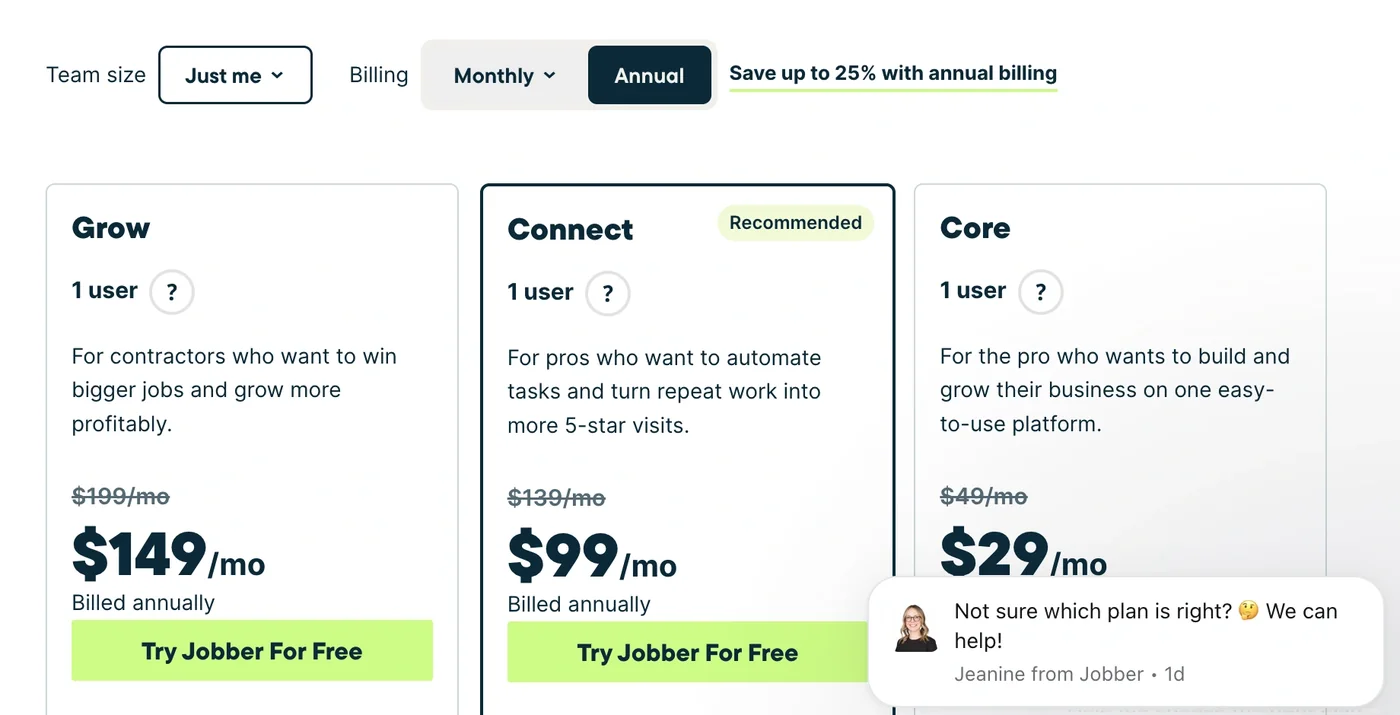
The vendor's own wording is this, and nothing more: "Birdeye publishes no dollar figure anywhere on its pricing page. The page carries a configurator that asks for a location count and a mobile phone number, then routes to sales. The plan names Starter, Growth and Dominate do not appear on the vendor's own pricing page at all; they only surface on third-party directory listings." So treat every third-party page printing tier names and figures for Birdeye with careful suspicion. Those numbers are not on the vendor's site today, and a roundup that reprints them is telling you what Birdeye used to charge somebody else.
And we aren't going to print a per-month number we can't open a vendor page and read. What exists instead is third-party reporting, dated, from people who saw real contracts. Read it as a range rather than as a quote you can hold anyone to.
| Reported range | Reported on | Source |
|---|---|---|
| $299 to $499 per location per month, prepaid annually | undated; page carries no publication or last-updated stamp. Treat as indicative only. And note the publisher, ReputationStacker, sells a competing product, so this figure has an obvious directional interest and isn't a neutral source. | Starter $299 per location per month, Growth $399 per location per month, Dominate $499 per location per month, each on a prepaid annual plan. |
| Contact vendor for quote; custom quotes for Starter, Growth and Dominate tiers | 2026-08-07 (as displayed on the date checked) | Capterra lists the starting price as unavailable and names three tiers. |
| Connect with an advisor for pricing; Starter, Growth and Dominate (pricing upon request) | 2026-08-07 (as displayed on the date checked) | Software Advice also lists no starting price and repeats the same three tier names. |
| $350 per month | 2024-12-14 | An App Store reviewer states the monthly amount they were paying, which is the only first-party customer figure found in the open. |
Priced per location, not per seat. The vendor states the evaluation basis explicitly and frames seat count as deliberately not the unit: the pricing page headline is 'Pricing built around outcomes, not seat counts.' Cost scales with location count and with which modular products you switch on. Contracts are described as typically annual.
There is a discount for paying annually up front: No annual discount percentage is published. The vendor names 'Contract and payment terms' as one of three cost drivers and describes agreements as typically annual with flexible payment structures, but attaches no number to prepaying. Third-party reporting of the $299/$399/$499 figures describes them as prepaid-annual rates, implying month-to-month costs more, but no vendor source confirms the delta. And an annual prepay discount tells you an annual commitment exists, which is worth knowing before anyone mentions a term length out loud.
The Birdeye line items nobody mentions on the demo
Payment processing. Birdeye Payments exists as a product but no card rate, per-transaction fee or ACH rate is published anywhere on the pricing page or in the Terms. If you intend to take payment through Birdeye rather than your FSM, get the processing rate and any monthly gateway fee in writing on the Order Form before signing.
Implementation and onboarding. Reviewers describe implementation effort ranging from 'easy, efficient, and timely' to one agency reporting a 200-hour onboarding involving dozens of video calls. Ask for the implementation fee, the named onboarding owner, and the go-live date as a line item on the Order Form.
Minimum term. The published Terms do not fix a minimum term themselves. The term is whatever the Order Form or Statement of Work says, and the Terms run for as long as any Order Form referencing them is in effect. Section 5.1: 'These Terms commence on the Effective Date of the first Order Form or Statement of Work and shall remain effective as long as any Order Form or Statement of Work referring to these Terms remains in effect.' In practice the vendor describes agreements as typically annual, and reviewers describe being on long-term commitments.
Getting out. There is no early-termination-fee clause and no early-exit right for convenience. Termination is for material breach only, on 30 days' written notice if the breach is not cured. A pro-rata refund for unrendered services applies only where the client terminates for Birdeye's breach. Read together with the auto-renew clause, the practical effect is that there is no published way to leave mid-term without cause, and payments are otherwise non-refundable.
Auto-renewal. The contract auto-renews for the same length as the initial term, and the notice window to stop it is 90 days, not 30. Section 2.3: 'Unless otherwise noted in the Order Form or Statement of Work, any agreement for Services will auto renew for the same period of time as the initial term of the agreement unless written notice of non-renewal is provided to BirdEye at least 90 days prior to the date of renewal.' On a 12-month deal that means the cancellation decision has to be made in month nine.
Modules sold separately. We found none. The published feature set appears to sit inside the tiers rather than behind separate line items, which is worth confirming against your own must-have list on the call.
"Third-party reporting puts Birdeye at $299 to $499 per location per month, prepaid annually, reported undated; page carries no publication or last-updated stamp. Treat as indicative only. And note the publisher, ReputationStacker, sells a competing product, so this figure has an obvious directional interest and isn't a neutral source.."
Starter $299 per location per month, Growth $399 per location per month, Dominate $499 per location per month, each on a prepaid annual plan. (rce.)
Worth a detour here. The non-renewal notice window is 90 days, three times the industry-default 30, and it's the clause that explains almost every cancellation complaint about this vendor. That reviewer wasn't the victim of a billing error. They gave the notice period that almost every other SaaS contract uses, and it was 60 days short of what Birdeye requires. Contractors read 'notice period' and assume 30 days because that's what every other vendor trains them to assume. And on a 12-month term this puts the leave-or-stay decision in month nine, before a full year of review data exists. So set the reminder the day you sign, and try to negotiate the number down on the Order Form, since Section 2.3 expressly allows the Order Form to override it.
What a Birdeye quote leaves out
The subscription is the part everyone quotes. These are the lines that land afterwards, and the ones we could not find are named as unpublished rather than left blank.
Sold separately. We found none. The published feature set sits inside the tiers rather than behind separate line items, which is worth confirming against your own must-have list.
"Birdeye answers the question of what it costs with this and nothing else: "Birdeye publishes no dollar figure anywhere on its pricing page. The page carries a configurator that asks for a location count and a mobile phone number, then routes to sales. The plan names Starter, Growth and Dominate do not appear on the vendor's own pricing page at all; they only surface on third-party directory listings.""
Birdeye pricing page (2026)
"Priced per location, not per seat. The vendor states the evaluation basis explicitly and frames seat count as deliberately not the unit: the pricing page headline is 'Pricing built around outcomes, not seat counts.' Cost scales with location count and with which modular products you switch on. Contracts are described as typically annual."
Birdeye pricing page (2026)
"Birdeye is reported at $299 to $499 per location per month, prepaid annually as of undated; page carries no publication or last-updated stamp. Treat as indicative only. And note the publisher, ReputationStacker, sells a competing product, so this figure has an obvious directional interest and isn't a neutral source.."
Starter $299 per location per month, Growth $399 per location per month, Dominate $499 per location per month, each on a prepaid annual plan. (rce.)
The four workflows you pay for
Feature totals are noise. So a shop in this category lives or dies on four things, and those are the four to grade, and each one below carries the evidence it's graded on.
The whole product hinges on a job-completion trigger from a system Birdeye doesn't own Birdeye's core loop is: your FSM marks a job complete, the integration pushes the customer record, Birdeye sends a review request by SMS or email, and the review syndicates out. The vendor claims generation across 200+ sites and integration with 3,000+ software systems. But that loop is only as reliable as the integration underneath it, and that's the part reviewers complain about most: contacts arriving with only an email or only a phone number, and no notification when a connection breaks. When it works, contractors describe it as genuinely hands-off. On 2025-09-02, a brand ambassador, construction, 1-2 years on the platform, reports it: "Birdeye makes it so easy to collect and track customer reviews. The automation takes a lot of work off our plate, and the dashboard gives us a clear, real-time view of our reputation. The support team is also fantastic–very responsive and helpful."On 2024-03-01, a health/wellness, self-employed reports it: "The contacts don't always migrate properly. Sometimes it only transfer a email or phone number but not both"
Ninety days' notice, no self-serve close, and cancellation depends on a human answering Three published mechanics stack here. The Terms auto-renew for the full initial term unless you give 90 days' written notice. The privacy policy puts account deletion in the hands of Birdeye's customer care team rather than in the product. And termination for convenience doesn't exist in the published Terms at all, only breach-based termination with a 30-day cure period. So reviewers describe the predictable result, including one who reports being charged a full annual fee after giving 30 days' notice, which is consistent with the 90-day clause rather than contradicting it. An app store reviewer, 1 star, review titled "difficult to cancel", describes it it plainly: "They charged my credit card for the full annual fee despite giving 30 days notice"An operations, alternative medicine, 2+ years on the platform, describes it it plainly: "Terrible Terrible company. Outdated and force you into a long term commitment. Even when that commitment is over, and you try to cancel, nobody is available to talk to. You schedule online meetings using THEIR calendar to speak to someone and they don't show up. Probably the worst company I have ever dealt with. Do yourself a favour, pay a consultant a couple of dollars to set up a custom integration like Birdeye for your business and you will be much much happier."
Reviews come out cleanly in XLS; everything else is undocumented The help centre documents review export in PDF (top 100) and XLS (up to 40,000), with scheduled delivery by email. That's a real, usable export path for the review dataset. But what isn't documented anywhere public is export of contacts, message threads, survey responses or campaign history, which are the assets that create switching cost. The privacy policy confirms data is removed from servers after account deletion, with backup copies persisting for a period, so the window to pull your own extract closes when the account does.
This isn't field service management, and it doesn't pretend to be Birdeye has no scheduling, no dispatch, no estimating, no invoicing and no job costing. It sits beside your FSM and consumes its job-completion events. That's a clean architectural position. But it means Birdeye is always an additional line item on top of software you already pay for, and the FSM you already pay for may already send review requests. Housecall Pro includes review management on its $59/mo Basic plan; Jobber gates reviews behind an add-on rather than including it, which is precisely the gap Birdeye sells into.
Birdeye trade fit
Fit differs by trade rather than by company size alone, and a blended paragraph hides that. Here is the split for the trades this one sells to.
Cross-trade. The workflow that decides it is the whole product hinges on a job-completion trigger from a system birdeye doesn't own, and the shop profile that gets value is 50+ field staff, 6+ locations doing residential and service and commercial work. Where it stops being a fit is A single-truck or two-truck residential contractor doing under roughly $500K, who mainly wants an automatic text asking for a Google review after the job closes.
Your books, and whether Birdeye connects to them
QuickBooks Online connects one way only, so edits made in your books do not come back, on every plan. QuickBooks Desktop connects one way only, so edits made in your books do not come back, on every plan. Xero connects one way only, so edits made in your books do not come back, on every plan. Your costs map through cost codes, so test yours against your own chart of accounts before you commit. A code your books don't recognise is how a labour charge quietly lands somewhere useless.
Past those, the road ends. CRM coverage generally, Integration reliability monitoring, AccuLynx, Accounting write-back do not connect. So if your books run on an ERP rather than the platforms named above, weigh that before anything else.
Beyond accounting it connects to Contractor software category (43 contractor and field-service systems named in the dedicated contractor integration library, counted by hand rather than estimated: Albiware, Breezeworks, Briostack, Buildertrend, CleanCloud, Contractor Foreman, Estimate Rocket, Fieldd, FieldEdge, FieldLocate, FieldPulse, Floorzap, GetHearth, GreenSpark, Housecall Pro, Jobber, JobNimbus, JOBPROGRESS, LawnPro, Made Easy, MarketSharp, mHelpDesk, P3, Payzer, Pool Service Software, Proven, Quickbase, Razorsync, RepairQ, Roofr, Sera, Service Assistant, Service Autopilot, Service Fusion, ServiceTitan, ServiceTrade, Skimmer, SuccessWare, SureFire, Treezi, Urable, Vonigo, Zuper.), ServiceTitan (Listed in the contractor integration library at Standard integration tier. Job completion in ServiceTitan is the trigger event Birdeye is designed to consume.), Jobber (Native integration that fires review and survey requests by email and SMS after a transaction completes, syndicating across 150+ review sites per the integration page. Birdeye describes Jobber as home service management software used by electricians, mechanics, plumbers and other home service professionals.), Zapier (Birdeye's help centre positions Zapier as the fallback path when your CRM isn't natively supported, using the account's API key. That makes Zapier the practical answer for anything outside the 43-name contractor list, with the maintenance burden and silent-failure risk that implies.), Review site syndication (Birdeye states reviews are generated across 200+ sites for home services businesses, and claims 3,000+ software integrations site-wide.). A public API exists: There is a REST API and the key is self-serve: Settings, then Integrations, then API, then Generate API key and Copy API key. No plan tier requirement is stated in the help centre article. However, the article frames API access as something you use after 'your Birdeye rep has confirmed that we can integrate with it using Zapier or by making an API call to Birdeye', which puts a rep in the loop on whether your intended integration is supported. Note that docs.birdeye.so belongs to an unrelated blockchain data company, not this vendor; the reputation platform's developer material lives under support.birdeye.com and developers.birdeye.com.
What happens when Birdeye breaks
Support is the line item nobody prices and everybody eventually needs. Birdeye publishes no onboarding fee either way, so ask what is included at your tier and what is billed hourly after go-live.
The review corpus we read on 7 August 2026 carries no consistent signal on response times either way, so treat support as untested rather than good. Open a real ticket during the trial and time the reply, because that is the number no pricing page gives you.
What happens when you want to leave Birdeye
Nobody reads this section before they buy, and it's the one that costs money afterwards. Four terms decide what leaving looks like.
Minimum term. The published Terms do not fix a minimum term themselves. The term is whatever the Order Form or Statement of Work says, and the Terms run for as long as any Order Form referencing them is in effect. Section 5.1: 'These Terms commence on the Effective Date of the first Order Form or Statement of Work and shall remain effective as long as any Order Form or Statement of Work referring to these Terms remains in effect.' In practice the vendor describes agreements as typically annual, and reviewers describe being on long-term commitments.
Auto-renewal. The contract auto-renews for the same length as the initial term, and the notice window to stop it is 90 days, not 30. Section 2.3: 'Unless otherwise noted in the Order Form or Statement of Work, any agreement for Services will auto renew for the same period of time as the initial term of the agreement unless written notice of non-renewal is provided to BirdEye at least 90 days prior to the date of renewal.' On a 12-month deal that means the cancellation decision has to be made in month nine.
Early termination. There is no early-termination-fee clause and no early-exit right for convenience. Termination is for material breach only, on 30 days' written notice if the breach is not cured. A pro-rata refund for unrendered services applies only where the client terminates for Birdeye's breach. Read together with the auto-renew clause, the practical effect is that there is no published way to leave mid-term without cause, and payments are otherwise non-refundable.
Payment processing. Birdeye Payments exists as a product but no card rate, per-transaction fee or ACH rate is published anywhere on the pricing page or in the Terms. If you intend to take payment through Birdeye rather than your FSM, get the processing rate and any monthly gateway fee in writing on the Order Form before signing.
Small thing that turns out to matter. There's no self-serve account closure. Deletion is performed by Birdeye's customer care team, so the exit depends on a vendor employee responding inside a window you can't extend. The 90-day clock and the human-gated close compound each other. So if the person who has to action your cancellation doesn't respond for three weeks, you've burned a quarter of your notice window on someone else's calendar. Don't treat a scheduled call as notice. Send written non-renewal to your account manager and to privacy@birdeye.com in the same email, well before the deadline, and keep the sent copy as your proof of service.
"Birdeye is reported at Contact vendor for quote; custom quotes for Starter, Growth and Dominate tiers as of 2026-08-07 (as displayed on the date checked)."
Capterra lists the starting price as unavailable and names three tiers. (ked))
"The lack of customer service it seemed like you couldn't get a word and all they did was talk never really nothing listen I had several conversations about changing some plans. It seems like they were so money driven and impossible to cancel."
Capterra, Jason R. (6-11)
"Terrible Terrible company. Outdated and force you into a long term commitment. Even when that commitment is over, and you try to cancel, nobody is available to talk to. You schedule online meetings using THEIR calendar to speak to someone and they don't show up. Probably the worst company I have ever dealt with. Do yourself a favour, pay a consultant a couple of dollars to set up a custom integration like Birdeye for your business and you will be much much happier."
Capterra, Sean B. (4-01)
Where Birdeye falls short
So here's what breaks, sourced to the person who hit it.
You can't get a price without handing over your mobile number Birdeye publishes no figure. The pricing page is a configurator that asks for a location count and a mobile phone number, then routes you to sales. The vendor's own explainer blog on cost also names no number. And the three tier names that circulate publicly (Starter, Growth, Dominate) appear on Capterra and Software Advice but not on Birdeye's own pricing page, which means the tier structure most buyers think they're comparing against isn't something the vendor itself has committed to in writing. So for a contractor doing a three-way comparison against tools that publish, this costs you a sales call before you can even rank the options. Before the demo, write down your walk-away number per location per month. Ask for the quote in writing broken out by module, so you can see what you're paying for listings versus reviews versus messaging versus surveys. And ask specifically what the month-to-month price is alongside the prepaid annual price, because the circulating third-party figures are annual-prepay rates.
The auto-renewal notice window is 90 days, not 30 Section 2.3 of the published Terms renews the agreement for the same length as the initial term unless you give written notice at least 90 days before the renewal date. So on a standard 12-month deal you have to decide to leave in month nine, which is typically before you have a full year of data on whether review volume moved. Miss the window and you're committed for another full term. This is the single most consequential clause on the tool, and the one least likely to be raised on the sales call. The day you sign, put a calendar reminder at 100 days before renewal, and a second at 95. Send non-renewal notice in writing by email and keep the delivery receipt. Ask on the call whether the Order Form overrides the 90 days down to 30, and if it does, get that written into the Order Form rather than relying on the rep's word.
You can't close your own account The privacy policy states that account deletion is performed by Birdeye's customer care team, not by you in the product. There's no self-serve close button. Reviewers describe exactly the failure mode this creates: scheduling cancellation meetings on Birdeye's own calendar and nobody showing up, being redirected to other reps, and in one case going to their bank to force the cancellation. So combined with the 90-day notice window, cancellation depends on a human at the vendor responding inside a window you can't extend. Don't rely on a phone call or a scheduled meeting to cancel. Send written non-renewal notice to your account manager and to privacy@birdeye.com, in the same email, well inside the 90 days. And save the sent copy.
The 3,000-integration claim doesn't mean your FSM is on the list Birdeye markets 3,000+ integrations, but the contractor-specific directory lists 43 named systems when you count them. Most of the big names are there (ServiceTitan, Housecall Pro, Jobber, JobNimbus, FieldEdge, Service Fusion, Buildertrend, Roofr, Contractor Foreman, FieldPulse, mHelpDesk). But plenty of trade software isn't, and reviewers repeatedly report that Birdeye doesn't integrate with every CRM and that the integration process itself is taxing. One reviewer reports not being notified when an integration breaks, which for a review-request automation means the requests silently stop going out. Search your exact FSM by name in the integration library before the demo, and check the 'Integration Tier' and 'Version supported' fields on the card. Then ask what happens when the connection drops: is there an alert, who gets it, and how fast is it typically restored.
Review export is capped, and the PDF cap is 100 rows You can download reviews in PDF or XLS. PDF gives you the top 100 reviews only. XLS raises it to 40,000. That's generous for a single location, but it becomes a real ceiling for a multi-location contractor with years of history who wants a full extract before leaving. And the help centre article covers reviews only, and doesn't document exporting contacts, message threads or survey responses, which are the datasets that strand you if you switch tools. Before you sign, ask in writing whether contacts, message history and survey responses can be exported, in what format, and whether you retain export access during the notice period. Export a full XLS at least twice a year while you're a customer, not only when you're leaving.
Non-payment can switch off your review flow, not just your login Invoices are net-30. Thirty days past that, Birdeye may charge 1.5% per month compounded monthly and suspend access at its sole discretion. And for a reputation tool that suspension has an asymmetric cost: every day the automation is off is a day of completed jobs that never got a review request, and those jobs don't come back. A billing dispute that would be an annoyance on an accounting tool is a permanent gap in your review timeline here. Put the invoice on autopay or on a named person's calendar. If you ever dispute an invoice, dispute it in writing as an 'undisputed fees' carve-out and keep paying the undisputed portion, because the suspension right attaches to undisputed fees.
Multi-location branding and automation fire inconsistently Two independent reviewers report reliability gaps that matter for a multi-branch contractor: auto-responses that don't fire on every review they were configured for, and multi-location accounts sending only the primary logo rather than the location's own branding. A third reports losing templates and a phone number, which cost them patient correspondence. None of these are dealbreakers on their own. But they undercut the specific reason a multi-location contractor buys a per-location tool. On 2025-05-30, a client manager, consumer services, 1-2 years on the platform, writes: "Sometimes the auto responses do not fire to all reviews that I have auto responses set up for. I wish it was always consist ant." In the trial, configure one auto-response rule and one location-specific logo, then run 20 real jobs through it and check every single one fired and branded correctly. Don't accept a demo-environment walkthrough as proof.
One more thing worth knowing. The three tier names buyers compare against (Starter, Growth, Dominate) don't appear on Birdeye's own pricing page. They exist only on third-party directories. You can't hold the vendor to a tier structure it hasn't published. A buyer who walks in saying 'we want Growth' is negotiating against a name the vendor never committed to, and the quote can be assembled from any combination of modules at any price. So ask for the quote itemised by module (reviews, listings, messaging, surveys, social) with the per-location rate for each, so you're comparing something the vendor wrote down rather than a directory's summary of it.
One more thing worth knowing. The complaint distribution is unusually bimodal: 4.7 out of 5 across 704 Capterra reviews, but the negative tail is almost entirely about commercial conduct rather than product quality. Most tools with a 4.7 average have a negative tail about bugs and missing features, which you can evaluate in a trial. But Birdeye's negative tail is about what happens at renewal and exit, which a trial can't show you. So that inverts the usual due-diligence priority: spend less time in the demo environment and more time on the Order Form. The contract is the risk here, not the product.
One more thing worth knowing. Contact records arrive incomplete often enough that reviewers name it, and the review-request loop silently degrades rather than failing loudly. A partially migrated contact still looks like a successful sync on the dashboard. If only the email came across, the SMS request never sends, and SMS is where the response rate lives. Nothing in the reporting flags this as a failure. So during the trial, take 20 real completed jobs and verify end to end that each contact carried both a phone number and an email and that the request went out on both channels. Don't accept an aggregate 'requests sent' count as evidence.
One oddity, filed under things nobody mentions on a demo. Suspension for non-payment carries a permanently unrecoverable cost on a reputation tool that it doesn't carry on other software. If your accounting software is suspended for a fortnight you catch up on the backlog. But if your review automation is suspended for a fortnight, every job that closed in that window never received a request, and you can't go back and ask a customer for a review on work you finished three weeks ago without it feeling odd. The lost reviews are permanent. That makes autopay a materially better idea here than on a typical SaaS line item.
What Birdeye users report
Every quote below is transcribed from a published review, named to the platform that carries it and to the reviewer as that platform displays them. We read the corpus by complaint type rather than by star rating, which is how the disqualifying detail buried inside a five-star review gets found.
"The lack of customer service it seemed like you couldn't get a word and all they did was talk never really nothing listen I had several conversations about changing some plans. It seems like they were so money driven and impossible to cancel."
A manager, automotive, 1-2 years on the platform, writing on 2025-06-11, writes on Capterra
"Terrible Terrible company. Outdated and force you into a long term commitment. Even when that commitment is over, and you try to cancel, nobody is available to talk to. You schedule online meetings using THEIR calendar to speak to someone and they don't show up. Probably the worst company I have ever dealt with. Do yourself a favour, pay a consultant a couple of dollars to set up a custom integration like Birdeye for your business and you will be much much happier."
But an operations, alternative medicine, 2+ years on the platform, says it differently on Capterra
"Birdeye can be a bit pricey, especially for smaller teams or businesses on a tighter budget. Some of the most useful advanced features are only available on higher-tier plans, which may not be ideal for everyone."
An IT manager, airlines/aviation, 1-2 years on the platform, puts it it plainly on Capterra
"The only bad thing about Birdeye is that is doesn't integrate with all CRM systems. I also wish more elements of the templates were customizeable."
A client manager, marketing and advertising, 2+ years on the platform, writing on 2025-05-29, writes on Capterra
"Sometimes the integration process is a bit taxing and I wish there were more platforms that can be integrated."
On 2025-05-30, a client manager, telecommunications, 1-2 years on the platform, puts it on Capterra
"Sometimes the auto responses do not fire to all reviews that I have auto responses set up for. I wish it was always consist ant."
A client manager, consumer services, 1-2 years on the platform, writing on 2025-05-30, writes on Capterra
"We lost some important templates and our phone number at one point, which meant we missed a lot of correspondence from patients."
A receptionist, medical practice who reviewed it on 2025-08-29 reports it on Capterra
"The customization of multi-locations within one account could be better, one account with multiple locations are only sending the primary logo"
But an account executive, marketing and advertising, 2+ years on the platform, says it differently on Capterra
"The contacts don't always migrate properly. Sometimes it only transfer a email or phone number but not both"
A health/wellness, self-employed who reviewed it on 2024-03-01 describes it on Software Advice
"Birdeye makes it so easy to collect and track customer reviews. The automation takes a lot of work off our plate, and the dashboard gives us a clear, real-time view of our reputation. The support team is also fantastic–very responsive and helpful."
A brand ambassador, construction, 1-2 years on the platform, writing on 2025-09-02, reports it on Capterra
"Some technology pieces should be modernized, especially with AI innovations shaping the future. since things are moving so quickly it would be best to catch up with the newest AI"
And an IT support specialist, construction, 1-2 years on the platform, writing on 2025-09-02, describes it the same thing on Capterra
"They charged my credit card for the full annual fee despite giving 30 days notice"
An app store reviewer, 1 star, review titled "difficult to cancel" who reviewed it on 2022-03-17 puts it on Apple App Store
How Birdeye compares
Four or five products a shop looking at Birdeye would also be looking at. Each row carries what the vendor publishes, plus what it does better and worse.
| Tool | Entry price | Billing unit | Users included | Published? |
|---|---|---|---|---|
| Birdeye | Quote only | Custom quote | Priced per location, not per seat. The vendor states the eva | No |
| GatherUp | $99/month | per location (1 location); $60/month per location for 2-10 locations | Not stated; priced per location, not per seat | Yes |
| Housecall Pro | $59/month | per account, billed annually (Basic); $79/month billed monthly | Not stated on the pricing page | Yes |
| Podium | Quote only | per location | Not disclosed | No |
| NiceJob | Quote only | per account | Not disclosed | No |
| Jobber | $24/month | per user, billed annually (Core, 1 user included) | 1 on Core, 5 on Connect ($80/month), 10 on Grow ($120/month), 15 on Plus ($320/month) | Yes |
GatherUp. Publishing an actual number you can budget against before you talk to anyone, and multi-location pricing that gets cheaper per location as you add branches. Listings Hub is a transparent $40/month per location add-on rather than an unnamed module. But Far thinner contractor-specific FSM integration coverage than Birdeye's 43-name contractor library, and no comparable messaging or survey suite.
Housecall Pro. Bundling review management into a full FSM you're probably already paying for, so review requests fire off job completion natively with no integration to break. And it's cheaper than any credible Birdeye quote, and it also does scheduling, dispatch, estimating and invoicing. But Review syndication reach, listings management across directories, multi-location reporting and the survey and social suite. It collects and shares reviews. But it doesn't manage a reputation programme across 200+ sites.
Podium. Messaging-first workflow and payments in the same inbox, which suits a contractor whose bottleneck is inbound text volume rather than review count. But Also refuses to publish a price. As of the date checked, podium.com/pricing routes to a custom-quote form with no dollar figure visible, so it offers no transparency advantage over Birdeye. Same 'talk to sales first' friction, same inability to compare on paper.
NiceJob. Lighter, more contractor-shaped product with a 14-day free trial and no credit card required, so you can test the review loop against real jobs before any commitment. That trial structure is the direct answer to Birdeye's 90-day notice problem. But Pricing is also gated behind the pricing page or a demo booking, and it doesn't carry Birdeye's listings management, multi-location reporting or 200+ site syndication.
Jobber. Fully published per-user pricing across four tiers, so a small contractor can size the bill exactly. Core at $24/month per user is an order of magnitude below any circulating Birdeye figure. But Reviews are an add-on, not included: the pricing page footnotes review content in quotes as 'available when Reviews add-on is enabled/added to plan'. So Jobber alone doesn't replace what Birdeye does, and the add-on price isn't published on the plan table.
"Birdeye can be a bit pricey, especially for smaller teams or businesses on a tighter budget. Some of the most useful advanced features are only available on higher-tier plans, which may not be ideal for everyone."
Capterra, Ghiwa Y. (1-28)
"The only bad thing about Birdeye is that is doesn't integrate with all CRM systems. I also wish more elements of the templates were customizeable."
Capterra, Ellie V. (5-29)
Who should not buy Birdeye
Don't buy Birdeye if you're A single-truck or two-truck residential contractor doing under roughly $500K, who mainly wants an automatic text asking for a Google review after the job closes. Birdeye is priced per location for multi-location businesses, has no published entry price, and puts a 90-day notice window and a sales-mediated cancellation in front of you. And your FSM almost certainly already sends review requests. Housecall Pro includes review management on its cheapest plan at $59/mo billed annually. So paying a separate per-location reputation subscription on top of that buys syndication reach and listings management you don't yet have the volume to need. Look at Housecall Pro instead.
Don't buy Birdeye if you're A contractor who needs to be able to walk away at 30 days if the tool doesn't move review volume. There's no published exit for convenience. Termination is for material breach only on 30 days' cure notice, the term auto-renews for the same length as the initial term, and stopping that renewal takes 90 days' written notice. So practically that means a 12-month commitment where the leave-or-stay decision is due in month nine. If you need month-to-month, this is the wrong contract shape regardless of how good the product is. Look at GatherUp instead.
Don't buy Birdeye if you're A contractor whose field software isn't one of the 43 named systems in Birdeye's contractor integration library. The whole value of the tool is a review request that fires automatically off job completion. So without a native connection you're on Zapier or a manual CSV upload, and reviewers already report contacts migrating with only an email or only a phone number, and no alert when an integration breaks. A manual review-request process doesn't need a per-location subscription. Look at NiceJob instead.
Don't buy Birdeye if you're A commercial or insurance-restoration contractor whose revenue comes from adjuster relationships, GC bid lists and property-manager contracts rather than homeowner search. Birdeye's engine is consumer review volume and local listing accuracy, which move residential search. But if your next job comes from a TPA assignment or a repeat GC, per-location review syndication isn't the constraint. Spend the same budget on the estimating and documentation side of the stack. Look at CompanyCam instead.
The verdict, by shop size
Owner-operator to 2 trucks
No. Wrong shape entirely. Birdeye is priced per location for multi-location businesses, publishes no entry price, requires a sales call to get one, and locks you into a term you can't exit without 90 days' written notice through a person who has to answer. And at this size your FSM already sends review requests: Housecall Pro includes review management on its $59/mo Basic plan. The reviewer who wrote 'very overpriced for what I was paying for' and 'impossible to cancel' described exactly this mismatch, from a single-location automotive business. This band runs 1 to 5 on the crew, doing residential and service work, and that's the profile the recommendation is written for.
3 to 10 crew, single location
No. Still one location, so you pay a per-location premium for multi-location machinery you won't use: cross-location reporting, per-location listings management, branch-level branding. And the contract mechanics don't soften at this size. If your review volume is genuinely the constraint, GatherUp publishes $99/month for one location and you can budget it in an afternoon. So come back to Birdeye when you open a second branch. This band runs 3 to 10 on the crew, doing residential and service work, and that's the profile the recommendation is written for.
10 to 50 field staff, 2 to 5 locations
Only under conditions, and they are worth being honest about. This is where the per-location model starts earning its keep, and where listings accuracy across branches becomes a real revenue lever rather than a nice-to-have. But three conditions before you sign. First, confirm your exact FSM appears by name in the contractor integration library and ask what alerting exists when the connection drops, because reviewers report silent integration failures. Second, get the quote broken out by module so you know what listings versus reviews versus messaging each cost. Third, negotiate the 90-day non-renewal notice down on the Order Form, since Section 2.3 says the Order Form can override it. And if you can't get that third one, you're signing a 12-month deal with a month-nine decision point. This band runs 10 to 50 on the crew, doing residential and service work, and that's the profile the recommendation is written for.
50+ field staff, 6+ locations
Yes, and this is the shape the product is built for. At this scale the alternatives stop competing. Managing listings and review flow across six or more locations by hand, or through an FSM's built-in review feature, doesn't work, and the per-location price stops looking like a premium once it's replacing separate listings, review, survey and social tools. Birdeye claims 9,000+ home services businesses and 43 named contractor integrations, and the multi-location reporting is the real product. So go in with the 90-day calendar reminder set on day one, take a full XLS export twice a year, and put the account manager's escalation path in writing before you need it. This band runs 50 or more on the crew, doing residential and service and commercial work, and that's the profile the recommendation is written for.
Commercial and insurance-restoration focused, any size
No. The engine is consumer review volume and local search visibility. But if your work arrives through TPA assignments, adjuster relationships, GC bid lists or property-management contracts, none of those buyers are reading your Google reviews before assigning work. You'd be paying a per-location subscription to influence a channel that isn't your channel. This band runs undefined or more on the crew, doing commercial and insurance work, and that's the profile the recommendation is written for.
The part of the Birdeye decision that's our lane
Before you go, one number from our own work. Fervor does conversion and web design for contractors, so we've no stake in which Birdeye competitor you pick.
Birdeye's whole promise is that a stronger review profile gets you chosen in local search. But that promise dead-ends at your website. The reviews lift your ranking and your click-through, then the visitor lands on a page that takes four seconds to paint on a phone on LTE outside a job site, and they leave before the hero image resolves. So you paid per location, per month, for traffic that bounced. It's worth checking what your Largest Contentful Paint is on the pages those review-driven clicks land on before you spend more on the top of the funnel: the cheapest conversion win is usually the one you already paid to acquire.
But we can put a figure on it. Of 380 contractor sites we inspected, 82.8% had poor mobile loading performance. The sample is every site we could inspect reproducibly, rather than a panel we picked. Method and sample sizes live in the Contractor CRO Index.
"82.8% of the 380 contractor websites inspected had poor mobile loading performance."
Fervor Studio Contractor CRO Index (2026)
And none of that argues against the purchase. It argues for checking the cheaper problem first. The numbers are all public.
See where your site is losing the jobs Birdeye would have managed
So we look at yours the same way we looked at those 380 sites, and tell you what is costing you calls.
Get a Site InspectionOur Birdeye sources, and their limits
And here's what we can and can't stand behind on Birdeye. So here's the basis. We read 12 vendor pages for Birdeye on 7 August 2026, and we went through the reviews looking for complaints rather than for averages. So each number carries the date it was read, and the page it was read from.
So: twelve quotes on this page, ten from Capterra, one from Software Advice and one from Apple App Store.
And https://www.g2.com/products/birdeye/reviews (HTTP 403), https://www.trustpilot.com/review/birdeye.com (HTTP 403), https://www.trustradius.com/products/birdeye/pricing (HTTP 403), https://birdeye.com/integrations/ (HTTP 404; correct path is /integration/), https://developers.birdeye.com/ (returned an empty document, likely a JavaScript-rendered SPA), https://birdeye.com/integration/quickbooks-online/ (HTTP 404; QuickBooks detail read from the category page instead), https://support.birdeye.com/review-management-/1205312-how-can-i-download-a-copy-of-my-reviews (HTTP 404; superseded by the /en/articles/ path) and Reddit (not fetched; historically blocked for this research pipeline) refused automated retrieval for Birdeye. Forum and social threads are the ones people most want quoted, and they are exactly the ones we cannot verify, so none of them are here.
What that leaves untested: whether the vendor's pricing configurator returns a figure on screen or only by phone callback, since submitting it requires giving a real mobile number. And everything above is twelve vendor pages and a review corpus, which is documentary rather than hands-on.
What Birdeye users say
The lack of customer service it seemed like you couldn't get a word and all they did was talk never really nothing listen I had several conversations about changing some plans. It seems like they were so money driven and impossible to cancel.
Terrible Terrible company. Outdated and force you into a long term commitment. Even when that commitment is over, and you try to cancel, nobody is available to talk to. You schedule online meetings using THEIR calendar to speak to someone and they don't show up. Probably the worst company I have ever dealt with. Do yourself a favour, pay a consultant a couple of dollars to set up a custom integration like Birdeye for your business and you will be much much happier.
Birdeye can be a bit pricey, especially for smaller teams or businesses on a tighter budget. Some of the most useful advanced features are only available on higher-tier plans, which may not be ideal for everyone.
The only bad thing about Birdeye is that is doesn't integrate with all CRM systems. I also wish more elements of the templates were customizeable.
Sometimes the integration process is a bit taxing and I wish there were more platforms that can be integrated.
Sometimes the auto responses do not fire to all reviews that I have auto responses set up for. I wish it was always consist ant.
We lost some important templates and our phone number at one point, which meant we missed a lot of correspondence from patients.
The customization of multi-locations within one account could be better, one account with multiple locations are only sending the primary logo
The contacts don't always migrate properly. Sometimes it only transfer a email or phone number but not both
Birdeye makes it so easy to collect and track customer reviews. The automation takes a lot of work off our plate, and the dashboard gives us a clear, real-time view of our reputation. The support team is also fantastic–very responsive and helpful.
Some technology pieces should be modernized, especially with AI innovations shaping the future. since things are moving so quickly it would be best to catch up with the newest AI
They charged my credit card for the full annual fee despite giving 30 days notice
Frequently asked questions
How much does Birdeye cost?
Birdeye doesn't publish a price. Its pricing page is a configurator that asks for your location count and mobile phone number before routing you to sales, and its own explainer blog states plainly that 'Birdeye pricing is custom and flexible' with 'no fixed, one-size-fits-all plan.' Third-party directories name three tiers (Starter, Growth, Dominate) but list the starting price as unavailable. One third-party page reports $299, $399 and $499 per location per month on prepaid annual plans, but it's undated and published by a company that sells a competing product, so treat it as indicative only. And the one first-party customer figure found in the open is an App Store reviewer stating they paid $350 per month. So get your quote in writing, broken out by module.
Is Birdeye a field service management system?
No. There's no scheduling, dispatch, estimating, invoicing or job costing. Birdeye sits alongside your FSM and consumes its job-completion events to trigger review and survey requests. So it's always an additional line item on top of software you already pay for, and the review loop depends entirely on the integration between the two systems staying healthy.
What is the catch on cancelling Birdeye?
Two things stack. The published Terms auto-renew the agreement for the same length as the initial term unless you give written notice at least 90 days before the renewal date, so on an annual deal the decision is due in month nine. And you can't close the account yourself: the privacy policy states deletion 'will be done by Birdeye's customer care team.' Reviewers describe scheduling cancellation meetings that nobody attended, and one App Store reviewer reports being charged a full annual fee after giving 30 days' notice, which is consistent with the 90-day clause rather than a billing error. Set a calendar reminder at 100 days before renewal and send notice in writing.
Does Birdeye integrate with my field software?
Check by name rather than trusting the headline. Birdeye markets 3,000+ integrations site-wide, but its contractor-specific library lists 43 named systems, including ServiceTitan, Housecall Pro, Jobber, JobNimbus, FieldEdge, Service Fusion, Buildertrend, Roofr, FieldPulse, Contractor Foreman and mHelpDesk. AccuLynx isn't among them. So if yours is missing, the fallback is Zapier or a direct API call, gated on a Birdeye rep confirming compatibility first. Reviewers also report that they aren't always notified when an integration breaks, which for review automation means requests silently stop.
Can I get my data out if I leave?
Reviews, yes, with a ceiling. The help centre documents PDF export capped at the top 100 reviews and XLS export up to 40,000, with scheduled email delivery. But what isn't documented publicly is export of contacts, message threads, survey responses or campaign history, which are the datasets that create real switching cost. The privacy policy confirms your data is removed from Birdeye's servers after account deletion, with backup copies persisting for a period, so pull a full XLS before the account closes, not after.
Is Birdeye worth it over the review feature already in my FSM?
Below about ten field staff and one location, usually not. Housecall Pro includes review management on its $59/mo Basic plan and fires requests off job completion natively with no integration to break. Jobber gates reviews behind an add-on, which is the gap Birdeye sells into. What Birdeye adds that an FSM doesn't is syndication across 200+ review sites, listings management across directories, per-location reporting, and a unified inbox with surveys and social. But those are multi-location problems. So if you have one location, you're buying machinery you can't use.
What happens if I dispute an invoice?
Be careful how you do it. Invoices are net-30 from receipt. Thirty days past due, Birdeye may charge 1.5% per month compounded monthly and suspend your access, at its sole discretion. The clause attaches to 'undisputed fees', so if you have a genuine dispute, raise it in writing as a specific carve-out and keep paying the undisputed portion. And suspension on a reputation tool isn't just a locked login: every day the automation is off is a day of completed jobs that never got a review request, and those don't come back.
Freshness
How we keep this page current
Three dates govern this review, and they carry different meanings. The initial source sweep is dated August 7, 2026; when only part of the evidence set is recaptured later, that later date is stated beside the refreshed claim. We last revised the page on August 7, 2026. And the user reviews we quote were posted over roughly the last 24 months, so their individual dates remain part of the evidence instead of being overwritten by a later pricing update.
We revise the page when Birdeye changes a published price or a contract term, when a rating we cite moves by more than a few tenths, or when the vendor ships something big enough to change the verdict. We never bump the date just to look fresh, because Google treats that as manipulation and so do we. If a figure here reads as stale by the time you land on it, treat it as a floor and check the vendor's own page. We linked it at every number for exactly that reason.
Sourcing
How this review was researched
Every figure on this page traces to a captured source linked inline where it appears. The initial sweep is dated August 7, 2026; any later, partial recapture is dated at the claim rather than relabelling the whole evidence set. Ratings come from Capterra, GetApp, Software Advice and the Apple App Store. Note that Capterra, GetApp and Software Advice share one Gartner Digital Markets review pool, so an identical score across all three is a single sample rather than three corroborating ones, and this page treats it that way. G2, TrustRadius and Trustpilot block automated access, so where their numbers appear they are labelled as reported rather than verified. No claim here is sourced from Reddit or from a contractor Facebook group, because neither could be retrieved and quoting them would mean inventing attribution. Pricing marked as reported comes from third-party roundups, never from Fervor. Fervor's own findings come from the Contractor CRO Index 2026.
About
About Fervor Studio
Fervor Studio is a conversion rate optimization (CRO) and web design studio for home services contractors across North America, based in Cochrane, Alberta. Fervor does not sell field service management software and is not an alternative to Birdeye. It publishes the Contractor CRO Index, a public benchmark measuring contractor website conversion potential using reproducible, open-source methods such as axe-core and Google Lighthouse. Fervor Studio is operated by Fervor Group Inc.
 Aug 2, 2026
 Tech Stack
Best Plumbing Software in 2026: Ten Ranked Across Four Classes
A plumbing company’s work runs through four classes of software that do not substitute for each other, and it only buys two of them. Ten products, each with a published price or an explicit statement that the vendor publishes none.
Read Article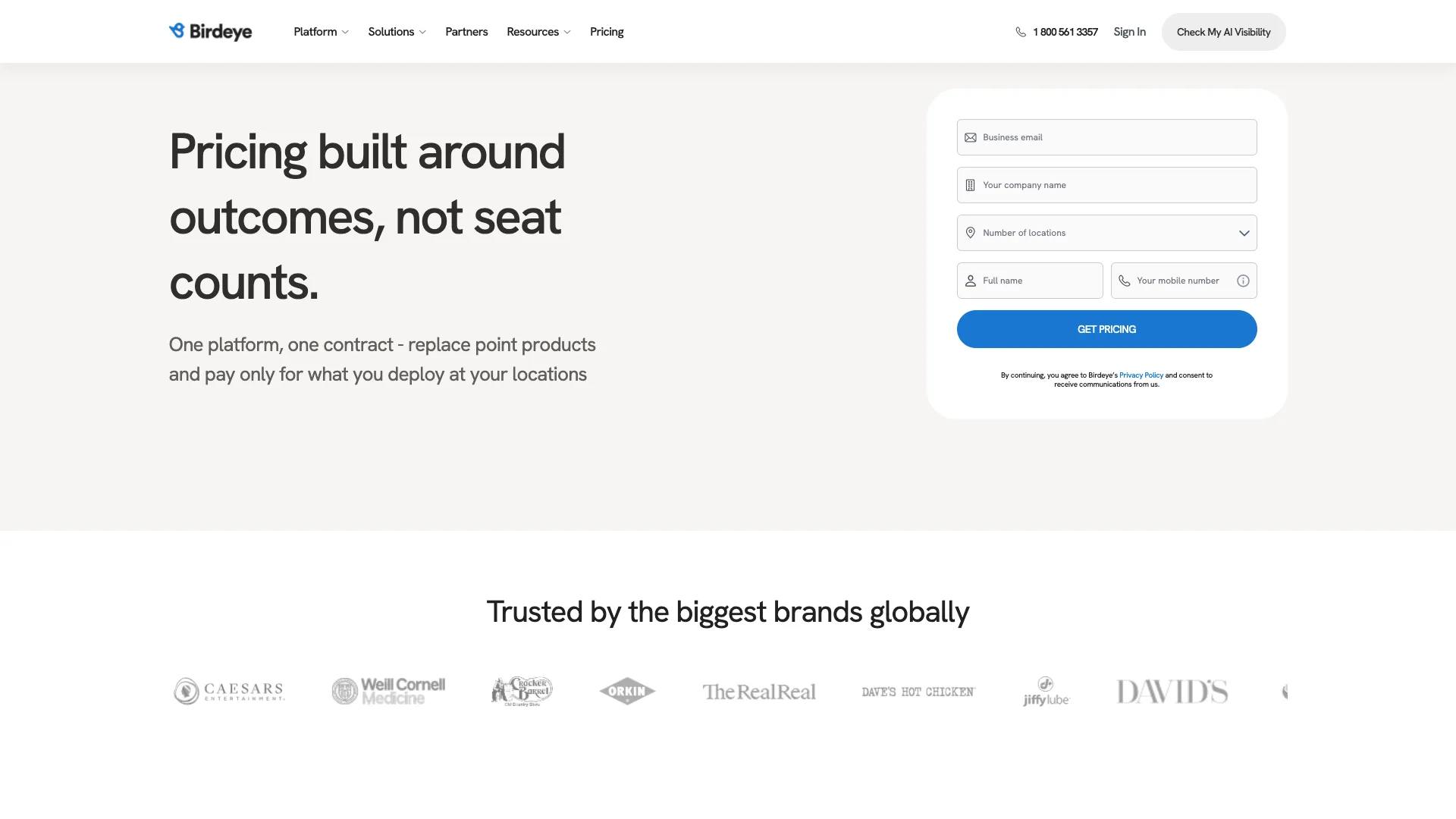 Jul 31, 2026
 Tech Stack
NiceJob vs Birdeye 2026: Pricing, Contracts and Review Gating
One of these vendors puts its price on the page and its cancellation terms in writing. The other puts a form in front of both, and the complaint record is where its contract length shows up.
Read Article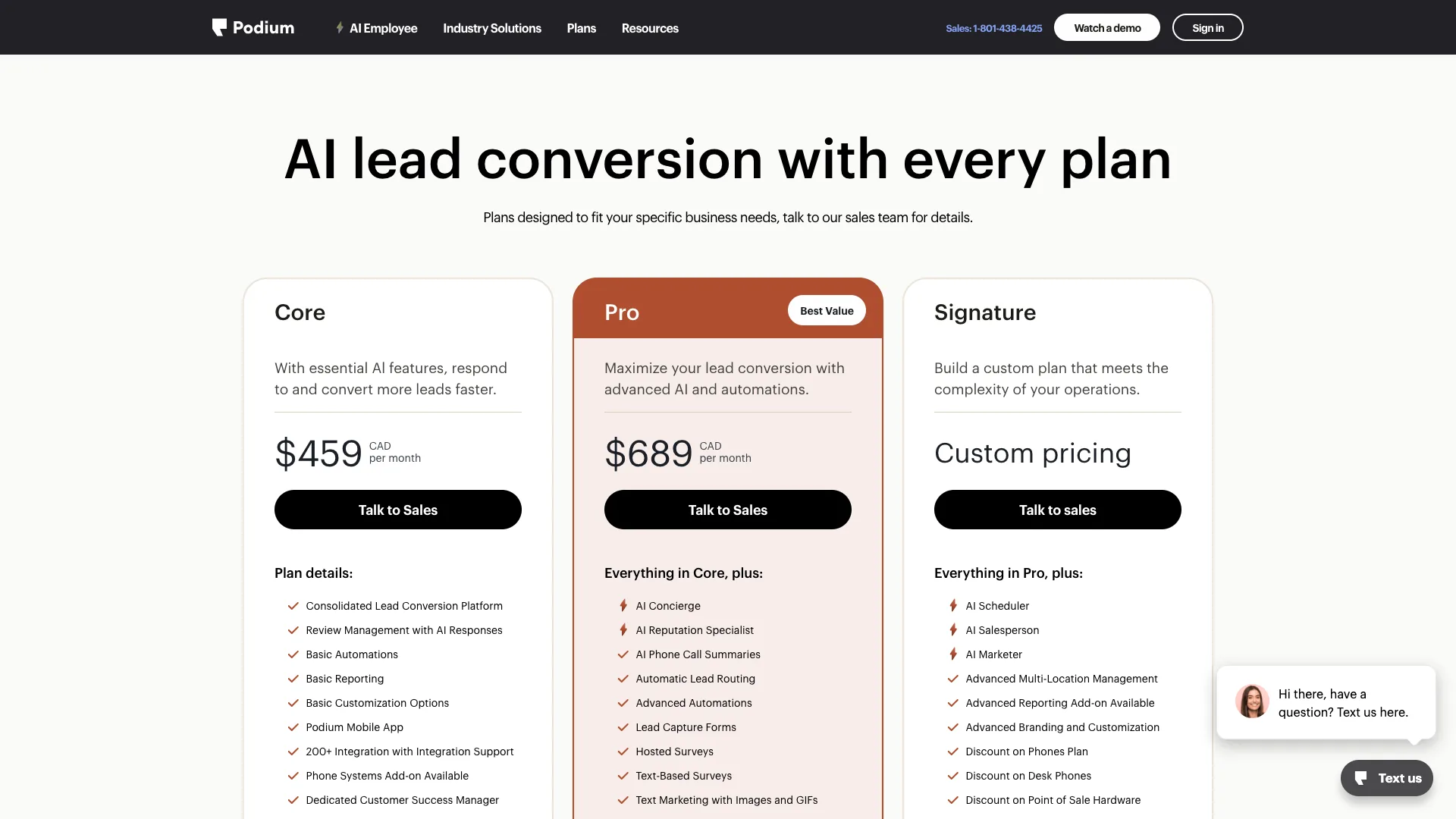 Jul 31, 2026
 Tech Stack
Podium vs Birdeye 2026: Pricing, Contracts and Review Gating
Only one of these two will tell you what it costs before a sales call, and even that number carries a carve-out aimed squarely at trade contractors.
Read Article Jul 31, 2026
 Tech Stack
Best Electrical Contractor Software 2026: 11 Ranked and Priced
An electrical contracting business makes two software purchases that do not substitute for each other, and every roundup answering this query covers only one of them. Eleven platforms, with a published price or an explicit statement that the vendor publishes none.
Read Article Jul 31, 2026
 Tech Stack
Best HVAC Software in 2026: Eleven Ranked Across Three Classes
An HVAC contracting business buys across three classes of software that do not substitute for each other, and every roundup answering this query covers only one of them. Eleven products, each with a published price or an explicit statement that the vendor publishes none.
Read Article Jul 30, 2026
 Tech Stack
AccuLynx Pricing 2026: The Real Cost of a Quote-Gated Plan
One published figure, two blank plan cards, and a contract that says things the pricing page does not. A line-by-line breakdown of what AccuLynx really bills.
Read Article Jul 30, 2026
 Tech Stack
Houzz Pro Canada Review 2026: Pricing and Alternatives
Houzz Pro serves different pricing renderings. What Canadian buyers see, how GST/HST and payments work, what Custom gates, and what the annual contract commits you to.
Read Article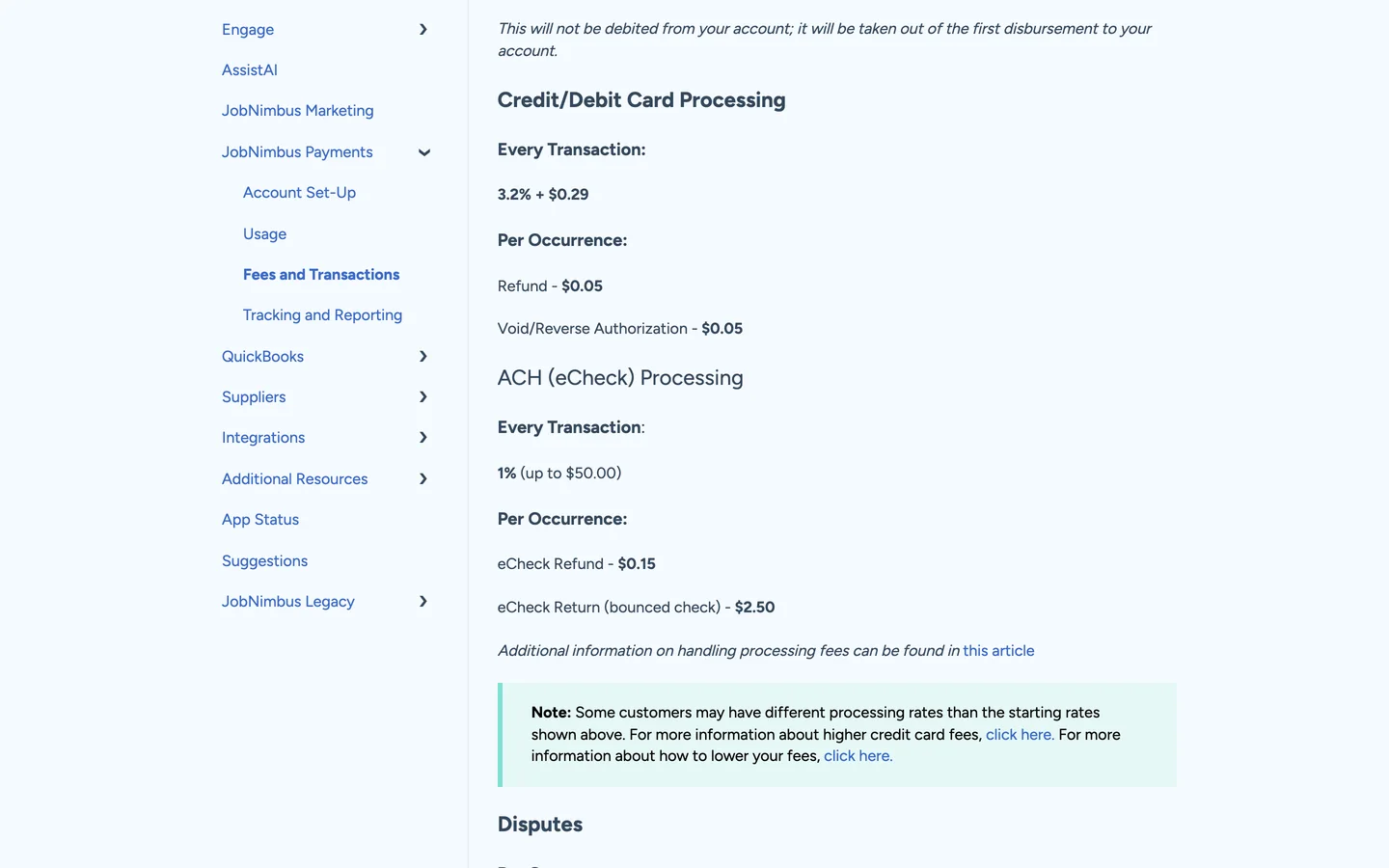 Jul 30, 2026
 Tech Stack
JobNimbus Pricing in 2026: What the Quote Does Not Cover
JobNimbus prints no figure on any of its four plans. So the only rate you can read before a sales call is the payments meter, and it is the biggest line on the bill.
Read Article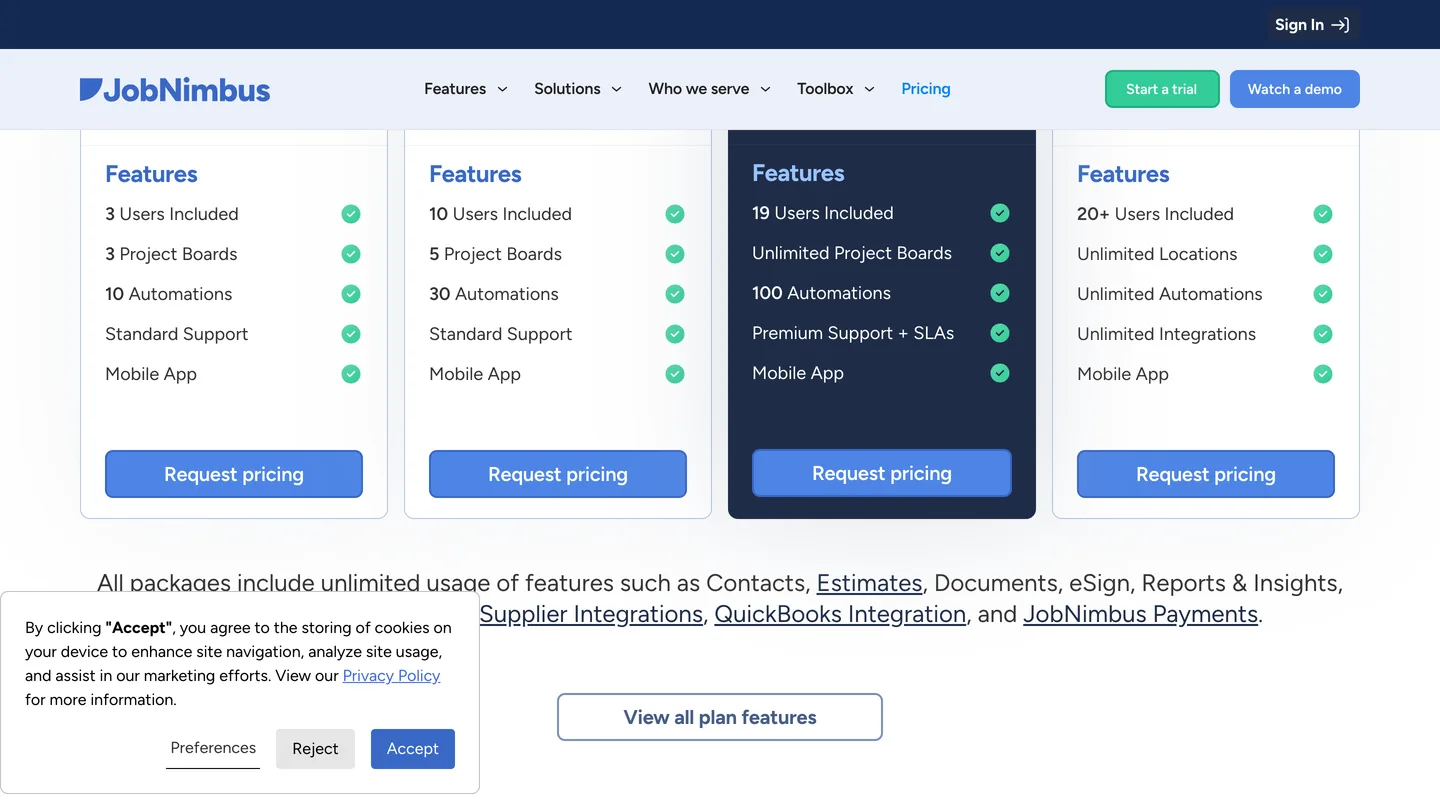 Jul 30, 2026
 Tech Stack
JobNimbus Review 2026: Pricing, Pros, Cons and Alternatives
JobNimbus rates 4.6 on Capterra and orders material straight from ABC Supply and SRS. But it publishes no price, and its supplement route carries a note.
Read Article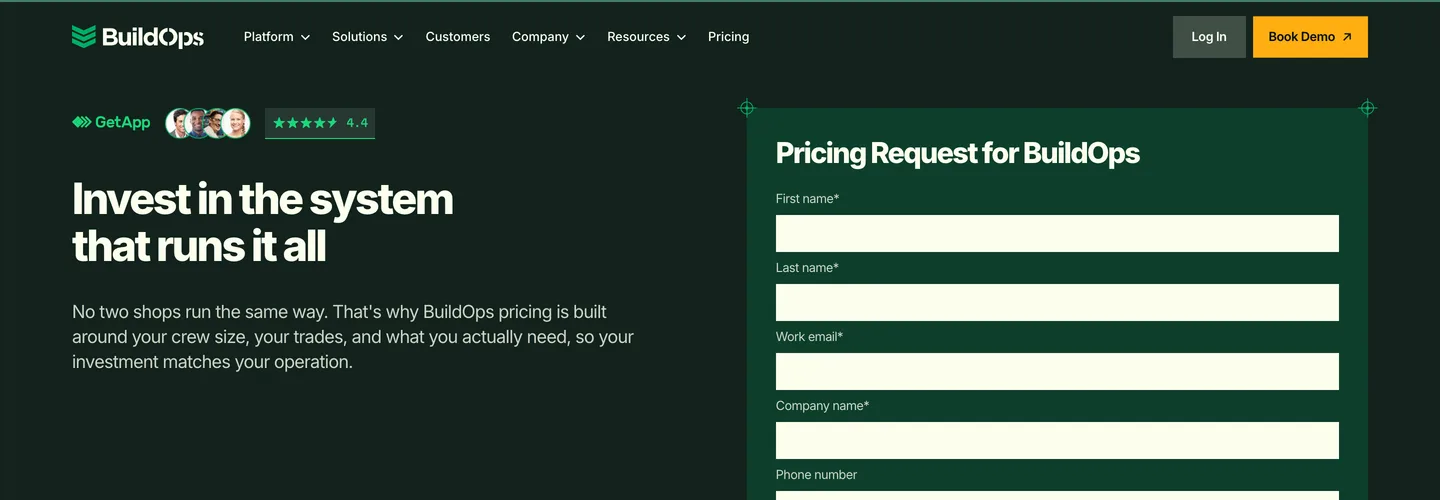 Jul 30, 2026
 Tech Stack
BuildOps Review 2026: Pricing, Contract Terms and Alternatives
BuildOps runs commercial service and projects on one platform, and publishes no pricing at all. The billing unit, the 30-day data-export window, and who it suits.
Read Article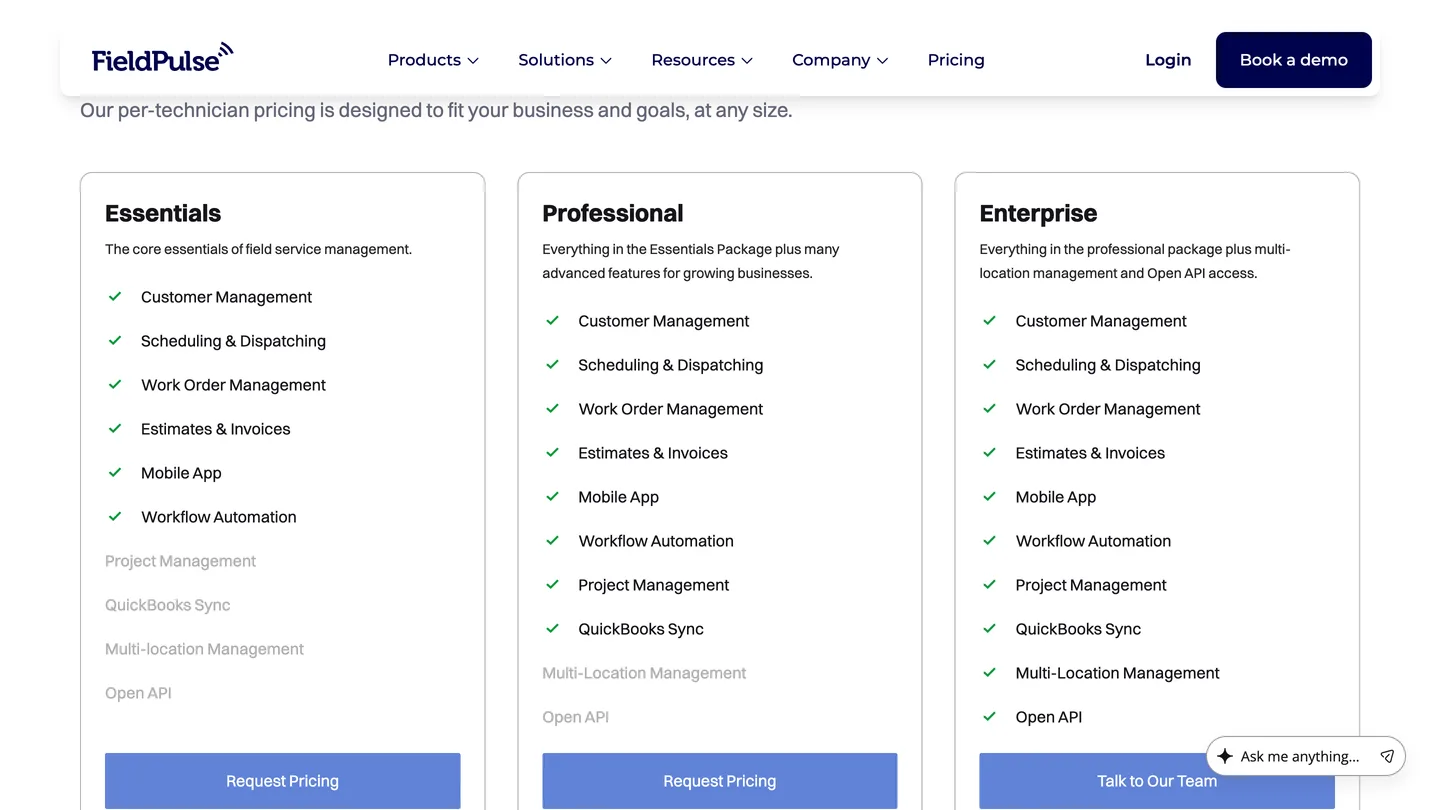 Jul 30, 2026
 Tech Stack
FieldPulse Review 2026: Pricing, Pros, Cons and Alternatives
FieldPulse rates 4.6 on Capterra and is the platform contractors name when they leave a bigger system. But it publishes no price, and the contract runs a year.
Read Article Jul 30, 2026
 Tech Stack
Service Fusion Review 2026: Pricing, Contract and Alternatives
Service Fusion bills flat per company with unlimited users, which is the best structural deal in field service software. The published plans, the contract behind the no-contract line, and the app score every other review gets wrong.
Read Article Jul 30, 2026
 Tech Stack
Knowify Review 2026: Pricing, Job Costing and Alternatives
Knowify rates 4.5 on Capterra and its weakest sub-score is features. What the $99 Core plan withholds, which way the QuickBooks sync really runs, and who should not buy it.
Read Article Jul 29, 2026
 Tech Stack
AccuLynx Review 2026: Pricing, Tier Gating, Alternatives
AccuLynx rates 4.6 across 846 reviews and now publishes an entry price. What that price omits, which tier holds the insurance workflow, and who should skip it.
Read Article Jul 29, 2026
 Tech Stack
Unitel Voice Review 2026: Pricing, Features and Alternatives
Unitel Voice rates 4.6 on Capterra and gives a one-truck shop a business number for $9.99 a month. The published plans, the cost per call, and what it won't do.
Read Article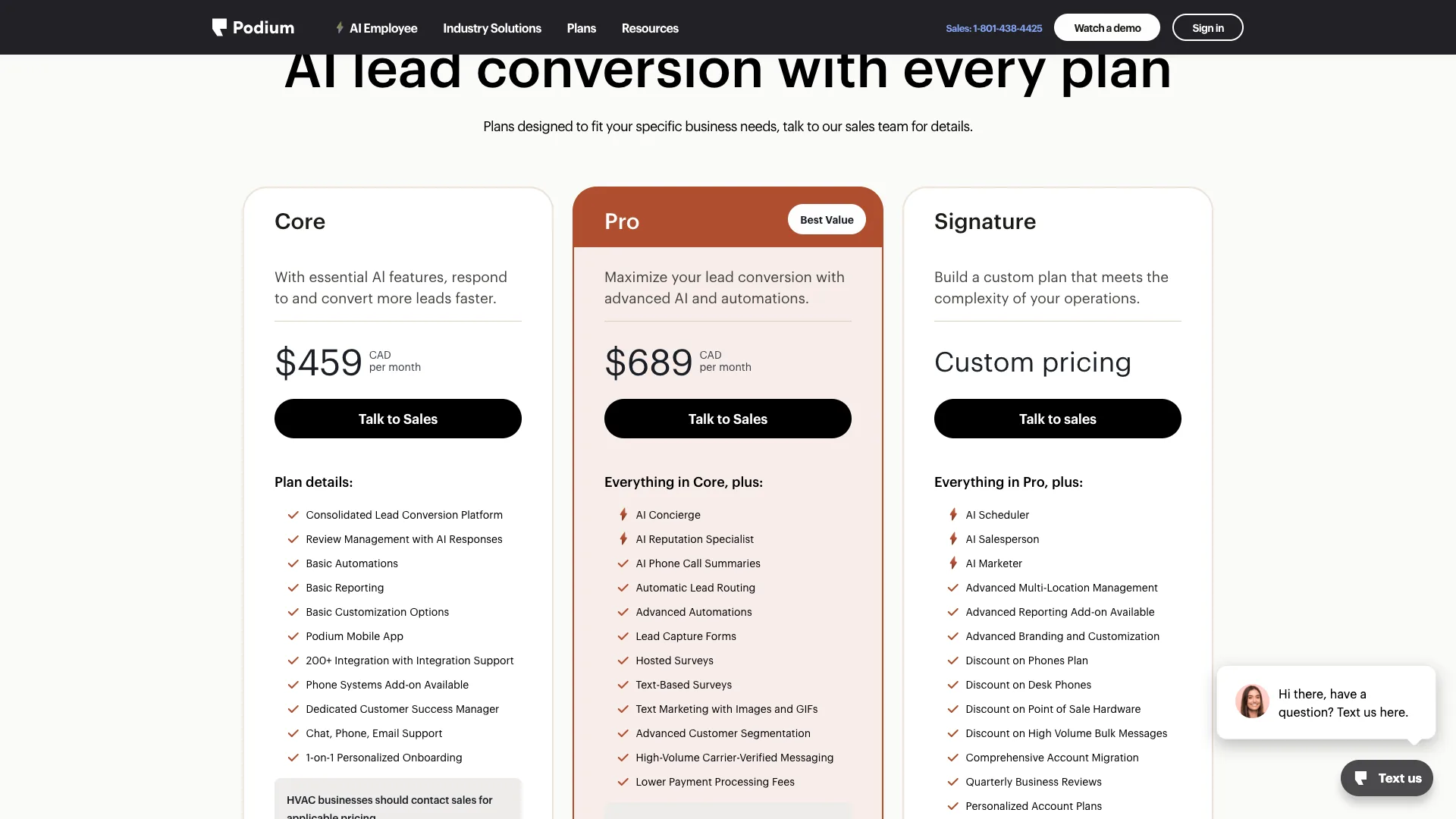 Jul 29, 2026
 Tech Stack
NiceJob vs Podium 2026: Pricing, Contracts and Review Gating
Both vendors print a price, at very different scale and in different currencies. The gap that matters is what Podium will not print: the billing unit, and whether a trade shop gets the number on the page.
Read Article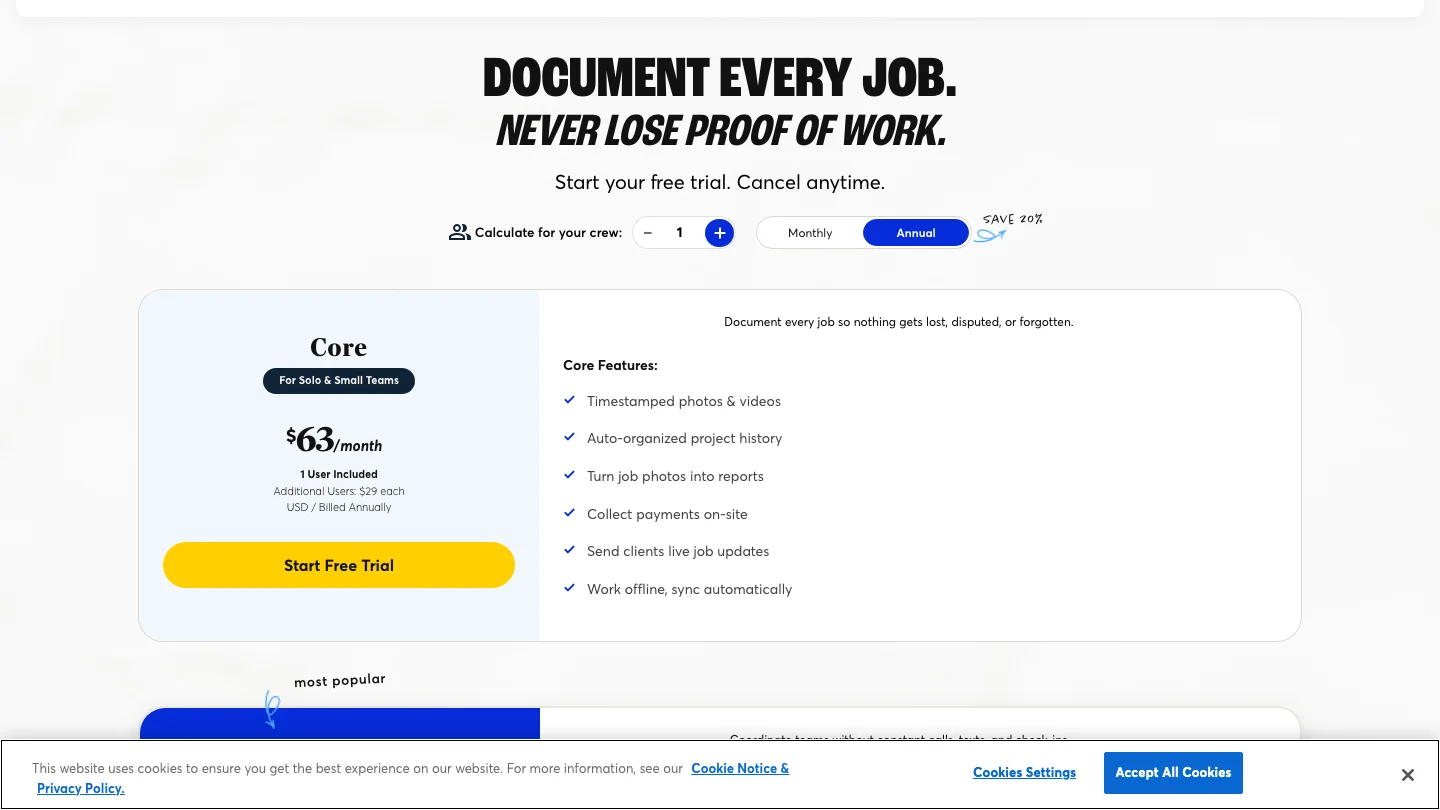 Jul 28, 2026
 Tech Stack
CompanyCam Review 2026: Pricing, Pros, Cons and Alternatives
Every page ranking for CompanyCam still quotes a per-user price the vendor no longer charges. Here are the real plans, the seat math, and who should skip it.
Read Article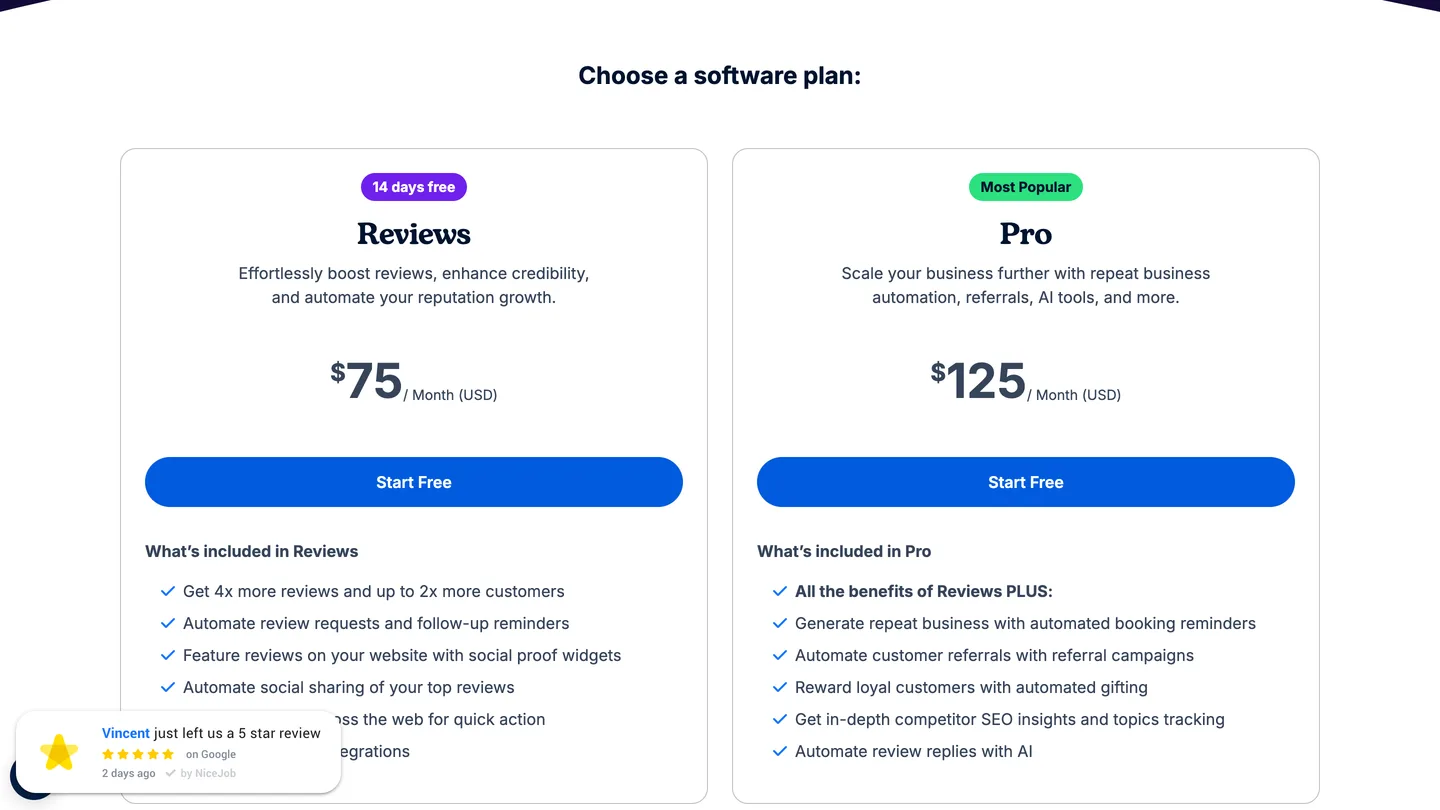 Jul 28, 2026
 Tech Stack
NiceJob Review 2026: Pricing, Pros, Cons and Alternatives
NiceJob rates 4.9 on Capterra and refuses to gate negative reviews. Real plan pricing, the active-customer threshold nobody publishes, and who should skip it.
Read Article Jul 27, 2026
 Tech Stack
Buildertrend Review 2026: Pricing, Limits and Alternatives
Buildertrend rates 4.5 across 2,486 Capterra reviews and quotes against your revenue rather than your seat count. The workflows, the export problem, the alternatives.
Read Article Jul 27, 2026
 Tech Stack
CallRail Review 2026: Pricing, Pros, Cons and Alternatives
CallRail rates 4.5 on Capterra, and its tracking numbers port out free. But the two usage rates that decide your real bill are the two it does not print.
Read Article Jul 27, 2026
 Tech Stack
Roofr Review 2026: Pricing, Pros, Cons and Alternatives
Roofr rates 4.6 on Capterra and sells $13 measurement reports against a market charging triple. But it will not import a report from anywhere else.
Read Article Jul 25, 2026
 Tech Stack
Housecall Pro Review 2026: Pricing, Pros, Cons, Alternatives
Housecall Pro has the shortest learning curve in the category and the widest review spread. Real pricing, the Instapay math, and the migration trap to plan around.
Read Article Jul 24, 2026
 Tech Stack
Jobber Review 2026: Pricing, Pros, Cons and Alternatives
Jobber rates 4.6 on Capterra with the best mobile app in the category. Real plan pricing, the feature gating that changes your entry price, and who it suits.
Read Article Jul 23, 2026
 Tech Stack
ServiceTitan Review 2026: Pricing, Pros, Cons, Alternatives
ServiceTitan rates 4.3 on Capterra but its weakest score is value for money. Real reported pricing, the 12-month contract, the exit fees, and who it actually suits.
Read Article Jun 3, 2026
 Tech Stack
HVAC Online Scheduling: The 43% Losing After-Hours Bookings
HVAC leads every trade on online booking at just 56.7%, which still leaves 43% of sites forcing an after-hours customer to wait for a business-hours phone call.
Read Article