Best Electrical Contractor Software 2026: 11 Ranked and Priced
Eleven platforms ranked for electrical contractors. Four publish prices from $29 to $208 a month. Seven do not. Estimating packages covered separately.
Disclosure This article features tools from our brand partners. If you choose to use them, we may receive compensation at no extra cost to you.
Our editorial choices are independent of these affiliate arrangements. Read our full affiliate disclosure.
Fervor is a CRO and web design studio, not a software reseller, and no vendor paid for placement here or for a kinder verdict. Affiliate links are flagged where they appear, and they never change what we report.
Page at a glance
An electrical contracting business buys two different kinds of software, and they do not replace each other. One runs the service side, which is dispatch, technician mobile, invoicing and payments. The other prices the bid, which means on-screen takeoff, an assembly database and labour units. This page ranks eleven platforms across both, with a published price or an explicit statement that the vendor publishes none. Four publish real numbers: Jobber from $29 a month on annual billing, Housecall Pro from $59, Service Fusion from $208 with unlimited users, and Knowify from $99. And seven are quote-gated, including ServiceTitan, FieldEdge, Workiz, FieldPulse and BuildOps. On the estimating side, TurboBid publishes $193 a month or $1,986 for a one-time licence, and ConEst IntelliBid publishes nothing. Every entry carries a disqualifier, because you eliminate on those rather than on praise. Three of the eleven are Fervor brand partners, and we may receive compensation if you use them, which is stated again beside each one.
The short answer
If you run a residential service and repair operation with two to fifteen electricians, buy Jobber. And it publishes its prices, the technician app gets adopted without a training week, and the entry tier is $29 a month on annual billing for one user. If you dispatch more than roughly fifteen technicians and your revenue mix leans on membership agreements, ServiceTitan is the platform built for that shape, and you will pay for it in a way nobody can quote you from a web page. And if you are a commercial electrical contractor running service contracts alongside projects, BuildOps is the one designed for that split.
But none of those three price a bid. If most of your revenue arrives as a bid on a plan set, the purchase that matters is an electrical estimating package, and TurboBid is where a small shop should start because it is the only product in the class that publishes what it costs.
Every figure on this page was read on July 31, 2026, off the vendor's own page or a review platform, and both are named at the point each number appears.
How we picked, and what we ignored
Four criteria, weighted, applied to every platform in the same order. Pricing transparency at 35%, because a contractor who cannot budget cannot buy. Electrical fit at 30%, meaning whether the product does something an electrical contracting business needs that a generic service platform does not. And contract and exit terms at 20%, since the cost of leaving is the number nobody publishes. And evidence quality at 15%, which is the size and recency of the reviewer base behind any rating we quote.
We ignored three things on purpose. Brand recognition did not score, so a platform that markets hard does not out-rank one that does not. But feature-count comparisons did not score either, because every platform in this category lists dispatch, invoicing and a mobile app, and existence of a feature says nothing about depth. And we did not score integration logo grids. What we scored on integrations was sync direction and which records move, since that is the fact contractors regret not asking about.
Two admissions, because a rubric with no limits stated is a rubric you cannot check. We did not run any of these platforms hands-on, so nothing here is a testing claim. And we read Capterra through a browser rather than an automated fetch, because Capterra returns HTTP 403 to a script.
"Capterra rates ServiceTitan 4.3 across 337 reviews, with the profile last updated July 23rd, 2026."
Capterra (2026)
The eleven platforms, side by side
| Platform | Starting price | Best for |
|---|---|---|
| Jobber | $29 a month, annual billing, 1 user | Residential service shops, 2 to 15 electricians |
| Housecall Pro | $59 a month, annual billing, 1 user | Residential service with a heavy payments and marketing lean |
| Knowify | $99 a month, annual billing, 1 user | Electrical subcontractors billing contract work and pay applications |
| TurboBid | $193 a month, or $1,986 one-time | Small shops bidding residential and light commercial |
| Service Fusion | $208 a month, annual billing, unlimited users | Shops with more office staff than trucks |
| ServiceTitan | No published price, per technician | 15-plus technicians, membership-heavy revenue |
| Workiz | No published price | Shops that still need a phone system |
| FieldEdge | No published price | Shops staying on QuickBooks Desktop |
| FieldPulse | No published price, seat-based | Growing crews that want a quote without an enterprise process |
| BuildOps | No published price | Commercial electrical contractors running service and projects |
| ConEst IntelliBid | No published price | Estimating departments bidding commercial plan sets |
Two purchases, not one
This is the split that decides which half of the table you should be reading, and it is the reason a generic "best contractor software" list mis-routes electricians. A field service platform organises work that already exists. A job comes in, somebody schedules it, a licensed electrician runs it, and an invoice goes out. The unit is the call.
An electrical estimating package does something no field service platform does. You load a plan set, count devices and fixtures on screen, measure conduit runs by linear foot, and the software extends the count against a material price file and a labour unit for each item. Labour units are where the trade exclusivity lives: the NECA Manual of Labor Units publishes hours per item under Normal, Difficult and Very Difficult conditions, and no HVAC or roofing product ships that data because no other trade bids that way. And material prices come through a price file from Trade Service or EPIC or NetPricer, updated against your distributor's column pricing.
So a master electrician bidding a school addition and a service electrician chasing panel upgrade calls are not shopping for the same product. Buy the wrong class and you get a beautiful dispatch board that cannot tell you whether your bid covers the wire pull.
The eleven, ranked
Jobber, the best all-round buy for a small electrical contracting business
Jobber is the platform a two-to-fifteen-person residential electrical shop should look at first, and the reason is unglamorous: it tells you what it costs before you talk to anyone. Core runs $29 a month on annual billing for one user and $49 month to month. Connect is $99 annual and $139 monthly. And Grow is $149 annual and $199 monthly. Add-ons price separately, with the Marketing Suite at $79 a month, an AI Receptionist at $29 and a Sales Pipeline module at $49.
"Jobber publishes Core at $29 a month on annual billing, Connect at $99 and Grow at $149, with month-to-month pricing of $49, $139 and $199."
Jobber (2026)
Best for: a residential service operation running two to fifteen electricians, selling quoted work, that wants the field app adopted in a week rather than a quarter.
What it does well: quoting and quote follow-up, a drag-and-drop dispatch board, online booking, and a two-way QuickBooks Online sync that moves customers, invoices and payments. And the technician app is the one field staff complain about least.
Watch out for: reporting, and the QuickBooks sync when it misbehaves. A construction office manager writing on Capterra on April 30, 2026 said that "At times, it can be challenging to correctly sync with QuickBooks" and that her office had "experienced duplicated entries and instances where payments are recorded in Jobber but not reflected in QuickBooks at all." A construction COO on May 1, 2026 put the other complaint plainly: "The lack of reporting is disappointing." Offline mode is view-only, so an electrician in a basement panel room can read a work order and cannot close it out. And there is no flat-rate price book.
Skip it if you dispatch more than roughly fifteen technicians, sell off a flat-rate price book, or need job costing at the phase level. Capterra rates it 4.6 across 1,468 reviews as of July 23rd, 2026.
The verdict: the highest floor and the lowest ceiling in this lineup, which is exactly the trade a growing shop wants for its first real platform. See Jobber's current pricing. That link is a partner link, and we may receive compensation if you sign up through it.
ServiceTitan, the best fit above fifteen technicians
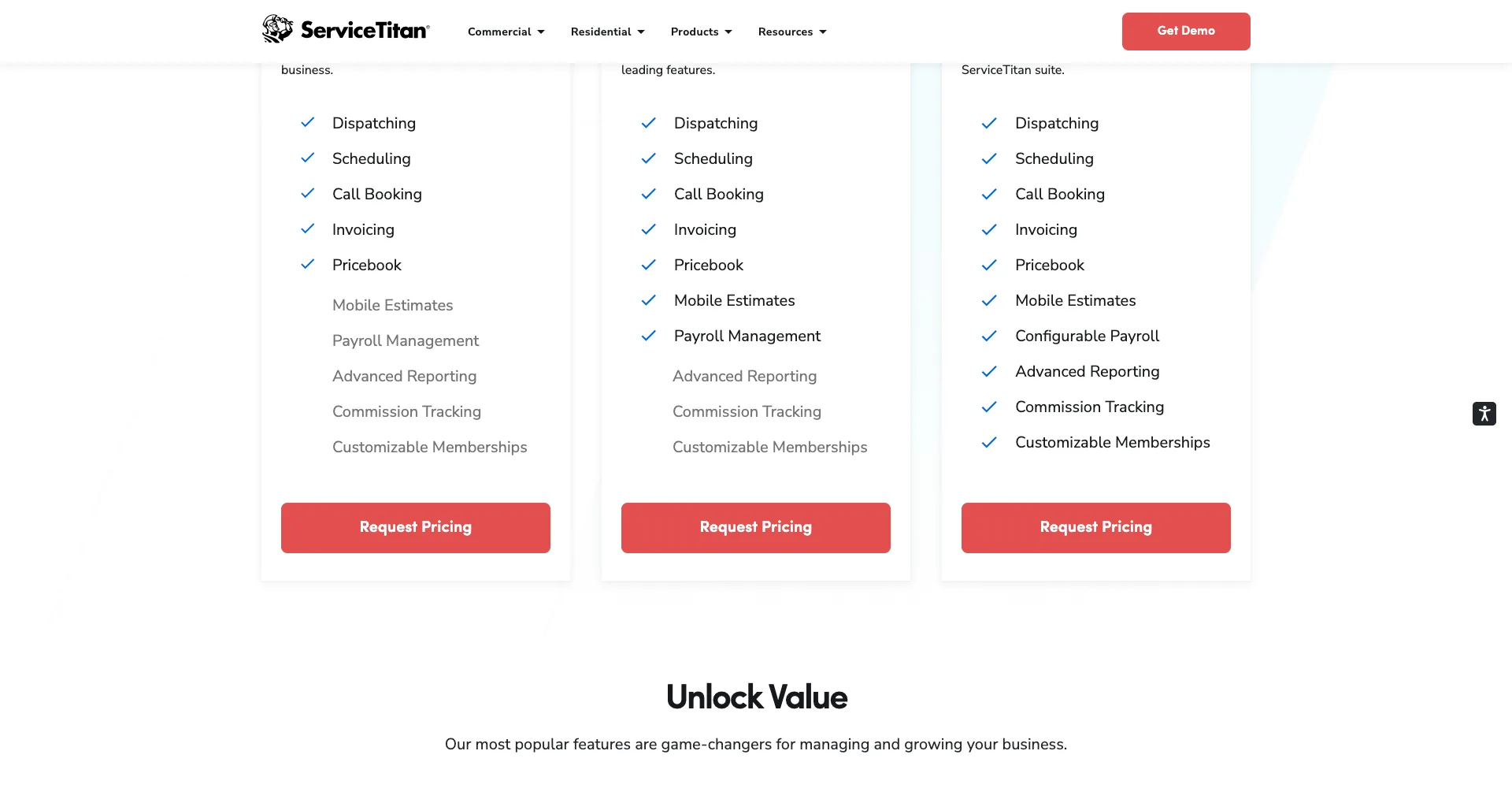
ServiceTitan publishes no price at all. Its pricing page lists three packages, Starter, Essentials and The Works, and every one of them carries a "Request Pricing" button instead of a number. But the page does state the billing unit, describing "per-technician pricing" designed to fit a business "at any size", so you at least know the meter runs on headcount rather than revenue.
"ServiceTitan publishes no price for any of its 3 packages, Starter, Essentials and The Works, and states that its pricing is per technician."
ServiceTitan (2026)
Best for: an electrical contracting business past fifteen technicians where membership agreements, call booking and technician sales performance are the levers that move the P&L.
What it does well: the dispatch board, the pricebook, memberships billed off a card on file, and reporting deep enough that owners run the business from it. A director of purchasing at a construction firm on March 2, 2026 said ServiceTitan "let us consolidate software", which is the real argument for the price.
Watch out for: the contract, and this is the single most important paragraph on this page. An owner reviewing on May 6, 2026 wrote: "I was not informed I was signing a 2-year contract. No demo was provided." He describes never going live, requesting cancellation before onboarding finished, and being told the balance was owed anyway. A VP of operations on March 10, 2026 wrote that the platform has "numerous bugs and system flaws, making it making it not worth five times the cost of Housecall Pro." Get the minimum term, the notice period, the auto-renewal clause and the payment processing rate in writing before you sign anything.
Skip it if you run fewer than 10 technicians. The same May 2026 reviewer says he was "never disclosed that the platform is designed for large commercial operations with multiple technicians", and a one-truck shop pays for a dispatch board nobody uses.
The verdict: the right platform for the shape it was built for, sold on terms a small operator should not sign. Capterra rates it 4.3 across 337 reviews. Request ServiceTitan pricing. That is a partner link and we may receive compensation if you use it, which has not softened the paragraph above it.
Housecall Pro, the best fit for a residential shop that lives on payments
Housecall Pro publishes three tiers. Basic is $59 a month on annual billing and $79 month to month, with one user. Essentials is $149 annual and $189 monthly, including five users. And MAX is $299 annual and $329 monthly.
"Housecall Pro publishes Basic at $59 a month on annual billing, Essentials at $149 with five users, and MAX at $299, with month-to-month pricing of $79, $189 and $329."
Housecall Pro (2026)
Best for: a residential electrical shop under about ten technicians that wants same-day payment transfers, consumer financing on bigger tickets, and online booking without building it.
What it does well: payments and speed to cash, online booking, review requests, and an interface that a new hire figures out unsupervised. A construction owner on December 25, 2025 called it "the most streamlined version of software I've tried".
Watch out for: the add-on bill. That same five-star reviewer named the cost creep in his own cons field: "How much you pay additionally for extra functionality for like price books, crm software, camera usage for photos of job sites." Reporting draws the other recurring complaint. And a business manager with two-plus years on the platform wrote on October 13, 2025 that "You have to export excel files and do a lot of sorting and filtering to really get the data you want."
Skip it if your work is project-based rather than call-based. A construction general manager on February 18, 2025 put it exactly right for a shop like that: the product suits "people who are service based only", and his own mix of service contracts plus longer project management "doesn't suit mines".
The verdict: the easiest platform here to get running, with the widest gap between sticker price and real bill. Capterra rates it 4.7 across 2,742 reviews, the largest reviewer base in this lineup. See Housecall Pro's plans. Partner link, and we may receive compensation if you sign up through it.
Service Fusion, the best fit when your office is bigger than your fleet
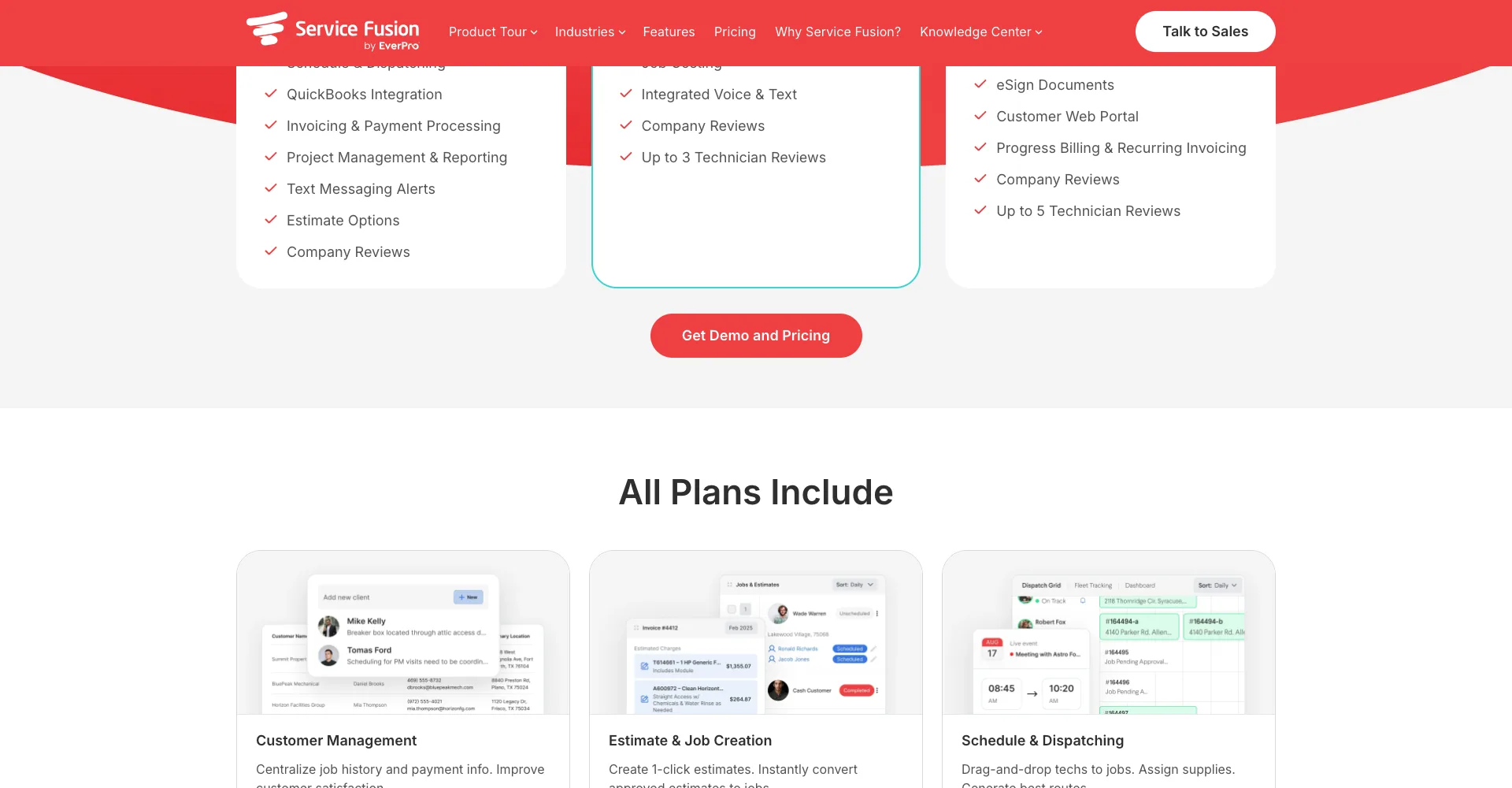
Service Fusion is the only platform in this lineup that does not bill per user, and for some electrical contracting businesses that inverts the entire comparison. Starter is $208 a month billed annually and $245 month to month. Plus is $325 annual and $382 monthly. And Pro is $533 annual and $627 monthly. Every tier includes unlimited users.
"Service Fusion publishes Starter at $208 a month billed annually, Plus at $325 and Pro at $533, with unlimited users on every tier and month-to-month pricing of $245, $382 and $627."
Service Fusion (2026)
Best for: a shop where dispatchers, estimators, a bookkeeper and an office manager all need logins. Run the arithmetic before you dismiss the sticker. So at twelve seats, a per-user platform charging $40 each lands near $480 a month, so $208 flat stops looking expensive.
What it does well: unlimited users, a customer web portal, progressive billing and recurring invoicing on the entry tier, and a QuickBooks integration that covers Desktop as well as Online.
Watch out for: platform speed, and the complaint comes from inside the trade. The president and CEO of an electrical firm wrote on December 10, 2025: "I've been with Service Fusion since 2018 and over the last 3 years, the system has been very slow." He describes a jobs board that took over a month to fix and says he is "in the works of leaving this program". A separate QuickBooks defect surfaces in an April 15, 2026 review: "There are some issues with Quickbooks integration assigning jobs to the wrong child company." The field app is thinner than the web app, which a January 6, 2026 reviewer describes as "far too many functions the app cannot access."
Skip it if your technicians work from the app more than your office works from the browser, or if you have fewer than four people who need a login, since a per-user platform will be cheaper at that size.
The verdict: the best pricing model in the lineup attached to the platform with the most credible performance complaints. Capterra rates it 4.3 across 308 reviews as of July 29th, 2026.
FieldEdge, the best fit for a shop staying on QuickBooks Desktop
FieldEdge publishes no price. Its plans page lists Select, Premier and Elite, and each one ends in a "Request Pricing" button. But what it does publish is the tier gating, and that is worth reading: a flat rate pricebook sits on the entry Select tier, while advanced dispatching, multi-option quotes and advanced service agreements are held back for Premier, and outbound call recording and warehouse inventory management for Elite.
"FieldEdge publishes no price for any of its 3 plans, Select, Premier and Elite, gating advanced dispatching and multi-option quotes to Premier and warehouse inventory management to Elite."
FieldEdge (2026)
Best for: an established multi-truck electrical contracting business whose books live in QuickBooks Desktop, which FieldEdge has supported longer and more deeply than most of this category.
What it does well: the QuickBooks link, flat rate pricing on every tier, and service agreements that renew without somebody chasing them.
Watch out for: what happens underground. A maintenance VP reviewing on July 21, 2026 wrote that "Synchronization delays sometimes occur when technicians work in areas with poor mobile reception (basements, isolated mechanical rooms)", which is a description of exactly where electricians spend their day. And the same reviewer says "The desktop interface feels dated and could use a modern refresh." A director of special projects who compared it directly to ServiceTitan called it "A lot less intuitive".
Skip it if your crews work in signal-dead buildings and need to close jobs on site, or if you have already moved your accounting to QuickBooks Online, because the Desktop advantage is most of the reason to choose it.
The verdict: a solid product carrying the lowest rating in the lineup at 4.2 across 310 reviews, and the one whose deal-breaker is geographic rather than functional.
FieldPulse, the platform that stopped publishing its prices
This one changed, and every roundup still printing FieldPulse tiers is quoting a structure that is no longer on the vendor site. As of July 31, 2026 the FieldPulse pricing page carries no numbers anywhere. The top of it says "FieldPulse is seat-based" and offers "Full access seats and limited field seats", then closes with "Get a custom quote in one conversation."
And there's a wrinkle worth reading twice, because it changes what you should ask on the call. Lower down the same page sits a block headed "FieldPulse Packages" carrying three named tiers, "Essentials", Professional and Enterprise. And two of the three end in "Request Pricing" and the third ends in "Talk to Our Team". The line above them reads "Our per-technician pricing is designed to fit your business and goals, at any size", which is a different billing unit from the seat-based one at the top of the page and, word for word, the same sentence ServiceTitan runs above its own packages. So ask which unit your quote is built on before you compare it to anything.
"FieldPulse publishes no price, describes its pricing as seat-based at the top of the page and per technician above its 3 named packages, and quotes on request."
FieldPulse (2026)

Best for: a growing electrical contracting business that has outgrown Jobber, cannot stomach ServiceTitan's terms, and wants a quote without a six-week enterprise sales process.
What it does well: onboarding and support, consistently, and it is the platform contractors name when they leave the two expensive ones. A construction owner on May 12, 2026 wrote that FieldPulse "Took the pain out of switching from a more complicated and expensive software" and that it "feels modern and intuitive rather than the SAP database feel of larger competitors."
Watch out for: job costing and invoicing depth. A co-owner writing on July 6, 2026 said the gaps are "(Job Costing & Invoicing in particular for me)", and a May 12, 2026 reviewer noted "There is a gap in terms of information tracking vs the biggest players in the space." Page load speed draws complaints too.
Skip it if you need job costing to be right on day one, or if quote-gated pricing is a dealbreaker for how you buy.
The verdict: the strongest middle option in the lineup, now harder to evaluate than it was six months ago. Capterra rates it 4.6 across 481 reviews as of July 27th, 2026.
Workiz, the one that ships a phone system instead of an integration
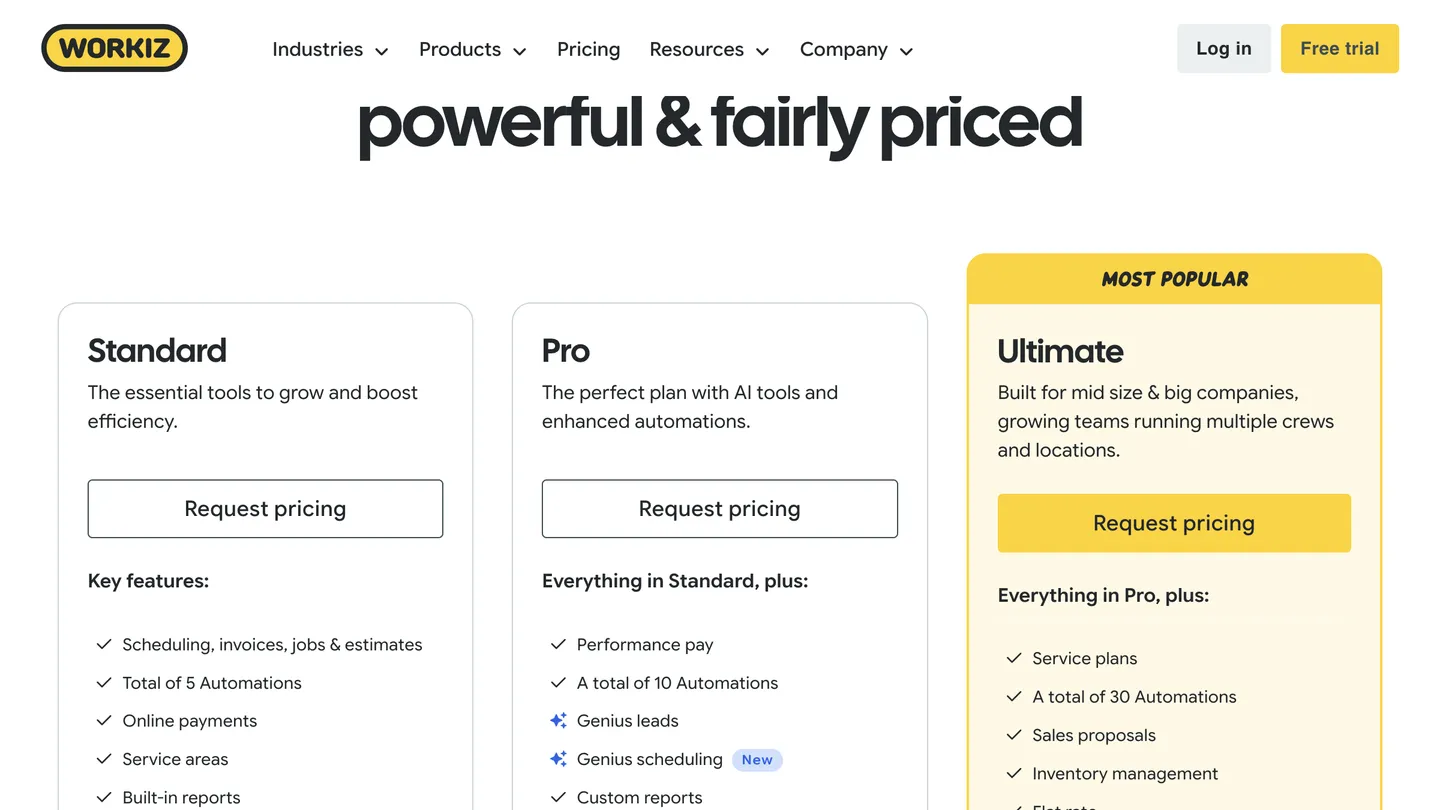
Workiz is the second platform in this lineup to withdraw its published prices, and it did it with more nerve than FieldPulse. Standard, Pro and Ultimate each carry a "Request pricing" button where a figure belongs. The headline sitting directly above those three buttons reads "Finally, a field service software that's easy, powerful & fairly priced", which is a claim about a number the page declines to show you.
"Workiz publishes no price on any of its 3 tiers, Standard, Pro and Ultimate, under a headline calling the product fairly priced."
Workiz (2026)
And the page FAQ closes a loop on itself that is worth seeing. Asked how the annual discount works, it answers that you can save "$400" or more and that "Specific discount details are available on the Pricing Page". You are reading the pricing page.
Best for: an electrical contracting business that has not bought a phone system yet. Workiz ships telephony in the platform rather than handing you a call-tracking integration, and at this size very few do.
What it does well: the built-in phone system, call recording against the job record, and a dispatch board that small service teams pick up quickly. The trial is "7 days free trial that allows you to explore all the features".
Watch out for: support, and the quote-gate. An executive assistant in consumer services with more than two years on the platform rated it 2 out of 5 on September 27, 2024: "Customer service is the absolute worst." She goes on: they keep shipping new features "or changes, rather than improving the current flaws". It still averages 4.4 across 218 reviews, so that is a minority report rather than the consensus, and the denominator is the smallest of any field service platform here.
Skip it if you need a budget number this week, or if you already run a phone system you are happy with, because the strongest reason to be here is one you have already answered.
The verdict: a genuinely differentiated product hiding behind a quote form, and the differentiator only counts if your phones are still up for grabs.
BuildOps, the best fit for a commercial electrical contractor
BuildOps publishes no price either. Its pricing page ends in "Request a Custom Quote". But it does make one commitment in writing that the rest of this category avoids: "BuildOps includes implementation and onboarding support with every plan", which matters because implementation is the fee most often quoted separately and most often underestimated.
"BuildOps publishes no price on any of its plans and states that implementation and onboarding support are included with every 1 of them."
BuildOps (2026)
Best for: a commercial electrical contractor running reactive service calls and quoted projects out of the same office, especially one whose back office sits on Sage Intacct, NetSuite or Viewpoint rather than QuickBooks.
What it does well: the split between service management and project management, a dispatch board with a week view rather than a day view, and ERP-grade accounting integrations that sync job costs, invoices and purchase orders. A bookkeeper at an electrical firm wrote on March 19, 2026 that it "Sync's well with QB's desktop" and that support and training are "second to none".
Watch out for: reporting and the change-order flow. A department head on April 15, 2026 wrote that "It often takes extra time to build reports that provide the specific data we need". And a service billing administrator on April 14, 2026 flagged "occasional system quirks, particularly around updates and syncing with QuickBooks Online". And an accountant on April 20, 2026 was blunter: "Completing a change order requires too many steps, which discourages us from utilizing this module."
Skip it if you are a residential service shop. The product is built for commercial contractors, and you will pay for project controls you never open.
The verdict: the correct answer for commercial electrical, and the wrong one for anybody chasing panel upgrade calls. Capterra rates it 4.4 across 177 reviews.
Knowify, the best fit for an electrical subcontractor billing contract work
Knowify sits between the two classes. It is not a dispatch platform and it is not an estimating package, and for a subcontractor billing pay applications that turns out to be the right place to stand. Core is $99 a month on annual billing with one user. And Advanced is $329 a month with ten users included. Extra users are $29 each.
"Knowify publishes Core at $99 a month on annual billing with one user and Advanced at $329 a month with ten users, with additional users at $29 each."
Knowify (2026)
Best for: an electrical contracting business of roughly four to twenty-five people running contract work for general contractors, billing AIA pay applications, with a bookkeeper already in QuickBooks Online.
What it does well: phase-level job costing, AIA G702 and G703 pay applications with a schedule of values, retainage tracking, and change orders sent for electronic signature.
Watch out for: the tier gating, which is more aggressive than the price list suggests. Job costing, project budgets, work orders and the client portal are all withheld from Core, so the plan that does what Knowify is known for is the $329 one. A December 22, 2025 reviewer added the usability note: "The interface can feel a bit dated, and some features take time to learn or require extra setup to use effectively."
Skip it if you run service and repair work with calls to dispatch, because the base product has no dispatch board and paying for a service add-on on top of a project platform costs more than buying the right tool.
The verdict: the best answer for the subcontractor half of the trade, priced honestly and gated harder than it looks. Capterra rates it 4.5 across 109 reviews.
TurboBid, the best electrical estimating package for a small shop
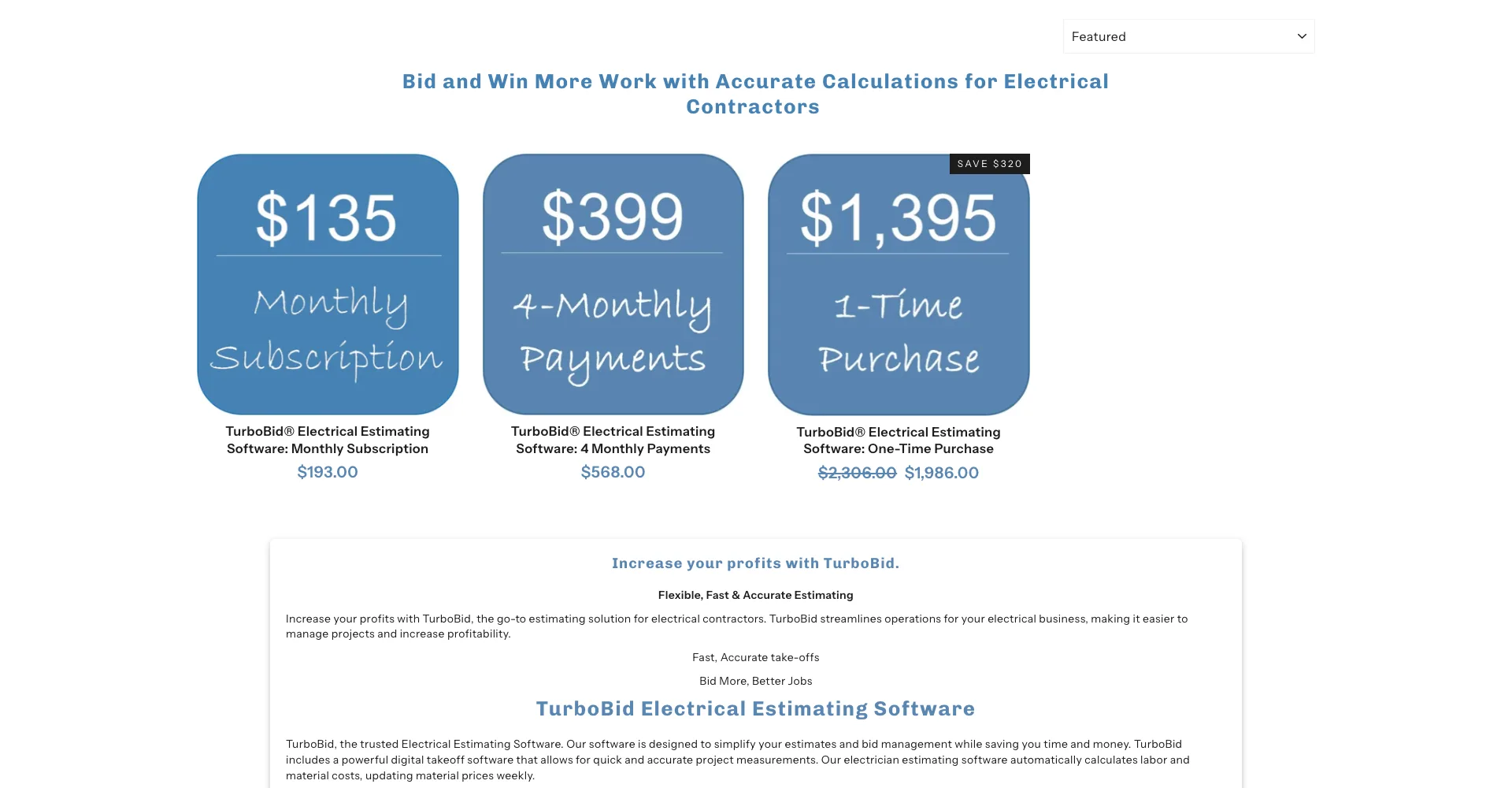
TurboBid is the only product in the estimating class that publishes what it costs, and it does it on a storefront where you can read three options at once. The monthly subscription is $193. A four-payment plan is $568. And a one-time purchase is listed at $2,306 regular and $1,986 on sale.
"TurboBid publishes electrical estimating at $193 a month, $568 across four monthly payments, or a one-time purchase listed at $2,306 regular and $1,986 sale."
TurboBid (2026)
Best for: a residential and light commercial electrical contractor bidding several jobs a week who needs a real takeoff and does not have an estimating department.
What it does well: on-screen takeoff where you click symbols on a digital print and measure conduit or cable runs by linear measurement, overhead and labour burden wizards, flat rate pricing for service work, and material price updates through TurboPricer, NetPricer, Trade Service and EPIC. And Trade and Target material prices update weekly. A working electrical contractor called the bid package "beyond anything you can do on your own".
Watch out for: the border. A Canadian owner reviewing on June 12, 2019 titled his review "Complete waste of money for Canadian businesses!" and wrote that "You are unable to get Canadian prices from distributors to work with the software, hence you cannot perform accurate estimates in a timely matter." If you bid in Canada, make the distributor price file the first thing you test in the trial, not the last.
Skip it if you bid large commercial or institutional plan sets. The vendor scopes the product to "residential and light commercial contractors" itself, and heavier work is where IntelliBid and the Accubid and McCormick packages live.
The verdict: the cheapest honest entry into real electrical estimating, on a reviewer base of 29 that you should weigh accordingly.
ConEst IntelliBid, the best fit for a commercial estimating department
IntelliBid publishes no price. What it does publish, in unusual detail, is how material pricing gets into the database, and for an electrical estimator that is the more useful disclosure. You can run the shipped Trade 3C prices, which sit high because they are based on manufacturer list. Or you can run Target pricing, which the vendor says "comes very close to most Vendor item prices." Or you can import your distributor's own file and refresh it, with NetPricer supplying third column price updates and EPIC offering an item lookup.
"ConEst publishes no price for IntelliBid and documents three material pricing routes: shipped Trade 3C prices based on manufacturer list, Target pricing, and imported distributor files refreshed through NetPricer or EPIC."
ConEst Software Systems (2026)
Best for: an electrical contracting business with a dedicated electrical estimator bidding commercial and institutional plan sets, where the assembly database and NEC-aware substitutions earn their setup cost.
What it does well: a large assembly database, item substitution driven by code requirements, and takeoff through SureCount that stays synchronised with the estimate as drawings and phases get organised. A pre-construction manager praised "The vast database and prebuilt assemblies" and "The capability to substitute items based on the NEC."
Watch out for: setup time, reporting, and the licence model. An electrical estimator with two-plus years on the product wrote that "IntelliBid does have a learning curve", and that "the reporting process can sometimes be cumbersome, especially when trying to extract certain data out of ConEst." The vendor's own reply points at a paid add-on, Conest Connect, as the fix. And an owner running it six years reports "issues with the database and getting prices from NetPricer".
Skip it if you are a one-truck shop or you bid only service work. The setup investment assumes an estimator whose job is bidding, and a licensed electrician quoting panel upgrades from the van will never recover it.
The verdict: the deepest estimating product here, sold on the least transparent terms, evidenced by only 24 reviews. Treat the 4.6 rating as a hint rather than a finding.
Who these platforms were built around, and why it matters to you
Eight of the eleven here are horizontal products, which is a polite way of saying they were designed for somebody else's trade first and sold to yours second. That is not a criticism on its own. It does change what you should test in the demo, because the gaps are predictable once you know whose workflow the product grew out of.
The centre of gravity in this category is the HVAC contractor. Flat-rate price books, membership and maintenance agreement member billing, seasonal capacity planning and system change-out quoting all exist in these platforms because a heating and cooling contractor needed them. ServiceTitan, Housecall Pro and FieldEdge all lead with that shape. An electrical contracting business gets the benefit of a mature dispatch board and inherits a price book built around equipment swaps rather than around device counts and panel schedules.
The second influence is the plumbing contractor. Emergency dispatch, same-day routing and the drain cleaning call are plumbing patterns, and they are why offline behaviour and mobile speed get engineering attention in this category at all. A licensed plumber and a service electrician do have a similar day, so this is the borrowed workflow that transfers best.
Where it stops transferring is the bid. An electrical estimator working from a plan set needs device counts, home run lengths, linear foot of conduit and NECA labor units, and not one of the eight horizontal platforms ships any of that. Roofing has the same problem in reverse, which is why a roofing contractor buys an aerial measurement report as a per-job line item rather than expecting the dispatch platform to produce one. So the rule generalises: whichever trade you are in, the platform will cover the part of your day that looks like everybody else's and leave the part that is yours alone to a second product.
Which one fits your shop
Four questions, and each one routes to a name rather than to a category.
Does most of your revenue arrive as a call or as a bid? If it arrives as a call, you are shopping the field service half of the table. If it arrives as a bid on a plan set, buy the estimating package first and the dispatch board second, because a bid you priced wrong costs more than a schedule you managed badly.
How many people need a login versus how many trucks roll? If logins outnumber trucks, Service Fusion's flat rate is worth the arithmetic. If trucks outnumber logins, a per-user platform is cheaper, and Jobber is where to start.
Where do your electricians spend the working day? If the answer is basements, mechanical rooms and underground parkades, test offline behaviour before anything else. Jobber's offline mode is view-only and FieldEdge reviewers report sync delays in exactly those places, so make a dead-signal job close the first thing you try in any demo.
And does your accounting run on QuickBooks Desktop, QuickBooks Online, or an ERP? Desktop points at FieldEdge or Service Fusion. And online points at Jobber, Housecall Pro or Knowify. Sage Intacct, NetSuite or Viewpoint points at BuildOps, and nothing else in this lineup will connect to them without middleware.
Picks by shop size
One to three electricians. Jobber Core at $29 a month on annual billing, and nothing else. Skip the estimating package until you are bidding weekly.
Four to fifteen electricians, residential service. Jobber or Housecall Pro, and the tiebreaker is payments. If consumer financing and same-day transfers move your close rate, Housecall Pro at $59. If quoting and follow-up matter more, Jobber.
Four to twenty-five, contract work for general contractors. Knowify Advanced at $329 a month, paired with TurboBid or IntelliBid depending on how heavy the plan sets are.
Fifteen-plus technicians, membership-heavy residential. ServiceTitan, with the contract terms negotiated in writing first.
Commercial electrical, service plus projects. BuildOps, and get the implementation scope in the agreement even though the vendor says it is included.
Any shop where the office outnumbers the fleet. Service Fusion Starter at $208 a month with unlimited users, with a hard look at the platform-speed complaints first.
What happens after you sign
Three costs sit outside every price on this page, and two of them are the ones contractors call us about after the fact.
Implementation is quoted separately almost everywhere. BuildOps is the exception that says in writing that it is included. But everybody else quotes it during the sales process, and the number is not on any web page, so ask for it as a line item before you agree to a subscription.
Payment processing is its own bill, and the integration question underneath it is who the payment processor turns out to be. Every platform here that takes money does it through its own integrated payments product with its own card reader, which is why the rate is rarely on the pricing page and why bringing your existing Stripe or Square account across is usually not on offer. So ask what the rate is, ask whether an outside processor is permitted at all, and ask what happens to your stored card-on-file agreements if you leave.
The third integration is the one electrical contractors forget until the marketing spend starts. None of these platforms is a phone system, so call tracking sits outside the subscription: a dedicated layer such as CallRail, or a VoIP product, or an answering service, each billed separately. Housecall Pro and ServiceTitan both sell their own call-handling add-ons on top. Whichever route you take, confirm the booking writes back into the platform rather than sitting in a second inbox, because an attributed call that never becomes a job on the dispatch board has told you nothing.
And the exit is the cost nobody quotes. Ask three questions in the demo and write down the answers: what is the minimum term, does it auto-renew, and how do I export my customer history, job history and photos if I go. The ServiceTitan reviewer who wrote "I was not informed I was signing a 2-year contract" is describing what happens when those three questions go unasked.
One thing worth saying, since we are a conversion studio rather than a software reseller and this is the part of the stack we do measure. Whichever platform you buy, the online booking widget it gives you only earns its money if it is on the page a homeowner lands on. Across the 380 contractor sites in Fervor's own study, only 40% carried online scheduling at all, which means 228 of them were paying for a platform feature no visitor could reach.
"40% of the 380 contractor websites in Fervor's cross-trade study carry online scheduling or booking, leaving 228 without it."
Fervor Studio (2026)
The bottom line
Buy Jobber if you run residential service under fifteen electricians. Buy ServiceTitan above that, with the term and the exit negotiated first. Buy BuildOps if you are commercial. Buy Knowify if you subcontract and bill pay applications. And buy a real estimating package, TurboBid at the small end or IntelliBid at the commercial end, if your revenue arrives as a bid rather than a call, because none of the other six will price a conduit run for you.
How we researched this, and what we could not check
We read eleven vendor pricing pages and eleven review profiles on July 31, 2026 and committed the visible text of every one of them as a snapshot, so each figure here is graded against bytes rather than a memory. And where a vendor publishes no price, we say so rather than filling the cell.
What we could not do: we did not run any of these platforms hands-on, so nothing above is a testing claim, and where a capability is described it comes from the vendor's own documentation or from a named reviewer. Capterra and Jobber's pricing page both return HTTP 403 to automated fetch, so both were read in a browser and transcribed, and the quotes are verbatim including their original spelling.
Two limits on the evidence itself. Capterra, GetApp and Software Advice share one review pool, so an identical rating across all three is one sample rather than three. And the reviewer bases here are wildly uneven: 2,742 reviews behind Housecall Pro against 24 behind IntelliBid and 29 behind TurboBid. A 4.6 from 24 people and a 4.6 from 1,468 are not the same claim, and we have not averaged them into anything.
Last researched July 31, 2026. Three of the eleven platforms here are Fervor brand partners, and we may receive compensation if you use them. The eight that are not carry no link at all, which is the only link asymmetry on this page and the reason it is stated rather than left to be noticed.
What Electrical Contractor Software users say
I was not informed I was signing a 2-year contract. No demo was provided.
At times, it can be challenging to correctly sync with QuickBooks. This has led to some frustration and doesn't seem to have an easy workaround.
How much you pay additionally for extra functionality for like price books, crm software, camera usage for photos of job sites.
I've been with Service Fusion since 2018 and over the last 3 years, the system has been very slow.
Synchronization delays sometimes occur when technicians work in areas with poor mobile reception (basements, isolated mechanical rooms).
The customer service is great its just a few features need to be ironed out (Job Costing & Invoicing in particular for me)
Easy to use and implement. Sync's well with QB's desktop. Good job and time management. Allows us to send invoices the day after the job is completed
The interface can feel a bit dated, and some features take time to learn or require extra setup to use effectively.
Customer service is the absolute worst.
IntelliBid does have a learning curve, but once it’s properly set up and tailored to your workflows, it can be a tremendous asset to your estimating team.
Does not work in Canada like I was informed during the sales process. You are unable to get Canadian prices from distributors to work with the software, hence you cannot perform accurate estimates in a timely matter.
Frequently asked questions
What is the best software for a small electrical contracting business?
Jobber, if the work arrives as service calls. It starts at $29 a month on annual billing for one user and $49 month to month, it publishes every tier rather than gating them behind a demo, and the technician app is the one field crews complain about least. The ceiling arrives around fifteen electricians, at which point the honest answer changes. If the work arrives as a bid on a plan set instead, the first purchase is an electrical estimating package rather than a dispatch board, and TurboBid at $193 a month is the cheapest real one.
How much does electrical contractor software cost in 2026?
For field service platforms that publish a price, the entry band runs $29 to $208 a month, verified 31 July 2026: Jobber from $29 on annual billing, Housecall Pro from $59, Knowify from $99 and Service Fusion from $208 with unlimited users. Six of the ten platforms on this page publish nothing at all, including ServiceTitan, FieldEdge, FieldPulse and BuildOps, so a quoted figure is the only way to budget for those. Electrical estimating is priced differently again: TurboBid publishes $193 a month or a one-time licence at $1,986, and ConEst publishes nothing for IntelliBid.
Do electrical contractors need estimating software as well as a field service platform?
It depends on where the revenue comes from, and this is the split that decides the whole purchase. A service and repair operation billing panel upgrades and troubleshooting calls needs dispatch, mobile and invoicing, and a field service platform covers all three. A shop bidding plan sets needs on-screen takeoff, an assembly database, NECA labour units and a distributor price file, and no field service platform ships any of that. Shops doing both buy both, which is why several of the entries on this page pair naturally rather than compete.
Which electrical contractor software works offline?
Ask the question mechanically rather than accepting a yes, because offline means different things per vendor and electricians spend their day in the places that expose the difference. Jobber's offline mode is view-only, so an electrician can read a work order in a basement panel room and cannot close it out or take payment until the phone reconnects. A FieldEdge reviewer on 21 July 2026 reports "Synchronization delays sometimes occur when technicians work in areas with poor mobile reception (basements, isolated mechanical rooms)." Make a dead-signal job close the first thing you test in any demo.
Which platform integrates with QuickBooks Desktop rather than QuickBooks Online?
FieldEdge and Service Fusion are the two to shortlist if your books stay on QuickBooks Desktop, and BuildOps connects to it as well: a bookkeeper at an electrical firm wrote on 19 March 2026 that BuildOps "Sync's well with QB's desktop." Jobber, Housecall Pro and Knowify are QuickBooks Online products. Ask which records move and in which direction before you sign, because sync direction and object coverage are the most common post-purchase regret in this category and no vendor puts them on a pricing page.
Does ServiceTitan publish its pricing?
No. Its pricing page lists three packages, Starter, Essentials and The Works, and every one carries a Request Pricing button instead of a figure. The page does state that pricing is per technician, so the meter runs on headcount rather than on revenue. The gap that matters more than the number is the contract: an owner reviewing on 6 May 2026 wrote "I was not informed I was signing a 2-year contract. No demo was provided." Get the minimum term, the notice period, the auto-renewal clause and the payment processing rate in writing before you sign.
What does electrical estimating software do that a field service platform cannot?
It prices the bid. You load a plan set, count devices and fixtures on screen, measure conduit runs by linear foot, and the software extends that count against a material price file and a labour unit per item. Labour units are trade-exclusive: the NECA Manual of Labor Units publishes hours per item under Normal, Difficult and Very Difficult conditions, and no roofing or HVAC product ships that data because no other trade bids that way. Material prices arrive through Trade Service, EPIC or NetPricer, refreshed against your distributor's column pricing. TurboBid, ConEst IntelliBid, Trimble Accubid and McCormick are the packages in this class.
Which platforms on this list are Fervor affiliate partners?
Three of the ten: ServiceTitan, Jobber and Housecall Pro. If you use their links we may receive compensation at no extra cost to you, and that is disclosed at the top of the page and again beside each one. The other seven carry no link at all, because Fervor only links to a vendor when a tracked partnership exists. The commercial relationship did not change any ranking or any watch-out: the harshest paragraph on this page is the ServiceTitan contract section, and ServiceTitan is a partner.
Freshness
How we keep this page current
Three dates govern this review, and they carry different meanings. We read every source on July 31, 2026, so that is the date every price, rating and quote below is measured against. We last revised the page on July 31, 2026. And the user reviews we quote were posted over roughly the last 24 months, which means you are reading recent operator experience rather than a five-year-old complaint a later update already resolved.
We revise the page when Electrical Contractor Software changes a published price or a contract term, when a rating we cite moves by more than a few tenths, or when the vendor ships something big enough to change the verdict. We never bump the date just to look fresh, because Google treats that as manipulation and so do we. If a figure here reads as stale by the time you land on it, treat it as a floor and check the vendor's own page. We linked it at every number for exactly that reason.
Sourcing
How this review was researched
Every figure on this page traces to a page that was fetched and read on 23 July 2026, and each one is linked inline where it appears. Ratings come from Capterra, GetApp, Software Advice and the Apple App Store. Note that Capterra, GetApp and Software Advice share one Gartner Digital Markets review pool, so an identical score across all three is a single sample rather than three corroborating ones, and this page treats it that way. G2, TrustRadius and Trustpilot block automated access, so where their numbers appear they are labelled as reported rather than verified. No claim here is sourced from Reddit or from a contractor Facebook group, because neither could be retrieved and quoting them would mean inventing attribution. Pricing marked as reported comes from third-party roundups, never from Fervor. Fervor's own findings come from the Contractor CRO Index 2026.
About
About Fervor Studio
Fervor Studio is a conversion rate optimization (CRO) and web design studio for home services contractors across North America, based in Cochrane, Alberta. Fervor does not sell field service management software and is not an alternative to Electrical Contractor Software. It publishes the Contractor CRO Index, a public benchmark measuring contractor website conversion potential using reproducible, open-source methods such as axe-core and Google Lighthouse. Fervor Studio is operated by Fervor Group Inc.
 Jul 30, 2026
 Tech Stack
NiceJob vs Birdeye 2026: Pricing, Contracts and Review Gating
One of these vendors puts its price on the page and its cancellation terms in writing. The other puts a form in front of both, and the complaint record is where its contract length shows up.
Read Article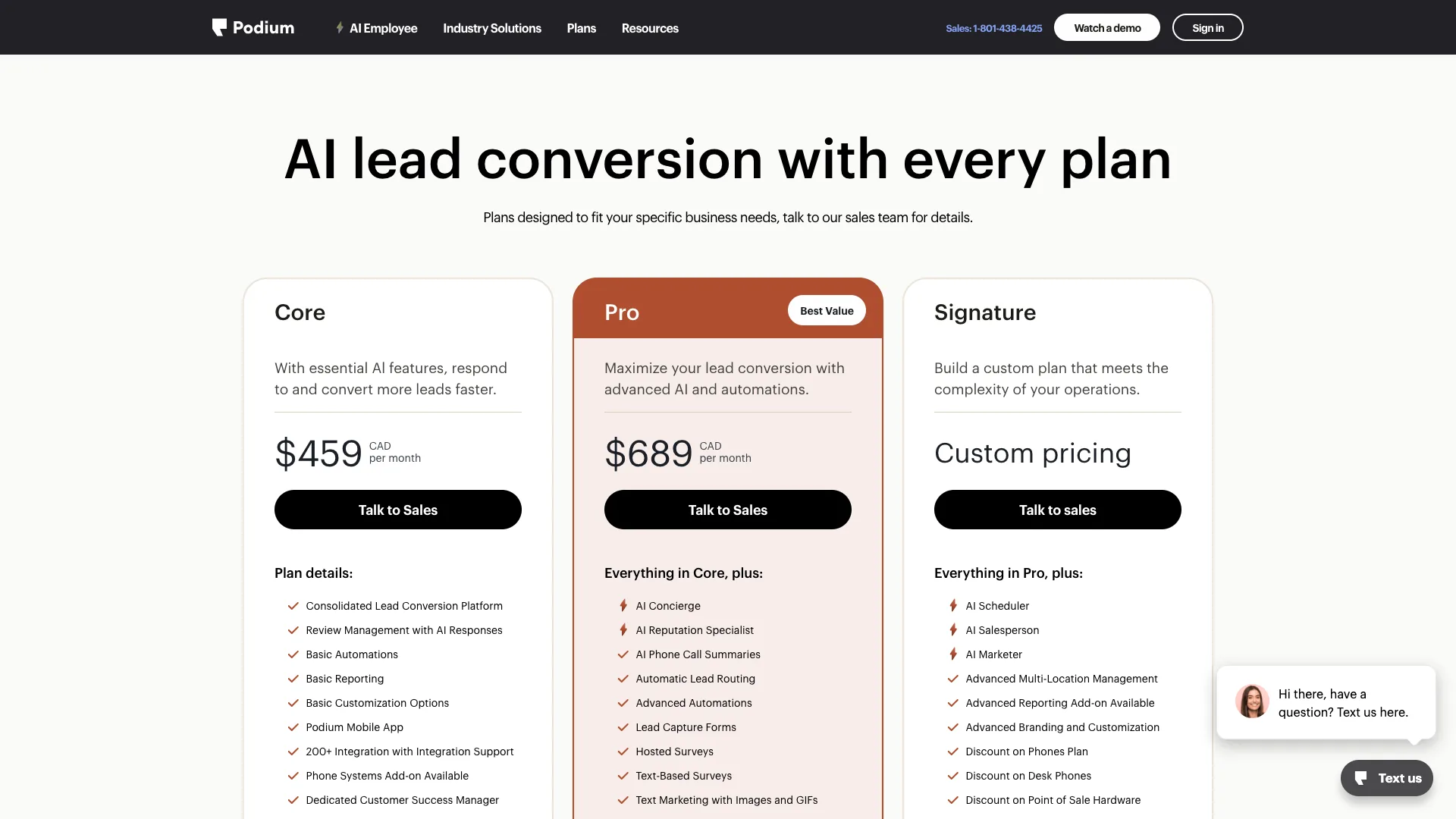 Jul 30, 2026
 Tech Stack
Podium vs Birdeye 2026: Pricing, Contracts and Review Gating
Only one of these two will tell you what it costs before a sales call, and even that number carries a carve-out aimed squarely at trade contractors.
Read Article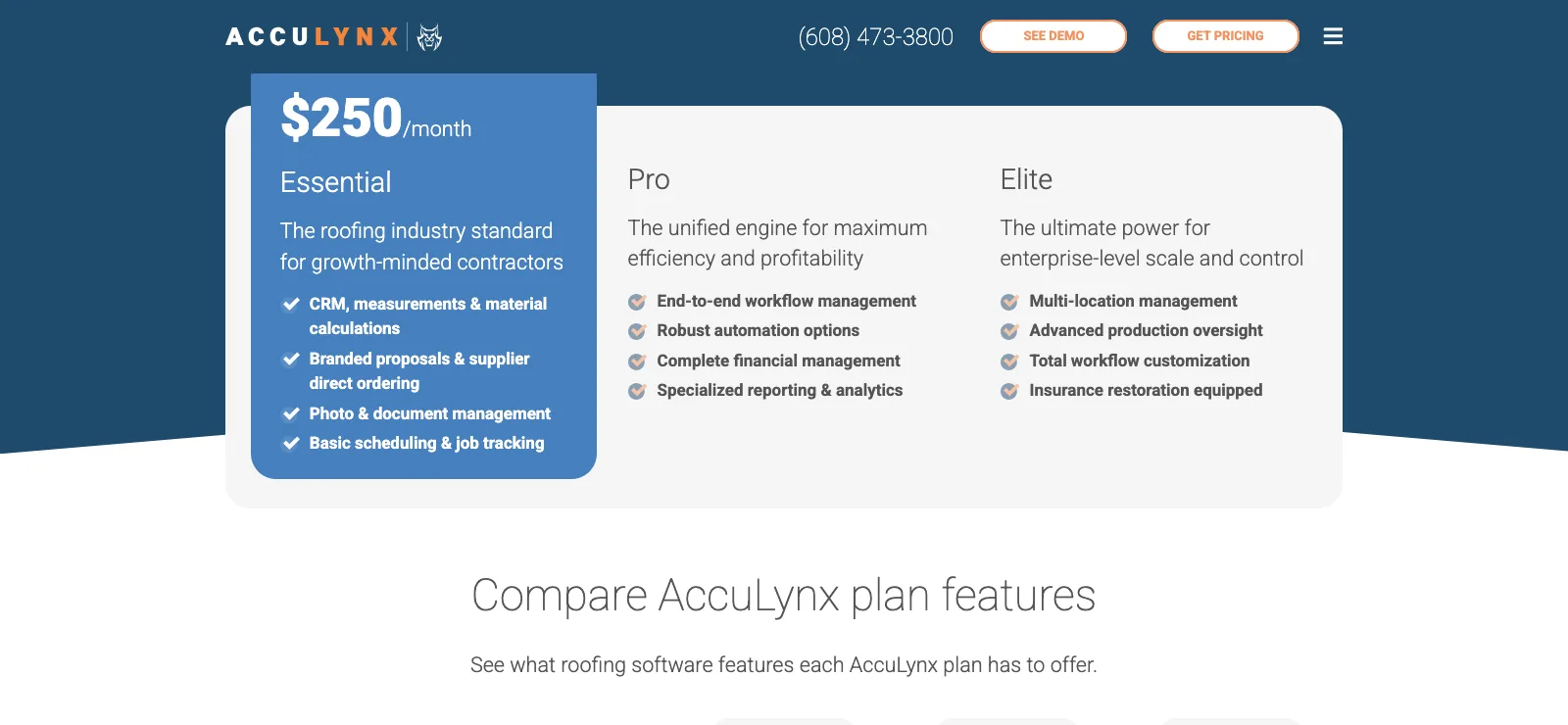 Jul 29, 2026
 Tech Stack
AccuLynx Pricing 2026: The Real Cost of a Quote-Gated Plan
One published figure, two blank plan cards, and a contract that says things the pricing page does not. A line-by-line teardown of what AccuLynx really bills.
Read Article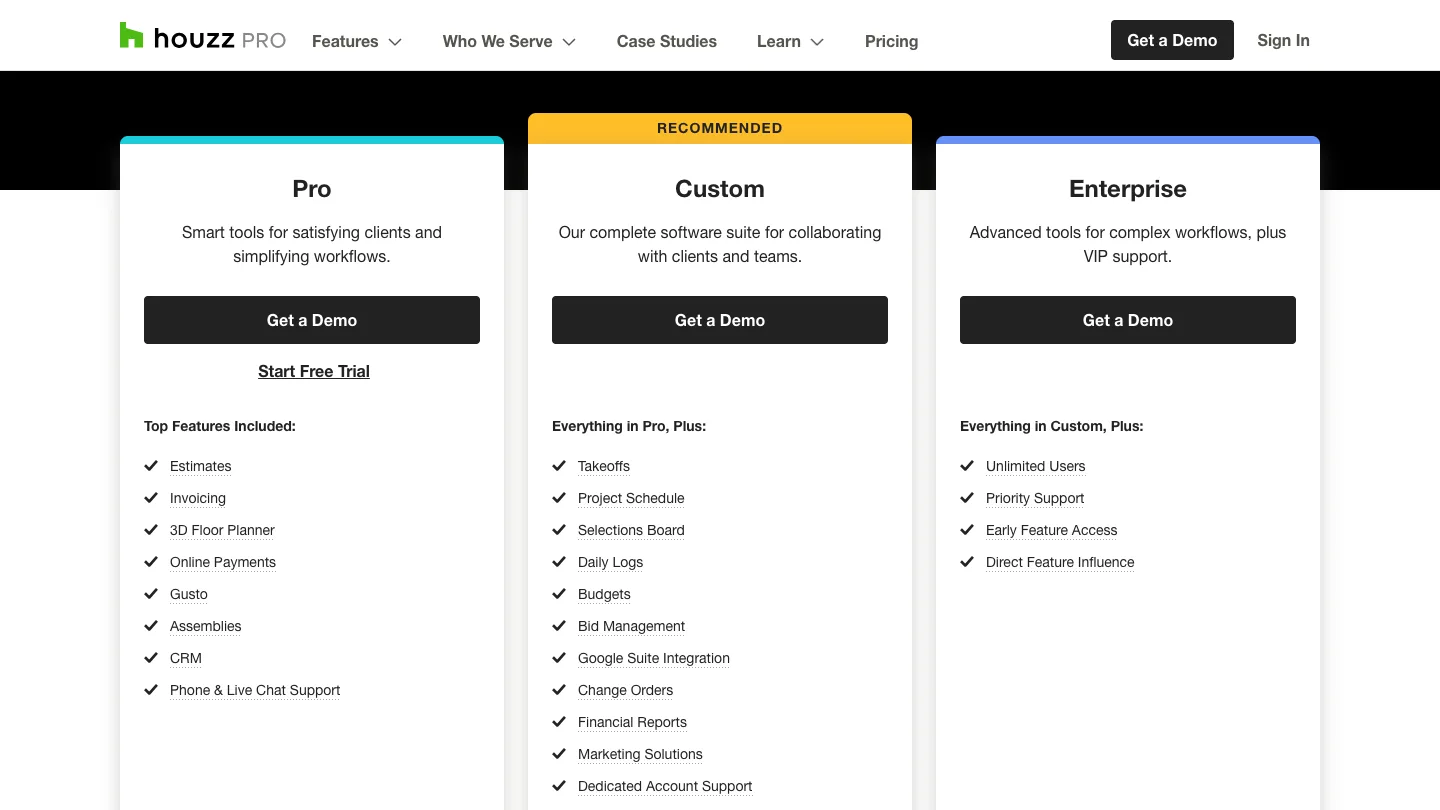 Jul 29, 2026
 Tech Stack
Houzz Pro Review 2026: Pricing, Tiers and Alternatives
Houzz Pro rates 4.3 on Capterra across 1,088 reviews and shows three plans with no price on any of them. What the entry tier leaves out, what the annual contract commits you to, and who should walk away.
Read Article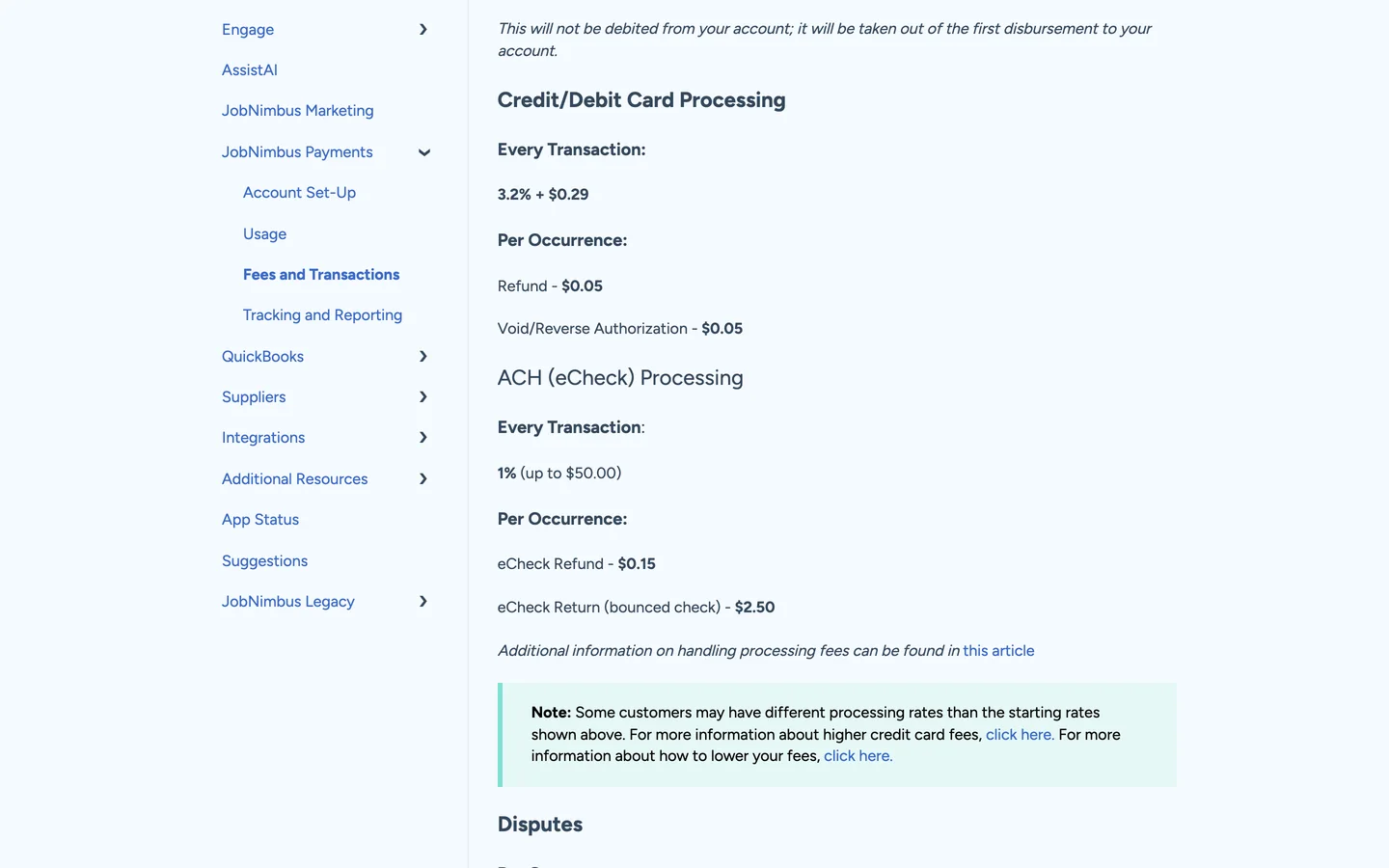 Jul 29, 2026
 Tech Stack
JobNimbus Pricing in 2026: What the Quote Does Not Cover
JobNimbus prints no figure on any of its four plans. So the only rate you can read before a sales call is the payments meter, and it is the biggest line on the bill.
Read Article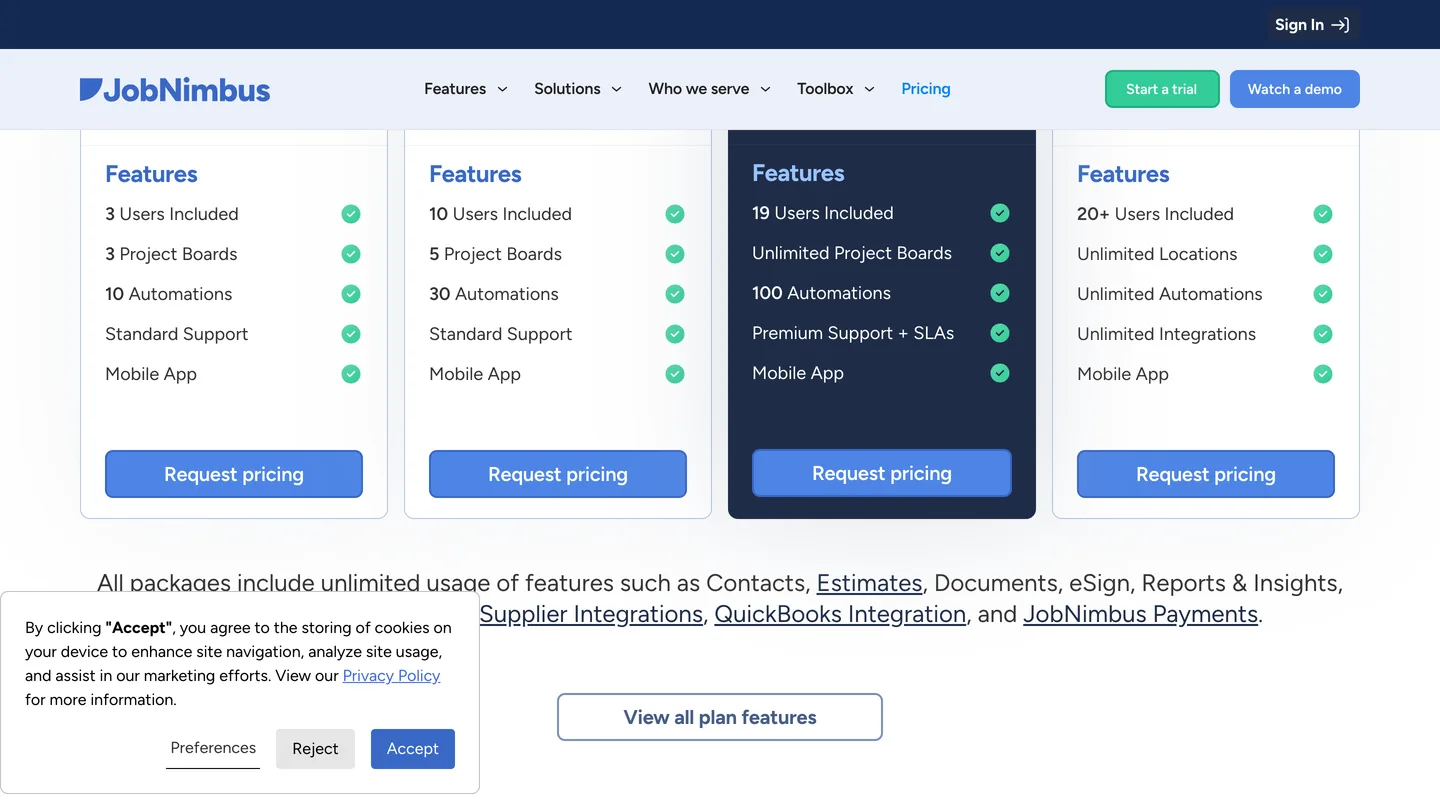 Jul 29, 2026
 Tech Stack
JobNimbus Review 2026: Pricing, Pros, Cons and Alternatives
JobNimbus rates 4.6 on Capterra and orders material straight from ABC Supply and SRS. But it publishes no price, and its supplement route carries a note.
Read Article Jul 29, 2026
 Tech Stack
BuildOps Review 2026: Pricing, Contract Terms and Alternatives
BuildOps runs commercial service and projects on one platform, and publishes no pricing at all. The billing unit, the 30-day data-export window, and who it suits.
Read Article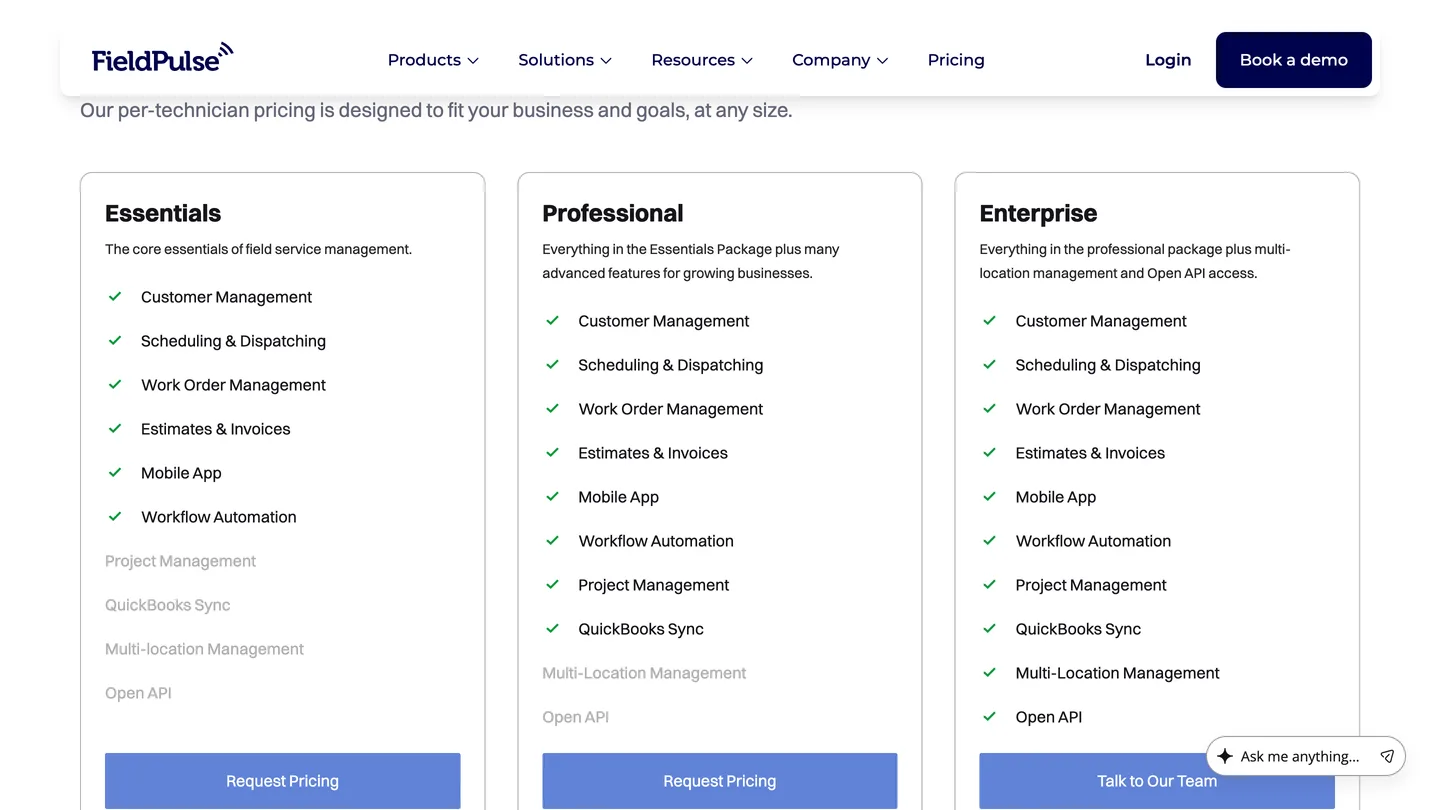 Jul 29, 2026
 Tech Stack
FieldPulse Review 2026: Pricing, Pros, Cons and Alternatives
FieldPulse rates 4.6 on Capterra and is the platform contractors name when they leave a bigger system. But it publishes no price, and the contract runs a year.
Read Article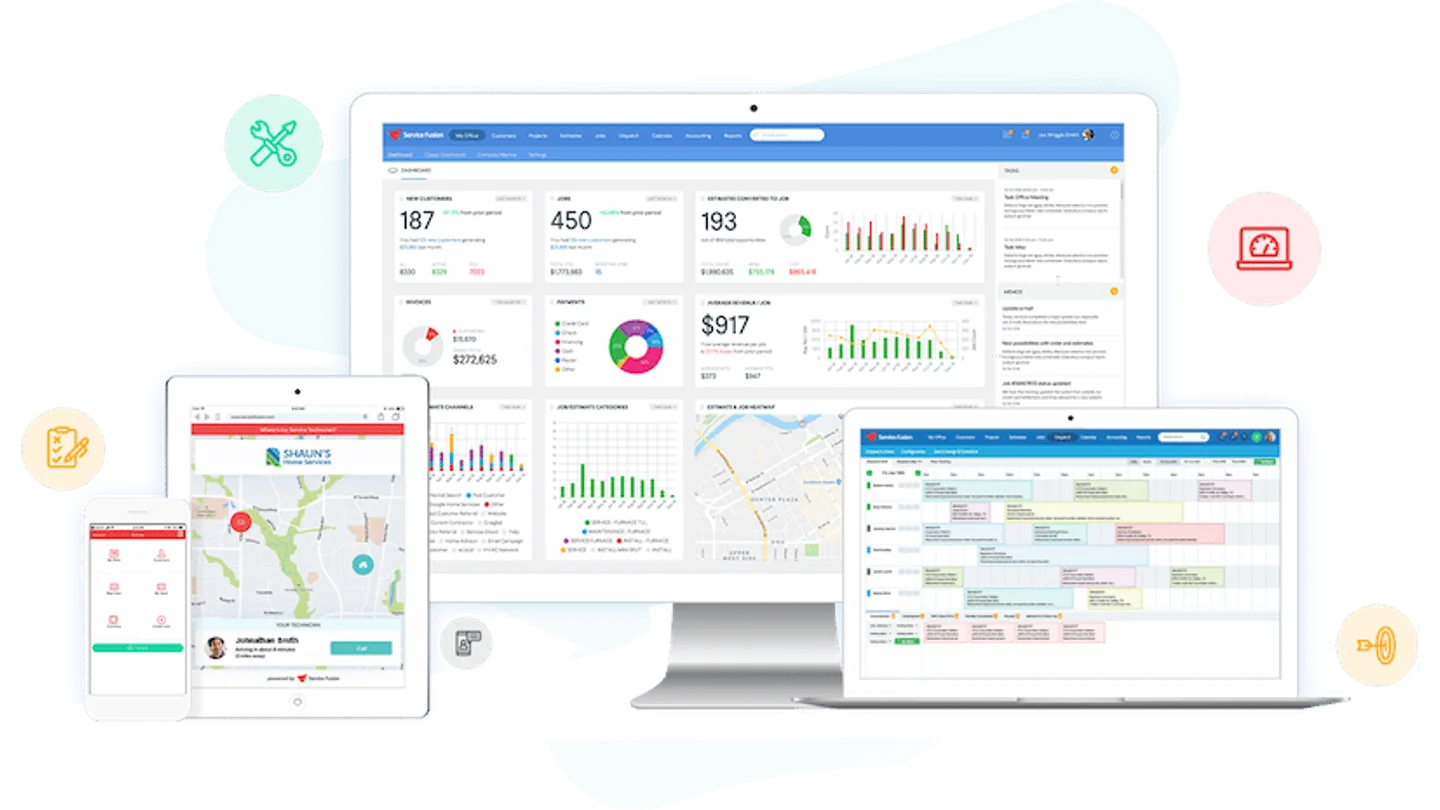 Jul 29, 2026
 Tech Stack
Service Fusion Review 2026: Pricing, Contract and Alternatives
Service Fusion bills flat per company with unlimited users, which is the best structural deal in field service software. The published plans, the contract behind the no-contract line, and the app score every other review gets wrong.
Read Article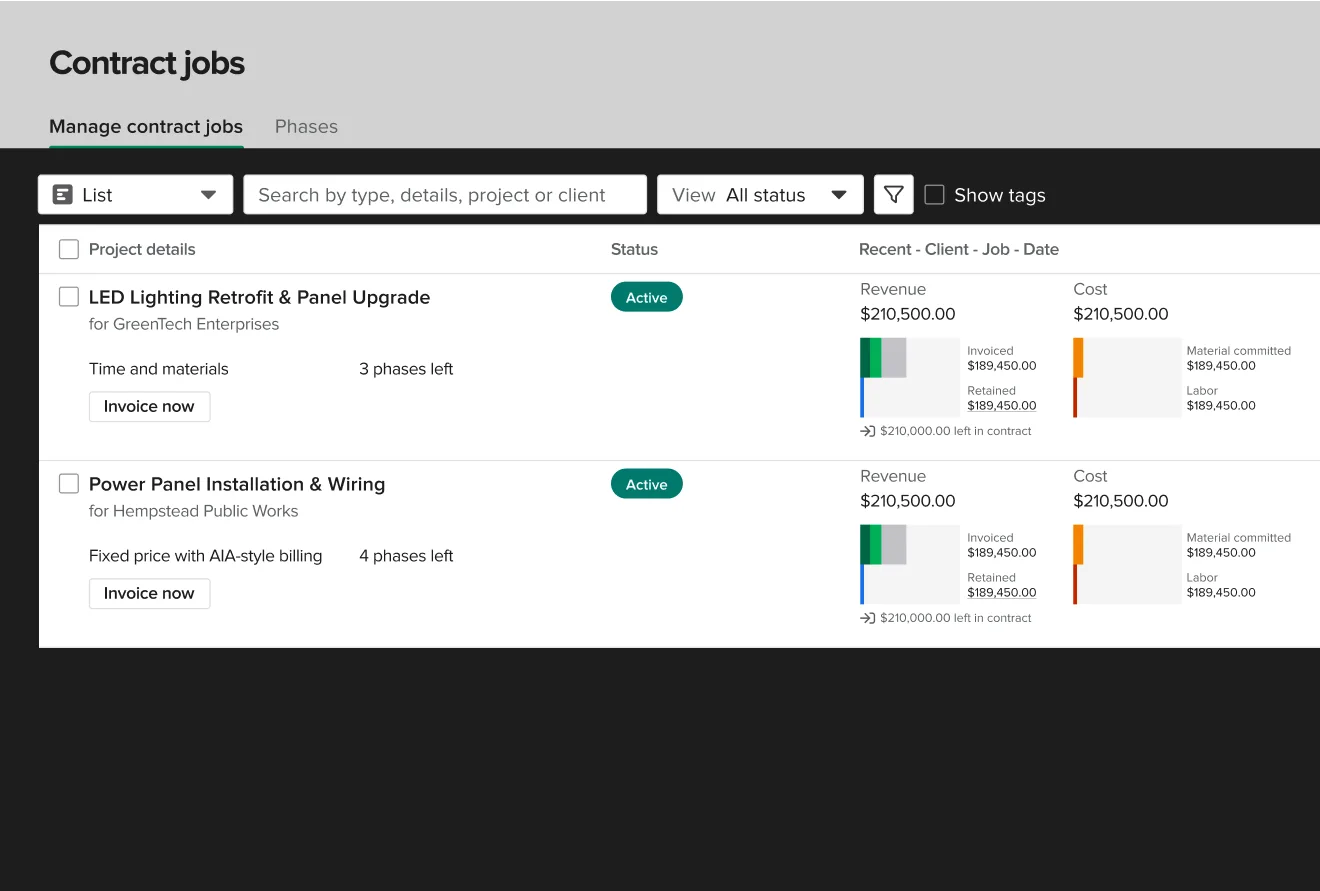 Jul 29, 2026
 Tech Stack
Knowify Review 2026: Pricing, Job Costing and Alternatives
Knowify rates 4.5 on Capterra and its weakest sub-score is features. What the $99 Core plan withholds, which way the QuickBooks sync really runs, and who should not buy it.
Read Article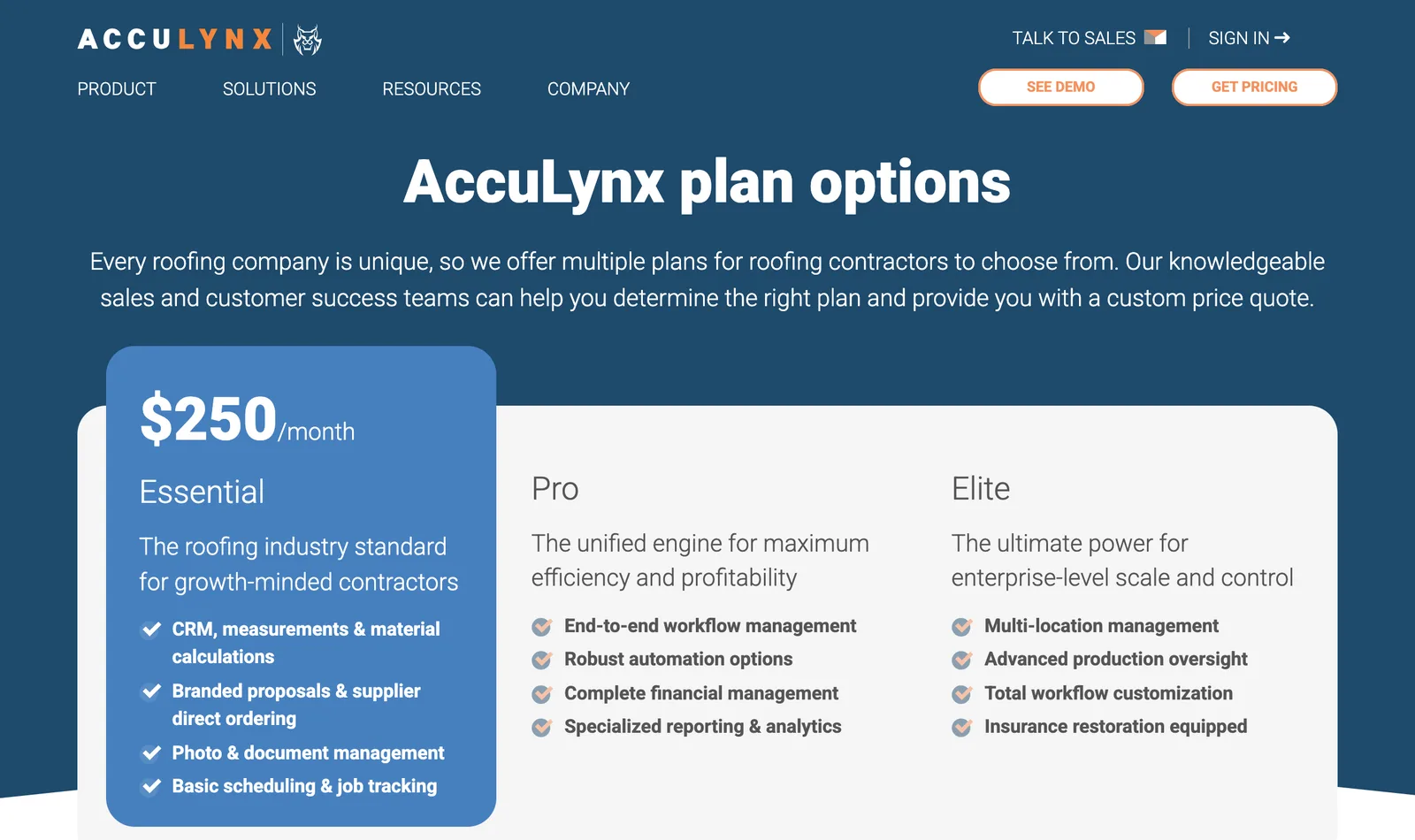 Jul 28, 2026
 Tech Stack
AccuLynx Review 2026: Pricing, Tier Gating, Alternatives
AccuLynx rates 4.6 across 846 reviews and now publishes an entry price. What that price omits, which tier holds the insurance workflow, and who should skip it.
Read Article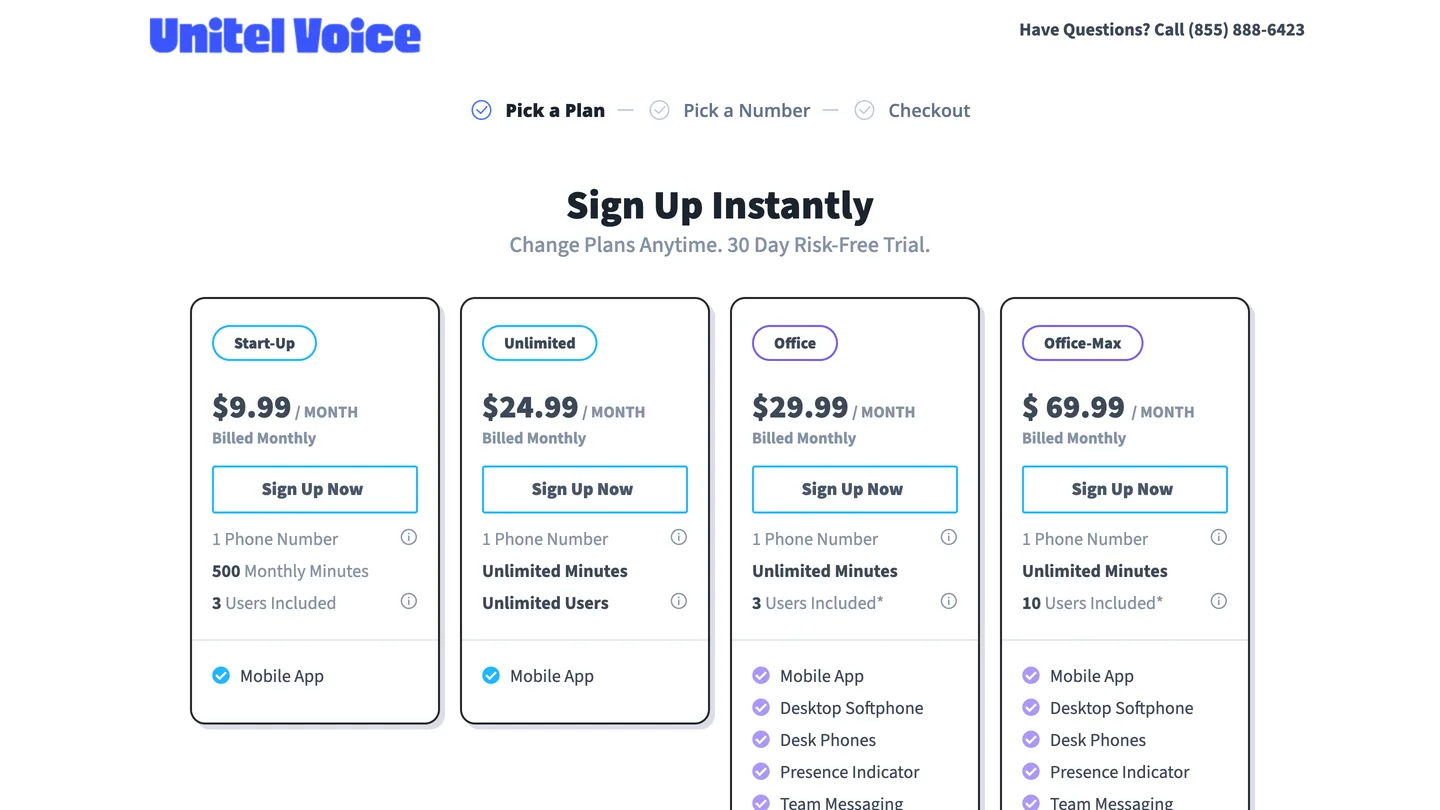 Jul 28, 2026
 Tech Stack
Unitel Voice Review 2026: Pricing, Features and Alternatives
Unitel Voice rates 4.6 on Capterra and gives a one-truck shop a business number for $9.99 a month. The published plans, the cost per call, and what it won't do.
Read Article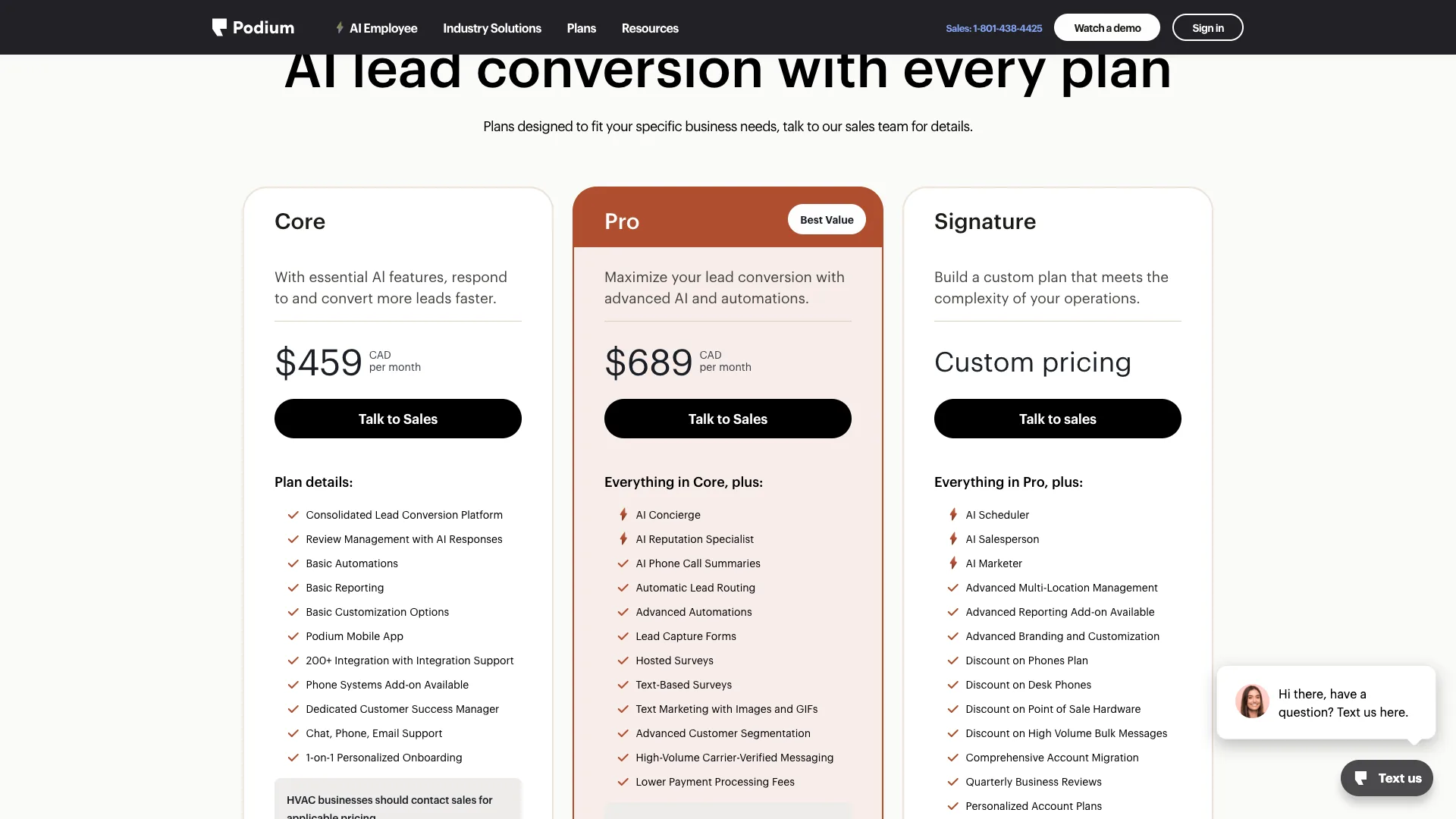 Jul 28, 2026
 Tech Stack
NiceJob vs Podium 2026: Pricing, Contracts and Review Gating
Both vendors print a price, at very different scale and in different currencies. The gap that matters is what Podium will not print: the billing unit, and whether a trade shop gets the number on the page.
Read Article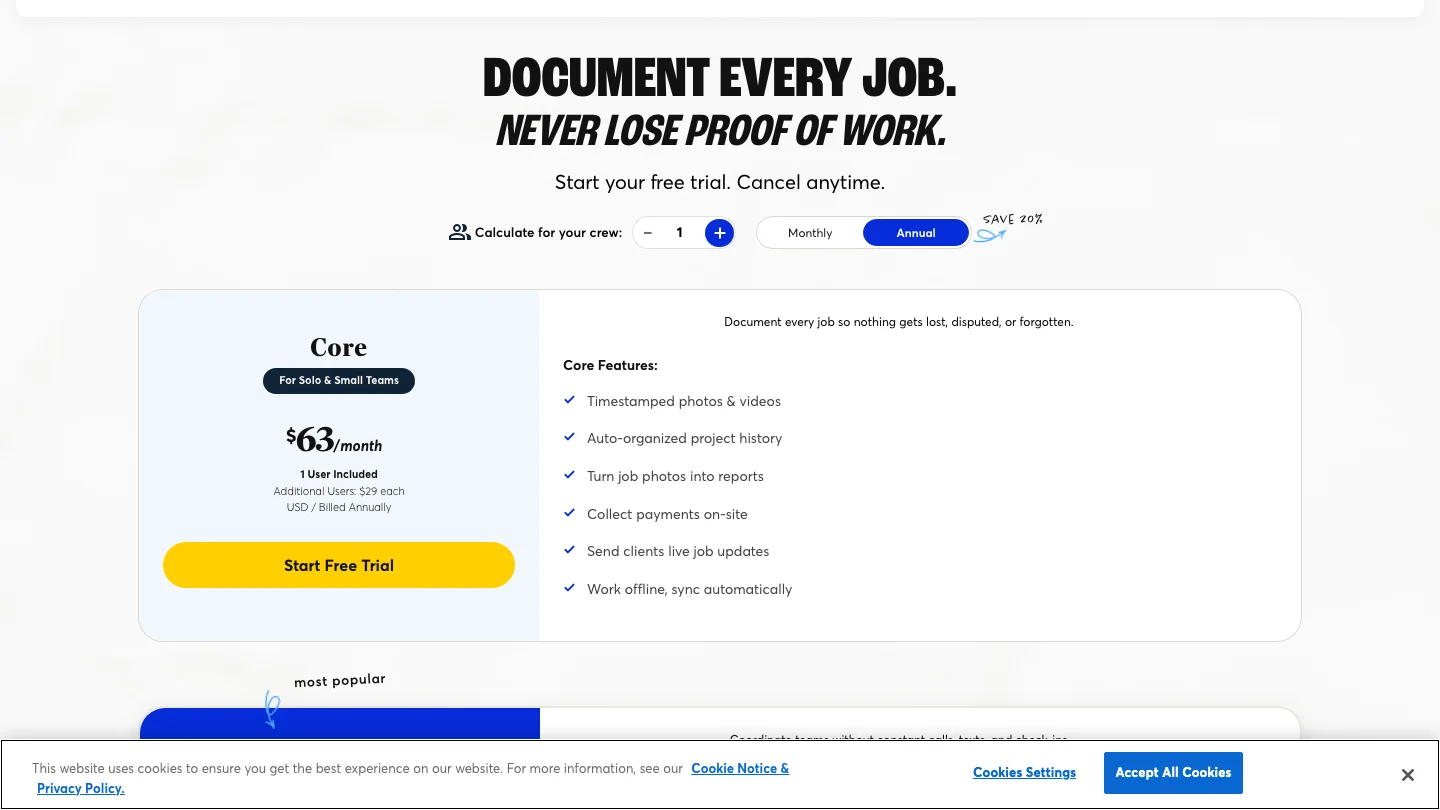 Jul 27, 2026
 Tech Stack
CompanyCam Review 2026: Pricing, Pros, Cons and Alternatives
Every page ranking for CompanyCam still quotes a per-user price the vendor no longer charges. Here are the real plans, the seat math, and who should skip it.
Read Article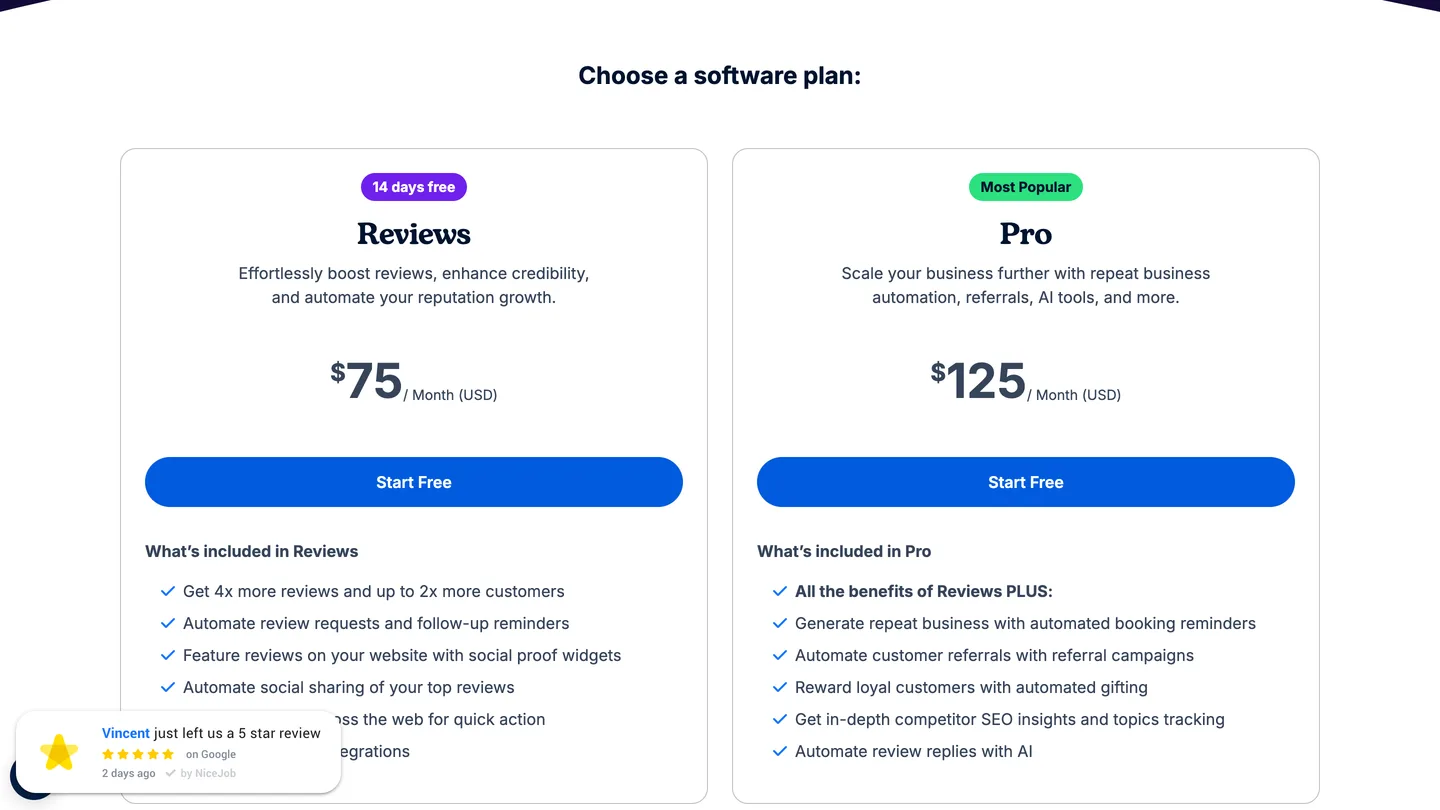 Jul 27, 2026
 Tech Stack
NiceJob Review 2026: Pricing, Pros, Cons and Alternatives
NiceJob rates 4.9 on Capterra and refuses to gate negative reviews. Real plan pricing, the active-customer threshold nobody publishes, and who should skip it.
Read Article Jul 26, 2026
 Tech Stack
Buildertrend Review 2026: Pricing, Limits and Alternatives
Buildertrend rates 4.5 across 2,486 Capterra reviews and quotes against your revenue rather than your seat count. The workflows, the export problem, the alternatives.
Read Article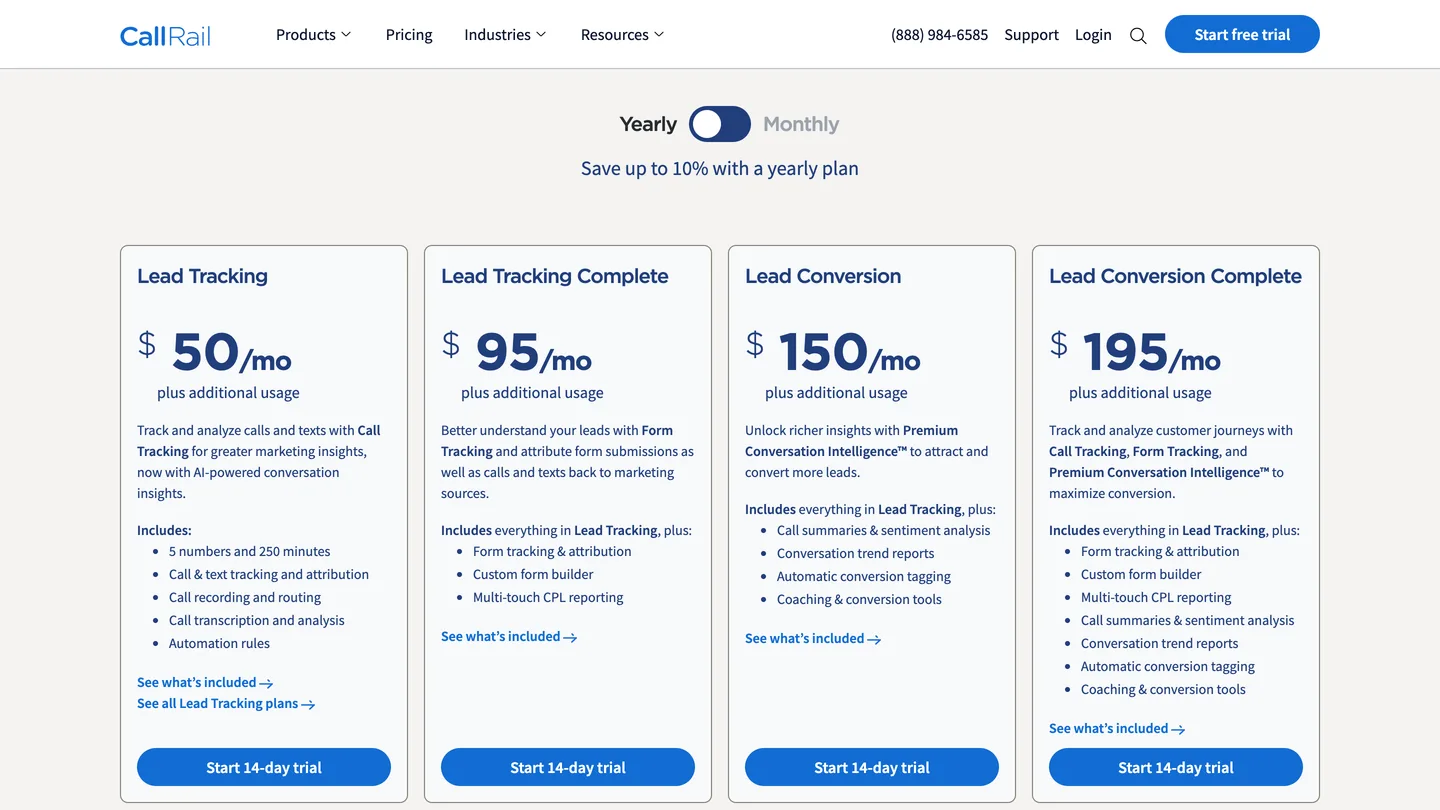 Jul 26, 2026
 Tech Stack
CallRail Review 2026: Pricing, Pros, Cons and Alternatives
CallRail rates 4.5 on Capterra, and its tracking numbers port out free. But the two usage rates that decide your real bill are the two it does not print.
Read Article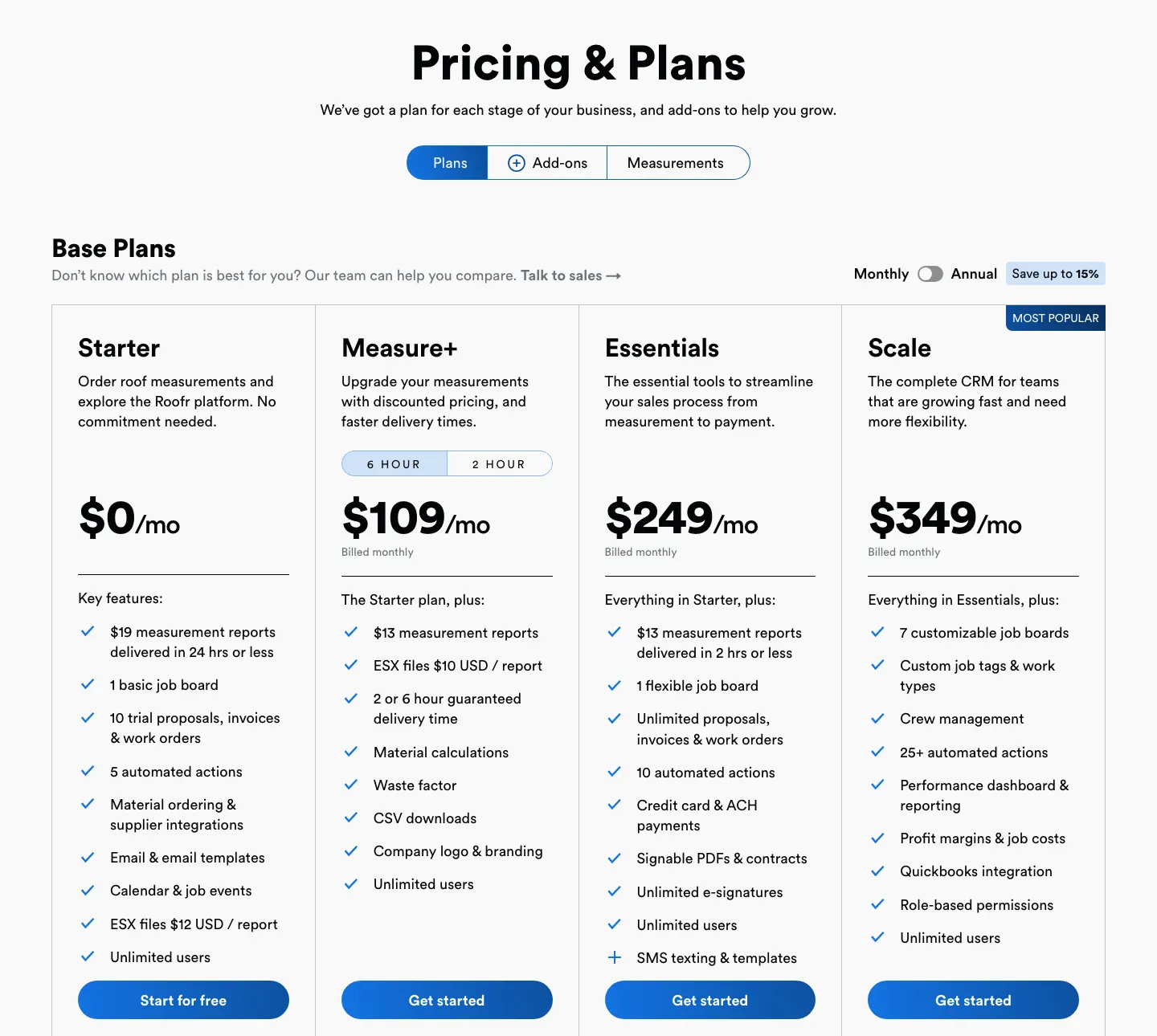 Jul 26, 2026
 Tech Stack
Roofr Review 2026: Pricing, Pros, Cons and Alternatives
Roofr rates 4.6 on Capterra and sells $13 measurement reports against a market charging triple. But it will not import a report from anywhere else.
Read Article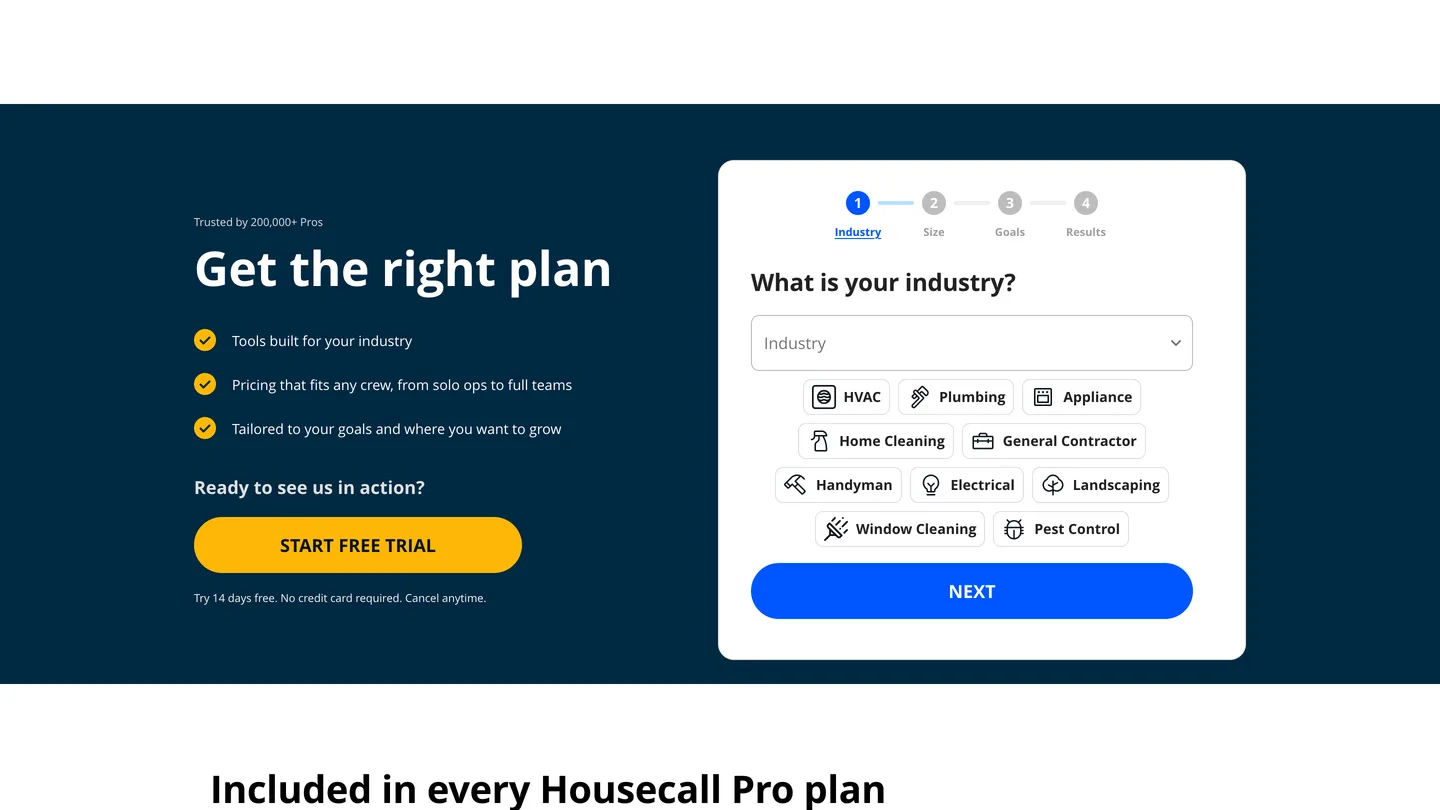 Jul 24, 2026
 Tech Stack
Housecall Pro Review 2026: Pricing, Pros, Cons, Alternatives
Housecall Pro has the shortest learning curve in the category and the widest review spread. Real pricing, the Instapay math, and the migration trap to plan around.
Read Article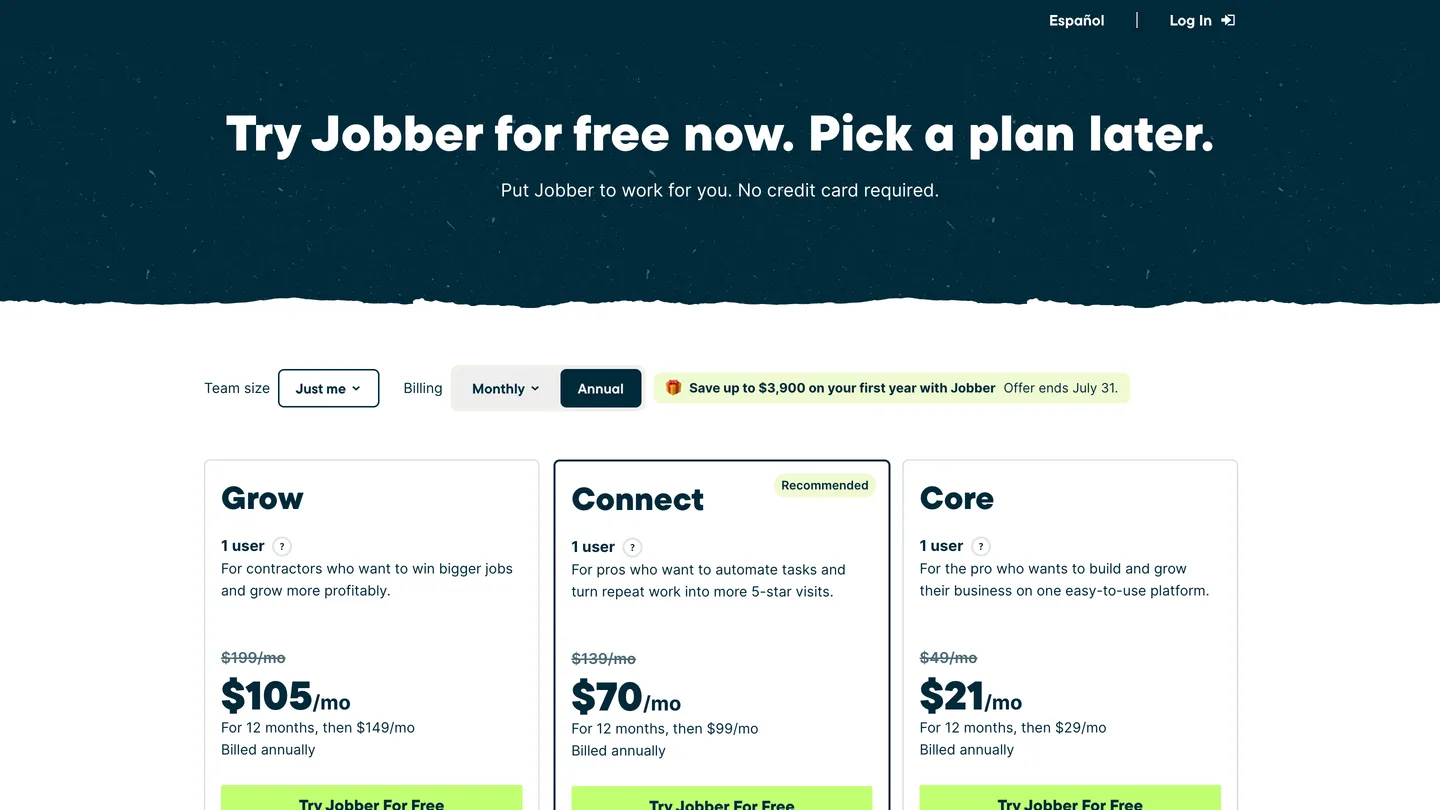 Jul 23, 2026
 Tech Stack
Jobber Review 2026: Pricing, Pros, Cons and Alternatives
Jobber rates 4.6 on Capterra with the best mobile app in the category. Real plan pricing, the feature gating that changes your entry price, and who it suits.
Read Article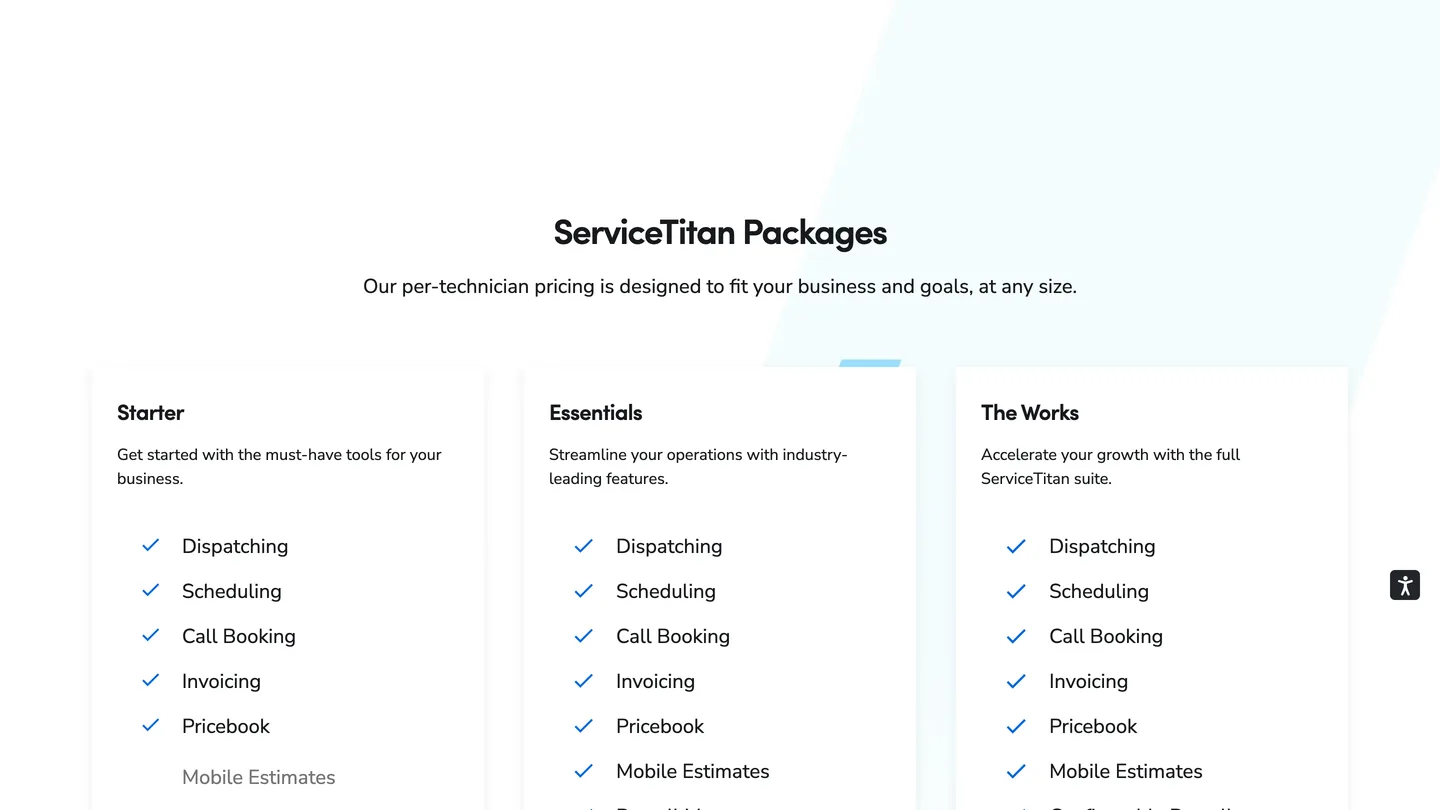 Jul 22, 2026
 Tech Stack
ServiceTitan Review 2026: Pricing, Pros, Cons, Alternatives
ServiceTitan rates 4.3 on Capterra but its weakest score is value for money. Real reported pricing, the 12-month contract, the exit fees, and who it actually suits.
Read Article Jun 2, 2026
 Tech Stack
HVAC Online Scheduling: The 43% Losing After-Hours Bookings
HVAC leads every trade on online booking at just 56.7%, which still leaves 43% of sites forcing an after-hours customer to wait for a business-hours phone call.
Read Article