Total Office Manager Review 2026: Pricing, Pros, Cons, Alternatives
Third-party contract data puts real numbers on Total Office Manager. The 9 gaps reviewers name, and 6 alternatives that publish a price upfront.
Disclosure This article features tools from our brand partners. If you choose to use them, we may receive compensation at no extra cost to you.
Our editorial choices are independent of these affiliate arrangements. Read our full affiliate disclosure.
Fervor is a CRO and web design studio, not a software reseller, and no vendor paid for placement here or for a kinder verdict. Affiliate links are flagged where they appear, and they never change what we report.
Page at a glance
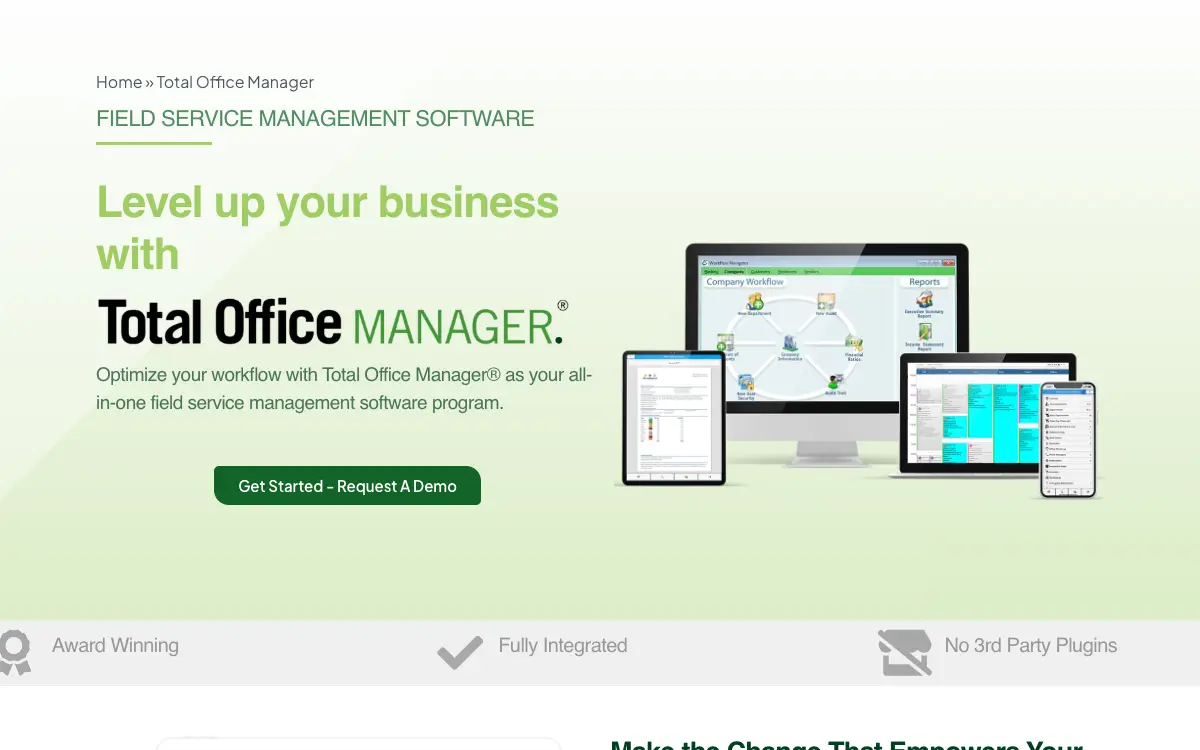
Total Office Manager is The rare field service platform that replaces your accounting system instead of syncing with it, sold as a licence rather than a seat subscription. It publishes no price, so the only way to get a number is to ask a salesperson for one. Concurrent, not named. Aptora's knowledge base states the software uses concurrent licensing where the maximum number of simultaneous users accessing the company file is capped by licences owned, and that logging into a company file with the same user name from two different computers counts as two users. With 10 licences and 20 employees configured, the 11th person is told their maximum user licence count has been reached. It fits Established residential service companies running roughly 10 to 50 office and field staff, doing high-volume repeat HVAC/plumbing/electrical service and maintenance agreements, that want to retire QuickBooks entirely and are willing to absorb a year-long implementation to get one database. It's the wrong buy for Solo operators and two-to-five-person crews who need to be running next week, because The entry economics don't work at this size. Even the cheapest hosted path carries a $2,000 to $2,500 setup fee before a single per-user dollar, migration is separately billable, and the implementation runs months. And a 2-10 employee facilities company publicly reported spending tens of thousands of dollars and never reaching activation. But a small crew wants time-to-value in days. Alternatives that publish their prices are Jobber from $49/month, Housecall Pro from $79/month, Kickserv from $60/month. Four priced tiers, nine evidenced gaps and six alternatives, four of which publish a figure.
Start here if Total Office Manager is on your shortlist
Total Office Manager earns its money with Established residential service companies running roughly 10 to 50 office and field staff, doing high-volume repeat HVAC/plumbing/electrical service and maintenance agreements, that want to retire QuickBooks entirely and are willing to absorb a year-long implementation to get one database. If that's you, it does the job. The sections below are the parts worth checking before you sign. But the fit is narrower than the marketing suggests, and the price isn't the whole cost.
The vendor publishes no price. But every number below was verified on 7 August 2026 and comes from a named third party that says which.
| Pricing model | Custom quote, no published price |
|---|---|
| Entry price | Quote only |
| Users | Concurrent, not named. Aptora's knowledge base states the software uses concurrent licensi |
| Ownership | Aptora Corporation |
| Best fit | Established residential service companies running roughly 10 to 50 office and field staff, doing high-volume repeat HVAC/plumbing/electrical service and maintenance agreements, that want to retire QuickBooks entirely and are willing to absorb a year-long implementation to get one database. |
| Accounting sync | QuickBooks (none), Built-in general ledger (Total Office Manager accounting) (two-way), Microsoft Excel (one-way) |
What works
- It owns the general ledger, which is the genuine differentiator and the genuine commitment
- You can still buy this outright and run it on your own server, which is now rare
- The mobile app is a separate product with separate licences, and reviewers say it behaves differently from the desktop
- A browser-based rebuild is underway and existing support-plan customers are told it costs nothing
- The public terms auto-renew and make fees non-refundable, but a vendor response claims cancel-anytime
What does not
- Aptora doesn't publish a price anywhere on its own site, and the page that should carry one is a placeholder
- Inventory and inventory accounting draw the most consistent, most specific complaints in the review corpus
- Implementation is measured in quarters, not weeks, and at least one buyer never got activated at all
- The support plan is what keeps the software current, and dropping it doesn't just cost you help desk access
- Update quality is the second recurring complaint, and it lands on people who can't verify it quickly
Total Office Manager is The rare field service platform that replaces your accounting system instead of syncing with it, sold as a licence rather than a seat subscription. It sells to Cross-trade and Electrical and HVAC and Plumbing contractors, and the shape of the product follows from that: Almost every competitor in field service management syncs to QuickBooks. But Aptora replaces it. Accounts payable, the chart of accounts, certified payroll and job costing all live in the same database as the work orders, which is why several reviewers describe going from three programs to one and being able to move from an AP entry to the schedule board in a couple of clicks with no import or export step. And the flip side is that you're trusting a field service vendor with your books.
Ownership matters here more than it usually does. Total Office Manager is owned by Aptora Corporation, so weigh roadmap risk alongside the feature list. An independent product can be bought and folded into somebody else's plan two years after you sign.
Who should be shortlisting Total Office Manager
It fits Established residential service companies running roughly 10 to 50 office and field staff, doing high-volume repeat HVAC/plumbing/electrical service and maintenance agreements, that want to retire QuickBooks entirely and are willing to absorb a year-long implementation to get one database. That's the half most reviews print. Here's the other half, which is the one worth your time.
Don't buy it if you're Solo operators and two-to-five-person crews who need to be running next week. The entry economics don't work at this size. Even the cheapest hosted path carries a $2,000 to $2,500 setup fee before a single per-user dollar, migration is separately billable, and the implementation runs months. And a 2-10 employee facilities company publicly reported spending tens of thousands of dollars and never reaching activation. But a small crew wants time-to-value in days. Look at Jobber instead.
Don't buy it if you're Commercial and new-construction contractors running multi-month projects with progress billing, retainage or AIA draws. A 51-200 employee construction customer states outright that Aptora is made for retail work and is a bad fit for long-term commercial projects, and that job costing doesn't give PMs accurate real-time job performance. And the product's centre of gravity is repeat service work and maintenance agreements. Look at Buildertrend instead.
Don't buy it if you're Companies whose bookkeeper, accountant or fractional CFO is committed to QuickBooks. Total Office Manager is a QuickBooks replacement with its own general ledger, not a QuickBooks integration. And that's the entire value proposition and also the entire risk. One reviewer's bookkeeper preferred QuickBooks after the switch; another reported inventory financials they couldn't trust. So if your finance function won't move, you get the migration cost without the single-database benefit. Look at ServiceTitan instead.
Don't buy it if you're Teams with no in-house IT and no appetite to administer SQL Server. The on-premise deployment runs on Microsoft SQL Server, and Aptora's own maintenance guidance warns that backing up the computer won't back up the company file unless a backup system is configured inside SQL Server. And reviewers also describe database performance problems on high-specification machines. So that's an IT workload, not a software subscription. Look at Housecall Pro instead.
Pricing: what Total Office Manager publishes and what it doesn't
Open the pricing page and count the dollar figures. There aren't any. Total Office Manager keeps its numbers behind a sales call, and that's the first thing worth knowing before you book one.
The vendor's own wording is this, and nothing more: "Aptora's own pricing page is a placeholder. As of 2026-08-07 the URL that the site's navigation points to for pricing publishes no figures at all." So treat every third-party page printing tier names and figures for Total Office Manager with careful suspicion. Those numbers are not on the vendor's site today, and a roundup that reprints them is telling you what Total Office Manager used to charge somebody else.
And we aren't going to print a per-month number we can't open a vendor page and read. What exists instead is third-party reporting, dated, from people who saw real contracts. Read it as a range rather than as a quote you can hold anyone to.
| Reported range | Reported on | Source |
|---|---|---|
| $125.00 - $175.00 per user, plus $2,000 - $2,500 setup | 2026-08-07 | Hosted Enterprise Edition: $2,500 initial setup fee plus $175.00 per user. Hosted Mobile App: $2,000 one-time setup fee plus $125.00 per user licence. |
| $10,000 - $12,500 one-time licence | 2026-08-07 | On Premise Enterprise Edition: $12,500 with 5 users included and $1,000 for each additional user, as a one-time fee. On-Premise Mobile App: $10,000 with 10 user licences included and $500.00 for each additional. |
| $125.00 - $175.00 per user | 2026-08-07 | Software Advice lists the starting price as $125.00 per user for mobile and $175.00 per user for desktop across 2 plans, with the note that full pricing is available upon request. |
| $1,200 training seat; $8,000 rushed migration | 2026-08-07 | Aptora's own vendor response to a public review discloses two service prices directly: a $1,200 ticket to Aptora University and a rushed migration service valued at $8,000, both given as goodwill accommodations to that customer. |
Concurrent, not named. Aptora's knowledge base states the software uses concurrent licensing where the maximum number of simultaneous users accessing the company file is capped by licences owned, and that logging into a company file with the same user name from two different computers counts as two users. With 10 licences and 20 employees configured, the 11th person is told their maximum user licence count has been reached.
What isn't in the Total Office Manager number you get quoted
Payment processing. Ask for the card-present and card-not-present processing rates on Aptora's integrated payments, whether you may bring your own merchant account, and whether declining their processor changes the software price.
Implementation and onboarding. Migration and training are priced separately and are not trivial. In a public vendor response Aptora describes giving one customer "a $1,200 ticket to Aptora University and a free rushed migration service valued at $8,000" as an accommodation, which establishes both as normally billable line items.
Minimum term. Aptora's Terms of Use specify no minimum term and defer to "the applicable subscription agreement or written contract." So ask for that contract before signing and read the term length out of it, because the public terms won't tell you.
Getting out. Fees paid are not recoverable. The Terms of Use state "Fees are non-refundable except as required by law or expressly stated in a written agreement," and the EULA states "Software licenses are not refundable after thirty (30) calendar days from the original invoice date." Separately, a vendor response to a public review claims "we offer a cancel-anytime policy."
Auto-renewal. Yes. The Terms of Use state "Subscriptions automatically renew for successive renewal periods unless either party provides notice of non-renewal in accordance with the applicable subscription agreement or contract." The notice window itself lives in the private contract, not the public terms.
Modules sold separately. , , , . But the entry tier is not the price you'll pay. Add the modules your shop needs on day one and compare Total Office Manager on that total.
Third-party services you will also pay for. , . These are not on Total Office Manager's invoice, and they are still part of what this decision costs you every month.
"Third-party reporting puts Total Office Manager at $125.00 - $175.00 per user, plus $2,000 - $2,500 setup, reported 2026-08-07."
Hosted Enterprise Edition: $2,500 initial setup fee plus $175.00 per user. Hosted Mobile App: $2,000 one-time setup fee plus $125.00 per user licence. (8-07)
Side note, and it's a useful one: the setup fee is charged on the hosted subscription, not just the perpetual licence, and it's charged twice if you want technicians in the field. A ten-person shop with six office seats and four technicians is looking at $4,500 in setup fees before month one, on top of roughly $1,550 a month in user licences, and none of that includes migration or training. So buyers who benchmark this against a $199/month Jobber Grow plan are comparing the wrong numbers. And ask for the fully loaded twelve-month cost including setup, migration, training and support plan.
The Total Office Manager line items nobody mentions
The subscription is the part everyone quotes. These are the lines that land afterwards, and the ones we could not find are named as unpublished rather than left blank.
Sold separately. , , , . Price the configuration you'll really run, because an add-on you need on day one is part of the price.
Third-party services you'll also pay for. , . None of these are on Total Office Manager's invoice, and all of them are part of what this decision costs every month.
"Total Office Manager answers the question of what it costs with this and nothing else: "Aptora's own pricing page is a placeholder. As of 2026-08-07 the URL that the site's navigation points to for pricing publishes no figures at all.""
Total Office Manager pricing page (2026)
"Total Office Manager Hosted - Enterprise Edition (desktop user) is $175/month, per user."
Total Office Manager pricing page (2026)
"Total Office Manager Hosted - Mobile App (Aptora Mobile II user) is $125/month, per user."
Total Office Manager pricing page (2026)
The five workflows you pay for
Feature totals are noise. So a shop in this category lives or dies on five things, and those are the five to grade, and each one below carries the evidence it's graded on.
It owns the general ledger, which is the genuine differentiator and the genuine commitment Almost every competitor in field service management syncs to QuickBooks. But Aptora replaces it. Accounts payable, the chart of accounts, certified payroll and job costing all live in the same database as the work orders, which is why several reviewers describe going from three programs to one and being able to move from an AP entry to the schedule board in a couple of clicks with no import or export step. And the flip side is that you're trusting a field service vendor with your books. On 2019-05-13, an operations manager, construction, 1-2 years (15 months per review text) on the platform, reports it: "There is a steep learning curve with a software system this complex, but the end results is very, very good. Aptora is a great company with which to partner, especially when you are working to grow your business as we are."
You can still buy this outright and run it on your own server, which is now rare Aptora sells an on-premise perpetual licence at $12,500 with five users included alongside the hosted per-user option. One reviewer explicitly bought it for that reason, describing the ability to buy it and not rent it as the thing they valued most, and framing cloud-only field service software as holding a business hostage. And that's a minority view in 2026, but it's a real buying criterion for owners who think about exit value and data custody.
The mobile app is a separate product with separate licences, and reviewers say it behaves differently from the desktop Aptora Mobile II is priced and licensed apart from the desktop system, $125 per user hosted or $10,000 on-premise with ten seats. And more than one reviewer describes behavioural inconsistency between the two, most concretely that editing an invoice on the desktop can complete the work order silently while the mobile app prompts first. Reviewers also flag that the mobile menu exposes more than a technician needs. A vice president, construction, 11-50 employees, Less than 6 months on the platform, reports it it plainly: "The migration process is bumpy (we are on day 3 of using the software, training since September). I would suggest spending the extra money on bringing someone to your location for your Go Live week... be sure to plan this up front rather than waiting."
A browser-based rebuild is underway and existing support-plan customers are told it costs nothing Aptora's roadmap FAQ describes Total Office Manager Next Gen as a true 100% webapp reached through a browser rather than an RDP connection, with single sign-on and two-factor authentication, phased to hosted customers from late May 2025. Crucially it states no migration will be needed because both programs use the same database, and that customers with continuous service agreement coverage receive Next Gen at no charge. But on-premise has no stated release date.
The public terms auto-renew and make fees non-refundable, but a vendor response claims cancel-anytime Aptora's Terms of Use say subscriptions automatically renew for successive renewal periods absent notice of non-renewal, and that fees are non-refundable except as required by law or expressly stated in a written agreement. And the EULA closes the refund window at thirty calendar days from the original invoice date. Yet Aptora's own public reply to a dissatisfied customer says they offer a cancel-anytime policy. So those aren't the same commitment, and only one of them is enforceable.
Total Office Manager per trade, not per company size
Fit differs by trade rather than by company size alone, and a blended paragraph hides that. Here is the split for the trades this one sells to.
Cross-trade. The workflow that decides it is it owns the general ledger, which is the genuine differentiator and the genuine commitment, and the shop profile that gets value is 16 to 60 people, high-volume residential service and maintenance agreements doing residential and service and commercial work. Where it stops being a fit is Solo operators and two-to-five-person crews who need to be running next week.
Electrical. The workflow that decides it is it owns the general ledger, which is the genuine differentiator and the genuine commitment, and the shop profile that gets value is 16 to 60 people, high-volume residential service and maintenance agreements doing residential and service and commercial work. Where it stops being a fit is Solo operators and two-to-five-person crews who need to be running next week.
HVAC. The workflow that decides it is it owns the general ledger, which is the genuine differentiator and the genuine commitment, and the shop profile that gets value is 16 to 60 people, high-volume residential service and maintenance agreements doing residential and service and commercial work. Where it stops being a fit is Solo operators and two-to-five-person crews who need to be running next week.
Plumbing. The workflow that decides it is it owns the general ledger, which is the genuine differentiator and the genuine commitment, and the shop profile that gets value is 16 to 60 people, high-volume residential service and maintenance agreements doing residential and service and commercial work. Where it stops being a fit is Solo operators and two-to-five-person crews who need to be running next week.
The Total Office Manager accounting link, and where it stops
QuickBooks connects, on every plan. Built-in general ledger (Total Office Manager accounting) connects both ways, on every plan. Microsoft Excel connects one way only, so edits made in your books do not come back, on every plan. Your costs map through cost codes, so test yours against your own chart of accounts before you commit. A code your books don't recognise is how a labour charge quietly lands somewhere useless.
Past those, the road ends. Third-party marketplace, Customer self-service portal, Public developer API do not connect. So if your books run on an ERP rather than the platforms named above, weigh that before anything else.
Beyond accounting it connects to Microsoft Outlook (Email and calendar. Reviewers report friction here, with one noting issues emailing through Total Office Manager and Outlook.), Microsoft Azure (Cloud infrastructure underpinning the hosted deployment.), BrightGauge (External business metrics dashboards and reporting.), RevuKangaroo (Online reputation and review generation.), Flat Rate Plus (Aptora's own flat rate pricing book product, which Total Office Manager reads from for field pricing.). A public API exists: No public API documentation or developer portal was found on aptora.com. Aptora lists custom programming among its professional services rather than offering self-serve API access, and the counted integration list of 5 partners is consistent with a closed platform.
Total Office Manager support, and what it costs you
Support is the line item nobody prices and everybody eventually needs. Onboarding for Total Office Manager: Migration and training are priced separately and are not trivial. In a public vendor response Aptora describes giving one customer "a $1,200 ticket to Aptora University and a free rushed migration service valued at $8,000" as an accommodation, which establishes both as normally billable line items.
And an office manager, construction, 11-50 employees, Less than 6 months on the platform, writing on 2021-02-11, reports it the same thing: "Understaffed tech support that closes at 4pm central including when the server went down on us."
Total Office Manager contracts, and getting out
Nobody reads this section before they buy, and it's the one that costs money afterwards. Four terms decide what leaving looks like.
Minimum term. Aptora's Terms of Use specify no minimum term and defer to "the applicable subscription agreement or written contract." So ask for that contract before signing and read the term length out of it, because the public terms won't tell you.
Auto-renewal. Yes. The Terms of Use state "Subscriptions automatically renew for successive renewal periods unless either party provides notice of non-renewal in accordance with the applicable subscription agreement or contract." The notice window itself lives in the private contract, not the public terms.
Early termination. Fees paid are not recoverable. The Terms of Use state "Fees are non-refundable except as required by law or expressly stated in a written agreement," and the EULA states "Software licenses are not refundable after thirty (30) calendar days from the original invoice date." Separately, a vendor response to a public review claims "we offer a cancel-anytime policy."
Payment processing. Ask for the card-present and card-not-present processing rates on Aptora's integrated payments, whether you may bring your own merchant account, and whether declining their processor changes the software price.
Small thing that turns out to matter. Aptora's public cancel-anytime claim isn't in either of its two public legal documents. A marketing statement in a review reply isn't a contract term. So if cancel-anytime is what convinced you to sign, it needs to appear in the subscription agreement with a stated notice period, or it doesn't exist. And this is a one-sentence redline that costs nothing to ask for and everything to skip.
"Concurrent, not named. Aptora's knowledge base states the software uses concurrent licensing where the maximum number of simultaneous users accessing the company file is capped by licences owned, and that logging into a company file with the same user name from two different computers counts as two users. With 10 licences and 20 employees configured, the 11th person is told their maximum user licence count has been reached."
Total Office Manager pricing page (2026)
"Total Office Manager is reported at $125.00 - $175.00 per user, plus $2,000 - $2,500 setup as of 2026-08-07."
Hosted Enterprise Edition: $2,500 initial setup fee plus $175.00 per user. Hosted Mobile App: $2,000 one-time setup fee plus $125.00 per user licence. (8-07)
"Total Office Manager is reported at $10,000 - $12,500 one-time licence as of 2026-08-07."
On Premise Enterprise Edition: $12,500 with 5 users included and $1,000 for each additional user, as a one-time fee. On-Premise Mobile App: $10,000 with 10 user licences included and $500.00 for each additional. (8-07)
The Total Office Manager gaps worth raising on the call
So here's what breaks, sourced to the person who hit it.
Aptora doesn't publish a price anywhere on its own site, and the page that should carry one is a placeholder The URL Aptora's navigation points to for pricing renders only "Coming Soon" and "This page is currently under construction." So every dollar figure in circulation comes from third-party directories, not from the vendor. And that matters more than usual here because the product is sold in four different shapes at once, hosted per-user and on-premise perpetual, with four-figure setup fees attached to each, so a buyer can't even work out which pricing model applies to them without a sales call. Ask for a written quote that separates four things on one page: licence or per-user fee, setup fee, migration fee, and the annual support plan. Then ask which of those recur and which are one-time.
Inventory and inventory accounting draw the most consistent, most specific complaints in the review corpus This is the one theme that repeats across unrelated reviewers over multiple years: average-cost-only valuation with no LIFO or FIFO, no ability to buy in one unit of measure and sell in another, awkward multi-branch inventory, and in one long-tenured customer's account, an inventory trial balance that didn't reconcile to the inventory valuation report. And for a contractor whose whole reason for buying is one database instead of two, an inventory ledger you can't trust undoes the premise. A president, medical devices who reviewed it on 2019-05-31 reports it: "Very, very poor. We're been using this program since 2011 and they still haven't solve basic inventory accounting problems/bugs. We totally regret going with this company." Before signing, put a scripted demo in front of them: buy 20 feet of pipe on a PO, sell it by the foot, transfer stock between two warehouses, then run the inventory trial balance and the inventory valuation report and ask them to reconcile the two on screen.
Implementation is measured in quarters, not weeks, and at least one buyer never got activated at all A long-tenured happy customer tells you to expect a year or more to fully integrate it. And a newer buyer describes training starting in September and still calling the migration bumpy on day three of live use. At the other end, a 2-10 employee facilities company reported spending tens of thousands of dollars and never reaching activation across three separate target dates. So that spread means the implementation risk is real and it isn't evenly distributed by company size. A president, construction, 2+ years on the platform, reports it it plainly: "Like all software, there is a learning curve. Expect a year or more to fully integrate it into your business." Get the go-live date, the named implementation lead, and the remedy for a missed date written into the order form. And ask specifically what happens to your money if activation slips two quarters.
The support plan is what keeps the software current, and dropping it doesn't just cost you help desk access The EULA is explicit that a customer without an active support plan may keep using the licensed software but may not receive software updates, security patches, or payroll tax table updates. And payroll tax tables are the one that bites, because a payroll module frozen at last year's tax tables is a compliance problem, not a cost saving. So the perpetual licence is only nominally perpetual in any year you run payroll. Price the support plan as a mandatory recurring cost, not an optional one. And get its annual escalation cap in writing.
Update quality is the second recurring complaint, and it lands on people who can't verify it quickly Multiple reviewers across several years describe updates that break a working report or feature, sometimes discovered days or weeks later. One reviewer who otherwise rates the product five stars says plainly that when updates are pushed out, something will sometimes break and you don't find it until later. And a less forgiving reviewer describes a weekly cycle of fixing previous bugs and introducing new ones. So on a system that also owns your general ledger, a broken report isn't cosmetic. And a president, consumer services, 2+ years on the platform, writing on 2020-05-13, writes the same thing: "Software always has problems, never fully works, they are always updating every week to fix previous bugs and glitches only to introduce new bugs and glitches. Nice concept but the programming isn't there. I would recommend going with another option. I'm only still using it because I spent so much money on it." Ask whether hosted customers can defer an update, whether there is a test company file you can update first, and what the rollback path is.
It's a poor fit for long-duration commercial project work, by its own users' account A 51-200 employee construction reviewer states directly that Aptora is made for retail work and is a bad fit for long-term commercial projects, and that job costing doesn't give project managers accurate real-time job performance. And the product's strength is high-volume repeat service and maintenance agreements. So progress billing, retainage, AIA-style draws and multi-month WIP aren't what this design centre is optimised for. On 2019-05-13, a job specialist, construction, 51-200 employees, 2+ years on the platform, puts it: "We started using TOP several years ago and while it was a good change at the time, we have outgrown it. Aptora is made for retail work, and is simply a bad fit for long-term commercial projects." If more than about a third of your revenue is projects lasting over a month, demo the WIP schedule, retainage handling and progress billing before anything else, and walk if they're workarounds.
Concurrent licensing has a hidden multiplier if your staff work from two machines Licences cap simultaneous sessions rather than named people, which sounds generous until you read the detail: logging into the company file with the same user name from two different computers counts as two users. So an office manager with a desk PC and a laptop at home consumes two of your concurrent seats at once. And at $175 per desktop user hosted, that arithmetic isn't academic. Count peak concurrent sessions, not headcount, and add one for every person who works from two devices. Then ask what the overage message looks like when the eleventh person is locked out mid-shift.
Getting your data out of the hosted environment is a list-by-list export, not a database handoff Aptora's own help article for cloud-hosted users describes exporting by highlighting a list, right-clicking and choosing export, with files landing in the hosted environment's Downloads folder that you then retrieve through a Windows File Explorer session on the RDP portal. And the documentation doesn't describe a customer-initiated full database export. The EULA does confirm that as between Aptora and the customer, all customer data remains the property of the customer, which is the right principle, but principle and mechanism are different things. Before you sign, ask for the exit clause in writing: can you obtain a full SQL backup of your own company file on demand, in what format, at what cost, and within how many days of a termination notice.
Support hours are a real constraint for early-start trades One office manager's entire review is that tech support is understaffed and closes at 4pm central, including on the day their server went down. But Capterra's vendor-supplied profile lists 24/7 Live Rep among the support options, which is the sort of gap between listed and lived experience worth resolving before you buy rather than after. On 2021-02-11, an office manager, construction, 11-50 employees, Less than 6 months on the platform, says: "Understaffed tech support that closes at 4pm central including when the server went down on us." Ask for the actual support hours in the SLA, the after-hours escalation number, and the response-time commitment for a total outage on a hosted deployment.
One more thing worth knowing. The perpetual licence has a soft expiry date built into the support plan, and it's a payroll compliance date. The whole emotional appeal of the on-premise licence, articulated by one reviewer as being able to buy it and not rent it, is undercut by this clause the moment you run payroll in it. Certified payroll on stale tax tables is a filing problem, not a feature gap. So treat the support plan as part of the licence price when you build the five-year comparison, because functionally it is.
One more thing worth knowing. Aptora prices its own rushed migration at $8,000 and its own training seat at $1,200, but you only learn that from a review reply. Those two numbers are nowhere on aptora.com, which publishes no pricing at all. So the vendor disclosed its own professional services rates while defending itself. And for a buyer, that's the most useful pricing datapoint available, and it means the true first-year cost is meaningfully above the per-user figures the directories quote.
One more thing worth knowing. This is one of the last field service platforms that will still sell you a perpetual licence to run on your own hardware, and some buyers choose it purely for that. For an owner thinking about a sale in five to ten years, an asset on the balance sheet and a database in their own building is a different proposition from a subscription that terminates on close. And that's a legitimate reason to shortlist Aptora that has nothing to do with feature comparison, and it won't show up in any feature matrix.
Side note, and it's a useful one: the negative reviews cluster on two specific things, not on general dissatisfaction: inventory valuation and update regressions. A 3.7 average with 31% five-star and 10% one-star is a bimodal distribution, not a mediocre one. People who fit the profile love it and people who don't are stranded. And the two named defects are both testable in a scripted demo in under an hour, so the buyer's job is to run those two tests and find out which side of the distribution they're on, not to weigh the average.
What people running Total Office Manager tell you
Every quote below is transcribed from a published review, named to the platform that carries it and to the reviewer as that platform displays them. We read the corpus by complaint type rather than by star rating, which is how the disqualifying detail buried inside a five-star review gets found.
"Disappointing and expensive. Tens of thousands of dollars and no software activation. Finally lost confidence and Trust."
But a president, facilities services, 2-10 employees, Implementation never completed on the platform, puts it it differently on Software Advice
"Very, very poor. We're been using this program since 2011 and they still haven't solve basic inventory accounting problems/bugs. We totally regret going with this company."
And a president, medical devices, 2+ years on the platform, writing on 2019-05-31, reports it the same thing on Capterra
"It is slow! The queries, reports, item lists, just about anything that has to do with a data base is horrible! We've got so really high horsepower machines running this and it is always either crashing or hanging!"
But a service manager, construction, 2+ years on the platform, says it differently on Capterra
"We started using TOP several years ago and while it was a good change at the time, we have outgrown it. Aptora is made for retail work, and is simply a bad fit for long-term commercial projects."
On 2019-05-13, a job specialist, construction, 51-200 employees, 2+ years on the platform, says on Capterra
"Software always has problems, never fully works, they are always updating every week to fix previous bugs and glitches only to introduce new bugs and glitches. Nice concept but the programming isn't there. I would recommend going with another option. I'm only still using it because I spent so much money on it."
And a president, consumer services, 2+ years on the platform, writing on 2020-05-13, describes it the same thing on Capterra
"It does take several users to get the most out of the software. We have dedicated dispatch, warehouse, admin and accounting people so it works for us. Since you can customize the software and use it in so many different ways, establishing YOUR process is extremely important. If you don't, you will spend a large amount of time fixing things. I say this from experience."
On 2020-05-09, a president, construction, 2+ years on the platform, puts it on Capterra
"Like all software, there is a learning curve. Expect a year or more to fully integrate it into your business."
A president, construction, 2+ years on the platform, reports it it plainly on Capterra
"The migration process is bumpy (we are on day 3 of using the software, training since September). I would suggest spending the extra money on bringing someone to your location for your Go Live week... be sure to plan this up front rather than waiting."
On 2022-01-06, a vice president, construction, 11-50 employees, Less than 6 months on the platform, reports it on Capterra
"Your cost to train is rather expensive so I would like to see either a 3rd party trainer available or even an open forum amongst other users of your product. You do have a lot of glitches also but to be fair, seem to take care of them rather quickly."
A VP, GM, construction, 2+ years (over 5 years per review text) on the platform, writing on 2019-05-13, reports it on Capterra
"Understaffed tech support that closes at 4pm central including when the server went down on us."
On 2021-02-11, an office manager, construction, 11-50 employees, Less than 6 months on the platform, puts it on Capterra
"1) Average cost. The software does not allow us to chose a different method like LIFO and FIFO. Not every company works on Average Cost and it causes a LOT of extra work on our end to keep it "fixed" as we work off LIFO costs. 2) Proper inventory management between branches. It's a little convoluted the way we have to keep up with it."
On 2019-05-17, an accounting manager, construction, 2+ years on the platform, puts it on Capterra
"The program has too many bugs with updates. You can't have colored or bold text especially in customer notes. The spell check is horrible even after we have added our own words that are truly words. The layout of our invoices and estimate is horrible. After an update it may just start using categories we don't use."
On 2019-05-01, an utilities, 11-50 employees, Not stated on the platform, puts it on Software Advice
"Inventory is the weakest section of Aptora. It has improved considerably over the past couple of years. Aptora does not have ability to buy in one unit of measure and sell in another. Pipe is often purchased by 20' length and sold by foot. this is not possible in Aptora."
And a president/mechanical engineer, construction, 2+ years on the platform, writing on 2019-05-13, puts it the same thing on Capterra
"There is a steep learning curve with a software system this complex, but the end results is very, very good. Aptora is a great company with which to partner, especially when you are working to grow your business as we are."
An operations manager, construction who reviewed it on 2019-05-13 describes it on Capterra
Total Office Manager and the alternatives, side by side
Four or five real options, each with what it does better and what it does worse. Both halves, or it's marketing.
| Tool | Entry price | Billing unit | Users included | Published? |
|---|---|---|---|---|
| Total Office Manager | Quote only | Custom quote | Concurrent, not named. Aptora's knowledge base states the so | No |
| Jobber | $49/month | per account | 1 user on Core, 5 users on Grow at $199/month, additional users $29/month each | Yes |
| Housecall Pro | $79/month | per account | Tiered by team size (solo, 2-5, 6-10, 11+); Basic $79/month billed monthly or $59/month billed annually | Yes |
| ServiceTitan | Quote only | per account | Not published | No |
| FieldEdge | Quote only | per user | Not published | No |
| Kickserv | $60/month | per user | Not published | Yes |
| Synchroteam | $49/month | per user | Not published | Yes |
Jobber. Getting a small crew live in days with a published price, no setup fee and no sales call. And a far cleaner mobile experience for technicians. But No general ledger of its own. So it syncs to QuickBooks rather than replacing it, so you still run two systems, and it has no certified payroll or serious multi-warehouse inventory.
Housecall Pro. Consumer-facing polish, online booking, marketing automation and payments, all with published pricing and a same-week start. But Also a QuickBooks front end rather than a replacement, and weaker on inventory, job costing depth and payroll than a system that owns its own ledger.
ServiceTitan. Depth at 30-plus technicians, call-booking and dispatch analytics, membership programs, and a large integration ecosystem. Materially better reporting. But It costs multiples more and still requires QuickBooks or an ERP behind it. And one Aptora reviewer who was forced onto it by a franchise describes it in strongly negative terms.
FieldEdge. The closest like-for-like on QuickBooks depth for HVAC and plumbing service work, with a real-time two-way QuickBooks sync rather than a replacement ledger. But Also refuses to publish a price, saying only that pricing can vary based on how many technicians or employees are on your team. So you get the sales-call friction without the single-database payoff.
Kickserv. Cheap, simple scheduling and invoicing for a small service outfit that wants published per-user pricing and minimal implementation. But Nowhere near the accounting, payroll, inventory or job costing depth. It's a scheduling tool, not an ERP.
Synchroteam. Low published per-user entry price for dispatch-led field service, with a straightforward mobile app. But No native accounting, no certified payroll, and thin on the maintenance-agreement and flat-rate pricing machinery that HVAC and plumbing service companies buy Aptora for.
"Disappointing and expensive. Tens of thousands of dollars and no software activation. Finally lost confidence and Trust."
Software Advice, Stephen M. (1-06)
"Very, very poor. We're been using this program since 2011 and they still haven't solve basic inventory accounting problems/bugs. We totally regret going with this company."
Capterra, Brian B. (5-31)
Who should not buy Total Office Manager
Don't buy Total Office Manager if you're Solo operators and two-to-five-person crews who need to be running next week. The entry economics don't work at this size. Even the cheapest hosted path carries a $2,000 to $2,500 setup fee before a single per-user dollar, migration is separately billable, and the implementation runs months. And a 2-10 employee facilities company publicly reported spending tens of thousands of dollars and never reaching activation. But a small crew wants time-to-value in days. Look at Jobber instead.
Don't buy Total Office Manager if you're Commercial and new-construction contractors running multi-month projects with progress billing, retainage or AIA draws. A 51-200 employee construction customer states outright that Aptora is made for retail work and is a bad fit for long-term commercial projects, and that job costing doesn't give PMs accurate real-time job performance. And the product's centre of gravity is repeat service work and maintenance agreements. Look at Buildertrend instead.
Don't buy Total Office Manager if you're Companies whose bookkeeper, accountant or fractional CFO is committed to QuickBooks. Total Office Manager is a QuickBooks replacement with its own general ledger, not a QuickBooks integration. And that's the entire value proposition and also the entire risk. One reviewer's bookkeeper preferred QuickBooks after the switch; another reported inventory financials they couldn't trust. So if your finance function won't move, you get the migration cost without the single-database benefit. Look at ServiceTitan instead.
Don't buy Total Office Manager if you're Teams with no in-house IT and no appetite to administer SQL Server. The on-premise deployment runs on Microsoft SQL Server, and Aptora's own maintenance guidance warns that backing up the computer won't back up the company file unless a backup system is configured inside SQL Server. And reviewers also describe database performance problems on high-specification machines. So that's an IT workload, not a software subscription. Look at Housecall Pro instead.
The verdict, by shop size
Solo operator to 5 people
No. The economics are wrong at this size and the risk is concentrated. A $2,000 to $2,500 setup fee lands before a single per-user dollar, migration is separately billable at up to $8,000 by Aptora's own figure, a training seat runs $1,200, and the implementation is measured in months. And the single worst outcome in the public record belongs to a 2-10 employee facilities company that spent tens of thousands and never got activated across three target dates. So a five-person shop should buy something with a published price that works next Monday. This band runs 1 to 5 on the crew, doing residential and service work, and that's the profile the recommendation is written for.
6 to 15 people, service-led
Only under conditions, and they are worth being honest about. This is where it starts to make sense, but only if you meet three conditions. One, you want to retire QuickBooks rather than sync to it, and your bookkeeper is on board. Two, you have dedicated office roles, because the reviewer who runs it best says plainly that it takes several users to get the most out of it and names dedicated dispatch, warehouse, admin and accounting people. Three, you can absorb a year to full adoption. So fail any of the three and you'll pay ERP prices for a scheduling tool. This band runs 6 to 15 on the crew, doing residential and service work, and that's the profile the recommendation is written for.
16 to 60 people, high-volume residential service and maintenance agreements
Yes, and this is the shape the product is built for. This is the design centre and the reviews reflect it. Multiple presidents and operations managers at this size describe replacing three systems with one, real-time job costing that changed which work they take, and flat-rate plus maintenance-agreement machinery that competitors treat as an add-on. And the on-premise perpetual licence at $12,500 with five users included is genuinely cheaper over five years than per-seat subscriptions at this headcount. So budget for the support plan as mandatory and script an inventory reconciliation into the demo. This band runs 16 to 60 on the crew, doing residential and service and commercial work, and that's the profile the recommendation is written for.
Commercial and project contractors of any size
No. A 51-200 employee construction customer states it directly: Aptora is made for retail work and is simply a bad fit for long-term commercial projects, with job costing that doesn't give project managers accurate real-time job performance. And nothing in the vendor's own material contradicts that. So if your revenue is multi-month projects with progress billing, retainage or draws, this is the wrong shape of tool no matter how good the accounting is. This band runs 5 or more on the crew, doing commercial and insurance work, and that's the profile the recommendation is written for.
Any size where the finance function will not leave QuickBooks
No. The entire case for Total Office Manager is one database. So if your accountant, bookkeeper or fractional CFO keeps QuickBooks running alongside it, you've bought the migration cost, the setup fee and the learning curve and kept the double entry you were trying to eliminate. And one reviewer's bookkeeper preferred QuickBooks after the switch and another couldn't trust the inventory financials, which is exactly how that scenario plays out. This band runs 1 or more on the crew, doing residential and commercial and service work, and that's the profile the recommendation is written for.
A number worth thirty seconds before you buy Total Office Manager
One last thing, and it's off to the side of Total Office Manager rather than about it. We're a CRO and web design studio, not a software reseller. And we ran a study that's relevant to anyone about to spend money on operations software.
Aptora sells Total Office Manager as a replacement for a contractor's entire back office, and the pricing page its own navigation points to is a placeholder reading "Coming Soon." And that's a conversion problem, not a copywriting one. A buyer evaluating a $12,500 licence needs a page that loads fast and answers the money question in the first viewport, because the alternative is that they leave and get their numbers from Capterra, where the four-figure setup fees sit next to a 3.7-star average and a one-star review about failed activation. So the vendor lost control of its own pricing narrative to a third-party directory. Contractors' own sites lose the same way: the page that should answer the question is slow, incomplete, or somewhere else, so the prospect answers it on Google's terms instead of yours.
So we went and looked. We inspected 380 contractor websites for the Contractor CRO Index, and 82.8% of them had poor mobile loading performance. The sample is every site we could inspect reproducibly, rather than a panel we picked. Method and sample sizes live in the Contractor CRO Index.
"82.8% of the 380 contractor websites inspected had poor mobile loading performance."
Fervor Studio Contractor CRO Index (2026)
And none of that argues against the purchase. It argues for checking the cheaper problem first. The numbers are all public.
See where your site is losing the jobs Total Office Manager would have managed
Fervor inspects your site the way a homeowner uses it, then shows you where calls leak out. About three days.
Get a Site InspectionWhere all of this Total Office Manager detail came from
A word on limits. We read Total Office Manager's pages and its reviews, but we didn't operate it. So here's the basis. We read 8 vendor pages for Total Office Manager on 7 August 2026, and we went through the reviews looking for complaints rather than for averages. So each number carries the date it was read, and the page it was read from.
So: 14 quotes on this page, twelve from Capterra and two from Software Advice.
And https://www.g2.com/products/total-office-manager/reviews (HTTP 403 Forbidden), https://aptora.com/services/data-migrations/ (HTTP 404 Not Found; migration pricing therefore taken from Aptora's own review response instead), TrustRadius (not reachable for this product) and Reddit (blocked to automated fetch) refused automated retrieval for Total Office Manager. Forum and social threads are the ones people most want quoted, and they are exactly the ones we cannot verify, so none of them are here.
What that leaves untested: apple App Store and Google Play listings for Aptora Mobile II (not fetched; web search budget exhausted before app-store review capture). And everything above is eight vendor pages and a review corpus, which is documentary rather than hands-on.
What Total Office Manager users say
Disappointing and expensive. Tens of thousands of dollars and no software activation. Finally lost confidence and Trust.
Very, very poor. We're been using this program since 2011 and they still haven't solve basic inventory accounting problems/bugs. We totally regret going with this company.
It is slow! The queries, reports, item lists, just about anything that has to do with a data base is horrible! We've got so really high horsepower machines running this and it is always either crashing or hanging!
We started using TOP several years ago and while it was a good change at the time, we have outgrown it. Aptora is made for retail work, and is simply a bad fit for long-term commercial projects.
Software always has problems, never fully works, they are always updating every week to fix previous bugs and glitches only to introduce new bugs and glitches. Nice concept but the programming isn't there. I would recommend going with another option. I'm only still using it because I spent so much money on it.
It does take several users to get the most out of the software. We have dedicated dispatch, warehouse, admin and accounting people so it works for us. Since you can customize the software and use it in so many different ways, establishing YOUR process is extremely important. If you don't, you will spend a large amount of time fixing things. I say this from experience.
Like all software, there is a learning curve. Expect a year or more to fully integrate it into your business.
The migration process is bumpy (we are on day 3 of using the software, training since September). I would suggest spending the extra money on bringing someone to your location for your Go Live week... be sure to plan this up front rather than waiting.
Your cost to train is rather expensive so I would like to see either a 3rd party trainer available or even an open forum amongst other users of your product. You do have a lot of glitches also but to be fair, seem to take care of them rather quickly.
Understaffed tech support that closes at 4pm central including when the server went down on us.
1) Average cost. The software does not allow us to chose a different method like LIFO and FIFO. Not every company works on Average Cost and it causes a LOT of extra work on our end to keep it "fixed" as we work off LIFO costs. 2) Proper inventory management between branches. It's a little convoluted the way we have to keep up with it.
The program has too many bugs with updates. You can't have colored or bold text especially in customer notes. The spell check is horrible even after we have added our own words that are truly words. The layout of our invoices and estimate is horrible. After an update it may just start using categories we don't use.
Inventory is the weakest section of Aptora. It has improved considerably over the past couple of years. Aptora does not have ability to buy in one unit of measure and sell in another. Pipe is often purchased by 20' length and sold by foot. this is not possible in Aptora.
There is a steep learning curve with a software system this complex, but the end results is very, very good. Aptora is a great company with which to partner, especially when you are working to grow your business as we are.
Frequently asked questions
How much does Aptora Total Office Manager cost?
Aptora doesn't publish a price. Its own pricing page reads "Coming Soon" and "This page is currently under construction" as of August 2026. So the figures in circulation come from third-party directories. Capterra lists the hosted Enterprise Edition at a $2,500 initial setup fee plus $175.00 per user, and the hosted Mobile App at a $2,000 one-time setup fee plus $125.00 per user licence. The on-premise perpetual licences are listed at $12,500 for Enterprise Edition with 5 users included and $1,000 for each additional user, and $10,000 for the Mobile App with 10 licences included and $500.00 for each additional. And treat all of those as starting points for a quote, not as a price list.
Does Total Office Manager integrate with QuickBooks?
No, and that's deliberate. Aptora positions the product as a "complete QuickBooks® replacement for contractors and field service management companies." And it carries its own general ledger, accounts payable, inventory and certified payroll. Aptora will migrate your historical QuickBooks data in during onboarding, including the chart of accounts, vendors, invoices, estimates, bills, checks and payroll checks, but there's no ongoing two-way sync afterwards because there's nothing to sync to. So if your bookkeeper intends to keep running QuickBooks, this product's core benefit disappears.
Is the licensing per person or per simultaneous user?
Per simultaneous user. Aptora's knowledge base states the software uses concurrent licensing, where the maximum number of users accessing your company file at the same time is set by how many licences you own. But the catch is in the detail: logging into a company file with the same user name from two different computers counts as two users. So an office manager with a desk PC and a home laptop consumes two concurrent seats. If you own 10 licences and have 20 employees configured, the eleventh person to log in is told the maximum user licence count has been reached.
Can I cancel, and do I get a refund?
The written terms and the vendor's public statements don't quite agree, so get it in your contract. Aptora's Terms of Use state that subscriptions automatically renew for successive renewal periods unless either party gives notice of non-renewal, and that fees are non-refundable except as required by law or expressly stated in a written agreement. And the EULA closes the refund window at thirty calendar days from the original invoice date. Separately, Aptora replied to a public review saying "we offer a cancel-anytime policy." But only what's in your signed agreement is enforceable, so ask for the cancel-anytime commitment to be written into it.
What happens if I stop paying for the support plan?
You keep the software but it stops moving. The EULA states that customers without an active support plan may continue using their licensed software but may not receive software updates, security patches, or payroll tax table updates. And the payroll tax tables are the operative point. If you run payroll through the system, a lapsed support plan is a compliance exposure, not a saving. So budget the support plan as a mandatory recurring line and ask for its annual escalation cap in writing before you sign.
How long does implementation take?
Plan for two to four quarters and staff it. One long-tenured five-star customer says to expect a year or more to fully integrate it into your business. And another describes training starting in September and still calling the migration bumpy on day three of live use, and recommends paying extra to have an Aptora person on site for go-live week. At the bad end, a small facilities company publicly reported spending tens of thousands of dollars and never reaching activation across three target dates in 2024. So get the go-live date, the named implementation lead and a remedy for a missed date into the order form.
How do I get my data out if I leave?
The EULA is clear on ownership, stating that as between Aptora and the customer, all customer data remains the property of the customer. But the mechanism is less clear. Aptora's help article for cloud-hosted users describes exporting list by list, by highlighting a list, right-clicking and choosing export, with files landing in the hosted environment's Downloads folder that you retrieve through the RDP portal. No customer-initiated full database export is documented. If you're on-premise you hold the SQL Server database yourself. So before signing a hosted agreement, get in writing whether you can obtain a full SQL backup of your company file on demand, in what format and within how many days.
Is Total Office Manager being replaced by a cloud version?
It's being rebuilt, not replaced. Aptora's roadmap FAQ describes Total Office Manager Next Gen as a true 100% webapp reached through a browser instead of an RDP connection, with single sign-on and two-factor authentication, phased to hosted customers from late May 2025. Aptora states no migration will be needed because both programs use the same database, and that customers with continuous service agreement coverage receive Next Gen at no charge. But there's no stated release date for on-premise customers, which is worth asking about if you're buying a perpetual licence to run on your own server.
How many integrations does it have?
Five catalogued: Microsoft Outlook, Microsoft Excel, Microsoft Azure, BrightGauge and RevuKangaroo, plus Aptora's own Flat Rate Plus pricing book product. And there's no marketplace, no public API documentation and no developer portal. That's coherent with an all-in-one design, since the system is supposed to make integrations unnecessary, but it means anything you need that Aptora doesn't ship, you either buy as custom programming from Aptora or do without. So buyers used to a large app ecosystem should price that constraint in.
Freshness
How we keep this page current
Three dates govern this review, and they carry different meanings. The initial source sweep is dated August 7, 2026; when only part of the evidence set is recaptured later, that later date is stated beside the refreshed claim. We last revised the page on August 7, 2026. And the user reviews we quote were posted over roughly the last 24 months, so their individual dates remain part of the evidence instead of being overwritten by a later pricing update.
We revise the page when Total Office Manager changes a published price or a contract term, when a rating we cite moves by more than a few tenths, or when the vendor ships something big enough to change the verdict. We never bump the date just to look fresh, because Google treats that as manipulation and so do we. If a figure here reads as stale by the time you land on it, treat it as a floor and check the vendor's own page. We linked it at every number for exactly that reason.
Sourcing
How this review was researched
Every figure on this page traces to a captured source linked inline where it appears. The initial sweep is dated August 7, 2026; any later, partial recapture is dated at the claim rather than relabelling the whole evidence set. Ratings come from Capterra, GetApp, Software Advice and the Apple App Store. Note that Capterra, GetApp and Software Advice share one Gartner Digital Markets review pool, so an identical score across all three is a single sample rather than three corroborating ones, and this page treats it that way. G2, TrustRadius and Trustpilot block automated access, so where their numbers appear they are labelled as reported rather than verified. No claim here is sourced from Reddit or from a contractor Facebook group, because neither could be retrieved and quoting them would mean inventing attribution. Pricing marked as reported comes from third-party roundups, never from Fervor. Fervor's own findings come from the Contractor CRO Index 2026.
About
About Fervor Studio
Fervor Studio is a conversion rate optimization (CRO) and web design studio for home services contractors across North America, based in Cochrane, Alberta. Fervor does not sell field service management software and is not an alternative to Total Office Manager. It publishes the Contractor CRO Index, a public benchmark measuring contractor website conversion potential using reproducible, open-source methods such as axe-core and Google Lighthouse. Fervor Studio is operated by Fervor Group Inc.
 Aug 2, 2026
 Tech Stack
Best Plumbing Software in 2026: Ten Ranked Across Four Classes
A plumbing company’s work runs through four classes of software that do not substitute for each other, and it only buys two of them. Ten products, each with a published price or an explicit statement that the vendor publishes none.
Read Article Jul 31, 2026
 Tech Stack
NiceJob vs Birdeye 2026: Pricing, Contracts and Review Gating
One of these vendors puts its price on the page and its cancellation terms in writing. The other puts a form in front of both, and the complaint record is where its contract length shows up.
Read Article Jul 31, 2026
 Tech Stack
Podium vs Birdeye 2026: Pricing, Contracts and Review Gating
Only one of these two will tell you what it costs before a sales call, and even that number carries a carve-out aimed squarely at trade contractors.
Read Article Jul 31, 2026
 Tech Stack
Best Electrical Contractor Software 2026: 11 Ranked and Priced
An electrical contracting business makes two software purchases that do not substitute for each other, and every roundup answering this query covers only one of them. Eleven platforms, with a published price or an explicit statement that the vendor publishes none.
Read Article Jul 31, 2026
 Tech Stack
Best HVAC Software in 2026: Eleven Ranked Across Three Classes
An HVAC contracting business buys across three classes of software that do not substitute for each other, and every roundup answering this query covers only one of them. Eleven products, each with a published price or an explicit statement that the vendor publishes none.
Read Article Jul 30, 2026
 Tech Stack
AccuLynx Pricing 2026: The Real Cost of a Quote-Gated Plan
One published figure, two blank plan cards, and a contract that says things the pricing page does not. A line-by-line breakdown of what AccuLynx really bills.
Read Article Jul 30, 2026
 Tech Stack
Houzz Pro Canada Review 2026: Pricing and Alternatives
Houzz Pro serves different pricing renderings. What Canadian buyers see, how GST/HST and payments work, what Custom gates, and what the annual contract commits you to.
Read Article Jul 30, 2026
 Tech Stack
JobNimbus Pricing in 2026: What the Quote Does Not Cover
JobNimbus prints no figure on any of its four plans. So the only rate you can read before a sales call is the payments meter, and it is the biggest line on the bill.
Read Article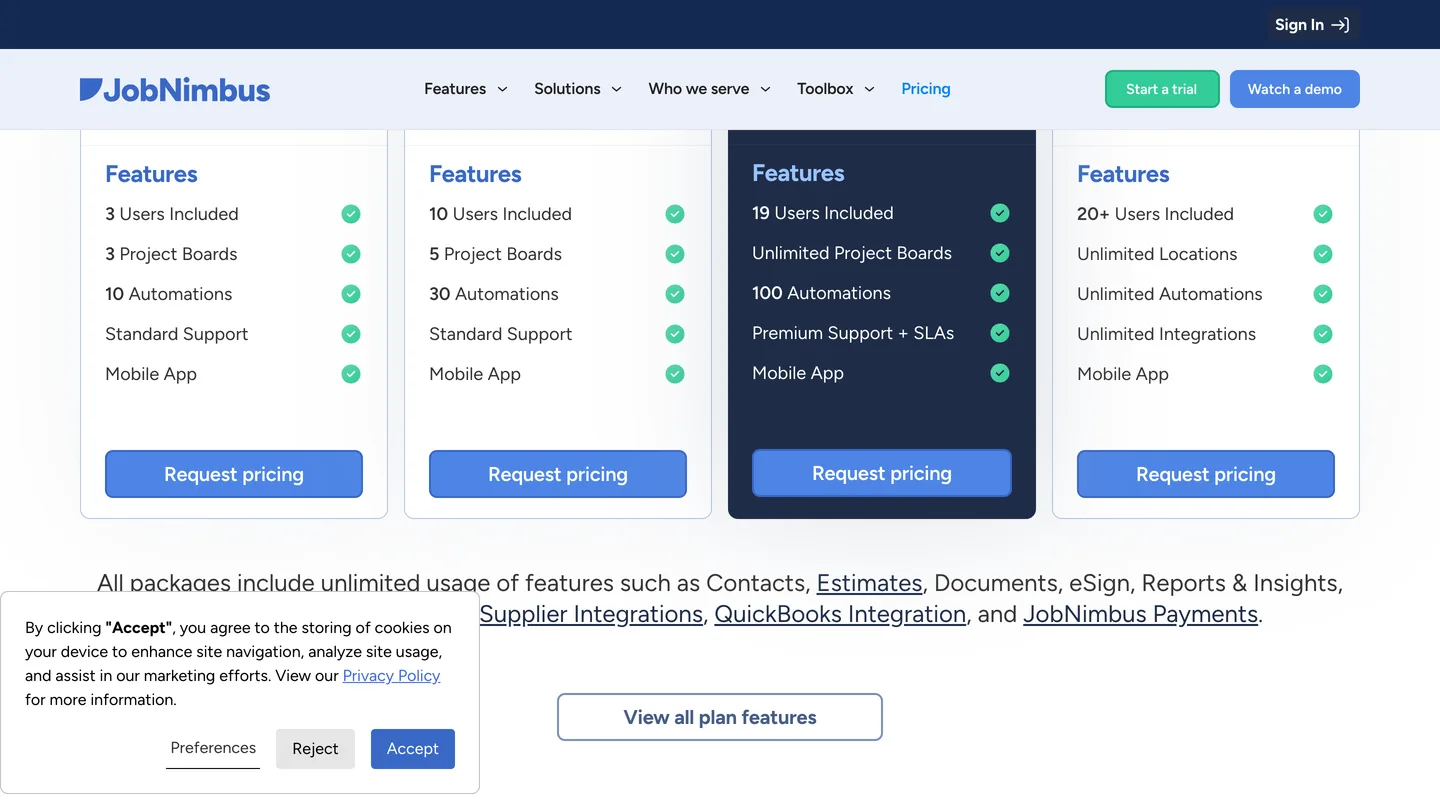 Jul 30, 2026
 Tech Stack
JobNimbus Review 2026: Pricing, Pros, Cons and Alternatives
JobNimbus rates 4.6 on Capterra and orders material straight from ABC Supply and SRS. But it publishes no price, and its supplement route carries a note.
Read Article Jul 30, 2026
 Tech Stack
BuildOps Review 2026: Pricing, Contract Terms and Alternatives
BuildOps runs commercial service and projects on one platform, and publishes no pricing at all. The billing unit, the 30-day data-export window, and who it suits.
Read Article Jul 30, 2026
 Tech Stack
FieldPulse Review 2026: Pricing, Pros, Cons and Alternatives
FieldPulse rates 4.6 on Capterra and is the platform contractors name when they leave a bigger system. But it publishes no price, and the contract runs a year.
Read Article Jul 30, 2026
 Tech Stack
Service Fusion Review 2026: Pricing, Contract and Alternatives
Service Fusion bills flat per company with unlimited users, which is the best structural deal in field service software. The published plans, the contract behind the no-contract line, and the app score every other review gets wrong.
Read Article Jul 30, 2026
 Tech Stack
Knowify Review 2026: Pricing, Job Costing and Alternatives
Knowify rates 4.5 on Capterra and its weakest sub-score is features. What the $99 Core plan withholds, which way the QuickBooks sync really runs, and who should not buy it.
Read Article Jul 29, 2026
 Tech Stack
AccuLynx Review 2026: Pricing, Tier Gating, Alternatives
AccuLynx rates 4.6 across 846 reviews and now publishes an entry price. What that price omits, which tier holds the insurance workflow, and who should skip it.
Read Article Jul 29, 2026
 Tech Stack
Unitel Voice Review 2026: Pricing, Features and Alternatives
Unitel Voice rates 4.6 on Capterra and gives a one-truck shop a business number for $9.99 a month. The published plans, the cost per call, and what it won't do.
Read Article Jul 29, 2026
 Tech Stack
NiceJob vs Podium 2026: Pricing, Contracts and Review Gating
Both vendors print a price, at very different scale and in different currencies. The gap that matters is what Podium will not print: the billing unit, and whether a trade shop gets the number on the page.
Read Article Jul 28, 2026
 Tech Stack
CompanyCam Review 2026: Pricing, Pros, Cons and Alternatives
Every page ranking for CompanyCam still quotes a per-user price the vendor no longer charges. Here are the real plans, the seat math, and who should skip it.
Read Article Jul 28, 2026
 Tech Stack
NiceJob Review 2026: Pricing, Pros, Cons and Alternatives
NiceJob rates 4.9 on Capterra and refuses to gate negative reviews. Real plan pricing, the active-customer threshold nobody publishes, and who should skip it.
Read Article Jul 27, 2026
 Tech Stack
Buildertrend Review 2026: Pricing, Limits and Alternatives
Buildertrend rates 4.5 across 2,486 Capterra reviews and quotes against your revenue rather than your seat count. The workflows, the export problem, the alternatives.
Read Article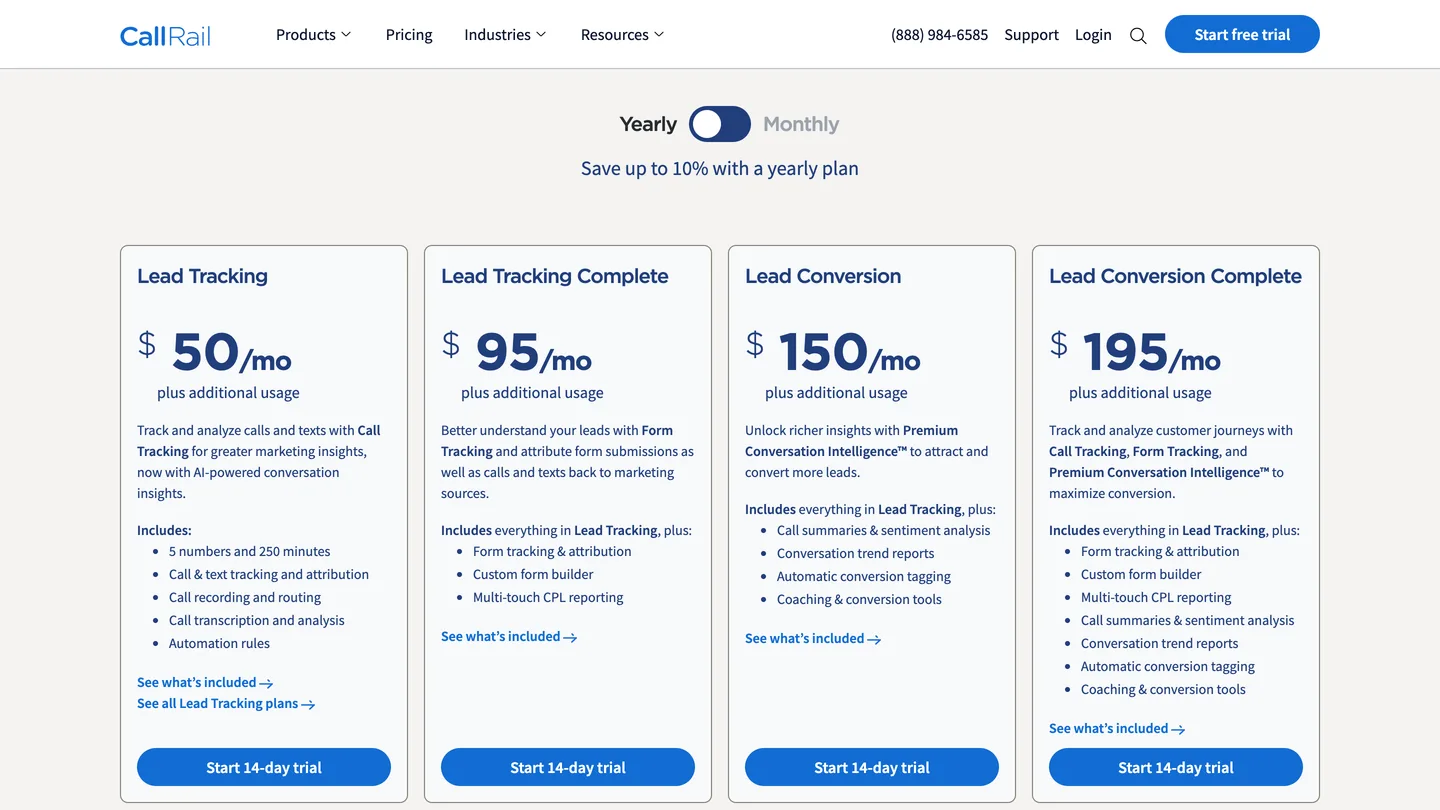 Jul 27, 2026
 Tech Stack
CallRail Review 2026: Pricing, Pros, Cons and Alternatives
CallRail rates 4.5 on Capterra, and its tracking numbers port out free. But the two usage rates that decide your real bill are the two it does not print.
Read Article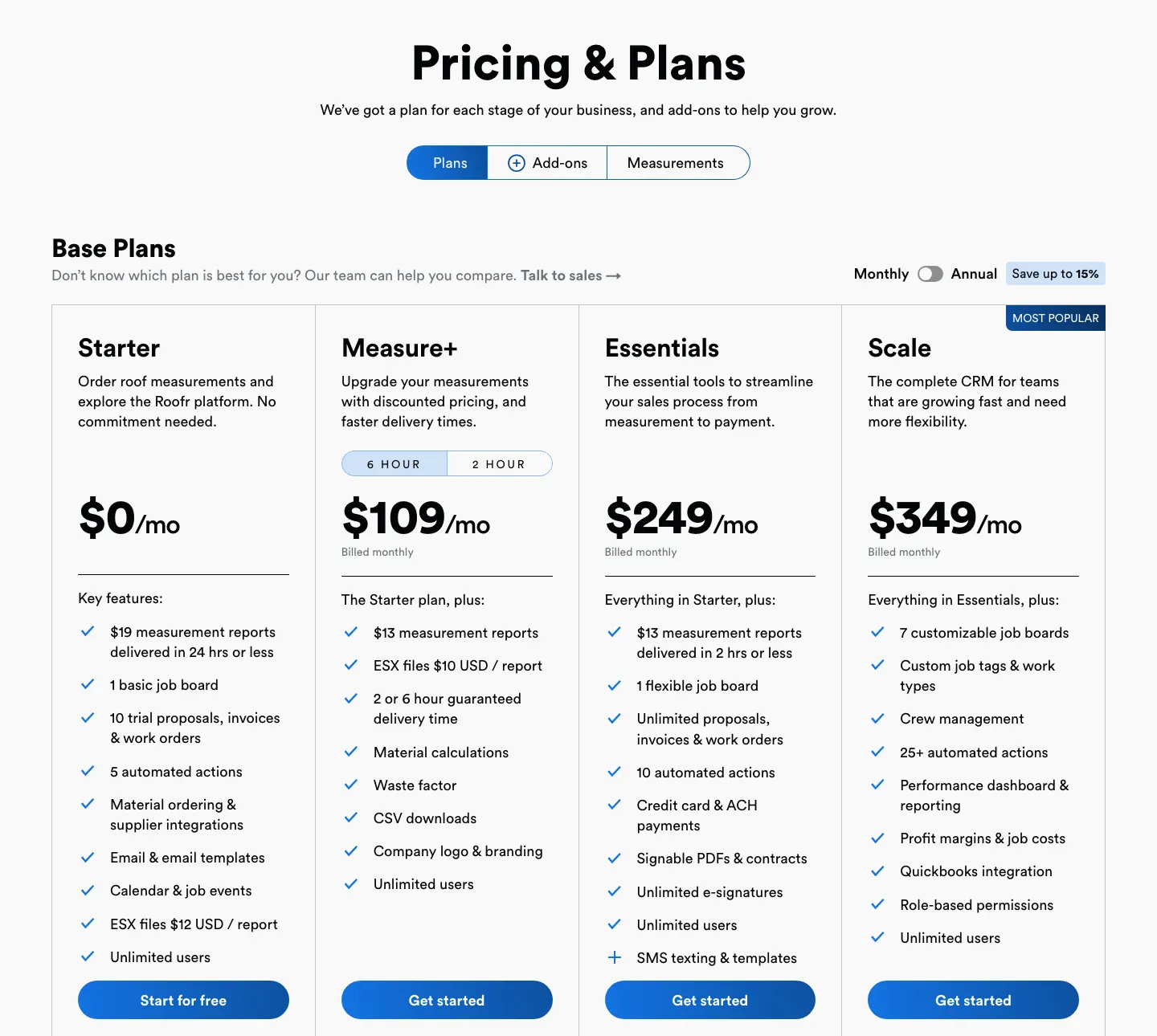 Jul 27, 2026
 Tech Stack
Roofr Review 2026: Pricing, Pros, Cons and Alternatives
Roofr rates 4.6 on Capterra and sells $13 measurement reports against a market charging triple. But it will not import a report from anywhere else.
Read Article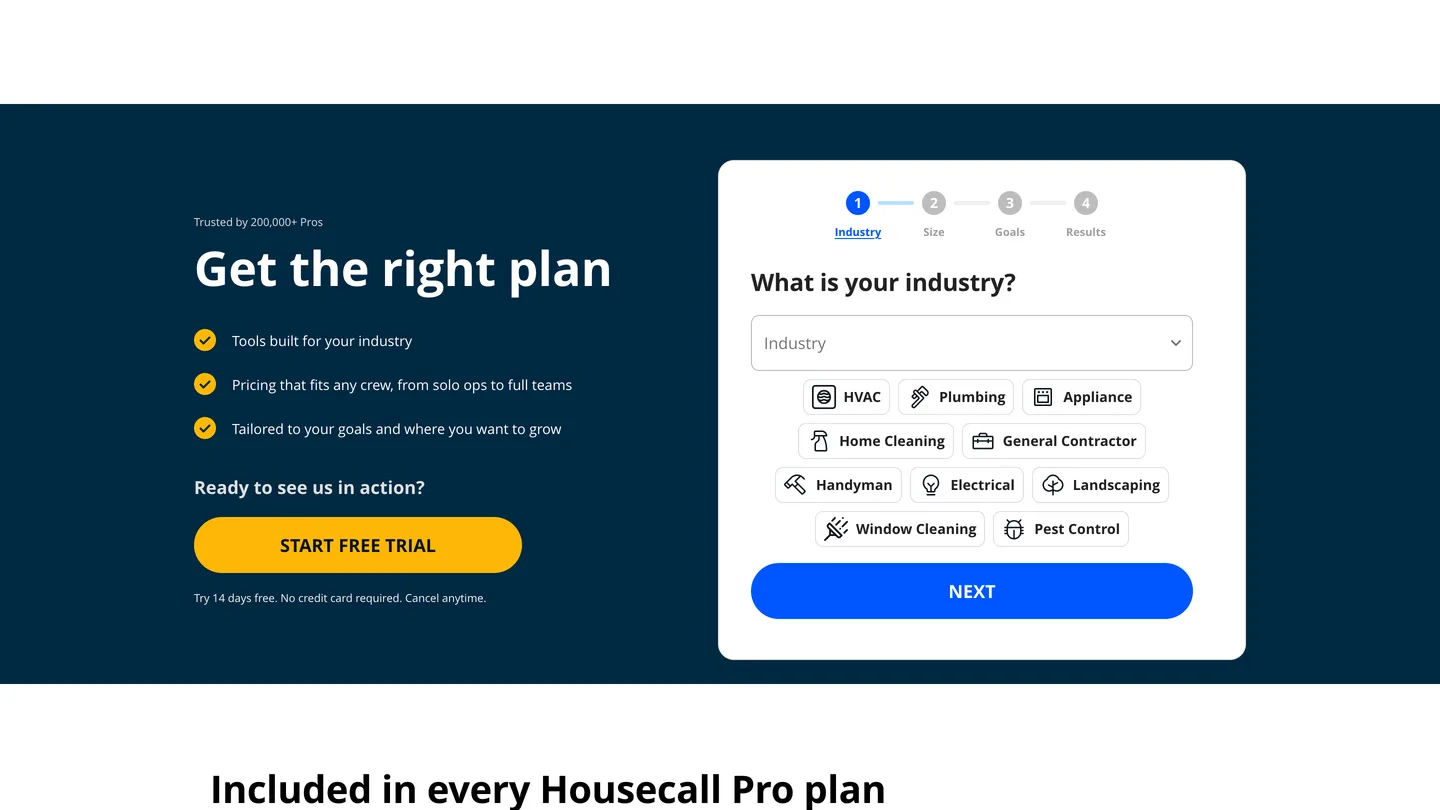 Jul 25, 2026
 Tech Stack
Housecall Pro Review 2026: Pricing, Pros, Cons, Alternatives
Housecall Pro has the shortest learning curve in the category and the widest review spread. Real pricing, the Instapay math, and the migration trap to plan around.
Read Article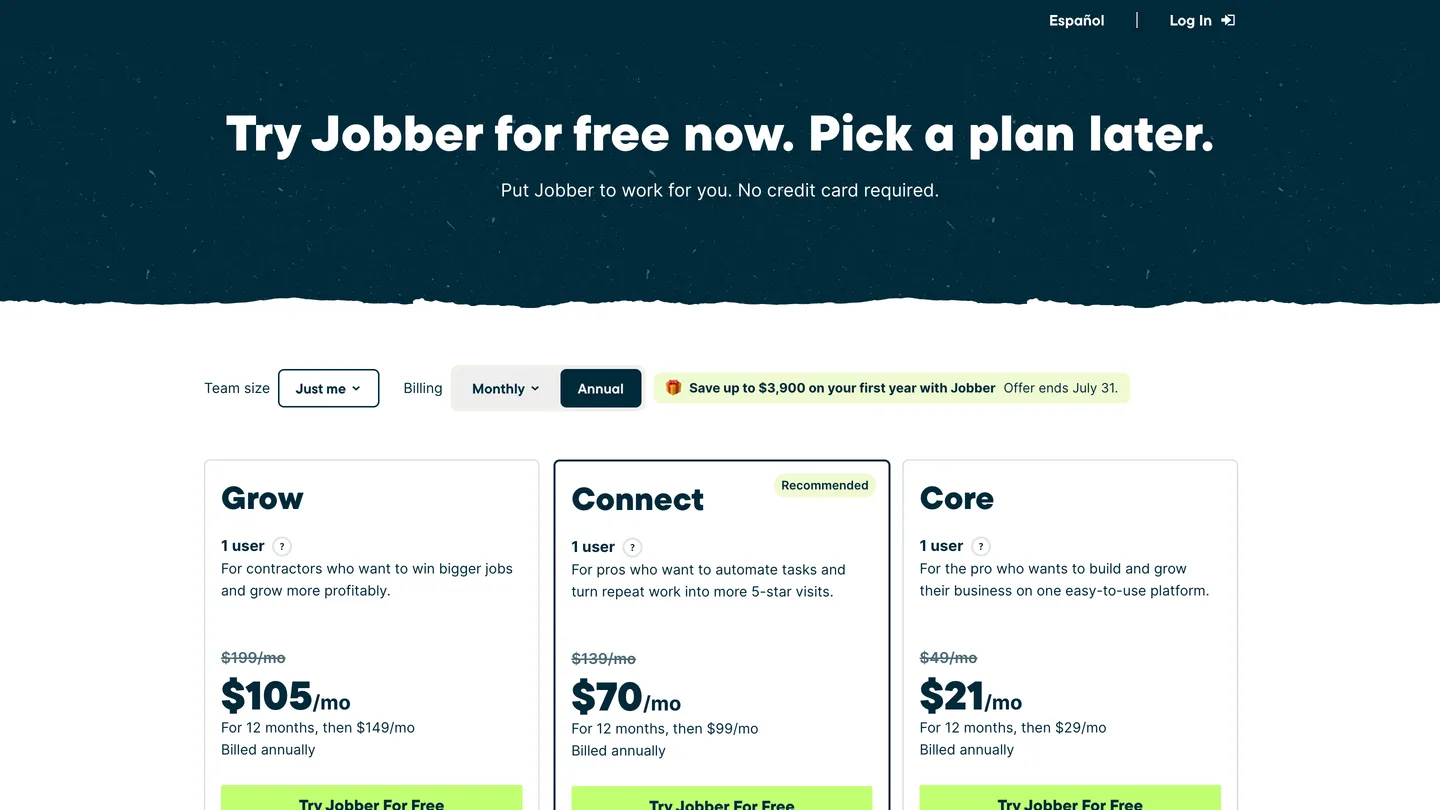 Jul 24, 2026
 Tech Stack
Jobber Review 2026: Pricing, Pros, Cons and Alternatives
Jobber rates 4.6 on Capterra with the best mobile app in the category. Real plan pricing, the feature gating that changes your entry price, and who it suits.
Read Article Jul 23, 2026
 Tech Stack
ServiceTitan Review 2026: Pricing, Pros, Cons, Alternatives
ServiceTitan rates 4.3 on Capterra but its weakest score is value for money. Real reported pricing, the 12-month contract, the exit fees, and who it actually suits.
Read Article Jun 3, 2026
 Tech Stack
HVAC Online Scheduling: The 43% Losing After-Hours Bookings
HVAC leads every trade on online booking at just 56.7%, which still leaves 43% of sites forcing an after-hours customer to wait for a business-hours phone call.
Read Article