Contractor SEO for Solar Companies
Nobody buys solar on a whim, so one lucky ranking is never enough. We get your solar company found across the entire months-long research window, on pages that prove the payback math and prove you're worth trusting.
How Can We Help?
Choose the option that suits your needs.
Let’s Investigate
We will send your Site Inspection to the email you provided.
You’re in.
We’ll send your Site Inspection within about three days.
Let’s Chat
Book a time that works for you.

“Attentive, listened to every revision request, delivered on time. Would work with him again.”
- Hamza Najam

“Patient, on point, straightforward. Did amazing work. Would 100% recommend.”
- Ruben Mederos, HyperTemp HVAC

“Responsive, creative, exceeded expectations. Already seeing greater engagement from our clients.”
- George Jeorgy, Jeorgy's Landscape Construction

“Top-tier professionalism, real web design expertise, ideas I hadn't considered. Confidently recommend.”
- Aws Nassani, Four Eleven Contracting






































































Let’s talk about what your website could be doing for your business.
Call Us TodayThe Solar specifics your website needs.
Every angle below comes from how homeowners search, evaluate, and buy, built into your site to help boost conversions.
The Federal Credit Ended, So the Search Changed
The federal Residential Clean Energy Credit paid 30% but is not available for any system placed in service after December 31, 2025. So a homeowner researching solar in this market is asking a new question, which is whether it still pays without the credit. A page that answers that honestly, with the current rules, earns the trust a page still promising 30% cannot.
Net Metering Is a State-by-State Question
The Department of Energy is clear that whether your system qualifies for net metering depends on your state and your electric utility, not a national rule. So a homeowner is searching their own state's policy, and a single national page reads as thin. Content that reflects the real local net-metering rule ranks where a generic page cannot.
NABCEP Is the Credential Buyers Search By
The NABCEP PV Installation Professional certification is considered the gold standard for solar professionals, accredited to an international persons-certification standard since 2007. So a careful homeowner searches for a NABCEP-certified installer by name. A page that surfaces that credential earns both the ranking and the trust of a buyer spending five figures on their roof.
Ownership Content Answers the Real Question
The DOE explains that buying a system, with cash or a loan, means you own it, while a lease or PPA means the solar company does. So a homeowner is searching which path makes sense for them now that the federal credit has ended. Content that walks through cash, loan, lease, and PPA captures the researcher and marks you as the honest guide.
The Map Pack Decides Local Visibility
Google builds the local map pack from your Business Profile and ranks it on relevance, distance, and prominence. So a strong site behind a thin profile still loses the "solar installer near me" search. The profile is the storefront a homeowner reaches first, and most solar companies barely maintain it.
Schema Surfaces Your Details Directly
LocalBusiness structured data feeds Google your hours, service area, and reviews in a format it reads directly and can surface in a knowledge panel. Most solar sites ship none of it, so Google is left guessing at details you could simply declare. And it is one of the cheapest signals you can add.
One Clean H1, No Skipped Headings
Google's style guidance says use a single unique H1 and never skip heading levels, and getting it wrong carries no ranking penalty despite the myth. What you gain is a page Google can parse and a homeowner can scan while comparing solar quotes. Most trade sites tangle the structure and lose that clarity.
Publish Before the Buyer Starts Researching
Only 1.74% of brand-new pages reach Google's top ten within a year, so a page you publish today is nearly invisible for months. And a solar decision plays out over a long research phase. So the content that catches that buyer has to be live and ranking well before they start comparing installers.
Topical authority beats a single money page
A solar buyer reads for weeks, so the company that ranks for the whole question set wins the relationship.
Get My Site InspectionThat means real pages on cost, payback, net metering, battery storage, incentives, and roof suitability, all linked together, not one thin services page begging for the sale.
And 79% of users always skim a new page rather than read it, so if you only surface for solar installers near me and never for the earlier cost and incentive questions, you're absent for the whole part of the journey where trust gets built. So the site that answers the third and fourth question is the one still open in a tab when a homeowner finally calls.
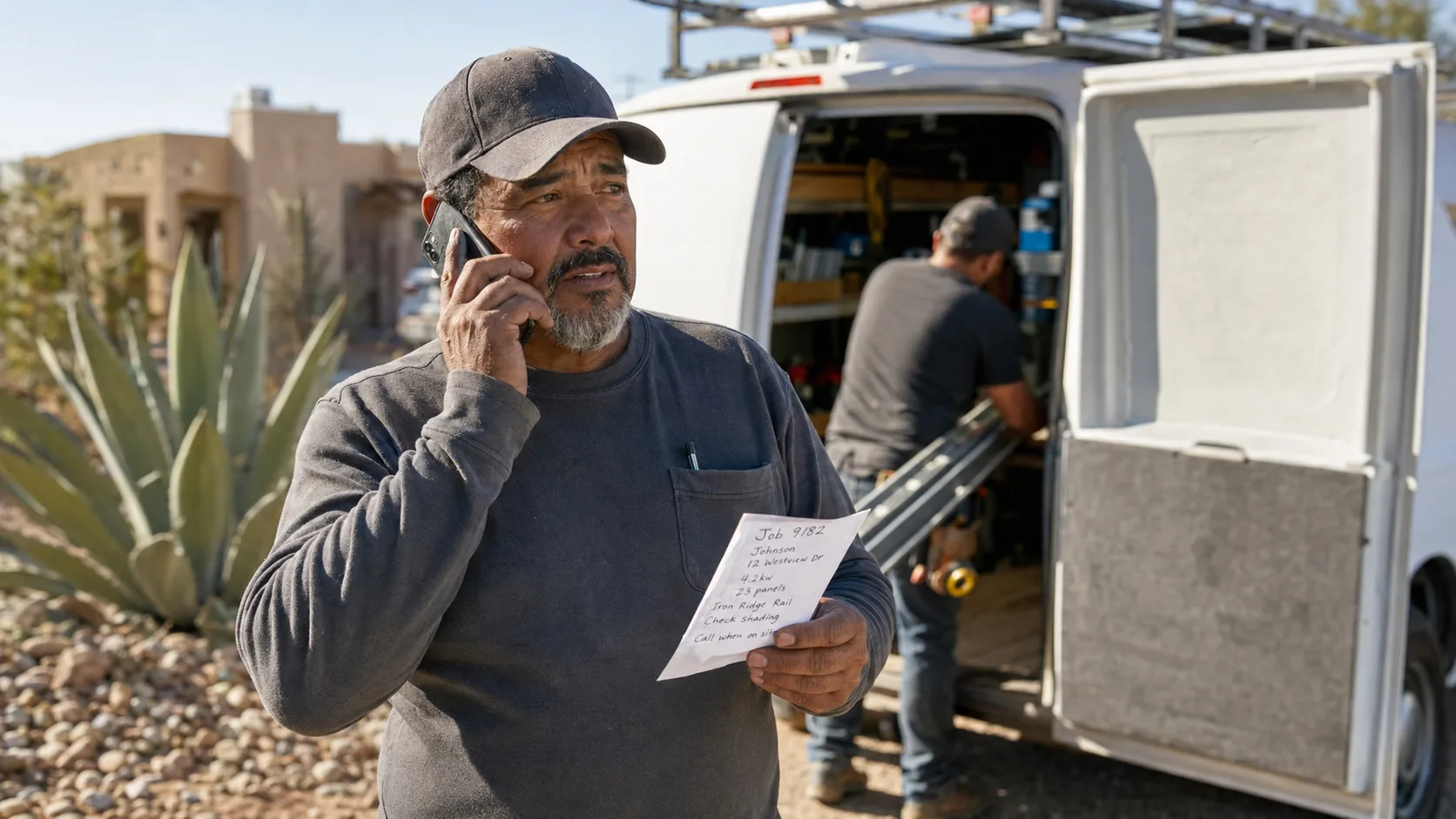
Transparent payback math earns the click and the trust
The question under almost every solar search is when do I break even. So a page that hides the numbers behind a form loses to one that shows an honest range up front.
Get My Site InspectionPut real payback ranges, financing options, and local incentive detail where a skeptical homeowner can read them without surrendering an email first.
On the average web page, users have time to read at most 28% of the words during a visit, so your best proof has to be visible, not gated. And that candor is what separates a company they'll call from one they'll quietly suspect.
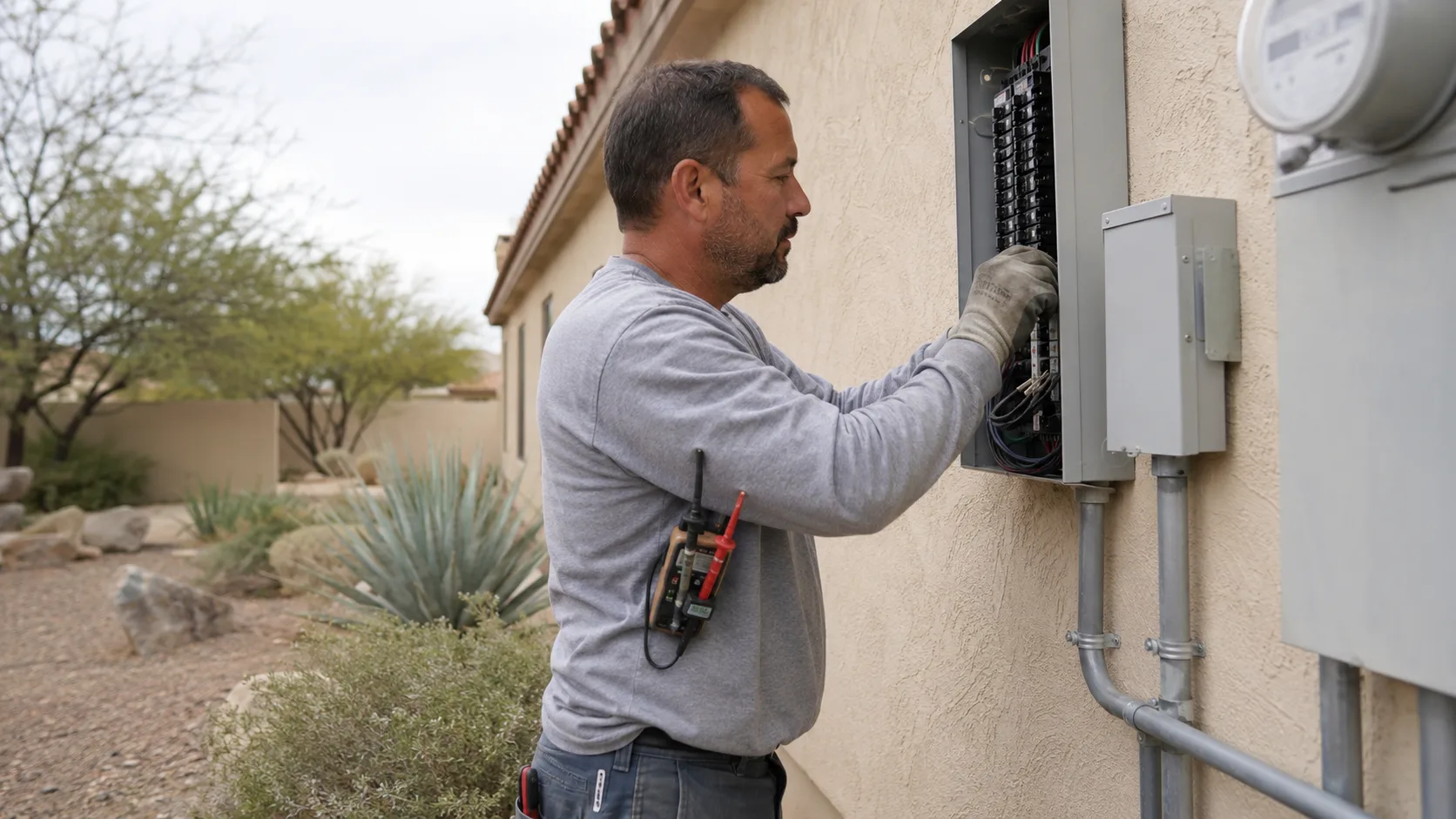
Reviews and proof carry more weight here than in any trade
64% of homeowners say recommendations or references are a top-three factor in choosing a contractor, and for a scam-wary solar buyer it's closer to the whole decision.
Get My Site InspectionSo your Google Business Profile, your review count and recency, and named, specific proof on the page matter more than clever copy.
This is a purchase people are afraid to get wrong. And the company with visible, recent, credible proof is the one who feels safe.

Speed and clarity across a multi-visit journey
Because a solar buyer comes back three or four times before deciding, every visit has to load fast and pick up where they left off.
Get My Site InspectionAnd a slow page or a wall of jargon costs you a return visit you already paid to earn. So the companies that win the long research treat their cost and payback pages as permanent assets, fast on mobile and clear enough that a homeowner can follow the math without a degree.
That way the ranking, and the trust, are there on the tenth visit as much as the first.
Questions Contractors Ask Before Hiring Us
What does solar SEO actually rank you for?
The whole research journey, not one keyword. Early education searches like solar panels cost, is solar worth it, and how net metering works, then the decision searches like solar installers near me, reviews, and financing. The goal is to be present and credible across the weeks a homeowner spends deciding, on pages that answer the real question underneath, is this worth it and can I trust you.
Why does content and topical authority matter so much for a solar company?
Because solar is a high-ticket purchase people research for a month before committing. Google rewards the company that answers the full question set, cost, payback, incentives, storage, and roof suitability, with linked, in-depth pages. A single thin services page cannot earn that trust or that ranking, and it leaves you invisible for most of the buyer's journey.
Should a solar company show pricing and payback math on the site?
Honest ranges, yes. A skeptical buyer is running the break-even math anyway, and a page that hides every number behind a quote form reads as evasive. So showing realistic payback ranges, financing options, and local incentive detail up front is what separates a company a homeowner will call from one they will quietly suspect. That transparency is the conversion potential most solar sites leave on the table.
Still Have Questions?
Give us a call expressing your specific needs, and we’ll see if we are a good fit for each other.
Google's Local Pack ranking runs on review volume and how recent those reviews are. Contractors tend to under-collect reviews they've already earned, because asking after every job is easy to forget in a busy week. NiceJob sends the ask automatically once a job wraps, so new reviews keep flowing without you remembering. You can also set it up to ask your past clients for reviews. If your CRM already handles review requests, use that. Either way, it works better as a system than as a task on someone's to-do list.