Foundation Repair SEO that gets you found before the crack spreads.
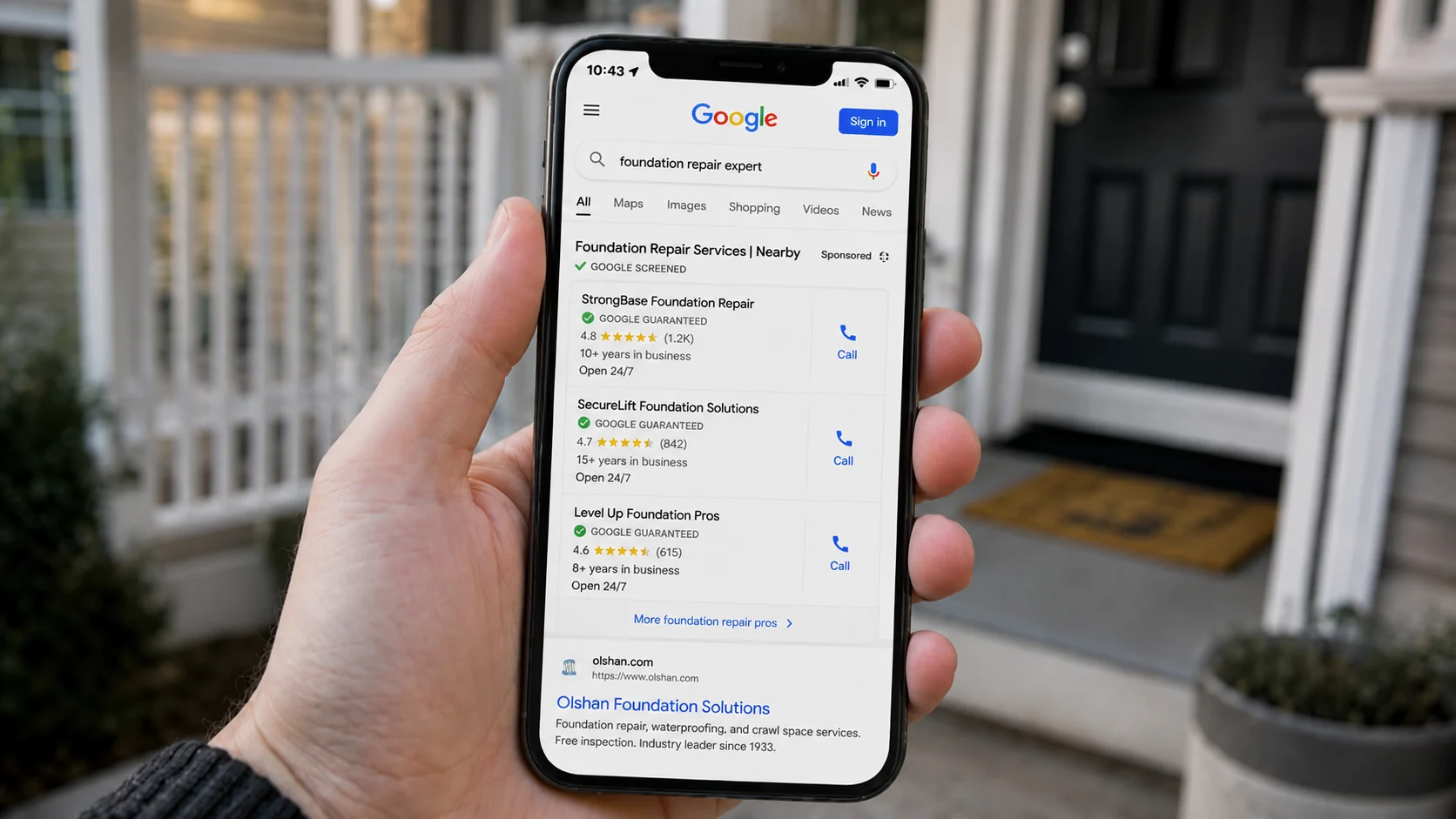
Right now, a homeowner near you is Googling "foundation repair near me." We get you showing up first, then turn that click into a booked job.
How Can We Help?
Choose the option that suits your needs.
Let’s Investigate
We will send your Site Inspection to the email you provided.
You’re in.
We’ll send your Site Inspection within about three days.
Let’s Chat
Book a time that works for you.

“Attentive, listened to every revision request, delivered on time. Would work with him again.”
- Hamza Najam

“Patient, on point, straightforward. Did amazing work. Would 100% recommend.”
- Ruben Mederos, HyperTemp HVAC

“Responsive, creative, exceeded expectations. Already seeing greater engagement from our clients.”
- George Jeorgy, Jeorgy's Landscape Construction

“Top-tier professionalism, real web design expertise, ideas I hadn't considered. Confidently recommend.”
- Aws Nassani, Four Eleven Contracting














































































Let’s talk about what your website could be doing for your business.
Call Us TodayThe Foundation Repair specifics your website needs.
Every angle below comes from how homeowners search, evaluate, and buy, built into your site to help boost conversions.
Your Soil Is a Search Term
Expansive soil damages an estimated 25% of all structures in the country and causes greater financial loss than earthquakes, floods, hurricanes, and tornadoes combined. A homeowner over that clay is searching their exact problem. So a page that names the local soil and what it does to a slab meets them where they already are.
They Search the Symptom, Not the Service
Expansive soils shrink and swell as their moisture changes, and that movement is a leading cause of foundation trouble. Nobody types "foundation repair" first. They type "wall cracks after the drought" or "door sticking in summer." Content that explains that mechanism in their climate earns the click before a competitor who only lists services.
Cold Climates Are Ruled by the Frost Line
In freezing regions, code requires footings to sit below the frost line and at least 12 inches deep, because frost heave lifts anything shallower. That makes frost-heave repair a distinct, searchable problem in northern metros. A page that speaks to it signals you actually work in that climate, not a template dropped in from somewhere warm.
Frost Depth Is Different in Every Jurisdiction
Minnesota's code sets minimum footing depth at five feet in its coldest zone and three and a half feet in the next, and other states draw their own lines. So a single national location page reads as thin everywhere. Reflect the real local frost depth and you rank where a generic page can not.
Publish Before the Cracks Appear
Only 1.74% of new pages crack Google's top ten inside a year, so a page has to age into its ranking. Foundation problems surface on the season's schedule, after a wet spring or a long drought, not yours. The page that catches that homeowner has to have been live and ranking for months already.
Heading Structure Helps Google and Readers
Google is clear that a proper heading hierarchy helps both search and accessibility, and skipping levels hurts both. There is no penalty for multiple headings, whatever old SEO advice claims. The real payoff is a long technical page Google can parse and a worried homeowner can scan, and most foundation sites deliver neither.
Schema Puts Your Details in the Panel
LocalBusiness structured data lets Google show your service area, hours, and reviews in a knowledge panel next to the results. For a trade where a homeowner is vetting who to trust with a five-figure repair, that surfaced detail is quiet credibility. It is a signal most foundation sites simply never add.
Disaster-Scale Demand, Hidden Until It Cracks
Expansive soil quietly does more financial damage than the major natural disasters combined, yet a homeowner ignores it until a crack appears. And once it does, they want someone now. That gap is why always-on educational content wins here: you are the page they find the day the problem finally shows itself.
What Actually Ranks A Foundation Repair Company Locally
Her phone is the whole funnel here. She's not going back to a desktop later to compare quotes properly, and the research bears that out. The numbers here come straight from our CRO Index statistics.
Get My Site Inspection Reviews Are A Ranking Input, Not A Vanity Metric
She's not reading one review page. She's cross-checking you, the way anyone does before they spend the price of a used truck. It pairs with our guide to Foundation Repair Conversion Rate Optimization.
Get My Site Inspection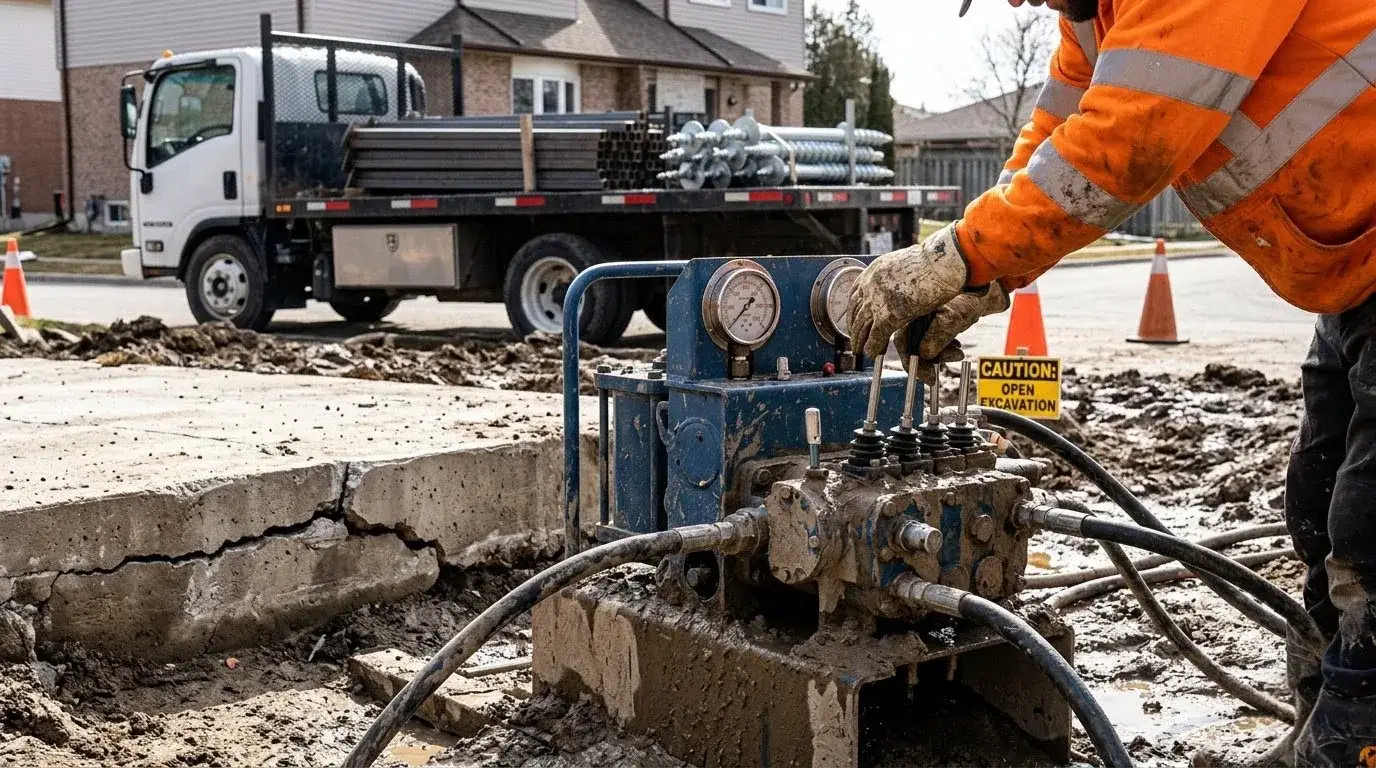
The Pages That Earn A Five-Figure Inquiry
Ranking a foundation repair company isn't the same job as ranking a garage door company, and treating it as one is why generic contractor SEO underperforms here. The homeowner searching for a snapped spring wants a phone number. Yours wants an education first, because she doesn't know whether she's looking at $4,000 of carbon fibre strapping or $28,000 of underpinning, and she's terrified it's the second one. And the same thinking shows up in our Plumbing Advertising Ideas That Book Real Jobs.
Get My Site Inspection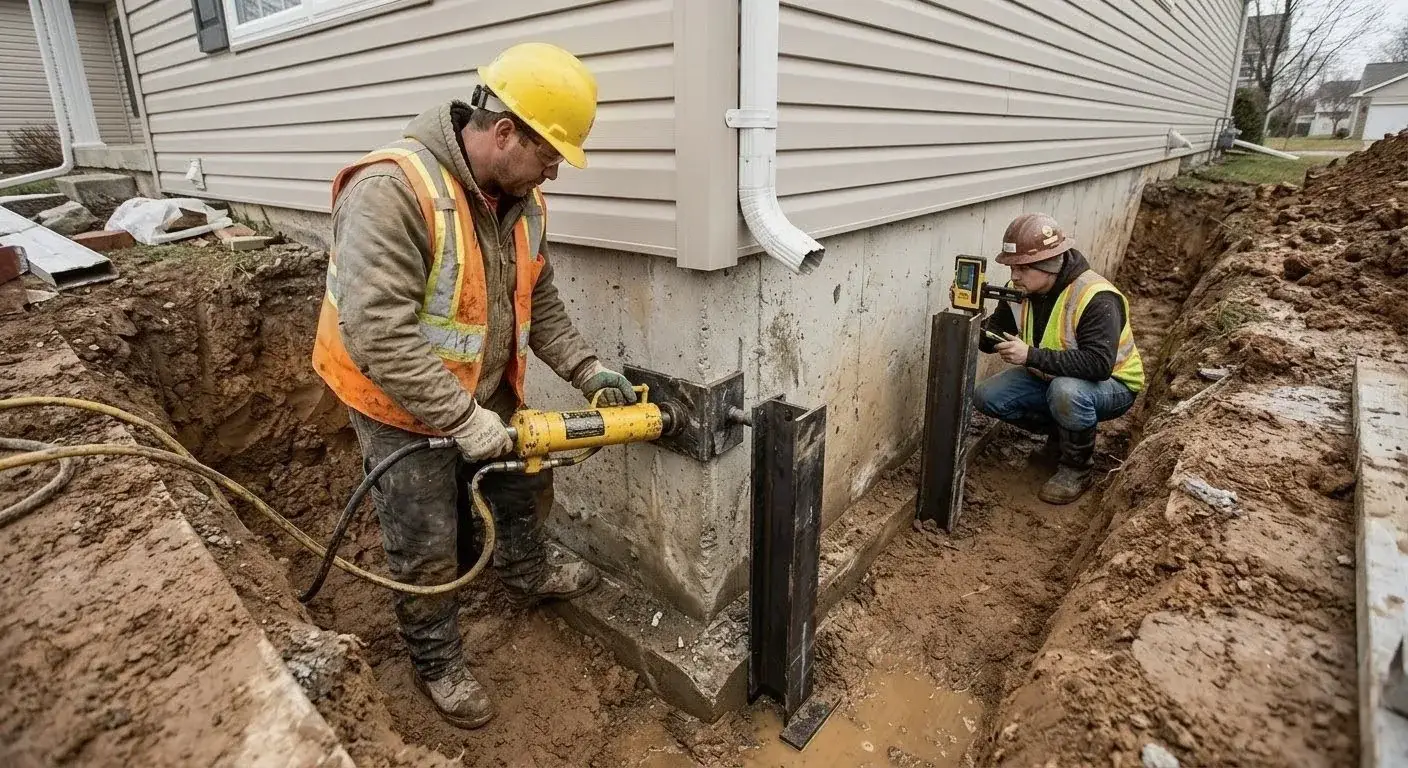
What Foundation Repair SEO Costs
Fervor builds the foundation into the site itself: the Business Profile setup, the LocalBusiness schema, the service-area and city pages, and the review system that feeds prominence.
Get My Site InspectionThat's Booked by Design at $7,497 to $9,997 for foundation repair companies, delivered in 8 to 12 weeks, with every asset yours on day one. Ongoing work runs under Performance Partner at $1,497 to $3,997 per month, month to month, only for as long as the numbers justify it.
Here is the arithmetic that decides it. If your average job is $9,000 and you close one in four inspections, then two extra inspections a month is roughly $54,000 a year in booked work. The build pays for itself somewhere in month two, and after that it compounds, because unlike a lead fee you aren't renting the same customer twice.
Not sure where your site stands right now? The free Site Inspection runs it through a 100-point framework and hands over every finding, ranking included, whether or not you hire us. Getting found is only half of it. Turning those visitors into booked inspections is foundation repair conversion rate optimization, and the build layer under both is foundation repair website design.
The full picture starts at the foundation repair hub, under remodelers and builders, and everything begins at the contractor hub.
Questions Contractors Ask Before Hiring Us
What does Foundation Repair SEO actually get me?
Calls from homeowners who are already searching for your trade. The work is to rank you for the high-intent local queries that move revenue, then make sure the page converts the click once it lands.
How is this different from the last agency that burned me?
You see the scoring framework, the benchmark data behind it, and your ranked fix list before any remediation work begins. It is a diagnosis you can evaluate, not a promise you have to trust.
How do you know this works for my trade?
The Fervor Grade framework was built by scoring 380 contractor sites across roofing, remodeling, and HVAC. Your trade's patterns are in the data, not borrowed from SaaS or dentists.
How long does it take?
The Site Inspection takes about three days, and it needs about three minutes from you. The ranking work that follows is ongoing, because search is.
Who owns the website and the accounts?
You do. The domain, the content, the analytics, every account we touch. Day one. No ownership traps, no holding your site hostage if you leave.
What if I do not like what the inspection finds?
Then you found out something that was already costing you, and now you know where. The inspection surfaces what is actually wrong on the site so you can decide what to fix.
Do you work with contractors outside your area?
Yes. We work with contractors across Canada and the US, and the benchmark data covers national brands, so the standard holds in any market.
How much does it cost?
The Site Inspection is scoped and quoted before it begins. You only pay for the remediation work once you have seen the diagnosis and decided it is worth fixing.
Will the changes hurt my current rankings?
No. The work protects what already ranks. We map the URLs and the equity first, fix the conversion leaks, and improve the pages that search already trusts rather than wiping them.
What do I have to do during the project?
Very little. The intake takes minutes, and the build work is ours to run from there. You keep running crews. We will only ask for things no one else can give us, like your real service area and your best photos.
Still Have Questions?
Give us a call expressing your specific needs, and we’ll see if we are a good fit for each other.
Google's Local Pack ranking runs on review volume and how recent those reviews are. Contractors tend to under-collect reviews they've already earned, because asking after every job is easy to forget in a busy week. NiceJob sends the ask automatically once a job wraps, so new reviews keep flowing without you remembering. You can also set it up to ask your past clients for reviews. If your CRM already handles review requests, use that. Either way, it works better as a system than as a task on someone's to-do list.