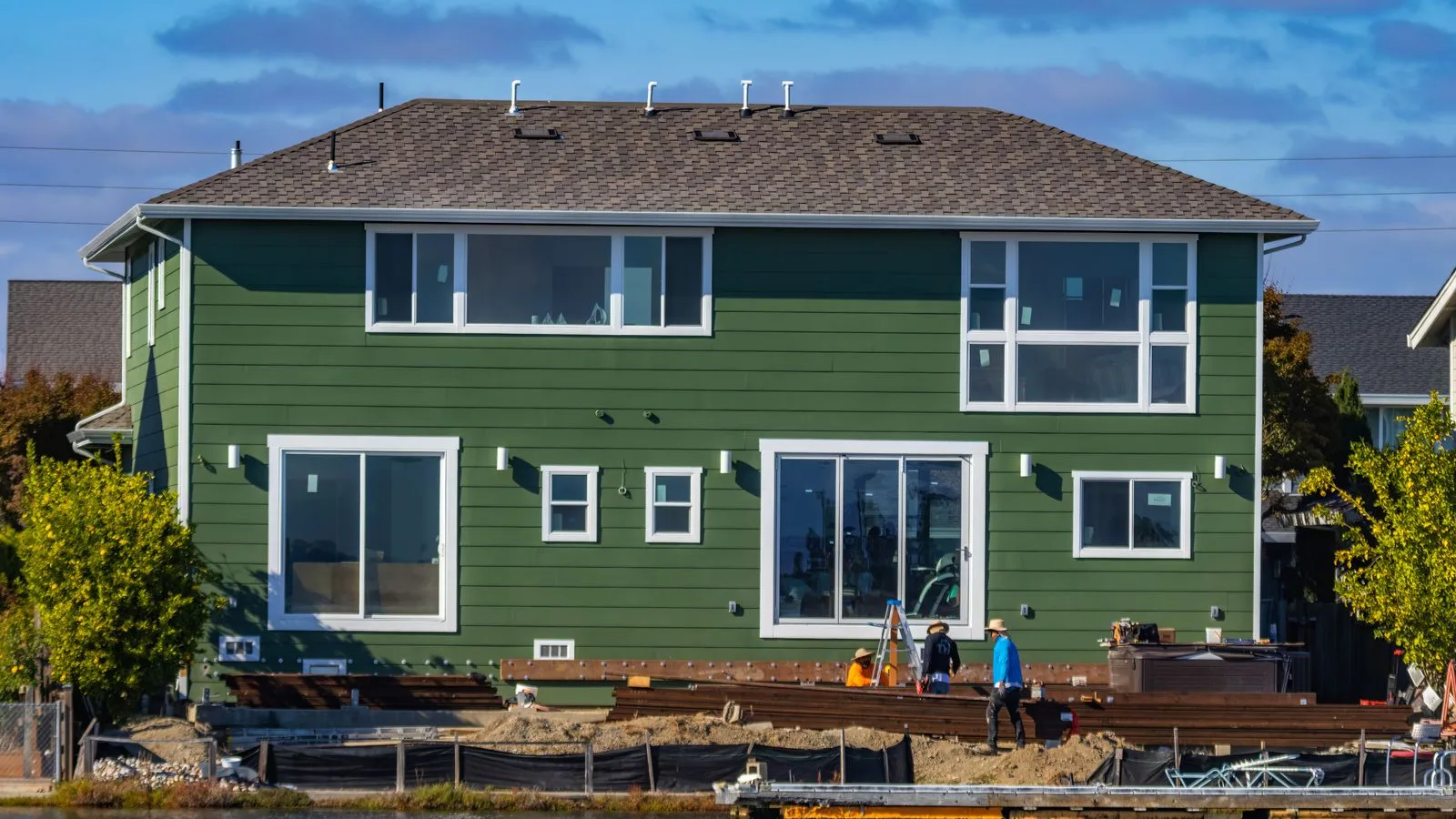
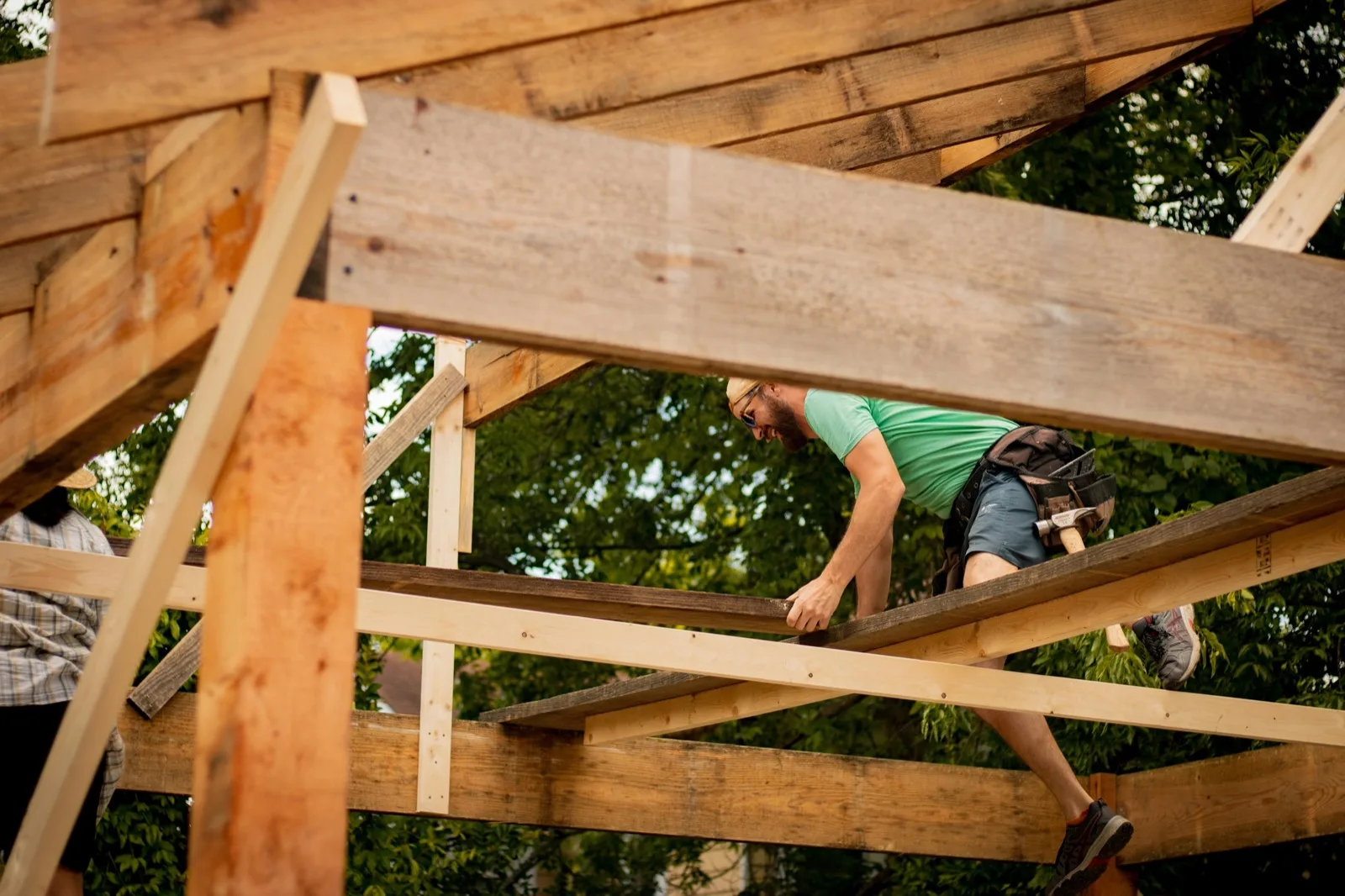
Dwight is forty-five. He has built decks and outdoor structures around Charlotte for thirteen years. Composite, cedar, screened porches, pergolas, and the occasional full outdoor-living build with a kitchen and a fireplace. His deck lead generation is a yard sign and a spot in an online contractor directory.
Licensed general contractor, a 4.9 across a hundred reviews, crews that can frame and board a 400-square-foot composite deck in four days. His spring calendar used to fill by March.
This year it filled slower. A homeowner deciding to add a deck or replace a rotting one researches for a few weeks, materials, railing options, permits, cost, before booking estimates. Two competitors now own the searches that homeowner runs, "deck builder Charlotte," "composite deck cost," "cost to build a deck." A homeowner planning a $22,000 deck finds them, books an estimate, and never sees Dwight's work.
Dwight gave eight estimates last month. The builder across town gave thirty-one.
He has the licence. He has the crews and the portfolio. He has thirteen years of finished decks. What he does not have is a site that shows up when a homeowner decides this is the spring for the deck.
So the weather warms, homeowners start searching, and the deck builder whose site ranks, explains the cost, and shows the right builds gets the estimate. Nobody is comparing joist spacing online yet. Dwight sits on page two. The competitors sit first and second.
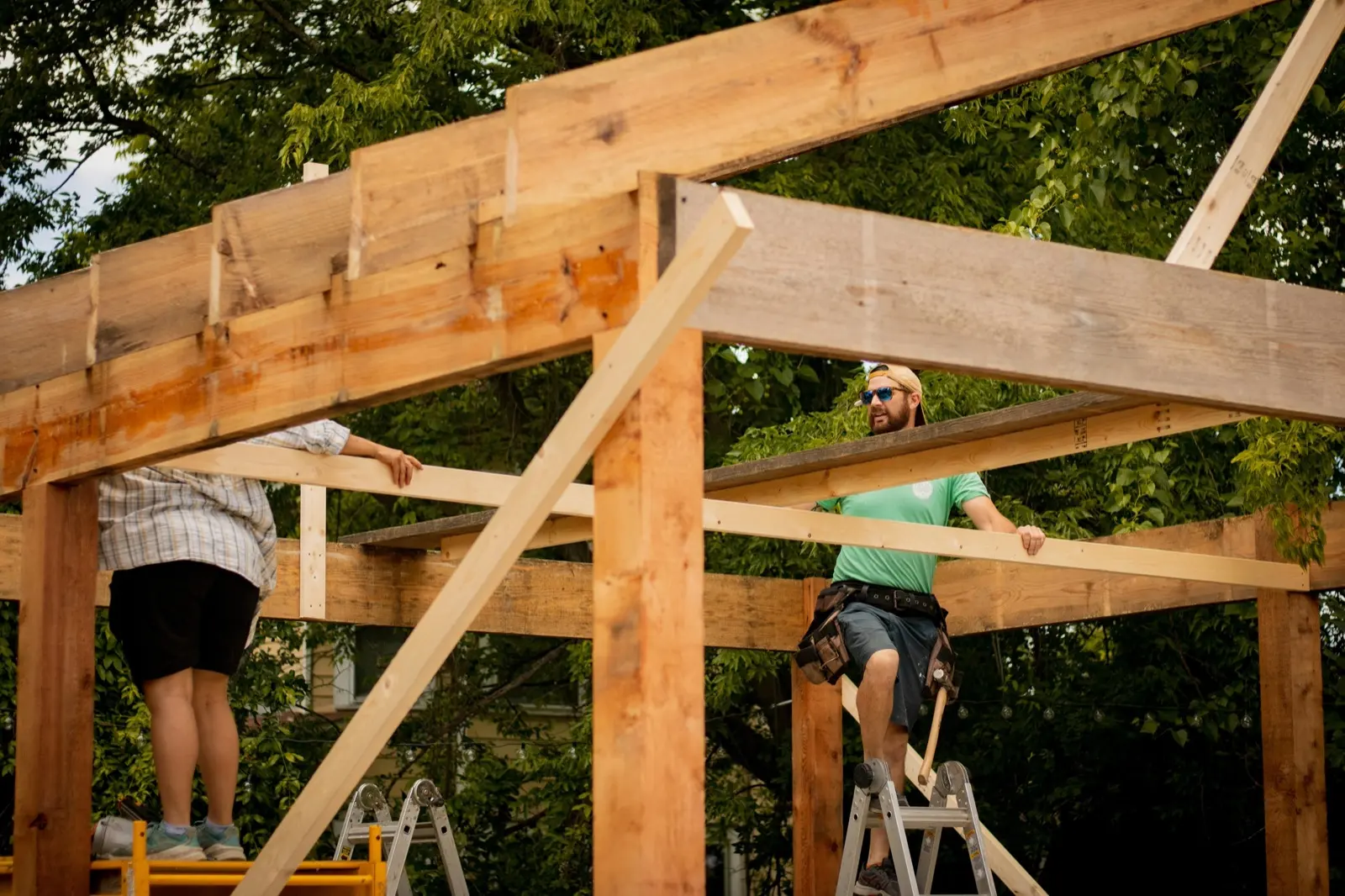
That gap is what this page is about: the search presence and the site that book the estimate while the homeowner is still comparing composite brands, through the spring rush and into the fall, instead of the week a campaign runs.
What deck lead generation means when you own the pipeline
Buy deck leads from a contractor directory and here is the deal: a fee per name, the same homeowner sent to three other builders, and a flow that stops when you stop paying. You rented a list. You built nothing.
The other model is your site ranking for "deck builder," "composite deck cost," and "deck contractors near me" in the areas you serve, your Google Business Profile in the map pack, and homeowners booking estimates on a calendar that fills your crews. Those bookings are yours, exclusive, and the rankings hold through the next spring and every one after whether you spent a dollar or not.
Put plainly, deck lead generation done right means you build the thing that produces the estimates, on ground you own. It costs more to start than directory leads. It stops costing as much once the rankings hold.
Spending
"From 2021–2023, homeowners spent $32.8B on porch/deck/patio/terrace projects across 3.9 million projects (AHS-based estimates)."
— U.S. Census Bureau and U.S. Department of Housing and Urban Development (2024)

Deck buyers research materials and cost, then it is an estimate race
A homeowner planning a deck spends a few weeks on two questions: what material, and what will it cost. Composite versus wood, capped versus uncapped, the railing, the substructure, the permit. Then they are ready, and it becomes a race to book the estimate before three competitors do, because the builder who walks the yard first and quotes cleanly usually wins.
Spending
"In 2024, 14% of renovating homeowners undertook deck upgrades, with a median spend of $4,000."
— Houzz Inc. (2025)
A site built for lead generation answers both questions and then makes the booking effortless. A clear cost page with real ranges by size and material, a materials comparison, a permit explainer, and a portfolio sorted by style, plus a "Book a Free Estimate" calendar instead of a callback form. The Houzz median for a deck upgrade is modest, but a full outdoor-living deck with a kitchen and a roof runs $30,000 and up, and the content decides which project the homeowner pictures.
Decks also sit in the middle of the outdoor-living trend. More than four in five homebuyers say the backyard matters, and a homeowner adding a deck is often also thinking about a screened porch, a pergola, lighting, or a patio. The builder whose site shows all of it wins the bigger job.
"81% of Canadian homebuyers say a backyard is important or very important for a home."
— Canadian Real Estate Magazine (Wahi/Angus Reid survey) (2026)
New builds, replacements, and outdoor-living: three funnels
New deck builds are the spring volume: a homeowner with a back door and no deck, or a small deck they want bigger. A composite deck runs $8,000 to $25,000, and those pages need material comparisons, cost ranges, and a permit explainer.
Replacements move on a longer cycle: a fifteen-year-old pressure-treated deck that is splintering and pulling away from the house. Those homeowners often upgrade to composite and add features. And outdoor-living builds, screened porches, covered decks, outdoor kitchens, are the high-ticket work that a strong portfolio surfaces.
"Across the contractor websites Fervor inspected, 39% of those with a contact form ask the homeowner for 11 or more fields."
— Fervor Studio, Digital State of the Home Services Industry 2026 (2026)
Commercial and multi-family deck and balcony work, including inspections and repairs driven by safety codes, runs on its own buyer and calendar. Give it its own section of the site.

Build for all three residential funnels plus commercial, and the builder who only ranks for "deck builder near me" in April has left most of the year and most of the high-ticket work open for you.
What paid deck lead generation costs to run
Everything above is about leads you own. Paid ads rent demand while that builds, and for deck building the question is how much you need behind the channel before it produces estimates you can close. A deck buyer researches materials and cost for a week or two, then it becomes an estimate race. Google Search catches them mid-research and at the estimate stage. Meta does light nurture work with finished-project photos, which for outdoor-living work carry real weight.
Set the budget against the area you can build in and still make the drive worthwhile, not the metro figure. A composite or hardwood build is worth a longer haul than a board-replacement job. That working radius caps the monthly deck leads available. Match it to a tier first.
What deck-building ad budgets run, by service area and market
| Serviceable population | United States (USD) | Canada (CAD) | United Kingdom (GBP) | Ireland (EUR) |
|---|---|---|---|---|
| Under 50,000 | $1,300 | C$1,100 | £1,200 | €1,000 |
| 50,000 to 200,000 | $2,200 | C$1,900 | £2,000 | €1,600 |
| 200,000 to 1 million | $3,300 | C$2,800 | £3,000 | €2,500 |
| 1 to 5 million | $4,400 | C$3,700 | £3,900 | €3,300 |
| Over 5 million | $5,500 | C$4,700 | £4,900 | €4,100 |
| Serviceable population | United States (USD) | Canada (CAD) | United Kingdom (GBP) | Ireland (EUR) |
|---|---|---|---|---|
| Under 50,000 | $400 | C$350 | £350 | €300 |
| 50,000 to 200,000 | $700 | C$600 | £600 | €500 |
| 200,000 to 1 million | $1,000 | C$900 | £900 | €750 |
| 1 to 5 million | $1,400 | C$1,200 | £1,200 | €1,000 |
| Over 5 million | $1,700 | C$1,500 | £1,500 | €1,300 |
| Serviceable population | United States (USD) | Canada (CAD) | United Kingdom (GBP) | Ireland (EUR) |
|---|---|---|---|---|
| Under 50,000 | $550 | n/a | £500 | €450 |
| 50,000 to 200,000 | $950 | n/a | £850 | €750 |
| 200,000 to 1 million | $1,400 | n/a | £1,300 | €1,100 |
| 1 to 5 million | $1,900 | n/a | £1,700 | €1,500 |
| Over 5 million | $2,300 | n/a | £2,100 | €1,900 |
Figures are rounded monthly planning midpoints for an Operating budget, in each market's local currency. They're not platform prices. A Test budget to start evaluating the channel runs roughly half these numbers; a Growth budget, once the economics are proven and you have the capacity to take on more work, runs close to double. Service area means the population you can realistically reach, not your city proper. Amounts are media spend only and exclude account management, landing pages, call tracking and CRM. Local Services Ads cover deck builders in the US, the UK and Ireland; elsewhere the plan is search and social. Australia is never eligible. Where the status is conditional, the category and postcode have to be confirmed before you budget for it. Expected results are ranges, not guarantees.
The table is available demand. The local auction sets your share, and deck building is bid seasonally: busy in spring, quiet by autumn. In a spring auction in a large metro you'll sit near the top of each band. Fervor estimates these ranges from broader home-improvement benchmarks plus deck-specific assumptions, so confirm against your own Keyword Planner and quoted click costs before you commit a figure.
Judge the monthly number against your margin, nothing else. Public paid-media data for decks is limited, so Fervor estimates search cost per lead near $129 for planning purposes. At the US mid-market figure, roughly $3,300 in search spend at that rate is about 26 leads a month, and deck search leads book near 20 percent on this model, so call it 5 signed jobs at close to $660 to acquire each. Against a composite deck build that clears; against a small repair it doesn't, so run it on your real average ticket. A lead is not a booked estimate, and a booked estimate is not a signed job.
A search lead is a homeowner getting quotes this month. A Meta lead is someone who liked a deck photo and might build next year. The Meta lead is cheaper and much slower, and a slow lead you have to nurture for a season is not a cheap one. Compare the channels on cost per signed job.
For deck building, Google runs Local Services Ads only where the category is confirmed, and its status is conditional in the US, the UK and Ireland, meaning the mapping and your address get checked before anything serves. There's no Canadian or Australian option. So until your account clears it, treat search and Meta as the whole plan.
The table can't price the season, and decks are one of the most seasonal trades: demand and cost climb through spring, peak early summer, and fall off a cliff by October. These are media figures only. They exclude account management, landing pages, call tracking and the CRM, so a channel that looks even on media alone is underwater once those are counted.
"Across the contractor websites Fervor inspected, 39% of those with a contact form ask the homeowner for 11 or more fields."
— Fervor Studio, Digital State of the Home Services Industry 2026 (2026)
And a homeowner comparing deck quotes will leave a slow page or one that asks for a dozen fields before the estimate request. Paid and organic traffic hit that same page. A free Site Inspection shows you what they meet first.
Deck lead generation companies vs. agencies
Two different businesses will sell you deck lead generation. A lead broker or directory generates homeowner names and resells them, shared. For a builder with no site and a spring to fill this week, it is a stopgap.
An agency builds the system on your side: your site, your rankings, your Google Business Profile, an estimate calendar you own. The bookings are exclusive because the homeowner found and chose you. When a builder searches for the best deck lead generation companies and lands on an agency instead, this is the model they wanted.
Fervor is the second kind. We do not sell you leads. We build the thing that generates them, and then it is yours.
Where most deck builder sites lose the lead
Walk through ten deck builder sites and the pattern repeats: a photo gallery, a vague "we build custom decks" paragraph, and a contact form. None of them answer the two questions a homeowner actually researches before they book anything, what material, and what it costs.
A homeowner comparing composite brands and pricing a deck wants a real cost page with ranges by size and material, a straight comparison of composite versus wood and capped versus uncapped, and a permit explainer for their area. The builder whose site answers all of that is the one they book an estimate with. A gallery sends them back to a search for someone who explained it.
The last gap is the callback form. Deck building is a race to the walk-through, and a homeowner who can pick an estimate time on your calendar right now is booked. One who fills out a form and waits is still shopping while three competitors call. An estimate calendar closes the gap where the ready homeowner slips away.
How to get deck leads from search
Your site has to load fast and push one action: book the estimate. A homeowner comparing composite brands is often on a phone in the evening, and gone if the page hangs. Above 90 on mobile PageSpeed, a "Book a Free Estimate" button in reach, and a headline that names the project.
Then a real page for every town and neighbourhood you serve, written for that area, referencing the permit rules, the common house styles, and the deck heights and setbacks that matter there, plus a page for each material and each project type: composite, cedar, pressure-treated, new build, replacement, screened porch, outdoor kitchen. Not one "services" page. Google ranks the specific page for the specific search.
And the form. Across the contractor websites Fervor inspected, 39% of those with a contact form ask the homeowner for 11 or more fields. Four is enough to book an estimate: name, phone, address, rough size. You measure and quote in the yard.
"Across the contractor websites Fervor inspected, 39% of those with a contact form ask the homeowner for 11 or more fields."
— Fervor Studio, Digital State of the Home Services Industry 2026 (2026)
Your Google Business Profile carries the map pack, which takes more than 40 percent of local clicks. Finished-deck photos by material and style, weekly posts, consistent name and address across directories, and a steady flow of recent reviews.
You can see where your site stands before spending a dollar. We grade it in 48 hours, no call required.
The math, and how to measure it
Buy deck leads at $40 each and close 15 percent, and that is over $260 in lead cost per booked job before a load of lumber. Build a search presence pulling 500 organic visitors a month at 5 percent conversion and you get 25 estimate bookings, close 35 to 45 percent at the walk-through because they chose you, and land 9 to 11 jobs a month at a cost per lead that drops as rankings hold.
Track four numbers: estimate bookings from organic on a dedicated tracking line and calendar, form submissions from organic pages, cost per organic booking, and revenue attributed to organic from first click to signed job. An agency reporting rankings without tying them to booked estimates is handing you activity, not outcomes.
"Across the contractor websites Fervor inspected, only 25.5% keep their most-complex form to five user-facing fields or fewer."
— Fervor Studio, Digital State of the Home Services Industry 2026 (2026)
Project type belongs in that reporting. A basic composite deck and a $35,000 covered outdoor-living build both count as one lead, and if your outdoor-living and screened-porch pages are ranking and converting, that is where the next quarter of portfolio content goes.
Where Fervor fits
We start with a free Site Inspection. We pull the top-ranking deck builders in your service area, count exact term frequency across 10 ranking zones, and build a mathematical content brief before anyone writes a sentence. You see where your site is losing estimate bookings, with numbers.
Then we build for the booked estimate: a clear cost page, a materials comparison, a permit explainer, a portfolio sorted by style, an estimate calendar instead of a callback form, a page for every material and every town, and a Google Business Profile full of finished decks. After launch we run the monthly work that keeps it climbing into the fall and the next spring.
"Across the contractor websites Fervor inspected, only 45% showed named-customer testimonials."
— Fervor Studio, Digital State of the Home Services Industry 2026 (2026)
Organic booking volume builds over four to six months and keeps producing outside the spring rush. That is the case for owning your deck lead generation rather than renting it.
Book a free Site Inspection and we will show you where your deck site is losing estimate bookings on searches like "deck builder near me," with numbers, not opinions.
What a Fervor engagement includes
Booked by Design™
Complete website system built to convert storm leads, planned projects, and research-phase homeowners into booked jobs. Trade-specific. Conversion-engineered. Yours.
- Custom design + trade-specific conversion architecture
- Mobile-first, SEO-ready build
- CallRail tracking + NiceJob review integration
Performance Partner™
Monthly SEO, content, and CRO with fixed deliverables. No credits, no rollover, no guessing what you're paying for. The compound growth engine.
- Monthly SEO content + technical monitoring
- Conversion rate optimization
- Revenue-tied reporting + dedicated account manager
The Site Inspection
Scored Site Inspection across 6 conversion categories with specific findings and revenue impact estimates. No pitch. Just the data.
- 100-point conversion potential inspection
- Competitor benchmarking in your market
- Revenue impact estimates per finding
- Actionable fix list prioritized by ROI
Tools we recommend for this trade
For deck and outdoor-living builders running crews and a full spring calendar, Jobber handles scheduling, quoting, and invoicing without enterprise overhead. NiceJob automates the reviews that carry a map-pack ranking through the season. And put a tracking number on every channel: CallRail shows you which one books the $35,000 covered deck and which one books a board replacement.
Deck lead generation questions we get asked
How do I get deck leads without buying them from a directory?
Rank your site for "deck builder," "composite deck cost," and "deck contractors near me" plus your town, put an estimate calendar on the site, publish a clear cost page and a materials comparison, win the Google map pack with finished-deck photos and reviews, and build a page for every material and every town. Those bookings are exclusive to you and keep coming outside the spring rush. It takes four to six months for real traction.
Why does the site need a cost page and a materials comparison?
Because that is what a homeowner researches before they book anything: composite versus wood, capped versus uncapped, and roughly what it costs by size. A builder whose site answers both questions is the one the homeowner books an estimate with. A gallery and a phone number sends them back to reading.
How much does deck lead generation cost?
Directory leads run $25 to $80 each and spike in spring. An owned system built by an agency runs $20,000 to $30,000 for the site, plus $997 to $2,497 a month, and the cost per booked estimate falls as rankings hold. Over a full year including the slow months, the owned system is far cheaper per signed job.
Should the site sell more than basic decks?
Yes. A homeowner adding a deck is often also picturing a screened porch, a pergola, lighting, or an outdoor kitchen, and the builder whose portfolio shows all of it wins a $30,000-plus outdoor-living build instead of a basic deck. Content for each of those pieces is how you rank for and win the bigger job.
How long until deck SEO produces bookings?
Four to six months for real traction. A new material or town page can rank in weeks in a smaller market. The first two quarters usually pair SEO with paid search to fill the calendar while the organic side builds, weighted toward spring.
Do commercial and multi-family deck and balcony leads work the same way?
No. Property managers and HOAs buy on bids and, increasingly, on balcony-safety inspection and repair requirements. That work needs its own section of the site with its own keywords and its own sales process.
The software deck builder contractors ask us about
We sell none of this software and resell none of it. But you asked what runs the office, so we went and priced each one, then read the contract for the part that costs you later.
- ClearCalcs (now Calcs.com) review. Cloud structural calculation software for beam, column, footing, shear wall and load-path design to US (AISC/ACI/NDS/ASCE), Australian (AS/NZS) and Eurocode standards.
- Pool Studio pricing and contract terms. Desktop 3D design software for custom swimming pools, spas, water features and the outdoor living space around them.
- our Vip3D review. Vip3D is Structure Studios' top-tier 3D design program for outdoor living work.
- VizTerra review. VizTerra is Structure Studios' 3D design and presentation tool for hardscapes, landscapes and wood decks.
Compare deck builder marketing agencies
See how these agencies stack up against Fervor Studio for deck builder contractors.
None of these numbers are ours to guess at, so they trace straight back to the CRO Index statistics.
The same playbook runs for our Roofing marketing clients, since neighboring trades leak leads the same way. It carries over to Siding marketing too. This trade is one piece of our wider exterior contractor marketing practice. And if you run an adjacent crew, our remodeling and construction marketing covers that side of the house.