

















































































“5 stars without hesitation. Working with Fervor has been an amazing experience from start to finish. The level of professionalism was genuinely top tier. Communication was excellent, quick replies, clear updates, and always open to feedback or changes without any problem. What stood out most is that you can tell he genuinely knows web design inside and out from real professional experience, not just someone throwing together templates. He put real effort, care, and thought into the project, even offering his own ideas and suggestions to improve things I hadn't even considered. On top of that, he's genuinely a great guy to deal with, easy to talk to, open-minded, helpful, and clearly passionate about what he does. I'd confidently recommend him to anyone looking for a professional website or branding help. Huge respect and appreciation.”
View on Google →Columbus Remodeling Website Design
You're getting clicks in Columbus. They're just not calling. We rebuild your site around the one job that matters: turning a visitor into a booked job.
How Can We Help?
Choose the option that suits your needs.
Let’s Investigate
We will send your Site Inspection to the email you provided.
You’re in.
We’ll send your Site Inspection within 5 business days.
Let’s Chat
Book a time that works for you.

“Attentive, listened to every revision request, delivered on time. Would work with him again.”
- Hamza Najam

“Patient, on point, straightforward. Did amazing work. Would 100% recommend.”
- Ruben Mederos, HyperTemp HVAC

“Responsive, creative, exceeded expectations. Already seeing greater engagement from our clients.”
- George Jeorgy, Jeorgy's Landscape Construction

“Top-tier professionalism, real web design expertise, ideas I hadn't considered. Confidently recommend.”
- Aws Nassani, Four Eleven Contracting

Let’s talk about what your website could be doing for your business.
Call Us TodayThe Columbus, OH Remodeling specifics your website needs.
Every angle below comes from how Columbus, OH homeowners search, evaluate, and buy, built into your site to help boost conversions.
German Village hands you 1800s brick
In Columbus you are often renovating in a 19th century core. German Village alone holds red brick homes that German immigrants built on narrow lots close to the street, and more than 1,600 of its buildings have been restored since 1960. So you work with solid masonry, slate and tin roofs, and tight setbacks that leave little room to expand a footprint sideways.
A COA gates every exterior change
Columbus runs several historic district commissions, including German Village, Victorian Village, and Italian Village. If your property sits in one, you need a Certificate of Appropriateness from that commission before you touch the exterior. The German Village Commission alone reviews all outside changes under Columbus City Code chapters 3116 and 3119. So your window, roof, porch, or siding plan waits on a monthly commission hearing.
Ohio's residential code drives your remodel
Your work answers to the 2019 Residential Code of Ohio for One-, Two-, and Three-Family Dwellings, which is built on the 2018 International Residential Code with state amendments. The Board of Building Standards refreshed those amendments effective March 1, 2024. Local certified building departments enforce it, so your addition, egress windows, and structural changes get inspected against Ohio's own version.
Remodeling Is the Slowest-Loading Trade Fervor Measures
96.3% of remodeling sites miss Google's mobile speed bar, and the median mobile load runs 7.57 seconds. An image-heavy trade with a slow image pipeline is fighting its own strongest selling point: the photos.
A 3000px Photo in a 600px Box Is Wasted Load Time
The most common image mistake on remodeling sites is serving an oversized original instead of a properly sized, modern-format version. It's the cheapest fix available for a trade whose entire pitch is visual.
Your Website Is A Storefront
Title III of the ADA treats your business as a place of public accommodation, and courts increasingly extend that duty to the website tied to it. A private plaintiff cannot win money from you under the federal law itself, but they can force fixes and collect their attorney fees. So the cheap-looking demand letter still costs you real money once the lawyers get involved.
WCAG 2.1 AA Is The Yardstick
No ADA regulation spells out a web standard for private businesses yet, so courts and settlements borrow one. And the standard they borrow is WCAG 2.1 Level AA, the same benchmark the DOJ wrote into its 2024 rule for state and local government sites. So when a complaint lists your failures, it reads like a WCAG checklist. You want to pass that checklist before a plaintiff ever runs it.
Fake Reviews Are Now Illegal
The FTC's Rule on Consumer Reviews and Testimonials took effect on October 21, 2024, and it targets exactly the shortcuts contractors get tempted to take. You cannot buy reviews, write them as the owner without disclosing it, or post testimonials from people who never hired you. And the FTC can seek civil penalties of up to $53,088 per violation. So that glowing five-star wall needs to be real and disclosed.
The Slowest-Loading Trade We Measure
Start with the uncomfortable finding, because it reframes everything a remodeler thinks a website is for. Your trade sells on images, so your sites are heavy, so they're slow. Fervor inspected 146 remodeling contractor websites for the Digital State of the Remodeling Industry report, and the speed numbers are the worst in the framework. This page is one piece of our Remodeling Website Design work.
Get My Site Inspection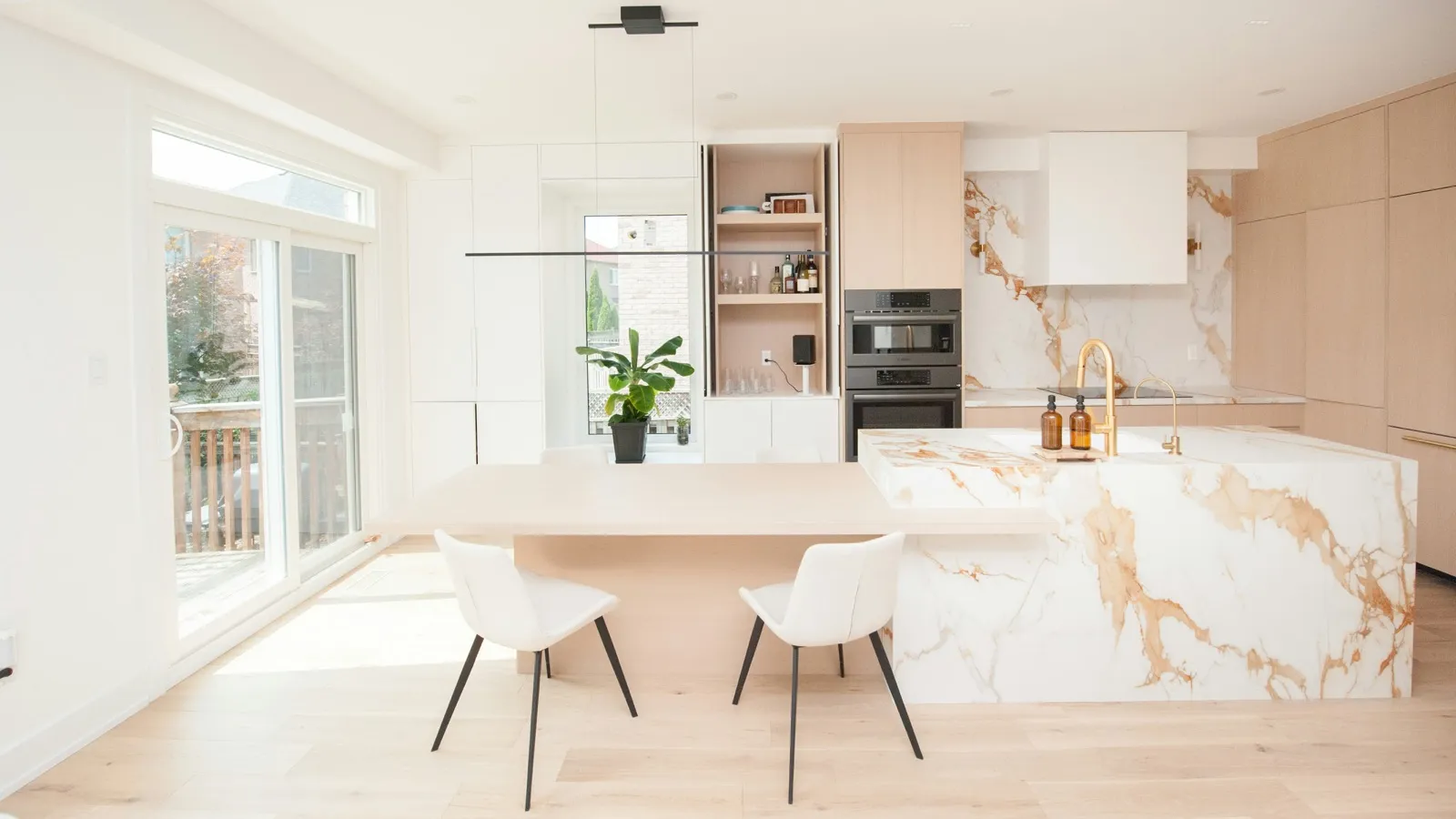
First Impressions on a Phone in a Westgate Ranch
So picture the visitor the whole build exists for. A Westgate homeowner is standing in an early-60s ranch kitchen that predates the outerbelt, phone in hand, finally serious. The numbers here come straight from our State of Remodeling 2026.
Get My Site InspectionShe taps your result. What renders in the next few seconds, a clear headline and real project photos, or a spinning hero and a cookie banner, decides whether your shop makes her list at all. The inspection scores that moment as its own category. "The average remodeling website scores 15.33 of 20 on first impression, 76.6% of the available points for the above-the-fold experience." - Fervor, Digital State of the Remodeling Industry (2026). The same crew also handles Remodeling Conversion Rate Optimization in Columbus, OH.
That average hides a wide spread, and the spread is pure design discipline rather than budget. The strong first screens answer three questions in two seconds: what you build, where you build it, and what she does next. For a Columbus build the answers write themselves. We run the same build nearby for Remodeling Website Design in Charleston, WV.
Kitchens and baths and whole-home work, the areas you actually cover (German Village, Clintonville, and Bexley intown; Dublin, Westerville, and Grove City around the outerbelt if your trucks go there), and a tappable way to book a consult. The weak first screens open with a stock skyline and the word "Welcome," and they leak her to the next tab.
"Mobile experience averages 10.45 of 15 points across remodeling contractor websites, 69.6% of the category maximum." - Fervor, Digital State of the Remodeling Industry (2026) And the mobile category as a whole sits at barely two-thirds of the points, which tells you the trade approves its builds on the wrong device. Approve your next build from your truck, on cellular, parked at a supply house off I-270. That's the screen your customers hold. Everything a desktop mockup makes look finished can fall apart there.
The Portfolio Problem: Galleries That Sell Without Sinking the Page
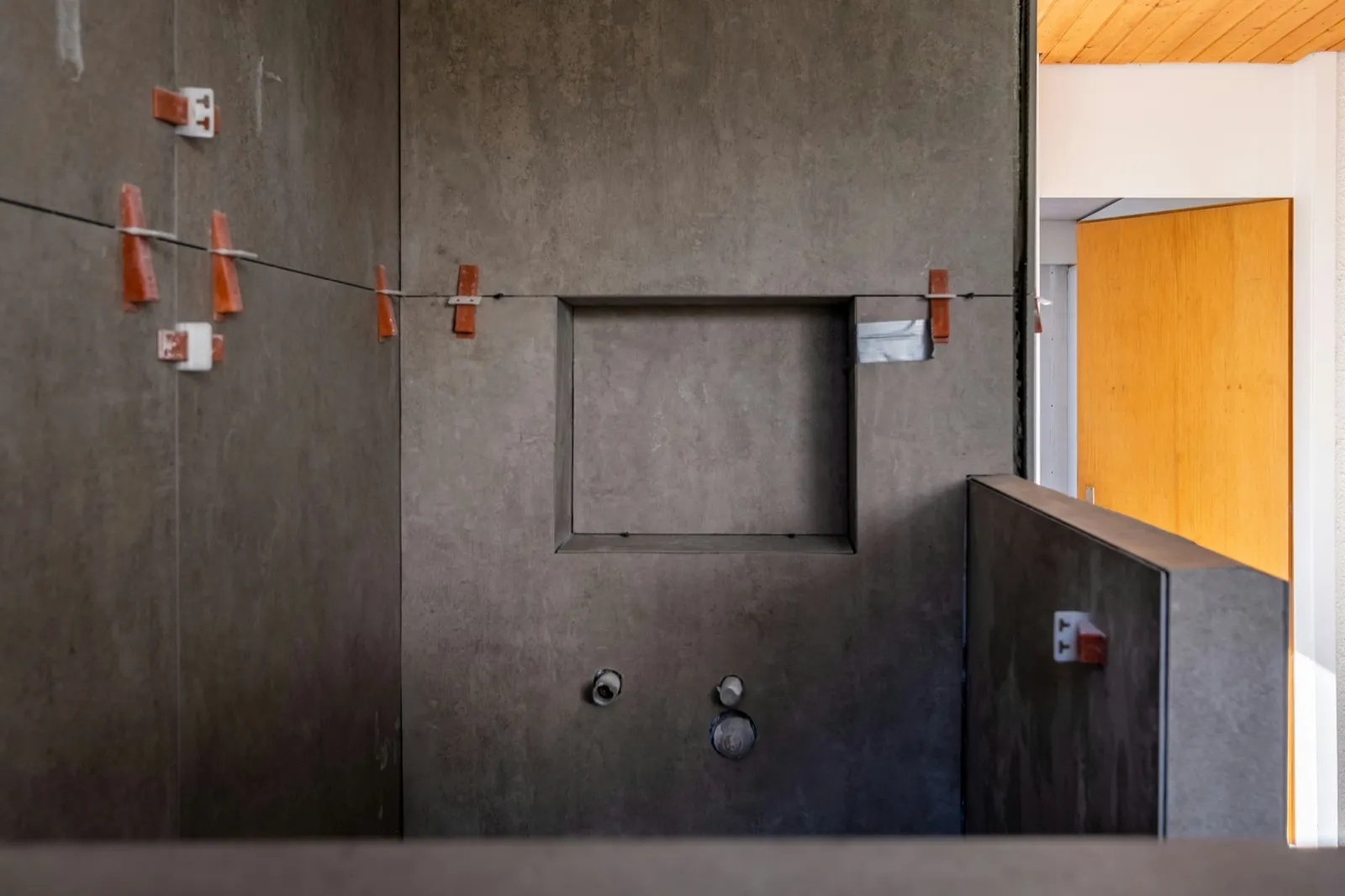
Here's the paradox at the center of remodeling web design. Your best sales tool is the before-and-after, and your before-and-afters are exactly what make your site slow.
Get My Site InspectionSo the craft isn't "add more photos." It's building an image pipeline that ships proof fast. WebP compression, images sized to the screen requesting them, lazy loading below the fold, real dimensions reserved so the layout doesn't jump. None of that is exotic. But it has to be an architecture decision, because a portfolio theme that dumps full-resolution camera files onto a phone is why 85.3% of the trade fails the speed bar.
And the patience of the remodeling buyer is what makes the fast gallery worth the engineering. This isn't an emergency trade where someone books the first result. She researches, for the better part of a year. "Homeowners spend roughly 9.6 months planning a kitchen remodel versus 5.1 months building it." - Houzz Inc. (2024)
Almost ten months on your site and your competitors' sites, and the Ohio calendar gives that window a shape. Real winter runs November into March, exterior work concentrates April through October, and the planning-and-quoting wave runs winter into spring ahead of the build season. So the shop that loads her portfolio instantly through every one of those winter visits compounds; a build that stalls donates her to the shop whose photos showed up. And the ticket behind that patience is why single-digit conversion gains matter here:
"41% of homeowners renovating their kitchen cite dissatisfaction with the old kitchen style as a reason to renovate." - Houzz Inc. (2026) Columbus mid-range full kitchens commonly land between $25,000 and $55,000, with high-end projects in Bexley and Upper Arlington running past $100,000. So one captured search, ten months patient, is worth real five-figure money, which is the plain math that makes the image pipeline the highest-ROI line in the whole build.

Project Pages Built for Columbus's Three Eras
But a template doesn't know this metro, and Columbus punishes templates with a housing stock that renovates in three eras at once.
Get My Site InspectionThe pre-war core is its own discipline: German Village's brick cottages and Italianates built 1840 to 1914, the signature one-and-a-half-story gable-roofed cottage on a limestone foundation, plus Clintonville's bungalows and Tudors, with boiler heat threading cast iron through every wall you open and federal lead-safe rules riding along on everything pre-1978. The outerbelt is a different conversation: a 1998 Polaris two-story renovates as a package, kitchen and baths and flooring and systems wearing out in trade samples street by street. A real remodeling web design in Columbus gives each era its own project pages instead of one "Kitchens" page with the city name swapped in.
The reason is structural, not stylistic. Google maps a query to a page, not to a business, so the shop with a real century-home project page wins that search against the shop with a bullet point. Every time. And there's a jurisdiction wrinkle no national theme carries: the metro rings the I-270 outerbelt and every quadrant permits separately, Columbus Building and Zoning Services inside city limits, then Dublin, Hilliard, Westerville, and the rest each running their own office. The page that names its jurisdictions honestly reads like the shop that's filed in all of them.
Kitchens still lead every build, and baths pull their own weight, especially the aging-in-place work the inner ring's long-tenured owners are quietly demanding: "68% of homeowners consider special needs (accessibility) when planning their bathroom projects." - Houzz Inc. (2025) But the page with a date on it is the ADU page. Columbus legalized accessory dwelling units by right in every residential district effective December 24, 2025, generally one per single-family lot, sized up to 65% of the main dwelling or 1,000 square feet, whichever is greater. Building permits still apply, and the historic commissions keep their authority, a German Village carriage-house conversion still needs its certificate.
But the demand math is brand new, in-law suites for the Intel-corridor influx and backyard units on Clintonville's deep lots, and the search results are still ordinance text. The build that ships a plain-English ADU project page in the ordinance's first year owns the next three years of those searches, so structure here is strategy.

Questions Contractors Ask Before Hiring Us
What does remodeling web design in Columbus actually get me?
A site that books the job instead of just describing it. The work is conversion architecture first, so every page in Columbus has a clear call path, real proof, and fast mobile load.
How is this different from the last agency that burned me?
You see the scoring framework, the benchmark data behind it, and your ranked fix list before any remediation work begins. It is a diagnosis you can evaluate, not a promise you have to trust.
How do you know this works for my trade?
The Fervor Grade framework was built by scoring 380 contractor sites across roofing, remodeling, and HVAC. Your trade's patterns are in the data, not borrowed from SaaS or dentists.
How long does it take?
A Booked by Design rebuild runs 8 to 12 weeks. It starts with a Site Inspection so the build targets the pages that are costing you calls.
Who owns the website and the accounts?
You do. The domain, the content, the analytics, every account we touch. Day one. No ownership traps, no holding your site hostage if you leave.
What if I do not like what the inspection finds?
Then you found out something that was already costing you, and now you know where. The inspection surfaces what is actually wrong on the site so you can decide what to fix.
Do you only work with contractors in Columbus?
No. We work with remodeling contractors across the region, and the research covers national brands too, so the benchmark holds whether you are downtown or two towns over.
How much does it cost?
A Booked by Design rebuild is one project price with no monthly lock-in. One booked job at your average ticket usually covers it, and we show you that math before you commit.
Will the changes hurt my current rankings?
No. The work protects what already ranks. We map the URLs and the equity first, fix the conversion leaks, and improve the pages that search already trusts rather than wiping them.
What do I have to do during the project?
Very little. The intake takes minutes, and the build work is ours to run from there. You keep running crews. We will only ask for things no one else can give us, like your real service area and your best photos.
Still Have Questions?
Give us a call expressing your specific needs, and we’ll see if we are a good fit for each other.
From Our Remodeling Clients
Real reviews from the contractors whose sites we rebuilt.

New contractor sites tend to launch with the review section empty or stocked with two older reviews from friends. That kills the trust the rest of the design was built to earn. NiceJob syncs Google reviews to the site automatically and prompts customers for new ones after each job, so the section fills in on its own. If you'd rather embed reviews manually via Google's widget, that works too. Either way, the site needs real reviews on it before homeowners will believe the rest of what it says.
Once the new site is live, you'll want proof it's booking calls. A service like CallRail assigns a dynamic tracking number per traffic source, so you can see which page earned the call. If you're setting up your first professional phone system, Unitel Voice gives you the business line those tracking numbers forward to. Or you can use the call tracking your CRM already includes.
Before you go, grade your own site
Get The Remodeling Website Diagnostic Checklist: the nine checks we pulled from inspecting 146 Remodeling contractor sites. It takes about ten minutes, and it shows you which fix wins back the most jobs first.
Your checklist is on its way.
Your copy of The Remodeling Website Diagnostic Checklist is landing in your inbox now. And if you would rather not wait, grab it right here.
Download it now