Austin Plumbing Website Design
You're getting clicks in Austin. They're just not calling. We rebuild your site around the one job that matters: turning a visitor into a booked job.
How Can We Help?
Choose the option that suits your needs.
Let’s Investigate
We will send your Site Inspection to the email you provided.
You’re in.
We’ll send your Site Inspection within 5 business days.
Let’s Chat
Book a time that works for you.

“Attentive, listened to every revision request, delivered on time. Would work with him again.”
- Hamza Najam

“Patient, on point, straightforward. Did amazing work. Would 100% recommend.”
- Ruben Mederos, HyperTemp HVAC

“Responsive, creative, exceeded expectations. Already seeing greater engagement from our clients.”
- George Jeorgy, Jeorgy's Landscape Construction

“Top-tier professionalism, real web design expertise, ideas I hadn't considered. Confidently recommend.”
- Aws Nassani, Four Eleven Contracting
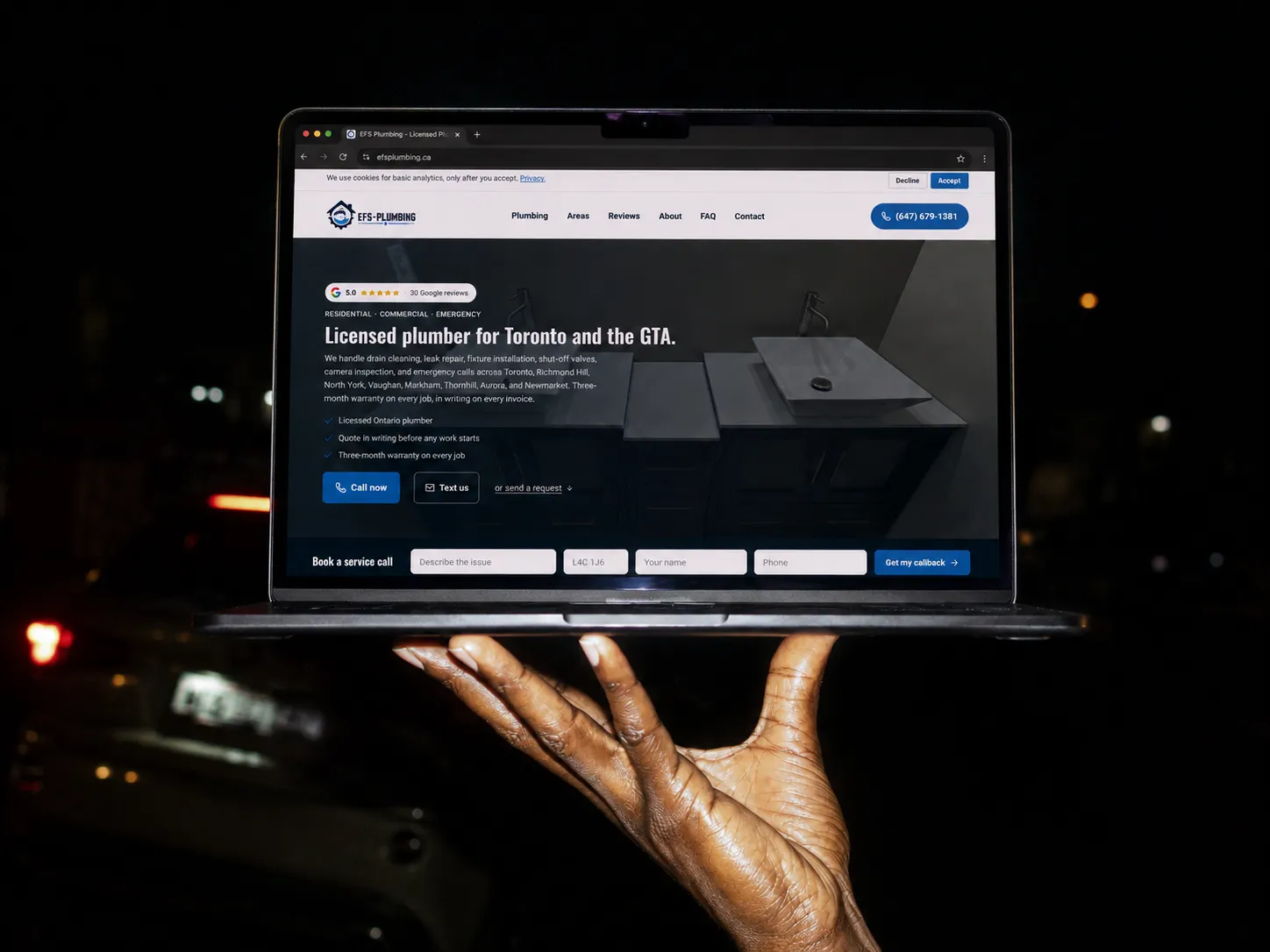

















































































Let’s talk about what your website could be doing for your business.
Call Us TodayThe Austin, TX Plumbing specifics your website needs.
Every angle below comes from how Austin, TX homeowners search, evaluate, and buy, built into your site to help boost conversions.
A Flooded-Kitchen Search Happens on a Phone
As a mobile page's load time climbs from one second to ten, the chance a visitor bounces jumps 123%. A homeowner watching water spread across the floor has zero patience for a slow site. So if your page crawls on a phone, you lose the emergency call to the next plumber before your homepage even finishes loading.
The Phone Number Belongs on Every Screen
61% of people say they are more likely to contact a local business whose site works well on a phone, and plumbing is the trade where that matters most. So a tap-to-call number goes in the header and a sticky mobile bar, not just on a contact page. A homeowner mid-emergency will not go hunting for it.
Show the License, Because They Check
Plumbing is state-regulated, and in Texas performing it without a license is unlawful. A homeowner about to let a stranger cut into their supply lines wants to see that license number, not take it on faith. So put it on the page. A missing credential reads as a red flag to exactly the careful buyer you want.
Freeze Season Turns a Small Site Into a Lifeline
The Insurance Institute for Business and Home Safety names burst pipes one of the most common causes of property damage in frigid weather. So a cold-snap homeowner is searching in a panic, and your site is their lifeline. A hero that states emergency availability and a visible number beats a slideshow every time the temperature drops.
Low-Contrast Text Is the Most Common Failure
Low-contrast text appears on 79.1% of home pages, the single most frequent accessibility problem online, and 94.8% of sites fail a WCAG check somewhere. A homeowner reading your after-hours number on a phone in a dim basement should not have to strain. If the copy that wins the call is gray-on-white, it is effectively invisible to the person who needs it.
The Fifth Circuit Wants A Nexus
Texas sits in the Fifth Circuit, which asks whether a website has a strong connection to a physical place of business before ADA duties attach. And a home-services company clears that bar easily, because your site exists to book physical work at physical addresses. So the nexus test that shields pure online sellers does little for a Dallas or Houston contractor. Your site is the front counter for a physical trade.
Demand Letters Are Rising Here
Enforcement actions, lawsuits, and demand letters against Texas businesses have climbed over recent years, even without a Texas statute that adds damages beyond the ADA. And the federal remedy still forces fixes and pays the plaintiff's lawyers. So a San Antonio or Austin contractor gains nothing by waiting. You would rather fix a contrast or keyboard issue on your own schedule than on a plaintiff attorney's.
Fake Reviews Are Now Illegal
The FTC's Rule on Consumer Reviews and Testimonials took effect on October 21, 2024, and it targets exactly the shortcuts contractors get tempted to take. You cannot buy reviews, write them as the owner without disclosing it, or post testimonials from people who never hired you. And the FTC can seek civil penalties of up to $53,088 per violation. So that glowing five-star wall needs to be real and disclosed.
Why Austin Homeowners Buy Plumbers On a Phone
Austin moves fast, and the buying happens on a screen the size of a hand. A homeowner in Westlake who hears water running with every fixture shut off is not walking to a desktop. This page is one piece of our Plumbing Website Design work.
Get My Site InspectionJudged in three seconds
They are standing in a hallway, thumb already on the screen, searching while the meter spins. So your site gets judged in about three seconds on a 5-inch display, and that judgment decides whether they tap your number or scroll to the next shop. And the ground under this city makes that moment common. The numbers here come straight from our CRO Index statistics.
Slab leaks under the clay
Much of the metro sits on Hill Country limestone and thin rocky soil over expansive clay, and slab foundations poured across it shift enough to crack the copper running underneath, which keeps slab leaks a year-round revenue line here. The same crew also handles Plumbing SEO in Austin, TX.
Old bungalows vs new sprawl
The neighbourhoods split how that demand shows up. You have older 1950s and 1960s bungalow stock in East Austin and Hyde Park running galvanized and cast iron that corrodes and backs up. And you have newer master-planned sprawl out in Cedar Park, Leander, and Pflugerville where the work skews toward water heaters, fixtures, and whole-home repipes on builder-grade PEX. We run the same build nearby for Plumbing Website Design in Houston, TX.
One flat page serves neither
So a strong plumbing web design company in Austin maps a clear page to each of those realities, because a homeowner near South Congress and a homeowner in Round Rock are not searching for the same job, and one flat catch-all page serves neither of them well.
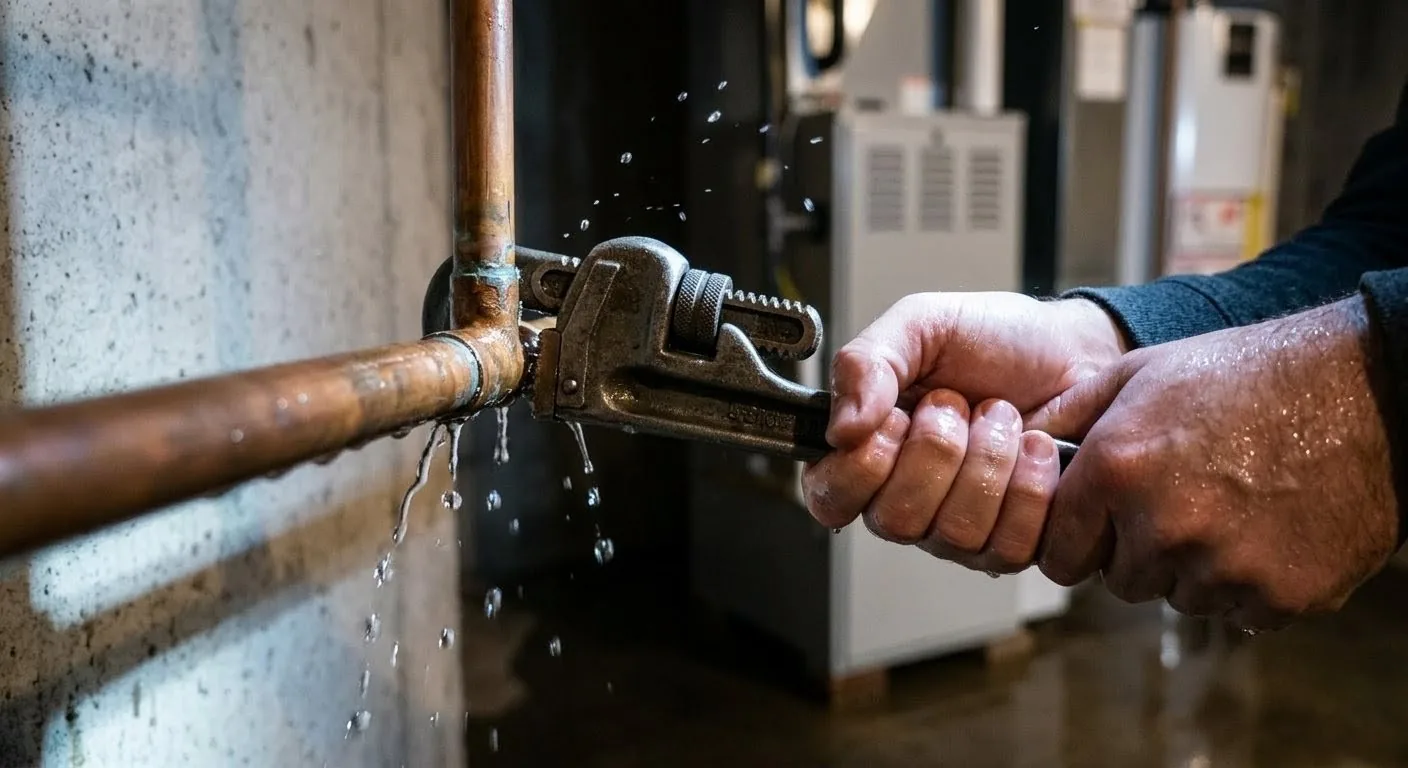
What the First Three Seconds Have to Do
A homeowner under pressure behaves in a way worth understanding. They are scared, the water is running, and they have no patience for a slow page or a phone number buried in a footer.
Get My Site InspectionReal, close, callable in seconds
So the top of your site has to answer three questions before they scroll: are you real, are you close, and can I call you right now. Your phone number sits in the header as a tap-to-call link, big enough for a thumb. Your service area names the suburbs out loud, Round Rock to Westlake, so a Pflugerville homeowner knows you cover them.
The license number in plain view
And your license number sits in plain view, because a stranger handing you their slab is checking that you are who you say. "Among homeowners who made improvements, 32% upgraded their water heaters, dishwashers, or garbage disposals." - U.S. Census Bureau and U.S. Department of Housing and Urban Development (2024)
What Austin already pays for
That number matters for the build, because it tells you what work Austin homeowners are already paying for. Water heaters, disposals, and fixtures are bread-and-butter calls here, and very hard water across Travis and Williamson County corrodes anodes and clogs aerators faster than most metros see.
Own pages, not one 'services' tab
So those jobs deserve their own pages with real photos and plain pricing context, not a single "services" tab that lumps a $300 water heater flush in with a $9,000 repipe.
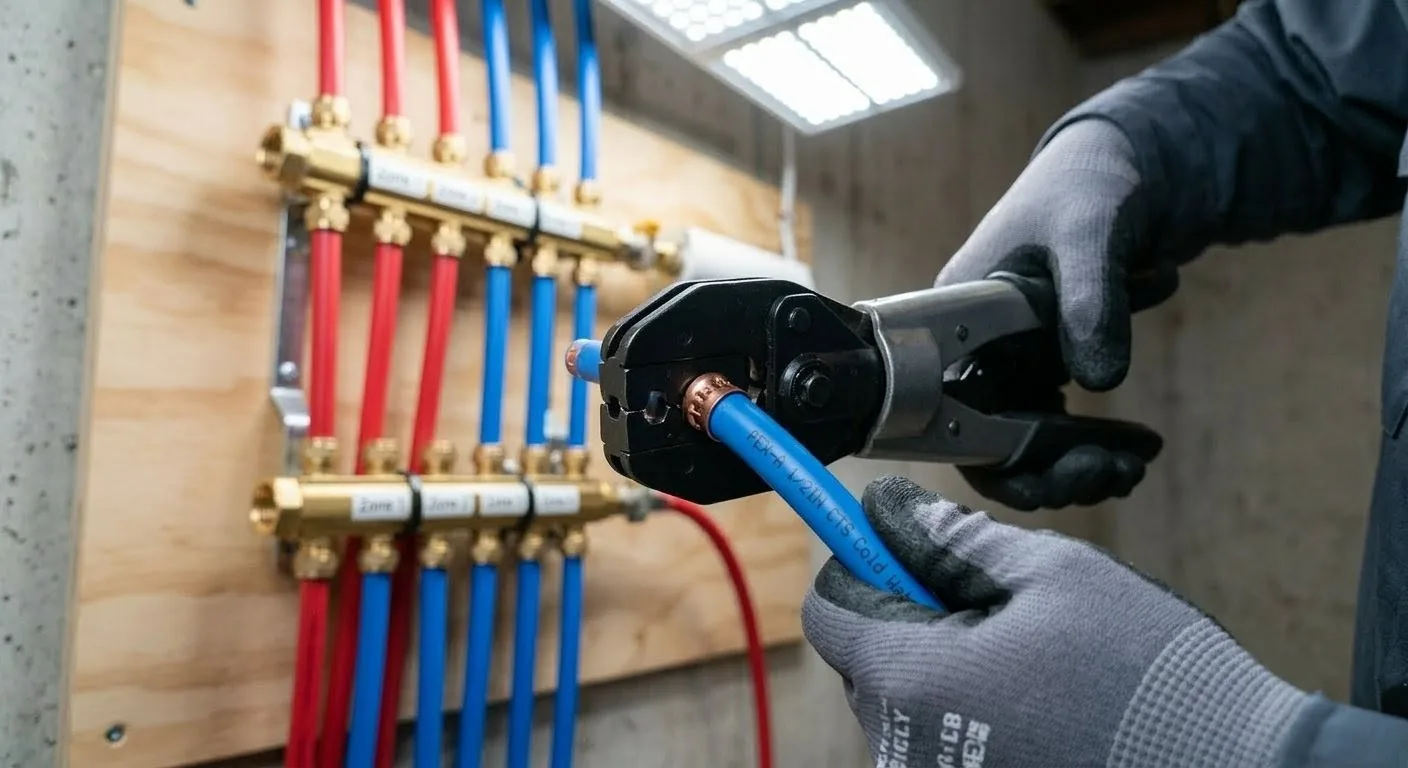
Speed Is the Whole Ballgame on Mobile
A plumbing web design in Austin lives or dies on load time.
Get My Site InspectionTwo seconds before the bounce
A homeowner over a burst line will give your page about two seconds before the thumb moves on, and a heavy template stuffed with sliders and tracking scripts blows right past that. So the build strips weight: compressed images, no auto-playing video, a font that loads instantly, and a call button that appears before anything else finishes rendering. And speed is not a vanity metric here.
Tap or bounce, half a second
It is the difference between a tap and a bounce, measured in the half-second your competitor's lighter site beats you to.
Four more jobs, same traffic
The math on your own job value tells the story plainly. Your average ticket might be $450, and your site might bring in eight calls a month right now. If a faster, clearer build lifts that to twelve calls, that is four more jobs, roughly $1,800 a month, $21,600 a year, off the same traffic you already get. So you are not paying for more visitors.
Stop losing who already landed
You are paying to stop losing the ones who already land on your page and leave because it loaded slow or hid your number. And on the Austin side, that bounce happens most on the freeze-burst and slab-leak searches where the homeowner has the least patience and the most urgency.
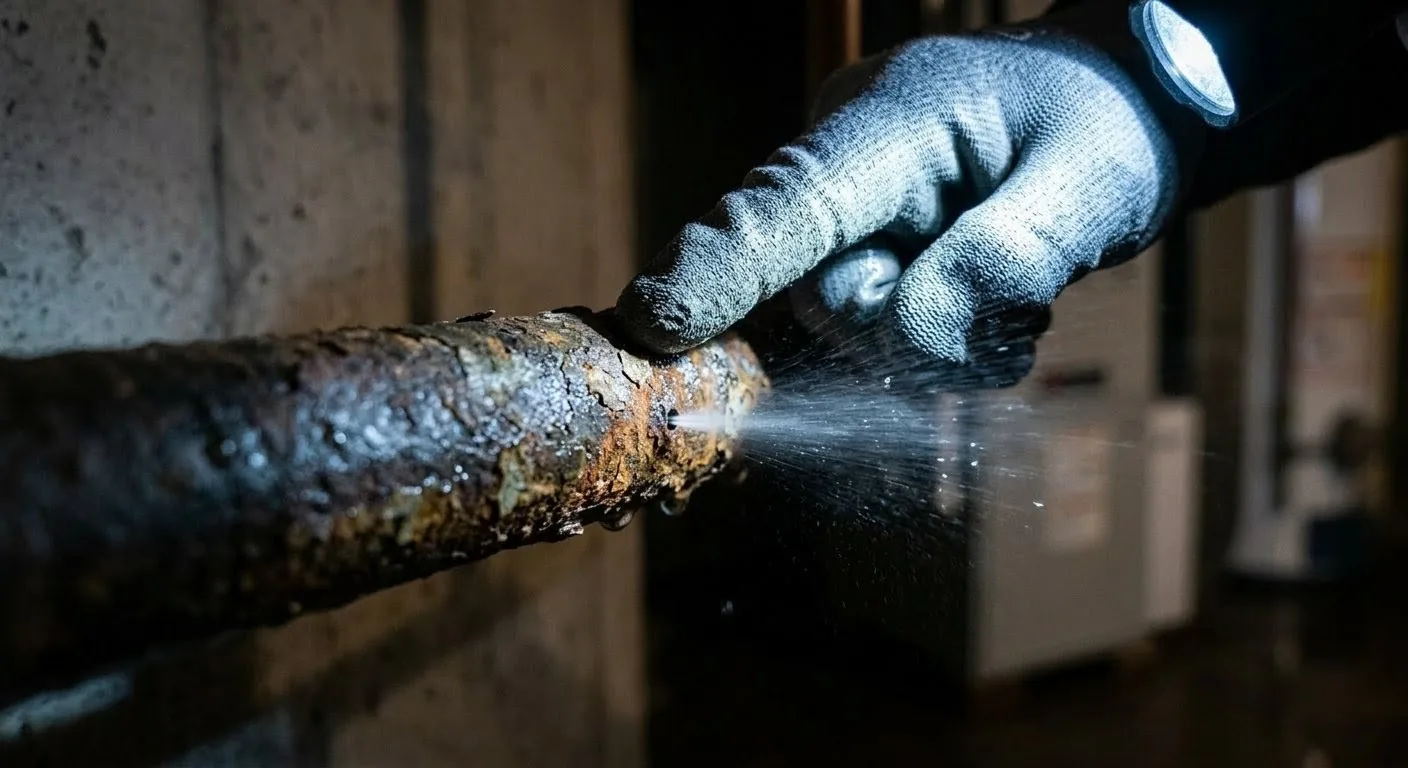
Trust Signals That Earn a Stranger's Call
A homeowner letting you cut into their slab is taking a real risk, and your site has to lower it before the call.
Get My Site InspectionProof where the thumb lands
So you put the proof where a thumb lands. Your Google reviews sit near the top with the count and the stars visible. Real photos of your trucks and your crew on Austin driveways replace the stock images of a model in a clean polo. Your license and insurance numbers show plainly.
'That is exactly my problem'
And a short, specific note about the work you do most, slab leak detection on limestone lots, lets a Cedar Park homeowner read it and think, that is exactly my problem. "The median homeowner spending on plumbing fixtures upgrades was about $800 (2021-2023 data)." - U.S. Census Bureau and U.S. Department of Housing and Urban Development (2024)
Reviews as load-bearing, not decoration
So an $800 fixture job is a real decision for the homeowner, not an impulse, and your site has to carry the trust to win it against the next shop. That is why the best plumbing web design in Austin treats reviews and real photos as load-bearing parts of the page, not decoration bolted on at the end.
The site that looks real
Because a homeowner comparing two plumbers at midnight picks the one whose site looks like a real local business, run by people who show their faces.
Questions Contractors Ask Before Hiring Us
What does Plumbing web design in Austin actually get me?
A site that books the job instead of just describing it. The work is conversion architecture first, so every page in Austin has a clear call path, real proof, and fast mobile load.
How is this different from the last agency that burned me?
You see the scoring framework, the benchmark data behind it, and your ranked fix list before any remediation work begins. It is a diagnosis you can evaluate, not a promise you have to trust.
How do you know this works for my trade?
The Fervor Grade framework was built by scoring 380 contractor sites across roofing, remodeling, and HVAC. Your trade's patterns are in the data, not borrowed from SaaS or dentists.
How long does it take?
A Booked by Design rebuild runs 8 to 12 weeks. It starts with a Site Inspection so the build targets the pages that are costing you calls.
Who owns the website and the accounts?
You do. The domain, the content, the analytics, every account we touch. Day one. No ownership traps, no holding your site hostage if you leave.
What if I do not like what the inspection finds?
Then you found out something that was already costing you, and now you know where. The inspection surfaces what is actually wrong on the site so you can decide what to fix.
Do you only work with contractors in Austin?
No. We work with Plumbing contractors across the region, and the research covers national brands too, so the benchmark holds whether you are downtown or two towns over.
How much does it cost?
A Booked by Design rebuild is one project price with no monthly lock-in. One booked job at your average ticket usually covers it, and we show you that math before you commit.
Will the changes hurt my current rankings?
No. The work protects what already ranks. We map the URLs and the equity first, fix the conversion leaks, and improve the pages that search already trusts rather than wiping them.
What do I have to do during the project?
Very little. The intake takes minutes, and the build work is ours to run from there. You keep running crews. We will only ask for things no one else can give us, like your real service area and your best photos.
Still Have Questions?
Give us a call expressing your specific needs, and we’ll see if we are a good fit for each other.
New contractor sites tend to launch with the review section empty or stocked with two older reviews from friends. That kills the trust the rest of the design was built to earn. NiceJob syncs Google reviews to the site automatically and prompts customers for new ones after each job, so the section fills in on its own. If you'd rather embed reviews manually via Google's widget, that works too. Either way, the site needs real reviews on it before homeowners will believe the rest of what it says.
Once the new site is live, you'll want proof it's booking calls. A service like CallRail assigns a dynamic tracking number per traffic source, so you can see which page earned the call. If you're setting up your first professional phone system, Unitel Voice gives you the business line those tracking numbers forward to. Or you can use the call tracking your CRM already includes.