Baltimore Roofing Website Design
You're getting clicks in Baltimore. They're just not calling. We rebuild your site around the one job that matters: turning a visitor into a booked job.
How Can We Help?
Choose the option that suits your needs.
Let’s Investigate
We will send your Site Inspection to the email you provided.
You’re in.
We’ll send your Site Inspection within 5 business days.
Let’s Chat
Book a time that works for you.

“Attentive, listened to every revision request, delivered on time. Would work with him again.”
- Hamza Najam

“Patient, on point, straightforward. Did amazing work. Would 100% recommend.”
- Ruben Mederos, HyperTemp HVAC

“Responsive, creative, exceeded expectations. Already seeing greater engagement from our clients.”
- George Jeorgy, Jeorgy's Landscape Construction

“Top-tier professionalism, real web design expertise, ideas I hadn't considered. Confidently recommend.”
- Aws Nassani, Four Eleven Contracting















































































Let’s talk about what your website could be doing for your business.
Call Us TodayThe Baltimore, MD Roofing specifics your website needs.
Every angle below comes from how Baltimore, MD homeowners search, evaluate, and buy, built into your site to help boost conversions.
Nor'easters Load Baltimore's Flat Roofs
Baltimore's fall and winter nor'easters stack heavy, wet snow onto roofs built to a 30 pounds per square foot ground snow load, and the city's dense rows of flat and low-slope roofs have nowhere to shed it. That standing weight, then the melt-refreeze cycle, is what drives water under the membrane. So on a Baltimore rowhouse the snow does not slide off the way it does on a steep suburban roof. It sits, and it works its way in.
Rowhouse Roofs Aren't Shingle Roofs
Across Federal Hill, Fells Point, and Canton, Baltimore's rowhouses carry flat and low-slope roofs finished in modified bitumen, built-up asphalt, or rubber membrane, not the pitched shingles most contractors default to. Those systems fail differently, at seams, flashings, and drains, and they demand a crew that actually works low-slope. So a shingle specialist guessing across your rowhouse roof is how a small ponding problem becomes a ceiling stain in the top-floor bedroom.
Maryland Code Demands An Ice Barrier
Maryland sits in climate zones 4A and 5A, and the state building code requires an ice barrier at the eaves under the International Residential Code, a self-adhering membrane run at least 24 inches inside the exterior wall line. That layer is your last defense when a nor'easter builds an ice dam and forces water backward up the slope. So a Baltimore reroof that skips the ice-and-water shield to save a few dollars is skipping the one part that fails safely.
Every Maryland County Uses One Code Edition
Maryland's Building Performance Standards force every jurisdiction in the state onto the same code edition, and the current standard adopts the 2021 International Residential and Building Codes, effective statewide in 2023. So a contractor cannot claim your county plays by looser rules, because Baltimore City and the surrounding counties all answer to the same 2021 requirements for fastening, underlayment, and wind design. That uniformity is your leverage when a crew tries to skip a step the code plainly requires.
Maryland Backs You With A Guaranty Fund
Anyone doing residential roofing in Maryland must hold a Maryland Home Improvement Commission license, and the state runs a Guaranty Fund that can reimburse a homeowner up to 30,000 dollars for losses caused by a licensed contractor who fails you. Unlicensed crews leave you outside that protection entirely. So checking a live MHIC number before you sign is not busywork. It is the difference between having recourse and eating the loss when a job goes wrong.
Your Website Is A Storefront
Title III of the ADA treats your business as a place of public accommodation, and courts increasingly extend that duty to the website tied to it. A private plaintiff cannot win money from you under the federal law itself, but they can force fixes and collect their attorney fees. So the cheap-looking demand letter still costs you real money once the lawyers get involved.
WCAG 2.1 AA Is The Yardstick
No ADA regulation spells out a web standard for private businesses yet, so courts and settlements borrow one. And the standard they borrow is WCAG 2.1 Level AA, the same benchmark the DOJ wrote into its 2024 rule for state and local government sites. So when a complaint lists your failures, it reads like a WCAG checklist. You want to pass that checklist before a plaintiff ever runs it.
Fake Reviews Are Now Illegal
The FTC's Rule on Consumer Reviews and Testimonials took effect on October 21, 2024, and it targets exactly the shortcuts contractors get tempted to take. You cannot buy reviews, write them as the owner without disclosing it, or post testimonials from people who never hired you. And the FTC can seek civil penalties of up to $53,088 per violation. So that glowing five-star wall needs to be real and disclosed.
Why A Slow Site Loses The Storm-Week Search
Here's the part that stings. You've got twenty years on the ladder, GAF Master Elite, and a five-star reputation from Towson to Federal Hill. This page is one piece of our Roofing Website Design work.
Get My Site InspectionBut the guy two zip codes over with half your experience books the job, because his page loaded in three seconds and yours took nine. So she never saw your reviews. And she never got to the part where you're clearly the better roofer. The site decided for her. The numbers here come straight from our State of Roofing 2026.
And the math behind that loss isn't small. Say a storm drives 40 driveway searches your way in a week. If a slow load bleeds even half of them before they tap anything, that's 20 lost shots at a $4,000 reroof. You don't see those 20. They never call, never email, never show up in any report. They just bounce, quietly, while you're up on a roof in Canton. The same crew also handles Roofing Conversion Rate Optimization in Baltimore, MD.
"In hail-prone states, average roof lifespan is 15 years vs 22 years in milder western states; 38% of U.S. homes have roofs in moderate to poor condition (Roofing Contractor) with 60% higher loss costs" - Verisk Analytics (2025) And here's the quiet killer. Your older site was probably built to look nice on a desktop in 2017. It's a brochure. Pretty header, slow slideshow, a contact form buried three clicks deep. That worked when people researched roofers over a weekend. But the storm search is a transaction happening in real time, not weekend research, and a brochure can't transact. We run the same build nearby for Roofing Website Design in Wilmington, DE.
She needs to do one thing, fast, and a brochure gives her ten things slowly. So treat speed as a weather problem, because that's what it is in this city. Baltimore hands you demand spikes all year: summer derechos, the freeze-thaw cycle that cracks flashing through February, the wet spring that finds every weak seam. Each one sends a wave of panicked searchers to their phones. And if your page can't catch that wave in the four seconds before it crests, the wave goes to someone else's number.
What Mobile-First Roofing Web Design Baltimore Buyers Reward
She's on her phone in a driveway with one bar of LTE. That's your real test environment, not the 27-inch monitor where you approved the design.
Get My Site InspectionSo the page has to render fast and clean on a mid-range Android over cellular, with the load coming in under four seconds. Every second past that, you lose a chunk of her. Two seconds slower and a measurable share of driveway searchers are already gone.
And the fix is plain enough. A lightweight build, compressed images, no autoplay video eating her data, and a layout that puts the one action she needs right where her thumb already is. So good roofing web design in Baltimore starts with weight on the page, measured in kilobytes you can count. "From 2021 to 2023, homeowners spent $93.5B on roofing across 8.3 million projects (AHS-based estimates)." - U.S. Census Bureau and U.S. Department of Housing and Urban Development (2024)
Put the phone number at the top, big, as a tappable button. Not in a header she has to hunt for. Not behind a menu. The first thing her thumb finds should dial your shop. Roughly half of storm searchers want a callback inside two days, and a chunk of them would rather just call right now while the panic is fresh. So give them the tap.
A buried number is a number that never rings. And test it where she is. Not on your office fiber. Throttle a phone to a slow connection, stand outside, and time the load. If the hero image is a 4MB photo of a finished roof, it's costing you calls in Mount Washington and Roland Park every storm week. Trim it. The goal is the page is usable before she gets impatient, which on a driveway in the rain is about four seconds flat.
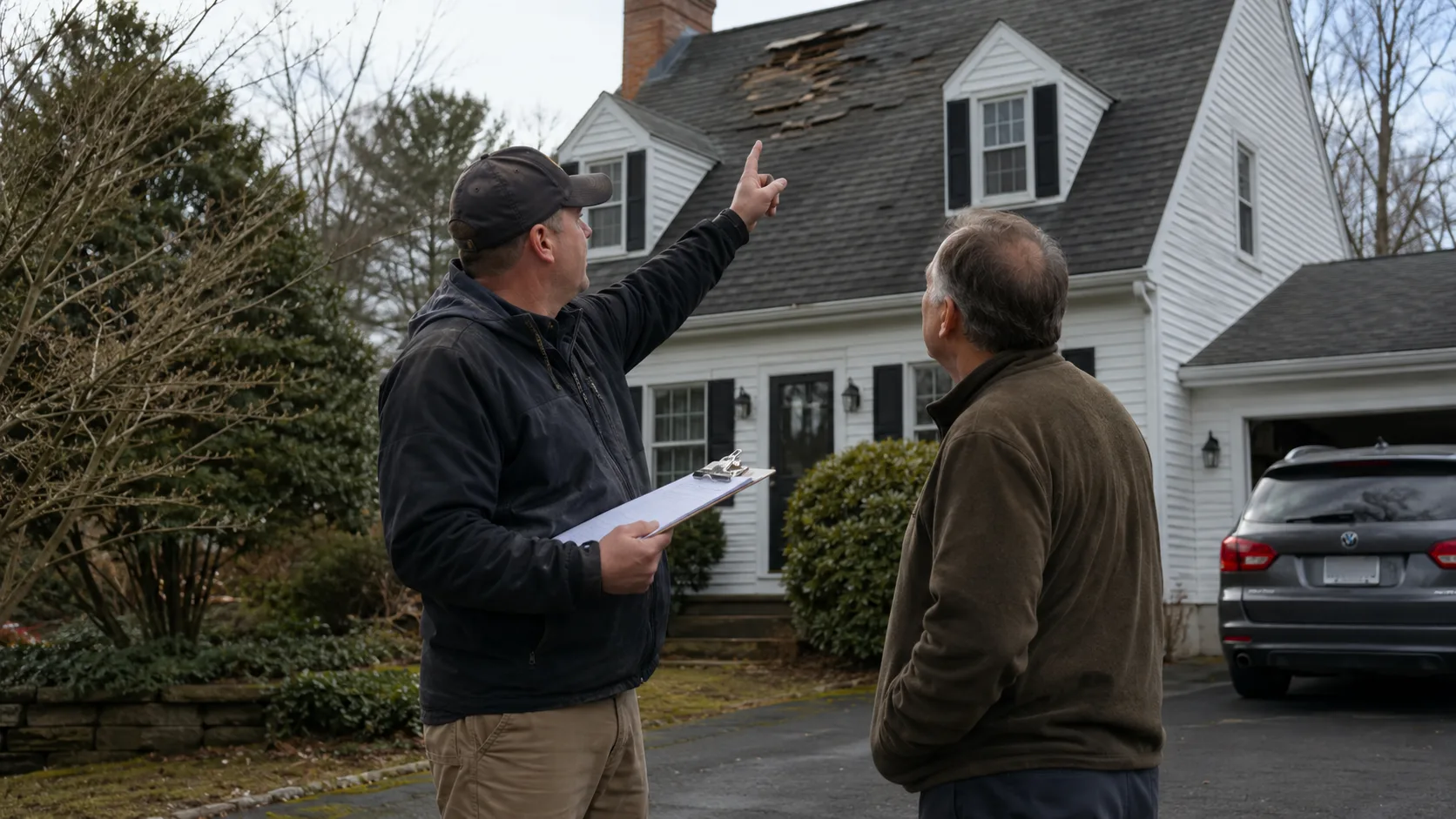
The Short Form That Books, Not The Eleven-Field Wall
You've seen the forms. Name, email, phone, address, roof age, roof type, square footage, insurance carrier, preferred contact time, how did you hear about us, and a CAPTCHA for dessert.
Get My Site InspectionEleven fields. She's standing in the rain. She fills out two and quits. So you got the visit, you got the interest, and you still got nothing, because the form asked for a mortgage application when all you needed was a name and a number.
Cut it to the bone. Name, phone, one line for "what's going on." Three fields. You can get the roof age and the insurance details on the call, the call she'll take because you made the first step take eight seconds instead of three minutes.
"Among homeowners who renovated in 2024, 84% used cash from savings and 29% used a credit card to fund renovation projects (multiple funding sources allowed)." - Houzz Inc. (2025)
And every field you add is a reason to quit. Think of it as a leak. Each extra box loses you a slice of the people who started filling it out. Drop from eleven fields to three and you keep the ones who would've bailed at field five. So those eight fields you cut come back to you as booked jobs you weren't getting before. So put the ask right next to the reason to trust you. The form and the reviews live in the same eyeful, not on separate scrolls. She types her number while her eyes are still on the five-star quote from a neighbor in Hampden. The proof carries her hand to the submit button.
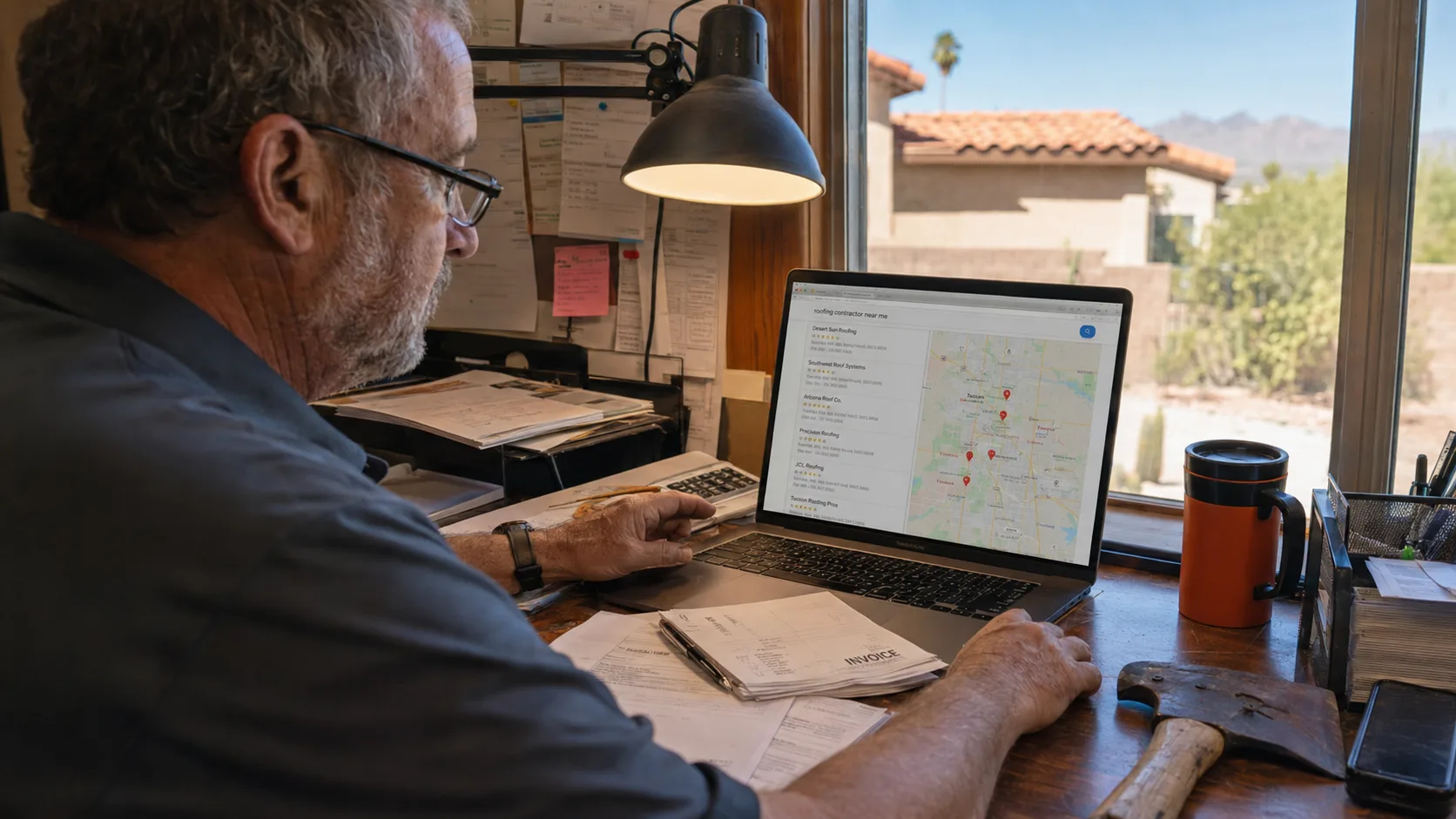
Proof That Sits Beside The Ask
Trust gets built in the half-second she's deciding whether you're real. So the proof has to be visible the moment she lands, not parked on an "About" page she'll never open.
Get My Site InspectionAnd it has to be real reviews with real first names. So smart roofing web design in Baltimore puts photos of actual roofs you've done around the city up front, not stock images of a generic suburb that could be anywhere in America.
"Among renovating homeowners, 44% add or redo a roof as part of their exterior projects." - Houzz Inc. (2024) And homeowners can smell a stock photo. A glossy stock roof says "this could be any company." A real photo of a tear-off on a Federal Hill rowhouse, with the distinctive cornice she recognizes, says "these people work in my neighborhood." That recognition is worth more than any badge. Show ten real jobs from around the city and let the work vouch for you.
So pull your Google reviews onto the page near the top, near the form, near the phone button. Don't make her open a new tab to find out if you're trustworthy. A homeowner picking a roofer for a $13,000 job wants reassurance before she commits, and that reassurance should sit one glance away from the action you want her to take.
"In 2024, 22% of renovating homeowners undertook roofing upgrades, with a median spend of $13,000." - Houzz Inc. (2025)
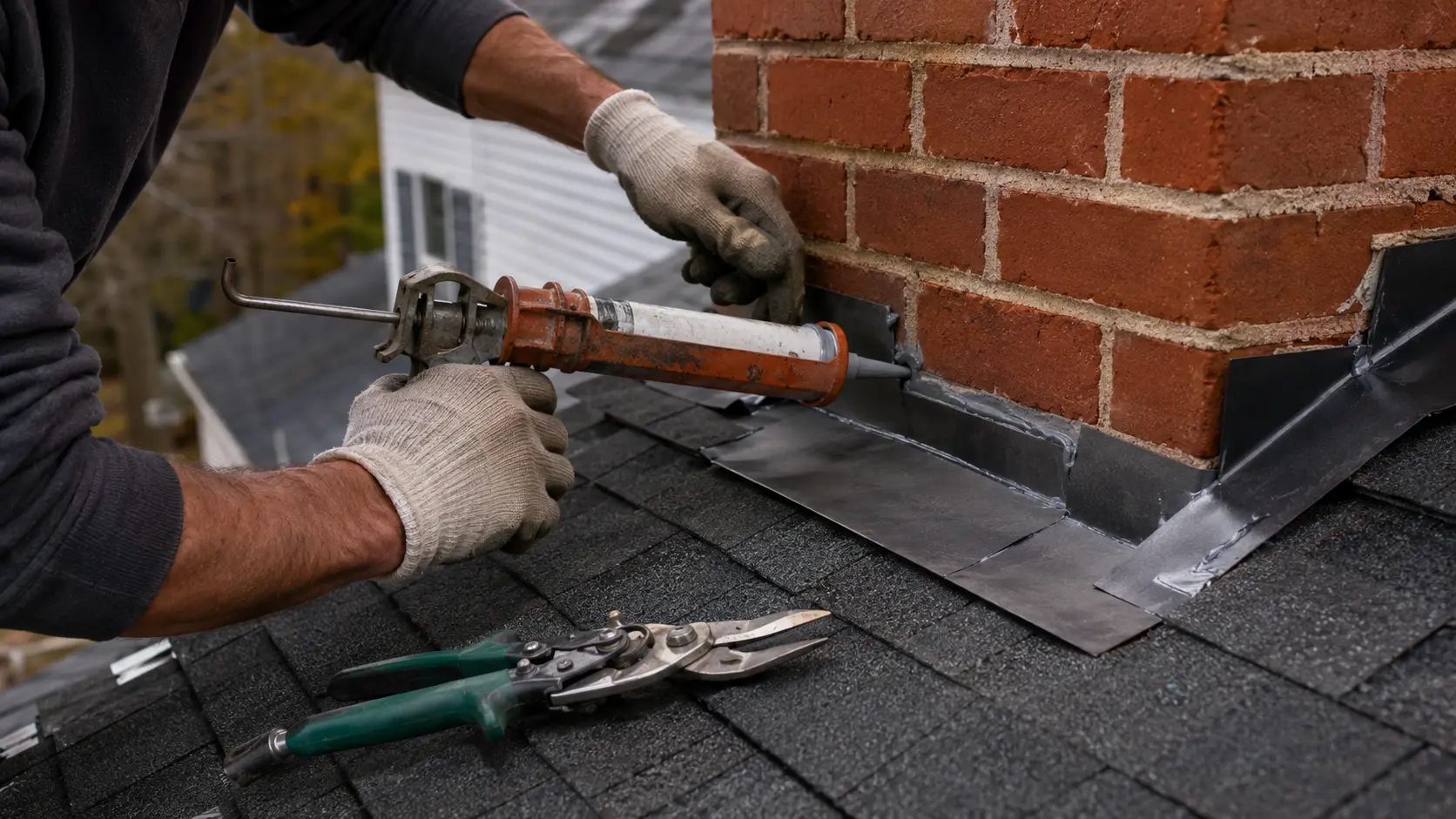
Questions Contractors Ask Before Hiring Us
What does roofing web design in Baltimore actually get me?
A site that books the job instead of just describing it. The work is conversion architecture first, so every page in Baltimore has a clear call path, real proof, and fast mobile load.
How is this different from the last agency that burned me?
You see the scoring framework, the benchmark data behind it, and your ranked fix list before any remediation work begins. It is a diagnosis you can evaluate, not a promise you have to trust.
How do you know this works for my trade?
The Fervor Grade framework was built by scoring 380 contractor sites across roofing, remodeling, and HVAC. Your trade's patterns are in the data, not borrowed from SaaS or dentists.
How long does it take?
A Booked by Design rebuild runs 8 to 12 weeks. It starts with a Site Inspection so the build targets the pages that are costing you calls.
Who owns the website and the accounts?
You do. The domain, the content, the analytics, every account we touch. Day one. No ownership traps, no holding your site hostage if you leave.
What if I do not like what the inspection finds?
Then you found out something that was already costing you, and now you know where. The inspection surfaces what is actually wrong on the site so you can decide what to fix.
Do you only work with contractors in Baltimore?
No. We work with roofing contractors across the region, and the research covers national brands too, so the benchmark holds whether you are downtown or two towns over.
How much does it cost?
A Booked by Design rebuild is one project price with no monthly lock-in. One booked job at your average ticket usually covers it, and we show you that math before you commit.
Will the changes hurt my current rankings?
No. The work protects what already ranks. We map the URLs and the equity first, fix the conversion leaks, and improve the pages that search already trusts rather than wiping them.
What do I have to do during the project?
Very little. The intake takes minutes, and the build work is ours to run from there. You keep running crews. We will only ask for things no one else can give us, like your real service area and your best photos.
Still Have Questions?
Give us a call expressing your specific needs, and we’ll see if we are a good fit for each other.
New contractor sites tend to launch with the review section empty or stocked with two older reviews from friends. That kills the trust the rest of the design was built to earn. NiceJob syncs Google reviews to the site automatically and prompts customers for new ones after each job, so the section fills in on its own. If you'd rather embed reviews manually via Google's widget, that works too. Either way, the site needs real reviews on it before homeowners will believe the rest of what it says.
Once the new site is live, you'll want proof it's booking calls. A service like CallRail assigns a dynamic tracking number per traffic source, so you can see which page earned the call. If you're setting up your first professional phone system, Unitel Voice gives you the business line those tracking numbers forward to. Or you can use the call tracking your CRM already includes.
Before you go, grade your own site
Get The Roofing Website Diagnostic Checklist: the nine checks we pulled from inspecting 130 Roofing contractor sites. It takes about ten minutes, and it shows you which fix wins back the most jobs first.
Your checklist is on its way.
Your copy of The Roofing Website Diagnostic Checklist is landing in your inbox now. And if you would rather not wait, grab it right here.
Download it now