Rank on Google for "roofer near me" in Phoenix.
Right now, someone in Phoenix is Googling "roofer near me." We get you showing up first, then turn that click into a booked job.
How Can We Help?
Choose the option that suits your needs.
Let’s Investigate
We will send your Site Inspection to the email you provided.
You’re in.
We’ll send your Site Inspection within 5 business days.
Let’s Chat
Book a time that works for you.

“Attentive, listened to every revision request, delivered on time. Would work with him again.”
- Hamza Najam

“Patient, on point, straightforward. Did amazing work. Would 100% recommend.”
- Ruben Mederos, HyperTemp HVAC

“Responsive, creative, exceeded expectations. Already seeing greater engagement from our clients.”
- George Jeorgy, Jeorgy's Landscape Construction

“Top-tier professionalism, real web design expertise, ideas I hadn't considered. Confidently recommend.”
- Aws Nassani, Four Eleven Contracting
















































































Let’s talk about what your website could be doing for your business.
Call Us TodayThe Phoenix, AZ Roofing specifics your website needs.
Every angle below comes from how Phoenix, AZ homeowners search, evaluate, and buy, built into your site to help boost conversions.
115 Degrees Cooks Your Shingles
When Phoenix air hits 115 degrees, an asphalt shingle surface can reach 170 to 195 degrees, and that heat bakes the oils out of the asphalt. So shingles that last 25 to 30 years elsewhere often give out in 15 to 20 here, and a five year old Phoenix roof can look like a fifteen year old roof anywhere else. Ventilation and UV-reflective coatings are how you slow the cooking.
Monsoon Microbursts Rip Tiles Loose
Phoenix monsoon season runs June 15 through September 30, and its microbursts slam the ground at 60 to 100 mph, lifting loose tile and tearing ridge caps off the peak. On foam roofs the same downdraft peels the coating back at the parapet. So a Phoenix roof that survives the calm months can still lose its edge in a single July storm. The fasteners and the perimeter fail first.
Haboobs Sandblast Your Roof Dry
A Phoenix haboob is a wall of blowing dust that can drop visibility to near zero in seconds, and it carries abrasive particulate that strips granules from shingles and works grit into cracked tile mortar. It does all of that without a single raindrop. So in Phoenix, wind and dust age a roof even in a dry month, and the damage hides in hairline tile cracks you cannot see from the ground.
Arizona's ROC Draws The Line At $1,000
Arizona routes roofing licenses through the Registrar of Contractors, and no one may perform or advertise roofing work valued at $1,000 or more without a license. Residential roofing falls under the CR-42 classification, which requires documented journeyman experience. So a legitimate Phoenix roofer carries a ROC number you can verify, and the handyman offering a cheap tile fix over that threshold is working illegally.
Tile Lasts 50 Years, Underlayment Does Not
Concrete and clay tile on a Phoenix roof can serve 50 years or more, but the underlayment beneath it typically needs replacement every 20 to 25 years. So the classic Phoenix mistake is assuming a tile roof is permanent. The tiles may look fine while the waterproofing under them has failed, and that is exactly where monsoon rain finds its way in. A tile lift and re-felt is the real Phoenix reroof.
Foam Roofs Need A Recoat Clock
Flat Phoenix roofs often wear sprayed polyurethane foam sealed by a protective coating, and hail and dust pit that coating over time. Each little crater is a spot where standing water from the next monsoon finds a weak point. So a foam roof is not installed once and forgotten. It runs on a recoat schedule, and the Phoenix owner who skips it trades a cheap recoat for an expensive tear-off.
Phoenix Builds To The 2018 IRC
The City of Phoenix enforces the 2018 International Residential Code with local amendments, and it limits reroofing to a single layer over the existing one before a full tear-off is required. For lower slopes it also demands two layers of underlayment. So the Phoenix bid that promises a quick single-layer overlay on an already doubled roof is quoting a job the code will not pass.
ARCA Sets The Local Tile Standard
The Arizona Roofing Contractors Association has anchored the trade here since 1969 and trains installers on the code-approved tile installation manual the desert demands. That matters because tile and foam are specialty systems most out of state crews install wrong. So a Phoenix roofer tied to ARCA and its tile training is far likelier to get the underlayment, fastening, and flashing right the first time.
Why Desert Roof Searches Move Faster Than the Rest
Phoenix is not Dallas, and it is not Denver. Nobody here comparison-shops a roof for three weeks the way they shop a truck. When a haboob rolls through Chandler at 5pm and the next cell is an hour behind it, the search is urgent, local, and almost always on a phone. This page is one piece of our Roofing SEO work. We run the same build nearby for Roofing SEO in Las Vegas, NV.
Get My Site Inspection
Where Phoenix Roofers Get Found First
Three listings sit above the regular blue links when someone in Gilbert searches for a roofer nearby. Those three spots take most of the taps. Everything under them fights over what's left, and in a metro of 4.9 million people, what's left is a rounding error. For the wider playbook, read the Roofing contractor guide.
Get My Site Inspection
On-Page Work That Earns Valley Rankings
The map pack feeds off your website. So a slow, thin site caps how high you climb, no matter how polished your profile looks. The numbers here come straight from our State of Roofing 2026.
Get My Site Inspection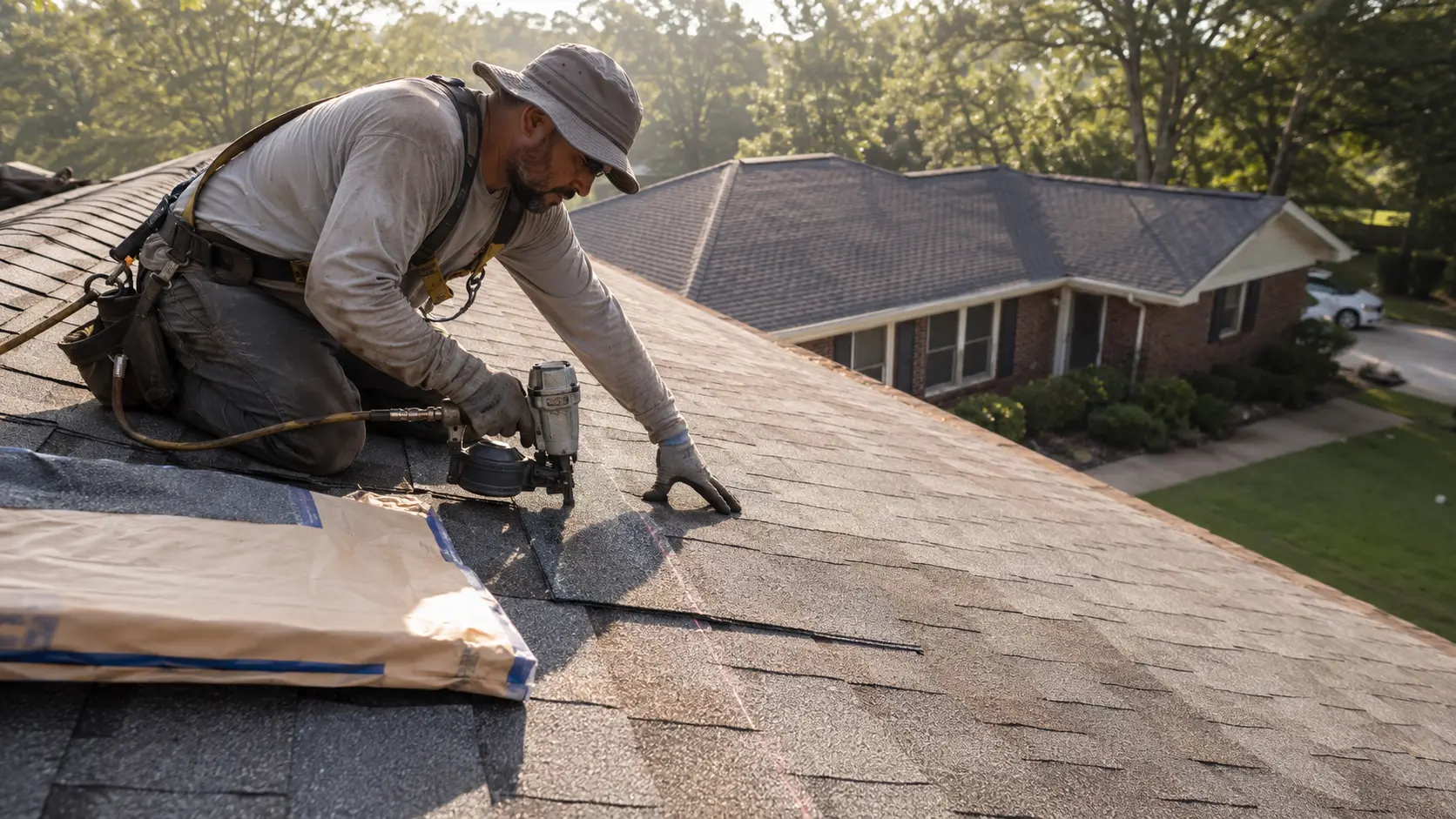
What Most Roofing Retainers Get Wrong Here
Let me name the failures I see most when I walk a Valley roofer's local search, because you've probably paid for at least one. The same crew also handles Roofing Conversion Rate Optimization in Phoenix, AZ.
Get My Site Inspection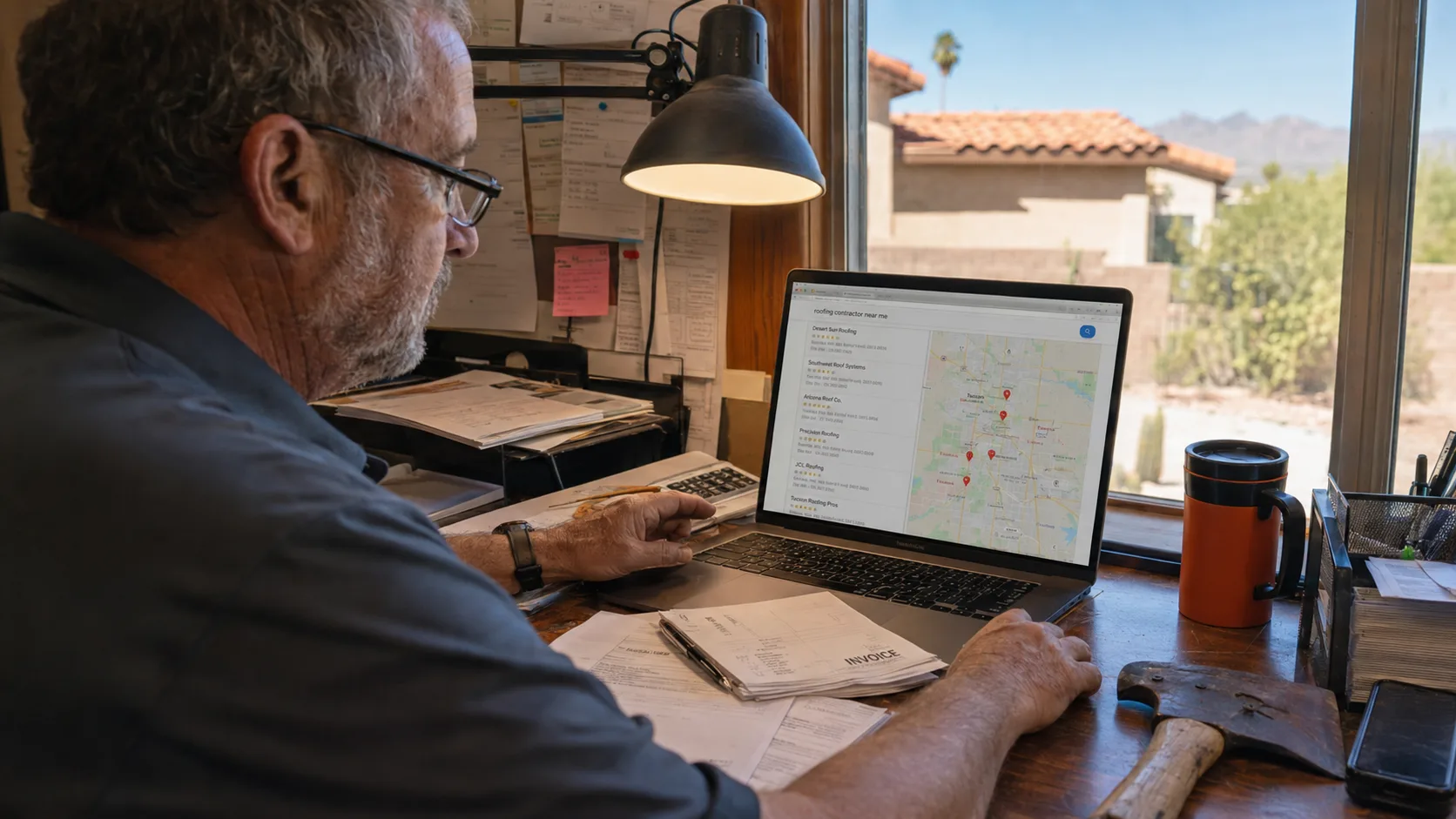
Questions Contractors Ask Before Hiring Us
What does roofing SEO in Phoenix actually get me?
Calls from homeowners in Phoenix who are already searching for your trade. The work is to rank you for the high-intent local queries that move revenue, then make sure the page converts the click once it lands.
How is this different from the last agency that burned me?
You see the scoring framework, the benchmark data behind it, and your ranked fix list before any remediation work begins. It is a diagnosis you can evaluate, not a promise you have to trust.
How do you know this works for my trade?
The Fervor Grade framework was built by scoring 380 contractor sites across roofing, remodeling, and HVAC. Your trade's patterns are in the data, not borrowed from SaaS or dentists.
How long does it take?
The Site Inspection takes 5 business days, and it needs about three minutes from you. The ranking work that follows is ongoing, because search is.
Who owns the website and the accounts?
You do. The domain, the content, the analytics, every account we touch. Day one. No ownership traps, no holding your site hostage if you leave.
What if I do not like what the inspection finds?
Then you found out something that was already costing you, and now you know where. The inspection surfaces what is actually wrong on the site so you can decide what to fix.
Do you only work with contractors in Phoenix?
No. We work with roofing contractors across the region, and the research covers national brands too, so the benchmark holds whether you are downtown or two towns over.
How much does it cost?
The Site Inspection is free. You only pay for the remediation work once you have seen the diagnosis and decided it is worth fixing.
Will the changes hurt my current rankings?
No. The work protects what already ranks. We map the URLs and the equity first, fix the conversion leaks, and improve the pages that search already trusts rather than wiping them.
What do I have to do during the project?
Very little. The intake takes minutes, and the build work is ours to run from there. You keep running crews. We will only ask for things no one else can give us, like your real service area and your best photos.
Still Have Questions?
Give us a call expressing your specific needs, and we’ll see if we are a good fit for each other.
Google's Local Pack ranking runs on review volume and how recent those reviews are. Contractors tend to under-collect reviews they've already earned, because asking after every job is easy to forget in a busy week. NiceJob sends the ask automatically once a job wraps, so new reviews keep flowing without you remembering. You can also set it up to ask your past clients for reviews. If your CRM already handles review requests, use that. Either way, it works better as a system than as a task on someone's to-do list.
Before you go, grade your own site
Get The Roofing Website Diagnostic Checklist: the nine checks we pulled from inspecting 130 Roofing contractor sites. It takes about ten minutes, and it shows you which fix wins back the most jobs first.
Your checklist is on its way.
Your copy of The Roofing Website Diagnostic Checklist is landing in your inbox now. And if you would rather not wait, grab it right here.
Download it now