Rank on Google for "roofer near me" in New York City.
Right now, someone in New York City is Googling "roofer near me." We get you showing up first, then turn that click into a booked job.
How Can We Help?
Choose the option that suits your needs.
Let’s Investigate
We will send your Site Inspection to the email you provided.
You’re in.
We’ll send your Site Inspection within 5 business days.
Let’s Chat
Book a time that works for you.

“Attentive, listened to every revision request, delivered on time. Would work with him again.”
- Hamza Najam

“Patient, on point, straightforward. Did amazing work. Would 100% recommend.”
- Ruben Mederos, HyperTemp HVAC
“Responsive, creative, exceeded expectations. Already seeing greater engagement from our clients.”
- George Jeorgy, Jeorgy's Landscape Construction

“Top-tier professionalism, real web design expertise, ideas I hadn't considered. Confidently recommend.”
- Aws Nassani, Four Eleven Contracting






































































Let’s talk about what your website could be doing for your business.
Call Us TodayThe New York City, NY Roofing specifics your website needs.
Every angle below comes from how New York City, NY homeowners search, evaluate, and buy, built into your site to help boost conversions.
NYC Writes Its Own Roof Code
New York City does not run on the plain International Residential Code the way the suburbs do. The city enforces its own Construction Codes, and your reroofing job answers to the Department of Buildings under the 2022 edition. So a roofer who only knows Westchester or Long Island rules will misread setbacks, fire retardancy, and rooftop access on your building. The five boroughs are their own codebook.
Local Law 92 Forces Cool Or Green Roofs
When you replace a roof in New York City, Local Law 92 and Local Law 94 of 2019 usually require a cool roof or a green roof, not a plain black membrane. Low-slope roofs need a solar reflectance index of 78, and steep-slope roofs need 29, measured against Cool Roof Rating Council values. So budget for reflective membrane, green roof, or solar, and not just a like-for-like swap.
Your Roofer Needs A DCWP License
New York City licenses home improvement contractors through the Department of Consumer and Worker Protection, and roofing on any one to four family building falls under that HIC license. So before you sign, run the contractor through the DCWP Instant License Check. An unlicensed roofer here strips you of the recourse the city built to protect homeowners, and storm season pulls plenty of them onto the block.
Flat Roofs Rule The Five Boroughs
Most buildings across New York City wear flat or low-slope roofs, so your job is rarely about shingles. TPO, EPDM, and modified bitumen dominate the rooftops here, and each ages differently under city soot and standing water. A flat membrane typically runs 20 to 30 years with maintenance. So the real question on a New York roof is the state of the seams and flashing, not the color of a shingle.
Parapets Trap Water On Your Roof
Flat New York roofs sit behind parapet walls, so rain has no open edge to run off. Water escapes through scuppers cut into the parapet, and code requires those openings to measure at least 4 inches and to keep ponding below the roof's design depth. So a single clogged scupper turns an ordinary storm into a ceiling collapse. Keeping the drains clear before winter matters more here than pitch ever will.
Nor'easters Load Your Flat Roof With Snow
New York City sits in the track of nor'easters that stall off the coast and dump wet, heavy snow through the winter. On a flat roof with blocked drainage, that snow melts, refreezes, and ponds, and the weight climbs fast toward the roof's design limit. So clearing roof drains and scuppers before a storm protects a New York building more than any premium shingle upgrade could.
Big Buildings Need A DOB Filing
On a one to four family home, your New York roofer can work under the DCWP license alone. But once the building is larger, the roof job needs a Department of Buildings permit filed by a registered general contractor or a licensed professional. So on a co-op or a walk-up with five or more units, confirm who is pulling the DOB permit before the tear-off starts. That paperwork protects your certificate of occupancy.
NYC Limits Roof-Over Layers
New York's Construction Codes govern reroofing under Chapter 15, and you cannot simply pile a new membrane over a saturated or already multiplied roof. When the existing roof holds water or too many prior layers, the code forces a full tear-off down to the deck. So the honest New York bid names the tear-off before it names the membrane, because the city will not let you bury a wet roof under one more coat.
Why Local Search Decides Who Gets the Calls
Picture a Nor'easter spinning up off Long Island in late March. Wind-driven rain peels back shingles from Bay Ridge to the Bronx, and by the next morning a few thousand homeowners are squinting at water stains on their ceilings. They grab their phones. They type "roof repair near me." And the three roofers who own the map pack split most of that work between them. The numbers here come straight from our State of Roofing 2026.
Get My Site Inspection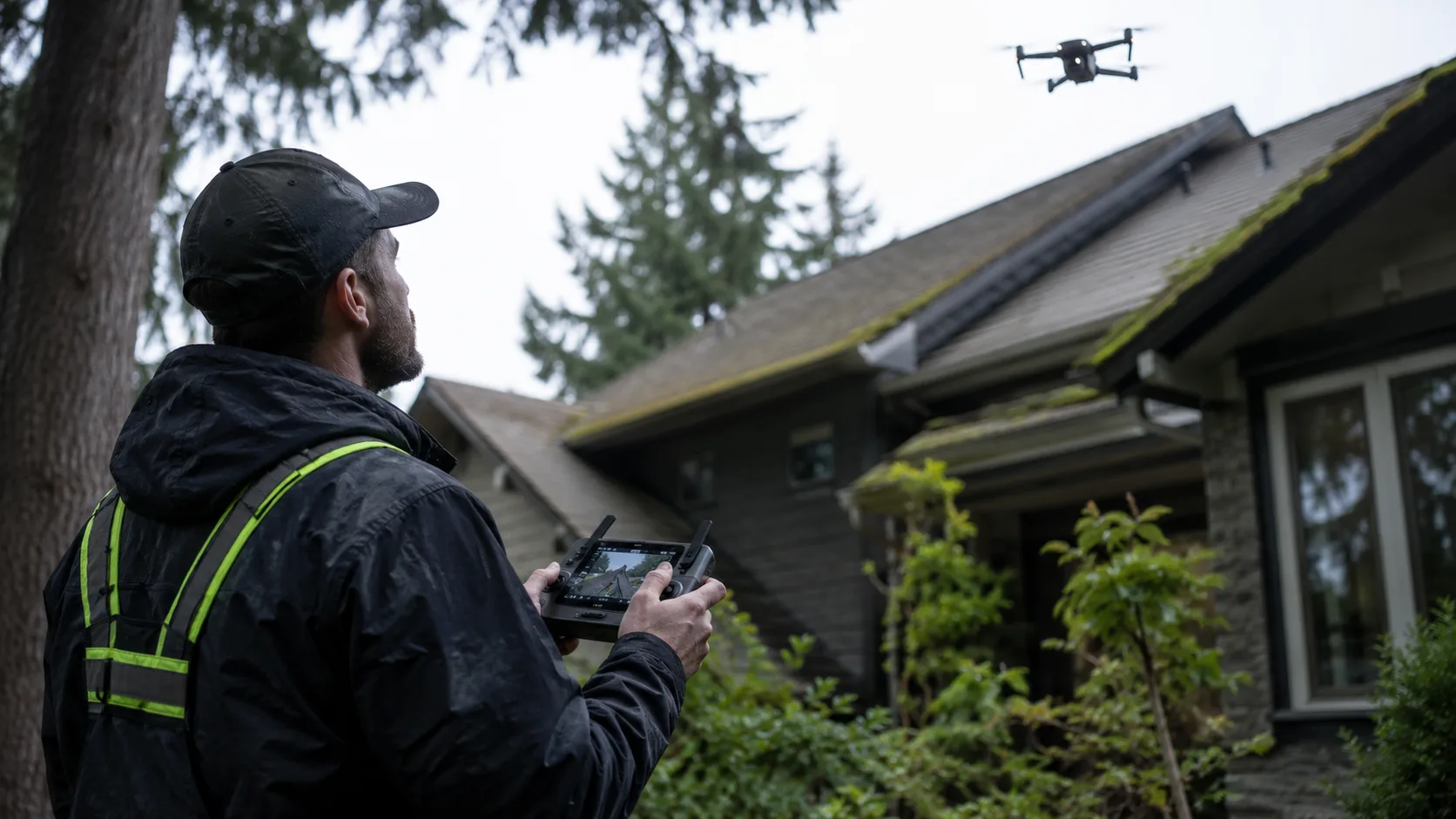
What Weak Roofing SEO Costs New York City Shops
Let's do napkin math. Say your average reroof job runs $14,000 and you close one in four solid leads. If the map pack sends ten qualified calls a week to the roofers at the top, and you are not one of them, you are watching maybe two or three closeable jobs a week walk to a competitor. Over a season, that is real payroll you handed away. The same crew also handles Roofing Conversion Rate Optimization in New York City, NY.
Get My Site Inspection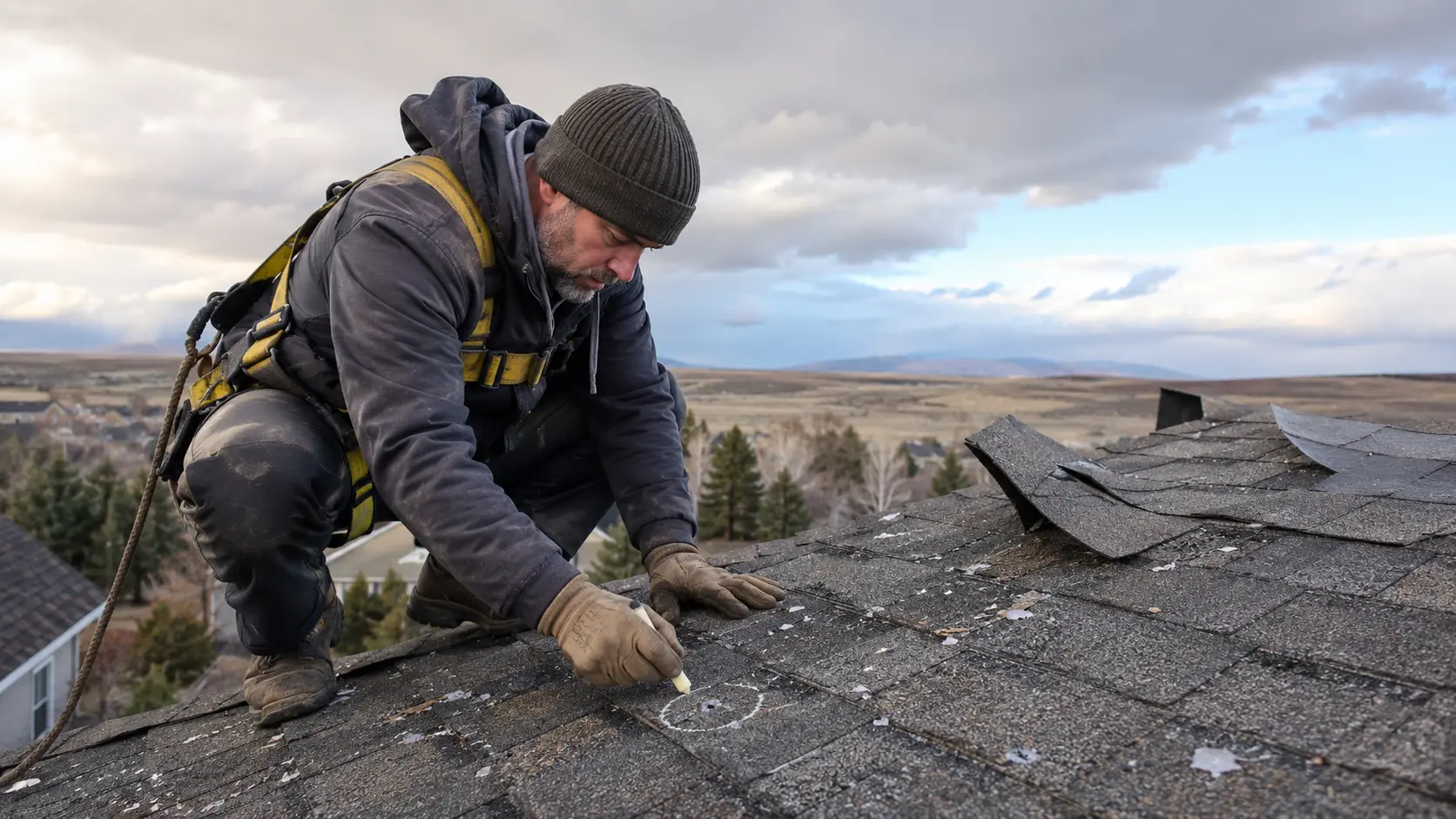
The Local Search System Your Shop Really Needs
Forget the tips-and-tricks stuff. You need a system, installed once and maintained, not a checklist someone hands you to do yourself. Here is what real roofing seo services New York City work looks like when it is built right. We run the same build nearby for Roofing SEO in Newark, NJ.
Get My Site Inspection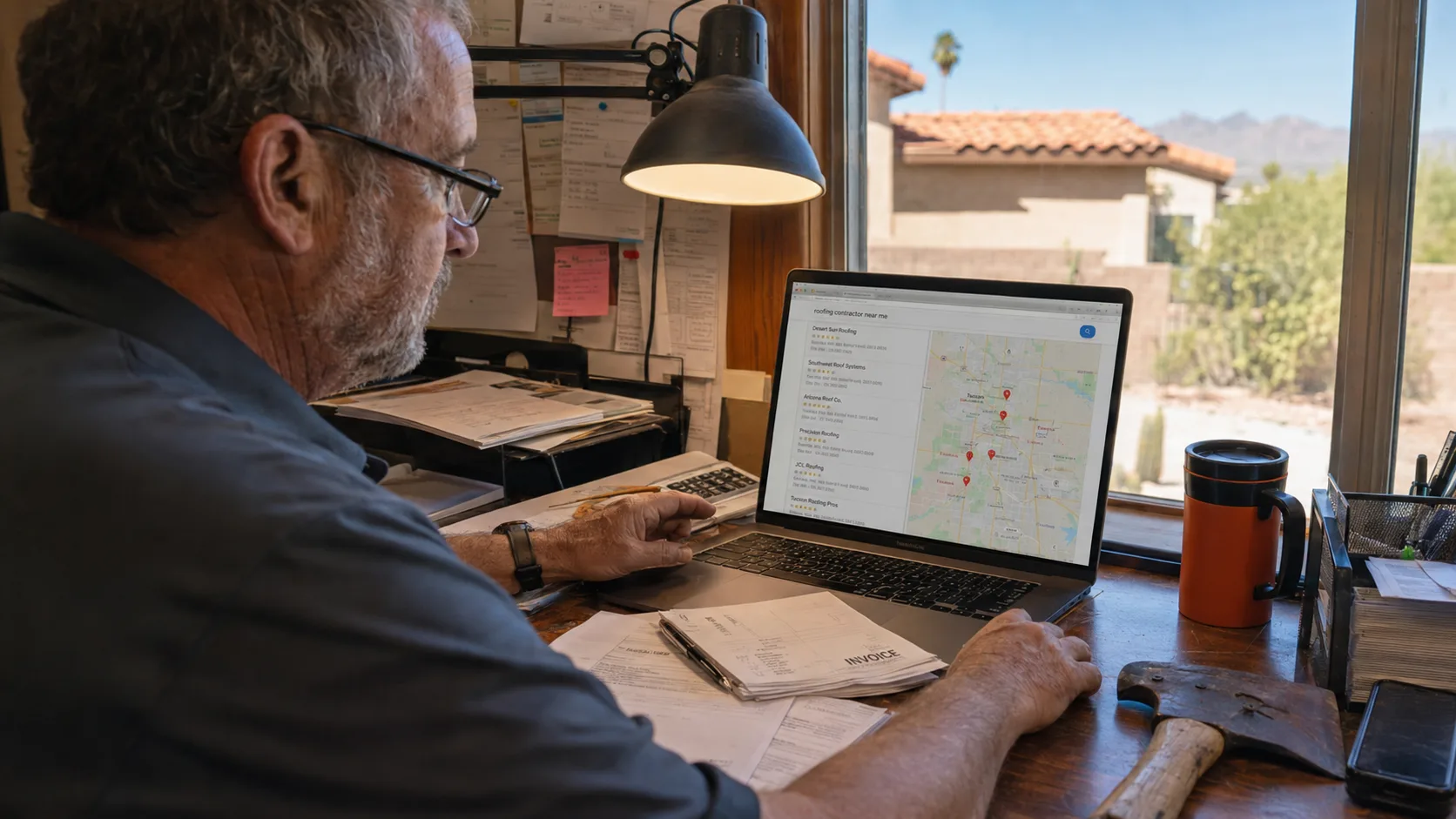
How Money and Timing Shape Your Buyer
Knowing how your customer pays and what they spend changes how you write every page. Because the homeowner googling at 11pm is already doing budget math in their head.
Get My Site Inspection
Questions Contractors Ask Before Hiring Us
What does roofing SEO in New York City actually get me?
Calls from homeowners in New York City who are already searching for your trade. The work is to rank you for the high-intent local queries that move revenue, then make sure the page converts the click once it lands.
How is this different from the last agency that burned me?
You see the scoring framework, the benchmark data behind it, and your ranked fix list before any remediation work begins. It is a diagnosis you can evaluate, not a promise you have to trust.
How do you know this works for my trade?
The Fervor Grade framework was built by scoring 380 contractor sites across roofing, remodeling, and HVAC. Your trade's patterns are in the data, not borrowed from SaaS or dentists.
How long does it take?
The Site Inspection takes 5 business days, and it needs about three minutes from you. The ranking work that follows is ongoing, because search is.
Who owns the website and the accounts?
You do. The domain, the content, the analytics, every account we touch. Day one. No ownership traps, no holding your site hostage if you leave.
What if I do not like what the inspection finds?
Then you found out something that was already costing you, and now you know where. The inspection surfaces what is actually wrong on the site so you can decide what to fix.
Do you only work with contractors in New York City?
No. We work with roofing contractors across the region, and the research covers national brands too, so the benchmark holds whether you are downtown or two towns over.
How much does it cost?
The Site Inspection is free. You only pay for the remediation work once you have seen the diagnosis and decided it is worth fixing.
Will the changes hurt my current rankings?
No. The work protects what already ranks. We map the URLs and the equity first, fix the conversion leaks, and improve the pages that search already trusts rather than wiping them.
What do I have to do during the project?
Very little. The intake takes minutes, and the build work is ours to run from there. You keep running crews. We will only ask for things no one else can give us, like your real service area and your best photos.
Still Have Questions?
Give us a call expressing your specific needs, and we’ll see if we are a good fit for each other.
Google's Local Pack ranking runs on review volume and how recent those reviews are. Contractors tend to under-collect reviews they've already earned, because asking after every job is easy to forget in a busy week. NiceJob sends the ask automatically once a job wraps, so new reviews keep flowing without you remembering. You can also set it up to ask your past clients for reviews. If your CRM already handles review requests, use that. Either way, it works better as a system than as a task on someone's to-do list.
Before you go, grade your own site
Get The Roofing Website Diagnostic Checklist: the nine checks we pulled from inspecting 130 Roofing contractor sites. It takes about ten minutes, and it shows you which fix wins back the most jobs first.
Your checklist is on its way.
Your copy of The Roofing Website Diagnostic Checklist is landing in your inbox now. And if you would rather not wait, grab it right here.
Download it now