Why roofing marketing breaks the home-services playbook
Roofing marketing is not the same problem as plumbing marketing, HVAC marketing, or remodeling marketing. And the difference is not branding. It is timing. A homeowner does not wake up Tuesday thinking about a new roof. So your roofing marketing channels are dormant for weeks. Then a storm rolls through and you compete against every other roofer in your service area inside a single twelve-hour window.
Because of that, the calendar drives roofing marketing more than the budget does. You spend low in clear weather. You spend hard the moment a hail or wind event closes near your zip codes. And the brands that ignore the calendar treat roofing marketing like a flat monthly retainer, which is why their cost per booked job balloons every August. So the rhythm of your roofing marketing has to match the storm calendar before it matches the fiscal one.
The second wrinkle is the size of the job. Roofing leads convert at a higher dollar value than most home services.
Spending
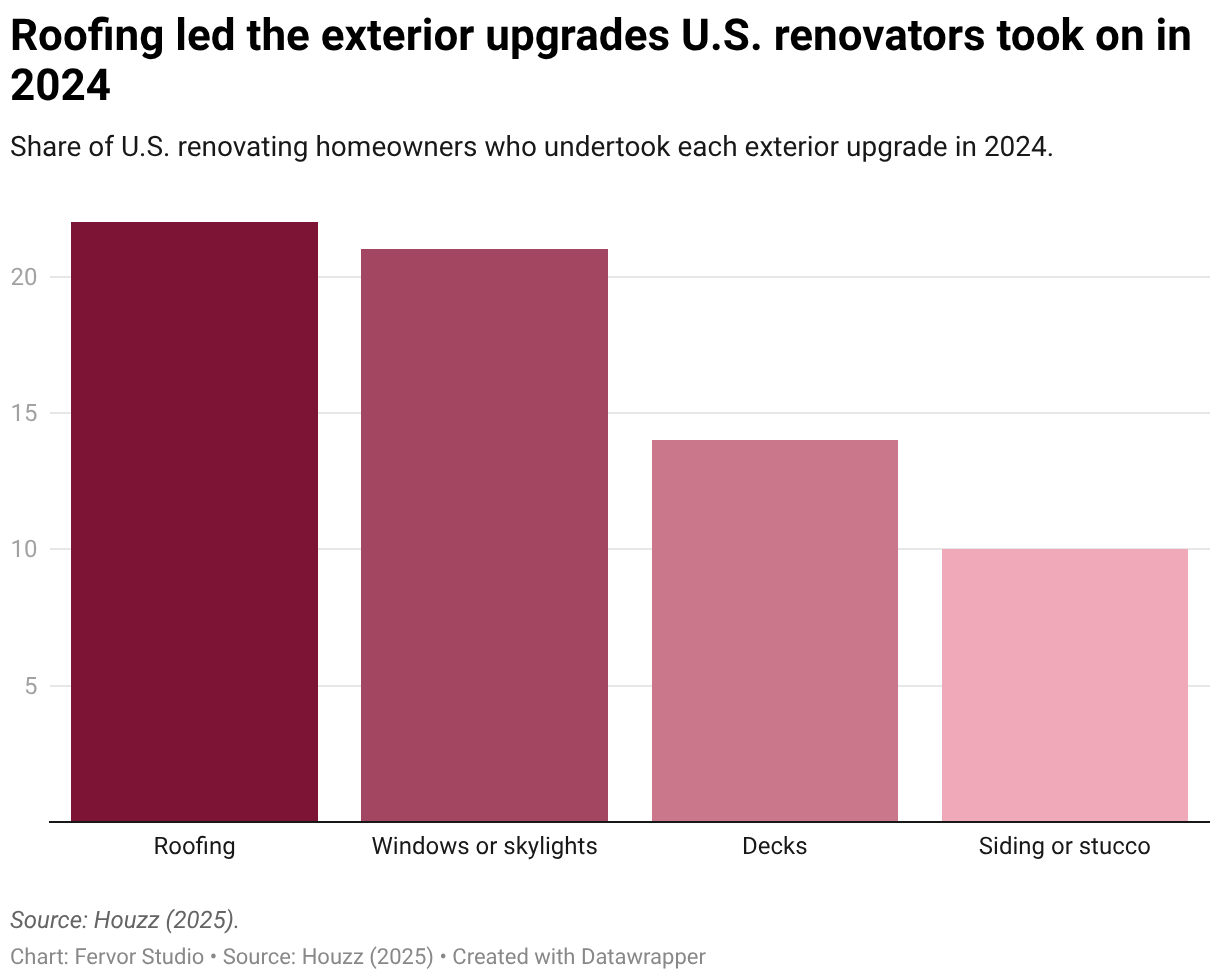
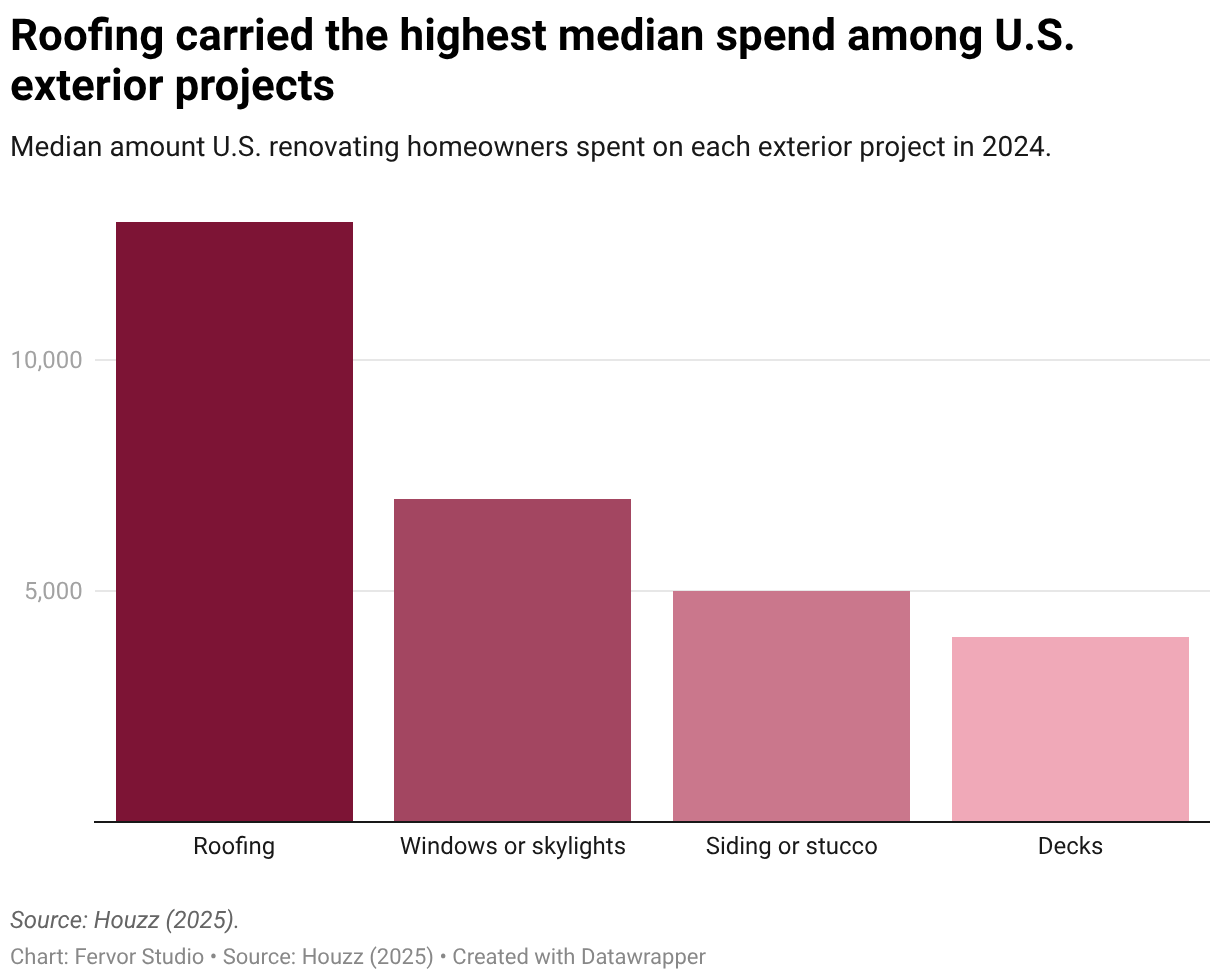
"In 2024, 22% of renovating homeowners undertook roofing upgrades, with a median spend of $13,000."
— Houzz Inc. (2025)
So your roofing marketing math runs on a fatter unit economics curve than a service-call trade. But that also means your cost per lead can sit higher and still pencil out. Most agencies new to roofing marketing miss that and try to optimize roofing PPC like it were a sub-five-hundred-dollar ticket.
And the third wrinkle, the one most roofing marketing programs never solve, is that buyers research you on a phone, in a driveway, twenty minutes after the storm. Not at a desktop the next morning. So the entire roofing marketing funnel has to load fast, surface a phone number, and answer the same three questions a homeowner asks every time. Phone-first roofing marketing is no longer a nice-to-have. It is the only roofing marketing that pencils out on paid traffic. We will come back to that.
The math under every roofing marketing decision

Every smart roofing marketing decision starts with four numbers. Cost per lead. Set rate. Close rate. Average job size. Multiply them and you have your cost per booked job and your effective ROAS.
So the question is not "how much should I spend on roofing marketing." The question is "what cost per booked job does the math support at my close rate." And the answer changes by channel.
Google Ads search converts the warmest roofing leads on the planet. Someone typing "roof leak repair near me" is in market right now. So cost per click is high, but cost per booked job is usually defensible. Local Services Ads pay-per-lead model lets you compete for the same intent with a Google Guarantee badge over the listing. Meta Ads are colder. So they need more nurture and a different creative arc.
And under it all sits the website. Because every channel feeds the same page.
"Roofing contractor websites earn a mean Fervor Score of 67.8/100 on the Fervor Grade Framework, a D (Probation, 60 to 69) on standard school grading."
— Fervor Studio, Contractor CRO Index (2026)
So if your roofing marketing is feeding traffic into a website that grades a D, you are paying for traffic that converts at half of what it should. That is the cheapest fix in the entire stack, and most roofing marketing agencies will not touch it because they do not own the website. Roofing marketing without website ownership is roofing marketing with a ceiling.
The math on roofing leads pricing follows the same logic. Shared-lead vendors sell a single homeowner inquiry to three or four roofers and call it a lead. But if your close rate on a shared lead is twelve percent and your close rate on your own organic lead is forty percent, the math on roofing leads prices changes fast. We will get into how much roofing leads cost in a later section. The short version is that the headline price hides the close-rate spread.
Roofing PPC management without overpaying for clicks

Roofing PPC is the fastest lever in roofing marketing. And it is the most expensive one to run badly. So the discipline inside roofing PPC management is what separates roofing marketing programs that pay back from the ones that quietly bleed. Most roofing PPC management failures come from three places: keyword sprawl, no negative-keyword discipline, and landing pages that do not match the ad.
PPC for roofing contractors works when each campaign owns one intent. So you build one campaign around "roof repair," another around "roof replacement," another around storm response, another around commercial. Mixing them is what blows up your roofing pay per click spend on the first month.
The roofing PPC experts who actually move the needle for growing roofing companies build PPC management for roofing companies around three things. Negative keyword lists that grow every week. Geo bid adjustments that mirror your crew's drive-time radius. And ad copy that pre-qualifies the homeowner so cold tire-kickers click your competitor instead. So your roofer PPC campaigns spend the budget on the booked jobs, not the comparison shoppers.
Local Services Ads are the other half of the paid stack. Google Local Services Ads run on a pay-per-lead model with a Google Guarantee badge on top. They show up above every paid search ad and above the map pack. So if you are paying for traffic and your LSA listing is not live, you are leaving the top inch of the screen to a competitor.
Meta Ads (Facebook and Instagram) play a different role in roofing marketing. They are not search-intent traffic. So you cannot run them like Google Ads. The roofers who win on Meta build pattern-interrupt video creative, send the click to a storm-response landing page, and use retargeting to follow the homeowner across the rest of the channel mix. Roof repair ads on Meta work best when the creative shows hail damage, drone footage, or a job-site result.
And finally, the page the click lands on. Because the ad never sells the job. The page does.
"Only 39.2% of roofing contractor websites embed an inline contact or quote form on the hero section, a friction-free above-the-fold capture path (51 of 130 audited brands)."
— Fervor Studio, Contractor CRO Index (2026)
So six out of every ten roofing PPC campaigns are firing paid traffic at a page that buries the form. That is the single biggest leak in roofing PPC management across the industry.
Roofing SEO that ranks when storm season hits
Roofing SEO is the cheapest lead source in roofing marketing, but only if the foundation is right. And the foundation in roofing marketing is almost never glamorous work. The foundation is Google Business Profile, technical site speed, and pages that actually match how homeowners search.
Google Business Profile is the most underrated asset in roofing marketing. It runs the map pack, the local pack, and the knowledge panel. So review velocity matters more than review total. A roofer with sixty reviews collected this quarter outranks a roofer with three hundred reviews collected over five years. And the photos you upload to your GBP listing factor into rank.
Page speed factors in even more. Because Google is openly penalizing slow mobile experiences on home-services queries.
"82.3% of roofing contractor websites earn a Poor mobile LCP rating against Google Core Web Vitals thresholds (LCP over 4.0s)."
— Fervor Studio, Contractor CRO Index (2026)
So if your roofing marketing site loads in eight seconds on a phone, the homeowner is gone before the hero image renders. And every roofing PPC dollar you spend lands on a page that Google itself rates as a poor experience. That fixes itself once. Then it pays you for years.
The third leg of roofing SEO is content. Not blog posts about the history of asphalt shingles. Pages that match commercial intent. "Roof replacement [city]." "Hail damage roof repair." "Insurance claim roofing." Each one of those becomes its own page, with its own schema, its own internal links, and its own crew-radius footer. That is how you cover a service area on organic.
Roofing lead generation companies vs your own pipeline

Roofing lead generation companies sell the same homeowner inquiry to multiple roofers. So the question is not whether shared roofing leads work. The question is what they cost you in real terms, once you account for close rate.
A roofing leads vendor will quote you forty to eighty dollars per shared lead. But if that lead is also sold to three other roofing contractors, your close rate drops to twelve to fifteen percent. So your effective cost per booked job runs three hundred to six hundred dollars. Compare that to a roofing PPC campaign feeding an exclusive lead to your phone, where close rates run thirty to forty percent. The pay per lead roofing math falls apart fast in a competitive market.
Exclusive roofing leads cost more per inquiry but convert at three to five times the rate. So guaranteed roofing leads is a marketing claim, not a category. Nobody can guarantee a homeowner picks you. They can only guarantee an inquiry shows up.
Commercial roofing leads from shared-lead networks work even worse. Because commercial roofing buyers are property managers and facility owners who run procurement cycles, not impulse storm calls. So how to get commercial roofing leads is a relationship and content-marketing problem, not a pay per lead roofing problem. We will come back to commercial roofing marketing in the next section.
For most growing roofing companies the right move is to build your own pipeline first, then layer shared leads on top to fill capacity gaps. The best way to get roofing leads is to own the channels feeding your phone. So a Google Ads campaign you control. A Google Business Profile you optimize. A Meta retargeting audience you build. A website you own.
How much do roofing leads cost? Whatever you let the market charge you. Lead roofing contractors who control their own funnel pay one fifth of what their competitors pay per booked job. That is the entire game. And the best way to get roofing jobs is not buying roofing leads. It is converting more of the traffic you already have.
"Only 6.2% of roofing contractor websites offer online scheduling or self-serve booking (8 of 130 audited brands)."
— Fervor Studio, Contractor CRO Index (2026)
So if you turn on online booking, you sit inside the top six percent of the entire trade on capture infrastructure. That is roofing marketing leverage you cannot buy from a lead-gen vendor.
The conversion potential most roofing marketing leaves on the floor

This is the section every roofing marketing agency skips. Because it is not their lane. They drive traffic. They do not fix the website that traffic lands on. So this is the section every roofing owner should read twice.
Start with the phone number. The homeowner is on a phone, in a driveway, twenty minutes after a storm. So a click-to-call phone number in the persistent header is the highest-leverage capture surface on any roofing marketing page.
"Only 47.7% of roofing contractor websites display a phone number in the persistent site header, the single highest-leverage lead-capture surface above the fold (62 of 130 audited brands)."
— Fervor Studio, Contractor CRO Index (2026)
So more than half the industry leaves that surface empty. And every roofing PPC click landing on those sites has to scroll or hunt for the next step. That is a tax on every dollar of roofing marketing spend.
Next, the hero form. An inline form on the hero gives the homeowner a friction-free path to "yes." Two fields. Name. Phone. That is enough to start the conversation. The longer the form, the worse the conversion. And roofing PPC traffic, in particular, drops off a cliff past five form fields.
Then the CTA. "Get a Free Quote" or "Get a Free Estimate" remains the highest-converting CTA copy in roofing marketing.
"Only 66.2% of roofing contractor websites lead with a Free Quote or Free Estimate CTA (86 of 130 audited brands)."
— Fervor Studio, Contractor CRO Index (2026)
So if your roofing marketing site leads with anything other than that, test against it. The math almost always wins on the simple version.
After the CTA comes the trust stack. Reviews. Manufacturer certifications. License number. BBB. Years in business. Local crew photos. These belong on every roofing marketing page above the fold. Roofing buyers are spending five-figure dollars on a stranger climbing on their house. So every trust signal you surface above the fold reduces the friction by a measurable fraction.
And under all of it, the page has to load. Because every second of mobile load time costs you double-digit percentage points of conversion. So compress every hero image. Inline only critical CSS. Defer every third-party script. That is the roofing marketing work that compounds.
Commercial roofing marketing and the insurance-claim funnel

Commercial roofing marketing runs on a longer cycle than residential. Property managers, facility owners, and REIT-owned portfolios run procurement processes. So how to get commercial roofing leads is a question of being on the bid list, not winning a storm-response click.
Commercial roofing lead generation works best through three channels. Direct outreach to property management firms in your service area. Content marketing aimed at facility-manager search queries like "TPO vs PVC commercial roof" or "commercial roof replacement RFP template." And referrals from general contractors and architects.
Because property managers do not search "best way to get roofing leads." They search "commercial roofing inspection [city]" and "commercial roof replacement contractor." So commercial roofing marketing has its own keyword set, its own page templates, and its own funnel cadence.
Insurance-claim leads are a separate animal entirely. How to get roofing leads from insurance companies is a relationship problem. You build it through certifications (Haag, RCI, IICRC for restoration), partnerships with public adjusters and independent adjusters, and a site that ranks for "insurance claim roof replacement [city]." And the funnel is slower. So lead roofing contractors who chase insurance work as their primary channel build six months of pipeline before the math pays back.
The other angle on insurance work is storm response. After a major weather event, your roofing marketing budget should shift hard toward the impacted zip codes. Geo-fence the storm path. Increase Local Services Ads bids. Push retargeting at homeowners who visited your storm-response landing page in the prior thirty days. And answer every phone call within thirty seconds.
Roofing billboards and traditional media
Roofing billboards still earn a place in roofing marketing in specific markets. Not every market. The math depends on traffic count, exposure window, and what else competes for the eye-line. A roofing billboard on a high-traffic corridor in a metro of half a million people can pay back. The same roofing billboard in a town of ten thousand will not.
And the creative matters. Roofing billboards that work strip down to one phone number, one trust signal (BBB, manufacturer cert, years in business), and one job promise. Anything more cannot be read at sixty miles an hour.
Direct mail still moves the needle in dense suburban markets, especially after a storm. So a same-week postcard drop to a hail-damaged zip code converts. A blanket monthly mailer does not.
So traditional roofing marketing has its place. But it is a multiplier on a good digital foundation, not a replacement for one. And the roofing companies that lean on roofing billboards and direct mail as their primary marketing channel are usually the ones whose website is the weakest link in the stack.
How the top-quartile roofing operation compounds

Every roofing marketing decision compounds in one direction or the other. So the question is which direction your stack is moving over a six-quarter window.
The top-quartile roofing operations win because they pull away on capture, not on traffic.
"The single largest top-vs-bottom-quartile gap among roofing contractor websites is in Lead Capture, top-quartile brands score 17.0 vs. 14.4 for bottom-quartile (2.6 points, 12.9% of category maximum)."
— Fervor Studio, Contractor CRO Index (2026)
So the difference between the top quartile and the bottom quartile is not traffic. It is what happens once the traffic arrives. And that is the single highest-leverage line item in any roofing marketing budget. Capture. Not channels.
Because the channels are commoditized. Anyone can buy roofing PPC. Anyone can run roofing pay per click on Google. Anyone can spin up a Local Services Ads listing. So the differentiation lives downstream, on the website, in the funnel.
That changes how you allocate spend. Most roofing marketing budgets put eighty percent into channels and twenty percent into the website. The compounding move is the opposite split for the first ninety days. Fix the conversion potential first. Then turn the channels back on at full volume. Your cost per booked job drops by half, sometimes more, in the second quarter.
And one more thing. The compounding move on roofing marketing is review velocity. Because every new five-star review feeds back into Google Business Profile rank, into Local Services Ads quality scores, into Meta ad social proof, and into your website trust block. So a single review automation system multiplies the return on every other line item in the stack.
The roofing operations that pull ahead in the next eighteen months are the ones that treat their roofing marketing as a system, not a stack of channels. So Google Ads feeds the website. The website feeds the funnel. The funnel feeds the CRM. The CRM feeds the review request. The review request feeds Google Business Profile. And Google Business Profile feeds the next click.
That is the loop. Everything else is just a campaign.
Start with the Site Inspection
The roofing marketing you need starts with knowing what is broken. So we built the Site Inspection to tell you exactly that. What your current site is costing you, where the funnel leaks, what the channel mix should be by trade.
It is free for the first several requests each week. After that, paid. Either way, you walk out with a prioritized list and the math behind it. No package. No retainer. Just the diagnostic.
That one reads the site. If the problem is further up, that homeowners searching for a roofer in your area never see you at all, the Local SEO Diagnostic reads that half instead. Different question, and it's the paid one.
Request your Site Inspection · Back to the Roofing trade hub · All contractor resources