
SEO Audit Chicago: What Your Contractor Website Is Actually Doing in Search
Marco is fifty-three. He's been running a roofing company on the southwest side of Chicago for twenty-two years. Started as a laborer on a crew in Bridgeport, got his own license before he turned thirty-five, built a reputation across Cook County one tear-off at a time. His crew handles everything from flat roofs in Pilsen to cedar shakes in Oak Park. Licensed and insured? Obviously. Lead-safe certified? Since 2011. BBB accredited with an A+ rating? For the last nine years straight.
His guys show up on time. They don't leave debris in the yard. They answer the phone when a customer calls back eighteen months later with a question about flashing. That kind of outfit.
Then a derecho tears through the western suburbs in late June. Naperville, Downers Grove, Elmhurst, Wheaton. Winds clocked at 87 miles per hour. Trees through garages. Siding peeled off two-story colonials like wrapping paper. And roofs. Hundreds of roofs. Shingles scattered across driveways from Schaumburg to Orland Park. Insurance adjusters booked out six weeks before the storm even made the evening news.
Homeowners in every direction scrambling to find someone who can get up there, assess the damage, and file the paperwork before the next rain. Every roofer within 40 miles should be drowning in calls.
Marco's phone rings eleven times that week.
Across town, a company operating out of a strip mall near O'Hare has been open for four years. No lead-safe certification. Crew of six, most of them under thirty. No BBB listing at all. But their phone? Three hundred and twelve inbound calls in the same seven days. They signed $387,000 in new contracts before the Fourth of July.
It wasn't experience. It wasn't reputation. It wasn't skill.
Marco's website was a five-page template his nephew built in 2019. It loaded in 6.2 seconds on mobile, had no service area pages, no Google Business Profile posts since the previous winter, and exactly zero schema markup telling Google what his business actually does. The O'Hare company had 23 service-area pages, a site that loaded in 1.4 seconds, review schema on every page, and content that answered the exact questions Chicagoland homeowners were typing into their phones while staring at holes in their ceilings.
Marco's site wasn't broken in a way he could see. It was broken in a way only search engines could see. And in Chicago, where 2.7 million people live within city limits and another 6.5 million fill the suburbs, that invisible failure cost him the biggest revenue week of his career.
A website isn't a brochure. And search engine optimization isn't a luxury. Both are infrastructure.

Why an SEO Audit in Chicago Matters More Than You Think

So here's the thing about Chicago as a market. You're not competing in a small pond. Cook County alone has over 5.1 million residents. Add in DuPage, Lake, Will, and Kane counties and you're looking at a metro area where nearly 9.5 million people make decisions about their homes every single year. And when those homeowners need a contractor, they don't flip through a phone book. They type a question into Google while standing in their kitchen, staring at the problem.
When contractors search "seo audit chicago," they're looking for what we deliver as a Site Inspection — the same diagnostic, named for what it actually does. A real SEO audit tells you whether your website shows up when that happens. Or whether it doesn't. That's it. No mystery, no jargon smokescreen. Your site either appears in the search results for the services you offer in the areas you serve, or it's invisible. And invisible in a market this size means you're leaving money on the table every single day.
"Users often leave web pages in 10-20 seconds. The first 10 seconds are critical.""
— NNGroup (2018)
But an SEO audit isn't just about whether you rank. It's about understanding the system underneath your website. The technical architecture that determines how Google crawls your pages, how fast they load for someone on a phone in Wicker Park, whether your business shows up in the local map pack when someone in Evanston searches for what you do. A real Site Inspection — Fervor's version of the SEO audit Chicago contractors are searching for — maps all of that. And for contractors in Chicago, the findings are almost always the same: the bones of the business are solid, but the digital infrastructure hasn't kept pace.
Technical SEO Chicago: What's Happening Under the Hood

You wouldn't send a crew to a job site without checking the equipment first. Technical seo is the equipment check for your website. And most contractor sites in the Chicago area fail it in ways that are completely fixable but totally invisible to the business owner.
Here's what a technical SEO audit — the diagnostic layer of Fervor's Site Inspection — actually examines. Crawl errors. Broken internal links. Missing XML sitemaps. Pages that Google can't even find because the robots.txt file is accidentally blocking them. Duplicate content across service pages. Missing or identical meta tags on every page. Slow page speed caused by uncompressed images or render-blocking scripts. No HTTPS. No mobile responsiveness. No structured data telling search engines what your business is, where it operates, or what services you provide.
And this is the part that gets overlooked: technical seo in Chicago carries specific weight because of the market density. When Google has forty roofing companies in the same zip code to choose from, it uses technical signals as tiebreakers. The site that loads in 1.3 seconds beats the site that loads in 4.8 seconds. The site with clean schema markup gets the rich snippet in search results. The site with proper indexing across 30 service-area pages appears for 30 different local searches. The site with five pages and crawl errors appears for none of them.
"Three critical response time thresholds: 0.1s instantaneous, 1.0s keeps flow, 10s limit for attention.""
— NNGroup (2024)
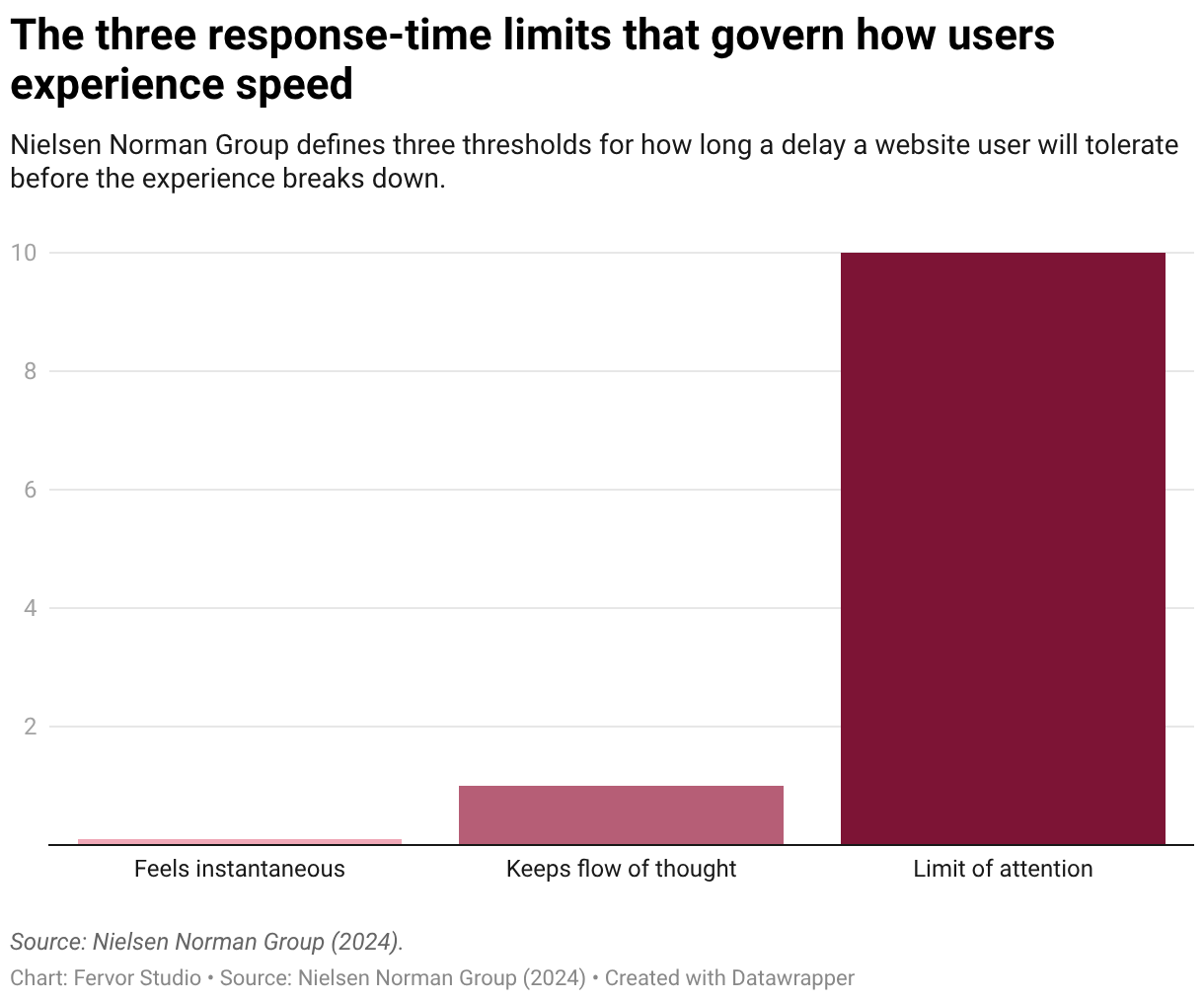
If your site takes more than 3 seconds to load on mobile, you're already losing visitors before they see a single word of your content. And in a city where people are searching on the L, searching from job sites in the Loop, searching from their cars in Skokie parking lots, mobile performance isn't a nice-to-have. It's the baseline.
Local SEO: The Chicago Map Pack Is Its Own Battlefield

When someone in Lincoln Park searches "plumber near me" or a homeowner in Tinley Park types "roof repair south suburbs," Google shows two things: organic results and the local map pack. That three-pack of businesses with the map, the reviews, the phone number right there. For contractors, the map pack is where 40-60% of clicks go. And getting into it requires a completely different set of signals than ranking in organic results.
Your Google Business Profile is the anchor. But most contractor profiles in Chicago are incomplete, inconsistent, or abandoned. Wrong service areas listed. No categories beyond the primary one. Zero posts in the last six months. Photos from 2021. No Q&A section. No products or services listed. And the reviews? Maybe a handful, with no responses from the business owner.
A proper SEO audit — what we deliver as the Site Inspection — evaluates all of that. Your NAP consistency across directories. (That's your name, address, and phone number. If it's different on Yelp than it is on your website than it is on your Google Business Profile, Google doesn't trust any of them.) Your citation profile across the platforms that matter for Chicago contractors. Your review velocity compared to competitors in your specific trade and geography.
And then tthis is the hyperlocal angle. Chicago is a city of neighborhoods. Someone in Roscoe Village isn't the same customer as someone in Beverly. A homeowner in Lakeview has different concerns than a homeowner in Plainfield. If your website treats all of Chicago as one market, you're competing against companies that have built dedicated pages for each neighborhood, each suburb, each service area. They're answering the specific questions that people in those areas are asking. You're not. And Google notices.
SEO Services Chicago: What Contractors Actually Need vs. What They Get Sold

Let's talk about what happens when most contractors in Chicago go looking for help with their search engine optimization. They Google "seo services chicago" or "seo company chicago" and they find a wall of agencies. Dozens of them. All promising first-page rankings, all showing logos of companies you've never heard of, all using the same stock photos of people pointing at computer screens.
But this is what those agencies almost never do: they don't start with an SEO audit. They start with a package. $1,500 a month for "SEO." What does that include? Blog posts nobody reads. Backlinks from directories nobody visits. A monthly report full of graphs that look impressive but don't connect to phone calls or booked jobs. You've seen this. Maybe you've lived it.
What you actually need is diagnostic-first. Before anyone touches your website, before anyone writes a word of content or builds a single link, someone needs to look at the machine and tell you exactly what's broken, what it's costing you, and what fixing it would change. That's what a real SEO audit does. We package ours as the Site Inspection. It's the difference between a mechanic who diagnoses the engine and a mechanic who just changes the oil every month and hopes for the best.
SEO services in Chicago for contractors should follow a specific order. SEO audit first. Then fix the technical foundation. Then build the local presence. Then create content that targets the searches your customers are actually running. Then measure what changed. Then adjust. It's a system, not a subscription to someone else's template.
The SEO Agency Chicago Contractors Should Be Skeptical Of

And yeah, skepticism is the right posture here. Because the seo agency chicago market is crowded with generalists who treat a plumbing company the same as a SaaS startup. They apply the same playbook. Same keyword research tools. Same content calendar. Same link-building tactics. And none of it accounts for how contractors actually get business.
You get business through local search. Through the map pack. Through someone typing a problem into their phone and finding you before they find the next guy. You don't get business through a blog post about "5 Tips for Choosing a Contractor" that ranks for an informational keyword with zero purchase intent. But that's what most agencies produce because it's easy to write and it inflates the monthly report with traffic numbers that look good and do nothing.
"Businesses that evaluate marketing performance weekly achieve an average 6x ROI.""
— Scorpion (2025)
The right seo agency in Chicago for a contractor builds pages that match commercial intent. Service pages. Location pages. Pages that answer the question a homeowner is actually asking when they pick up their phone at 11 PM because water is coming through the ceiling. Not content for content's sake. Content that converts.
What a Chicago SEO Audit Actually Covers

So what goes into a real SEO audit — the diagnostic Fervor delivers as the Site Inspection? Not the vague "website analysis" that some agencies hand you in a PDF with a score out of 100. An actual, thorough SEO audit for a contractor in Chicago covers seven distinct areas. And each one matters because each one affects whether your phone rings.
Site Architecture and Crawlability
How is your website structured? Can Google's crawlers access every page? Are there orphan pages with no internal links pointing to them? Is your sitemap submitted and current? Are there redirect chains slowing things down? For a contractor with services across multiple Chicago neighborhoods, site architecture determines whether Google can even find your Naperville page or your Lincoln Square page. If it can't crawl it, it can't rank it. Simple as that.
On-Page SEO and Content Quality
Every page on your site should have a unique title tag, a unique meta description, a clear H1, and content that actually serves the person who landed there. Most contractor sites in Chicago have the same title on every page, the same meta description (or none at all), and body content that could describe any company in any city. The on-page audit catches all of it. Missing alt text on images. Thin content on service pages. Keyword cannibalization where three of your pages compete against each other for the same search term instead of targeting different ones.
Comparison
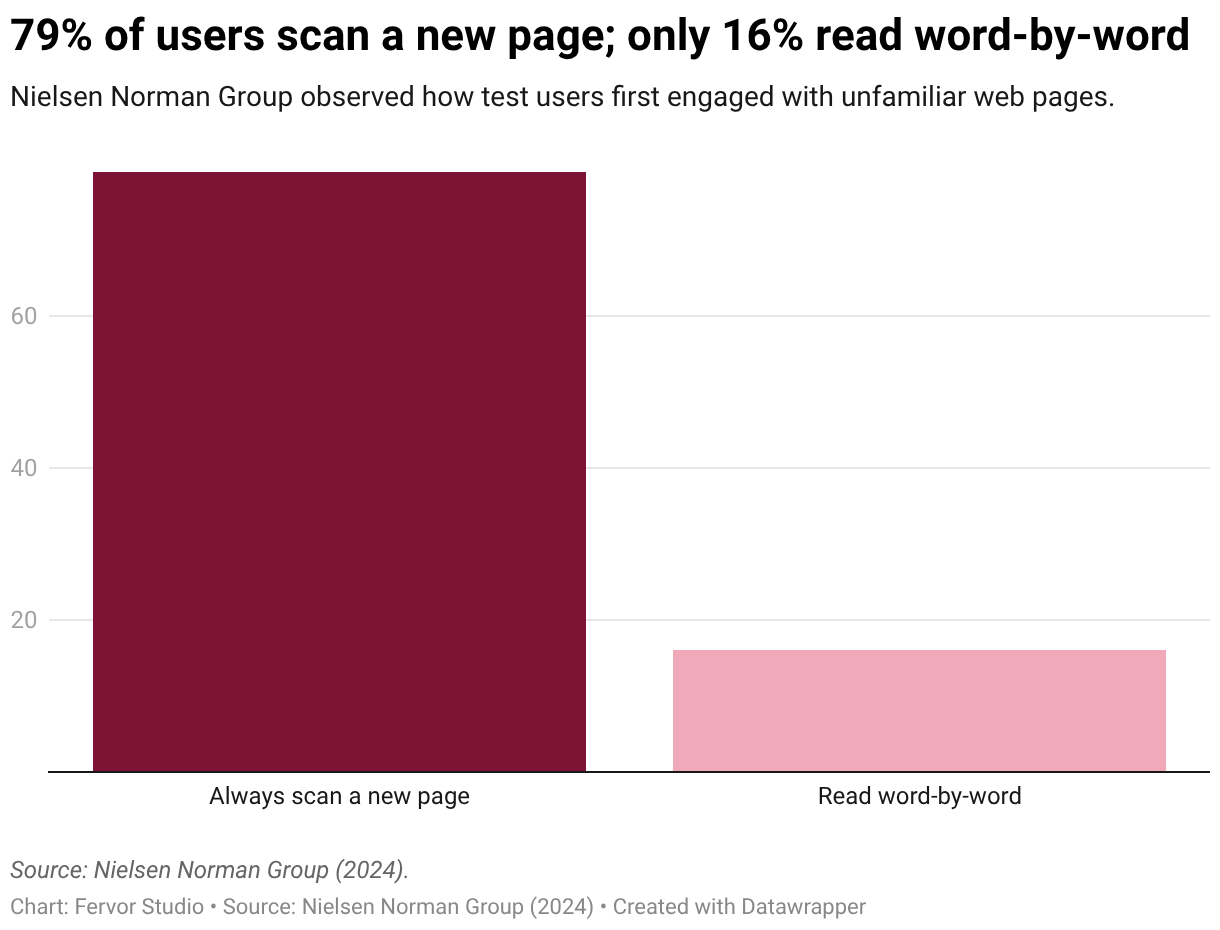
"79% of test users always scanned any new page they came across; only 16% read word-by-word.""
— NNGroup (2024)
Your visitors are skim-reading. If your pages aren't structured with headers, bullet points, and clear information hierarchy, they're bouncing. And every bounce tells Google that your page didn't satisfy the search.
Off-Page SEO Audit and Backlink Profile
Who links to your website? How many of those links come from relevant, authoritative sources versus random directories? For Chicago contractors, the backlink profile matters because it signals trust. A link from a local Chicago business association carries more weight than 50 links from generic web directories. The SEO audit maps your entire backlink profile, identifies toxic links that might be hurting you, and compares your link authority to the competitors who currently outrank you.
Content Strategy for Chicago Contractors: Beyond the Blog Post

Content in the context of an SEO audit isn't about blogging. It's about coverage. Does your website have a page for every service you offer? Does it have a page for every area you serve? Does each of those pages contain enough relevant, specific information to satisfy both the search engine and the human reading it?
For a contractor operating across the Chicago metro, content strategy means building a network of pages that mirrors your actual service footprint. If you do HVAC work in Schaumburg, Hoffman Estates, Palatine, and Arlington Heights, you need pages for each. Not duplicate pages with the city name swapped out. Actual pages with locally relevant details. References to the building codes in those municipalities. The common HVAC issues in those specific housing stocks. The weather patterns that drive demand in those zip codes.
And the content needs to do something. It needs to guide the visitor toward a next step. A phone call. A form submission. A quote request. Content without conversion architecture is just a library. Useful, maybe. But it doesn't pay the bills. Every page should have a clear path to contact, positioned where the visitor is most likely to act on it. (This is where most contractor websites in Chicago fall apart. The content exists, sort of, but tthis is no mechanism to capture the visitor who's ready to move.)
Comparison
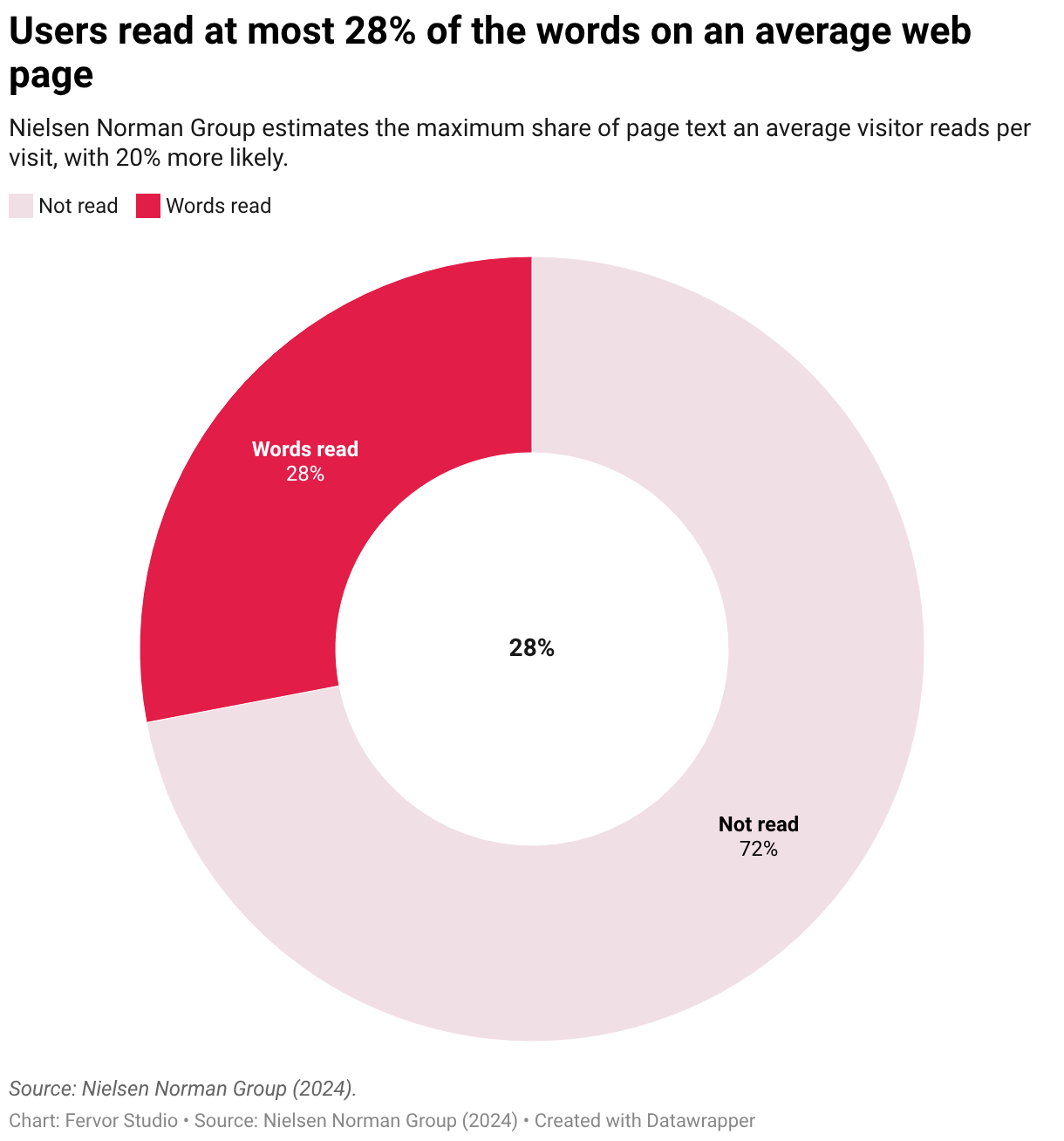
"On the average web page, users read at most 28% of the words during a visit; 20% is more likely.""
— NNGroup (2024)
So the 28% they do read better count. Structure your pages so the critical information, the service, the area, the call to action, is in the portion that gets seen. Not buried at the bottom of a wall of text.
Competitor Analysis: Who's Winning in Chicago and Why

Part of every SEO audit is understanding who's already winning the rankings you want. And in Chicago, the contractors who dominate search results share a handful of common traits. Their sites load fast. Their Google Business Profiles are fully built out with weekly posts, photos, and responded-to reviews. They have 30, 40, 50 pages of content covering specific services in specific areas. They have schema markup on every page. And they're building backlinks from local organizations, trade associations, and neighborhood publications.
But this is the gap that nobody in the contractor space is exploiting. Zero competitors in Chicago are using "seo audit chicago" in their page titles, their H1 tags, their meta descriptions, or their opening paragraphs. The phrase is uncontested. The contractors who need this service are searching for it, and nobody is meeting them with a page built for that exact query. That's the kind of finding a proper competitor analysis surfaces. Not just who's ahead of you, but where the holes are.
A Chicago SEO audit — what we package as the Site Inspection — maps these gaps. It shows you the keywords your competitors rank for that you don't. The pages they've built that you haven't. The local signals they're sending that you aren't. And it prioritizes them by opportunity. Some gaps are worth closing immediately. Others can wait. The audit tells you which is which so you're not guessing with your budget.
Site Speed, Mobile Performance, and Core Web Vitals

Google has been explicit about this. Site speed is a ranking factor. Mobile usability is a ranking factor. Core Web Vitals, the specific metrics that measure loading performance, interactivity, and visual stability, are ranking factors. This isn't speculation. It's documented.
And for contractor sites in Chicago, these metrics are almost universally bad. Large uncompressed hero images. No lazy loading. Third-party scripts from five different tracking tools all competing to load first. Layouts that shift around on mobile as elements render out of order. It's not that these sites look terrible. Many of them look fine on a desktop. But on a phone, on a 4G connection, from someone sitting in traffic on the Kennedy Expressway, they're slow enough that the visitor leaves before the page finishes loading.
A real SEO audit measures this with real data. Largest Contentful Paint. First Input Delay. Cumulative Layout Shift. Time to First Byte. Not as abstract numbers, but as concrete indicators of whether your site is fast enough to keep visitors and earn rankings in the Chicago market. And the fixes are usually straightforward. Compress images. Defer non-critical scripts. Implement proper caching. Switch to a faster host. None of it requires rebuilding the site from scratch. It requires knowing what's wrong first.
Analytics, Tracking, and Knowing What's Working

You can't improve what you don't measure. And most contractor websites in Chicago either have no analytics installed, have Google Analytics installed but nobody checking it, or have an outdated Universal Analytics property that stopped collecting data when Google switched to GA4 in 2023. (Yeah, that happened. And a lot of businesses just... didn't migrate. So they've been flying blind for over two years.)
An SEO audit checks your analytics setup. Is GA4 installed and collecting data? Are your goals configured to track form submissions and phone calls? Is Google Search Console connected so you can see which queries are driving impressions and clicks? Do you have call tracking in place so you can attribute phone calls to specific pages and specific search terms?
Without this infrastructure, every dollar you spend on marketing is a guess. You're pouring money into search engine optimization or paid ads or content creation and you have no way to know what's actually producing results. The analytics review doesn't just tell you what's missing. It builds the measurement framework so that everything you do going forward is trackable, attributable, and improvable.
Schema Markup and Structured Data for Chicago Contractors

Schema markup is code you add to your website that tells Google exactly what your business is, where you're located, what services you offer, your hours, your service area, and your reviews. It's how you get those rich results in search. The star ratings under your listing. The service list. The FAQ dropdowns. Contractors in Chicago who have schema markup get more real estate in search results than those who don't. And more real estate means more clicks.
Most contractor sites have zero schema. None. Google is left to guess what the page is about based on the text alone. And Google's guesses aren't always right, especially when your service page is thin on detail or your contact information is buried in a footer that's the same across every page.
The SEO audit evaluates your current structured data, identifies what's missing, and maps out the schema types that matter for your specific trade. LocalBusiness schema. Service schema. Review schema. FAQ schema. BreadcrumbList schema for navigation. Each one gives Google another signal that your site is relevant, trustworthy, and deserving of a prominent position in the results for Chicago searches.
What Happens After the SEO Audit

An SEO audit is a diagnostic. It tells you exactly where you stand, what's broken, and what's missing. But the diagnostic alone doesn't fix anything. What matters is what you do with the findings.
For contractors in Chicago, the post-audit roadmap usually follows a predictable sequence. Fix the technical issues first because they're blocking everything else. Clean up the Google Business Profile because it's the fastest path to local visibility. Build out service-area pages because they capture the searches happening right now in Naperville, in Schaumburg, in the South Loop, in Hyde Park. Then layer in content strategy, backlink building, and ongoing optimization.
And the timeline matters. You don't need to do everything at once. But you do need to do something. Every week your site sits with crawl errors, missing schema, and thin content is a week where homeowners in Chicago are finding your competitors instead of you. Our Site Inspection — the SEO audit Chicago contractors are searching for, named for what it actually is — gives you the prioritized list. You decide the pace.
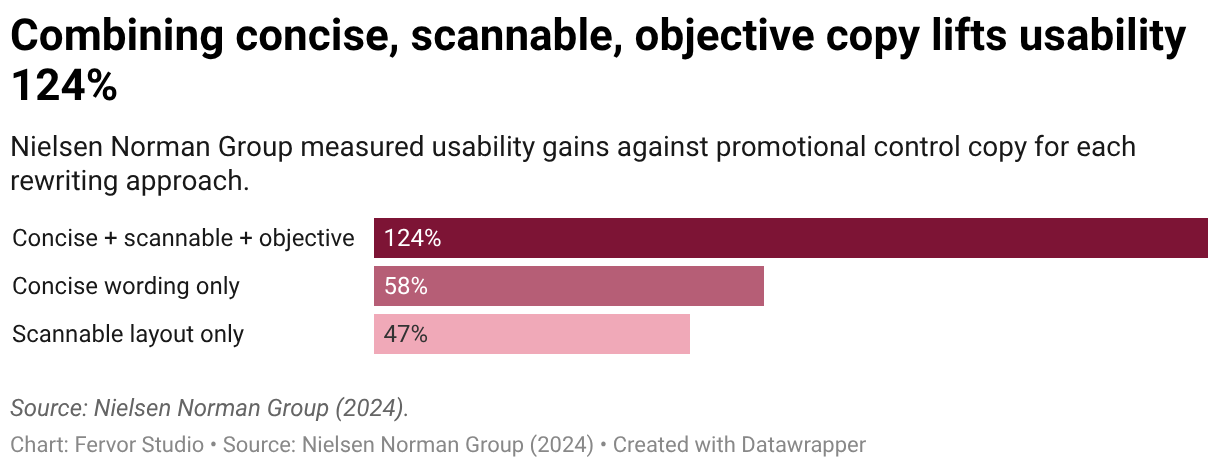
"Combining concise text, scannable layout, and objective language produced 124% better usability.""
— NNGroup (2024)
The same principle applies to your website itself. Once the technical foundation is solid, the content needs to be structured for how people actually read. Scannable. Concise. Clear about what you do, where you do it, and how to reach you. That 124% usability improvement isn't abstract. It translates directly into more visitors staying on your pages, more visitors calling your number, and more visitors becoming customers.
The Real Cost of Waiting

Every month without a proper SEO audit, your site accumulates more problems. Crawl errors compound. Competitors publish more pages. Your Google Business Profile falls further behind businesses that post weekly. The gap between where you are in search and where you could be gets wider. And every month, homeowners in Chicago who need exactly what you offer find someone else because your site didn't show up.
That's not a scare tactic. It's arithmetic. If your average job is worth $8,000 and you're missing even 3 leads per month because your site doesn't rank for the services you offer in the areas you serve, that's $24,000 a month in lost revenue. $288,000 a year. And the fix starts with a diagnostic that takes days, not months.
You've built your reputation in Chicago one job at a time. Your crew shows up. Your work holds. Your customers recommend you to their neighbors in Ravenswood and their relatives in Elmhurst and their coworkers in the Loop. But the referrals have a ceiling. Search engine optimization doesn't. It scales. It works at 2 AM when nobody's answering the phone. It works during a storm when every homeowner in the western suburbs is searching for help simultaneously. It works because it's infrastructure, and infrastructure compounds.
The question isn't whether your website needs an SEO audit. The question is how much longer you're comfortable not knowing what it's costing you.
Start With the Diagnostic

We built the Site Inspection for exactly this situation. Not a generic score. Not a PDF full of charts. A thorough, contractor-specific analysis of your website's technical health, content coverage, and conversion architecture. Everything we've described on this page, applied to your site specifically, with a prioritized list of what to fix and in what order. And if the bigger problem is that Chicago homeowners never find you in the first place, the Local SEO Diagnostic covers that side: where you rank, how you show up on the map, and who's getting the call before you do.
If you're a contractor operating anywhere in the Chicago metro, from the city neighborhoods to the collar counties, this is where you start. Not with a package. Not with a monthly retainer. With a clear picture of where your website stands right now and what it would take to make it perform the way your business deserves.
Request your Local SEO Diagnostic, the SEO audit we run on your search visibility, and find out where you actually show up when a Chicago homeowner searches for what you do. Or where you don't. Either way, you'll know. And knowing is where every good system starts.