Portland, ME Roofing Conversion Rate Optimization
Turn more of your local visitors into booked jobs. We find your website's leaks and plug them, so the visitors you've got start booking jobs.
How Can We Help?
Choose the option that suits your needs.
Let’s Investigate
We will send your Site Inspection to the email you provided.
You’re in.
We’ll send your Site Inspection within 5 business days.
Let’s Chat
Book a time that works for you.

“Attentive, listened to every revision request, delivered on time. Would work with him again.”
- Hamza Najam

“Patient, on point, straightforward. Did amazing work. Would 100% recommend.”
- Ruben Mederos, HyperTemp HVAC

“Responsive, creative, exceeded expectations. Already seeing greater engagement from our clients.”
- George Jeorgy, Jeorgy's Landscape Construction

“Top-tier professionalism, real web design expertise, ideas I hadn't considered. Confidently recommend.”
- Aws Nassani, Four Eleven Contracting

















































































Let’s talk about what your website could be doing for your business.
Call Us TodayThe Portland, ME Roofing specifics your website needs.
Every angle below comes from how Portland, ME homeowners search, evaluate, and buy, built into your site to help boost conversions.
Maine Code Demands Ice Barriers
Maine's Uniform Building and Energy Code, now on the 2021 IRC, requires an ice barrier at the eaves to stop ice dam damage, and in Maine that is not a suggestion. It is code. Ground snow loads near the southern coast run around 50 pounds per square foot, which drives truss and rafter sizing. So a Portland roof built without ice and water shield at the eaves is starting a fight with winter it will lose.
Nor'easters Bury Portland In Wet Snow
Portland sits square in the nor'easter track, with the worst storms hitting between December and March, driving winds past 70 mph and coastal flooding off Casco Bay. Winter Storm Nemo dropped 31.9 inches in one storm in 2013. So a Portland roof answers to sustained snow load and high wind at the same time, and the eaves and ridge are where that combination pries hardest.
Ice Dams Form On Every Cold Eave
Portland's freeze and thaw cycle builds ice dams where roof heat melts snow that refreezes at the cold eave, then backs water up under the shingles. Its older housing stock is especially prone to it. So in Portland the leak rarely starts at the peak. It starts at the eave, behind an ice dam, which is exactly why Maine code forces the ice barrier there in the first place.
Casco Bay Salt Air Ages Fasteners
Portland's waterfront sits on Casco Bay, and coastal moisture exposure near the bay runs meaningfully higher than inland. Salt-laden air corrodes cheap fasteners and flashing faster and keeps roof decks damp longer. So on a Portland roof, the underlayment and metal choices matter more than they would in a dry inland town. The bargain nail set is the one that rusts through first.
Maine Leaves Roofing To The Towns
Maine does not license roofing contractors at the state level today. It licenses only electricians and plumbers, and it leaves the rest to each municipality. But that changes January 1, 2027, when the Maine Home Contractor Licensing Act begins requiring a state license for residential projects over $15,000. So a Portland roofer's credentials are local for now, and the ground is about to shift under the trade.
Get The Contract In Writing Over $3,000
Maine law requires any home construction contract over $3,000 in labor or materials to be in writing, signed by both sides, and it caps your down payment at one third of the total. So on a Portland roof, a handshake deal and a large deposit demand are both warning signs. The written contract and the one third rule are your protection when a crew disappears mid-job.
Southern Maine Snow Loads Drive Design
Under MUBEC, ground snow loads across Maine range from about 50 pounds per square foot on the southern coast to over 100 inland and in the mountains. Those loads directly size the trusses, rafters, and roof to wall connections on your home. So a Portland roof is engineered around a specific snow number, and a crew that ignores it when adding weight or changing pitch is inviting a structural problem.
Winter Shortens The Roofing Window
Portland's long, snowy winters compress the reliable roofing season, because shingles seal best in warmer weather and ice makes steep work dangerous. So demand spikes in the narrow warm months, and the good Portland crews book out early. A roof that fails in January often waits under a tarp for a spring install. Plan your Portland reroof ahead of the season, not during the storm that exposed it.
Why Your Homepage Is the Wrong Place to Spend Ad Money
Your homepage has a job, and that job is not converting ad traffic. It serves the person who Googled your business name, the referral who wants to read reviews, the homeowner browsing seven services at once. But a paid click is a different animal. That person clicked a specific ad about a specific problem, and they expect the next screen to be about that problem and nothing else. This page is one piece of our Roofing Conversion Rate Optimization work.
Get My Site Inspection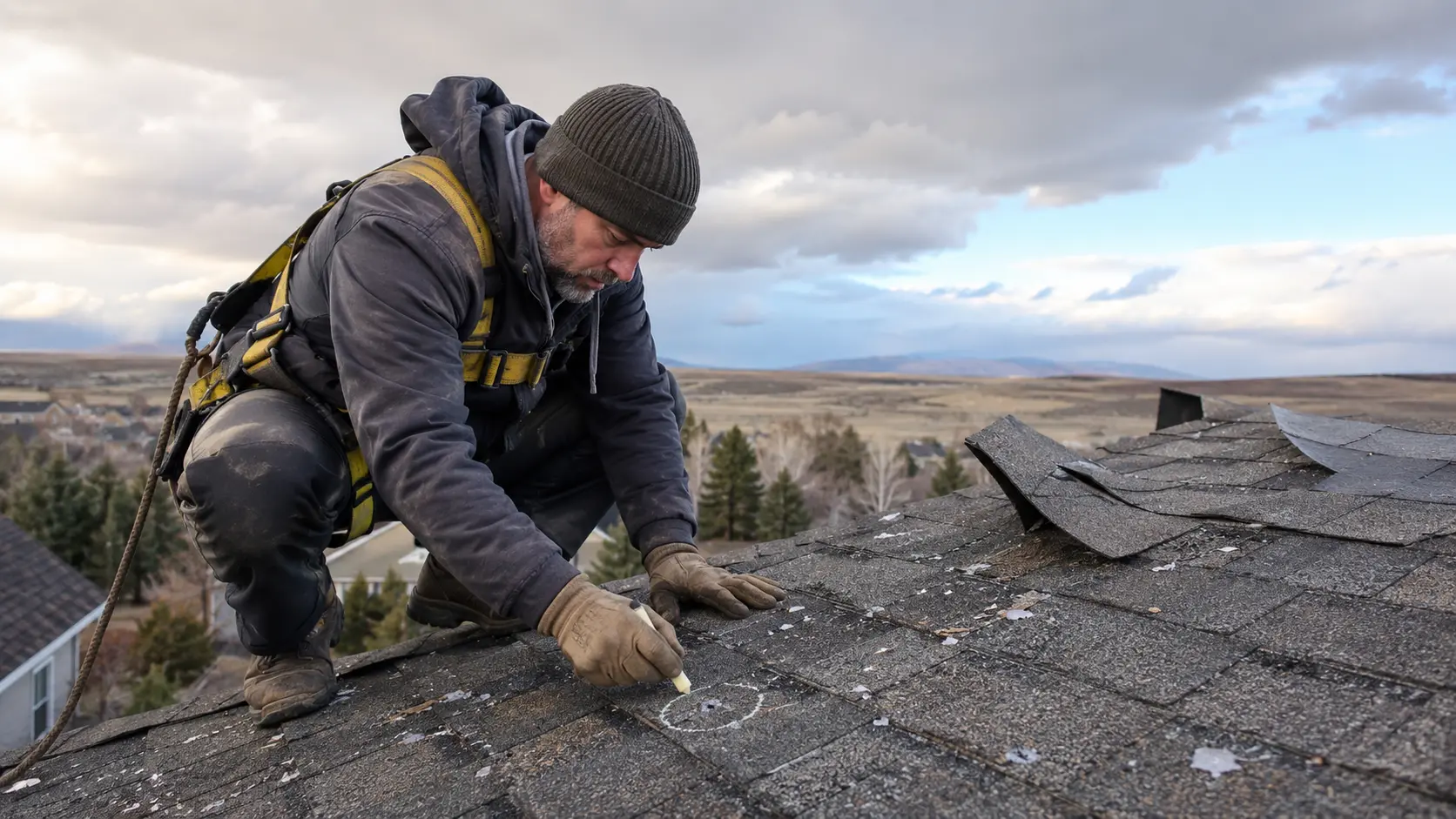
What a Roofing Landing Page Portland ME Owners Need in One Screen
Everything that matters has to live above the fold, in the first screen, before any scrolling. The numbers here come straight from our State of Roofing 2026.
Get My Site InspectionFive seconds above the fold
You get about five seconds of attention, and a homeowner on a phone in their driveway in East Bayside will not scroll to find your offer. So the screen has to carry three things at once: a headline that matches the ad and the worry, a call button that never hides, and proof sitting right beside the ask. The same crew also handles Roofing SEO in Portland, ME.
What doubling the rate is worth
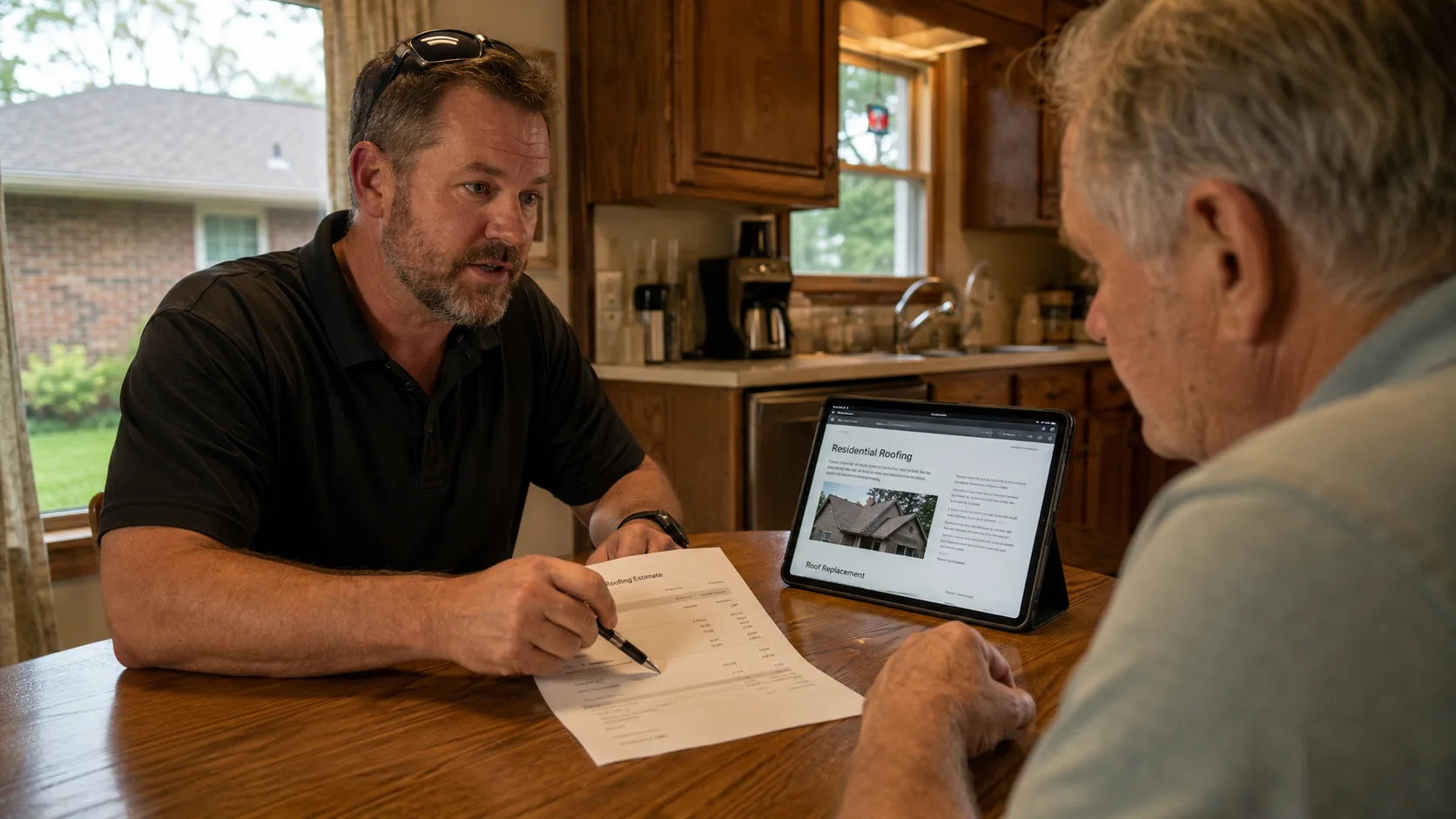
Here's the math on why this screen matters. Say you spend $2,000 a month on Google Ads and get 100 clicks. At a 4% conversion rate, that's 4 booked estimates. Double the rate to 8%, and you get 8 estimates from the exact same spend. If you close one in three at a $4,000 reroll average, that's an extra $5,000 in booked work a month, no new ad budget. We run the same build nearby for Roofing Conversion Rate Optimization in Manchester, NH.
The headline mirrors her fear
Your headline is where you repeat the exact thing the homeowner is scared of. So if they clicked an ad about a leaking roof before the next storm, the headline reads "Roof Leaking Before the Next Storm? We'll Be There Today." That single line does more than your whole logo.
The sticky number and the proof
Your phone number is the page's most important pixel, and it should follow the homeowner down the screen on mobile as a sticky bar. So no matter where they are on the page, the tap-to-call button is one thumb away. And it should say what happens next, like "Call Now for a Same-Day Roof Check," not a vague "Contact Us." A homeowner won't hand over their address to a stranger. So you put the proof where the ask is: a five-star count, a "licensed and insured in Maine" line, a photo of your crew on a real Portland roof. The proof and the form share the same screen, because asking without earning it is how you lose the click you paid for.
The Form Is Your Number-One Leak Point
Every field you add to your form is a reason for a tired homeowner to quit. So the longer the form, the lower the conversion, and a roofing landing page that asks for twelve fields is a page that converts nobody. You want name, phone, address, and what's wrong. That's it. Four fields.
Get My Site Inspection
Match a Different Page to Every Offer You Run
You don't run one ad, so you shouldn't run one page. A storm-damage homeowner, a full-replacement homeowner, and an energy-efficiency homeowner are three different people with three different fears, and one page can't speak to all three. So you build a page per offer and point each ad at its match.
Get My Site Inspection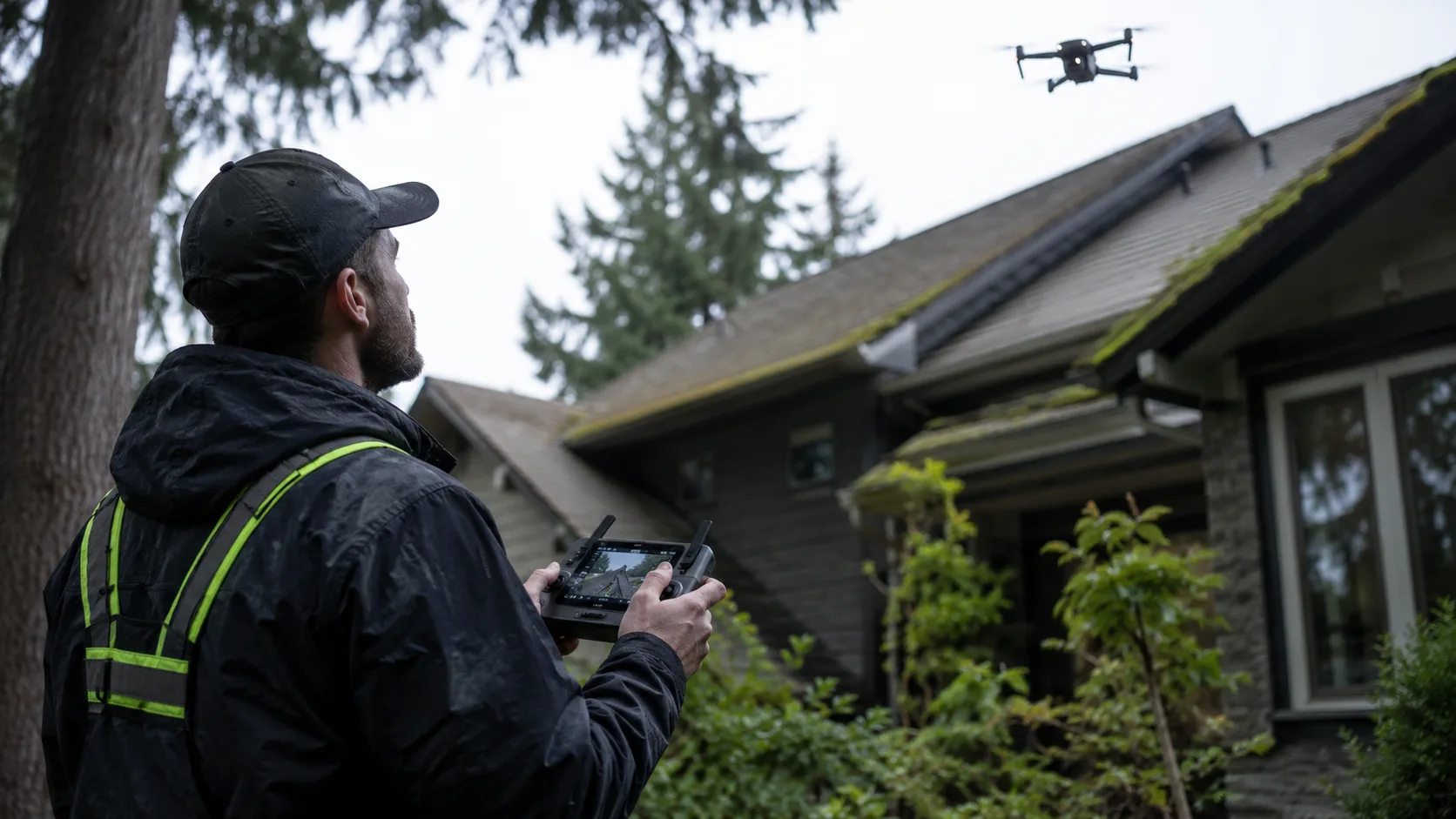
Questions Contractors Ask Before Hiring Us
What does roofing CRO in Portland, ME actually get me?
A site that books the job instead of just describing it. The work is conversion architecture first, so every page in Portland, ME has a clear call path, real proof, and fast mobile load.
How is this different from the last agency that burned me?
You see the scoring framework, the benchmark data behind it, and your ranked fix list before any remediation work begins. It is a diagnosis you can evaluate, not a promise you have to trust.
How do you know this works for my trade?
The Fervor Grade framework was built by scoring 380 contractor sites across roofing, remodeling, and HVAC. Your trade's patterns are in the data, not borrowed from SaaS or dentists.
How long does it take?
A Booked by Design rebuild runs 8 to 12 weeks. It starts with a Site Inspection so the build targets the pages that are costing you calls.
Who owns the website and the accounts?
You do. The domain, the content, the analytics, every account we touch. Day one. No ownership traps, no holding your site hostage if you leave.
What if I do not like what the inspection finds?
Then you found out something that was already costing you, and now you know where. The inspection surfaces what is actually wrong on the site so you can decide what to fix.
Do you only work with contractors in Portland, ME?
No. We work with roofing contractors across the region, and the research covers national brands too, so the benchmark holds whether you are downtown or two towns over.
How much does it cost?
A Booked by Design rebuild is one project price with no monthly lock-in. One booked job at your average ticket usually covers it, and we show you that math before you commit.
Will the changes hurt my current rankings?
No. The work protects what already ranks. We map the URLs and the equity first, fix the conversion leaks, and improve the pages that search already trusts rather than wiping them.
What do I have to do during the project?
Very little. The intake takes minutes, and the build work is ours to run from there. You keep running crews. We will only ask for things no one else can give us, like your real service area and your best photos.
Still Have Questions?
Give us a call expressing your specific needs, and we’ll see if we are a good fit for each other.
Reviews carry more weight on a contractor site than most layout changes will. If yours are thin or the newest one is six months old, that's the fix worth making before you touch anything else. NiceJob handles the ask after each job so you can build up recent reviews without chasing customers by hand. If your CRM has follow-up automation, wire the ask into that instead. Either way, what shows on the page is what does the work.
As the fixes go in, you'll want proof they're booking more calls, so measure the call results. A service like CallRail puts a separate tracking number on each traffic source to easily track what's working. If you don't have a dedicated business line yet, Unitel Voice gives you local and toll-free numbers built for small businesses that a CallRail tracking number can forward to. Or you can lean on whatever call tracking your CRM already supports.
Before you go, grade your own site
Get The Roofing Website Diagnostic Checklist: the nine checks we pulled from inspecting 130 Roofing contractor sites. It takes about ten minutes, and it shows you which fix wins back the most jobs first.
Your checklist is on its way.
Your copy of The Roofing Website Diagnostic Checklist is landing in your inbox now. And if you would rather not wait, grab it right here.
Download it now