Halifax Roofing Conversion Rate Optimization
Turn more of your local visitors into booked jobs. We find your website's leaks and plug them, so the visitors you've got start booking jobs.
How Can We Help?
Choose the option that suits your needs.
Let’s Investigate
We will send your Site Inspection to the email you provided.
You’re in.
We’ll send your Site Inspection within 5 business days.
Let’s Chat
Book a time that works for you.

“Attentive, listened to every revision request, delivered on time. Would work with him again.”
- Hamza Najam

“Patient, on point, straightforward. Did amazing work. Would 100% recommend.”
- Ruben Mederos, HyperTemp HVAC

“Responsive, creative, exceeded expectations. Already seeing greater engagement from our clients.”
- George Jeorgy, Jeorgy's Landscape Construction

“Top-tier professionalism, real web design expertise, ideas I hadn't considered. Confidently recommend.”
- Aws Nassani, Four Eleven Contracting

















































































Let’s talk about what your website could be doing for your business.
Call Us TodayThe Halifax, NS Roofing specifics your website needs.
Every angle below comes from how Halifax, NS homeowners search, evaluate, and buy, built into your site to help boost conversions.
Fiona Was Atlantic Canada's Costliest Storm Ever
Post tropical storm Fiona struck on September 24, 2022, and became the costliest extreme weather event in Atlantic Canada history at 660 million dollars in insured damage, with more than 385 million in Nova Scotia alone. And it tore roofs off buildings across Halifax, collapsing one apartment roof and displacing about 100 people. So Halifax roofs answer to real Atlantic storm force, not theory.
Halifax Roofs Face Higher Wind Than Inland
The National Building Code assigns Halifax higher wind pressures than inland Nova Scotia towns because the coast takes the brunt of Atlantic systems. So a roof designed to an inland number is under built for what actually hits the harbour. And a Halifax roofer who fastens and details for coastal wind, not a generic spec, is the one whose work survives the next post tropical blow.
Nova Scotia Builds To The 2020 National Code
Nova Scotia adopted the 2020 National Building Code through its provincial Building Code Regulations, so your Halifax reroof answers to that edition and the province's climatic wind and snow data. And the Halifax Regional Municipality issues the permit and inspection. So a crew that quotes off an outdated code or skips the HRM permit is cutting the corner that matters most after a storm.
Your Nova Scotia Policy May Pay Cash Value
Nova Scotia home policies split between replacement cost, which buys you a new roof, and actual cash value, which pays only the depreciated worth of an aging one. So an older Halifax roof damaged by wind can settle for far less than a replacement costs unless your policy carries the right endorsement. And knowing which one you hold before the next storm saves an ugly surprise.
Fiona Taught Halifax What Insurance Will Not Cover
Standard Nova Scotia policies cover wind damage and water that enters through a storm broken roof, but they generally exclude the storm surge flooding Fiona pushed ashore. So the line between a covered roof leak and an excluded flood decides your payout. And documenting that the water came through wind damaged roofing, not surge, is what keeps a Halifax claim on the covered side.
Atlantic Hurricane Season Aims At Halifax Every Fall
Halifax sits in the track of post tropical systems that curve up the Atlantic each fall, and Fiona was only the most expensive of many. So a roof here has to hold through named storm winds on a schedule, not once in a generation. And a Halifax reroof planned around that annual exposure, with coastal grade fastening, outlasts one built for a calm inland street.
Halifax Regional Municipality Wants The Permit Pulled
A roof replacement in Halifax needs a permit from the Halifax Regional Municipality, and the inspection that follows is what confirms the work met the Nova Scotia Building Code. So a crew that offers to skip the permit after a storm is skipping the only proof your new roof is sound. And that unpermitted work turns into a problem when you sell or file the next claim.
Some Fiona Roof Claims Remain Unsettled Years Later
More than three years after Fiona, some Nova Scotia homeowners are still fighting insurers to get their roofs properly repaired. So the aftermath of an Atlantic storm is not just the wind, it is the claim, and thin documentation is what drags it out. And a Halifax roofer who documents the damage and the code required repair gives your adjuster far less room to stall.
Why Your Homepage Is the Wrong Place to Send Ad Traffic
Your homepage was built to do twelve jobs at once. So it introduces the business, lists every service, links to the careers page, shows the warranty, and asks for a newsletter signup. And that's fine for someone who Googled your company name. But it's terrible for someone who clicked an ad about a hole in their roof. This page is one piece of our Roofing Conversion Rate Optimization work.
Get My Site Inspection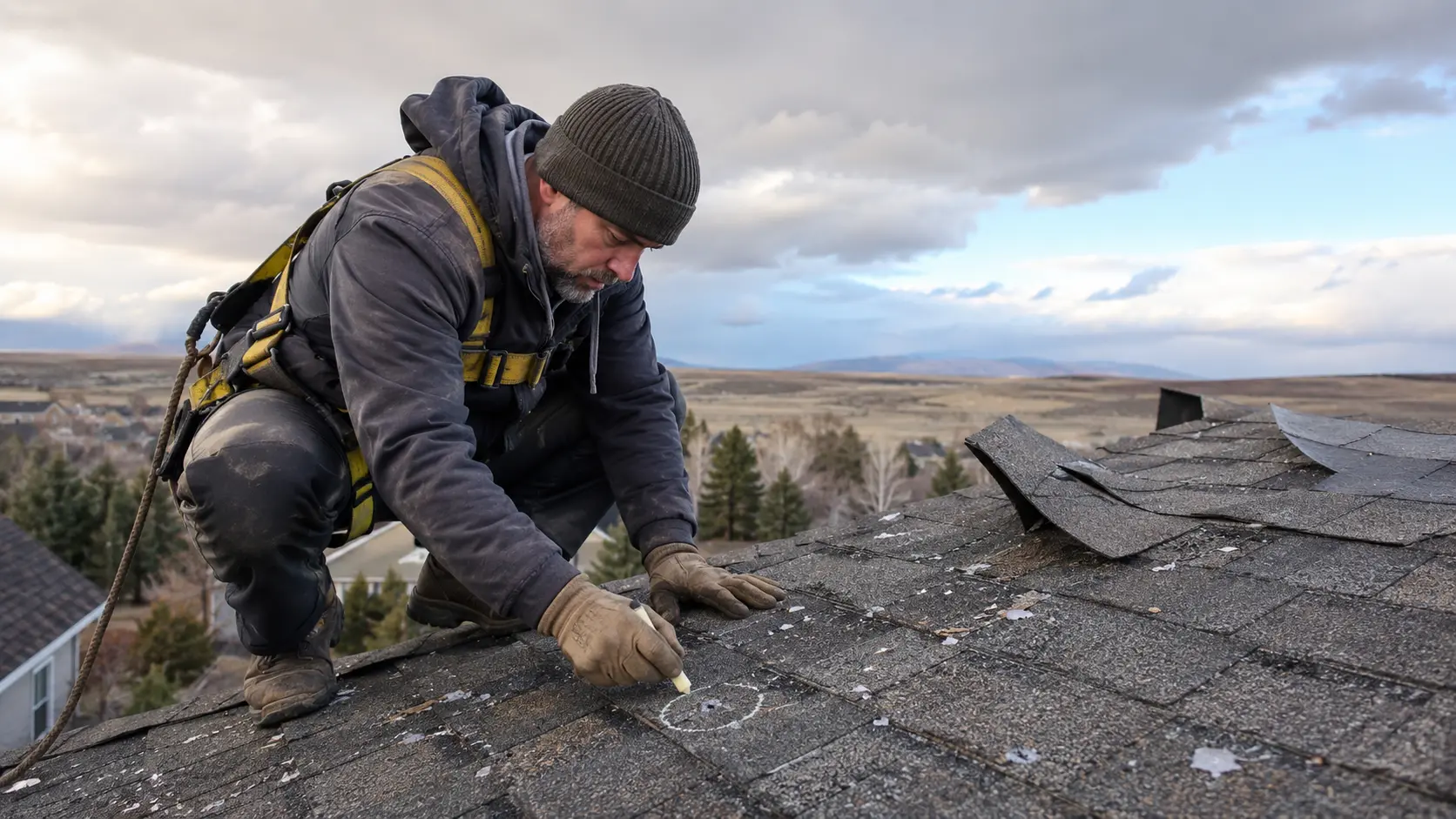
What a Roofing Landing Page in Halifax Must Do in One Screen
Picture the first screen on a phone, because that's where most Halifax homeowners will see it. So you get one screen, maybe a thumb-flick of scroll, before they decide. The numbers here come straight from our State of Roofing 2026.
Get My Site InspectionAnd three things have to be visible without scrolling: a headline that matches both the ad and the worry, a call button that never hides, and one piece of proof sitting right beside the ask. Because the money behind this category is real, not small. "From 2021 to 2023, homeowners spent $93.5B on roofing across 8.3 million projects (AHS-based estimates)." - U.S. Census Bureau and U.S. Department of Housing and Urban Development (2024). The same crew also handles Roofing SEO in Halifax, NS.
So 8.3 million roofing projects is a lot of clicks across the market, and your one screen is fighting for a slice of them. So drop the "award-winning, family-owned, trusted since 1998" headline. Because it makes the reader argue with you in their head. Say the plain thing instead. "Roof leaking in Bedford? Same-day tarp, free estimate." And they can't argue with that, so they act on it. We run the same build nearby for Roofing Conversion Rate Optimization in Charlottetown, PE.
If your ad said "Storm damage in HRM," your page headline can't say "Welcome to our roofing company." Because that mismatch costs you the click you already paid for. So match the words. And match the fear. A homeowner in Spryfield who just watched shingles peel off in a nor'easter wants to read the word "storm" on the page, not your mission statement.
On a phone, the button to call or book stays stuck to the bottom of the screen the whole way down. So it's always reachable, never more than a thumb away. One Halifax roofer found a third of their estimate requests came from a tap-to-call bar that followed the scroll. And the desktop version keeps a button in the top corner too. Right next to the button, put one real Google rating and a recent neighbourhood. "4.9 stars, 212 reviews, last job in Fall River." So not a wall of badges. Just one number the homeowner can verify in ten seconds. And the person clicking is usually paying with their own savings, so trust does real work here. "Among homeowners who renovated in 2024, 84% used cash from savings and 29% used a credit card to fund renovation projects (multiple funding sources allowed)." - Houzz Inc. (2025)
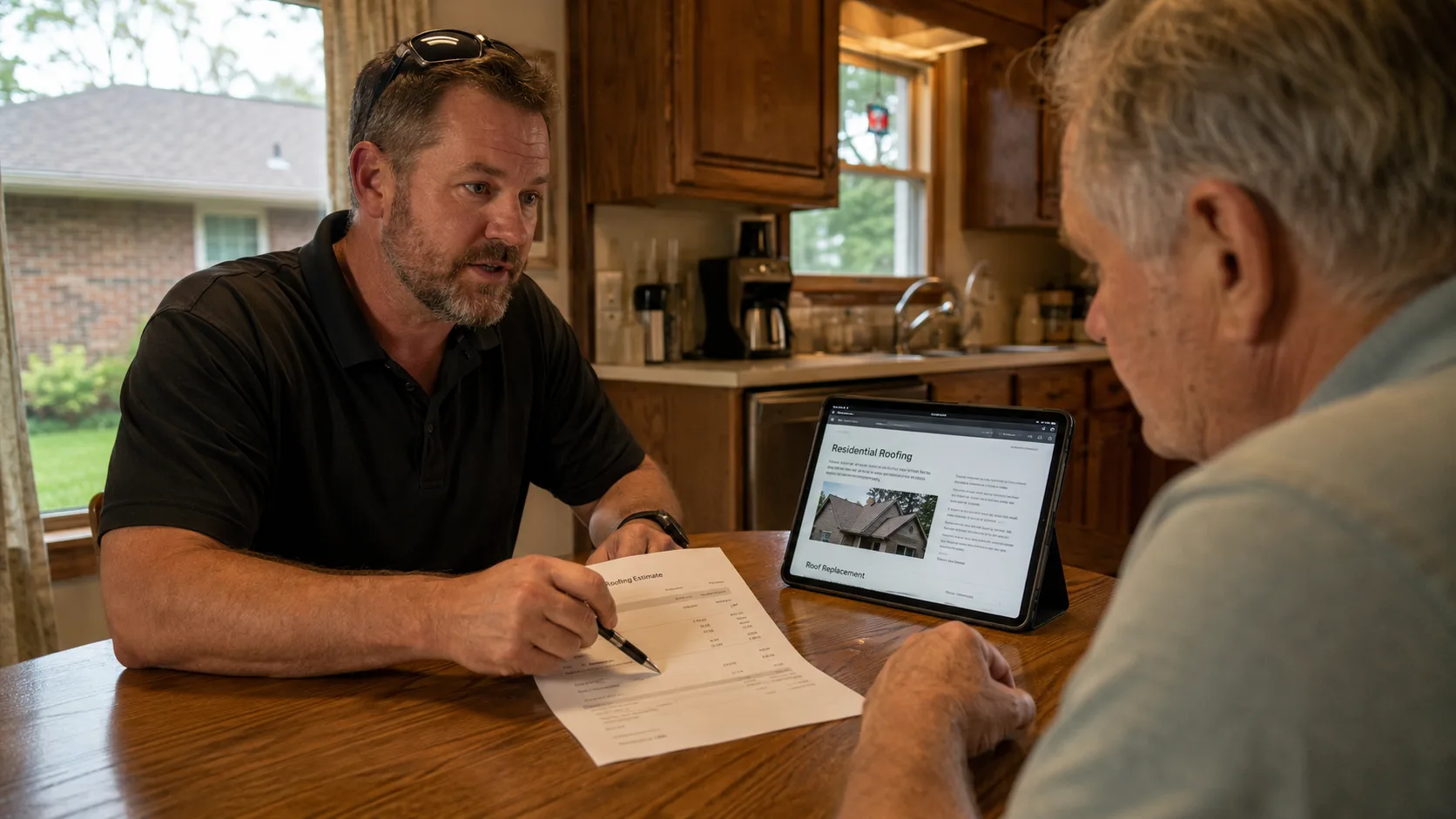
The Form Is Where Your Roofing Landing Page in Halifax Leaks
Here's the number-one leak point, and it's almost always the form. You ask for first name, last name, email, phone, address, roof type, square footage, preferred contact time, how they heard about you, and a 200-character description of the problem. So that's eleven fields. And the homeowner in Sackville with water dripping into a bucket gives up at field six.
Get My Site Inspection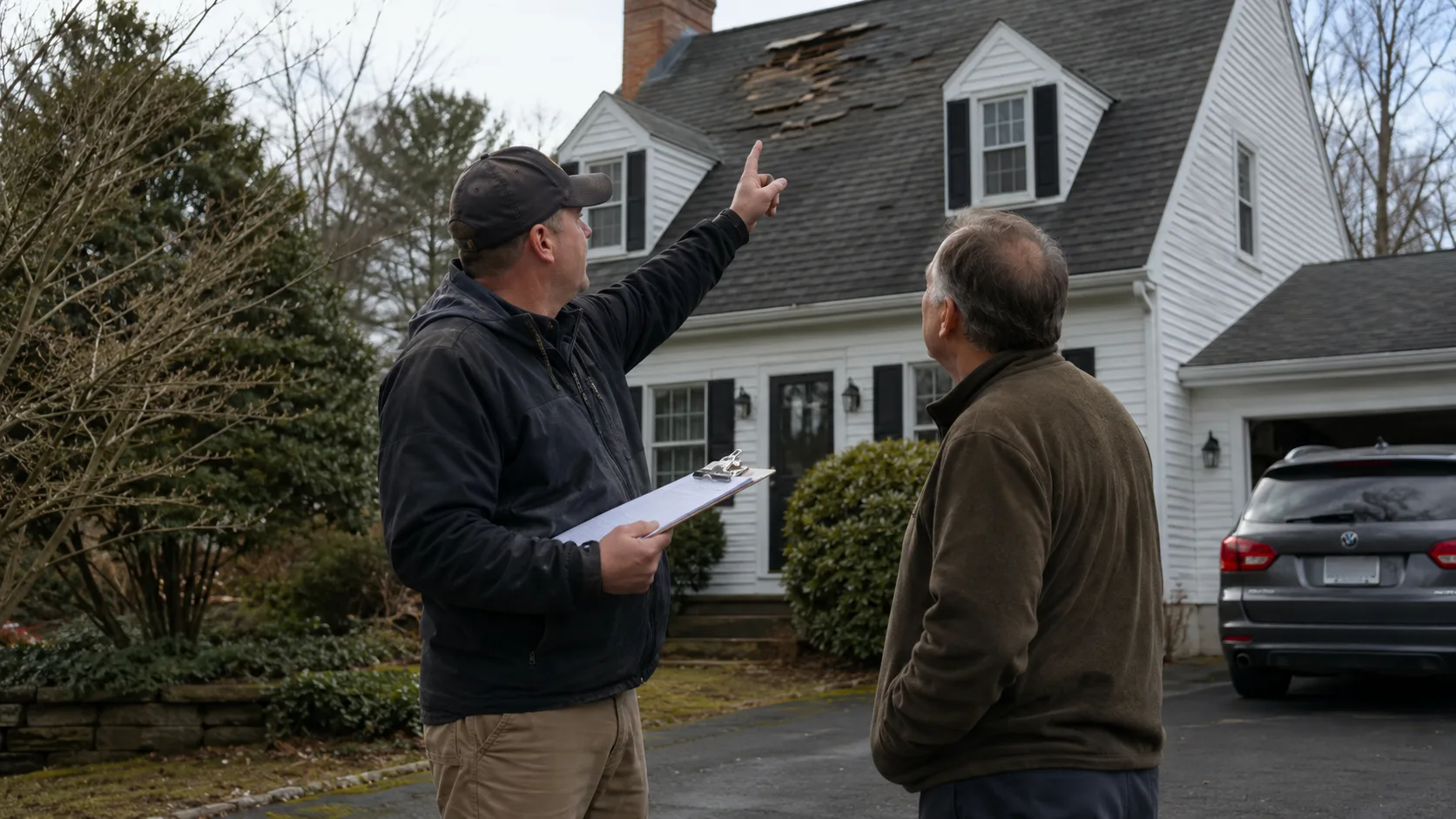
Match a Different Offer to a Different Page
You don't run one ad, so you shouldn't run one page. A storm-emergency searcher and a homeowner pricing a full replacement are two different people with two different worries. So send them to the same generic page and you blur the message for both.
Get My Site Inspection
Questions Contractors Ask Before Hiring Us
What does roofing CRO in Halifax actually get me?
A site that books the job instead of just describing it. The work is conversion architecture first, so every page in Halifax has a clear call path, real proof, and fast mobile load.
How is this different from the last agency that burned me?
You see the scoring framework, the benchmark data behind it, and your ranked fix list before any remediation work begins. It is a diagnosis you can evaluate, not a promise you have to trust.
How do you know this works for my trade?
The Fervor Grade framework was built by scoring 380 contractor sites across roofing, remodeling, and HVAC. Your trade's patterns are in the data, not borrowed from SaaS or dentists.
How long does it take?
A Booked by Design rebuild runs 30 to 60 days. It starts with a Site Inspection so the build targets the pages that are costing you calls.
Who owns the website and the accounts?
You do. The domain, the content, the analytics, every account we touch. Day one. No ownership traps, no holding your site hostage if you leave.
What if I do not like what the inspection finds?
Then you found out something that was already costing you, and now you know where. The inspection surfaces what is actually wrong on the site so you can decide what to fix.
Do you only work with contractors in Halifax?
No. We work with roofing contractors across the region, and the research covers national brands too, so the benchmark holds whether you are downtown or two towns over.
How much does it cost?
A Booked by Design rebuild is one project price with no monthly lock-in. One booked job at your average ticket usually covers it, and we show you that math before you commit.
Will the changes hurt my current rankings?
No. The work protects what already ranks. We map the URLs and the equity first, fix the conversion leaks, and improve the pages that search already trusts rather than wiping them.
What do I have to do during the project?
Very little. The intake takes minutes, and the build work is ours to run from there. You keep running crews. We will only ask for things no one else can give us, like your real service area and your best photos.
Still Have Questions?
Give us a call expressing your specific needs, and we’ll see if we are a good fit for each other.
Reviews carry more weight on a contractor site than most layout changes will. If yours are thin or the newest one is six months old, that's the fix worth making before you touch anything else. NiceJob handles the ask after each job so you can build up recent reviews without chasing customers by hand. If your CRM has follow-up automation, wire the ask into that instead. Either way, what shows on the page is what does the work.
As the fixes go in, you'll want proof they're booking more calls, so measure the call results. A service like CallRail puts a separate tracking number on each traffic source to easily track what's working. If you don't have a dedicated business line yet, Unitel Voice gives you local and toll-free numbers built for small businesses that a CallRail tracking number can forward to. Or you can lean on whatever call tracking your CRM already supports.
Before you go, grade your own site
Get The Roofing Website Diagnostic Checklist: the nine checks we pulled from inspecting 130 Roofing contractor sites. It takes about ten minutes, and it shows you which fix wins back the most jobs first.
Your checklist is on its way.
Your copy of The Roofing Website Diagnostic Checklist is landing in your inbox now. And if you would rather not wait, grab it right here.
Download it now