San Diego Garage Door Website Design
You're getting clicks in San Diego. They're just not calling. We rebuild your site around the one job that matters: turning a visitor into a booked job.
How Can We Help?
Choose the option that suits your needs.
Let’s Investigate
We will send your Site Inspection to the email you provided.
You’re in.
We’ll send your Site Inspection within 5 business days.
Let’s Chat
Book a time that works for you.

“Attentive, listened to every revision request, delivered on time. Would work with him again.”
- Hamza Najam

“Patient, on point, straightforward. Did amazing work. Would 100% recommend.”
- Ruben Mederos, HyperTemp HVAC

“Responsive, creative, exceeded expectations. Already seeing greater engagement from our clients.”
- George Jeorgy, Jeorgy's Landscape Construction

“Top-tier professionalism, real web design expertise, ideas I hadn't considered. Confidently recommend.”
- Aws Nassani, Four Eleven Contracting
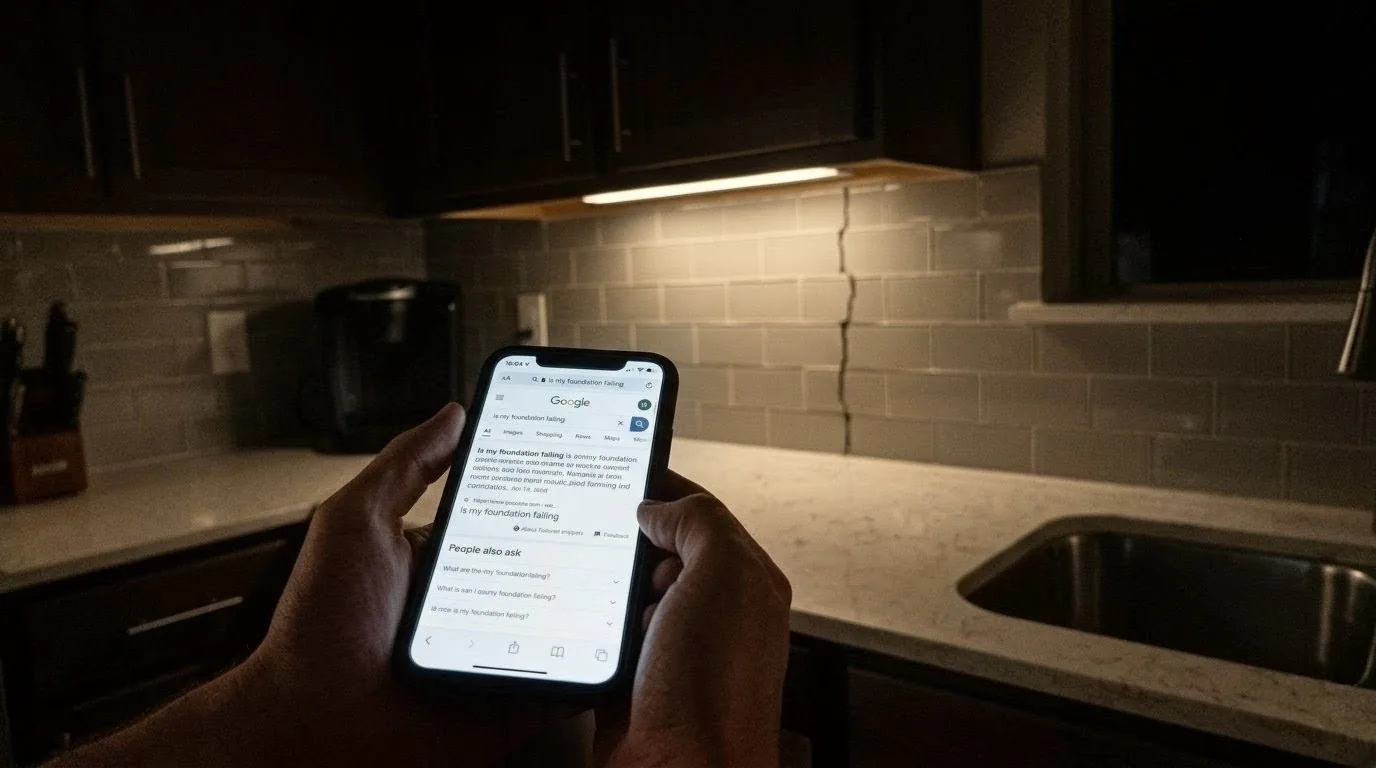

















































































Let’s talk about what your website could be doing for your business.
Call Us TodayThe San Diego garage door specifics your website needs
Map Exposure Not Suburbs
Exposure D applies within a quarter mile of water more than a mile across, which separates coastal San Diego from inland neighbourhoods in code terms rather than marketing terms. So a service map drawn on exposure tells a visitor something real about their own address. Search engines have nothing else like it to rank here.
Put the D-28 Number Up Top
Your CSLB licence number and the D-28 classification belong in the header of a San Diego site, not buried on an about page. A homeowner who has been burned once can then check you against the state register without leaving the tab. That single line does more for trust than any badge graphic a template ships with.
Photograph the Cable and Roller
ANSI/DASMA 110 covers lifting cables for sectional type doors, and near the San Diego coast the cable, the spring and the roller are what corrode first. So close photographs of that hardware do more than another finished exterior shot, and they show a buyer that your crew inspects the parts that fail here.
Give Gates and Access Their Pages
The D-28 covers gates and access control, so a San Diego community entry gate, its operator and the reader all sit inside the licence you already hold. But a page listing garage doors first and gates as an afterthought ranks for neither. A separate page picks up a market nobody local contests.
Three Columns Beat One Number
Design pressure is the site specific pressure a door must be rated for, design load is what the door is rated for, and test load is commonly one and a half times the design load under ANSI/DASMA 108. So a San Diego spec table carrying all three is a real product page. Nobody local publishes one.
Lock Work Is a Different Licence
California keeps C-28, Lock and Security Equipment, separate from the D-28 door classification. So a San Diego company selling keypad and smart entry alongside garage doors may need both, and a page that understands the split reads as written by somebody who holds one. That distinction is invisible to every template site here.
Photograph the Header and Track
The installing company is responsible for confirming that mounting surfaces conform to the manufacturer product approval, and for escalating when the supporting structure looks inadequate. So San Diego job photographs of the header, the track and the strut prove more than a finished driveway shot. They show somebody looked before hanging a door.
Name IDEA Not IDA
IDEA, the Institute of Door Dealer Education and Accreditation, was formed in 1996 by IDA, DASMA and the American Rolling Door Institute, and IDEA issues the technician certifications. So a San Diego site claiming IDA certified technicians has named the wrong body. Anyone holding the credential notices immediately.
What this San Diego page is built from
Eight checkable facts about garage door work in San Diego, not national talking points.
Get My Site Inspection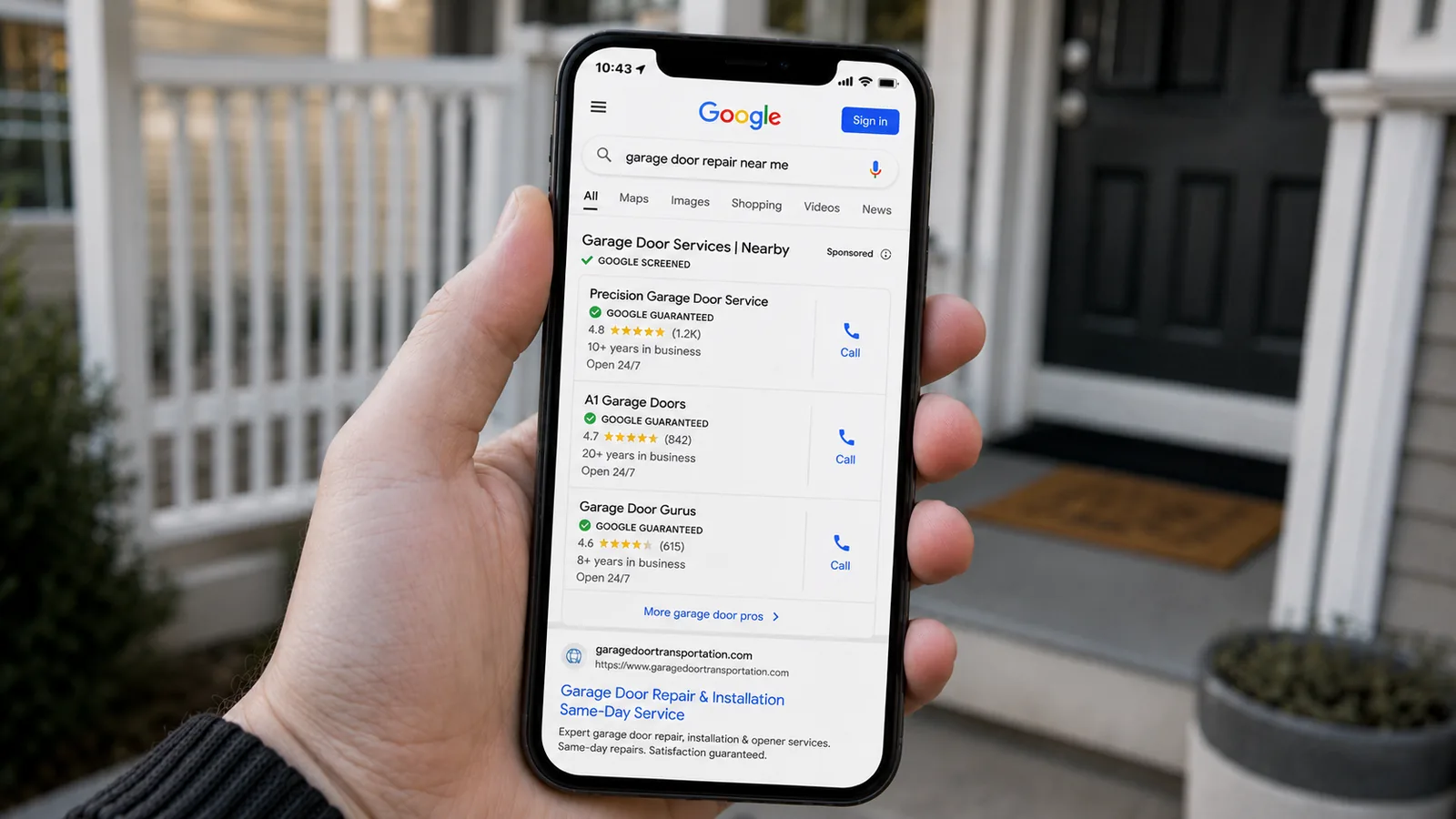
Questions Contractors Ask Before Hiring Us
What does Garage Door web design in San Diego actually get me?
A site that books the job instead of just describing it. The work is conversion architecture first, so every page in San Diego has a clear call path, real proof, and fast mobile load.
How is this different from the last agency that burned me?
You see the scoring framework, the benchmark data behind it, and your ranked fix list before any remediation work begins. It is a diagnosis you can evaluate, not a promise you have to trust.
How do you know this works for my trade?
The Fervor Grade framework was built by scoring 380 contractor sites across roofing, remodeling, and HVAC. Your trade's patterns are in the data, not borrowed from SaaS or dentists.
How long does it take?
A Booked by Design rebuild runs 30 to 60 days. It starts with a Site Inspection so the build targets the pages that are costing you calls.
Who owns the website and the accounts?
You do. The domain, the content, the analytics, every account we touch. Day one. No ownership traps, no holding your site hostage if you leave.
What if I do not like what the inspection finds?
Then you found out something that was already costing you, and now you know where. The inspection surfaces what is actually wrong on the site so you can decide what to fix.
Do you only work with contractors in San Diego?
No. We work with Garage Door contractors across the region, and the research covers national brands too, so the benchmark holds whether you are downtown or two towns over.
How much does it cost?
A Booked by Design rebuild is one project price with no monthly lock-in. One booked job at your average ticket usually covers it, and we show you that math before you commit.
Will the changes hurt my current rankings?
No. The work protects what already ranks. We map the URLs and the equity first, fix the conversion leaks, and improve the pages that search already trusts rather than wiping them.
What do I have to do during the project?
Very little. The intake takes minutes, and the build work is ours to run from there. You keep running crews. We will only ask for things no one else can give us, like your real service area and your best photos.
Still Have Questions?
Give us a call expressing your specific needs, and we’ll see if we are a good fit for each other.
New contractor sites tend to launch with the review section empty or stocked with two older reviews from friends. That kills the trust the rest of the design was built to earn. NiceJob syncs Google reviews to the site automatically and prompts customers for new ones after each job, so the section fills in on its own. If you'd rather embed reviews manually via Google's widget, that works too. Either way, the site needs real reviews on it before homeowners will believe the rest of what it says.
Once the new site is live, you'll want proof it's booking calls. A service like CallRail assigns a dynamic tracking number per traffic source, so you can see which page earned the call. If you're setting up your first professional phone system, Unitel Voice gives you the business line those tracking numbers forward to. Or you can use the call tracking your CRM already includes.