0
contractor sites graded, one A
Across the whole CRO Index, a single site earned an A. The median landed at a D. The grade gap is a conversion gap.
You already get traffic in Fargo. Most of it leaves without calling. We find the leaks and plug them, so the visitors you've got start booking jobs.
Starts with a Site Inspection, so you see the leaks before any fix begins.
“Attentive, listened to every revision request, delivered on time. Would work with him again.” — Hamza Najam
“Patient, on point, straightforward. Did amazing work. Would 100% recommend.” — Ruben Mederos, HyperTemp HVAC
“Responsive, creative, exceeded expectations. Already seeing greater engagement from our clients.” — George Jeorgy, Jeorgy's Landscape Construction
“Top-tier professionalism, real web design expertise, ideas I hadn't considered. Confidently recommend.” — Aws Nassani, Four Eleven Contracting




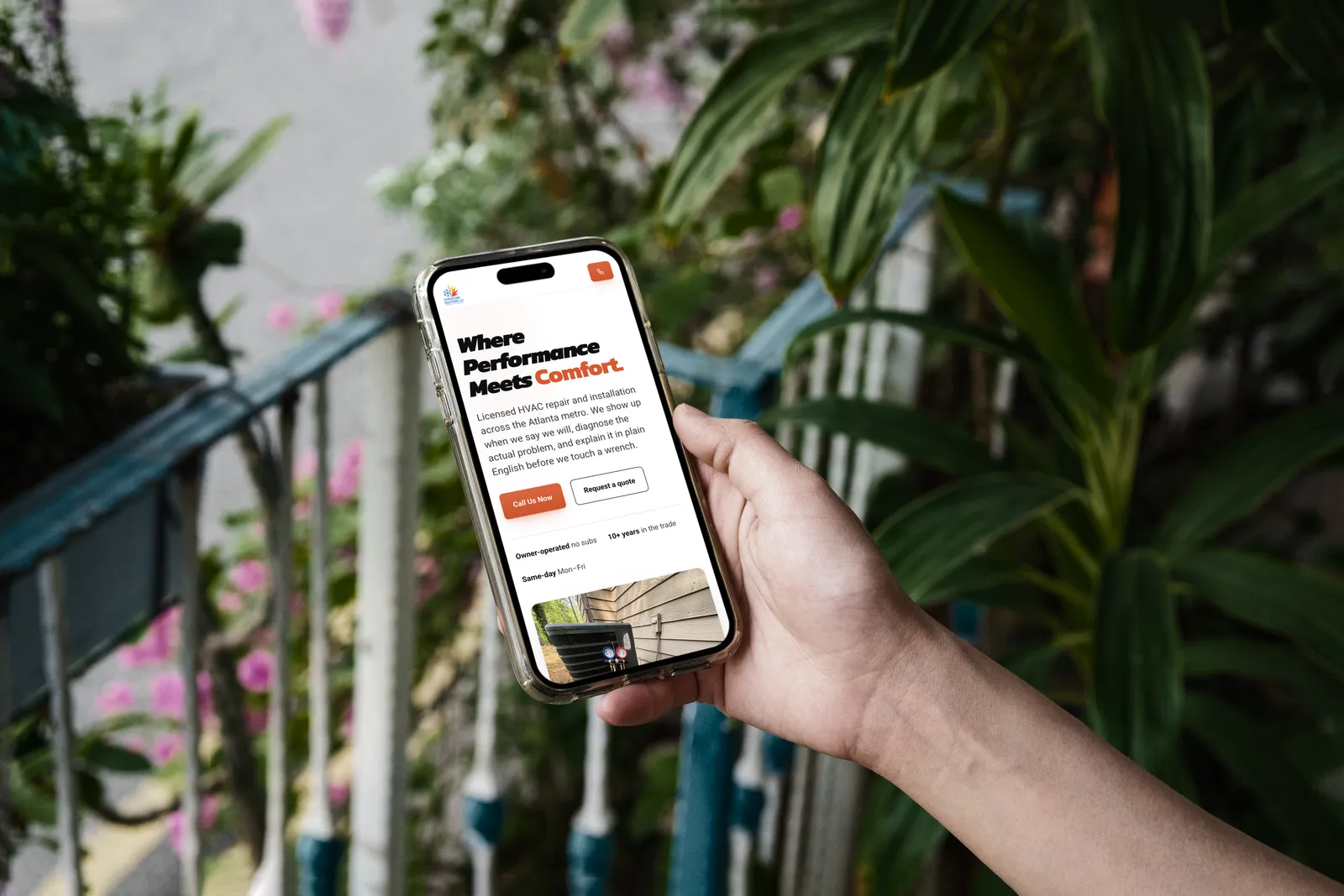
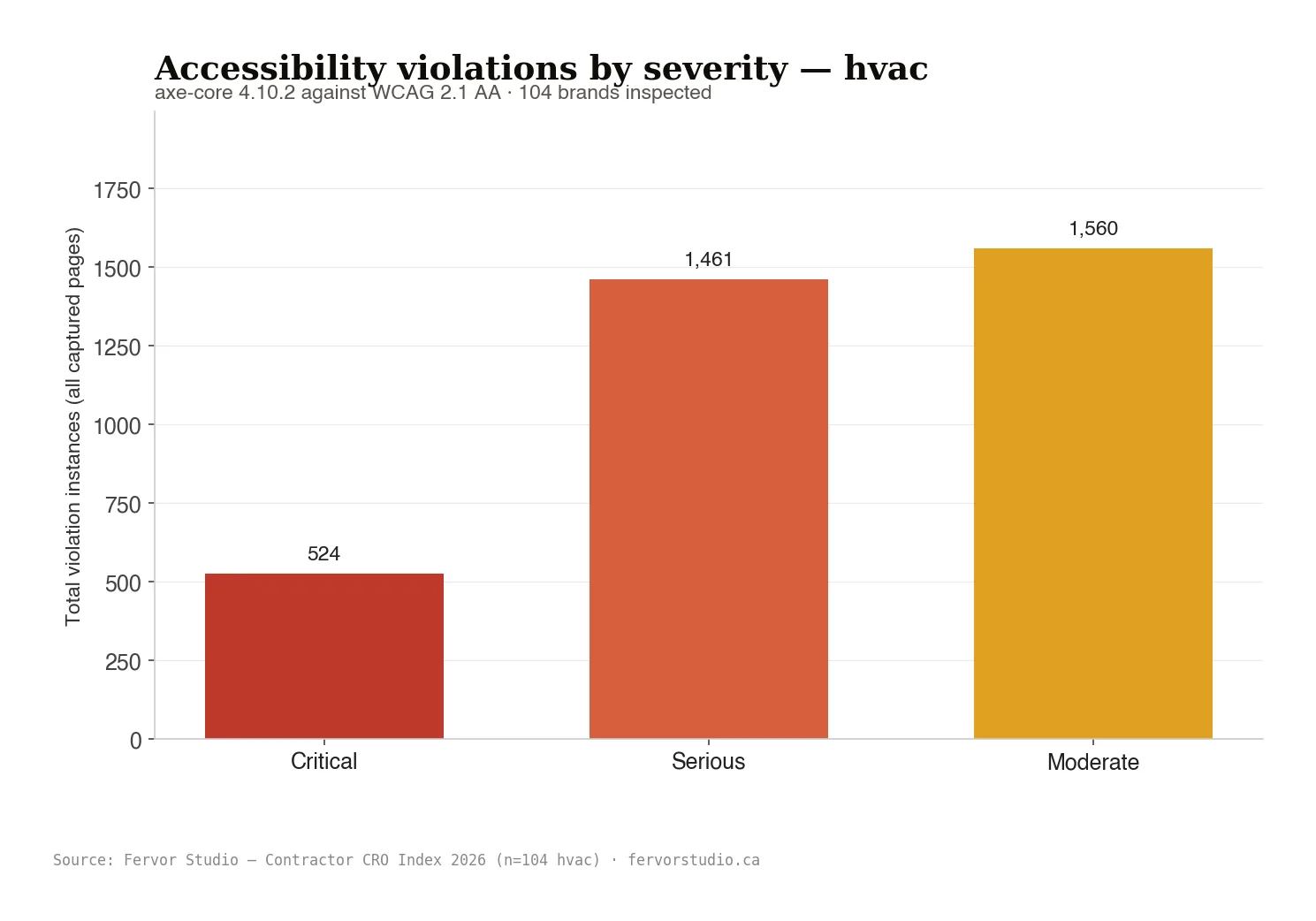
64.4% of HVAC sites we tested fail a critical accessibility check
Digital State of the HVAC Industry 2026A grade out of 380 contractor sites
We graded 380 of them against one framework. Exactly one earned an A: Crown Industrial Roofing in Toronto, at 90 out of 100. The rest left money on the table. Here is what separates the top from the bottom.
The local detail
Every angle below comes from how Fargo actually searches, buys, and regulates — built into the page, not bolted on.
Website conversion in this market runs at the coldest design temperatures any American metro plans for.
Fervor’s State of the HVAC Industry work scored real contractor sites on one framework, evidence archived.
Fargo’s highest-intent visitor arrives outside business hours by the nature of the failure: furnaces quit overnight when the temperature bottoms out, and the…
For all the channels, the Fargo HVAC buyer in crisis is still a caller — same-day intent converts by phone, in one tap or not at all.
And the lead form is where Fargo sites bleed their politest demand — the visitor who wasn’t ready to call, gave the form a chance, and met an interrogation.
The trust math here runs through the front door at twenty below.
Timing multiplies everything above, and the Fargo calendar is the longest and least forgiving in the lower 48.
Website conversion work you can’t measure is redecorating.
You've probably watched a cold-snap traffic spike that never became a dispatch spike. And if you run a shop anywhere from downtown to Horace, odds are nobody has ever shown you where the gap went: the homeowners who landed on your site at 5am with a dead furnace at twenty below, needed you that day, and left without calling or booking anything. So this page is about HVAC website conversion in Fargo: where the leaks are, the inspection numbers behind them, and the 30-day fix. Not more traffic. More booked jobs from the hardest heating season in the lower 48, on both banks of the Red River.
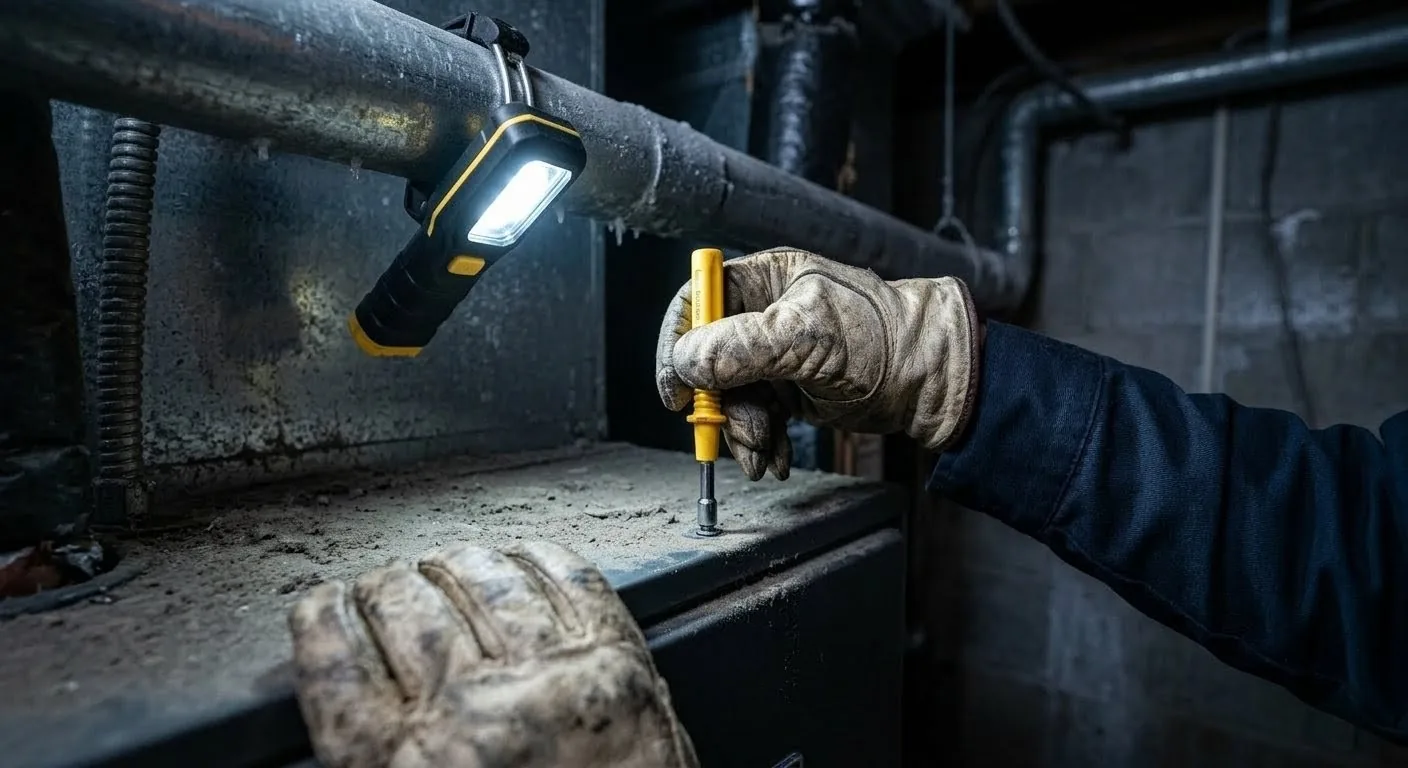
Website conversion in this market runs at the coldest design temperatures any American metro plans for. The deep cold kills furnaces in trade sample (the 1990s annexation-belt builder-grade units, the post-war ramblers on their third furnace, the new builds sold with the cheapest equipment that passed code), and a no-heat night here is a same-night safety event, the visitor triaging rather than browsing. And during every snap the same scene repeats: a homeowner lands on a shop's site at 5am ready to book anything, and finds a number that rings to voicemail and a form that promises a callback within one business day. By mid-morning she's on someone else's schedule.
That's a website conversion leak, and it has nothing to do with how the site looks. Fargo website conversion problems hide in plain sight precisely because the site seems fine to everyone who isn't freezing. The owner sees a presentable homepage, the agency sees a delivered project, and only the 5am homeowner sees the dead end. (If the site itself is the problem, slow on a phone or structurally broken, that's the build discipline, covered in HVAC web design in Fargo. And if you're invisible to begin with, start at Fargo HVAC SEO.) This page is the layer between: visitors in, booked jobs out.
"The median HVAC contractor website scores 65 of 100, and the single best site in the study reached 90." — Fervor, State of the HVAC Industry (2026)
And the conversion categories drag that median down hardest. Lead capture and trust — the two layers this page lives in — are where the trade loses the most points, which means they're where a Red River Valley shop catches up fastest, before buying a single additional click.
Fervor's State of the HVAC Industry work scored real contractor sites on one framework, evidence archived. The capture findings read like a leak map for the whole trade, and every number below is one your own website either beats or doesn't, auditable in an afternoon.
And one framing first, because it changes how you read every number. HVAC website conversion is a rate, not a feature: the share of visitors who become contacts. A Fargo site pulling 2,000 January visits at 2% produces forty contacts; the same site at 4% produces eighty, from identical traffic, at zero added spend, and the math runs through the longest heating season in the lower 48. Every leak below is a slice of that rate bleeding off, snap after snap. That's why website conversion work prices like a project and pays like an annuity on the northern plains.
"Just 18.3% of HVAC contractor websites put an inline lead form in the hero." — Fervor, State of the HVAC Industry (2026)
Four of five sites make the ready-to-act visitor hunt for a way to act. So the leaks below are ranked the way we rank them on engagements: by what they cost a two-state shop in booked jobs during the snaps.
Fargo's highest-intent visitor arrives outside business hours by the nature of the failure: furnaces quit overnight when the temperature bottoms out, and the search starts at 5am with the house dropping fast. What she needs is to book now. What most sites give her is voicemail and a promise.
"Only 56.7% of HVAC contractor websites offer online scheduling or booking; the rest send after-hours demand to voicemail." — Fervor, State of the HVAC Industry (2026)
And the backup channels are thinner still:
"27.9% of HVAC websites run a chat widget, leaving the rest with no way to catch the visitor who won't call." — Fervor, State of the HVAC Industry (2026)
(The inspection data on scheduling breaks the after-hours leak down across the whole trade sample; across the hardest season in the lower 48 it bills you weekly.) So the after-hours fix is the first website conversion project worth funding in Fargo, and it usually starts with software you already pay for. If your shop runs on Housecall Pro, its online booking module embeds straight into the site. Most shops have the scheduler sitting unwired while their 5am demand books with whoever wired theirs. Connect it, add a text channel for the visitor who won't call, and the whole season starts capturing jobs the morning callback used to lose, on both banks of the river.
For all the channels, the Fargo HVAC buyer in crisis is still a caller — same-day intent converts by phone, in one tap or not at all.
"74% of HVAC websites keep a phone number in the persistent header, and the rest make a ready-to-call homeowner hunt for it." — Fervor, State of the HVAC Industry (2026)
But flip it: a quarter of the trade hides its highest-converting element. And click-to-call is HVAC website conversion at its most literal: one tap between a Horace visitor and a booked job. (The click-to-call data makes it one of the most measurable levers in the dataset.) But the tap is only half the leak; the ring is the other half. A line that goes unanswered at twenty below converts at exactly zero, and sends a freezing household to the next result. A business phone layer like Unitel Voice puts routing, overflow, and after-hours menus on the number so the 5am caller reaches a human path instead of a beep. During the deep cold, answer rate beats ranking.
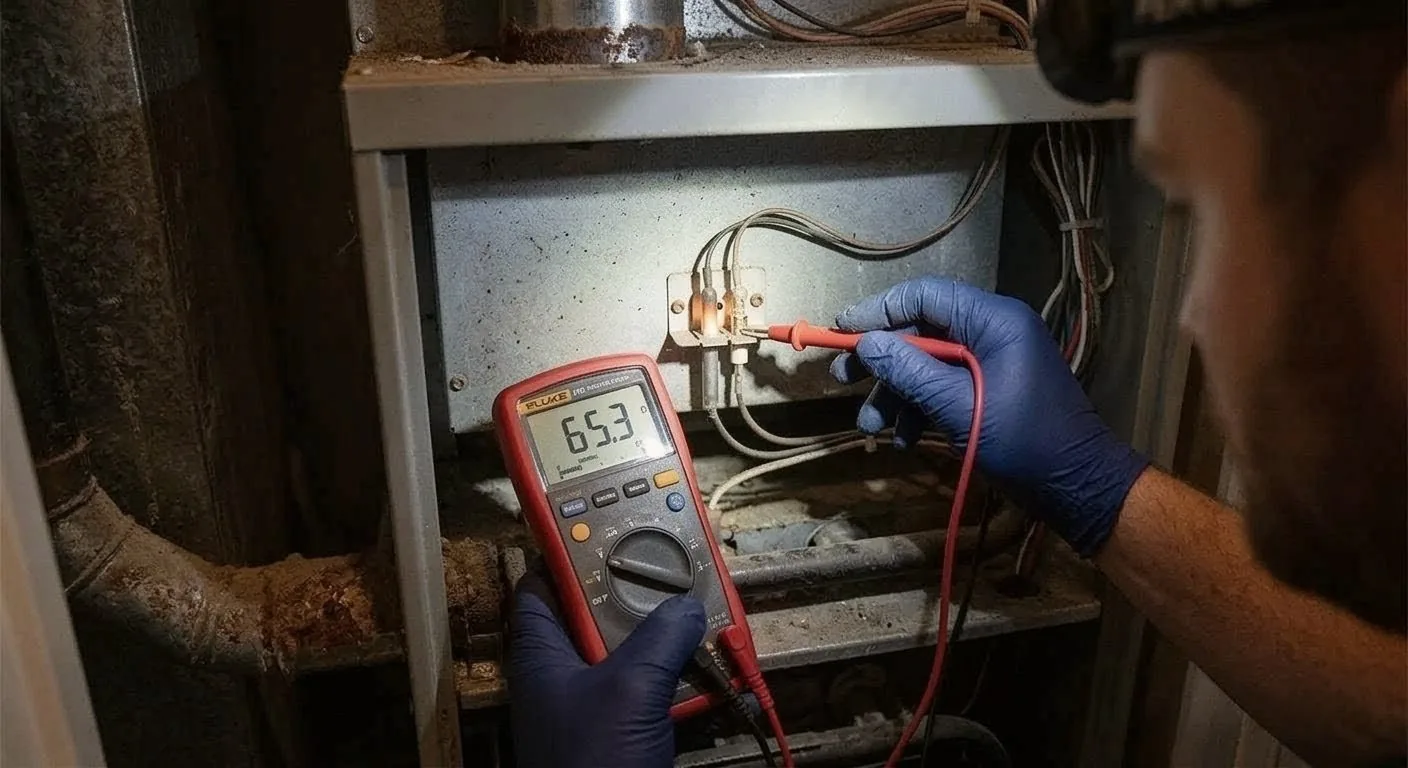
And the lead form is where Fargo sites bleed their politest demand — the visitor who wasn't ready to call, gave the form a chance, and met an interrogation.
"42.3% of HVAC website forms put a CAPTCHA between the homeowner and the submit button." — Fervor, State of the HVAC Industry (2026)
Nearly half the trade makes a freezing homeowner prove she's human before it will take her money. So the fix costs a morning: name, contact, what's wrong, when can we come. Four or five fields, an invisible honeypot instead of the robot test, placed where the eye lands. On engagement after engagement the form rewrite is the cheapest website conversion gain on the punch list, which is why hvac conversion rate optimization in Fargo starts there when the budget is tight. And this market earns a second form most shops never build: the border estimator. The rebate math changes at the Red River, the off-peak program adds a layer most providers can't explain, and a five-field "get the rebate math for my side of the river" form captures the considered buyer with the two-state conversation already framed correctly. The polite demand you're losing already found you and trusted you enough to type; the form is the only thing left between her and the dispatch board.
The trust math here runs through the front door at twenty below. The buyer is letting a stranger into her home on the worst night of her winter, often within the hour, and she checks your website in the thirty seconds she has.
"Trust and credibility scores average 13.97 of 22 across HVAC contractor websites, 63.5% of the available points." — Fervor, State of the HVAC Industry (2026)
And the misses are specific and fixable. The license display two-thirds of contractors skip: put both states' credentials in the footer this week, because the river runs through your service area. The work photos:
"72.1% of HVAC websites use real team or craftsman photography rather than stock imagery." — Fervor, State of the HVAC Industry (2026)
Good. And the quarter still running stock models is handing trust to everyone who doesn't. Real techs on real winter jobs, dressed for the actual cold, read like proof. But the signal that compounds is review velocity. A wall of reviews that stops months ago reads worse to a skeptical West Fargo homeowner than forty reviews with six from last week, because the timestamp is the trust. Velocity is operational, not motivational: an automated ask after every closed ticket, timed for the evening, linked straight to your profile. Fervor wires it with NiceJob as standard practice, because review velocity is the one trust signal a shop can manufacture, one closed job at a time. And in a metro this tight-knit, the freshest wall travels by name. Surface the stream on the site and the trust block maintains itself.
Timing multiplies everything above, and the Fargo calendar is the longest and least forgiving in the lower 48. A leak that costs two jobs a week in September costs two jobs a day through every snap from November to March, so HVAC website conversion in Fargo pays best when the fixes land in the brief shoulder: capture channels wired by September, trust block fresh before the first hard freeze. The shops that fix conversion in the shoulder own the winter; the ones that "get to the website" eventually donate the season every single year.
And the calendar maps to the stock, which is what makes Fargo website conversion work local rather than generic. The deep cold finds the annexation-belt builder-grade furnaces and the third-furnace ramblers first; the new builds fail younger than anyone expects; and the two-state rebate split shapes every replacement decision. A booking flow whose first dropdown speaks the market's language (no heat today, replacement quote, which side of the river) converts each stream a little better, and small percentages across the longest season are entire crew-weeks of work.
And one leak deserves its own paragraph at these temperatures: the maintenance plan. In a market where a dead furnace is a same-night safety event, a plan member (recurring revenue, first call on replacements, priority dispatch on the coldest mornings) is the easiest premium sell in the entire trade, yet almost no Red River Valley site treats the plan as a website conversion path. It's a paragraph with no pricing and no enrollment flow. So give the plan what the emergency gets: its own page, plain pricing with the fall-service cadence spelled out, a two-field signup, and a banner slot every August. The plan member never re-enters the funnel you paid to fill.
Website conversion work you can't measure is redecorating. The foundation is call tracking: CallRail puts tracked numbers on the site by page and source, so you know which pages produce calls, which campaigns produce booked jobs, and what each snap actually did versus what the agency's report claimed. Reconcile it against the dispatch board and the dashboard becomes three honest numbers, monthly: tracked calls by source, booked jobs against dispatch, and the website conversion rate from sessions to contacts. That's how a Fargo owner audits HVAC website conversion without an agency in the room.
But if a report can't be checked against the dispatch board, it's decoration. And that's why hvac lead generation pitches deserve suspicion when they arrive before measurement does. Buying leads into an unmeasured, leaking site is renting demand you then waste for the longest season in the lower 48. So sequence it the way the math wants: measure first, fix the website conversion layer second, buy traffic third. A two-state shop that reads its own January call log honestly already owns a better website conversion audit than most agencies will ever sell it.
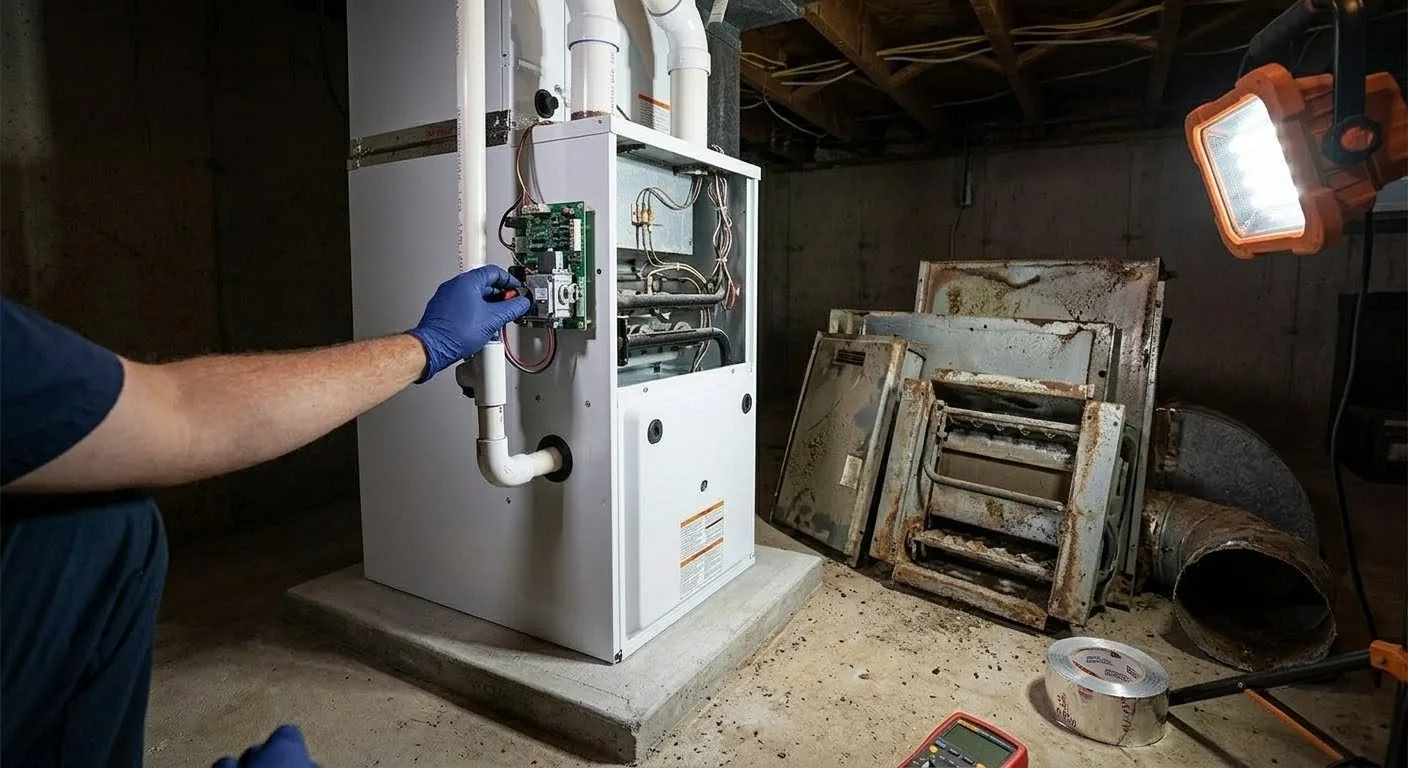
Fervor productizes the work as the Leak Plug Sprint: $4,997, 30 days, fixed scope. We inspect your site against the same framework behind the State of the HVAC Industry report, rank every leak by revenue impact against your average ticket, and fix the list in order: booking flow wired into your field software, forms cut to five fields plus the border estimator, click-to-call hardened, text channel added, trust block rebuilt from your real two-state credentials and review stream and winter-job photos, call tracking live. You see the ranked website conversion list before we touch anything, and the before/after numbers when we're done.
So run the napkin math honestly, at northern-plains ticket sizes and season-length stakes. Average replacement, times gross margin, against a one-time $4,997: for most shops at this band the payback is one job, maybe two. And unlike a month of ads, the website conversion fixes don't stop working when the invoice clears. They convert every snap from October to April with no further spend. Ongoing measurement and iteration run under Performance Partner at $1,497 to $3,997 per month if the numbers justify it, month to month, every asset registered to you from day one.
And it starts with the free Site Inspection: your current site run through the full framework behind the report, scored category by category, with every finding handed over whether or not you ever hire us. If the inspection says the real problem is the build or the rankings, we'll say so plainly and route you to the right fix first. You shouldn't have to trust us. You should be able to check.
If you want the broader system this fits into, the definitive leak playbook and the campaigns around it, start with the HVAC CRO page and the HVAC marketing hub. The full trade picture lives under mechanical contractors, and everything Fervor does for the trades starts at the contractor hub.
The mechanical fixes (booking flow, short forms, click-to-call, text channel) start moving your website conversion numbers the day they ship, because they capture demand already arriving and leaking. Trust and review velocity compound over one to three months. In Fargo terms: a sprint finished in September converts the entire heating season, and the border estimator keeps converting two-state researchers year-round with no further work. Anyone promising an exact percentage before inspecting your site is reading a script, because the lift depends entirely on which leaks your site has and how badly they bleed at twenty below.
More, not less. Every visitor flows through the same website conversion leaks, and the better your Fargo traffic engine, the more each leak costs across the longest heating season in the lower 48. Strong rankings into a site converting at half its potential means paying double per booked job, October through April. Website conversion is the multiplier on everything upstream of it.
A redesign replaces the container; website conversion work fixes the specific points where the current container loses customers: capture channels, forms, trust signals, measurement. A rebuild costs three times as much and takes twice as long, which is why it's the wrong first purchase when the bones are sound. When the inspection shows the container itself is the problem, we'll route you to the Fargo web design page instead, leak list in hand so the rebuild bakes the fixes in from day one.
A ranked Fargo website conversion audit against your call and dispatch data, then the fixes in revenue order: online booking wired into your field software, forms cut to four or five fields plus a border-estimate path, click-to-call hardened, a text channel added, the trust block rebuilt from your real credentials and review stream, and call tracking installed so every change is measurable. Fixed scope, 30 days, $4,997 depending on what the audit finds, and no retainer required, because the point of buying HVAC website conversion as a sprint is that Red River Valley owners get the fix without marrying the agency.
The evidence
 Read the full report →
 0
contractor sites graded, one A
Across the whole CRO Index, a single site earned an A. The median landed at a D. The grade gap is a conversion gap.
0 %
of HVAC sites fail a critical accessibility check
Scored against WCAG 2.1 AA with axe-core. A page that blocks a screen reader also blocks a paying customer.
Fervor HVAC State of the Industry, 2026
0 %
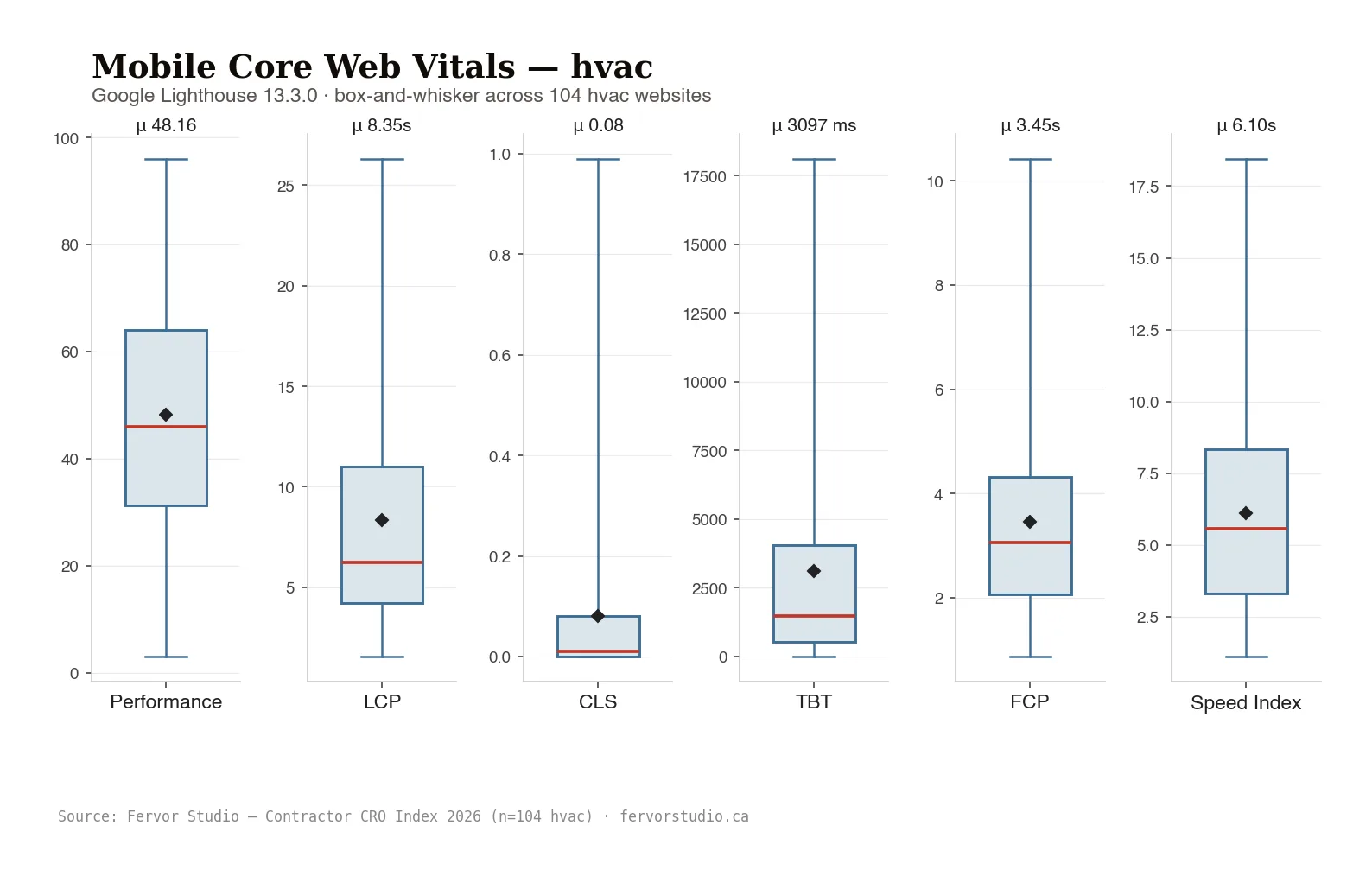
miss Google's mobile load-speed bar
Median mobile load lands at 6.24 seconds. Most of your traffic is on a phone, and most of them are gone before the hero paints.
Fervor HVAC State of the Industry, 2026
0 /100
is the average HVAC grade
That is a D. The sites booking the work are not the ones with the biggest crews. They are the ones a few points higher on the things homeowners feel.
Two ways to start
Tell us where you are. We point you at the right next step — no sales call to get there.
Client review
“Nay did an amazing job, you know. He was really patient. He got the work done the way I told him and he was just on point with the website. Pretty straightforward process. No going around the bush. He just did amazing work and I would 100% recommend.”
How Fervor can help
Identify and patch the top conversion killers on your existing site. No full rebuild needed.
Monthly SEO, content, and CRO. Fixed deliverables. No credits, no rollover. The compound growth engine.
Complete website system built to convert storm leads, planned projects, and research-phase homeowners into booked jobs.
GBP optimization, citation building, and review system foundation. The infrastructure that gets you into the Map Pack.
One conversion-built landing page for the referrals, paid clicks, and cold-call leads you send. They land on a page built to book them, not your generic homepage.
Your move
Tell us where you are. We point you at the right next step — no sales call to get there.
Keep going